
Link to buy a book from Amazon
History of Meditation
Before you begin your meditation and confidence journey you will want to know where meditation comes from and how it has evolved into the process. 5000-3500 BCE The exact date of meditation”s origin is unknown but archaeologist and scholars agree that its been around for about 5,000 years.
You”ll find that the “Tantra” which is an Indian artifact talks about meditation which dates back about 5,000 years. 1,500 BCE. The earliest documented records of meditation stemming from the teachings of the vedas in ancient India. Some of the earliest written records of meditation (Dhyana), come from the Hindu traditions of Vedantism around 1500 BCE. 400-100 BCE. The Yoga sutra of Patanjali were compiled, outlining the eight limbs of Yoga.
However it is speculated that even primitive gatherers and hunters had practiced some of the same meditation techniques to enhance consciousness while gazing into their fires. Meditation was first thought to be practiced by hunter gatherers, as evidenced by archaeological findings from the era. First discovering the benefits of meditation, these so called primitive people passed their knowledge down from generation to generation, setting the groundwork for the history of meditation. The Vedas discuss the meditative traditions of ancient India. Around the 6th to 5th centuries BCE, other forms of meditation developed in Taoist China and Buddhist India. Between 600-500BCE Meditation developed in Taoist China and Buddhist India.
400BCE and 200CE The Bhagvad Gita written an epic poem and scripture that discusses the philosophy of yoga meditation and how to live a spiritual life. But, the structured practice of meditation that is more familiar to the modern method of meditation is believed to go back 5,000 years, with it developing in India. The initial development by Hindus was to understand and get closer to the true nature of Brahman (“God”); the development by Siddhartha Guatama, “the Buddha”, began when he reached enlightenment by meditating under a Bodhi Tree around 500 BC.

Around the 1960”s and 1970”s the benefits of meditation came to light in western culture , such as its ability to relieve stress, promote spirituality and confidence. Self-confidence is one of those byproducts of meditation that few people talk about. Meditate & Develop Self-Confidence. Many people report that through meditation they have gained a higher sense of well being and self confidence.

What is Meditation ?
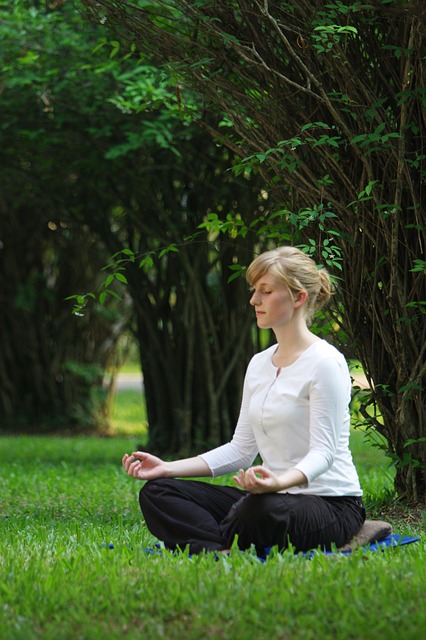
In its purest, most fundamental form meditation is the personal practice of quieting your mind. This involves a physical silence not only for you but also for your immediate surrounding.
How to Build Self-Confidence by meditating ?
Self-confidence can be elusive, and lack of it is detrimental to our happiness and success in life. Self-confidence can be the difference between feeling strong or weak; capable or incapable; successful or failed; happy or miserable. Lack of self-confidence keeps us from living our lives to their fullest. We are afraid to freely express our talents and abilities, and we hide at the back of the room, wanting to contribute but lacking the confidence. Meditation costs nothing. You can learn to Meditate and you can learn this quickly and effortlessly. And that”s exactly what this blog is all about. This blog explores the amazing mental and health benefits of meditation.
Their are different techniques of meditation. The most popular one are.
- Zen Meditation
- Metta Meditation
- Third Eye yoga meditation ( The 6th chakra called Ajna chakra located in the middle of forehead and above the eyebrows. It is often called the “third eye”because of its relation to seeing-not physical sight but the sight of intuition)
- Qigong Meditation
- Guided imagery meditation
- Body scan meditation (shavasana)
- Affirmation Meditation
- Sound meditation (OM)
- Trataka Meditation.One of the Best technique of meditation to build confidence is Affirmation Meditation techniqueWhat is Affirmation Meditation Technique?We are all born with very high self-confidence, but often it is gradually eroded by emotional trauma of varying degrees. Men/Women can be cruel to each other; and our misinterpretations of events can lead to unpleasant experiences. To protect ourselves, we put up emotional walls of victimization.

- Affirmation Meditation Technique can be used to imprint a certain message on your brain. For most people, meditation is an uncomplicated way to connect with their spiritual self, manage stress and create a more balanced and peaceful way of living. It will allow you to feel more confident about a situation or about yourself. If you are looking for ways to strengthen your confidence or improve your productivity there are many ways that meditation can help because on a fundamental level it helps you develop a better connection with the deeper, core part of yourself.It can help you to build confidence about an event, such as “I will pass this test”, “I am proud of myself. “ I will be okay at the interview” “ I feel clever and smart today” “I will deliver this speech well”. “I can do whatever I focus my mind on”. “I am confident, positive person”, True self-confidence has to be built on a foundation of self-awareness. This kind of self-awareness lets you understand your strengths and your weaknesses on a deep and intimate level. Choose the right affirmation for you at the time.It’s always best to keep your statement in short sentences and in simple language. Say things that you can effortlessly agree with so that your subconscious mind will be more likely to accept your words without protest.
- Start by sitting in a comfortable position, in a place where you will not be disturbed for the duration of the meditation and then concentrate on your breathing. Relax with every exhale. Visualization is a perfect complement to meditation and can dramatically improve your results. Visualize your affirmation. Spend a few minutes each day seeing yourself as completely strong and confident in whatever you do. (your affirmation statement)
- Every time you breath out repeat your affirmation and visualize your success and start in believing your affirmation. Next ask yourself what would it feel like to be super strong and purposeful every day? Generate the confident feeling by remembering a time when you felt that way.
- Every time your mind starts to wander something else, bring it back by saying your affirmation while breathing. Start again if you need to. If you can”t remember feeling confident to that degree then think of a character in a book or the movies that embodies that quality. Then imagine yourself playing that role, feeling how confidence feels at the same time.
- Redirect to breathing again, before opening your eyes. This is powerful because your mind really does not know the difference between tangible reality and your imagined reality. It loves to practice for success, so the more often you imagine yourself feeling and acting confidently, the easier you’ll find it to be confident in your day to day experiences. Repeat the affirmation again before standing upGently, and before you know it, your confidence reveals itself to you and you find yourself feeling more open and courageous, willing to take bigger steps, and taking the occasional risk is something you do in your stride while happily overriding any previous perceived or predicted failure. One can be engaged in meditation while they are on a walk, for example, or the time they have right before they sleep. Throughout the day, by repeating the affirmation statement of their choice. Repeated use of your affirmations is always a good thing, so you can repeat your affirmations at almost any time.
 Why Meditate ?There are many reasons why you would need to meditate. Many would love to mediate. Few actually do. Many of us have heard of the numerous benefits of the practice. Meditation can help you to experience self enlightenment, calm your emotions and provide yourself with more energy. As life becomes even busier, you will find that meditation is even more important to incorporate into your daily routine. Inner peace is a hard thing to experience or come by,and you”ll find that if you practice meditation, you will gain inner peace in the process.

Meditation takes no athletic ability. You can meditate whether you are in top physical form or use a wheel chair to get you places. You don”t have to practice meditation at a particular time for it to be useful, but it is important that you practice meditation on a regular basis.
So what”s keeping you from reaping the benefits of a life style of meditation ? Oh, “you may have formed a list of excuses” as to why you could not possibly meditate
- There”s not enough time in a day.
- I would not even know where to begin and how to end.
- I can not sit for ten minutes.
- But even if I managed to sit for ten minutes I can not make my mind idle.
- Meditation is a boring task I feel like sleeping
- It scares me
- When I sit to meditate my focus is on the clock only
- I want to meditate but, I always get interrupted .Research in meditation :Research in meditation certainly continued to grow and is continuing to be tested and used all over the world to increase well being, relaxation, and overall sense of mental health and stability. Relaxation techniques included hypnosis, biofeedback-induced relaxation, and meditation and were used with systematic desensitization and (now) with other clinical problems. Numerous studies have indicated the many physiological benefits of meditation, and the latest one comes from Harvard University.
An eight week study conducted by Harvard researchers at Massachusetts General Hospital (MGH) determined that meditation literally rebuilds the brains grey matter in just eight weeks. It’s the very first study to document that meditation produces changes over time in the brain’s grey matter.

“Although the practice of meditation is associated with a sense of peacefulness and physical relaxation, practitioners have long claimed that meditation also provides cognitive and psychological benefits that persist throughout the day. This study demonstrates that changes in brain structure may underlie some of these reported improvements and that people are not just feeling better because they are spending time relaxing.” –
The analysis of MR images, which focused on areas where meditation-associated differences were seen in earlier studies, found increased grey-matter density in the hippocampus, known to be important for learning and memory, and in structures associated with self-awareness, compassion and introspection.”

“You will have to understand one of the most fundamental things about meditation: that no technique leads to meditation. The old so-called techniques and the new scientific biofeedback techniques are the same as far as meditation is concerned. Meditation is not a byproduct of any technique. Meditation happens beyond mind. No technique can go beyond mind.” – Osho
Meditation May Lead to Volume Changes in Key Areas of the Brain
In 2011, Sara Lazar and her team at Harvard found that mindfulness meditation can actually change the structure of the brain: Eight weeks of Mindfulness-Based Stress Reduction (MBSR) was found to increase cortical thickness in the hippocampus, which governs learning and memory, and in certain areas of the brain that play roles in emotion regulation and self-referential processing.
Just a Few Days of Training Improves Concentration and Attention

-
Having problems concentrating isn’t just a kid thing – it affects millions of grown-ups as well, with an ADD diagnosis or not. Interestingly but not surprisingly, one of the central benefits of meditation is that it improves attention and concentration: One recent study found that just a couple of weeks of meditation training helped people’s focus and memory during the verbal reasoning section of the GRE.

Meditation Reduces Anxiety — and Social Anxiety
A lot of people start meditating for its benefits in stress reduction, and there’s lots of good evidence to support this rationale. There’s a whole newer sub-genre of meditation, mentioned earlier, called Mindfulness-Based Stress Reduction (MBSR), developed by Jon Kabat-Zinn at the University of Massachusetts’ Center for Mindfulness (now available all over the country), that aims to reduce a person’s stress level, physically and mentally.

Meditation Can Help with Addiction
A growing number of studies has shown that, given its effects on the self-control regions of the brain, meditation can be very effective in helping people recover from various types of addiction. One study, for example, pitted mindfulness training against the American Lung Association’s freedom from smoking (FFS) program, and found that people who learned mindfulness were many times more likely to have quit smoking by the end of the training.
There is no stress whatsoever in the realm of the universal consciousness! Stress is a manufactured response, and meditation helps you unlearn that response. Dr Herbert Benson of the Mind-Body Institute at Harvard Medical School has been studying “relaxation response”, that state of profound relaxation elicited by meditation. Dr Benson discovered that meditation counteracts the effects of the sympathetic nervous system – the fight or flight response.
During meditation, blood flow is directed to the parasympathetic nervous system triggering rest and relaxation and promoting feelings of happiness, well-being and calm.
 Home Home sweet sweet home