Meta Description:
Ever wondered if you could make a scary video with just AI? I did. This is my hands-on journey using xAI’s Grok to generate a complete horror script, then bringing it to life with AI voices and sound design. A real case study for AI content creators on the practical workflow, ethical disclosures, and the surprising creative challenges. #AIContent #GenerativeEngineOptimization
Let’s be honest. Most of my “creative projects” live and die in a Notes app. The gap between a cool idea and a finished video has always felt like a canyon. I’d need a script, actors, a mic, editing skills… you know the drill.
Then I wondered: what if the machines could bridge that gap?
This isn’t about AI replacing artists. It’s about it becoming a collaborator for someone like me—a creator with zero budget and a head full of ideas. My goal was simple: use accessible AI tools to go from a blank page to a finished, atmospheric horror short, and document the honest, messy, and weirdly fun process.
I called the experiment “The Echo in the Static.” And it all started with a conversation.
Act 1: The Prompt is the Premise (Enter Grok)
I didn’t start with a story. I started with a vibe. I wanted something classic yet personal, tense but not gory. I opened up xAI’s Grok and began typing a conversation, not a command.
Me: “Let’s brainstorm a short horror story. I love the trope of found footage or discovered media. Something with vintage audio tapes. Can you give me a few loglines?”
Grok: “1. An archivist digitizing her late grandmother’s tapes discovers every recording degrades into the same whispered plea: ‘I’m in the walls.’ 2. A sleep therapist reviews a patient’s audio journal and realizes the ‘sleep talking’ is a conversation with something under the bed. 3. A linguist receives a cassette with an extinct language, but the more he translates, the more speakers of that language begin appearing in his town.”
The first one hit me immediately. It was clean, visual, and packed with audio potential—perfect for an AI voice project. I told Grok to flesh it out.
What followed was a back-and-forth. I’d ask for more detail on a character (“Make her a sound archivist, it’s more specific”), request scene breaks for editing, and push for a stronger ending. Grok wasn’t a magic “write me a script” button. It was a brainstorming partner that never got tired, throwing out ideas I could shape, reject, or combine.
The final script had five tight scenes, clear emotional beats, and that crucial horror element: a slow-building dread. The blueprint was done.
Act 2: Giving Voice to the Nightmare (The Sound of AI)
A horror story about audio tapes needs compelling voices. This was my biggest worry. Robotic, flat delivery would kill the mood.
I turned to ElevenLabs for voice synthesis. Here’s the key I learned: you must direct the AI like a real actor. You can’t just paste the script.
For Emma, the archivist, I selected a vocal profile labeled “Conversational, Intelligent” and added context in the generation settings: “Performance: growing anxiety, trying to stay rational, breathless in moments of fear.”
For the monstrous “Whisper,” I got creative. I generated the same line with three different, eerie voice profiles. Then, in free editing software, I layered them on top of each other, slightly out of sync, and added a deep phaser effect. The result was a chilling, multi-throated entity that felt genuinely wrong.
The soundscape was built from 100% copyright-free sources—a must for platform safety. I used Freesound.org for tape hiss, footsteps, and creaks. The “music” was just layered drones and tones I made using free online synthesizers. Horror, I realized, lives in the absence of melody, in the textures of sound.
Act 3: The Human in the Loop (Where the Magic Actually Happens)
This is the part most AI content reviews gloss over. The raw AI output is just… raw. The editing is where the story finds its soul.
- Pacing: Grok’s script had dialogue, but horror needs silence. I added long pauses, stretches of just ambient noise, letting the tension breathe.
- Sound Layering: I placed the “wall thumps” slightly off-rhythm to feel unnatural. I mixed Emma’s breathing louder than the background drone to keep the perspective intimate.
- The Ethical Hook: From the start, I knew I had to be transparent. My YouTube description clearly states every element that is AI-generated. Why? First, it’s honest. Second, it frames the video as a case study, which attracts a curious, tech-savvy audience instead of misleading viewers. It turns a limitation into the point of the project.
The Final Tapes: Lessons from the Static
So, after all that, what did I learn as a creator?
- AI is a Force Multiplier, Not a Replacement. It didn’t write a masterpiece. It wrote a draft. It didn’t perform; it provided raw vocal takes. My job as a human was to be the director, editor, and sound designer—the curator of the chaos.
- “Prompting” is Actually “Directing.” The quality of your output is directly tied to the specificity of your input. “A scary voice” gets you nowhere. “A wet, layered whisper with a slow cadence and a sub-bass rumble underneath” gets you closer.
- Transparency is a Feature, Not a Bug. Labeling my work as AI-generated (“Made with Grok & ElevenLabs”) actually sparked more engagement. People commented on the process, asked about tools, and shared their own experiments. It built community.
- Generative Engine Optimization (GEO) is Real. For this blog and the video, I’m not just thinking of SEO keywords like “AI horror.” I’m thinking of the engine—the AI tool user. By naming Grok, ElevenLabs, and Freesound, this content naturally surfaces for creators searching for tips on those specific platforms. It answers a “how-to” question within a niche community.
Ready to Hear the Echo?
The experiment is complete. It’s far from perfect, but it’s real. It’s a proof-of-concept that the barriers to content creation are lower than ever, as long as you’re willing to be a translator between your ideas and the machine’s capabilities.
Want to see (and hear) the final result? You can watch the full AI-generated horror short, [The Echo in the Static, right here on YouTube](INSERT YOUR YOUTUBE LINK).
I’d love to know what you think. Did the atmosphere work? What tools are you using in your creative process? Let’s talk about the future of stories in the comments.
then refined all my ideas my edited script:
Title: The Echo in the Static
SCENE 1
INT. VINTAGE APARTMENT – NIGHT
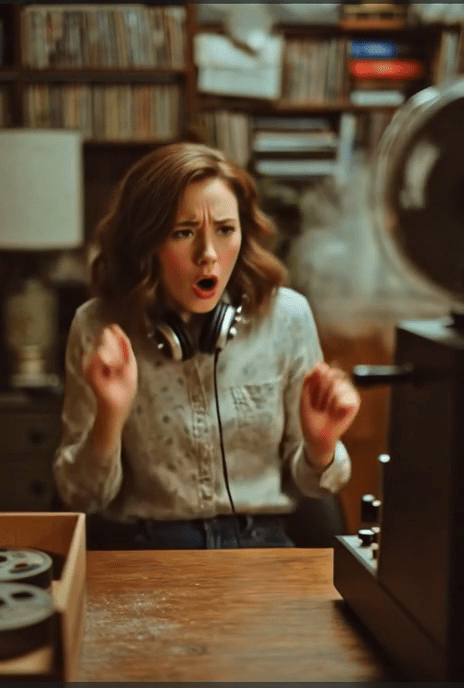
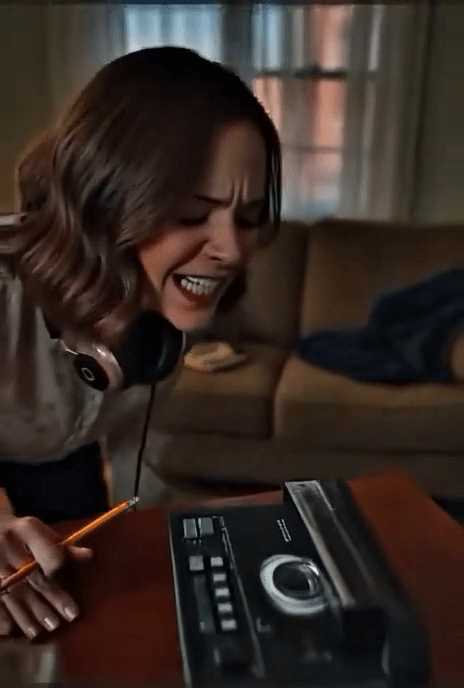
The air smells of dust and old paper. EMMA (30s), a sound archivist, adjusts a large reel-to-reel tape recorder on a cluttered desk. She’s just moved into her late grandmother’s apartment. A box of old tapes sits beside her.
She selects a tape labeled “For My Darling Eleanor – 1965” and threads it. She hits play. After a hiss, a man’s warm, laughing voice fills the room.
TAPE VOICE (V.O.)
Happy anniversary, my love. I’m forever yours.
Emma smiles, touched. But as the message ends, the tape hiss doesn’t stop. It deepens, warps. A new sound emerges from the speakers: slow, wet, dragging footsteps. Then, a whispered voice, layered under itself a dozen times.
WHISPER (V.O.)
I’m… here… in… the… walls…
Emma jolts, slamming the stop button. Silence. She shakes her head, blaming fatigue.
SCENE 2
INT. APARTMENT BEDROOM – LATER
Emma tries to sleep. The apartment is quiet. Then, a faint, rhythmic thump-thump-thump comes from the wall behind her headboard. It matches the dragging footsteps from the tape.
She presses her ear to the floral wallpaper. Cold seeps through it. The thumping stops. Now, the whispered voice comes not from a speaker, but from the plaster itself, faint but clear.
WHISPER (O.S.)
Let me… out…
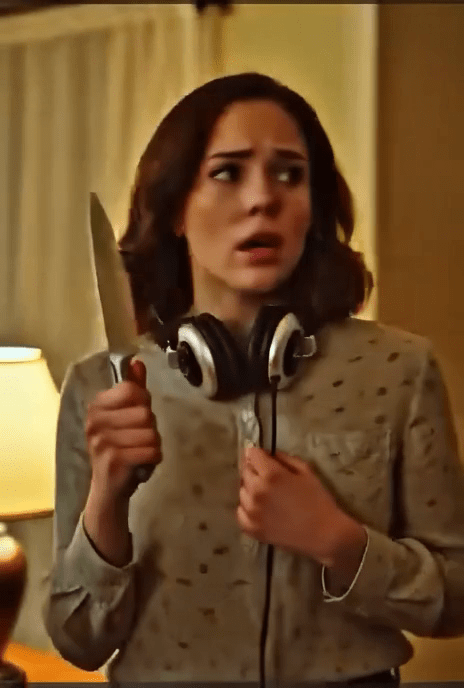
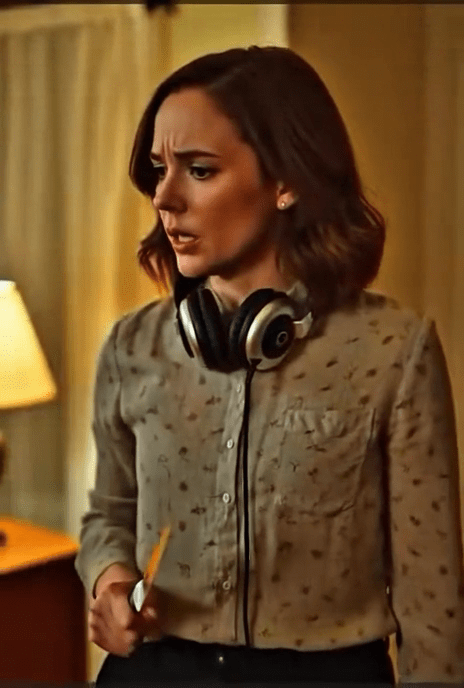
She scrambles back, heart hammering. She spends the rest of the night with every light on, clutching a kitchen knife.
SCENE 3
INT. APARTMENT LIVING ROOM – DAWN
Pale light filters through dirty windows. Desperate, Emma plays every tape in the box. Each one starts with a benign memory—a birthday, a holiday greeting—but each one decays into the same horrifying epilogue: the dragging steps, the layered whisper begging for release.
On the final tape, her grandmother’s voice, frail and terrified, cuts in after the whisper.
GRANDMOTHER (V.O.)
I hear it too. It learns. It grows. Don’t listen, my child. Smash them all.
SCENE 4
INT. APARTMENT HALLWAY – DAY
Emma gathers the tapes to destroy them. As she lifts the box, the hallway lights flicker and die. From the bedroom, the reel-to-reel machine whirs to life on its own, blasting the cacophony of whispers from every tape at once.
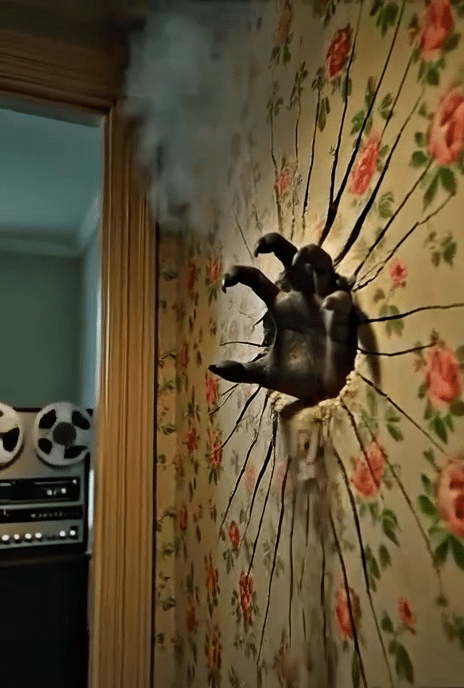
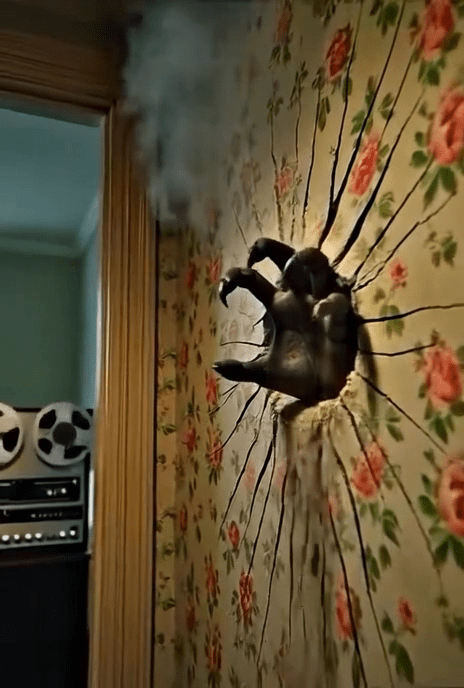
The floral wallpaper in the hallway begins to bulge. Something is pressing against it from inside the wall, forming the shape of a gaunt, straining hand. The plaster cracks, and a puff of freezing, grave-damp air sighs out.
The whispering consolidates into one clear, hungry sentence that comes from all around her.
THE WHISPER
I’M… ALMOST… OUT…
SCENE 5
INT. APARTMENT – MOMENTS LATER
Emma stands frozen, the box of tapes heavy in her arms. The bulging hand in the wall peels back a long strip of wallpaper, revealing not lathe and plaster, but a void of impossible darkness. The dragging sound is loud now, just behind the surface.
She looks from the tearing wall to the machine still spitting its cursed audio. Her grandmother’s warning echoes in her mind. Smash them all.
But the thing in the walls doesn’t want the tapes destroyed. It wants them played. It’s the only way it can fully cross over.
Emma makes a choice. She runs not away from the machine, but toward it, her hand reaching for the “RECORD” button.
 Home Home sweet sweet home