Absolutely — I’ve got you.
Below is a human-sounding, creator-to-creator blog post based on your Puff story workflow. It’s written to feel personal, practical, and experience-driven, not like an AI article. Keywords are naturally woven in (SEO + GEO friendly) without stuffing.
How I Created a Family-Friendly Animated Story Using AI (And Why Content Creators Should Pay Attention)
If you’re a content creator, you’ve probably heard people say two very different things about AI:
- “AI is killing creativity.”
- “AI is saving me hours of work.”
After creating my own short animated story — The Little Cloud Who Wanted to Help — I can confidently say the truth sits somewhere in the middle. AI didn’t replace creativity. It amplified it.
This blog breaks down how AI can be used responsibly to create original, monetization-safe, family-friendly animated content, especially if you’re a YouTube creator, storyteller, or digital content producer.
Why Family-Friendly Animated Content Is a Smart Niche
Family-friendly and kids’ content has always been in demand, but in recent years it’s become one of the most stable niches for long-term growth.
Parents are actively looking for:
- Calm, positive stories
- Screen-time content they can trust
- Short animations with meaningful morals
For creators, this means:
- Evergreen content
- Strong watch time
- Global audience reach
And yes — it’s possible to do this without a big studio, expensive software, or a full animation team.
The Storytelling Foundation Still Matters Most
Before any AI tools came into play, the story came first.
The Little Cloud Who Wanted to Help is a simple, gentle narrative about kindness. A small cloud sees a sad park, tries to help, struggles a little, and eventually succeeds with help from the wind and sun.
This matters because:
- AI tools work best when guided by clear intent
- Simple stories translate better across cultures and languages
- Emotional clarity improves audience retention
No algorithm can fix a weak story — but a strong story can shine even with simple visuals.
Using Text-to-Image AI Without Losing Originality
One of the biggest fears creators have is “reused content” or “AI-generated spam.” That fear is valid — but it’s also avoidable.
Instead of downloading random images, I used custom text-to-image prompts for each scene. The key was consistency:
- The same character description in every prompt
- Clear scene intent
- A storybook illustration style
This approach ensures the visuals feel cohesive and original, even though AI is part of the process.
For content creators, this is a major advantage:
- No copyright issues from stock images
- Unique visual identity
- Full creative control
Voice-Over: Why Calm AI Narration Works Better
For the voice-over, I chose Google AI Studio, focusing on a warm, gentle storytelling tone.
Here’s something many creators overlook:
For kids and family content, less emotion is more.
A calm, slow, friendly narration:
- Feels safer to parents
- Is easier for children to follow
- Works well globally, even for non-native English speakers
By using clear style instructions instead of exaggerated voices, the final result felt natural — not robotic.
Editing and Timing: Where Creators Add Real Value
The animation itself was assembled in CapCut, with:
- Slow zooms instead of fast cuts
- Gentle background music
- Pauses that let the story breathe
This is where creators differentiate themselves from low-effort AI content.
AI may help generate assets, but editing is still a human skill. Timing, pacing, and emotional flow can’t be automated well — and YouTube’s algorithm notices the difference.
SEO, GEO, and Discoverability for AI-Assisted Content
From an SEO and generative engine optimization (GEO) perspective, transparency matters.
Instead of hiding AI use, I clearly disclosed it in the description. This builds trust with:
- Viewers
- Platforms
- Future AI search systems
Search engines are increasingly prioritizing:
- Original intent
- Clear authorship
- Helpful, human-focused content
That applies to blogs, videos, and even AI-assisted storytelling.
Is This Monetization-Safe?
For creators wondering about monetization, here’s the short answer: yes, if done right.
Key points:
- Fictional characters (no real people)
- Original scripts and prompts
- AI disclosure without deception
- Added human editing and narration
This combination aligns with YouTube’s current guidelines and avoids the common pitfalls that lead to demonetization or rejection.
Final Thoughts for Content Creators
AI is not a shortcut to success — but it is a powerful creative assistant.
For content creators willing to:
- Learn storytelling basics
- Use AI thoughtfully
- Add personal judgment and editing
The opportunities are huge, especially in family-friendly and animated niches.
If you’re on the fence about AI in content creation, my advice is simple:
Use it as a tool, not a crutch.
That’s where the magic happens.
The Story
🌟 Short Cute Animated Story
Title: “The Little Cloud Who Wanted to Help”
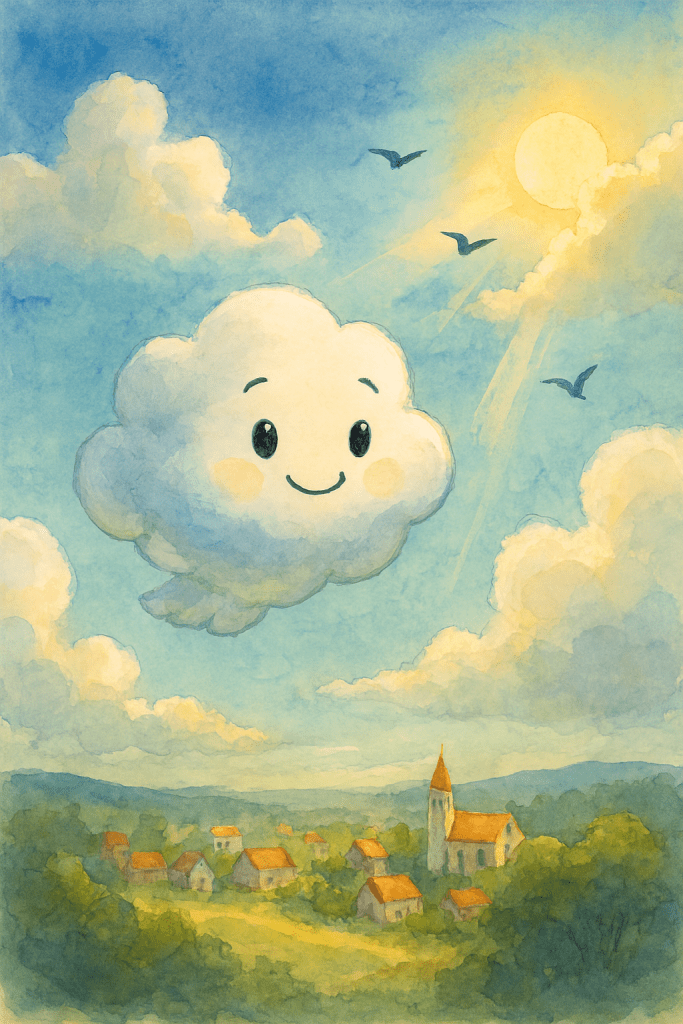
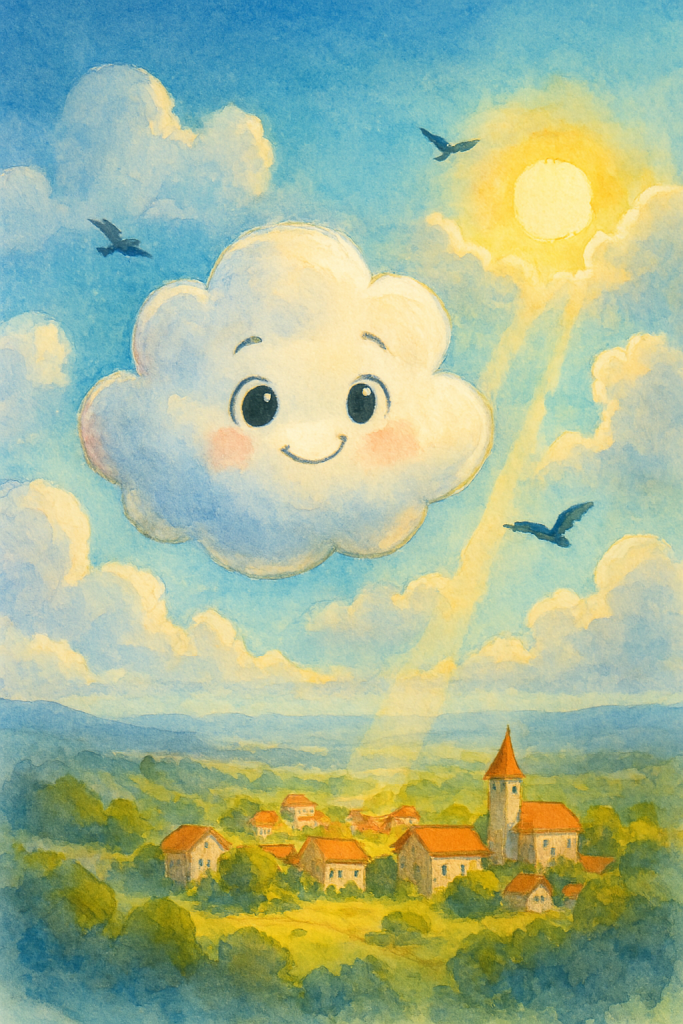
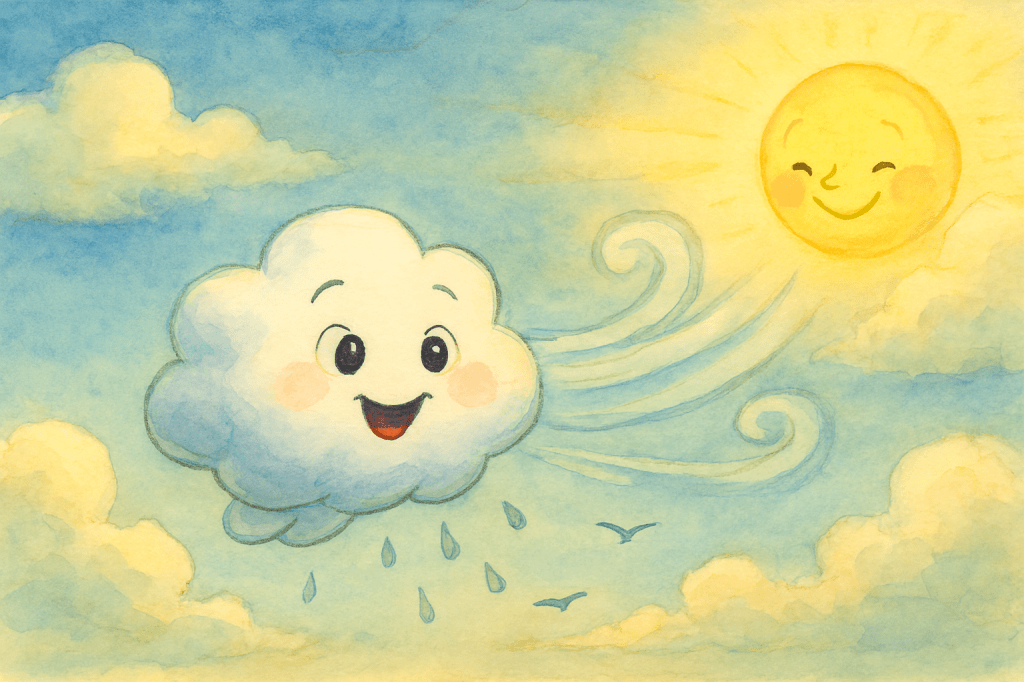
High above a cheerful town lived a tiny, fluffy cloud named Puff.
Puff loved watching people below—kids playing, birds flying, and flowers dancing in the wind.
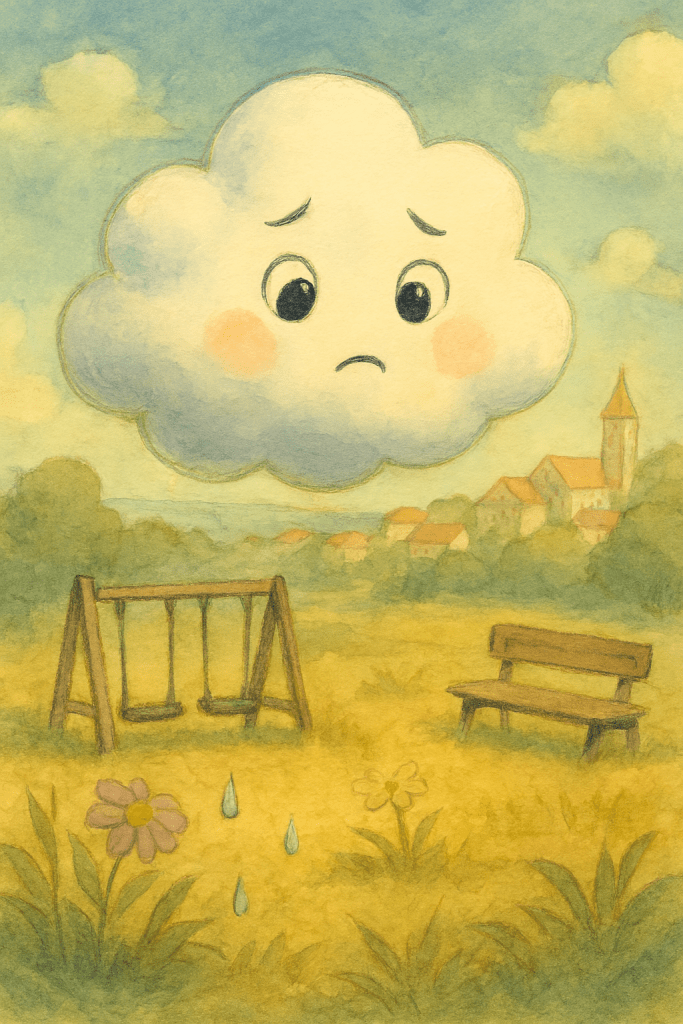
One day, Puff noticed the town park looked sad.
The flowers were droopy, the grass was dry, and the children had stopped playing there.
“I want to help,” Puff whispered.
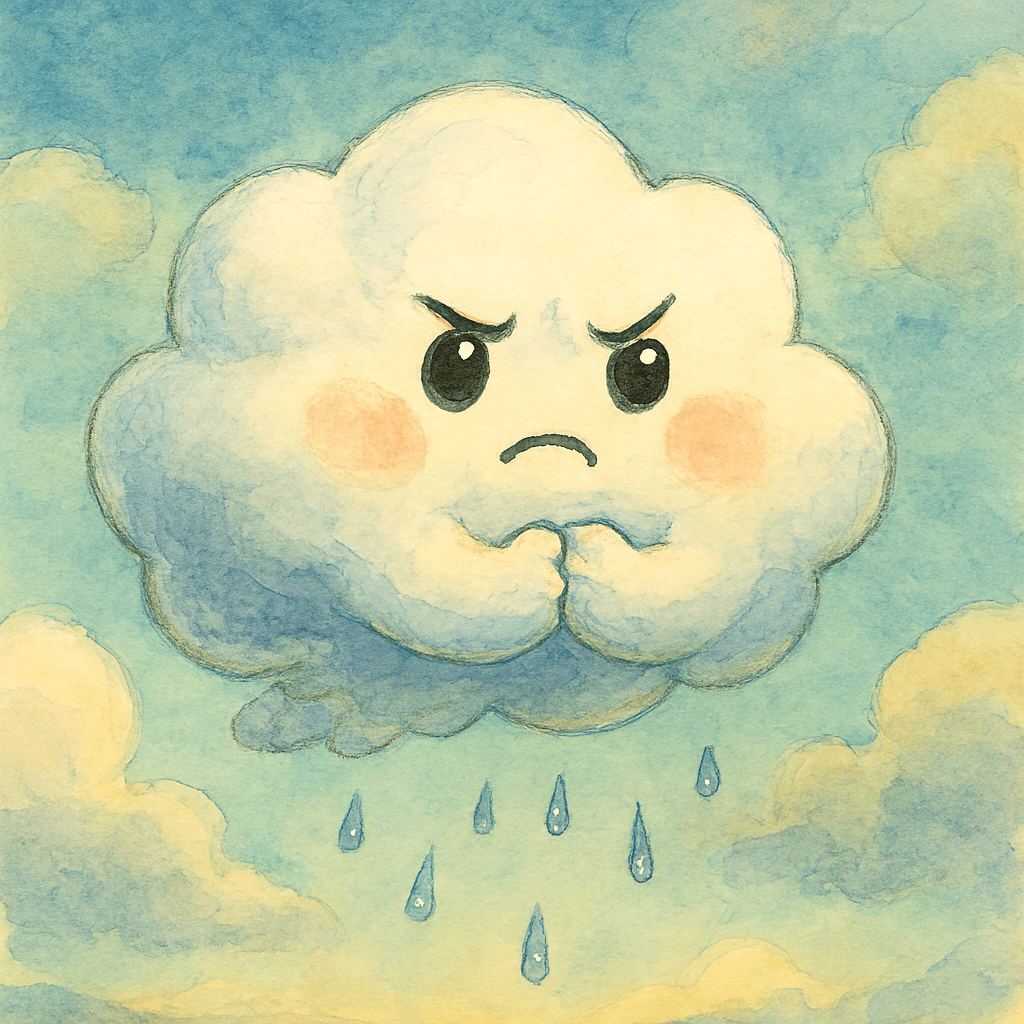
Puff tried to rain, but only a few drops fell.
So Puff floated around, asking the wind and the sun for help.
The wind gently pushed Puff over the park.
The sun smiled and warmed Puff just enough.
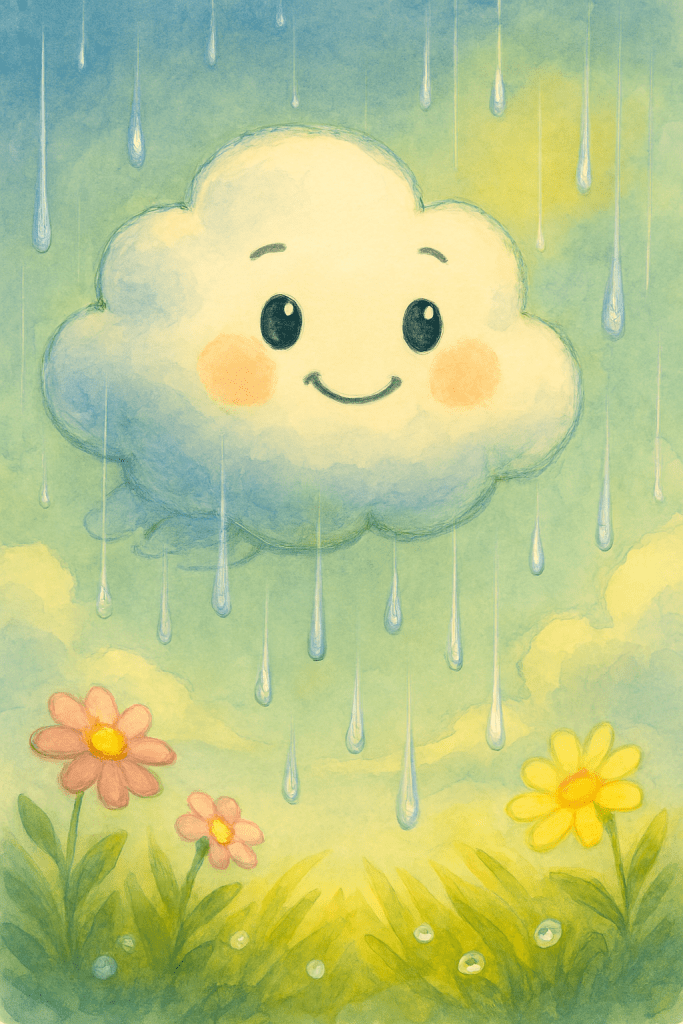
Slowly… drip, drip, drip… 🌧️
A soft rain fell.
The flowers stood tall again.
The grass turned green.
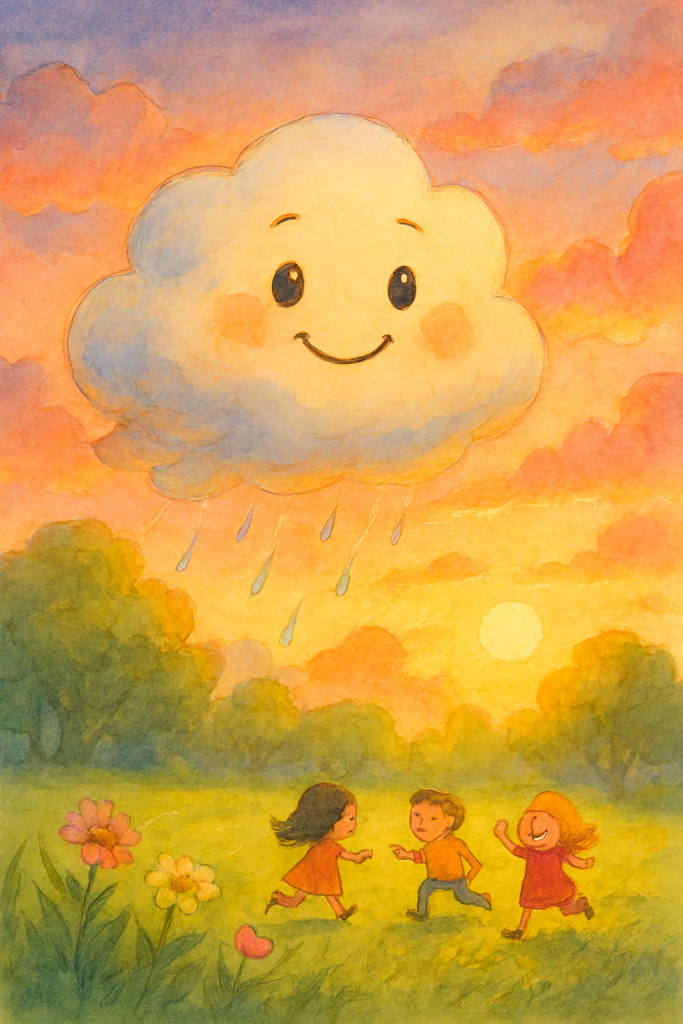
Children ran back to the park, laughing and playing.
Puff felt happy and proud.
That night, Puff glowed pink and gold in the sunset, knowing that even small clouds can make a big difference ☁️✨
Moral: Even small kindness can brighten the world.
🎬 Scene Breakdown (Perfect for Animation)
Scene 1: Sky Introduction
- Visual: Blue sky, fluffy clouds, birds flying
- Puff floats happily, watching the town below
- Text/Narration:
“High above a cheerful town lived a tiny cloud named Puff.”
Scene 2: The Sad Park
- Visual: Dry park, drooping flowers, empty swings
- Puff looks worried
- Text/Narration:
“One day, Puff noticed the park looked sad.”
Scene 3: Puff Wants to Help
- Visual: Puff trying to rain but only a few drops fall
- Text/Narration:
“Puff wanted to help, but it wasn’t easy.”
Scene 4: Friends Help Puff
- Visual: Wind gently pushing Puff, sun smiling warmly
- Text/Narration:
“With help from the wind and the sun, Puff found courage.”
Scene 5: The Gentle Rain
- Visual: Soft rain falling on flowers and grass
- Flowers slowly bloom
- Text/Narration:
“Drip… drip… a gentle rain began to fall.”
Scene 6: Happy Ending
- Visual: Kids playing, park full of life, Puff glowing at sunset
- Text/Narration:
“Puff learned that even small clouds can make a big difference.”
🛠️ Best FREE Tools for Each Step (Beginner-Friendly)
✅ 1. Script & Storyboard
Free tool:
- ChatGPT (you’re already using it 😉)
- Canva (Free) – storyboard pages + text
✅ 2. Animation Creation (BEST FREE OPTIONS)
🥇 Blender (100% Free – Best Long-Term)
- Full 2D & 3D animation
- Works great for simple cartoon clouds
- Huge YouTube tutorial support
👉 Best if you want YouTube monetization safety
🥈 Pencil2D (Very Easy – Free)
- Simple 2D hand-drawn animation
- Perfect for kids stories
- Very lightweight
🥉 Canva Free (Fastest for Shorts)
- Drag-and-drop animation
- Limited but beginner-friendly
- Good for YouTube Shorts & Reels
✅ 3. AI Voice (Free Options)
- ElevenLabs (Free tier)
- PlayHT (Free plan)
- CapCut Free (built-in voices)
✅ 4. Video Editing & Export
- CapCut Free
- DaVinci Resolve Free
If you want to make this with images then

 Home Home sweet sweet home