Link to buy the book from Amazon
Use uplifting music.
A classic. Use inspiring and motivating music to pump up yourself before leaving for an important day, before a big test or meeting, before anything that might make your confidence unstable. This works pretty well as a temporary state-booster. Music is a fantastic way to boost your self-confidence as you can listen to it whenever you need a quick boost of confidence.
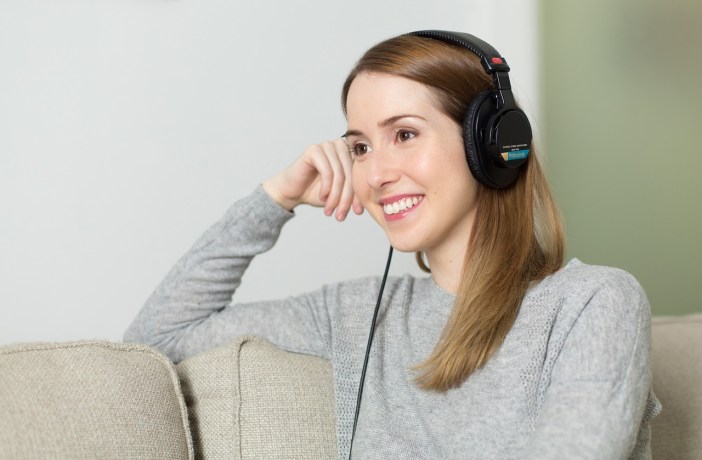
Singing is also a powerful way to boost your self-confidence. It doesn’t matter how good or talented you are, the process of singing has a range of benefits. As well as helping to boost self-confidence, singing has many benefits to other areas of your life. The benefits are enormous and you, too, can use singing to boost your self-confidence.
Excellent music will energize you and helps you to forget your problems and worries, which is important when facing the challenges of your life!
Using musical instruments to establish a foundation of confidence will strengthen a persons music abilities and desire to play, but it also affects many aspects of his/her personal and professional life. This multidimensional effect stems from the ups and downs of acquiring a new skill, learning with peers and recognizing successes. Even if the notes aren’t played properly every time, music can be a big confidence booster for a person.

Just about anyone can sing, all you need is a voice. If you can talk, you can sing, regardless of how well you do it. Most children sing, therefore the physical capability is there. Children don’t worry about how they sound, they just enjoy it. By the time we become adults, many of us are conditioned to be overly critical, and even ashamed of our voices. Many people even fear singing. Why can’t adults be more like children?

We are all born with very high self-confidence, but often it is gradually eroded by emotional trauma of varying degrees. People grow up and get the shine knocked out of them. Have you noticed that most children seem to bounce into this world with a really hefty amount of self-esteem? Really. If you”ve ever chatted to a kid about their crappy crayon drawing or pasta art, you”ll immediately see that there”s no pretend humility, no self effacement. Just pride and confidence. Ask them what they want to be and they”ll tell you “a unicorn trainer”.
How Singing Boosts Self-Confidence
Singing has a range of physical and mental health benefits. Singing is great for your self-confidence because:
- It helps to release your stress inhibitions and it gives you the freedom to be yourself. And happy
- It’s very personal and a way of nurturing yourself as a person and you also will enjoy it
- It lifts your mood and it’s fun to listen and brings people together.
- It distracts your mind from negative thoughts and changes it to positive thoughts and you feel happy.
- It helps with breathing, relaxation and slowing your heart rate and you are motivated
- It helps to relieve stress ,muscle tension .and you are ready for a new challenges
- It helps with focus , concentration and dedicated to your tasks.
- It helps with mindfulness and being in the present moment and enjoy life.
- It can be meditative also.
- It’s challenging and rewarding every time.
- It gives you meaning and purpose for life.
- It takes you out of your comfort zone and it’s empowering and motivates you.
- It gives you a sense of achievement and unifying .
- It’s a way of expressing yourself and your emotions to others
-
It’s a way of meeting new people, especially when you join a group or a singing band.
Mastering a musical instrument will foster a persons sense of pride, confidence and self-worth. The benefits of music don’t just stay in the music classroom Even if the person experiences a rough start to this musical journey, each new skill he/she acquires or musical piece he/she plays well will be rewarding. As a person learns to read and play music on her/his instrument, not only will she/he be increasing her/his knowledge base and competence level in music, but her/his competence may improve, her/his problem-solving skills will be strengthened and her/his ability to stay on task will improve, With this may come a new sense of purpose that banishes boredom, doubt, negative personal thoughts and feelings of aimlessness. His/her self-esteem will also be strengthened as he/she learns to coordinate his/her fingers and body to play the instrument properly, read the music and executes the notes to create a pleasing sound.


 Home Home sweet sweet home