Link to buy a book from Amazon
https://amzn.to/3xMaojl
Before we get to understand how to hypnotize yourself to derive all the benefits, it is perhaps important that we learn the basic just to help us build a solid foundation. The word hypnosis comes from the Greek word “hypos” which means sleep. It is an abbreviation of the term neuro-hypnotism which means sleep of the nervous system. This blog contains proven steps on how to perform self hypnosis, for beginners, Amazing ways to change your mind, change your life and feel great now.
Hypnosis is not exactly a new concept. You are probably not aware of this, but hypnosis has been used since the ancient times to cure people suffering from any mental or physical illness. Self hypnosis is an extremely liberating practice, because it allows you to tap into both the conscious and subconscious areas of your mind and free yourself from almost any barriers imaginable.
Have you ever seen old horror films and television programs that portray hypnosis as a frightening instrument of mind control where unscrupulous villains enslave the will of helpless victims? Many people are scared of hypnosis because of so many scary things that they have heard about hypnosis. Perhaps you have seen stage shows where a hypnotist seems to be able to use their “hypnotic powers” to make people do and say things that they would never do or say under normal conditions. These popular misconceptions have caused fear and apprehension in people”s minds that they would rather avoid the practice regardless of the benefits it holds for them.
If so, it is not surprising that hypnosis may seem just a little bit wacky, not unlike other seemingly mystical and unexplained phenomena. The movie industry and the media have been largely responsible for these misrepresentations. This is unfortunate because hypnosis is, in fact, a serious therapeutic tool that can help people overcome many psychological, emotional and even some physical problems. This is pure fiction and very far from what hypnosis is about, how it is conducted and what it is used for.
People have been entering into hypnotic type trances for several years- we are talking about thousand and thousands of years ago. Hypnosis efficiently calms and puts the mind at a tranquil state. The state of hypnosis can best be described as a state of highly focused attention with heightened suggestibility. In its simplest term, hypnosis is a trans state, which is usually characterized by extreme relaxation, suggestibility, and heightened imagination, which is far different from sleep, Unconsciousness or mind-control because you are actually alert Aware, in control, in a natural and harmless state and able to come out of hypnosis when you wish to.
Hypnosis is done with complete focus and concentration on certain matters. Self-hypnosis is often used to modify behavior, emotions and attitudes. Self-hypnosis is a process of an individual causing hypnotic induction without any assistance. When it comes to self hypnosis, you need to know that it is just like ordinary hypnosis but there is no hypnotizer who hypnotizes you in his premises.
Self Hypnosis is the perfect framework, in which we can trigger change, motivation, and a shift in mindset. For instance, many people use self-hypnosis to help deal with the problems of everyday living. Self-hypnosis can boost confidence and even help people develop new skills. It is something close to daydreaming or a state in which you feel as if you are losing yourself in a movie or book while you are fully conscious but out of tune to much of the external stimuli around you except the subject at hand. A great stress and anxiety reliever, it can also be used to help overcome habits such as smoking and overeating/weight loss.
When you are in this state, you sort of have no other thought going on in your mind. It mostly uses imaginary objects-for instance, your focus spot and repetition (Suggestions). You will be guided into a highly relaxed state. You will not be asleep and you will be aware of what is happening throughout. Once you are in this state, your hypnotherapist (or yourself) will communicate with your unconscious, using questions and positive suggestive statements to challenge your limiting beliefs.
The statements used will depend on your personal circumstances and will relate to any particular confidence issues you feel you have. The premise behind hypnotherapy is that when your unconscious believes you are confident, this translates to your conscious. This therefore changes your thought patterns and actions to improve your confidence. The benefits of self hypnosis are that you can achieve control over your pain and stress without the help of trained specialists. In other words, with hypnosis, you can use your mind to achieve feats that you would n”t be able to tap into the mind”s limitless power to unleash more potential from you.
Who among us is not influenced by, suggestion? Aren”t we all as we have seen, influenced by the suggestion? Of advertisement? Don”t we all have tendency to believe what we read in the paper, hear on the radio or see on television ? Aren”t we all convinced that a name brand article is better than one that is not so well known.
Over the last decade we have found that one of the most common uses for self hypnosis is confidence building, Self-confidence isn’t there just to make you feel good. We need self-confidence to drive our aspirations to make them real; it’s as much a vehicle as a destination in itself. What’s more, when you are self-confident others feel it and can’t help but respond. Confidence is a state of mind. When we feel confident, we accept ourselves and believe in our abilities. When we don’t feel confident, we can become stressed, anxious, unfulfilled and ultimately unhappy.
Self-confidence gives you the freedom to make mistakes and cope with failure without feeling that your world has come to an end or that you are a worthless person. Self -hypnosis or hypnotherapy can be a successful way of reducing stress and opening the mind to new ideas to thought processes, especially when dealing with problem behavior such as certain addictions and self confidence.. We hear a lot about having the confidence to be successful, but it takes self-confidence to fail and manage that failure in ways that don’t damage your self-esteem.
This is important: Self-confidence doesn’t consist of knowing for sure something will go well. It has more to do with relaxing with the certainty that you can handle uncertainty, even if that means some kind of failure. Hypnotherapy is essentially a way of reprogramming how we think. Real self-confidence imbues you with an overriding sense of “whatever happens, I’ll be okay!” It’s bigger than both success and failure.
Have you ever met someone who despite constant reassurance and approval, lacks confidence in their abilities? There are many self-hypnosis resources available for people who lacks confidence. Or perhaps you know someone who thinks they are fantastic at what they do, despite other people telling them otherwise? This happens because of their confidence in their abilities.
The essence of self-confidence is having faith not only in your own abilities but also in your own potential. There exists a lot of skepticism and suspicion around the subject of hypnotism, especially in Western cultures. This skepticism stems partly from hypnosis being used as a form of entertainment and also from some of the original theories on the subject. So if a person lacks confidence his/her mind set can be changed with self hypnosis . This happens because our unconscious holds a set of beliefs about us that stay the same, regardless of external factors. So a singer who believes deep in their unconscious that they have a terrible voice, will likely avoid performing, even if people tell them they have a great voice.
Self-confident people are adventurous experimenters who keep an open mind and don’t assume that something will go badly – or even well. They simply enjoy making a start and finding out later. The more you try in life, the more you build self-confidence through discovering how to manage lots of different situations. Furthermore, hypnosis and hypnotherapy can be used to help boost self-esteem and personal confidence as well as to overcome related problems, such as a fear of public speaking.
Hypnotherapy accesses the unconscious mind and uses the power of suggestion to facilitate positive change. The human mind can be split into three distinct areas of consciousness; the conscious, subconscious and unconscious. It can be useful to think of each part of the mind on a scale of depth. The subconscious mind is below consciousness most of the time, a deeper level – it is therefore not so easily accessible and controls how we may feel or react to certain situations or circumstances, based on what we have learn t through experience, in the past. It also controls and regulates our essential bodily functions, such as breathing.
The unconscious mind is the deepest part of our mind and is much more difficult to reach – it can include suppressed memories of traumatic events.
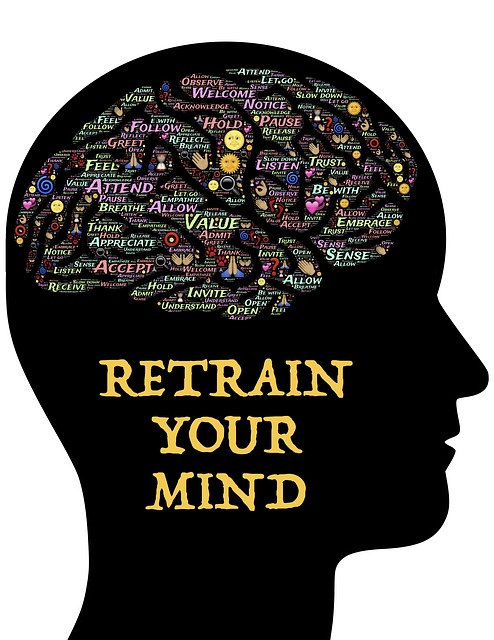
Hypnotism works by reaching a relaxed state whereby it is possible to sink deeper into our minds and rewrite or reprogram our subconscious.
Through physical and mental relaxation, self-hypnosis can allow people to bypass their conscious minds and introduce positive thoughts and ideas into their unconscious. Upon ‘awakening’ from the hypnotic state the new thoughts and ideas in the subconscious will, eventually, affect the conscious mind and can, in turn, lead to changed behaviors.
Hypnotherapy does not claim to be a ‘quick fix’, such methods require perseverance and practice in order for the subconscious mind to pick up and apply the new messages.
These suggestions can be tailored to help improve confidence levels. Generally these suggestions will be positive and made in the present tense. For example the phrase “you feel confident in everything you do” would be used rather than “you no longer doubt yourself”. The theory behind this is that the unconscious can’t differentiate between “you have” and “you no longer have”.
Hypnotherapy has the power to tap into your unconscious to bring out traits you already have. the conscious mind is the top or shallowest part of the mind and is responsible for making sense of the things we are directly aware of – like stress levels. It cannot add personality traits or change your personality. Everyone is born with confidence; it is the false beliefs that for one reason or another end up in our unconscious that deplete our confidence. By unlearning this, our confidence levels return to how they would be naturally.
While self-confidence and self-esteem are usually linked, they are not the same thing. When we talk about self-confidence we are referring to the way we feel about our ability to carry out tasks and roles. Self-esteem refers to the way we feel about ourselves – the way we look, behave and think.
Those with low self-esteem generally have low self-confidence too. Having said this, people with low self-esteem can have confidence in certain areas and those with high self-esteem may lack confidence in certain areas.
Having confidence in your abilities does not mean performing tasks perfectly. In fact, a big part of having self-confidence is knowing how to deal with mistakes when they occur.
Over the last decade we have found that one of the most common uses for self hypnosis is confidence building, so we thought that it would be a good idea to explain just how you might build self confidence using hypnosis.
As our starting point, let’s take a look at how you build self confidence in the real world. How do you get to the point where doing something scary just isn’t scary any more?
Well basically, you do it and do it until it just isn’t scary any more! Hardly a deeply insightful answer, but true. Think of anything you have mastered that was difficult at first, and you’ll see that’s what happened.
Fear, or lack of confidence, is all about uncertainty, and once you have done something enough for the uncertainty to mostly disappear, the fear disappears too.
People who lack confidence, misuse self-hypnosis without even knowing they’re doing it. So many people waste time imagining how awful they’ll feel ‘when’ things go wrong. They worry about how they’ll cope with humiliation, defeat, failure, insult or being thought of as weird or ‘a loser’. No wonder they fear to even try. They have a negative mind set.
This is a destructive, uncontrolled form of self-hypnosis. Misusing the imagination to rehearse feeling bad about yourself is a fast-track route to self-doubt. Get into the habit of doing the opposite.(positive thinking).
Think about when you want to feel confident specifically. Close your eyes and rehearse feeling and acting boldly with decisiveness and focus. When we stop worrying about what might go wrong, we can start focusing on what might go right; and when we do that, things are more likely to go well for us.(positive mindset).
Self-Hypnosis
In order for self-hypnosis or prescribed hypnotherapy to work successfully it is important to approach the process with an open mind.

WANT to be hypnotised : To be hypnotized either by yourself or by another individual you need to be motivated. If you believe in it, then it will happen. If you fail to believe, the the results will be unknown.
Not be overly sceptical : If you have no desire to be hypnotized , then it will not be effective . It is similar to religion: If you believe that God exists, you do not need proof of his existence as you have faith.
Relaxation : The subject who wishes to be hypnotized must be relaxed. Relaxation and the clearing of the mind are crucial for a successful hypnosis.
Concentration : You need to be able to concentrate. You need to remove everything out of your head, except for the thoughts associated with your goal and objective.
Direction : You also need to think about why you are going to use self-hypnosis and what messages you want to give yourself – what ideas you wish to plant into your subconscious. Work on some short statements that you are going to use when you reach a hypnotic state. The hypnotic suggestion should be adjusted to the goal of the person and it should be phrased in most effective way to have the best possible influence on the subconscious mind.
Return to reality : You should eventually return from the state of hypnosis to everyday reality. For this purpose count from 5 to 1 and when you reach one say: “Awake” or “Wide Awake”.
Hypnosis statement :Your hypnosis statement should be
- Genuine and honest
- Positive
- Simple
Get into comfortable clothing. It’s pretty hard entering any kind of deep, relaxed state when all you can think about is the waistband of your jeans cutting off your circulation. So take this as an excuse to throw on some sweats. You want absolutely nothing distracting you.
To start the process you need to feel physically relaxed and comfortable. Try using a basic relaxation technique .
Go to a quiet room and sit in any comfortable chair, couch, or bed. Although some people prefer to lie down, you are more susceptible to sleep than when sitting up. Whether you sit or lie, ensure that you do not cross your legs or any part of your body. You may be in this position for a while and this could end up being uncomfortable.. The place that you have chosen for your self hypnosis should have no distraction or the possibility of distractions.
No self-hypnosis is effective if it gets interrupted by a phone call, a pet, or a kid. Turn off your phone (and the alerts), lock the door, and sequester yourself. This is your time.
-
The amount of time you want to dedicate to this is up to you. Most prefer to be in a trance (we try to avoid that phrase as it has certain…err…negative connotations) for about 15 or 20 minutes, but you have to a lot of time to get in and out of it, too.
Figure out your hypnosis goals. Are you doing it just to relax? For self-improvement? To train your brain? If you’re doing it to achieve a greater end (weight loss, quitting smoking, anxiety etc.), prepare a list of affirmations. As I have said before your statement should be Genuine and Honest, positive, simple. Self-hypnosis can be used just for relaxation, sure, but it can be for a number of life-enhancing things, too. Many use it to achieve their goals, change their thinking, or just as general positive reinforcement or motivation.
Entering Hypnosis.
-
Find an object that you can focus your vision and attention on – ideally this object will involve you looking slightly upwards on the wall or ceiling in front of you.(a pendulum or a dot on a white paper) Focus on a specific point of object.
-
Clear your mind of all thoughts and just focus on your object. This is obviously quite hard to achieve but take your time to let thoughts leave you.
-
Become aware of your eyes, think about your eyelids becoming heavy and slowly closing. Focus on your breathing as your eyes close, breathe deeply and evenly and relax. Focus on the point, concentrating on your eyelids. Repeat to yourself that they’re getting heavier and heavier and let them close when you cannot keep them open anymore.
-
Tell yourself that you will relax more every time you breathe out. Slow your breathing and let yourself relax deeper and deeper with every breath. Recognize the tension in your body. Beginning with your toes, imagine the tension slowly falling away from your body and vanishing. Imagine it freeing each body part one at a time starting with your toes and working its way up your body. Visualize each part of your body becoming lighter and lighter as the tension is removed. Relax your toes, then your feet. Continue with your calves, thighs, hips, stomach and so on, until you’ve relaxed each portion, including your face and head.
-
Use your mind’s eye to visualize a gentle up and down or sideways movement of an object. Perhaps the hand of a metronome or a pendulum – anything that has a regular, slow and steady swing. Watch the item sway backwards and forwards or up and down in your mind’s eye. (or the dot )
-
Softly, slowly and monotonously count down from ten in your head, saying I am relaxing after each number. ’10 I am relaxing’… ‘9 I am relaxing’ etc. . Feel every part of the body as relaxing.
-
Believe and remind yourself that when you finish counting down you will have reached your hypnotic state.
-
When you have reached your hypnotic state it is time to focus on the personal statements that you prepared. Focus on each statement – visualize it in your mind’s eye, repeat it in your thoughts. Stay relaxed and focused. Repeat your short statements.
-
Relax and clear your mind once more before bringing yourself out of your hypnotic state.
-
Slowly but increasingly energetically count up to 10. Reverse the process you used before when you counted down into your hypnotic state. Use some positive message between each number, as you count. ‘1, when I awake I will feel like I have had a full night’s sleep’ … etc.













 Home Home sweet sweet home