Ultimate Bilbao Weekend Guide: Art, Food & Local Secrets

Meta Description

Plan your perfect weekend in Bilbao, Spain! This ultimate travel guide for art, food, and city explorers covers the Guggenheim, Old Town pintxos bars, and hidden gems. Get practical tips on ferry travel, public transport, money-saving hacks, and day trips. Optimize your Bilbao, Spain, getaway with our SEO and GEO-focused itinerary.

So, you’ve decided to swap your usual weekend on the sofa for a bit of Northern Spanish flair? Excellent choice. Bilbao is like that kid in high school who went away for the summer and came back with a leather jacket, a cool haircut, and a sudden interest in avant-garde architecture. It’s gritty, it’s gleaming, and it smells faintly of grilled octopus and prestige.

Whether you’re here for the world-famous Guggenheim or just to see if you can eat your body weight in pintxos, this city delivers.

Table of Contents

  1. Why Bilbao is the Perfect Weekend Escape
  2. Your Logistics & Money-Saving Blueprint
  3. Day 1: Iconic Art & the Soul of the Old Town
  4. Day 2: City Views, Culture & A Secret Garden
  5. Day 3: Choose Your Own Adventure (Day Trips)
  6. Beyond the Guide: Pro-Tips & Hidden Gems
  7. Frequently Asked Questions (FAQ)

More Than Just a Museum City 

Let’s be honest: for many, Bilbao was a name on a map that suddenly got a giant, shimmering titanium art museum dropped on it in the late 90s. The “Guggenheim Effect” is real—it transformed this industrial port into a global cultural destination. But here’s the secret I discovered on my first visit: Bilbao’s magic isn’t just Frank Gehry’s masterpiece. It’s in the labyrinthine streets of the Casco Viejo (Old Town), where the smell of salt cod and sizzling pintxos hangs in the air. It’s in the sleek, silent trams gliding past centuries-old buildings. It’s the warmth of a local saying “topa!” (cheers!) as you clink glasses of txakoli, the slightly fizzy local white wine.

This guide is designed to help you experience that perfect blend of the iconic and the intimate over a brilliant, busy weekend. We’ll tackle the logistics so you can save time and money, dive deep into the culture, and even uncover a few spots where you might just have a cobblestone plaza all to yourself.

Ready to find the best flight and hotel combo for your trip? I always start my search on Expedia to compare options and snag package deals.

Your Logistics & Money-Saving Blueprint <a name=”logistics-blueprint”

A smooth trip starts with smart planning. Here’s how to get there, get around, and keep more euros in your pocket for pintxos.

Getting There: By Air, Rail, and Sea

Flights to Bilbao

  • By Air: Bilbao Airport (BIO) is well-connected across Europe. The Bizkaibus A3247 goes directly to the city centre (Moyua Plaza) in about 20 minutes for just €3. A taxi costs a fixed €30-€35.
  • By Train: RENFE and FEVE services connect Bilbao to major Spanish cities. The central stations are Abando Indalecio Prieto (for long-distance) and Concordia (a beautiful historic station for regional routes).
  •  🚢 Getting There by Ferry: The Scenic Route

 Hotels in Bilbao

If you fancy arriving like a 19th-century explorer (but with better WiFi and a duty-free shop), take the ferry. It is arguably the most relaxing way to start your holiday. No liquid restrictions, no middle-seat armrest battles, and you get to watch the Spanish coastline rise out of the Bay of Biscay.

Brittany Ferries operates routes from Portsmouth and Rosslare directly into the Port of Bilbao (Zierbena). The journey takes about 28–32 hours, but honestly, with a cabin and a sunset over the deck, it feels more like a mini-cruise.

  • Pro Tip: Book through Direct Ferries to snag the best deals.
  • Logistics: The ferry terminal is about 20 minutes from the city center. You can catch a taxi or use the A8 motorway if you brought your car.

Getting Around Bilbao Like a Pro

Bilbao is a wonderfully walkable city, especially between the main sights. For longer hops, its public transport is cheap, efficient, and clean. Bilbao is a “human-scale” city, meaning you can walk most places. But for everything else, the transport system is slicker than a buttered noodle.

  • Metro: Designed by Sir Norman Foster (his stations are called Fosteritos!), it’s a sight itself. It has two lines and is perfect for getting from the centre to the coast or the Guggenheim. the entrances look like glass shrimp emerging from the ground (locals call them fosteritos).
  • Tram & Bus: The tram (EuskoTran) is handy for riverside routes. Buses fill in the gaps.
  • The Barik Card: Buy this immediately at any metro station. It’s a rechargeable card that works on the metro, trams, and buses. It’ll save you a fortune compared to single tickets. This is your golden ticket. For €3 (non-refundable), you get the physical card, and then you load it with credit. All fares on metro, tram, and bus are about 50% cheaper with the Barik Card than buying single tickets. You can buy and top it up at any metro station.
  • By Car: Not recommended for exploring the city centre. Traffic is tight, and parking is expensive and scarce. Save a rental car for a dedicated day trip.
  • Road Map Tip: To save gas and time, follow the BI-631 for mountain views or the AP-8 for the fastest coastal route toward San Sebastian (check my Master List for more nearby stops!).

Money-Saving Tips for the Smart Traveller

  1. Bilbao Card: If you plan to museum-hop and use transport heavily, check if the Bilbao Card (offering discounts and free transport) makes sense for your itinerary.
  2. Pintxos for Lunch: The best way to eat. Many bars offer a caña (small beer) and a gourmet pintxo for €3-€5. Graze at several spots for a cheap, delicious, and authentic meal.
  3. Free Entry Times: Most museums, like the Fine Arts Museum, have free entry hours (often 6 PM – 8 PM on Fridays or specific weekday evenings). Plan accordingly!
  4. Free Walking Tours: A fantastic way to orient yourself and learn history. Just remember to tip your guide based on what you think it was worth.

A Few Handy Basque & Spanish Phrases

While Spanish (Castellano) is universally understood, Basque (Euskera) is co-official. Locals light up if you try a word or two.

  • Kaixo (kai-sho): Hello
  • Agur (a-goor): Goodbye
  • Eskerrik asko (es-keh-rik as-ko): Thank you
  • Mesedez (meh-seh-des): Please
  • Pintxo (pin-cho): The iconic Basque bar snack
  • Txikiteo (chee-kee-teh-o): The art of going from bar to bar having a small drink and a pintxo
  • PintxoSmall snackPin-cho

The Perfect 48-72 Hour Bilbao Itinerary 

Day 1: Architectural Wonders & Old Town Magic

  • Morning (The Icon): Start at the Guggenheim Museum Bilbao. Book your ticket online in advance to skip the queue. Spend 2-3 hours marvelling at the building itself (the exterior is free to admire!) and the contemporary art inside. Don’t miss Puppy, the flower-covered terrier outside, or Maman, the giant spider.
Guggenheim Museum Bilbao(Expedia)Guggenheim Museum Bilbao(Get Your Guide)
  • Lunch: Walk across the Zubizuri Bridge (the white “glass bridge”) towards the Old Town. Dive into Calle Ledesma or Plaza Nueva for your first pintxo crawl. Just point at what looks good!
  • Afternoon (The Old Soul): Get lost in the Casco Viejo. Visit the grand Bilbao Cathedral and the bustling Mercado de la Ribera (one of Europe’s largest covered markets). For a unique view, take the Artxanda Funicular up the mountain for panoramic city views.
Casco Viejo. (Expedia)Casco Viejo.(Get your Guide)
 Bilbao Cathedral (Expedia) Bilbao Cathedral (Get your Guide)
  • Evening: Enjoy a more relaxed dinner back in the Old Town. Then, experience the local txikiteo ritual on Calle Somera or Calle Jardines.
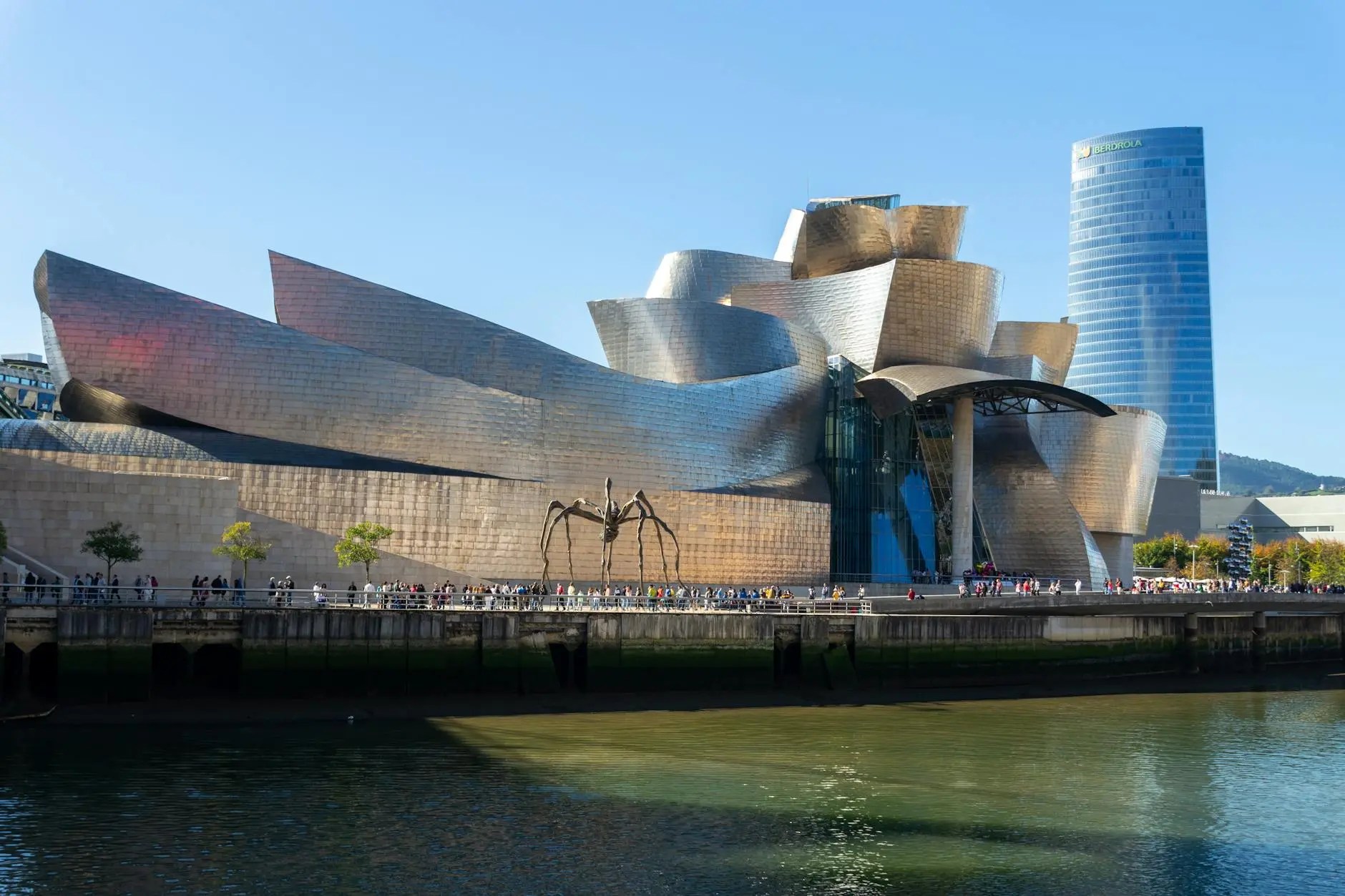
Guggenheim Museum Bilbao exterior with a large spider sculpture in the foreground, reflecting modern architecture and vibrant city life.
The iconic Guggenheim Museum Bilbao, showcasing its stunning titanium façade and the famous spider sculpture, Maman. The Frank Gehry-designed Guggenheim Museum Bilbao, a titanium-clad architectural wonder that transformed the city.
View of the Zubizuri Bridge in Bilbao, Spain, with a curved design above the green waters of the river, framed by lush trees and city buildings.
The stunning Zubizuri Bridge in Bilbao, showcasing modern architecture and scenic views over the river.

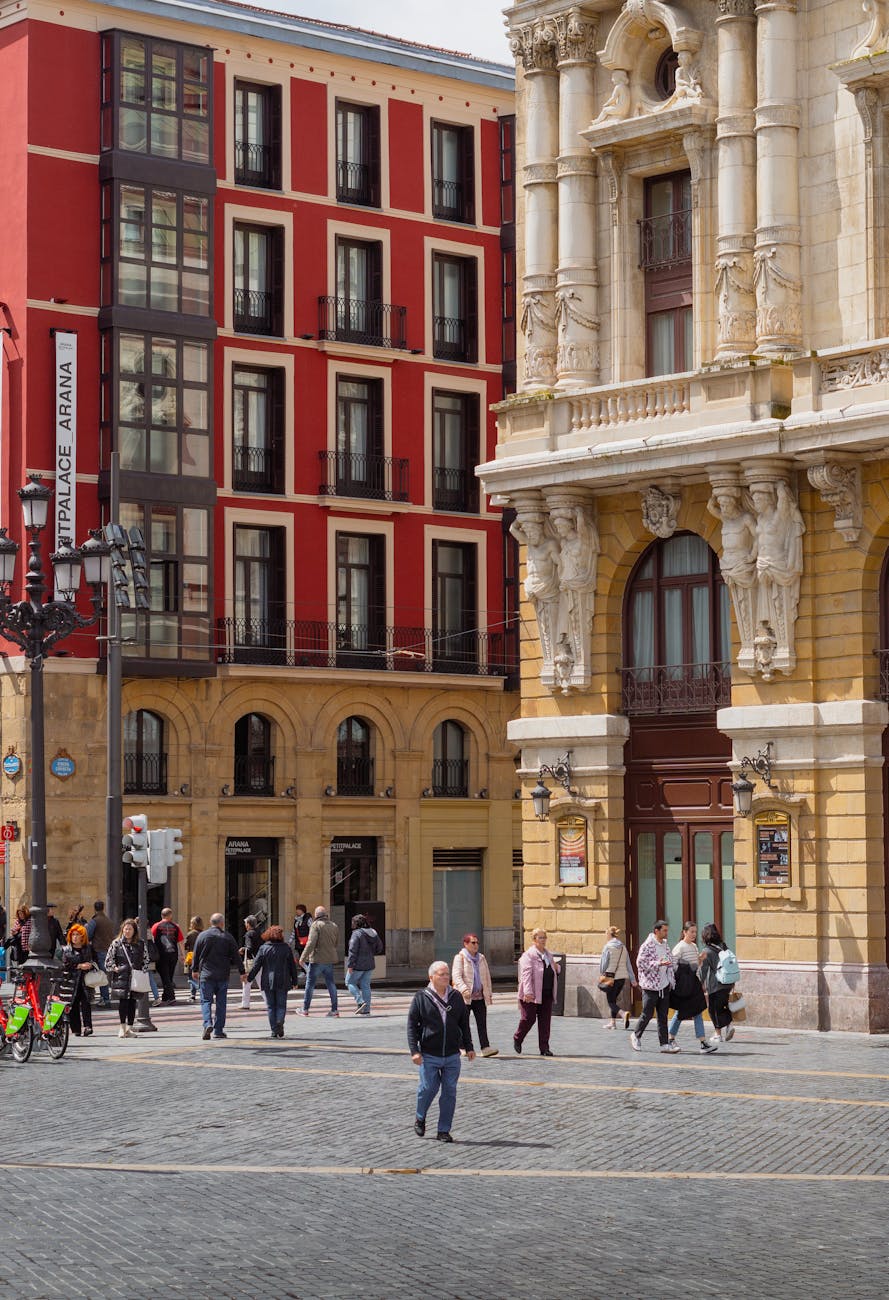
A bustling street scene in Bilbao, Spain, featuring a mix of modern and historical architecture, with pedestrians walking and enjoying the vibrant atmosphere.
A vibrant corner in Bilbao showcasing a mix of modern and classic architecture, bustling with people.
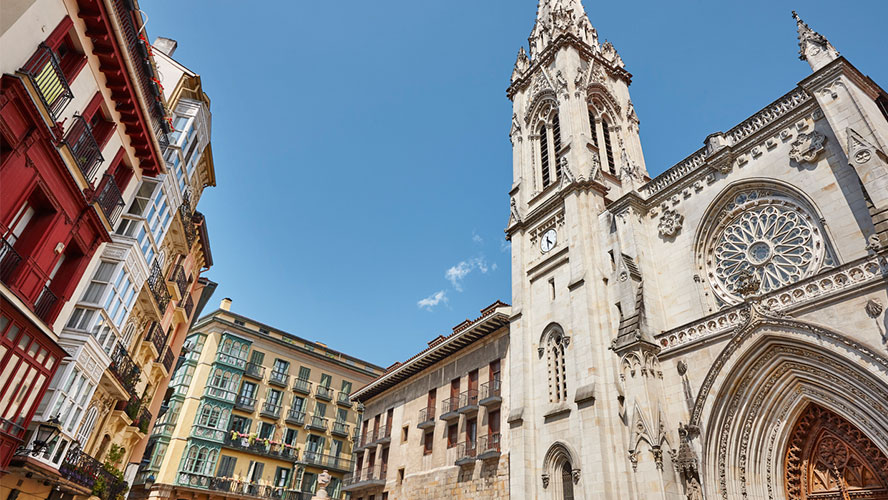
Historic architecture featuring a church tower and surrounding colorful buildings under a clear blue sky.
The stunning facades of Casco Viejo, featuring colorful buildings and the iconic Bilbao Cathedral, bathed in sunlight.

Day 2: Culture, Views & The Modern District

  • Morning: Visit the Museo de Bellas Artes (Fine Arts Museum), a world-class museum often overshadowed by the Guggenheim but holding masterpieces from Goya to Gauguin.
Museo de Bellas Artes (Expedia)Museo de Bellas Artes (Get Your Guide)
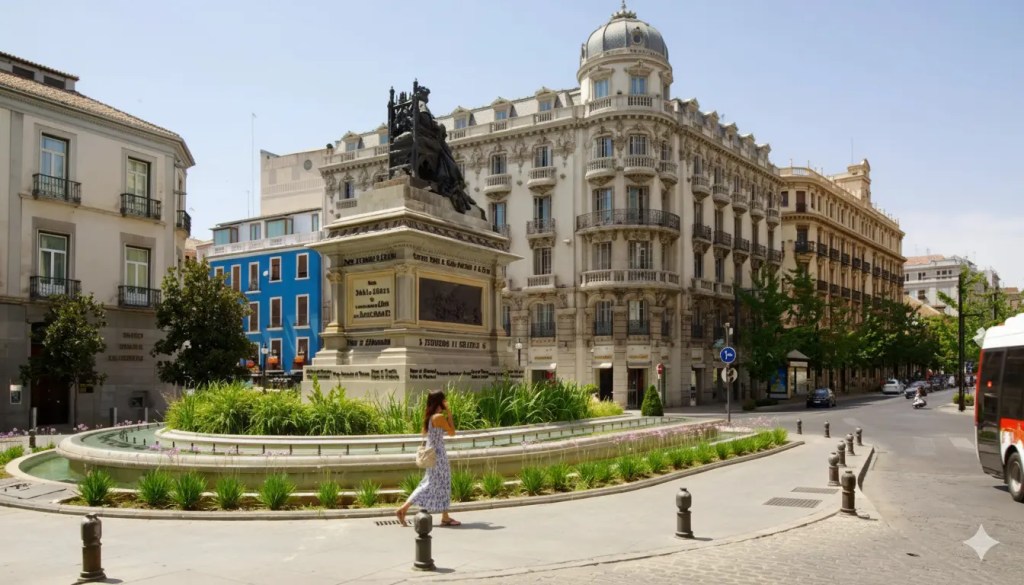
  • Afternoon: Explore the Ensanche district, Bilbao’s elegant 19th-century expansion. Stroll down the Gran Vía, shop, and admire the architecture. For a truly hidden gem, seek out the Azkuna Zentroa, a former wine warehouse transformed into a stunning cultural and leisure center with a spectacular indoor swimming pool on the roof.
  • Evening: Head to the Deusto area near the university for a more local, vibrant atmosphere and excellent, affordable pintxo bars.
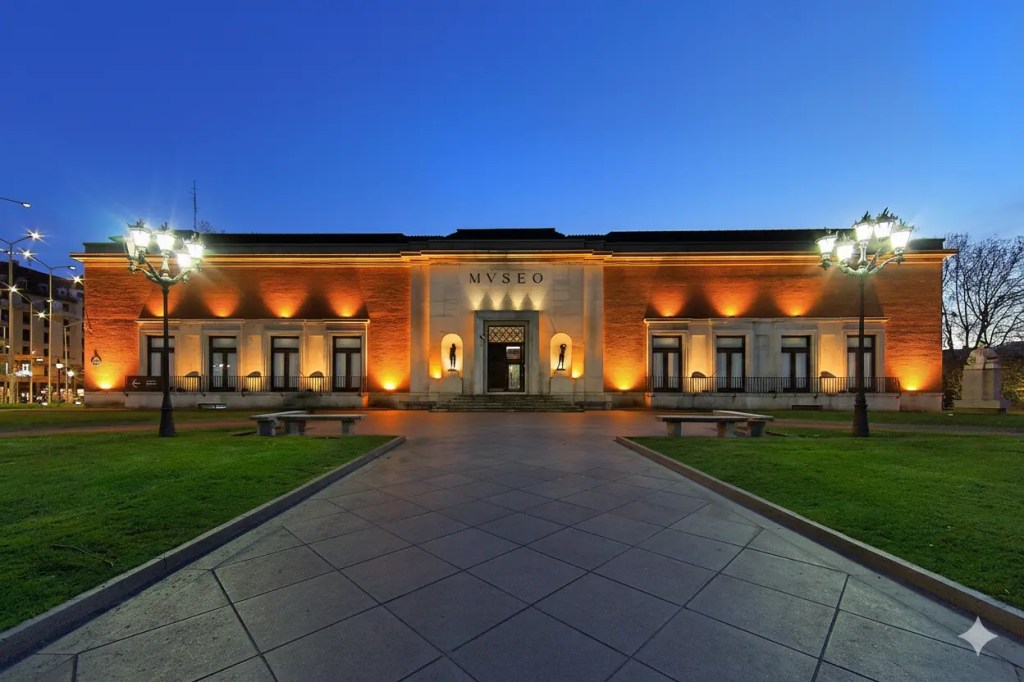
Exterior view of a museum building illuminated at dusk, featuring orange lighting highlights and a grassy area in front.
The Museo de Bellas Artes in Bilbao illuminated at dusk, showcasing its historic architecture and vibrant atmosphere. The Bilbao Fine Arts Museum, a world-class art collection housed in a stately building in the city’s most famous park.

Traffic scene at a busy intersection featuring historic buildings and a statue at dusk, with a city bus and cars in motion.
A bustling street scene in Bilbao, showcasing the blend of modern and classic architecture along with the vibrant city life. (Ensanche district)
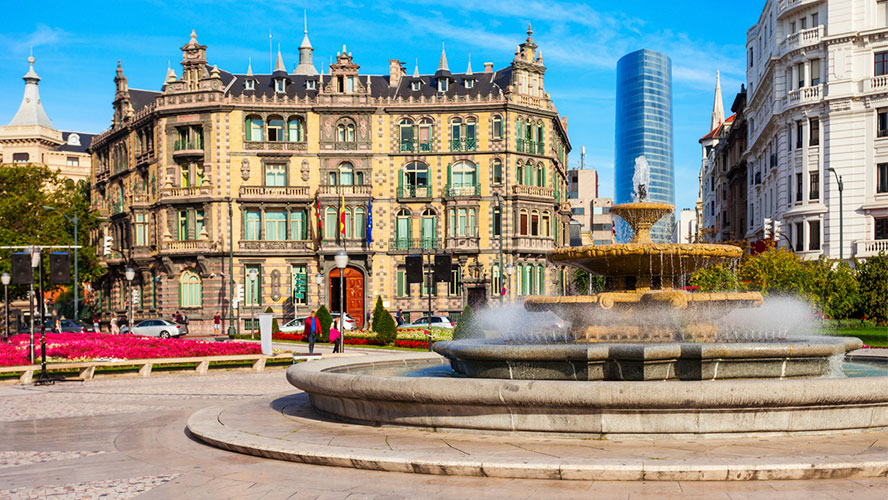
A decorative fountain in a city square with colorful flowers and historic architecture in the background, showcasing a mix of traditional and modern buildings under a clear blue sky.
A vibrant view of Bilbao featuring a historic building and a decorative fountain, highlighting the city’s blend of architecture and urban charm. (Bilbao’s Gran Vía)
A stunning view of the historic building showcasing Bilbao’s architectural blend of classical and modern styles. (azkuna zentroa)
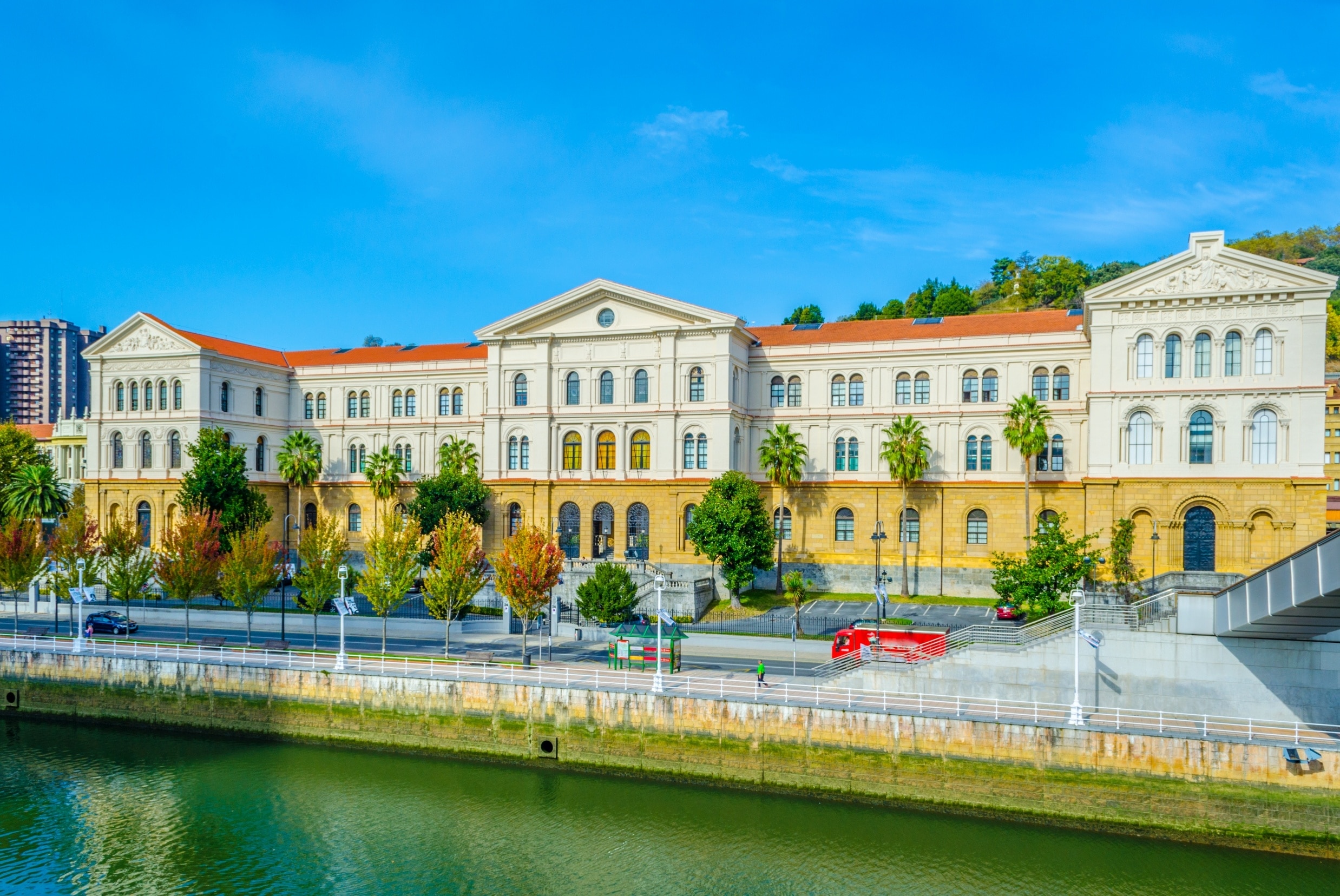
View of a historic building with a neoclassical facade, surrounded by palm trees and greenery, next to a river under a clear blue sky.
A picturesque view of the historic Universidad de Deusto building along the river in Bilbao, Spain, showcasing its stunning architecture and lush surroundings.

Day 3: Choose Your Own Adventure (Day Trips) 

If you have a third day, escape the city. Renting a car for the day opens up the most possibilities.

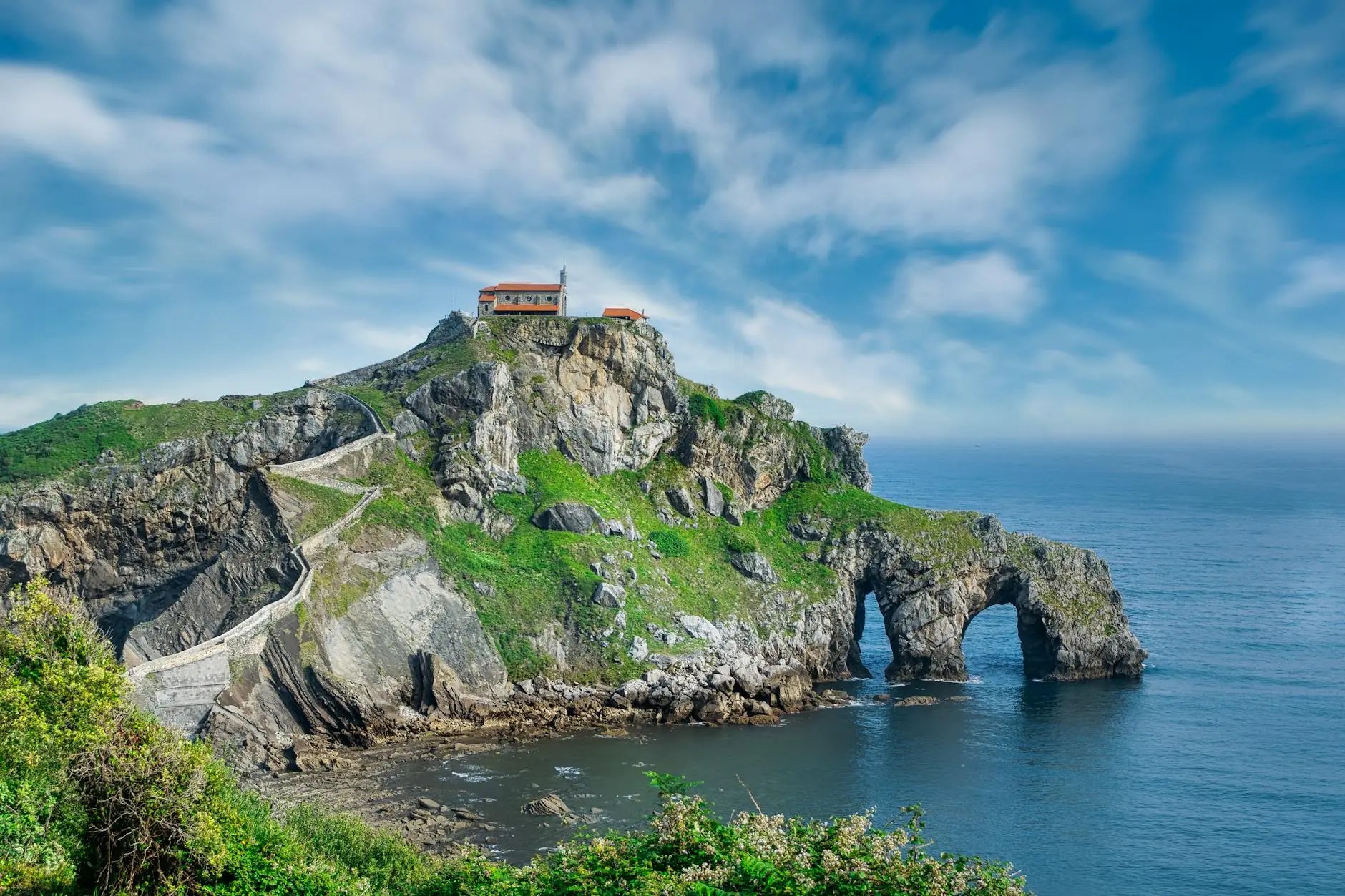
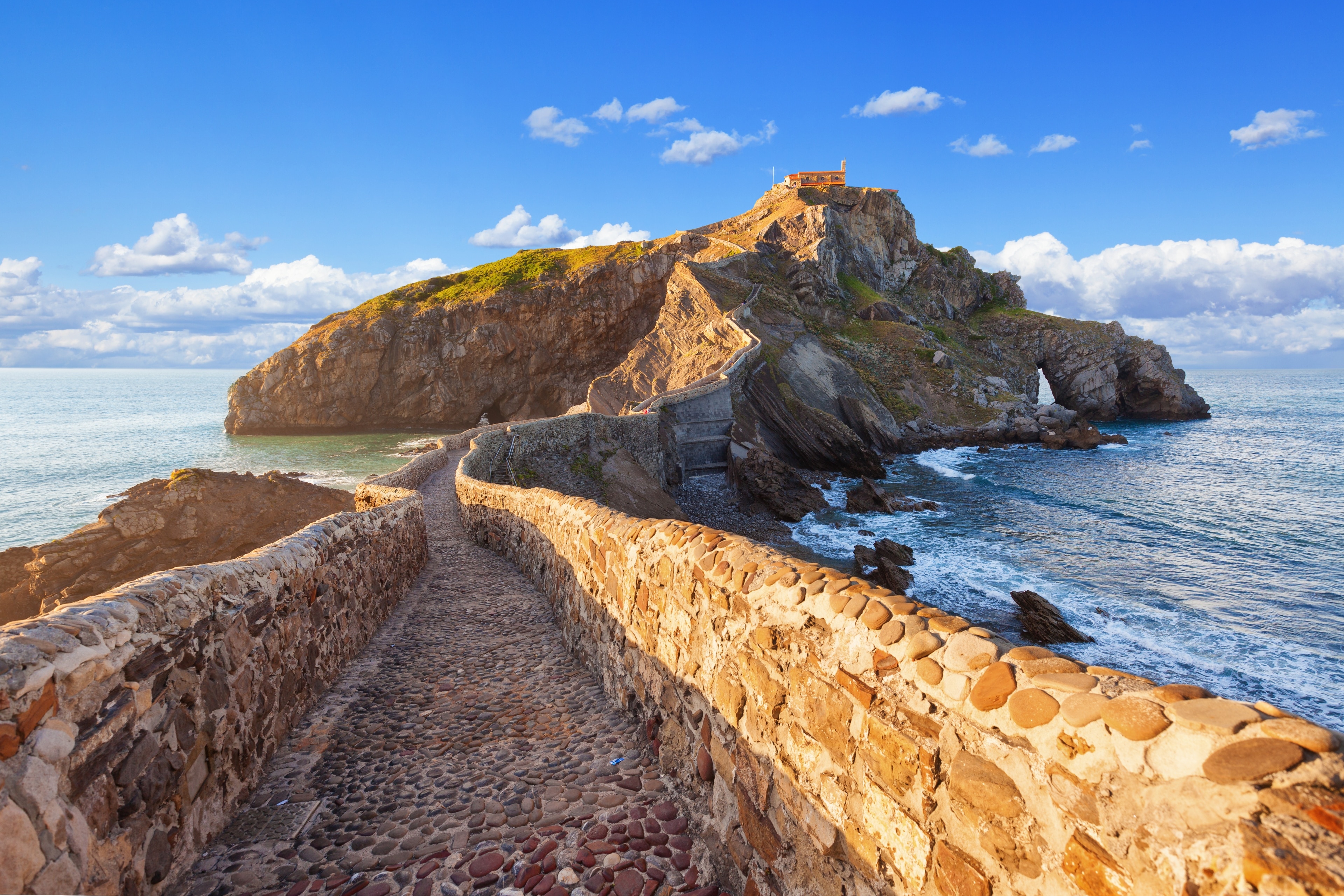
  • Option A (The Coast): Drive the spectacular Biarritz Coast Geopark towards San Juan de Gaztelugatxe. This is the famous “Dragonstone” from Game of Thrones. You’ll need to book a free timed entry ticket online in advance during peak season. Combine it with a visit to the charming fishing village of Bermeo.
 San Juan de Gaztelugatxe (Expedia) San Juan de Gaztelugatxe (Get Your Guide)
  • Option B (The Mountains & Sacred Forest): Head inland to the Urdaibai Biosphere Reserve. Visit the peaceful village of Gernika, with its profound history and iconic Tree of Assembly. Then, hike through the enchanted Oma Forest (Painted Forest) by artist Agustín Ibarrola.
Urdaibai Biosphere Reserve.(Expedia_Urdaibai Biosphere Reserve.(Get your Guider)
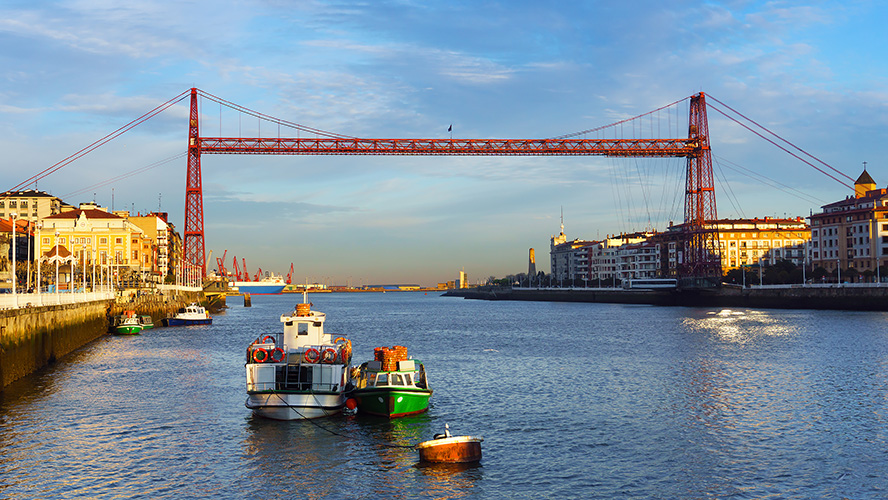
  • Option C (The Classic): Take a short 30-minute metro ride to the Portugalete district to see and cross the Vizcaya Bridge, a UNESCO-listed transporter bridge—the world’s oldest, still in use. It’s a unique piece of industrial heritage.
Portugalete (Expedia)Portugalete (Get your Guide)
Vizcaya Bridge (Expedia)Vizcaya Bridge (Get your Guide)
Scenic view of a rocky cliff with a small house on top, surrounded by greenery and overlooking the ocean, under a partly cloudy sky.
A stunning coastal view of San Juan de Gaztelugatxe, a picturesque monastery perched on a rocky cliff in the Basque Country. The breathtaking San Juan de Gaztelugatxe, a legendary islet and pilgrimage site famously known as “Dragonstone” from Game of Thrones
A scenic view of a rocky island connected to the shore by a stone path, under a clear blue sky with clouds.
Pathway leading to San Juan de Gaztelugatxe, a stunning cliffside landmark off the coast of Spain.
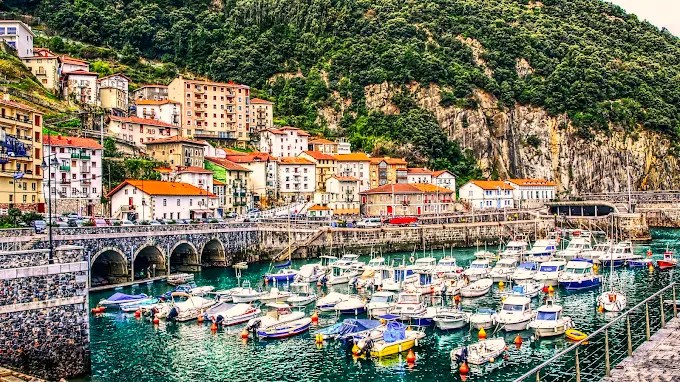
A picturesque coastal view featuring a marina filled with various boats, surrounded by colorful buildings and lush green hills.
Colorful buildings lining the waterfront in a picturesque harbor near Bilbao, Spain, with boats anchored in clear waters. (Urdaibai Biosferaren Erreserba)
A view of a scenic river with small boats and a prominent red suspension bridge in the background.
The iconic Vizcaya Bridge, a UNESCO-listed transporter bridge in Bilbao, stands majestically over the river, showcasing the city’s rich industrial heritage.
View of a suspension bridge over a river, with buildings along the shore and a cloudy sky.
The Vizcaya Bridge, a UNESCO World Heritage site, elegantly spans the water, connecting the two banks of the river in Bilbao, Spain.

 Beyond the Guide: Pro-Tips & Hidden Gems 

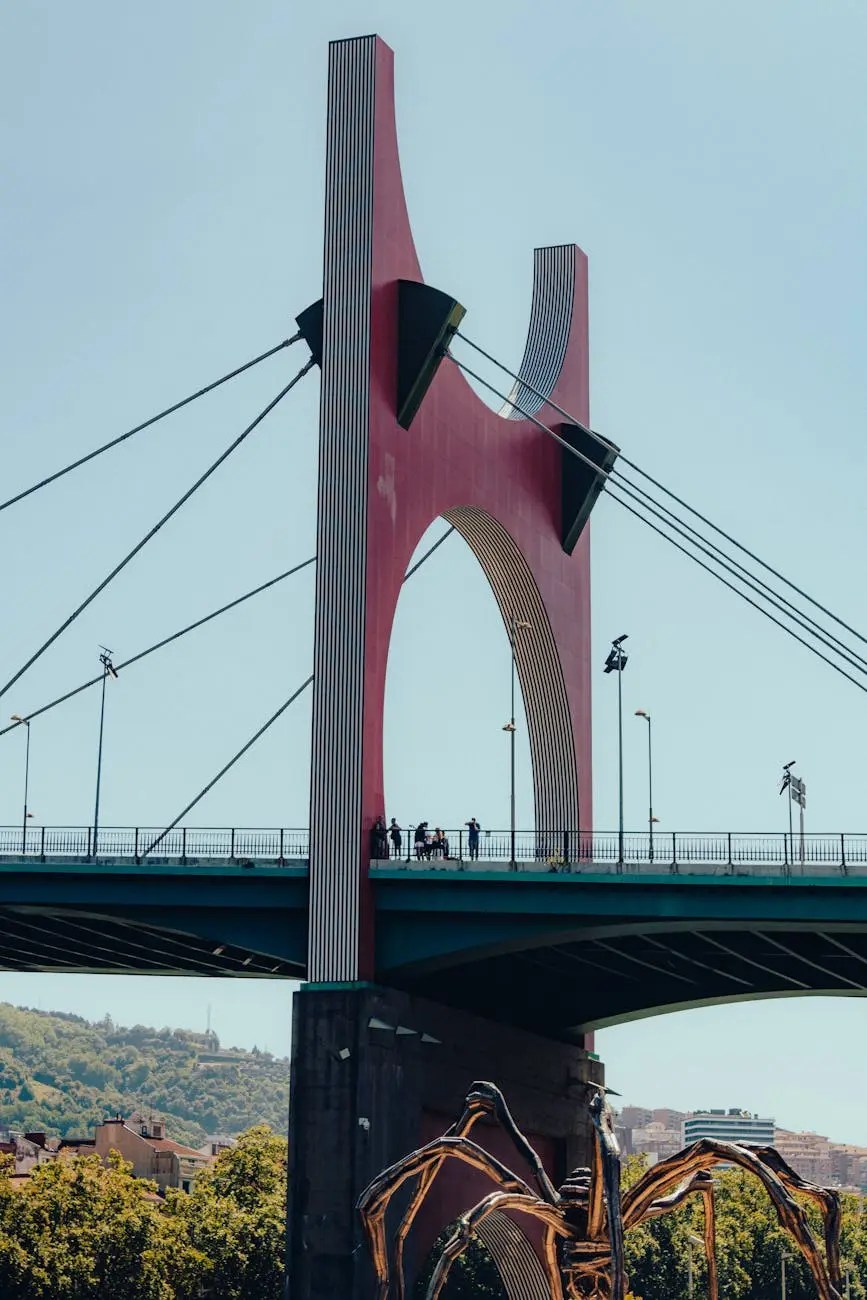
  • Photography Tip: The best light on the Guggenheim is in the late afternoon. For a classic reflection shot, position yourself on the La Salve Bridge. To capture your travels beautifully, I never travel without my trusty travel camera.
La Salve Bridge (Expedia)La Salve Bridge (Get your Guide)
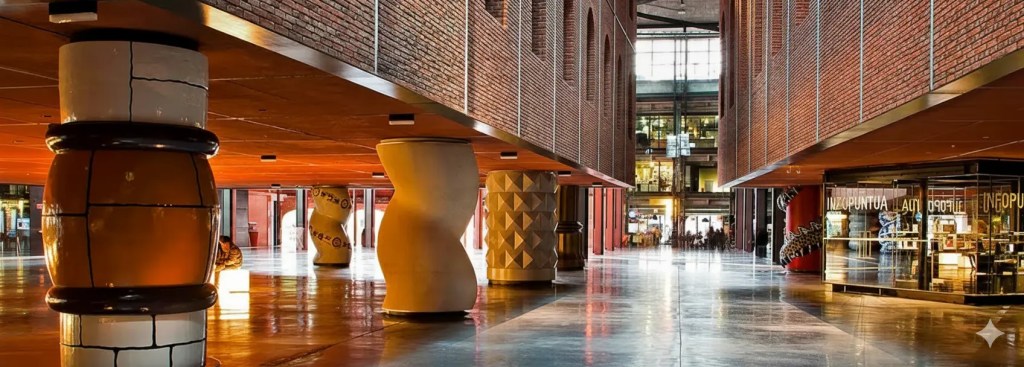
  • Hidden Gem: Alhóndiga Bilbao (Azkuna Zentroa). As mentioned, this is a must-see. Even if you don’t swim, go inside to see the 43 unique columns supporting the old warehouse structure.
Azkuna Zentroa (Expedia)Azkuna Zentroa (Get your Guide)
  • Pintxo Rule: The best spots are often the most crowded with locals. Look for bars with napkins littering the floor—it’s a sign of quality and turnover!
  • Tech & Safety: Public Wi-Fi is convenient but insecure. I always use a VPN to protect my data and access content from home. Also, a universal travel adapter is a non-negotiable item in my bag.
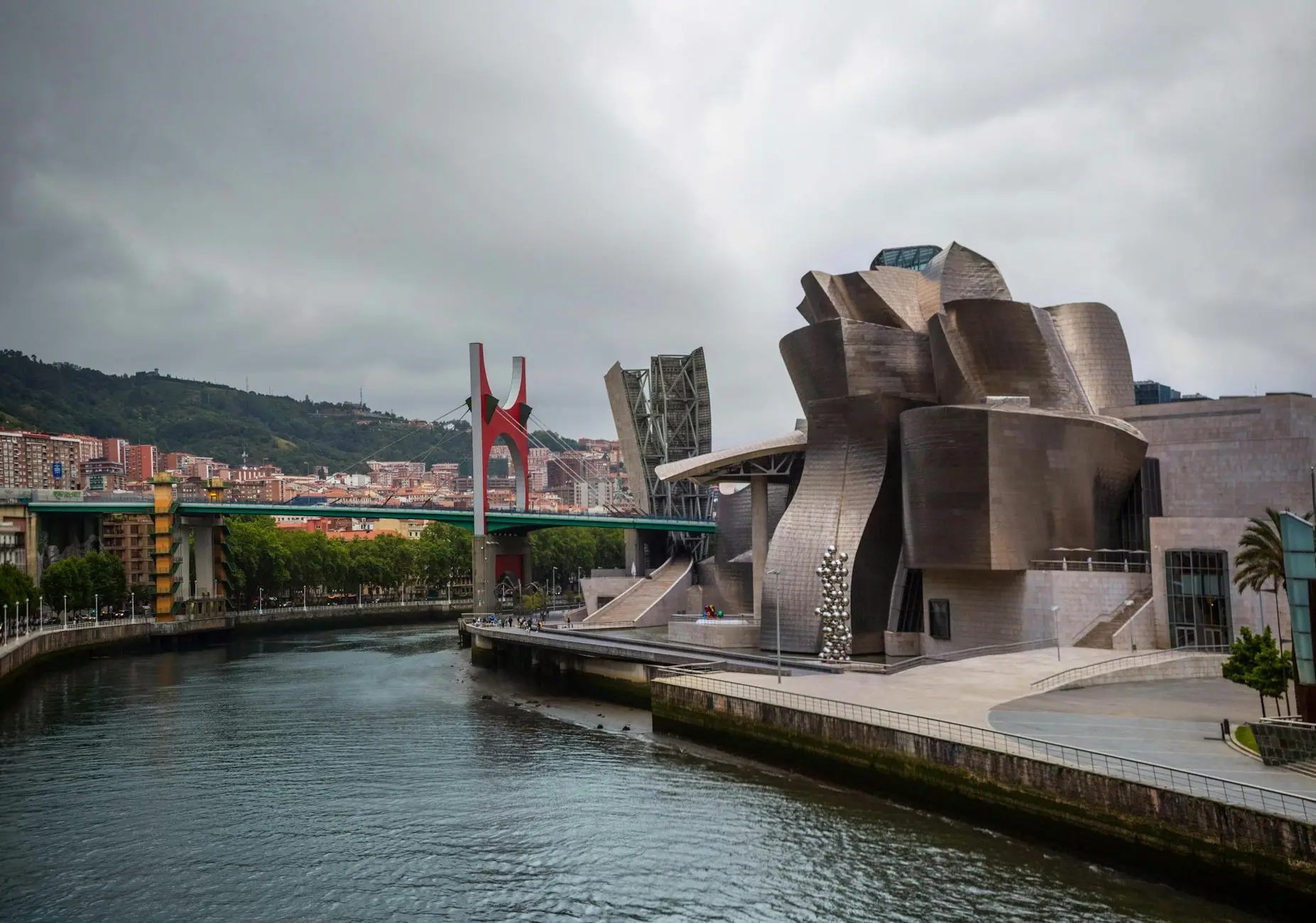
View of the Guggenheim Museum in Bilbao, featuring its unique architecture and surrounding landscape along the river.
The iconic Guggenheim Museum Bilbao, showcasing its stunning architecture along the river.

A large modern red bridge with distinctive architectural design, featuring tall supports and cables, with people standing on the bridge. Below is a statue of a spider, surrounded by greenery and city buildings in the background.
The striking Zubizuri Bridge, an architectural marvel in Bilbao, Spain, featuring its iconic red and white design. The iconic red arch of the Puente de la Salve bridge, framing a perfect view of the Guggenheim Museum Bilbao.
Interior view of a modern architectural space showcasing colorful sculptural columns and a polished concrete floor, with large windows allowing natural light.
Interior view of the Azkuna Zentroa, showcasing unique column designs and modern architecture. Inside the Azkuna Zentroa—where a century-old wine warehouse meets a “forest” of 43 artistic columns and a rooftop pool.

A Few Handy Basque & Spanish Phrases

While Spanish (Castellano) is universally understood, Basque (Euskera) is co-official. Locals light up if you try a word or two.

  • Kaixo (kai-sho): Hello
  • Agur (a-goor): Goodbye
  • Eskerrik asko (es-keh-rik as-ko): Thank you
  • Mesedez (meh-seh-des): Please
  • Pintxo (pin-cho): The iconic Basque bar snack
  • Txikiteo (chee-kee-teh-o): The art of going from bar to bar having a small drink and a pintxo

✈️ Travel Tips for the Modern Nomad

Before we dive into the fun stuff, let’s talk about the “boring” bits that make or break a trip.

Stay Connected: Getting online abroad shouldn’t cost a kidney. I always pack a Drimsim—it’s a universal SIM card that works in over 190 countries. No hidden fees, no “airport SIM” scams. You just pop it in, top up via the app, and you’re good to go. Check it out here:Drimsim: SIM Card for Traveling Around the World.

Flight Fails: Did your flight to Bilbao get canceled or delayed? Don’t just sit there eating overpriced airport chocolate. You could be entitled to up to $650 in compensation. LetAirHelphandle the legal headaches while you enjoy your vacation.

Security First: Always use a VPN when booking hotels or using public WiFi at the Guggenheim. Grab a deal onNordVPN hereto keep your data safe.

🧳 Smart Travel Tip: No matter where your adventures take you, having the right travel insurance can save you from unexpected headaches (and bills). I personally recommend VisitorsCoverage — it’s a trusted platform where you can compare plans, find coverage that fits your trip, and book it in just a few clicks. Whether you’re planning a quick city escape or a longer international journey, it’s peace of mind worth packing. Get a quote here.

Look Fresh, Travel Happy: Long flights and busy days can take a toll on your skin. My secret? A few sheets of hydrating Korean face masks in my carry-on. For the full range of K-beauty magic that delivers that “glass skin” glow, I love browsing LakinzaPro-tip: Use code Lalax10 at checkout for a sweet discount!

✈️ Flight Delayed or Canceled?
Travel isn’t always smooth sailing—sometimes flights get delayed, canceled, or overbooked. The good news? You might be entitled to up to $650 in compensation under air passenger rights. Most travelers never claim it, but I’ve got you covered: just check your flight with AirHelp. They handle the paperwork, fight the airlines for you, and only get paid if you win. Easy, stress-free, and potentially a nice surprise for your travel fund. Check your flight here.

Frequently Asked Questions (FAQ) 

Do I need a visa to visit Bilbao, Spain?
Spain is part of the Schengen Area. Travelers from the EU, US, Canada, UK, Australia, and many other countries do not need a visa for short tourist stays (up to 90 days within a 180-day period). Always check the latest official requirements with the Spanish consulate in your country of residence before traveling, as rules can change. For non-EU travelers, standard Schengen visa costs are typically around €80 for adults.

What is the best time of year to visit Bilbao to avoid crowds?
The sweet spots are the shoulder seasons: April-May and September-October. The weather is pleasant, and the summer tourist crowds have thinned. July and August are the warmest and busiest. Winter (Nov-March) is cool and rainy but has its own charm and fewer tourists.

Is Bilbao expensive for a weekend trip?
Bilbao is generally more affordable than Madrid or Barcelona. You can have a fantastic mid-range weekend by using the Barik Card for transport, eating pintxos for lunch, staying in a central hotel or Airbnb, and taking advantage of free museum hours. A budget of €100-€150 per day per person (excluding accommodation) is comfortable.

What’s the difference between tapas and pintxos?
While both are small plates, pintxos (from the Basque word pincho, meaning “spike”) are typically served on a slice of bread and held together with a toothpick. They are often more elaborate and artistic than tapas. In many pintxo bars, you grab what you want from the counter, and they count the toothpicks at the end to bill you!

Can I get by with just English in Bilbao?
Yes, especially in hotels, museums, and tourist-oriented restaurants and bars. However, learning a few basic phrases in Spanish or Basque (like the ones provided earlier) is greatly appreciated and enhances your experience.

Can I visit San Sebastian from here? Yes! It’s only a 75-minute bus ride away. Check my Master List for a full guide on that route!

While Bilbao itself is a fantastic weekend destination, its location in northern Spain makes it an excellent launchpad for exploring more of the Iberian Peninsula and southwestern Europe. If you’ve soaked up the Basque culture and find yourself with more time, consider a longer adventure to the sunny, modernist city of Valencia, the historic and atmospheric Porto across the border in Portugal, the passionate and flamenco-filled streets of Seville, or the glamorous Mediterranean coastline of Nice, France.
Universal Disclaimer/Disclosure Page:

Ultimate Weekend Guide to Granada: History & Hidden Gems

Meta Description

Planning a weekend escape to Granada, Spain? This human‑written travel guide is crafted for curious travelers who want history, hidden gems, smart logistics, and money‑saving tips. SEO‑ and GEO‑optimized, packed with personal anecdotes, transport hacks, ferry options, affiliate deals, and insider advice to help you explore Granada confidently without wasting time or cash.

Ah, Granada. A city where the scent of orange blossoms mixes with the sound of flamenco drifting from a cave, where you can stand in a fortress built by sultans and watch the sunset over snow-capped mountains. I went for a long weekend, convinced I was just ticking the majestic Alhambra off my list. I left with my soul feeling fuller, my camera overflowing, and a profound belief that the best things in life are often free (hello, complimentary tapas!). This guide is your blueprint for an unforgettable, efficient, and deeply enriching weekend in this crown jewel of Andalusia.

Granada is the kind of city that sneaks up on you. One minute you’re admiring intricate Islamic tiles at the Alhambra, the next you’re eating free tapas with your drink and wondering why life doesn’t always feel this balanced. Tucked against the Sierra Nevada mountains in southern Spain, Granada blends Moorish history, student energy, and slow Andalusian charm—perfect for a long weekend that feels much longer (in the best way).

I still remember my first evening here: getting slightly lost in Albaicín, following the sound of a street guitarist, and accidentally discovering a viewpoint that made me forget my phone even existed. Granada does that to you.

Table of Contents

  1. Why Granada Is Perfect for a Weekend Escape
  2. Getting to Granada (Flights, Trains, Buses & Roads)
  3. Getting There by Ferry (Direct Ferries Guide)
  4. Getting Around Granada Like a Local
  5. Where to Stay (Smart Areas for First‑Timers)
  6. What to See in a Weekend (With Hidden Gems)
  7. Food, Tapas & Local Experiences
  8. Money‑Saving Tips for Granada
  9. Handy Spanish Words You’ll Actually Use
  10. Stay Connected, Protected & Stress‑Free Abroad
  11. FAQs for First‑Time Travelers
  12. Final Thoughts + Strong CTA

Why Granada Is Perfect for a Weekend Escape

Granada is compact, walkable, and endlessly atmospheric. You don’t need weeks here—48 to 72 hours is enough to see the highlights, slow down, and still leave wanting more. Compared to Barcelona or Madrid, prices are gentler, crowds feel manageable (especially if you plan smartly), and the culture feels deeply rooted rather than rushed.

It also pairs beautifully with nearby destinations—something I often recommend to travelers exploring Andalusia. If you’ve enjoyed historic city breaks before, you might also like Seville, Valencia, or Naples (all linked in my Travel Master List for easy planning)

Getting to Granada (Flights, Trains, Buses & Roads)

✈️ By Air

Granada has its own airport (GRX), but flights are limited. Most travelers fly into Málaga (AGP), which is well‑connected internationally and often cheaper.

Granada is inland, nestled at the foot of the Sierra Nevada mountains. While it has its own airport (GRX), it’s not a major international hub.

By Air: Federico García Lorca Granada-Jaén Airport (GRX) is about 17 km west of the city. It has good connections to major Spanish cities (Madrid, Barcelona) and some European hubs. The Alhambra Bus runs directly to the city center in about 45 minutes

👉 I usually compare flight + hotel bundles on Expedia because flexible cancellations have saved me more than once: 👉 Flights to Granada

Where to Stay

I usually filter stays on Expedia for “guest rating + location”—it’s saved me from booking regret more than once.

Hotels in Granada

🚆 By Train

By Train: The high-speed AVE train from Madrid to Granada takes about 3.5 hours and is a comfortable, scenic option. The station is well-connected to the city by bus and taxi.

From Málaga to Granada by train takes about 1h 15m–1h 30m. Renfe trains are comfortable, reliable, and surprisingly scenic once you leave the coast.

🚌 By Bus

ALSA buses run frequently from Málaga, Seville, and Córdoba. It’s budget‑friendly and often just as fast as the train.

By Bus: Often the most economical and well-connected option from other Andalusian cities. Companies like ALSA run frequent services from Seville, Málaga, and Córdoba. The main bus station is a short taxi ride from the center.

🚗 By Car (Road Tips)

Driving from Málaga to Granada takes around 1.5 hours via the A‑92. Roads are excellent, signage is clear, and fuel stops are frequent. Tip: avoid entering the Albaicín by car—streets are narrow and parking is… let’s say “character‑building.”

Getting There by Ferry (Direct Ferries Guide)

By Ferry: Here’s the important note: Granada itself does not have a ferry port as it is not on the coast. However, if you’re dreaming of a combined Spain trip with a ferry ride, your best bet is to sail into the nearby Port of Málaga or Almería. From these ports, you can easily rent a car or catch a direct bus (approx. 1.5-2 hours) to Granada. To check schedules and book ferry tickets to southern Spain from places like Morocco or the Balearic Islands, a great resource is Direct Ferries.

Granada itself doesn’t have a port, but ferry lovers aren’t left out.

The closest major ferry port is Málaga, which connects with routes from Morocco (Melilla) and seasonal Mediterranean crossings. You can:

  1. Take a ferry to Málaga
  2. Continue to Granada by train, bus, or car

To compare ferry routes, schedules, and prices, I recommend Direct Ferries—it’s the easiest way to see what’s actually running when you need it.

This combo works brilliantly if you’re mixing Spain with North Africa or doing a slower, more scenic Mediterranean journey.

Granada at a Glance: What You Need to Know

Granada is the dramatic finale of the Reconquista in Spain’s south. Its crown jewel, the Alhambra, is a sprawling palace and fortress complex that is a UNESCO World Heritage site and one of the most visited monuments in the world. But the city is more than just one site; it’s a layered experience of Moorish history, vibrant gypsy culture, and student energy.

  • Currency: Euro (€).
  • Language: Spanish. English is common in tourist areas, but a few basic phrases go a long way (see our guide below!).
  • Visa: For most US, Canadian, UK, and Australian travelers, no visa is required for tourist stays under 90 days within the Schengen Area. Always check the latest requirements with official sources before booking.
  • Best Time to Visit: Spring (April-June) and Fall (September-October) offer pleasant weather and fewer crushing crowds. Summer is fiercely hot, and winter can be surprisingly cold in the mountains.
  • City Vibe: Historic, passionate, youthful, and delightfully chaotic.

Getting Around Granada Like a Local

Granada is wonderfully walkable, especially the city center.

  • 🚶 Walking: Best for Albaicín, city center, and viewpoints
  • 🚍 Buses: Cheap and efficient—use buses C1 and C2 for hills
  • 🚕 Taxis: Affordable for short trips

I saved time (and my knees) by using buses uphill and walking downhill—simple, smart, and budget‑friendly.

Your Strategic Weekend Itinerary

This plan maximizes your time, balancing iconic sights with local flavor.

Day 1: The Majesty of the Alhambra & Albayzín Twilight

  • Morning (9:00 AM): THE ALHAMBRA. BOOK YOUR TICKETS ONLINE MONTHS IN ADVANCE. I cannot stress this enough. Tickets for the Nasrid Palaces are for a strict 30-minute entry window—miss it and you’re out of luck. Spend 3-4 hours exploring the intricate palaces, rugged Alcazaba fortress, and serene Generalife gardens.
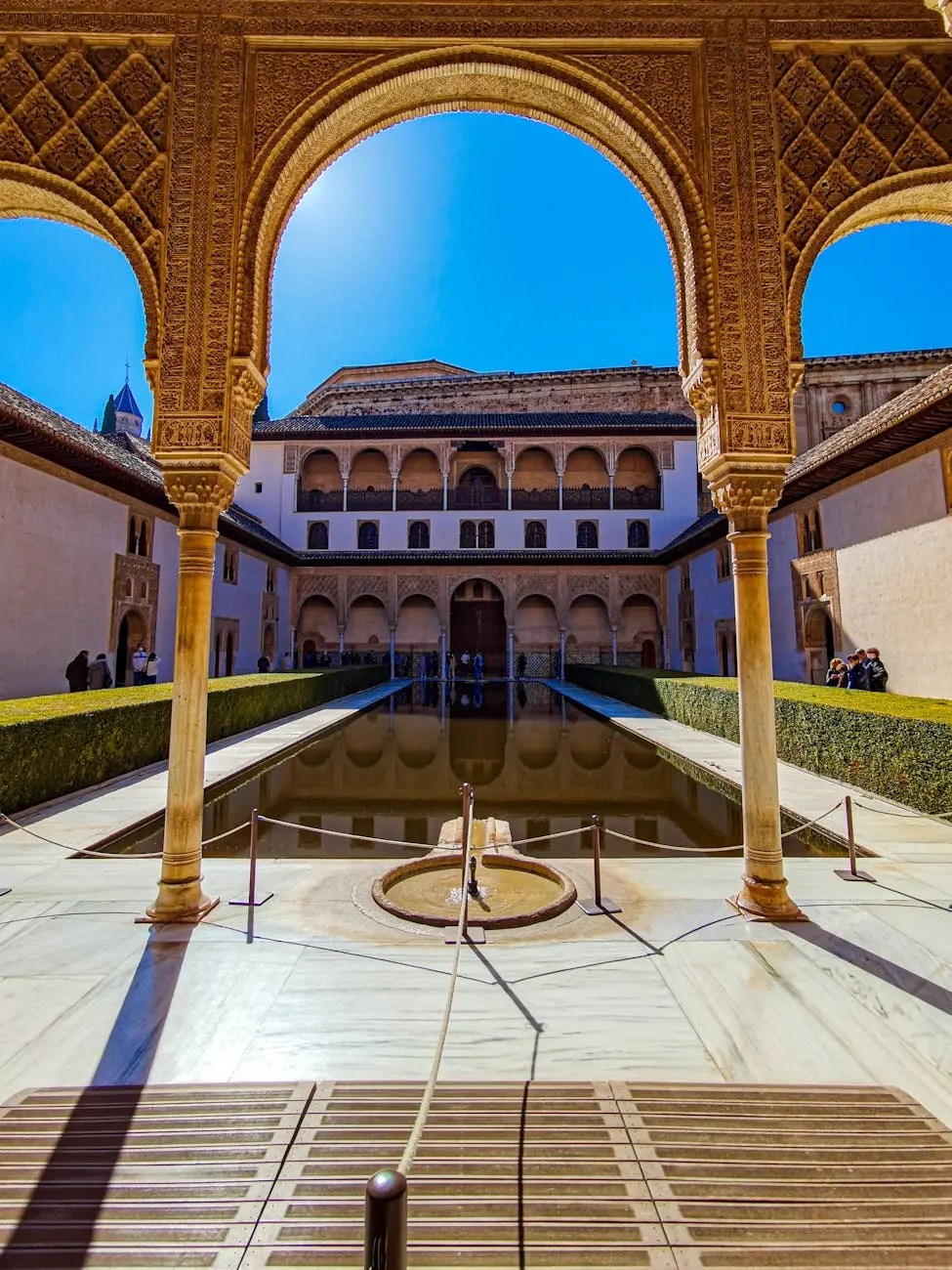
View of the Courtyard of the Lions in the Alhambra, featuring intricate arches, a central fountain, and lush greenery under a clear blue sky.
The stunning courtyard of the Alhambra, showcasing intricate Islamic architecture and serene reflections in the pool. The serene and stunning Court of the Myrtles, the central courtyard of the Nasrid Palaces, perfectly demonstrates Islamic architecture’s mastery of water, light, and geometry.

ALHAMBRA (Expedia)ALHAMBRA (Get Your Guide)
  • Afternoon (2:00 PM): Lunch in Realejo, the old Jewish quarter. Find a small bar for a ración of local cheese or grilled vegetables.
Realejo (Expedia)Realejo (Get Your Guide)
Monument to the Capitulations of Santa Fe in Plaza Isabel la Católica, Granada, showing a statue of Queen Isabella I presenting documents to Christopher Columbus.
A bustling square in Granada featuring a historic monument and the beautiful architecture of surrounding buildings. The historic monument in Plaza Isabel la Católica commemorates the 1492 agreement between Queen Isabella I and Christopher Columbus, which set his voyage to the Americas in motion.
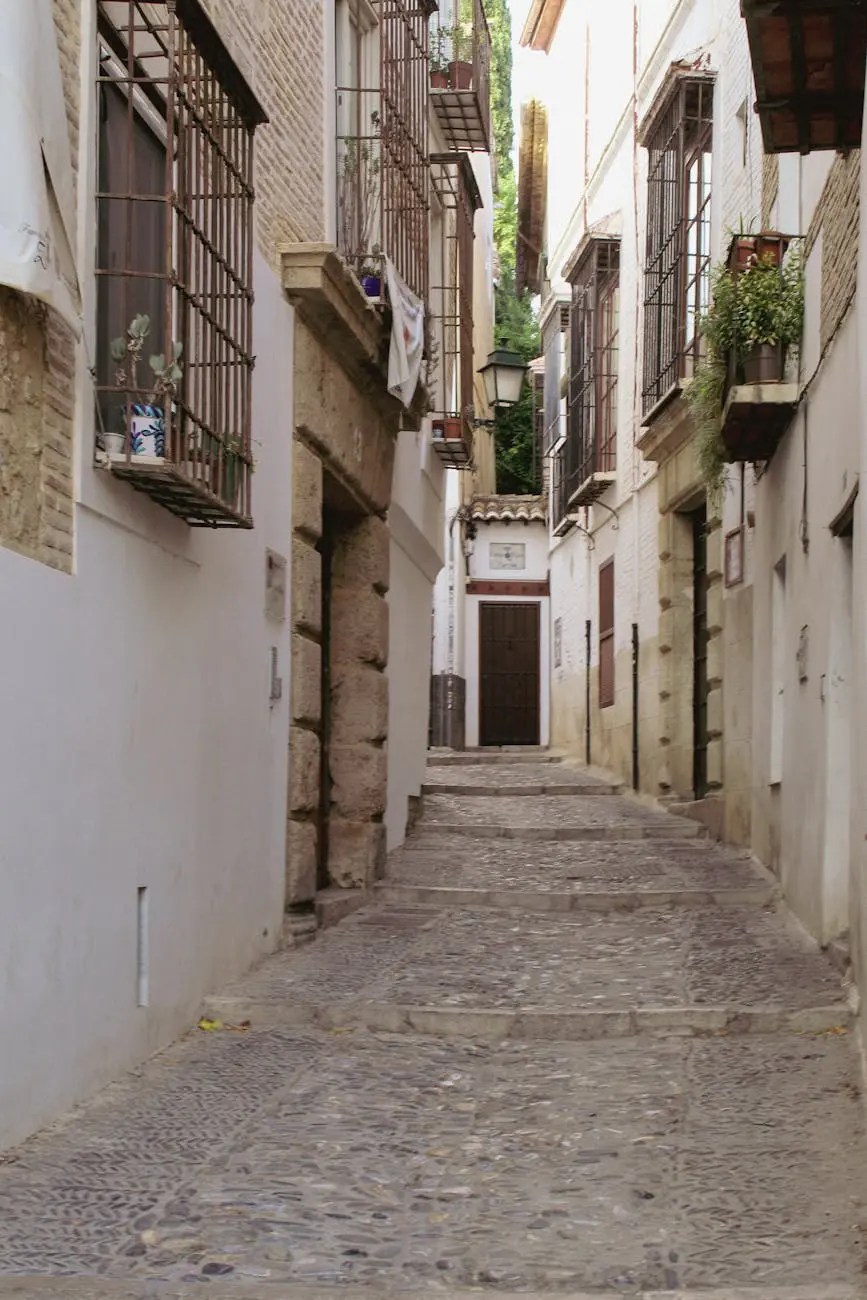
  • Late Afternoon (5:00 PM): Walk up into the Albayzín, the ancient Moorish quarter. Get lost in its cobblestone lanes, whitewashed houses, and hidden cármenes (walled gardens). Make your way to the Mirador de San Nicolás for the classic, breathtaking view of the Alhambra against the Sierra Nevada.
Albayzín (Expedia)Albayzín (Get your guide)
A narrow cobblestone street in Granada, Spain, lined with whitewashed buildings featuring wrought iron balconies and greenery.
A charming cobblestone alley in the historic Albaicín neighborhood of Granada, showcasing its traditional architecture and inviting atmosphere. Getting lost in the labyrinthine, shaded streets of the Albaicín is the best way to experience the atmosphere of Granada’s ancient Moorish quarter

  • Evening (9:00 PM): Dinner and flamenco. Skip the expensive, staged shows for a more authentic tablao in the Sacromonte cave district. The raw passion here is electric.
A panoramic view of the Alhambra, a historic palace and fortress in Granada, Spain, surrounded by lush greenery and set against the backdrop of the Sierra Nevada mountains.
Mirador de San Nicolas showing mountains, chateau or palace and heritage architecture
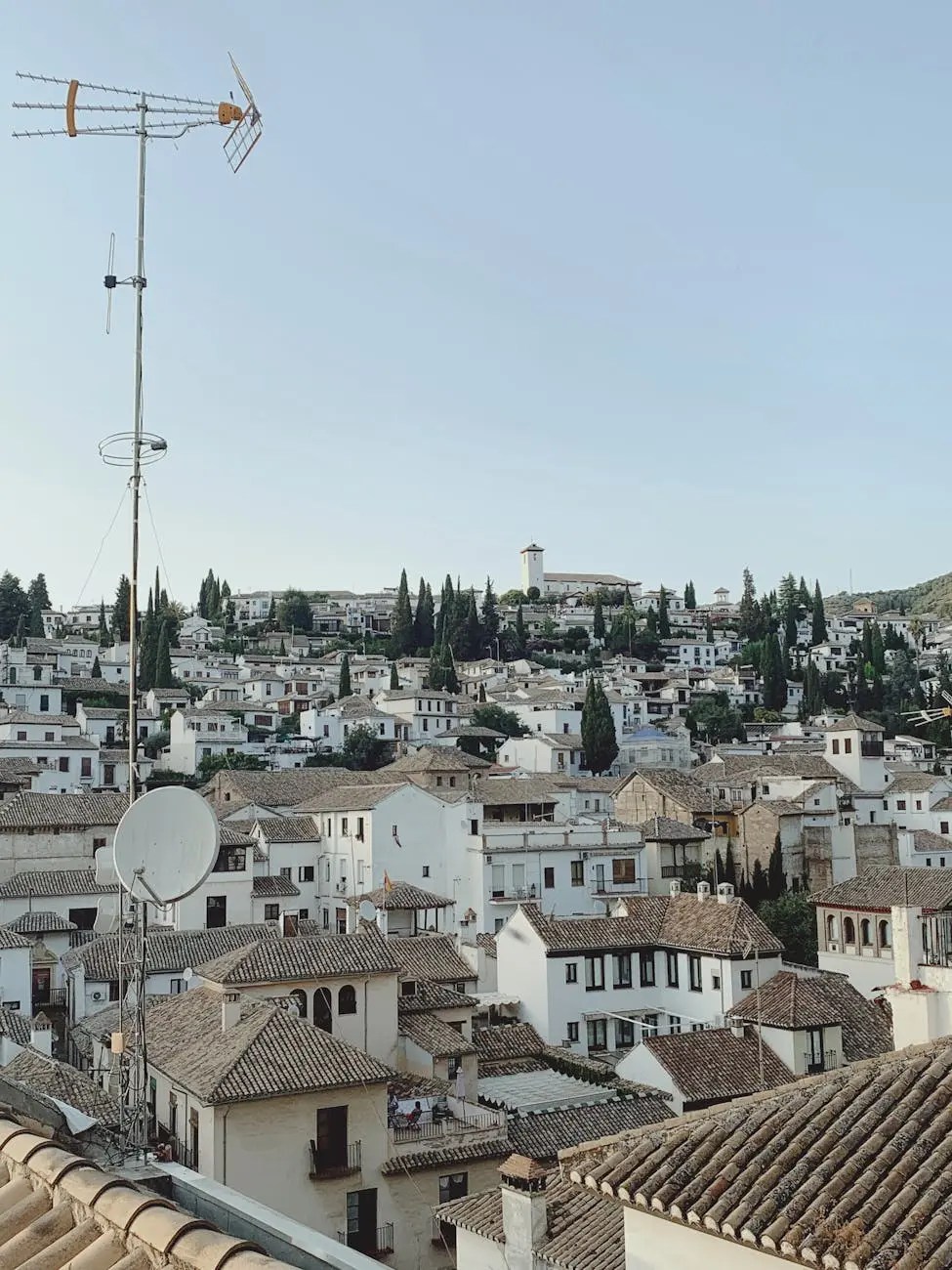
Scenic view of whitewashed houses and terracotta roofs in Granada, Spain, with a clear blue sky.
A panoramic view of Granada’s Albaicín neighborhood showcasing its iconic whitewashed houses and tile roofs against the backdrop of the Sierra Nevada mountains. A breathtaking aerial perspective reveals the dramatic relationship between the two UNESCO World Heritage sites: the organic maze of the Albaicín and the formidable Alhambra.
A dancer in a purple dress gracefully twirls with a flowing black shawl against a solid blue background.
A flamenco dancer captures the spirit of Granada with graceful movements and traditional attire. The intense emotion and precise movement of a flamenco performance embody the soul of Granada, especially in the historic Sacromonte caves.

Day 2: Cathedral Grandeur, Local Markets & Tapas Trail

  • Morning (10:00 AM): Visit the Royal Chapel (Capilla Real), the final resting place of the Catholic Monarchs, Ferdinand and Isabella. Then, explore the colossal Granada Cathedral right next door.
Royal Chapel (Expedia)Royal Chapel (Get Your Guide)
 Granada Cathedra (Expedia) Granada Cathedra (Get your guide)
  • Afternoon (1:00 PM): Wander through the Alcaicería, a maze of narrow streets that was once the Moorish silk market. It’s now full of shops selling spices, ceramics, and lamps.
 Alcaicería (Expedia) Alcaicería (Get your Guide)
  • Late Afternoon (4:00 PM): Granada’s Golden Rule: Drink, Get Fed for Free. Embark on a tapas crawl. In most granadino bars, every drink (a beer, wine, soft drink) comes with a free, substantial tapa. My strategy is to hop between bars in areas like Plaza Nueva or Calle Elvira, letting each drink decide my dinner. It’s social, delicious, and incredibly budget-friendly.
Plaza Nueva (Expedia)Plaza Nueva (Get your Guide)
Calle Elvirab (Expedia)Calle Elvira (Get your Guide)
  • Evening: Enjoy a leisurely stroll along the River Darro as the monuments light up.
River Darro (Expedia)River Darro (Get your Guide)
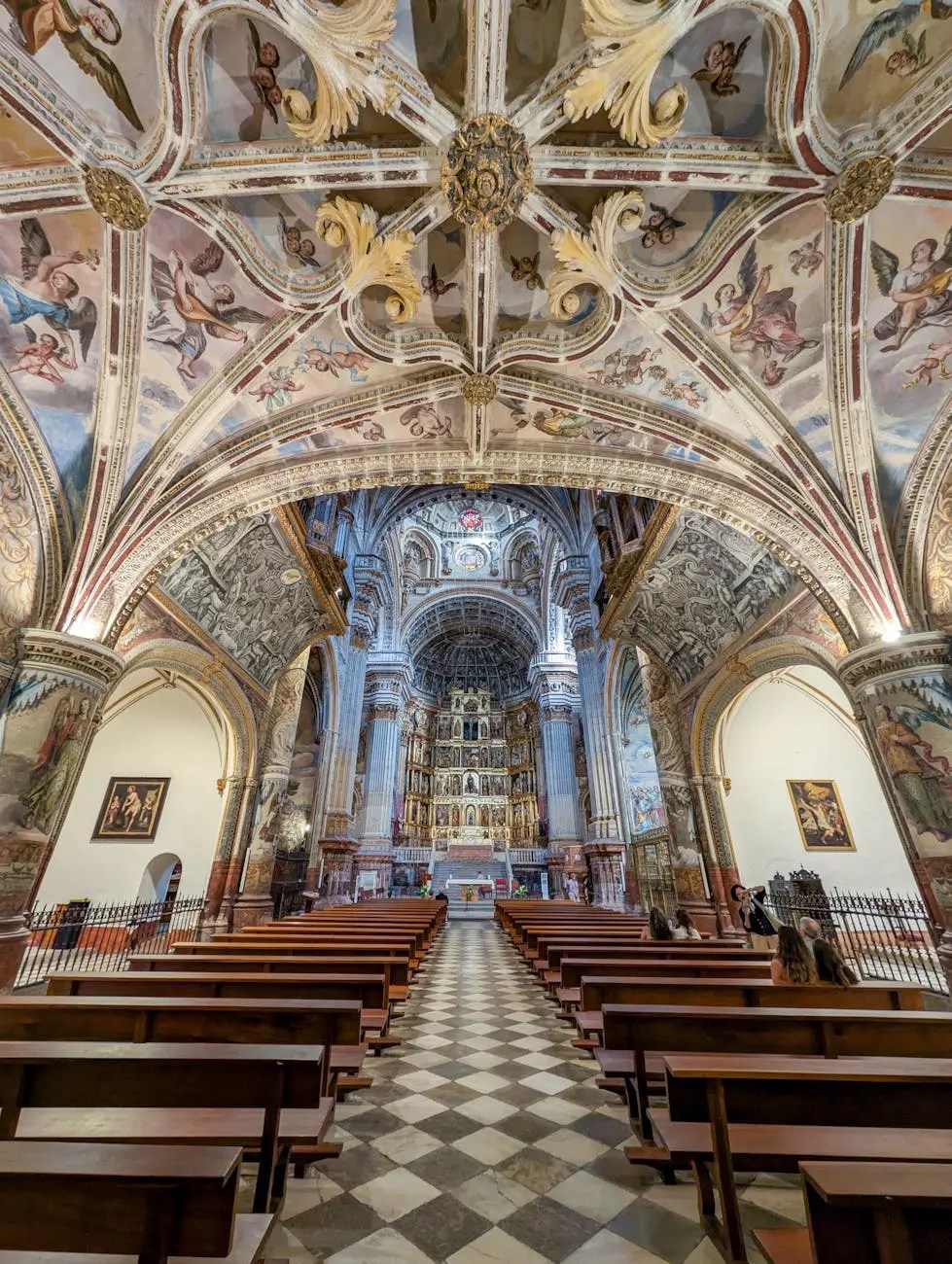
Interior view of a historic cathedral featuring intricate frescoes on the ceiling, ornate altar, and empty wooden pews leading towards the altar.
The ornate interior of Granada’s Royal Chapel, showcasing intricate frescoes and baroque architecture. The lavishly decorated church of the Royal Monastery of San Jerónimo, a masterpiece of Spanish Renaissance architecture and art.
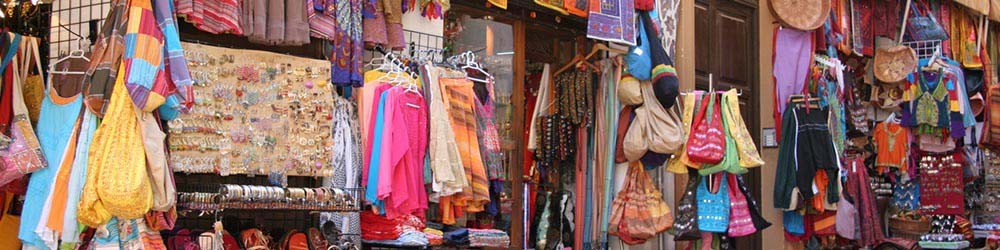
Colorful shops displaying a variety of textiles, clothing, and accessories in a vibrant market.
A vibrant market scene in Granada, showcasing colorful textiles, accessories, and local crafts that reflect the city’s rich culture.

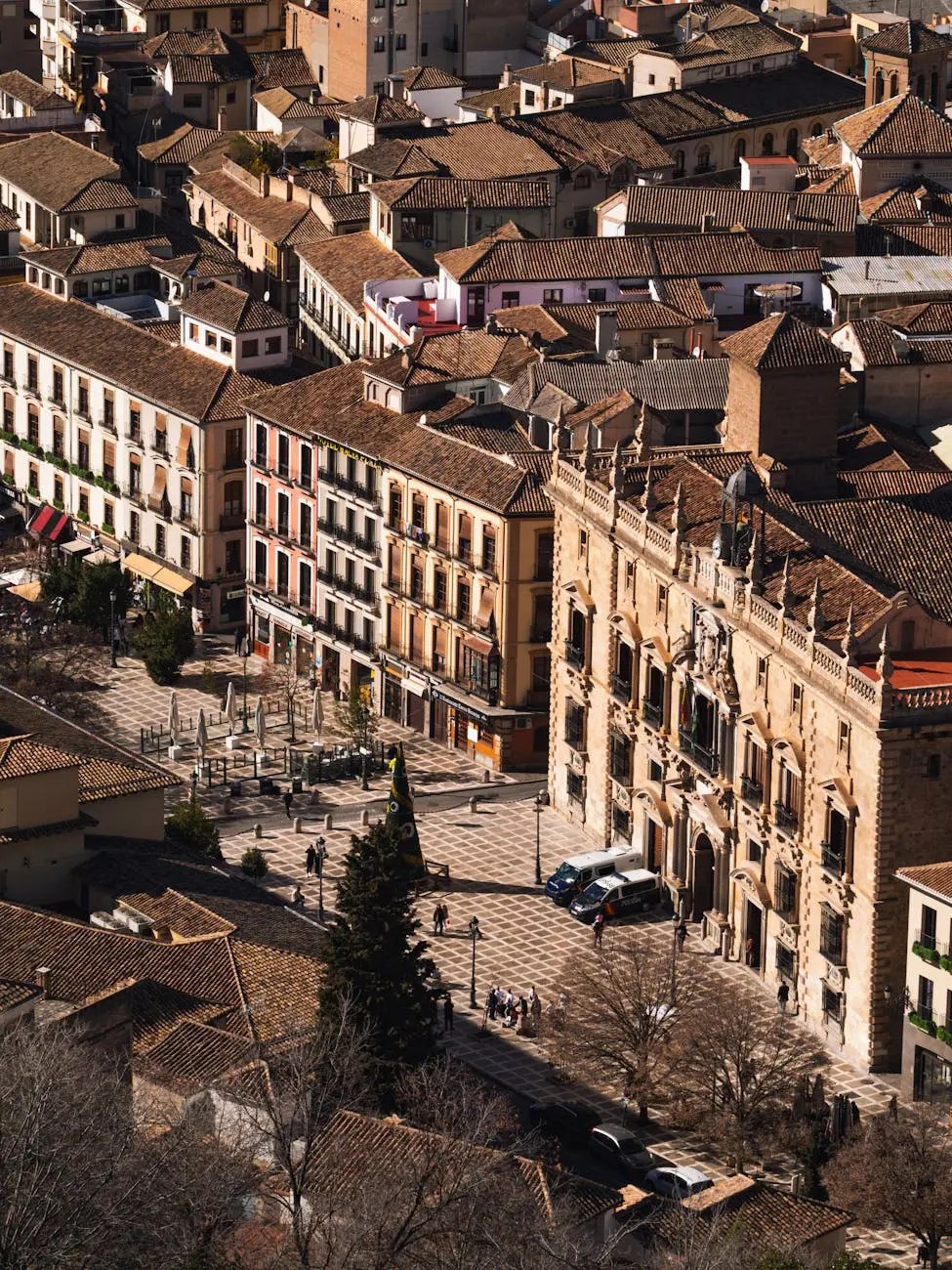
Aerial view of a historic square in Granada, Spain, featuring traditional Spanish architecture, tiled rooftops, and quaint streets lined with shops and cafes.
Aerial view of Granada’s charming rooftops and historic architecture showcasing the vibrant atmosphere of this Andalusian city. Plaza Nueva, the city’s oldest square, seen from above, revealing its strategic position at the foot of the Alhambra hill.
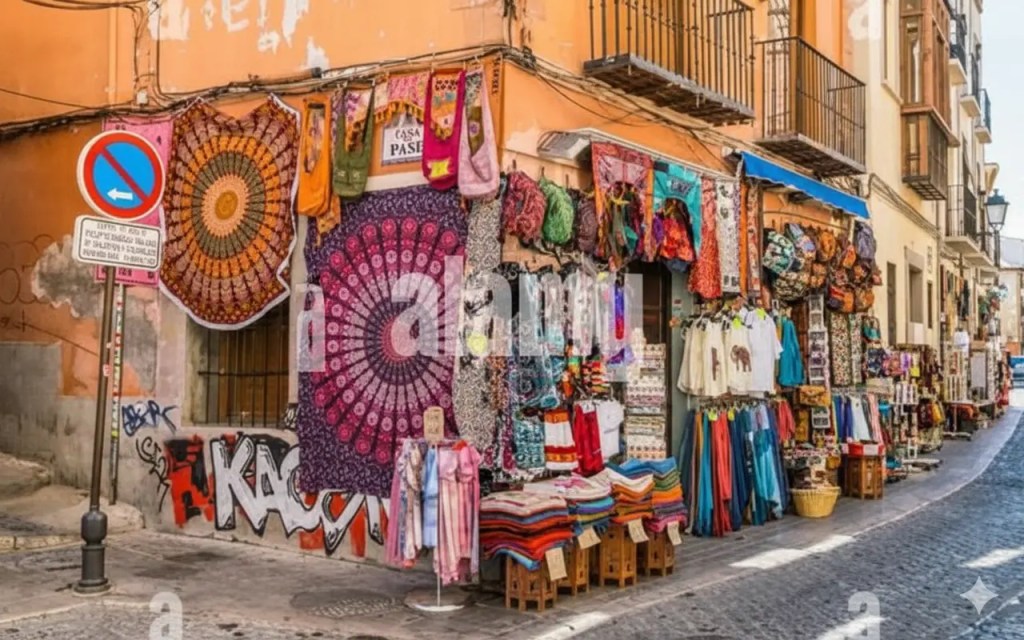
A vibrant street market in Granada, featuring colorful textiles, tapestry displays, and traditional clothing for sale, alongside a narrow cobblestone street.
Colorful street market in Granada showcasing tapestries, clothing, and local crafts. The bustling Calle Elvira is a sensory gateway, where the aromas from tapas bars mix with the sight of glittering lanterns in traditional tetería shopfronts.

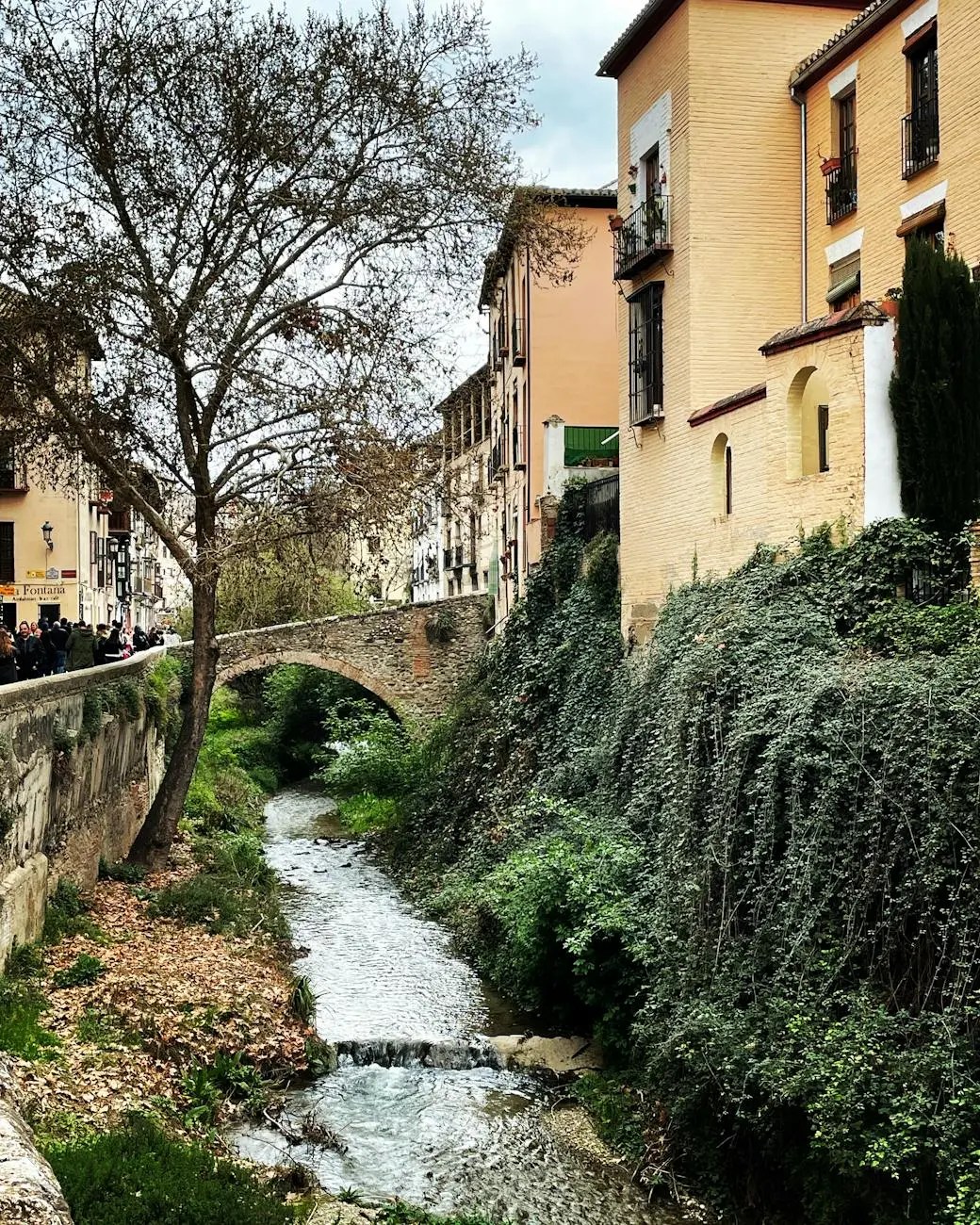
A picturesque view of a narrow stream running alongside a stone bridge, surrounded by lush green vegetation and charming buildings in Granada, Spain.
Picturesque view of a serene stream flanked by charming buildings and trees in Granada, creating a tranquil atmosphere. A stroll along Carrera del Darro feels like a walk through a living history book, with the river and centuries-old architecture on full display.

Granada’s Hidden Gems & Local Secrets

  • El Bañuelo: These stunning 11th-century Arab baths, hidden down a side street in the Albayzín, are often overlooked but are one of the best-preserved in Spain. Entrance is cheap and rarely crowded.
  • Carmen de los Mártires: A peaceful, slightly forgotten palace and garden just north of the Alhambra. It feels secret, romantic, and offers another unique viewpoint of the city.
Carmen de los Mártires (Expedia)Carmen de los Mártires (Get your Guide)
  • Carrera del Darro at Night: This beautiful street along the river is magical after dark, with the Alhambra illuminated above. Skip the crowded bars here and just walk.
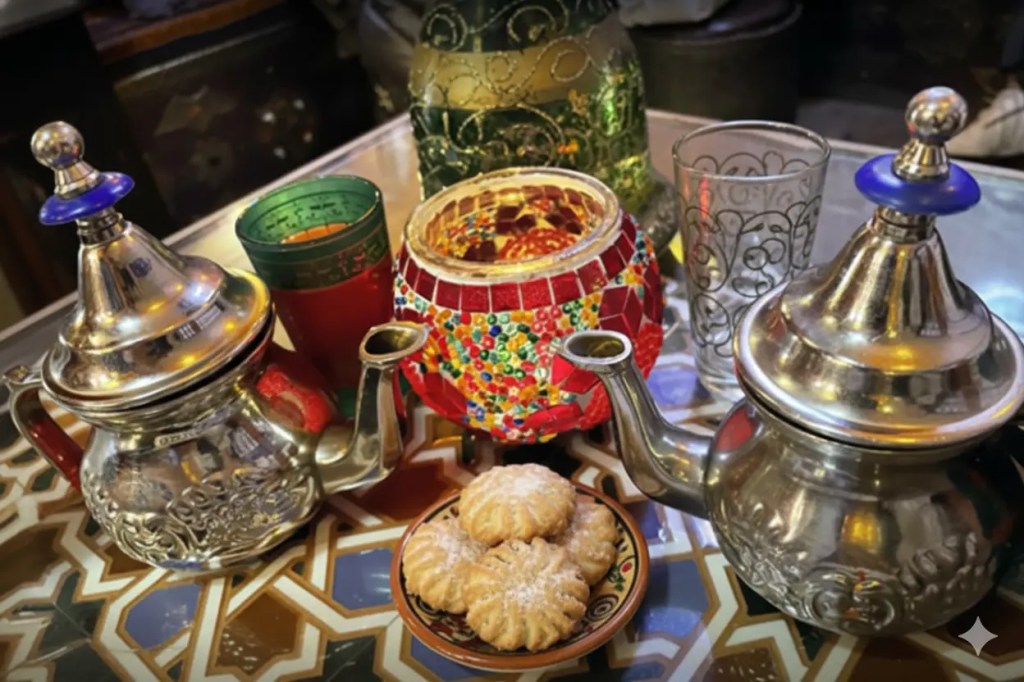
  • Tea in a Tetería: After the bustle, retreat to a tetería (tea house) in the Albayzín. Sip mint tea in a room filled with cushions and Moorish decor—it’s an instant transport to another time.
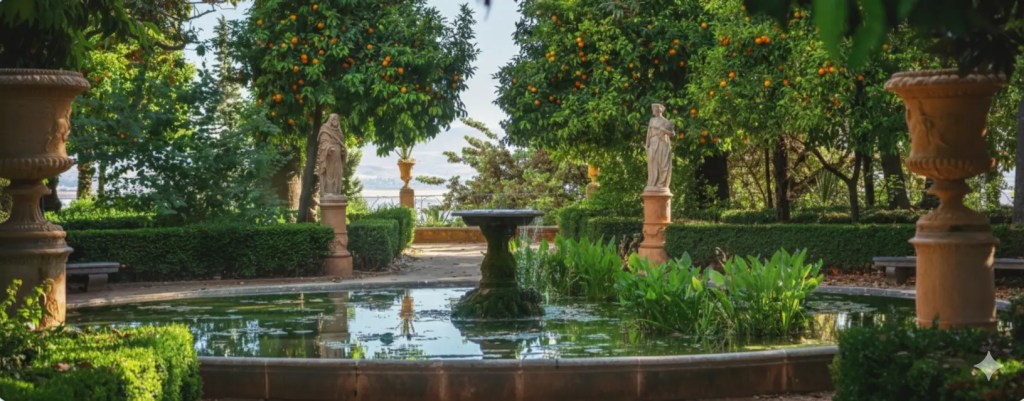
A serene garden scene featuring a circular fountain surrounded by lush greenery and trees bearing oranges. Statues are placed among the foliage, adding an artistic touch to the tranquil setting.
A tranquil garden in Granada, Spain, featuring lush greenery, orange trees, and a serene pond surrounded by classical statues. The romantic and secluded Carmen de los Mártires gardens offer a quiet escape with stunning, framed views of the city below.
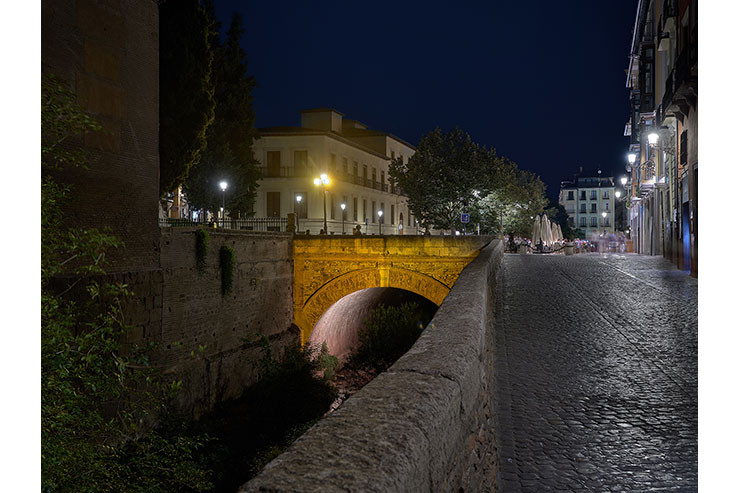
Night view of a cobblestone street in Granada, Spain, featuring a lit bridge arching over a small river, surrounded by trees and buildings.
A serene nighttime view of a beautifully lit bridge in Granada, showcasing the city’s charming cobblestone streets.
A traditional Moroccan tea set in a Granada tetería, featuring a colorful mosaic candle holder, silver teapots, glasses, and cookies.
Experience the ritual of mint tea in Granada’s traditional teterías, complete with ornate silverware and sweet pastries. The ritual of mint tea in a tetería is a sensory journey, complete with ornate silverware, sweet pastries, and the glow of mosaic lamps.

Food, Tapas & Local Experiences

Granada is famous for free tapas—order a drink, get food. My advice?

  • Avoid tourist menus near major sights
  • Follow locals into busy bars
  • Don’t rush—Granada eats slowly

Money‑Saving Tips for Granada

  • Visit major sights early morning
  • Use buses instead of taxis uphill
  • Stay slightly outside Albaicín
  • Combine ferry + train if coming via Málaga

🔌 Don’t forget power needs. This European Travel Plug Adapter Kit has covered me across Spain, Italy, and France:

Money-Saving Tips & Navigating Like a Pro

  • The Granada Card: If you plan to visit multiple monuments (Alhambra, Cathedral, Royal Chapel, monasteries), this card can save you money and includes Alhambra access, bypassing the need for a separate ticket. Do the math based on your itinerary.
  • Public Transport is Cheap and Good: The city bus network is extensive. A single ticket is about €1.40, but a 10-ride Bonobús card (€8.20) is the best value. Taxis are also reasonably priced for short hops, especially if splitting with friends.
  • Walk, Walk, Walk: The historic center is very walkable, and getting “lost” is part of the fun (and free!).
  • Water and Siesta: Carry a reusable water bottle. Tap water is safe to drink. Embrace the siesta—many shops close from 2-5 PM, so plan your museum visits for the morning or late afternoon.
  • The Ultimate Tapa Hack: For the cheapest and most local tapas experience, venture just a block or two away from the main squares. The bars filled with students and locals always have the best value.

Essential Spanish & Andalusian Lingo {#essential-lingo}

A little language goes a long way in earning smiles.

  • Hola / Buenos días – Hello / Good morning
  • Gracias – Thank you
  • Por favor – Please
  • Una caña, por favor – A small beer, please (the standard tapa drink)
  • La cuenta, por favor – The bill, please
  • Tapa – The free snack with a drink. In Granada, you often don’t choose it—it comes with the territory!
  • Paseo – A leisurely stroll. A key local activity.
  • Mirador – Viewpoint. You’ll be seeking these out!
  • Guiri – (Slang, not offensive) A tourist or foreigner. That’s us!

Stay Connected, Protected & Stress‑Free Abroad

📶 Stay Connected

Staying online abroad can be expensive if you rely on roaming or airport SIM counters. I travel with Drimsim, a global SIM that works in 190+ countries. Pop it in, top up via the app, and you’re connected—no surprises, no stress.

🔐 VPN for Travel Safety

Public Wi‑Fi and travel bookings don’t mix well without protection. I always use NordVPN when traveling:

✈️ Flight Delayed or Canceled?

You could be entitled to up to $650 in compensation. AirHelp checks eligibility and handles everything for you:

🛡️ Travel Insurance

No matter how short the trip, insurance matters. I recommend VisitorsCoverage for quick comparisons and flexible plans: 👉 https://visitorscoverage.tpm.lv/QUKMbHg3


✨ Travel Glow‑Up Tip

Travel photos hit differently when you feel good. I swear by K‑beauty essentials from Lakinza—affordable, effective, and perfect for travel skin recovery. Use code Lalax10 for a sweet discount.

Frequently Asked Questions (FAQ)

Q: How far in advance do I really need to book Alhambra tickets?
A: As soon as your travel dates are firm. Tickets for the Nasrid Palaces are released exactly three months in advance and sell out incredibly fast, especially for morning slots in peak season. Set a calendar reminder.

Q: Is Granada safe for solo travelers?
A: Generally, yes. It’s a university city with a vibrant street life. Standard precautions apply: be aware of pickpockets in crowded areas like the Alcaicería, and be cautious walking alone in the very steep, narrow streets of Sacromonte late at night.

Q: What’s the deal with tapas in Granada? Is it really free?
A: Yes! It’s one of the last cities in Spain where the free tapa tradition remains strong. Order any drink (alcoholic or non-alcoholic) at most traditional bars, and a small plate of food will arrive with it. The quality and size often increase with your second or third drink.

Q: Can I do a day trip to the Sierra Nevada from Granada?
A: Absolutely. In winter, you can go skiing (the resort is about 45 minutes by bus). In summer, it’s fantastic for hiking. Regular buses run from the city center to the mountain villages and ski station.

Q: I have more than a weekend. Where else should I go in Andalusia?
A: You’re in the heart of it! Consider basing yourself in Seville for flamenco and the majestic Alcázar, or Córdoba for the mesmerizing Mezquita. You can explore my detailed guides to both cities for inspiration:

If Granada leaves you craving more Southern European magic (which it probably will), it pairs beautifully with several nearby city escapes I’ve already explored in depth. Just a few hours away, Seville, Spain delivers flamenco-filled nights, orange-scented courtyards, and some of Andalusia’s most dramatic architecture—perfect if you want to stay in the same cultural rhythm. Heading east, Valencia, Spain offers a completely different vibe with futuristic design, relaxed beaches, and one of the best food scenes in the country (yes, paella tastes better here). If you’re extending your trip north, Barcelona, Spain blends art, nightlife, and seaside energy in a way that feels effortlessly iconic. And for travelers hopping borders, Lisbon, Portugal makes a surprisingly smooth next stop—laid-back, photogenic, and ideal for slow wandering after Granada’s hilltop views. Linking these destinations together creates a smart, time-efficient route that saves money on transport while keeping the journey rich and varied.

Final Thoughts

Granada isn’t loud about its beauty—it reveals it slowly. Plan smart, walk often, eat well, and let the city surprise you.

👉 Ready to plan your escape? Compare flights and stays on Expedia now:

💬 Have questions or hidden gems to share? Drop a comment—I always reply.

📌 Explore more nearby escapes in my Travel Master List: 👉 https://confidencebuildings.com/travel-master-list/

https://www.tumblr.com/indigosavageryshark/804921819792621568?source=share

Universal Disclaimer/Disclosure Page:

The Ultimate Weekend Escape to Palermo, Sicily: A Feast for the Senses 🏛️🍋

Meta Description: Dreaming of a Sicilian weekend? Dive into this guide to Palermo, where Arab-Norman mosaics dazzle, street food delights, and Mediterranean waves beckon. Find essential travel tips, hidden gems, and a perfect 3-day itinerary for your ultimate escape to Sicily’s captivating capital.

Welcome, fellow traveler, to your guide for the perfect weekend in Palermo. I arrived expecting a city of overwhelming chaos, but I was met instead with a laid-back energy, a place where palm trees shade Baroque balconies and the air smells of salt, jasmine, and freshly fried arancine.

This is a city that has been shaped by nearly 15 different cultures—Phoenicians, Romans, Arabs, Normans, and Spanish, to name a few. That history isn’t just in museums; it’s baked into the very stones of the churches, shouted in the vibrant markets, and layered into every bite of its famous cuisine. Get ready to fall in love.

Table of Contents

Why Palermo Is Perfect for a Weekend Escape
Palermo’s Soul: A Quick Cultural Snapshot
Getting to Palermo (Flights & Smart Booking Tips)
Getting There by Ferry (Direct Ferries Guide)
Getting Around Palermo (Bus, Train, Car & Road Tips)
Best Time to Visit Palermo (Avoid Crowds & Heat)
A Perfect 2‑Day Palermo Itinerary
Hidden Gems Most Travellers Miss
Eat Like a Local (Without Overspending)
Smart Travel Tools I Personally Use
Useful Italian & Sicilian Words for Travellers
How to Save Money in Palermo
Pair Palermo with These Nearby Weekend Escapes
FAQs
Final Thoughts & Strong Call‑to‑Action

Palermo at a Glance: What to Know Before You Go

Before you dive into the winding streets, a little context goes a long way. Unlike the polished perfection of Rome or Florence, Palermo is beautifully “disheveled”—a bit rough around the edges in a way that feels authentically Sicilian. Embrace it. The real magic happens when you look past the graffiti to the 12th-century mosaic glittering in the church next door.

Why Palermo Is Perfect for a Weekend Escape

Palermo doesn’t whisper its charm—it shouts it from market stalls, cathedral steps, and seaside promenades. In just one weekend, you get layered history, Mediterranean beaches, and some of the best street food in Europe.
I arrived thinking Palermo would be “interesting.” I left planning my return around food alone.

Palermo’s Soul:

A Quick Cultural SnapshotPalermo has been shaped by Greeks, Romans, Arabs, Normans, and Spaniards—and instead of choosing one identity, it kept them all. That’s why churches resemble mosques, palaces feel North African, and food ignores all rules (thankfully).
The name Panormos—Greek for “all‑port”—explains everything. Palermo has always been a city built for travellers arriving by sea.

Getting to Palermo (Flights & Smart Booking Tips)

✈️ Palermo Airport (PMO) is well connected with Europe and mainland Italy.
I always compare flights and stays using Expedia because flexible bookings save me when plans change:
👉 Book flights & hotels via Expedia:
Money tip: Fly midweek and avoid July–August for better prices.

Hotels in Palermo

Getting There by Ferry (Direct Ferries Guide)

For a truly memorable arrival, consider a ferry. Sailing into the massive Port of Palermo as the sun rises over Monte Pellegrino is magical. The port is centrally located, putting you steps away from attractions like the Foro Italico.

Palermo is one of southern Italy’s major ferry hubs.

Popular Routes: Ferries connect Palermo to mainland Italy (Genoa, Naples, Salerno, Civitavecchia near Rome) and other islands like Cagliari in Sardinia.

What to Know: Crossings from Naples take 8.5-12 hours, often overnight, which can save you a hotel night. You can bring your car, which is ideal for exploring Sicily afterward
🚢 Direct Ferry Routes to PalermoNaples → Palermo (overnight ferries—budget‑friendly)
Genoa → Palermo (longer but scenic)
Cagliari (Sardinia) → Palermo
Livorno → Palermo
I always use Direct Ferries to compare routes, cabins, and prices before booking: They offer e-tickets and live updates, which takes the stress out of booking.
👉 Check ferry routes & prices via Direct Ferries
Pro tip: Overnight ferries save one hotel night and arrive early. The frequency of ferry sailings increases during the high season. For the best deals and to secure your spot, especially if traveling with a vehicle, it’s wise to book your tickets online in advance

💡 Pro Tip for Drivers: If you’re planning a wider Sicilian road trip, I’d recommend collecting your rental car in the city, not at the airport. Driving in central Palermo is an “experience” best minimized. Pick up your car when you’re ready to leave for the countryside.

Getting Around Palermo (Bus, Train, Car & Road Tips)

🚌 Buses & TramsAMAT buses cover most attractions. City Buses (AMAT): Useful for connecting key areas like the station, Politeama, and the port. Always validate your paper ticket in the machine onboard to avoid steep fines

Free Shuttle: AMAT runs a free shuttle bus (look for “GRATIS” on the display) on a loop through the main historic sights


Buy tickets at tabacchi shops
Google Maps works well here
🚆 TrainsTrains connect Palermo with the airport, Cefalù, and Monreale
Cheap and surprisingly scenic
🚗 Renting a Car (With Caution)Use ring roads to avoid the historic center
Watch for ZTL zones (restricted traffic areas)
Download offline maps to save data and time

  1. Best Time to Visit PalermoApril–June: Ideal weather, fewer crowds
    September–October: Warm sea, calmer streets
    July–August: Very hot and busy (festival season)
    Shoulder season is the sweet spot.

Your Perfect 3-Day Palermo Itinerary

This itinerary balances iconic sights with local flavor, leaving room for you to wander and discover your own Palermo.

Day 1: Dive into History & Hearty Street Food

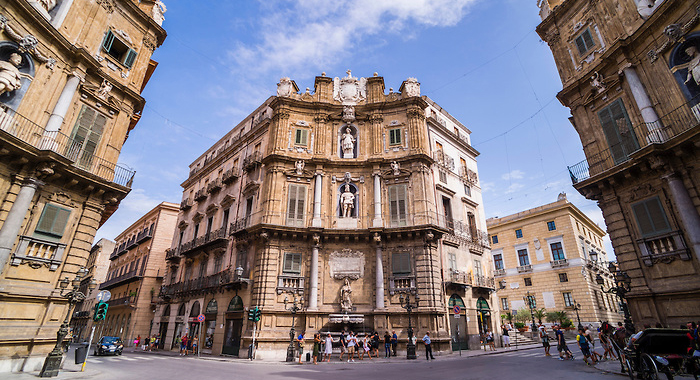
  • Morning: Start at the intersection of it all—Quattro Canti. This stunning Baroque square is the city’s beating heart. From there, walk to the Palermo Cathedral. Pay to go up to the roofs for a breathtaking view over the old town—it’s the best orientation you can get.
Quattro Canti (Expedia)Quattro Canti (Get your guide)
  • Afternoon: Join a street food and walking tour. I did this on my first day and it was a game-changer. My guide, Fabrizio, led us through the chaotic Capo Market, where we sampled panelle (chickpea fritters) and the city’s famous arancina (not arancino here in western Sicily!). The tour wove food with stories, passing the Teatro Massimo and explaining the city’s layered history.
Teatro Massimo (Expedia)Teatro Massimo (Get your Guide)
  • Evening: Experience the Vucciria Market transformation. By day it’s quiet, but at night it comes alive with crowds enjoying aperitivo at makeshift tables—a truly local scene.
 Vucciria Market (Expedia) Vucciria Market (Get your Guide)
A historic building at the intersection of two streets in Palermo, featuring Baroque architecture and sculptures on the facade, with pedestrians and vehicles in the foreground against a bright blue sky.
A stunning view of Quattro Canti, a Baroque square in the heart of Palermo, showcasing its rich architectural heritage.

A plate of golden-brown arancine with parsley garnishing, accompanied by lemon wedges, ready to be served.
Delicious Sicilian arancine garnished with lemon and herbs, embodying the vibrant street food culture of Palermo. Authentic Panelle: Crispy chickpea fritters from a friggitoria in Palermo, Sicily. The classic and irresistible Sicilian street food. #Panelle #SicilianFood #StreetFood #Palermo
Close-up of a halved arancina, a traditional Sicilian rice ball, filled with seasoned rice, ground meat, and vegetables.
Delicious arancini, a staple of Sicilian street food, filled with rice and minced meat. The iconic Arancina of Palermo: a deep-fried saffron rice ball stuffed with meat ragù, peas, and mozzarella. Sicily’s most famous street food, enjoyed on every corner. #Arancina #Palermo #SicilianStreetFood #CiboDiStrada #Sicilia
The Teatro Massimo in Palermo, Italy, showcasing its grand architecture with palm trees in the foreground and a blue sky.
The stunning Teatro Massimo in Palermo, renowned for its impressive Neoclassical architecture and vibrant surroundings. Teatro Massimo in Palermo, Sicily. One of Europe’s largest and most magnificent opera houses, famous for its perfect acoustics and iconic appearance in “The Godfather Part III.” #TeatroMassimo #Palermo #Sicily #OperaHouse #ItalianArchitecture #TravelItaly

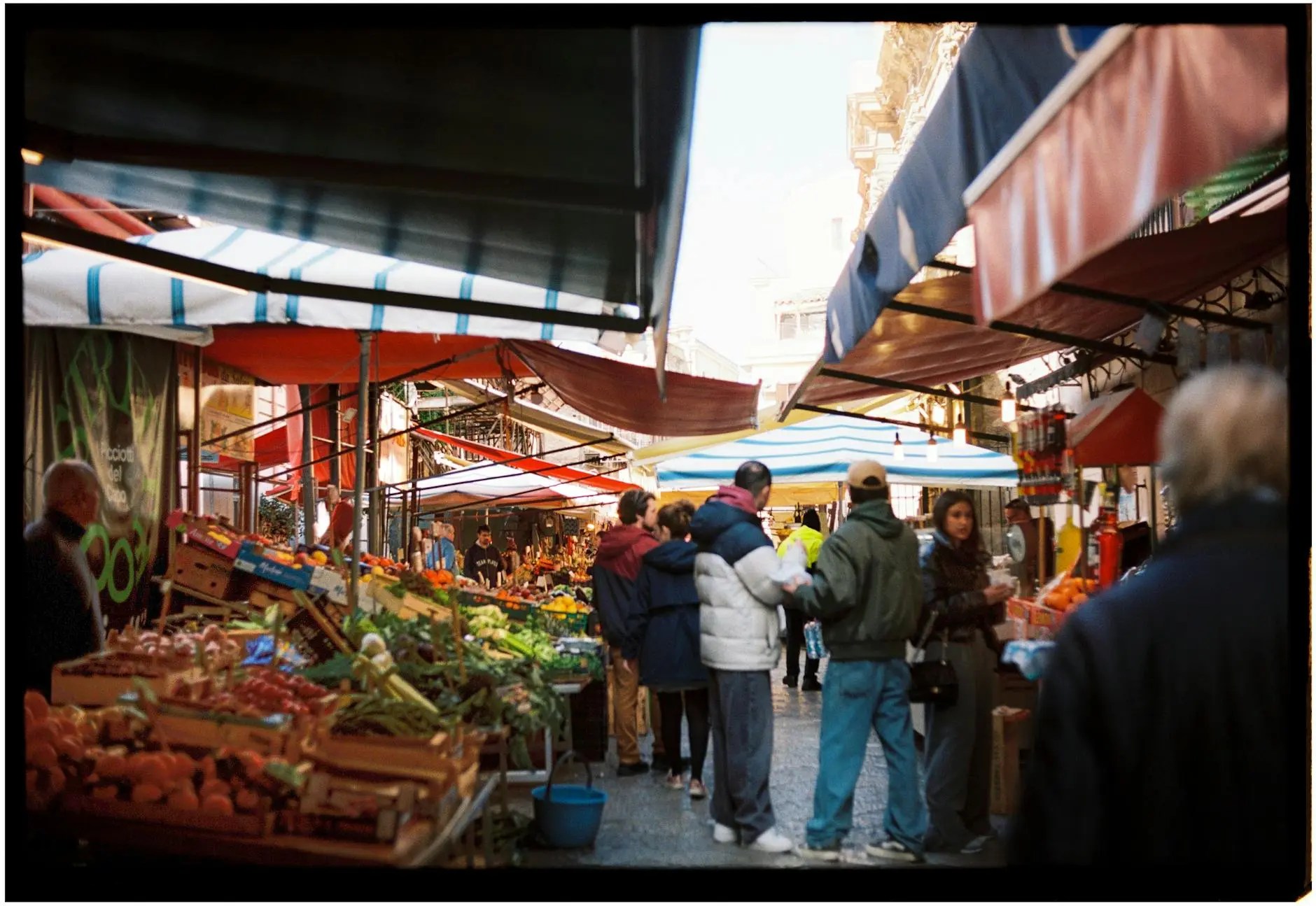
A bustling street market in Palermo filled with colorful produce like fruits and vegetables, along with people navigating through the stalls under striped canopies.
Explore the vibrant street market scene in Palermo, where fresh produce and local flavors come alive. Experience the energy of Ballarò Market in Palermo, Sicily. The city’s oldest and most vibrant street market, where the scents of fresh produce, street food, and the sounds of vendors create an authentic Sicilian atmosphere. #BallaròMarket #Palermo #Sicily #StreetMarket #ItalianMarket #TravelSicily

Day 2: Golden Mosaics & Mountain Views

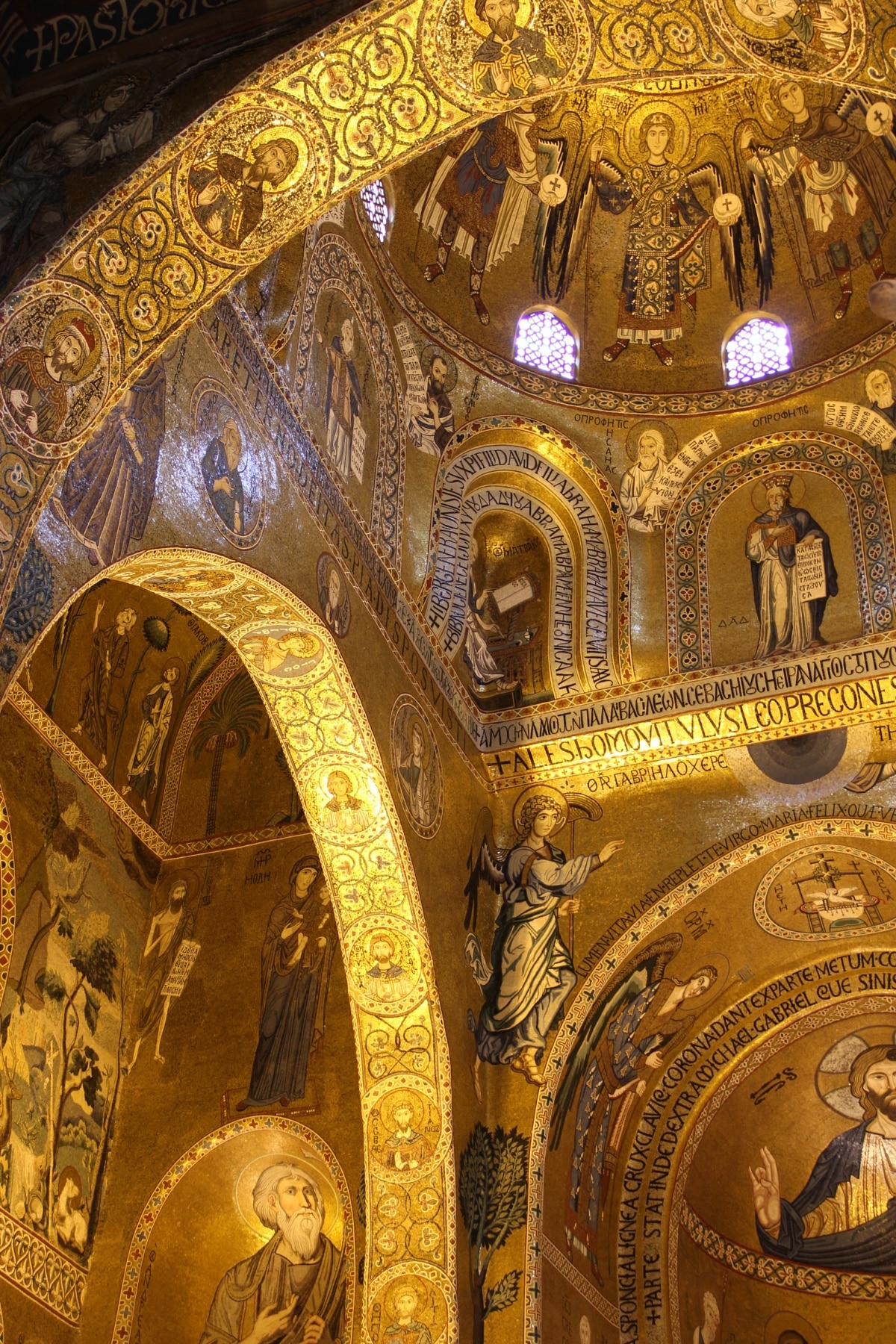
  • Morning: Head to the Palazzo dei Normanni to see the Cappella Palatina. Words can’t prepare you for the shimmering, wall-to-wall Byzantine gold mosaics here. It’s a UNESCO masterpiece and arguably one of the most beautiful churches in the worldGo early and buy tickets online to avoid long lines.
Cappella Palatina.(Expedia)Cappella Palatina.(Get Your Guide)
  • Afternoon: Take a short bus ride (AMAT bus 389) up Monte Pellegrino to the Sanctuary of Santa Rosalia. The view over the Gulf of Palermo is spectacular, and the cave-church is a unique spiritual site. On the way back, stop at Mondello Beach to dip your toes in the Tyrrhenian Sea.
Monte Pellegrino (Expedia)Monte Pellegrino (Get your Guide)
  • Evening: Dine in the Kalsa district. Find a trattoria for fresh pasta with sardines (pasta con le sarde), a classic Sicilian dish.
Interior view of the Cappella Palatina in Palermo, showcasing stunning Byzantine mosaics with golden backgrounds and intricate religious figures.
The stunning Byzantine mosaics inside the Cappella Palatina in Palermo, showcasing intricate gold detailing and religious imagery.
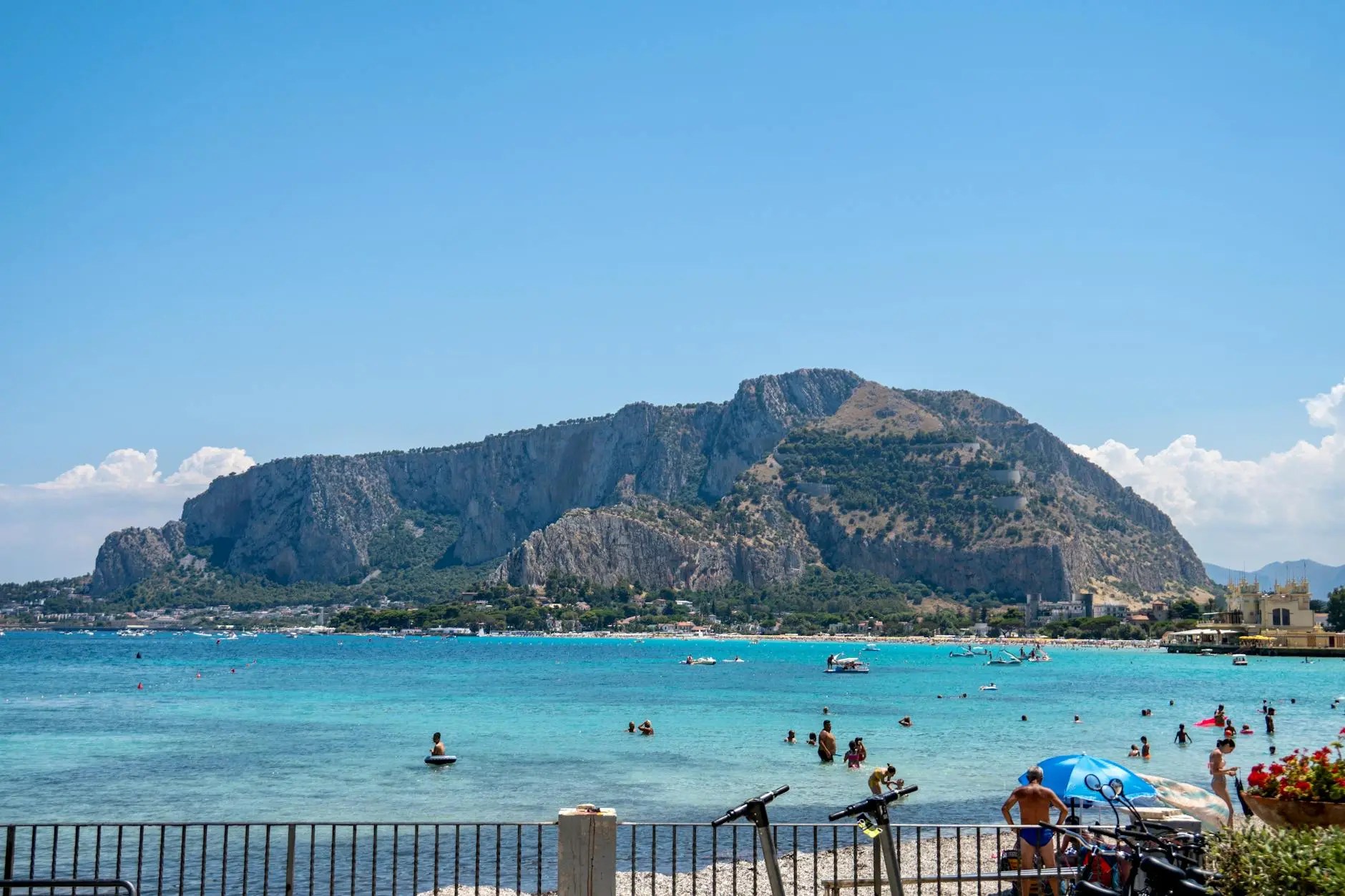
A panoramic view of Mondello Beach in Sicily, showing its iconic crescent of white sand and vibrant turquoise Mediterranean waters, backed by historic Liberty-style villas and green hills.
A stunning view of the crystal-clear waters at Mondello Beach in Palermo, with picturesque mountains in the background. Mondello Beach – Palermo’s Seaside Escape. Just a short bus ride from the city’s hustle, this stunning crescent of sand and turquoise water is where locals and travelers go to cool off. Don’t forget to try a granita at one of the iconic beachfront chalets!

📸 Pro Tip for Photos: The light here is incredible in the late afternoon. To capture the water’s true color like this, I used my trusty travel camera. For stable shots of the bustling beach scene

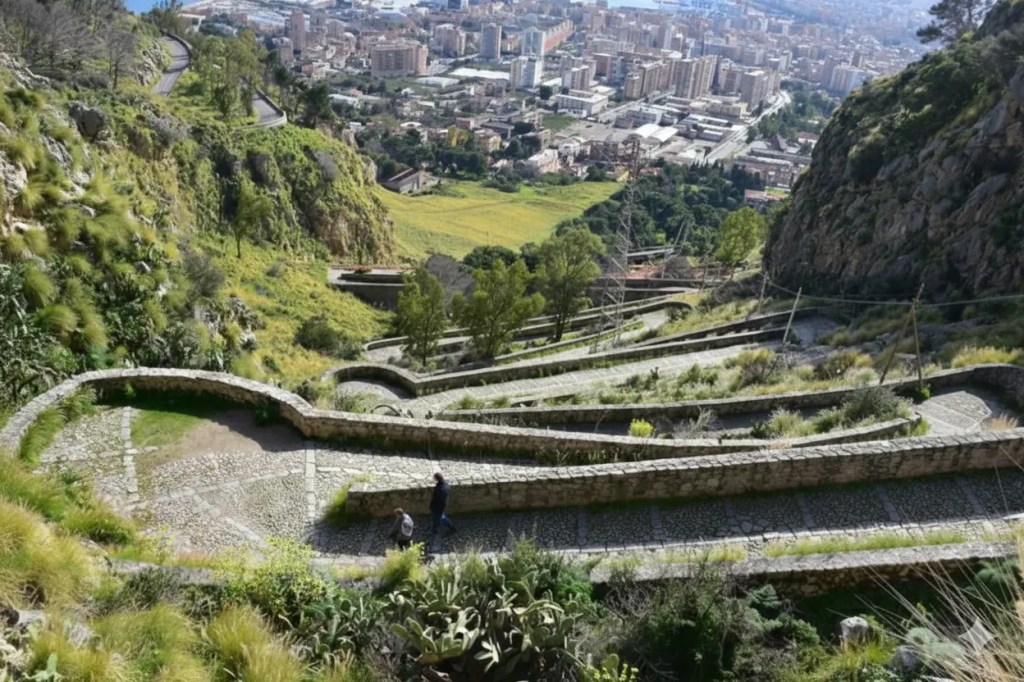
A pilgrim hiking the historic Acchianata stone path up Monte Pellegrino in Palermo, Sicily, with views of the Mediterranean Sea and surrounding hills.
A winding pathway leading down from Monte Pellegrino, offering breathtaking views of Palermo and the Mediterranean coastline. The Acchianata Pilgrimage Path on Monte Pellegrino. Follow in the footsteps of centuries of devotees on this iconic stone trail leading to the Sanctuary of Santa Rosalia, Palermo’s beloved patron saint.

🗺️ Navigation Tip: The Acchianata path begins near the Sanctuary of Santa Rosalia bus stop (AMAT line 812). For easier navigation while exploring Palermo’s trails and city streets, consider using an eSIM from Drimsim for reliable, affordable mobile data across Sicily.

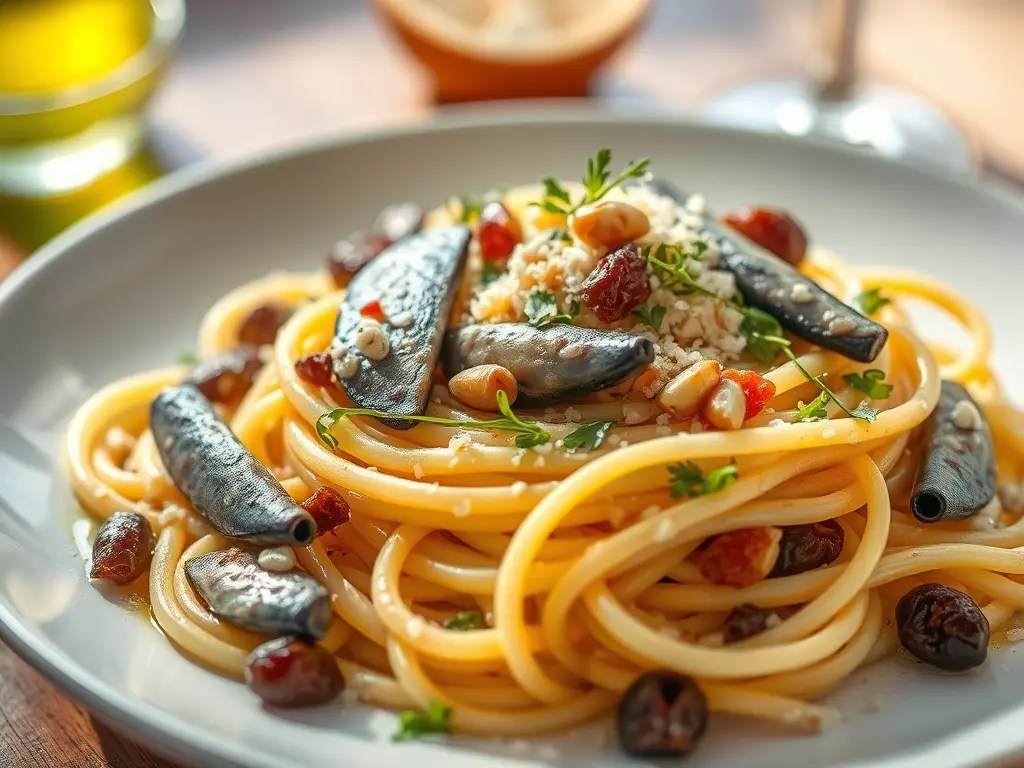
Close-up of Pasta con le Sarde, a traditional Sicilian pasta from Palermo with fresh sardines, wild fennel, pine nuts, raisins, and saffron on a white plate.
A delicious plate of pasta with sardines, a classic Sicilian dish featuring fresh ingredients. Pasta con le Sarde – A Taste of Sicilian History. This iconic Palermo dish, with its unique blend of fresh sardines, wild fennel, pine nuts, and raisins, tells the story of the island’s Arab and Norman influences on a single plate.

Day 3: Local Markets & Leisurely Goodbyes

  • Morning: Get lost in the Ballarò Market. This is the largest and most authentic food market, a sensory overload of shouting vendors, hanging cheeses, and gleaming seafood. Grab a fresh cannolo for breakfast—the ricotta filling should always be piped in fresh to order!
Ballarò Market. (Expedia)Ballarò Market. (Get your Guide)
  • Afternoon: Visit the stunning Church of Santa Caterina d’Alessandria. Pay the small fee to access the monastery roof for what I think is the best panoramic view in the city, looking down over a beautiful tiled cloister. Afterwards, enjoy a coffee at the historic Antico Caffe Spinnato.
Santa Caterina d’Alessandria(Expedia) Santa Caterina d’Alessandria(Get your guide)
  • Evening: Enjoy a final passeggiata (evening stroll) along Via Maqueda. Soak in the lively atmosphere and pick up some souvenirs—maybe some local pistachio cream or ceramicware.
A lively scene at the historic Ballarò Market in Palermo, Sicily, with vendors selling colorful fresh fruits, vegetables, and local goods under vibrant umbrellas.
Explore the vibrant street life of Palermo’s local market, bustling with colors and fresh produce. The Heartbeat of Palermo at Ballarò Market. Step into the sensory overload of Palermo’s oldest street market, where the air is filled with the scent of fresh produce and the sound of vendors’ animated abbanniate (street cries).

🛒 Travel Tip: For the best experience, visit the market in the morning when it’s most lively. Don’t be shy to sample—a friendly “Posso assaggiare?” (Can I taste?) goes a long way. Having a VPN on your phone is useful for securely accessing digital maps and translating vendor signs on public Wi-Fi.

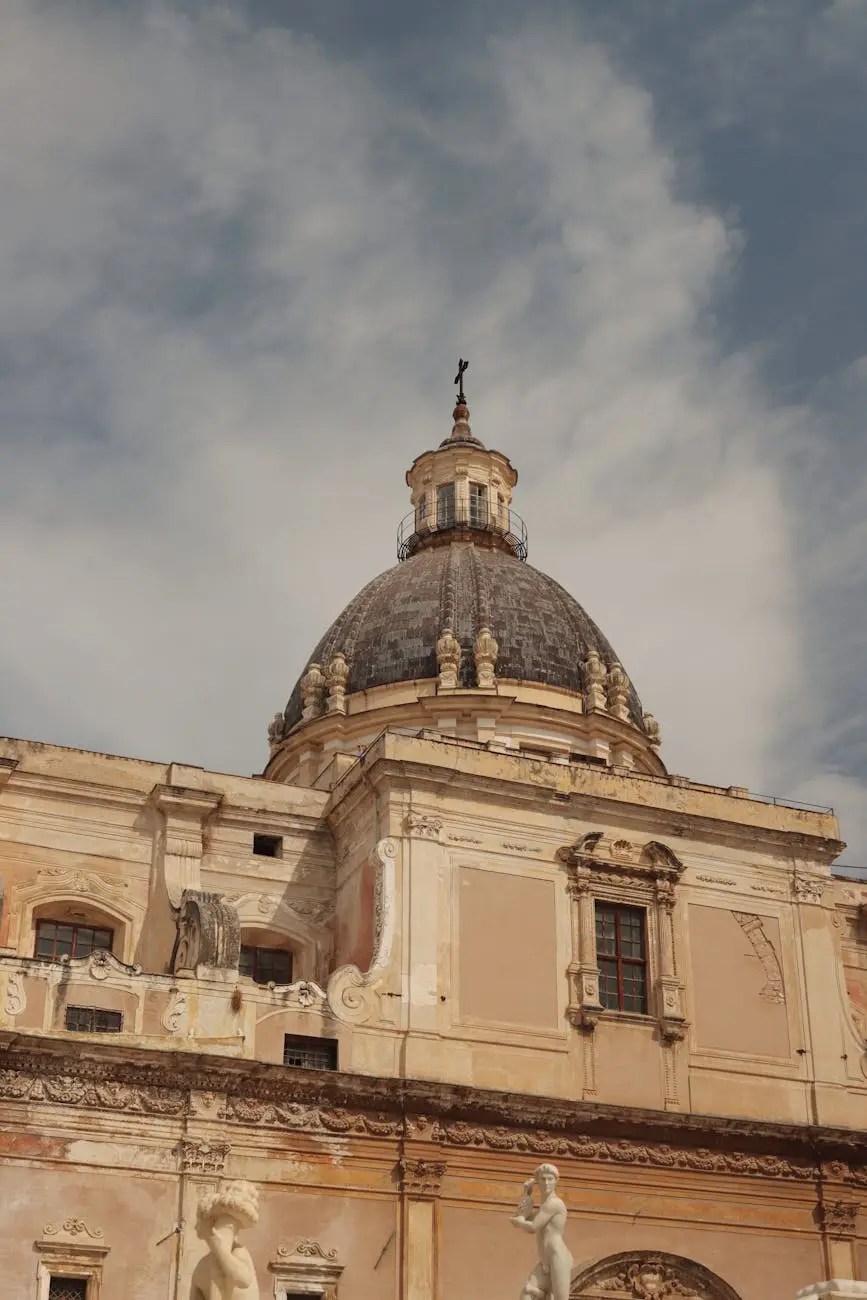
Ornate Baroque facade and majolica-tiled dome of the Church of Santa Caterina d'Alessandria on Piazza Bellini in Palermo's historic center, Sicily.
The stunning dome of the Church of Santa Caterina d’Alessandria in Palermo, showcasing intricate architecture against a beautiful sky. Santa Caterina d’Alessandria: Palermo’s Baroque Jewel. This 16th-century church is a masterpiece of Sicilian Baroque and Rococo splendor. Don’t miss the climb to its rooftop for one of the best panoramic views in the city.
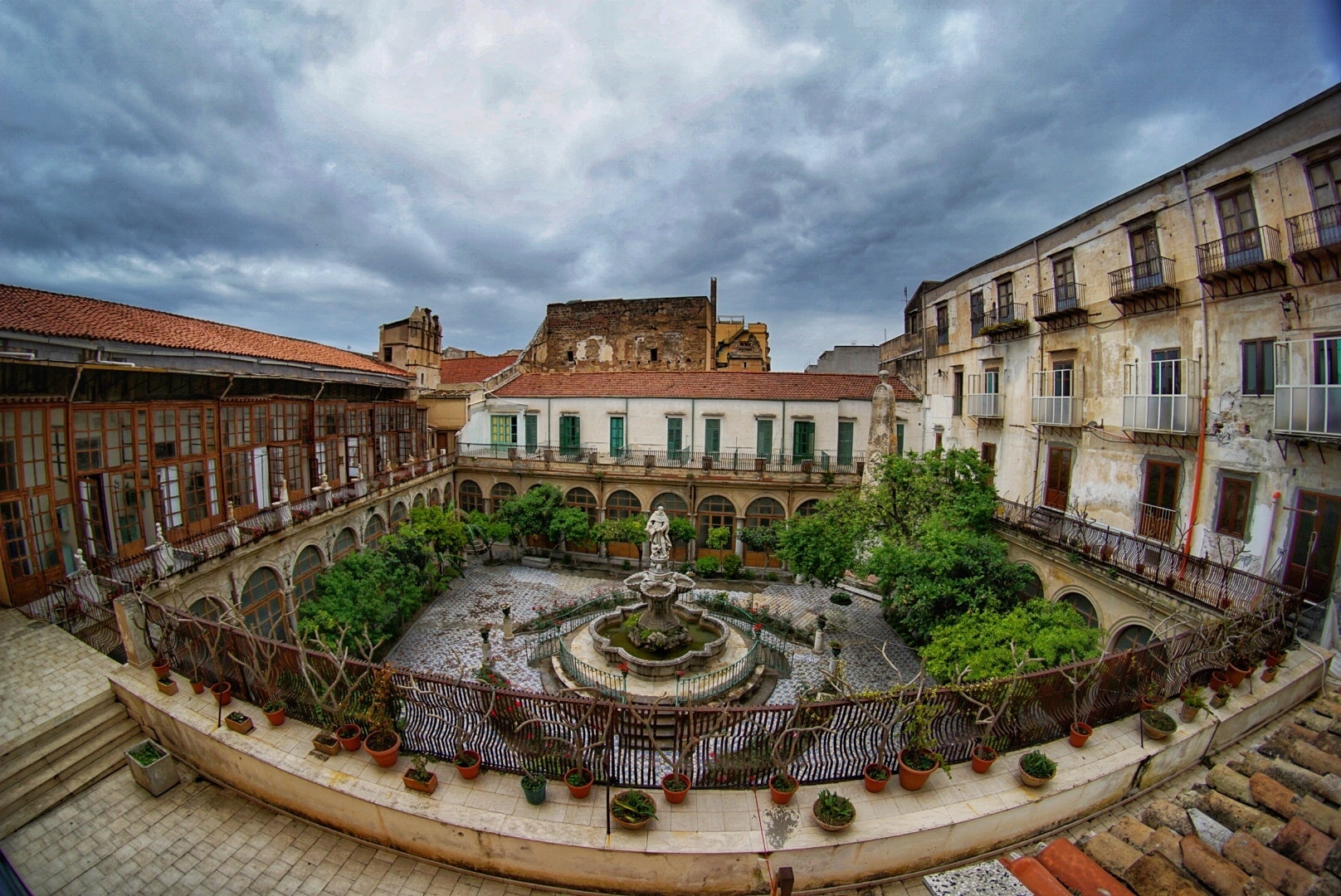
A view of a beautifully designed courtyard featuring a central fountain surrounded by greenery and historic buildings with balconies under a cloudy sky.
A tranquil courtyard in Palermo, showcasing lush greenery and historic architecture, perfect for a peaceful escape.
Vibrant display of traditional Sicilian Opera dei Pupi puppets and colorful ceramic pottery at a crafts market in Palermo, Italy.
Colorful traditional Sicilian puppets and pottery displayed in a vibrant market in Palermo. Sicilian Puppetry & Pottery: A Living Tradition. These handcrafted Opra dî Pupi (Opera dei Pupi) puppets and ceramics bring centuries of Sicilian folklore, knightly legends, and artisan skill to life in Palermo’s markets.

Beyond the Guidebook: My Personal Tips & Hidden Gems

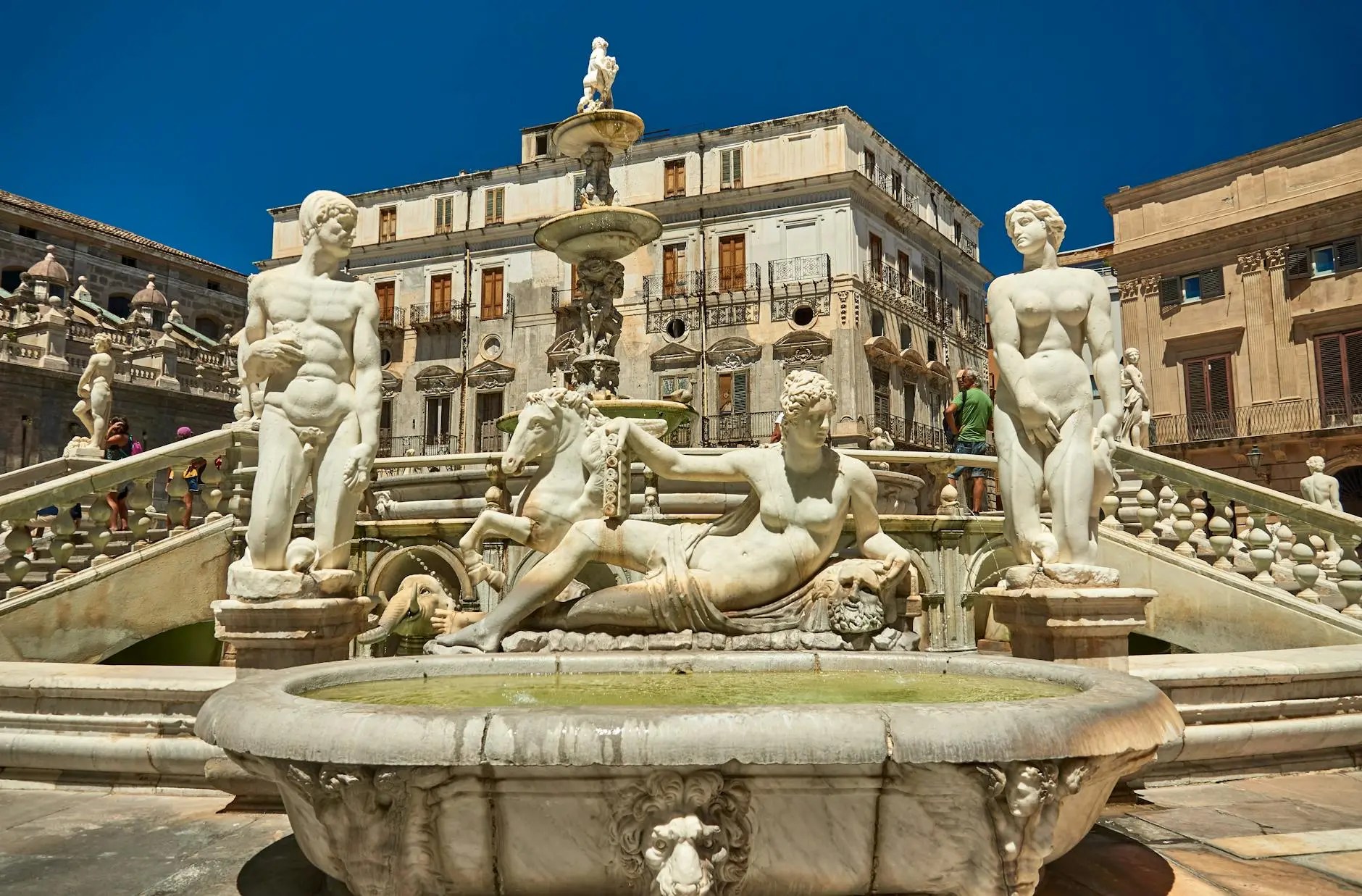
  • The “Fountain of Shame”: Don’t miss the Pretoria Fountain. Its official name is forgettable, but its local nickname, Fontana della Vergogna (Fountain of Shame), comes from the scandal its nude statues caused among 16th-century nuns. It’s a masterpiece of Renaissance sculpture.
Pretoria Fountain (Expedia)Pretoria Fountain (Get your Guide)
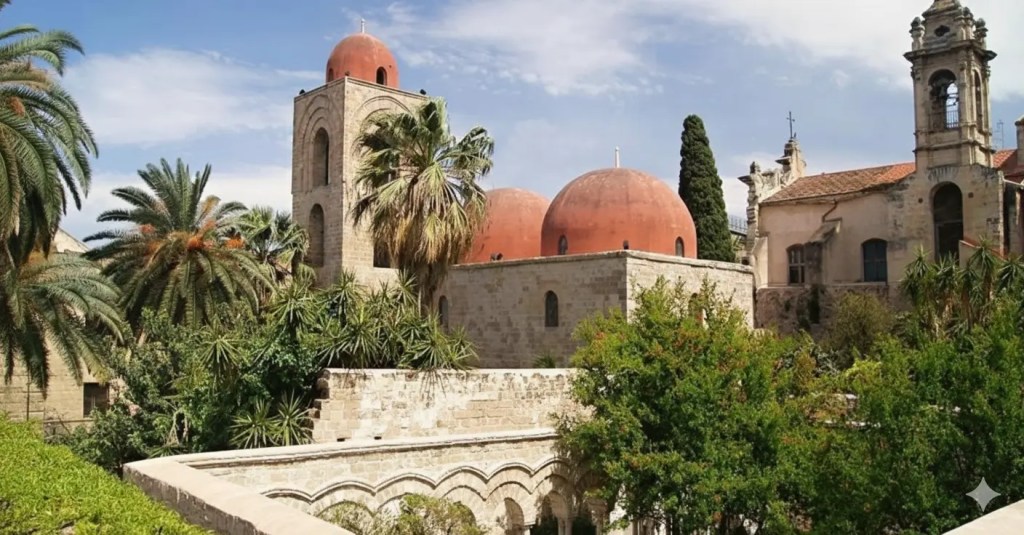
  • A Peaceful Oasis: Just behind the Norman Palace, find San Giovanni degli Eremiti. Its distinctive red Arab-Norman domes peeking through palm trees feel like a slice of North Africa and offer a tranquil escape.
San Giovanni degli Eremiti.(Expedia)San Giovanni degli Eremiti.(Get your Guide)
  • Sunday Antiques: If you’re in town on a Sunday morning, head to Piazza Marina for a lively antiques and flea market. Look for the enormous Ficus macrophylla tree in the middle of the square—its aerial roots are a sight to behold.
Piazza Marina (Expedia)Piazza Marina (Get your Guide)
Aerial view of the monumental Fontana Pretoria (Fountain of Shame) in Piazza Pretoria, Palermo, featuring concentric tiers of Renaissance marble statues and basins.
The iconic Pretoria Fountain, known as the ‘Fountain of Shame,’ showcases exquisite Renaissance sculptures in the heart of Palermo. Fontana Pretoria: Palermo’s “Fountain of Shame.” This stunning 16th-century Renaissance masterpiece earned its scandalous nickname from the outcry of neighboring nuns over its array of nude mythological gods, nymphs, and animals.
The distinctive red domes and bell tower of San Giovanni degli Eremiti church in Palermo, Sicily, set against a blue sky with palm trees and lush gardens.
Explore the stunning architecture and lush gardens of San Giovanni degli Eremiti, a tranquil oasis in Palermo, featuring distinctive red domes amidst palm trees. San Giovanni degli Eremiti: A Page from a Persian Fairy Tale. With its five iconic red domes and tranquil cloister, this 12th-century church is the most striking example of Arab-Norman architecture in Palermo—a serene escape from the city bustle.
A large, majestic Ficus macrophylla tree surrounded by a railing in a public square, with a wooden walkway leading towards it. Sunlight casts shadows on the stone pavement.
The majestic Ficus macrophylla tree in Piazza Marina, a celebrated site in Palermo with impressive aerial roots.
  • Save Money & Time:
    • Combo Tickets: Look for combined tickets for churches and museums (e.g., at Piazza Bellini).
    • Aperitivo: Skip an expensive dinner one night and do as the locals do: enjoy an aperitivo (a drink with complimentary snacks) at a bar in Vucciria or La Kalsa.
    • Water: Carry a refillable bottle. Palermo has many public fountains with clean, cold drinking water.

Essential Italian for Your Trip

A little language goes a long way in making connections.

  • Ciao (chow): Hello / Goodbye (informal)
  • Buongiorno (bwon-jor-no): Good morning / Good day
  • Grazie (graht-tsee-eh): Thank you
  • Per favore (pehr fah-voh-reh): Please
  • Dov’è…? (doh-veh): Where is…?
  • Quanto costa? (kwahn-toh koh-stah): How much does it cost?
  • Un caffè, per favore (oon kahf-feh): An espresso, please.
  • Un’arancina, per favore (oo-nah-rahn-chee-nah): One arancina, please. (Use the feminine form in Palermo!)

Frequently Asked Questions

What is the best time of year to visit Palermo?

The ideal times are spring (April-May) and autumn (September-October). The weather is pleasantly warm, perfect for exploring, and the crowds are thinner than in the peak summer months. Summer can be very hot and crowded.

Is Palermo safe for tourists?

Yes, Palermo is generally safe for tourists. As in any major city, practice standard precautions: be aware of your surroundings in crowded areas like markets, keep valuables secure, and avoid poorly lit, deserted streets at night. The historic center is lively and well-patrolled.

How many days do I need in Palermo?

3-day weekend is perfect to see the major highlights and get a real feel for the city. If you want to take day trips to places like Cefalù or Monreale, or explore at a more relaxed pace, consider adding 1-2 extra days.

What is a must-try food in Palermo?

You cannot leave without trying:

  1. Arancina: The iconic deep-fried rice ball, stuffed with ragù, peas, and cheese.
  2. Pane e Pannelle: A sandwich filled with chickpea fritters.
  3. Sfincione: Palermo’s thick, fluffy pizza topped with tomatoes, onions, and caciocavallo cheese.
  4. Cannolo: A crisp pastry tube filled with sweet, fresh ricotta.
Close-up of a slice of Sicilian pizza topped with tomato sauce, diced tomatoes, onions, and sprinkled with herbs.
Delicious Sicilian sfincione, a thick, fluffy pizza topped with tomatoes and onions, perfect for a weekend in Palermo.
Close-up view of a Sicilian cannoli filled with sweet ricotta cheese, topped with chocolate chips and crushed pistachios, served on a white plate.
Delicious Sicilian cannoli topped with pistachios and chocolate chips, a must-try dessert in Palermo.

Smart Travel Tools I Personally Use


✈️ Flight Delayed or Canceled?If your flight gets delayed, canceled, or overbooked, you could be owed up to $650 under air passenger rights.
I check every disrupted flight with AirHelp—they handle everything and only charge if you win:

🔌 European Plug Adapter (Don’t Forget This)Italy uses Type C, F & L plugs. This European Travel Plug Adapter Kit has saved me countless times:

🧳 Travel Insurance (Worth Packing)I compare plans through VisitorsCoverage—fast, simple, and reliable:

✨ Look beautiful everywhere with K‑beauty magic: Use code Lalax10 at checkout—because glowing skin should never steal travel money.

Pair Palermo with These Nearby Weekend EscapesIf you’re building a longer Europe trip, combine Palermo with:
Dubrovnik – historic coastal beauty
Split – Roman ruins & nightlife
Zadar – sunsets and calm streets
You’ll find detailed guides in my Travel Master List:

Final Thoughts

Palermo isn’t polished—and that’s exactly why it works. It’s real, emotional, messy, and unforgettable. If you want a weekend escape that feels alive, Palermo delivers.
👉 Book your flights & stays now via Expedia:
If this guide helped you plan confidently, save it, share it, and drop a comment—I’d love to hear where Palermo fits into your journey.


Universal Disclaimer/Disclosure Page:


🍕 The Ultimate Weekend Escape to Naples, Italy: Pizza, Pompeii, and Pure Chaos (the Good Kind!)

Meta Description: Dreaming of a pizza pilgrimage or a volcanic adventure? Our ultimate weekend guide to Naples, Italy, spills the secrets on hidden gems, budget tips, and scenic ferry routes to Capri. Discover how to experience la dolce vita like a local!

Ciao, fellow wanderlusters! Are you craving a city break that’s more vibrant, more delicious, and frankly, a little more chaotic than your usual predictable itinerary? Forget Florence’s serene Renaissance and Venice’s gentle canals for a moment. It’s time to talk about Naples (Napoli).

Nestled on the stunning Bay of Naples, with the dramatic silhouette of Mount Vesuvius looming in the distance, this city is a glorious assault on the senses. It’s the birthplace of pizza, a UNESCO-listed historical marvel, and a place where you’ll feel more alive than ever. Think of it as a shot of espresso, an explosion of flavor, and an archaeological deep dive all rolled into one unforgettable weekend.

Ready to dive into the heart of Southern Italy? Andiamo!

Ready for a weekend where every sense is awakened? Naples isn’t just a city; it’s a full-throttle, espresso-fueled, symphonic burst of life. Forget what you’ve heard about the chaos—here, it’s a charming, organized sort of beautiful madness. In just 48 hours, you can sink your teeth into the world’s best pizza, walk in the shadow of a slumbering volcano, and discover ancient streets that hum with centuries of history. Let’s craft your perfect Neapolitan getaway.

Table of Contents

  1. Why Naples is the Perfect Weekend Destination
  2. Your Naples Weekend at a Glance: A 48-Hour Itinerary
  3. Getting There & Getting Around: Trains, Ferries, and the Art of the Scooter
  4. Naples on a Plate: A Food Lover’s Survival Guide
  5. Hidden Gems & Local Secrets: Escape the Crowds
  6. Essential Travel Tips & Smart Gear for Your Trip
  7. FAQ: Your Quick Neapolitan Questions Answered

Why Naples is the Perfect Weekend Destination

Naples is Italy with the volume cranked up. It’s raw, real, and incredibly rewarding. While other cities polish their facades, Naples is unapologetically itself—a UNESCO-listed historical center where laundry flutters between Baroque church spires, and the scent of espresso and frying arancini is the city’s true perfume. It’s the gateway to the Amalfi Coast, Pompeii, and the idyllic island of Capri, making it the perfect hub for a short, action-packed trip. Here, history isn’t in a museum; it’s under your feet and all around you.

Flights to Naples

Hotels in Naples

Getting There & Getting Around: Trains, Ferries, and the Art of the Scooter

Arriving in Naples

  • By Air: Naples International Airport (NAP) is well-connected. The Alibus shuttle is the cheapest way to the city center (€5). A taxi to the central train station has a fixed fare of €23.-27
  • By Train: The high-speed train from Rome (Termini to Napoli Centrale) takes just over an hour. It’s efficient, scenic, and drops you right in the heart of the city. I always book my train+hotel combos on Expedia for the best bundle deals.

Getting Around Naples

  • Metro & Funicular: The city’s ANM transport card (€4.50 for a day pass) is your best friend. It covers the metro, funiculars, and buses. The Line 1 metro is itself an underground art gallery!
Interior view of a modern metro station in Naples featuring escalators illuminated by soft lighting and a blue patterned ceiling.
The modern and artistic escalators of Naples’ metro station, blending functionality with stunning design. The Toledo Metro Station in Naples, Italy, designed by architect Óscar Tusquets Blanca. A key stop on the city’s “Art Walk,” this station is a destination in itself, transforming a daily commute into an unforgettable visual experience. )

Tip for Visitors: The station is a functional part of the city’s metro network. To best experience it without crowds, visit mid-morning on a weekday. Simply purchase a standard metro ticket (€1.30) to enter. It’s a quick, cheap, and utterly breathtaking addition to any Naples itinerary.

  • Walking: The historic center is best explored on foot. Wear comfortable shoes—the streets are made of ancient, uneven lava stone (piperno).
  • Scooter Rental: For the confident, renting a scooter is the ultimate local move. It gives you the freedom to zip up to Posillipo for the best views. Tip: Always check the parking restrictions (ZTL zones) to avoid fines.

Getting There by Ferry

One of Naples’ greatest joys is its connection to the sea. The Port of Naples (Molo Beverello) is your gateway to the islands.

While flying into Naples International Airport (NAP) is the fastest option, there’s nothing quite like arriving by sea, where you get the quintessential Bay of Naples view—Vesuvius and the city skyline greeting you like an ancient postcard. It’s also a fantastic, low-stress option if you’re already traveling around the islands or Sicily.

Naples’ ports (Molo Beverello and Calata Porta di Massa) are major hubs, connecting to popular destinations like Capri, Ischia, Procida, Sorrento, and even Palermo in Sicily and Cagliari in Sardinia.

The Insider Tip: For the best deals, schedules, and a full overview of all the different ferry companies (trust me, there are a few!), I always compare and book through an aggregator.

  • To Capri, Ischia & Procida: Regular ferries and faster hydrofoils run year-round. The ride to Capri takes about 50 minutes.
  • To the Amalfi Coast: Ferries to Positano and Amalfi operate from spring to autumn, offering a stunning, traffic-free alternative to the coastal road.
  • Booking Tip: For comparing schedules and operators (like Caremar, NLG, Alilauro) and securing the best prices, I always use Direct Ferries. It’s a one-stop-shop that saves so much time. You can check routes and book your tickets at DirectFerries.com.

Your Naples Weekend at a Glance: A 48-Hour Itinerary

Maximize your time with this efficient, experience-packed plan.

  • Day 1: Dive into the Historic Heart & Underground Secrets
    • Morning: Start at the Duomo (Naples Cathedral) to see the blood of San Gennaro. Then, get lost in the Spaccanapoli district—the long, straight street that literally “splits Naples.” Pop into the cloister of Santa Chiara for a moment of serene, majolica-tiled peace.
Naples Cathedral (expedia)Naples Cathedral (get your guide)
  • Afternoon: Descend into another world at Napoli Sotterranea (Underground Naples) for a tour of the ancient Greek-Roman aqueducts and WWII bomb shelters. It’s cool, fascinating, and a great escape from the midday sun.
Napoli Sotterranea (expedia)Napoli Sotterranea(get your guide)
  • Evening: Your pilgrimage begins: dinner at L’Antica Pizzeria da Michele (of Eat Pray Love fame) or its less-crowded rival, Sorbillo. Expect to queue, but it’s a rite of passage. Afterwards, join the passeggiata (evening stroll) along Via Toledo.
Low-angle view of the architectural facade of Naples Cathedral, showcasing its intricate details against a blue sky.
A stunning view of the ornate exterior of Naples Cathedral, showcasing intricate architectural details against a clear blue sky.
A narrow underground corridor illuminated by natural light, showcasing textured stone walls and a wooden path.
Explore the ancient underground tunnels of Napoli Sotterranea, a fascinating glimpse into Naples’ historical secrets.
A bustling street scene in Naples, Italy, with people walking along cobblestone paths, sunlight streaming through buildings, and shops lining the streets.

Day 2: Volcano Views & Coastal Dreams

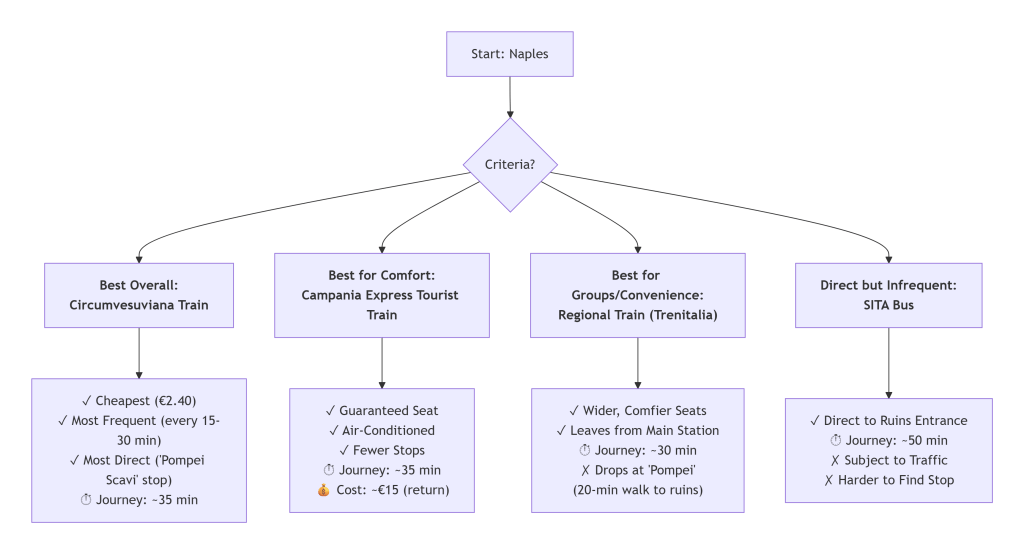
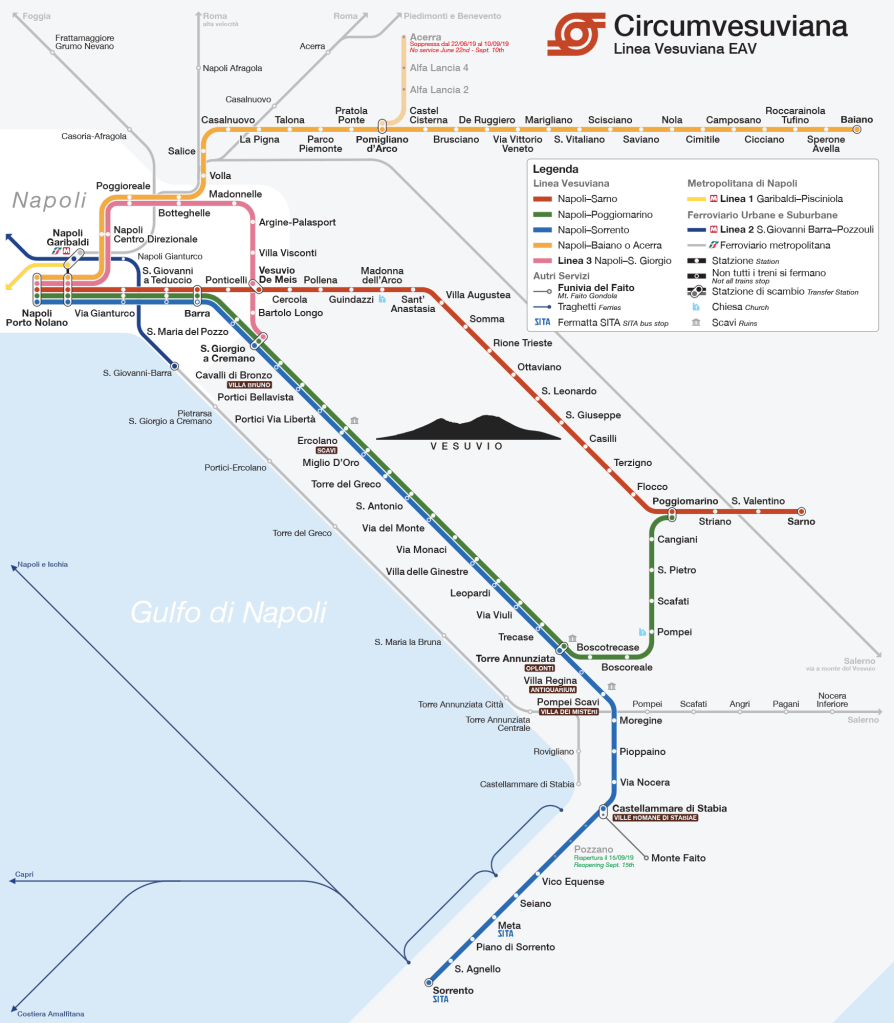
  • Morning: Take the Circumvesuviana train (about 30 mins) to Pompeii. Pre-book your ticket online to skip the line. Spend 2-3 hours wandering the haunting, awe-inspiring ruins. For a more detailed look at this incredible site, check out my guide on planning the perfect Roman holiday, which has tips that apply here too.

Here are the best public transportation options to get from Naples to Pompeii, with a clear winner for most travelers. check here: https://confidencebuildings.com/2025/12/16/naples-to-pompeii-the-ultimate-guide-to-public-transport-2024-travelers-guide/

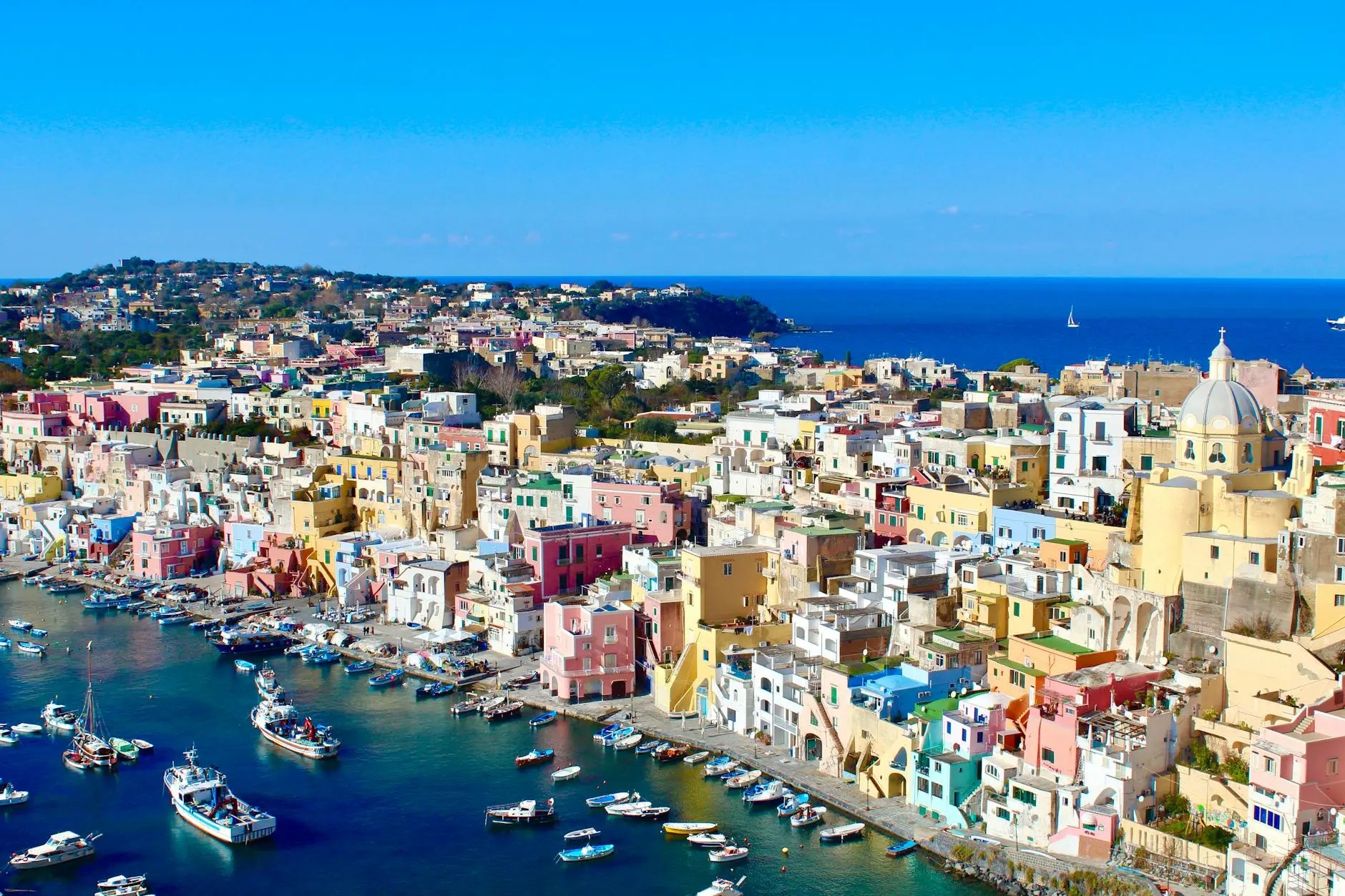
  • Alternative Option: Head to the port for a ferry to the island of Procida (less crowded than Capri, incredibly colorful). It’s a photographer’s dream.
Procida (Expedia)Procida (get your guide)
  • Evening: Back in Naples, ride the funicular up to Vomero for sunset cocktails with a breathtaking view of the Bay of Naples and Vesuvius from Castel Sant’Elmo. Enjoy a farewell dinner in the chic Chiaia district
Vomero (Expedia)Vomero (Get your guide)
View of a spacious square in Naples featuring bronze statues on pedestals, surrounded by colorful buildings and a hillside in the background.
The vibrant scene of Piazza del Municipio in Naples, showcasing stunning architecture and historical statues against a clear blue sky.

A winding path leading up to the summit of Mount Vesuvius, with rocky terrain and a clear blue sky in the background.
Trail leading to the summit of Mount Vesuvius, offering stunning views of the Bay of Naples.

A scenic view of Procida, Italy, showcasing colorful buildings along the waterfront with boats docked in a clear blue bay and the Mediterranean Sea in the background.
A breathtaking view of Procida, a colorful island near Naples, showcasing its vibrant buildings and serene marina. Marina Corricella on the island of Procida, Italy. This vibrant, layered cascade of fishermen’s houses is the iconic heart of the island and a UNESCO-listed gem in the Gulf of Naples.

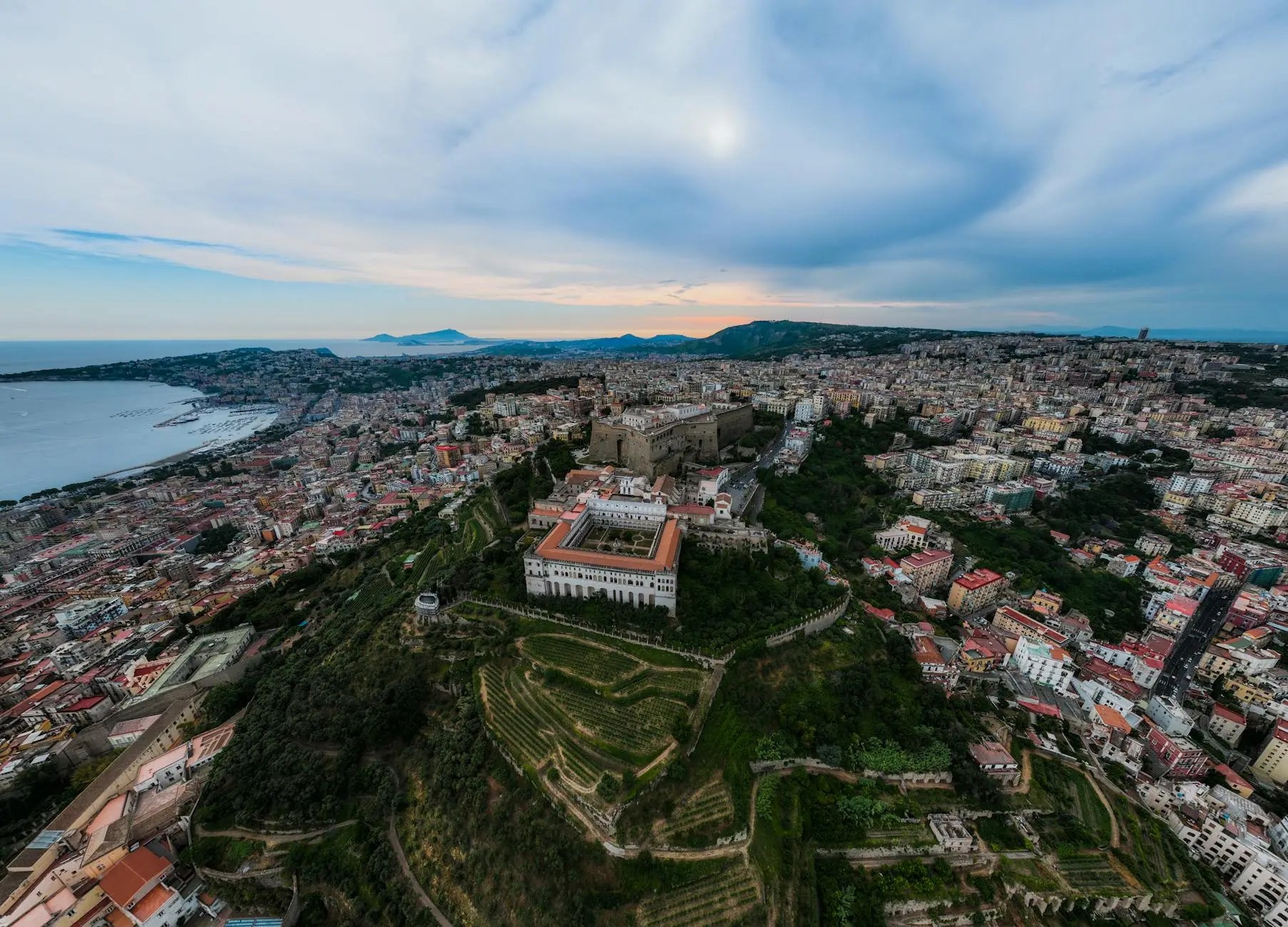
Aerial view of Naples with the coastline and hills, showcasing a mix of urban and natural scenery, including buildings, greenery, and the distant silhouette of mountains.
A breathtaking view of Naples, showcasing its vibrant cityscape and the iconic silhouette of Mount Vesuvius in the distance. The commanding Castel Sant’Elmo on the Vomero hill in Naples, Italy. This 14th-century star-shaped fortress offers what is arguably the most breathtaking 360-degree panorama of the entire city, the Gulf of Naples, and Mount Vesuvius. 

Mount Vesuvius: The Sleeping Giant

Vesuvius is the only active volcano on mainland Europe and is considered one of the most dangerous in the world due to the 3 million people living in its immediate vicinity (the “red zone”).

  • The 79 AD Eruption: Its most famous eruption was a Plinian eruption—an explosive, column-forming event that buried Pompeii, Herculaneum, and other towns under meters of volcanic ash and pumice. This catastrophic event is what preserved the sites so perfectly.
  • Status Today: It is still active, with its last eruption occurring in 1944. It is constantly monitored by the Vesuvius Observatory, the world’s oldest volcanological institute.
  • The View: Its iconic, looming profile is visible from nearly everywhere in Naples and is the unforgettable backdrop to every photo of the Pompeii ruins.

Hidden Gems & Local Secrets: Escape the Crowds

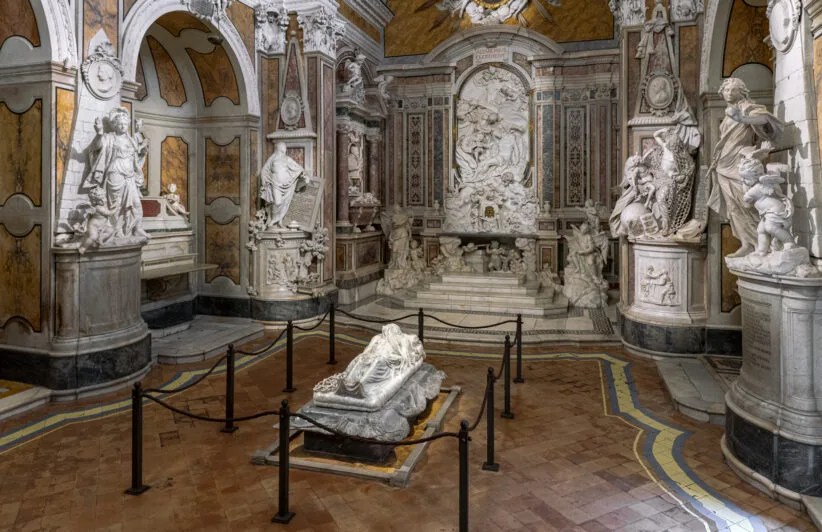
  • The Cristo Velato (Veiled Christ): In the Cappella Sansevero, this marble sculpture is so lifelike, you’ll swear the veil is real cloth. It’s arguably one of the most stunning artworks in the world. Book tickets online.
Cappella Sansevero (Expedia)Cappella Sansevero (Get your guide)
  • Rione Sanità: This vibrant, slightly off-center neighborhood is where you’ll find the extraordinary Cimitero delle Fontanelle (an ossuary in a cave) and some of the city’s most authentic trattorias.
Rione Sanità: (Expeidia)Rione Sanità: (Get Your Guide)
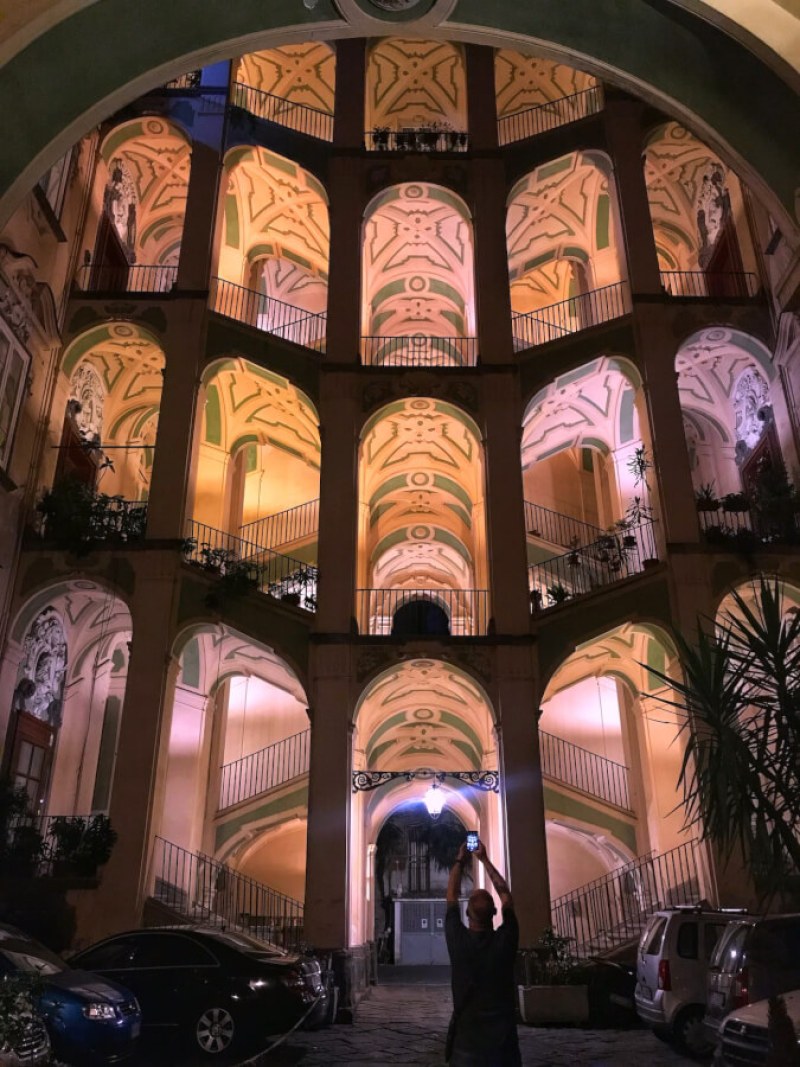
Night view of a beautifully illuminated historic atrium in Naples, showcasing intricate architectural details and vibrant colors.
A stunning view of a beautifully illuminated historic courtyard in Naples, showcasing its intricate architecture. (Palazzo dello Spagnuolo,)
  • Parco Virgiliano: Not to be confused with the park on the Amalfi Coast, this green space in the Posillipo district offers arguably the best panoramic view of the entire Gulf of Naples, from Capri to Vesuvius. Bring a picnic.
A scenic view of the Bay of Naples, featuring a small island with lush greenery and colorful buildings, framed by trees and distant mountains under a clear blue sky.
A panoramic view of the stunning island of Procida, set against the backdrop of the Gulf of Naples and Mount Vesuvius, showcasing the natural beauty of Southern Italy.
Interior view of the Cappella Sansevero in Naples, showcasing intricate marble sculptures and ornate decorations, with a prominent statue of the Veiled Christ.
The stunning interior of the Cappella Sansevero, featuring intricate sculptures and detailed frescoes. The miraculous “Veiled Christ” (Cristo Velato) by Giuseppe Sanmartino in the Sansevero Chapel Museum, Naples. This 1753 marble masterpiece is renowned for its impossibly delicate, translucent veil carved from a single block of stone

Geographically Close cities: Planning to explore more of Italy after Naples? The Italian high-speed train network makes it easy to link your trip.

  • Rome, Italy: The political and historical heart of the country, just a quick train ride north.
  • Florence, Italy: The birthplace of the Renaissance, easily reachable for an art and culture pivot.
  • Milan, Italy: The fashion and financial capital, a major northern hub connected by high-speed rail.
  • Venice, Italy: The incomparable city of canals, linking Southern and Northern Italian adventures.

Essential Travel Tips & Smart Gear for Your Trip {#essential-travel-tips}

  • Money & Time Savers:
    • The Campania ArteCard offers free/discounted entry to many sites and includes transport. Calculate if your itinerary makes it worthwhile.
    • Best Time to Visit: April-June and September-October offer great weather and fewer crowds than peak summer.
    • Visa Info: For most non-EU travelers (like US, Canada, Australia passport holders), Italy is part of the Schengen Area, allowing visa-free travel for up to 90 days within a 180-day period. Always check the latest official requirements before your trip.
    • Language Tip: A few key words go a long way: Grazie (Thank you), Prego (You’re welcome), Un caffè, per favore (An espresso, please), Dov’è il bagno? (Where is the bathroom?).
  • Stay Connected & Secure:
    • Stay Online: Ditch expensive roaming. I use Drimsim, a global data SIM that works in 190+ countries. Pop it in, top up via the app, and you’re set. It’s saved me from so many “desperate for WiFi” moments. ➡️ Get connected with Drimsim
    • Secure Your Browsing: Using public WiFi? A VPN is non-negotiable to protect your data. I rely on one to safely check my bank account and book last-minute tickets from cafes. ➡️ Browse safely with a reliable VPN
    • Travel Insurance: A delayed ferry or a twisted ankle can ruin a short trip. I use VisitorsCoverage to quickly compare and buy a plan that fits. It’s the peace-of-mind essential I never skip. ➡️ Get a travel insurance quote with VisitorsCoverage
  • Must-Pack Travel Gear:
    • Power Up: Italy uses Type C, F, and L plugs. This VINTAR European Travel Plug Adapter with multiple USB ports lets you charge all your devices at once. A total lifesaver. ➡️ Get the VINTAR travel adapter
    • Capture the Magic: Naples is intensely photogenic. To capture its energy, from the dark alleys to the bright bay, I swear by my main travel camera. It’s the perfect balance of quality and portability. ➡️ Check out my favorite travel camera
    • Travel Glow: After a long day of exploring, a little K-beauty magic revives my skin. I love Lakinza for authentic, effective products. Use code Lalax10 at checkout for a sweet discount on your skincare haul. ➡️ Shop K-beauty at Lakinza
  • Travel Smarter:✈️ Flight Trouble? If your flight to Naples is delayed over 3 hours or canceled, you could be owed up to $650 in compensation. I’ve used AirHelp to handle the messy paperwork with airlines—they only get paid if you win. It’s a stress-free way to claim what you’re owed. ➡️ Check your flight with AirHelp

FAQ: Your Quick Neapolitan Questions Answered {#faq}

Is Naples safe for tourists?
Yes, but be smart. It’s a big, bustling city. Keep valuables secure and out of sight, be cautious in very crowded areas like Piazza Garibaldi at night, and stick to well-lit main streets after dark. Most crime is petty theft.

Can I do a day trip to the Amalfi Coast from Naples?
Absolutely. The ferry to Positano in summer is the most scenic and efficient way (about 1 hour). Alternatively, take the Circumvesuviana train to Sorrento (70 mins) and switch to a SITA bus or local ferry along the coast.

What’s the dress code for churches in Naples?
Modesty is key. Shoulders and knees should be covered for both men and women. Carrying a light scarf or shawl to pop on before entering is a great trick.

Is it easy to find vegetarian/vegan food?
While Naples is pizza and seafood heaven, vegetarian options abound (Marinara pizza is vegan!). More modern cafes and restaurants in areas like Chiaia also cater well to plant-based diets. You won’t go hungry.

How can I save money on food?

Eat Pizza a Portafoglio for lunch! Stick to local trattorias over tourist traps. Order the Pizza Margherita—it’s still the best and the cheapest item on the menu. Also, tap water is safe to drink.


Ready to say “Ciao” to your own Neapolitan adventure? With its explosive culture, unforgettable food, and breathtaking scenery, Naples is a weekend destination that feels like a lifetime. For more inspiration on European weekend escapes, from the coffee houses of Vienna to the canals of Venice, explore my full Travel Master List.

Now, go book that ticket, pack your bags (don’t forget the stretchy pants for pizza!), and get ready to fall in love with Italy’s most passionate city. Buon viaggio!

Universal Disclaimer/Disclosure Page:

Naples to Pompeii: The Ultimate Guide to Public Transport (2024 Traveler’s Guide)

🚂 Navigating Italian transport doesn’t have to be confusing! Discover how to travel from Naples to Pompeii like a pro with this complete guide to trains, buses, and smart travel tips.

Flowchart illustrating transportation options from Naples to Pompeii, highlighting key criteria and comparisons between the Circumvesuviana Train, Campania Express Train, Trenitalia Train, and SITA Bus.
Infographic comparing transport options from Naples to Pompeii, showcasing key features like cost, travel time, and best use cases for each method.

Why This Transportation Guide Matters

Getting from Naples to Pompeii isn’t just about moving from point A to B—it’s about starting your journey back in time efficiently and affordably. While the ruins await, the transportation puzzle can be daunting for first-time visitors. This guide cuts through the confusion with locally-tested methods that save you time, money, and stress.

Quick Comparison: Your Transportation Options at a Glance

MethodTravel TimeCost (One Way)Best ForKey Stations/Stops
Circumvesuviana Train35-40 minutes€2.40 – €3.20Budget travelers, independent explorersNaples: Piazza Garibaldi
Pompeii: Pompei Scavi-Villa dei Misteri
Campania Express Tourist Train30-35 minutes~€15 (round trip)Comfort seekers, families, those with luggageNaples: Piazza Garibaldi
Pompeii: Pompei Scavi
Trenitalia Regional Train30-35 minutes€2.90 – €4.50Travelers near Napoli CentraleNaples: Napoli Centrale
Pompeii: Pompei (town station)
SITA Bus45-60 minutes€2.50 – €3.50Those who prefer buses, traveling from specific areasNaples: Piazza Garibaldi
Pompeii: Piazza Esedra

Map of the Circumvesuviana train line showing stops from Naples to Pompeii and surrounding areas, with indications for different services and connections.
Map of the Circumvesuviana train network, connecting Naples to Pompeii and surrounding areas.

Illustration of the Campania Express train, showcasing its vibrant pink and blue design.
The Campania Express train offers a comfortable and efficient travel option from Naples to Pompeii.
A high-speed train at a station, showcasing modern Italian rail transport.
A sleek red and silver train at a platform, representing modern transport options between Naples and Pompeii.

The Complete Guide: Naples to Pompeii Transport Options

🚆 Option 1: Circumvesuviana Train (The Local Favorite)

Why it’s popular: This is the workhorse of Campania transport—affordable, frequent, and direct to the ruins’ entrance.
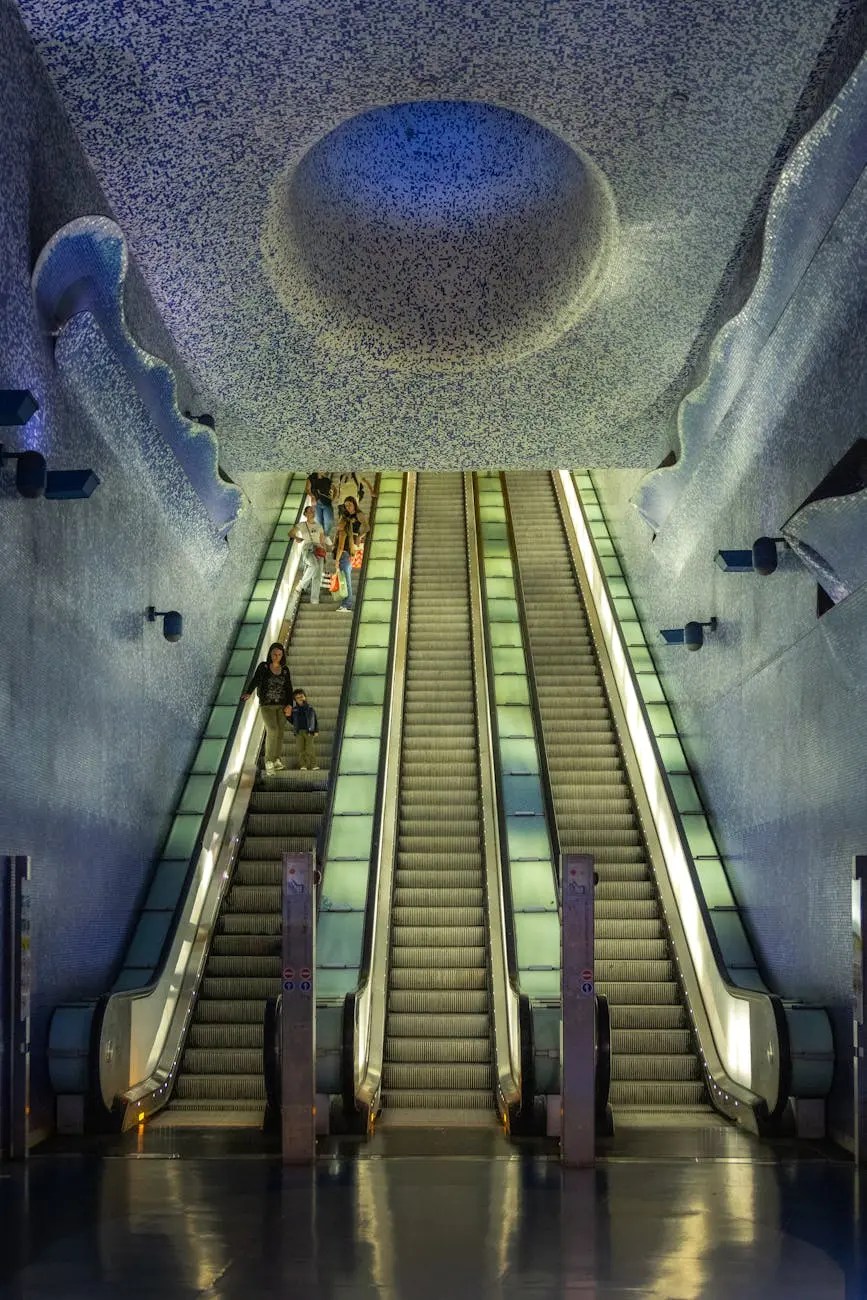
Step-by-step guide:

  1. Find the station: Head to Napoli Piazza Garibaldi station, located beneath Napoli Centrale (the main train station).
  2. Buy tickets: Purchase from EAV ticket windows or automated machines. Look for “Pompei Scavi” destination.
  3. Validate: CRUCIAL—stamp your ticket in the small green/yellow machines on the platform.
  4. Board: Take any train on the Naples-Sorrento line (usually marked “Linea 2”).
  5. Alight: Get off at “Pompei Scavi-Villa dei Misteri” (not just “Pompei”).

Insider tip: Board at Porta Nolana (the line’s starting point, a 5-minute walk from Garibaldi) to secure a seat before the crowds board at Garibaldi.

Cost breakdown:

  • One-way ticket: €2.40
  • Daily tourist ticket: €12 (unlimited travel on Circumvesuviana)

✨ Option 2: Campania Express Tourist Train (The Comfort Choice)

Perfect for: Travelers prioritizing comfort, families with children, or those with heavy luggage.

Key advantages:

  • Guaranteed seating (no standing in aisles)
  • Air conditioning (a lifesaver in summer)
  • Fewer stops (direct service)
  • Informative announcements in multiple languages

How to use it:

  1. Schedule check: Trains run 3-5 times daily in each direction—verify times at the station or online.
  2. Ticket purchase: Buy at dedicated Campania Express counters or online in advance.
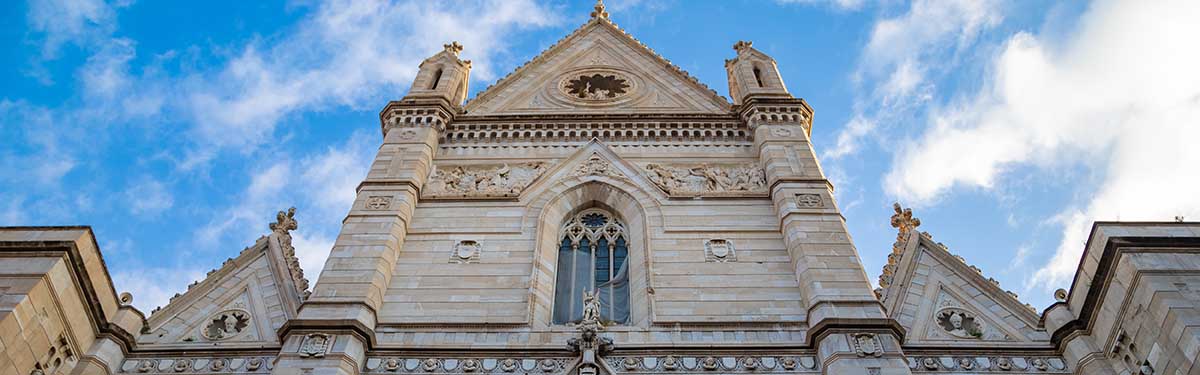
  3. Boarding: Present your ticket and board from Track 3 at Napoli Piazza Garibaldi.

Pro tip: Combine with an ArteCard for discounted transport plus entry to Pompeii and other sites.

🚊 Option 3: Trenitalia Regional Train (The Alternative Route)

Best suited for: Travelers already at Napoli Centrale or those combining Pompeii with other regional destinations.

Important distinction: This train stops at Pompei station in the modern town, NOT at the ruins. You’ll need to:

  1. Walk 20-25 minutes to the ruins
  2. Take a local bus (€1.50) to the Porta Marina entrance
  3. Grab a taxi (€10-15)

When it makes sense:

  • You’re traveling from cities north of Naples (like Rome) directly to Pompeii
  • You prefer wider, more comfortable seats
  • You have a rail pass (Eurail, Interrail)

🚌 Option 4: SITA Bus (The Road Alternative)

Consider this if: You’re staying near the bus departure points or want to combine Pompeii with other destinations along the route.

Routes to know:

  • Naples-Pompeii direct: Departs from Piazza Garibaldi
  • Naples-Sorrento line: Stops at Pompeii along the scenic coast road

Bus advantages:

  • More luggage space
  • Scenic views (especially on the Sorrento line)
  • Direct to some hotel areas not served by trains

Potential drawbacks:

  • Traffic delays (especially in peak season)
  • Less frequent than trains
  • Can be confusing to find correct bus and stop

🎯 The Smart Traveler’s Decision Guide

Choose Circumvesuviana if:

  • Budget is your primary concern
  • You don’t mind crowds
  • You value frequency over comfort

Choose Campania Express if:

  • You’re traveling in summer heat
  • You have children or elderly companions
  • You want a stress-free, tourist-friendly experience

Choose Trenitalia if:

  • You’re arriving at Napoli Centrale from another city
  • You have heavy luggage (more space)
  • You plan to continue to other destinations like Salerno

Choose SITA Bus if:

  • Your accommodation is near a bus departure point
  • You want to stop at other towns along the coast
  • You missed the last train

Essential Tips for a Smooth Journey

1. Ticket Validation is Non-Negotiable

Italian transport fines for unvalidated tickets range from €50-200. Look for small green, white, or yellow machines at station entrances or on platforms. Insert your ticket until you hear a “click” or see it stamped.

2. Beware of Pickpockets

These trains are notorious for theft. Keep bags in front of you, wallets in front pockets, and avoid flashing expensive electronics.

3. Time Your Trip Right

  • Best times to travel: Weekday mornings (8-10 AM) or early afternoons (1-3 PM)
  • Worst times: Friday evenings, weekend mornings, Italian holidays
  • First/last trains: First train ~6 AM, last train ~10:30 PM (confirm current schedules)

4. Combine with Vesuvius

At Pompei Scavi station, you’ll find official “Vesuvio Express” shuttles that take you directly to the volcano crater (combined transport and entry ~€25-30).

5. Language Help

  • “Dove è la stazione per Pompei?” = Where is the station for Pompeii?
  • “Un biglietto per Pompei Scavi, per favore” = One ticket to Pompei Scavi, please
  • “Questo treno va a Pompei Scavi?” = Does this train go to Pompei Scavi?

Common Mistakes to Avoid

  1. Getting on the wrong train: Ensure your train is heading toward Sorrento, not Poggiomarino or Sarno.
  2. Going to the wrong station: “Pompei” station vs. “Pompei Scavi” station—the latter is what you want.
  3. Not buying water: The Pompeii site has limited shade and water fountains. Buy water before entering.
  4. Attempting too much: Pompeii + Vesuvius in one day is extremely ambitious. Choose one or start very early.

Beyond Pompeii: Connecting to Other Destinations

From Pompeii Scavi station, you can continue to:

  • Sorrento (30 minutes further on same train line)
  • Herculaneum (Ercolano Scavi station, 20 minutes back toward Naples)
  • Naples Airport (Take train to Naples, then Alibus shuttle)

📝 Final Checklist Before You Go

  • [ ] Validated train/bus ticket
  • [ ] Water bottle (filled)
  • [ ] Sun protection (hat, sunscreen)
  • [ ] Comfortable walking shoes
  • [ ] Printed or digital ticket for Pompeii (buy online in advance)
  • [ ] Small cash for snacks/emergencies
  • [ ] Downloaded offline map of Pompeii ruins

🚀 Ready to Explore? Armed with this knowledge, you’re prepared to navigate from Naples to Pompeii like a seasoned traveler. The journey is part of the adventure—watching the urban landscape give way to vineyards with Mount Vesuvius ever-present on the horizon is a perfect prelude to stepping back in time.

Found this guide helpful? Explore more European transport guides in my Italy Travel Hub or check out my complete Weekend in Naples Itinerary to plan your perfect trip.

Ready to connect history with logistics? Your journey to Pompeii begins with a local adventure in itself. Figuring out the best way to get there is half the fun (and can save you time and stress). For a deep dive into every option—from the classic Circumvesuviana train to the comfortable Campania Express—be sure to check out my detailed, step-by-step guide: Naples It covers costs, Hidden Gems, tickets, and insider tips to ensure your trip to the ruins is as smooth as ancient Roman pavement.

Universal Disclaimer/Disclosure Page:

The Ultimate Weekend Escape to Herzegovina: Where History Meets Heart-Stopping Beauty

Meta Description:
Plan the perfect weekend escape to Herzegovina — from historic Mostar and hidden gems like Blagaj and Kravice Waterfalls, to smart travel tips on transport, saving money, and weather-smart timing. Uncover insider advice, practical logistics, and fun anecdotes for confident travel.

🗺️ Table of Contents

  1. Introduction
  2. Why Herzegovina Should Be on Your Bucket List
  3. Getting There
    • Getting There by Ferry (with Direct Ferries link)
    • By Air
    • By Bus, Train, & Car
  4. Where to Stay
  5. Top Things to Do in Herzegovina
    • Mostar & Stari Most
    • Hidden Gems: Blagaj, Kravice, Počitelj
    • Neum & the Coast
  6. Local Transport Tips (How to Save Time & Money)
  7. Practical Travel Tips
  8. Food & Drink to Try
  9. Words & Phrases You Might Need
  10. FAQs
  11. Final Tips & CTAs

If “weekend getaway” were a sport, Herzegovina would be the undefeated champion. Part ancient wonder, part natural paradise, and part affordable destination that punches well above its scenic weight, this patch of Bosnia and Herzegovina blends culture, adventure, and lazy café afternoons into one irresistible mini escape.

Let’s be honest: planning a weekend trip is often about choosing what to skip. Do you want beaches or mountains? Riveting history or untamed nature? Well, friends, in Herzegovina, you don’t have to choose. This soul-stirring, heart-shaped corner of Europe serves it all on a single platter, with a side of strong coffee and a history so rich you can taste it in the air.

As someone who once spent a frantic Sunday trying to escape an overcrowded “hidden gem” elsewhere, I can tell you: Herzegovina is the real deal. It’s a place where you can hear the Muslim call to prayer echoing over cobblestones one minute and watch a brave soul leap from a 16th-century bridge into an emerald river the next. It’s Europe’s open secret, offering the drama of Croatia, the raw beauty of Montenegro, and the profound soul of the Balkans, all without the crushing crowds or crushing prices.

Ready for a weekend that feels like a week-long adventure? Let’s dive in.

Why Herzegovina Should Be on Your Bucket List

Mostar’s Stari Most isn’t just a bridge — it’s an icon. The historic Ottoman-era bridge once destroyed by war and beautifully rebuilt now symbolizes resilience, unity, and adrenaline-packed dives into the cold Neretva below — where locals and visitors cheer, tourist cameras whirr, and time slows in the best possible way.

But there’s more here: jaw-dropping waterfalls, cliffside monasteries, serene river springs, gold-hued vineyards, and one of Europe’s less predictable coastlines — the tiny seaside town of Neum, Bosnia’s only access to the Adriatic Sea

Getting There

⬆️ Getting There by Ferry

While Herzegovina is landlocked, the nearby Dalmatian Coast of Croatia is your perfect maritime gateway. The closest major port is Dubrovnik. From there, you have fantastic options:

While Herzegovina itself doesn’t host a major ferry port, you can arrive via scenic Adriatic ferry routes from Croatia or beyond and then continue overland — perfect for travelers who love sea views as part of the adventure.
👉 Check routes, timetables, and book your ferry with Direct Ferries here.
Ferries along the Adriatic connect ports like Split or Dubrovnik with other coastal hubs, from which buses or cars can complete your journey to Herzegovina. Travel By Ticket

Quick Route Idea: Ferry to Split → Bus or Train to Mostar → Explore Herzegovina.
(Skip the borders with a car — fewer delays and more countryside views!)


🛫 By Air

Your easiest gateways are:

  • Mostar Airport (OMO) — small, convenient, limited routes.
  • Sarajevo Airport (SJJ) — more frequent flights, then bus/train to Herzegovina.
  • Dubrovnik Airport (DBV) (Croatia) — great low-cost options, then bus or car through epic mountain and coastal roads.

✈️ Flight Delayed or Canceled?
You might be entitled to up to $650 compensation. Check your flight with AirHelp — they do the heavy lifting for you (and only get paid if you win):


🚌 By Bus, Train, or Car

Buses criss-cross the region — from Split, Dubrovnik, Sarajevo, and Zagreb — stopping in Mostar’s central station, about a short stroll from the Old Town.

The train route between Sarajevo and Mostar? It’s not just transportation — it’s one of the most scenic journeys in the Balkans. Reddit

By car: Herzegovina is tailor-made for road tripping. Clear roads (especially outside August) and beautiful routes save time, fuel, and — honestly — are half the fun.

Where to Stay

Whether boutique guesthouses in Mostar’s Old Town or sea-view apartments near Neum, there’s an option for every budget. Book early in high season, and consider staying near public transport stops to save on taxis.

My Hercegovina Masterplan: A 3-Day Itinerary for the Perfect Escape

You’ve got 72 hours. Here’s how to spend them wisely, balancing iconic sights with local secrets and leaving just enough time to sit and savor the moment.

  • Day 1: The Soul of Mostar. Arrive and drop your bags. Your first mission is to get lost in the Old Town (Stari Grad). Wander the cobbled alleys, haggle (politely!) for a copper souvenir, and let the scent of grilled Ćevapi guide you to lunch. As the afternoon sun begins to soften, find your spot to witness the spectacle of the Stari Most bridge divers. The iconic bridge (which is a UNESCO World Heritage Site) was originally built in the 16th century and has been beautifully reconstructed. These professional divers aren’t just showing off; it’s a centuries-old tradition. Be warned: they work for tips, so have a few coins ready. For dinner, venture away from the main tourist drag to find a family-run restaurant for a massive, affordable platter of Bosnian food.
The historic Stari Most bridge in Mostar, Bosnia and Herzegovina, spans the Neretva River with a backdrop of mountains and traditional architecture under a bright blue sky.
The iconic Stari Most bridge in Mostar, a symbol of resilience and tradition, spans the Neretva River against a stunning backdrop of mountains and blue skies.

Day 2: Gorges & Mystical Springs. Rent a car for the day (trust me, it’s worth it for the freedom). Your first stop is Blagaj, just a 20-minute drive from Mostar. The sight of the Tekija (Dervish monastery) clinging to a 200-meter cliff face beside the impossibly blue Buna River spring will stop you in your tracks. Have a coffee by the water and soak in the serenity. In the afternoon, head to the Kravice Waterfalls. Picture a 25-meter crescent of cascading water tumbling into a bright emerald swimming hole. Pack a swimsuit—the brave can take a bracing dip, and there’s even a rope swing

Blagaj, (Expedia)Blagaj,(Get your guide)
Kravice Waterfalls.(Expedia)Kravice Waterfalls.(Get your guide)
A scenic view of the Blagaj Tekija, a historic Dervish monastery nestled against a rocky cliff, with green trees and blue waters flowing beneath it.
The picturesque Blagaj Tekija, a historic Dervish monastery nestled against the cliffside by the serene Buna River in Herzegovina. The Blagaj Tekke (Tekija), a 16th-century Dervish monastery clinging to a cliff beside the Buna River spring. Founded around 1520, this spiritual retreat combines Ottoman and Mediterranean architectural styles in one of Herzegovina’s most serene settings.
Cascading waterfalls surrounded by lush greenery and mossy rocks in a serene natural setting.
Breathtaking view of the cascading Kravice Waterfalls, a hidden gem in Herzegovina. Kravica Waterfall (also called Kravice), a stunning natural amphitheater of tufa cascades on the Trebižat River. Located near Ljubuški and about a 40-minute drive south of Mostar, this is one of Herzegovina’s most spectacular swimming and picnic spots.

Day 3: History & Hidden Gems. Before you leave Mostar, wake up at sunrise. You’ll have the Stari Most and the silent, lamp-lit streets almost entirely to yourself—it’s pure magic. Then, set your GPS for Počitelj. This fortified Ottoman village is like a living museum, tumbling down a hillside towards the river. Climb to the top of the stone fort for a panoramic view you won’t forget. On your journey back towards the coast or airport, consider a final, peaceful stop at Trebinje. This elegant little town, just a stone’s throw from Dubrovnik, is famed for its wine and the beautiful Arslanagić Bridge that was moved, stone by stone, to its current location

Počitelj (Expedia)Počitelj (Get your guide)

Aerial view of a historic fortress on a rocky hill overlooking a river, with lush greenery and houses in the background.
A stunning view of the historic Počitelj village, featuring its iconic stone tower and surrounding greenery by the Neretva River. “The historic stone Kula Fort tower rising above the steep, medieval village of Počitelj in Bosnia and Herzegovina, with the Neretva River valley in the background.”
"A scenic aerial view of Trebinje, the southernmost city in Bosnia and Herzegovina, nestled along the calm, reflective waters of the Trebišnjica River in a green valley."
Scenic view of a picturesque town in Herzegovina, reflecting on a calm river with mountains in the background. Trebinje, the charming ‘City of the Sun’ in southern Herzegovina, beautifully positioned on the banks of the crystal-clear Trebišnjica River. Known for its relaxed atmosphere, wine, and proximity to Dubrovnik.
Aerial view of a historic stone bridge with arches reflected in a calm river, surrounded by greenery and hillside homes.
The stunning stone bridge reflecting in the serene waters of Herzegovina, showcasing the region’s rich architectural heritage.

Hidden Gems Beyond the Postcard

While the Stari Most will (rightfully) steal your heart, here are a few spots where you can escape the day-trip crowds:

  • The “Practice” Bridge: Before you even get to the majestic Stari Most, look for Kriva Ćuprija (the Crooked Bridge) in Mostar’s Old Town. This petite, arched Ottoman bridge over a small stream is thought to have been a “test model” for its larger, more famous sibling. It’s a quiet, photogenic spot.
  • Konjic & its Secret Bunker: The town of Konjic, on the road from Sarajevo to Mostar, is home to another stunning Ottoman bridge. But its real claim to fame is hidden underneath a nondescript house: Tito’s Atomic Bunker. Built in total secrecy during the Cold War, this massive underground complex is now a unique contemporary art space. Tours must be booked in advance, and it’s a fascinating dive into 20th-century history.
Tito’s Atomic Bunker (Expedia)Tito’s Atomic Bunker (Get your guide)
  • Blidinje Nature Park: If your soul craves mountains, detour to this stunning park northwest of Mostar. It’s home to the largest glacial lake in Bosnia, wild horses, and some of the most pristine hiking trails in the Dinaric Alps. It feels a world away from everything.
A stone arch bridge crosses a small river, surrounded by lush greenery and traditional buildings in Mostar, Bosnia and Herzegovina.
A picturesque stone bridge overlooking a serene river in Mostar, Bosnia and Herzegovina. Kriva Ćuprija, the “Crooked Bridge,” a charming single-arch Ottoman bridge over the Radobolja River in Mostar’s Old Town. Often considered a prototype for the grander Stari Most, it’s a quieter piece of living history

A rocky arch formation on a mountain with expansive valleys and hills in the background under a clear blue sky.
A stunning view of the mountain landscape in Herzegovina, featuring an intriguing rock formation with a natural arch that highlights the region’s breathtaking scenery. Hajdučka Vrata, the “Outlaws’ Gate”—a dramatic natural rock arch on Mt. Čvrsnica in Blidinje Nature Park. This iconic Herzegovinian landmark offers hikers one of the most breathtaking viewpoints in the Dinaric Alps

Essential Travel Intel: Money, Visas & Staying Safe

  • The Money Game: The currency is the Convertible Mark (BAM or KM). Here’s the easiest hack you’ll get: 1 Euro = 2 KM (almost exactly). While some places accept Euros, you’ll always get a better price in local currency. Cash is king, especially in smaller towns, guesthouses, and family-run restaurants. Withdraw BAM from local ATMs upon arrival.
  • Visa Info & Costs: Travelers from the US, UK, Canada, Australia, and the EU do not need a visa for tourist stays of up to 90 days within a 180-day period. Just ensure your passport is valid for at least three months beyond your planned departure date.
  • Safety First: Herzegovina is very safe for tourists. Standard city precautions against pickpocketing in crowded areas apply. The one critical rule involves the countryside: never, ever stray from marked paths or roads when hiking. Remnants of landmines from the 1990s conflict may still be present in remote, unmarked areas. Heed all warning signs.
  • When to Visit: Spring (April-June) and Autumn (September-October) are absolute perfection. The weather is mild, the landscapes are green (or golden), and the summer crowds have thinned. Summer can be fiercely hot, especially in Mostar.

Words to Know: A Quick Language Cheat-Sheet

Locals always appreciate the effort. Bosnian/Croatian/Serbian is the official language here.

  • Hello / Good day: Dobar dan (DOH-bar dahn)
  • Thank you: Hvala (HVAH-lah)
  • Please / You’re welcome: Molim (MOH-leem)
  • Yes / No: Da / Ne (DAH / NEH)
  • How much?: Koliko košta? (KOH-lee-koh KOHSH-tah?)
  • Bridge: Most (MOHST) – You’ll be using this one a lot!
  • Coffee: Kafa (KAH-fah) – Essential for joining the local café culture.

Practical Travel Tips

💡 Travel SIM/Connectivity Tip (Rephrased & Original):
Staying online overseas can be confusing and expensive — roaming charges, random data limits, airport SIM queues — it’s all a headache. That’s why I always carry a universal travel SIM — works in 190+ countries with no hidden fees, topped up easily through an app, and gets you online wherever you roam.
→ Check it out here: Drimsim

🌍 VPN for Security & Streaming Abroad:
Protect your data and access home content securely with a trusted VPN:

💼 Travel Insurance (Smart Safety Move):
Unexpected health or travel hiccups are easier to handle with insurance. I use and recommend VisitorsCoverage — compare plans and find one fast:
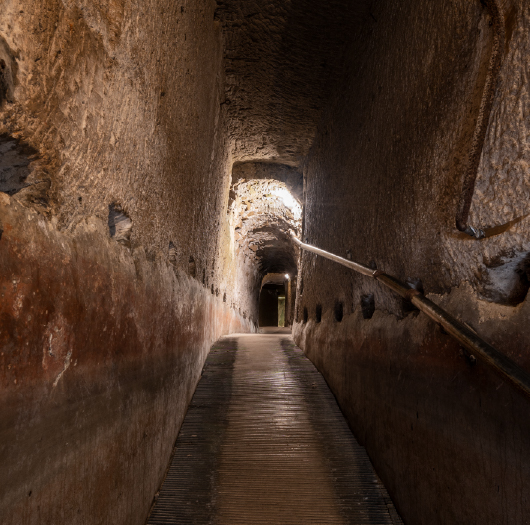
Power Up: Bosnia uses Type C and F plugs (220V). A universal adapter with multiple USB ports is a lifesaver for keeping phones, cameras, and power banks charged. I never travel without a reliable one

Document Your Journey: Herzegovina is a photographer’s dream. Whether you’re capturing the dive off Stari Most or the mist rising at Blagaj, having a capable camera is key. I rely on my trusted gear to do this stunning region justice.

Glow on the Go: After long days of exploration, my skincare routine is sacred. I swear by the gentle, effective products from Lakinza. For a treat, use code Lalax10 at checkout for a sweet discount.

Frequently Asked Questions

Is a weekend in Herzegovina enough time?
Absolutely. A well-planned 2-3 day trip centered in Mostar lets you experience the iconic bridge, explore the Old Town, and take a day trip to at least one stunning natural wonder like Blagaj or Kravice Waterfalls. It’s a perfect introduction.

Is Herzegovina expensive?
Not at all. Compared to Western Europe and even coastal Croatia, Herzegovina is a fantastic value. Meals, accommodation, and transport are very affordable, making it ideal for budget-conscious travelers who don’t want to sacrifice experience.

What’s the best way to get from Dubrovnik to Mostar?
For a weekend trip, I recommend a pre-booked private transfer or small group tour. It’s the most time-efficient, taking about 2.5 hours door-to-door. Renting a car offers maximum flexibility, while public buses are the most budget-friendly but less convenient.

Is it safe to travel to Herzegovina?
Yes. The region is safe and welcoming to tourists. Standard travel precautions apply. The only specific safety rule is to stay on marked paths when in the countryside or hiking due to the rare but potential risk of landmines in unmarked areas.

Ready to explore more of this incredible region? Check out my other guides for deeper dives into the Balkans:

Herzegovina pairs beautifully with nearby destinations like

Sarajevo, “Most trips to Herzegovina begin in Sarajevo, connected by one of the most scenic train journeys in the Balkans…”

Dubrovnik, “Many travelers pair Herzegovina with a coastal escape to Dubrovnik, especially since the border is just a few hours away…

Split, “If you’re arriving by ferry into Split, Herzegovina makes an easy inland detour with jaw-dropping scenery…

Zadar — making it ideal for a Balkans road trip or multi-country weekend escape.”

Herzegovina isn’t just a destination; it’s a feeling. It’s the chill of the Neretva River, the warmth of the people, and the profound sense of history etched into every stone. Pack your bags (and this guide), and go find it.

Final Tips & CTAs

Ready to book your escape? Grab flights, hotels, and package deals on Expedia (great for saving big on bundle deals)

Universal Disclaimer/Disclosure Page:

Ultimate Weekend Guide to Sarajevo: Travel Smart & Explore

Meta Description: Planning a weekend in Sarjaevo? Discover the ultimate travel guide for Bosnia’s captivating capital. Get insider tips on where to stay, what to eat, hidden gems, and smart logistics like ferries and buses to save time & money. Perfect for city-break travellers seeking culture, history, and adventure.

Table of Contents

  1. Why Sarajevo? The City Where East Whispers to West
  2. Getting There: Planes, Trains, and… Ferries!
  3. Where to Lay Your Head: Neighbourhood Guide
  4. A Taste of Sarajevo: Ćevapi, Coffee, and More
  5. The Perfect Weekend Itinerary: History, Culture & Vibe
  6. Sarajevo’s Hidden Gems (Skip the Tourist Herd)
  7. Navigating the City Like a Local: Transport & Tips
  8. Essential Bosnian Phrases & Know-How
  9. Smart Traveler’s Toolkit: Save Money, Time & Hassle
  10. Frequently Asked Questions (FAQ)

 Why Sarajevo? The City Where East Whispers to West {#why}

Let’s be honest, when you think of a weekend city break, Sarajevo probably isn’t the first name that pops up. But that’s precisely its magic. This is a city that has lived a thousand lives. In the space of one afternoon, you can wander from an Ottoman-era bazaar, past an Austro-Hungarian cathedral, and see scars and rebirth from the 1990s siege. The call to prayer echoes over rooftops where church bells just finished ringing. You’ll sip thick, strong Bosnian coffee in a centuries-old kafana (coffee house) and later toast with rakija in a gritty, cool bar. It’s intense, profoundly moving, and surprisingly relaxed all at once. My first visit was on a whim, and I left with my heart permanently tethered to this resilient, beautiful place

.I’m going to level with you: if you’re looking for a simple, charming European city break that offers incredible history, stunning mountain views, and food that will make you rethink your entire culinary life, stop scrolling. Sarajevo is it.

Dubbed the “Jerusalem of Europe,” this city is a masterpiece of contrasts. Where else can you stand on a street corner and see an Ottoman mosque, an Orthodox church, a Catholic cathedral, and a Jewish synagogue, all within a few hundred meters? Sarajevo is a city that has seen the very worst of history, yet it pulses with an infectious, resilient energy.

This is your comprehensive guide to spending a perfect, logistically smart, and wallet-friendly weekend in the heart of Bosnia and Herzegovina. Pack your bags—and your sense of humor—because this is going to be good.

Visa & Entry: What You Need to Know

The fantastic news is that for many passport holders, including citizens of the US, UK, EU, Canada, and Australia, a short stay (up to 90 days within a 180-day period) in Bosnia and Herzegovina is visa-free!

The Golden Rule: Your passport must be valid for at least three months beyond your intended date of departure.

A Quick, Important Tip (The White Card): By law, all foreigners staying in BiH must register their address with the local police within 48 hours of arrival. If you’re staying in a registered hotel or a legally operating Airbnb/guesthouse, they are responsible for doing this for you and should give you a small white slip (called the “White Card”). Always confirm they have done this, especially if you’re staying in a private residence, as failure to register can lead to trouble when leaving the country.

Getting There: Your Logistics Cheat Sheet {#getting-there}

By Air {#by-air}

Getting into Sarajevo requires some smart planning, especially if you’re flying in or combining it with a larger Balkan road trip.

Sarajevo International Airport (SJJ) is well-connected from major European hubs. It’s a compact, manageable airport. My pro-tip? Don’t get a taxi from the rank outside. They’re notorious for overcharging tourists. Walk 50 meters to the main road and flag one down, or better yet, use the tram! Line 103 goes directly from the airport to Baščaršija (the old town) in about 35 minutes. It’s the cheapest and most authentic welcome you can get.

✈️ Travel Smart: I always book my flights through Expedia. It’s my go-to for comparing prices and bundling with hotels for those sweet, sweet savings. Check flight deals to Sarajevo here.

By Land: Bus, Train, & Road Tips {#by-land}

  • Bus: The main bus station is a hub for regional travel. Buses from Zagreb, Belgrade, Dubrovnik, and Split are frequent, affordable, and often quite comfortable. Check schedules on Centrotrans or Globtour.
  • Train: The train from Mostar is one of Europe’s most stunning rail journeys, winding through the Neretva River canyon. It’s slow, but the views are 100% worth it. From other countries, trains are less reliable.
  • Car: Driving gives you freedom to explore nearby mountains. Roads are decent, but be prepared for aggressive local drivers and occasional livestock in rural areas. Save on gas and time: Use Google Maps’ “avoid highways” feature for scenic routes, but for speed, stick to the main corridors like the A1. Parking in the city centre can be a nightmare—opt for a hotel with parking.

Getting There by Ferry (The Scenic Route) {#ferry}

While Sarajevo itself is landlocked, a fantastic way to approach Bosnia for a longer Balkan tour is by ferry from Italy to Croatia, then a bus inland. It’s an adventure that turns the journey into part of the holiday.

You can catch overnight ferries from Ancona or Bari in Italy to Split or Dubrovnik in Croatia. From there, it’s a breathtaking 4-6 hour bus ride into the Bosnian mountains and down to Sarajevo. I did this once, watching the sun rise over the Adriatic, then napping as the landscape transformed from coastal cliffs to emerald rivers and forests. It’s epic.

The best resource for planning this maritime leg is Direct Ferries. They compare all operators, routes, and times in one place. Check ferry routes and book your Adriatic crossing here.

Where to Lay Your Head: Neighbourhood Guide {#where-to-stay}

  • Baščaršija (Old Town): Perfect for first-timers. You’ll be steps from the main sights, cafes, and restaurants. Can be noisy at night, but the atmosphere is unbeatable. Great for a short weekend.
  • Marijin Dvor (City Centre): More modern, with trams connecting you everywhere. You’ll find more business hotels and apartments here. It’s a 15-minute walk or a quick tram ride to the old town.
  • Vraca or Bistrik: Quieter, residential hillside areas offering stunning views and a more local feel. You’ll get your steps in, but the peace and panoramas are worth it.

A Taste of Sarajevo: Ćevapi, Coffee, and More {#food}

You cannot leave without trying ćevapi (small, grilled minced meat sausages) in somun (flatbread) with onions and kajmak (creamy dairy spread). My favourite spot is Ćevabdžinica Željo – it’s basic, busy, and perfect.

Bosnian coffee is a ritual. It’s served in a džezva (pot) with a fildžan (cup) and sugar cubes. Sip slowly. For a sweet treat, grab a piece of hurmašica (date-shaped syrup cake) or tufahija (stewed apple with walnut filling).

Dinner with a view? Head to Park Princeva. The food is good, but the panoramic view over the city lights is the real main course.

A plate of ćevapi (grilled minced meat sausages) served with flatbread, chopped onions, and garnished on a metal platter.
Savor traditional Ćevapi with fresh somun and onions, a must-try dish in Sarajevo.

A steaming cup of Bosnian coffee served in an ornate glass alongside traditional coffee pots and delicate porcelain cups on a wooden table.
Experience the rich tradition of Bosnian coffee served in a džezva and fildžan, perfect for a taste of Sarajevo.

Day 1: Čaršija Culture & Coffee

Morning: Ottoman Sarajevo Start where it all began: Baščaršija (The Old Bazaar). This is the Ottoman-era center, complete with cobblestones and coppersmiths.

Baščaršija (Expedia) Baščaršija (get your guide)
  • The Pigeon Square (Sebilj): Grab a coffee at one of the tiny cafes. Legend says if you drink the water from the Sebilj fountain, you will return to Sarajevo. (I’m still waiting, but I’ve gone back twice, so it works, I guess.)
Pigeon Square (Expedia)Pigeon Square (get your guide)
  • Gazi Husrev-beg Mosque: A stunning example of Ottoman architecture. Be respectful and cover up before entering.
Gazi Husrev-beg Mosque (Expedia)Gazi Husrev-beg Mosque (get your guide)
  • Hidden Gem Alert: The Coppersmith Street (Kazandžiluk): Forget the tourist shops; watch the coppersmiths at work. This street smells of history and metal, and you can pick up a beautiful hand-engraved Turkish coffee set for a fraction of the cost you’d pay elsewhere.
Sarajevo Old Town Tour (Expedia)Kazandžiluk (get your guide)

Afternoon: Austro-Hungarian Sarajevo Walk west along Ferhadija Street. You’ll literally cross an imaginary line on the ground marked “Sarajevo Meeting of Cultures.” Everything instantly changes: the architecture becomes grand, European, and Viennese.

Austro-Hungarian Sarajevo(get your guide)
  • Assassination Spot: Stop at the Latin Bridge, the site where Gavrilo Princip assassinated Archduke Franz Ferdinand in 1914, triggering WWI. It’s quiet and unassuming—a potent reminder that major world history can happen anywhere.
Franz Ferdinand Assassination (Expedia)Franz Ferdinand Assassination(get your guide)

Evening: Fueling Up & Wind Down For dinner, you must try Ćevapi (grilled minced meat sausages served in a pita-like flatbread called somun). Find a classic ćevabdžinica (Ćevapi house) in the Old Town.

  • Hidden Gem: Instead of going to the most famous ones, try Hodžić. It’s consistently good, and they don’t rush you out.
A lively scene at the Sebilj fountain in Baščaršija, Sarajevo, surrounded by rooftops and a mosque, with pigeons taking flight.
The vibrant Pigeon Square in Sarajevo, filled with pigeons and surrounded by historic architecture, captures the city’s blend of culture and tradition. The Sebilj Fountain—Sarajevo’s most photographed landmark. This ornate, Ottoman-style public drinking fountain in the heart of Baščaršija is where locals and travelers alike gather, often called the “pigeon square.” Legend says if you drink from it, you’re destined to return to Sarajevo. (Spoiler: I drank. Twice.)
View of a mosque's minaret and surrounding buildings in Sarajevo, with mountains in the background.
A picturesque view of Sarajevo with a mosque’s minaret against a backdrop of mountains and rooftops, embodying the city’s blend of cultures and history. The Gazi Husrev-beg Mosque, built in 1530, anchors Sarajevo’s historic Baščaršija district. It’s not just a place of worship, but the heart of the old town and a stunning example of classical Ottoman architecture in the Balkans. Remember to dress modestly and remove your shoes before entering.

Day 2: War History & Mountain Views

Morning: The Tunnel of Hope This is a solemn, essential stop, but worth the logistical effort.

  • Logistics: The Tunnel of Hope (Tunnel Spasa) is near the airport, slightly outside the city center. Time-Saving Tip: Skip the public transport faff. Grab a taxi or an organized tour. It’s the quickest and least stressful way to get there. The tunnel was the only way in and out of the besieged city during the war, running under the runway. It’s a powerful, sobering experience.
The Tunnel of Hope (expedia)The Tunnel of Hope (get your guide)

Afternoon: City Views and Peace

  • The Yellow Fortress (Žuta Tabija): Head up here in the late afternoon for the best panoramic view of the city—a perfect place to reflect on the morning’s visit and see the city sprawling out in the valley. If you’re a photographer, this is where you’ll want to have your Camera ready for sunset shots.

Evening: Bosnian Wine Sarajevo is the perfect hub for exploring the Balkans. If you loved the history here, you’d be foolish not to continue your trip. Head over to my Blog Masterlist at The Confidence Building Masterlist and check out my guides on:

  • Croatia’s Coastal Gems: (zagreb or zadar) For more beautiful water views after the bus trip.
  • Montenegro’s Mountains: If you want more dramatic, rugged scenery.
  • Belgrade (Serbia): The ultimate contrast to Sarajevo’s East-meets-West feel.
Interior view of the Tunnel of Hope in Sarajevo, showcasing wooden beams and steps along a dusty path, symbolizing resilience and history during the Bosnian War.
Interior of the Tunnel of Hope in Sarajevo, a historical site from the 1990s siege, showcasing its wooden structure and narrow pathways.
Aerial view of Sarajevo showcasing city rooftops with red-tiled roofs, green trees, and a distant mountainous landscape under a partly cloudy sky.
A scenic view of Sarajevo’s winding streets, showcasing its unique blend of architecture and natural landscapes. (Yellow Fortres)

Money-Saving Tips & Local Transport

Public Transportation

Sarajevo’s public transport is primarily trams and buses.

  • Trams: The central tram line runs through the main street and is perfect for getting between the Old Town and the New Town efficiently. Tickets are inexpensive (about 1.80 BAM/€0.90) and must be purchased from the driver or kiosk and validated immediately. Fines for not having a validated ticket are high!
  • The tram network is your best friend. Buy a GRAS card from a kiosk and top it up—it’s cheaper than single tickets. Trams are clean, frequent, and cover most tourist areas. For routes not covered, taxis are affordable if you use reputable companies like Paja Taxi or Crveni TaxiWalking is the absolute best way to discover the city’s layered soul. The centre is very compact
  • Walk Everywhere: Honestly, the best way to save money and find the hidden gems is to walk. The core tourist area (Baščaršija to the Eternal Flame) is totally walkable.

 Essential Bosnian Phrases & Know-How {#phrases}

  • Hello / Goodbye: Zdravo / Doviđenja
  • Thank you: Hvala (say it with a smile, it goes far!)
  • Please: Molim
  • How much?: Koliko košta?
  • One coffee, please: Jednu kahvu, molim.
  • Cheers!: Živjeli!
  • Yes/No: Da / Ne
  • Nema Problema Нема проблема No problem
  • Račun, molim Рачун, молим The bill, please

Smart Traveler’s Toolkit {#toolkit}

🛡️ Travel Insurance is Non-Negotiable
Sarajevo is safe, but travel is unpredictable. A misplaced bag, a slipped step on a cobblestone, or a delayed flight can happen. I never leave home without coverage from VisitorsCoverage. It lets me easily compare and choose a plan that fits my trip, giving me peace of mind to fully enjoy the adventure. Get a quote for your trip here.

🌐 Stay Connected Without the Headache
Staying connected abroad used to be my travel nightmare—airport SIM counters are a rip-off, and roaming fees are terrifying. My secret? Drimsim. It’s a universal data SIM that works in 190+ countries, including Bosnia. Pop it in, top up via the app, and you’re online. No hunting for shops, no language barriers. It’s a game-changer. Grab your Drimsim here.

🔒 Protect Your Data on Public Wi-Fi
Using public Wi-Fi in cafes and hotels? A VPN is essential to keep your personal info safe. I’ve relied on NordVPN for years—it’s fast, reliable, and lets me access my home streaming services abroad (a crucial evening ritual!). Secure your connection with NordVPN.

✈️ Flight Delayed? Get Paid.
Got hit with a long delay or cancellation flying into Sarajevo? EU passenger rights (which often apply) mean you could be owed up to €600. Most people never claim. I use AirHelp to check my flights—they handle all the legal hassle and only charge if they win you money. It’s turned travel frustrations into surprise funding for my next trip. Check your flight compensation eligibility here.

📸 Capture the Magic
To capture Sarajevo’s stunning contrasts—the smoky coffee shops, the vibrant markets, the hauntingly beautiful landscapes—you need a reliable camera. I swear by my Sony Alpha series for its versatility and stunning image quality. It’s the perfect companion for city breaks. Check out my favourite travel camera here.

🔌 Stay Powered Up
Bosnia uses the standard European Type C & F plugs (220V). Don’t get caught with a dead phone! This European Travel Plug Adapter Kit has multiple USB ports, so you can charge all your gadgets at once. A must-pack. Get the adapter kit here.

🧴 Travel Glowing with K-Beauty
Long flights and busy days can wreak havoc on your skin. I keep my complexion in check with hydrating Korean skincare from Lakinza. Their serums and masks are travel-size friendly and incredibly effective. Pro Tip: Use code Lalax10 at checkout for a sweet discount on your first haul. Because looking fresh shouldn’t cost a fortune. Explore Lakinza’s K-Beauty magic here.

Frequently Asked Questions (FAQ) {#faq}

Q: Is Sarajevo safe for tourists?
A: Absolutely. Today’s Sarajevo is one of the safest capitals in Europe. Exercise normal city precautions (watch your bag in crowds), and you’ll feel welcome and secure.

Q: What’s the best time of year to visit?
A: Spring (May-June) and Autumn (September-October) are ideal. The weather is mild, perfect for walking, and the crowds are thinner than in the peak summer. Winter can be cold and snowy but has its own charm, especially with Christmas markets.

Q: Is Bosnia expensive?
A: Not at all. For Western travellers, it’s incredibly affordable. A filling meal can cost under €10, coffee is €1-2, and public transport is cheap. It’s a fantastic budget-friendly destination.

Q: Can I use Euros?
A: The official currency is the Bosnian Convertible Mark (BAM or KM). Some places in tourist areas might accept Euros, but the rate will be terrible. Always use local currency. ATMs are widely available.

Q: How do I get from the airport to the city centre?
A: Take Tram Line 103 right outside the terminal. It’s the cheapest and easiest way. Taxis are an option but agree on a price first (should be around 15-20 KM to the centre).

Final Call to Adventure

Sarajevo is a city that gets under your skin. It’s a place of deep history, warm smiles, and phenomenal food, all nestled in a stunning river valley. Stop putting it off—your ultimate weekend escape to the Balkans starts now.


Ready to explore the crossroads of history? Don’t wait until the secret is out!

Click here to find the perfect flights and hotels for your Sarajevo adventure today: Book Your Escape with Expedia

Universal Disclaimer/Disclosure Page:

Explore Podgorica: Your Weekend Escape in Montenegro

Meta Description (SEO + GEO Optimized):
Planning a weekend escape to Podgorica, Montenegro? This human-written travel guide covers how to get there, ferries, budget tips, transport, hidden gems, great food spots, visa info, and personal anecdotes. Includes Direct Ferries, Expedia, AirHelp, Drimsim, NordVPN, Lakinza, VisitorsCoverage, and Camera recommendations. Perfect for travelers who want to explore Montenegro confidently while saving time and money.

📌 Table of Contents

  1. Why Podgorica Is the Weekend Escape You Didn’t Know You Needed
  2. Getting There (Flights, Ferry Options, Road Tips)
  3. Visa Info, Costs & Practical Montenegrin Words
  4. Where to Stay – My Expedia Pick
  5. Getting Around: Buses, Trains, Maps & Money-Saving Logistics
  6. What to See – Top Attractions + Hidden Gems
  7. Food, Coffee & Nightlife
  8. Smart Travel Tips (SIM, VPN, Insurance, Refunds, Camera, Plug Adapter, Skincare)
  9. Backlinks to My Other Geographically Close Blogs
  10. Final Thoughts – Why Podgorica Surprised Me
  11. FAQs About Podgorica

Why Podgorica Is the Weekend Escape You Didn’t Know You Needed

Podgorica is like that quiet kid in school who turns out to be surprisingly funny, stylish, and low-key adventurous. Most travelers skip it for Kotor or Budva — but trust me, this city has charm if you know where to look.

Think leafy boulevards, Ottoman-era bridges, rivers splitting like a postcard, cozy cafés everywhere, wineries close by, and surprise waterfalls just 20 minutes from downtown.

And best of all? It’s affordable — especially compared to neighboring Croatia.

Let’s be honest. When you dream of Montenegro, you probably picture the dramatic fjords of Kotor or the sun-kissed beaches of Budva. Podgorica? It’s often just a name on the airport code. But that, my friends, is where everyone gets it wrong.

I used to be a skeptic too. On my first trip, I rented a car at the airport, fully intending to gun it straight to the coast. But a funny thing happened—a broken GPS and a stubborn curiosity led me into the city center for a “quick coffee.” That coffee turned into a lazy afternoon wandering through a charming, low-key city of wide boulevards, quirky Brutalist architecture from its Yugoslav past, and serene parks straddling the Morača River. I discovered a capital without pretension, a place where life unfolds in café gardens and where you’re a traveler, not just a tourist. It’s the authentic, unvarnished heart of Montenegro, and the perfect, relaxed launchpad for a deeper dive. Consider it your secret Balkan basecamp.

(Backlink: For more on balancing iconic spots with under-the-radar finds, check out my philosophy in my European Travel Master List.)

Getting There (Flights, Ferry Options, Road Tips)

✈️ By Air

Podgorica Airport is small, efficient, and the taxi line actually moves. I booked my flight through Expedia because:
👉 Flexible cancellations
👉 Price alerts
👉 No drama, even with last-minute changes
Expedia link: Flights to Podgorica


⛴️ Getting There by Ferry (Using Direct Ferries)

Okay, here’s the truth: Podgorica doesn’t have a ferry terminal, but Montenegro DOES — and you can reach Podgorica easily by road afterward.

Closest Ferry Options Available on Direct Ferries:

Bari (Italy) → Bar (Montenegro)
Ancona (Italy) → Bar (Montenegro)
Dubrovnik → Bar seasonal routes (check availability)

Montenegro’s main ferry port is Bar, just 55 minutes from Podgorica by train or bus.

💡 Check schedules here:
👉 Direct Ferries: Montenegro

How to reach Podgorica from Bar Ferry Terminal

By Train:

  • Duration: 50–60 minutes
  • Cost: €2–€3
  • Scenic AF — mountains + sea + tiny villages

By Bus:

  • Duration: 1 hour
  • Cost: Around €5

By Car:

  • The Adriatic Highway is smooth and scenic
  • Avoid rush hours because villages along the way become snack-tempting traps

3. Visa Info, Costs & Useful Montenegrin Words

Most EU/US/UK passport holders enjoy visa-free travel for short stays, but always double-check before traveling. For South Asian and African passports, visa may be required.

Approximate Costs in Podgorica

  • Coffee: €1.50
  • Taxi: €4 within city
  • Meal: €7–€12
  • Bus ticket: €0.90

Where to Stay – My Expedia Pick

I always check deals on Expedia because their “free cancellation” filter saved me when I accidentally booked the wrong weekend once (don’t ask).

👉 Book your Podgorica stay here: Hotels in Podgorica
Podgorica hotels are budget-friendly, so you get more for less — great for short stays.

Your Weekend Itinerary: A Perfect 48-Hours

Day 1: History, Rivers & Rakija

  • Morning: Start at Ribnica Bridge, the old Ottoman stone bridge where the city was born. Then, wander through Stara Varoš, the old Ottoman quarter. It’s tiny but atmospheric.

“I always compare prices between Expedia and GetYourGuide before booking activities, because sometimes one has flash discounts the other doesn’t.”

Ribnica Bridge (Expedia)Ribnica Bridge (get your guide)
  • Afternoon: Cross the Millennium Bridge (it looks like a harp string) and explore Park forest Gorica on the hill. The views are worth the modest hike. For lunch, ditch the menu and just ask for njeguški pršut (smoked ham) and sir (cheese) at a local kafana.
Millennium Bridge (Expedia)Millennium Bridge (get your guide)
  • Evening: The Morača River banks come alive. Join the locals for the korzo (evening stroll). For dinner, find a spot in the Becir-beg Osmanagić mosque area. Order kastradina (dried mutton) if you’re feeling brave, and wash it down with rakija—the local firewater. A sip is a rite of passage.
Morača River(Expedia)Morača River (get your guide)
A night view of the Millennium Bridge in Podgorica, Montenegro, showcasing its modern architecture and illumination, with tall buildings in the background.
Night view of the Millennium Bridge in Podgorica, Montenegro, showcasing modern architecture against a serene backdrop.

A close-up view of a block of smoked ham with layers of fat and meat, placed on a wooden surface surrounded by herbs.
A close-up of _njeguški pršut_, traditional Montenegrin smoked ham, displayed on a rustic wooden surface, perfect for pairing with local cheese and wine. Tasting Njeguški Pršut in Podgorica, Montenegro: the famous smoked ham from the Njeguši village, served with local cheese and olives. You can’t visit Podgorica without trying Njeguški Pršut. This is what the legendary smoked ham & cheese platter looks like!
A historic stone clock tower stands in a plaza surrounded by modern buildings and trees under a partly cloudy sky.
A striking view of the historic clock tower of Podgorica, Montenegro, set against a backdrop of dramatic clouds and modern buildings. The elegant minaret and courtyard of Becir-beg Osmanagić Mosque, a key historical and spiritual site in Podgorica, Montenegro’s capital.

Day 2: Markets, Modernity & Wine

  • Morning: Dive into the Green Market (Pijaca). It’s a sensory overload in the best way. Practice your hvala (thank you) and maybe grab some figs or honey.
  • Afternoon: Take a short taxi ride to Duklja, the ancient Roman ruins. It’s wonderfully untouristed. Later, explore the bizarrely fascinating Cetinje monastery replica in the city park.
  • Evening: Montenegro makes fantastic wine. Head to a wine bar like Vinoteka and sample Vranac or Krstač. For your final dinner, find a grill house and order ćevapi (minced meat sausages). You won’t regret it.
Ruins of ancient stone walls and carved blocks, overgrown with grass, set against a backdrop of a distant mountain and modern buildings.
Ancient Roman ruins at Duklja, an untouristed historical site in Montenegro.

Hidden Gems & Local Secrets

  • The “Depo”: Near the bus station, this is a collection of old train wagons turned into quirky bars and cafes. It’s the city’s hipster hideout, perfect for a unique afternoon beer.
  • Niagara Falls (Montenegrin Style): Just outside town near the village of Bioče, are small but charming waterfalls locals call “Niagara.” It’s a great spot for a quick nature fix.
  • The Best Burek: Forget fancy bakeries. The absolute best burek (savory pastry) I’ve had came from a nameless hole-in-the-wall near the Blok 5 neighborhood. Follow your nose and the line of locals.
  • King’s Park – peaceful morning coffee spot
  • Doclea Archaeological Site – Roman ruins with almost no tourists
  • Plantaze Šipčanik Winery – a wine cellar inside an underground aircraft hangar
  • Lake Skadar village of Virpazar – tiny, charming, and close
A scenic view of a waterfall cascading into a river, surrounded by rocky terrain and mountains under a partly cloudy sky.
A beautiful waterfall near Podgorica, Montenegro, showcasing the country’s stunning natural landscapes.

 Speak Like a Local: Key Words & Phrases

A little effort goes a long way!

  • Zdravo (ZDRAH-voh) – Hello
  • Hvala (HVAH-lah) – Thank you
  • Koliko košta? (KOH-lee-koh KOSH-tah) – How much does it cost?
  • Jednu kafu, molim. (YED-noo KAH-foo, MOH-leem) – One coffee, please. (This is your most important phrase.)
  • Gdje je…? (Gdyeh yeh…) – Where is…?
  • U redu (OO REH-doo) – Okay / Alright. You’ll hear this constantly.

Food, Coffee & Nightlife

☕ Coffee Culture

Podgorica runs on espresso. Try:

  • Republika Café
  • Korzo
  • The Living Room Lounge

🍽️ Local Dishes to Try

  • Ćevapi – grilled perfection
  • Burek – flaky pastry that could heal you emotionally
  • Kačamak – cheesy comfort food

Nightlife is surprising — lots of bars near Bokeska Street.

Smart Travel Tips (SIM, VPN, Insurance, Refunds, Camera, Skincare)

📶 Stay Connected – Drimsim

Here’s your rephrased paragraph:

✈️ Travel Tip: Staying connected abroad shouldn’t feel like a treasure hunt. I use Drimsim, a universal SIM that works in 190+ countries without sneaky fees or airport-counter chaos. Just slot it in, add credit via the app, and boom — you’re online wherever your weekend escape takes you. No more roaming panic.
👉 https://drimsim.tpm.lv/WZXbFzT6


💸 Flight Delayed or Canceled?

AirHelp can check if you’re owed up to $650. Endless forms? They handle it.
👉 https://airhelp.tpm.lv/kJuqnapo


🔐 Stay Safe Online – NordVPN

Montenegro cafés have great WiFi but… public networks are playgrounds for hackers.
👉 https://go.nordvpn.net/aff_c?offer_id=15&aff_id=128359&url_id=902


🎥 Capture Podgorica Perfectly

Your weekend trip deserves crisp photos — here’s my go-to travel camera:
👉 https://sovrn.co/1bwu61h

And don’t forget a European travel adapter:
👉 https://sovrn.co/8rr0dib


🛡️ Travel Insurance

VisitorsCoverage is quick, simple and reliable. Compare policies in minutes.
👉 https://visitorscoverage.tpm.lv/QUKMbHg3


✨ Look Good While Traveling

K-beauty glow on the go:
👉 https://www.lakinza.ca?sca_ref=9241420.TLlyMDetU9
Use code: Lalax10

Frequently Asked Questions (FAQs)

Q: Is Podgorica worth visiting, or should I just go to the coast?
A: It’s 100% worth a day or two. It offers a genuine slice of Montenegrin life you won’t find in the tourist-centric coast. Pair it with the coast for the perfect trip.

Q: What’s the best way to get around the city?
A: The center is very walkable. For longer distances, use Taxi App (like Podgorica Taxi) for fair, metered fares. Buses exist but can be confusing for short-term visitors.

Q: When is the best time to visit?
A: Spring (April-June) and Autumn (September-October) are ideal. The weather is pleasant, and the crowds are thin. July-August can be very hot.

Q: Is Podgorica budget-friendly?
A: Yes, especially compared to Western Europe or the Montenegrin coast. Meals, drinks, and taxis are reasonably priced.

Q: Can I do a day trip from Podgorica?
A: Absolutely! The stunning Ostrog Monastery (carved into a cliff) is an hour away. The historic former capital of Cetinje and Skadar Lake national park are also within easy reach.

Is Podgorica safe for travelers?

Yes — very safe. Common sense is enough.

My Other Geographically Close Blogs

These destinations are close enough for extended Balkan trips:

👉Full master list:

Final Thoughts – Why Podgorica Surprised Me

Podgorica is not flashy — but it’s warm, real, unfiltered, and surprisingly full of character. Affordable meals, calm mornings, rich history, easy transport, and quick access to nature make it a refreshing city for a laid-back weekend.

If you want a trip that feels authentic, not manufactured — Podgorica delivers.

Universal Disclaimer/Disclosure Page:

48-Hour Tirana Travel Guide: Uncover Hidden Gems

Meta Description: Target Audience: Travellers Uncover the vibrant secrets of Tirana, Albania! Our ultimate guide provides the perfect 48-hour escape, from hidden history and colorful communism-era buildings to the best local bites. Optimize your trip with money-saving travel tips, seamless logistics, and links for booking flights, ferries, and hotels. Start your low-cost Balkan adventure now!

Table of Contents

  1. Why Tirana is Your Next Perfect Weekend
  2. Getting There: Flights, Ferries & Land Adventures
    • By Air
    • Getting There by Ferry
    • By Land (Bus & Car)
  3. The 48-Hour Tirana Itinerary: A Locals’ Pace
    • Day 1: History, Haggling & The “Block”
    • Day 2: Bunkers, Bazaars & Breathtaking Views
  4. Tirana’s Hidden Gems: Where the Locals Go
  5. Travel Smart: Essential Tips for Tirana
    • Language Cheat Sheet
    • Getting Around: Buses, Taxis & Your Own Two Feet
    • Money-Saving Hacks
  6. Before You Go: Practical Must-Knows
  7. Frequently Asked Questions (FAQs)

If you’re anything like me, you probably think of a few things when you hear “Balkans”: stunning coastlines, complicated history, and maybe a slightly chaotic, yet charming, travel experience. But let me tell you, tucked just a quick hop across the Adriatic is Tirana, the heart of Albania, and it’s arguably the most underrated weekend break in Europe.

It’s got the energy of a city trying to make up for lost time, the affordability that makes your bank account smile, and a unique personality—like that slightly rebellious, deeply cool cousin you never knew you had.

Ready to swap the same old Paris or Rome trip for something truly electric? Grab a coffee (or a strong Albanian raki) and dive into the perfect 48 hours in this Balkan gem.

Why Tirana is Your Next Perfect Weekend

Tirana isn’t a polished, pre-packaged capital. It’s raw, it’s real, and it’s relentlessly optimistic. It’s a city painting over its communist-grey past with literal rainbows of colour. You come for the absurdly low cost of a fantastic dinner, you stay for the overwhelming warmth of the people. It’s the kind of place where a wrong turn leads you to the best grilled meat you’ve ever had, served by a guy who insists you try his homemade raki. For a weekend, it’s pure, unscripted travel gold.

Getting Your Bearings: Why Tirana?

I’ve traveled through most of the Balkans, and while the beaches of the Albanian Riviera are fantastic, the capital city offers a different kind of magic. Tirana is cheap, the food is incredible, and you can practically walk through Albania’s entire complex history in a single afternoon. Seriously, where else can you stumble out of a high-end cocktail bar built into a communist-era apartment block?

This city has shed its isolationist shell and now pulses with life, painted in bright, joyful colors thanks to former mayor Edi Rama’s initiative to paint the drab communist buildings. It’s affordable enough that you can treat yourself to an extra meal or an impromptu trip without wincing at your travel budget. Plus, Albania’s visa requirements are generally quite simple, often requiring nothing more than a valid passport for most Western travelers—making it an easy last-minute choice!

For more incredible, low-cost destinations that are geographically close to continue your Balkan journey, check out my full Travel Master List.

Getting There: Flights, Ferries & Land Adventures

By Air

Tirana International Airport (Nënë Tereza) is well-connected from major European hubs. I always hunt for deals on Expedia—it’s my go-to for bundling flights and hotels. Pro tip: The “flexible dates” calendar is your best friend for snagging a cheap weekend fare.
🔗 Find your flight deal on Expedia here. Flights to Tirana

Getting There by Ferry

Ah, the scenic route! If you’re already exploring the Adriatic coast of Italy (Bari, Brindisi, Ancona) or Greece (Corfu), sailing into Albania is an epic adventure. You’ll dock at the port of Durrës, about a 40-minute drive from Tirana.

  • The Experience: There’s nothing like seeing the Albanian Riviera appear from the sea. The ferry ride itself is part of the holiday—think sun decks, coffee, and that glorious sea breeze.
  • The Logistics: From Durrës port, you can take a taxi (agree on a price first, around €25-30 to Tirana), or walk to the bus station for a frequent, cheap furgon (minibus) into the city.
  • Booking: The easiest way to compare routes, times, and prices from all operators is through Direct Ferries. It’s a one-stop-shop that saves you heaps of time.
    🔗 Check ferry schedules and book your crossing at Direct Ferries.

✈️ Smart Travel Tip: However you get here, protect your trip. Travel insurance is non-negotiable for me. I use VisitorsCoverage to compare plans and find the right fit—it’s saved me from lost baggage dramas more than once.
🔗 Get a tailored travel insurance quote from VisitorsCoverage.

By Land (Bus & Car)

  • Bus: Excellent connections from Kosovo, North Macedonia, Montenegro, and Greece. Tirana’s international bus terminal is a bit chaotic but well-connected. I took a bus from Pristina and it was a stunning, affordable mountain journey.
  • Car: Renting a car gives you ultimate freedom. The main highways are decent, but Google Maps can be optimistic about travel times on smaller roads. My advice? Rent for a day trip out of the city, but use public transport within Tirana itself. Parking is… an extreme sport.

Where to Crash (Finding the Best Deals)

Whether you’re looking for a chic boutique stay in Blloku or a budget-friendly hostel near the New Bazaar, Tirana has great value. Due to its affordability, you can often splurge on a hotel room that would cost twice as much elsewhere.

I always start my search by checking prices across multiple platforms. If you’re ready to lock down your perfect stay in Tirana, click here to explore the best hotels and packages on Expedia

The 48-Hour Tirana Itinerary: A Locals’ Pace

Day 1: History, Haggling & The “Block”

Morning (9:00 AM): Start at Skanderbeg Square, the city’s sprawling heart. Gawk at the opera house, the Et’hem Bey Mosque, and the haunting Pyramid of Tirana (formerly a museum to dictator Enver Hoxha, now a bizarre, graffitied climbable structure). Head straight to the Bunk’Art 2 museum, located in a former atomic bunker under the Ministry of Interior. It’s a chilling, must-see immersion into Albania’s secret police history.

Afternoon (1:00 PM): Walk 10 minutes to the New Bazaar (Pazari i Ri). This isn’t just a market; it’s a sensory overload in the best way. Haggle for olives, sample local cheese, and for lunch, join the queue at a byrek stall for flaky, spinach-filled perfection.

Evening (6:00 PM): This is Tirana’s magic hour. Stroll through the “Blloku” (Block) neighborhood, once reserved only for communist party elite, now the buzzing epicenter of cafés and boutiques. Grab a patio seat, order a kafe turke (Turkish coffee), and watch the city come alive. For dinner, ditch the main drag. Wander down a side street like Rr. Luigj Gurakuqi and pick a restaurant packed with locals.

Aerial view of Skanderbeg Square in Tirana, Albania, featuring a statue in the center surrounded by green trees and colorful buildings.
Aerial view of Skanderbeg Square in Tirana, showcasing its vibrant architecture and lively atmosphere. The heart of the capital: Skanderbeg Square (Sheshi Skënderbej) in Tirana, Albania. The imposing equestrian statue honors the 15th-century national hero who resisted the Ottoman Empire, watching over the city’s daily life and major landmarks.
Illuminated steps of the Pyramid of Tirana, a modern architectural landmark, against a twilight sky, with people ascending and resting.
The illuminated Pyramid of Tirana, a unique landmark showcasing modern architecture and historical significance. The ever-evolving icon: The Pyramid of Tirana (Piramida), originally a museum to a dictator, now a vibrant youth center and one of Albania’s most famous modern landmarks.
A dimly lit, circular space featuring a vaulted ceiling adorned with framed portraits of individuals, highlighting elements of history and reflection.
Inside the Bunk’Art 2 museum, an immersive experience showcasing Albania’s secret police history through haunting photographs.
A colorful modern building with a distinctive peaked roof and reflective glass, showcasing vibrant red patterns, situated in Tirana, Albania.
A vibrant building in Tirana, showcasing colorful architecture reflective of the city’s artistic rejuvenation. The sensory heart of Tirana: Pazari i Ri (New Bazaar) at Avni Rustemi Square. This modern market complex blends traditional Albanian market culture with contemporary design, known for its fresh produce, local food stalls, and lively atmosphere.
A modern building with a unique architectural design featuring protruding balconies and large glass windows, set against a sky backdrop.
A modern architectural marvel in Tirana, showcasing a unique façade with interlocking balconies. A modern landmark in the capital: The innovative Downtown One skyscraper in Tirana, Albania, designed by MVRDV with a facade that pixelates the country’s own map in its balconies.
Interior view of a bustling market in Tirana, Albania, featuring colorful displays of fresh produce and local goods on wooden tables under a glass roof.
Vibrant local produce and goods displayed at the New Bazaar (Pazari i Ri) in Tirana, Albania.

Day 2: Bunkers, Bazaars & Breathtaking Views

Morning (10:00 AM): Take a short taxi ride to the Dajti Ekspres. This cable car whisks you up Mount Dajti for panoramic views that will steal your breath. At the top, you can hike, have lunch, or just marvel. It’s the perfect contrast to the city bustle.

Afternoon (2:00 PM): Back in the city, dive into the National History Museum (the mosaic facade tells a story itself) or get lost in the colourful, pedestrianized streets around Rr. Murat Toptani. For a unique souvenir, skip the generic shops and look for handmade Albanian filigree silver or a traditional qeleshe (felt hat).

Evening (7:00 PM): For your final night, go local. Find a qoftë (grilled meatball) or tavë kosi (baked lamb with yogurt) spot. Afterwards, head to a bar in the Blloku or near the Taiwan Bridge (Ura e Taiwanit) for a glass of raki or a surprisingly good local craft beer.

Aerial view from the Dajti Ekspres cable car in Tirana, Albania, overlooking lush green mountains and the distant cityscape during sunset.
A scenic view from the Dajti Ekspres cable car, showcasing the stunning landscape and cityscape of Tirana, Albania.
A vibrant mosaic mural depicting various historical figures in traditional Albanian attire, set against a bright blue sky.
A historical mural in Tirana, Albania, depicting key figures and symbols of the nation’s past.

A vibrant street scene in Tirana, Albania, adorned with colorful lights and decorations. People stroll along a well-lit path, enjoying the lively atmosphere during the evening.
The vibrant streets of Tirana illuminated at night, showcasing a lively atmosphere and colorful decorations.

A beautifully crafted silver bracelet featuring intricate filigree designs, displayed on a patterned fabric background with a wooden box and beaded items visible.
Intricate handcrafted Albanian filigree silver bracelet, showcasing traditional craftsmanship.

A traditional white Albanian qeleshe (felt hat) adorned with decorative silver embroidery, placed on a wooden surface with a rustic background.
A traditional Albanian qeleshe, a felt hat intricately adorned with silver embroidery, showcasing Albania’s rich cultural heritage.

A plate of grilled meatballs garnished with fresh parsley, served on a wooden board with a small container of sauce in the background.
Delicious grilled meatballs, a must-try local dish in Tirana, Albania.
A close-up of a traditional Albanian dish featuring meat covered in a creamy sauce, garnished with parsley, served on a decorative plate.
Delicious Albanian _tavë kosi_ topped with yogurt, a must-try dish during your visit to Tirana.

A panoramic view of Tirana, Albania, showcasing the iconic clock tower and the National Historical Museum in the distance, with a vibrant cityscape featuring modern buildings and green spaces.
A panoramic view of Tirana, showcasing the historic Et’hem Bey Mosque and the National History Museum, set against a vibrant urban backdrop.

For the bridge crossing the Lana River in the heart of Tirana, you will most commonly see and hear it called the “Tanner’s Bridge” (Ura e Tabakëve in Albanian).

Here’s the breakdown to clear up the confusion:

  1. Tanner’s Bridge (Ura e Tabakëve): This is the correct historical name. It is an 18th-century Ottoman-era stone footbridge, originally connecting the city with the eastern suburbs and used by leather workers (tanners) to access their workshops. It is a protected cultural monument and a well-known landmark.
  2. Taiwan Bridge / Ura e Taiwanit: This is the name of the large, modern vehicle bridge located just a few dozen meters upstream from the Tanner’s Bridge. The name comes from Taiwanese funding for its construction in the 1990s. It’s a major traffic artery.

The Mix-Up:
The confusion arises because the area is often referred to loosely as the “Taiwan Bridge area” due to the prominence of the modern bridge for traffic and as a meeting point. When giving directions to a bar or restaurant near the river, a local might say “near Taiwan Bridge,” but mean the trendy pedestrian zone around the old Tanner’s Bridge underneath it.

Traveler’s Tip:
If you’re looking for the picturesque, historic stone bridge you can walk across, surrounded by cafes and nightlife, you want Tanner’s Bridge. If you’re in a car or looking for the large concrete bridge above all the action, that’s Taiwan Bridge.

A beautifully lit stone bridge at night, showcasing its arched structure surrounded by greenery and illuminated by soft lights in Tirana, Albania.
A beautifully illuminated view of Tanner’s Bridge, a historic Ottoman-era footbridge in Tirana, Albania, blending charm and history.

Tirana’s Hidden Gems: Where the Locals Go

Toptani Castle Area: Near the pedestrian street, the remains of this castle and the newer Toptani Shopping Center offer a cool juxtaposition of ancient and modern life. Seek out the small, hidden courtyard restaurants tucked behind the main walls.

The House of Leaves (Museum of Secret Surveillance): Located just off Skanderbeg Square, this museum is quieter and arguably more disturbing than the bunkers. It details the surveillance and paranoia tactics used by the Sigurimi (secret police) during the communist era. It’s a chilling but essential stop.

Grand Park of Tirana (Parku i Madh): Need a break from the city noise? Head to this sprawling park in the south of the city, complete with a large lake. It’s the perfect spot for a relaxed evening stroll or a cheap picnic.

Outdoor café area in Tirana featuring wooden structures and people dining and socializing.
A vibrant outdoor café scene in Tirana, showcasing locals enjoying their time in this lively city.

Exterior view of a historic building in Tirana, Albania, showcasing a mix of brick and plaster textures, surrounded by lush greenery.
The historic architecture of Tirana showcasing a blend of old and new amidst lush greenery.
Three kayakers paddling on a calm lake in Tirana, Albania, with trees and buildings in the background.
Kayaking on the serene waters of Tirana, offering a refreshing escape for adventure seekers.

Travel Smart: Essential Tips for Tirana

Language Cheat Sheet

  • Hello: Tungjatjeta (Toon-gya-tyeta) / A more casual “Hi”: Ç’kemi? (Ch-kemi?)
  • Thank you: Faleminderit (Fa-leh-min-der-it)
  • Yes/No: Po / Jo
  • How much?: Sa kushton? (Sa koosh-ton?)
  • Cheers: Gëzuar! (Geh-zoo-ar!)
  • Ujë Oo-yeh Water

🚌 Local Transportation & Money-Saving Tips

Getting Around

  • Bus: The city bus system is extensive and super cheap (about 40 lek per ride). Use the “Tirana Transit” app to navigate routes. You buy it directly from the conductor on board. They don’t run on a strict timetable, but they are frequent and cover all major arteries.
  • Taxi: Use ride-hailing apps like Bolt or Uber for fair, metered prices. If hailing one, ensure they turn on the meter.
  • On Foot: The centre is very walkable. This is the best way to discover hidden street art and cafés.
  • Money Tip: Avoid currency exchange desks at the airport! Withdraw Albanian Lek (ALL) from an ATM in the city center for the best exchange rate, or use a fee-free card.

Travel Safety & Smart Tools

The key to a stress-free trip? Being prepared. Here are the tools I rely on for every international getaway, including my escape to Tirana.

📶 Stay Connected and Secure

Staying connected abroad doesn’t have to mean dealing with expensive roaming fees or hunting down questionable airport SIM card vendors. That’s why I swear by Drimsim. This universal SIM card functions in 190+ countries. Just install it before you leave, top up the credit through the app, and you’re online the moment your plane touches down. No more stress over connectivity or unexpected bills! You can check it out for your next trip: Drimsim: Universal SIM Card for Traveling.

When using public Wi-Fi in cafes or hotels, security is paramount. Protect your personal information from prying eyes with a reliable VPN. I use and recommend NordVPN for peace of mind.

⚕️ Don’t Leave Home Without Insurance

Unexpected medical issues or travel hiccups can derail any trip. Having the right travel insurance is simply essential peace of mind. I personally recommend VisitorsCoverage—a platform where you can easily compare plans from top providers to find the coverage that perfectly fits your trip’s length and needs. Compare and buy your travel insurance here.

💅 Look Beautiful, Always

Travel doesn’t mean sacrificing your glow! I always pack my K-beauty essentials. For the best selection of Korean beauty products, check out Lakinza. Use Code Lalax10 for a Sweet Discount at checkout to save a little extra for your next skincare haul.

✈️ Flight Delayed or Canceled? Get Compensated

Travel isn’t always smooth sailing—sometimes flights get delayed, canceled, or overbooked. The good news? You might be entitled to up to $650 in compensation under air passenger rights. Most travelers never claim it, but I’ve got you covered: just check your flight with AirHelp. They handle the paperwork, fight the airlines for you, and only get paid if you win. Easy, stress-free, and potentially a nice surprise for your travel fund.

 Before You Go: Practical Must-Knows

  • Visa: For EU, US, UK, and many other passport holders, it’s visa-free for up to 90 days. Always double-check official sources before travel.
  • Currency: The Albanian Lek (ALL). Euros are widely accepted, but you’ll get a better rate using lek. ATMs are everywhere.
  • Best Time to Visit: Spring (April-June) and Autumn (September-October) are ideal—pleasant weather and fewer crowds than peak summer.
  • Power Up: Type C & F plugs (standard European). 220V. European Travel Plug Adapter Kit

Tirana isn’t just an exciting destination on its own, but its central location in the Balkans makes it an ideal hub for exploring other major European cities. If you’re planning an extended trip, you’ll find easy travel connections to other must-see destinations. You can easily hop a ferry across the Adriatic to explore the incredible history of Rome, Italy, or take a short, affordable flight to the vibrant ancient capital of Athens, Greece. To continue your exploration of the Balkan region, consider heading north to experience the culture and nightlife of Belgrade, Serbia, or journey along the stunning Adriatic coast to the historic port city of Split, Croatia.

Frequently Asked Questions (FAQs)

Q: Is Tirana safe for tourists?
A: Extremely. I’ve walked alone at night and felt safer than in many Western European capitals. Standard city precautions apply, but violent crime against tourists is very rare.

Q: How budget-friendly is Tirana?
A: It’s one of Europe’s most affordable capitals. You can have a fantastic meal with wine for under €15, and a nice hotel room for €50-€70 per night.

Q: Can I use credit cards everywhere?
A: In hotels, larger restaurants, and supermarkets, yes. However, small shops, markets, and taxis (if not using an app) are cash-only. Always have some lek on you.

Q: Is one weekend enough for Tirana?
A: For the city itself, a weekend is perfect to hit the highlights and get a real feel for the vibe. If you have more time, use Tirana as a base to explore the Albanian Riviera or the northern Alps.

Q: What’s the one thing I shouldn’t miss?
A: The Bunk’Art 2 museum. It’s the most powerful way to understand modern Albania and the resilience of its people.

Ready for Your Albanian Adventure?

Tirana is more than a destination; it’s an experience. It challenges your perceptions, delights your senses, and does it all without asking for much in return. It’s the perfect recipe for a memorable weekend escape.
What are you waiting for? Start plotting your Tirana trip today. And for more off-the-beaten-path guides and detailed itineraries, don’t forget to explore my full Travel Masterlist.
🔗 Dive deeper into my travel guides and resources here: Travel Masterlist.

Have you been to Tirana? Or is it now on your list? Share your thoughts or questions in the comments below!


Universal Disclaimer/Disclosure Page:

Weekend Getaway Guide to Belgrade

Meta Description:
Planning a weekend getaway to Belgrade, Serbia? This human-written, SEO and GEO-optimized travel guide covers transport tips, money-saving hacks, local phrases, hidden gems, where to stay, visa essentials, and how to get around—including ferry/rivers, bus, train, car, and airport routes. Includes affiliate links, personal anecdotes, and nearby destination guides for travelers.

Table of Contents

  1. Why Belgrade Is the Perfect Weekend Escape
  2. Getting There (Flights, Border Info, Visa Tips)
  3. Getting Around Belgrade (Bus, Tram, Taxi, Car)
  4. Getting There by Ferry (Important Note + Danube Options)
  5. Where to Stay (With Expedia Affiliate Link)
  6. What to Do in 48 Hours
  7. Hidden Gems You Shouldn’t Miss
  8. Day Trips From Belgrade
  9. How to Travel From Belgrade to Dubrovnik, Split & Zadar (Backlinks)
  10. Money-Saving Tips
  11. Smart Travel Tools (VPN, Camera, Sims, Refunds, Insurance, Skincare)
  12. Useful Serbian Words
  13. FAQ

Why Belgrade Is the Perfect Weekend Escape

Belgrade hits different. One minute you’re sipping Turkish coffee in a century-old kafana, the next you’re dancing on a river barge at 3 AM wondering how Serbians still look fresh while you are aging in dog years.

It’s a city of grit, charm, and “just one more rakija” energy.

And as someone who accidentally stayed longer than planned because Belgrade nightlife refused to let me go—trust me, this city is worth every hour.

Let’s be honest, Belgrade wasn’t on my radar until a cheap flight alert popped up. I pictured a grey, post-communist bloc. How wrong I was. Belgrade, or “Beograd” (White City), is a vibrant, gritty, and endlessly captivating clash of history and hedonism. It’s where Ottoman ruins bump up against art nouveau masterpieces, and the scent of roast meat (or roštilj) mingles with Balkan beats until sunrise. It’s the perfect weekend escape for the traveller who wants culture by day and chaos by night.

✈️ Getting There (Flights, Border Info, Visa Tips)

Flights

Belgrade Nikola Tesla Airport connects to major European hubs.

👉Use my Expedia link for flexible booking:

Visa Tips

Most travelers from EU, UK, US, UAE, GCC, and many Asian countries get visa-free entry for 30–90 days.

Check your country’s requirement on official Serbia gov site before travel.

Airport to City Center

  • A1 Minibus: Cheapest (320 RSD / €3)
  • Taxi: ~2,000–2,300 RSD (€17–20)
  • Car Rentals: Available at the airport (Expedia link above)

Most visitors fly into Nikola Tesla Airport (BEG). I usually scout for deals on Expedia—bundling flights and a central hotel often saves a pretty dinar. The A1 minibus shuttle is the cheapest transfer to the city (around 300 RSD), but a taxi using the official booth is reliable and will cost about 1800-2500 RSD.

For a more scenic, regional approach, consider the train from nearby capitals like Budapest

Important Regional Travel Note: While Serbia has strong connections with the Serbian Republic (Republika Srpska) within Bosnia and Herzegovina, direct travel to the Federation entity can be less frequent. For example, as of my last visit, while you can easily find transport from Belgrade to East Sarajevo, there is typically only one direct bus per day to the central station in Sarajevo proper. Also, be aware that there are currently no operational passenger train connections between Belgrade and Sarajevo, despite the historic route. Always check the latest schedules with local carriers like Lasta or Globtour closer to your travel date.

Speaking of scenic approaches, don’t forget the river…

Getting There by Ferry

Yes, you can arrive in Belgrade by boat! While there aren’t traditional international ferry routes like in the Mediterranean, the mighty Danube and Sava rivers are Belgrade’s lifelines. The most iconic and practical “ferry” experience is the short, cheap hop across the rivers.

For the Adventurous: During warmer months, you can find longer, leisurely day-cruise ferries from nearby towns or even from as far as Budapest, Hungary. These are less about point-A-to-point-B transport and more about the experience—gliding past forested cliffs and historic fortresses. To check schedules and book these unique river journeys, I always use Direct Ferries. It’s a great hub for comparing different operators and routes. You can search for available options here.

Let’s clear the decks on this one: despite Belgrade sitting proudly at the confluence of the Danube and Sava, there is no regular, direct public ferry service from Belgrade Port to Zemun. I fell for this romantic idea on my first trip, only to wander the port looking for a phantom boat schedule. My bad—don’t make my mistake!

So, how do you make that glorious river crossing?
The excellent news is that getting to the charming, cobblestone streets of Zemun is easy and, as of recently, even cheaper. Belgrade’s entire public transport network (buses, trams, and trolleys) is now free for all users, including visitors. Simply hop on bus number 83 or the 704 from various points in the city center, and you’ll be in Zemun in about 20-25 minutes. A taxi or ride-sharing app like Car:Go is also a quick and affordable option.

For the True River Enthusiast:
If your heart is set on a river approach, your best bet during the warmer months (April-October) is to look for private boat tours that include Zemun as a stop. These aren’t public transport, but they offer a fantastic, slow-paced view of the city from the water. You can often find these operators offering short cruises from the docks near the Hotel Yugoslavia or along the Sava River in the Savamala district.

For the Danube Daydreamer: The Tourist Cruise Experience
Now, just because you can’t catch a commuter ferry doesn’t mean you should miss the rivers. The tourist river cruises that depart from the promenade near the Hotel Yugoslavia or along the Sava in Savamala are an essential Belgrade experience, especially at golden hour. These short, affordable voyages (typically 1-2 hours) are the perfect way to grasp the city’s geography and grandeur.

What You’ll See & Why It’s Worth It:

  • The Mighty Confluence: The cruise’s pièce de résistance is slowly drifting through the meeting point of the emerald-green Sava and the steel-blue Danube. Seeing the two distinct colours swirl together, right beneath the walls of Kalemegdan, is a geographic spectacle.
  • The Fortress in Full Glory: You get the postcard-perfect, panoramic view of Kalemegdan that you simply can’t get from land. Seeing the fortress walls cascade down to the river, with the Pobednik (Victory) monument standing tall, is breathtaking.
  • Zemun from the Water: The boat will often glide along the Zemun riverside (Kej), allowing you to admire its pastel-coloured buildings, church spires, and the iconic Gardoš Tower from a unique angle. It’s the best preview before you go explore its streets.
  • Architectural Tour: You’ll float past a fascinating timeline of Belgrade—from the brutalist blocks of Novi Beograd to the medieval ramparts and the modern architecture of the Belgrade Waterfront.

My Pro-Tip: Skip the generic midday cruise. Book the last cruise before sunset. Watching the fortress stones glow gold as the city lights begin to twinkle on, with a drink in hand (most boats have a small bar), is pure magic. It’s not just a boat ride; it’s the story of Belgrade, told by its two great rivers.

🏨 Where to Stay (Hotels Link)

I booked my hotel last time through Expedia because flexible cancellation saved me
during a “Belgrade nightlife ate my itinerary” moment.

👉 Best neighborhoods:

  • Dorćol — hip cafés, galleries
  • Vračar — chill, central, family-friendly
  • Zemun — waterfront views

The Perfect Weekend Itinerary: Your 48-Hour Game Plan

Friday PM: Fortress Sunset & Skadarlija
Drop your bag (I recommend the Dorcol or Savamala districts for character) and head straight to Kalemegdan Fortress. Follow the locals with picnic blankets for the ultimate free show: the sun melting into the confluence of the Sava and Danube. After, wander the cobbled Skadarlija street. It’s the “Montmartre of Belgrade“—slightly touristy but dripping in romance, with kafanas (taverns) serving up hearty portions and live starogradska (old city) music.

A view of Kalemegdan Fortress in Belgrade, with people walking on the grounds and the confluence of the Sava and Danube rivers in the background.
Panoramic view of the Kalemegdan Fortress in Belgrade, showcasing the Pobednik monument and the confluence of the Sava and Danube rivers. The iconic Pobednik (Victor) Monument stands watch over the confluence of the Sava and Danube rivers from within Kalemegdan Fortress—the most famous view in Belgrade.
A bustling street scene in Belgrade, Serbia, showcasing pedestrians walking along a cobblestone avenue lined with historic buildings and vintage street lamps under a clear blue sky.
A vibrant street in Belgrade showcasing its mix of historical and modern architecture, bustling with pedestrians.  Stroll down Knez Mihailova Street, Belgrade’s vibrant pedestrian heart, where 19th-century architecture meets modern cafe culture and buzzing street life.
A picturesque cobblestone street in Belgrade lined with vibrant flower displays and outdoor seating at cafes, with people strolling leisurely past historical buildings and trees.
Charming cobblestone street in Belgrade filled with vibrant flowers and outdoor cafes, perfect for a leisurely stroll. Discover Skadarlija, the charming “Montmartre of Belgrade,” where cobblestone streets, traditional kafanas, and old-world charm capture the city’s bohemian soul

A picturesque evening in Skadarlija, Belgrade’s enchanting cobblestone street, lined with charming kafanas and illuminated by warm street lamps.

Saturday: History, Brunch & Splavovi
Morning: Dive into history at the Nikola Tesla Museum (book ahead!) or the profoundly moving Museum of Yugoslavia.
Afternoon: Brunch in trendy Dorcol. Then, explore the Bayrakli Mosque and the Church of Saint Sava—its cavernous, marble interior is staggering.
Night: This is Belgrade’s famous playbook. The nightlife happens on splavovi (floating river barges). Start with drinks on a chilled-out barge, then follow the bass to one of the mega-clubs. You don’t have to be a party animal to enjoy the spectacle.

A grand historical building featuring classic architectural elements, with large columns, ornate details, and a serene entrance, located in a sunny urban setting.
An elegant historical building in Belgrade, Serbia, showcasing classic architectural features. Experience the genius of Nikola Tesla at his namesake museum in Belgrade, where you can safely interact with his groundbreaking electrical inventions.
A view of the Museum of Yugoslavia's modernist building, featuring a decorative relief and surrounded by lush greenery and fountains.
The architectural beauty of the Museum of Yugoslavia, showcasing its historic significance amidst lush greenery and modern design. Step into the complex legacy of Yugoslavia at Belgrade’s most visited museum, where the Memorial Center for Josip Broz Tito and thousands of symbolic Relay Batons tell a powerful story of a bygone era.
An aerial view of a historic mosque featuring a stone structure with a domed roof and a minaret, surrounded by modern buildings and greenery in Belgrade, Serbia.
An aerial view of the Bayrakli Mosque in Belgrade, showcasing its historic architecture against a backdrop of city buildings. Find a moment of serene reflection inside the Bajrakli Mosque, Belgrade’s only surviving Ottoman-era mosque located in the city’s historic Dorćol district.
Aerial view of the Church of Saint Sava in Belgrade, showcasing its impressive architecture and surrounding cityscape.
Aerial view of the Church of Saint Sava in Belgrade, showcasing its impressive dome and surrounding cityscape.  Behold the monumental Church of Saint Sava, one of the world’s largest Orthodox churches, dominating the Belgrade skyline from the Vračar plateau.
View of a river barge and a restaurant at dusk by the river, with city lights in the background.
A serene view of a floating river barge along the Danube, perfectly capturing the tranquil ambiance of Belgrade’s riverside, especially during twilight. The nightlife in Serbia’s capital has been touted as the best in the Balkans – and these rafts make every night feel like a Friday.

Sunday: Zemun & Market Magic
Cross the river (take that ferry!) to Zemun. Climb the Gardoš Tower for panoramic views, then feast on fresh Danube fish at a restaurant along the Kej. On your way back, stop at the Zeleni Venac market for spices, local cheese (kajmak), and souvenirs that aren’t made of plastic.

Close-up view of a tall, ornate tower with a cone-shaped roof and decorative brickwork against a clear blue sky.
A vibrant architectural detail of a historic building in Belgrade, showcasing its unique blend of styles against a clear blue sky. Climb the historic Gardoš Tower in Zemun for the best panoramic views of the Danube River, Belgrade’s skyline, and the old-town rooftops below.
A bustling indoor market in Belgrade, Serbia, filled with vendors selling fresh produce, vegetables, and local goods. Shoppers are seen browsing and interacting, while colorful displays of fruits and vegetables are laid out on tables.
A bustling market in Belgrade, showcasing fresh produce and local goods. zeleni venac market belgrade serbia

Hidden Gems & Local Haunts

  • Mali Pekabazar: Not a bakery, but a tiny, always-packed bar in a former bakery. All decor is DIY, the music is impeccable, and the crowd is local.
  • The Iced Trenches of Tasmajdan: Underneath Park Tašmajdan are WWII-era cold storage tunnels, now used for hockey and concerts. It’s bizarrely cool (literally).
  • KC Grad: A gritty cultural center in Savamala with exhibitions, debates, and a fantastic courtyard bar perfect for a daytime coffee or evening beer.
  • Avala Tower — insane city views
  • Kosančićev Venac — romantic old quarter
Scenic view of Kalemegdan Fortress and the Church of Ružica in Belgrade, Serbia, during sunset, with lush green surroundings and a pathway.
A serene view of the Kalemegdan Fortress in Belgrade at sunset, showcasing a historic church amidst lush greenery. Golden hour at Kalemegdan Fortress, Belgrade — where history, river views, and peaceful park paths meet.
The Avala Tower surrounded by lush green trees, with a cloudy sky in the background, showcasing a modern architectural structure.
The Avala Tower stands tall amidst the trees, offering panoramic views of Belgrade and its surroundings.  Visit the iconic Avala Tower on Mount Avala—the tallest structure in the Balkans and a symbol of Belgrade’s resilience, just a short drive from the city center.
View of the Sava River with a suspension bridge in Belgrade, Serbia, featuring lush greenery along the shoreline and a skyline in the background.
A panoramic view of Belgrade featuring the iconic bridge spanning the Sava River, surrounded by greenery and bustling city life. The stunning Ada Bridge, with its iconic 200-meter pylon, illuminates the Belgrade skyline and connects the city across the Sava River.

🚗 Day Trips from Belgrade

  • Novi Sad (1 hr by train)
  • Golubac Fortress (2 hrs by car)
  • Sremski Karlovci wine region (perfect afternoon trip)

Navigating Belgrade Like a Pro: Transport Tips

  • Bus/Tram: Get a BusPlus card at a kiosk. Tap on and off. Single-ride tickets are for masochists.
  • Walking: The city center is very walkable. Dorcol to the Fortress is a lovely stroll.
  • Taxi: Only use certified companies like Pink or Lux. If the meter looks like it’s on hyperspeed, you’re in a pirate cab.
  • Car: Don’t drive in the center. Parking is a competitive sport. If you’re road-tripping wider Serbia, a good VPN is essential for secure browsing on public Wi-Fi when planning routes. I never travel without my NordVPN for safety and accessing content from home.

🌍 How to Travel From Belgrade to Dubrovnik, Split & Zadar

If you loved Belgrade and want a coastal escape next weekend, Croatia is your best friend.

1️⃣ Belgrade → Dubrovnik

How to go:

  • Flight: Fastest (~1 hr 10 min)
  • Bus: 9–11 hrs
  • Car: Scenic but long (900 km); cross Bosnia

Read my full Dubrovnik guide:
👉 https://confidencebuildings.com/2025/11/21/ultimate-dubrovnik-weekend-guide-tips-must-sees/


2️⃣ Belgrade → Split

How to go:

  • Flight: 1 hr 15 min
  • Bus: 9–12 hrs
  • Car: via Zagreb or Bosnia (highways are great)

My Split weekend guide:
👉 https://confidencebuildings.com/2025/11/23/weekend-getaway-in-split-your-ultimate-travel-guide/


3️⃣ Belgrade → Zadar

How to go:

  • Flight: seasonal
  • Bus: 12–13 hrs
  • Car: excellent road quality along Croatian coast

My Zadar travel blog:
👉 https://confidencebuildings.com/2025/11/26/explore-zadar-your-ultimate-weekend-getaway-guide/


💸 Money-Saving Tips for Belgrade

  • Eat at pekara (Serbian bakeries) — cheap & delicious
  • Use public transport instead of taxis
  • Buy SIM/eSIM online — cheaper than airport kiosks
  • Take free walking tours for orientation
  • Travel by bus/train instead of domestic flights

Savvy Traveller Section: Save Time & Money

  • Visa Info: For EU, US, UK, and AU/NZ citizens, it’s a breeze—no visa needed for stays up to 90 days. Always double-check official sources before travel.
  • Stay Connected (Without Getting Robbed): Airport SIMs are a trap. My secret weapon is Drimsim—a global data SIM that works in 190 countries. Pop it in, top up via the app, and you’re online. No more language barrier struggles at mobile shops. It’s saved me countless times.
  • Flight Gone Wrong? If your flight to Belgrade gets delayed or canceled, remember: EU passenger rights are powerful (and apply even on some non-EU airlines). You could be owed up to €600. Instead of fighting the airline myself, I let AirHelp handle it. They only get paid if you win.
  • Travel Insurance: Never skip it. A friend once slipped on Kalemegdan’s cobbles and needed stitches. I use VisitorsCoverage to compare and buy the right plan for every trip. It’s the adulting thing to do.
  • Capture the Magic: Belgrade’s light, from golden fortress glows to neon splav reflections, is incredible. I capture it all with my trusty Sony Alpha camera—it’s the perfect travel companion for sharp, vibrant photos.

Essential Serbian Survival Phrases

Serbs appreciate the effort immensely!

  • Hvala (HVAH-lah) = Thank you.
  • Dobar dan (DOH-bar dan) = Good day.
  • Koliko košta? (KOH-lee-koh KOSH-tah) = How much does it cost?
  • Jedno pivo, molim (YED-noh PEE-voh, MOH-leem) = One beer, please. (Your most important phrase.)
  • Živeli! (ZHEE-veh-lee) = Cheers!
  • Gde je autobus? – Where is the bus?
  • Voda – Water

Frequently Asked Questions (FAQs)

Q: Is Belgrade expensive?
A: Not at all. It’s one of Europe’s most affordable capitals. A huge meal with drinks can be under €15, and pints are often €2-3.

Q: What’s the best time to visit?
A: Late spring (May-June) and early autumn (September-October). You’ll avoid the summer heatwaves and the winter chill, and the riverside terraces are in full swing.

Q: Is it safe for solo travellers?
A: Yes, very. Standard city precautions apply (watch your bag in crowds), but I’ve always felt safe walking around, even at night.

Q: How do I get from the airport to the city center?
A: The A1 shuttle bus is the budget choice (300 RSD). An official taxi from the booth is easier and costs a fixed ~2500 RSD.

Is nightlife expensive?

Moderate. Drinks €3–7, clubs sometimes have entry fees.

Can I pay by card?

Yes, cards are accepted widely. Carry some cash for taxis/bakeries.

Are ferries available?

No sea ferries, but Danube river cruises are available.

Ready for Your Adventure?

Belgrade isn’t a polished, predictable city. It’s raw, authentic, and exhilarating. It gets under your skin. From the quiet moments watching barges slide down the Danube to the deafening beat inside a floating club, it’s a weekend you won’t forget.

Universal Disclaimer/Disclosure Page: