Ultimate Weekend Guide to Granada: History & Hidden Gems

Meta Description

Planning a weekend escape to Granada, Spain? This human‑written travel guide is crafted for curious travelers who want history, hidden gems, smart logistics, and money‑saving tips. SEO‑ and GEO‑optimized, packed with personal anecdotes, transport hacks, ferry options, affiliate deals, and insider advice to help you explore Granada confidently without wasting time or cash.

Ah, Granada. A city where the scent of orange blossoms mixes with the sound of flamenco drifting from a cave, where you can stand in a fortress built by sultans and watch the sunset over snow-capped mountains. I went for a long weekend, convinced I was just ticking the majestic Alhambra off my list. I left with my soul feeling fuller, my camera overflowing, and a profound belief that the best things in life are often free (hello, complimentary tapas!). This guide is your blueprint for an unforgettable, efficient, and deeply enriching weekend in this crown jewel of Andalusia.

Granada is the kind of city that sneaks up on you. One minute you’re admiring intricate Islamic tiles at the Alhambra, the next you’re eating free tapas with your drink and wondering why life doesn’t always feel this balanced. Tucked against the Sierra Nevada mountains in southern Spain, Granada blends Moorish history, student energy, and slow Andalusian charm—perfect for a long weekend that feels much longer (in the best way).

I still remember my first evening here: getting slightly lost in Albaicín, following the sound of a street guitarist, and accidentally discovering a viewpoint that made me forget my phone even existed. Granada does that to you.

Table of Contents

  1. Why Granada Is Perfect for a Weekend Escape
  2. Getting to Granada (Flights, Trains, Buses & Roads)
  3. Getting There by Ferry (Direct Ferries Guide)
  4. Getting Around Granada Like a Local
  5. Where to Stay (Smart Areas for First‑Timers)
  6. What to See in a Weekend (With Hidden Gems)
  7. Food, Tapas & Local Experiences
  8. Money‑Saving Tips for Granada
  9. Handy Spanish Words You’ll Actually Use
  10. Stay Connected, Protected & Stress‑Free Abroad
  11. FAQs for First‑Time Travelers
  12. Final Thoughts + Strong CTA

Why Granada Is Perfect for a Weekend Escape

Granada is compact, walkable, and endlessly atmospheric. You don’t need weeks here—48 to 72 hours is enough to see the highlights, slow down, and still leave wanting more. Compared to Barcelona or Madrid, prices are gentler, crowds feel manageable (especially if you plan smartly), and the culture feels deeply rooted rather than rushed.

It also pairs beautifully with nearby destinations—something I often recommend to travelers exploring Andalusia. If you’ve enjoyed historic city breaks before, you might also like Seville, Valencia, or Naples (all linked in my Travel Master List for easy planning)

Getting to Granada (Flights, Trains, Buses & Roads)

✈️ By Air

Granada has its own airport (GRX), but flights are limited. Most travelers fly into Málaga (AGP), which is well‑connected internationally and often cheaper.

Granada is inland, nestled at the foot of the Sierra Nevada mountains. While it has its own airport (GRX), it’s not a major international hub.

By Air: Federico García Lorca Granada-Jaén Airport (GRX) is about 17 km west of the city. It has good connections to major Spanish cities (Madrid, Barcelona) and some European hubs. The Alhambra Bus runs directly to the city center in about 45 minutes

👉 I usually compare flight + hotel bundles on Expedia because flexible cancellations have saved me more than once: 👉 Flights to Granada

Where to Stay

I usually filter stays on Expedia for “guest rating + location”—it’s saved me from booking regret more than once.

Hotels in Granada

🚆 By Train

By Train: The high-speed AVE train from Madrid to Granada takes about 3.5 hours and is a comfortable, scenic option. The station is well-connected to the city by bus and taxi.

From Málaga to Granada by train takes about 1h 15m–1h 30m. Renfe trains are comfortable, reliable, and surprisingly scenic once you leave the coast.

🚌 By Bus

ALSA buses run frequently from Málaga, Seville, and Córdoba. It’s budget‑friendly and often just as fast as the train.

By Bus: Often the most economical and well-connected option from other Andalusian cities. Companies like ALSA run frequent services from Seville, Málaga, and Córdoba. The main bus station is a short taxi ride from the center.

🚗 By Car (Road Tips)

Driving from Málaga to Granada takes around 1.5 hours via the A‑92. Roads are excellent, signage is clear, and fuel stops are frequent. Tip: avoid entering the Albaicín by car—streets are narrow and parking is… let’s say “character‑building.”

Getting There by Ferry (Direct Ferries Guide)

By Ferry: Here’s the important note: Granada itself does not have a ferry port as it is not on the coast. However, if you’re dreaming of a combined Spain trip with a ferry ride, your best bet is to sail into the nearby Port of Málaga or Almería. From these ports, you can easily rent a car or catch a direct bus (approx. 1.5-2 hours) to Granada. To check schedules and book ferry tickets to southern Spain from places like Morocco or the Balearic Islands, a great resource is Direct Ferries.

Granada itself doesn’t have a port, but ferry lovers aren’t left out.

The closest major ferry port is Málaga, which connects with routes from Morocco (Melilla) and seasonal Mediterranean crossings. You can:

  1. Take a ferry to Málaga
  2. Continue to Granada by train, bus, or car

To compare ferry routes, schedules, and prices, I recommend Direct Ferries—it’s the easiest way to see what’s actually running when you need it.

This combo works brilliantly if you’re mixing Spain with North Africa or doing a slower, more scenic Mediterranean journey.

Granada at a Glance: What You Need to Know

Granada is the dramatic finale of the Reconquista in Spain’s south. Its crown jewel, the Alhambra, is a sprawling palace and fortress complex that is a UNESCO World Heritage site and one of the most visited monuments in the world. But the city is more than just one site; it’s a layered experience of Moorish history, vibrant gypsy culture, and student energy.

  • Currency: Euro (€).
  • Language: Spanish. English is common in tourist areas, but a few basic phrases go a long way (see our guide below!).
  • Visa: For most US, Canadian, UK, and Australian travelers, no visa is required for tourist stays under 90 days within the Schengen Area. Always check the latest requirements with official sources before booking.
  • Best Time to Visit: Spring (April-June) and Fall (September-October) offer pleasant weather and fewer crushing crowds. Summer is fiercely hot, and winter can be surprisingly cold in the mountains.
  • City Vibe: Historic, passionate, youthful, and delightfully chaotic.

Getting Around Granada Like a Local

Granada is wonderfully walkable, especially the city center.

  • 🚶 Walking: Best for Albaicín, city center, and viewpoints
  • 🚍 Buses: Cheap and efficient—use buses C1 and C2 for hills
  • 🚕 Taxis: Affordable for short trips

I saved time (and my knees) by using buses uphill and walking downhill—simple, smart, and budget‑friendly.

Your Strategic Weekend Itinerary

This plan maximizes your time, balancing iconic sights with local flavor.

Day 1: The Majesty of the Alhambra & Albayzín Twilight

  • Morning (9:00 AM): THE ALHAMBRA. BOOK YOUR TICKETS ONLINE MONTHS IN ADVANCE. I cannot stress this enough. Tickets for the Nasrid Palaces are for a strict 30-minute entry window—miss it and you’re out of luck. Spend 3-4 hours exploring the intricate palaces, rugged Alcazaba fortress, and serene Generalife gardens.
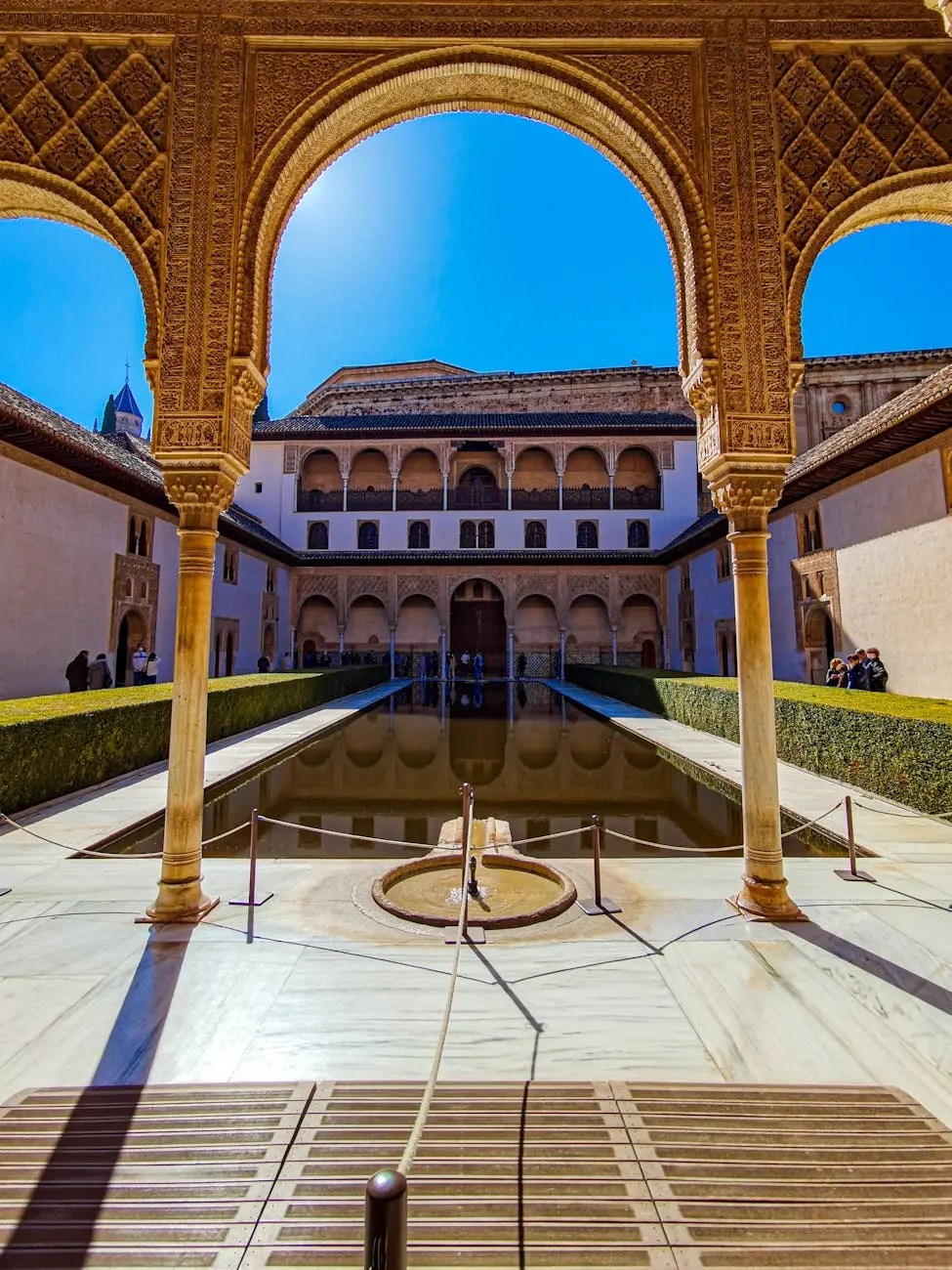
View of the Courtyard of the Lions in the Alhambra, featuring intricate arches, a central fountain, and lush greenery under a clear blue sky.
The stunning courtyard of the Alhambra, showcasing intricate Islamic architecture and serene reflections in the pool. The serene and stunning Court of the Myrtles, the central courtyard of the Nasrid Palaces, perfectly demonstrates Islamic architecture’s mastery of water, light, and geometry.

ALHAMBRA (Expedia)ALHAMBRA (Get Your Guide)
  • Afternoon (2:00 PM): Lunch in Realejo, the old Jewish quarter. Find a small bar for a ración of local cheese or grilled vegetables.
Realejo (Expedia)Realejo (Get Your Guide)
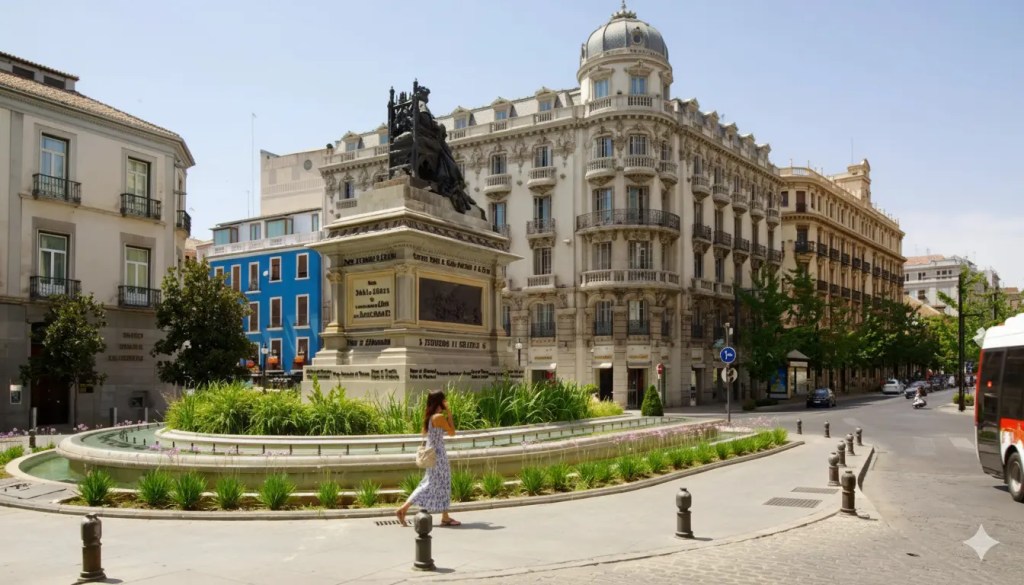
Monument to the Capitulations of Santa Fe in Plaza Isabel la Católica, Granada, showing a statue of Queen Isabella I presenting documents to Christopher Columbus.
A bustling square in Granada featuring a historic monument and the beautiful architecture of surrounding buildings. The historic monument in Plaza Isabel la Católica commemorates the 1492 agreement between Queen Isabella I and Christopher Columbus, which set his voyage to the Americas in motion.
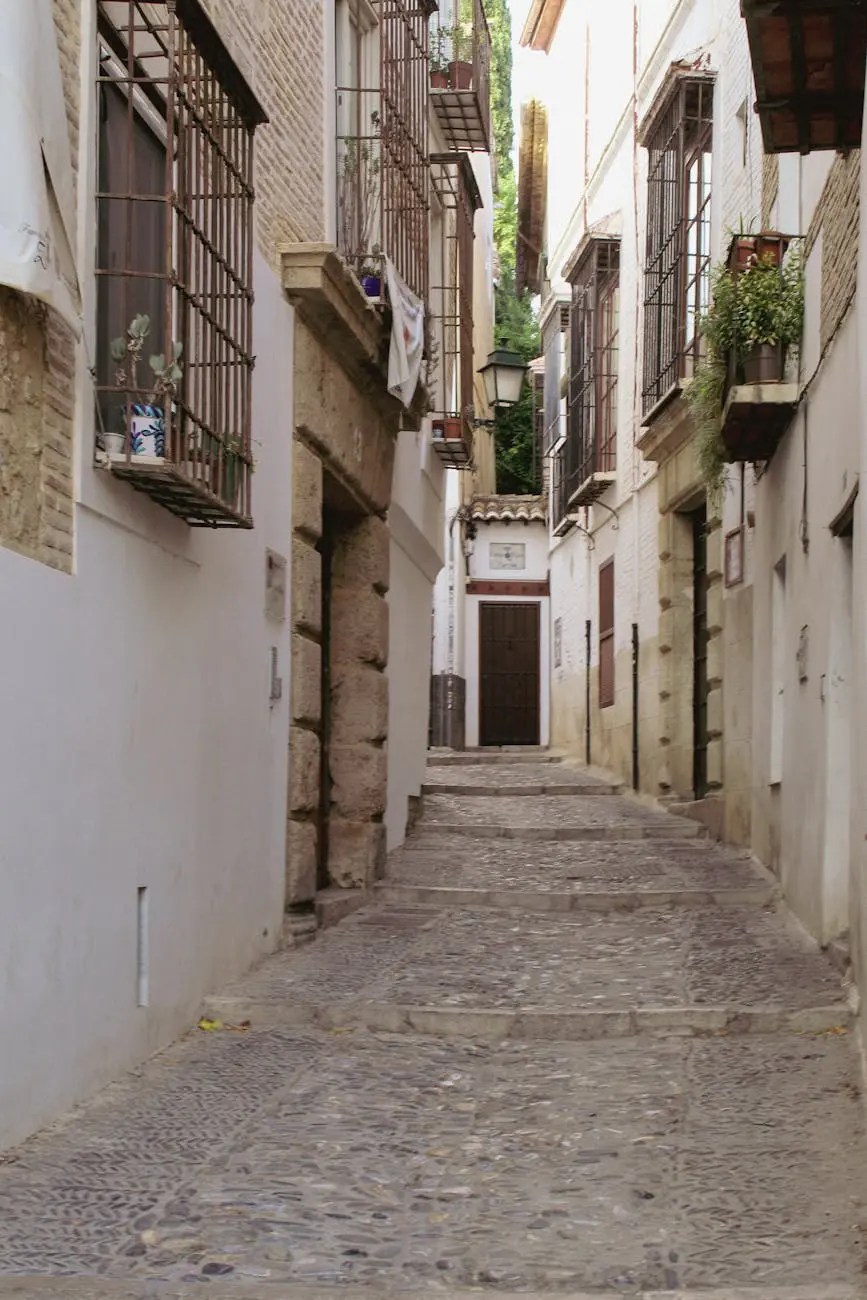
  • Late Afternoon (5:00 PM): Walk up into the Albayzín, the ancient Moorish quarter. Get lost in its cobblestone lanes, whitewashed houses, and hidden cármenes (walled gardens). Make your way to the Mirador de San Nicolás for the classic, breathtaking view of the Alhambra against the Sierra Nevada.
Albayzín (Expedia)Albayzín (Get your guide)
A narrow cobblestone street in Granada, Spain, lined with whitewashed buildings featuring wrought iron balconies and greenery.
A charming cobblestone alley in the historic Albaicín neighborhood of Granada, showcasing its traditional architecture and inviting atmosphere. Getting lost in the labyrinthine, shaded streets of the Albaicín is the best way to experience the atmosphere of Granada’s ancient Moorish quarter

  • Evening (9:00 PM): Dinner and flamenco. Skip the expensive, staged shows for a more authentic tablao in the Sacromonte cave district. The raw passion here is electric.
A panoramic view of the Alhambra, a historic palace and fortress in Granada, Spain, surrounded by lush greenery and set against the backdrop of the Sierra Nevada mountains.
Mirador de San Nicolas showing mountains, chateau or palace and heritage architecture
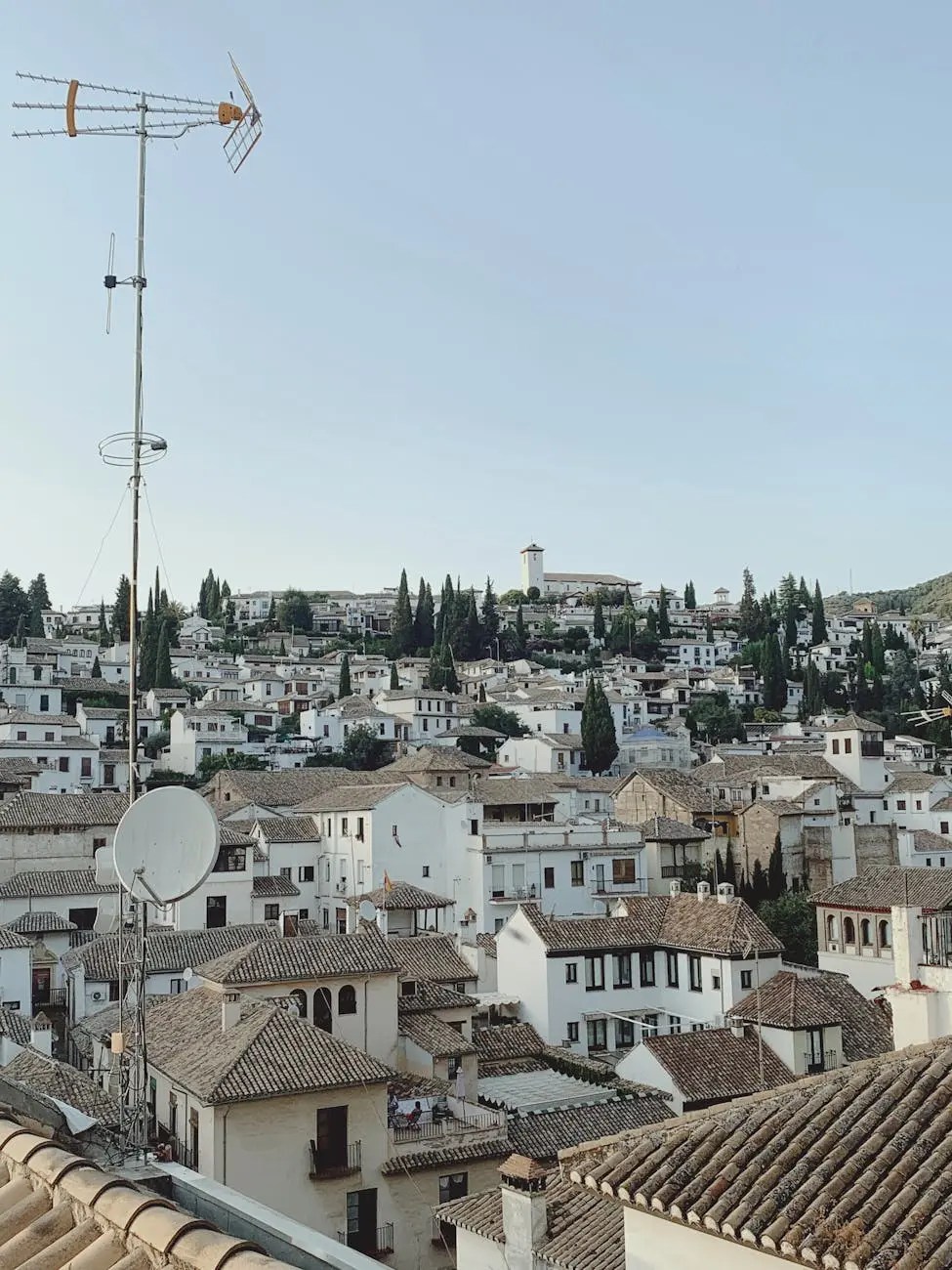
Scenic view of whitewashed houses and terracotta roofs in Granada, Spain, with a clear blue sky.
A panoramic view of Granada’s Albaicín neighborhood showcasing its iconic whitewashed houses and tile roofs against the backdrop of the Sierra Nevada mountains. A breathtaking aerial perspective reveals the dramatic relationship between the two UNESCO World Heritage sites: the organic maze of the Albaicín and the formidable Alhambra.
A dancer in a purple dress gracefully twirls with a flowing black shawl against a solid blue background.
A flamenco dancer captures the spirit of Granada with graceful movements and traditional attire. The intense emotion and precise movement of a flamenco performance embody the soul of Granada, especially in the historic Sacromonte caves.

Day 2: Cathedral Grandeur, Local Markets & Tapas Trail

  • Morning (10:00 AM): Visit the Royal Chapel (Capilla Real), the final resting place of the Catholic Monarchs, Ferdinand and Isabella. Then, explore the colossal Granada Cathedral right next door.
Royal Chapel (Expedia)Royal Chapel (Get Your Guide)
 Granada Cathedra (Expedia) Granada Cathedra (Get your guide)
  • Afternoon (1:00 PM): Wander through the Alcaicería, a maze of narrow streets that was once the Moorish silk market. It’s now full of shops selling spices, ceramics, and lamps.
 Alcaicería (Expedia) Alcaicería (Get your Guide)
  • Late Afternoon (4:00 PM): Granada’s Golden Rule: Drink, Get Fed for Free. Embark on a tapas crawl. In most granadino bars, every drink (a beer, wine, soft drink) comes with a free, substantial tapa. My strategy is to hop between bars in areas like Plaza Nueva or Calle Elvira, letting each drink decide my dinner. It’s social, delicious, and incredibly budget-friendly.
Plaza Nueva (Expedia)Plaza Nueva (Get your Guide)
Calle Elvirab (Expedia)Calle Elvira (Get your Guide)
  • Evening: Enjoy a leisurely stroll along the River Darro as the monuments light up.
River Darro (Expedia)River Darro (Get your Guide)
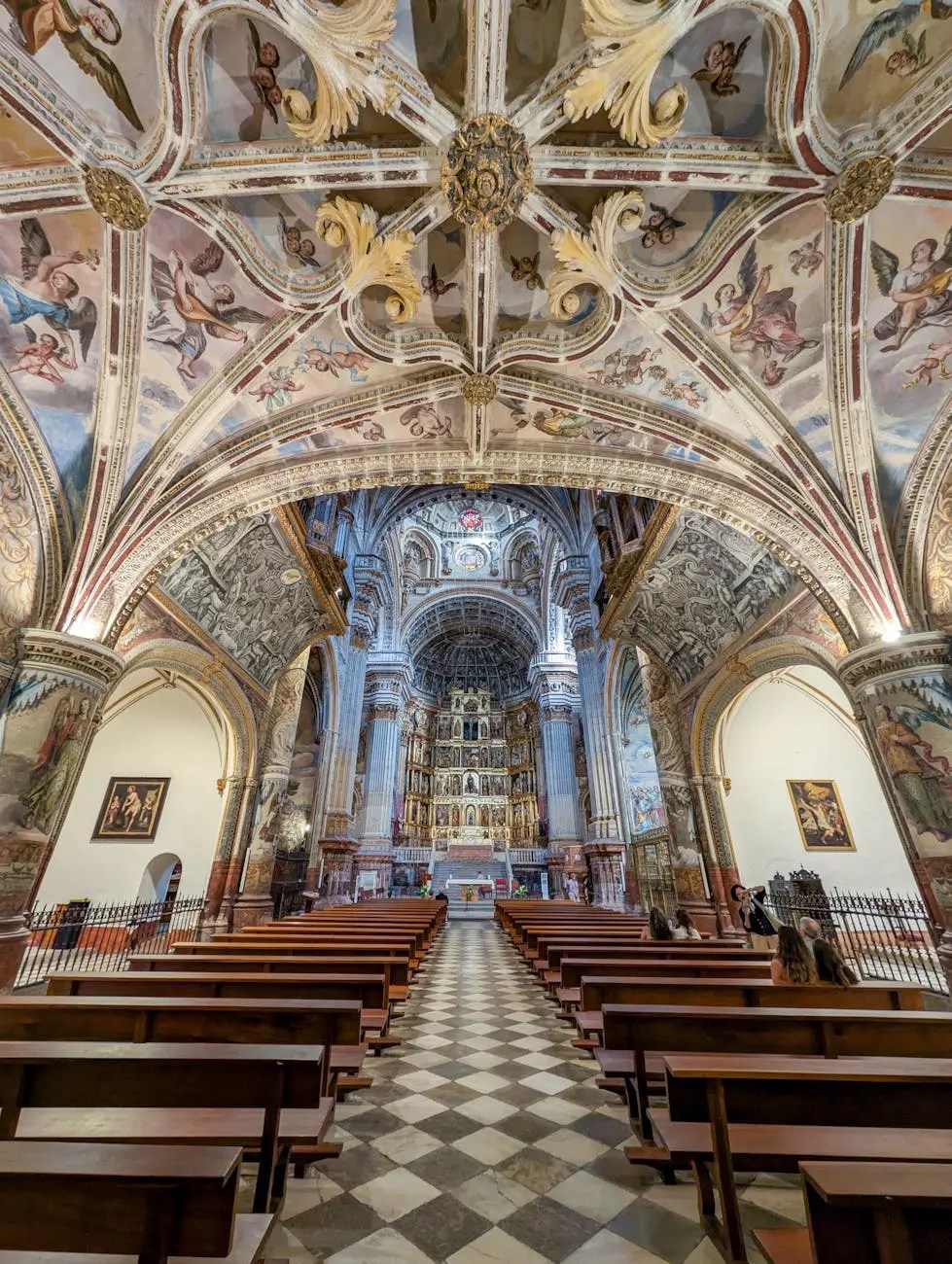
Interior view of a historic cathedral featuring intricate frescoes on the ceiling, ornate altar, and empty wooden pews leading towards the altar.
The ornate interior of Granada’s Royal Chapel, showcasing intricate frescoes and baroque architecture. The lavishly decorated church of the Royal Monastery of San Jerónimo, a masterpiece of Spanish Renaissance architecture and art.
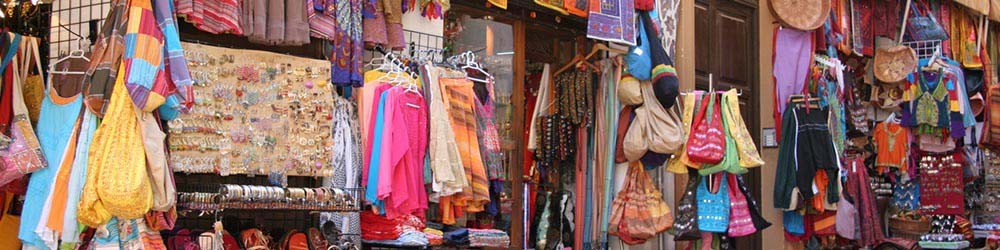
Colorful shops displaying a variety of textiles, clothing, and accessories in a vibrant market.
A vibrant market scene in Granada, showcasing colorful textiles, accessories, and local crafts that reflect the city’s rich culture.

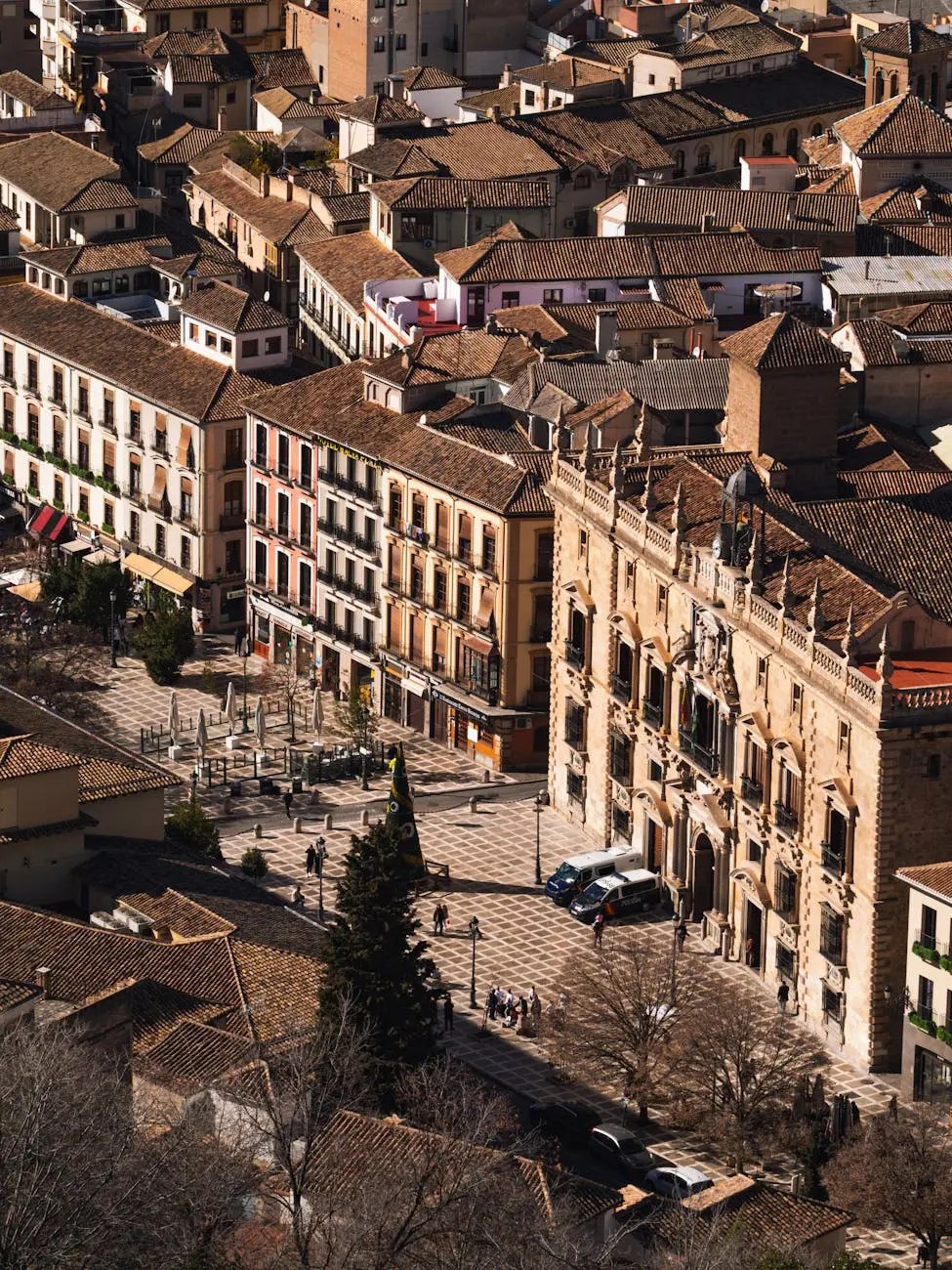
Aerial view of a historic square in Granada, Spain, featuring traditional Spanish architecture, tiled rooftops, and quaint streets lined with shops and cafes.
Aerial view of Granada’s charming rooftops and historic architecture showcasing the vibrant atmosphere of this Andalusian city. Plaza Nueva, the city’s oldest square, seen from above, revealing its strategic position at the foot of the Alhambra hill.
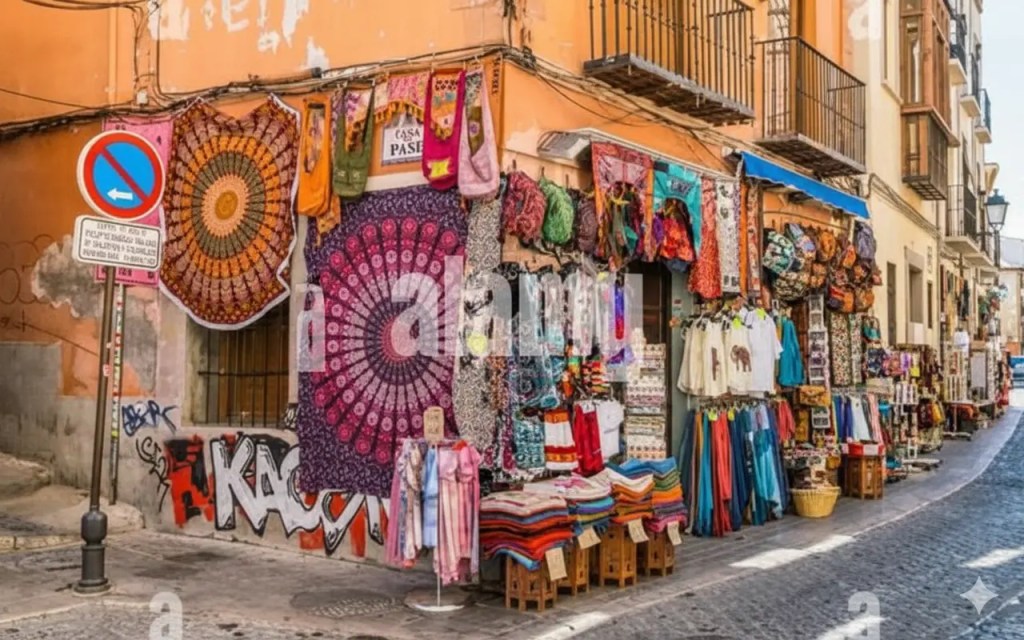
A vibrant street market in Granada, featuring colorful textiles, tapestry displays, and traditional clothing for sale, alongside a narrow cobblestone street.
Colorful street market in Granada showcasing tapestries, clothing, and local crafts. The bustling Calle Elvira is a sensory gateway, where the aromas from tapas bars mix with the sight of glittering lanterns in traditional tetería shopfronts.

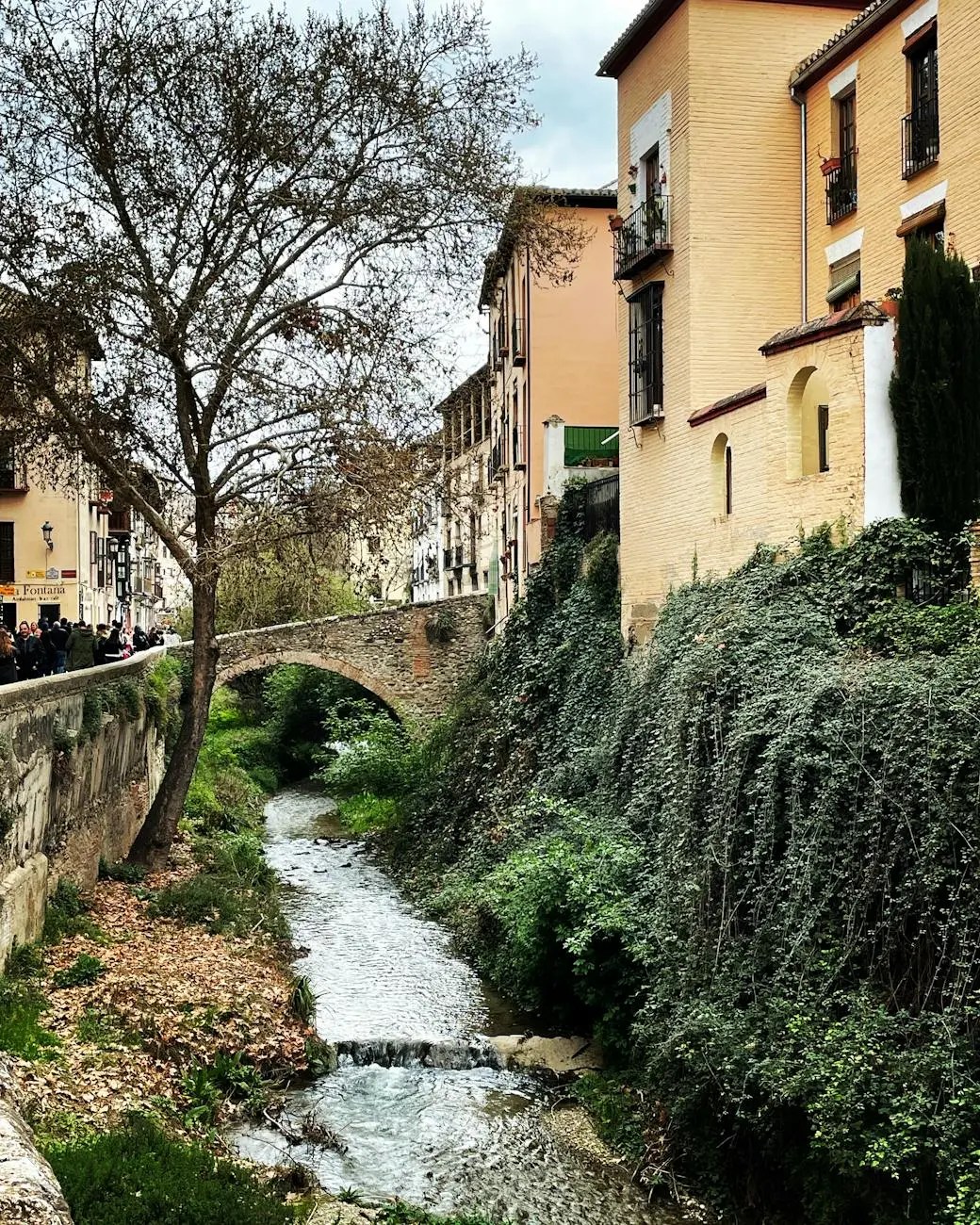
A picturesque view of a narrow stream running alongside a stone bridge, surrounded by lush green vegetation and charming buildings in Granada, Spain.
Picturesque view of a serene stream flanked by charming buildings and trees in Granada, creating a tranquil atmosphere. A stroll along Carrera del Darro feels like a walk through a living history book, with the river and centuries-old architecture on full display.

Granada’s Hidden Gems & Local Secrets

  • El Bañuelo: These stunning 11th-century Arab baths, hidden down a side street in the Albayzín, are often overlooked but are one of the best-preserved in Spain. Entrance is cheap and rarely crowded.
  • Carmen de los Mártires: A peaceful, slightly forgotten palace and garden just north of the Alhambra. It feels secret, romantic, and offers another unique viewpoint of the city.
Carmen de los Mártires (Expedia)Carmen de los Mártires (Get your Guide)
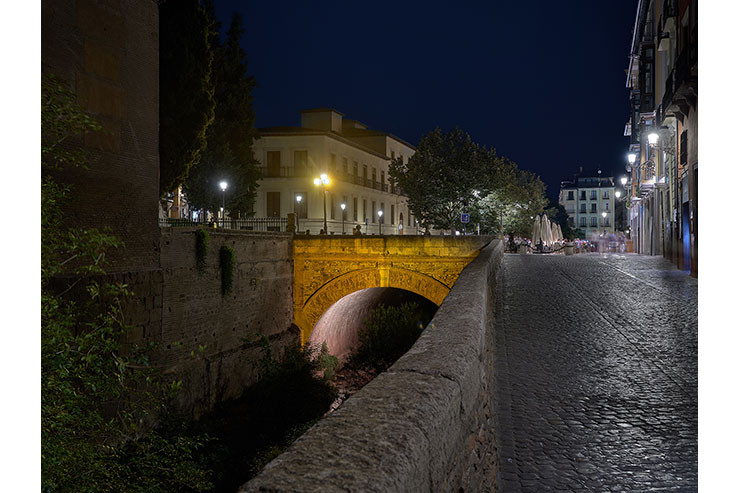
  • Carrera del Darro at Night: This beautiful street along the river is magical after dark, with the Alhambra illuminated above. Skip the crowded bars here and just walk.
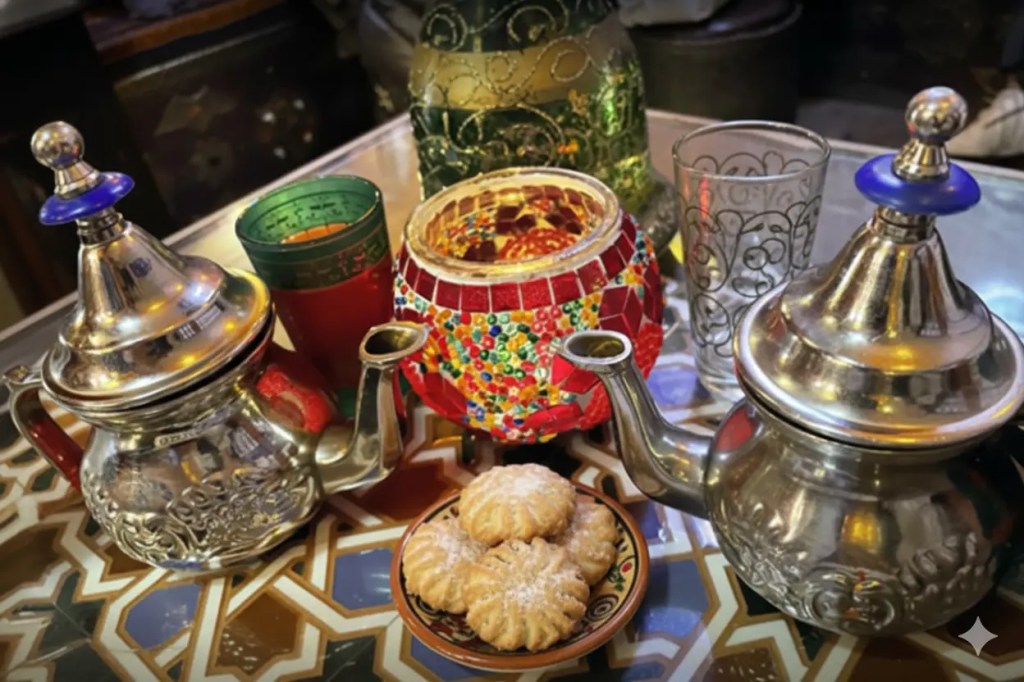
  • Tea in a Tetería: After the bustle, retreat to a tetería (tea house) in the Albayzín. Sip mint tea in a room filled with cushions and Moorish decor—it’s an instant transport to another time.
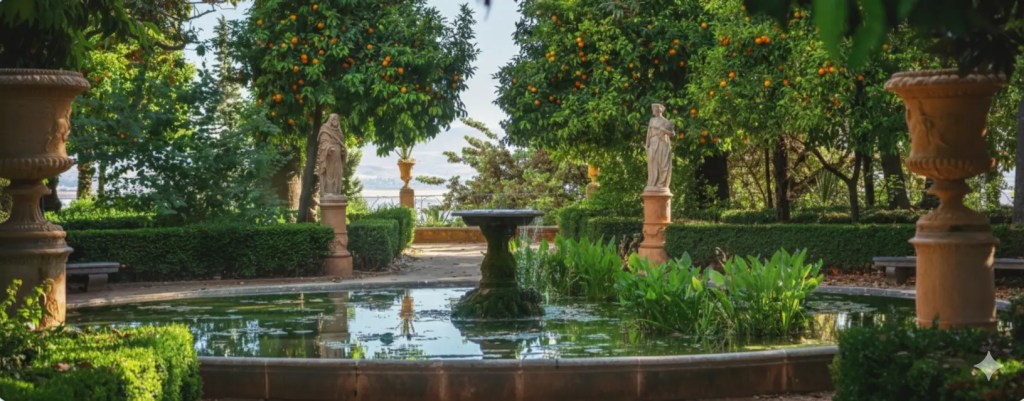
A serene garden scene featuring a circular fountain surrounded by lush greenery and trees bearing oranges. Statues are placed among the foliage, adding an artistic touch to the tranquil setting.
A tranquil garden in Granada, Spain, featuring lush greenery, orange trees, and a serene pond surrounded by classical statues. The romantic and secluded Carmen de los Mártires gardens offer a quiet escape with stunning, framed views of the city below.
Night view of a cobblestone street in Granada, Spain, featuring a lit bridge arching over a small river, surrounded by trees and buildings.
A serene nighttime view of a beautifully lit bridge in Granada, showcasing the city’s charming cobblestone streets.
A traditional Moroccan tea set in a Granada tetería, featuring a colorful mosaic candle holder, silver teapots, glasses, and cookies.
Experience the ritual of mint tea in Granada’s traditional teterías, complete with ornate silverware and sweet pastries. The ritual of mint tea in a tetería is a sensory journey, complete with ornate silverware, sweet pastries, and the glow of mosaic lamps.

Food, Tapas & Local Experiences

Granada is famous for free tapas—order a drink, get food. My advice?

  • Avoid tourist menus near major sights
  • Follow locals into busy bars
  • Don’t rush—Granada eats slowly

Money‑Saving Tips for Granada

  • Visit major sights early morning
  • Use buses instead of taxis uphill
  • Stay slightly outside Albaicín
  • Combine ferry + train if coming via Málaga

🔌 Don’t forget power needs. This European Travel Plug Adapter Kit has covered me across Spain, Italy, and France:

Money-Saving Tips & Navigating Like a Pro

  • The Granada Card: If you plan to visit multiple monuments (Alhambra, Cathedral, Royal Chapel, monasteries), this card can save you money and includes Alhambra access, bypassing the need for a separate ticket. Do the math based on your itinerary.
  • Public Transport is Cheap and Good: The city bus network is extensive. A single ticket is about €1.40, but a 10-ride Bonobús card (€8.20) is the best value. Taxis are also reasonably priced for short hops, especially if splitting with friends.
  • Walk, Walk, Walk: The historic center is very walkable, and getting “lost” is part of the fun (and free!).
  • Water and Siesta: Carry a reusable water bottle. Tap water is safe to drink. Embrace the siesta—many shops close from 2-5 PM, so plan your museum visits for the morning or late afternoon.
  • The Ultimate Tapa Hack: For the cheapest and most local tapas experience, venture just a block or two away from the main squares. The bars filled with students and locals always have the best value.

Essential Spanish & Andalusian Lingo {#essential-lingo}

A little language goes a long way in earning smiles.

  • Hola / Buenos días – Hello / Good morning
  • Gracias – Thank you
  • Por favor – Please
  • Una caña, por favor – A small beer, please (the standard tapa drink)
  • La cuenta, por favor – The bill, please
  • Tapa – The free snack with a drink. In Granada, you often don’t choose it—it comes with the territory!
  • Paseo – A leisurely stroll. A key local activity.
  • Mirador – Viewpoint. You’ll be seeking these out!
  • Guiri – (Slang, not offensive) A tourist or foreigner. That’s us!

Stay Connected, Protected & Stress‑Free Abroad

📶 Stay Connected

Staying online abroad can be expensive if you rely on roaming or airport SIM counters. I travel with Drimsim, a global SIM that works in 190+ countries. Pop it in, top up via the app, and you’re connected—no surprises, no stress.

🔐 VPN for Travel Safety

Public Wi‑Fi and travel bookings don’t mix well without protection. I always use NordVPN when traveling:

✈️ Flight Delayed or Canceled?

You could be entitled to up to $650 in compensation. AirHelp checks eligibility and handles everything for you:

🛡️ Travel Insurance

No matter how short the trip, insurance matters. I recommend VisitorsCoverage for quick comparisons and flexible plans: 👉 https://visitorscoverage.tpm.lv/QUKMbHg3


✨ Travel Glow‑Up Tip

Travel photos hit differently when you feel good. I swear by K‑beauty essentials from Lakinza—affordable, effective, and perfect for travel skin recovery. Use code Lalax10 for a sweet discount.

Frequently Asked Questions (FAQ)

Q: How far in advance do I really need to book Alhambra tickets?
A: As soon as your travel dates are firm. Tickets for the Nasrid Palaces are released exactly three months in advance and sell out incredibly fast, especially for morning slots in peak season. Set a calendar reminder.

Q: Is Granada safe for solo travelers?
A: Generally, yes. It’s a university city with a vibrant street life. Standard precautions apply: be aware of pickpockets in crowded areas like the Alcaicería, and be cautious walking alone in the very steep, narrow streets of Sacromonte late at night.

Q: What’s the deal with tapas in Granada? Is it really free?
A: Yes! It’s one of the last cities in Spain where the free tapa tradition remains strong. Order any drink (alcoholic or non-alcoholic) at most traditional bars, and a small plate of food will arrive with it. The quality and size often increase with your second or third drink.

Q: Can I do a day trip to the Sierra Nevada from Granada?
A: Absolutely. In winter, you can go skiing (the resort is about 45 minutes by bus). In summer, it’s fantastic for hiking. Regular buses run from the city center to the mountain villages and ski station.

Q: I have more than a weekend. Where else should I go in Andalusia?
A: You’re in the heart of it! Consider basing yourself in Seville for flamenco and the majestic Alcázar, or Córdoba for the mesmerizing Mezquita. You can explore my detailed guides to both cities for inspiration:

If Granada leaves you craving more Southern European magic (which it probably will), it pairs beautifully with several nearby city escapes I’ve already explored in depth. Just a few hours away, Seville, Spain delivers flamenco-filled nights, orange-scented courtyards, and some of Andalusia’s most dramatic architecture—perfect if you want to stay in the same cultural rhythm. Heading east, Valencia, Spain offers a completely different vibe with futuristic design, relaxed beaches, and one of the best food scenes in the country (yes, paella tastes better here). If you’re extending your trip north, Barcelona, Spain blends art, nightlife, and seaside energy in a way that feels effortlessly iconic. And for travelers hopping borders, Lisbon, Portugal makes a surprisingly smooth next stop—laid-back, photogenic, and ideal for slow wandering after Granada’s hilltop views. Linking these destinations together creates a smart, time-efficient route that saves money on transport while keeping the journey rich and varied.

Final Thoughts

Granada isn’t loud about its beauty—it reveals it slowly. Plan smart, walk often, eat well, and let the city surprise you.

👉 Ready to plan your escape? Compare flights and stays on Expedia now:

💬 Have questions or hidden gems to share? Drop a comment—I always reply.

📌 Explore more nearby escapes in my Travel Master List: 👉 https://confidencebuildings.com/travel-master-list/

https://www.tumblr.com/indigosavageryshark/804921819792621568?source=share

Universal Disclaimer/Disclosure Page:
Explore Valencia: Your Ultimate 48-Hour Weekend Guide

Meta Description:✈️ Dreaming of a sun-drenched Spanish escape? Our ultimate weekend guide to Valencia, Spain is packed with insider tips, hidden gems, and a perfect itinerary to help you explore the City of Arts and Sciences, savor authentic paella, and navigate like a local. Discover how to make the most of your 48-hour Valencia adventure!

Table of Contents

  1. Why Valencia? My Love Affair with the Paella Capital
  2. Logistics: Travel Smart, Not Hard (Visa, Getting There & Where to Stay)
  3. The Perfect 3-Day Valencia Itinerary: Day-by-Day
    • Day 1: Old Town Charm & Culinary Delights
    • Day 2: Futuristic Wonders & Beach Bliss
    • Day 3: Paella’s Birthplace & Hidden Gems
  4. Mastering Valencia’s Public Transport: Your Money-Saving Guide
  5. Language & Local Lingo: Key Phrases to Know
  6. Smart Travel Toolkit: Apps, Insurance, and Staying Connected
  7. FAQs for Your Valencia Trip
  8. Ready to Book? A Final Call to Adventure!

Why Valencia? My Love Affair with the Paella Capital

Let’s be real. When you think of a Spanish city break, your mind probably jumps to Barcelona or Madrid. Don’t get me wrong, I adore both (check out my tips for navigating Barcelona’s Gothic Quarter [LINK from master list: confidencebuildings.com/travel-master-list/]), but let me tell you about their sophisticated, sun-drenched little sister: Valencia!

This city has it all—history, an ocean-sized park (yes, an entire riverbed turned into a park!), jaw-dropping futuristic architecture, and, most importantly, it’s the undisputed birthplace of paella. My first bite of authentic Valencian paella—the traditional chicken and rabbit version—was a revelation. I remember sitting by the Albufera lagoon, the sun setting over the rice fields, thinking, “Why didn’t I come here sooner?” This city is the perfect blend of laid-back coastal vibes and cultural immersion, making it the ultimate weekend escape.

Alright, let’s be real. Your vacation days are precious, and the urge to just go somewhere—to soak up a new culture, taste incredible food, and forget your inbox for a few glorious days—is powerful. If you’re staring at a free weekend and a burning desire for a Spanish fiesta, I’ve got one word for you: Valencia.

I fell in love with this city on a whim after a particularly grueling project at work. I needed sun, sangria, and a serious change of scenery, and let me tell you, Valencia delivered in spades. It’s the perfect blend of stunning modern architecture, ancient history, and a laid-back Mediterranean vibe that’s just chef’s kiss.

So, grab your favorite travel notebook (or just bookmark this page), because we’re about to plan your perfect weekend in Valencia.

Flights to Valencia

Logistics: Travel Smart, Not Hard

Visa & Cost Check (Keep it Cheap!)

For my readers traveling to Spain, remember that Spain is part of the Schengen Area. If you are an EU/Schengen passport holder, you’re good to go! For others, ensure you check the current visa requirements well in advance. As for cost, Valencia is generally much cheaper than Barcelona or the big cities—you can easily snag a delicious menú del día (a fixed-price lunch) for $10-$15. A little saving here means more money for those gorgeous ceramic souvenirs!

Getting There & Where to Stay

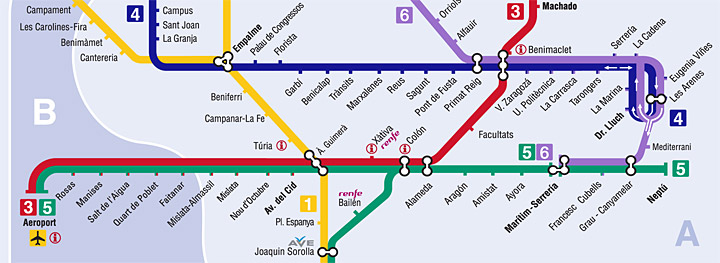
Valencia Airport (VLC) is a breeze to navigate. You can get into the city center in about 20 minutes on the Metro (Line 3 or 5).

Hotels in Valencia

Speaking of logistics, finding the right hotel is key to saving time. I always use Expedia to compare prices . I personally recommend staying near the Ruzafa neighborhood for its vibrant nightlife and cafe culture, or near the Ciutat Vella (Old Town) if you want to be within walking distance of history.

Valencia Metro Map: Navigate the city’s public transport easily while exploring its vibrant neighborhoods and attractions.

Friday: Ancient Hearts & Modern Arts

Afternoon: Touch Down & Dive into the Old Town

You’ve landed! First things first: getting into the city. The Valencia Metro is your best friend. A quick, easy, and affordable ride on Line 3 or 5 will get you from Manises Airport (VLC) to the city centre in about 20 minutes. Ditch the expensive taxi queue; your wallet will thank you.

Drop your bags at your hotel (I found a gorgeous little place in the El Carmen district on Expedia), and it’s time to hit the cobblestones.

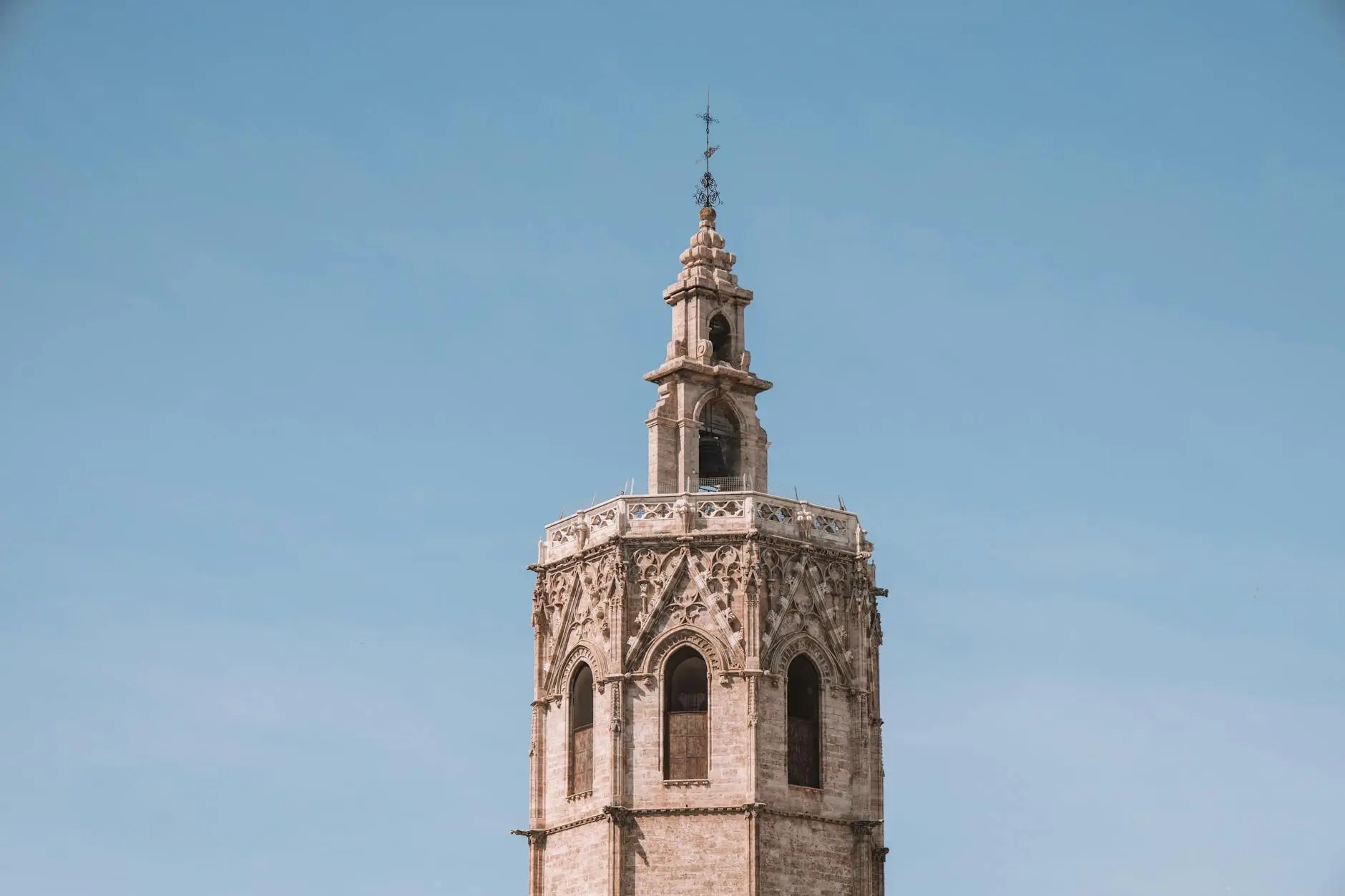
Your first stop? The Plaza de la Virgen. This square is the historic heartbeat of the city. Grab a bench, watch the world go by, and admire the stunning Valencia Cathedral. For a small fee, you can climb the Miguelete Bell Tower—the 207-step climb is a thigh-burner, but the 360-degree views of the terracotta rooftops are absolutely worth it. Inside the cathedral, legend claims you’ll find the Holy Chalice, said to be the true Holy Grail. Believe it or not, it’s a seriously cool thing to see.

Evening: Tapas & Tangles

As the sun sets, get lost. Seriously. The El Carmen neighborhood is a labyrinth of narrow medieval streets, vibrant street art, and hidden plazas. For dinner, skip the tourist traps on the main squares and duck into a smaller side street. My best meal was at a tiny, family-run bar where I pointed at what looked good in the display case. Order a clara (a shandy – beer with lemon soda) and a few raciones (sharing plates) of local cheese and jamón.

💎 Hidden Gem: Hunt for the Museo de las Rocas, a hidden courtyard where the giant, elaborate figures from the Fallas festival are stored. It’s free to peek through the gates and feels like discovering a secret.

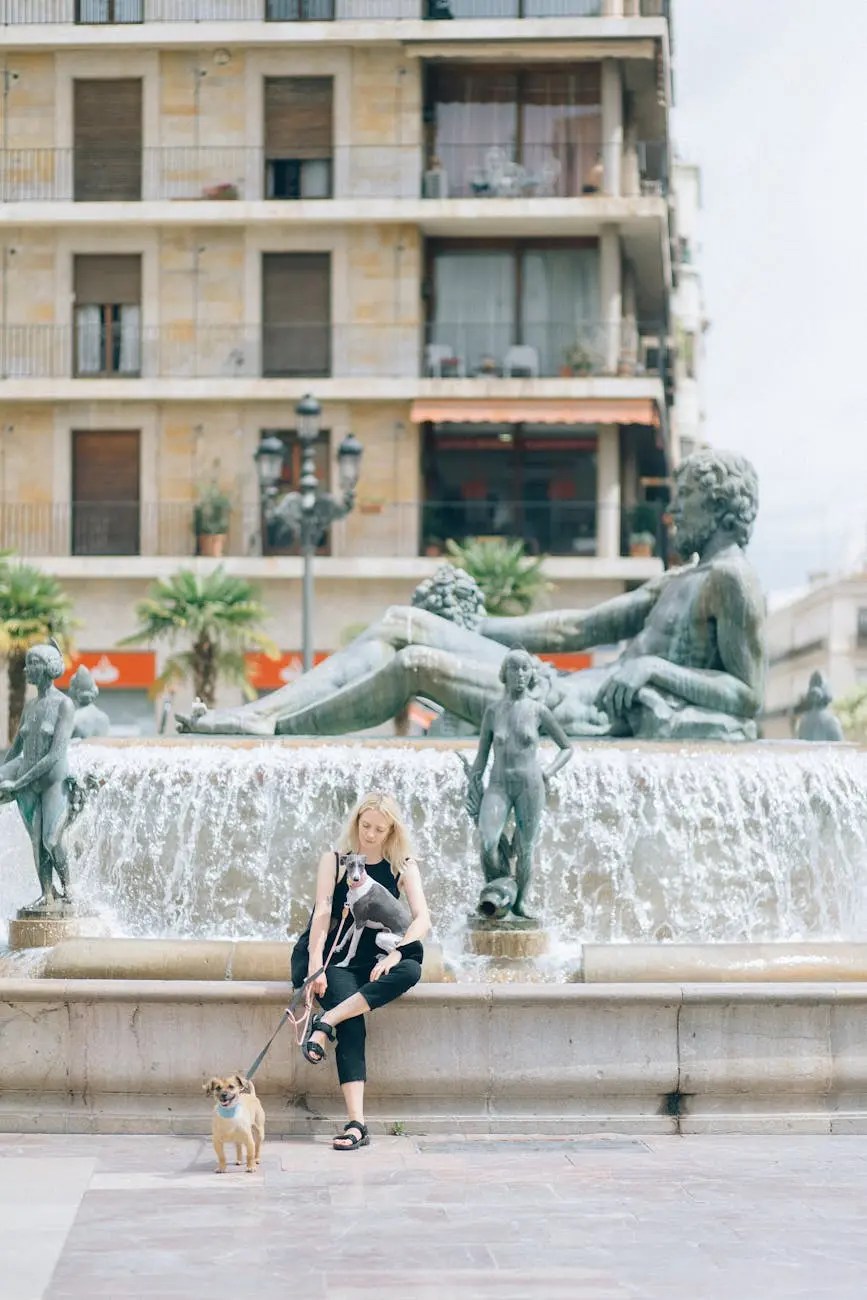
A serene moment by a fountain in Valencia, featuring a woman with her dogs amidst stunning sculptures and architecture. Plaza de la Virgen “Finding a moment of pure Valencian peace. This is the true magic of Plaza de la Virgen: where the sound of the Turia Fountain mixes with the chatter from nearby cafés, and history isn’t just in the guidebooks—it’s all around you. The perfect spot to just be.”
The top of a historic stone tower against a clear blue sky.
A close-up of the iconic Miguelete Bell Tower, a historical landmark featuring intricate Gothic architecture against a clear blue sky. “Getting up close and personal with the Miguelete’s Gothic grandeur. From down here, you can really appreciate the centuries of craftsmanship in every stone. It’s a neck-craning, awe-inducing kind of beauty.”
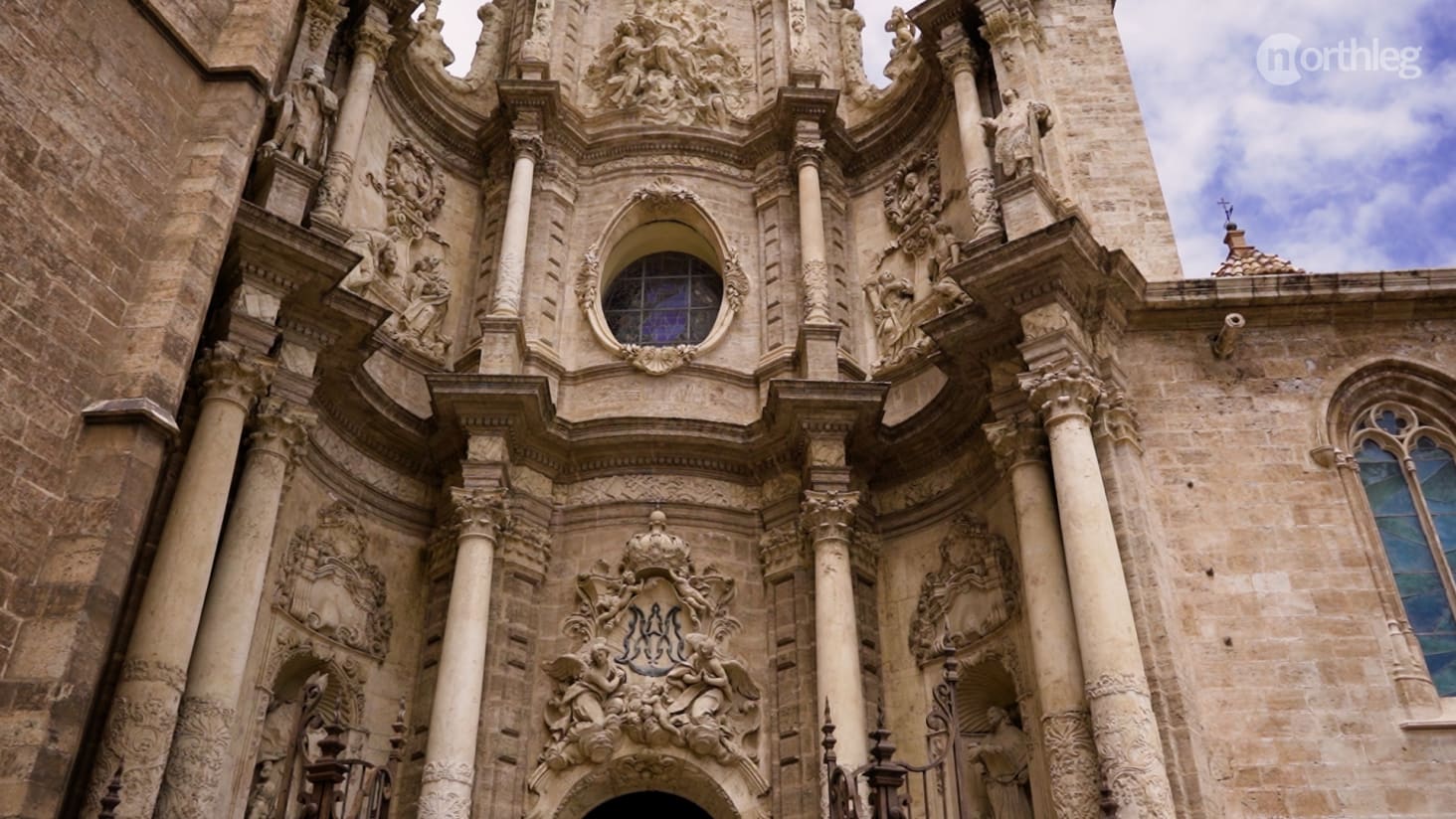
Close-up view of the ornate facade of a historic church in Valencia, featuring intricate sculptures, columns, and a stained glass window.
Detailed architectural features of Valencia Cathedral, showcasing its intricate sculptures and historical significance.
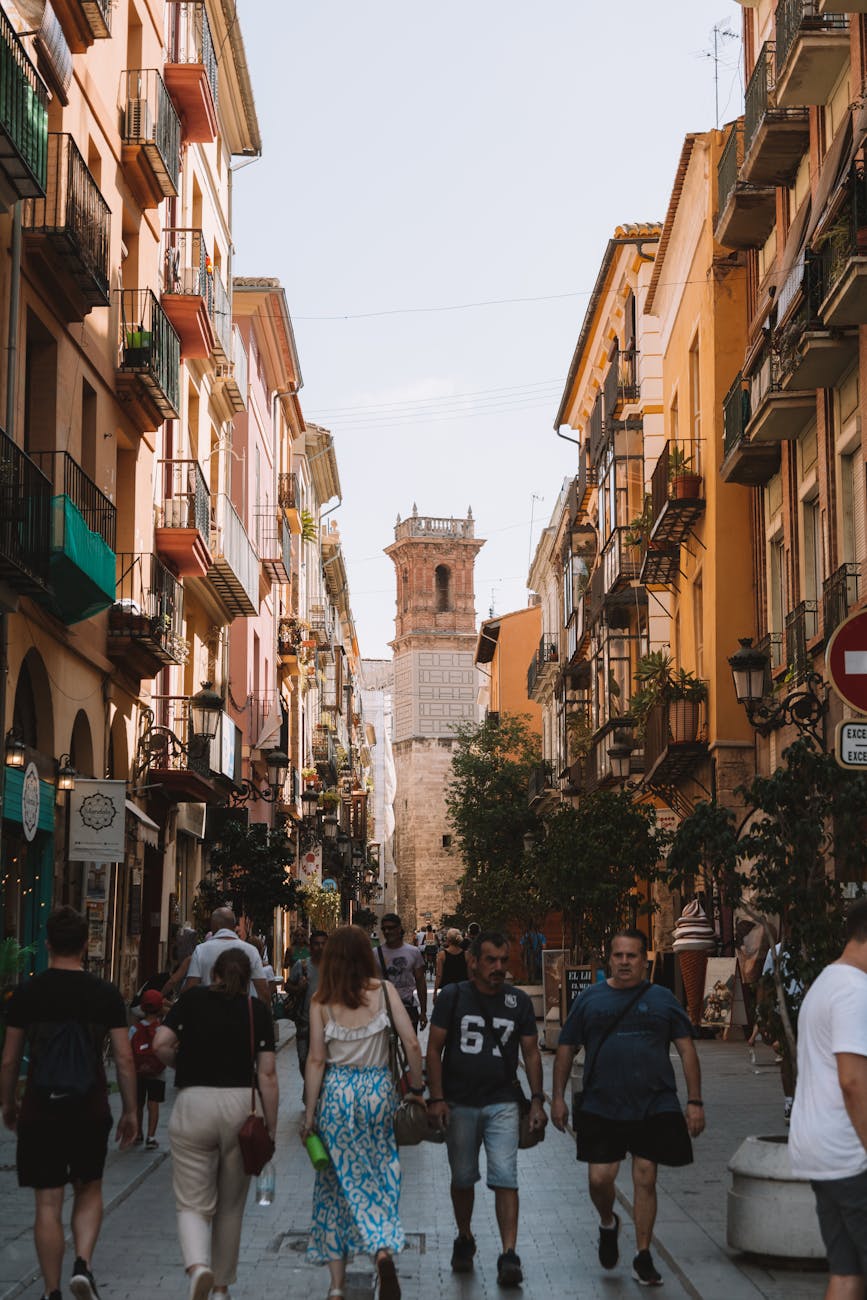
Narrow street in Valencia, Spain, lined with colorful buildings and balconies, featuring people walking and the Miguelete bell tower visible in the background.
Strolling through the charming streets of Valencia, where historic architecture meets vibrant city life.

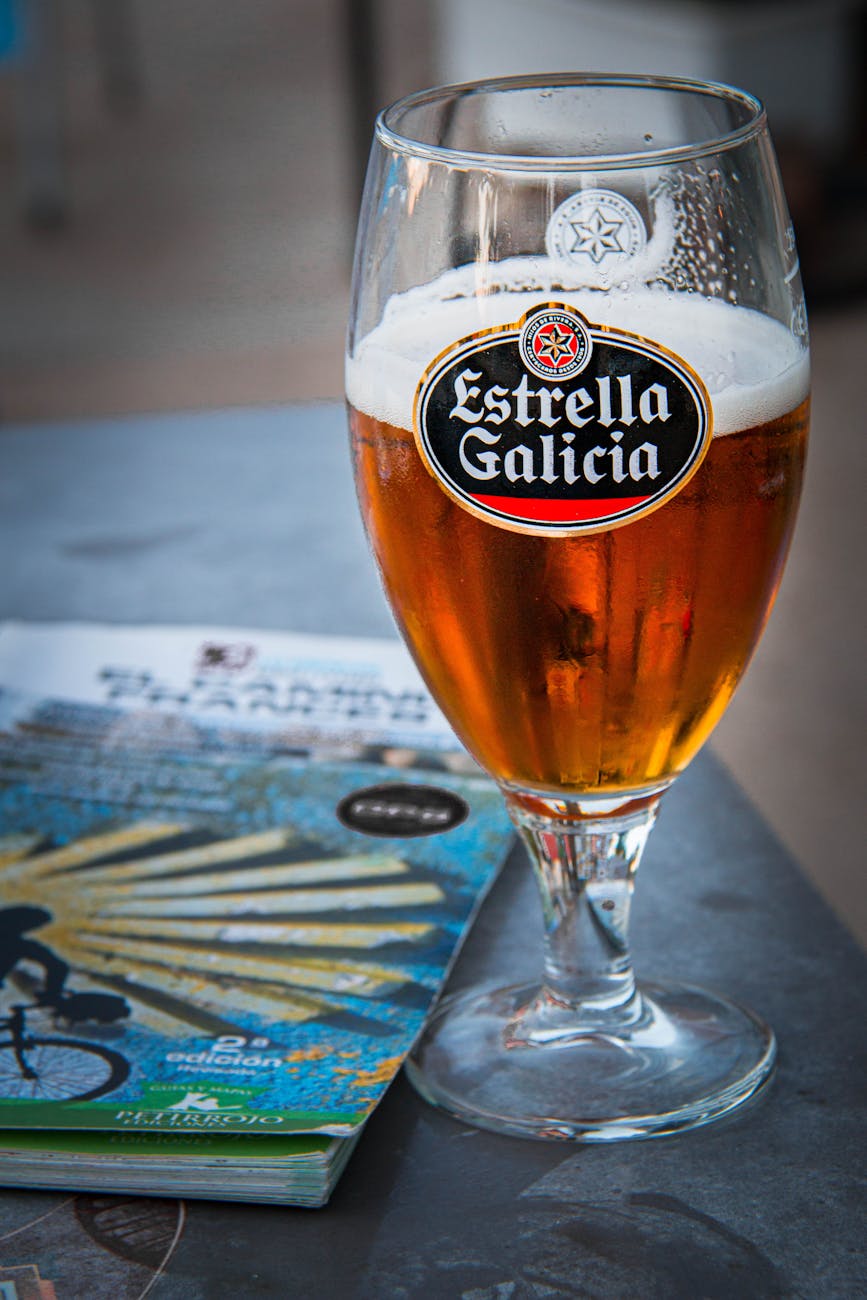
A glass of Estrella Galicia beer resting on a table with a colorful brochure in the background.
A refreshing glass of Estrella Galicia beer, perfect for savoring after exploring Valencia.

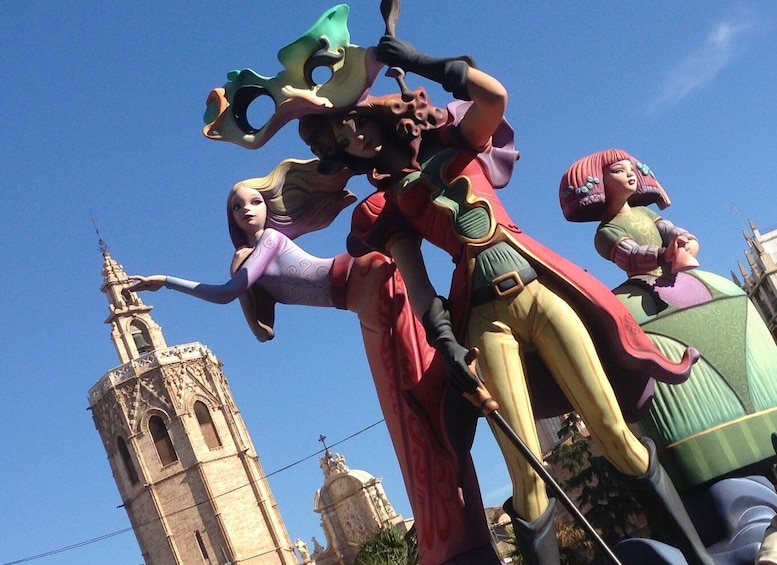
Colorful sculptures representing characters from Valencia's Fallas festival, with a historic tower in the background under a clear blue sky.
Colorful sculptures from the Las Fallas festival in Valencia, showcasing vibrant artistry against a clear blue sky.

“Continue your Mediterranean adventure with a weekend in Nice, France

Saturday: Silk, Science & The Holy Grail

Morning: Market Fresh & A Silk-Covered Past

Start your day at the Mercado Central, one of Europe’s largest and most beautiful fresh food markets. The building itself is an Art Nouveau masterpiece. The energy here is electric—fishmongers shouting, the smell of ripe produce, and locals doing their daily shopping. Grab a fresh-squeezed juice and a empanada for breakfast on the go.

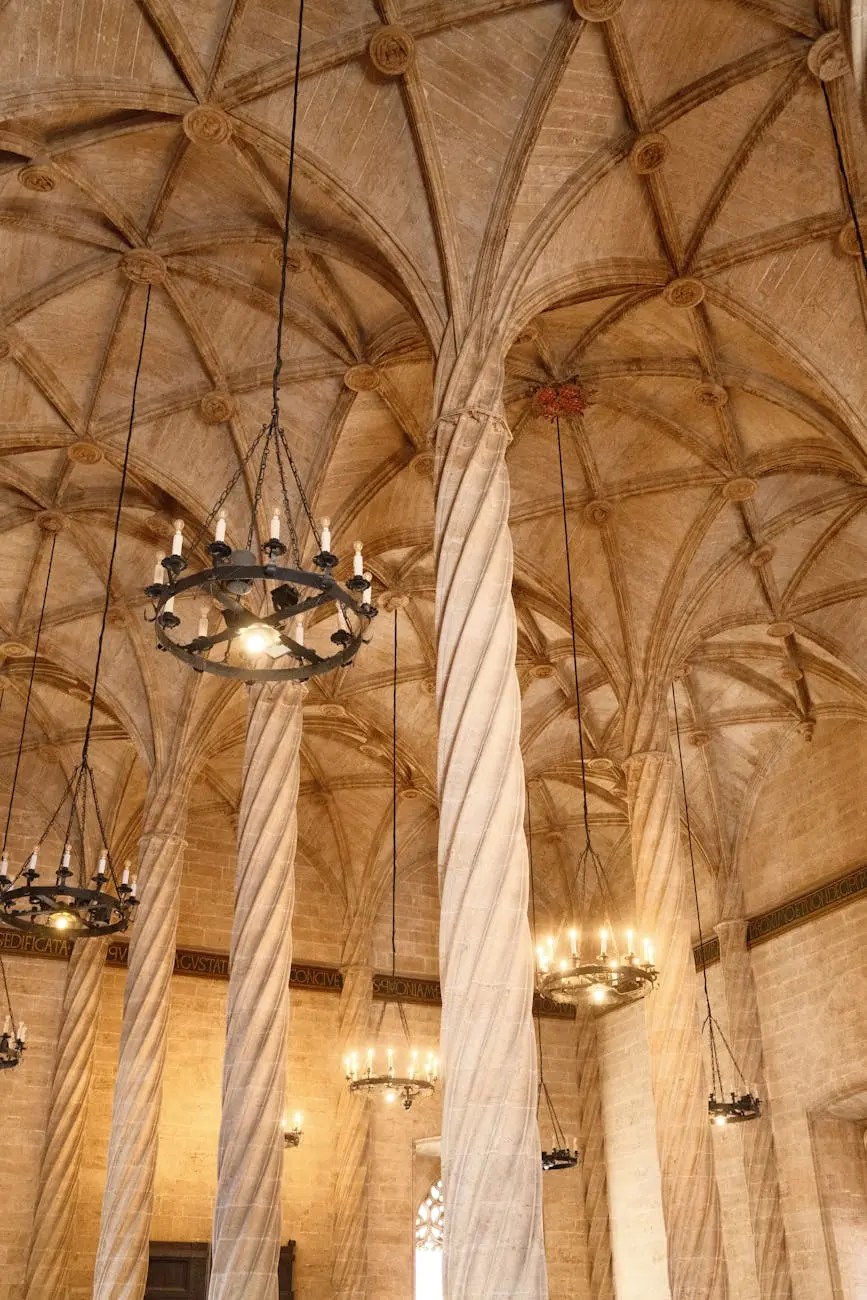
Just a stone’s throw away is the Lonja de la Seda (Silk Exchange). This UNESCO World Heritage site is a breathtaking example of late Gothic civil architecture. Standing in the grand Column Hall feels like stepping onto the set of a fantasy movie. It’s a quick visit but utterly unforgettable.

Afternoon: The Future is Now

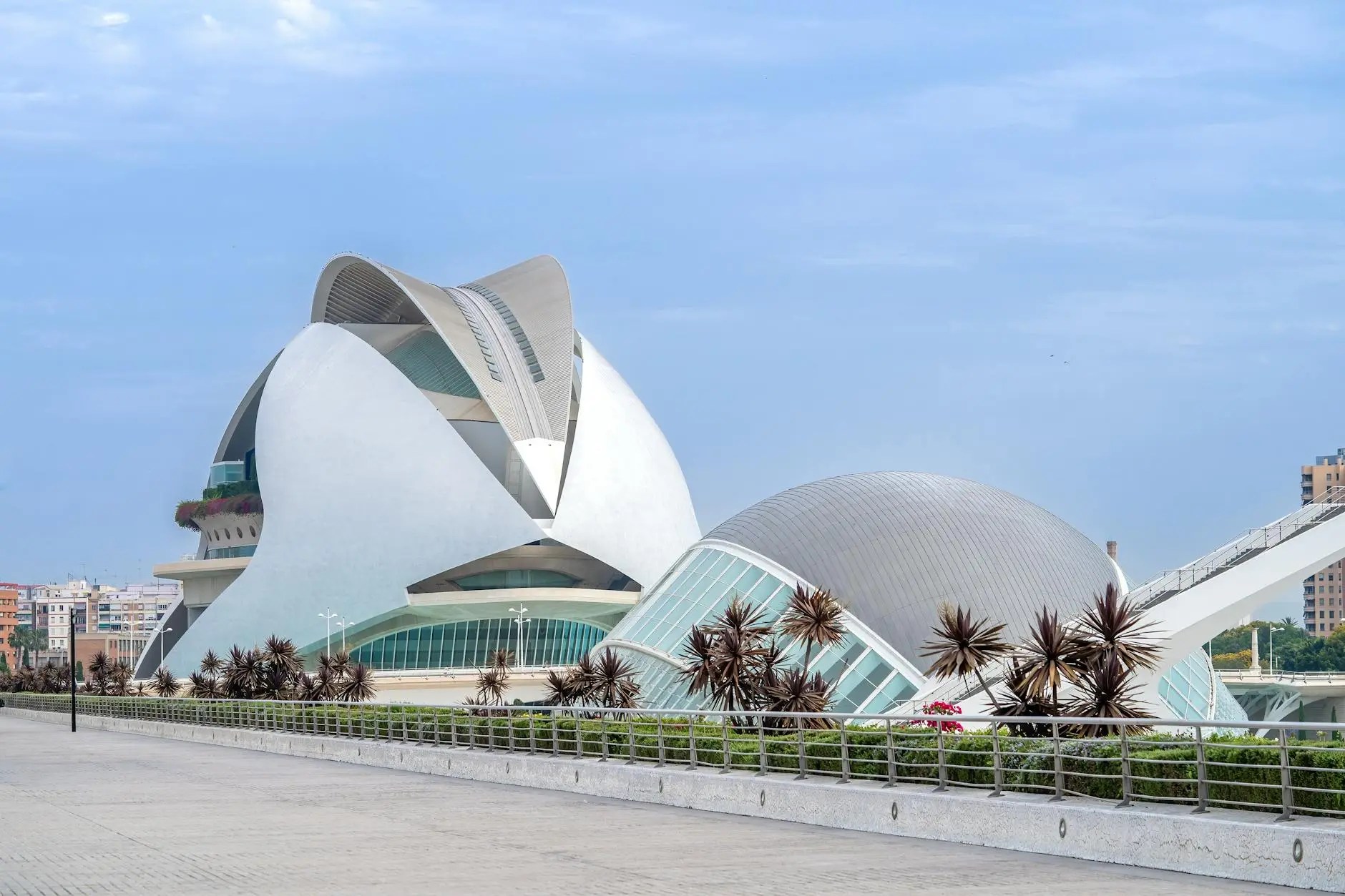
After soaking in the old world, take a pleasant 20-minute stroll or hop on a bus down to the Ciudad de las Artes y las Ciencias (City of Arts and Sciences). This place is mind-blowing. The sprawling, futuristic complex seems to have landed from another planet. You don’t need to buy tickets for every museum to appreciate it—just walking around the turquoise lagoons and under the soaring arches of the L’Oceanogràfic (Europe’s largest aquarium) is an experience in itself. It’s the perfect place to unleash your inner photographer.

📸 Pro Tip: The white, futuristic buildings against the blue Valencian sky are a dream to shoot. To get those crisp, vibrant shots without the crowds, I never leave home without my trusty Sony Alpha Camera. It’s a game-changer for travel photography.

Evening: The Paella Pilgrimage

You cannot, I repeat, cannot leave Valencia without eating authentic Paella Valenciana. A word to the wise: authentic paella is made with rabbit, chicken, and snails (though you can find seafood versions), and it’s a lunch dish. But for us weekend warriors, a Saturday dinner is our only shot.

For the real deal, you need to head to the Playa de la Malvarrosa or the Albufera Natural Park (the birthplace of rice). I took the bus to Malvarrosa and had an unforgettable dinner watching the sunset over the Mediterranean. It’s a pilgrimage every foodie must make.

“Looking for a cultural contrast? Cross the Mediterranean to Marrakech, the Red City.

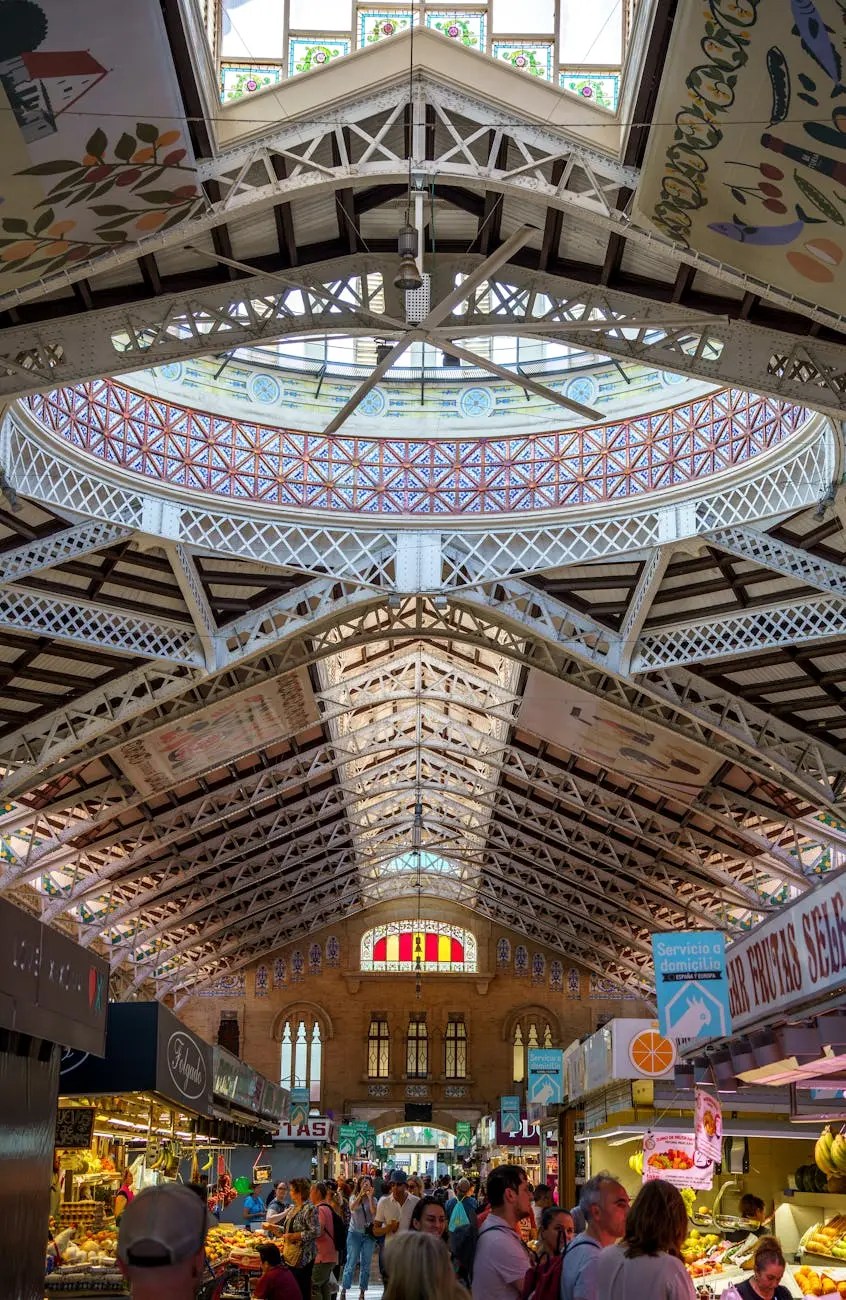
Interior view of the Mercado Central in Valencia, showcasing its beautiful Art Nouveau architecture and bustling atmosphere with shoppers browsing fresh produce.
The vibrant interior of Mercado Central, Valencia’s bustling market, showcasing a mix of fresh produce and local specialties. “A feast for the senses! Stepping inside the Mercado Central is like walking into a living, breathing, (and deliciously smelling) work of Art Nouveau art. The colors, the energy, the chatter of local shoppers—it’s the absolute heart of the city. I left with a bag of oranges and a huge smile.”
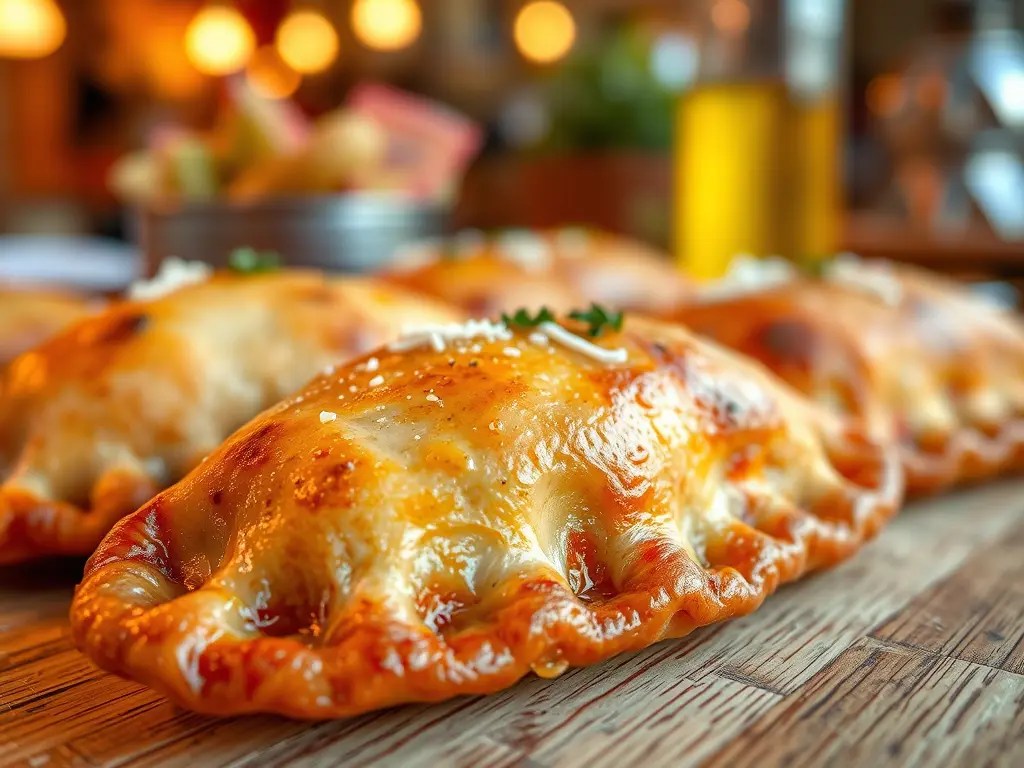
Golden-brown empanadas arranged on a wooden surface, with a hint of green garnish on top, illuminated by soft ambient lighting.
Delicious golden-brown empanadas served on a wooden platter, perfect for a snack or meal. “My favorite Spanish snack discovery! These golden-brown parcels of joy, filled with anything from spiced meat to creamy tuna, are the perfect on-the-go fuel for exploring. I may have eaten one (or three) every single day.”
Interior view of a grand Gothic-style hall featuring intricately designed vaulted ceilings and decorative chandeliers.
Interior of the Valencia Cathedral featuring intricate vaulted ceilings and elegant chandeliers. “Standing in the main trading hall of the Silk Exchange feels like stepping into a stone forest. Those spiraling columns are a masterpiece of 15th-century Gothic flair—proof that even a place of business was once a work of art. No wonder it’s a UNESCO World Heritage site.”

Futuristic architectural design of the City of Arts and Sciences in Valencia, Spain, featuring unique curves and shapes against a clear blue sky.
The striking architecture of Valencia’s City of Arts and Sciences, showcasing futuristic design against a serene sky. “First glimpse of the City of Arts and Sciences and my jaw actually dropped. It doesn’t feel real—it’s like a movie set from the future has landed in the middle of a dried-up riverbed. The scale of this place is just mind-bending.”
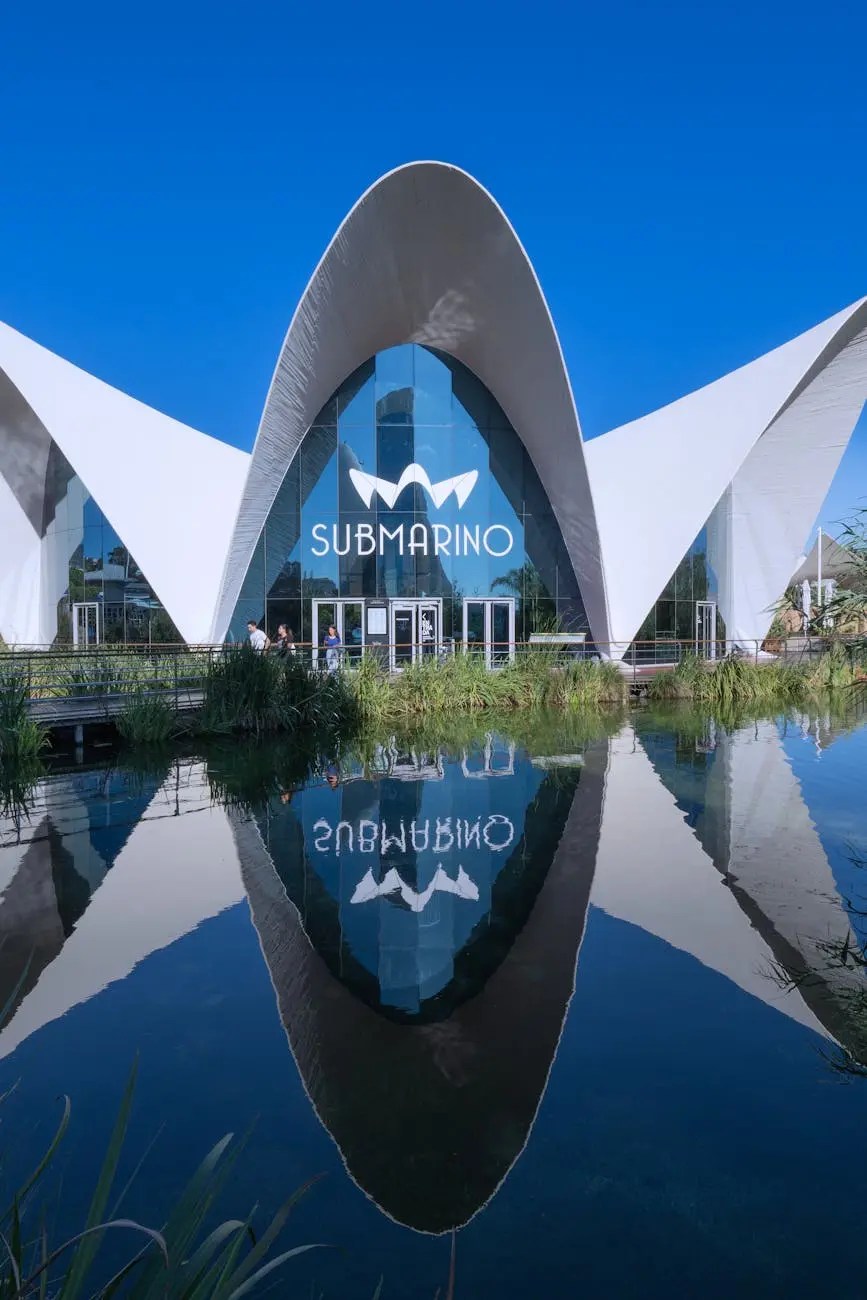
The futuristic exterior of the Submarino building at the City of Arts and Sciences in Valencia, Spain, reflecting in the tranquil water below.
The futuristic ‘Submarino’ building at the City of Arts and Sciences in Valencia, showcasing stunning architecture and its reflection in the surrounding waters. “Dinner with a view! Eating at the Submarino Restaurant feels like you’ve stumbled into a secret chamber at the bottom of the sea. Watching sharks glide past while you sip wine is an experience I’ll never forget. It’s as close to being in a Jacques Cousteau documentary as you can get while eating patatas bravas.”
A close-up of a traditional seafood paella dish, featuring yellow rice topped with various seafood, cherry tomatoes, green beans, and lemon slices.
A vibrant plate of authentic Valencian paella, featuring chicken, seafood, and fresh vegetables, perfect for a culinary adventure in Valencia. “The holy grail of Spanish cuisine, found! This isn’t just rice with stuff in it—this is a proper Valencian paella, with socarrat (that delicious crispy bottom layer), saffron-infused Bomba rice, and the perfect mix of land and sea. My taste buds are still celebrating.”
A scenic view of Valencia's Malvarrosa Beach, featuring golden sand, gentle waves lapping at the shore, and a clear blue sky above.
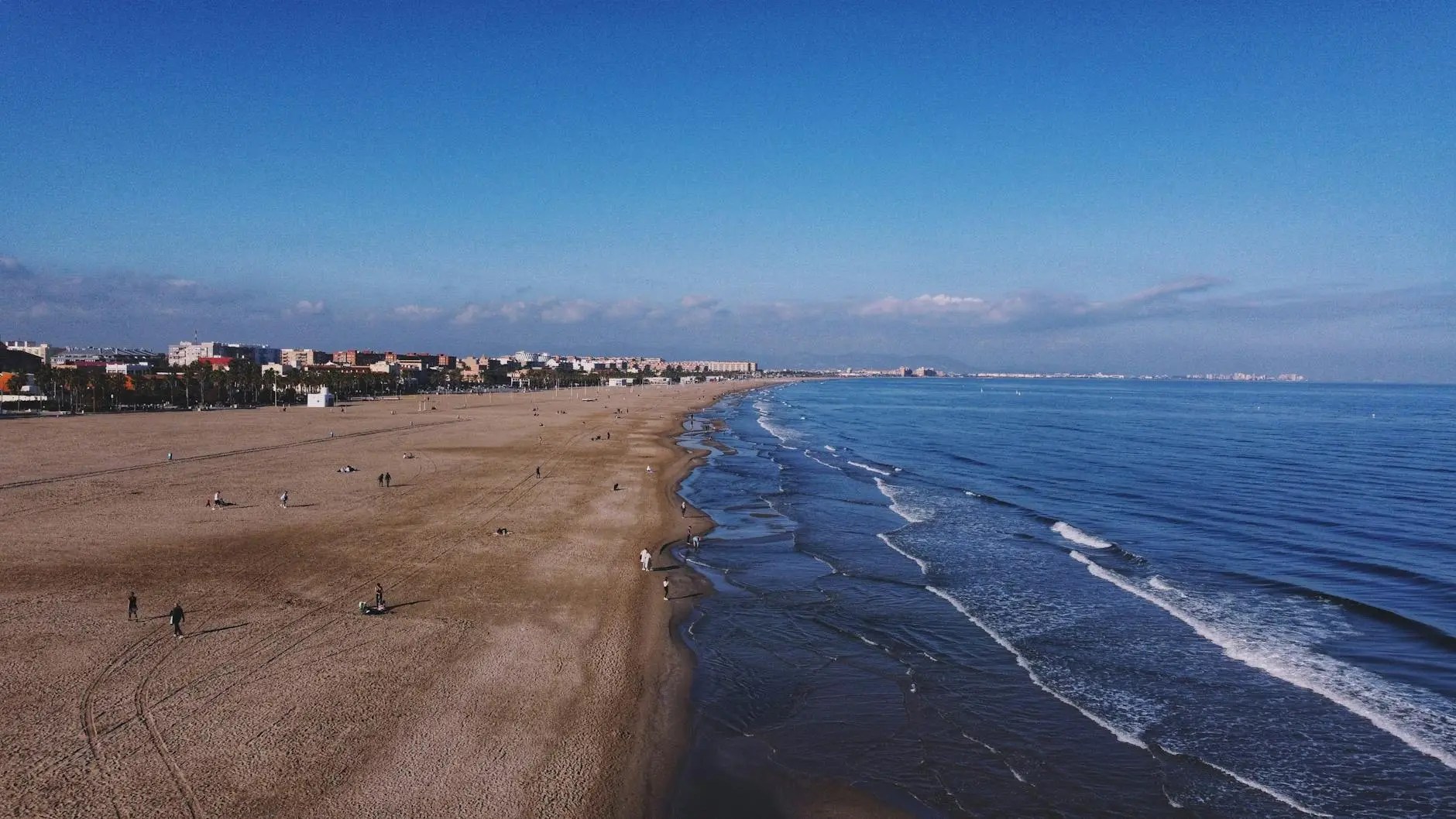
Breathtaking view of Valencia’s sandy beach and azure waters, perfect for a weekend getaway. “That moment you realize Valencia has it all: futuristic architecture, ancient history, AND miles of gorgeous beach. This aerial view of Malvarrosa Beach is my happy place. The perfect spot to unwind after a morning of exploring, paella optional (but highly recommended).”

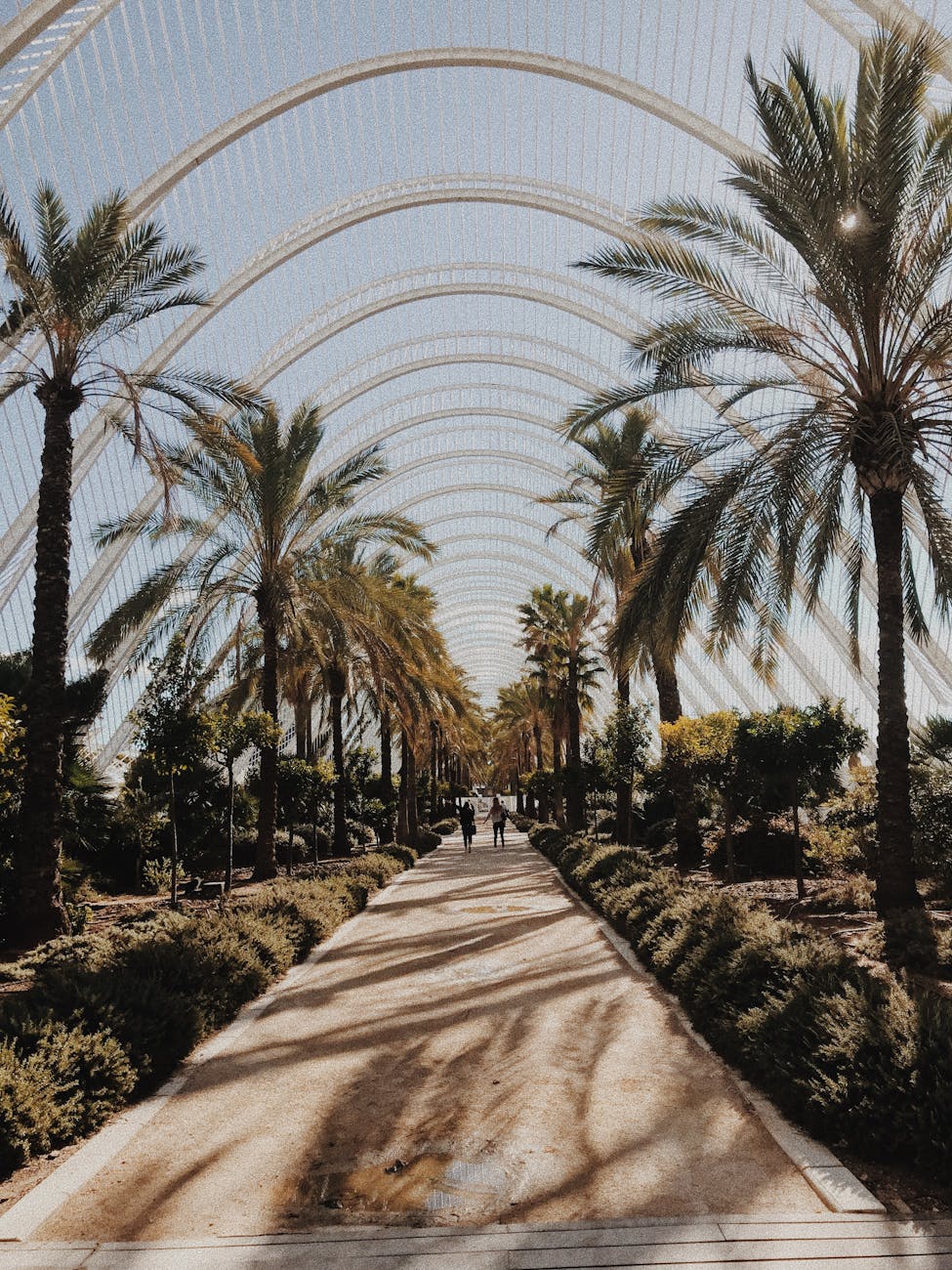
A scenic pathway adorned with palm trees under a stunning archway in Valencia’s City of Arts and Sciences.

“For another sunlit escape with a North African twist, check out Casablanca.

Sunday: Sands, Siestas & Sad Goodbyes

Morning: Bike Rides & Green Serenity

Valencia is blessedly flat, making it a perfect city for cycling. The Turia Gardens, a stunning 9km-long park, was created by diverting the Turia River. It winds through the city, and you can rent a bike for a few euros to cycle all the way from the City of Arts and Sciences to the Bioparc zoo. It’s the most delightful way to spend a Sunday morning, surrounded by locals jogging, playing football, and walking their dogs.

Afternoon: One Last Look & A Necessary Siesta

Grab a final café con leche in the Plaza de la Reina, do some last-minute souvenir shopping for some classic horchata powder, or simply find a sunny patio and just be. Remember, many smaller shops close on Sundays, and the Spanish siesta is a very real (and wonderful) tradition. Embrace the quiet.

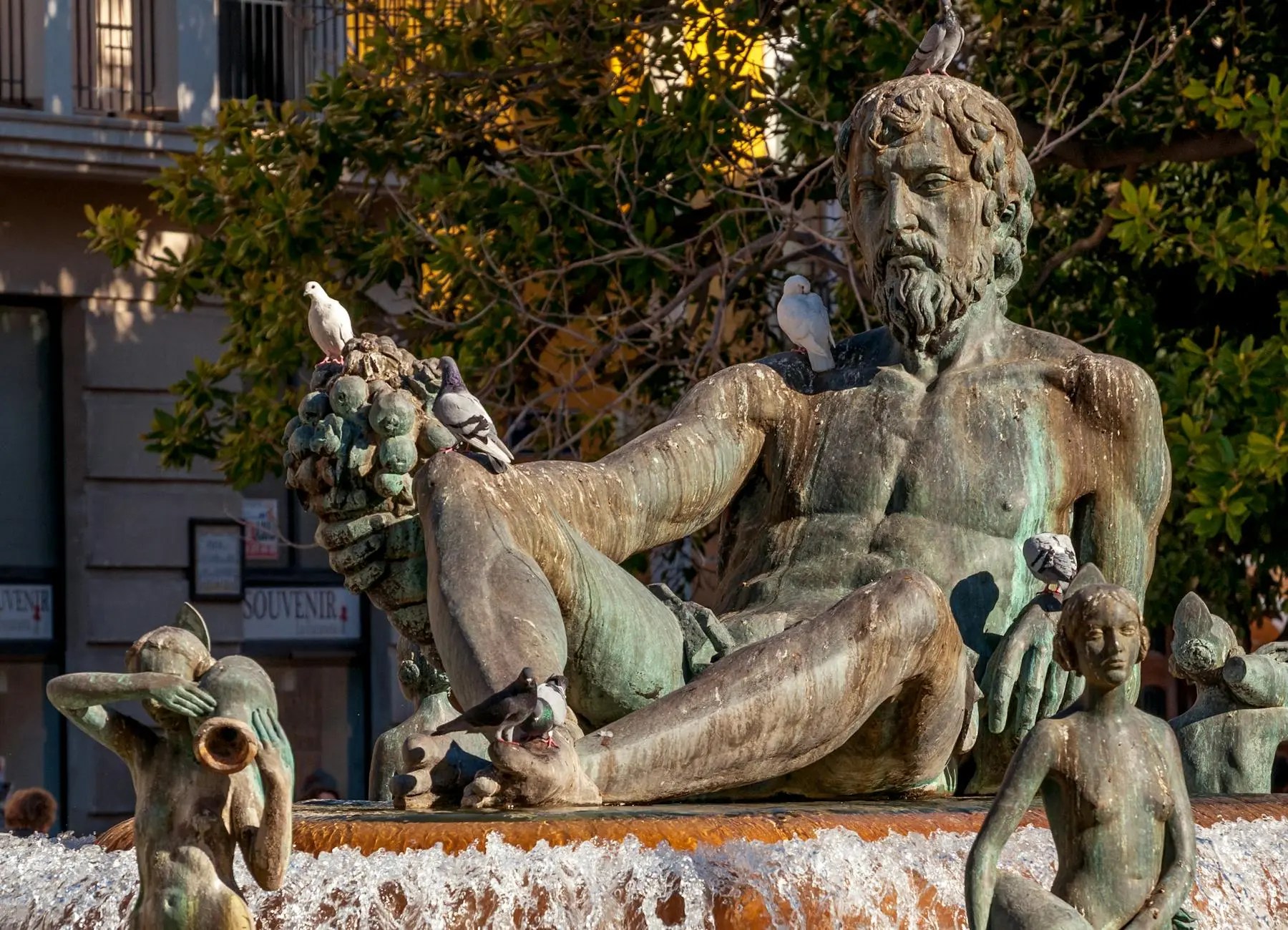
A historic fountain in Valencia featuring a seated figure surrounded by playful sculptures, with pigeons perched atop.

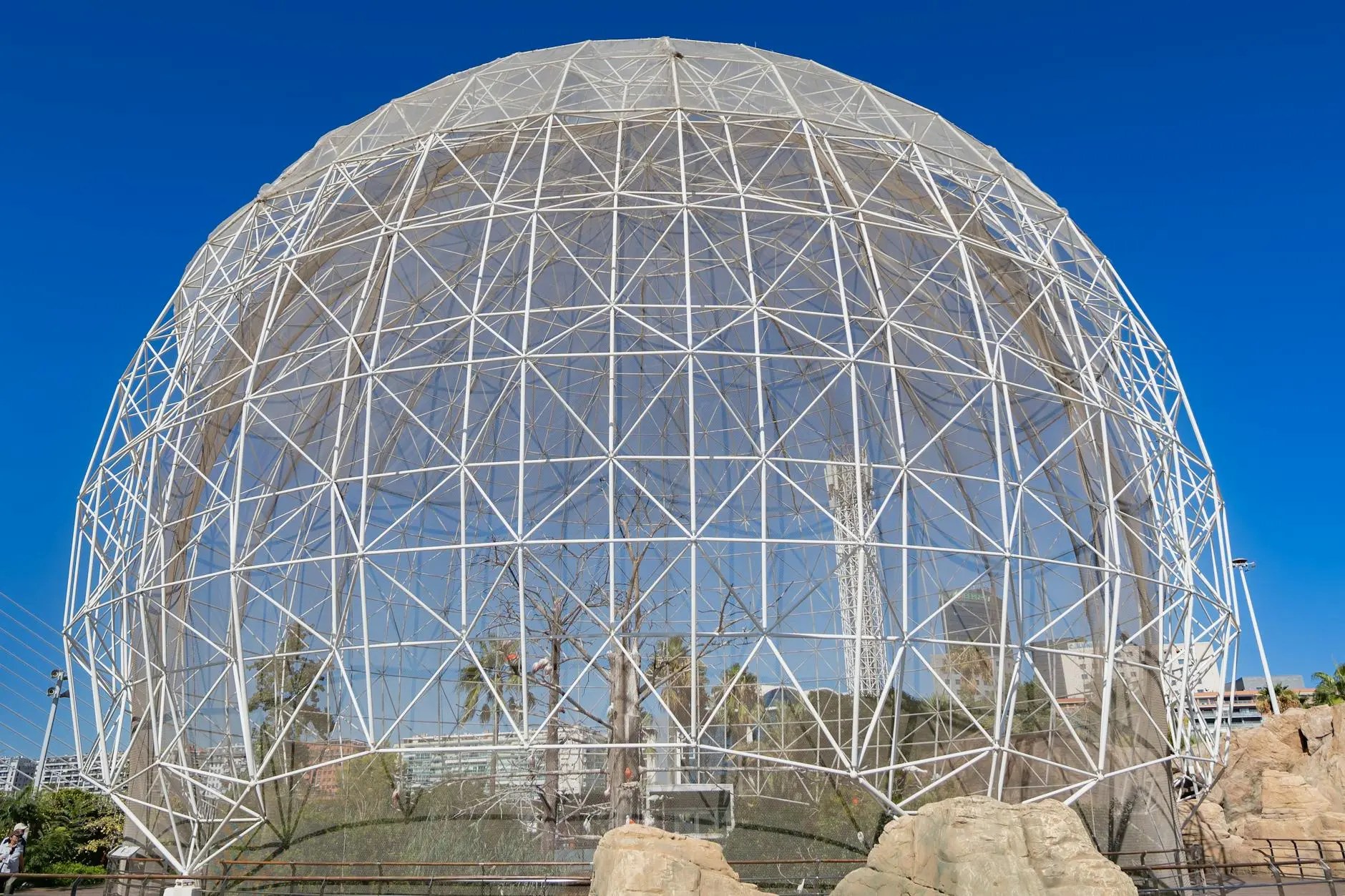
A close-up view of the iconic futuristic structure at the City of Arts and Sciences in Valencia, Spain, showcasing its distinct white geometric framework against a bright blue sky.
The futuristic architecture of the Ciudad de las Artes y las Ciencias in Valencia, showcasing its innovative design. “Who knew Europe’s largest aquarium had a secret jungle? Stepping into the Oceanogràfic’s aviary was a complete surprise – a lush, humid wetland where flamingos preen and tropical birds call from the canopy. It’s a whole other world tucked inside a marine paradise.”
View of ornate architectural details from below, showcasing intricately carved columns and sculptures against a clear blue sky.
A stunning view of the intricately designed architectural features from the base, showcasing Valencia’s historical artistry.

Valencia Travel Toolkit: Your Logistics Lifesaver

Getting Around:

  • Metro & Bus: The EMT Valencia app is fantastic for real-time bus info. Consider a Hola Valencia Travel Card for unlimited travel if you plan on lots of trips.
  • Biking: The Valenbisi public bike system is cheap and efficient for short trips.
  • Walking: The city centre is incredibly walkable. Ditch the map and get delightfully lost.

Money-Saving Tips:

  • Many museums offer free entry on Sundays. Check their websites!
  • Eat the Menu del Día (Menu of the Day) for lunch—it’s a fixed-price, three-course meal that’s a fraction of the dinner cost.
  • Fill your water bottle at public fountains; the tap water is perfectly safe to drink.
Pass/TicketCost (Approx.)Where to BuyBest ForMoney-Saving Tip
Single Bus Ticket (EMT)€1.50On the Bus (Exact Change)One-off ridesThe most expensive option, avoid if possible.
SUMA 10 Pass€8.00 (plus €1 for card)Metro Stations, Tabac ShopsFrequent use over 1-2 daysBest value! Valid for 10 trips on Metro, Bus, and MetroBus, allowing one free transfer.
Valencia Tourist Card (VTC)From €15 (24h) – €25 (72h)Tourist Offices, OnlineSightseeing + Airport TransportGreat for first-timers: Includes unlimited transport (including airport) PLUS discounts/free entry to museums.

Of course! Here is a comprehensive and engaging section about the Valencia Tourist Card, written in a human, informative, and helpful tone, perfect for your blog post.


Is the Valencia Tourist Card Your Golden Ticket to Savings?

Alright, let’s talk logistics and money—because who doesn’t love saving a few euros for more sangria? On my last trip, I decided to finally put the Valencia Tourist Card to the test. Was it worth it, or just another tourist trap? Here’s the honest scoop.

What is the Valencia Tourist Card?

In a nutshell, it’s your all-in-one pass to unlock the city. Think of it as a backstage pass that gets you into the main attractions, onto public transport, and even scores you discounts at restaurants. You can buy it for 24, 48, or 72 hours, and it activates the first time you use it on transport or enter an attraction.

The Perks: Why It Might Be Your Best Travel Buddy

After using it for 48 hours, here’s what I found to be the biggest benefits:

  1. Free Public Transport: This is the game-changer. The card covers unlimited travel on buses, metro, and trams within Zone A. That includes your ride from the airport (a huge saving right there) and all your zipping around between the Old Town, the beach, and the City of Arts and Sciences. No fumbling for change, no worrying about ticket types. Just tap and go.
  2. Free Entry to Municipal Museums & Monuments: This is where you really start saving. Your card gets you straight into:
    • The Valencia Cathedral (including the climb up the Miguelete Tower – that view is priceless, but the entry fee isn’t!).
    • The Lonja de la Seda (the stunning Silk Exchange).
    • The Museo de la Ciudad (City Museum).
    • The Museo de Bellas Artes (Fine Arts Museum).
    • And several others.
  3. Discounted Entry to Major Attractions: While it doesn’t grant free entry to the massive City of Arts and Sciences, it does give you a hefty up to 20% discount on tickets for L’Oceanogràfic, the Science Museum, and L’Hemisfèric. This discount alone often covers the cost of the card if you plan to visit one or two of them.
  4. Handy Discounts on Tours, Shops, and Restaurants: This is the cherry on top. I used my card for:
    • A discount on a bike tour through the Turia Gardens.
    • A percentage off my final bill at a couple of partnered restaurants.
    • A deal at a few souvenir shops.

It even includes a free 24-hour bike rental, which is perfect for exploring the park.

The Reality Check: When Might You Skip It?

The card isn’t a one-size-fits-all miracle. You might skip it if:

  • You’re a “wander and soak it up” traveler who prefers just seeing the city from the outside and people-watching in plazas.
  • You’re on an extremely tight budget and only plan to see the free attractions (like the Mercado Central and wandering the streets).
  • You’re only in town for a single day and your itinerary is very light.

The Verdict: Is It Worth It?

For most visitors on a weekend trip, the answer is a resounding YES.

Do the math: A single metro ticket from the airport is almost €4. Entry to the Cathedral and Miguelete Tower is around €9. The Lonja de la Seda is another €2. Suddenly, before you’ve even had your first coffee, you’re at €15. A 48-hour card costs around €35 and immediately covers all that, plus gives you unlimited transport and discounts on the big-ticket items.

For me, the sheer convenience of bypassing ticket lines and hopping on any bus without a second thought was worth its weight in gold. It encourages you to pop into museums you might otherwise skip and removes the friction from exploring.

💡 Smart Traveler Tip: Plan your itinerary before you buy! Map out the attractions you definitely want to see, add up the individual costs, and compare it to the price of the card. You’ll know in five minutes if it’s the right choice for your adventure.

You can purchase the card online in advance or at official tourist offices in the city. I bought mine online and picked it up at the airport—it was the first smart decision of my trip!

Ready to unlock Valencia? Check current prices and buy your Valencia Tourist Card here.

Language & Local Lingo: Key Phrases to Know

While most people in the tourism industry speak English, using a little Spanish (or even Valencian!) goes a long way.

Phrase (Spanish)MeaningWhen to Use It
Una caña, por favor.A small beer, please.At any bar or restaurant.
La cuenta, por favor.The bill, please.After your meal (don’t expect it to be rushed to you!).
Bon profit! (Valencian)Enjoy your meal!A nice way to thank staff or wish well to other diners.
¿Dónde está el baño?Where is the bathroom?Essential, everywhere!
¿Me puede ayudar?Can you help me?When asking directions or assistance.
HorchataA sweet, milky drink made from tigernuts.Order it with fartons (long pastries) at any horchatería!

Travel Smarter, Not Harder:

Let’s talk about the not-so-glamorous side of travel. On my last trip, my flight was delayed by 6 hours. I would have just grumbled and accepted it, but I remembered that under EU air passenger rights, I was likely owed compensation. I filed a claim with AirHelp, and they handled all the annoying paperwork with the airline. A few weeks later, I had €250 in my account. It’s a no-brainer.

✈️ Flight Hassle? If your flight is delayed, canceled, or overbooked, you could be entitled to up to $650 in compensation. Don’t leave money on the table—let the experts at AirHelp check your flight for free. Check Your Flight Now & See If You Qualify.

And while we’re on the subject of smart travel, staying connected is non-negotiable for navigating and sharing those Insta-worthy shots. I used to waste so much time and money at airport SIM counters. Now, I just pop in my Drimsim—a universal data SIM that works in over 190 countries. You top it up via the app, and you’re online the moment you land. No more hunting for a shop or scary roaming bills.

🌐 Stay Connected Anywhere: Get a Drimsim and say goodbye to connectivity headaches. It’s my number one travel hack. Grab Your Universal Travel SIM Here.

Finally, for booking everything from flights to that perfect hotel in El Carmen, I always start my search on Expedia. It’s my one-stop shop for comparing prices and bundling deals.

🏡 Find Your Perfect Valencia Base: Ready to wander those cobblestone streets? Start planning your stay by finding the best deals on ExpediaSearch for Valencia Hotels Here.

🗺️ Closest Cities to Valencia (Spain) — Best short trips

These cities are in Spain or neighboring countries (ideal for linking to your Valencia post):

🇪🇸 Within Spain

  1. SevilleUltimate Weekend Guide to Seville, Spain
  2. MadridUltimate Weekend in Madrid
  3. Barcelona48 Hours in Barcelona

Valencia FAQ: Your Questions, Answered

Q: Is two days enough for Valencia?
A: Absolutely! While you could easily fill a week, a weekend is perfect for hitting the major highlights—the Old Town, the Central Market, and the City of Arts and Sciences. It’s a fantastic sampler that will leave you wanting more.

Q: What is the best way to get from the airport to the city centre?
A: The Metro (Line 3 or 5) is the most efficient and cost-effective way. A single ticket to the city centre (like Xàtiva station) is just a few euros.

Q: When is the best time to visit Valencia?
A: Spring (April-June) and Fall (September-October) are ideal. The weather is perfect for exploring—warm but not scorching. Summer is hot and crowded, but the beach is a great respite.

Q: Do I need a visa for Spain?
A: For most EU, US, and Canadian citizens, you do not need a visa for short tourist visits (up to 90 days). Always check the latest requirements with the Spanish consulate in your home country before you travel, as rules can change.

Q: Is Valencia a walkable city?
A: Incredibly so! The main tourist areas are compact and flat. Walking is the best way to discover hidden plazas and charming alleyways you’d miss otherwise.

Q: What should I pack?
A: Comfortable walking shoes are non-negotiable! Pack light, breathable clothing for the day, a sweater for cooler evenings, and of course, sunscreen and a hat. And to keep that travel glow, I never travel without my trusted K-beauty essentials from Lakinza. Their products are a lifesaver for my skin after a long flight.

✨ Look and Feel Beautiful: Keep your skin hydrated and glowing on the go with the magic of K-beauty from Lakinza. Use my code Lalax10 at checkout for a sweet discount! Explore Lakinza’s Skincare Collection.

Inspired to explore more of Spain? Check out my other guides for your next adventure:

“If you’re craving mountain views after the Mediterranean, plan a trip to Zurich, Switzerland.

Ready to Book? A Final Call to Adventure!

Valencia is waiting to surprise you. It’s a city that manages to be historic, futuristic, and perfectly delicious all at once. Whether you’re cycling through the Turia Gardens or savoring the world’s best paella, this Spanish escape will leave you feeling refreshed and inspired.

Start planning your next adventure today! Head over to my Blog Masterlist for more travel tips and geographically close destinations to keep your momentum going: [Master List Link: https://confidencebuildings.com/travel-master-list/]

Universal Disclaimer/Disclosure Page:
✈️ The Ultimate Weekend Escape to Brussels, Belgium

Meta Description: Planning a weekend in Brussels? Discover hidden gems, top attractions, money-saving travel tips, and local transport hacks in Belgium’s capital. Perfect for travelers looking for culture, chocolate, beer, and easy access to nearby European cities.

📖 Table of Contents

  1. Why Brussels Makes the Perfect Weekend Escape
  2. Getting to Brussels (Flights, Trains & Cars)
  3. Where to Stay – Best Areas for Travelers
  4. Exploring Brussels: Top Attractions & Hidden Gems
  5. Foodie Heaven: What to Eat & Drink
  6. Transportation Hacks to Save Time & Money
  7. Essential Dutch & French Phrases for Travelers
  8. Smart Travel Tips (SIM cards, VPN, Insurance & More)
  9. Day Trips from Brussels (Amsterdam, Paris, London)
  10. FAQs – Brussels Weekend Escape

1. Why Brussels Makes the Perfect Weekend Escape

Brussels is one of those cities people either skip on their Eurotrip or fall madly in love with—there’s rarely an in-between. But if you’re smart (and I know you are, because you’re here reading this 😉), you’ll realize that Brussels is more than EU politics. It’s waffles on every corner, beer that could put Germany to shame, and architecture so stunning you’ll wonder why it’s not plastered on every travel guide cover.

Plus, its location is unbeatable: in just 1–2 hours you can hop over to Paris, Amsterdam, or London. (See my Weekend in Paris Guide, Amsterdam Escape, or London Weekend for inspiration).

Getting to Brussels (Flights, Trains & Cars)

  • By Air: Brussels Airport (Zaventem) is just 20 minutes from the city center. Budget travelers sometimes fly into Charleroi (served by Ryanair) but be warned—it’s a 1-hour shuttle away.
  • By Train: Brussels Midi station is a major European hub. The Thalys and Eurostar get you from Paris or London in under 2 hours.
  • By Car: Belgium has excellent highways, but parking in the city is a nightmare. If you must drive, use P+R (Park & Ride) and grab public transport.

💡 tip: I always book flexible flights and stays through Expedia. That way, last-minute changes don’t ruin the trip budget.

Where to Stay – Best Areas for Travelers

  • Grand Place (City Center): Ideal for first-timers, close to all landmarks.
  • Ixelles: Trendy, artsy, full of cool bars and boutiques.
  • European Quarter: Good for business travelers or quieter vibes on weekends.

Your Savvy Brussels Itinerary: A Weekend on the Clock

This itinerary is designed to be walkable, logical, and packed with the best sights, with minimal backtracking. Trust me, your future self will thank you.

Friday Evening: First Impressions & Foodie Delights

  • Evening Stroll: Head straight to the Grand-Place. Seeing this breathtaking square lit up at night is a core memory in the making. The gold-leaf guildhalls glowing against the night sky? Absolutely worth the hype.
  • Dinner: Skip the overly touristy restaurants right on the square. Duck down a side street and find a traditional brasserie. For an authentic experience, order moules-frites (mussels and fries)—it’s a Belgian rite of passage.
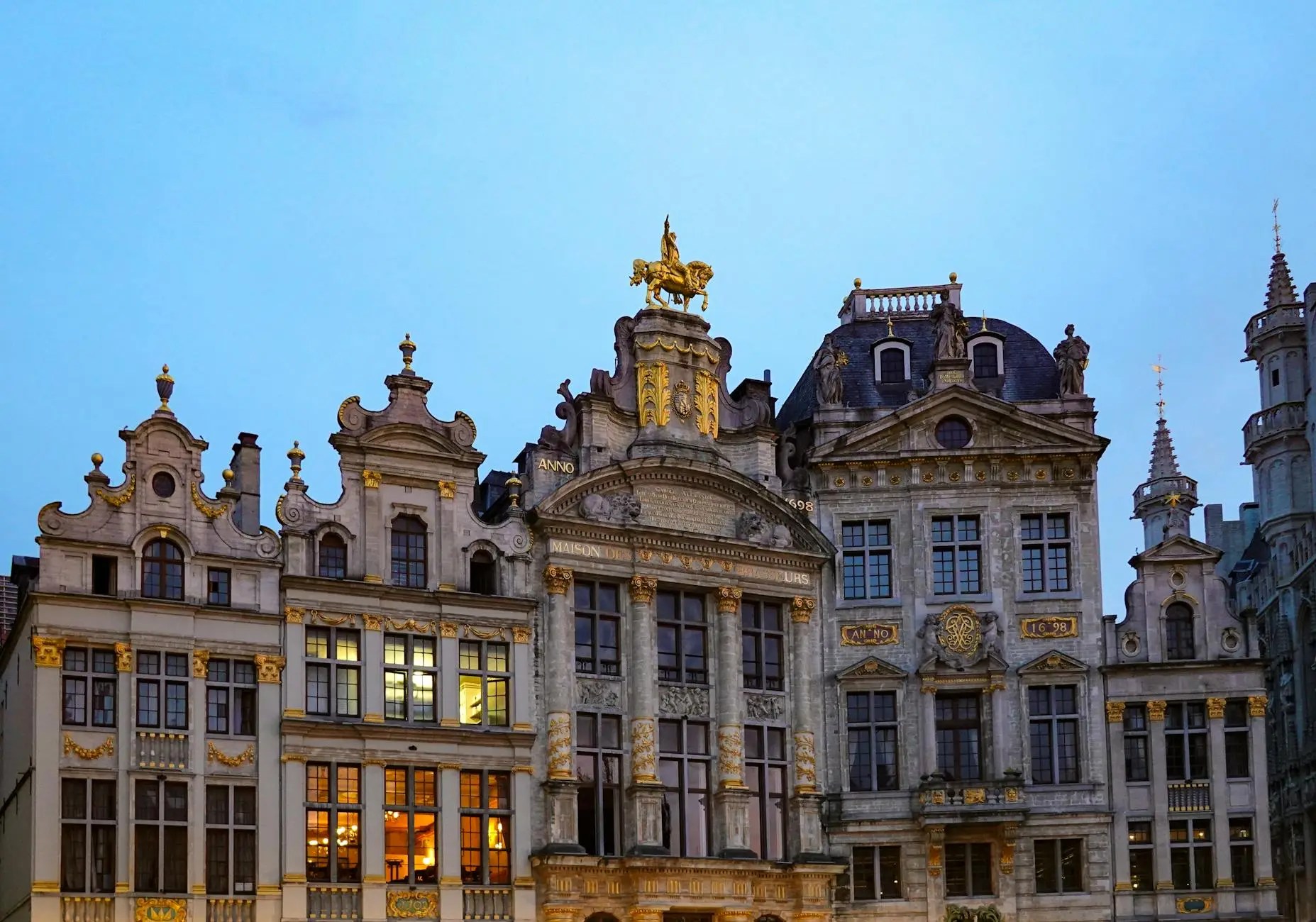
Historic buildings in Grand Place, Brussels, illuminated at dusk, showcasing intricate architecture and golden accents.
The stunning architecture of Brussels’ Grand Place illuminated at dusk, showcasing its rich history and intricate designs. The Guildhills Gleam: Catching the golden hour on the Brussels Town Hall spire in the Grand Place. No filter needed when history provides the glow. ✨
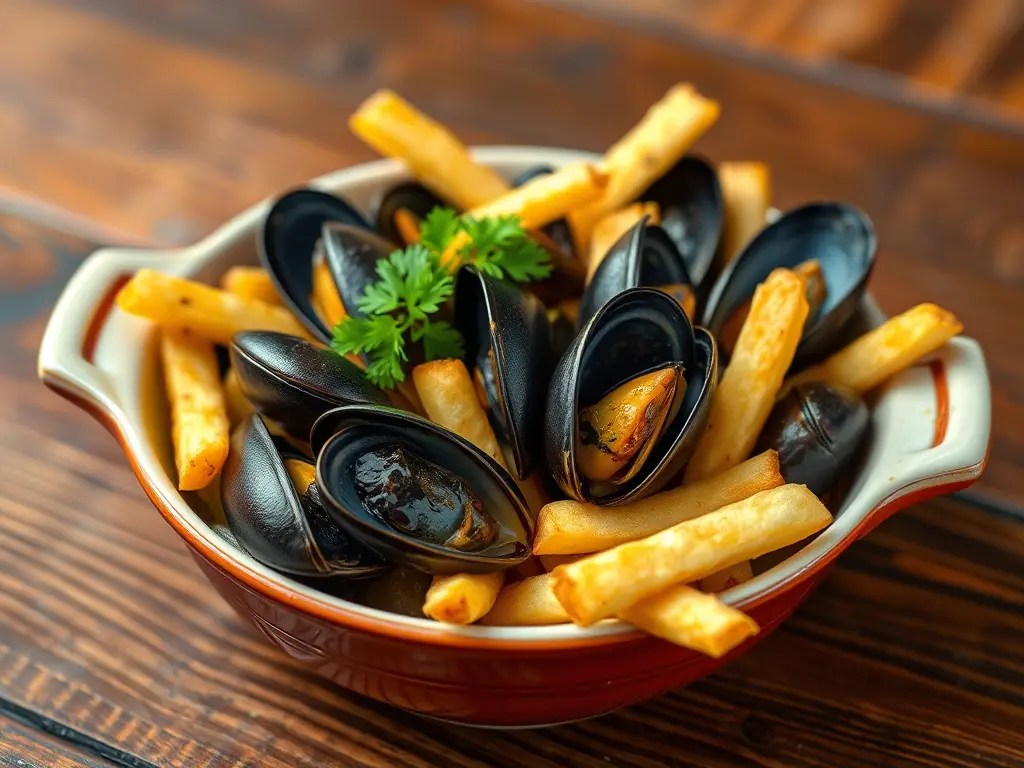
A bowl of moules-frites, featuring mussels and crispy fries, garnished with a sprig of parsley, presented on a wooden table.
A traditional Belgian dish of moules-frites, featuring fresh mussels served with golden fries. The National Dish in All Its Glory: My first, life-altering bite of authentic moules-frites in Brussels. Pro tip: Use an empty shell as tweezers to pluck out the rest – it’s how the locals do it!

Saturday: Classics, Comics, and a Culinary Crawl

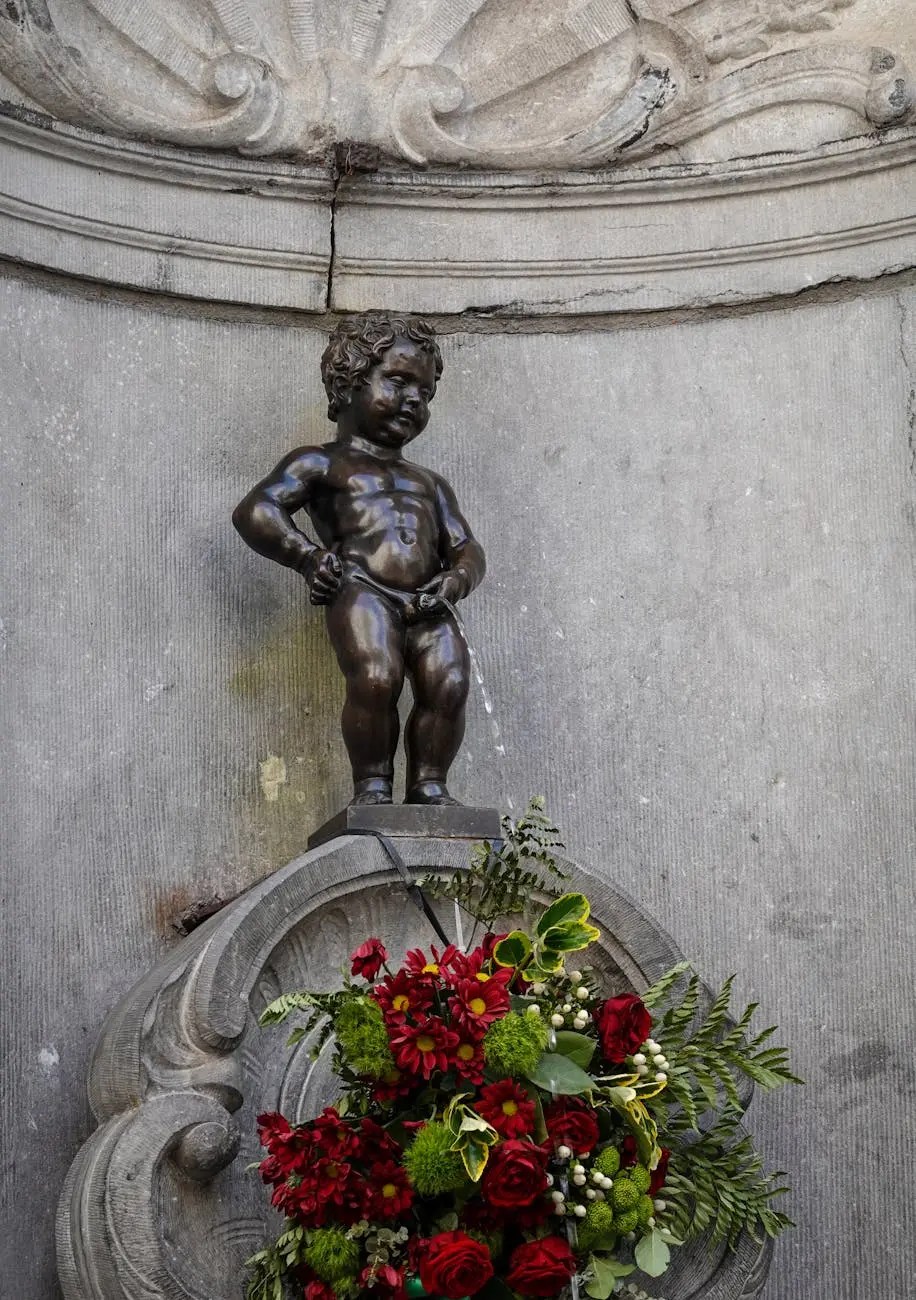
  • Morning: Start at the Manneken Pis. It’s… smaller than you think. Have a chuckle, see if he’s wearing one of his famous costumes, and then move on. The real fun is exploring the surrounding streets, like the chocolate shops on Rue de l’Etuve.
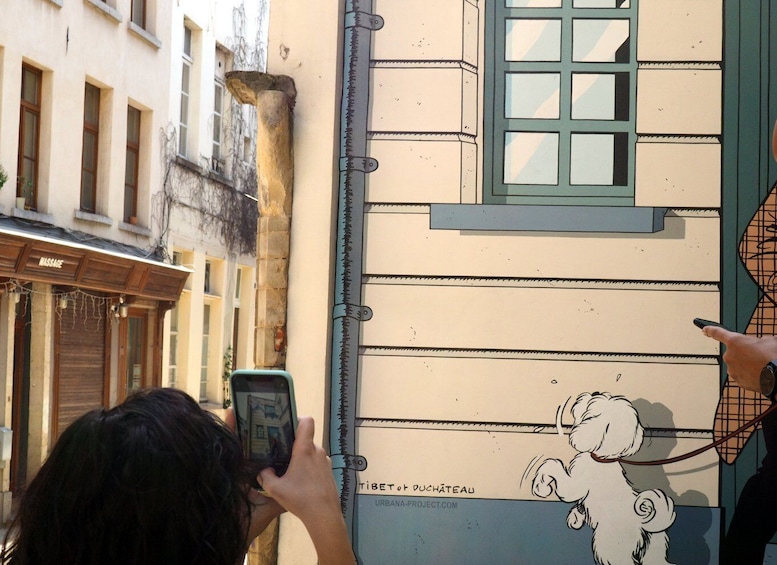
  • Late Morning: Embark on a self-guided Comic Book Wall Walk. Brussels is the capital of comic art, and murals of Tintin, the Smurfs, and other heroes are splashed across buildings. It’s a fantastic, free way to see the city.
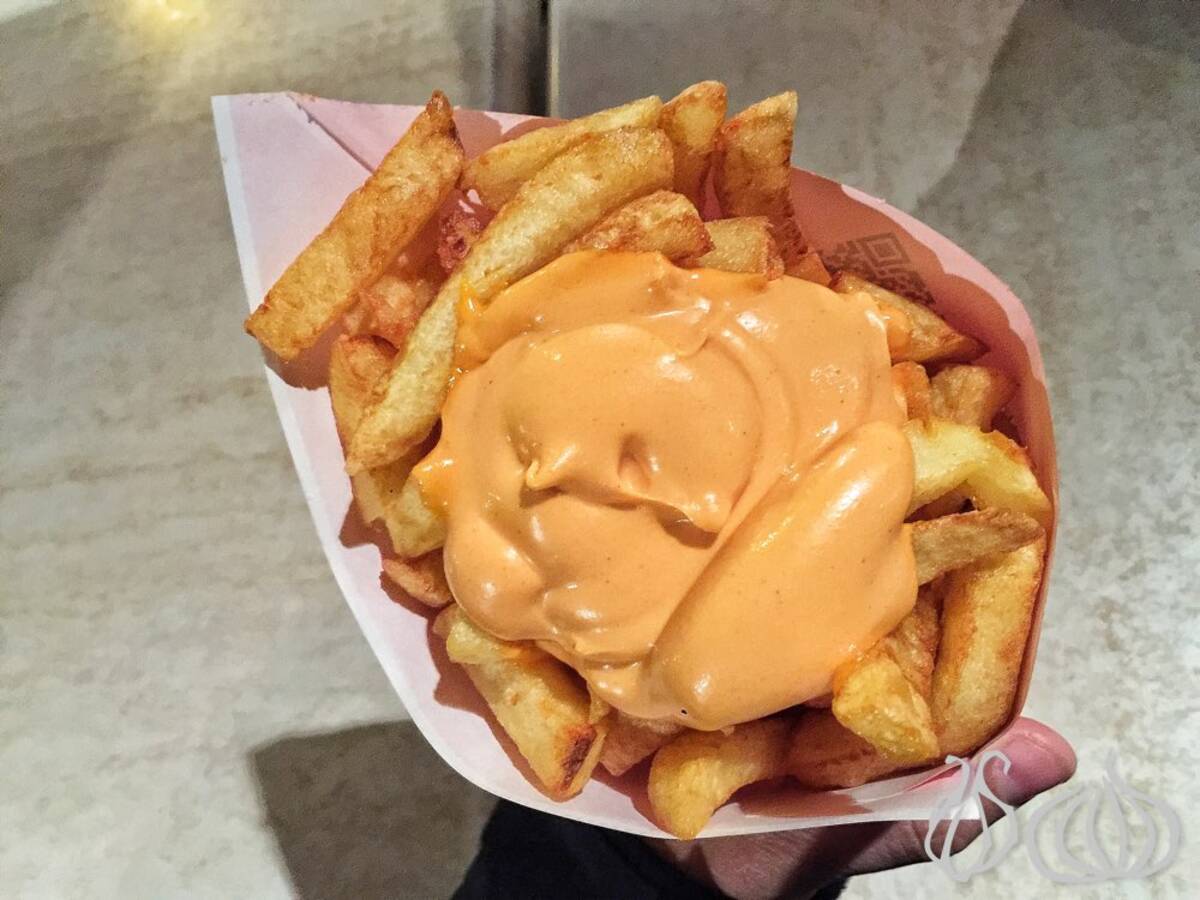
  • Lunch: Grab a legendary frites from Fritland—eat them with mayonnaise, it’s the Belgian way. Follow it up with a decadent Liege waffle from a street vendor (they’re denser and sweeter than the Brussels kind).
  • Afternoon: Choose your adventure:

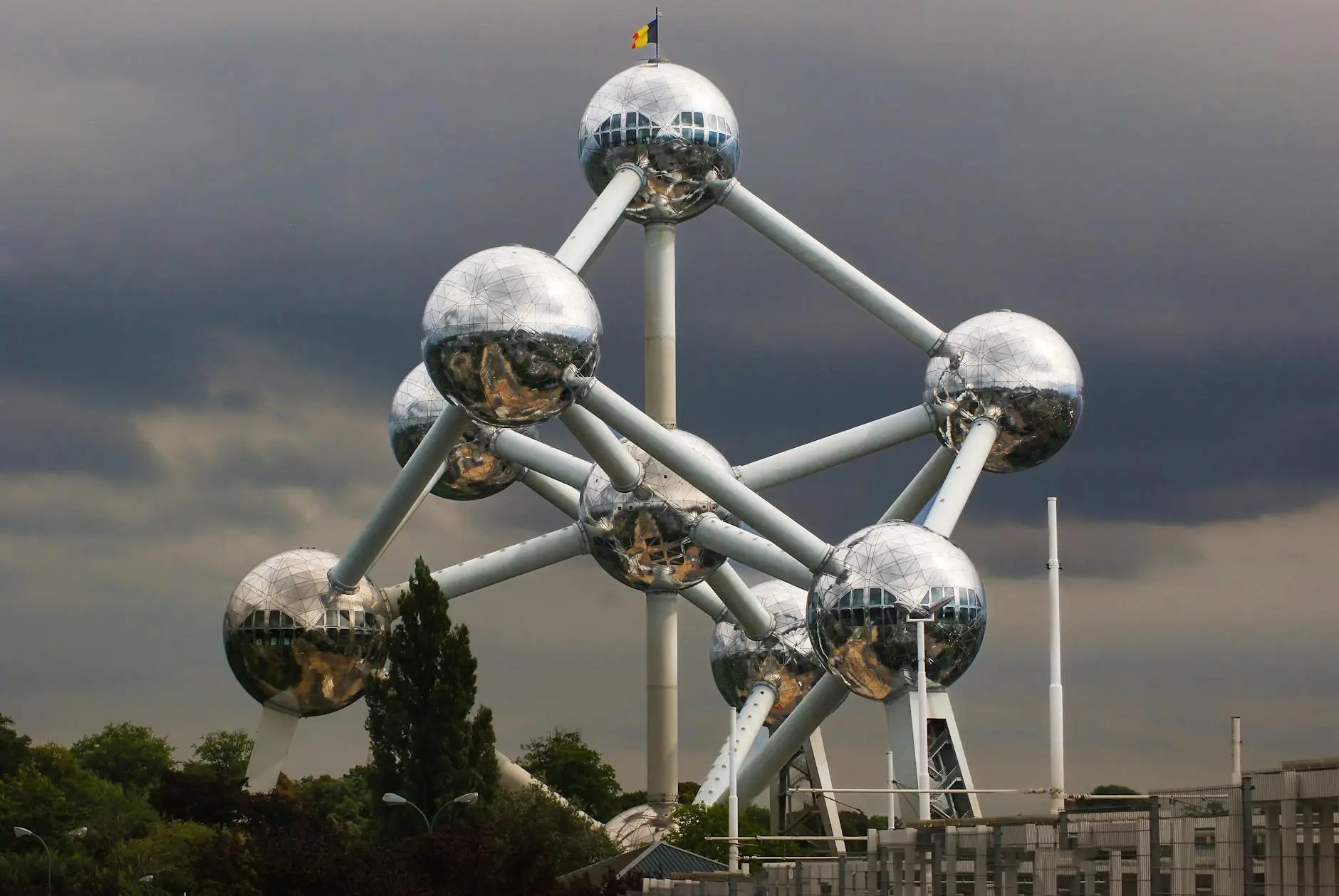
Don’t Miss the Atomium: Brussels’ Space-Age Icon

No trip to Brussels is complete without witnessing the Atomium. I’ll be honest, my first thought when I saw it was, “What on earth is that?!” It looks like a bizarre, giant metal molecule that landed from a 1950s sci-fi movie. And that’s exactly what makes it so brilliant.

Built for the 1958 World’s Fair, it represents an iron crystal magnified 165 billion times. It’s not just a sculpture; you can go inside!

My Experience & Savvy Tips:

  • The Visit: You take elevators and escalators through the connecting tubes to various spheres. The top sphere offers a panoramic view of Brussels that’s completely different from the city center view.
  • The Best Photo Op: The most classic shot is from the grassy area right in front of it. For a unique perspective, walk around the base and look up through the structure.
  • Logistics: It’s located in Heysel Park, a bit outside the city center. It’s easily reachable by taking Metro Line 6 to the Heysel/Heizel station. The trip takes about 20 minutes from the city center.
  • To Go or Not to Go? If you love unique architecture, views, and a dose of retro-futurism, it’s 100% worth the trip. If you’re extremely pressed for time on a weekend trip, seeing it from the outside is still a powerful experience. I recommend going inside if you have a spare 2-3 hours.
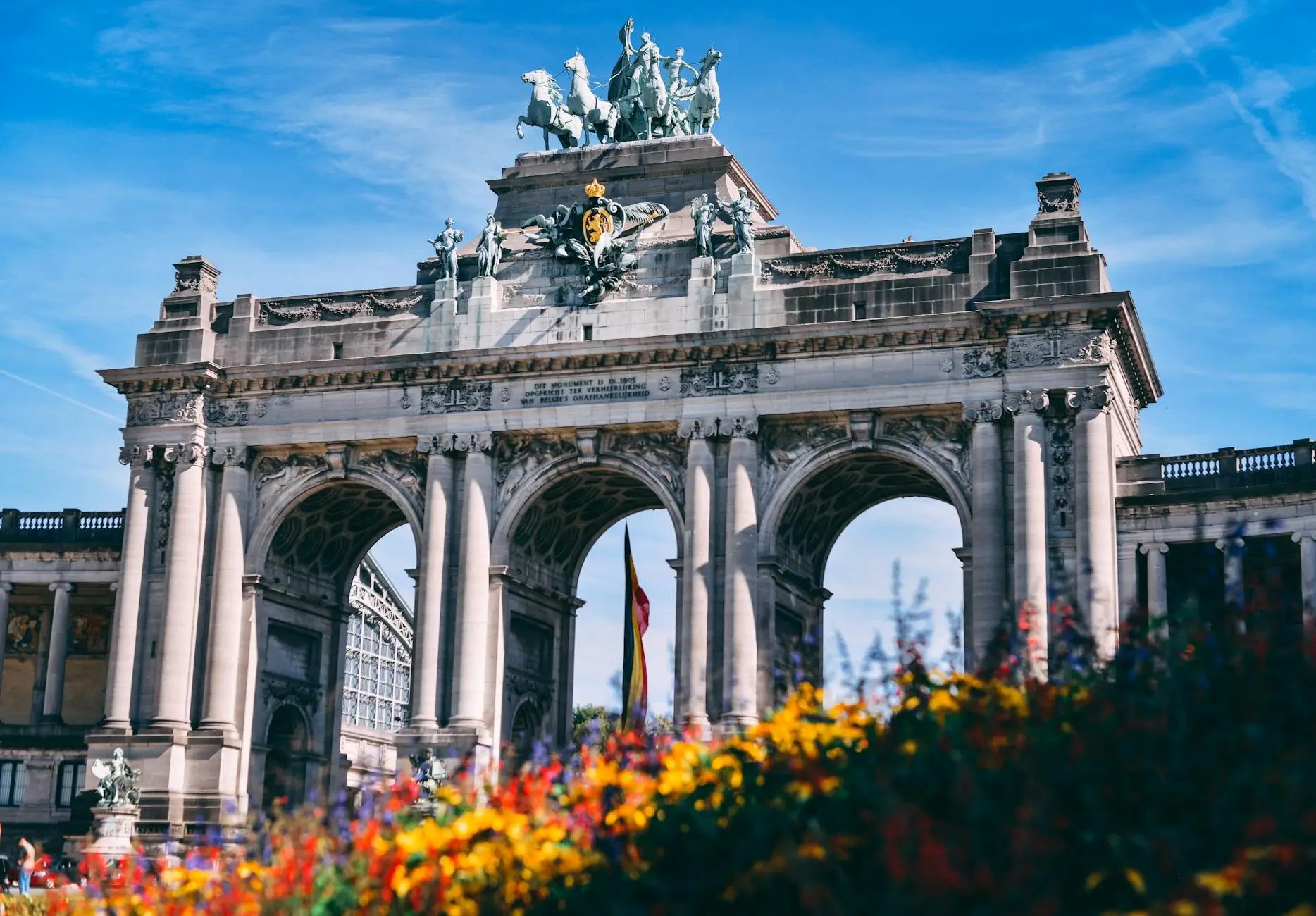
  • View Seekers: Climb the Arcade du Cinquantenaire for a stunning panoramic view of the city. It’s a bit of a trek but so worth it.
  • Evening: Explore the trendy Saint-Géry area, known for its cool bars and cafes housed in an old market hall.
The iconic Manneken Pis statue adorned with flowers, a must-see symbol of Brussels. He’s Got More Outfits Than You: Catching the Manneken Pis in one of his legendary costumes! This floral ensemble is a far cry from his usual birthday suit. 😉
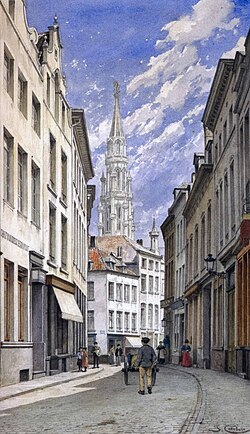
A watercolor painting depicting a narrow street in Brussels, showcasing historic buildings and a prominent spire in the background.
A picturesque street view in Brussels featuring the stunning architecture and a distinctive spire in the background.
A person photographing a comic mural depicting a small dog on a wall, surrounded by typical Brussels architecture.
Visitors capturing the charm of a comic mural in Brussels, showcasing the city’s vibrant street art scene.

A close-up of crispy French fries topped with a creamy orange sauce, served in a paper cone.
Delicious Belgian fries topped with a creamy sauce, a must-try street food in Brussels.

A delicious Belgian waffle topped with caramel sauce, powdered sugar, and a dollop of whipped cream, served on a plate.
Indulge in a classic Belgian waffle topped with caramel and powdered sugar, a must-try treat while visiting Brussels.
This image captures the magnificent scale and unique design of the Atomium, one of Brussels' most recognizable landmarks. The structure, consisting of nine stainless-steel-clad spheres connected by tubes, towers over Heysel Park. Originally constructed for the 1958 World Expo, it symbolized postwar optimism and faith in scientific progress. Today, it functions as a museum and viewpoint, with several spheres open to the public. Visitors can explore exhibitions on its history and the 1950s, and ascend to the top sphere for a breathtaking 360-degree panoramic view of Brussels. Its futuristic, enduring silhouette makes it a must-see contrast to the city's medieval Grand-Place.
The iconic Atomium in Brussels, a symbol of the city with its interconnected spheres. Brussels’ Other Landmark: The awe-inspiring Atomium, a stunning relic of the 1958 World’s Fair. It’s far more than a sculpture; it’s a time capsule of atomic-age optimism.
The imposing and ornate Arc du Cinquantenaire, a symbol of Brussels’ rich history, surrounded by vibrant flowers under a clear blue sky. Brussels’ Other Arch: Forget the crowds at the Grand-Place! The Cinquantenaire Arch offers a majestic, peaceful escape and, if you’re sneaky, one of the best free views in the city. (More on that below!).

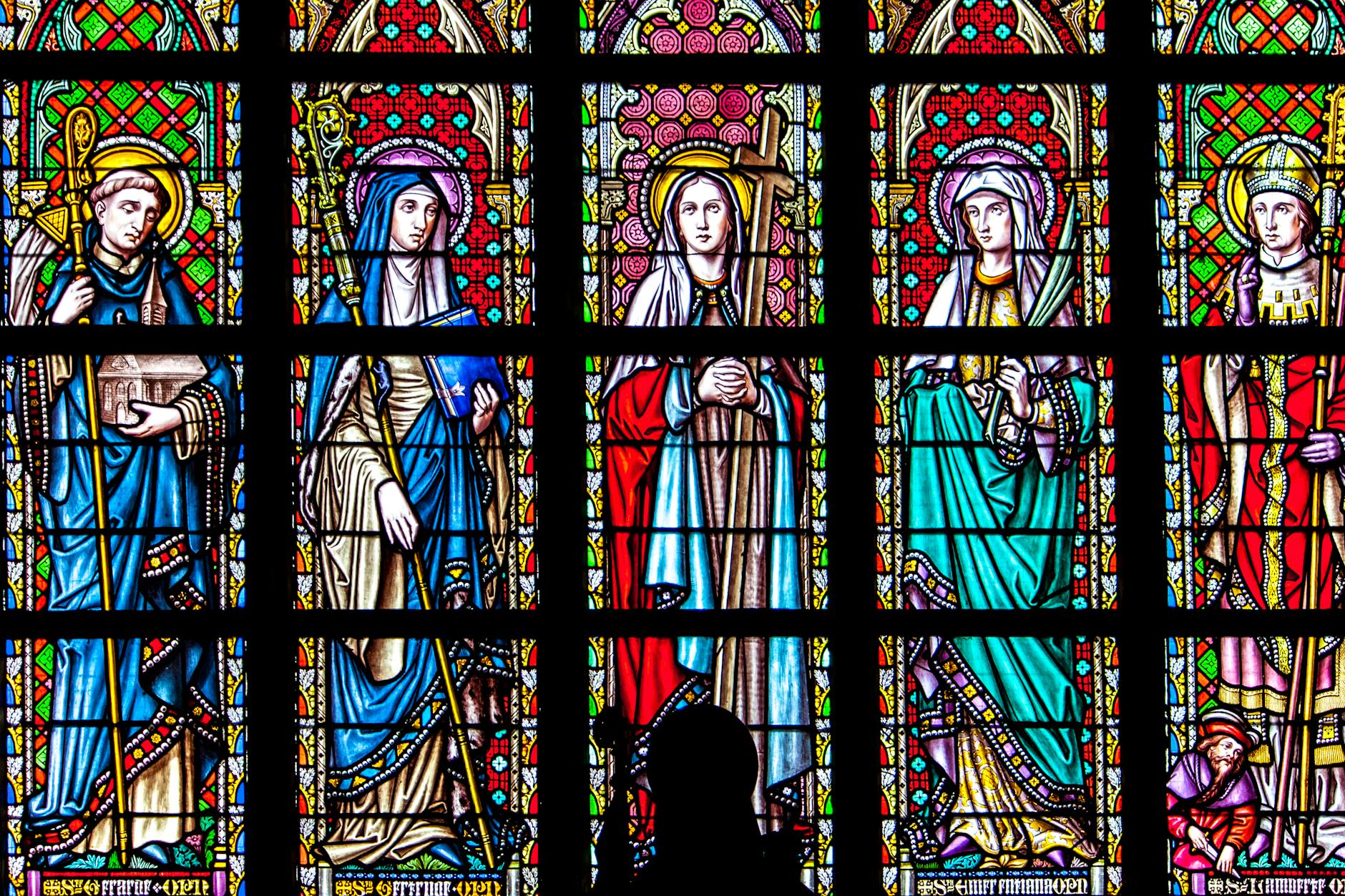
Stained glass window depicting religious figures in vibrant colors.
Stunning stained glass windows depicting religious figures, showcasing the intricate artistry within Brussels’ historic architecture.

Sunday: Markets, Majesty, and Last-Minute Souvenirs

  • Morning: If you’re there on a Sunday, don’t miss the Place du Jeu de Balle flea market. It’s a sprawling, chaotic treasure trove of everything from vintage lace to bizarre knick-knacks.
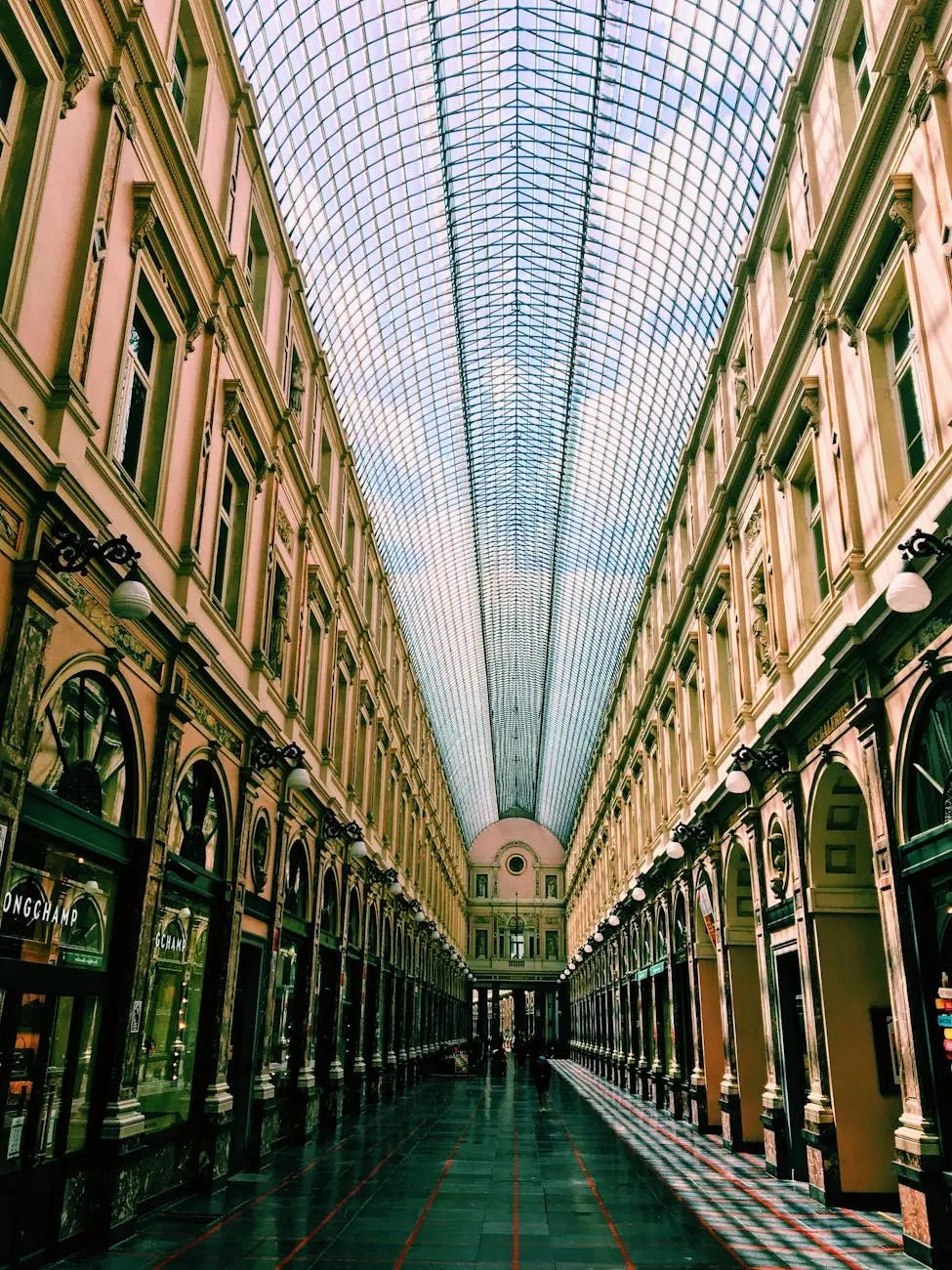
  • Late Morning: Visit the stunning Galeries Royales Saint-Hubert, an elegant 19th-century glass-roofed arcade perfect for picking up last-minute chocolates from masters like Neuhaus or Pierre Marcolini.
The stunning interior of the Galeries Royales Saint-Hubert, a beautiful glass-roofed arcade in Brussels perfect for shopping and enjoying local delights.

Beyond the Grand-Place: Hidden Gems & Local Haunts

Want to escape the crowds? Here are my personal favorites:

  • The Hidden Church: Tucked away in an unassuming building, Église Saint-Nicolas is a small, serene church right behind the Bourse. It feels like a secret you’ve stumbled upon.
  • The Musical Instrument Museum (MIM): Housed in a gorgeous Old England building, this museum has a collection of over 1,200 instruments. The real prize is the rooftop cafe, which offers one of the best free views of Brussels.
  • Marolles District: The area around the flea market is full of character, antique shops, and no-nonsense local bars.
A close-up view of the exterior of a large, historic church featuring intricate architectural details and a tall steeple under a clear blue sky.
A stunning view of a historic church in Brussels, showcasing intricate gothic architecture and soaring spires, perfect for travelers exploring the city’s cultural landmarks.

Navigating Brussels Like a Pro: Public Transport & Tips

Brussels is a very walkable city, but its public transport network (STIB/MIVB) is excellent for covering longer distances.

  • The Key: The STIB/MIVB Card. Do not buy single-journey tickets. They’re a rip-off. Get a rechargeable MOBIB Basic Card (a one-time cost of €5) and load a 10-journey pass onto it. It’s valid on all trams, buses, and the metro for 60 minutes per journey. This will save you a fortune.
  • From the Airport: The train is the fastest and cheapest way to get to the city center. Trains run frequently from Brussels Airport (Zaventem) to Brussels Central Station in about 20 minutes.
  • Driving? Don’t. Seriously. Parking is expensive and a nightmare. The city center is best explored on foot.

Brussels on a Budget: Smart Money-Saving Hacks

  • The Brussels Card: If you plan on hitting several museums, this card is a goldmine. It offers free entry to many, plus discounts and unlimited public transport. Do the math for your itinerary—it often pays for itself.
  • Eat Like a Local: Street food is your friend. Waffles, frites, and even a sandwich from a boulangerie are delicious and budget-friendly.
  • Free Water: Tap water in Brussels is safe to drink. Bring a reusable bottle and fill up to avoid buying expensive bottled water.
  • Free Attractions: Wandering the Grand-Place, hunting for comic murals, and window-shopping the Galeries are all completely free.

Survival Flemish & French: A Traveller’s Cheat Sheet

Brussels is officially bilingual (French and Dutch). Most people in the tourist industry speak English, but a few words go a long way:

  • Hello: Bonjour (French) / Hallo (Dutch)
  • Thank you: Merci (French) / Dank u (Dutch)
  • Please: S’il vous plaît (French) / Alstublieft (Dutch)
  • Goodbye: Au revoir (French) / Tot ziens (Dutch)
  • A beer, please: Une bière, s’il vous plaît (French) / Een bier, alstublieft (Dutch)
  • L’addition, s’il vous plaît (French) – The bill, please
  • Waar is het station? (Dutch) – Where is the station?

Essential Pre-Trip Intel: Visa, VPN & More

  • Visa & Costs: Belgium is part of the Schengen Area. If you need a Schengen visa, the cost is typically €80 for adults. Always check the official government website for the most current requirements.
  • ✈️ Stay Connected (Without the Bill Shock): Let’s be honest, hunting for a local SIM after a long flight is the worst. On my last trip, I used my Drimsim—a universal data SIM that works in 190+ countries. You just pop it in, top up via the app, and you’re online. No hidden fees, no stress. It was a total game-changer. → Grab your Drimsim here.
  • ✈️ Protect Your Peace of Mind: Travel insurance isn’t glamorous, but it’s essential. I never leave home without a plan from VisitorsCoverage. It’s a trusted platform where you can compare and find the perfect coverage for your trip in just a few clicks. It’s the ultimate “better safe than sorry” move. → Find your travel insurance here.
  • ✈️ Secure Your Browsing: Using public WiFi in cafes and hotels? Protect your data with a VPN. I’ve relied on NordVPN for years to keep my information safe while accessing my banking and social media abroad. → Get NordVPN for your trip.
  • Capture the Magic: Brussels is incredibly photogenic. I shot all the pictures for this trip with my trusty Sony Alpha a7 III. It’s lightweight, powerful, and perfect for travel photography.

✈️ Flight Drama? Don’t Panic, Get Paid!
Travel isn’t always smooth sailing. If your flight to Brussels gets delayed, canceled, or you’re denied boarding, you could be entitled to up to €600 in compensation under EU law. Most people never claim it, but I’ve used AirHelp to handle the messy paperwork and fight the airline for me. They only get paid if you win! → Check your flight compensation with AirHelp.

Frequently Asked Questions (FAQ)

What is the best time of year to visit Brussels?
Spring (April-June) and Fall (September-October) are ideal. The weather is mild, and the crowds are thinner than in the peak summer months.

Is two days in Brussels enough?
Absolutely! A weekend is the perfect amount of time to see the main sights, get a feel for the city’s unique vibe, and indulge in its culinary delights without feeling rushed.

What is Brussels best known for?
Chocolate, waffles, beer, fries, the Grand-Place, the Manneken Pis, the EU headquarters, and comic book art (like Tintin and the Smurfs).

Is Brussels a walkable city?
Yes, the city center is very compact and walkable. Most of the major attractions are within a 20-30 minute walk of each other.

What should I pack for a weekend in Brussels?
Comfortable walking shoes are non-negotiable. Pack layers, as the weather can change quickly. And of course, leave plenty of room in your suitcase for chocolate!

Q: Is Brussels expensive?
A: Not compared to Paris or London. Food and transport are reasonable, but hotels in the city center can be pricey.

Q: Do I need to speak French or Dutch?
A: Nope—English is widely spoken. But tossing in a Merci or Dank u goes a long way.

Q: Is public transport safe at night?
A: Yes, but trams/metros stop around midnight. Night buses are available.

Ready to Wander?

Your ultimate weekend in Brussels is waiting. From the awe-inspiring architecture to the simple joy of a perfectly executed waffle, this city is ready to charm your socks off.

→ Start planning your Belgian adventure and book your flights and hotel on Expedia now!

P.S. Looking for more European weekend inspiration? Don’t forget to check out my complete Travel Master List for guides to Amsterdam, Paris, London, and beyond!

*P.P.S. Before you go, a little treat for yourself… because looking good in those travel photos is half the fun! My secret for that vacation glow? K-beauty from Lakinza. Their products are magical. Use code Lalax10 at checkout for a sweet discount on your haul. Your skin will thank you! → Discover Lakinza’s K-Beauty Magic.*

🎒 Final Thoughts & Call to Action

Brussels is quirky, charming, and perfectly located for a weekend that blends culture, food, and fun. With the right planning—cheap SIMs, smart transport, and a good camera—you’ll not only save money but also make memories worth framing.

Universal Disclaimer/Disclosure Page: