Ultimate Weekend Guide to Seville, Spain

Meta Description: Discover the ultimate weekend escape to Seville, Spain! From flamenco nights to Moorish palaces, this guide gives you hidden gems, money-saving tips, transport hacks, and personal anecdotes. Perfect for travelers looking to explore Seville with confidence and fun.

Table of Contents

  1. Why Seville Should Be Your Next Weekend Escape
  2. Best Time to Visit Seville (and Avoid the Crowds)
  3. Getting Around Seville: Public Transport & Road Tips
  4. Top Attractions You Can’t Miss
  5. Hidden Gems Only Locals Whisper About
  6. Foodie Heaven: What to Eat in Seville
  7. Money-Saving Travel Tips for Seville
  8. Useful Spanish Phrases Every Traveler Needs
  9. Smart Travel Tips (SIM cards, insurance & more)
  10. FAQs: Seville Weekend Travel Guide

1. Why Seville Should Be Your Next Weekend Escape

Seville isn’t just a city—it’s Spain with extra sparkle. Picture this: orange trees shading narrow alleys, tapas bars buzzing until midnight, and flamenco dancers who look like they’ve been training since birth.

The city’s charm is magnetic—so magnetic that when I once tried to “just stop for lunch,” I ended up spending half the day in a family-run tapas joint debating with locals about whether Real Betis or Sevilla FC has the better stadium churros. (Yes, that’s a real debate!)

If you’ve loved exploring Madrid or Barcelona, then Seville will feel like their soulful, fiery cousin.

Alright, let’s be real. Your vacation days are precious, and the thought of spending half of them on complicated logistics is a nightmare. What you need is a city that delivers a massive punch of culture, food, and beauty in one perfectly packed weekend.

Ladies and gentlemen, I give you Seville.

This isn’t just another city in Spain; it’s a feeling. It’s the scent of orange blossoms on a warm breeze, the raw passion of a flamenco guitar spilling from a tucked-away tavern, and the golden glow of sunset on ancient palaces. I once got lost in the Santa Cruz neighborhood for a blissful hour, only to stumble upon a tiny square where locals were dancing Sevillanas like it was the most natural thing in the world. That’s the magic of Seville—it doesn’t feel like a museum, it feels alive.

So, grab your suitcase (and maybe a fan), because we’re diving into the ultimate 48-hour Seville adventure designed to maximize your time and minimize your stress.

Flights to Seville

Best Time to Visit Seville (and Avoid the Crowds)

  • Spring (March–May): Perfect for festivals like Feria de Abril—imagine an entire city in party mode.
  • Autumn (September–November): Cooler weather, fewer crowds, and cheaper stays.
  • Summer (June–August): Unless you enjoy 40°C heat, avoid. Locals literally siesta for survival.

💡 Money-saving tip: Weekends in April spike in hotel prices—book early through Expedia for flexible deals.

Getting Around Seville: Public Transport & Road Tips

Seville’s historic core is walkable, but here’s the cheat sheet:

Flying In: Most international flights land at Seville Airport (SVQ). It’s a quick and easy 20-30 minute bus ride (the EA bus) into the city center, costing just a few euros. A taxi will cost around €25-€30.

  • Bus: Cheap and reliable. A single ride is €1.40, but grab a rechargeable tarjeta multiviaje to save time and cash.
  • Tram (MetroCentro): Runs from San Bernardo to Plaza Nueva, perfect if you’re tired of cobblestones.
  • Metro: Only one line, but handy if you’re heading to Nervión for shopping.
  • Bike: Sevici bike rentals are everywhere. Don’t worry—it’s flat, so your calves won’t mutiny.
  • Car: Only rent if you’re road-tripping out of town (like to Córdoba). Parking in the center? A nightmare.
  • Road Tip: Highways like A-4 (to Córdoba/Madrid) and A-92 (to Granada) are smooth, but fill up gas outside the city—it’s cheaper.

Personal anecdote: I once tried to drive through Seville’s old town… let’s just say my rental car GPS had a nervous breakdown, and a kind abuela had to guide me out of a lane narrower than my luggage. Stick to walking.
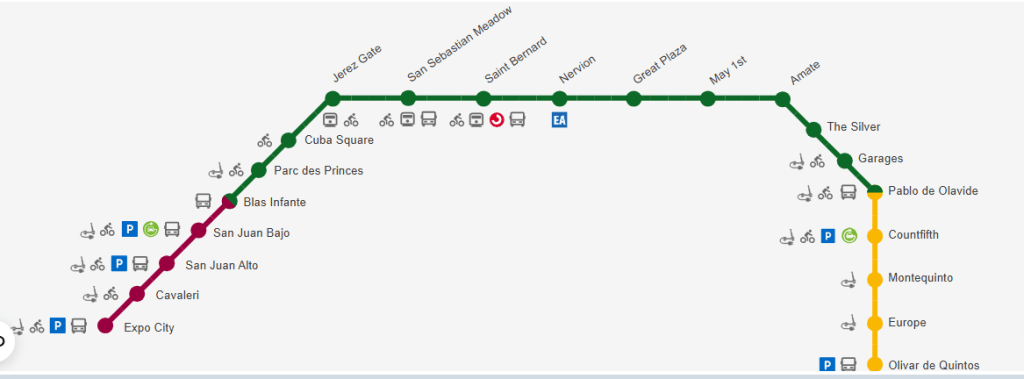

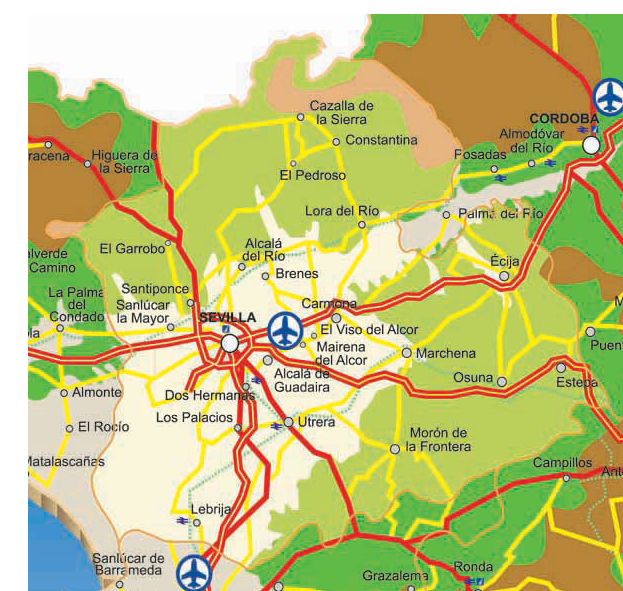
Map showing the geographical layout of Seville and surrounding areas, including major roads and transportation routes.
Map of Seville and its surrounding areas, highlighting key routes and landmarks for travelers.

Your Seville Weekend Itinerary: A Step-by-Step Guide

Day 1: Palaces, Tapas & Flamenco Soul

Morning (9:00 AM): The Real Alcázar. Do not, I repeat, do NOT come here without booking your tickets online in advance. The line for walk-ups can easily swallow two hours of your precious time. Trust me, I learned the hard way. This royal palace is a stunning mix of Moorish and Christian architecture, and its gardens are an oasis of calm. Pro Tip: The Game of Thrones fans will recognize the Water Gardens of Dorne!

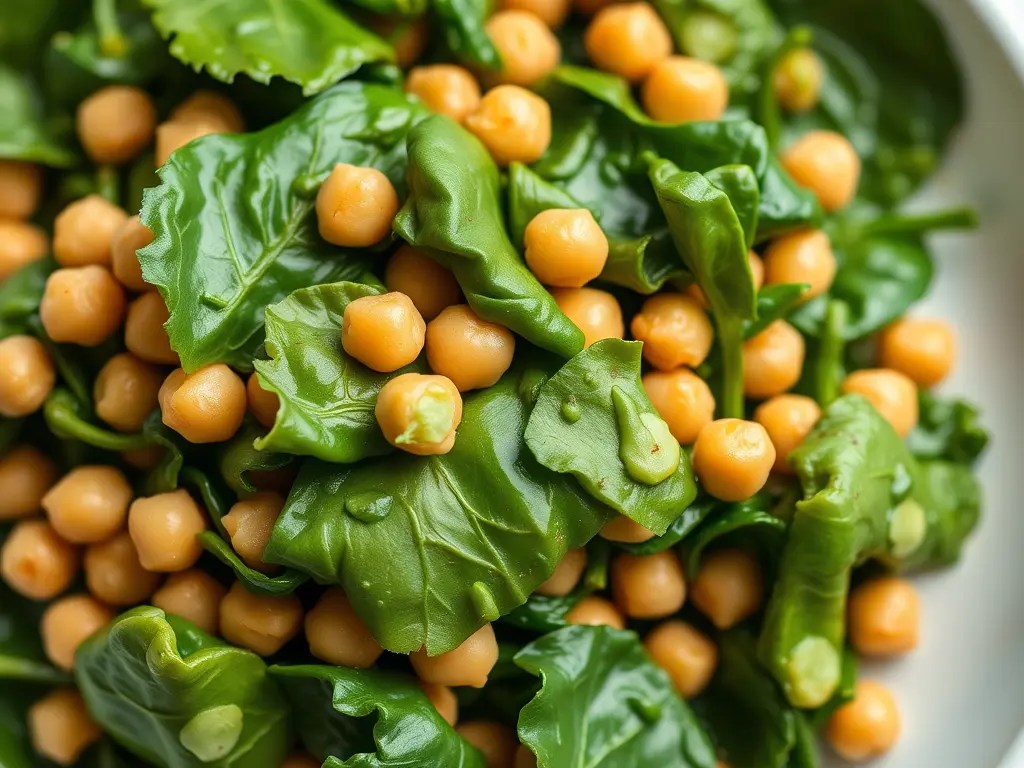
Afternoon (1:30 PM): Lunch like a Local. Skip the tourist traps around the cathedral. Wander a few blocks away to the Calle Mateos Gago area. My favorite find was a tiny bar called El Rinconcillo, one of the oldest in the city. Point at the tapas behind the glass – the espinacas con garbanzos (spinach with chickpeas) is a Seville classic.

Evening (6:00 PM onwards): The Soul of Flamenco. Seville is the birthplace of Flamenco. For an authentic experience, avoid the big, expensive dinner shows. Head to the Triana neighborhood or the Calle Jeréz area for a peña (a flamenco club). The passion in these small, intimate settings is electric. It’s not just a performance; it’s a raw, emotional experience.
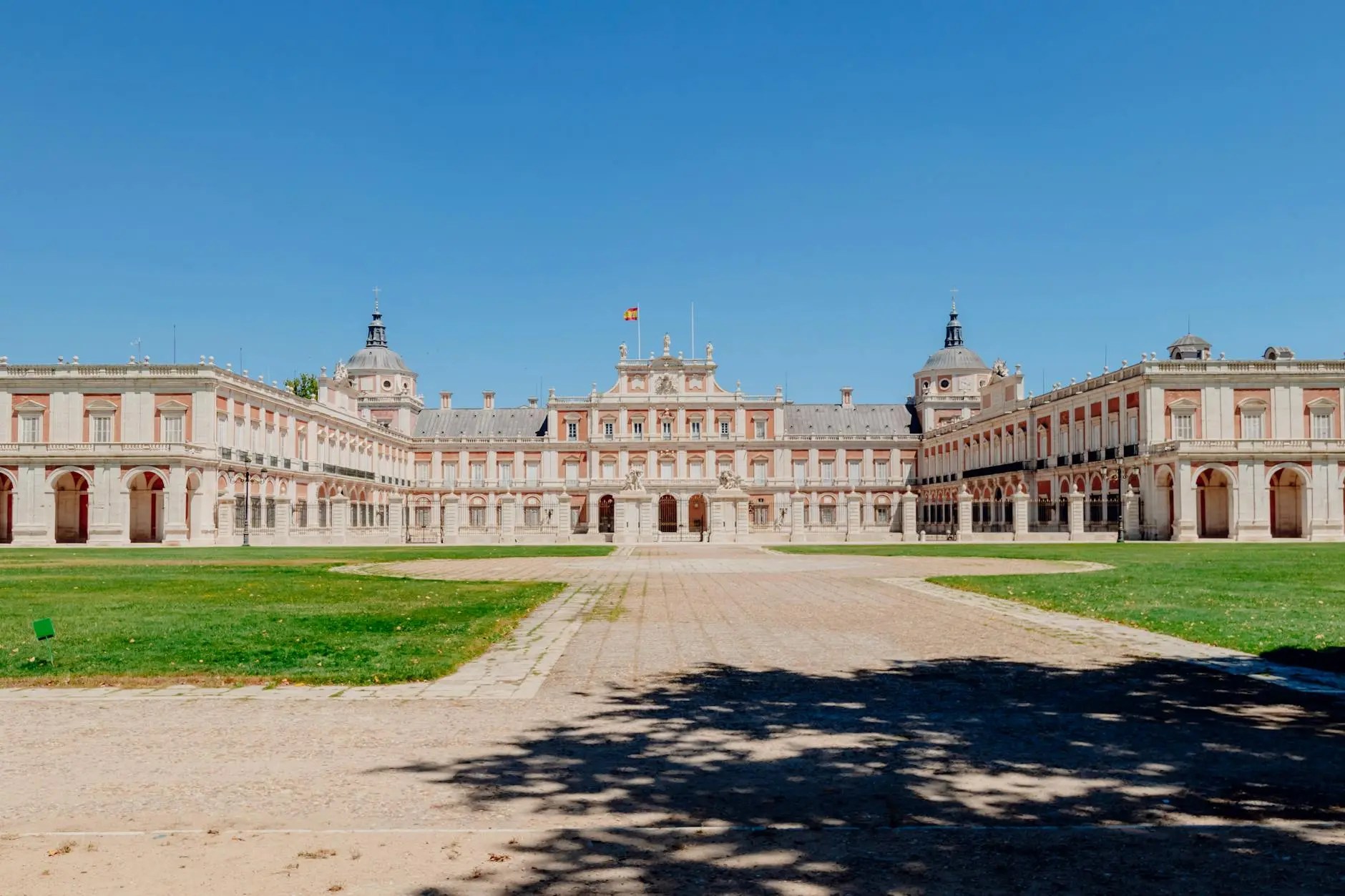
The wide view of a grand historical palace with beautiful architecture, surrounded by a lush green lawn under a clear blue sky.
The stunning facade of the Royal Palace, showcasing exquisite architecture and lush green surroundings, perfect for a Seville weekend adventure. Sunlight bathes the iconic facade of the Real Alcázar de Sevilla. Don’t forget to book your tickets online to skip the long queues!
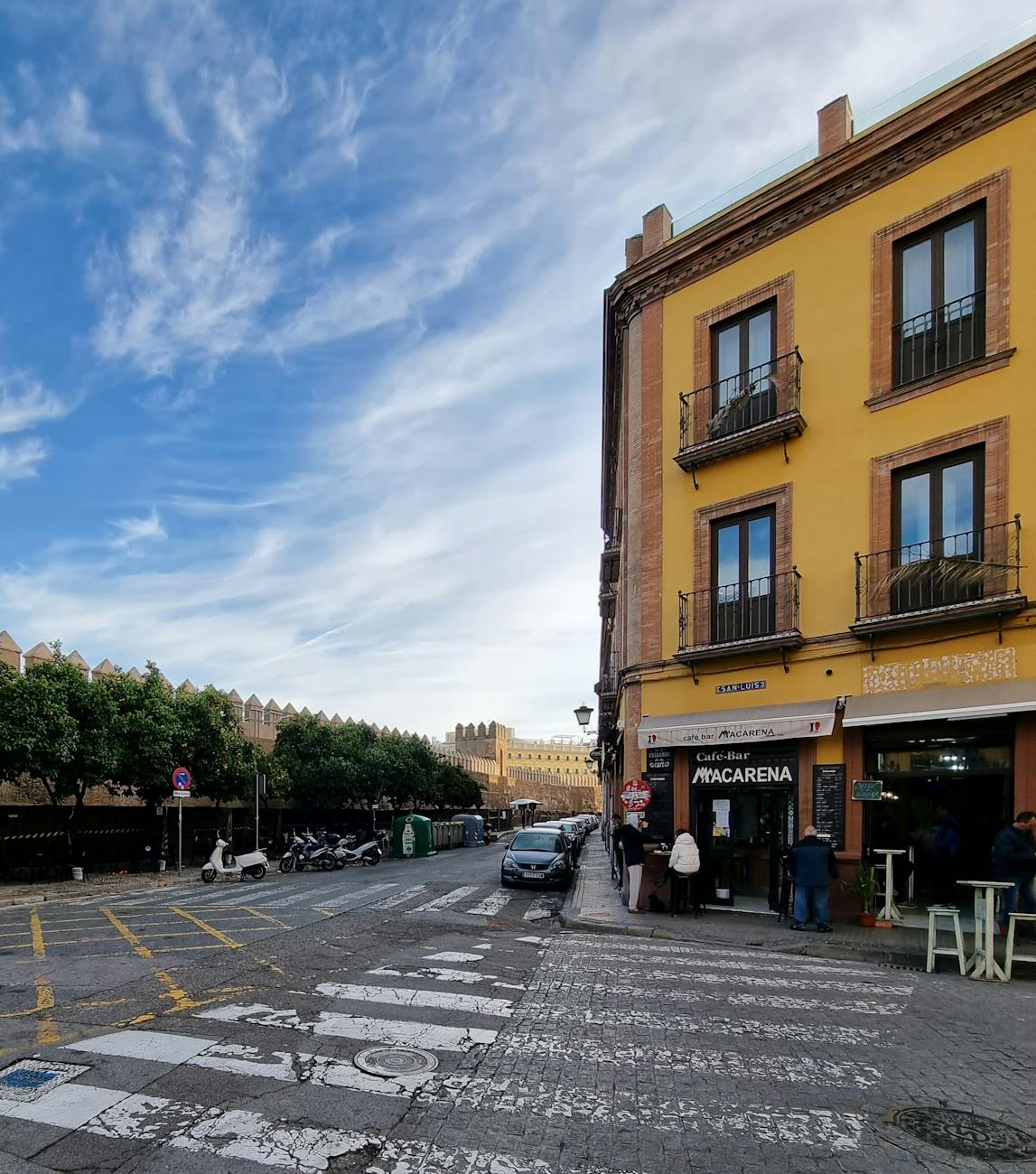
A street view in Seville featuring a vibrant yellow building with balconies, a cafe-bar named 'Macarena', and orange trees lining the street under a clear blue sky.
A vibrant street scene in Seville, showcasing the charming architecture and lively atmosphere, perfect for exploring local culture.
A close-up image of sautéed spinach mixed with chickpeas, showcasing the vibrant green leaves and pale yellow chickpeas.
A vibrant plate of _espinacas con garbanzos_, a classic Seville dish featuring spinach and chickpeas. The ultimate Seville comfort food: a hearty plate of Espinacas con Garbanzos. This isn’t just a side dish; it’s a flavor-packed tapa you’ll dream about long after you’ve left.

A flamenco dancer in a blue dress, gracefully posing with her skirt flowing around her.
A flamenco dancer in a shimmering blue dress showcases the passionate art form that embodies the spirit of Seville. The raw emotion and power of flamenco. Catching a live performance in a tucked-away tablao is an essential Seville experience.
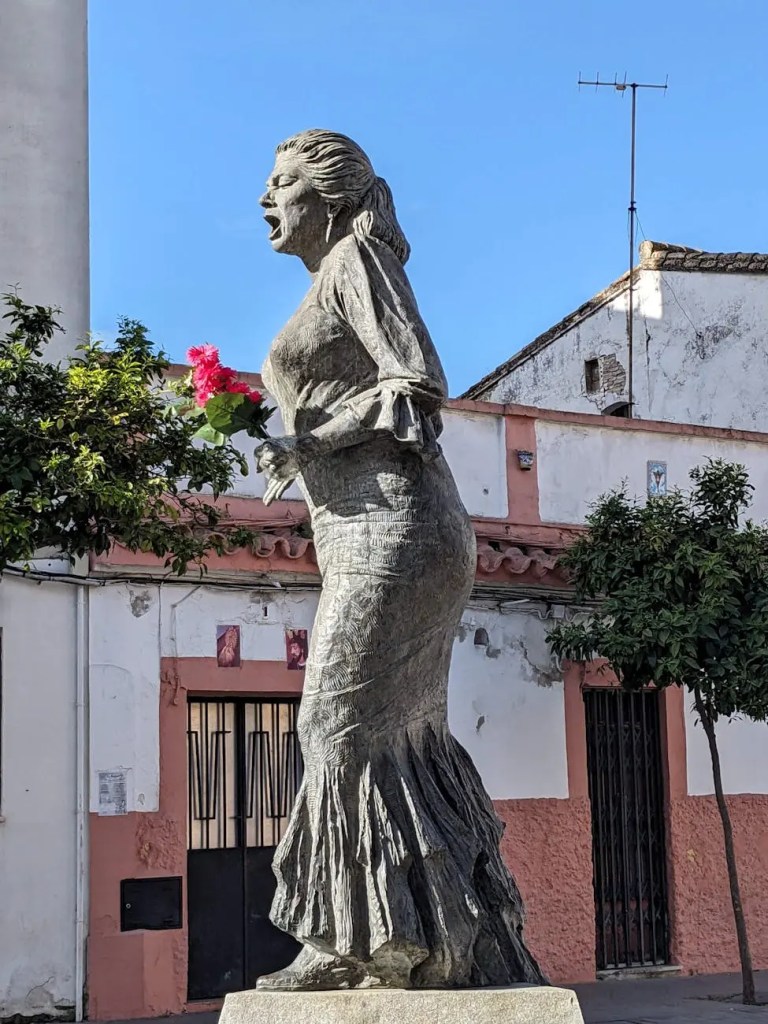
Statue of a flamenco dancer holding flowers, set against a backdrop of traditional Spanish architecture.
Statue of a flamenco dancer in Seville, capturing the vibrant spirit of Spanish culture. The Monumento Triana al Arte Flamenco celebrates the soul of the Triana neighborhood, considered the historic birthplace of many great flamenco artists.

Day 2: Towers, Triana & Sunset Views

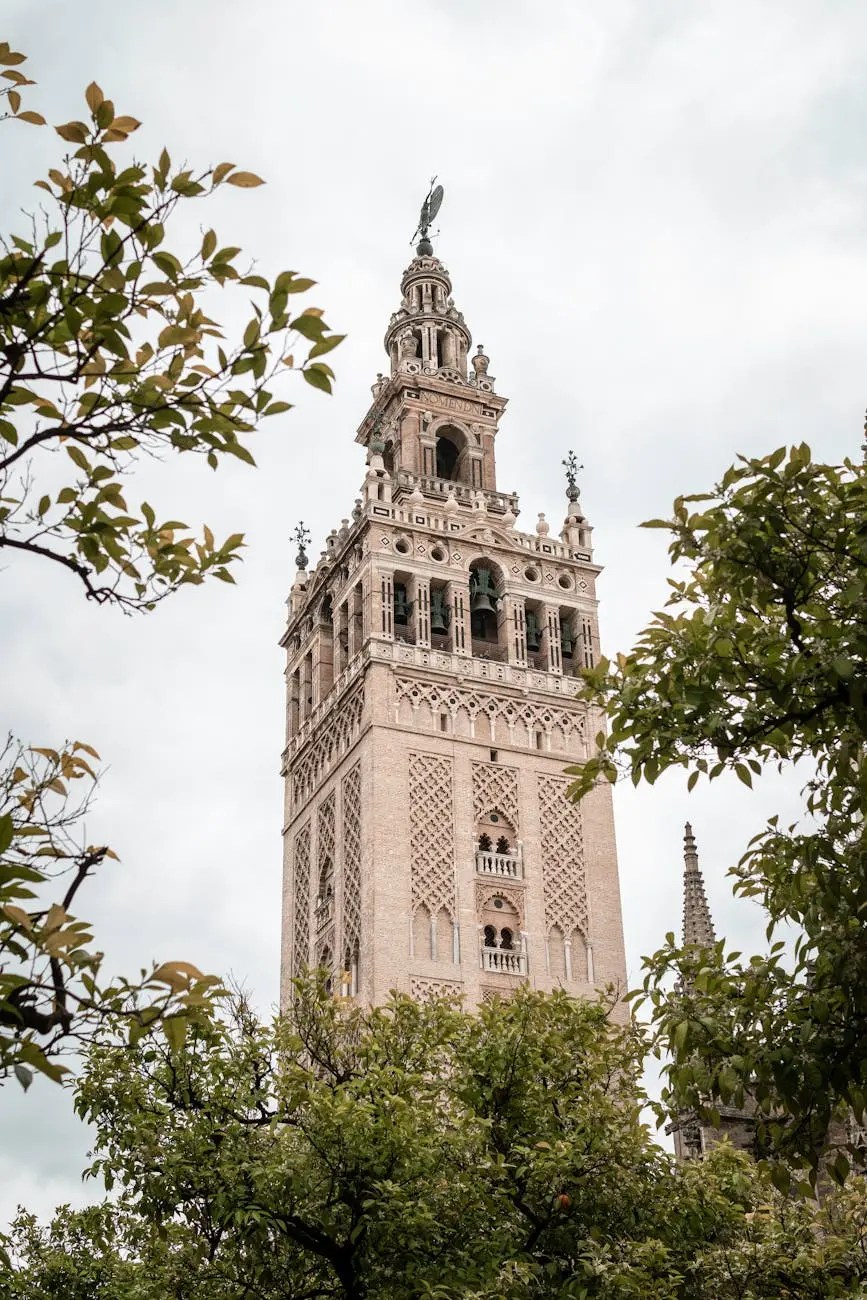
Morning (10:00 AM): Cathedral & La Giralda. Seville’s cathedral is the largest Gothic cathedral in the world. It’s massive. Instead of climbing a staircase to the top of the bell tower, La Giralda, you walk up a series of ramps—originally designed for guards on horseback! The view over the city is worth every step.

Afternoon (1:00 PM): Cross the River to Triana. This is my favorite hidden gem. Triana, across the Puente de Isabel II, is the historic home of flamenco, sailors, and ceramic artists. The vibe is more local, the prices are better, and the Mercado de Triana (Triana Market) is the perfect spot for a casual lunch. Grab a montadito (a small sandwich) and a caña (a small beer) and just watch the world go by.

Evening (Sunset): Rooftop Views. End your weekend on a high note—literally. There are several rooftop bars with stunning views of the cathedral. Hotel Doña María has a great one. Sipping a cocktail as the sun sets and the cathedral lights up is the perfect farewell to this incredible city.

Top Attractions You Can’t Miss

La Giralda Tower – Climb it for panoramic views that beat any postcard.

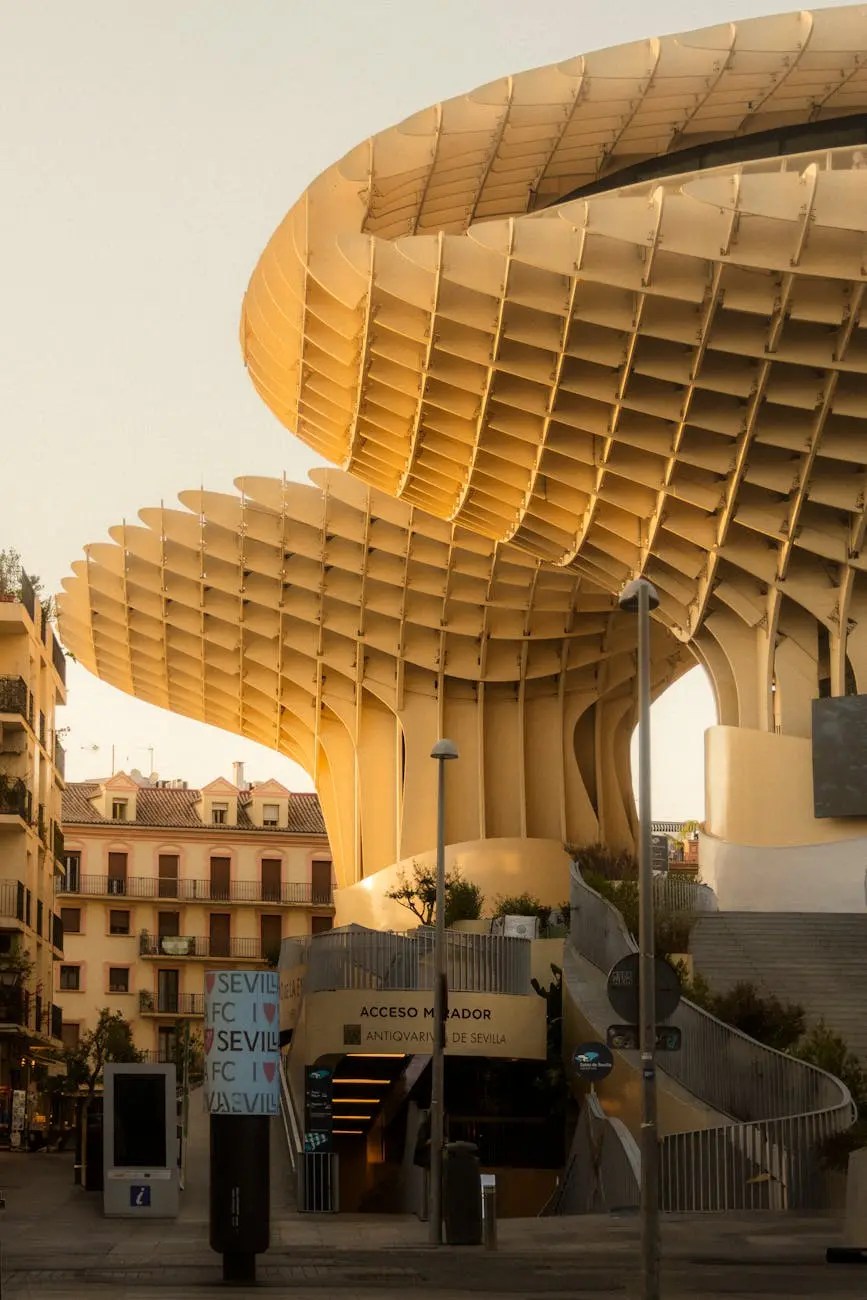
Metropol Parasol (Las Setas) – A giant wooden mushroom in the middle of the city. Bonus: great sunset shots for your travel camera.

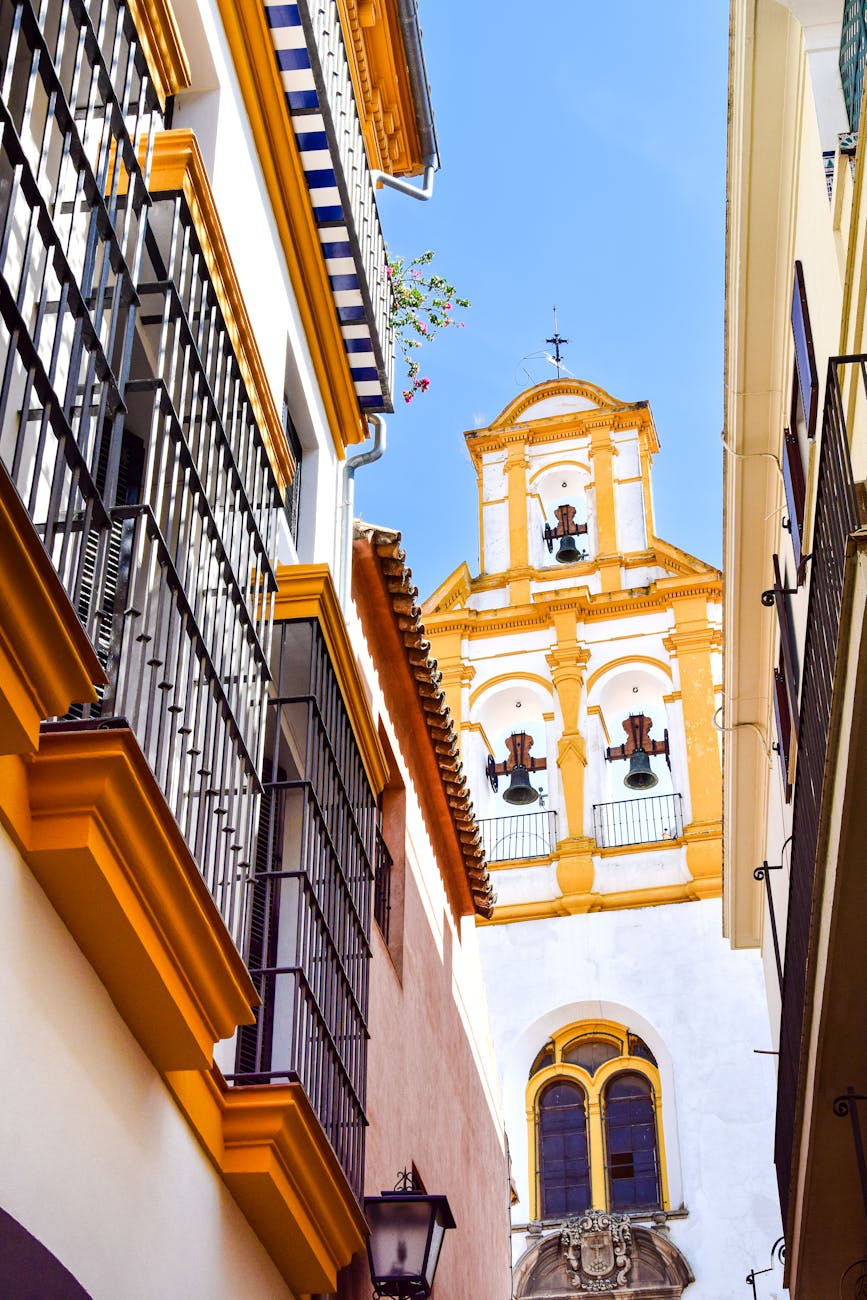
Barrio Santa Cruz – The old Jewish quarter, with winding alleys perfect for “getting lost on purpose.”

For art and history buffs, compare with my guide to Porto, Portugal—these two Iberian gems share a love for azulejos (ceramic tiles).
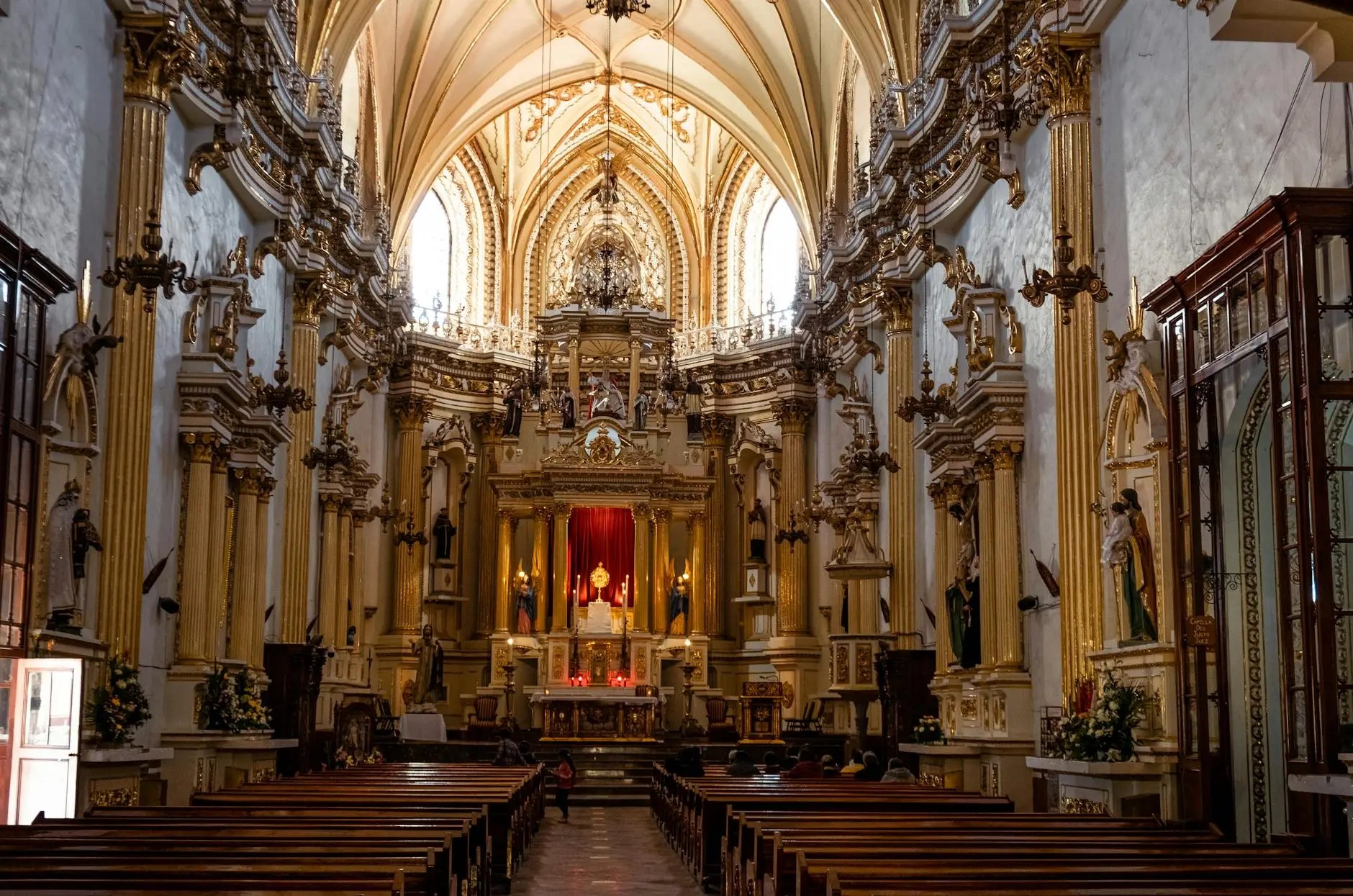
Interior of a grand church featuring ornate gold decorations, intricate architecture, and a vibrant altar, with pews in the foreground.
Interior of a beautifully ornate church featuring intricate gold detailing and a central altar, capturing the spiritual essence of Seville. The sheer scale and opulence of the Seville Cathedral interior is awe-inspiring. The main altarpiece, covered in gold leaf, is one of the largest in the world.
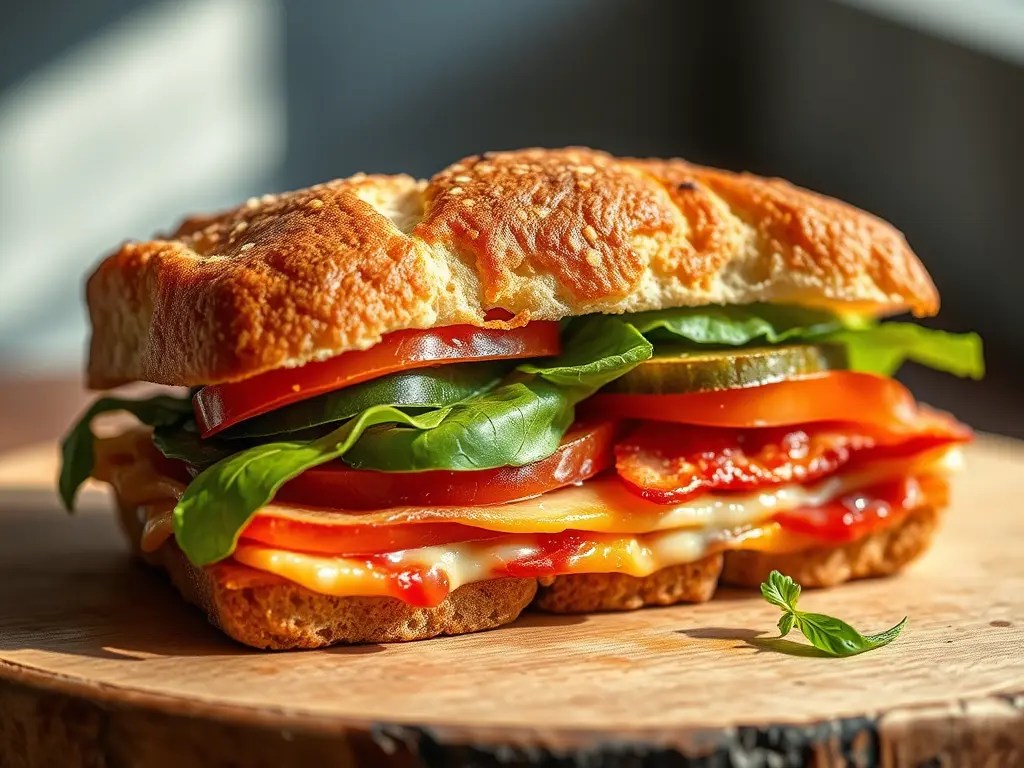
A delicious sandwich layered with slices of tomato, lettuce, cheese, and a variety of meats, displayed on a wooden board.
A delicious montadito, a small sandwich typical of Seville, featuring fresh vegetables and toppings, perfect for a casual lunch. The perfect bite: a classic Seville montadito. These small, flavorful sandwiches are ideal for a quick, delicious, and affordable lunch
Close-up view of La Giralda tower in Seville, Spain, framed by green leaves and a cloudy sky.
La Giralda Tower, a stunning symbol of Seville’s architectural heritage, stands majestically surrounded by lush greenery. La Giralda Tower, originally a minaret, offers one of the best views of Seville. The climb via ramps is surprisingly easy!
The Metropol Parasol in Seville, showcasing its striking wooden structure illuminated by warm sunlight, with surrounding buildings in the background.
Metropol Parasol in Seville: A modern architectural marvel in the heart of the city. A modern contrast to the old city: The Metropol Parasol, or ‘Las Setas’ (The Mushrooms), offers a stunning panoramic view, especially at sunset.
A narrow street in Seville, Spain, showcasing traditional white and yellow architecture, with a bell tower visible in the background under a clear blue sky.
The vibrant architecture of Seville, showcasing colorful balconies and a striking bell tower against a clear blue sky.

Hidden Gems Only Locals Whisper About

  • Casa de la Memoria: An intimate flamenco show, miles better than the touristy big stages.
  • Triana Market: Skip souvenirs—try goat cheese, olives, and jamón sold by locals.
  • Palacio de las Dueñas: A lesser-known aristocratic mansion dripping with Andalusian charm.
  • Callejón del Agua: A shady alley perfect for escaping summer heat while feeling like you’ve stepped into a 19th-century novel.
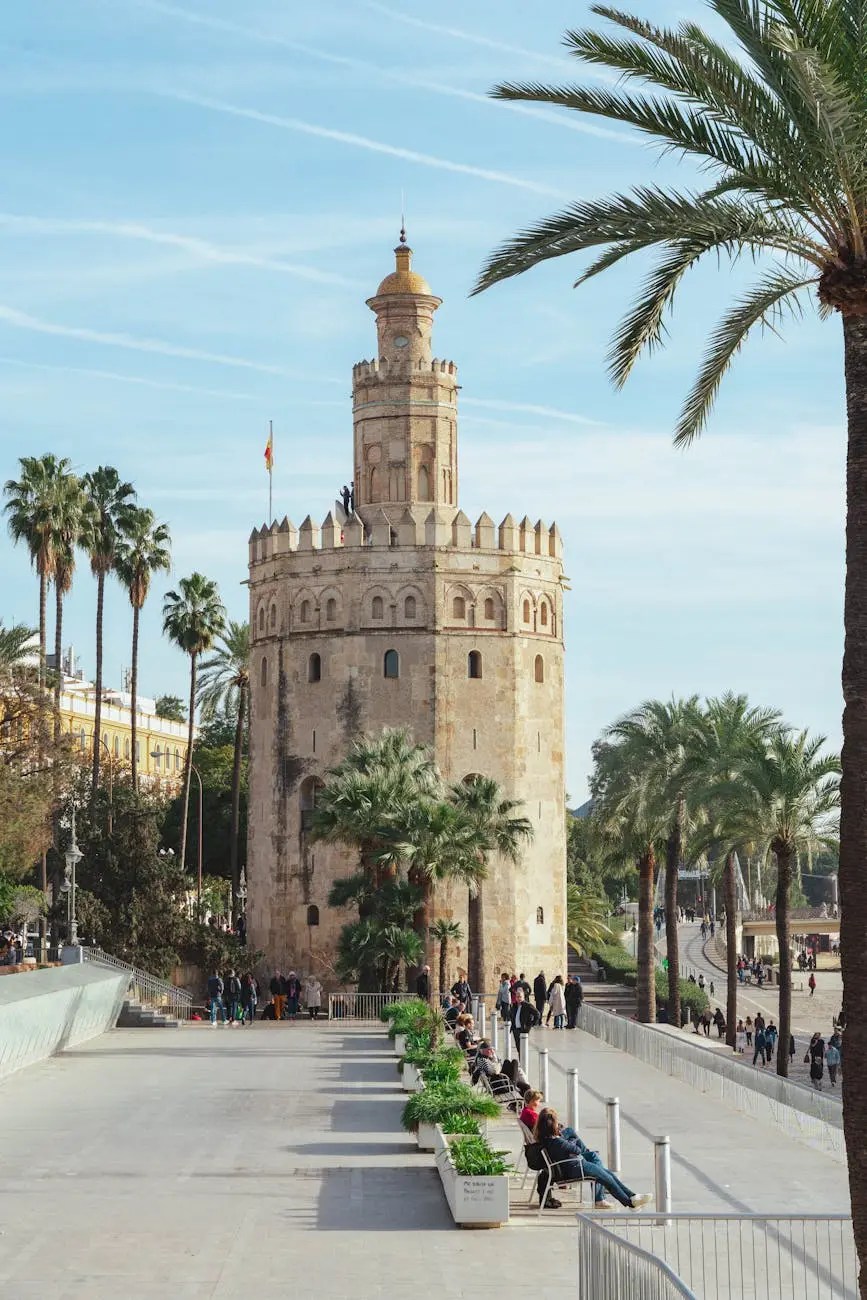
  • Torre del Oro (Golden Tower) – A 13th-century watchtower on the banks of the Guadalquivir River. It once guarded Seville’s port and allegedly stored treasures from the Americas (hence the name “Golden Tower”). Today, it’s a naval museum and one of the best spots for a riverside stroll at sunset.
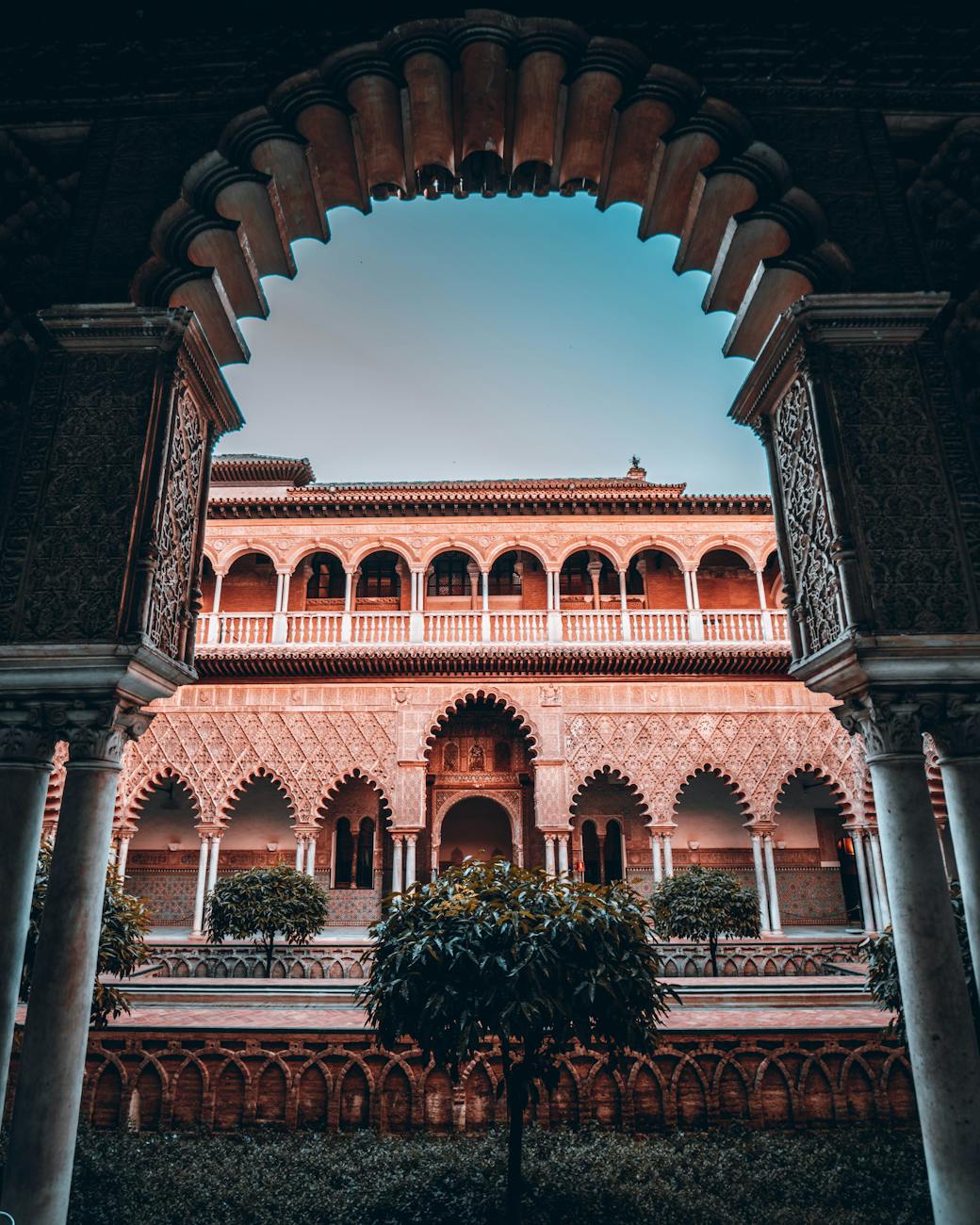
View of the intricate arched architecture and courtyards of the Real Alcázar in Seville, featuring lush greenery and ornate details.
The stunning architecture of the Real Alcázar, a highlight of Seville’s rich history.

A historic tower with a golden dome, surrounded by palm trees and people walking along a promenade in Seville, Spain.
The iconic Torre del Oro in Seville, framed by palm trees and vibrant surroundings. The Torre del Oro has guarded the Guadalquivir River since the 13th century. Today, it houses a small naval museum.

Money-Saving Tips & Hidden Gems

  • Save on Water: Carry a reusable bottle. Seville has many public water fountains (fuentes) with perfectly safe drinking water. It’s a lifesaver in the heat!
  • Free Tapas: Some bars still offer a free tapa with your drink, especially if you venture away from the main tourist squares. It’s worth asking, “¿La bebida viene con tapa?

Essential Spanish Phrases for Travellers

  • Hola (OH-la) – Hello
  • Por favor / Gracias – Please / Thank you
  • Una caña, por favor (OON-a CAN-ya) – A small beer, please (the most important phrase!)
  • La cuenta, por favor – The bill, please
  • ¿Dónde está…? (DON-day es-TAH) – Where is…?
  • Perdón (per-DON) – Excuse me / Sorry
  • ¿Dónde está el baño? – Where’s the bathroom?
  • Perdona, estoy perdido/a – Excuse me, I’m lost

Gear Up for Your Trip: My Trusted Travel Tools

A smooth trip is all about the right gear and protections. Here’s what I never travel without:

  • Stay Connected (Without the Bill Shock): I used to waste the first hour of every trip hunting for a SIM card. Not anymore. I use Drimsim, a global data SIM that works in over 190 countries. You just pop it in when you land, and you’re online. No contracts, no hidden fees. It’s a game-changer for navigating maps and finding last-minute tapas bars.
  • Peace of Mind with Travel Insurance: A missed connection or a misplaced bag can ruin a trip. I always compare plans on VisitorsCoverage to find flexible, affordable coverage that fits my itinerary. It’s one less thing to worry about.
  • Secure Your Connection with a VPN: Using public WiFi in hotels and cafes? Protect your personal data with a VPN. I’ve relied on NordVPN for years to keep my information safe and even access streaming services from back home.
  • Capture the Magic: Seville is incredibly photogenic. To capture all the vibrant colors and intricate details, I swear by my trusty mirrorless camera. It’s lightweight but takes stunning, professional-quality photos.

🛡️ Traveler’s Rights Tip: Had a flight delay or cancellation on your way to Seville? You might be owed up to €600 in compensation! Most people don’t claim it, but services like AirHelp make it simple. They handle all the paperwork with the airline for you. I’ve used them successfully before—it’s stress-free and feels like finding money you didn’t know you had.

Seville Weekend Escape FAQ

Q: What is the best time of year to visit Seville?
A: Spring (March-May) and Fall (September-October) are ideal. The weather is perfect. Avoid July and August unless you have a personal desire to experience what it feels like to live inside an oven. It is intensely, overwhelmingly hot.

Q: Do I need a visa for Spain?
A: This depends on your nationality. Spain is part of the Schengen Area. Travelers from the EU, US, Canada, and Australia typically don’t need a visa for short stays. Always check the official government website for the most current requirements based on your passport.

Q: Is Seville expensive?
A: Compared to other major European cities like Paris or London, Seville is very affordable. You can enjoy fantastic meals and activities without breaking the bank, especially if you follow the local lead on where to eat and drink.

Q: How walkable is Seville?
A: Extremely. The historic center is compact, and walking is the best way to discover its hidden corners. Comfortable shoes are non-negotiable!

Ready to Fall in Love with Seville?
This city has a way of stealing your heart. With this plan, you’re all set for an unforgettable weekend of adventure. Now, all that’s left to do is book that flight!

Over to You!

This city has a way of stealing your heart. With this plan, you’re all set for an unforgettable weekend of adventure. Now, all that’s left to do is book that flight!

I’d love to hear from you!
What’s your dream Spanish destination? Have any Seville tips of your own to share? Or maybe a question I didn’t answer? Drop a comment below and let’s chat!

Ready to Fall in Love with Seville?
Find the Best Flight Deals to Seville Here!

What’s your dream Spanish destination? Have any Seville tips of your own? Share them in the comments below!
Universal Disclaimer/Disclosure Page:

Vienna in a Weekend: Your Ultimate Guide to Imperial Splendor, Coffee & Cake

Meta Description: Master your weekend escape to Vienna! This ultimate guide reveals a perfect 2-day itinerary, money-saving secrets, must-try foods, and hidden gems. Learn how to navigate the city like a pro and experience the best of imperial Vienna.

So, you’ve got a weekend to spare and a burning desire to soak up some serious culture, coffee, and cake? Let me tell you, you’ve picked a winner. Vienna isn’t just a city; it’s a feeling. It’s the waltz of horses on cobblestone streets, the scent of fresh strudel, and the sheer, awe-inspiring gold-leaf opulence of a Habsburg palace.

I remember my first time stepping into the Hofburg Palace complex. I was so busy staring up at the architecture that I almost walked into a very dignified, very unamused horse. Pro tip: Admire, but watch your step. This city is alive with history.

Planning a short trip can be daunting, but fear not! I’ve distilled the essence of Vienna into the perfect weekend itinerary designed to save you time, money, and logistical headaches. Let’s dive in.

Table of Contents

  1. Why Vienna is the Perfect Weekend Getaway
  2. Before You Go: Visa, Insurance & Smart Planning
  3. Your Vienna Weekend Itinerary: A Step-by-Step Guide
    • Friday Evening: Arrival & A Taste of Tradition
    • Saturday: Palaces, Pastries & Perfect Melodies
    • Sunday: Markets, Masterpieces & Departure
  4. Navigating Vienna Like a Pro: The Ultimate Public Transport Guide
  5. Money-Saving Secrets & Local Hidden Gems
  6. Speak Like a Local: Essential German Phrases for Travellers
  7. Travel Smarter, Not Harder: My Trusted Resources
  8. FAQ: Your Quick Vienna Weekend Questions Answered

Welcome to Vienna: Why This City Should Be Your Next Weekend Getaway

Compact, incredibly well-connected, and dripping with things to do, Vienna is a weekend warrior’s dream. You can go from a world-class art museum to a sprawling palace garden to a cozy wine tavern (a Heuriger) within a short tram ride. It’s a city that rewards both meticulous planners and spontaneous wanderers.

Ah, Vienna—where coffee culture meets imperial grandeur, and every corner seems straight out of a fairytale (or at least a well-directed period drama). This city is punchy, juicy, and elegant all at once—perfect for travellers with a sense of humor and an appetite for Austrian schnitzel.

Planning Your Trip: Timing, Visa & Budget Essentials

Visa Info: As a major Schengen Zone country, Austria allows visa-free entry for short stays (up to 90 days) for citizens of the US, UK, Canada, Australia, and many other countries. Always double-check the official government website for your nationality closer to your travel date, as rules can change.
Cost: If you do require a Schengen visa, the standard fee is €80 for adults.

Flights to Vienna

During my last spring visit, I noticed the lines to Schönbrunn were laughably short—so short, I actually did a little happy dance in line (thankfully, no one else joined in).

Best Time to Visit: Late spring (May–June) or early autumn (September) offer mild weather, blooming gardens, fewer crowds, and better hotel deals.

Hotels in Vienna

✈️ Smart Travel Tip: No matter where your adventures take you, having the right travel insurance can save you from unexpected headaches (and bills). I personally recommend VisitorsCoverage — it’s a trusted platform where you can compare plans, find coverage that fits your trip, and book it in just a few clicks. Whether you’re planning a quick city escape or a longer international journey, it’s peace of mind worth packing.

Friday Evening: Arrival & A Taste of Tradition

Assuming you land in the afternoon, hop on the CAT (City Airport Train). It’s a non-stop service that gets you to Wien Mitte station in just 16 minutes. From there, the U-Bahn (subway) or a short taxi ride will take you to your hotel.

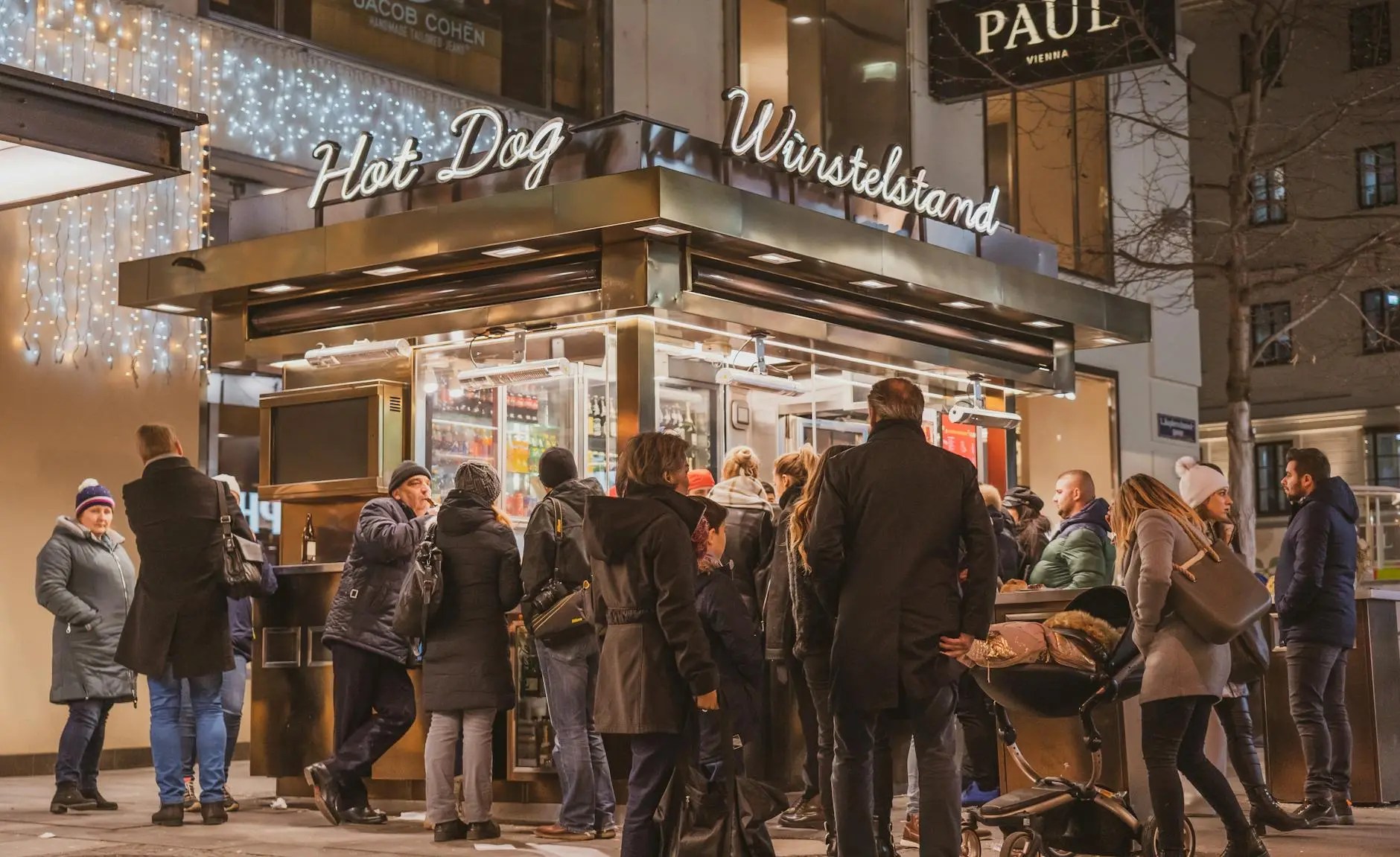
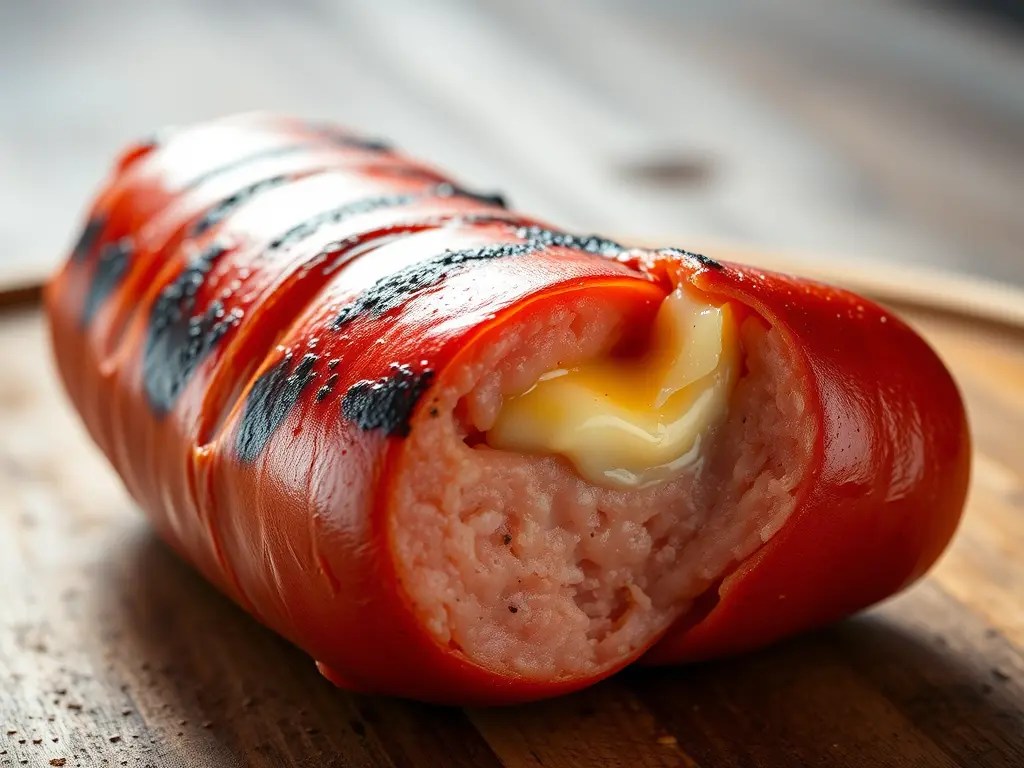
Once you’ve settled in, ditch the jet lag with a walk through the historic center. Your mission: find a classic Würstelstand (sausage stand). Grab a Käsekrainer (a cheesy, divine sausage) with a sharp mustard and a crisp Ottakringer beer. It’s the perfect, authentic welcome dinner.

A bustling Würstelstand (sausage stand) in Vienna at night, with customers waiting in line for traditional snacks, illuminated by warm lights.
A bustling Würstelstand in Vienna, where locals enjoy classic Viennese sausages under the evening glow.

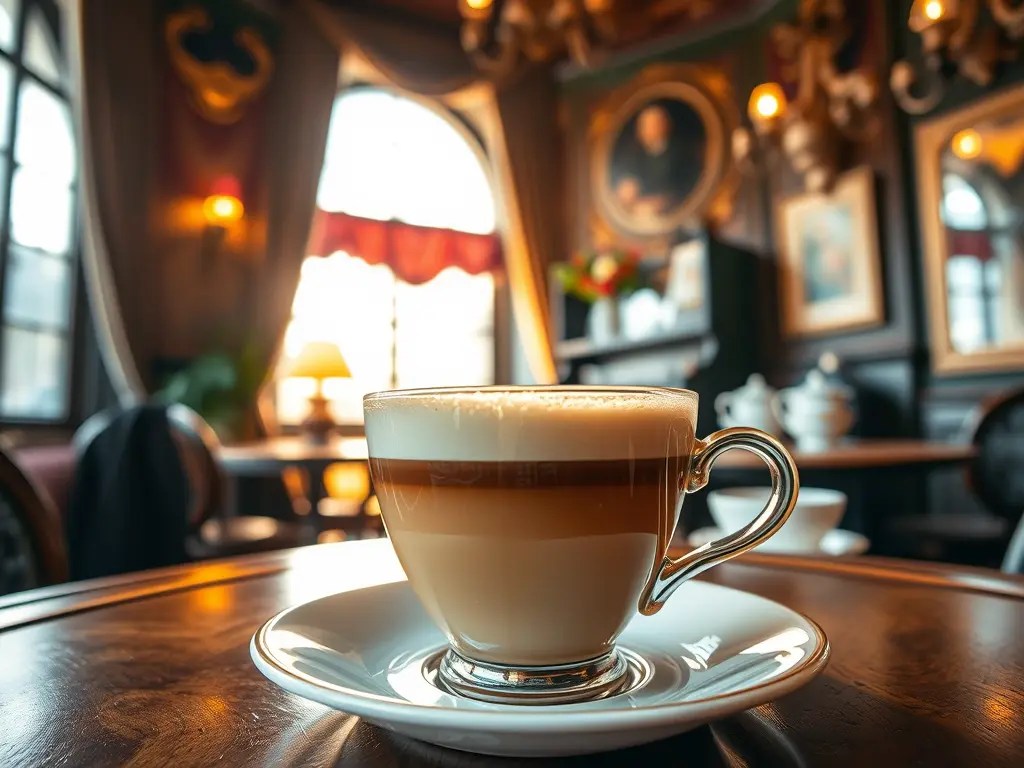
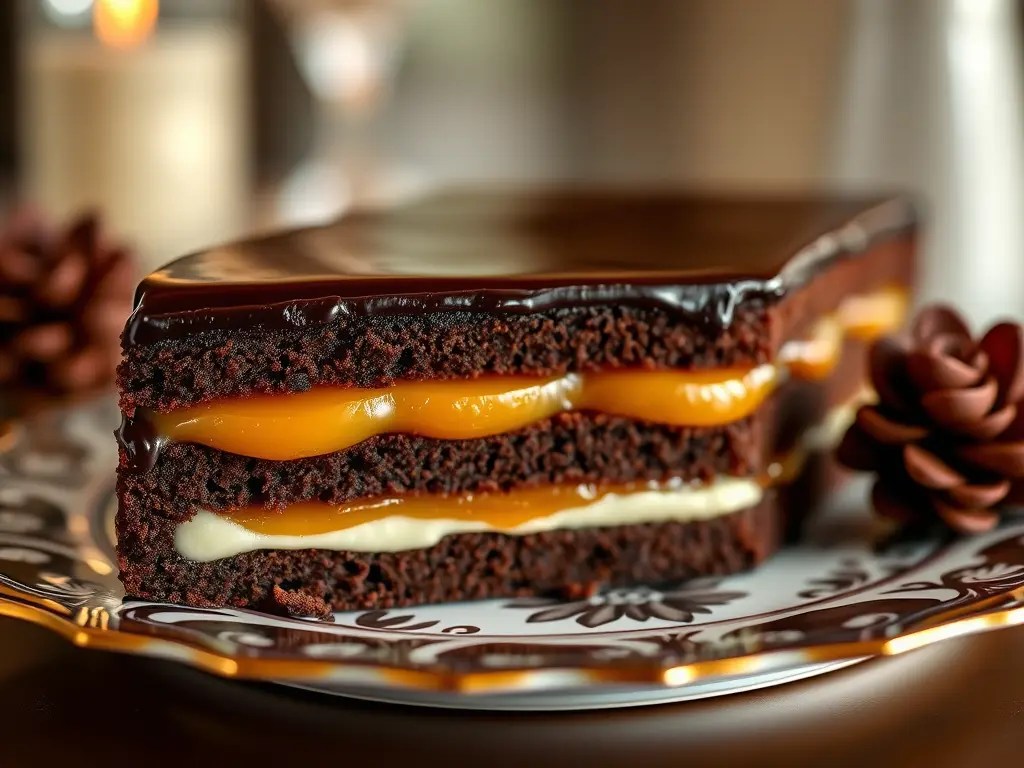
Cap the night at a traditional coffee house. Skip the tourist traps right on the Graben and find a smaller one like Café Schwarzenberg or Café Prückel. Order a Melange (the Viennese cappuccino) and a slice of Sachertorte. Sit back, read the paper provided, and do as the Viennese do: linger.

A grilled sausage cut in half, revealing a creamy filling, presented on a wooden board.
A delicious Käsekrainer sausage, grilled to perfection and ready to be enjoyed—an authentic Viennese culinary delight.

A bottle of Ottakringer Lager beer next to a filled glass on a table, with soft natural light highlighting the drink.
Enjoy a refreshing Ottakringer Lager, a perfect pairing for a Viennese culinary experience.

A beautifully presented cup of coffee sitting on a saucer, with a cozy coffee house interior in the background, featuring warm lighting and elegant decor.
A beautifully crafted Melange coffee, perfect for a cozy evening in a traditional Viennese coffee house.

A close-up of a slice of rich chocolate cake with layers of caramel and cream, elegantly presented on a decorative plate.
Indulge in a slice of decadent Sachertorte, the iconic chocolate cake from Vienna, featuring layers of rich chocolate and apricot filling.

Saturday: Palaces, Pastries & Perfect Melodies

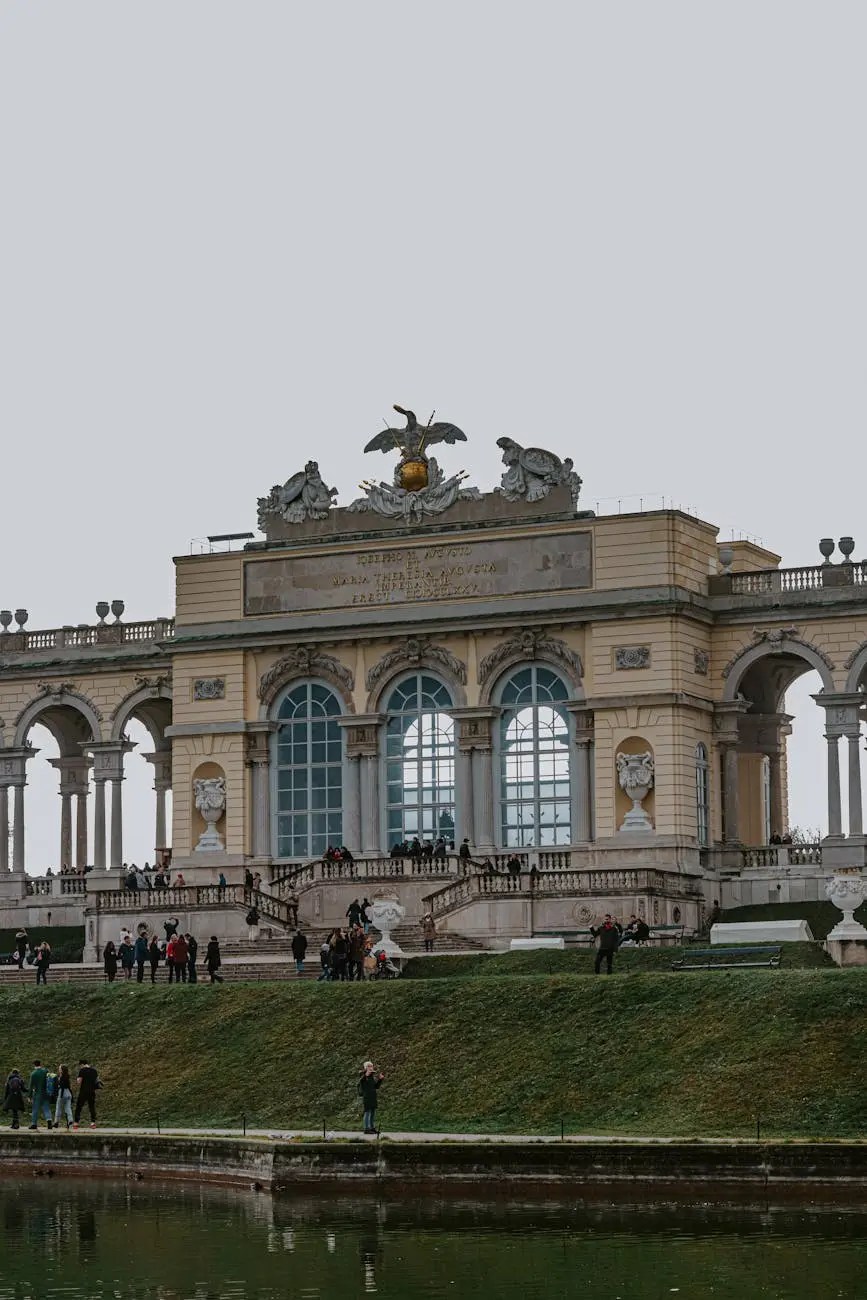
Morning: Fuel up and head to the magnificent Schönbrunn Palace. Book your tickets online in advance for a specific timeslot to avoid the monstrous queues. The Imperial Tour (22 rooms) is perfect for a weekend trip. The gardens are free to explore and offer a stunning view of the city from the Gloriette monument. For more on palace etiquette and history, check out my deep dive into [Exploring Europe’s Royal Residences].

CHOOSE WISELY: The Imperial Tour (22 rooms) is perfect for a weekend trip. The Grand Tour (40 rooms) is amazing but can lead to acute “palace fatigue.

BOOK AHEAD: Book your tickets online in advance for a specific timeslot. I learned this the hard way, watching the queue snake around the courtyard while I sipped my coffee, ticket securely in my app.

Afternoon: Take the U-Bahn back to the center. For lunch, I stumbled upon Bitzinger Würstelstand Albertina right behind the Opera House. It’s an institution. Afterwards, get your art fix at the Kunsthistorisches Museum (Art History Museum). Even if you’re not a huge art buff, the building itself is a masterpiece. The cafe in the dome is breathtaking.

Evening: This is Vienna—you have to experience music. You don’t need to break the bank for the Opera. Look for standing room tickets (Stehplätze) sold just before the performance for a few euros, or find a classical concert in a smaller, stunning venue like the St. Anne’s Church. I once saw a Mozart quartet in a tiny, ornate hall and it was one of the most memorable nights of my life.

Schönbrunn Palace Tours

View of the Gloriette in Schönbrunn Palace gardens, showcasing its classical architecture and people enjoying the serene surroundings.
The stunning architecture of the Gloriette at Schönbrunn Palace, a must-see viewpoint in Vienna.

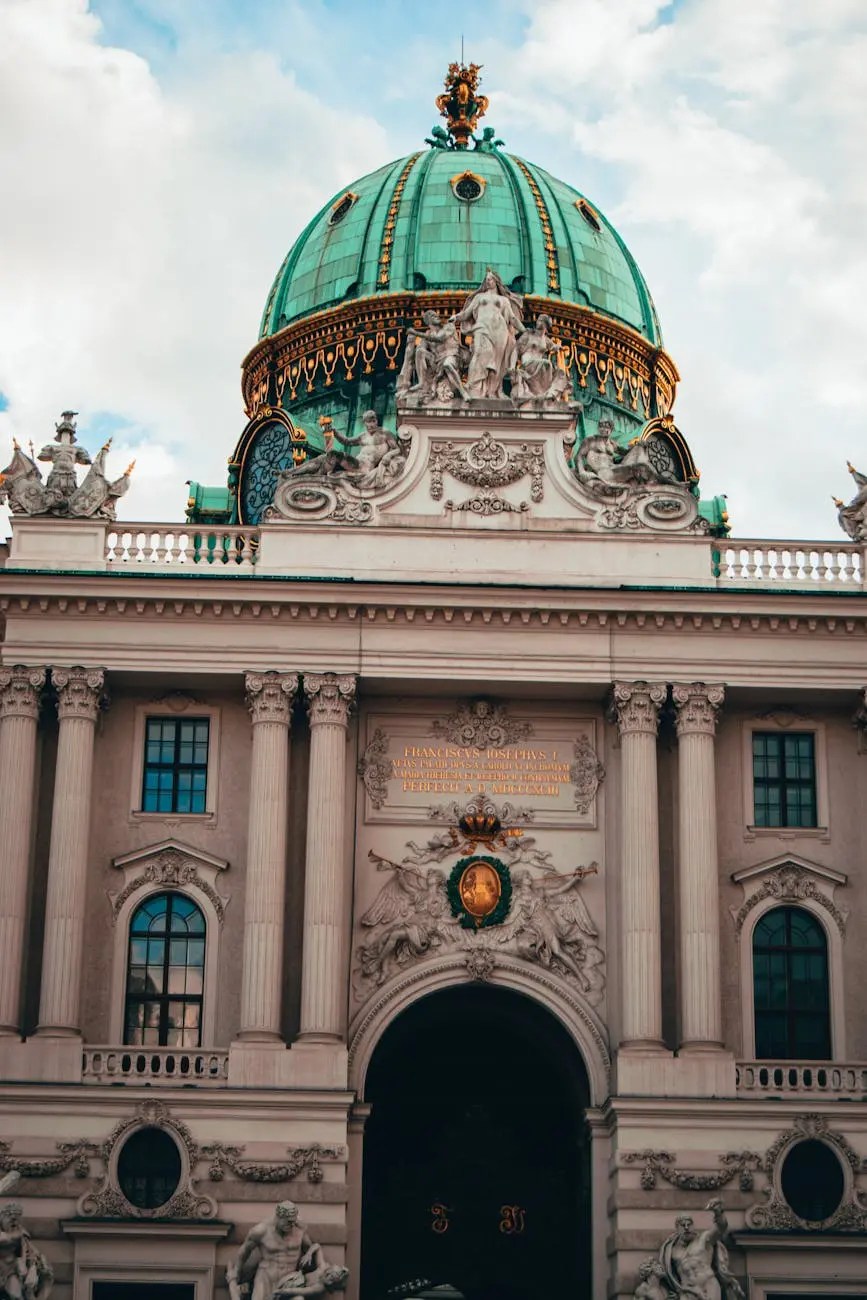
Close-up view of the ornate architecture of the Hofburg Palace in Vienna, highlighting its green dome and intricate sculptures.
The stunning architecture of Hofburg Palace, a symbol of Vienna’s imperial history. Look up! The Hofburg Palace’s breathtaking dome and facade are a masterclass in imperial grandeur. Every statue, gilded detail, and architectural curve tells a story of the powerful Habsburg dynasty that ruled from here for centuries. It’s easy to miss these details when navigating the bustling streets, but they’re what make Vienna an open-air museum.

Hofburg Palace: Once home to the Habsburg dynasty, this imperial complex is like Vienna’s beating historical heart. From the Imperial Apartments to the Sisi Museum, it’s history layered on history. (Tip: Early mornings or late afternoons are best to dodge big tour groups.)

Gloriette Tours and Activities

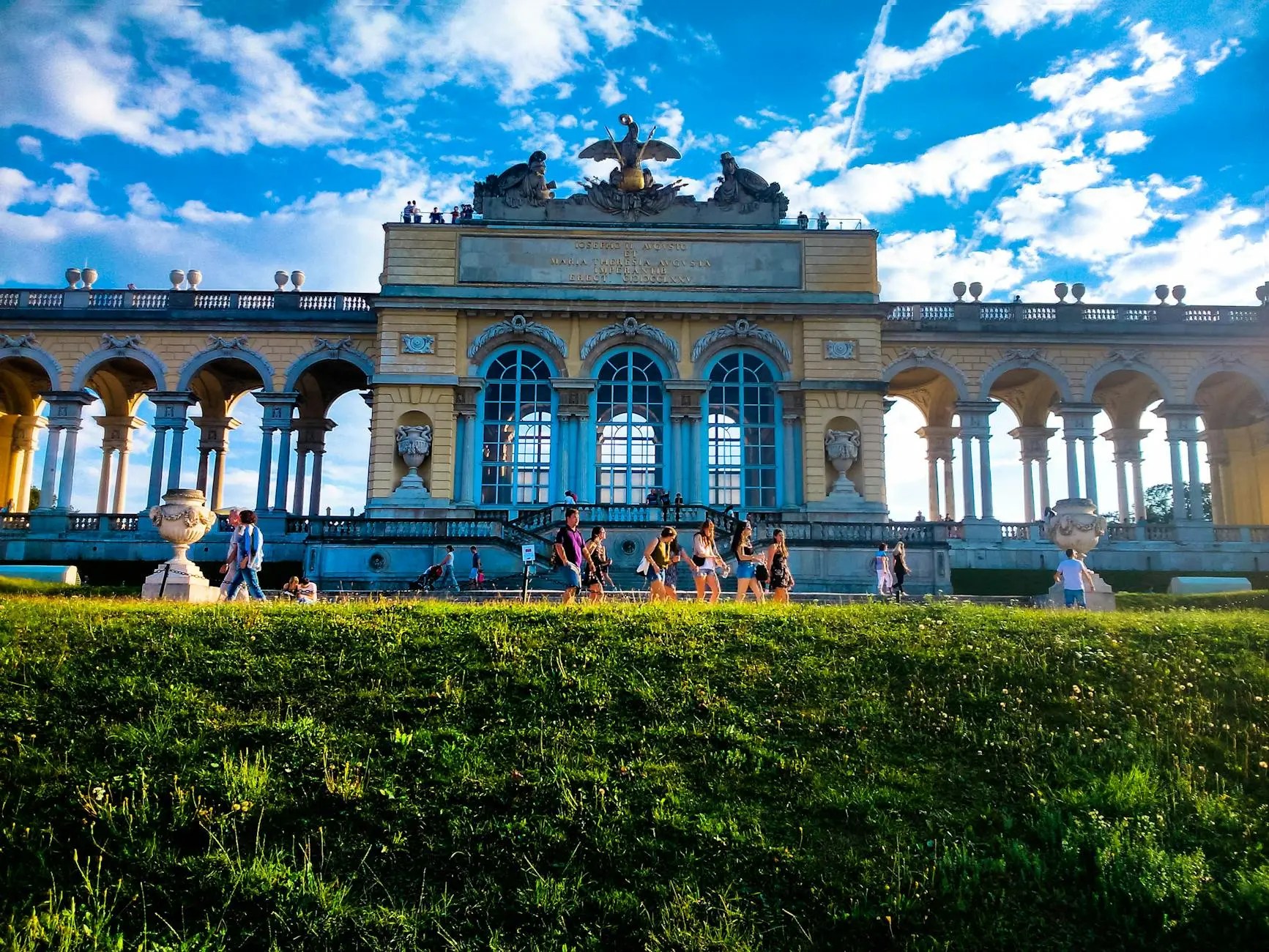
DON’T MISS THE GARDENS: The gardens are free to explore and offer a stunning, postcard-perfect view of the city from the Gloriette monument. It’s a steep walk but absolutely worth it.

View of the Gloriette at Schönbrunn Palace, with visitors walking on grassy grounds and a blue sky in the background.
The stunning Gloriette at Schönbrunn Palace, offering breathtaking views and rich history in Vienna. The perfect Viennese afternoon: soaking up the sun on the grand lawn of Schönbrunn Palace with the magnificent Gloriette as your backdrop. This is how locals and visitors alike enjoy the palace gardens—not just by touring the halls, but by lounging, picnicking, and marveling at the imperial skyline.

Kunsthistorisches Museum Vienna and Imperial Treasury of Vienna

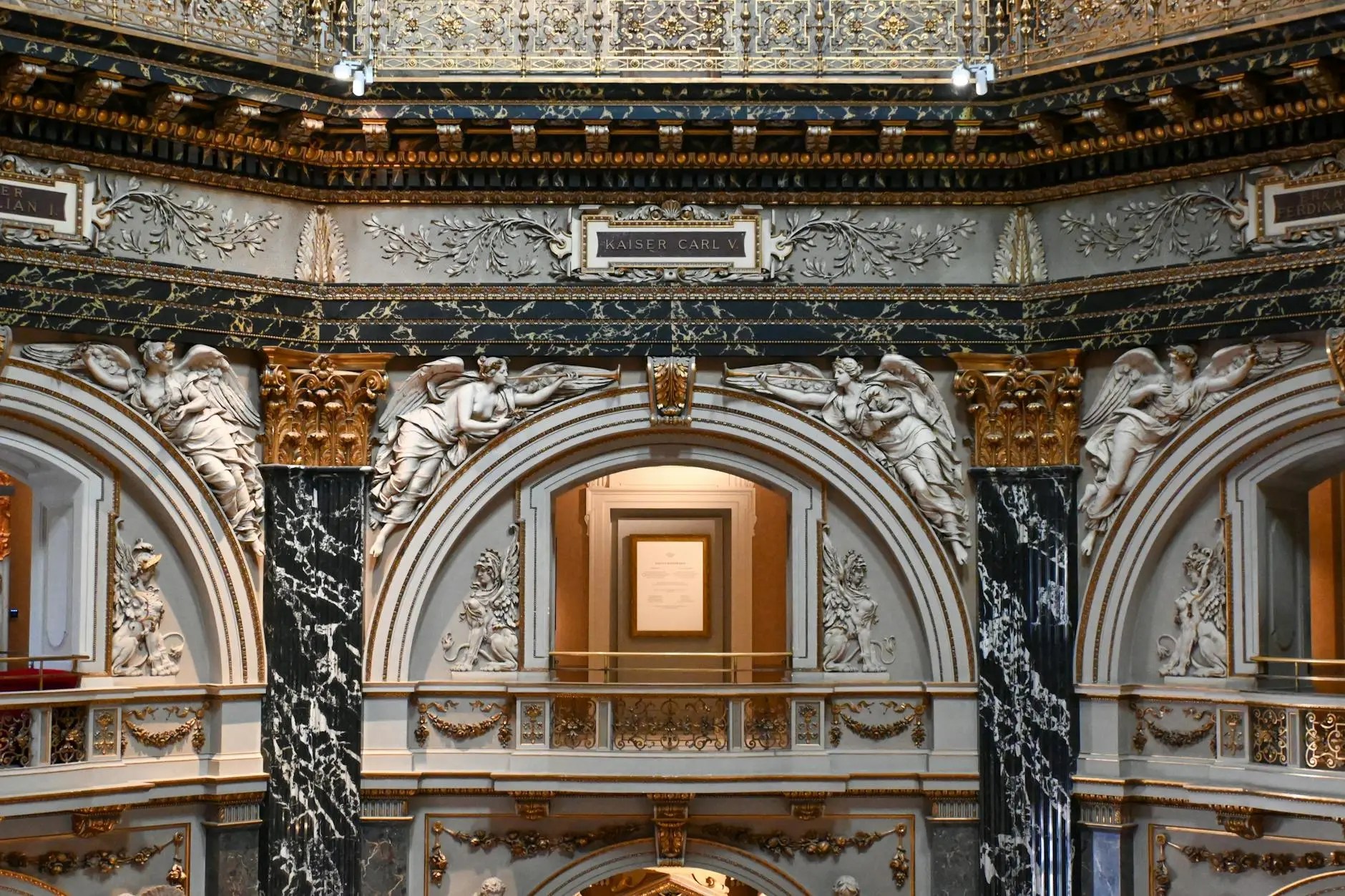
Intricate architectural detail of a hallway at the Kunsthistorisches Museum in Vienna, showcasing ornate sculptures and gold accents.
Intricate architectural details in the Kunsthistorisches Museum, showcasing Vienna’s imperial heritage. Where the art on the walls rivals the art on the walls. The Kunsthistorisches Museum’s interior is a masterpiece in itself. Look up from the paintings to admire the breathtaking ceiling frescoes, gilded stucco, and intricate marble work that make this one of the world’s most beautiful museums.

Sunday: Markets, Masterpieces & Departure

Morning: Head to the Naschmarkt, Vienna’s most famous market. It’s a vibrant, chaotic mix of food stalls, spices, antiques, and restaurants. Grab a Turkish breakfast or sample local cheeses. It’s the perfect place to pick up edible souvenirs.

For a final dose of culture, choose your fighter: the sleek, modern Hundertwasserhaus apartment building, a riot of color and uneven floors, or the breathtaking St. Stephen’s Cathedral in the heart of the city. Climb the South Tower for a final, fabulous view.

Afternoon: Have one last lunch—maybe a Wiener Schnitzel at Figlmüller (book ahead!) or a more casual bite at the market—before sadly heading back to the airport.

Naschmarkt Tours

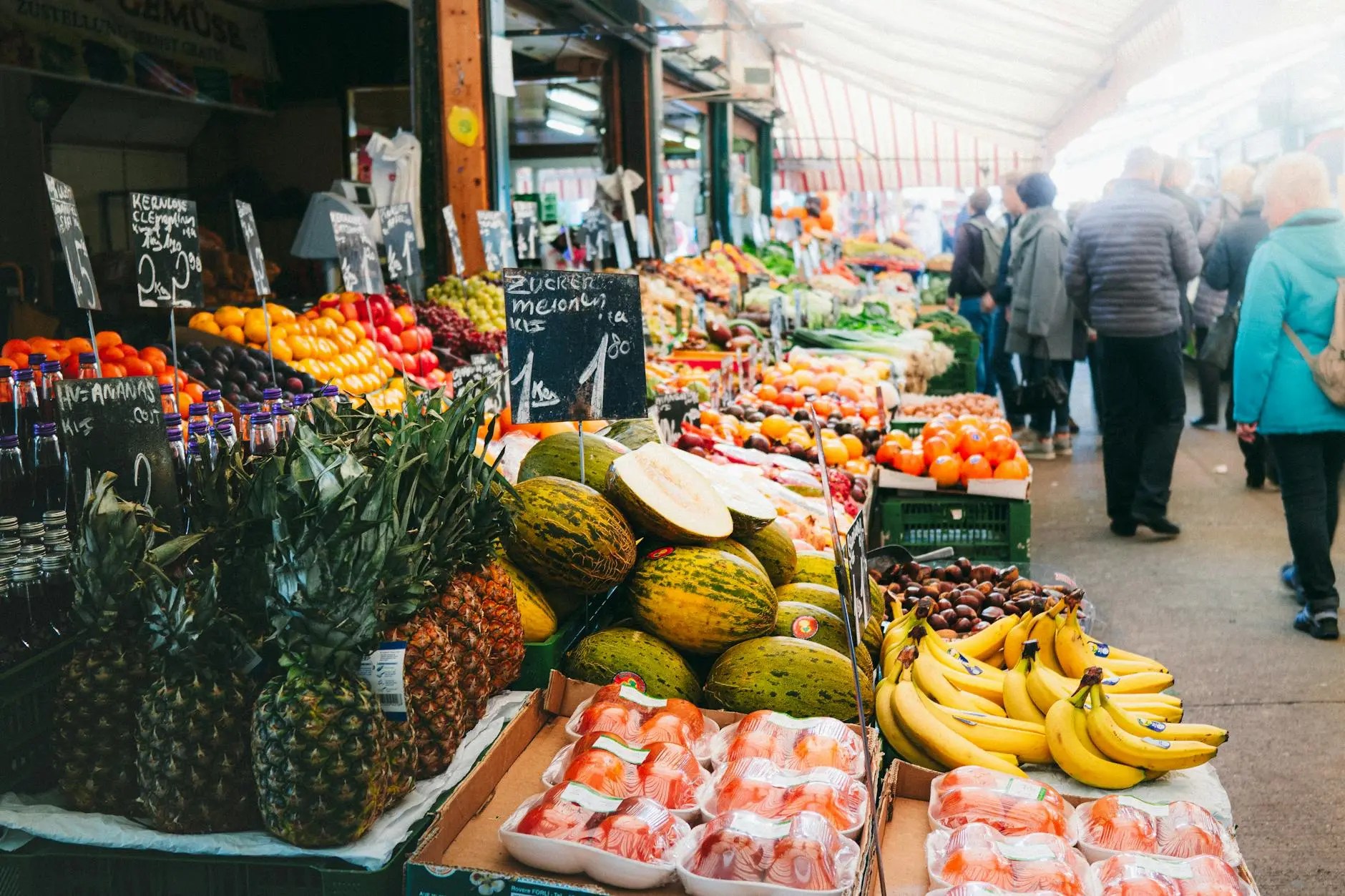
Vibrant market scene at Naschmarkt in Vienna, showcasing an array of colorful fruits and vegetables with shoppers exploring the stalls.
A vibrant display of fresh fruits and vegetables at Vienna’s Naschmarkt, showcasing the city’s culinary delights. A feast for the senses! Vienna’s Naschmarkt is a bustling, colorful paradise where you can find everything from local Austrian produce to exotic international imports. This is the perfect spot to grab a snack, pick up picnic supplies, or simply soak in the vibrant, aromatic atmosphere of the city’s most famous market.

Hundertwasser House Tours

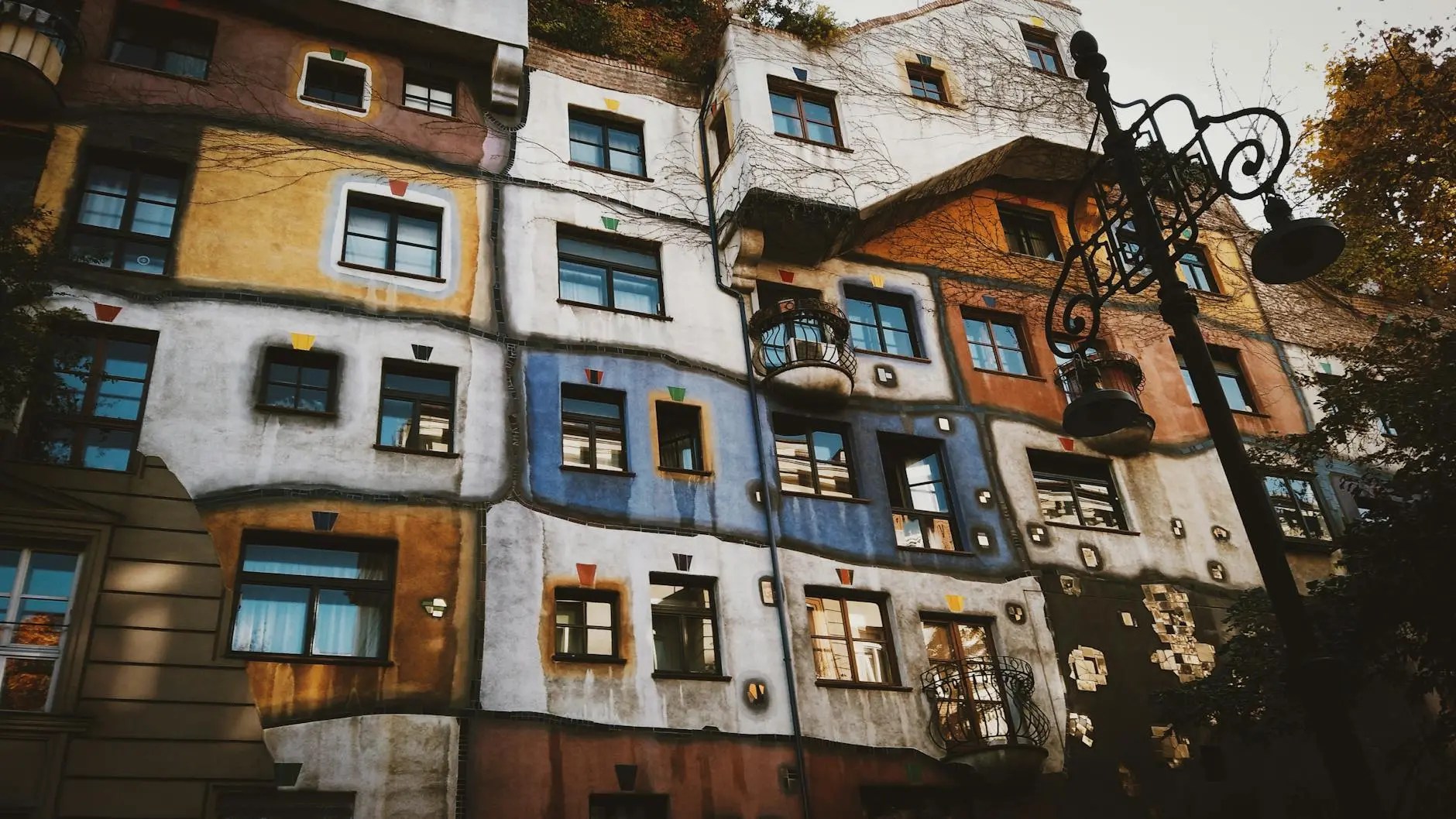
Colorful facade of the Hundertwasserhaus, an architectural landmark in Vienna, featuring irregular shapes, vibrant colors, and unique window designs.
Explore the vibrant architecture of Hundertwasserhaus, a unique apartment building known for its colorful facades and whimsical design in Vienna. Where architecture breaks all the rules! The Hundertwasserhaus is a riot of color and creativity, designed by artist Friedensreich Hundertwasser. With its undulating floors, trees growing from windows, and not a single straight line in sight, this iconic building is a joyful rebellion against boring, conventional design

St. Stephen’s Cathedral Tours

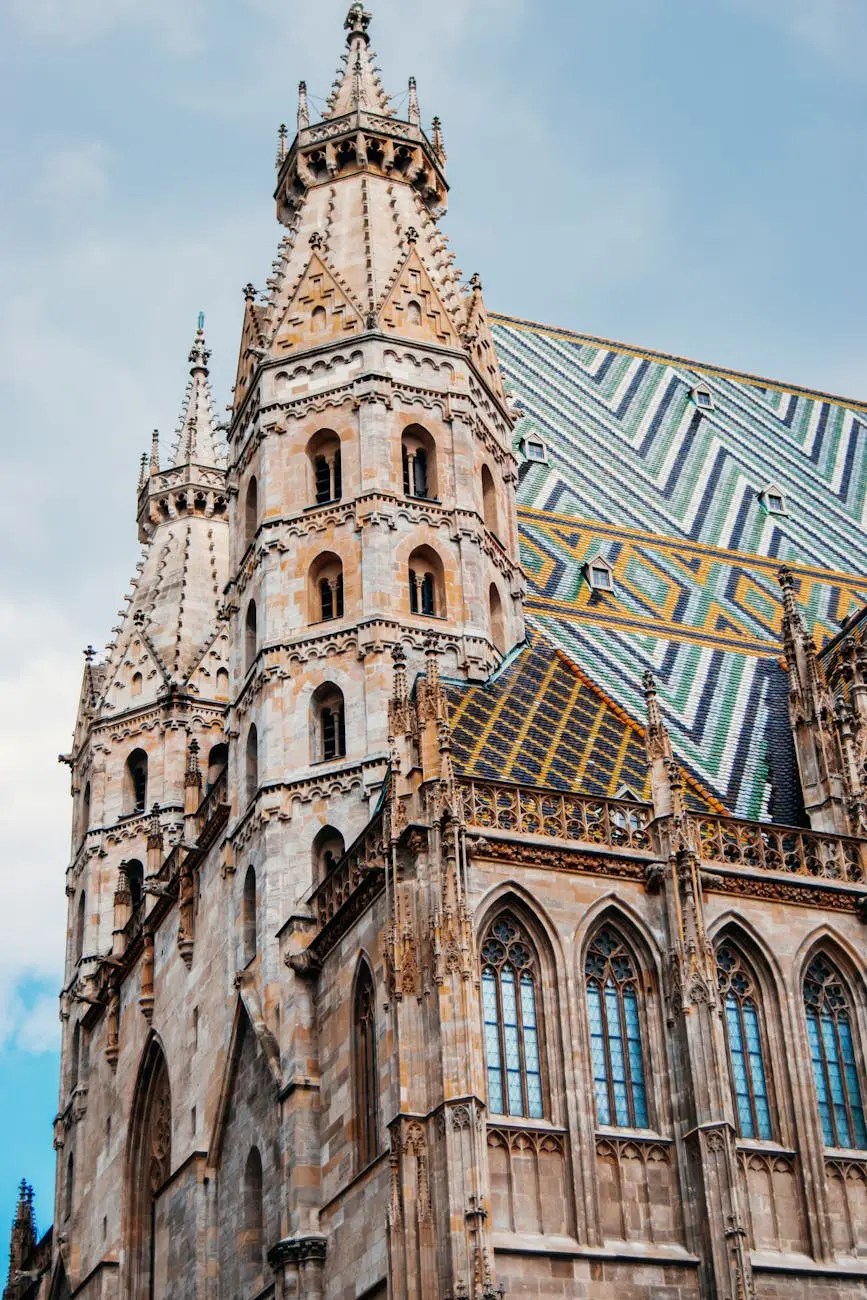
Close-up view of the intricate architecture and spires of St. Stephen's Cathedral in Vienna, showcasing its Gothic design and colorful patterned roof.
A stunning view of the intricate architecture of St. Stephen’s Cathedral in Vienna, showcasing its gothic spires and colorful tiled roof. Look up! The magnificent roof of St. Stephen’s Cathedral is covered in over 230,000 glazed tiles, arranged into intricate patterns, including the majestic double-headed eagle—a symbol of the Habsburg Empire. This Gothic masterpiece has watched over Vienna for centuries.
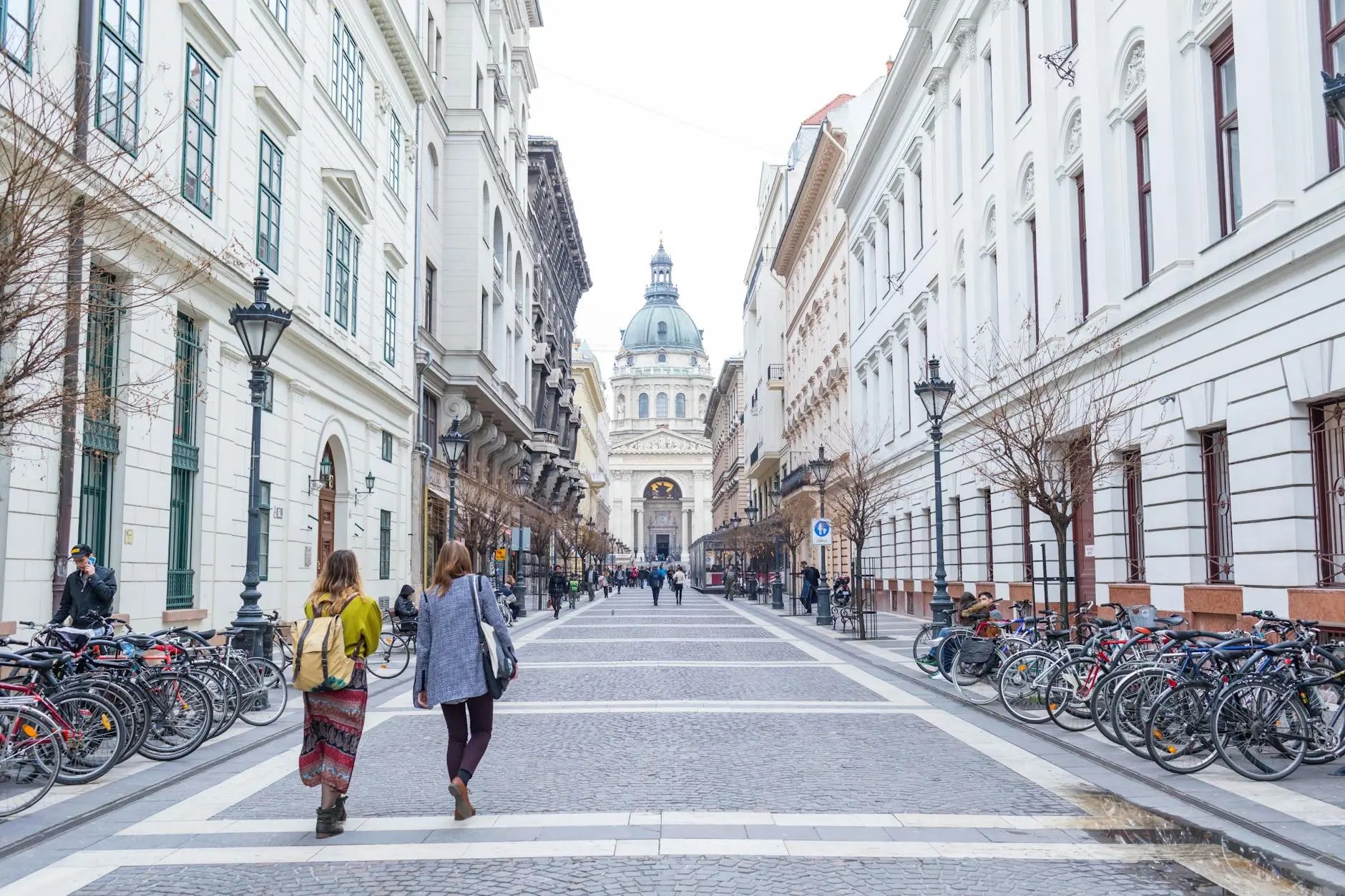
Street view in Vienna showing pedestrians walking along a cobblestone path lined with trees and bicycles parked on the side, with historic buildings and a dome structure in the background.
Strolling through the charming streets of Vienna, lined with historic architecture and bicycle racks. Getting lost is encouraged! The real magic of Vienna is found by wandering its charming, lesser-known cobblestone streets. Away from the grand palaces, you’ll find quiet lanes like this one, where bicycles lean against colorful historic buildings and the city’s effortless elegance is on full display.
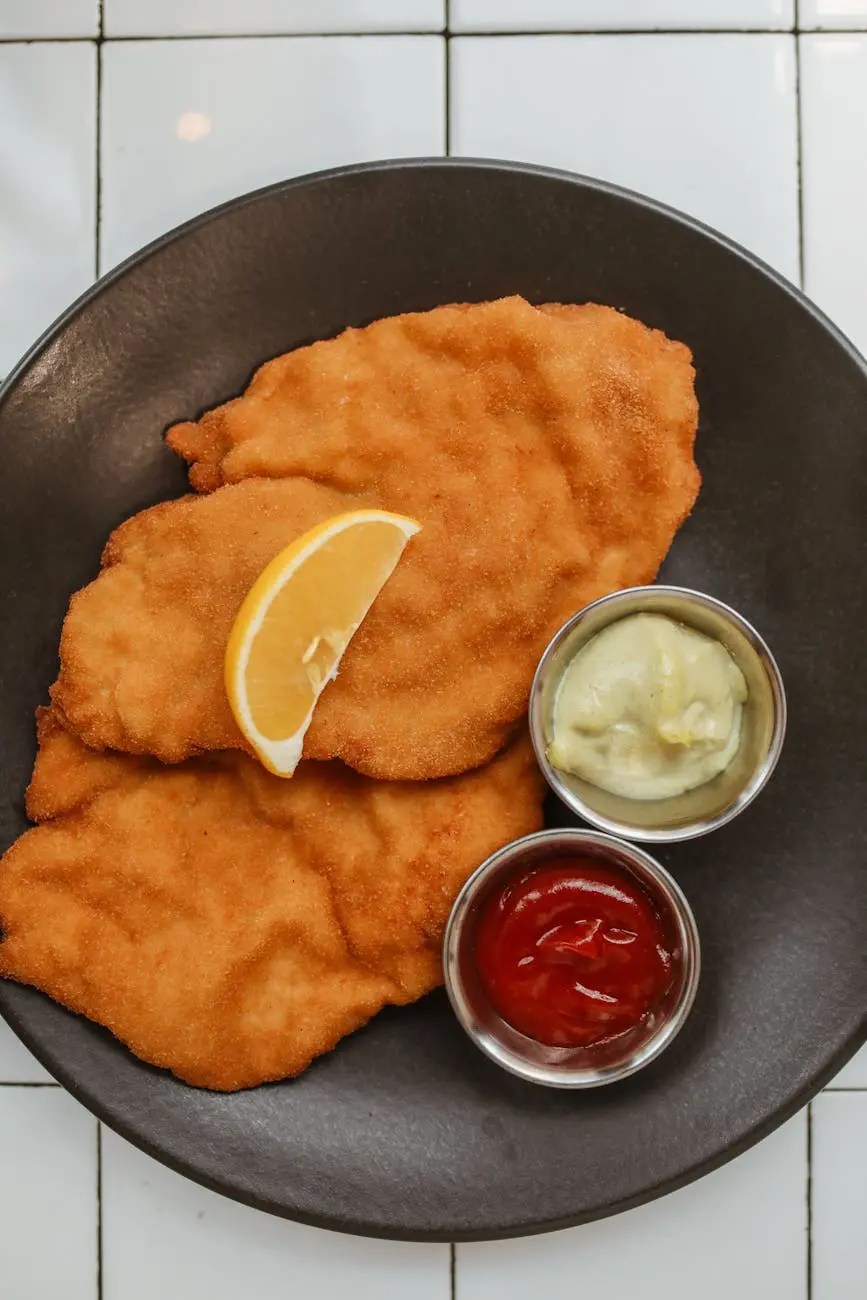
A plate of Wiener Schnitzel served with a slice of lemon and two small bowls of condiments: ketchup and mustard.
Indulge in Vienna’s iconic Wiener Schnitzel, served with lemon and traditional condiments. The ultimate Austrian comfort food: a perfectly golden, crispy Wiener Schnitzel. This pounded-thin, breaded, and fried veal cutlet is a national treasure. The key is a squeeze of fresh lemon to cut through the richness. While purists might scoff, a little dip of mustard or berry sauce never hurt anybody!
  • Hidden Gems:
    • Escape the crowds at Café Sperl, a time-capsule coffee house where locals play billiards
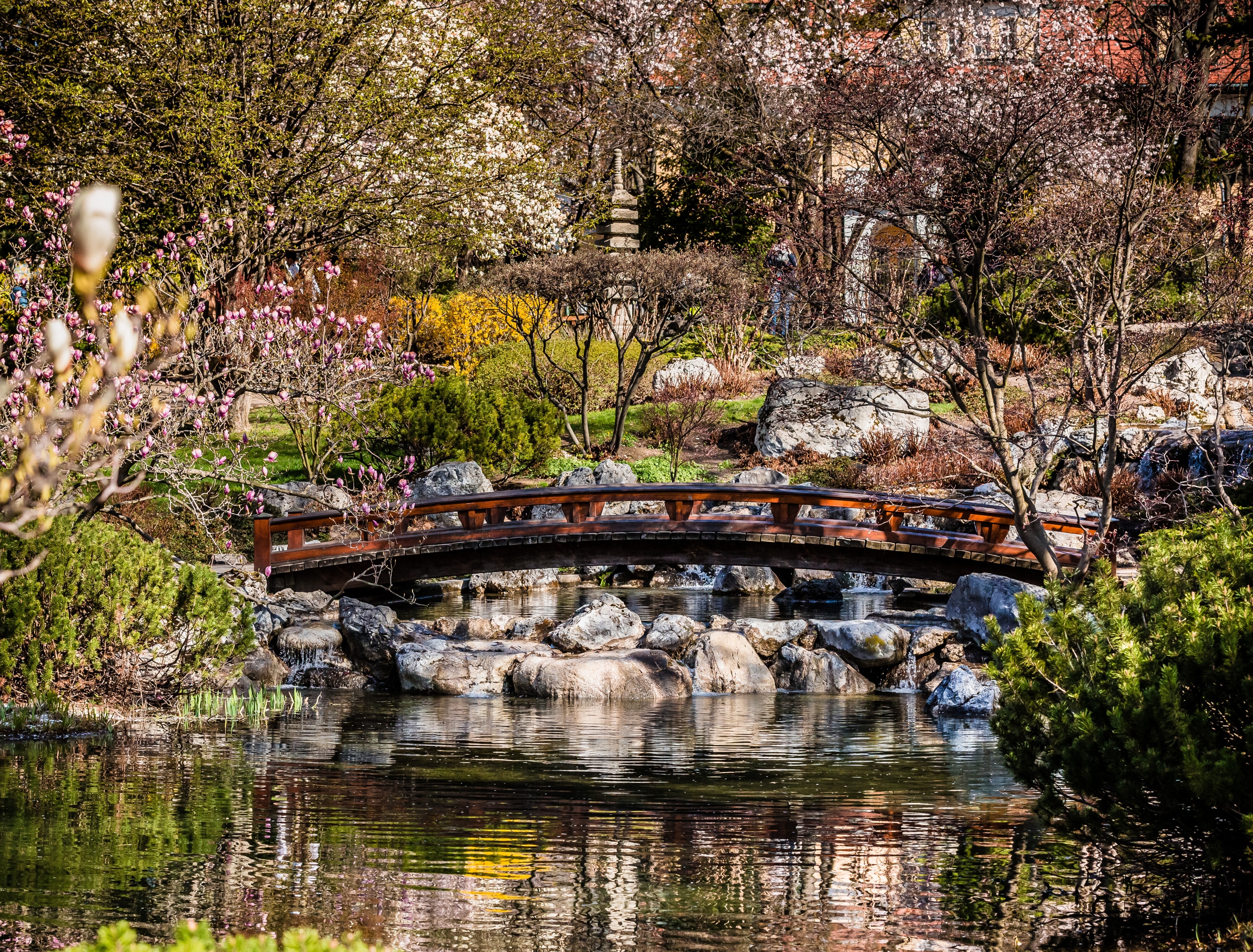
    • Discover Setagayapark, a peaceful Japanese tea garden hidden in the city
    • Visit Café Central for its stunning architecture and literary history

Setagaya Park Tours

Navigating Vienna Like a Pro: The Wiener Linien

Vienna’s public transport network (Wiener Linien) is a thing of beauty. It’s clean, efficient, and will get you absolutely anywhere.

  • The Network: It comprises U-Bahn (subway), trams, and buses. Google Maps is incredibly accurate for routes and times.
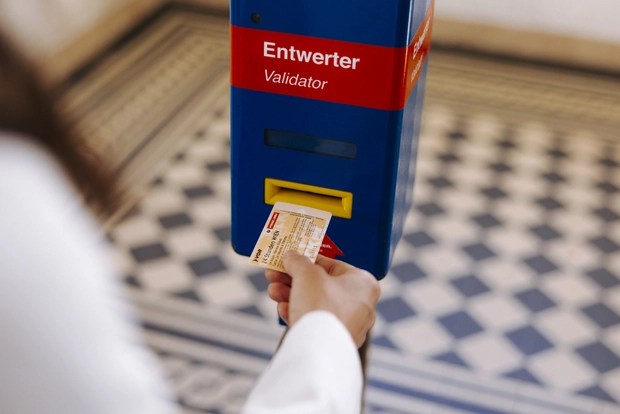
  • Tickets: For a weekend, your best bet is the Vienna City Card, which offers unlimited travel and discounts to major attractions. Alternatively, you can buy a 24-, 48-, or 72-hour unlimited pass. Remember to validate your ticket before your first journey at the little blue machines on platforms or on trams/buses! Plain-clothes inspectors are common, and fines are steep.
  • Car? Don’t even think about it. Parking is a nightmare and expensive. The city center is a maze of pedestrian zones. Save the car rental for a future [Road Trip Through the Austrian Alps].
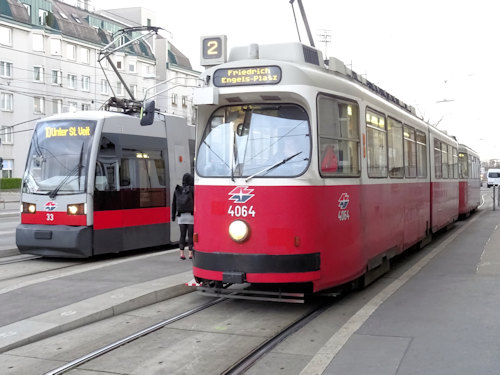
A red and gray tram at a station in Vienna, Austria, with another tram visible nearby and passengers waiting on the platform.
Vienna’s efficient public transport featuring classic trams and modern trains, showcasing the city’s seamless connectivity.

A person using a ticket validator machine with a public transport ticket in Vienna, Austria.
Validating a public transport ticket in Vienna.

Money-Saving Secrets & Hidden Gems

  • Free Entry: Many museums (like the MUMOK) have reduced or free entry on the first Sunday of the month.
  • The Water: Vienna’s tap water (Hahnwasser) is some of the best in the world, coming straight from the Alps. Carry a reusable bottle and fill up for free.
  • Hidden Gem: Escape the crowds at Café Sperl, a time-capsule coffee house where locals play billiards. Or, take tram D along the Ringstrasse for a stunning, moving tour of the city’s grandest buildings for the price of a single ticket.

Essential German Phrases for the Wiener Weekend

  • Hallo / Guten Tag (Hello / Good day)
  • Danke (Thank you)
  • Bitte (Please / You’re welcome)
  • Ein Melange, bitte (A Melange, please)
  • Zahlen, bitte (The bill, please)
  • Prost! (Cheers!)
  • Entschuldigung (Excuse me)
PhrasePronunciationMeaning
„Wo ist die U-Bahn?“Vo ist dee OO-bahn?Where is the subway?
„Ein Wasser, bitte.“Ine VAH-ser BIH-tuhOne water, please

Travel Smarter, Not Harder: My Trusted Resources

After countless trips, I rely on a few key tools to make everything smoother.

🌐 Stay Connected: I used to waste precious vacation time hunting for SIM cards at the airport. Now, I never travel without my Drimsim. It’s a genius universal SIM that works in 190+ countries. Pop it in, top up via the app, and you’re online instantly. No contracts, no hidden fees. It’s a total game-changer for navigating and posting those palace pics.

🔒 Stay Secure: Using public WiFi to check your bank account or book tickets? Big risk. A VPN encrypts your connection, keeping your data safe from hackers. It’s non-negotiable for modern travel. I’ve used NordVPN for years to stay secure and even access streaming from back home.

📸 Capture the Memories: To do Vienna justice, you need a good camera. I swear by my Sony Alpha series for capturing the gilded details of the palaces and the vibrant energy of the Naschmarkt. It’s the perfect travel companion.

🛡 Get What You’re Owed: Let’s be real, travel doesn’t always go to plan. My flight back from Vienna was once delayed by 8 hours. I didn’t stress because I knew AirHelp had my back. If your flight is delayed, canceled, or overbooked, you could be entitled to up to €600 in compensation. They handle all the paperwork and only charge if they win. It’s a no-brainer.

Ready to plan your Viennese adventure? Find the best flight and hotel deals for your dates here!

FAQ: Your Quick Vienna Weekend Questions Answered

Q: What is the best time of year for a weekend in Vienna?
A: Spring (April-May) and Fall (September-October) are ideal. The weather is mild, and the crowds are smaller than in the peak summer months. The Christmas markets in December are magical but very busy.

Q: Is Vienna expensive?
A: It can be, but it doesn’t have to be. Museum entry fees add up, so prioritize. Eating at Würstelstands and markets, using public transport, and enjoying free activities like wandering the gardens can keep costs down.

Q: How do I get from Vienna Airport (VIE) to the city center?
A: The CAT train is the fastest (16 mins) but most expensive. The ÖBB Railjet or S-Bahn (S7) train is cheaper and takes about 25 minutes to Wien Mitte. Buses and taxis are also available.

Q: Do I need to tip in Vienna?
A: Tipping is customary but modest. It’s common to round up the bill or leave 5-10% for good service in restaurants. For a €19 bill, you’d say “Make it 22, please.”

Q: Can I get by with English?
A: Absolutely. English is widely spoken in tourist areas, hotels, and restaurants. However, learning a few basic German phrases (see above!) is always appreciated and goes a long way.

Q: Is it safe?
A: Very. Typical big-city caution applies.

Q: Is the Vienna City Card worth it?
A: If you plan to visit multiple museums and use public transit extensively, the card often pays for itself within a day or two. Calculate your planned entries versus the card cost to be sure.

Emergency Number: Dial 112 throughout the EU for any emergency services.

Have your own Vienna tips or questions? Drop them in the comments below

Vienna has a way of stealing a piece of your heart. I’d love to hear what yours steals! What’s the one thing you’re most excited to see or taste? Is it the Schnitzel, the symphony, or the schnapps at a Heuriger? Drop your top pick in the comments below—I read every single one!

Final Thoughts

Vienna is a weekend escape that’s decadent yet approachable, packed with culture, coffee, cute carts, and enough architectural eye-candy to keep your camera shutter snapping. With careful planning—smart transport choices, savvy savings, and insider tips—you can sip your melange, wander palace halls, and laugh at your own jokes in baroque courtyards without breaking the bank.

Happy travels—and may your weekend in Vienna be legen—wait for it—dary!

Loved this guide? Share it with the friend you’d most want to get lost in Vienna’s streets with!

Universal Disclaimer/Disclosure Page: