Ultimate Weekend Guide to Granada: History & Hidden Gems

Meta Description

Planning a weekend escape to Granada, Spain? This human‑written travel guide is crafted for curious travelers who want history, hidden gems, smart logistics, and money‑saving tips. SEO‑ and GEO‑optimized, packed with personal anecdotes, transport hacks, ferry options, affiliate deals, and insider advice to help you explore Granada confidently without wasting time or cash.

Ah, Granada. A city where the scent of orange blossoms mixes with the sound of flamenco drifting from a cave, where you can stand in a fortress built by sultans and watch the sunset over snow-capped mountains. I went for a long weekend, convinced I was just ticking the majestic Alhambra off my list. I left with my soul feeling fuller, my camera overflowing, and a profound belief that the best things in life are often free (hello, complimentary tapas!). This guide is your blueprint for an unforgettable, efficient, and deeply enriching weekend in this crown jewel of Andalusia.

Granada is the kind of city that sneaks up on you. One minute you’re admiring intricate Islamic tiles at the Alhambra, the next you’re eating free tapas with your drink and wondering why life doesn’t always feel this balanced. Tucked against the Sierra Nevada mountains in southern Spain, Granada blends Moorish history, student energy, and slow Andalusian charm—perfect for a long weekend that feels much longer (in the best way).

I still remember my first evening here: getting slightly lost in Albaicín, following the sound of a street guitarist, and accidentally discovering a viewpoint that made me forget my phone even existed. Granada does that to you.

Table of Contents

  1. Why Granada Is Perfect for a Weekend Escape
  2. Getting to Granada (Flights, Trains, Buses & Roads)
  3. Getting There by Ferry (Direct Ferries Guide)
  4. Getting Around Granada Like a Local
  5. Where to Stay (Smart Areas for First‑Timers)
  6. What to See in a Weekend (With Hidden Gems)
  7. Food, Tapas & Local Experiences
  8. Money‑Saving Tips for Granada
  9. Handy Spanish Words You’ll Actually Use
  10. Stay Connected, Protected & Stress‑Free Abroad
  11. FAQs for First‑Time Travelers
  12. Final Thoughts + Strong CTA

Why Granada Is Perfect for a Weekend Escape

Granada is compact, walkable, and endlessly atmospheric. You don’t need weeks here—48 to 72 hours is enough to see the highlights, slow down, and still leave wanting more. Compared to Barcelona or Madrid, prices are gentler, crowds feel manageable (especially if you plan smartly), and the culture feels deeply rooted rather than rushed.

It also pairs beautifully with nearby destinations—something I often recommend to travelers exploring Andalusia. If you’ve enjoyed historic city breaks before, you might also like Seville, Valencia, or Naples (all linked in my Travel Master List for easy planning)

Getting to Granada (Flights, Trains, Buses & Roads)

✈️ By Air

Granada has its own airport (GRX), but flights are limited. Most travelers fly into Málaga (AGP), which is well‑connected internationally and often cheaper.

Granada is inland, nestled at the foot of the Sierra Nevada mountains. While it has its own airport (GRX), it’s not a major international hub.

By Air: Federico García Lorca Granada-Jaén Airport (GRX) is about 17 km west of the city. It has good connections to major Spanish cities (Madrid, Barcelona) and some European hubs. The Alhambra Bus runs directly to the city center in about 45 minutes

👉 I usually compare flight + hotel bundles on Expedia because flexible cancellations have saved me more than once: 👉 Flights to Granada

Where to Stay

I usually filter stays on Expedia for “guest rating + location”—it’s saved me from booking regret more than once.

Hotels in Granada

🚆 By Train

By Train: The high-speed AVE train from Madrid to Granada takes about 3.5 hours and is a comfortable, scenic option. The station is well-connected to the city by bus and taxi.

From Málaga to Granada by train takes about 1h 15m–1h 30m. Renfe trains are comfortable, reliable, and surprisingly scenic once you leave the coast.

🚌 By Bus

ALSA buses run frequently from Málaga, Seville, and Córdoba. It’s budget‑friendly and often just as fast as the train.

By Bus: Often the most economical and well-connected option from other Andalusian cities. Companies like ALSA run frequent services from Seville, Málaga, and Córdoba. The main bus station is a short taxi ride from the center.

🚗 By Car (Road Tips)

Driving from Málaga to Granada takes around 1.5 hours via the A‑92. Roads are excellent, signage is clear, and fuel stops are frequent. Tip: avoid entering the Albaicín by car—streets are narrow and parking is… let’s say “character‑building.”

Getting There by Ferry (Direct Ferries Guide)

By Ferry: Here’s the important note: Granada itself does not have a ferry port as it is not on the coast. However, if you’re dreaming of a combined Spain trip with a ferry ride, your best bet is to sail into the nearby Port of Málaga or Almería. From these ports, you can easily rent a car or catch a direct bus (approx. 1.5-2 hours) to Granada. To check schedules and book ferry tickets to southern Spain from places like Morocco or the Balearic Islands, a great resource is Direct Ferries.

Granada itself doesn’t have a port, but ferry lovers aren’t left out.

The closest major ferry port is Málaga, which connects with routes from Morocco (Melilla) and seasonal Mediterranean crossings. You can:

  1. Take a ferry to Málaga
  2. Continue to Granada by train, bus, or car

To compare ferry routes, schedules, and prices, I recommend Direct Ferries—it’s the easiest way to see what’s actually running when you need it.

This combo works brilliantly if you’re mixing Spain with North Africa or doing a slower, more scenic Mediterranean journey.

Granada at a Glance: What You Need to Know

Granada is the dramatic finale of the Reconquista in Spain’s south. Its crown jewel, the Alhambra, is a sprawling palace and fortress complex that is a UNESCO World Heritage site and one of the most visited monuments in the world. But the city is more than just one site; it’s a layered experience of Moorish history, vibrant gypsy culture, and student energy.

  • Currency: Euro (€).
  • Language: Spanish. English is common in tourist areas, but a few basic phrases go a long way (see our guide below!).
  • Visa: For most US, Canadian, UK, and Australian travelers, no visa is required for tourist stays under 90 days within the Schengen Area. Always check the latest requirements with official sources before booking.
  • Best Time to Visit: Spring (April-June) and Fall (September-October) offer pleasant weather and fewer crushing crowds. Summer is fiercely hot, and winter can be surprisingly cold in the mountains.
  • City Vibe: Historic, passionate, youthful, and delightfully chaotic.

Getting Around Granada Like a Local

Granada is wonderfully walkable, especially the city center.

  • 🚶 Walking: Best for Albaicín, city center, and viewpoints
  • 🚍 Buses: Cheap and efficient—use buses C1 and C2 for hills
  • 🚕 Taxis: Affordable for short trips

I saved time (and my knees) by using buses uphill and walking downhill—simple, smart, and budget‑friendly.

Your Strategic Weekend Itinerary

This plan maximizes your time, balancing iconic sights with local flavor.

Day 1: The Majesty of the Alhambra & Albayzín Twilight

  • Morning (9:00 AM): THE ALHAMBRA. BOOK YOUR TICKETS ONLINE MONTHS IN ADVANCE. I cannot stress this enough. Tickets for the Nasrid Palaces are for a strict 30-minute entry window—miss it and you’re out of luck. Spend 3-4 hours exploring the intricate palaces, rugged Alcazaba fortress, and serene Generalife gardens.
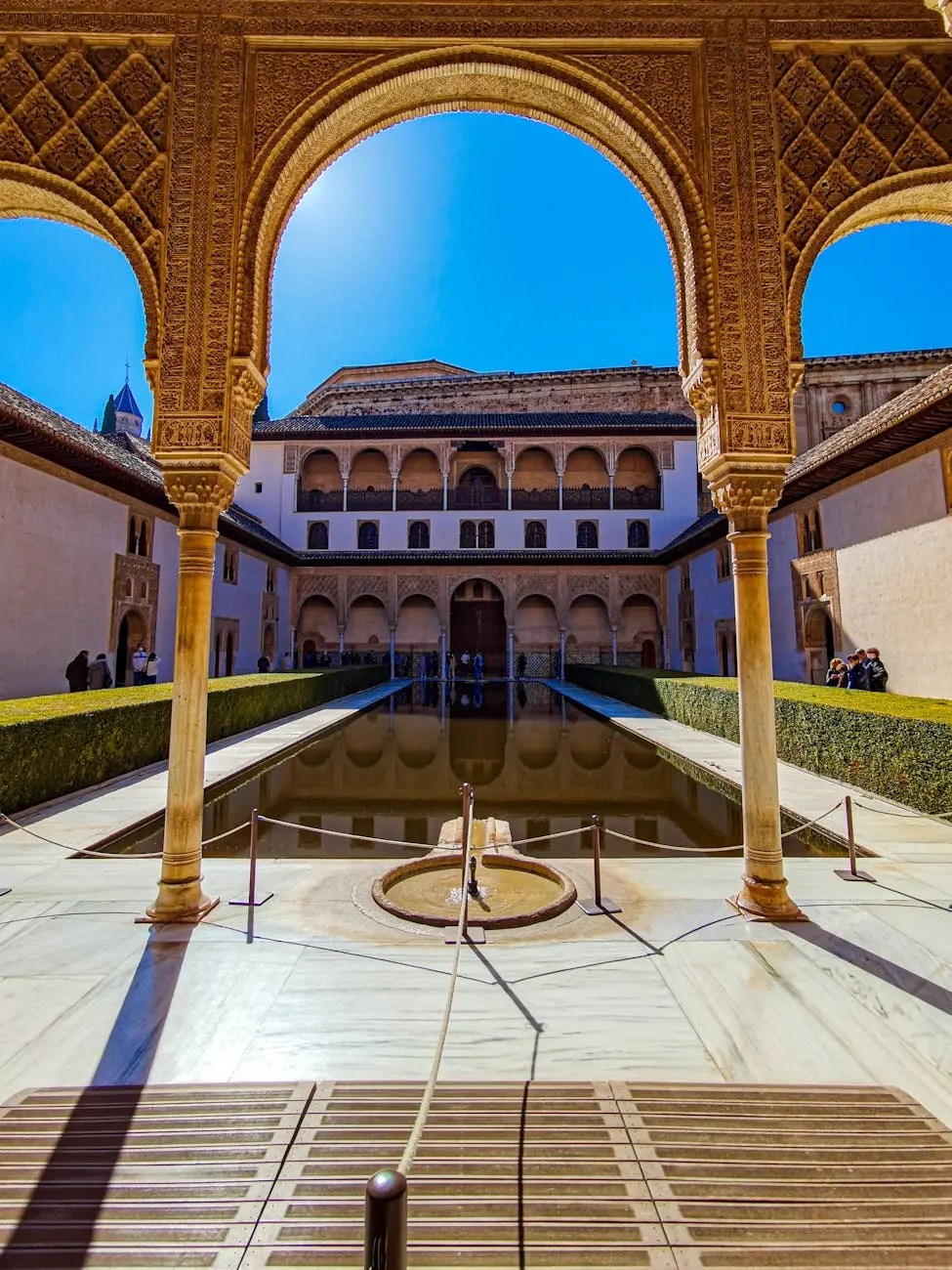
View of the Courtyard of the Lions in the Alhambra, featuring intricate arches, a central fountain, and lush greenery under a clear blue sky.
The stunning courtyard of the Alhambra, showcasing intricate Islamic architecture and serene reflections in the pool. The serene and stunning Court of the Myrtles, the central courtyard of the Nasrid Palaces, perfectly demonstrates Islamic architecture’s mastery of water, light, and geometry.

ALHAMBRA (Expedia)ALHAMBRA (Get Your Guide)
  • Afternoon (2:00 PM): Lunch in Realejo, the old Jewish quarter. Find a small bar for a ración of local cheese or grilled vegetables.
Realejo (Expedia)Realejo (Get Your Guide)
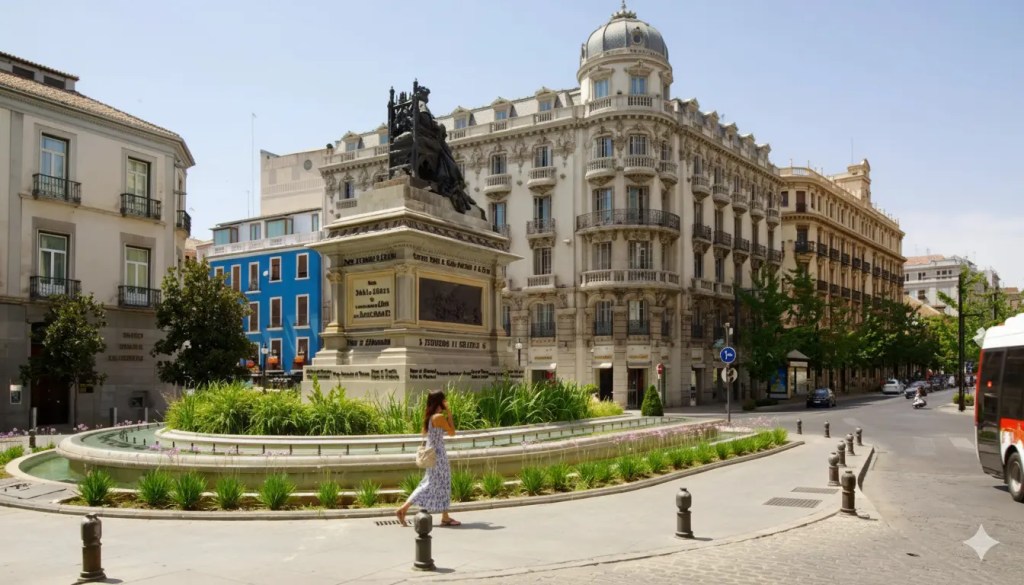
Monument to the Capitulations of Santa Fe in Plaza Isabel la Católica, Granada, showing a statue of Queen Isabella I presenting documents to Christopher Columbus.
A bustling square in Granada featuring a historic monument and the beautiful architecture of surrounding buildings. The historic monument in Plaza Isabel la Católica commemorates the 1492 agreement between Queen Isabella I and Christopher Columbus, which set his voyage to the Americas in motion.
  • Late Afternoon (5:00 PM): Walk up into the Albayzín, the ancient Moorish quarter. Get lost in its cobblestone lanes, whitewashed houses, and hidden cármenes (walled gardens). Make your way to the Mirador de San Nicolás for the classic, breathtaking view of the Alhambra against the Sierra Nevada.
Albayzín (Expedia)Albayzín (Get your guide)
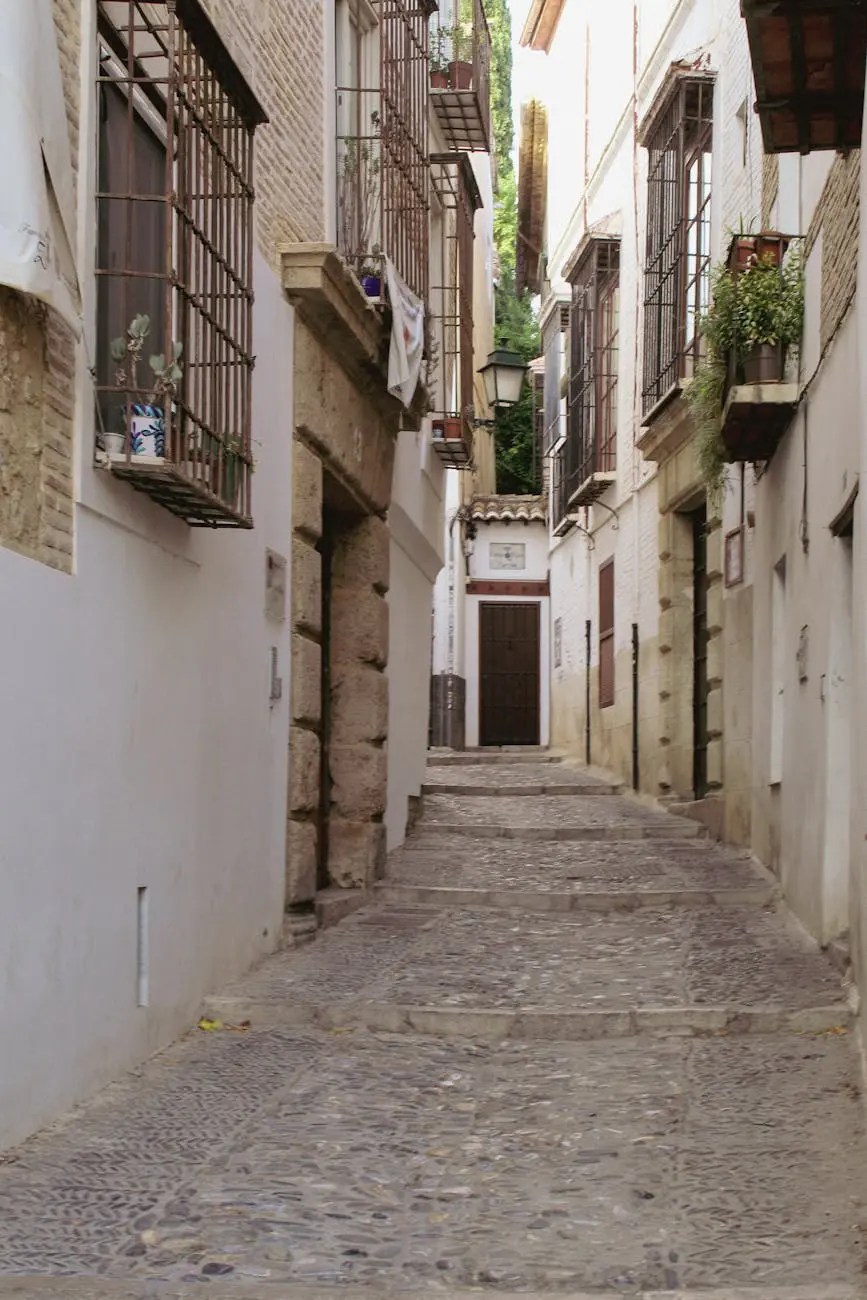
A narrow cobblestone street in Granada, Spain, lined with whitewashed buildings featuring wrought iron balconies and greenery.
A charming cobblestone alley in the historic Albaicín neighborhood of Granada, showcasing its traditional architecture and inviting atmosphere. Getting lost in the labyrinthine, shaded streets of the Albaicín is the best way to experience the atmosphere of Granada’s ancient Moorish quarter

  • Evening (9:00 PM): Dinner and flamenco. Skip the expensive, staged shows for a more authentic tablao in the Sacromonte cave district. The raw passion here is electric.
A panoramic view of the Alhambra, a historic palace and fortress in Granada, Spain, surrounded by lush greenery and set against the backdrop of the Sierra Nevada mountains.
Mirador de San Nicolas showing mountains, chateau or palace and heritage architecture
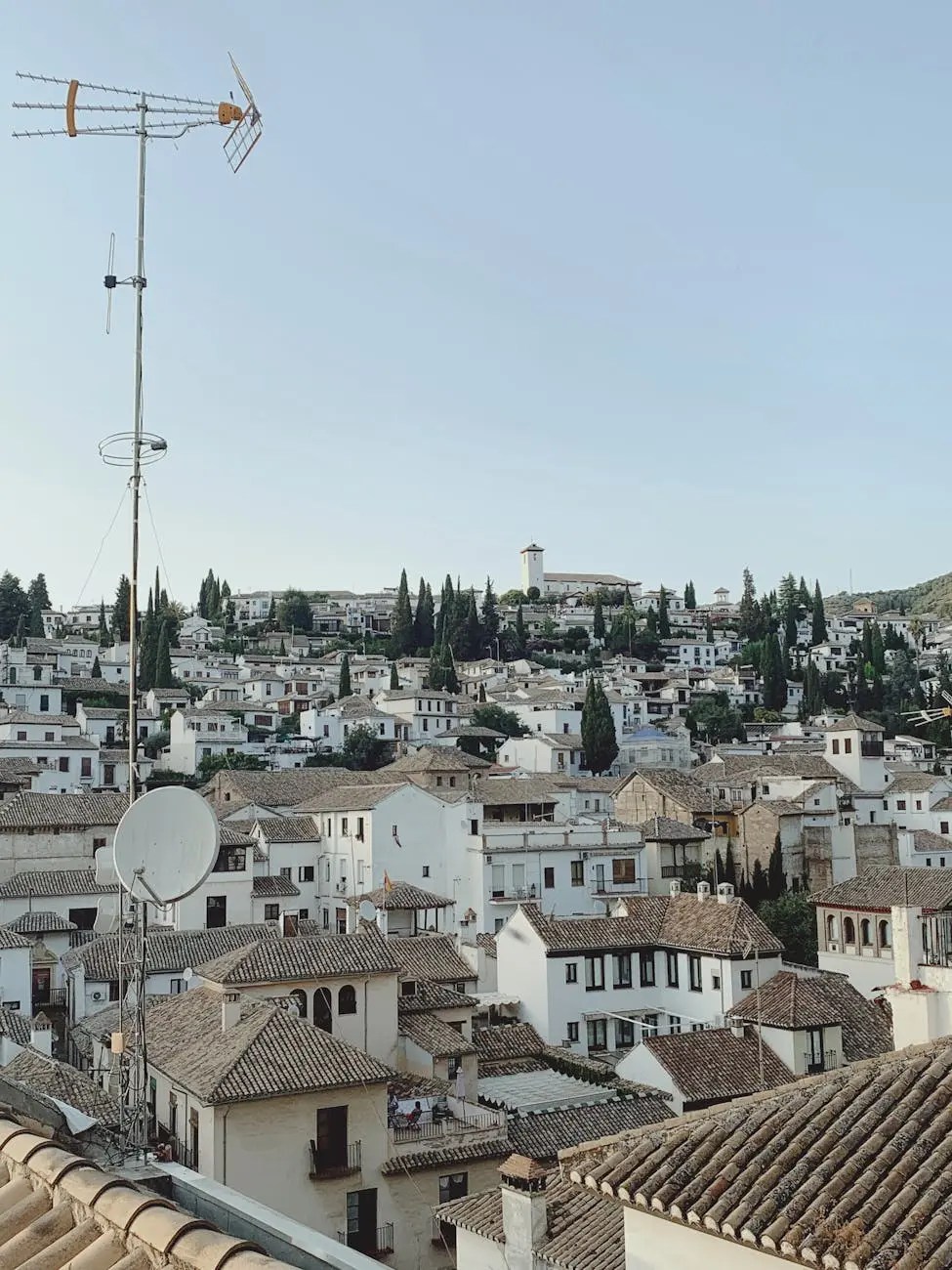
Scenic view of whitewashed houses and terracotta roofs in Granada, Spain, with a clear blue sky.
A panoramic view of Granada’s Albaicín neighborhood showcasing its iconic whitewashed houses and tile roofs against the backdrop of the Sierra Nevada mountains. A breathtaking aerial perspective reveals the dramatic relationship between the two UNESCO World Heritage sites: the organic maze of the Albaicín and the formidable Alhambra.
A dancer in a purple dress gracefully twirls with a flowing black shawl against a solid blue background.
A flamenco dancer captures the spirit of Granada with graceful movements and traditional attire. The intense emotion and precise movement of a flamenco performance embody the soul of Granada, especially in the historic Sacromonte caves.

Day 2: Cathedral Grandeur, Local Markets & Tapas Trail

  • Morning (10:00 AM): Visit the Royal Chapel (Capilla Real), the final resting place of the Catholic Monarchs, Ferdinand and Isabella. Then, explore the colossal Granada Cathedral right next door.
Royal Chapel (Expedia)Royal Chapel (Get Your Guide)
 Granada Cathedra (Expedia) Granada Cathedra (Get your guide)
  • Afternoon (1:00 PM): Wander through the Alcaicería, a maze of narrow streets that was once the Moorish silk market. It’s now full of shops selling spices, ceramics, and lamps.
 Alcaicería (Expedia) Alcaicería (Get your Guide)
  • Late Afternoon (4:00 PM): Granada’s Golden Rule: Drink, Get Fed for Free. Embark on a tapas crawl. In most granadino bars, every drink (a beer, wine, soft drink) comes with a free, substantial tapa. My strategy is to hop between bars in areas like Plaza Nueva or Calle Elvira, letting each drink decide my dinner. It’s social, delicious, and incredibly budget-friendly.
Plaza Nueva (Expedia)Plaza Nueva (Get your Guide)
Calle Elvirab (Expedia)Calle Elvira (Get your Guide)
  • Evening: Enjoy a leisurely stroll along the River Darro as the monuments light up.
River Darro (Expedia)River Darro (Get your Guide)
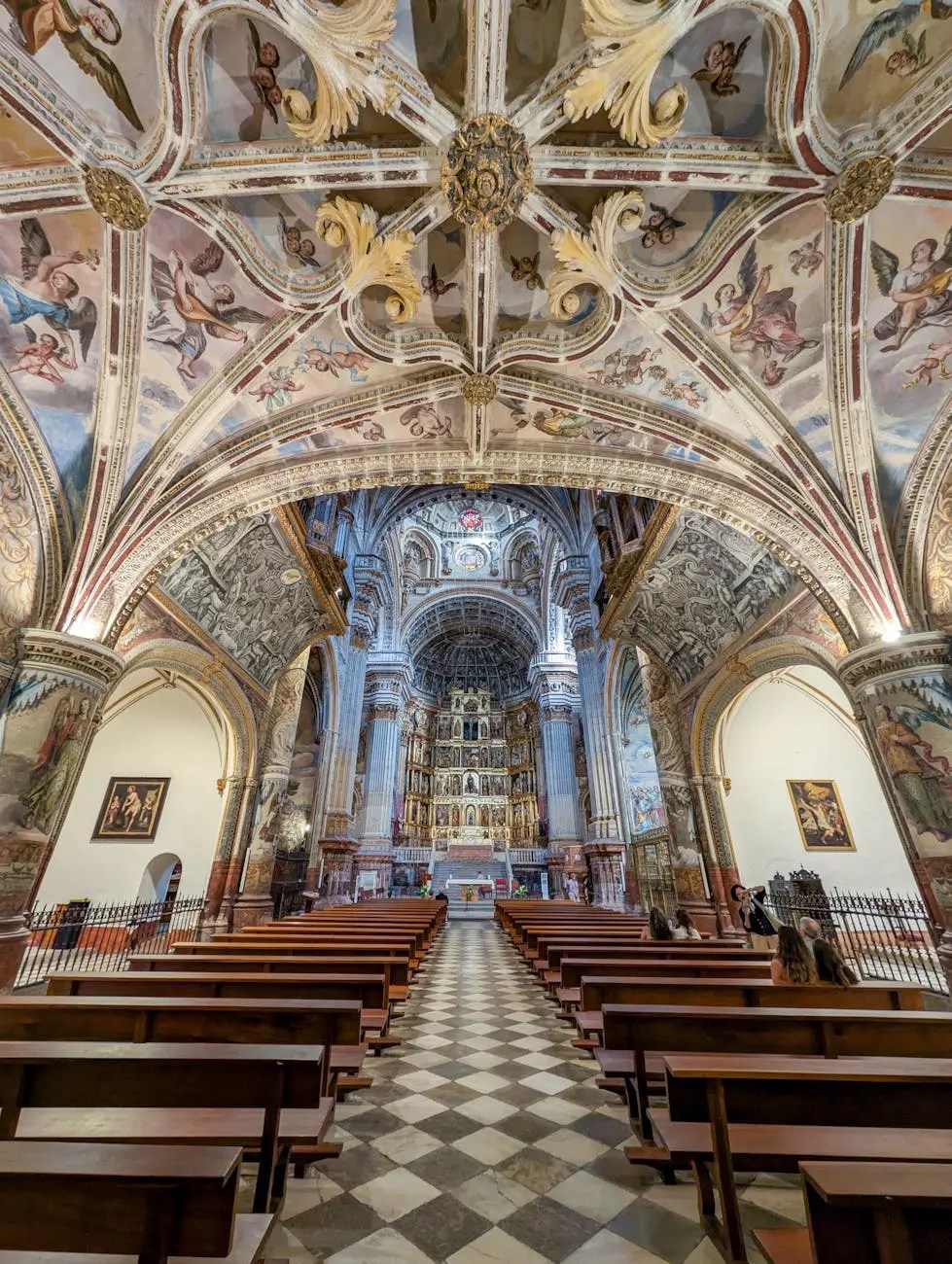
Interior view of a historic cathedral featuring intricate frescoes on the ceiling, ornate altar, and empty wooden pews leading towards the altar.
The ornate interior of Granada’s Royal Chapel, showcasing intricate frescoes and baroque architecture. The lavishly decorated church of the Royal Monastery of San Jerónimo, a masterpiece of Spanish Renaissance architecture and art.
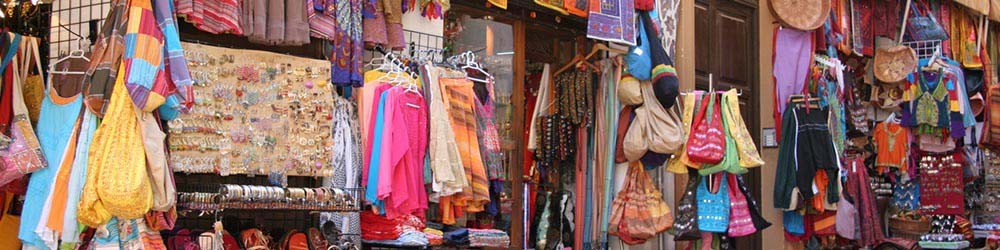
Colorful shops displaying a variety of textiles, clothing, and accessories in a vibrant market.
A vibrant market scene in Granada, showcasing colorful textiles, accessories, and local crafts that reflect the city’s rich culture.

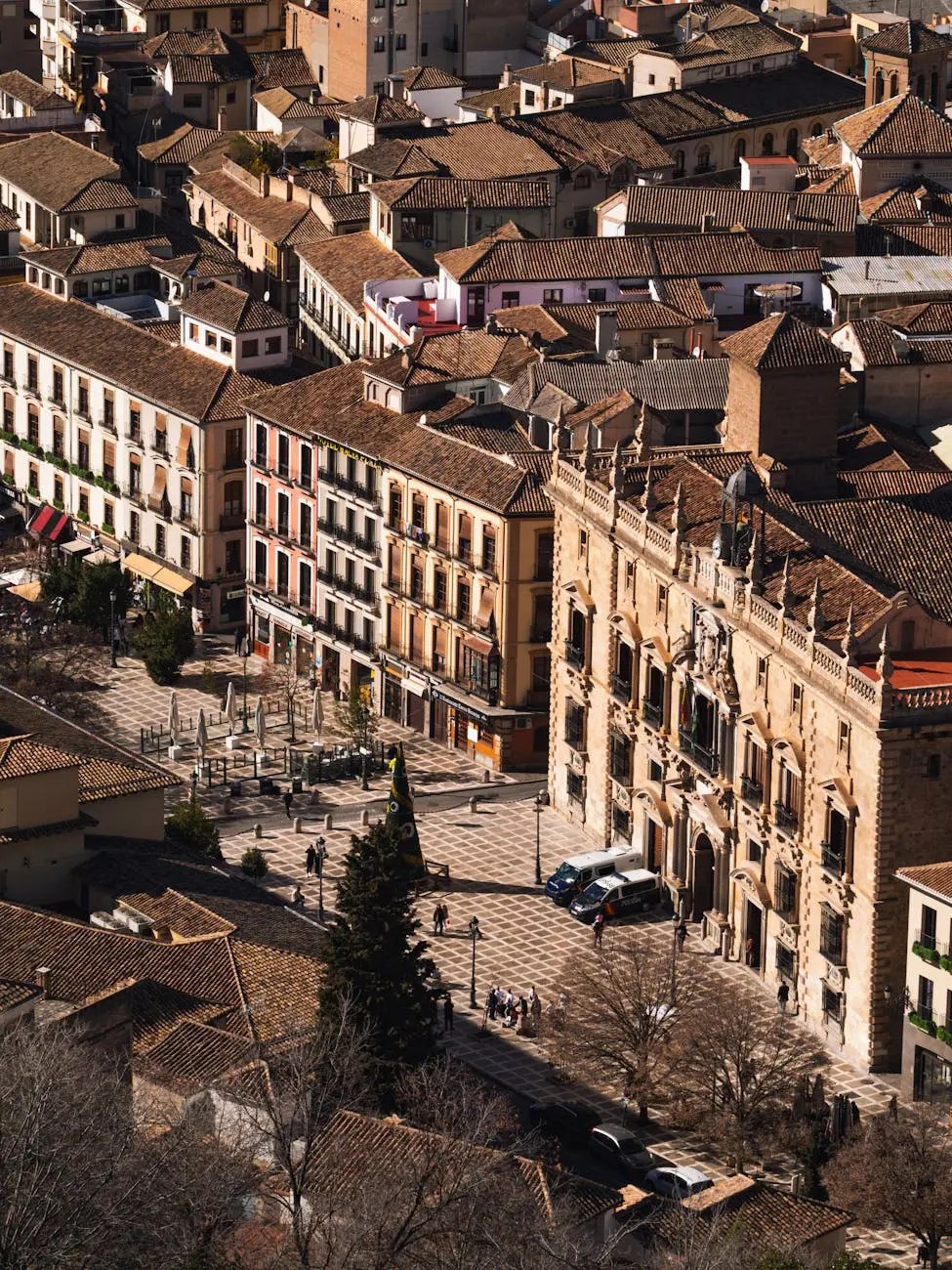
Aerial view of a historic square in Granada, Spain, featuring traditional Spanish architecture, tiled rooftops, and quaint streets lined with shops and cafes.
Aerial view of Granada’s charming rooftops and historic architecture showcasing the vibrant atmosphere of this Andalusian city. Plaza Nueva, the city’s oldest square, seen from above, revealing its strategic position at the foot of the Alhambra hill.
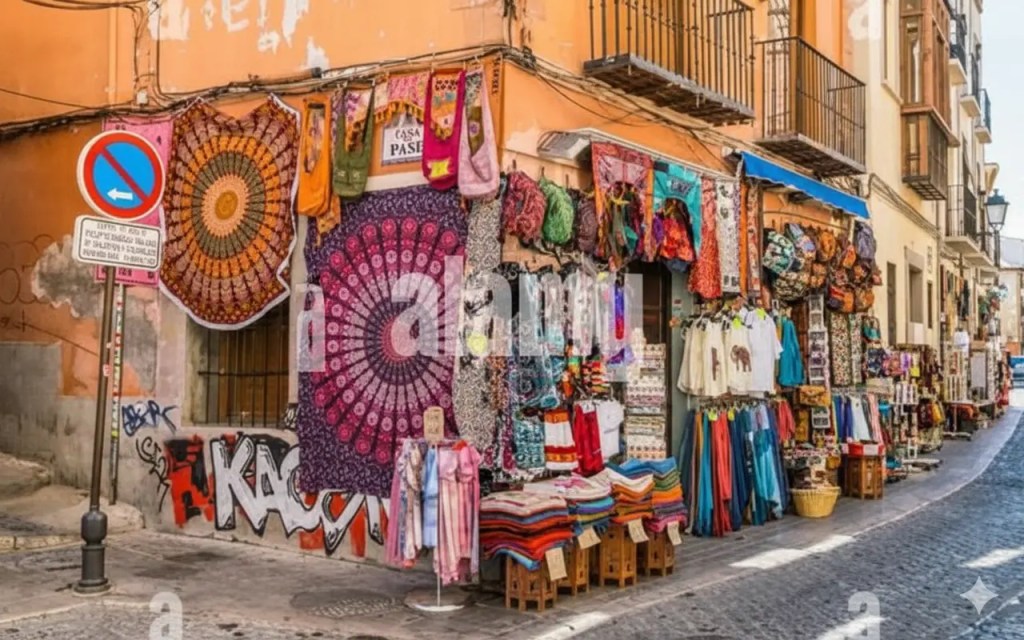
A vibrant street market in Granada, featuring colorful textiles, tapestry displays, and traditional clothing for sale, alongside a narrow cobblestone street.
Colorful street market in Granada showcasing tapestries, clothing, and local crafts. The bustling Calle Elvira is a sensory gateway, where the aromas from tapas bars mix with the sight of glittering lanterns in traditional tetería shopfronts.

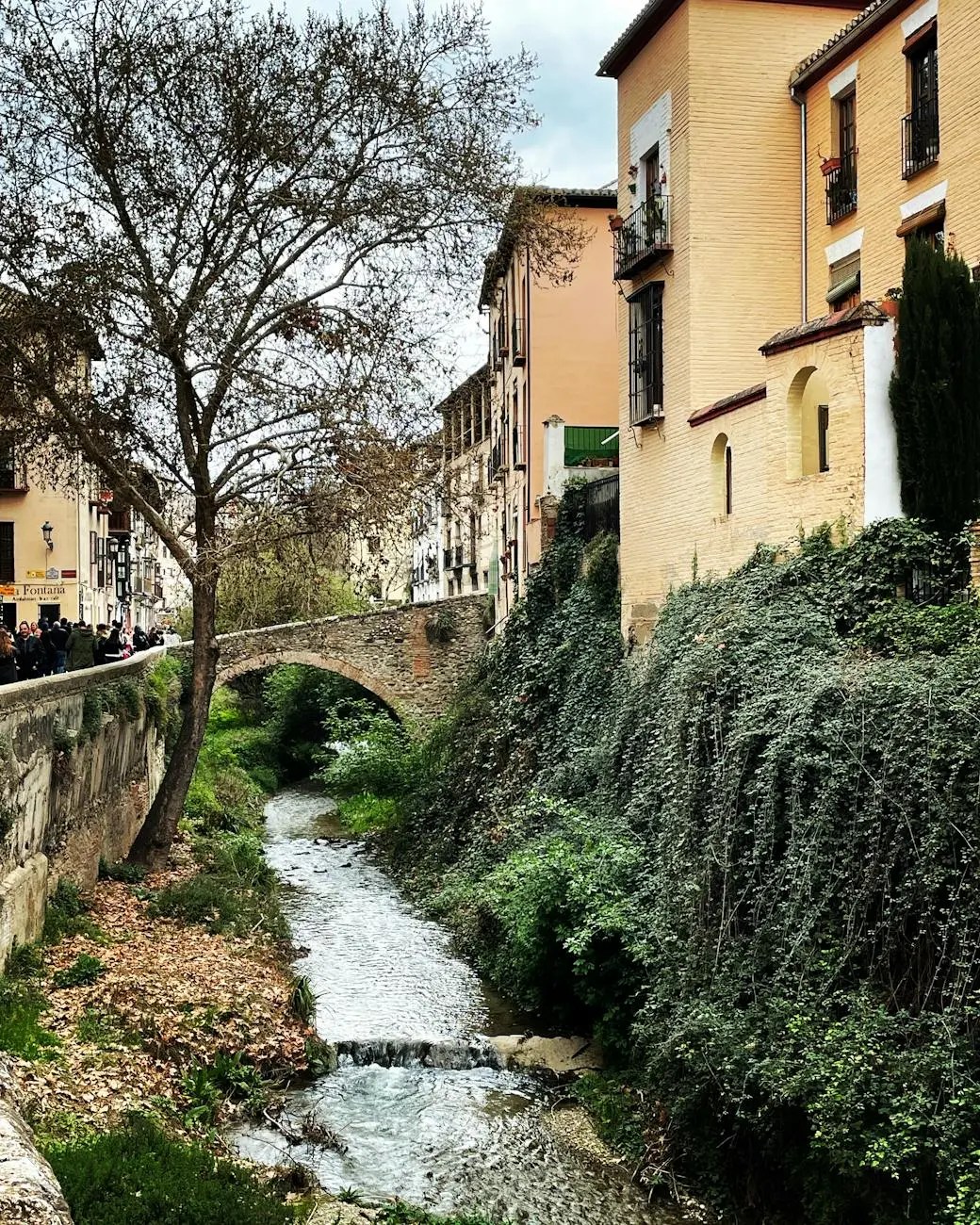
A picturesque view of a narrow stream running alongside a stone bridge, surrounded by lush green vegetation and charming buildings in Granada, Spain.
Picturesque view of a serene stream flanked by charming buildings and trees in Granada, creating a tranquil atmosphere. A stroll along Carrera del Darro feels like a walk through a living history book, with the river and centuries-old architecture on full display.

Granada’s Hidden Gems & Local Secrets

  • El Bañuelo: These stunning 11th-century Arab baths, hidden down a side street in the Albayzín, are often overlooked but are one of the best-preserved in Spain. Entrance is cheap and rarely crowded.
  • Carmen de los Mártires: A peaceful, slightly forgotten palace and garden just north of the Alhambra. It feels secret, romantic, and offers another unique viewpoint of the city.
Carmen de los Mártires (Expedia)Carmen de los Mártires (Get your Guide)
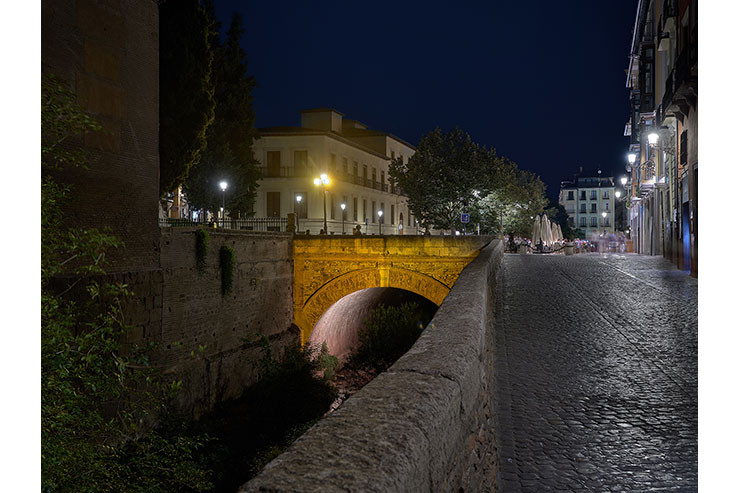
  • Carrera del Darro at Night: This beautiful street along the river is magical after dark, with the Alhambra illuminated above. Skip the crowded bars here and just walk.
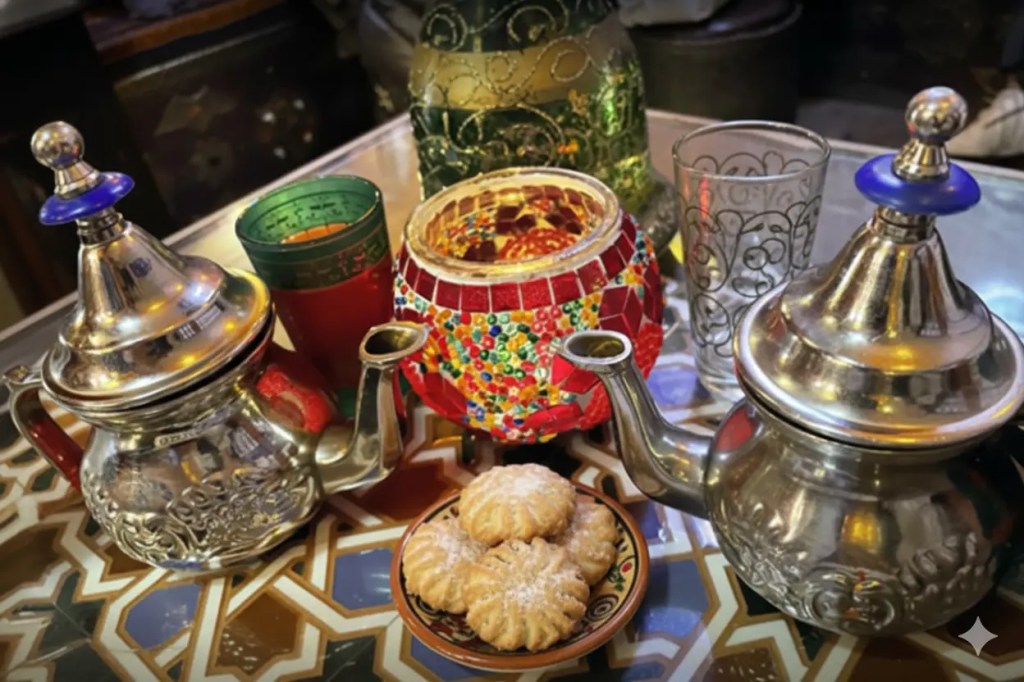
  • Tea in a Tetería: After the bustle, retreat to a tetería (tea house) in the Albayzín. Sip mint tea in a room filled with cushions and Moorish decor—it’s an instant transport to another time.
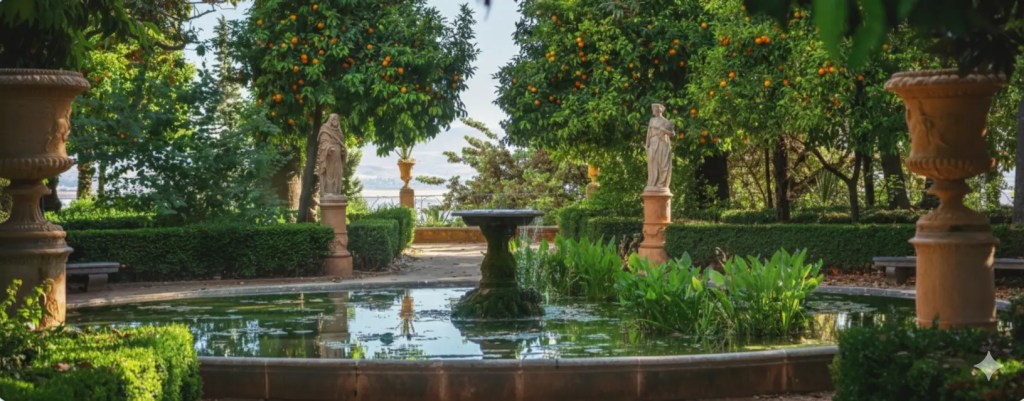
A serene garden scene featuring a circular fountain surrounded by lush greenery and trees bearing oranges. Statues are placed among the foliage, adding an artistic touch to the tranquil setting.
A tranquil garden in Granada, Spain, featuring lush greenery, orange trees, and a serene pond surrounded by classical statues. The romantic and secluded Carmen de los Mártires gardens offer a quiet escape with stunning, framed views of the city below.
Night view of a cobblestone street in Granada, Spain, featuring a lit bridge arching over a small river, surrounded by trees and buildings.
A serene nighttime view of a beautifully lit bridge in Granada, showcasing the city’s charming cobblestone streets.
A traditional Moroccan tea set in a Granada tetería, featuring a colorful mosaic candle holder, silver teapots, glasses, and cookies.
Experience the ritual of mint tea in Granada’s traditional teterías, complete with ornate silverware and sweet pastries. The ritual of mint tea in a tetería is a sensory journey, complete with ornate silverware, sweet pastries, and the glow of mosaic lamps.

Food, Tapas & Local Experiences

Granada is famous for free tapas—order a drink, get food. My advice?

  • Avoid tourist menus near major sights
  • Follow locals into busy bars
  • Don’t rush—Granada eats slowly

Money‑Saving Tips for Granada

  • Visit major sights early morning
  • Use buses instead of taxis uphill
  • Stay slightly outside Albaicín
  • Combine ferry + train if coming via Málaga

🔌 Don’t forget power needs. This European Travel Plug Adapter Kit has covered me across Spain, Italy, and France:

Money-Saving Tips & Navigating Like a Pro

  • The Granada Card: If you plan to visit multiple monuments (Alhambra, Cathedral, Royal Chapel, monasteries), this card can save you money and includes Alhambra access, bypassing the need for a separate ticket. Do the math based on your itinerary.
  • Public Transport is Cheap and Good: The city bus network is extensive. A single ticket is about €1.40, but a 10-ride Bonobús card (€8.20) is the best value. Taxis are also reasonably priced for short hops, especially if splitting with friends.
  • Walk, Walk, Walk: The historic center is very walkable, and getting “lost” is part of the fun (and free!).
  • Water and Siesta: Carry a reusable water bottle. Tap water is safe to drink. Embrace the siesta—many shops close from 2-5 PM, so plan your museum visits for the morning or late afternoon.
  • The Ultimate Tapa Hack: For the cheapest and most local tapas experience, venture just a block or two away from the main squares. The bars filled with students and locals always have the best value.

Essential Spanish & Andalusian Lingo {#essential-lingo}

A little language goes a long way in earning smiles.

  • Hola / Buenos días – Hello / Good morning
  • Gracias – Thank you
  • Por favor – Please
  • Una caña, por favor – A small beer, please (the standard tapa drink)
  • La cuenta, por favor – The bill, please
  • Tapa – The free snack with a drink. In Granada, you often don’t choose it—it comes with the territory!
  • Paseo – A leisurely stroll. A key local activity.
  • Mirador – Viewpoint. You’ll be seeking these out!
  • Guiri – (Slang, not offensive) A tourist or foreigner. That’s us!

Stay Connected, Protected & Stress‑Free Abroad

📶 Stay Connected

Staying online abroad can be expensive if you rely on roaming or airport SIM counters. I travel with Drimsim, a global SIM that works in 190+ countries. Pop it in, top up via the app, and you’re connected—no surprises, no stress.

🔐 VPN for Travel Safety

Public Wi‑Fi and travel bookings don’t mix well without protection. I always use NordVPN when traveling:

✈️ Flight Delayed or Canceled?

You could be entitled to up to $650 in compensation. AirHelp checks eligibility and handles everything for you:

🛡️ Travel Insurance

No matter how short the trip, insurance matters. I recommend VisitorsCoverage for quick comparisons and flexible plans: 👉 https://visitorscoverage.tpm.lv/QUKMbHg3


✨ Travel Glow‑Up Tip

Travel photos hit differently when you feel good. I swear by K‑beauty essentials from Lakinza—affordable, effective, and perfect for travel skin recovery. Use code Lalax10 for a sweet discount.

Frequently Asked Questions (FAQ)

Q: How far in advance do I really need to book Alhambra tickets?
A: As soon as your travel dates are firm. Tickets for the Nasrid Palaces are released exactly three months in advance and sell out incredibly fast, especially for morning slots in peak season. Set a calendar reminder.

Q: Is Granada safe for solo travelers?
A: Generally, yes. It’s a university city with a vibrant street life. Standard precautions apply: be aware of pickpockets in crowded areas like the Alcaicería, and be cautious walking alone in the very steep, narrow streets of Sacromonte late at night.

Q: What’s the deal with tapas in Granada? Is it really free?
A: Yes! It’s one of the last cities in Spain where the free tapa tradition remains strong. Order any drink (alcoholic or non-alcoholic) at most traditional bars, and a small plate of food will arrive with it. The quality and size often increase with your second or third drink.

Q: Can I do a day trip to the Sierra Nevada from Granada?
A: Absolutely. In winter, you can go skiing (the resort is about 45 minutes by bus). In summer, it’s fantastic for hiking. Regular buses run from the city center to the mountain villages and ski station.

Q: I have more than a weekend. Where else should I go in Andalusia?
A: You’re in the heart of it! Consider basing yourself in Seville for flamenco and the majestic Alcázar, or Córdoba for the mesmerizing Mezquita. You can explore my detailed guides to both cities for inspiration:

If Granada leaves you craving more Southern European magic (which it probably will), it pairs beautifully with several nearby city escapes I’ve already explored in depth. Just a few hours away, Seville, Spain delivers flamenco-filled nights, orange-scented courtyards, and some of Andalusia’s most dramatic architecture—perfect if you want to stay in the same cultural rhythm. Heading east, Valencia, Spain offers a completely different vibe with futuristic design, relaxed beaches, and one of the best food scenes in the country (yes, paella tastes better here). If you’re extending your trip north, Barcelona, Spain blends art, nightlife, and seaside energy in a way that feels effortlessly iconic. And for travelers hopping borders, Lisbon, Portugal makes a surprisingly smooth next stop—laid-back, photogenic, and ideal for slow wandering after Granada’s hilltop views. Linking these destinations together creates a smart, time-efficient route that saves money on transport while keeping the journey rich and varied.

Final Thoughts

Granada isn’t loud about its beauty—it reveals it slowly. Plan smart, walk often, eat well, and let the city surprise you.

👉 Ready to plan your escape? Compare flights and stays on Expedia now:

💬 Have questions or hidden gems to share? Drop a comment—I always reply.

📌 Explore more nearby escapes in my Travel Master List: 👉 https://confidencebuildings.com/travel-master-list/

https://www.tumblr.com/indigosavageryshark/804921819792621568?source=share

Universal Disclaimer/Disclosure Page:
Ultimate Weekend Getaway in Manila: Your Insider Guide

Meta Description: Forget the long-haul planning—Manila is your next spontaneous getaway! Discover how to spend the ultimate weekend in the Philippines‘ capital, hitting the best spots, hidden gems, and local eats. Get detailed travel tips, save time with public transport hacks (LRT/MRT), and learn the Filipino phrases you need. Optimized for travelers seeking Manila weekend travel, history, and culture. Find your next adventure on [Expedia]!

The moment I stepped out of Ninoy Aquino International Airport (NAIA), the Manila heat hit me like a friendly, humid hug. The city felt alive, chaotic, and utterly mesmerizing. Forget what you think you know about this often-overlooked hub; Manila isn’t just a layover city—it’s a dynamic metropolis waiting to be explored. And you only need a weekend to scratch the surface.

I’ve been traveling Southeast Asia for years, and Manila always calls me back. It’s a city of contrasts: colonial Spanish walls standing tall next to towering modern skyscrapers, and the scent of street food mingling with exhaust fumes. Trust me, it’s a ride, and with this hyper-efficient, time-saving itinerary, you’ll master it like a local.

Alright, let’s be real. Manila doesn’t always get the best press. People talk about its traffic, its chaos, its sheer, unadulterated energy. And you know what? They’re not wrong. But they’re also missing the point.

Manila isn’t a city you just see; it’s a city you feel. It’s a wild, beautiful, frenetic symphony of honking jeepneys, sizzling street food, and some of the warmest people you’ll ever meet. Tackling it in a weekend might seem ambitious, but trust me—with this plan, you’re not just checking boxes. You’re diving headfirst into the heart of the Philippines.

So, grab your sense of adventure (and maybe some deodorant, it’s humid), and let’s build your perfect Manila weekend.

Flights to Manila

Quick Tip: I never travel without my reliable Sony Alpha a7 III. It’s a workhorse for capturing everything from low-light church interiors to the vibrant chaos of a market.

Hotels in Manila

Table of Contents

  1. Your Manila Game Plan: A Weekend Itinerary
  2. Manila on a Budget: Money-Saving Hacks & Public Transport
  3. Hidden Gems & Local Secrets
  4. Essential Filipino Phrases for Travelers
  5. Travel Smarter, Not Harder: My Can’t-Live-Without Gear
  6. Frequently Asked Questions (FAQ)

Day 1: Old-World Charm & Sunset (Friday Evening to Saturday)

Friday Night: Arrive & Recharge

If you land on a Friday evening, the best advice I can give you is this: don’t try to fight the Friday rush hour traffic. It’s legendary. Instead, book your accommodation near a major transit line (like the LRT or MRT) or, better yet, in the walkable areas of Makati or Malate.

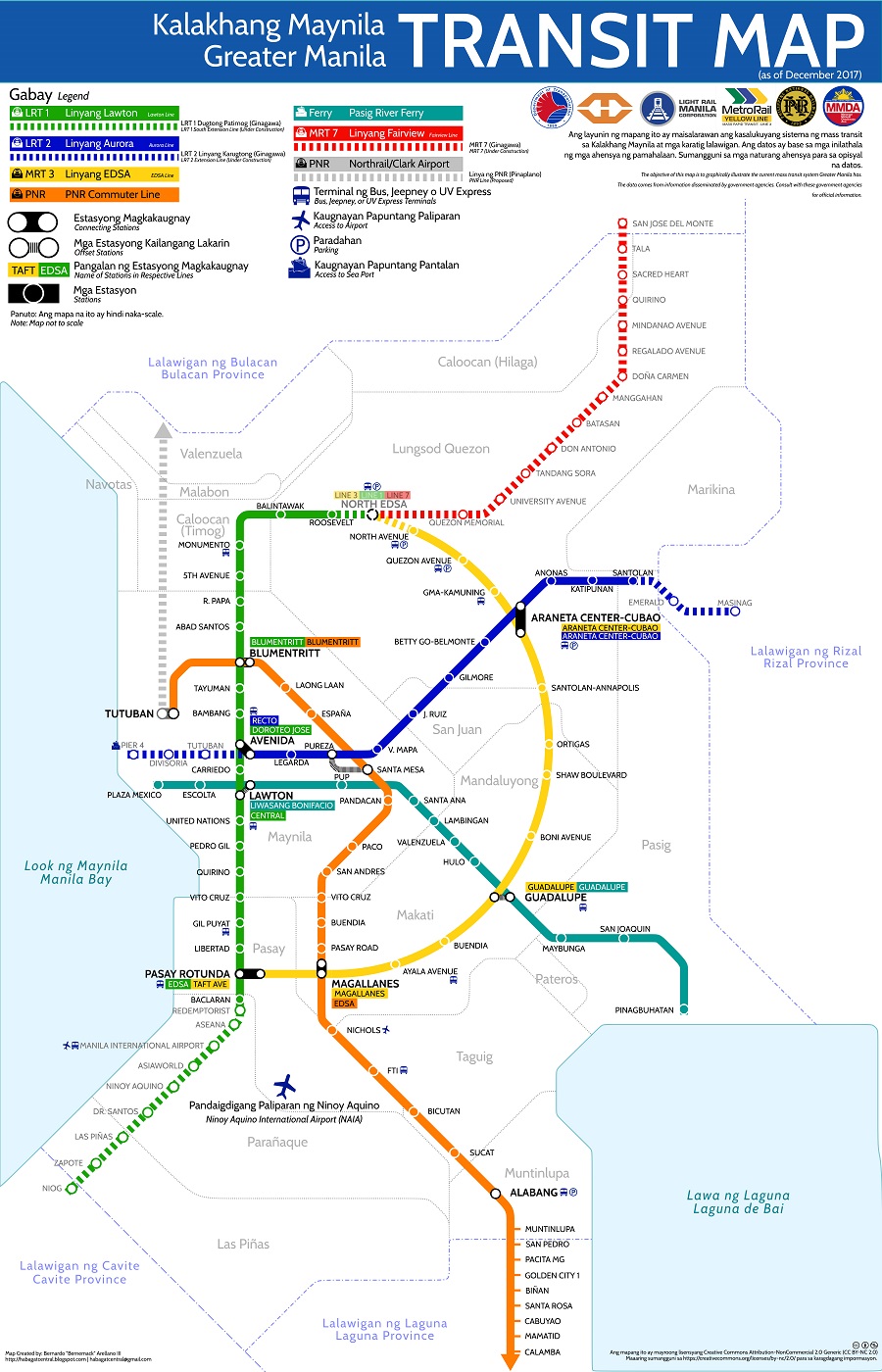
A detailed transit map of Greater Manila showing various transportation lines including MRT, LRT, and PNR, with highlighted routes and stops.
A comprehensive transit map of Greater Manila, essential for navigating the city’s transport systems.

I once spent two hours in an airport taxi because I thought I could “beat the traffic” at 6 PM. I was wrong. Utterly, hilariously wrong. Save yourself the stress, settle in, and grab a late dinner.

Saturday Morning: The Walled City (Intramuros)

Best Time to Visit: 8:00 AM – 10:00 AM (to beat the heat and the heaviest crowds).

Intramuros is the historic heart of Manila—a 400-year-old walled city built during the Spanish colonial period.

What to Do:

  1. Rent a Bamboo Bike (Bambike): Skip the kalesa (horse-drawn carriage) tour. Rent a bicycle made of bamboo! It’s eco-friendly, fun, and the perfect way to navigate the cobbled streets.
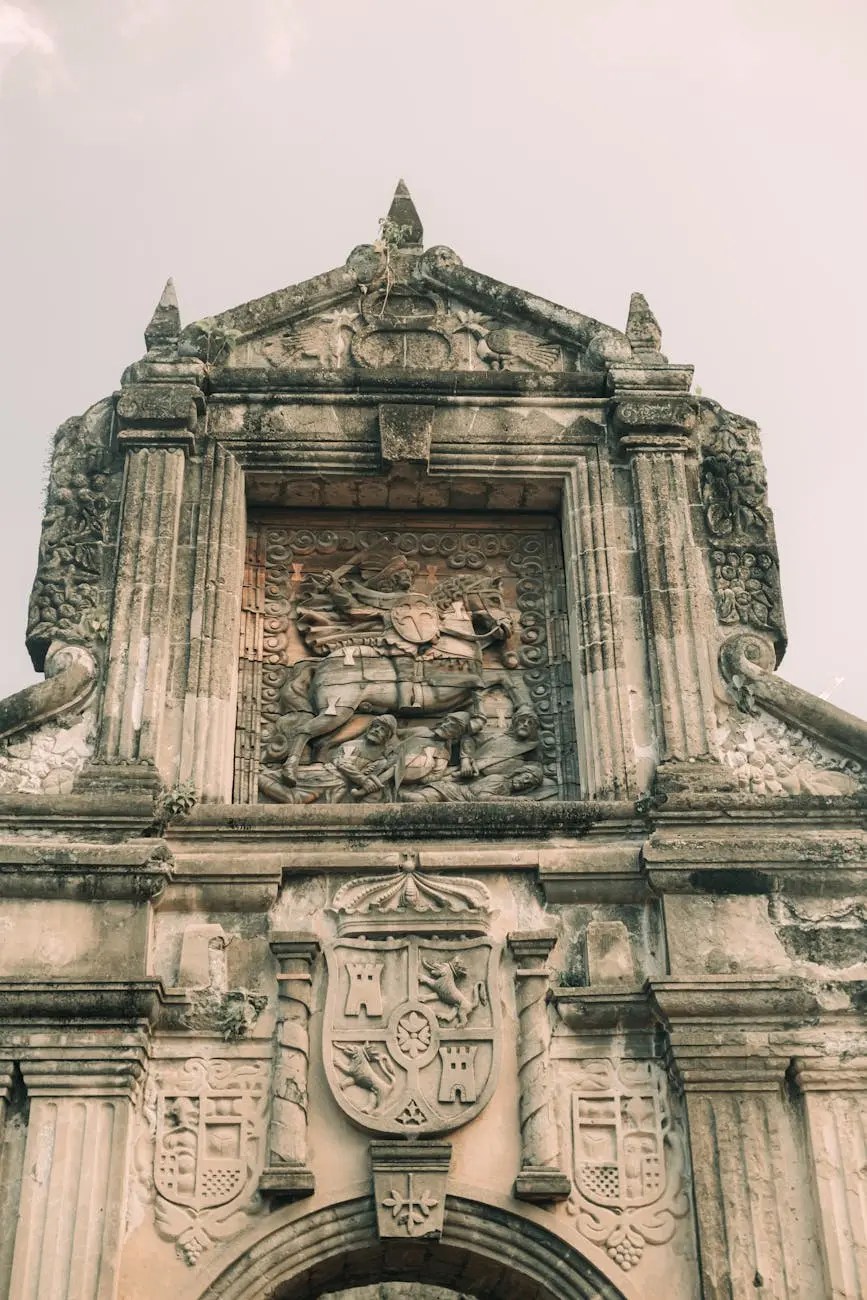
  2. Fort Santiago: The most significant spot. This is where the Philippines’ national hero, Jose Rizal, was imprisoned before his execution. It’s sobering and beautiful.
  3. San Agustin Church: A UNESCO World Heritage Site. The trompe-l’oeil ceilings alone are worth the visit.
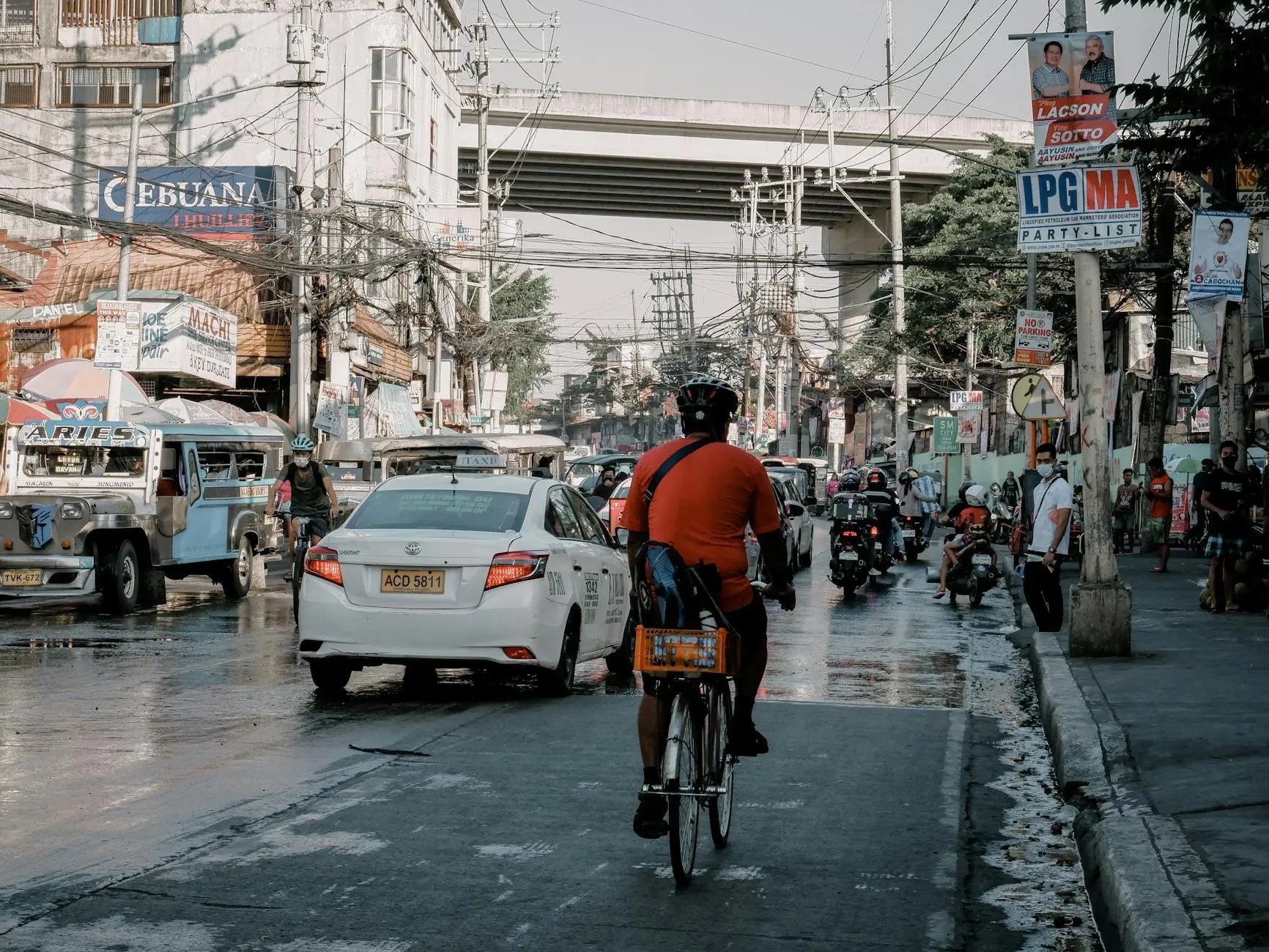
A cyclist riding through a busy street in Manila, surrounded by traffic including cars and motorbikes, with urban buildings and power lines in the background.
A vibrant street scene in Manila showcasing the mix of local traffic, jeepneys, and cyclists navigating the bustling city. The organized chaos of a Manila street: a iconic jeepney shares the road with cars and a determined cyclist, showcasing the city’s vibrant and relentless energy.

Hidden Gem: Instead of the main tourist haunts, seek out the Baluarte de San Diego, a beautiful, quiet garden bastion. It’s less crowded and a perfect spot to take some breathtaking photos of the historic walls. By the way, the photos in this entire post? I shot them on my favorite travel camera. It’s light enough for a full day of touring but packs a professional punch.

Historical detail of the walled city of Intramuros in Manila, showcasing colonial architecture and intricate relief carvings. Walking through the main gate of Fort Santiago feels like stepping directly into the pages of Philippine history.
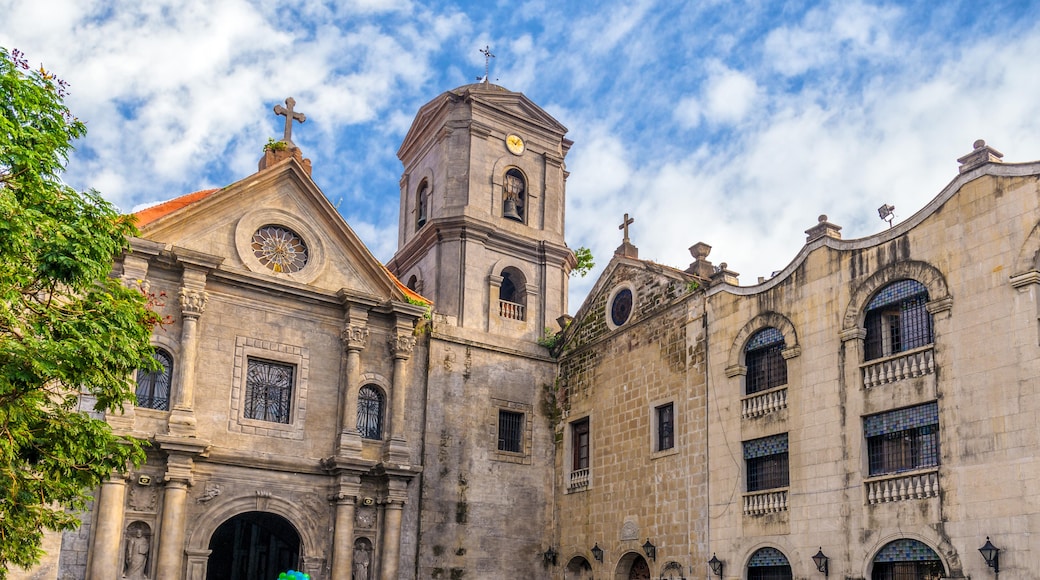
Historic church buildings in Intramuros, Manila, showcasing colonial architecture with intricate details and a blue sky backdrop.
Explore the historic charm of Intramuros, Manila’s 400-year-old walled city, highlighted by stunning colonial architecture and rich cultural heritage.

Day 2: Park Life, Shopping, and a Wild Night Out

  • Morning (Green Escape): Escape the concrete jungle at Rizal Park. It’s the country’s tribute to its greatest hero. See the Chinese and Japanese Gardens, the orchidarium, and the monument where guards change hourly. It’s a peaceful, green start to the day.
  • Afternoon (Retail Therapy): From there, you’re a short ride away from the mammoth SM Mall of Asia (MOA). Yes, it’s a mall, but it’s also a cultural experience. Grab lunch at the food court, do some people-watching, and walk along the MOA Baywalk. For a more unique find, check out my guide to hidden shopping gems in Southeast Asia.
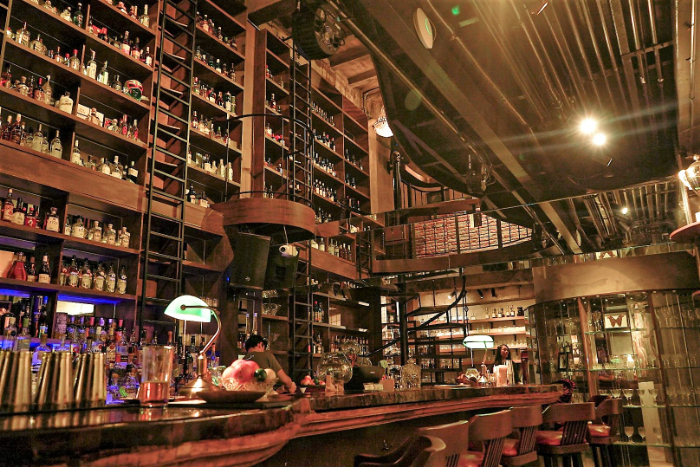
  • Evening (Let Loose in Poblacion): As night falls, make your way to Poblacion, Makati. This neighborhood is the epicenter of Manila’s nightlife, with tiny speakeasies hidden behind unmarked doors, rooftop bars, and incredible international food stalls. My personal favorite is The Spirits Libraryfinding the entrance is half the fun.

The iconic globe structure at the Mall of Asia in Manila, showcasing the blend of modern architecture and bustling city life.
Interior of a stylish bar with a wooden counter, towering shelves filled with various bottles, and ambient lighting creating a cozy atmosphere.
The Spirits Library: A chic speakeasy in Makati, Manila, offering a unique nightlife experience with an extensive selection of spirits.

Manila on a Budget: Money-Saving Hacks & Public Transport

Manila can be cheap if you know how to move. Relying solely on taxis will drain your wallet and your sanity.

  • The Mighty Jeepney: This is the king of the road. They have set routes (look at the signs on the side) and are dirt cheap (around ₱13-20 for a short ride). How it works: Get in, pass your payment forward saying “Bayad po” (Payment, sir/ma’am), and your change will be passed back through the same human chain. To get off, tap on the roof or say “Para!” (Stop!).
  • The Train Systems (MRT & LRT): These are your best friends for beating traffic along major corridors. They’re fast and efficient, but can get packed during rush hour. Buy a single-journey ticket from the station.
  • Ride-Hailing (Grab): For comfort and convenience, Grab is the way to go. It’s more expensive than a jeepney but often cheaper and safer than hailing a random taxi. Pro Tip: During peak hours or rain, surge pricing is insane. Be prepared to wait it out.
  • Money-Saving Tip: Eat where the locals eat! Jollibee is a must-try cultural icon, but carinderias offer the most authentic and affordable meals. Point at what looks good and enjoy a feast for under $3.
Two friends enjoying a vibrant day in Manila, playfully posing near a Jollibee restaurant with colorful accessories. When in Manila, do as the locals do: grab your bestie, your wackiest sunglasses, and strike a pose outside a iconic Jollibee! This is the pure, unfiltered joy of a Filipino getaway.
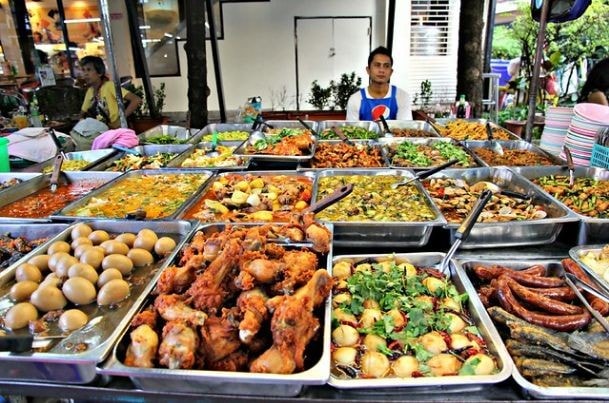
A vibrant street food market in Manila, featuring various dishes displayed in stainless steel trays, with a vendor seated in the background.
A vibrant display of Filipino street food showcasing a variety of delicious dishes from a local market in Manila.

Hidden Gems & Local Secrets

  • The Art of Escolta: Tucked away in Old Manila, Escolta Street is a time capsule with beautiful, decaying Art Deco buildings now housing hipster cafes, art galleries, and a weekend flea market.
  • A Cemetery Like No Other: Manila North Cemetery isn’t your typical tourist spot. It’s a functioning city of the dead, where families live in mausoleums. It’s a profound, eye-opening look into a different way of life and death. Go with a guide to be respectful and safe.
  • Secret San Miguel: Skip the commercial beer and do a tour of the San Miguel Brewery. The history is fascinating, and the unlimited beer at the end is, well, glorious.

Essential Filipino Phrases for Travelers

Filipinos appreciate any attempt to speak their language. English is widely spoken, but these will earn you smiles.

  • Salamat (sa-la-mat) – Thank you
  • Magkano? (mag-ka-no) – How much?
  • Po (po) – A word of respect added to sentences. E.g., “Salamat po.”
  • Paano pumunta sa… (pa-a-no poo-moon-ta sa) – How do I get to…?
  • Masarap! (ma-sa-rap) – Delicious!
  • Ingat Take care A nice farewell.

Logistics & Manila Transit Hacks

Manila’s traffic is a monster, but you can slay it with the right strategy.

TransportBest ForPro Tip
LRT & MRTLong-distance travel between districts (e.g., Cubao to Malate).Buy a Beep Card for seamless entry; skip the ticket lines. Avoid rush hour (7 AM-9 AM and 5 PM-8 PM).
JeepneysShort hops and local immersion.The Ultimate Save: They are dirt cheap (around ₱10-20, or $0.20-0.40). Just remember to pass your fare forward and say “Para po!” when you want to get off.
Grab (App)Airport transfers and late-night travel.Essential. Safer and more reliable than random taxis. Always confirm the price before starting the trip.

Road Maps & Time-Saving: Always use a mapping app like Waze or Google Maps (download offline maps!). Manila’s road network is complex, but these apps will auto-suggest the fastest route, which often involves taking the train and then a short Grab ride, saving you major time and gas if you were driving.

Travel Smarter, Not Harder: My Can’t-Live-Without Gear

Let’s talk logistics. A smooth trip isn’t about luck; it’s about being prepared.

🌐 Stay Connected Instantly: I used to waste the first hour in a new country hunting for a SIM card. Not anymore. I now use Drimsim, a universal data SIM that works in over 190 countries the second you land. Top up via the app, and you’re online. No fuss, no hidden fees, just instant Instagram stories from the back of a jeepney.

🔒 Protect Your Data: I do all my booking and browsing on public Wi-Fi with NordVPN running. It’s non-negotiable for keeping your personal info safe from hackers, especially when you’re accessing bank accounts or booking your next hotel on sketchy airport networks.

✈️ Get Paid for Flight Chaos: Did your flight get delayed, canceled, or overbooked? You could be entitled to up to $650 in compensation! Most travelers have no idea. I use AirHelp to check my flights. They handle all the annoying paperwork with the airline and only get paid if you win. It’s the easiest potential travel bonus you’ll ever get.

🧴 Look Fresh After a Long Flight: A 15-hour flight can wreak havoc on your skin. My secret weapon? K-Beauty from Lakinza. Their sheet masks and serums are a hydration powerhouse. And because I love you guys, use code Lalax10 at checkout for a sweet discount. Because glowing skin shouldn’t cost a fortune.

🛡️ Don’t Skimp on Insurance: From a misplaced bag in Manila to a surprise hospital visit in Palawan, travel insurance has saved me more than once. I always compare plans on VisitorsCoverage to find the right fit. It’s the most boring part of travel planning, but the most important.

Manila Money & Visa Essentials

Visa Cost: Always check the latest visa requirements for the Philippines based on your nationality. Many countries have 30-day visa-free entry, which is perfect for a quick weekend. For longer trips, costs vary, but the peace of mind knowing you’re cleared to enter is priceless.

Cost-Saving: The Philippine Peso () is generally favorable.

  • Food: Street food is your best friend. A filling meal costs less than $2.
  • Lodging: You can find excellent budget hotels/hostels for $20-$40 a night.
  • Transportation: Sticking to the LRT/MRT and Jeepneys will cut your transport bill down to almost nothing.

Frequently Asked Questions (FAQ)

Q: Is two days enough for Manila?
A: It’s enough for a fantastic, high-energy taste! This itinerary is designed to give you the highlights and a real feel for the city’s soul without burnout. For a more relaxed pace, add a third day.

Q: What’s the best way to get from the airport to the city?
A: The Grab ride-hailing app is your most reliable and straightforward option from NAIA Airport. Official airport taxis are also available but agree on the meter (“meter, please”) before you go.

Q: Do I need a visa for the Philippines?
A: Citizens of many countries (including the US, UK, AU, CA, EU) get a 30-day visa-free stay upon arrival. Always check the latest requirements with the Philippine Bureau of Immigration before you travel. Visa costs vary for other nationalities.

Q: Is Manila safe for tourists?
A: Like any major city, be smart. Don’t flash expensive jewelry, be aware of your surroundings in crowded places, and use common sense. Stick to well-lit areas at night. Overall, Filipinos are incredibly hospitable and will go out of their way to help you.

Q: What’s the best time of year to visit?
A: The dry season from November to April is ideal. It’s hot but less rainy. Avoid the typhoon season from June to September if you can.

Is it a good base for other trips?

Absolutely! Manila is a major hub. For your next adventure, check out my other blogs which are 🗺️ Geographically Close to Manila, Philippines.

🇲🇾 Kuala Lumpur, Malaysia

📍 Weekend Adventure Guide to Kuala Lumpur
✈️ Only about 3.5 hours by flight — perfect for short regional trips.

🇸🇬 Singapore

📍 48-Hour Weekend Guide to Singapore
✈️ Around 3.5 hours away — Manila to Singapore is one of the busiest air routes in Asia.

🇹🇼 Taipei, Taiwan

📍 48-Hour Taipei Travel Guide: Must-See Attractions
✈️ Roughly 2.5 hours by flight — ideal for culture lovers and foodies.

🇯🇵 Osaka & Tokyo (Japan)

📍 48 Hours in Osaka: Your Ultimate Weekend Itinerary
📍 Ultimate Weekend Escape: Discover Tokyo’s Hidden Gems
✈️ About 4–5 hours flight — both are popular weekend escapes from the Philippines.

🇰🇷 Seoul, South Korea

📍 Explore Seoul: A Weekend Guide to History and Modernity
✈️ 4 hours by air — visa-free for Filipino travelers with certain conditions (like valid OECD visa).

🇭🇰 Hong Kong

📍 Ultimate Hong Kong Weekend Getaway Guide
✈️ Only 2 hours — quick, easy, and a classic favorite among Filipino travelers.

🇹🇭 Bangkok, Thailand

📍 Escape Bangkok: Top Weekend Getaways You Need
✈️ About 3 hours — ideal for combining with Manila trips for regional travelers.

🇦🇺 Sydney, Australia

📍 Explore Sydney: A Complete Weekend Itinerary
✈️ Roughly 8 hours by flight — longer, but within the same Asia-Pacific region.

🇨🇳 Shanghai, China

📍 The Ultimate Weekend Escape to Shanghai, China
✈️ Around 3–4 hours — another East Asian option with a visa requirement.

Manila is waiting to surprise you. It’s a city that demands you lean in, listen closely, and embrace the beautiful chaos.

What’s your number one Manila must-do? Let me know in the comments below! And for more travel guides and insider tips, don’t forget to check out my full Travel Master List.

Ready to Go?

Manila is a whirlwind, a sensory overload, and a city that truly gets under your skin. Don’t wait for a long vacation; dive in this weekend.

📌 Stop scrolling and start booking! Your two-day Philippine adventure is waiting.

Click here to find the best deals on flights and hotels for your Manila escape! [Book Your Manila Getaway Now!]

Planning your next city break? 🌍
Don’t forget to check out my complete guide — The Ultimate Weekend Escapes Around the World — for more weekend getaway ideas!

Universal Disclaimer/Disclosure Page: