Explore Tallinn: Your Ideal Weekend Getaway

Meta Description:
Discover the charm of Tallinn, Estonia — a fairy-tale weekend destination where medieval streets meet modern magic. From budget travel tips and scenic ferry rides to hidden gems and foodie adventures, this guide helps travelers save time, money, and stress while exploring one of Northern Europe’s most underrated capitals. ✈️

Table of Contents

  1. Why Tallinn is Your Next Weekend Winner
  2. Your Step-by-Step Tallinn Itinerary: A Perfect 48-72 Hours
    • Day 1: Dive into the Medieval Old Town
    • Day 2: Creative Quarters & Coastal Views
    • Day 3 (The Bonus Day!): Day Trips & Deeper Dives
  3. Tallinn Travel Smarts: Getting Around & Saving Cash
    • Public Transport: Your New Best Friend
    • Money-Saving Tips from a Local (Well, a Frequent Visitor)
  4. Tallinn’s Hidden Gems: Beyond the Postcard
  5. Essential Estonian: Don’t Leave Home Without These Phrases
  6. Travel FAQ: Tallinn Quick-Fire Questions
  7. Ready to Roam? Your Packing List & Final Checks

Why Tallinn is Your Next Weekend Winner

For my fellow Europeans, Tallinn is a ridiculously easy hop. For everyone else, it’s a stunning and affordable gateway to the Baltics. The compact, UNESCO-listed Old Town means you can see a staggering amount on foot. Plus, it’s incredibly safe, the food is a delicious mix of rustic and Nordic, and the tech scene is buzzing (they invented Skype, after all!).

Visa Note: As part of the Schengen Area, if you’re from a visa-exempt country, you can waltz right in. For others, always check the latest requirements.

I still remember stepping into Tallinn’s Old Town for the first time — cobblestones underfoot, pastel-colored houses glowing under a soft northern sun, and the smell of freshly baked pastries drifting from medieval cafés. It felt like wandering through a real-life storybook (minus the dragons, thankfully).

Tallinn, the capital of Estonia, is often overshadowed by its Scandinavian neighbors — Helsinki, Stockholm, and Copenhagen — but trust me, it’s just as magical (and a lot cheaper).

👉 Book your Tallinn weekend escape now through Expedia — flexible stays, best prices, and easy comparison.

🏰 Where to Stay in Tallinn

Stay inside the Old Town for the full medieval experience — waking up to church bells and pastel rooftops is pure magic.

If you’re after something trendier, Telliskivi Creative City offers artsy lofts, street art, and cafes that could give Brooklyn a run for its money.

💤 Book your stay here → Expedia Tallinn Hotels for last-minute deals and flexible cancellation

✈️ Getting There — Flights, Ferries & Visa Info

Tallinn Airport (TLL) is well-connected across Europe, and many budget airlines fly directly from London, Berlin, and Warsaw.

If you’re exploring the region, consider taking a ferry from Helsinki — it’s only a 2-hour scenic journey across the Gulf of Finland. I grabbed a hot coffee and watched the icy blue sea roll by — honestly, one of my favorite travel memories ever.

🚌 Getting Around — Public Transport Made Easy

Public transport in Tallinn is not just efficient — it’s free for residents (and super cheap for visitors).

  • Bus & Tram: Buy a QR ticket from the “pilet.ee” app. Most routes run from 5 a.m. to midnight.
  • Trolleybus: Great for getting to Kadriorg or the Seaplane Harbour.
  • Car: If you’re renting, roads are clean and well-marked. Parking in the Old Town can be tricky, so try Park & Ride zones outside the center.
  • Bike & Electric Scooters: Apps like Bolt make it a breeze to zip between sights.

🗺️ Time Saver Tip: Plan your route with Google Maps offline mode — it works even without Wi-Fi, saving data and battery.

Tallinn Travel Smarts: Getting Around & Saving Cash

Public Transport: Your New Best Friend

Forget renting a car in the city center—it’s a headache of narrow streets and expensive parking. Tallinn’s public transport is cheap, clean, and efficient. The system is a mix of buses, trams, and trolleys, and it’s incredibly easy to use.

  • From the Airport to the City: This is where I almost led you astray! There is no direct tram from Tallinn Airport (TLL). Here’s how you actually do it:
    • Best Option: Public Bus. Head right outside the terminal doors to the bus stops. Bus #2 will take you directly to the city center, with a key stop being “A. Laikmaa,” which is just a 5-minute walk from the Old Town and the vibrant Viru Street. The journey takes about 15-20 minutes. You can also take bus #15 or bus #49, which connect to other parts of the network.
    • Paying Your Fare: The easiest way is to simply tap your contactless bank card (credit/debit) on the validator when you board. It’s a seamless, “pay-as-you-go” system. Alternatively, you can buy a paper ticket from the driver for a slightly higher price (have some cash handy).
    • Taxi: If you have heavy bags or just want a direct drop-off, taxis are readily available and affordable. A ride to the Old Town should cost around €10-15. Ensure the taxi is licensed and uses a meter, or agree on a price beforehand.
  • The Tallinn Card: If you’re following this itinerary, this card is a no-brainer. It includes free public transport across the entire network (buses, trams, trolleys) and free entry to almost all the major attractions I’ve mentioned. I calculated it and saved over €50 in two days. It effectively makes getting from the airport and around the city completely free.
  • Getting Around the City: Once you’re in the center, you’ll mostly walk. To reach districts like Kalamaja or Kadriorg, the trams (especially #1 and #3) and buses are your best bet. Just tap your contactless card on the green validator inside the vehicle.

Your Step-by-Step Tallinn Itinerary

Day 1: Dive into the Medieval Old Town

Start at Viru Gate, the iconic twin-towered entrance to the Old Town. Let yourself get lost. Seriously. The magic of Tallinn is in its winding, cobbled alleys. My strategy? Pick a street that looks interesting and follow it.

  • Morning: Make a beeline for Town Hall Square (Raekoja plats). If you’re lucky enough to be there in winter, you’ll find a Christmas market straight out of a storybook. Grab a hot glögg (mulled wine) and soak it in.
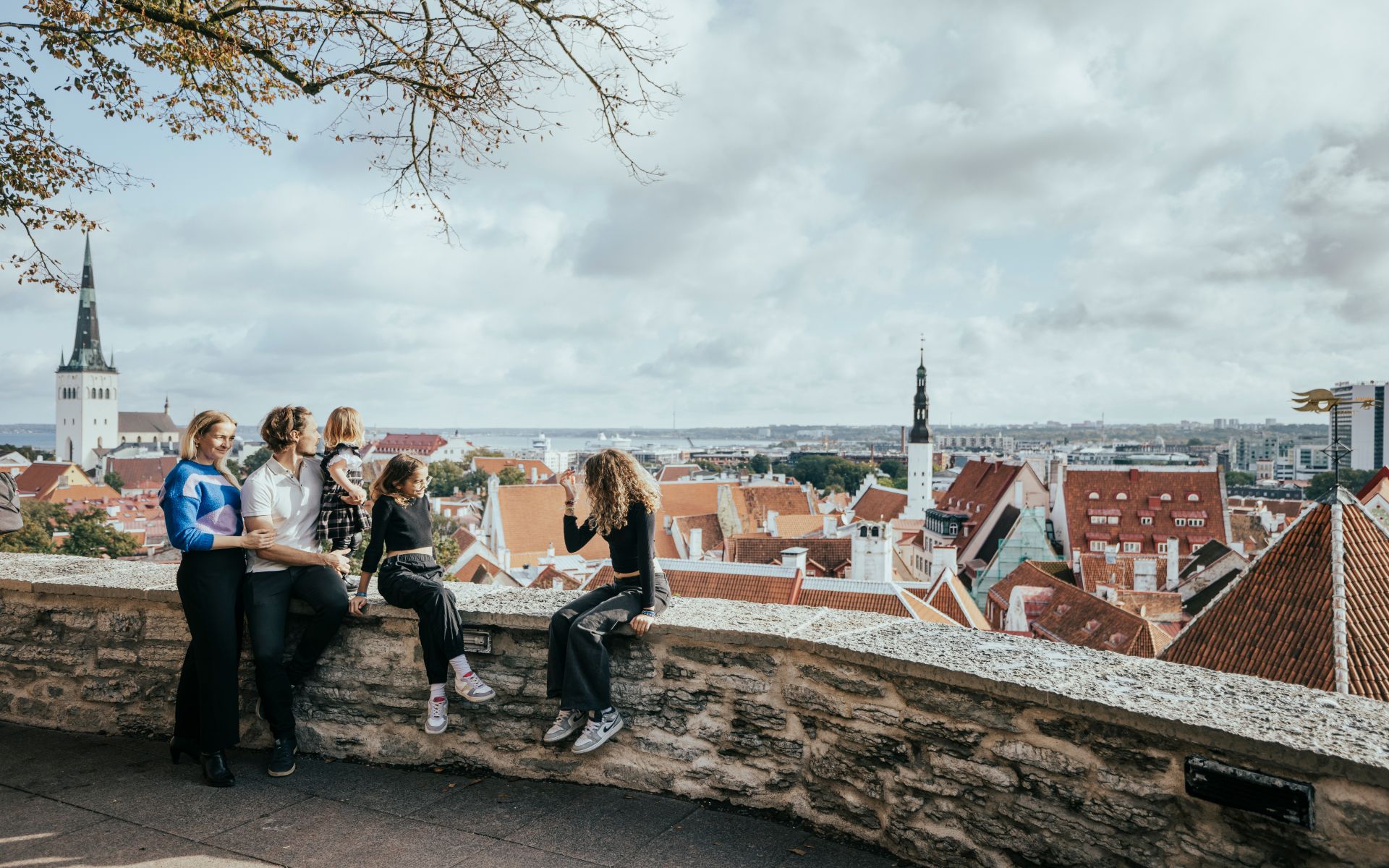
  • Afternoon: Hike up to Toompea Hill. The views from the Kohtuotsa and Patkuli viewing platforms are, without exaggeration, breathtaking. You’ll see the entire Old Town with its sea of red roofs and spires. This is where I got my favorite shot of the trip, captured perfectly on my trusty Sony Alpha 7C.
  • Evening: Ditch the main square for dinner. Find a cozy cellar restaurant like Olde Hansa for a full-on medieval experience (try the bear meat if you’re feeling brave!) or Rataskaevu 16 for amazing modern Estonian cuisine. Pro-tip: Book ahead!
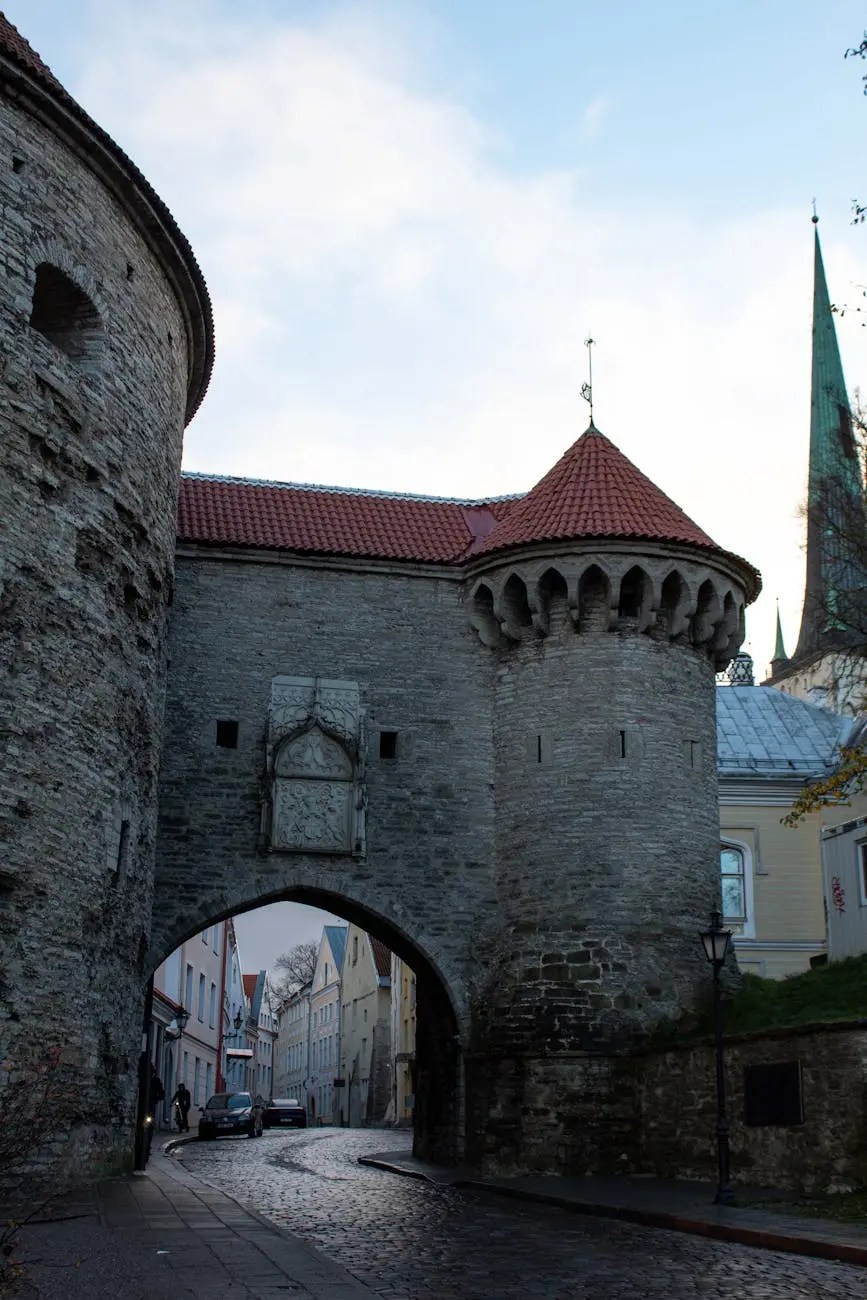
A view of a medieval stone archway with towers in Tallinn, Estonia, leading into a cobbled street lined with pastel-colored buildings.
Explore the iconic Viru Gate, a historic entrance to Tallinn’s enchanting Old Town.  Stepping through history at the iconic Viru Gate. This 14th-century entrance is the perfect introduction to the fairy-tale charm of Tallinn’s UNESCO-listed Old Town. Pro tip: the flower stalls here are some of the most beautiful in the city!

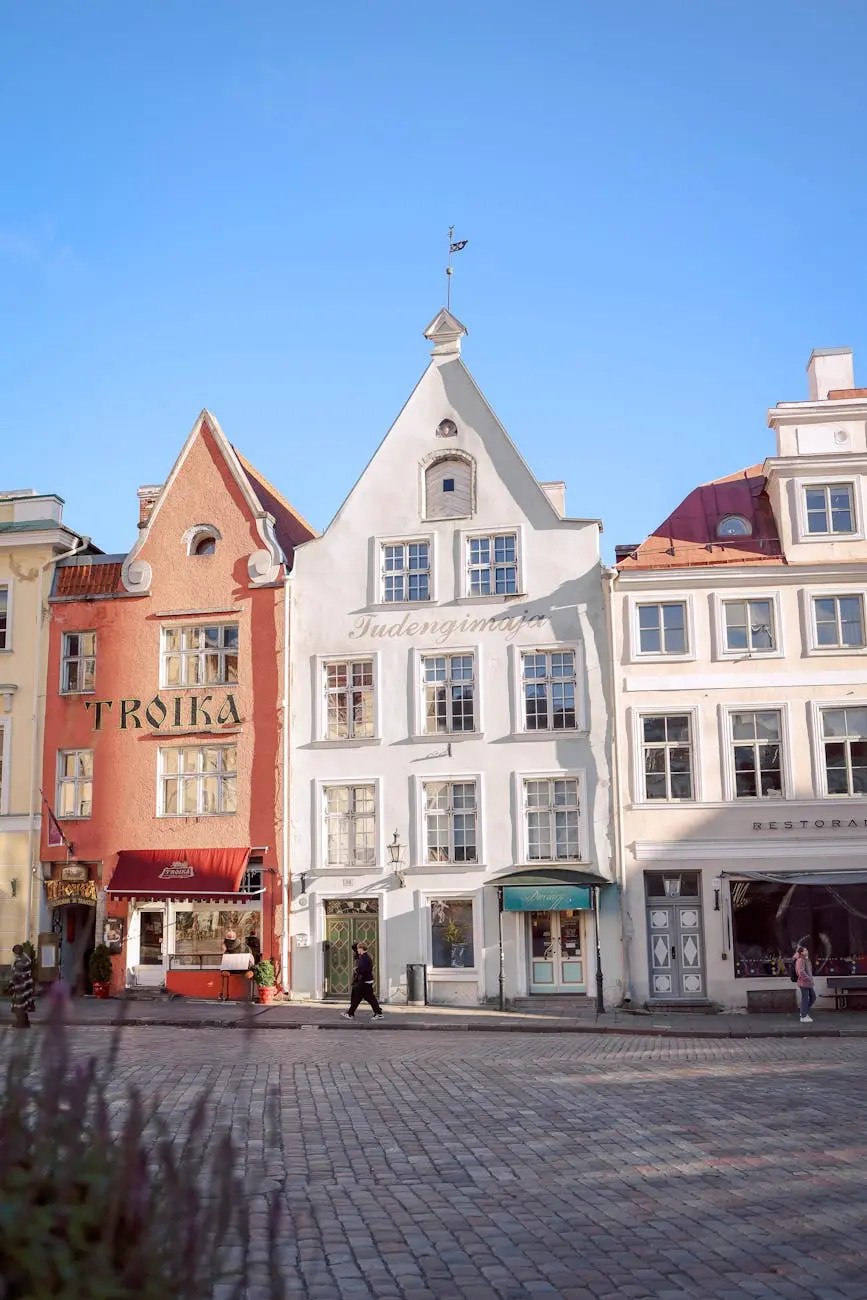
Colorful historical buildings lining a cobblestone street in Tallinn, Estonia, with clear blue skies above.
Charming pastel-colored buildings in Tallinn’s Old Town, showcasing medieval architecture against a clear blue sky. The heart of the medieval city: Tallinn’s Town Hall Square (Raekoja plats). These colorful gabled buildings have stood here for centuries, once housing wealthy Hanseatic merchants. In the winter, this very spot transforms into a magical Christmas market!
The interior of a legislative chamber featuring blue walls, wooden desks, and rows of black chairs, designed for meetings and sessions.

A group of four people enjoying a scenic view over Tallinn, Estonia, with medieval rooftops and the spire of a church in the background under a partly cloudy sky.
A group enjoying the stunning views of Tallinn’s Old Town, featuring iconic rooftops and spires.

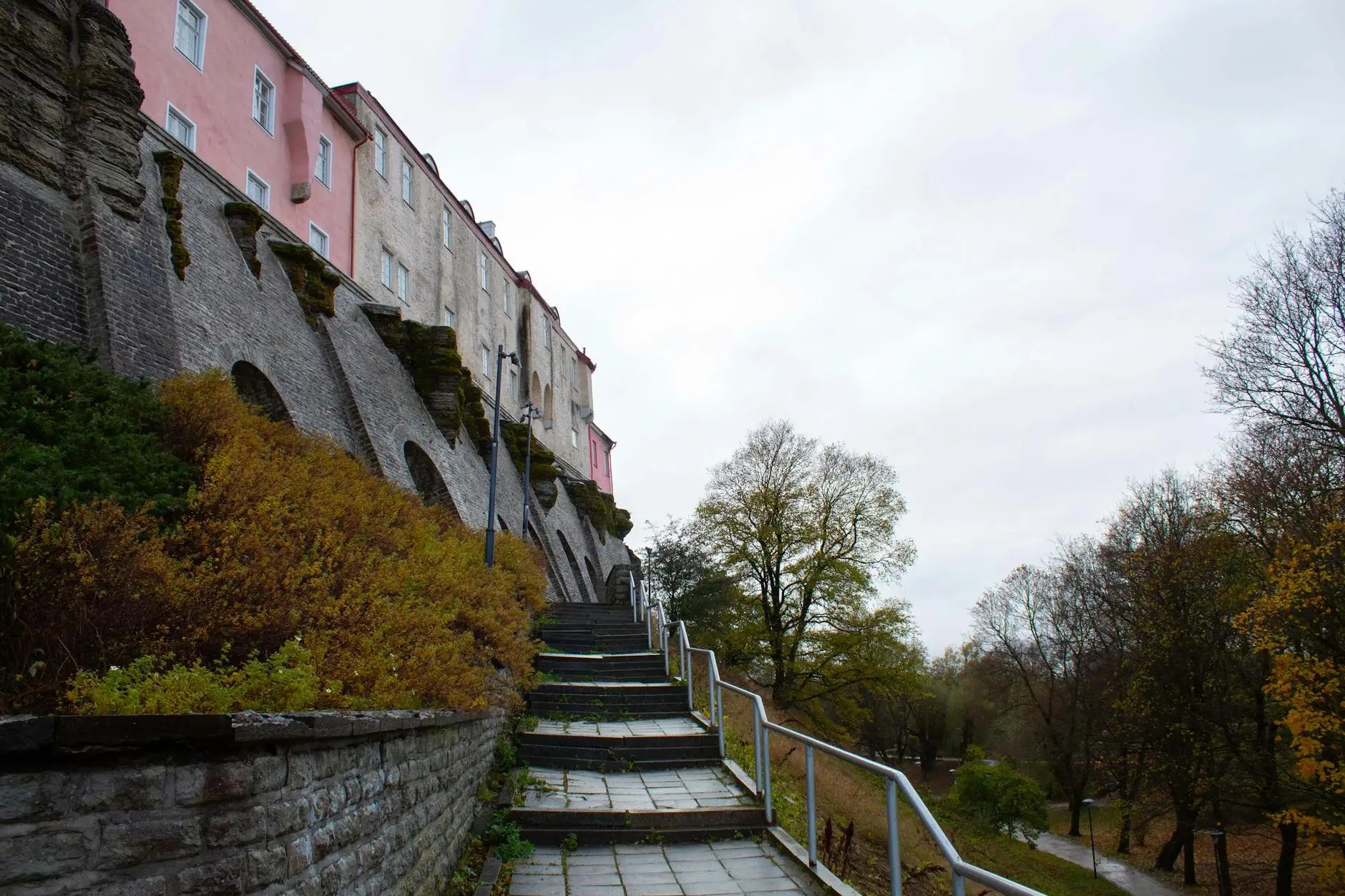
A stairway leading up to pastel-colored buildings and a stone wall overgrown with greenery, set against a cloudy sky.
A scenic view of Tallinn’s historic architecture, showcasing colorful buildings perched atop ancient city walls. The postcard-perfect view from Patkuli viewing platform. This is the scene that will convince you you’ve stepped into a fairy tale. Look for the “Three Sisters” towers and the spire of St. Olaf’s Church!

Day 2: Creative Quarters & Coastal Views

  • Morning: Cross the “Culture Kilometre” into the Kalamaja district. Famous for its picturesque, colourful wooden houses, this area is now the city’s hipster heart. Grab a coffee at a trendy café and then explore the Telliskivi Creative City, a sprawling complex of indie shops, galleries, and eateries in a former industrial complex.
  • Afternoon: From nearby Kalamaja, it’s a short walk to the Seaplane Harbour (Lennusadam). This is one of the coolest maritime museums I’ve ever visited, housed in a giant seaside hangar. You can clamber aboard a real submarine and see a historic icebreaker. It’s a hit for all ages.
  • Evening: Head to the Rotermann Quarter, a superbly done mix of old factory buildings and sharp modern architecture. It’s packed with great restaurants and bars. It’s the perfect spot to reflect on your trip over a local craft beer.
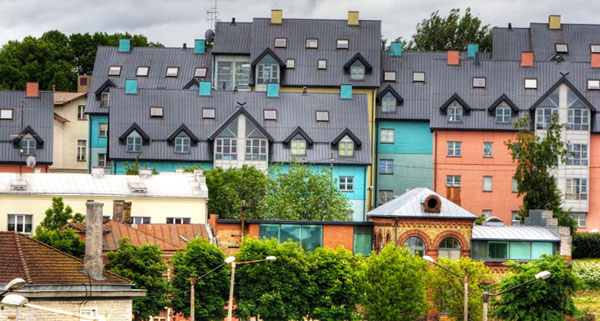
Colorful buildings with modern architecture in Tallinn, Estonia, surrounded by lush greenery.
Colorful buildings and lush greenery in Tallinn’s Kalamaja district, showcasing the area’s vibrant architecture.

Interior view of a maritime museum displaying an old tank, vintage aircraft models, and wooden stairs.
Explore the fascinating exhibits at the Seaplane Harbour, showcasing maritime history and technology.

Day 3 (The Bonus Day!): Day Trips & Deeper Dives

Got an extra day? Fantastic.

  • Option A (Nature): Take a 30-minute bus ride to Pirita. Walk along the beach, visit the ruins of St. Bridget’s Monastery, and climb the TV Tower for a panoramic view of the forest and coastline.
  • Option B (History): Venture further afield to Lahemaa National Park. You can join a tour to explore bogs, forests, and historic manor houses. It’s a complete contrast to the city and absolutely stunning.

For more Baltic inspiration, check out my guides to nearby Riga, Latvia and Vilnius, Lithuania. Doing all three is the ultimate Baltic road trip!
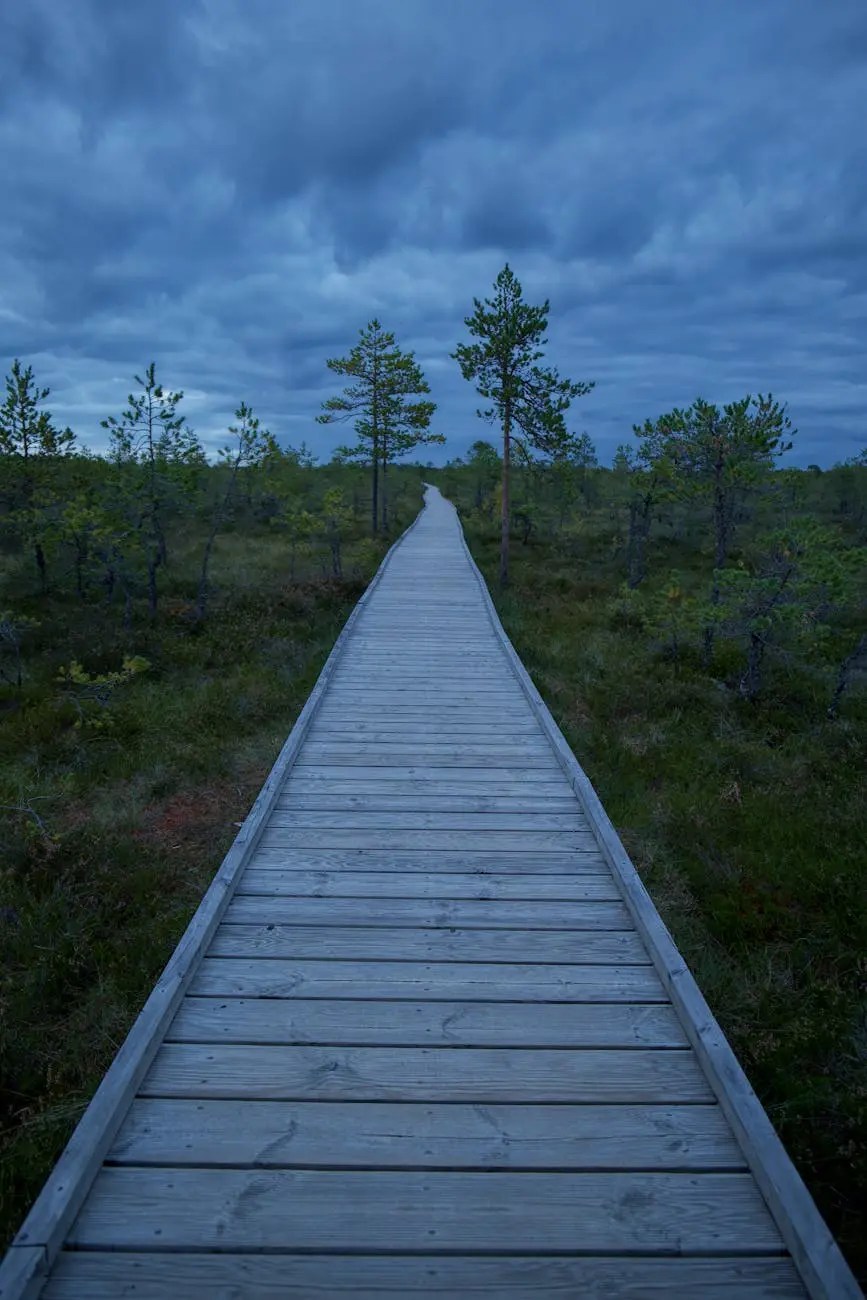
A serene wooden pathway leading through a lush, green landscape, perfect for nature exploration in Estonia. Walking the wooden boardwalk through Viru Bog feels like entering another world. The silence is broken only by the squelch of your own footsteps and the distant call of a bird. This is the raw, ancient beauty of the Estonian wilderness.

Tallinn Travel Smarts: Getting Around & Saving Cash

Public Transport: Your New Best Friend

Forget renting a car in the city center—it’s a headache of narrow streets and expensive parking. Tallinn’s public transport is cheap, clean, and efficient.

  • Single Tickets: You can buy a green Ühiskaart (smartcard) from kiosks or pay contactless with your bank card directly on the bus/tram. It’s super simple.
  • The Tallinn Card: If you’re following a busy sightseeing itinerary, this card is a no-brainer. It includes free public transport across the entire network (including those essential airport buses!) and free entry to almost all major attractions. I calculated it and saved over €50 in two days.
  • Getting Around the City: Once you’re in the center, you’ll mostly walk. To reach districts like Kalamaja (for the hipster cafes) or Kadriorg (for the art museum and park), the trams (especially #1 and #3) are your best bet. Just remember to tap your contactless card on the validator inside the vehicle.

💶 Smart Money-Saving Tips

  • Download Wolt or Bolt Food for cheaper local meals.
  • Visit museums on free entry days (usually first Wednesday of the month).
  • Walk or bike instead of taxis — Tallinn is compact!
  • Eat Lunch: Many restaurants offer a fantastic “lunch menu” on weekdays from 12-3 pm for a fraction of the dinner price.
  • Tap Water: The tap water in Tallinn is perfectly safe and delicious to drink. Bring a reusable bottle.
  • Free Walking Tours: Start your trip with one of the excellent free walking tours. You just tip the guide what you think it was worth.

🚌 Getting Around — Public Transport Made Easy

Public transport in Tallinn is not just efficient — it’s free for residents (and super cheap for visitors).

  • Bus & Tram: Buy a QR ticket from the “pilet.ee” app. Most routes run from 5 a.m. to midnight.
  • Trolleybus: Great for getting to Kadriorg or the Seaplane Harbour.
  • Car: If you’re renting, roads are clean and well-marked. Parking in the Old Town can be tricky, so try Park & Ride zones outside the center.
  • Bike & Electric Scooters: Apps like Bolt make it a breeze to zip between sights.

🗺️ Time Saver Tip: Plan your route with Google Maps offline mode — it works even without Wi-Fi, saving data and battery.

Tallinn’s Hidden Gems: Beyond the Postcard

  • The Danish King’s Garden: Behind Toompea Castle, this courtyard has a spooky legend and three mysterious monks carved into the wall. It’s much quieter than the main viewpoints.
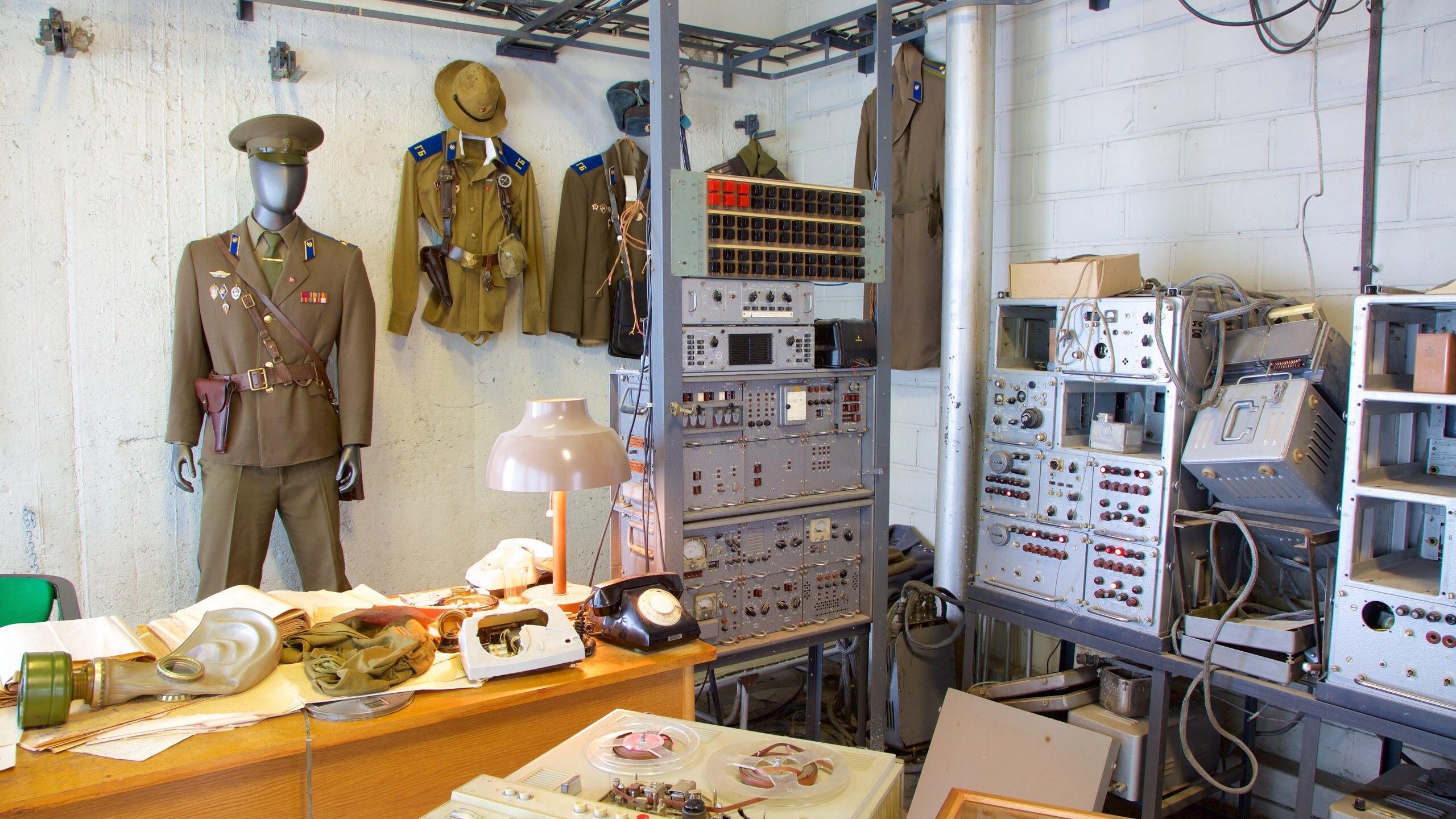
  • KGB Museum in the Viru Hotel: Book a tour of the former KGB headquarters on the 23rd floor of this Soviet-era hotel. It’s a chilling but fascinating look into Estonia’s not-so-distant past.
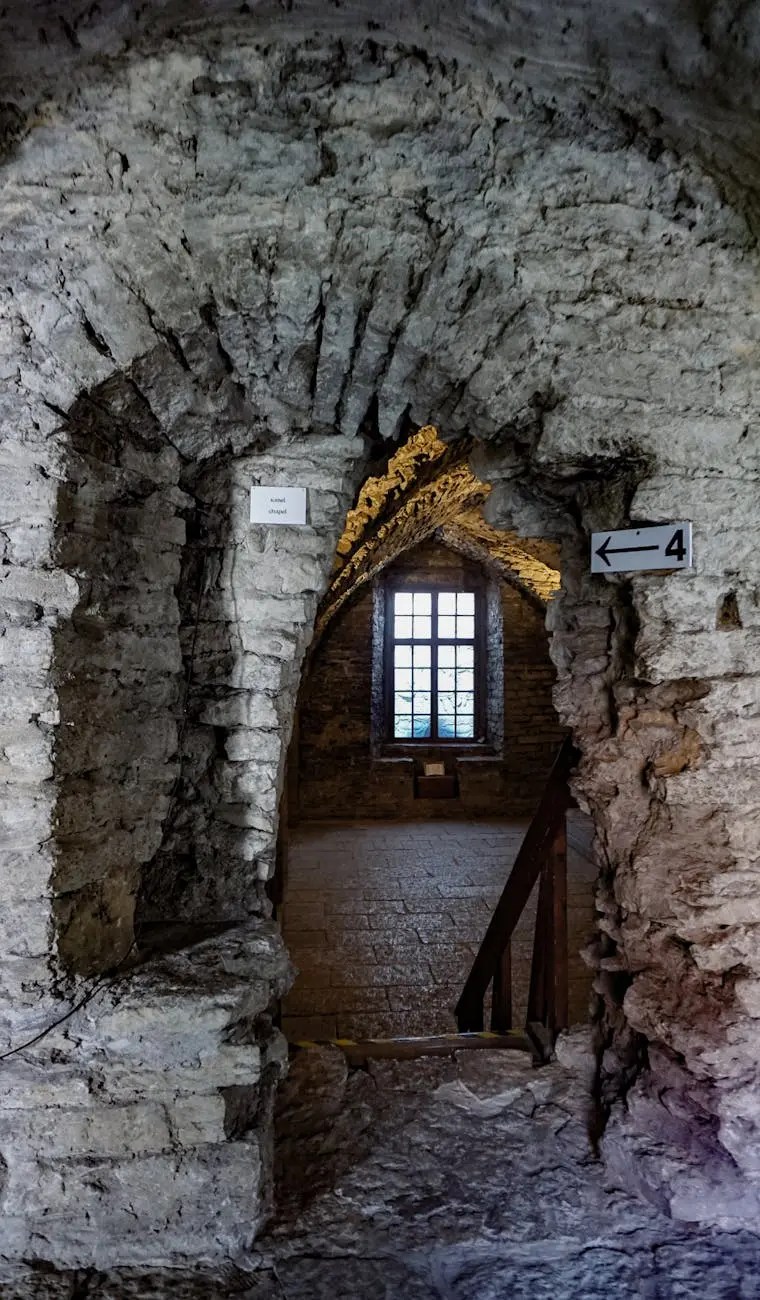
  • St. Catherine’s Passage: A beautiful, atmospheric alley where you can find the workshops of local artisans and see ancient tombstones embedded in the wall.

🌊Tallinn’s Hidden Gems: Beyond the Postcard

  • The Danish King’s Garden: Behind Toompea Castle, this courtyard has a spooky legend and three mysterious monks carved into the wall. It’s much quieter than the main viewpoints.
  • KGB Museum in the Viru Hotel: Book a tour of the former KGB headquarters on the 23rd floor of this Soviet-era hotel. It’s a chilling but fascinating look into Estonia’s not-so-distant past.
  • St. Catherine’s Passage: A beautiful, atmospheric alley where you can find the workshops of local artisans and see ancient tombstones embedded in the wall.
  • Head to Kadriorg Park for a peaceful morning walk — the palace, built by Peter the Great, is a pastel dream.
  • End your day at Patarei Sea Fortress, an atmospheric spot perfect for golden-hour photos.
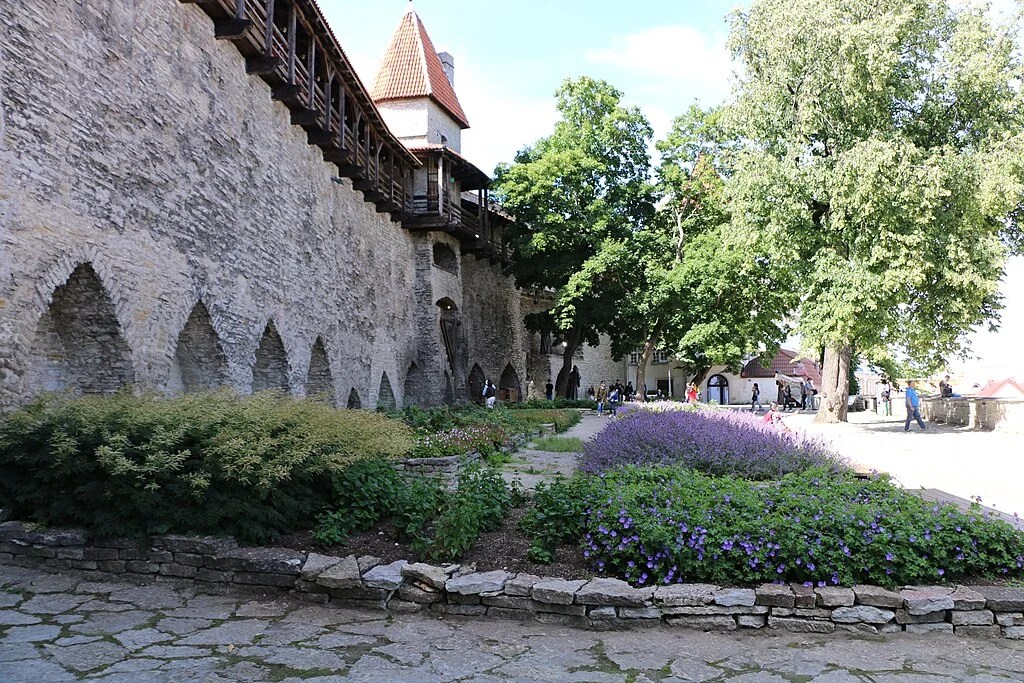
A view of a medieval stone wall with arched windows and a wooden walkway above, surrounded by green trees and blooming flowers in the foreground, showcasing a charming atmosphere of Tallinn's Old Town.
A scenic view of Tallinn’s medieval city wall surrounded by lush greenery and vibrant flowers, capturing the enchanting atmosphere of Estonia’s capital. By Taivo Pungas – Own work, CC BY-SA 4.0, https://commons.wikimedia.org/w/index.php?curid=49954130 The Danish King’s Garden, where legend says the Dannebrog—the world’s oldest national flag—fell from the heavens during a 13th-century battle. Talk about a divine fashion moment.
A display showcasing historical military uniforms and equipment, featuring a mannequin dressed in a military uniform with medals, surrounded by various vintage electronics and tools.
An exhibit showcasing vintage military uniforms and communication equipment at the KGB Museum in Tallinn, Estonia.
An arched stone doorway leading into a dimly lit room with a wooden staircase. The walls are rough-hewn stones, and a window is visible in the background with light filtering through.
A glimpse of the ancient architecture in Tallinn, Estonia, showcasing stone arches and historical elements. Walking through history in St. Catherine’s Passage. This ancient archway is all that remains of a bustling 13th-century Dominican monastery, offering a silent, powerful glimpse into medieval Tallinn.
A scenic view of Kadriorg Park in Tallinn, Estonia, featuring a decorative gazebo by a pond surrounded by lush greenery and a clear blue sky.
A picturesque view of a serene park in Tallinn, featuring a decorative gazebo by the lake surrounded by lush greenery. The perfect spot to pause. This gazebo, watching peacefully over the lake, is where you come to forget your itinerary and simply enjoy the moment.

Got an Extra Day? How to Pop Over to Helsinki, Finland

So, you’ve fallen in love with Tallinn and you’re thinking, “What’s next?” Well, how about breakfast in Estonia and lunch in Finland? Helsinki is just a short hop across the Gulf of Finland, making it an incredibly easy and popular day trip or next stop on your Baltic adventure.

Having done this journey myself, I can break down the two main options: flying (which I don’t recommend for this leg) and taking the ferry (which is an experience in itself).

The Ferry: The Obvious (and Awesome) Winner

This is, without a doubt, the way to go. The ferry isn’t just transport; it’s part of the adventure.

  • The Experience: Imagine a giant, sleek cruise ship equipped with multiple restaurants, bars, tax-free shopping, and even live music. The 2-3 hour journey feels like a mini-cruise. On a sunny day, the views of the Baltic Sea and the archipelago from the deck are stunning.
  • The Logistics:
    • Companies: The main operators are Tallink Silja and Eckerö Line. Both are excellent, with modern, comfortable vessels.
    • Duration: Most ferries take between 2 to 3 hours.
    • Cost: This is the best part. You can often find one-way tickets for as low as €15-€30 if you book in advance. I once snagged a €19 ticket and felt like I’d won the travel lottery.
    • Terminals: The ferries dock right in the heart of both cities. In Tallinn, the terminal is a pleasant 15-minute walk from the Old Town. In Helsinki, you arrive just a short walk from the city center. You simply walk on and walk off—no lengthy airport transfers.

Flying: The (Usually) Unnecessary Hassle

While there are short flights between Tallinn and Helsinki, it’s almost never the right choice for a traveler.

  • The “Why Not”:
    • Total Travel Time: A flight is only 30-40 minutes in the air. But you have to factor in getting to the airport (30-45 mins), arriving 2 hours early for security, waiting for baggage, and then another 30-45 minute transfer from Helsinki Airport to the city center. You’re looking at 4-5 hours of total hassle versus the ferry’s relaxed 2-hour city-center-to-city-center trip.
    • Cost: Flights are almost always significantly more expensive than a ferry ticket, especially when you add in the cost of airport transfers.
    • Experience: Sitting in a cramped plane seat for a half-hour flight just can’t compare to strolling on a sundeck with a coffee in hand.

My Verdict: Unless you have a severe fear of boats or are collecting air miles, the ferry is the only sensible option. It’s cheaper, faster when you consider door-to-door travel, and infinitely more enjoyable.

Ready to set sail?
👉 [Check ferry schedules and book your tickets here via Direct Ferries to lock in the best prices.

Tallinn to Helsinki Ferry Price

The price of a ferry from Tallinn to Helsinki can vary between $36.51 and $221.23 depending on the operator, season and whether you are travelling with a vehicle. The average price of a foot passenger is $71.51, with prices ranging from $16 and $147. The average price with a car is $175.38. Car prices can range from $41 and $315. Prices may vary for other vehicle types. All ferry prices can change from season to season. Please be aware that prices do not include booking fees. 1 November 2025

Loved your time in Tallinn and feeling the pull of another Nordic adventure just across the water? You’re in luck! The journey from fairy-tale Estonia to the modern design capital of Helsinki is easier than you think. I’ve put together the ultimate guide to exploring Finland’s vibrant capital, perfect for a day trip or a longer stay. Ready to continue your Baltic exploration? Dive into my guide: An Unforgettable Weekend Getaway to Helsinki.

Let’s talk numbers, because this is where the ferry truly sails into the winner’s circle. While you might occasionally find a flight deal for around €50-€70 one-way, that’s just the tip of the iceberg. By the time you add in the cost of airport transfers on both ends (easily €15-€20 each way), that “cheap” flight suddenly looks more like €100. Meanwhile, I’ve consistently snagged ferry tickets for a laughably low €15-€30 – and that price includes a city-center-to-city-center journey, the freedom to wander, and a scenic mini-cruise across the Baltic. Unless you’re actively trying to burn cash for a 40-minute flight, your wallet will thank you for choosing the boat.

Flights from Tallinn (TLL) to Helsinki (HEL)

Let’s create a quick example for Tallinn, Estonia to Helsinki, Finland.

H2: At a Glance: Quick Comparison Table

FeatureFerryFlight
Travel Time2-2.5 hours30 min flight + 2+ hours airport time = ~3 hours total
Average Cost€25-€40€60-€120+
BaggageVery generousStrict carry-on/checked baggage fees
SceneryBeautiful archipelago viewsViews during takeoff/landing
City Center to…Port is a 10-min walk/taxiTallinn Airport (TLL) is 15 min by tram, Helsinki Airport (HEL) is 30 min by train.

Verdict: For the Tallinn-Helsinki route, the ferry is the clear winner for almost all travelers due to its lower cost, central ports, and the fact it’s often faster door-to-door than flying.

Essential Estonian: Don’t Leave Home Without These Phrases

Estonians appreciate the effort! Here are the basics:

Estonian WordMeaningPronunciation
TereHelloTEH-reh
AitähThank youEye-tah
PalunPlease / You’re welcomePA-lun
Kui palju see maksab?How much does it cost?Koo-ee pal-yu seh mak-sab
HüvastiGoodbyeHOO-vah-stee

Travel FAQ: Tallinn Quick-Fire Questions

Q: What’s the best time to visit Tallinn?
A: May to September for lovely weather and long days. December for the magical Christmas market. Avoid the muddy shoulder months of March and April.

Q: Is Tallinn expensive?
A: It’s one of the more affordable capitals in Europe, especially compared to Scandinavia. You can have a fantastic time on a moderate budget.

Q: Can I get by with English?
A: Absolutely. Estonia has one of the highest English proficiency rates in Europe, especially among younger people and in the tourism industry.

Q: What should I pack?
A: Comfortable walking shoes are non-negotiable! Layers are key, as weather can change quickly. And don’t forget a power bank and…

Q :How much does a weekend trip cost?
Budget travelers can enjoy Tallinn for around €200–€250, including accommodation, meals, and transport.

Q: Do I need cash?
Most places accept cards, but keep a few euros for markets or small cafés.

Q: Are there good day trips from Tallinn?
Absolutely — try Lahemaa National Park or Parnu Beach for nature lovers.

Ready to Roam? Your Packing List & Final Checks

Before you zip up that suitcase, here are my final, can’t-live-without travel essentials:

  • Stay Connected (Without the Bill Shock): I never travel without my Drimsim. It’s a universal data SIM that works in 190+ countries. Pop it in, top up via the app, and you’re online. No more hunting for SIM cards or fearing roaming charges. Grab yours here and stay connected from the moment you land.
  • Protect Your Peace of Mind (and Your Wallet): Travel insurance isn’t glamorous, but it’s essential. I use VisitorsCoverage to compare plans and find the right coverage for every trip. It’s the smartest five minutes you’ll spend planning.
  • Browse Safely on Public WiFi: I always use a VPN on my phone and laptop, especially when using public WiFi in airports and cafes. It keeps my personal data safe from prying eyes.
  • Look Fresh, Even After a Red-Eye: Travel can wreak havoc on your skin. I swear by the gentle, effective formulas from Lakinza. Their K-beauty magic keeps my skin glowing through time zones. Use code Lalax10 for a sweet discount!
  • Flight Got Messed Up? Don’t just accept it! If your flight is delayed or canceled, you might be owed compensation. I use AirHelp to check my flight and let them handle the airline hassle. It’s free until they win!

🌍 Final Thoughts

Tallinn is where history whispers from cobblestones, and modern life hums in tech cafés. It’s a city that rewards slow exploration — and smart planning.

Whether you’re chasing fairy-tale rooftops, cozy saunas, or just a budget-friendly escape, Tallinn proves that the best European weekends don’t have to break the bank (or your Wi-Fi).

📍 Plan your ultimate Tallinn getaway now through Expedia and make it a weekend worth remembering!


🔗 Nearby Weekend Escapes You Might Love

Universal Disclaimer/Disclosure Page:

Beirut Weekend: Your Ultimate 3-Day Escape Guide

Meta Description: Craft your perfect weekend in Beirut, Lebanon! This ultimate travel guide is packed with insider tips, hidden gems, and a savvy 3-day itinerary to explore the Paris of the Middle East. Discover where to eat, how to get around, and how to save time and money on your Lebanese escape.

So, your passport is begging for a stamp, and you’ve got a glorious 48-ish hours to spare? Forget the usual European city breaks; let’s talk about a place that will hijack your senses and steal a piece of your heart: Beirut.

This city is a beautiful, chaotic, and utterly captivating paradox. It’s where you’ll hear the call to prayer mingle with the bass from a rooftop bar, and see bullet-riddled buildings standing next to gleaming designer boutiques. It’s a city that lives life loudly and passionately. And honestly, a long weekend is the perfect amount of time to get a delicious, intoxicating taste of it.

As someone who’s gotten blissfully lost in its streets more times than I can count, I’m here to be your guide. Let’s craft your perfect weekend escape.

Forget everything you think you know about the Middle East—Beirut is here to rewrite the script. Known as the “Paris of the Middle East,” this city is a dazzling, chaotic, and utterly mesmerizing blend of ancient history and a non-stop modern pulse. One minute you’re marveling at Roman ruins, and the next you’re sipping a world-class cocktail on a rooftop bar.

My first visit to Beirut was supposed to be a low-key stopover, but it quickly turned into an obsession. I remember wandering through the streets of Gemmayzeh, the air thick with the scent of spices and jasmine, and thinking, “How is this place not swarming with tourists?” It’s a city with scars, yes, but its energy is utterly infectious. If you’re looking for a destination that’s more than just a pretty photo op—a place that grabs your soul and gives it a vigorous shake—then trust me, you need this Beirut escape.

Table of Contents

  1. Your Savvy 3-Day Beirut Itinerary
  2. Beirut on a Budget: Money-Saving Hacks & Public Transport
  3. Hidden Gems: Beirut’s Secret Spots
  4. Essential Lebanese Lingo for Travellers
  5. Packing Your Beirut Toolkit (My Travel Lifesavers)
  6. Beirut Weekend Escape: Frequently Asked Questions

💰 Know Before You Go: Visa & Money-Saving Tips {#visa-money-tips}

Let’s talk logistics. Smart travel starts with knowing the rules.

Visa & Entry Essentials

Many nationalities, including US citizens, can get a free visa on arrival for a stay of up to one month at Beirut International Airport, provided they have a valid passport (with no Israeli stamps!) and a return ticket. For other countries, check with your local Lebanese embassy well in advance. Remember, visa costs can vary, but the hassle of pre-applying is often less than you’d think!

  • Geographically Close Cities Suggestion: Since you’re in the area, why not hop over? Check out my guide on

Explore Doha: Your Ultimate Weekend Travel Guide

Ultimate Casablanca Weekend Guide

Explore Bahrain: Al-Fateh Mosque

Budgeting in the City

Lebanon’s financial situation means you need to be smart about money. While the official currency is the Lebanese Lira (LBP), most large transactions, tourist prices, and even many small ones are quoted and preferably paid in US Dollars (USD). Always carry a mix of smaller USD bills (fives, tens, twenties) and some local currency for small purchases like water or street food. This can often save you money on unfavorable exchange rates in shops.

Flights to Beirut

Hotels in Beirut

Your Savvy 3-Day Beirut Itinerary

This itinerary is designed to be a loop, saving you time and cab fare. I highly recommend using a mix of walking and cheap Uber/Careem rides to get around.

Day 1: The Heartbeat of History & The Sunset Coast

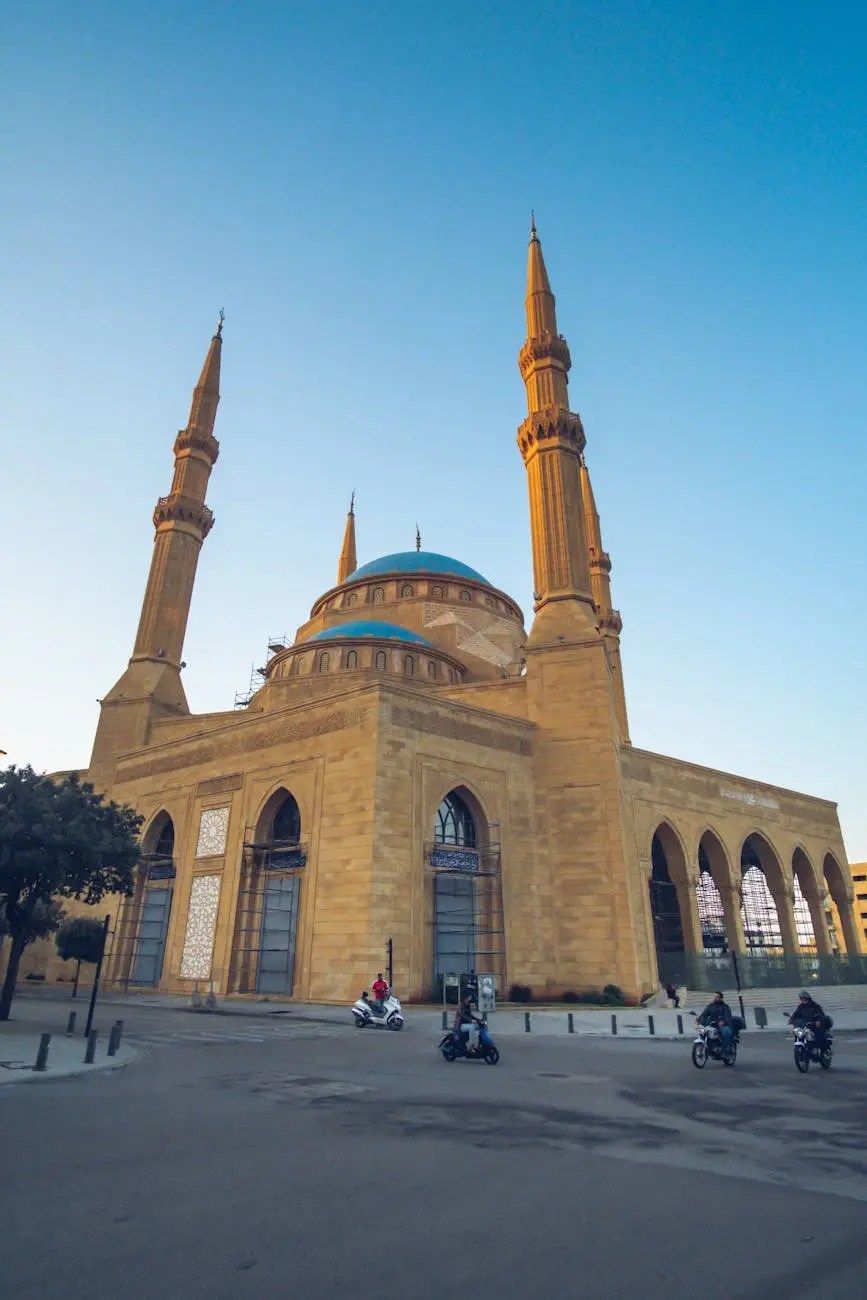
  • Morning (10 AM): Start at the Mohammad Al-Amin Mosque (the Blue Mosque). Its grandeur is breathtaking. Right next door, you’ll find St. George Maronite Cathedral, a testament to Beirut’s religious tapestry. This area is a powerful, visual story.
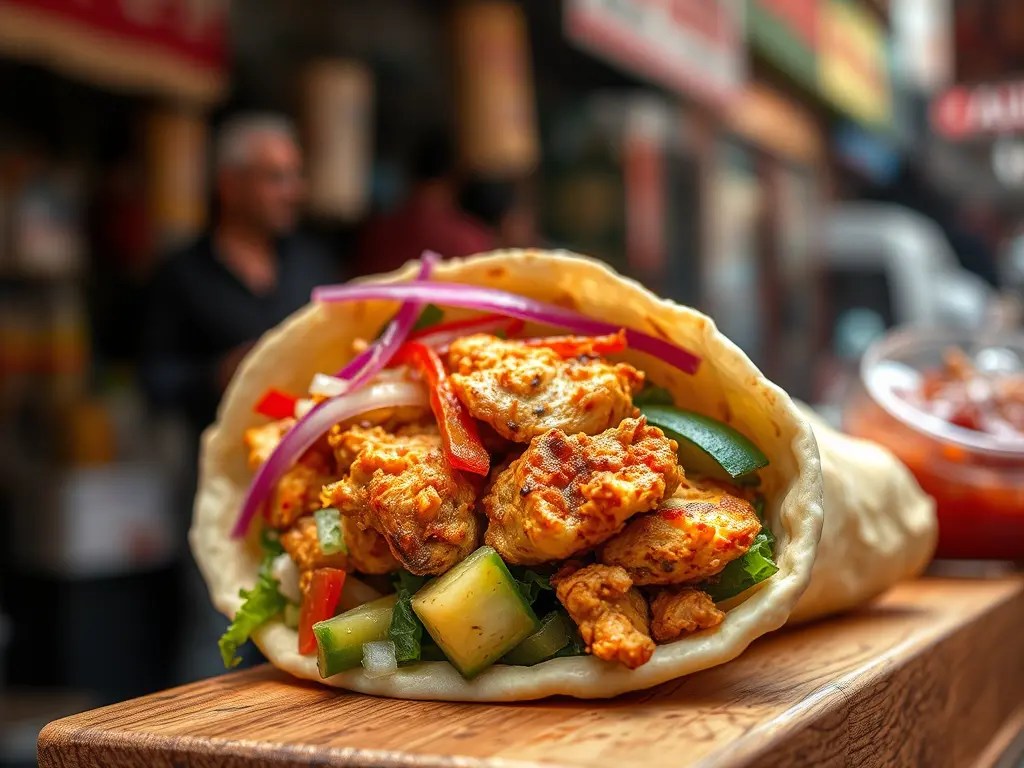
  • Afternoon (1 PM): For lunch, you have two choices. Go upscale at Em Sherif for a mind-blowing, multi-course Lebanese feast (book ahead!), or for a more local (and wallet-friendly) experience, dive into a hole-in-the-wall for a chicken shawarma wrap. You can’t go wrong with either.
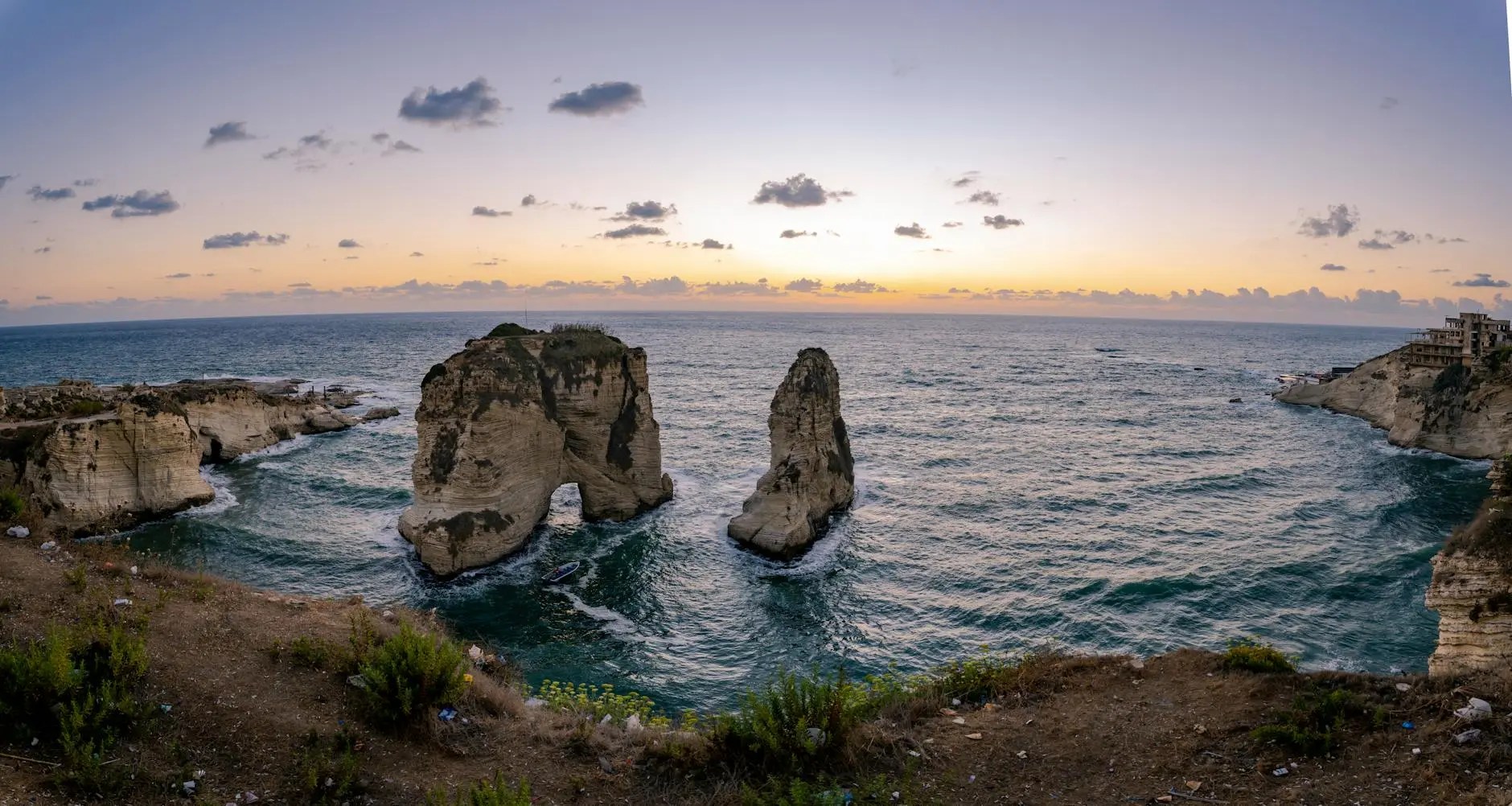
  • Late Afternoon (4 PM): Walk towards Raouché (the Pigeon Rocks). This is my pro-tip: skip the crowded corniche-side cafes. Instead, grab a bottle of water and walk down the stairs to the platform right by the rocks. The view from there is unbeatable and free. Stay for sunset – it’s magical.
  • Evening (8 PM): Head to the Gemmayzeh or Mar Mikhael districts. These are the epicenters of Beirut’s legendary nightlife. Start with dinner at a cozy restaurant like Baron (get the Baron Burger, thank me later) and then let the night take you. The energy here is infectious.
A stunning view of the Mohammad Al-Amin Mosque in Beirut, Lebanon, showcasing its tall minarets and blue dome against a clear blue sky, with motorcycles passing by.
The stunning Mohammad Al-Amin Mosque, also known as the Blue Mosque, stands majestically in Beirut, showcasing the city’s unique blend of modernity and tradition. A moment of serenity. The magnificent Mohammad Al-Amin Mosque, often called the Blue Mosque, is a cornerstone of Beirut’s dynamic cityscape. Its grand Ottoman-inspired architecture stands in powerful dialogue with the modern city around it, perfectly encapsulating Beirut’s spirit.

A skyline view of Beirut featuring a blend of historic religious architecture, including a prominent church with a blue dome and several minarets, set against a backdrop of mountains and urban buildings.
This image shows the Saint George Maronite Cathedral and the Mohammad Al-Amin Mosque in downtown Beirut, Lebanon Where faiths meet. The Saint George Maronite Cathedral (left) and the Mohammad Al-Amin Mosque (right) stand side-by-side in Beirut’s city center, a powerful daily symbol of the city’s layered history and spirit of coexistence.
A close-up of a delicious chicken shawarma wrap filled with fresh vegetables, served on a wooden board, showcasing vibrant colors in a busy street setting.
A delicious chicken shawarma wrap filled with fresh vegetables, perfect for a quick meal in Beirut. The ultimate Beirut street food experience. This isn’t just a sandwich; it’s a perfectly spiced, juicy, and messy masterpiece of grilled chicken, fresh veggies, and garlic sauce, all wrapped in warm, thin bread. A must-eat that costs just a few dollars but delivers a million-dollar flavor.
Panoramic view of the Pigeon Rocks in Raouché, Beirut, at sunset, with the tranquil Mediterranean Sea and a colorful sky.
Stunning view of the Pigeon Rocks in Raouché, Beirut, at sunset, showcasing the beautiful coastline and vibrant sky. Golden hour magic at Raouché. There’s a reason this is Beirut’s most iconic postcard view. Watching the sun dip below the horizon behind the majestic Pigeon Rocks is a rite of passage for every visitor. Pro tip: skip the crowded cafes and find a spot on the corniche to enjoy the free show.

Day 2: Ruins, Retail Therapy & Rooftops

  • Morning (10 AM): Explore the Beirut Souks. This isn’t your dusty, traditional souk; it’s a stunningly modern shopping complex built around the archaeological remains of the old market. It’s a fascinating blend of past and present.
  • Afternoon (1 PM): Fuel up with a mana’esh (a za’atar or cheese flatbread) from a local bakery. It’s the Lebanese pizza, and it costs pennies.
  • Late Afternoon (3 PM): Visit the Roman Baths Garden in Downtown. It’s a peaceful, green archaeological site that’s often overlooked. It’s the perfect place to sit with a coffee and just breathe.
  • Evening (7 PM): Dress up a bit and head to a rooftop bar. Albergo’s rooftop is iconic, with stunning 360-degree views of the city. It’s the perfect, sophisticated end to a day of exploration.
A close-up of Lebanese flatbread topped with za'atar and olive oil, placed on a wooden surface with a warm, blurred background.
A delicious mana’esh topped with za’atar and olive oil, perfect for a quick Lebanese lunch in Beirut. The ultimate Lebanese power breakfast. This isn’t just flatbread; it’s a warm, fragrant mana’esh, straight from the oven, topped with an iconic blend of wild thyme, sumac, sesame seeds, and rich olive oil. For about a dollar, it’s the most delicious and authentic start to your day in Beirut.

Day 3: The Artist’s Escape

  • Morning (11 AM): It’s Sunday, which means the Beirut Art Center or the Sursock Museum (a gorgeous villa-turned-museum) is calling. Both showcase incredible contemporary art from the region.
  • Afternoon (2 PM): For your final meal, venture into the Armenian quarter of Bourj Hammoud. It’s a chaotic, vibrant, and sensory-overloading experience. The food is phenomenal and incredibly cheap. Try the lahmajoun (Armenian pizza) and the soujouk (spicy sausage) sandwiches.
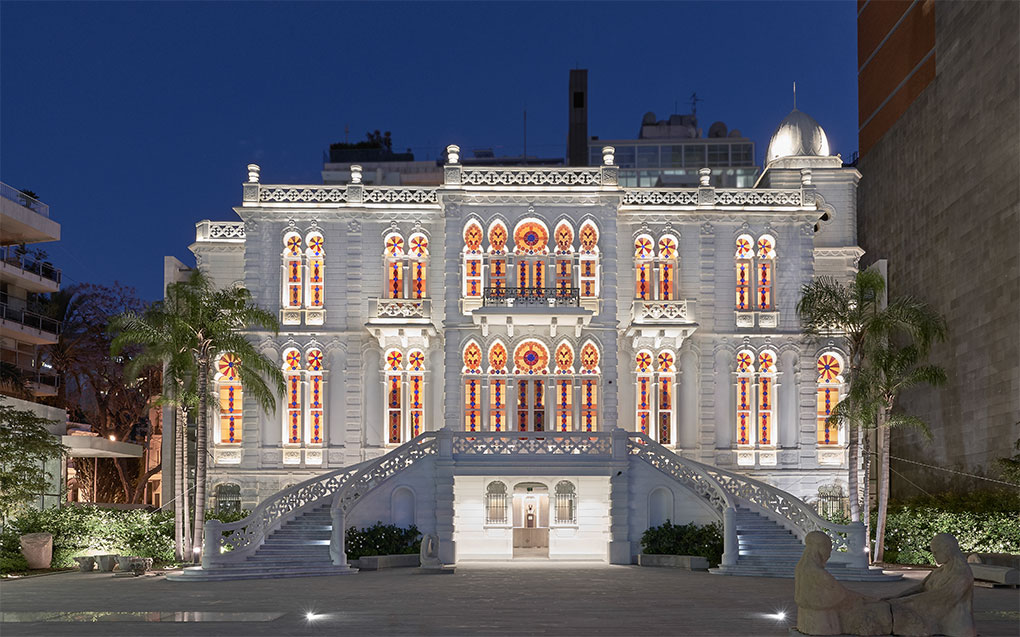
A beautifully illuminated historic building in Beirut, Lebanon, featuring ornate architecture, colorful stained glass windows, and surrounded by palm trees, captured at night.
The beautifully illuminated facade of a historic building in Beirut, showcasing its stunning architecture and vibrant details at night.

🚌Beirut on a Budget: Money-Saving Hacks & Public Transport

Let’s be real, travel costs add up. Here’s how to stretch your dollars in Beirut. To truly save time and money, you need to understand Beirut’s wild public transport system. There are no trains or subway. It’s all about the road.

  • Public Transport: Forget a formal bus system. Beirut’s main public transport is the shared service (pronounced servees) taxi. These are old Mercedes sedans that run set routes. It’s an adventure! Flag one down, tell the driver your general area, and if he’s going that way, you hop in. It costs around 2,000-3,000 L.L. per person. It’s chaotic but the cheapest and most local way to travel.
  • Ride-Hailing Apps: Uber and Careem are your best friends. They are ridiculously cheap compared to Western standards and eliminate haggling. A 15-minute ride will often cost less than $5.
  • How to ride private: If you want the taxi to take you directly and not pick up others, say “Taxi” (not service) and negotiate a higher, private price.
  • Renting a Car? I don’t recommend it for a weekend trip. Beirut’s traffic is legendary (in a bad way), and parking is a nightmare. You’ll waste precious time and gas circling blocks. Stick to walking, services, and ride-hailing.
  • Saving Time & Gas: Plan your days by grouping sites that are close (e.g., Downtown/Corniche, or a separate day for the Mar Mikhael/Sursock area) to avoid long, expensive, private taxi rides through peak traffic (worst times are 7:30-9:30 AM and 4:30-7:00 PM).

Hidden Gems: Beirut’s Secret Spots

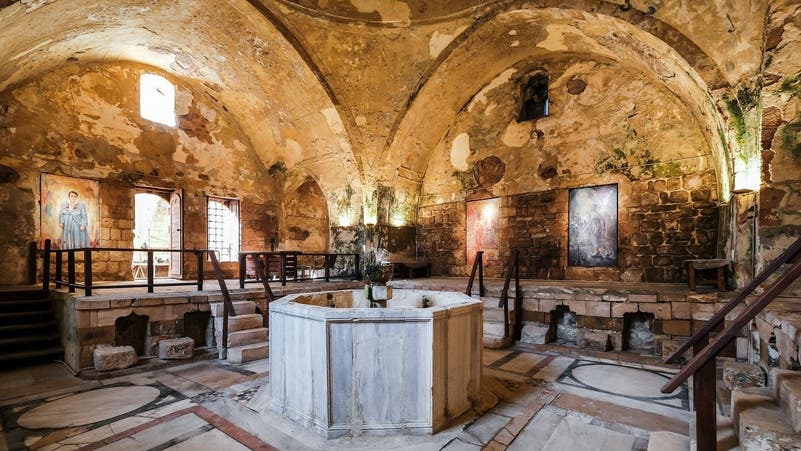
  • Hammam Al-Jadid: This isn’t a tourist hammam. It’s a local, no-frills bathhouse. If you’re brave and looking for a truly authentic experience, this is it. Just know what you’re getting into!
  • A Hamra Street Café: Skip the chains and find a tiny café in the Hamra district. Order a Turkish coffee and just people-watch. This is where you’ll see the real, intellectual heartbeat of the old Beirut.
  • The Corniche at Dawn: Everyone does the corniche at sunset. Do it at dawn. You’ll have it almost to yourself, shared only with the city’s dedicated fishermen. The light is soft, and the city feels peacefully still.
Interior of an ancient stone church featuring arched ceilings, weathered walls, and artwork on the walls, with a stone font in the center.
Hammam Al-Jadeed bathhouse combines art and antiquity in Lebanon

Essential Lebanese Lingo for Travellers

You’ll get by with English and French, but a few words of Arabic will open doors and hearts.

  • Marhaba (mar-ha-ba): Hello
  • Shukran (shook-ran): Thank you
  • Yalla (ya-la): Let’s go! / Come on! (You’ll hear this constantly)
  • Kifak? (ki-fak): How are you? (to a male)
  • Kifik? (ki-fik): How are you? (to a female)
  • Bi kam? (bee kam): How much?
  • Saha (sa-ha): Said to someone who is eating, like “Bon Appétit”

Packing Your Beirut Toolkit (My Travel Lifesavers)

A smooth trip is all about the right gear and the right backups. These are the products I never travel without.

✈️ Stay Connected & Secure:

Let’s talk internet. Relying on airport SIMs or roaming is a surefire way to burn cash. My secret weapon? Drimsim. It’s a universal data SIM that works in over 190 countries, including Lebanon. You just pop it in, top up via the app, and you’re online. No hunting for a store upon arrival. → Grab your Drimsim here and stay connected hassle-free.

And while we’re on digital safety, a VPN is non-negotiable, especially when using public WiFi. I’ve used NordVPN for years to keep my data safe and stream my home Netflix. → Protect your online privacy with NordVPN.

✈️ Travel with Peace of Mind:

Stuff happens. Flights get delayed, luggage gets lost. I never leave home without solid travel insurance from VisitorsCoverage. It’s a platform where you can easily compare plans and find one that fits your specific trip. It’s the ultimate safety net. → Compare and book your travel insurance with VisitorsCoverage.

Speaking of flight troubles, did you know if your flight is delayed or canceled, you could be owed up to $650? Most people never claim it. I use AirHelp to fight the airlines for me—they only get paid if I win. It’s a no-brainer. → Check your flight for compensation with AirHelp.

✈️ Capture the Magic:

Beirut is incredibly photogenic. I capture all its beauty with my trusty Sony Alpha camera. It’s lightweight, powerful, and perfect for both cityscapes and food shots.

Ready to book your flight and hotel? I always find the best deals on Expedia. → [Start planning your Beirut escape here!]( Your Link)

Beirut Weekend Escape: Frequently Asked Questions

Q: Is Beirut safe for tourists?
A: This is the number one question. The political and economic situation is complex, and it’s important to stay informed. However, on a day-to-day level, Beirut is an incredibly welcoming city. The hospitality is genuine, and the areas tourists frequent are generally safe. Exercise the same caution you would in any major city.

Q: What’s the visa situation and cost?
A: Visa policies can change, but for many Western passport holders (US, Canada, EU, UK), a free visa-on-arrival is granted for a stay of one month. Always check with the Lebanese embassy in your country for the most current information before you travel.

Q: What’s the best time of year to visit for a weekend?
A: The ultimate sweet spots are Spring (April-May) and Autumn (September-October). The weather is perfect—warm and sunny, but not the oppressive heat of summer. You’ll also avoid the peak summer crowds.

Q: Can I use US Dollars/Euros?
A: Yes, absolutely. Lebanon has a massive currency crisis, and the country operates on a “Liraize” system. You can pay in US Dollars almost everywhere, and you’ll often get change in a mix of dollars and lira. Don’t bother changing large amounts of money; just bring crisp, new US dollar bills.

Q: I love to shop! Any tips?
A: Beyond the designer stores in the Souks, look for local crafts. I love the ceramic shops and the beautiful, traditional glassware. And for a truly unique souvenir, pick up a bottle of Arak, the national anise-flavored spirit.

Q: Is a weekend enough for Beirut? A: Absolutely! Three days is perfect for hitting the city highlights (Corniche, Downtown, Museums, nightlife) and squeezing in one fantastic day trip (like Byblos). For a deeper dive, you’d need a week, but the ultimate weekend escape is totally doable.

Q: How safe is Beirut for solo female travelers? A: In my experience, Beirut is welcoming and friendly. Basic common sense applies, especially at night or when navigating public transport. Dress respectfully when visiting religious sites, but the city’s vibe is generally very modern and liberal.


Your Next Adventure Awaits!

Beirut isn’t just a destination; it’s an experience. It’s a city that will challenge you, delight you, and leave you craving more. With this guide, you’re armed with everything you need for an unforgettable weekend.

So, what are you waiting for? [Check flight prices to Beirut now] start packing! Have any questions? Drop them in the comments below – I love talking all things travel.

P.S. Looking for more weekend inspiration? Don’t forget to explore my complete Travel Master List for guides to other incredible destinations!

https://pin.it/4OPRwZK86

Universal Disclaimer/Disclosure Page:

Ultimate Budapest Weekend Getaway: Your Insider Guide

Meta Description:

Dreaming of a European getaway? Our ultimate weekend guide to Budapest, Hungary is packed with insider tips, a perfect 3-day itinerary, and hidden gems. Learn how to navigate the city like a pro, save money, and experience the magic of the “Pearl of the Danube.” Perfect for travellers seeking a quick, unforgettable escape.

Table of Contents

  1. Why Budapest Should Be Your Next Weekend Escape
  2. Best Time to Visit & Crowd-Saving Hacks
  3. Getting There: Flights, Trains & Road Trips
  4. Moving Around: Budapest’s Public Transport Secrets
  5. Iconic Attractions You Can’t Miss
  6. Hidden Gems Only Locals Know
  7. Food & Drinks to Try (and Where to Find Them)
  8. Budget Tips to Save Time & Money
  9. Hungarian Words Every Traveler Should Know
  10. Nearby Escapes: Extend Your Trip to Vienna, Prague & Beyond
  11. Essential Travel Tools & Safety Hacks
  12. FAQ: Budapest Weekend Escape

1. Why Budapest Should Be Your Next Weekend Escape

Budapest is like that friend who has both a serious career and a wild nightlife side. One moment you’re soaking in thermal baths with a centuries-old Ottoman backdrop, the next you’re dancing at a ruin bar inside a crumbling building filled with fairy lights and mismatched furniture.

So, your calendar has miraculously cleared for a glorious 48 hours, and you’ve set your sights on Budapest. Excellent choice. Forget what you’ve heard about needing a week; Budapest is a city built for the dramatic, perfectly-packaged weekend.

I’m convinced this city was designed by a poet with a flair for the dramatic. The Danube River doesn’t just flow through it; it acts as a liquid stage, separating the rolling hills of Buda from the pulsating, flat streets of Pest. I remember my first evening there, standing on the Chain Bridge as the city lit up gold. It was one of those travel moments that costs exactly zero dollars but feels like a million bucks.

This guide is your blueprint for a weekend that feels like a full-blown vacation. We’ll tackle logistics, hidden spots, and how to eat like a king without a royal budget. Let’s dive in.

Quick Visa Intel: As a major Schengen Area hub, Budapest is easily accessible for many passport holders. But rules vary! Always check your specific visa requirements and costs well in advance to avoid any last-minute panic. For my fellow Canadians and Americans, you’re good for up to 90 days visa-free.

I still remember my first night—wandering down the Danube promenade, goulash in my belly, thinking: Wow, this city feels like Vienna after three espressos!

👉 If you’ve loved my Vienna weekend guide, you’ll adore Budapest for its mix of grandeur and grit.

2. Best Time to Visit & Crowd-Saving Hacks

  • Spring (April–May) and Autumn (Sept–Oct) are golden—pleasant weather and fewer crowds.
  • Summer = peak season + higher hotel prices (but also open-air festivals and endless Danube sunsets).
  • Winter has Christmas markets and steaming thermal baths under snowfall—magical but chilly.

💡 Smart hack: Visit in September—cheaper than August, warm enough to stroll, and fewer tour buses.

Getting There: Flights, Trains & Road Trips

Budapest’s BKK network (metro, trams, buses, and suburban rail HÉV) is efficient and budget-friendly.

  • Flights: Budapest Ferenc Liszt International Airport (BUD) has budget connections all over Europe. Always check Expedia for deals.
  • 🚇 Metro: Europe’s oldest (M1 is a UNESCO site). Four lines cover the city well.
  • Trains: The city is well linked. From Vienna, it’s just 2h 30m by rail (no need for airport stress).
  • Road Trips: Highways M1 (from Vienna/Bratislava) and M7 (from Lake Balaton/Zagreb) are excellent. Rent a car, but keep in mind Hungarian roads use electronic vignettes (toll stickers)—buy them online before driving.

Hotels in Budapest

Getting Around Budapest: A Survival Guide

This is where you save both time and money. Budapest has a fantastic, integrated public transport system (BKK).

  • Public Transport: The network of metros, trams, buses, and trolleybuses is your best friend. A single ticket is 450 HUF, but for a weekend, the 72-hour Budapest Travel Card is a steal. Validate it once and you’re good to go. The M2 (red) and M3 (blue) metro lines are particularly useful.
  • 💡 Buy a 24/48/72-hour Budapest Travel Card—unlimited rides, discounts at attractions, and zero ticket stress.
  • 🚋 Trams: Tram 2 runs along the Danube—basically a sightseeing tour for €1.Tram Line 2: This is a free sightseeing tour! It runs along the Pest side of the Danube, offering stunning views of the Castle Hill. Use it to get from Parliament to the Great Market Hall.
  • 🚌 Buses & Trolleybuses: Reach outer districts. Google Maps works fine here.
  • 🚤 Danube Ferries: Cheap river cruises run by public transport. Yes, really.
  • Walking: Pest is incredibly walkable. You’ll discover so much more on foot.
  • Bolt: The local equivalent of Uber is reliable and often cheaper than taxis if your feet give out.
  • Driving? Don’t. Seriously. Parking is a nightmare and expensive in the center. Save the rental car for a Hungarian countryside road trip another time.

Your Game Plan: The Perfect 3-Day Budapest Itinerary

Day 1: Dive into the Heart of Pest

Morning: Start at the iconic Hungarian Parliament Building. It’s the postcard shot, and it’s even more breathtaking in person. Pro tip: Book your tour online weeks in advance if you want to go inside—spots fill up fast. Instead of waiting in line, I opted to admire it from across the river, which is free and offers a stunning perspective.

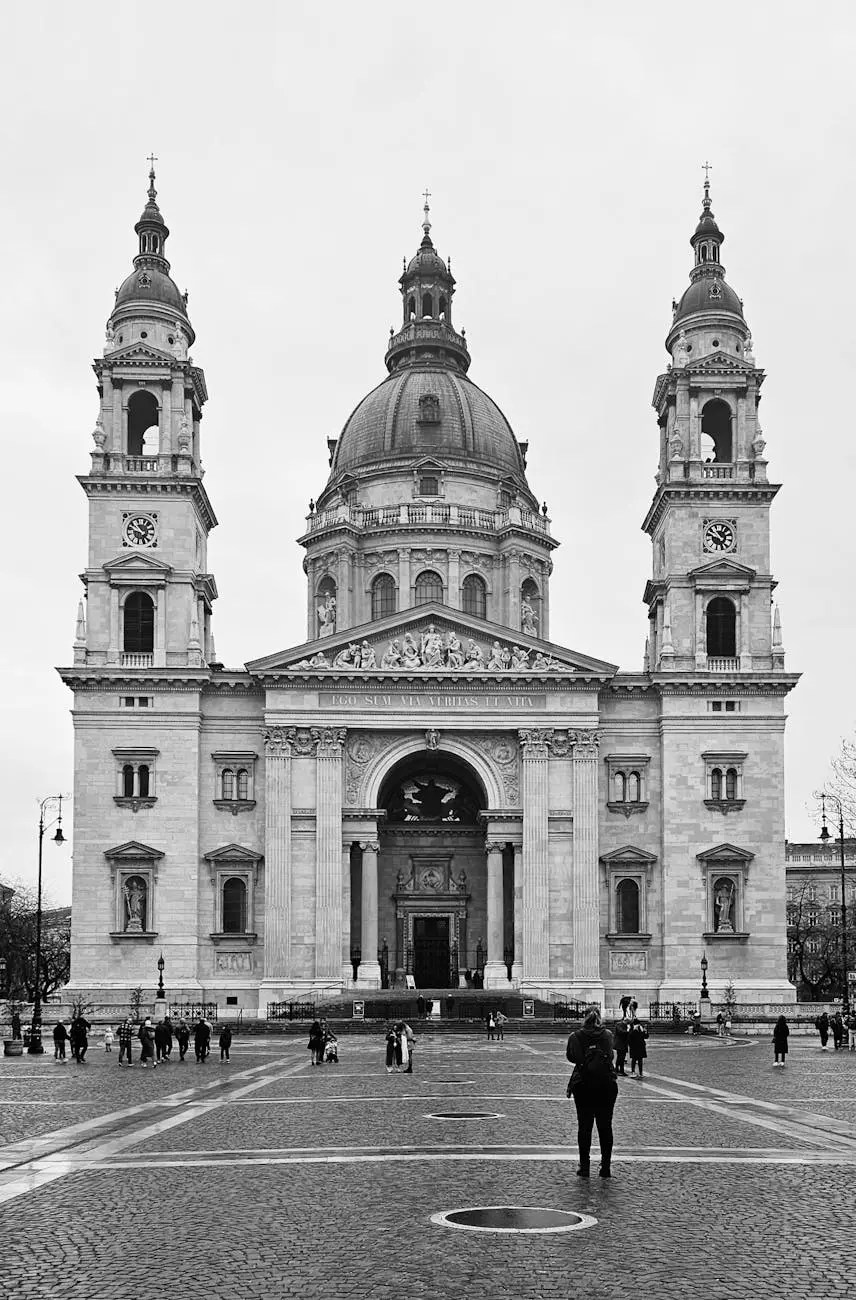
Afternoon: Walk to St. Stephen’s Basilica and for a few Euros, you can climb (or take the lift) to the panoramic terrace. The 360-degree view of the city is the best orientation you can get. Afterwards, get deliciously lost wandering the Jewish Quarter. If you need a caffeine hit, my favourite spot was a tiny window-service coffee shop called My Little Melbourne Brew Bar.

Evening: This is where the magic happens. You simply cannot leave without experiencing a ruin bar. These are not your average pubs; they are sprawling, bohemian wonderlands built in abandoned buildings and courtyards. Start with the original and most famous, Szimpla Kert, but then explore the others in the neighborhood. For dinner, skip the tourist traps and grab a legendary cheap eat at Karavan, a street food courtyard right next to Szimpla.

Nighttime view of the Hungarian Parliament Building illuminated in gold along the Danube River.
The stunning Hungarian Parliament Building illuminated at night, a must-see landmark in Budapest. The stunning Hungarian Parliament Building, lit up against the night sky. For the best view, cross to the Buda side of the Danube River just after sunset.
Black and white photograph of St. Stephen's Basilica in Budapest, showcasing its impressive facade and twin towers, with people gathering in the square in front.
St. Stephen’s Basilica: A stunning architectural masterpiece and a must-visit landmark in Budapest, Hungary. The majestic St. Stephen’s Basilica dominates the Budapest skyline. For a truly unforgettable experience, climb to the panoramic terrace for a 360-degree view of the city.
A vibrant ruin bar in Budapest, filled with eclectic furniture, colorful stools, and lush greenery, showcasing a lively atmosphere with people enjoying their time.
A vibrant ruin bar in Budapest, showcasing colorful seating and greenery, perfect for enjoying drinks and socializing.

Day 2: Conquer the Buda Castle Hill & Soak in History

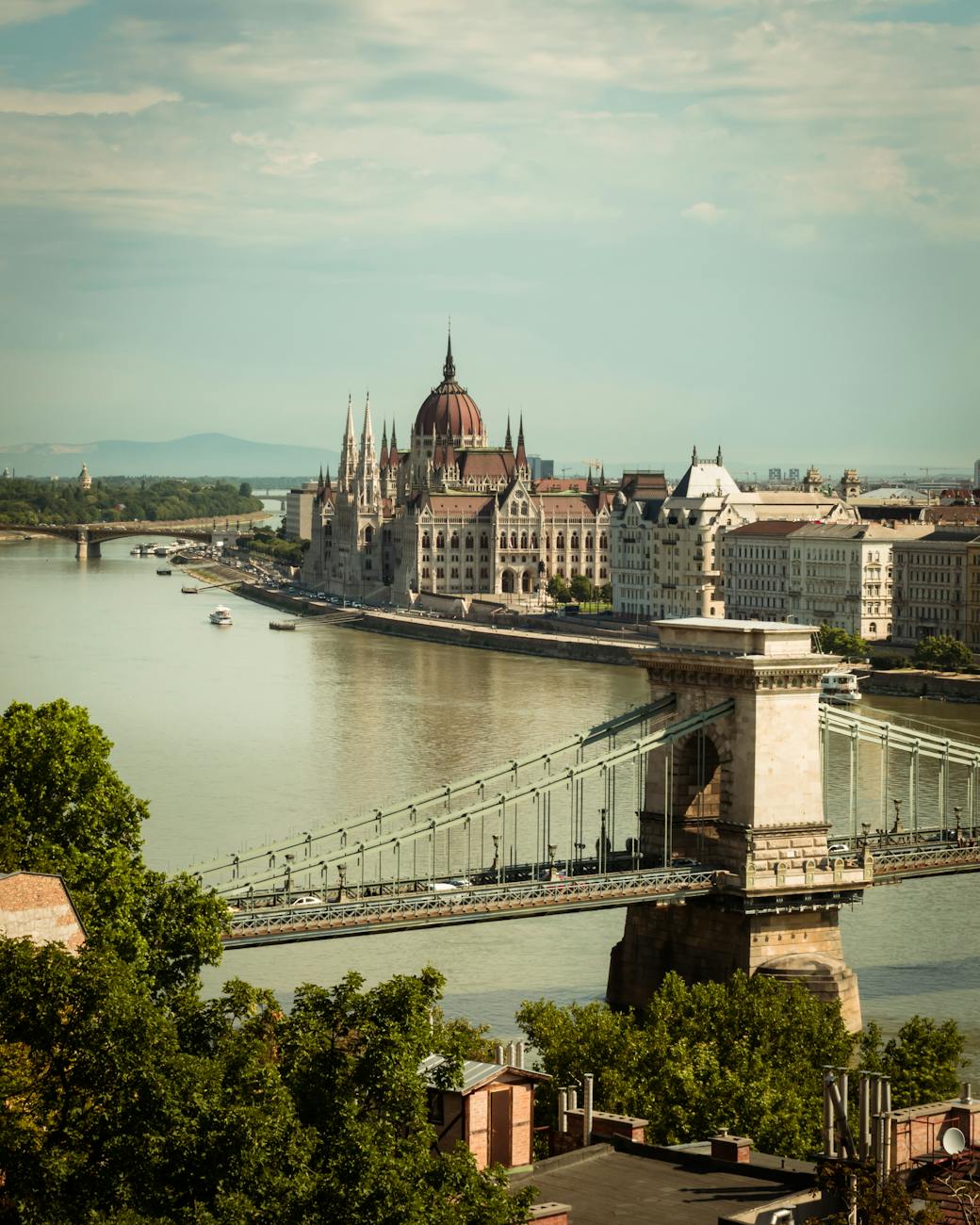
Morning: Cross the Chain Bridge (on foot, it’s an experience!) and make your way up to Buda Castle. You can take the funicular for a classic experience, but walking up is free and offers gorgeous, gradual views. Explore the castle district and get lost in the cobblestone streets.

Afternoon: A short walk away is Matthias Church and the Fisherman’s Bastion. The Bastion’s white turrets look like something from a fairy tale and offer the best photo ops of the Parliament across the river. It can get packed, so go early or late.

Evening: Time to relax, Hungarian-style. Head to one of the city’s famous thermal baths. The Széchenyi Thermal Bath is the big, beautiful, iconic one with the yellow buildings and outdoor pools. It’s a party, especially on a weekend. For a more tranquil, historic experience, try the Gellért Baths. Either way, it’s the perfect way to soothe your sightseeing feet. I still dream about that warm, mineral-rich water.

A scenic view of Buda Castle in Budapest, Hungary, surrounded by lush greenery and residential buildings, with a clear sky in the background.
A stunning view of Buda Castle, showcasing its majestic architecture and the surrounding lush greenery.
A stunning view of the Chain Bridge connecting Buda and Pest, with the iconic Hungarian Parliament building in the background along the Danube River.

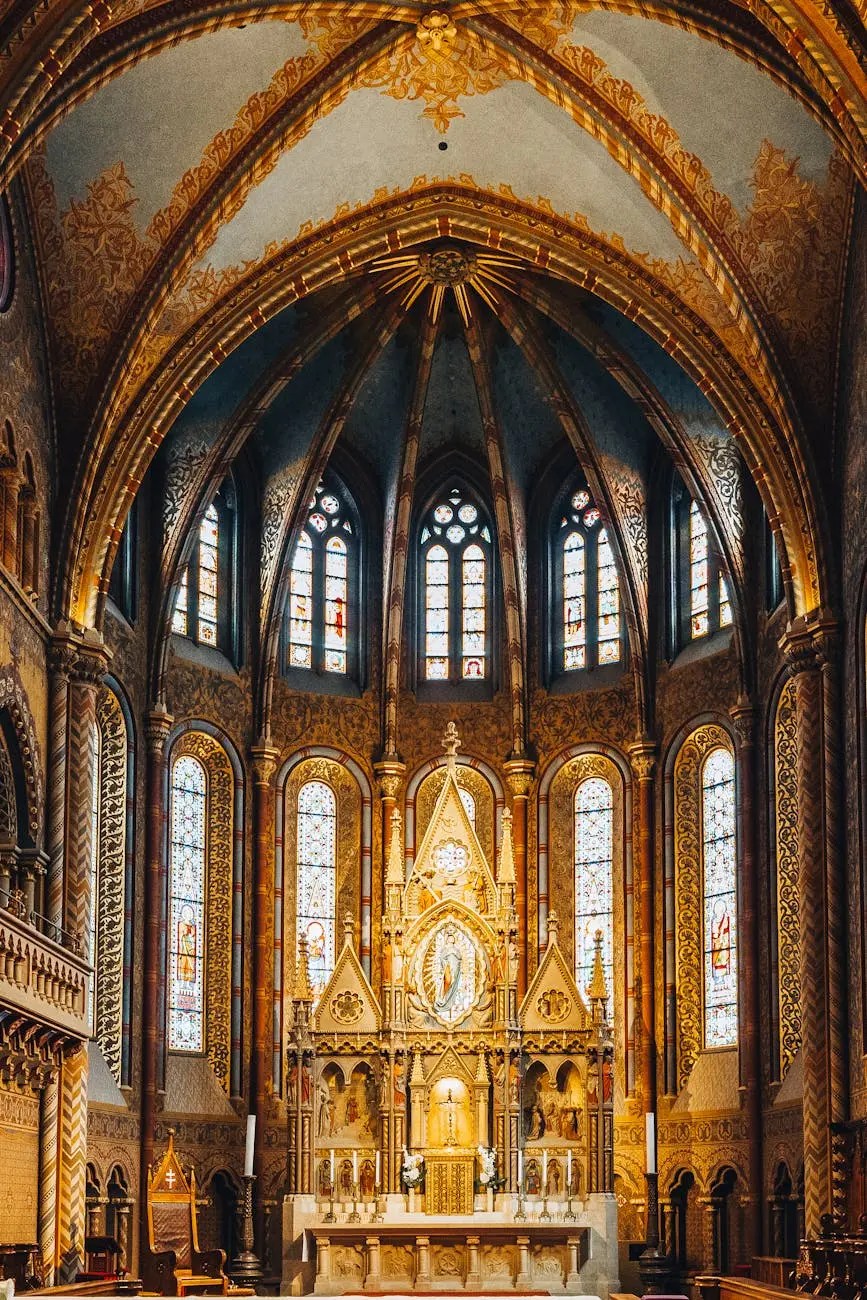
Interior view of a beautifully decorated church with stained glass windows and ornate golden altar.
Interior of Matthias Church featuring stunning architecture and intricate stained glass windows in Budapest. The breathtaking interior of Matthias Church, a jewel of Buda Castle. Look up to appreciate the stunning Gothic vaulted ceilings and the vibrant stained glass that fills the space with color.
Exterior view of the Fisherman's Bastion in Budapest, featuring its iconic turrets and staircase against a clear blue sky.
The iconic Fisherman’s Bastion in Budapest, showcasing its fairytale-like architecture and stunning views. The fairy-tale towers of Fisherman’s Bastion offer what might be the best panoramic view in Budapest. Pro tip: Visit early in the morning to have the place almost to yourself!
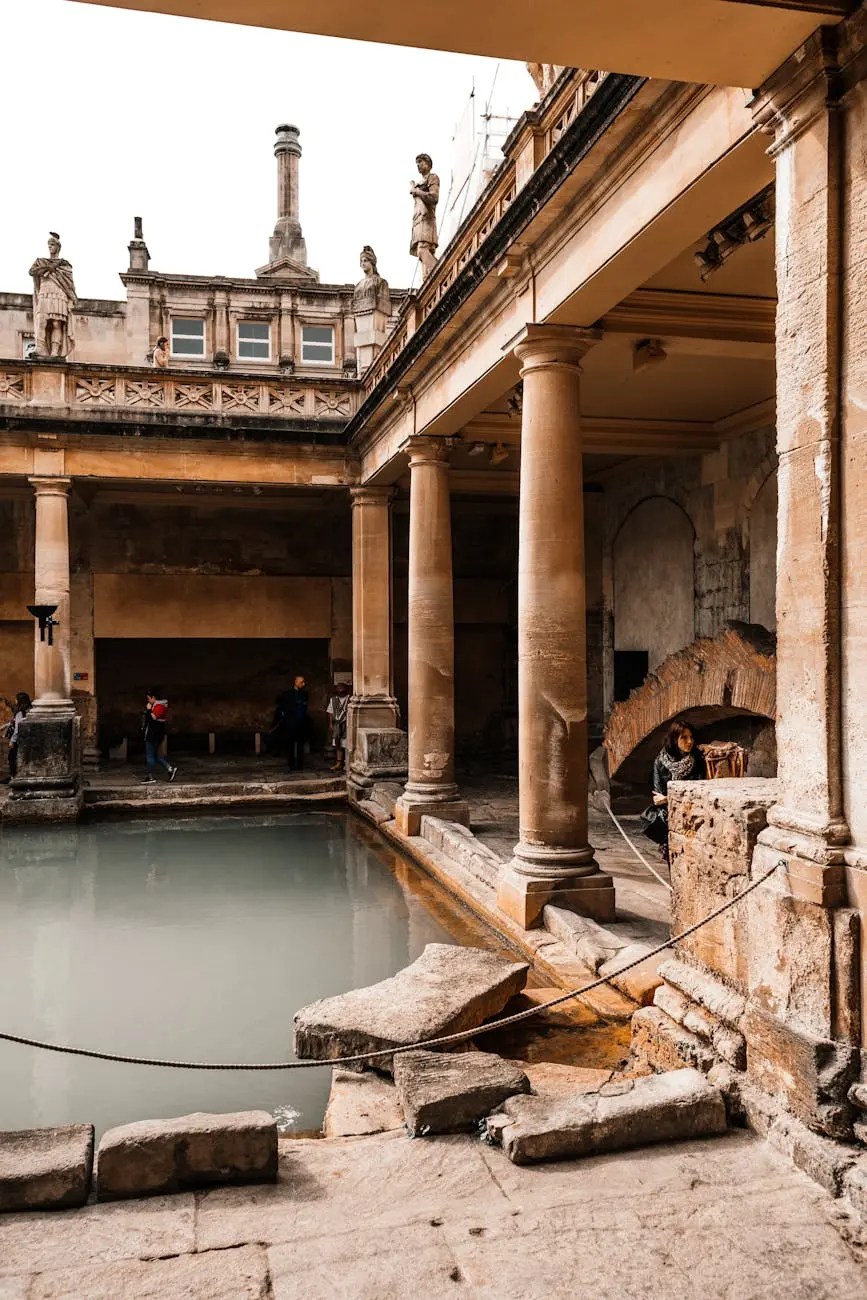
Interior of a historic thermal bath with Roman-style columns and statues, featuring a quiet mineral pool surrounded by stonework.
Explore the historic thermal baths of Budapest, a perfect blend of relaxation and cultural heritage. Stepping into one of Budapest’s historic thermal baths feels like traveling back in time. Don’t forget to bring your swimsuit and a towel for a truly local experience of relaxation.
A scenic view of a natural hot spring with people relaxing in the water, surrounded by greenery and hills in the background.
Relax in the natural hot springs at the scenic thermal baths of Budapest, surrounded by lush greenery and beautiful landscapes.
A vibrant thermal bath complex in Budapest, with steam rising from the heated outdoor pools. People are enjoying the warm water while the historic architecture of the Széchenyi Baths is visible in the background.
Soak in the historic Széchenyi Thermal Bath, Budapest’s iconic hotspot for relaxation and rejuvenation.

Day 3: Market Streets & Panoramic Views

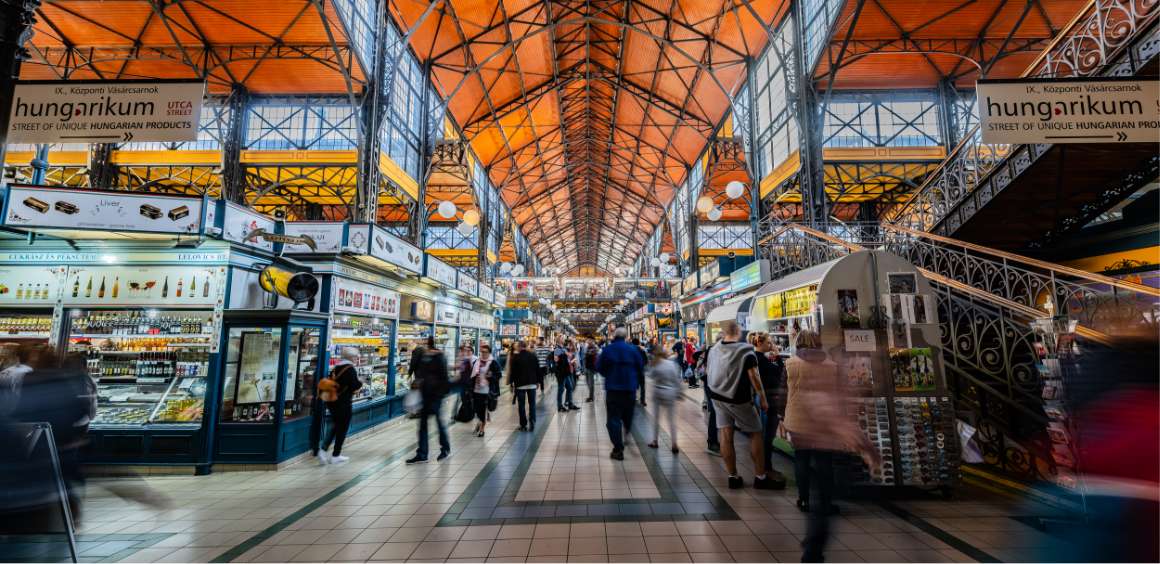
Morning: Fuel up at the Great Market Hall (Nagyvásárcsarnok). The ground floor is a feast for the senses with produce, meats, and paprika souvenirs. Upstairs, you can grab a cheap and delicious lunch of lángos (fried dough with toppings)—a must-try Hungarian treat.

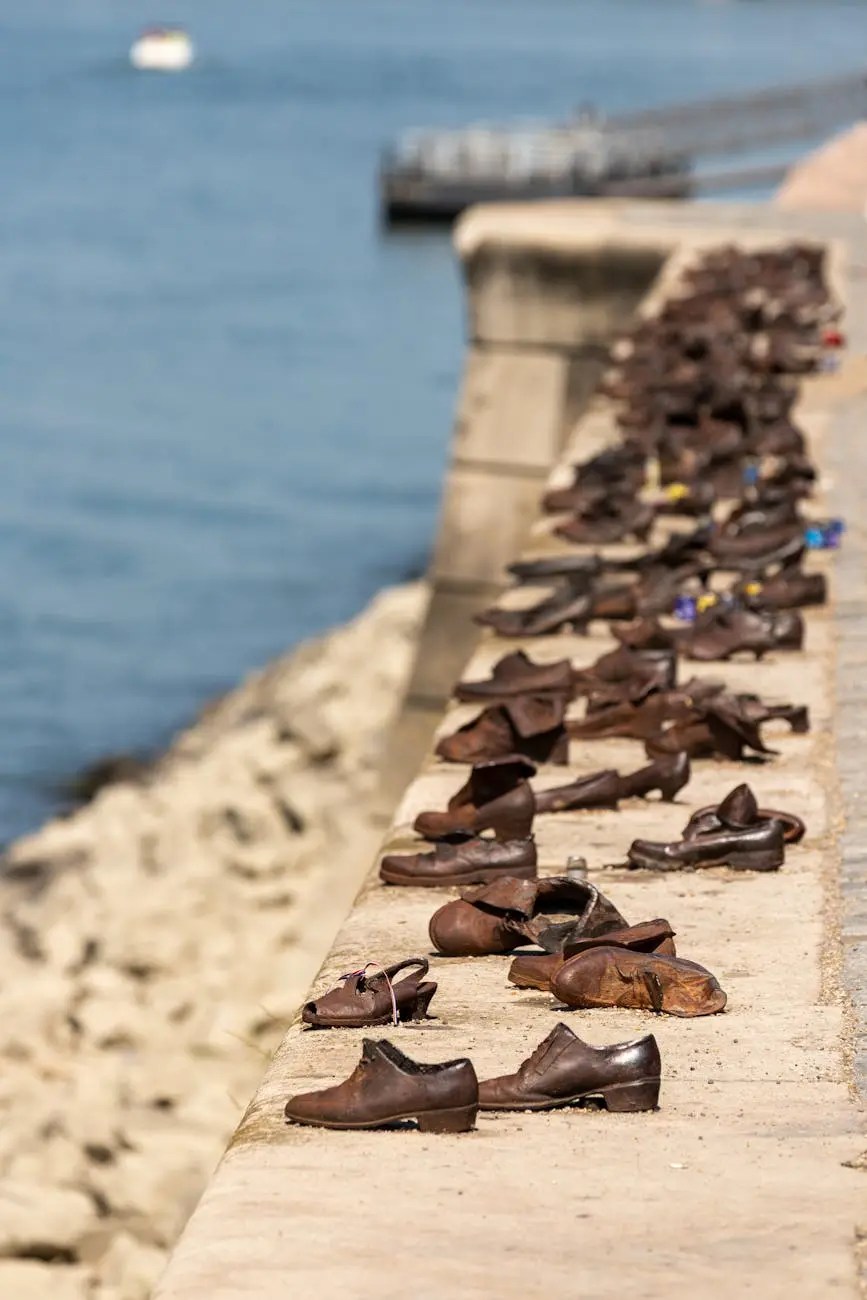
Afternoon: For your final afternoon, take a leisurely stroll along the Danube Promenade on the Pest side. See the poignant Shoes on the Danube Bank memorial. Then, make your way to Gellért Hill for the most spectacular panoramic view of the entire city. It’s a bit of a climb, but I promise you, it’s the ultimate farewell memory of Budapest.

Interior view of the Great Market Hall in Budapest, Hungary, with people walking among stalls filled with various Hungarian products.
The bustling interior of the Great Market Hall in Budapest, showcasing a variety of local products and vibrant architecture.
Delicious food offerings displayed at a bustling market, with people engaging in conversation in the background.
Delicious lángos topped with fresh ingredients at Budapest’s Great Market Hall, a must-try Hungarian treat.

A memorial featuring a series of old brown shoes placed along a stone riverbank, with the Danube River in the background.
The poignant Shoes on the Danube Bank memorial, commemorating the lives lost during World War II. The powerful ‘Shoes on the Danube Bank’ memorial, a somber tribute to the Jews who were shot at the edge of the river during World War II. A poignant reminder to pause and reflect.
A panoramic view of the Buda Hills in Budapest, featuring a statue on a hilltop and the Danube River in the foreground, with a flag waving in the wind.
A panoramic view of Gellért Hill featuring the Liberty Statue and a Hungarian flag, overlooking the verdant landscape and Danube River in Budapest. The climb up Gellért Hill is worth every step for this breathtaking panoramic view. The Liberty Statue, a symbol of the city’s resilience, stands watch over Budapest.

Hidden Gems: Escape the Tourist Trail

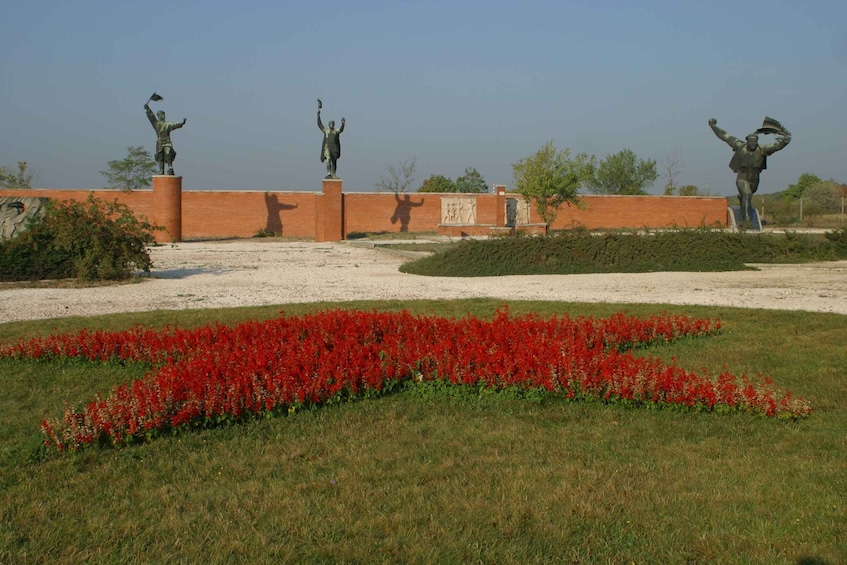
  • Memento Park: Love quirky, off-beat history? This park on the city’s outskirts houses the old communist statues torn down after 1989. It’s bizarre, fascinating, and a unique piece of the past.
  • The “Wedding Cake” at the top of St. Stephen’s Basilica: We mentioned the view, but the story behind the ornate, neo-renaissance dome is a fun piece of trivia.
  • Rudas Baths: For the truly adventurous, this Ottoman-era bath has a stunning rooftop pool with views and, on certain days, is adults-only or mixed-gender. Do your research, but it’s an incredible experience.
A park featuring a symbolic red star flowerbed in front of statues representing historical figures, set against a clear sky.
The iconic statues at Memento Park, showcasing Hungary’s communist past surrounded by vibrant flower arrangements.

Essential Hungarian for the Weekend Warrior

Hungarian is a tricky language, but a little effort goes a long way!

  • Hello/Goodbye: Szia (See-ya) [informal]
  • Thank you: Köszönöm (Kur-sur-nurm)
  • Cheers: Egészségedre! (Egg-esh-shay-ged-re) — practice this before your first ruin bar toast!
  • Yes: Igen (Ee-gen)
  • No: Nem (Nem)
  • Check, please: Fizetek, kérem (Fee-zet-ek, kay-rem)
  • Szia! = Hi/Bye
  • Hol van a…? = Where is the…
  • Jegy = Ticket
  • Fürdő = Bath

Smart Travel Tips for a Flawless Trip

  • Currency: The Hungarian Forint (HUF) is king. While some places take Euros, the rate is terrible. Always pay in Forint. ATMs are everywhere.
  • Best Time to Visit: Spring (April-May) and Fall (September-October) are ideal. The weather is pleasant, and the crowds are thinner than the peak summer months.
  • Stay Connected: I never travel without my Drimsim. It’s a global SIM that works in over 190 countries. Pop it in, top up via the app, and you’re online. No more hunting for SIM cards or scary roaming bills. It’s a game-changer for navigating and posting those ruin bar pics instantly.  Get connected with Drimsim here.
  • Travel Insurance: I consider this non-negotiable. For short trips, I use VisitorsCoverage to quickly compare and find a plan that fits. It’s peace of mind for delayed flights or a unexpected slip on the cobblestones.  Get a quote from VisitorsCoverage here.
  • Flight Hassles? If your flight to Budapest gets delayed or canceled, you might be owed compensation. I’ve used AirHelp to claim money back—they handle all the paperwork and only charge if they win. It’s worth a quick check!  See if you’re owed money with AirHelp.
  • VPN for Safety: Using public Wi-Fi? Protect your data with a VPN. I always have my NordVPN running on my phone and laptop. It’s essential for secure browsing and can sometimes help with geo-blocked content. > Stay secure online with NordVPN.

Frequently Asked Questions (FAQ)

Q: Is two days enough for Budapest?
A: While more time is always better, a weekend (2-3 days) is absolutely enough to see the major highlights and get a fantastic feel for the city’s unique atmosphere. This itinerary is designed to make the most of every hour.

Q: What is the best area to stay in Budapest for a weekend trip?
A: For a first-time visitor, District V (Belváros) or District VII (the Jewish Quarter, near the ruin bars) are perfect. You’ll be within walking distance of major Pest attractions and have excellent transport links.

Q: Is Budapest an expensive city?
A: Not at all! Compared to other Western European capitals like Paris or Amsterdam, Budapest is very affordable. Meals, drinks, and public transport offer excellent value for money.

Q: Can I use credit cards everywhere?
A: Mostly, yes. Major restaurants, shops, and hotels accept cards. However, it’s wise to carry some cash (Forint) for market stalls, smaller ruin bars, or tips.

Q: What should I pack?
A: Comfortable walking shoes are the #1 priority! The city is made of cobblestones. Also, pack a swimsuit for the baths, and in cooler months, layers are key.

Q: What’s the best way to get around?
A: Buy a Budapest Card for unlimited metro, tram, and bus rides. Ferry rides along the Danube are a bonus.

Nearby Escapes: Extend Your Trip

Budapest pairs beautifully with:

  • Vienna – Elegant and close by train.
  • Prague – 6 hours by train or a short flight.
  • Munich – Beer gardens + Alps vibes.
  • Venice – Worth flying for the canals.
  • Athens – Mediterranean sunshine after your Hungarian city break.

Ready to Pack Your Bags?

Budapest is waiting to steal your heart. From its grand architecture to its gritty, creative ruin bars, it’s a city of beautiful contrasts. With this plan in your pocket, you’re all set for an unforgettable weekend.

To start planning your adventure and snagging great flight and hotel deals, I always begin my search on Expedia. > Find your perfect Budapest getaway on Expedia here!

And don’t forget to capture every golden moment! I swear by my lightweight mirrorless camera for getting those perfect shots without the bulk. > Check out my favorite travel camera here.

🎒 Final Thoughts

Budapest isn’t just another European capital—it’s a city of contrasts. Grand boulevards sit next to gritty ruin pubs, historic baths bubble while techno beats thump nearby. It’s friendly on the wallet, rich in history, and packed with surprises.

Have you been to Budapest? What was your favorite hidden spot? Share your tips in the comments below!

Universal Disclaimer/Disclosure Page:

Ultimate 3-Day San Francisco Weekend Guide

Meta Description:

Dreaming of a California getaway? Our ultimate weekend travel guide to San Francisco, USA, is packed with local tips, hidden gems, and a savvy 3-day itinerary. Discover how to navigate the iconic hills, save money on transit, and experience the true soul of the City by the Bay. Perfect for travellers seeking an unforgettable urban escape!

Hey there, fellow wanderers! Have you ever seen a city so breathtaking it looks like a movie set? No, I’m not talking about Hollywood. I’m talking about San Francisco, the City by the Bay, a place that’s part European charm, part bohemian rebel, and all-around magnificent.

I remember my first time in SF. It was a classic case of underestimating the hills. I’d been warned, of course, but a warning is nothing compared to the reality of standing at the bottom of Lombard Street and realizing that your life is about to become a vertical challenge. I swear my calves are still screaming.

But that’s the thing about San Francisco: the challenge is part of the charm. It’s a city that makes you work for its beauty, and it’s worth every single step. So, if you’re ready to embrace the climbs and the fog, pack your bags and get ready for the ultimate weekend escape.

Table of Contents

  • Before You Go: The Practical Stuff
    • Visa and Entry Requirements
    • Getting There and Around
    • Your SF Lingo Crash Course
  • Day 1: Icons, Seafood, and Surprises
    • Morning: The Golden Gate Grandeur
    • Afternoon: The Touristy, but Unmissable, Wharf
    • Evening: Chinatown’s Hidden Alleys
  • Day 2: Bohemian Vibes and Breathtaking Views
    • Morning: The Painted Ladies & Hippie History
    • Afternoon: Golden Gate Park and Hidden Stairs
    • Evening: Mission District Flavors
  • Hidden Gems You Won’t Find on a Postcard
  • Tips for Your Trip: Save Time, Save Money
    • Getting Around Like a Local
    • Where to Stay and How to Book
    • Money-Saving Magic
  • FAQ: Your Burning Questions Answered

Why San Francisco is the Perfect Weekend Getaway

Compact yet incredibly diverse, SF is a weekend warrior’s dream. You can have clam chowder from a sourdough bowl at Fisherman’s Wharf, wander through the hippie history of Haight-Ashbury, and be staring at awe-inspiring modern art in SoMa all in one afternoon. The energy is creative, the food is phenomenal, and the views… oh, the views. They’re absolutely free and around almost every corner.

For more on why California is a top destination, check out my previous post:Los Angeles: Ultimate Weekend Guide to Los Angeles 

Before You Go: The Practical Stuff

Visa and Entry Requirements: If you’re coming from a country on the Visa Waiver Program (like the UK, Australia, or most EU nations), you’ll need an approved ESTA before you fly. It’s a quick online application, costs a few bucks, and saves you from the headache of a full visa application. For everyone else, make sure you apply for the correct tourist visa well in advance. Check the official U.S. State Department website for the most up-to-date information.

Flights to San Francisco, CA

Getting There and Around: You’ll likely fly into San Francisco International Airport (SFO), but also check flights to Oakland (OAK) across the bay—sometimes you can find a better deal. From SFO, the easiest and cheapest way to get into the city is on the BART (Bay Area Rapid Transit) train. The ride is quick and drops you right downtown. Once in the city, you’ll be hella grateful for public transportation. San Francisco’s Muni system is your new best friend. It includes buses, trolleys, and the iconic cable cars. Grab a Clipper card or use the MuniMobile app for easy tap-and-go travel. It will save you time and money.

  • Cable Cars: A fun tourist experience, but slow and expensive ($8 per ride). Use them for a short, iconic joyride, not as your main transport.
  • Rideshares (Uber/Lyft): Inevitable for getting to specific hills or when your feet give up. Lyft is actually headquartered in SF, so they’re everywhere.
  • Walking: The best way to discover hidden details! Just be prepared for calf-burning inclines. Wear comfortable shoes—this is non-negotiable.

Hotels in San Francisco, CA

This itinerary is designed to group geographically close activities together to minimize travel time and maximize your experience. If you’re a fan of well-planned city escapes, you’ll love our Ultimate Weekend Guide to New York City for another fast-paced urban adventure.

Day 1: Icons, Seafood, and Surprises

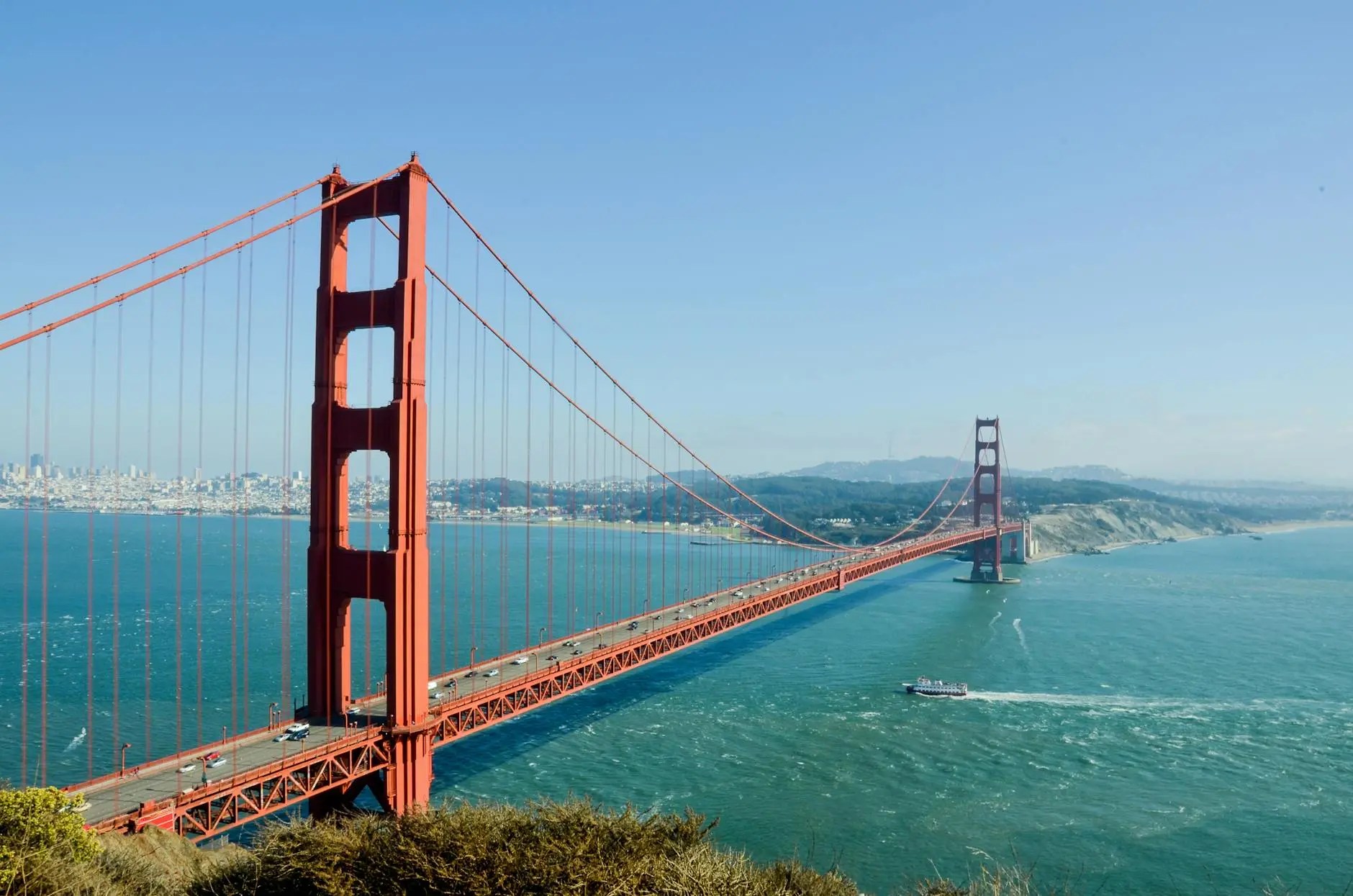
Morning: The Golden Gate Grandeur Start your day with the star of the show: the Golden Gate Bridge. To be honest, I’ve seen it a hundred times, and it never fails to impress. This iconic feat of engineering is even more striking up close. Take a bus or an Uber to Battery Spencer in the Marin Headlands for that classic, postcard-perfect view. I swear, the first time I saw it from there, the sun hit the bridge just right, and it was a moment I’ll never forget. It’s worth the short drive across the bridge to get this perspective. watch the sun set behind the Golden Gate Bridge from Fort Mason or Crissy Field. The orange hue against the steel is pure magic.

The Golden Gate Bridge spans over the blue waters of the San Francisco Bay on a clear day, showcasing its iconic red-orange color.
A stunning view of the iconic Golden Gate Bridge over the bay, showcasing San Francisco’s breathtaking scenery. No trip to San Francisco is complete without witnessing the majestic Golden Gate Bridge. This panoramic view on a perfect sunny day shows why it’s one of the most photographed landmarks in the world.

Golden Gate Bridge Tours

Afternoon: The Touristy, but Unmissable, Wharf Next up, head to Fisherman’s Wharf. I know, I know, it’s a tourist trap. But some traps are just too good to miss. Walk down to Pier 39 and watch the famous sea lions. The sound, the smell… it’s all part of the experience. It’s like a chaotic, squawking symphony. Then, grab a bowl of clam chowder in a sourdough bread bowl at Boudin Bakery. Trust me, it’s a San Francisco rite of passage. For a different kind of iconic waterfront vibe, check out our guide to the ultimate-miami-weekend-guide-save-money-enjoy

Fishing boats docked at a marina in San Francisco, reflecting in calm waters under a cloudy sky.
Boats docked at Fisherman’s Wharf, a must-visit spot in San Francisco. The classic fishing fleet at Fisherman’s Wharf. This quieter moment offers a glimpse into the area’s working history before you dive into the bustling crowds and clam chowder bread bowls.

Fisherman’s Wharf Vacations

Evening: Chinatown’s Hidden Alleys Take a bus or a short walk to Chinatown. It’s the oldest in North America, and the moment you step through the Dragon Gate, you’ll be transported. The vibrant colors, the smells of sizzling food, the shops overflowing with trinkets… it’s an assault on the senses in the best way possible. Instead of just walking the main street, dive into the side alleys like Ross Alley, where you can watch fortune cookies being made at the Golden Gate Fortune Cookie Factory. It’s a hidden gem and a glimpse into the neighborhood’s history.

Dinner: Dive into the Italian heart of SF in North Beach. Family-owned trattorias line the streets. Try Tony’s Pizza or a plate of pasta at Original US Restaurant.

Chinatown Vacations

Day 2: Bohemian Vibes and Breathtaking Views

Morning: The Painted Ladies & Hippie History Start your day at Alamo Square Park to see the famous “Painted Ladies.” These stunning Victorian homes are even more impressive in person and make for a great photo op. From there, take a bus to the Haight-Ashbury neighborhood, the heart of the 1960s hippie movement. I remember being there and feeling a sort of time-warp. The psychedelic murals and vintage shops are a trip, and you can still feel the rebellious spirit.

Haight-Ashbury Vacations

The Painted Ladies, a row of colorful Victorian homes, with the San Francisco skyline in the background.
The iconic Painted Ladies with the San Francisco skyline in the background, showcasing the city’s beautiful Victorian architecture. Postcard perfect! The iconic Painted Ladies of Alamo Square, framed by the towering skyline of downtown San Francisco—a stunning contrast of the city’s historic charm and its modern pulse.

Alamo Square Tours

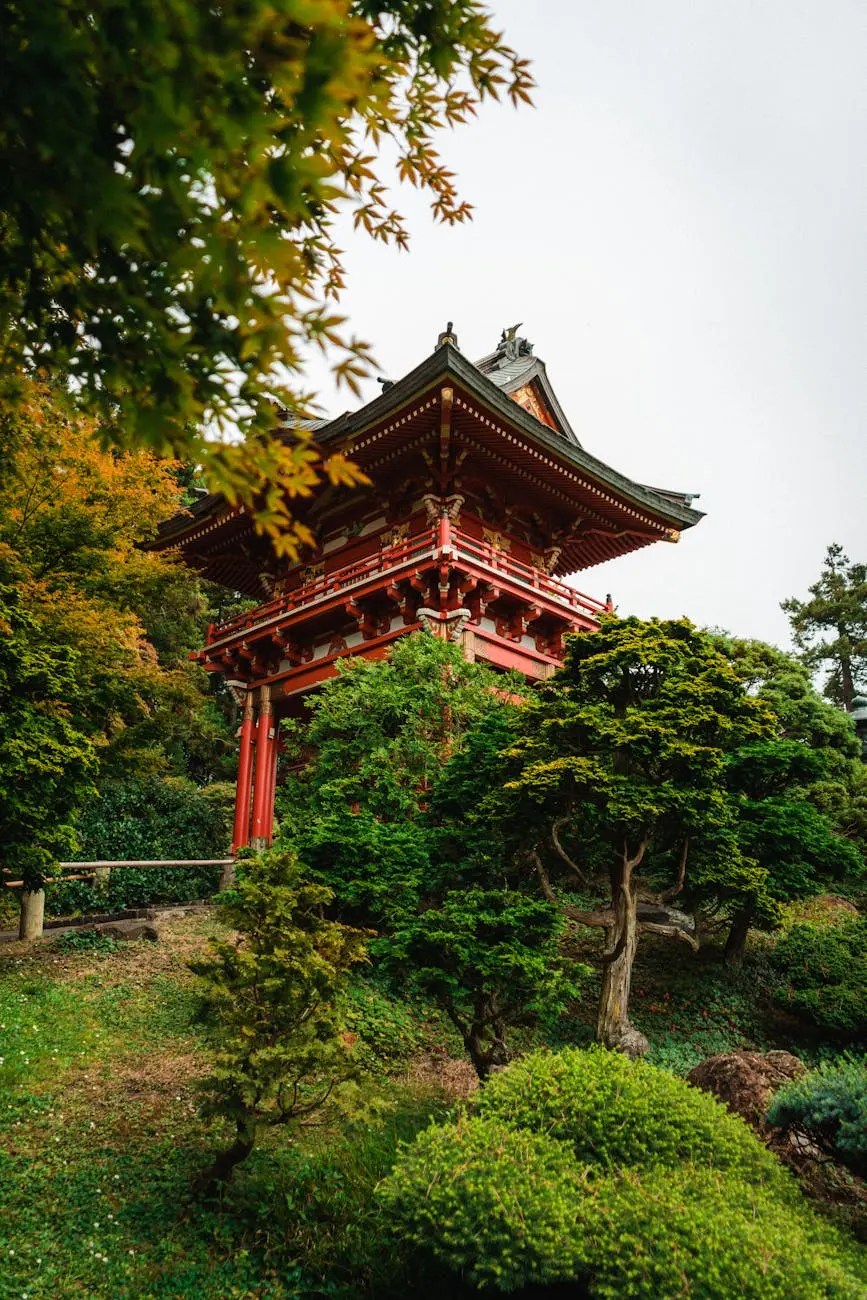
Afternoon: Golden Gate Park and Hidden Stairs Golden Gate Park is bigger than Central Park in New York, and it’s full of surprises. You could spend a whole day here, but for a weekend trip, I suggest checking out the Japanese Tea Garden. It’s so peaceful and beautiful, a true escape from the city hustle. Afterwards, if you’re up for a little adventure, hunt for the 16th Avenue Tiled Steps. It’s a mosaic staircase designed by local artists and a beautiful, off-the-beaten-path find. You’ll thank me when you get that perfect shot for your Instagram. By the way, my trusty camera, a Sony A7S III, captured all my SF moments perfectly. If you’re serious about your travel photos, check it out here: Camera.

 If your idea of a perfect park involves castles and magic, our Ultimate Orlando Weekend Guide is your next read.

Landscape view of the Conservatory of Flowers in Golden Gate Park, showcasing its intricate glass dome surrounded by lush greenery and colorful flower beds.
The stunning Conservatory of Flowers in Golden Gate Park, San Francisco, surrounded by vibrant gardens and palm trees.

Golden Gate Park Tours

A serene Japanese-style pagoda nestled among lush greenery and colorful autumn foliage.
Explore the serene beauty of the Japanese Tea Garden, a tranquil escape nestled in Golden Gate Park, San Francisco. Find a moment of peace in the heart of the city. The historic Japanese Tea Garden offers a tranquil escape with its stunning pagodas, lush plants, and serene koi ponds.

Japanese Tea Garden Tours

Colorful mosaic tiled steps leading up a hillside, surrounded by lush greenery and blooming flowers.
Discover the vibrant mosaic staircase at 16th Avenue, a hidden gem in San Francisco, surrounded by lush greenery.

Hidden Stairways of San Francisco

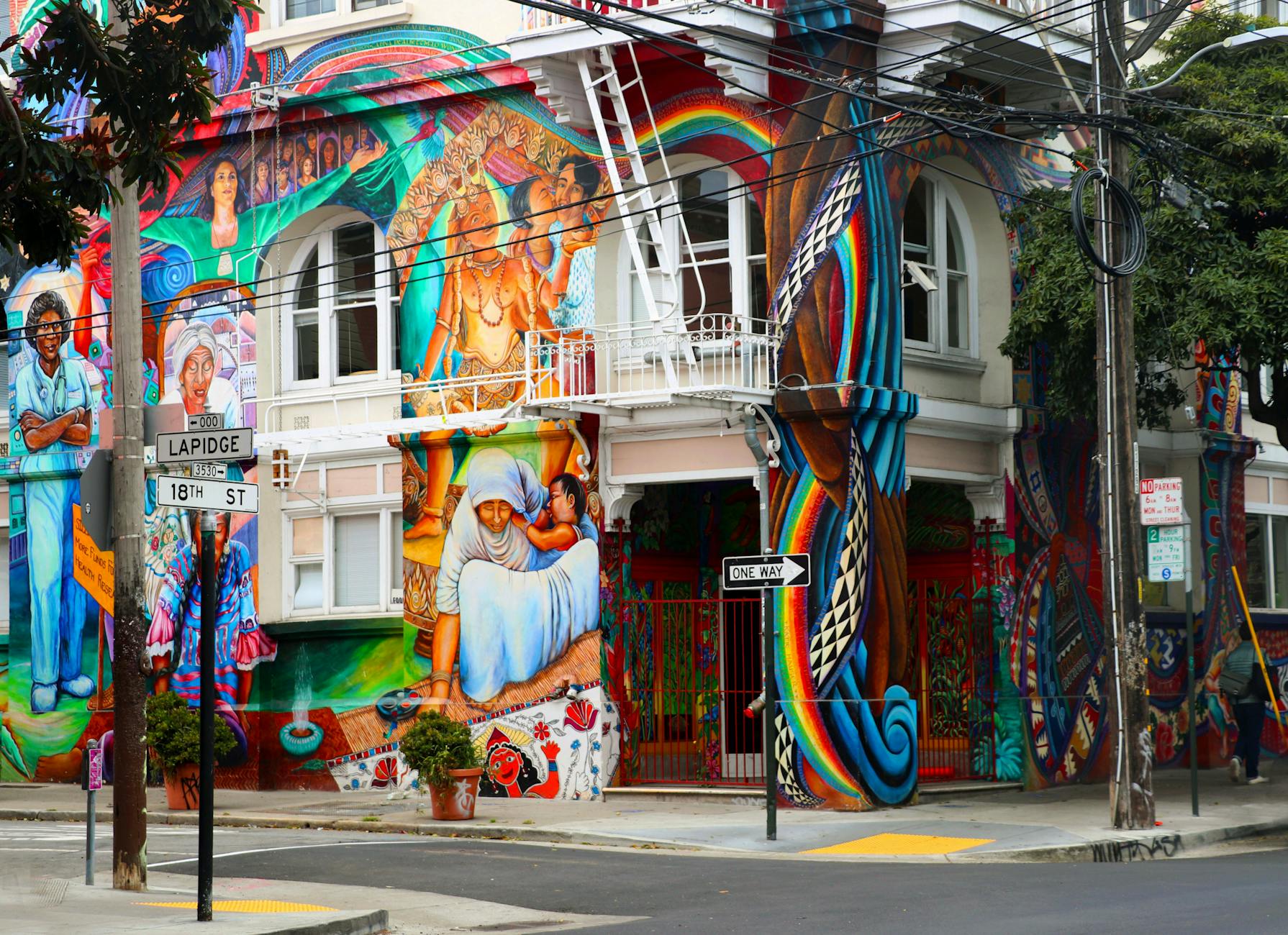
Evening: Mission District Flavors For your final night, head to the Mission District. This neighborhood is a melting pot of culture, famous for its incredible street art (the murals are mind-blowing!) and even better food. Find a taqueria and order a burrito—I’m not kidding, they are the stuff of legends. I once had a burrito so big I thought I’d need a forklift to carry it, but it was hella good. For another city that knows how to light up the night, see our Ultimate Guide to Las Vegas

A vibrant mural depicting cultural scenes and figures on a building in San Francisco's Mission District, featuring colorful artwork and intricate designs.
Colorful murals depicting local culture and history in the Mission District, San Francisco.

San Francisco: Mission District Food Tour with 5 Tastings

Close-up of a delicious burrito filled with colorful vegetables and meat, wrapped in a soft tortilla.
A delicious burrito filled with colorful vegetables and seasoned meat, perfect for a meal in San Francisco’s vibrant Mission District. The legendary Mission burrito: a San Francisco rite of passage. This hefty, foil-wrapped package of deliciousness is the perfect fuel for exploring the city.

Hidden Gems You Won’t Find on a Postcard

  • Musée Mécanique: A free, vintage arcade museum at Fisherman’s Wharf. It’s filled with old-school coin-operated games. It’s pure nostalgia and a total blast.
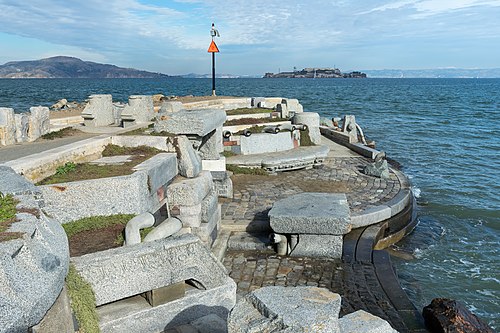
  • The Wave Organ: A “musical” sculpture made of PVC pipes and concrete at the end of a jetty. At high tide, the waves push air through the pipes, creating eerie, gurgling sounds. It’s weird and wonderful.
View of the Wave Organ, a musical sculpture made of stone and PVC pipes, situated at the waterfront with Alcatraz Island visible in the background.
The Wave Organ at the Presidio, a unique musical sculpture made from reclaimed materials, creates enchanting sounds as the waves flow through its pipes.
  • The Presidio Tunnel Tops: A new park built over the Presidio Parkway tunnels, offering incredible views of the Golden Gate Bridge and the city skyline. Perfect for a picnic.
  • Seward Street Slides: Tucked away in a residential neighborhood in the Castro, these are two long, concrete slides. Bring a piece of cardboard, slide down, and feel like a kid again
  • Loved your West Coast trip? Continue the journey down the coast with our Ultimate Weekend Guide to Los Angeles
A playground slide with two parallel parts, surrounded by greenery and a sandy area, with a residential building in the background.
The Seward Street Slides, a fun playground feature in the Castro district of San Francisco, offering a playful escape for both kids and adults.

Tips for Your Trip: Save Time, Save Money

Getting Around Like a Local:

  • Public Transportation: As I mentioned, Muni is your best friend. A single ride is about $3, but a day pass is the real deal. You can get an all-day Muni Passport for around $13 for unlimited rides on buses, streetcars, and even the cable cars. It’s a huge saving.
  • Ride-Sharing: Uber and Lyft are abundant, but San Francisco’s traffic can be brutal. It’s best to use them for longer distances or when you’re just too tired to walk another hill.
  • Walking: San Francisco is a walker’s city, but be prepared for those famous hills. Pack comfortable shoes. Seriously. My feet are still recovering from those Lombard Street escapades.

Where to Stay and How to Book: San Francisco can be expensive, so booking in advance is key. I’ve found some of the best deals and options on Expedia. They have a massive selection, from boutique hotels to budget-friendly hostels. Plus, their bundles for flights and hotels can save you a bundle. You can check out options and book your stay right here: Expedia Hotels & Flights.

Money-Saving Magic:

  • Museum Free Days: Many museums offer free admission on certain days of the month. Check their websites before you go.
  • Picnic in the Park: Instead of dining out for every meal, grab some sourdough bread, cheese, and local produce from the Ferry Building Marketplace and have a picnic in Golden Gate Park.
  • Walk, Don’t Ride: Whenever possible, walk between destinations. Not only do you save money, but you’ll also stumble upon things you’d never see from a bus or car.

✈️ Travel Essentials & Peace of Mind

Staying Connected: Staying connected abroad can be tricky (and expensive if you’re relying on airport SIM counters or roaming). That’s why I always travel with a Drimsim—a universal SIM card that works in 190+ countries without hidden fees. You just pop it into your phone, top up through the app, and you’re online wherever your adventure takes you. No more hunting for local SIM cards or stressing over roaming bills. If you’re planning your next getaway, check it out here: Drimsim

Online Security: While you’re traveling, don’t forget to protect your digital life. Public Wi-Fi is great, but it can be risky. That’s why I use a VPN (Virtual Private Network). It encrypts your data and keeps your online activity private and secure. I personally recommend NordVPN. It’s fast, reliable, and gives me peace of mind. Get yours here: NordVPN

Flight Delayed or Canceled? Travel isn’t always smooth sailing—sometimes flights get delayed, canceled, or overbooked. The good news? You might be entitled to up to $650 in compensation under air passenger rights. Most travelers never claim it, but I’ve got you covered: just check your flight with AirHelp. They handle the paperwork, fight the airlines for you, and only get paid if you win. Easy, stress-free, and potentially a nice surprise for your travel fund.

Smart Travel Tip: No matter where your adventures take you, having the right travel insurance can save you from unexpected headaches (and bills). I personally recommend VisitorsCoverage—it’s a trusted platform where you can compare plans, find coverage that fits your trip, and book it in just a few clicks. Whether you’re planning a quick city escape or a longer international journey, it’s peace of mind worth packing.

  • A Few Helpful Words:
    • San Fran: Don’t. Locals call it “SF” or “The City.”
    • Cable Car: The historic moving national landmark.
    • BART: The regional train system.
    • Muni: The local bus and light rail system.
    • The Mission: A vibrant neighborhood famous for its murals and burritos.
    • Karl the Fog: Yes, the fog has a name. Respect Karl.

FAQ: Your Burning Questions Answered

Q: When is the best time to visit San Francisco? A: The locals will tell you fall (September and October) is the best time. The famous fog “Karl” takes a break, and you get some of the warmest, sunniest days of the year.

Q: Are the cable cars a good way to get around? A: They’re a classic experience and great for short trips. For longer distances, it’s better to use buses or Muni Metro. The lines for the cable car can be long, so plan accordingly.

Q: Do I need a car in San Francisco? A: Absolutely not. In fact, I’d advise against it. Parking is expensive, and traffic is a nightmare. Rely on public transport, your feet, and the occasional ride-share.

Q: Is San Francisco a walkable city?
A: Yes and no. Neighborhoods themselves are very walkable. But to get between neighborhoods, you’ll need to use public transit or rideshares due to the large hills and distances.

Q: How much should I budget for a weekend in SF?
A: It’s not a cheap city. Budget for:

  • Budget: $150-200/day (hostels, street food, Muni passes)
  • Mid-Range: $250-400/day (hotels, nice meals, some Ubers)
  • Splurge: $500+/day (boutique hotels, fine dining, tours)

Q: Is travel insurance necessary for a domestic US trip?
A: It’s highly recommended. Your regular health insurance may have limited coverage outside your home state. Travel insurance can cover medical emergencies, trip interruptions, and lost luggage.


Ready to experience San Francisco? Book your flights and hotels with Expedia and start planning your epic weekend now! What’s the first thing you’re going to do? Let me know in the comments!

San Francisco is waiting to steal your heart. The hills are calling, the sourdough is baking, and an unforgettable urban adventure is just a booking away.

Have any other SF secrets? Share your favorite hidden gem in the comments below

Universal Disclaimer/Disclosure Page:

Kyoto Weekend Escape: Insider Tips for 72 Hours

Meta Description

 Discover how to experience the best of Kyoto in just 3 days. Our ultimate guide covers hidden gems, a foolproof itinerary, transport hacks, and essential tips for an unforgettable cultural weekend getaway in Japan’s ancient capital.

“My trip to Kyoto was born from a whim and a need to escape. After a grueling month at work, I booked a last-minute flight, threw a backpack together, and embarked on what became one of my most cherished travel memories. I learned that you don’t need weeks to experience the soul of Japan—you just need a plan. Let me be your guide to an unforgettable 72-hour immersion in a city where ancient temples sit just around the corner from buzzing modern life.”

Table of Contents

  1. Why Kyoto? (Visa Costs, When to Go & Secret Perks)
  2. Getting There & Getting Around (Trains, Buses, Maps & Money Saving Hacks)
    • 2.1 From Airport to City: Haruka Express, ICOCA Cards & JR Pass
    • 2.2 Navigating Kyoto: Subway, Bus Routes & One-Day Passes
    • 2.3 Flip The Script: Beat Crowds with Time-Savvy Planning
  3. Your 2-Day Itinerary — History, Matcha & Monkey Mischief
    • Day 1: Temples, Teahouses & That Iconic Torii Tunnel
    • Day 2: Nature, Bamboo, Serene Sake Spots & Sagano Train Ride
  4. Hidden Gems & Pro Tips to Save Time & Yen
  5. Must-Pack Gear & Connectivity (SIM, VPN, Camera)
  6. FAQs: Kyoto Basics, Local Lingo & Visa Queries
  7. Keep Exploring: Back-Links to My Passport Diary & Old Adventures
  8. Call-to-Action (Get Booking, Gear & Coverage)

Why Kyoto is the Perfect Weekend Getaway

Kyoto is the antidote to Tokyo’s neon-fueled frenzy. It’s a city that moves at the pace of a flowing river—calm on the surface but with incredible depth and power underneath. With over 2,000 temples and shrines, 17 UNESCO World Heritage sites, and a food culture that will make your taste buds sing, it offers a concentrated dose of traditional Japanese culture.

For those coming from nearby hubs like OsakaTaipei, and Tokyo it’s a geographically close and culturally rich escape. Best of all, for many nationalities, Japan offers visa-free travel for short stays, making it a logistically simple trip. (Always check the official requirements for your passport).

Kyoto is like your wise, quiet grand-aunt who’s rich in stories—1,600 temples, whispering bamboo paths, unbelievable matcha desserts, and street corners where you might accidentally bump into a maiko (trainee geisha). If your country requires a tourist visa for Japan, expect fees ranging roughly ¥3,000–¥6,000¥3,000–¥6,000¥3,000–¥6,000 (around $20–$40) and a processing time from 3 days to 3 weeks depending on the embassy—worth verifying on your local consulate site. Peak beauty? Go for sakura season in early April or fall foliage in late November (color explosion, fewer jet-lagged crowds).

Visa: Many nationalities enjoy visa-free travel to Japan for short stays. However, requirements can change. Always verify your specific visa requirements and associated fees directly with the Official Ministry of Foreign Affairs of Japan website.

Flights to Kyoto

Crafting Your Perfect Kyoto Itinerary:

This itinerary is designed to maximize your time by grouping nearby attractions together, saving you hours on logistics.

Hotels in Kyoto

Day 1: The Iconic East

  • Morning: Start early at Fushimi Inari Taisha. I mean early—be there by 7:00 AM to experience the famous torii gate pathway without the crowds. Trust me, having a moment of solitude there is magical.
  • Afternoon: Head north to the Higashiyama District. Wander the preserved streets between Kiyomizu-dera Temple and Yasaka Shrine. This area is a living museum. Stop for a matcha and traditional sweet at a teahouse overlooking the cobbled lanes.
  • Evening: Explore the Gion district. You might spot a Geiko or Maiko (the local terms for Geisha and apprentices) scurrying to an appointment. For dinner, try a casual okonomiyaki (savory pancake) restaurant.

Fushimi Inari Shrine Tours

A woman in a traditional kimono walking through the iconic torii gates of Fushimi Inari Taisha in Kyoto, Japan, surrounded by lush greenery and sunlight filtering through the trees.
A visitor strolls through the iconic torii gates of Fushimi Inari Taisha, wearing a traditional kimono, capturing the essence of Kyoto’s rich culture. *The iconic tunnel of thousands of vermilion torii gates at Fushimi Inari Taisha. For the most serene experience, arrive before 7:00 AM to have the path almost to yourself.`

Fushimi Inari Note: “The advantage of Fushimi Inari is that it’s open 24 hours, so you can always fit it in.
A lively street scene in Kyoto featuring traditional wooden buildings and cherry blossom trees, with a mix of locals and tourists strolling down a cobblestone path.
A bustling street scene in Kyoto, showcasing traditional architecture and cherry blossoms, perfect for exploring the city’s rich cultural heritage. A serene walk through the Higshiyama district

Kiyomizu-dera Temple

A vibrant three-story pagoda with intricate wooden details and a striking orange color, surrounded by lush greenery and a clear blue sky in Kyoto, Japan.
A striking view of Kiyomizu-dera Temple, showcasing its intricate architecture and vibrant orange hues, a must-see landmark in Kyoto. The stunning Niōmon Gate and three-story pagoda at Kiyomizu-dera Temple. Pro tip: The contrast of the red structures against the green foliage in spring or autumn is even more spectacular.`

Kiyomizu-dera Note: “Note: Kiyomizu-dera typically opens around 6:00 AM and closes between 6:00 PM and 9:30 PM, depending on the season. Admission is ¥400.”

Yasaka Shrine Tours

A vibrant, traditional Japanese shrine with a distinctive red and white facade surrounded by lush greenery, featuring visitors exploring the entrance and a Japanese flag waving. Yasaka Shrine
A vibrant entrance to a Kyoto shrine, showcasing traditional Japanese architecture amidst lush greenery. Yasaka Shrine

Yasaka Shrine Tours

Gion Kyoto

okonomiyaki kyoto

A close-up of a delicious okonomiyaki, a savory Japanese pancake, topped with bonito flakes, mayonnaise, and green seaweed, served in a traditional Japanese restaurant setting.
A delicious okonomiyaki, a savory Japanese pancake topped with bonito flakes and sauce, served in a cozy Kyoto restaurant. Dinner is served! A classic Hiroshima or Kansai-style okonomiyaki, grilled to perfection. The name literally means “grill what you like” – and we like everything!

Day 2: Arashiyama’s Natural Beauty

  • Morning: Take the train to Arashiyama. Your first stop is the Arashiyama Bamboo Grove. Again, early arrival is key to seeing it in its serene glory. Afterwards, visit the nearby Tenryu-ji Temple and its stunning landscape garden.
  • Afternoon: Cross the Togetsukyo Bridge and consider a quick hike up to the Monkey Park Iwatayama for hilarious photo ops and great views. Alternatively, rent a bike to explore the quieter parts of Arashiyama.
  • Evening: Head back to the city center and dive into the organized chaos of Nishiki Market for a dinner of fresh seafood and local snacks.

Arashiyama Vacations

A serene pathway through the Arashiyama Bamboo Grove in Kyoto, lined with tall green bamboo stalks and dappled sunlight filtering through the leaves.
A serene pathway through the Arashiyama Bamboo Grove in Kyoto, showcasing the tranquil beauty of the lush green bamboo. *The famous Arashiyama Bamboo Grove path. For the most magical and crowd-free experience, aim to arrive as early as possible, ideally by 7:00 AM. The morning light filtering through the bamboo is unforgettable.*

Tenryu-ji Temple Tours

Scenic view of a traditional Japanese temple surrounded by lush greenery and a tranquil pond.
A serene view of Tenryu-ji Temple surrounded by lush greenery and a tranquil pond in Arashiyama, Kyoto. The UNESCO World Heritage-listed Sogenchi Garden at Tenryu-ji Temple, a masterpiece of Japanese landscape design. The pond is designed to reflect the surrounding Arashiyama mountains and the changing seasons.

Togetsukyo Bridge Tours

Scenic view of the Togetsukyo Bridge in Arashiyama, Kyoto, surrounded by colorful autumn foliage and a calm river under a clear blue sky.
The picturesque Togetsukyo Bridge in Arashiyama, surrounded by vibrant autumn foliage, reflecting the beauty of Kyoto’s natural landscape.

Arashiyama Monkey Park Iwatayama Tours

A caretaker walking among a group of wild Japanese macaques at a monkey park, with visitors observing from a distance.
Visitors interacting with monkeys at Iwatayama Monkey Park in Arashiyama, Kyoto.

Kyoto Nishiki Market Food Tour

A vibrant display of various traditional Japanese foods and ingredients arranged in baskets at Nishiki Market, Kyoto, with signage indicating prices and product information.
A vibrant array of local delicacies at Kyoto’s Nishiki Market, showcasing a variety of traditional Japanese ingredients. A rainbow of tsukemono (pickled vegetables) at Nishiki Market. Don’t be shy—many vendors offer samples! It’s the perfect place to try unique Japanese flavors like pickled daikon radish or crunchy kyuri cucumbers.

Day 3: Refinement & Reflection

  • Morning: Choose your finale. For gold-leaf opulence, visit Kinkaku-ji (The Golden Pavilion). For a more Zen, minimalist experience, head to Ryoan-ji Temple and contemplate its famous rock garden.
  • Afternoon: Do some last-minute souvenir shopping on Shijo-Dori or find a quiet garden to simply sit and absorb it all before you head to the airport.

Ready to walk this path yourself? Find great deals on flights and hotels in Kyoto with my trusted partner, Expedia.

Kinkaku-ji Temple Tours

Golden Pavilion (Kinkaku-ji) surrounded by lush greenery and a tranquil pond in Kyoto.
The stunning Kinkaku-ji Temple, also known as the Golden Pavilion, reflecting beautifully in the serene waters of its surrounding garden. The breathtaking Kinkaku-ji (Golden Pavilion), covered in gold leaf and perfectly reflected in the mirror-like Kyoko-chi pond. This UNESCO World Heritage site is even more stunning on a windless, sunny day.

Ryoan-ji Temple Tours

A couple sitting side by side on a wooden platform, overlooking a tranquil garden with lush greenery and a stone surface.
A serene moment shared between a couple, enjoying the tranquil beauty of Kyoto’s natural scenery. (Ryoan-ji Temple)

A serene landscape showcasing a tranquil pond surrounded by vibrant autumn foliage, including red, orange, and yellow leaves, with a clear blue sky above.
Scenic view of a tranquil pond surrounded by vibrant autumn foliage in Kyoto.

A picturesque street in Kyoto, lined with traditional wooden houses and lush greenery, featuring people strolling along the pathway.
A peaceful stroll through the historic streets of Kyoto, framed by traditional architecture and lush greenery.
Kyoto Aquariumicon
A family interacts with a seal in an aquarium. The scene captures children and adults observing and enjoying the moment near a large transparent water tank.
Visitors observing a seal in an aquarium in Kyoto, creating unforgettable family memories.

While we’re on the topic of unforgettable Asian adventures, if Shanghai’s dynamic energy has you dreaming of a more serene Japanese counterpart, then Kyoto should be at the top of your list. Imagine trading the futuristic skyline for ancient temples, serene bamboo forests, and the timeless tradition of the geisha culture in Gion. To truly dive deep, skip the standard tours and seek out an authentic experience. I often browse Rakuten Travel Experiences for unique activities—like a private tea ceremony with a master or a early-morning meditation session at a Zen temple before the crowds arrive. It’s the perfect way to craft a trip that’s genuinely your own. Find those unique, memory-making experiences in Kyoto here.

Rakuten Travel Experiencesicon

Navigating Kyoto Like a Pro: Transport Secrets

Kyoto’s public transport is excellent, and you do not need a car. In fact, traffic and expensive parking make driving a hassle.

From Airport to City: Haruka Express, ICOCA Cards & JR Pass

Most visitors land at Kansai International (KIX). Skip the uncertain taxis and hop the Haruka Limited Express to Kyoto Station—about 75 minutes of smooth, Hello Kitty–decorated train bliss—and grab the ICOCA & Haruka combo ticket to include a pre-loaded ICOCA transport card when you arrive The Thorough Tripper. Pro tip: get an ICOCA card—it’s your tap-and-go Swiss Army knife for trains, subways, and buses around Kyoto (and nearby cities), with easy reloads at stations The Thorough Tripper. If you’ve got long-distance plans (like a Tokyo bullet train ride), consider a Japan Rail Pass in advance—it’ll save both yen and decoding train timetables The Thorough TripperNot a Nomad Blog.

Map of the Kansai area train routes, including connections to Shin-Osaka, Kyoto, and Kansai Airport, with lines and station names clearly labeled.
Map of Kyoto’s public transport network, highlighting the Kansai-Airport Express routing and key train lines for travelers.

  • The Bus Network: The most useful way to get around central Kyoto. A One-Day Bus Pass (¥700) is an incredible value and pays for itself in about three rides. Buses can get crowded, so have your pass or change ready.
  • The Train/Subway: Faster than buses for longer distances. The Karasuma Subway Line runs north-south, and the Tozai Line runs east-west. The JR Line is also useful for getting to Arashiyama and Fushimi Inari.
  • Bicycles: Kyoto is surprisingly flat and bike-friendly! Renting a bike for a day gives you incredible freedom to explore back alleys and canals. This was my favorite way to get around.
  • Taxis: Great for short trips if you’re in a group or exhausted, but they are pricey.
  • The JR Line is also useful for getting to Arashiyama and Fushimi Inari. If you’re planning to explore beyond Kyoto (e.g., a day trip to Nara or a flight from Tokyo), calculating if a Japan Rail Pass is worth it is essential. You can easily check prices and purchase your JR Pass online here

Pro Tip: Google Maps is shockingly accurate for Kyoto bus and train schedules. Use it with confidence.

Beyond the Tourist Trail: Kyoto’s Hidden Gems

“Forget the bustling, crowded cities you think of when you picture Japan. There’s a place where every corner is a postcard, every moment a meditative breath, and ancient traditions whisper from every stone. Get ready to unlock the secret to a weekend of unparalleled beauty and peace as we journey through Kyoto’s most enchanting hidden gems.”

Everyone sees the golden temple. The savvy travelers see these:

  • Philosopher’s Path (Tetsugaku-no-michi): A beautiful stone path following a canal, lined with hundreds of cherry trees. It’s peaceful any time of year but absolutely breathtaking in spring.
  • Kurama-dera Temple: Escape the city entirely with a short train ride to Kurama. Hike up to this mountain temple, and if you’re brave, finish with a soak in the outdoor Kurama Onsen.
  • Pontocho Alley at Dusk: Yes, it’s known, but it’s a must. This narrow alleyway parallel to the Kamo River is packed with tiny, atmospheric restaurants and bars. Finding dinner here feels like a treasure hunt.
Hidden GemTip
Miyagawa-cho DistrictTraditional vibes, fewer crowds, close to Kyoto Station—perfect for jet-lagged meanders
Lesser-known templesTry Eikan-do, Tofuku-ji, or shimogyo historic backstreets for quiet beauty
Off-peak hoursSkip crowds by visiting popular spots at dawn or early evening
Taxi for groupsGroup of 3–4? A taxi might be quicker than waving down a bus and costs about the same

To capture these hidden spots perfectly, I never travel without my lightweight, powerful Sony Alpha camera. It’s perfect for low-light alley shots and sweeping temple landscapes.

A serene pathway lined with green foliage and a small stream on one side, capturing the tranquil beauty of Kyoto's nature.
A serene path alongside a gently flowing river in Kyoto, surrounded by lush greenery and autumn foliage. (Philosopher’s Path) The Philosopher’s Path (Tetsugaku-no-michi) in its stunning autumn glory. This walk is beautiful year-round, but it’s absolutely magical in late November when the maple trees erupt in color. Renting a bike is a fantastic way to explore its full length.

Essential Japanese for the Kyoto Traveler

A little language goes a long way!

  • Konnichiwa (こんにちは): Hello / Good afternoon.
  • Arigatou Gozaimasu (ありがとうございます): Thank you (very much).
  • Sumimasen (すみません): Excuse me / Sorry. (The most useful word in Japan! Use it to get attention, apologize, or thank someone for moving).
  • Oishii (美味しい): Delicious! Say this to the chef after your meal.
  • Ikura desu ka? (いくらですか): How much is it?
  • Kore o kudasai (これをください): I’ll take this, please. (Pointing works too!)

Smart Travel Tips: Saving Money & Staying Connected

Staying Online: I used to waste the first hour of every trip hunting for a local SIM card at the airport. Not anymore. I now swear by my Drimsim—a global SIM that works in 190+ countries. You just pop it in, top up via the app, and you’re online before you even leave the baggage claim. No contracts, no hidden fees. It’s a genuine game-changer. Get your Drimsim here and never worry about data again.

Staying Secure: While Japan is safe, I always use a VPN on public Wi-Fi (like at cafes or airports) to protect my personal data. It’s also essential for accessing your home country’s streaming services if you need some downtime. I’ve found NordVPN to be the most reliable for travel.

Staying Compensated: Did you know that a delayed or canceled flight could score you up to $650 in compensation? Most people don’t claim it. I use AirHelp to handle the nasty paperwork with the airlines. They only get paid if you win, so it’s a no-brainer. Check your flight status with AirHelp here.

Staying Insured: From a spilled coffee on my camera to a slipped disk trying to imitate a sumo wrestler (don’t ask), travel insurance has saved me countless times. I always use VisitorsCoverage to compare and find the best plan for my trip. It’s peace of mind in your pocket. Get a tailored insurance quote for your Kyoto trip here.

Frequently Asked Questions

Q: What is the best time of year to visit Kyoto?
A: Spring (March-May) for cherry blossoms and Fall (October-November) for brilliant red foliage are the most beautiful but also the most crowded. For a balance of good weather and smaller crowds, aim for late autumn or early spring.

Q: Is Kyoto a walkable city?
A: The main districts are very walkable, but the attractions are spread out. You will absolutely need to use the excellent bus and train system to get between areas like Arashiyama, Fushimi Inari, and downtown.

Q: How much money should I budget for a weekend?
A: While you can find budget options, Kyoto can be pricey. A comfortable mid-range budget for accommodation, food, transport, and entry fees would be around ¥15,000-¥20,000 ($100-$150 USD) per day, not including flights.

Q: Can I use credit cards everywhere?
A: Major hotels, department stores, and restaurants accept cards, but many smaller restaurants, market stalls, and temples are cash-only. Always carry yen with you.

Q: What should I do if I only have one day in Kyoto?
A: Focus on one area. I’d recommend the Higashiyama District (Kiyomizu-dera, Yasaka Shrine, Sannenzaka) in the morning and early afternoon, and then a trip to Fushimi Inari Taisha in the late afternoon—it’s open 24/7 and is less crowded then.

What’s “arigatō” and “sumimasen” mean?
A: “Arigatō” = “thank you.” “Sumimasen” = “excuse me” or “sorry.” Handy polite sparkles for any awkward bump-in or request.

Should I exchange currency or use ATMs?
A: ATMs at 7-Eleven or Japan Post accept international cards pretty consistently. Just keep an eye on fees.

Kyoto is a city that stays with you long after you’ve left. The scent of incense, the taste of perfect sushi, the sound of temple bells—it’s a weekend escape that truly nourishes the soul.

Q: How much money should I budget for a weekend?
A: While you can find budget options, Kyoto can be pricey. A comfortable mid-range budget for accommodation, food, transport, and entry fees would be around ¥15,000-¥20,000 ($100-$150 USD) per day, not including flights.

  • Sample Daily Breakdown:
    • *Budget Guesthouse: ¥3,000 – ¥5,000*
    • *Food (Meals + Snacks): ¥5,000 – ¥8,000*
    • *Transport (Bus/Train Pass): ¥1,000*
    • *Temple Entry Fees (2-3 sites): ¥1,000 – ¥2,000*
    • *Souvenirs/Extra: ¥2,000 – ¥4,000*

What are you waiting for? Your ultimate Kyoto adventure awaits. Start planning your perfect trip with Expedia today!

Have questions or your own Kyoto hidden gem to share? Drop them in the comments below

“Kyoto is a city that stays with you. The scent of incense, the taste of perfect sushi, the sound of temple bells—it’s a weekend escape that truly nourishes the soul.

I’d love to hear from you! What’s the one place in Kyoto you’re most excited to see? Or if you’ve been, what was your own hidden gem? Share your thoughts and questions in the comments below—let’s build the ultimate traveler’s resource together!


Universal Disclaimer/Disclosure Page:

Zeblaze GTR 3 Pro: My Lifesaving Travel Companion

Table of Contents

  1. Introduction: More Than a Watch, It’s a Travel Essential
  2. First Impressions: Design and Build for the Adventurer
  3. Key Features That Make It a Travel Powerhouse
    • Battery Life: The Week-Long Charge
    • Health and Fitness Tracking on the Go
    • Notifications and Connectivity
    • Built-in GPS for Exploration
  4. Real-World Travel Test: How It Performed
  5. Pros and Cons: The Honest Breakdown
  6. Final Verdict: Who Should Make the GTR 3 Pro Their Travel Companion?

Location: Chiang Mai, Thailand
Gear Tested: Zeblaze GTR 3 Pro Fitness Wellness Smartwatch
Reviewed by: A traveler who owes their life to tech—literally.

The Day My Watch Became My Lifesaver

I never thought a smartwatch would end up saving my life. I bought the Zeblaze GTR 3 Pro mostly because it looked sleek, had a killer AMOLED display, and tracked fitness like a pro. Voice calling? Bonus. Blood oxygen monitoring? Sure, why not. I figured, at worst, it’d count my steps. At best, it’d help me look a little more “wellness warrior” on my solo trips.

But during a solo journey in Chiang Mai, Thailand, it did something extraordinary. It called for help when I couldn’t.

What Actually Happened 😳

It was just another sunny morning, and I was hiking the lush trails of Doi Suthep National Park. Suddenly, I felt dizzy, like the world zoomed out from under my feet. My chest tightened, and within seconds, I collapsed. I didn’t have time to reach for my phone, didn’t even process what was happening.

But my Zeblaze GTR 3 Pro did.

Thanks to its real-time health monitoring, the watch detected abnormal heart rhythms and an oxygen drop. The built-in SOS feature activated immediately and used my preset emergency contact to alert local emergency services. Within minutes, I was receiving help.

That little gadget on my wrist? It became my lifeline.

Features That Make Zeblaze GTR 3 Pro a Traveler’s Best Friend 🌐

If you’re like me—someone who lives with hidden health conditions or just loves to explore solo—this isn’t just a watch. It’s your wingman.

🔹 Ultra HD 1.43″ AMOLED Display

You can read this screen under blazing sunlight or a moonlit trail—no squinting required.

🔹 Voice Calling

Lost in translation? Use the watch’s speaker and mic to make a quick call, no fumbling with your phone.

🔹 24/7 Health Monitoring

It tracks heart rate, SpO2, sleep, and even stress levels. Perfect for long flights and remote trekking.

🔹 SOS Emergency Alerts

Your wristwatch doubles as an emergency beacon. You pre-set your emergency contact, and the watch does the rest—even if you’re unconscious.

🔹 Long Battery Life

Lasts over a week on one charge—ideal for backpacking through places with patchy electricity.

🔹 Global Compatibility

Works anywhere. I’ve taken it from Bangkok to Berlin without hiccups.

Why I Recommend It (Especially if You Travel Solo)

As someone who’s always hopping on planes or disappearing into jungles with just a backpack and camera, I’ve tested plenty of gadgets. But none have literally saved my life—until this.

And no, this isn’t some overhyped influencer story. If you’re traveling, especially alone, this smartwatch could be the reason you make it back home.

Want more game-changing gear? I shared a bunch of smart finds in my post ✈️ 10 Travel Hacks That Saved Me Hundreds—and Could Save You More. Spoiler: this watch made the list—after it earned its stripes.

🧠 Why This Watch Is More Than Just Smart

Let’s break it down. The Zeblaze GTR 3 Pro is not your average smartwatch. It’s a wellness lifesaver and the ultimate travel companion. Here’s why:

🔍 Key Features (That Actually Matter)

  • 1.43″ Ultra HD AMOLED Display – Easy to read even under harsh sunlight (hello, beach bums).
  • Voice Calling & Bluetooth – Hands-free communication, even when your hands are full of gelato.
  • Advanced Health Monitoring – Real-time heart rate, blood oxygen, blood pressure, sleep, and stress tracking.
  • Fall & Seizure Detection – The watch can auto-notify emergency contacts or services.
  • Built-In GPS – Essential for hikes, city strolls, or when you inevitably get lost in a foreign street market.
  • Battery Life Up to 15 Days – Because who has time to recharge during an adventure?

🗺️ Ideal for Travelers, Hikers, Parents, and Seniors

I’ve worn it from Bangkok’s bustling night markets to serene hikes in the Swiss Alps. Whether you’re a digital nomad or a weekend wanderer, this smartwatch works as your wellness tracker and silent guardian.

🧑‍💬 Real User Testimonials

“I bought the Zeblaze for my dad after he fainted once. Two months later, it detected his atrial fibrillation during a hike. We got help instantly.” – Priya S., Canada

“This watch literally alerted me before a seizure. I didn’t even know that was possible. Lifesaver is an understatement.” – Jason K., Germany

📊 Data You Can Trust

![Heart Rate Graph ]
( HR & SpO2 over time – clean, mobile-friendly chart)

📊 Real-time heart rate and SpO₂ trends captured by the Zeblaze GTR 3 Pro – a fitness watch that’s more than just smart.

It doesn’t just monitor you; it logs your data so you can share it with your doctor. I took screenshots of my ECG graph and showed them during my hospital visit. It saved the doctors a lot of guesswork.

💡 Why You Shouldn’t Wait

If you’ve ever felt your heart race while hiking alone, traveling in a new country, or even just doing chores—this watch could be your safety net. You don’t know you need it until you really need it.

And honestly? After what I experienced, I wouldn’t gift a smartwatch that doesn’t have these features. This one does—and it’s surprisingly affordable.

Final Verdict: Not Just a Smartwatch, a Smart Decision ✅

If you’re eyeing a wearable that’s more than a pretty accessory, one that actually watches over you, I can’t recommend the Zeblaze GTR 3 Pro enough.

Buy it here 👉 Zeblaze GTR 3 Pro Smartwatch – Official GeekBuying Store

Travel smart. Travel safe. And maybe—just maybe—let tech have your back when it counts.


Let me know in the comments if you’ve ever had tech save your trip—or your life. Your story might just inspire someone to pack smarter.


Product Gallery:

Frequently Asked Questions (FAQ)

Q1: What is the most impressive feature for travel?
The incredible battery life is the standout feature. Lasting up to a week on a single charge (depending on usage), it eliminates the need to carry another charging cable and worry about finding an outlet every night, which is a major advantage for travelers.

Q2: How accurate is the built-in GPS for hiking or exploring a new city?
The built-in GPS is highly accurate for tracking routes, distance, and pace. It’s perfect for mapping a run in a new city, tracking a hike, or simply ensuring you can find your way back to your hotel after a day of exploring without draining your phone’s battery.

Q3: Can I receive calls and messages on the watch without my phone?
The GTR 3 Pro allows you to receive notifications for calls, messages, and apps directly on your wrist when connected to your phone via Bluetooth. However, to make or take calls directly on the watch without your phone, you would need a model with cellular/LTE capabilities, which this typically does not have.

Q4: Is it suitable for swimming or diving?
The watch usually has a high water resistance rating (like 5 ATM), making it safe for swimming in a pool, snorkeling, or facing rain and splashes. It is not, however, designed for deep-water diving or high-pressure water sports.

Q5: Does it support third-party apps like maps or travel apps?
It runs on a proprietary OS that supports core health, fitness, and notification functions brilliantly. However, it does not have the extensive third-party app support of watches like Apple Watch or Wear OS. Its strength is in its core functionality and battery life, not a vast app ecosystem.

Q6: How does it help monitor health while traveling?
It continuously tracks key metrics like heart rate, blood oxygen levels (SpO2), and sleep patterns. This is especially useful for monitoring your body’s adjustment to new time zones (jet lag), high altitudes, or just ensuring you’re staying active and well-rested during your trip.

Q7: Is the Zeblaze GTR 3 Pro good value for money?
Yes, it is considered exceptional value. It packs a robust set of features—long battery life, GPS, health tracking, and a stylish design—at a fraction of the cost of major brand smartwatches, making it a low-risk, high-reward investment for enhancing your travel experience.

Universal Disclaimer/Disclosure Page: