The Ultimate Weekend Escape to Herzegovina: Where History Meets Heart-Stopping Beauty

Meta Description:
Plan the perfect weekend escape to Herzegovina — from historic Mostar and hidden gems like Blagaj and Kravice Waterfalls, to smart travel tips on transport, saving money, and weather-smart timing. Uncover insider advice, practical logistics, and fun anecdotes for confident travel.

🗺️ Table of Contents

  1. Introduction
  2. Why Herzegovina Should Be on Your Bucket List
  3. Getting There
    • Getting There by Ferry (with Direct Ferries link)
    • By Air
    • By Bus, Train, & Car
  4. Where to Stay
  5. Top Things to Do in Herzegovina
    • Mostar & Stari Most
    • Hidden Gems: Blagaj, Kravice, Počitelj
    • Neum & the Coast
  6. Local Transport Tips (How to Save Time & Money)
  7. Practical Travel Tips
  8. Food & Drink to Try
  9. Words & Phrases You Might Need
  10. FAQs
  11. Final Tips & CTAs

If “weekend getaway” were a sport, Herzegovina would be the undefeated champion. Part ancient wonder, part natural paradise, and part affordable destination that punches well above its scenic weight, this patch of Bosnia and Herzegovina blends culture, adventure, and lazy café afternoons into one irresistible mini escape.

Let’s be honest: planning a weekend trip is often about choosing what to skip. Do you want beaches or mountains? Riveting history or untamed nature? Well, friends, in Herzegovina, you don’t have to choose. This soul-stirring, heart-shaped corner of Europe serves it all on a single platter, with a side of strong coffee and a history so rich you can taste it in the air.

As someone who once spent a frantic Sunday trying to escape an overcrowded “hidden gem” elsewhere, I can tell you: Herzegovina is the real deal. It’s a place where you can hear the Muslim call to prayer echoing over cobblestones one minute and watch a brave soul leap from a 16th-century bridge into an emerald river the next. It’s Europe’s open secret, offering the drama of Croatia, the raw beauty of Montenegro, and the profound soul of the Balkans, all without the crushing crowds or crushing prices.

Ready for a weekend that feels like a week-long adventure? Let’s dive in.

Why Herzegovina Should Be on Your Bucket List

Mostar’s Stari Most isn’t just a bridge — it’s an icon. The historic Ottoman-era bridge once destroyed by war and beautifully rebuilt now symbolizes resilience, unity, and adrenaline-packed dives into the cold Neretva below — where locals and visitors cheer, tourist cameras whirr, and time slows in the best possible way.

But there’s more here: jaw-dropping waterfalls, cliffside monasteries, serene river springs, gold-hued vineyards, and one of Europe’s less predictable coastlines — the tiny seaside town of Neum, Bosnia’s only access to the Adriatic Sea

Getting There

⬆️ Getting There by Ferry

While Herzegovina is landlocked, the nearby Dalmatian Coast of Croatia is your perfect maritime gateway. The closest major port is Dubrovnik. From there, you have fantastic options:

While Herzegovina itself doesn’t host a major ferry port, you can arrive via scenic Adriatic ferry routes from Croatia or beyond and then continue overland — perfect for travelers who love sea views as part of the adventure.
👉 Check routes, timetables, and book your ferry with Direct Ferries here.
Ferries along the Adriatic connect ports like Split or Dubrovnik with other coastal hubs, from which buses or cars can complete your journey to Herzegovina. Travel By Ticket

Quick Route Idea: Ferry to Split → Bus or Train to Mostar → Explore Herzegovina.
(Skip the borders with a car — fewer delays and more countryside views!)


🛫 By Air

Your easiest gateways are:

  • Mostar Airport (OMO) — small, convenient, limited routes.
  • Sarajevo Airport (SJJ) — more frequent flights, then bus/train to Herzegovina.
  • Dubrovnik Airport (DBV) (Croatia) — great low-cost options, then bus or car through epic mountain and coastal roads.

✈️ Flight Delayed or Canceled?
You might be entitled to up to $650 compensation. Check your flight with AirHelp — they do the heavy lifting for you (and only get paid if you win):


🚌 By Bus, Train, or Car

Buses criss-cross the region — from Split, Dubrovnik, Sarajevo, and Zagreb — stopping in Mostar’s central station, about a short stroll from the Old Town.

The train route between Sarajevo and Mostar? It’s not just transportation — it’s one of the most scenic journeys in the Balkans. Reddit

By car: Herzegovina is tailor-made for road tripping. Clear roads (especially outside August) and beautiful routes save time, fuel, and — honestly — are half the fun.

Where to Stay

Whether boutique guesthouses in Mostar’s Old Town or sea-view apartments near Neum, there’s an option for every budget. Book early in high season, and consider staying near public transport stops to save on taxis.

My Hercegovina Masterplan: A 3-Day Itinerary for the Perfect Escape

You’ve got 72 hours. Here’s how to spend them wisely, balancing iconic sights with local secrets and leaving just enough time to sit and savor the moment.

  • Day 1: The Soul of Mostar. Arrive and drop your bags. Your first mission is to get lost in the Old Town (Stari Grad). Wander the cobbled alleys, haggle (politely!) for a copper souvenir, and let the scent of grilled Ćevapi guide you to lunch. As the afternoon sun begins to soften, find your spot to witness the spectacle of the Stari Most bridge divers. The iconic bridge (which is a UNESCO World Heritage Site) was originally built in the 16th century and has been beautifully reconstructed. These professional divers aren’t just showing off; it’s a centuries-old tradition. Be warned: they work for tips, so have a few coins ready. For dinner, venture away from the main tourist drag to find a family-run restaurant for a massive, affordable platter of Bosnian food.
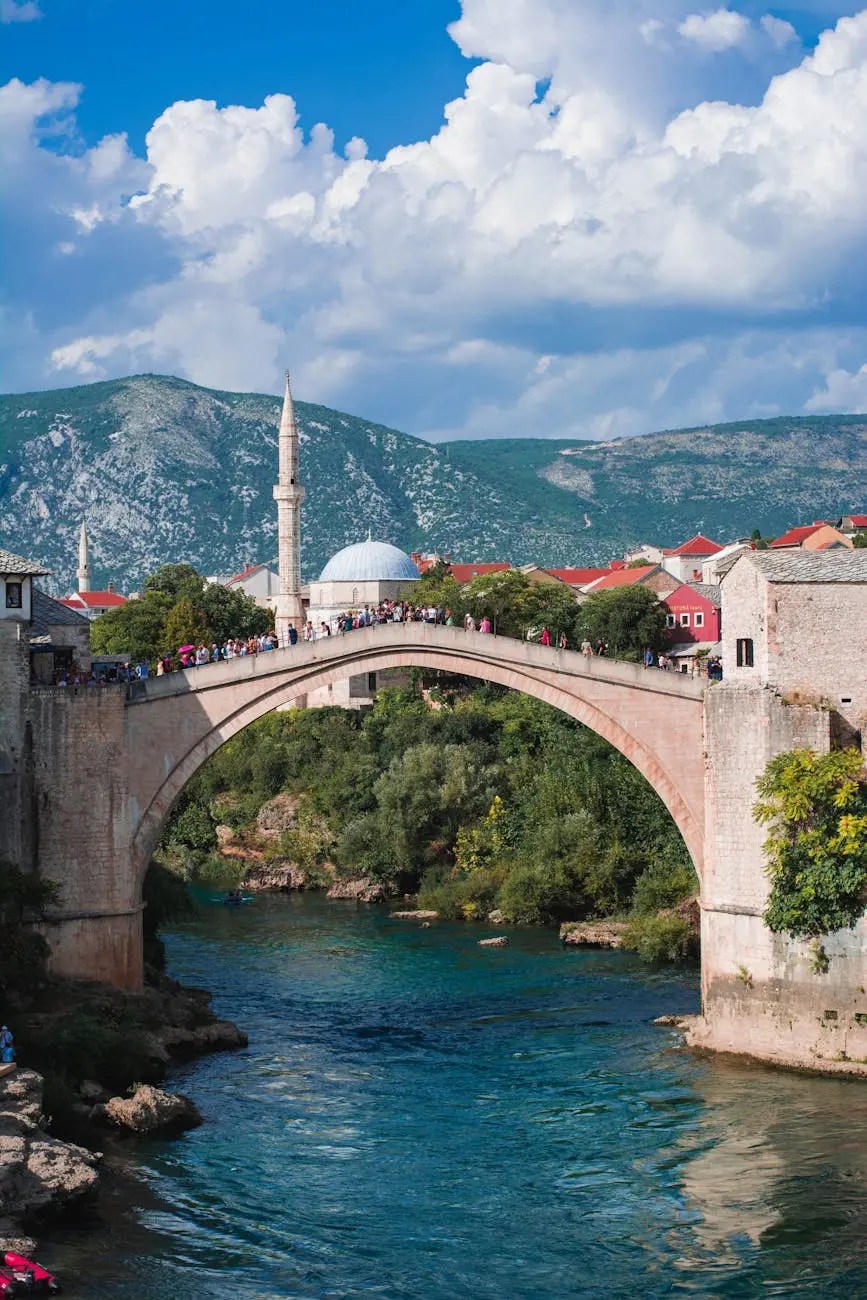
The historic Stari Most bridge in Mostar, Bosnia and Herzegovina, spans the Neretva River with a backdrop of mountains and traditional architecture under a bright blue sky.
The iconic Stari Most bridge in Mostar, a symbol of resilience and tradition, spans the Neretva River against a stunning backdrop of mountains and blue skies.

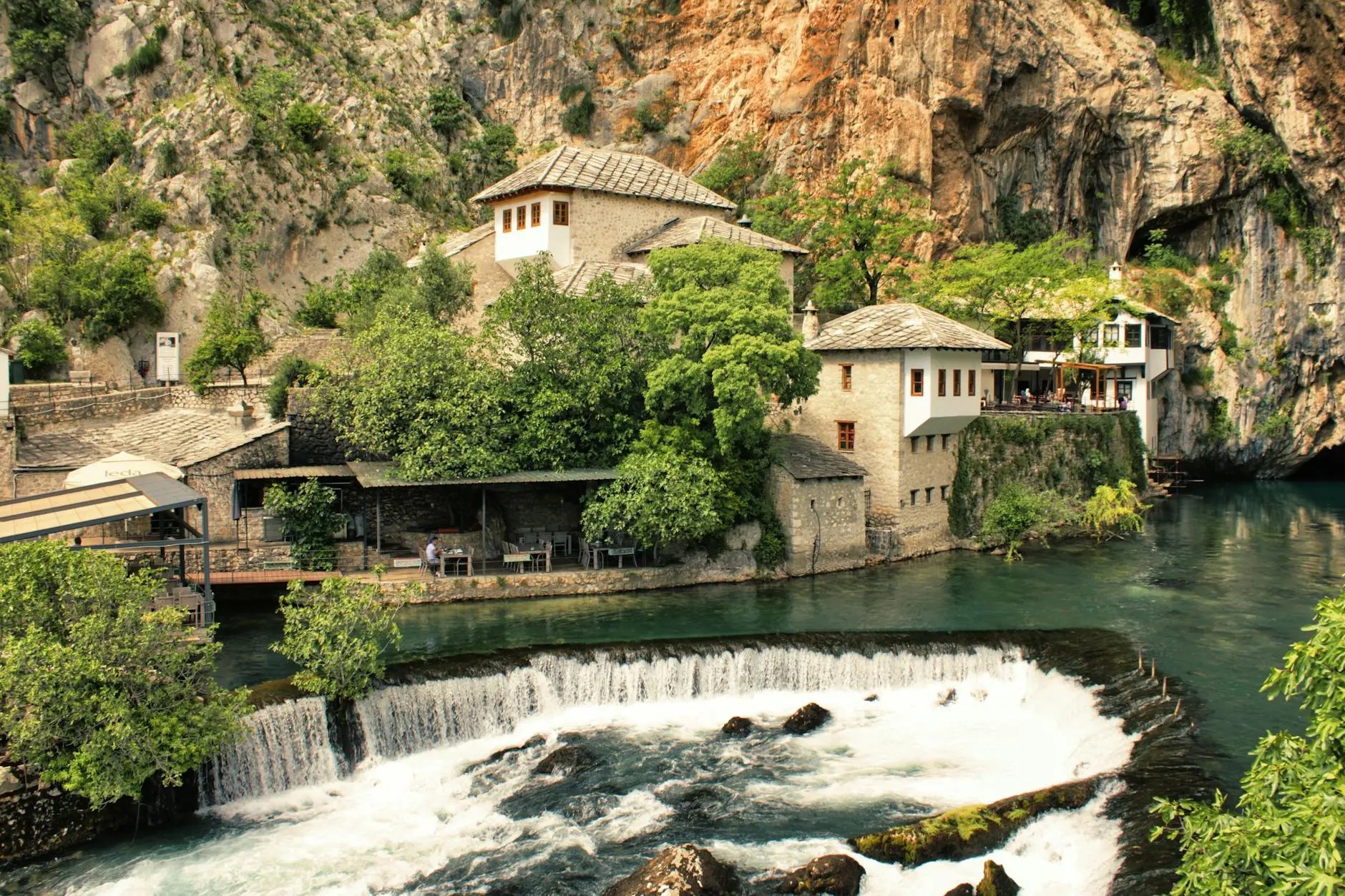
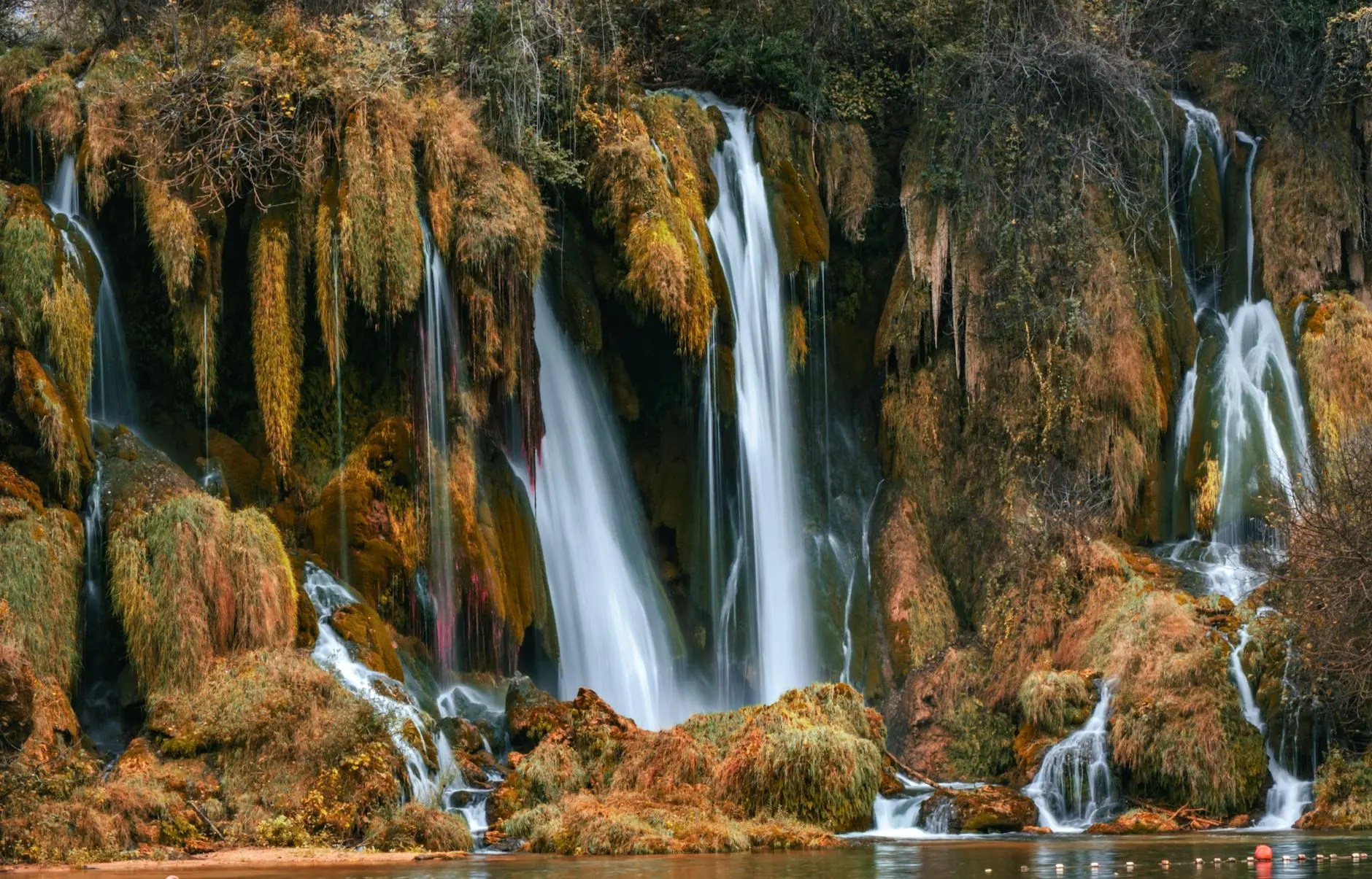
Day 2: Gorges & Mystical Springs. Rent a car for the day (trust me, it’s worth it for the freedom). Your first stop is Blagaj, just a 20-minute drive from Mostar. The sight of the Tekija (Dervish monastery) clinging to a 200-meter cliff face beside the impossibly blue Buna River spring will stop you in your tracks. Have a coffee by the water and soak in the serenity. In the afternoon, head to the Kravice Waterfalls. Picture a 25-meter crescent of cascading water tumbling into a bright emerald swimming hole. Pack a swimsuit—the brave can take a bracing dip, and there’s even a rope swing

Blagaj, (Expedia)Blagaj,(Get your guide)
Kravice Waterfalls.(Expedia)Kravice Waterfalls.(Get your guide)
A scenic view of the Blagaj Tekija, a historic Dervish monastery nestled against a rocky cliff, with green trees and blue waters flowing beneath it.
The picturesque Blagaj Tekija, a historic Dervish monastery nestled against the cliffside by the serene Buna River in Herzegovina. The Blagaj Tekke (Tekija), a 16th-century Dervish monastery clinging to a cliff beside the Buna River spring. Founded around 1520, this spiritual retreat combines Ottoman and Mediterranean architectural styles in one of Herzegovina’s most serene settings.
Cascading waterfalls surrounded by lush greenery and mossy rocks in a serene natural setting.
Breathtaking view of the cascading Kravice Waterfalls, a hidden gem in Herzegovina. Kravica Waterfall (also called Kravice), a stunning natural amphitheater of tufa cascades on the Trebižat River. Located near Ljubuški and about a 40-minute drive south of Mostar, this is one of Herzegovina’s most spectacular swimming and picnic spots.

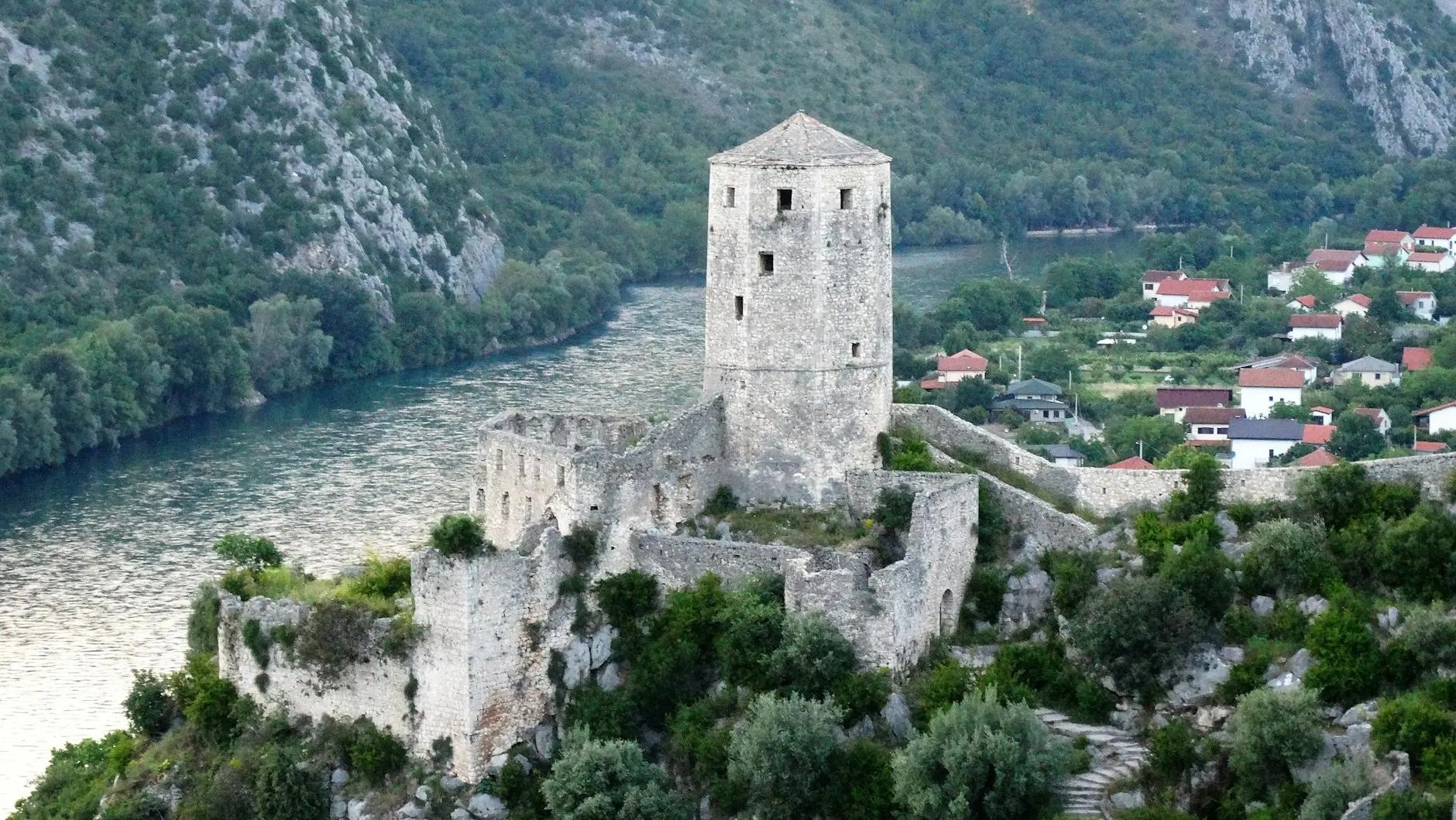
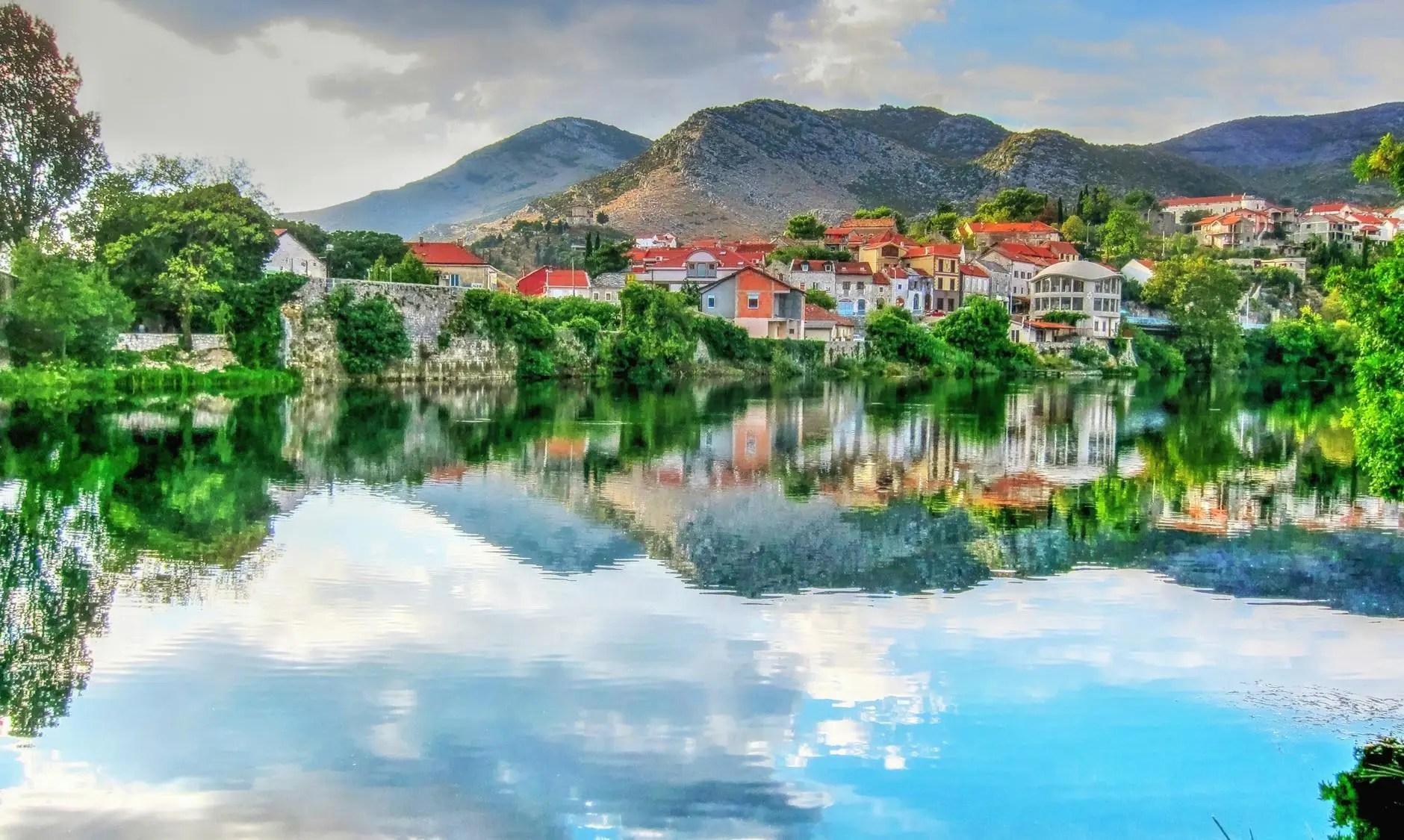
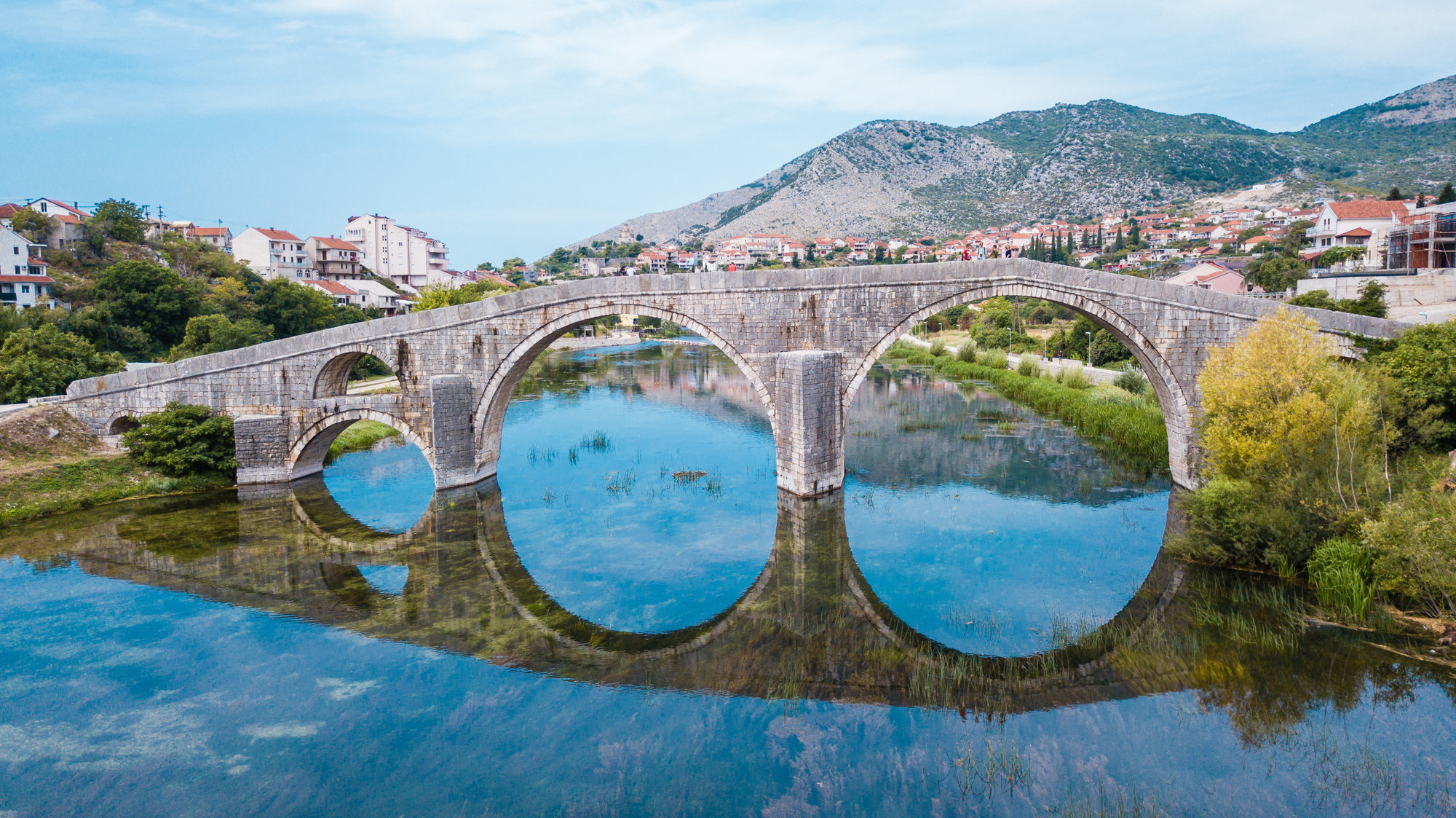
Day 3: History & Hidden Gems. Before you leave Mostar, wake up at sunrise. You’ll have the Stari Most and the silent, lamp-lit streets almost entirely to yourself—it’s pure magic. Then, set your GPS for Počitelj. This fortified Ottoman village is like a living museum, tumbling down a hillside towards the river. Climb to the top of the stone fort for a panoramic view you won’t forget. On your journey back towards the coast or airport, consider a final, peaceful stop at Trebinje. This elegant little town, just a stone’s throw from Dubrovnik, is famed for its wine and the beautiful Arslanagić Bridge that was moved, stone by stone, to its current location

Počitelj (Expedia)Počitelj (Get your guide)

Aerial view of a historic fortress on a rocky hill overlooking a river, with lush greenery and houses in the background.
A stunning view of the historic Počitelj village, featuring its iconic stone tower and surrounding greenery by the Neretva River. “The historic stone Kula Fort tower rising above the steep, medieval village of Počitelj in Bosnia and Herzegovina, with the Neretva River valley in the background.”
"A scenic aerial view of Trebinje, the southernmost city in Bosnia and Herzegovina, nestled along the calm, reflective waters of the Trebišnjica River in a green valley."
Scenic view of a picturesque town in Herzegovina, reflecting on a calm river with mountains in the background. Trebinje, the charming ‘City of the Sun’ in southern Herzegovina, beautifully positioned on the banks of the crystal-clear Trebišnjica River. Known for its relaxed atmosphere, wine, and proximity to Dubrovnik.
Aerial view of a historic stone bridge with arches reflected in a calm river, surrounded by greenery and hillside homes.
The stunning stone bridge reflecting in the serene waters of Herzegovina, showcasing the region’s rich architectural heritage.

Hidden Gems Beyond the Postcard

While the Stari Most will (rightfully) steal your heart, here are a few spots where you can escape the day-trip crowds:

  • The “Practice” Bridge: Before you even get to the majestic Stari Most, look for Kriva Ćuprija (the Crooked Bridge) in Mostar’s Old Town. This petite, arched Ottoman bridge over a small stream is thought to have been a “test model” for its larger, more famous sibling. It’s a quiet, photogenic spot.
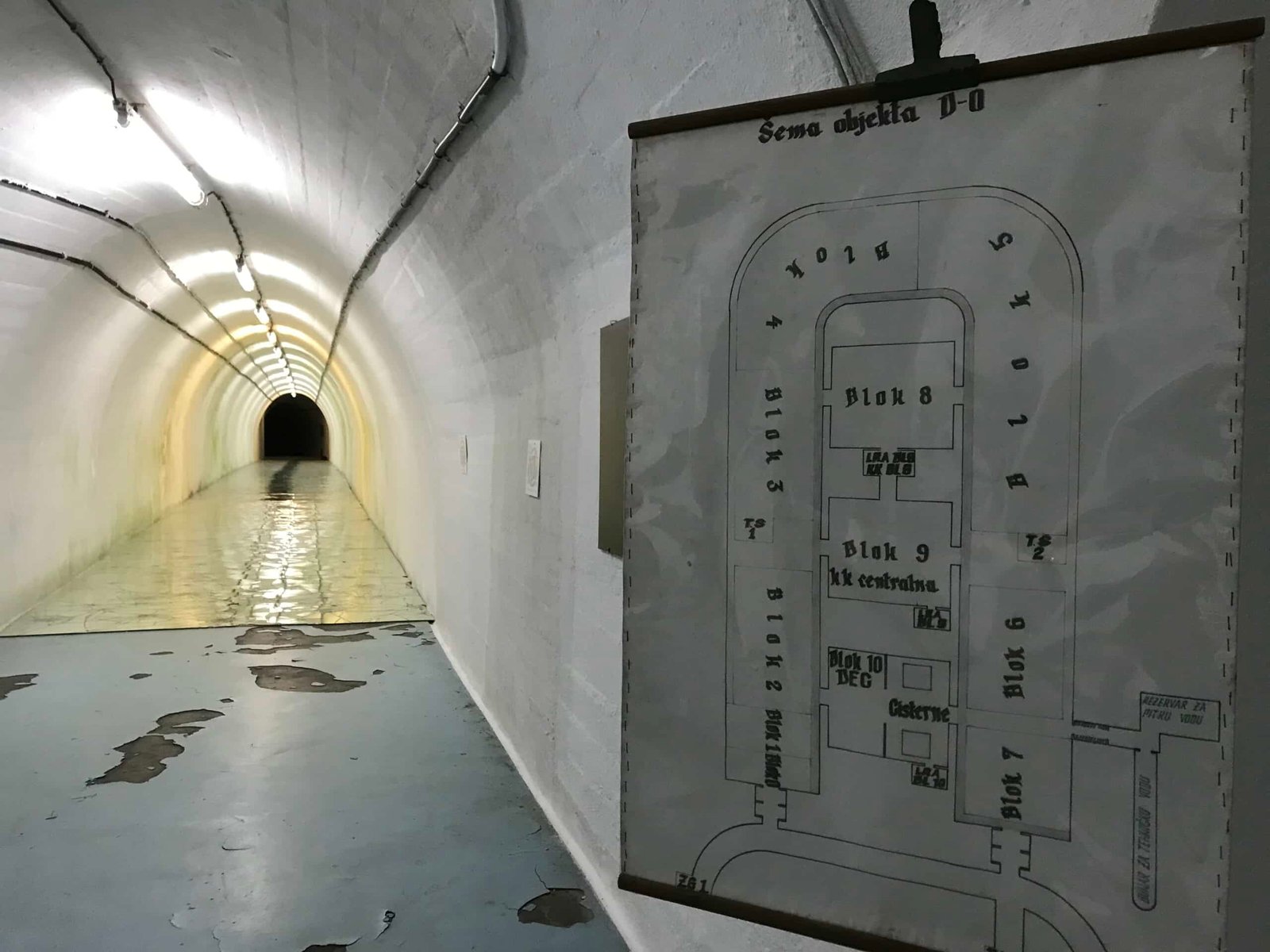
  • Konjic & its Secret Bunker: The town of Konjic, on the road from Sarajevo to Mostar, is home to another stunning Ottoman bridge. But its real claim to fame is hidden underneath a nondescript house: Tito’s Atomic Bunker. Built in total secrecy during the Cold War, this massive underground complex is now a unique contemporary art space. Tours must be booked in advance, and it’s a fascinating dive into 20th-century history.
Tito’s Atomic Bunker (Expedia)Tito’s Atomic Bunker (Get your guide)
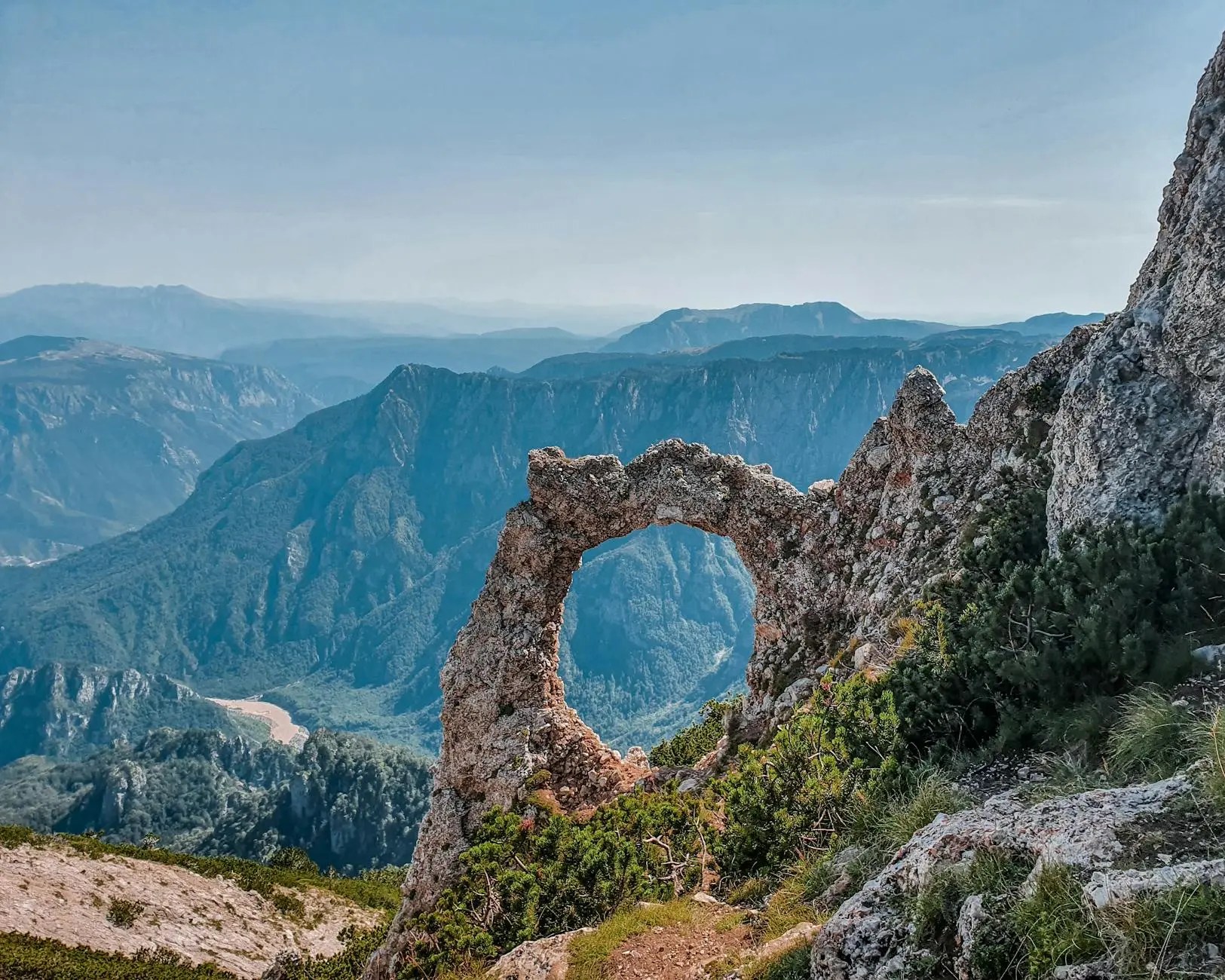
  • Blidinje Nature Park: If your soul craves mountains, detour to this stunning park northwest of Mostar. It’s home to the largest glacial lake in Bosnia, wild horses, and some of the most pristine hiking trails in the Dinaric Alps. It feels a world away from everything.
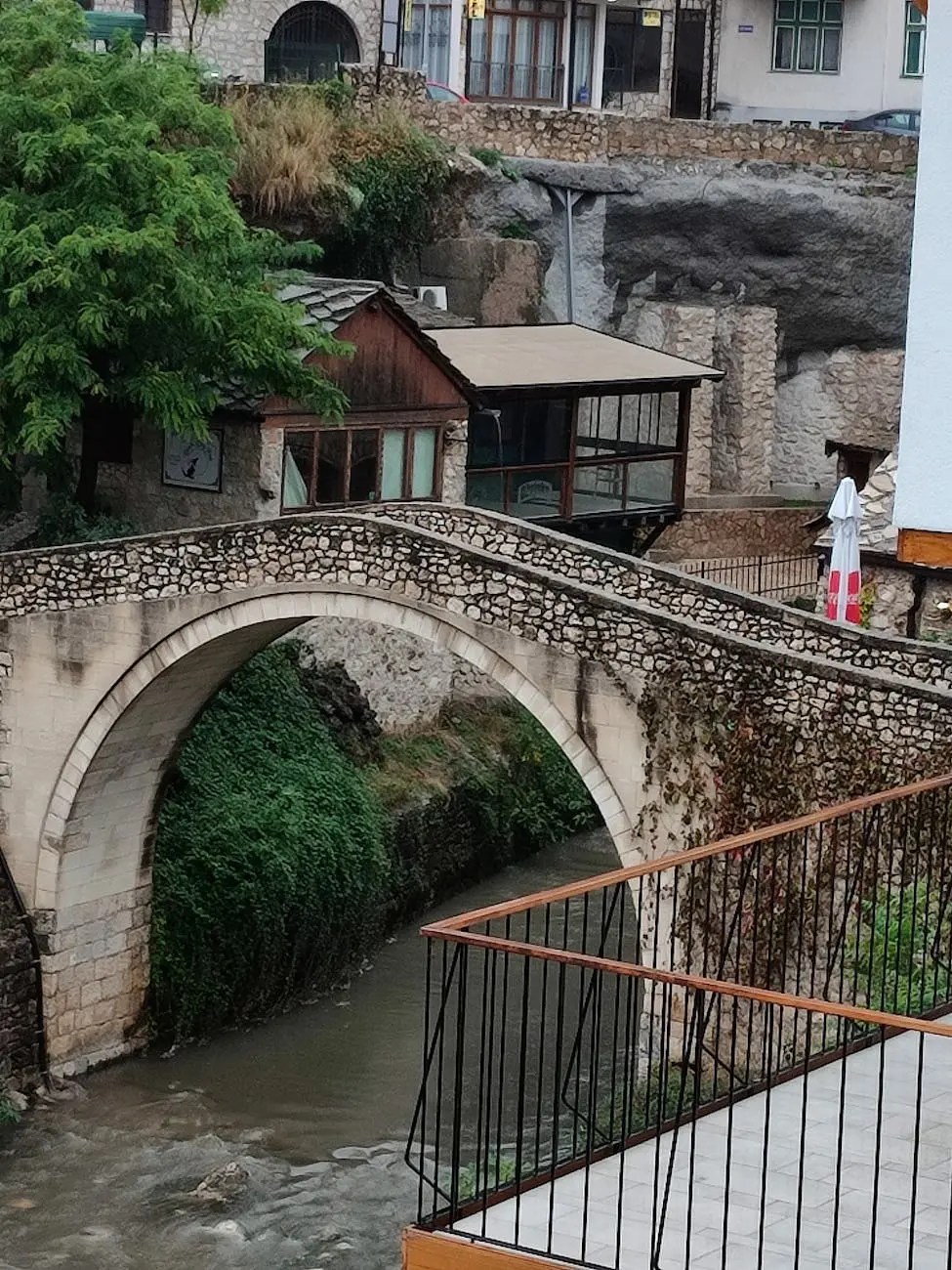
A stone arch bridge crosses a small river, surrounded by lush greenery and traditional buildings in Mostar, Bosnia and Herzegovina.
A picturesque stone bridge overlooking a serene river in Mostar, Bosnia and Herzegovina. Kriva Ćuprija, the “Crooked Bridge,” a charming single-arch Ottoman bridge over the Radobolja River in Mostar’s Old Town. Often considered a prototype for the grander Stari Most, it’s a quieter piece of living history

A rocky arch formation on a mountain with expansive valleys and hills in the background under a clear blue sky.
A stunning view of the mountain landscape in Herzegovina, featuring an intriguing rock formation with a natural arch that highlights the region’s breathtaking scenery. Hajdučka Vrata, the “Outlaws’ Gate”—a dramatic natural rock arch on Mt. Čvrsnica in Blidinje Nature Park. This iconic Herzegovinian landmark offers hikers one of the most breathtaking viewpoints in the Dinaric Alps

Essential Travel Intel: Money, Visas & Staying Safe

  • The Money Game: The currency is the Convertible Mark (BAM or KM). Here’s the easiest hack you’ll get: 1 Euro = 2 KM (almost exactly). While some places accept Euros, you’ll always get a better price in local currency. Cash is king, especially in smaller towns, guesthouses, and family-run restaurants. Withdraw BAM from local ATMs upon arrival.
  • Visa Info & Costs: Travelers from the US, UK, Canada, Australia, and the EU do not need a visa for tourist stays of up to 90 days within a 180-day period. Just ensure your passport is valid for at least three months beyond your planned departure date.
  • Safety First: Herzegovina is very safe for tourists. Standard city precautions against pickpocketing in crowded areas apply. The one critical rule involves the countryside: never, ever stray from marked paths or roads when hiking. Remnants of landmines from the 1990s conflict may still be present in remote, unmarked areas. Heed all warning signs.
  • When to Visit: Spring (April-June) and Autumn (September-October) are absolute perfection. The weather is mild, the landscapes are green (or golden), and the summer crowds have thinned. Summer can be fiercely hot, especially in Mostar.

Words to Know: A Quick Language Cheat-Sheet

Locals always appreciate the effort. Bosnian/Croatian/Serbian is the official language here.

  • Hello / Good day: Dobar dan (DOH-bar dahn)
  • Thank you: Hvala (HVAH-lah)
  • Please / You’re welcome: Molim (MOH-leem)
  • Yes / No: Da / Ne (DAH / NEH)
  • How much?: Koliko košta? (KOH-lee-koh KOHSH-tah?)
  • Bridge: Most (MOHST) – You’ll be using this one a lot!
  • Coffee: Kafa (KAH-fah) – Essential for joining the local café culture.

Practical Travel Tips

💡 Travel SIM/Connectivity Tip (Rephrased & Original):
Staying online overseas can be confusing and expensive — roaming charges, random data limits, airport SIM queues — it’s all a headache. That’s why I always carry a universal travel SIM — works in 190+ countries with no hidden fees, topped up easily through an app, and gets you online wherever you roam.
→ Check it out here: Drimsim

🌍 VPN for Security & Streaming Abroad:
Protect your data and access home content securely with a trusted VPN:

💼 Travel Insurance (Smart Safety Move):
Unexpected health or travel hiccups are easier to handle with insurance. I use and recommend VisitorsCoverage — compare plans and find one fast:

Power Up: Bosnia uses Type C and F plugs (220V). A universal adapter with multiple USB ports is a lifesaver for keeping phones, cameras, and power banks charged. I never travel without a reliable one

Document Your Journey: Herzegovina is a photographer’s dream. Whether you’re capturing the dive off Stari Most or the mist rising at Blagaj, having a capable camera is key. I rely on my trusted gear to do this stunning region justice.

Glow on the Go: After long days of exploration, my skincare routine is sacred. I swear by the gentle, effective products from Lakinza. For a treat, use code Lalax10 at checkout for a sweet discount.

Frequently Asked Questions

Is a weekend in Herzegovina enough time?
Absolutely. A well-planned 2-3 day trip centered in Mostar lets you experience the iconic bridge, explore the Old Town, and take a day trip to at least one stunning natural wonder like Blagaj or Kravice Waterfalls. It’s a perfect introduction.

Is Herzegovina expensive?
Not at all. Compared to Western Europe and even coastal Croatia, Herzegovina is a fantastic value. Meals, accommodation, and transport are very affordable, making it ideal for budget-conscious travelers who don’t want to sacrifice experience.

What’s the best way to get from Dubrovnik to Mostar?
For a weekend trip, I recommend a pre-booked private transfer or small group tour. It’s the most time-efficient, taking about 2.5 hours door-to-door. Renting a car offers maximum flexibility, while public buses are the most budget-friendly but less convenient.

Is it safe to travel to Herzegovina?
Yes. The region is safe and welcoming to tourists. Standard travel precautions apply. The only specific safety rule is to stay on marked paths when in the countryside or hiking due to the rare but potential risk of landmines in unmarked areas.

Ready to explore more of this incredible region? Check out my other guides for deeper dives into the Balkans:

Herzegovina pairs beautifully with nearby destinations like

Sarajevo, “Most trips to Herzegovina begin in Sarajevo, connected by one of the most scenic train journeys in the Balkans…”

Dubrovnik, “Many travelers pair Herzegovina with a coastal escape to Dubrovnik, especially since the border is just a few hours away…

Split, “If you’re arriving by ferry into Split, Herzegovina makes an easy inland detour with jaw-dropping scenery…

Zadar — making it ideal for a Balkans road trip or multi-country weekend escape.”

Herzegovina isn’t just a destination; it’s a feeling. It’s the chill of the Neretva River, the warmth of the people, and the profound sense of history etched into every stone. Pack your bags (and this guide), and go find it.

Final Tips & CTAs

Ready to book your escape? Grab flights, hotels, and package deals on Expedia (great for saving big on bundle deals)
Universal Disclaimer/Disclosure Page:

48-Hour Lisbon Itinerary: Your Ultimate Guide

Meta Description: Dreaming of a weekend in Lisbon? Our ultimate guide unlocks the best 48-hour itinerary for travellers. Discover hidden gems, navigate like a local, save money on transport, and soak in the vibrant soul of Portugal’s sun-drenched capital. Get ready for your perfect European escape!

We’ll cover everything from must-see sights to local phrases and how to navigate the city like a pro. Perfect for travelers seeking an authentic and unforgettable Portuguese adventure!

Table of Contents

  • Day 1: Alfama’s Heartbeat and Downtown Delights
    • Morning: A Golden Hour Stroll and Historical Heights
    • Afternoon: Baixa’s Grandeur and a Lift with a View
    • Evening: Fado and Flavors in Alfama
  • Day 2: Belém’s Grandeur and Artistic Escapes
    • Morning: The Age of Discoveries
    • Afternoon: The Sweetest Sin and Creative Vibes
    • Evening: A Riverfront Farewell
  • Day 3: Hidden Gems and Local Life
    • Morning: Tile Tales and Secret Viewpoints
    • Afternoon: Market Munchies and Pink Street Party
  • Essential Lisbon Travel Tips
    • Getting Around Lisbon: Your Public Transport Cheat Sheet
    • Lisbon Lingo: A Few Key Phrases
    • Money-Saving Magic
    • Where to Stay and When to Go
    • Quick Check: Visa, Visas, and More Visas
  • The Travel Toolkit You Can’t Live Without
  • FAQ: Your Top Questions Answered

Why Lisbon is the Perfect Weekend Getaway

Lisbon hits differently. It’s a city that feels like it’s constantly bathed in golden hour light, where ancient trams clatter up impossibly steep hills, and the smell of grilling sardines and pastéis de nata wafts from every corner. It’s vibrant, affordable, and bursting with an energy that makes a weekend feel like a full-blown vacation.

Flights to Lisbon

I fell in love with it on a whim a few years ago after a friend’s wedding. I had an extra day and a desperate need to avoid the office. That spontaneous 48-hour trip turned into a lifelong love affair with the city’s soulful grit and effortless charm. Trust me, by Sunday evening, you’ll be plotting your return.

📍 Pro Tip: To visualize your adventure, here’s a custom Google Map I created that plots out this entire itinerary, including all the miradouros, restaurants, and hidden gems.
>> Click here for the Interactive Lisbon Weekend Map <<

Hotels in Lisbon

Now, a lot of people think you need a week or more to “do” Lisbon, but I’m here to tell you that a long weekend is the perfect appetizer. You can get a fantastic taste of the city’s soul without burning out. This is a plan I’ve personally tried and tested, and it’s designed to be efficient, enjoyable, and packed with as many local anecdotes as possible. So, lace up your most comfortable shoes, grab your camera (I used my trusty [ camera ] to capture all the magic!), and let’s go.

Your Lisbon Weekend Itinerary: A Step-by-Step Guide

This itinerary is designed for maximum experience with minimal fuss. We’ll walk, use the brilliant public transport, and eat… a lot.

Day 1: Getting Lost in the Labyrinth (Alfama, Castelo & Fado)

  • Morning (9:00 AM): Start your day where Lisbon began: in the Alfama district. Ditch the map. Seriously. The joy of Alfama is in getting lost in its narrow, winding streets, discovering hidden courtyards and sudden viewpoints called miradouros. Grab a bica (a potent Portuguese espresso) and a pastel de nata from any pastelaria and just wander.
  • Afternoon (1:00 PM): Work your way up to the São Jorge Castle. The climb is a leg workout, but the 360-degree views of the city and the Tagus River are worth every burning calf muscle. Pro tip: Buy tickets online in advance to skip the long queues.
  • Evening (8:00 PM): Alfama is the birthplace of Fado, Portugal’s soulful, melancholic music. For an authentic experience, skip the big, overpriced tourist traps. Find a small, family-run tasca (tavern). The food is honest, the wine is cheap, and the Fado is heartfelt. I stumbled into one down a tiny alleyway and it remains one of my most cherished travel memories.

Miradouro de Santa Luzia Tours

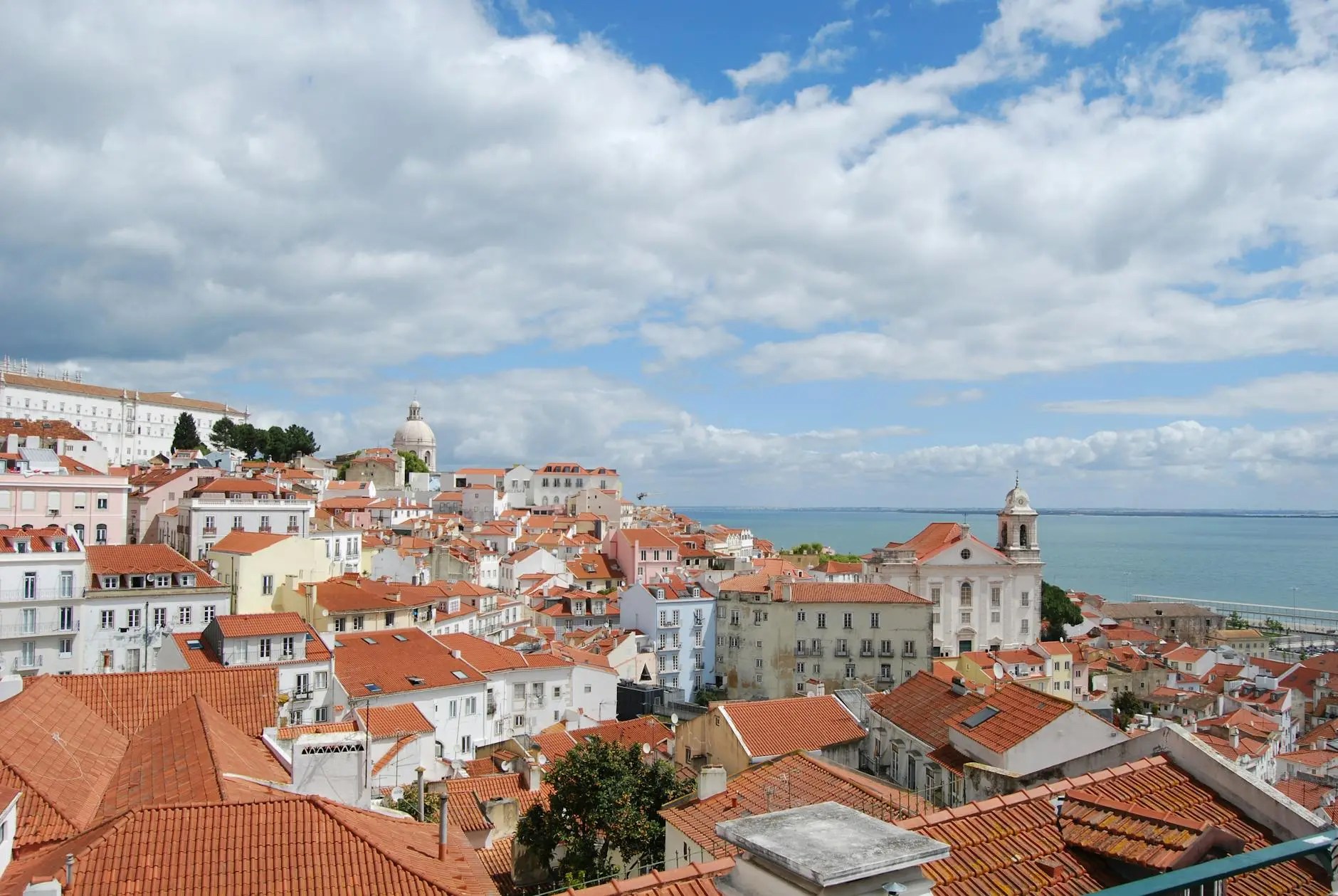
Panoramic view of Lisbon featuring terracotta rooftops, historical buildings, and distant views of the river under a partly cloudy sky.
A panoramic view of Lisbon showcasing the city’s iconic red-tiled roofs and the Tagus River in the background. .The postcard-perfect view from one of Lisbon’s many miradouros (viewpoints). Getting lost in the labyrinthine streets of the Alfama district is a rite of passage for any visitor to the city. Pro tip: This particular shot was taken from near the Portas do Sol lookout!

For more on navigating historic European districts, check out my older post on Getting Lost in Prague’s Old Town 

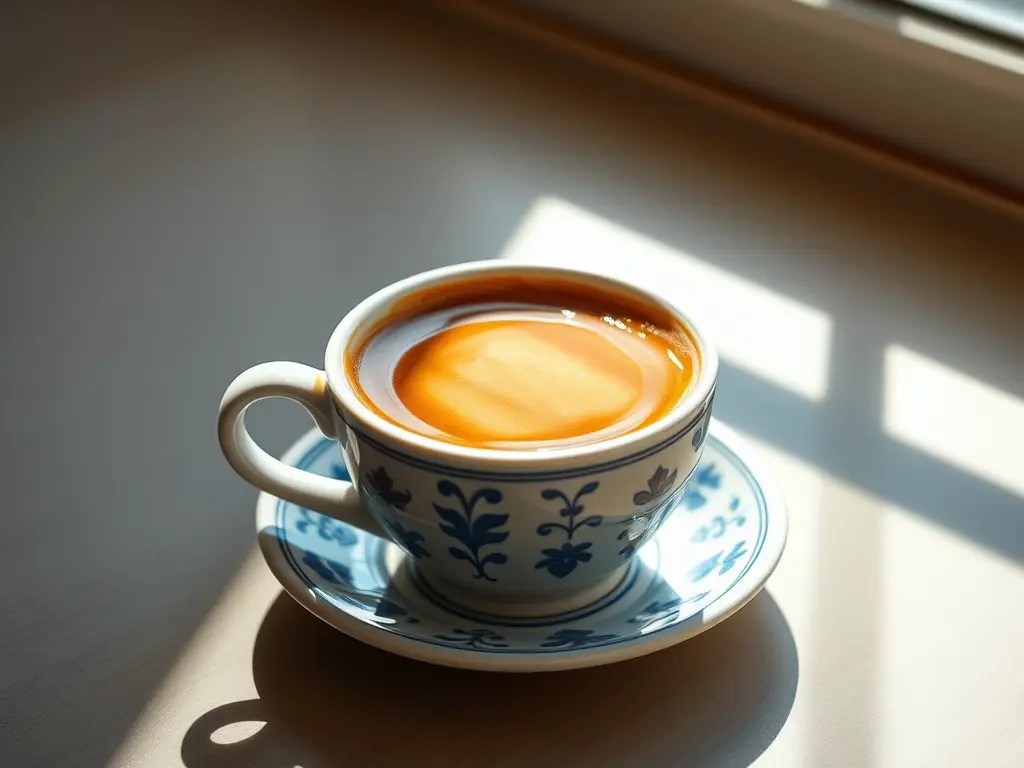
A steaming cup of coffee in a blue and white patterned cup, sitting on a matching saucer, illuminated by soft, natural light coming through a nearby window.
A rich cup of Portuguese bica, perfect for kickstarting your day in Lisbon. Fuel your exploration the local way with a bica—Portugal’s powerful and delicious answer to espresso. This tiny but mighty cup is the lifeblood of Lisbon’s café culture and the perfect pause during a day of sightseeing.
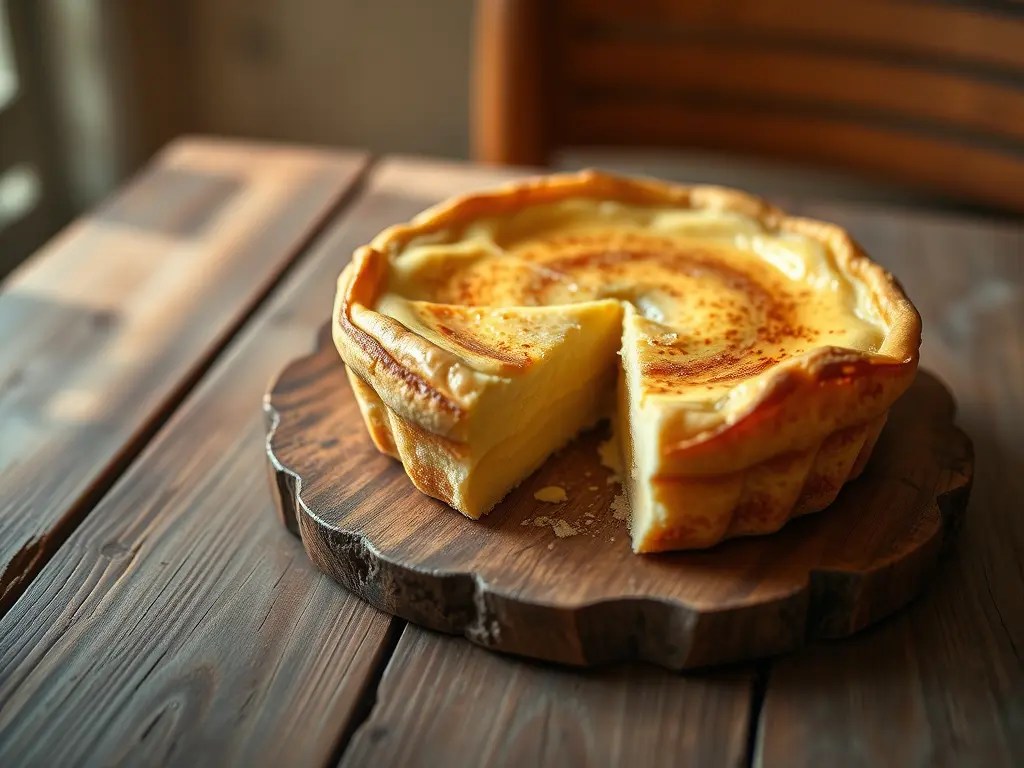
A freshly baked pastel de nata, a traditional Portuguese custard tart, displayed on a wooden board with a slice cut out.
A delicious pastel de nata, a must-try treat during your Lisbon adventure, displayed on a wooden board. The iconic Pastel de Nata! This heavenly Portuguese custard tart, with its crisp, caramelized pastry and creamy filling, is a non-negotiable Lisbon experience. Best enjoyed warm with a sprinkle of cinnamon.
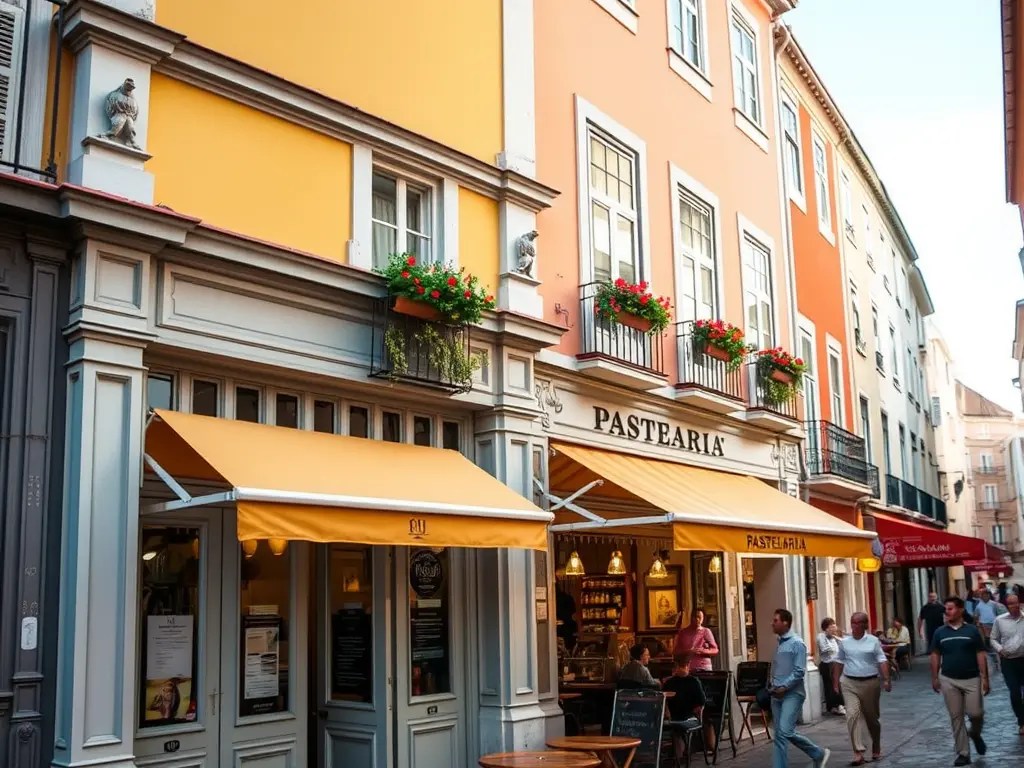
A charming pastelaria with yellow awnings and flower boxes, located on a narrow Lisbon street bustling with pedestrians.
Colorful pastelaria in Lisbon’s charming streets, perfect for indulging in local pastries. The perfect Lisbon moment: soaking up the sun and the vibrant atmosphere outside a traditional pastelaria in the Alfama district. This is where you come to enjoy a slow coffee, a sweet treat, and watch the daily life of the city unfold.

Castle of São Jorge Tours

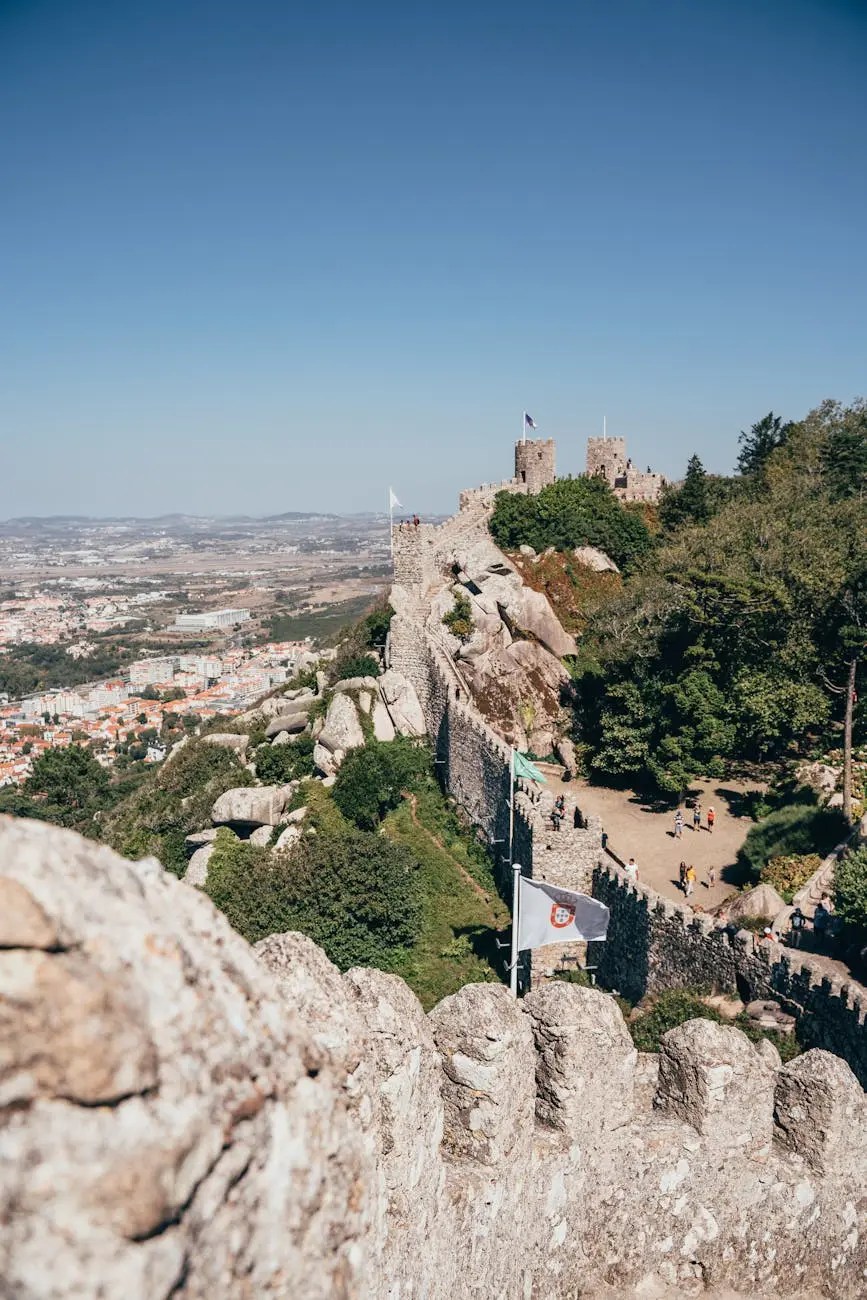
View from the Castle of São Jorge in Lisbon, showing ancient stone walls, flags, and a panoramic landscape of the city and surrounding hills under a clear blue sky.
Aerial view of São Jorge Castle, showcasing the ancient walls and panoramic scenery of Lisbon. A bird’s-eye view of the majestic São Jorge Castle, perched atop one of Lisbon’s highest hills. This historic fortress has guarded the city for centuries and offers some of the most breathtaking panoramic views in all of Portugal.

Lisbon: Portuguese Tapas & Wine Small Group Secret Food Tour

Day 2: Monuments, Marvels & Nightlife (Belém & Bairro Alto)

  • Morning (10:00 AM): Hop on the #15E tram from Praça da Figueira (it’s a classic!) and take the 20-minute ride to Belém. Here, you’ll find Portugal’s Age of Discoveries monuments. The Jerónimos Monastery is stunning, but if you’re short on time, the real can’t-miss is the Belém Tower. And you absolutely MUST go to Pastéis de Belém for the original, secret-recipe custard tarts. Expect a line. It moves fast. It’s worth it.
  • Afternoon (4:00 PM): Head back and explore the trendy Chiado and Bairro Alto districts. Chiado is for chic shopping and famous cafes like A Brasileira. As evening falls, Bairro Alto transforms. By day, it’s a quiet residential area; by night, its streets fill with people enjoying cheap drinks from tiny bars. It’s a fantastic, chaotic, and fun experience.
  • Dinner: For a truly local (and budget-friendly) dinner, find a “** cervejaria” for fresh seafood or a “churrasqueira**” for incredible grilled chicken.

Jerónimos Monastery Tours

View of the cloister at the Jerónimos Monastery in Lisbon, featuring intricate stone arches and a manicured lawn.
The stunning cloisters of Jerónimos Monastery in Belém, Lisbon, showcasing intricate Manueline architecture.

Belém Tower Tours

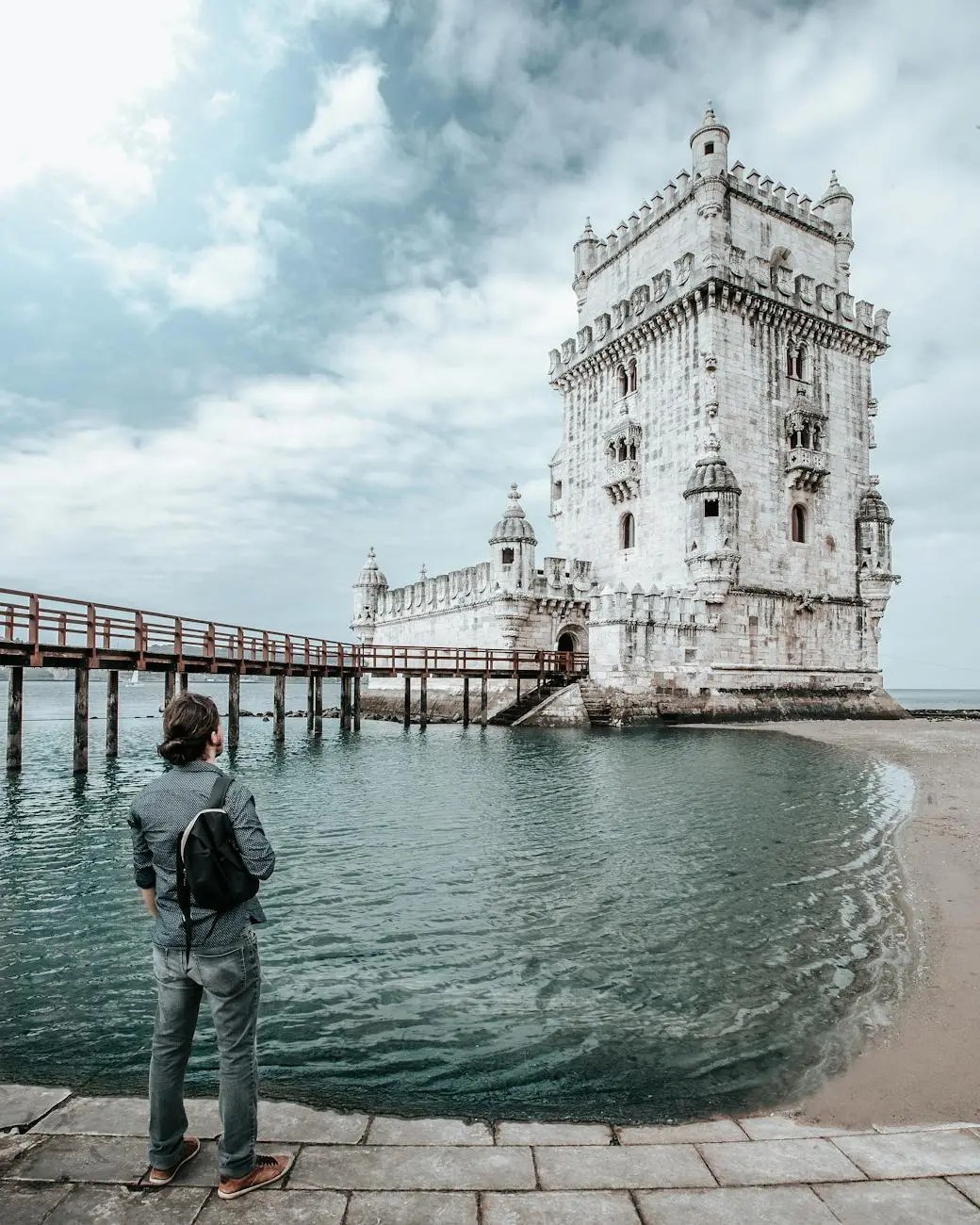
A person standing by the water, gazing at the Belém Tower in Lisbon under a partly cloudy sky.
A traveler admires the iconic Belém Tower, a symbol of Portugal’s Age of Discoveries, set against a cloudy sky. A moment of awe at the iconic Belém Tower. This masterpiece of Manueline architecture once served as a fortress and a ceremonial gateway to Lisbon, marking the spot where explorers began their voyages into the unknown.

Pastéis de Belém Tours

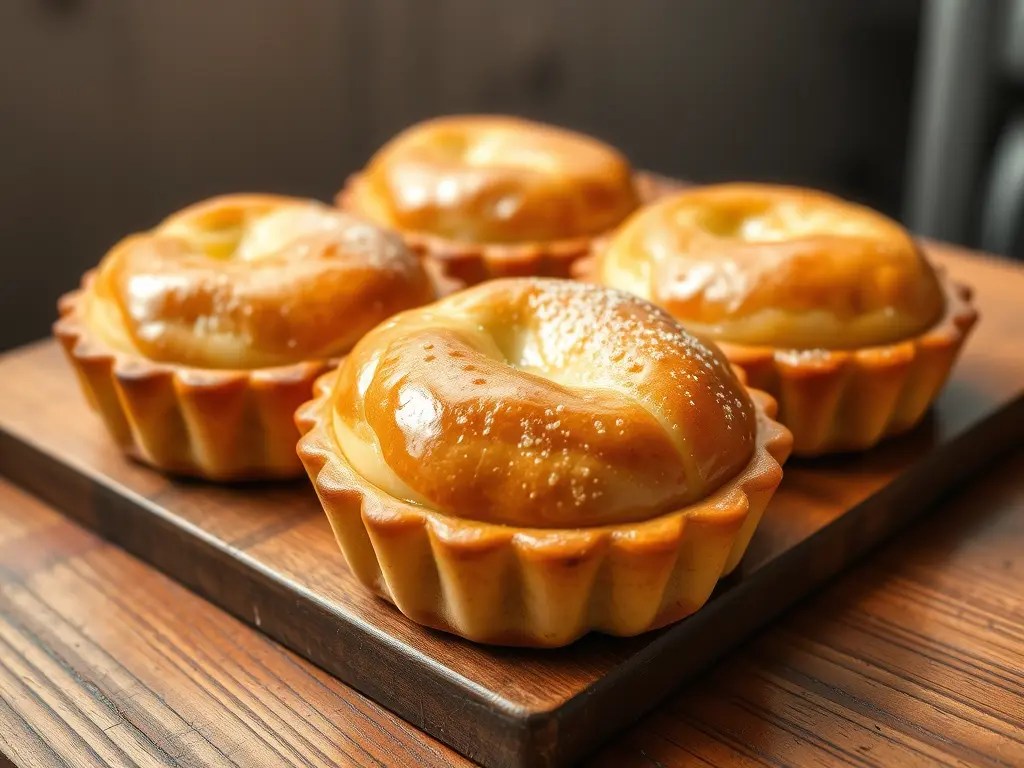
A wooden platter featuring freshly baked pastel de nata, a traditional Portuguese custard tart, showcasing a golden brown crust and creamy filling.
Delicious pastéis de nata, a must-try traditional Portuguese tart, perfect for your Lisbon journey. The one and only! These are the legendary Pastéis de Belém, crafted from a secret recipe since 1837. Served warm with a sprinkle of cinnamon and powdered sugar, they are the sweet, creamy pinnacle of any trip to Lisbon.
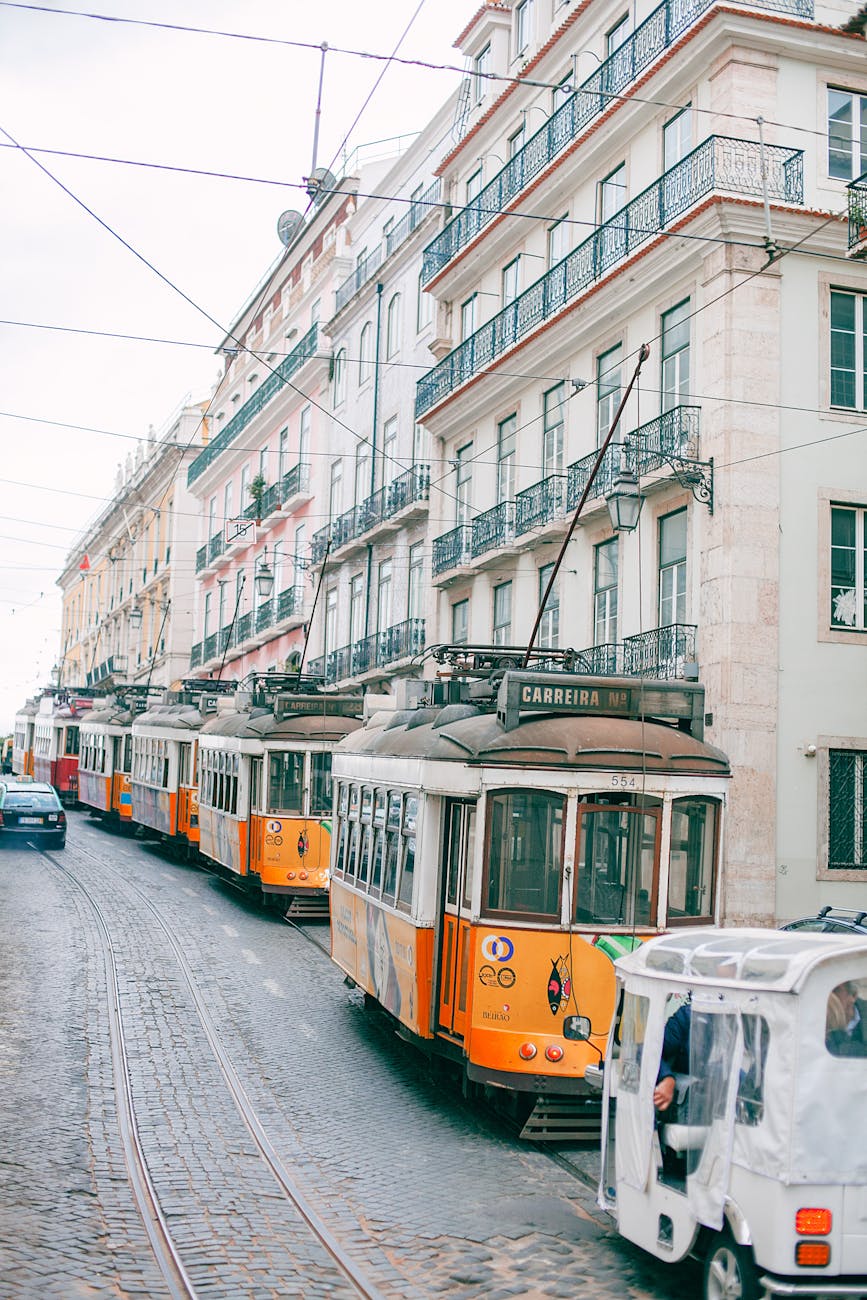
A picturesque view of traditional yellow trams winding through a cobblestone street in Lisbon, flanked by charming buildings with balconies.
Iconic yellow trams navigate the charming streets of Lisbon, embodying the city’s vibrant spirit.

Bairro Alto Vacations

Interior view of a lively café in Lisbon, featuring patrons seated at tables and a mirrored bar in the background.
A bustling cafe in Lisbon, perfect for relaxing and enjoying local delicacies. ( Brasileira)

Lisbon Insider: Navigate Like a Pro (Transport & Maps)

Lisbon’s hills are no joke. But its public transport system is your best friend. Lisbon is a city built on hills, but don’t let that intimidate you. Public transport is a lifesaver. Grab a “Viva Viagem” or “Navegante” card from any metro station. This reusable card costs about €0.50 and you can load it with a 24-hour pass (€6.80) or with money to “zapping” (pay-as-you-go). This card works on the metro, buses, trams, and funiculars, making it incredibly convenient.

  • The Viva Viagem Card: This is key. For ~€0.50, you get the reusable card. You can then load it with:
    • Zapping: Add monetary value (e.g., €5) and tap for each journey. Cheaper than single tickets and works on trams, buses, metro, and elevators.
    • 24-hour Ticket: Unlimited travel on all transport for €6.40. Calculate if you’ll make more than 7-8 journeys in a day.
  • Trams: Tram 28 is famous for a reason—it’s a rolling tour of the city. Also, it’s a pickpocket paradise. Be smart. For actually getting around, trams 12E and 25E are often less crowded and just as scenic.
  • Metro: Clean, fast, and efficient for covering longer distances (e.g., from the airport to the city center).
  • Uber/Bolt: Inexpensive and a lifesaver after a long day of hill climbing.
  • Car Rental: I generally wouldn’t recommend renting a car in the city center. The roads are narrow, parking is a nightmare, and the public transport is excellent. However, if you plan to explore outside of Lisbon, say a day trip to Sintra or Cascais, a rental can be a good idea. Just be mindful of the cost and road conditions.

Google Maps works perfectly for real-time public transport directions. Download the offline map of Lisbon to save data.

Money-Saving Secrets & Hidden Gems Most Tourists Miss

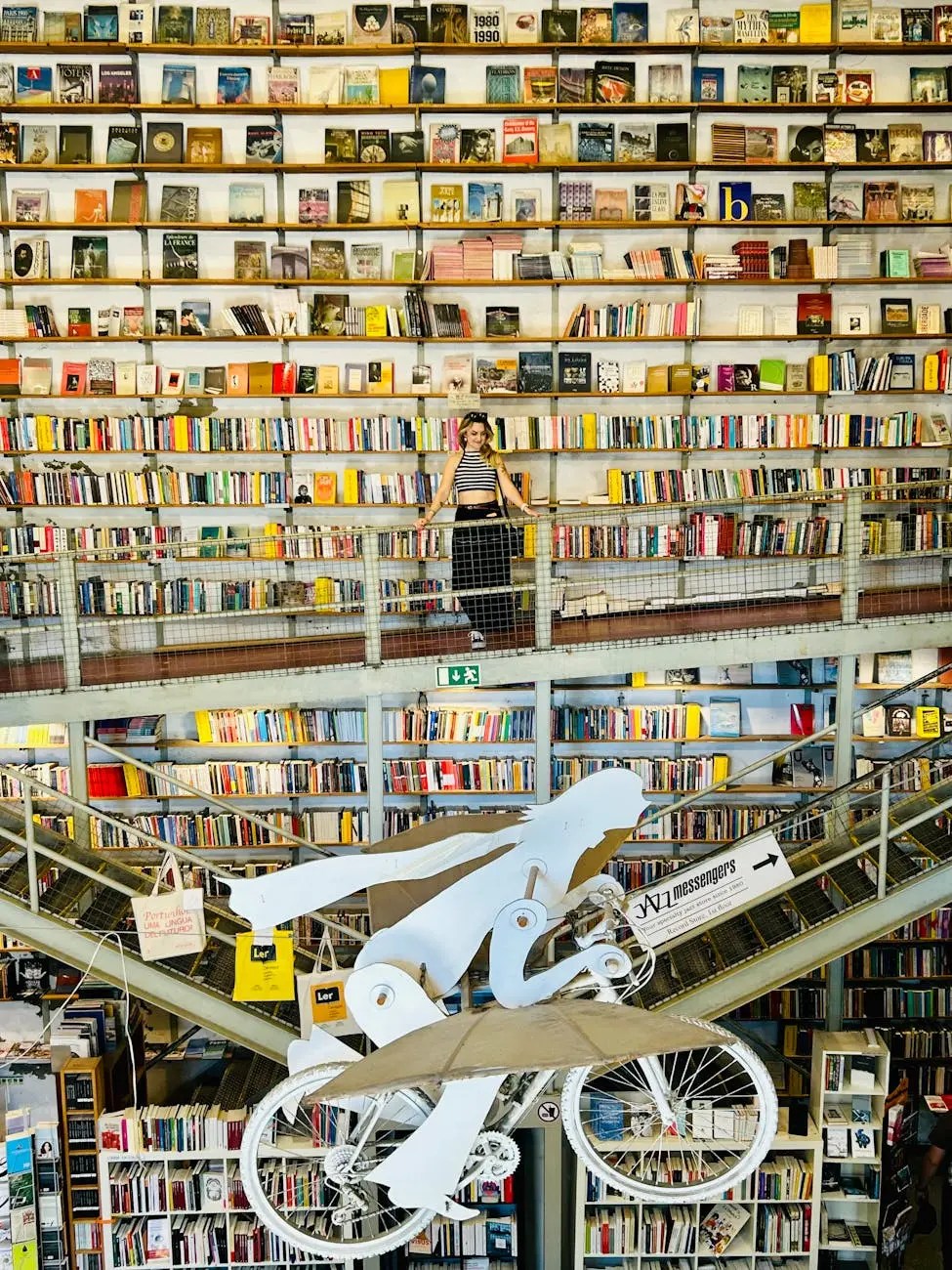
  • Hidden Gem: LX Factory. Underneath the Ponte 25 de Abril bridge, this former industrial complex is now a hub of cool shops, incredible street art, and trendy restaurants. It’s the Brooklyn of Lisbon. The Ler Devagar bookstore is a must-see.
  • Free Views: While Miradouro de Santa Luzia is beautiful, it’s packed. Walk 5 more minutes up to Miradouro da Graça for an even better view with (slightly) fewer crowds.
  • Eat Cheap: Lunch is your best friend. Look for signs that say “Prato do Dia” (Plate of the Day). For €7-10, you’ll get a main course, drink, and sometimes dessert. It’s how the locals eat.
  • Tap Water: It’s perfectly safe to drink. Ask for “água da torneira” to avoid paying for bottled water.
  • Lisboa Card: If you plan on visiting a lot of museums and using public transport frequently, the Lisboa Card is a fantastic option. It gives you free entry to many attractions and unlimited travel on public transport.
  • Lisbon is famous for its beautiful azulejos, the painted ceramic tiles that cover so many of its buildings. Head to the National Tile Museum for an incredible deep dive into their history and artistry.

LxFactory Tours

A woman stands on a balcony inside a bookstore, surrounded by tall shelves filled with books in various colors and sizes.
Explore the vibrant interior of Ler Devagar bookstore in Lisbon, a unique space filled with books and creative installations. Getting lost in Ler Devagar, one of the world’s most breathtaking bookstores, is a quintessential LX Factory experience. This creative hub, set in a converted industrial complex, is a paradise for art and literature lovers.

Essential Portuguese for the Weekend Warrior

You’ll get by with English, but a little effort goes a long way!

  • Olá (oh-LAH) – Hello
  • Bom dia (bom DEE-ah) – Good morning
  • Obrigado (oh-bree-GAH-doo) – Thank you (said by a man)
  • Obrigada (oh-bree-GAH-dah) – Thank you (said by a woman)
  • Por favor (por fah-VOR) – Please
  • Uma bica, por favor (OO-mah BEE-kah) – An espresso, please
  • Uma imperial, por favor (OO-mah eem-peh-ree-AHL) – A draft beer, please
  • Quanto custa? (KWAHN-toh KOOSH-tah) – How much does it cost?
  • A conta, por favor (ah CON-tah) – The bill, please
  • Tchau (chow) – Goodbye

Travel Smart: My Non-Negotiable Gear & Tips

Let’s talk logistics. A smooth trip is a happy trip.

✈️ Staying Connected: I learned the hard way that airport SIM counters are a rip-off, and international roaming bills are a horror story waiting to happen. Now, I never travel without my Drimsim. It’s a genius universal SIM that works in 190+ countries. You just pop it in, top up via the app, and you’re online instantly. No more frantic searches for a phone shop after a long flight. It’s a total game-changer for staying connected on the go. Check out Drimsim here.

✈️ Flight Trouble? Did you know that if your flight is delayed, canceled, or you’re denied boarding, you could be entitled to up to $650 in compensation? Most people don’t claim it, but companies like AirHelp will handle all the annoying paperwork and fight the airlines for you. They only get paid if you win. I’ve used them successfully before—it’s stress-free and feels like finding free money. See if your flight qualifies with AirHelp.

✈️ Peace of Mind: I never, ever travel without insurance. For a quick weekend or a long haul, VisitorsCoverage is my go-to. It’s a simple platform to compare plans and find the right coverage for your trip. It’s the one thing you pack hoping you’ll never need, but you’ll be so glad you have it if something goes wrong. Get a quote from VisitorsCoverage here.

✈️ Stay Secure Online: Using public WiFi in cafes and hotels? Please, use a VPN. It encrypts your data and keeps your personal info safe from prying eyes. It’s as essential as your passport in the digital age. I rely on NordVPN for all my travels.

And to capture all those beautiful Lisbon moments, I swear by my trusty travel camera. It’s lightweight, takes stunning photos, and has survived being dropped in more than one European cobblestone street!

Ready to start planning your Lisbon adventure?
[Find the best deals on flights and hotels in Lisbon with Expedia]

FAQ: Your Quick Lisbon Questions Answered

Q: Do I need a visa for Portugal?
A: Portugal is part of the Schengen Area. If you’re from the US, UK, Canada, Australia, and many other countries, you do not need a visa for short stays (up to 90 days). Always check the official government website for the most current requirements based on your nationality.

Q: What’s the best way to get from Lisbon Airport to the city center?
A: The metro is the easiest and cheapest option. The Aeroporto – Saldanha red line takes you right into the heart of the city in about 20 minutes. A taxi or Uber is also a quick and affordable option.

Q: What is the best time of year to visit Lisbon for a weekend?
A: Spring (March-May) and Fall (September-October) are ideal. The weather is perfect for walking, and the crowds are smaller than in the peak summer months.

Q: Is Lisbon a walkable city?
A: Yes and no. The neighborhoods themselves are very walkable, but they are built on seven very steep hills. Be prepared for a workout! This is why using the trams and metro to get between districts is highly recommended.

Q: What should I pack for a weekend in Lisbon?
A: Comfortable walking shoes are NON-NEGOTIABLE. You’ll thank me later. Also, pack layers, as evenings can be cool even in summer, and don’t forget sunscreen and a hat for those sunny days.

Q: Is Lisbon safe for solo travelers? A: Absolutely! Lisbon is one of the safest major cities in Europe. Just be mindful of your belongings in crowded areas like Tram 28 and tourist hot spots, as pickpocketing can occur.

Q: How much money do I need for a weekend in Lisbon? A: Lisbon is very budget-friendly. You can easily get by on a moderate budget of around €70-€100 per day, including accommodation, food, and activities. If you’re a savvy traveler who uses public transport, eats at local cafes, and takes advantage of free walking tours, you can spend even less


Universal Disclaimer/Disclosure Page: