Teaching English to Speakers of Other Languages (TESOL) (Certificate). Earn this certification for free. The best and most valid free certification is from Arizona State University. All you have to do is apply for financial aid in Coursera and write an essay of 250 words and get this certificate. You can teach online also to students of Korea, Japan, Spain, etc…
To get this TESOL certificate you have to apply for financial aid to Arizona State University through Coursera then
You have to write an essay for…
Why are you applying for financial aid?
250 words essay
How will taking this course help you achieve your career goals?
250 words Essay
Would you consider using a low-interest loan to pay for your courses
say no and write an essay of 250 words about why you cannot consider a low-interest loan
https://www.coursera.org/professional-certificates/arizona-state-university-tesol
I did Teach English Now! Foundational principles
Some of the peer review assignments I did to get this certification are
Teach English now(Arizona State University)
Language is a Cake (Metaphor)
Peer review assignment
Teach English now… Arizona State University Peer Review Project # Anyone who speaks the language can teach??
Teach English now
Arizona State University
Peer Review Assignment
#What is taught is what is learned
Teach English now
Arizona State University
Peer Review Assignment
People with high IQ are good language learners…??
Teach English now
Arizona State University
Peer Review Assignment
Language learners should be exposed only to the forms they are taught
Teach English now
Arizona State University
Peer Review Assignment
Teachers that work too hard are the ones that burn out
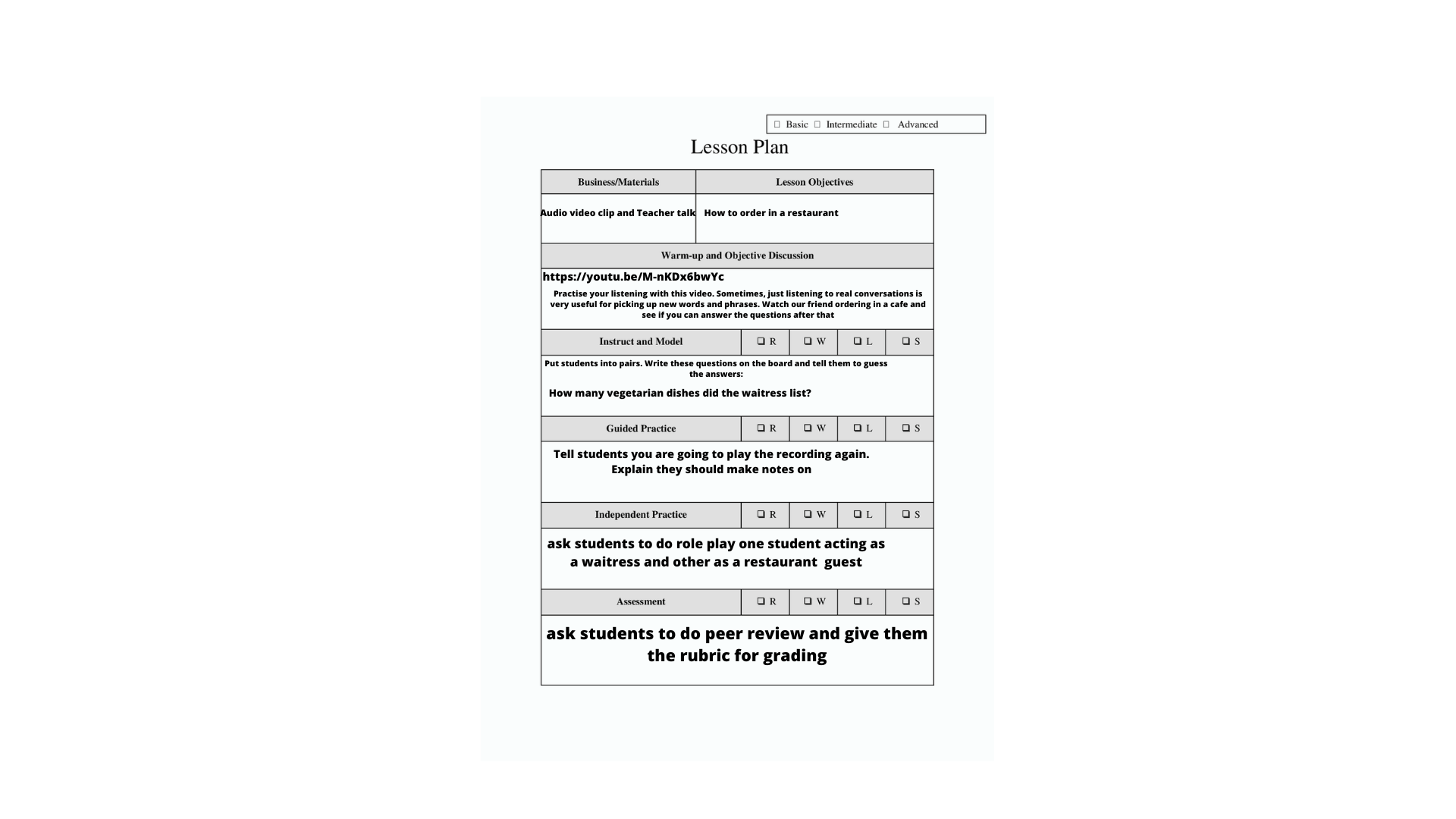
Assignment is Lesson plan
Teach English Now! Theories of Second Language Acquisition
Please respond to the following prompts. Each response should be 5-7 sentences.
a. Discuss the differences between the Grammar Translation Approach and the Direct Approach.
b. Which approach most closely aligns with your current teaching style?
Review criteria
The primary goal of reviewing the work of your peers is to broaden your perspective and deepen your own thinking about this topic. We hope engaging Coursera learners who come from around the world with a large range of experiences and backgrounds will enrich your learning experience.
The questions that your classmates will use to review your submission are
- Did the learner complete the the assignment?
- Did the learner discuss the differences between the Grammar Translation Approach and the Direct Approach?
- Did the learner express which approach most closely aligns with his/her current teaching style?
My peer review assignment
If your goal is to learn to listen, talk, and understand, the Grammar-Translation approach is very old and has been shown useless. The two methodologies ie GTM and DM are, in reality, old strategies for teaching foreign languages. It’s worth noting that the Grammar Translation Approach first appeared in 1880. Following that, it was utilized to teach the ancient languages like Greek and Latin. The goal of this technique was to teach culture, morals, and aristocracy, as well as to appreciate language for its own sake. Furthermore, the Grammar Translation Approach’s content consisted solely of classic literature centered on poetry, short tales.
Reading and translating a difficult, long, ancient book, (Homer, Bible) as well as finding and memorizing counterparts and searching for synonyms and antonyms, are all part of a Grammar Translation Method (GTM) class. In group 1, learners are responsible for deducing grammatical rules, distinguishing cognates, employing vocabularies in isolated phrases or compositions, and completing fill-in-the-blank tasks. The goal of this strategy is to teach kids to enjoy literature and to help them develop their mental abilities.
In a Direct Method (DM) class, on the other hand, new vocabularies are learned by direct exposure to the actions and objects. The new vocabularies are presented by a DM teacher utilizing realia (real things), maps, posters, and photographs, and the main focus is on oral skills (listening and speaking), with learners having the opportunity to participate in an everyday-life interaction.
I believe that there are numerous factors to consider while selecting a teaching strategy. First and foremost, we must understand who the learners are, what their needs are, what their primary goal in learning a language is, and how much time they are willing to devote to learning. So, depending on the learner’s goals, my teaching method may vary. I generally believe in involving students in real-life situations, and I want to create an interactive, learner-centered classroom. I try to utilize a variety of materials and items to help students understand the meaning of words, but owing to the limited time we have in class, I may advise students to do some lengthy reading at home or write compositions about the subject.
Teach English Now! Theories of Second Language Acquisition
Reading Approach and the Audio Lingual Approach
Please respond to the following prompts. Each response should be 5-7 sentences for a total of 10-14 sentences.
a. Discuss the differences between the Reading Approach and the Audio Lingual Approach.
b. Which approach most closely aligns with your current teaching style?
My peer review assignment
In today’s globalized world, learning the English language is a must. As a result, learning English for some people equates to better chances of getting a good job and future success. However, learning a language is not always simple, even if it can be enjoyable and effective, depending on a variety of circumstances such as the student’s ability and motivation to study. Another crucial component is the teacher’s instructional technique. The main distinction between the Reading Approach and the Audio Lingual Approach is the approach’s objective. The reading approach was designed to teach students in the classroom how to pass the end-of-semester test by learning to read well enough and knowing the grammar and vocabulary, whereas the audio-lingual approach was designed to teach soldiers how to talk to enemies in a short amount of time to spy on them. The reading approach’s content is a book, a list of vocabulary words, and grammar, but the Audio Lingual approach is focused on a guided book with a list of phrases and an instructor who speaks the target language and is focused on listening and speaking. The tactics are also different; in the Reading Approach, the teacher instructed the students to memorize a vocabulary or grammar pattern or to translate it into the target language. However, with the Audio Lingual Method, the teacher drills the students until they get it right. The objective, content, and technique are the three differences between the Reading Approach and the Audio Lingual. As a language instructor and lifelong student, I’m fascinated by how language teaching approaches have evolved through time. Different teaching methods arose from various contexts and periods. However, when it comes to teaching a second language to my students, I don’t limit myself to just one method. Because, in my opinion, each method we’ve explored so far in this course has its distinct characteristics and emphases. As a result, in my classroom, I strive to combine several approaches based on my teaching goals and target audience. To be honest, after taking into account all of the information we gathered about the learners and their goals for learning a language, a combination of tactics based on these two teaching styles may be used in my lessons. Reading, I suppose, is a talent that we deal with daily, but it never happens in a vacuum; we now utilize reading to communicate with others on various websites, making it more communicative nowadays.
Depending on the communication situation, I may have my students participate in a variety of reading activities such as Receptive Reading, Skim Reading, Scan Reading, Reflective Reading, and so on. Advising pupils to do some thorough readings as part of their self-study would also be beneficial. I also encourage my students to use native-like pronunciation and employ minimal-pairs to help them understand phonological aspects. I attempt to motivate my students by applauding them, and I believe that repeating and practicing through games will provide a fun factor to all of the lessons while also allowing the students to improve their speaking accuracy and fluency.
Teach English now!
Second Language Reading, Writing, and Grammar
(Peer review assignment)
Lesson plan
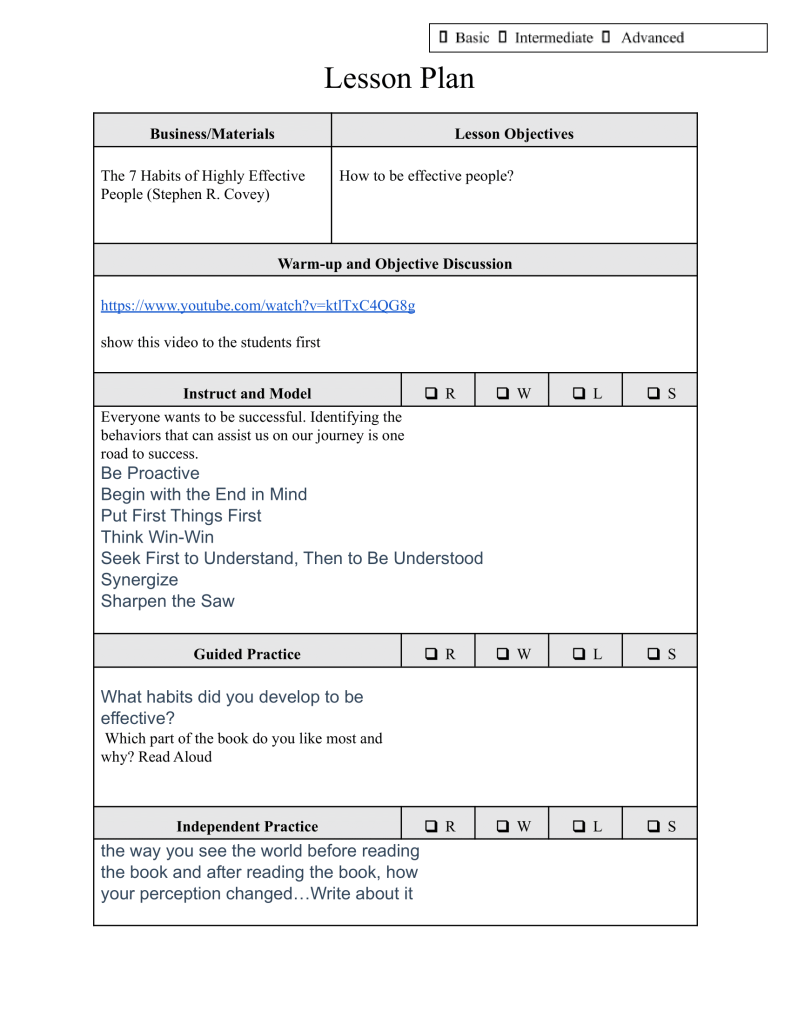
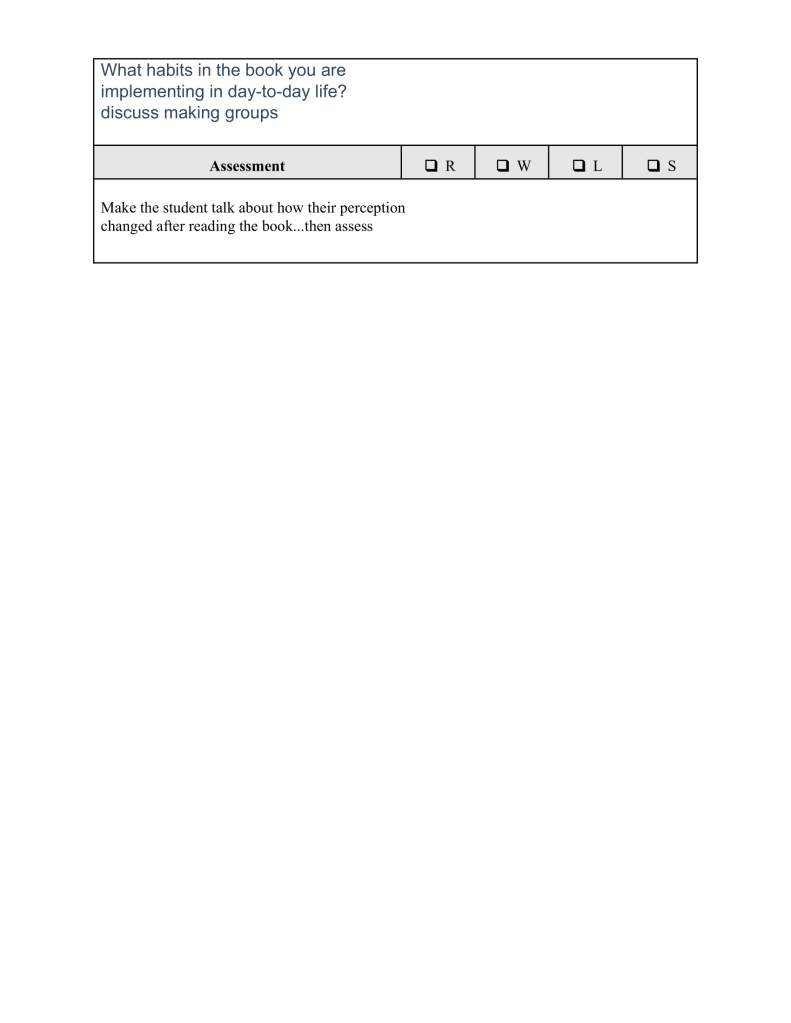
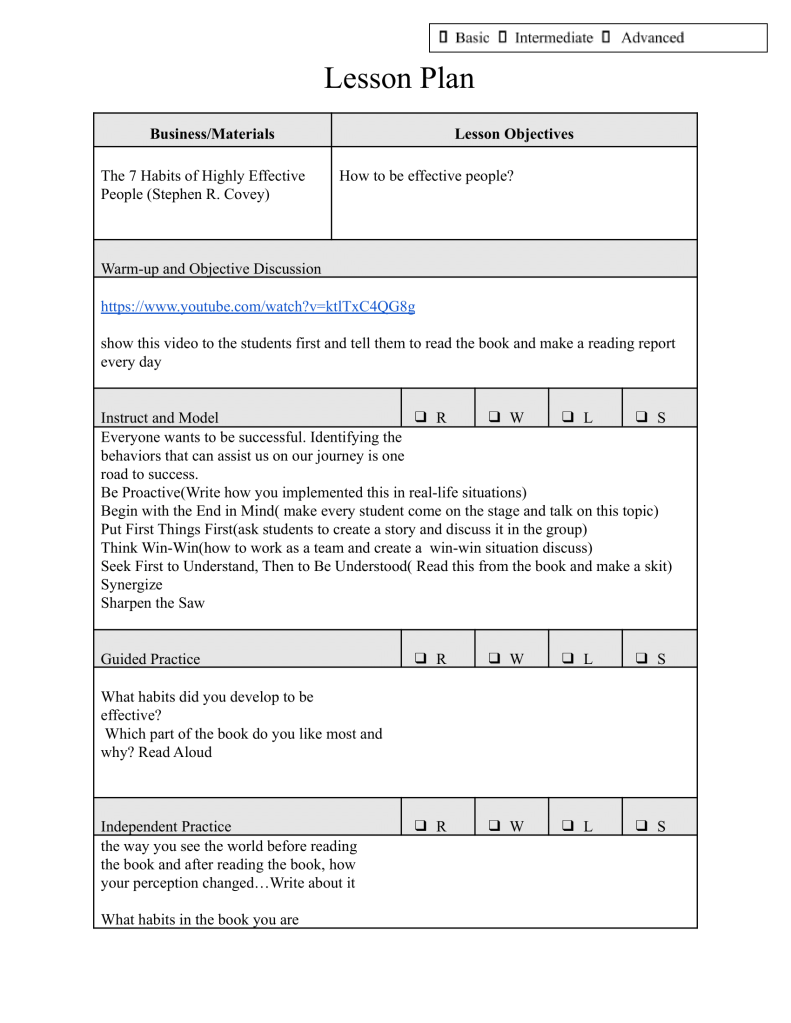
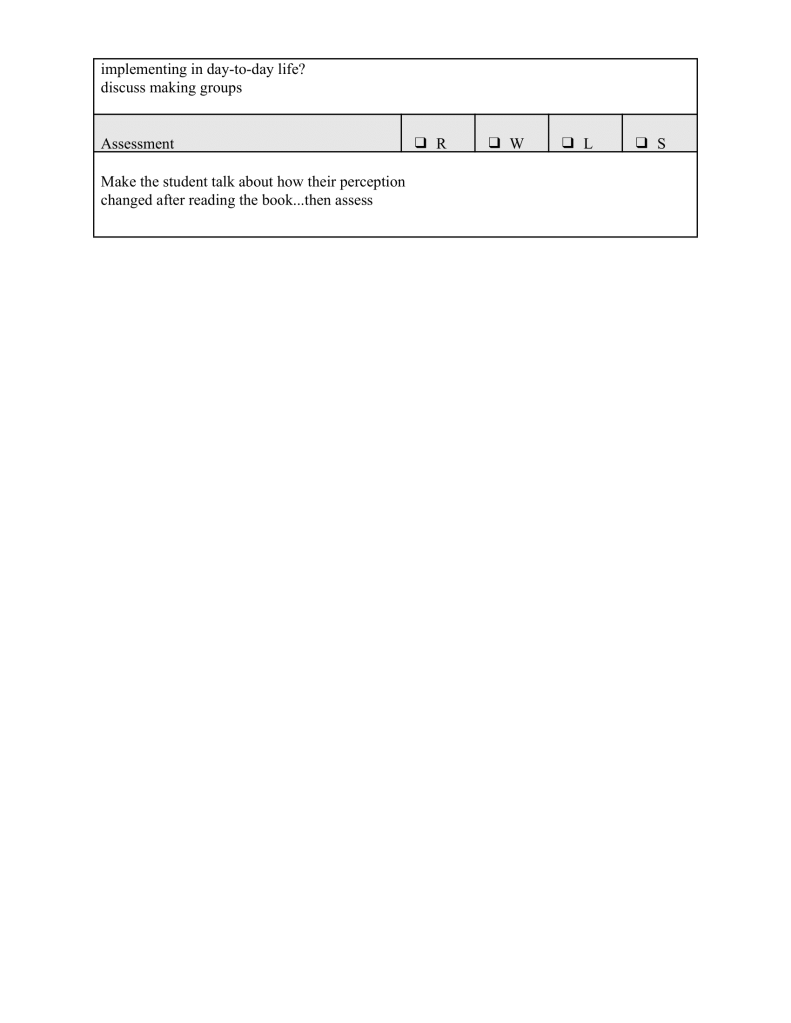
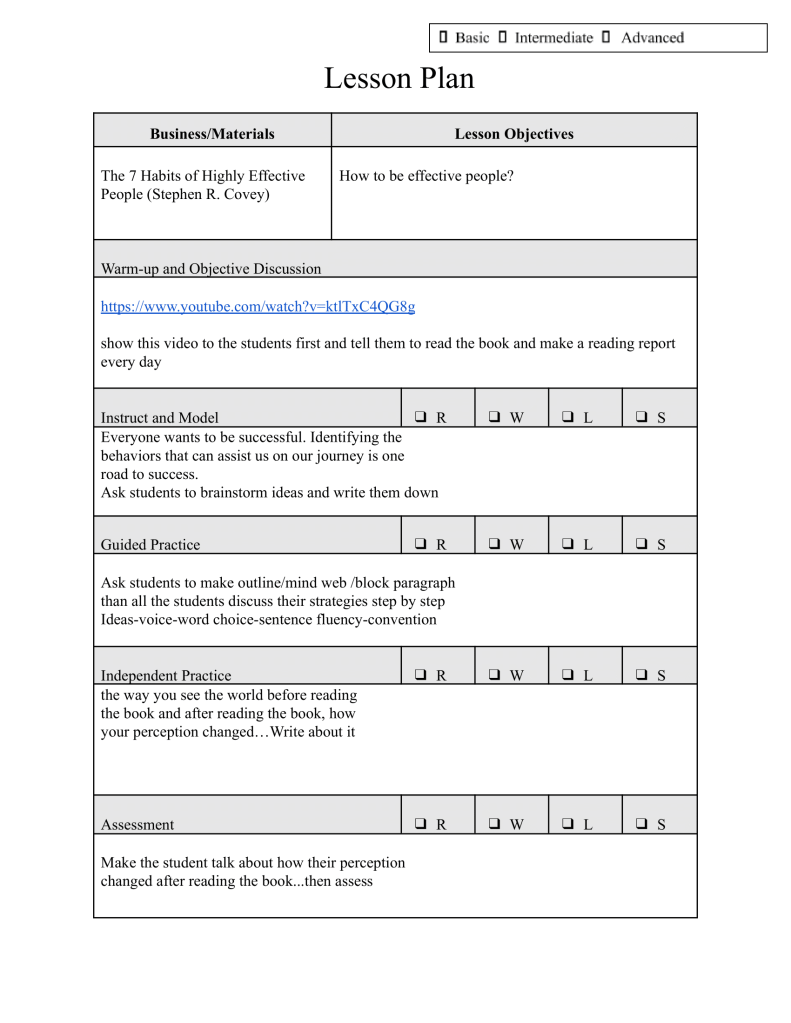
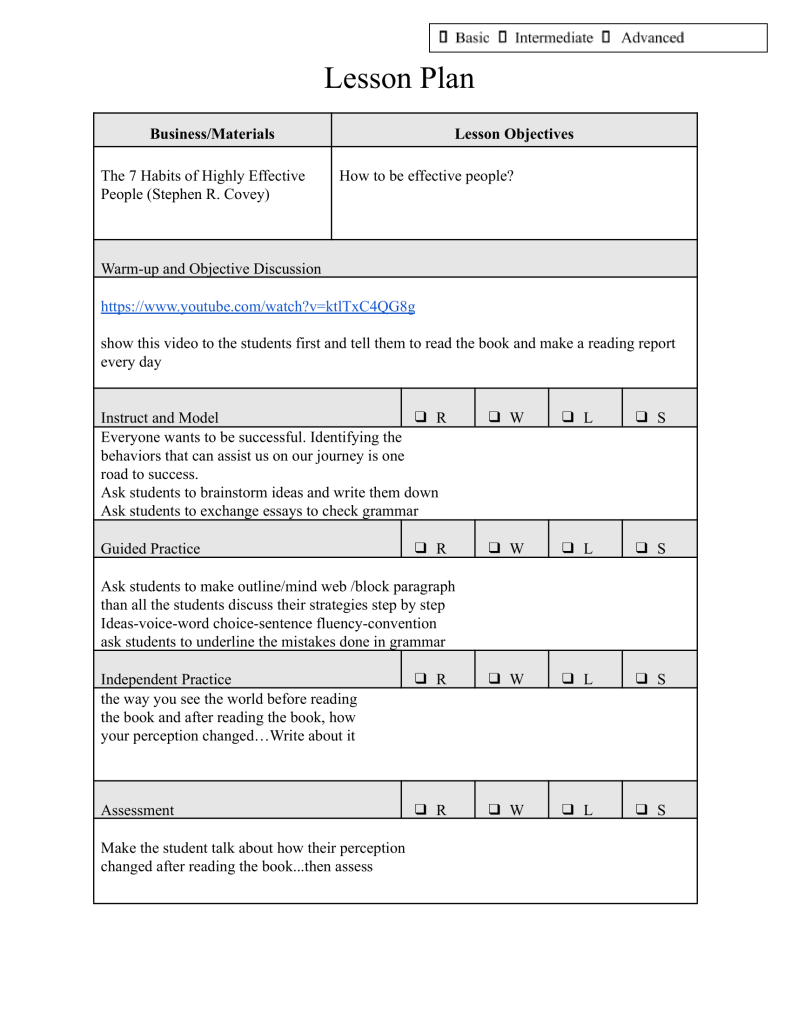
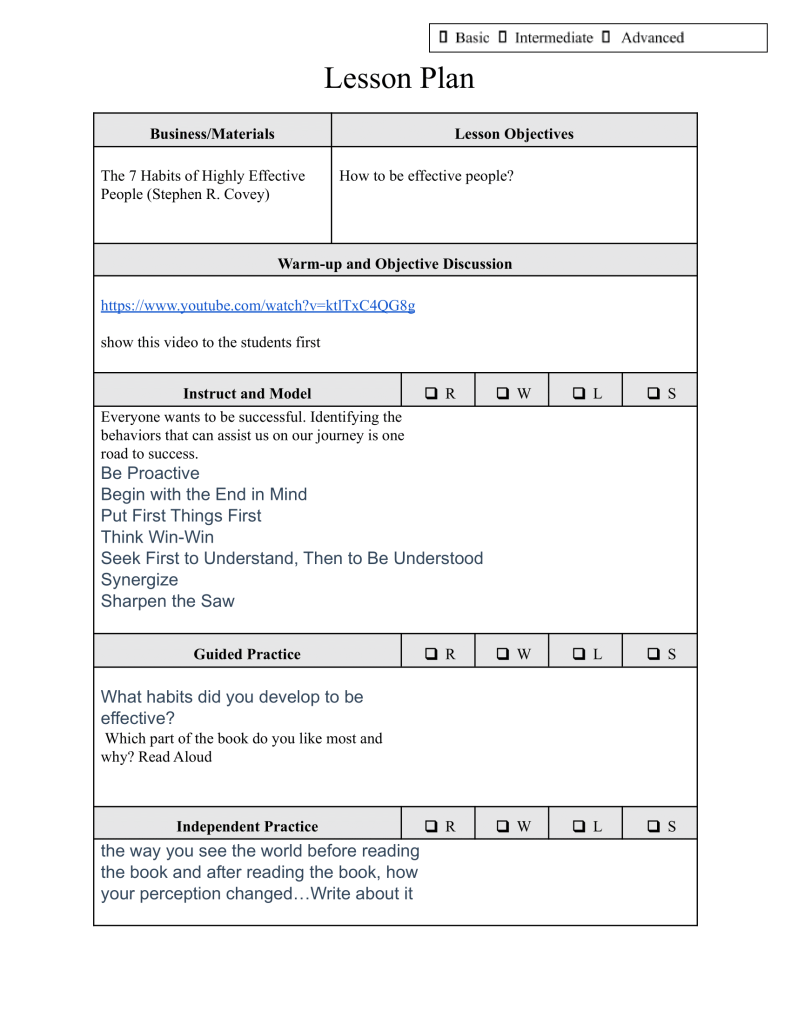
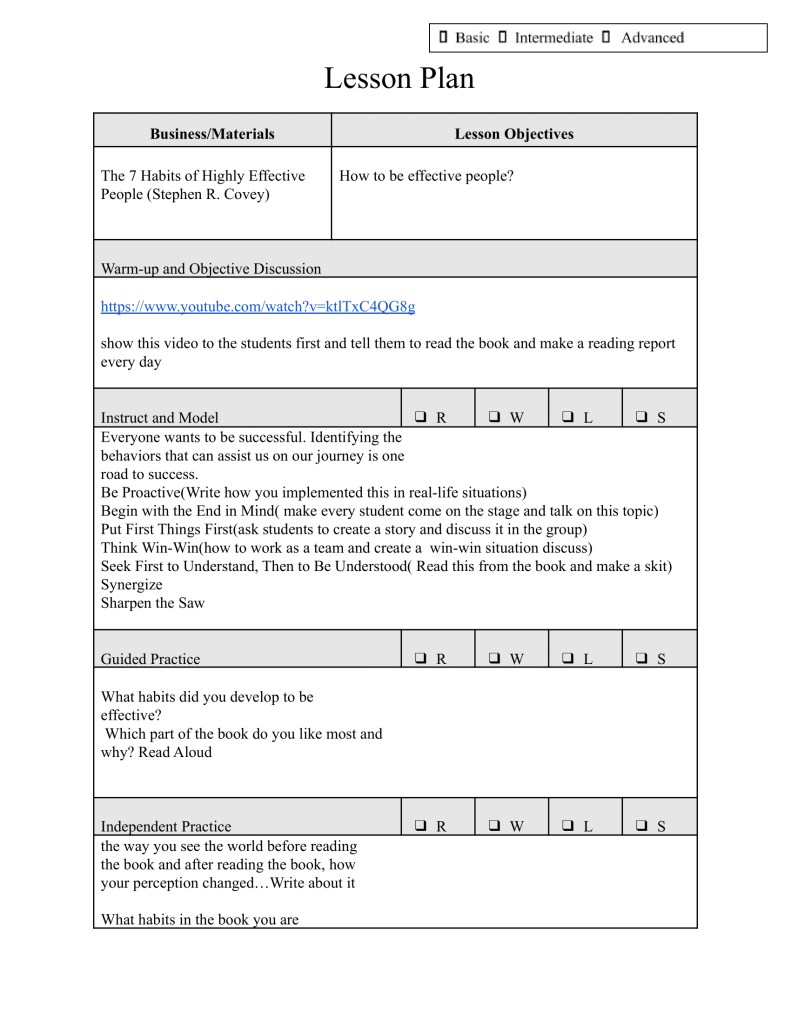
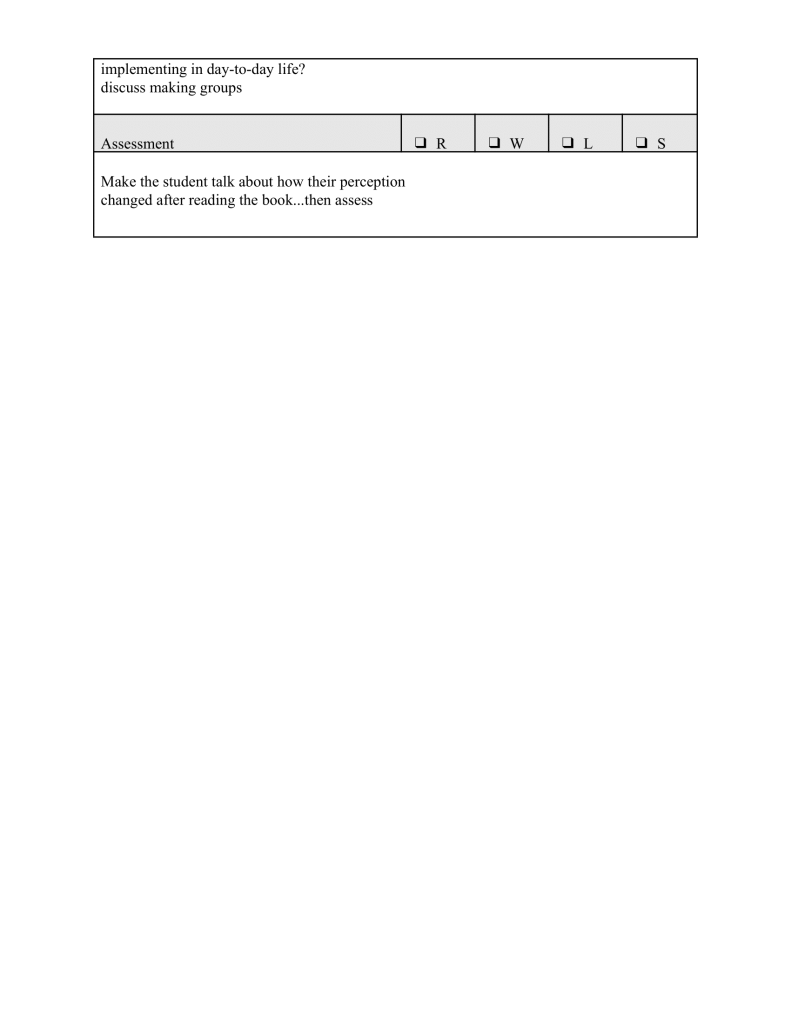
Teach English Now! Second Language Reading, Writing, and Grammar I have a student who is 15 years old he is good in the English language his English language is much better than other students of his age but it is not always about the English language proficiency but sometimes it’s about your attitude and confidence that matters. You will be surprised millions of self-improvement books are sold and people read them to improve their positive attitude and to think positively. This student lack self-confidence so I suggested some self-improvement books to him like. 1) Think and grow rich by Napoleon hill 2) Rich Dad, poor dad by Robert T 3) The power of positive thinking by Norman vincent 4) The 7 Habits of Highly effective people by Stephen R Covey my student selected The 7 habits of highly effective people
Peer review Teaching
The 7Habitss of highly effective people by Stephen R Covey This book has touched the lives of millions of people lives I checked all students reading logs…..and I am happy with you students so let us start… I know many people who spend more time just complaining …this is what reactive people do, they always focus on things they cannot control. Habit 1 be proactive Circle of Concern ….and circle of influence….circle of concern consists of all those things that are out of your control like weather, politics, what people think of your economy, others mistakes and other people opinions… a circle of influence consists of all things that you can control like your attitude what you read what skill you learn your enthusiasm your habits and your hobbies, etc. there are two ways to lead the life you can be reactive or proactive reactive people complain about out of control things proactive people realizes their decision determine their lives, not their conditions they take action to things they can control proactive people understands sometimes we may not have complete control over certain situations but we can control how we respond to a situations If a proactive person owns a business where he sells a product instead of focusing on the problem of the pandemic how the government has mishandled covid 19 he focuses on how he /she can improve the products so that my customer still purchases my products.. learns a new skill to the requirement of this pandemic,…. do you realize how much responsibility how much dedication how much hard work comes along with asking that question be proactive ask yourself are doing the things in your life which are aligned with what you want to be able to say do you want to say that you are a good son/ daughter if that’s the case how does coming home and helping your parents or arguing with parents affect that do you want to be remembered as a person who added value to society if that’s the case are you doing the things to be a good citizen Habit number 2 is, to begin with, the end in mind to determine where you want to go you need to have a map you need to determine your goals how to get there otherwise you will be wandering in life… questions like what do you want in life? Where do you want to be in 5-10-15 years from now you have to decide your destination first and then work towards it? If you are not clear about your destination find a purpose in life. What is the most important things to you most people will answer that it is well being or relationship or your family no one will say organizing papers or watching tik tok How many of the people do what they say and how do we allocate time for our success Habit 3 put first things first have a personal mission statement dream big don t let self-doubt get in the way don’t think I will never be good enough I am not smart enough you write the script to your life you are the programmer of your life write the program make your vision a reality think what is most important in your life now it is your education and your health your relationship right? It is not you check your Facebook account focus on the things that matter instead of other useless things questions your bad habits, addiction like watching. Questioning unhealthy food rushing to school in a hurry being unorganized then getting home eating unhealthy food then sleeping late because you are watching TV then waking up late again same circle… the best way to do list is categorize things into urgent not urgent important and not so important things I want all students to write how this book changed their life and thinking After writing the exchange your write-up with other students for peer review. I want every student to come up on stage and talk about what they understood about this book Thanks for watching
https://coursera.org/share/2689be458f561b6617256b5ab4651cdb
Peer review assignment submission
Which of the six events in Robert Gagne’s instructional design theory resonate the most with you? Why?
I by and large accept that every one of the six occasions is ideal to be utilized in an educational meeting. Acquiring consideration of the students will make them more centered around the subject, and as their advantage excites, they are more inquisitive to learn. Likewise, informing the students about the targets will assist them with being ready for the subjects and start the course of hope. Animating reviews of essential learning can also work with the most common method of learning as they use their earlier information to connect with the new subject. Besides, by introducing the boost material, the new subject is really being introduced to the students through substance, which is definitively coordinated, and here a show is required, as well. Giving directed learning is one more gainful occasion, and it assists the students with first noticing, and then performing, so they follow the theme along with the illustration. Then, to affirm that the new example is learned, instructors attempt to evoke execution. This can be an incredible chance to rehearse and to ensure that the language students see it completely and correctly.
Nonetheless, the last two events in Robert Gagne’s instructional design theory, offering “learner direction” and eliciting performance, are the ones that resonate with me the most, because this is when the learner will practice, first with the teacher’s supervision and then on his or her own.
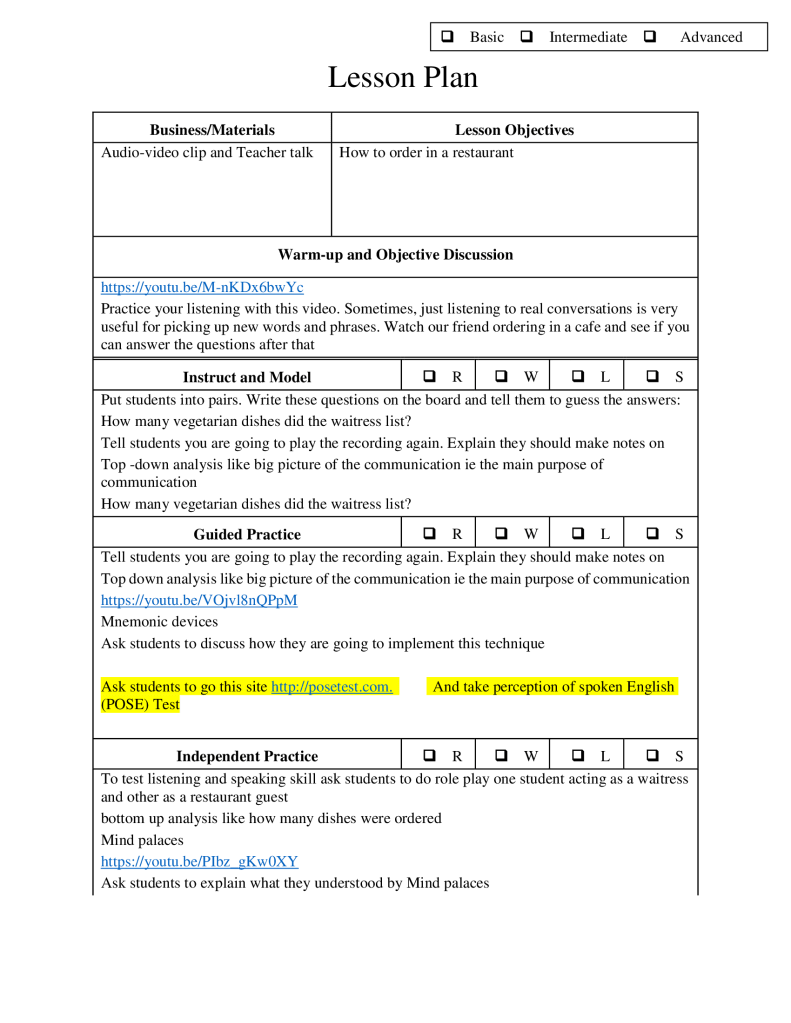
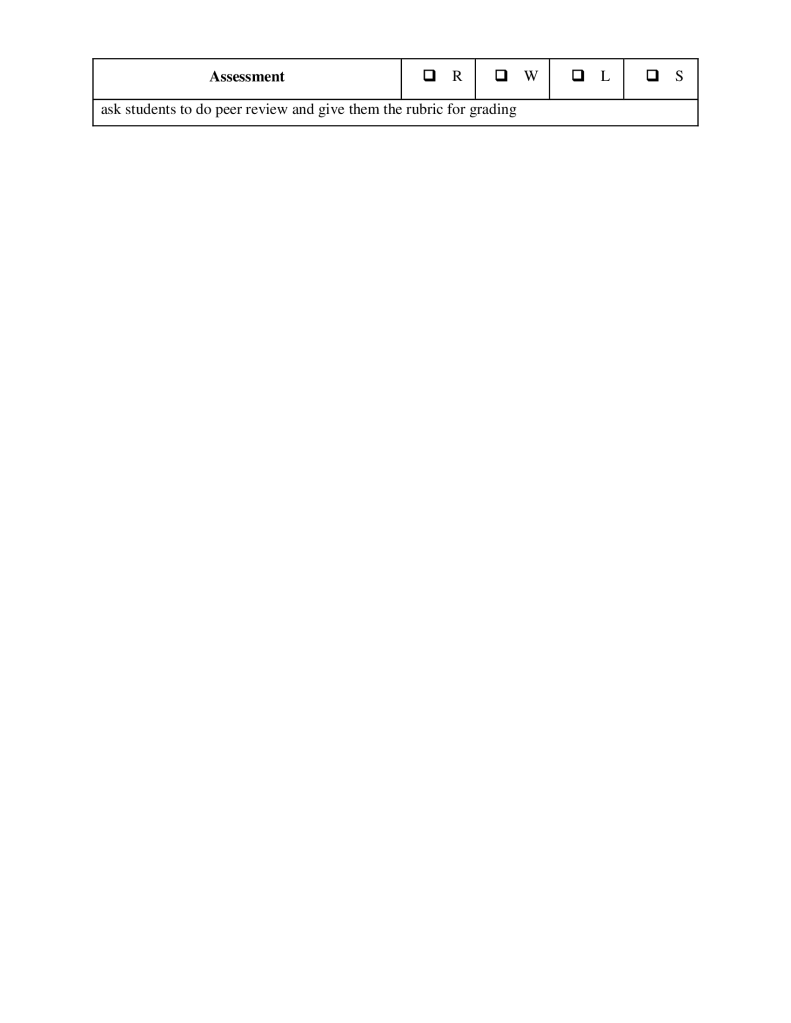
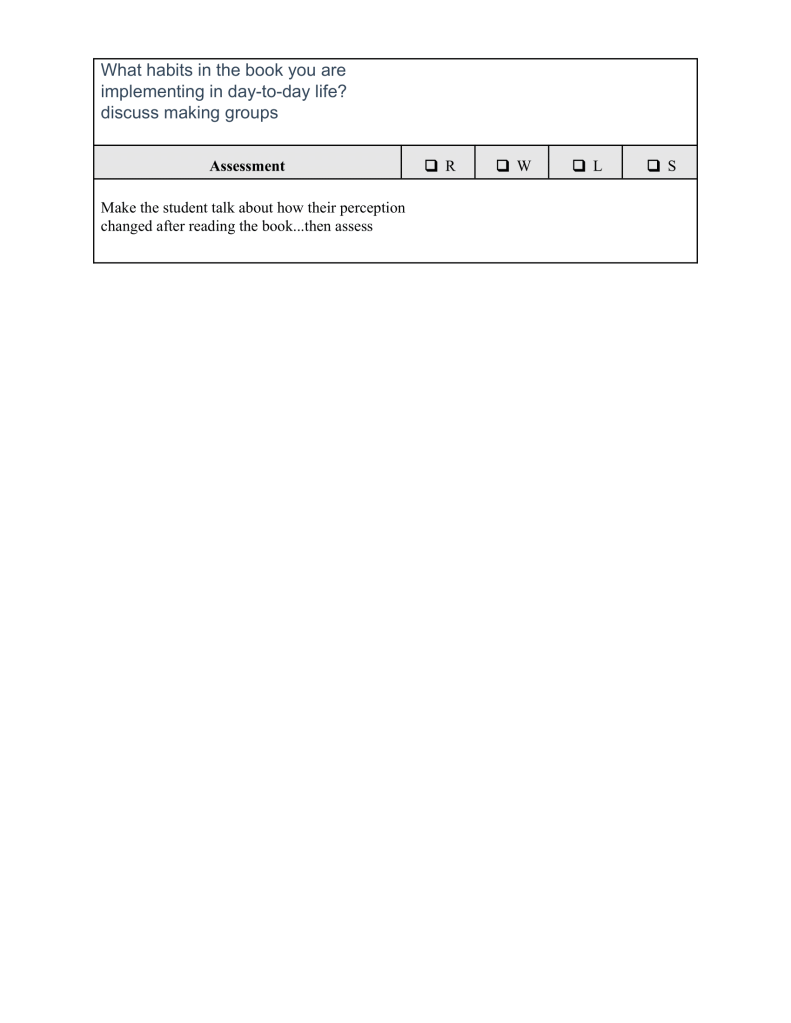
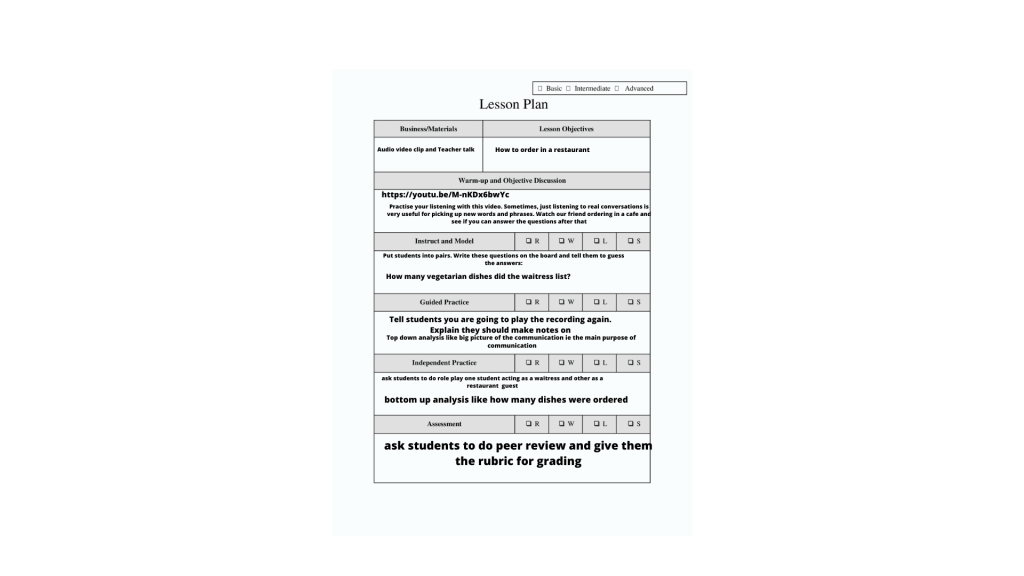
My Lesson Plans
My Teaching philosophy
A Teacher inspired me to be a teacher when I was young. Gradually my desire to be a teacher became stronger and stronger with the help of many wonderful teachers I was able to grasp the new techniques of teachings. It was difficult but with a lot of help. I acquired many new skills of teaching
We, Teachers, gain a sense of significance when we educate our students with a sense of purpose. It is critical to believe that our work is essential and that we are making a difference in our community. Fortunately, teaching is a field in which we CAN make a difference! Our love for learning and teaching positively impacts society. Although many people joke that instructors picked their profession because we have summers off, a poll of teachers found the following replies when asked why they became teachers: A good teacher can make a difference in the lives of students and make them reach their full potential. A teacher can have a good work/family balance. A teacher has many” aha “ moments in a teaching career. The primary focus of a teacher is to support the student in their learning process
My short-term goal as a teacher is to promote efficient thinking capabilities among the students utilizing the latest questioning strategies. My long-term goal is to groom my student in the most suitable way to face real-world challenges. The Teachers goal is to create circumstances in every class where the students are communicating 80% of the time and the instructor is communicating 20% of the time
A teacher inspired me to be a teacher when I was young. Gradually, my desire to be a teacher became stronger and stronger. With the help of many wonderful teachers, I was able to grasp the new techniques of teaching. It was difficult, but with a lot of help. I acquired many new skills in teaching.
We, as teachers, gain a sense of significance when we educate our students with a sense of purpose. It is essential to believe that our work is essential and that we are making a difference in our community. Fortunately, teaching is a field in which we CAN make a difference! Our love for learning and teaching positively impacts society. Although many people joke that instructors picked their profession because we have summers off, a poll of teachers found the following replies when asked why they became teachers: A good teacher can make a difference in the lives of students and make them reach their full potential. A teacher can have a good work/family balance. A teacher has many ” aha “ moments in a teaching career. The primary focus of a teacher is to support the students in their learning process.
My short-term goal as a teacher is to promote efficient thinking capabilities among the students by utilizing the latest questioning strategies. My long-term goal is to groom my students in the most suitable way to face real-world challenges. The teachers’ goal is to create circumstances in every class where the students are communicating 80% of the time and the instructor is communicating 20% of the time
 Home Home sweet sweet home