The Ultimate Weekend Escape to Herzegovina: Where History Meets Heart-Stopping Beauty

Meta Description:
Plan the perfect weekend escape to Herzegovina — from historic Mostar and hidden gems like Blagaj and Kravice Waterfalls, to smart travel tips on transport, saving money, and weather-smart timing. Uncover insider advice, practical logistics, and fun anecdotes for confident travel.

🗺️ Table of Contents

  1. Introduction
  2. Why Herzegovina Should Be on Your Bucket List
  3. Getting There
    • Getting There by Ferry (with Direct Ferries link)
    • By Air
    • By Bus, Train, & Car
  4. Where to Stay
  5. Top Things to Do in Herzegovina
    • Mostar & Stari Most
    • Hidden Gems: Blagaj, Kravice, Počitelj
    • Neum & the Coast
  6. Local Transport Tips (How to Save Time & Money)
  7. Practical Travel Tips
  8. Food & Drink to Try
  9. Words & Phrases You Might Need
  10. FAQs
  11. Final Tips & CTAs

If “weekend getaway” were a sport, Herzegovina would be the undefeated champion. Part ancient wonder, part natural paradise, and part affordable destination that punches well above its scenic weight, this patch of Bosnia and Herzegovina blends culture, adventure, and lazy café afternoons into one irresistible mini escape.

Let’s be honest: planning a weekend trip is often about choosing what to skip. Do you want beaches or mountains? Riveting history or untamed nature? Well, friends, in Herzegovina, you don’t have to choose. This soul-stirring, heart-shaped corner of Europe serves it all on a single platter, with a side of strong coffee and a history so rich you can taste it in the air.

As someone who once spent a frantic Sunday trying to escape an overcrowded “hidden gem” elsewhere, I can tell you: Herzegovina is the real deal. It’s a place where you can hear the Muslim call to prayer echoing over cobblestones one minute and watch a brave soul leap from a 16th-century bridge into an emerald river the next. It’s Europe’s open secret, offering the drama of Croatia, the raw beauty of Montenegro, and the profound soul of the Balkans, all without the crushing crowds or crushing prices.

Ready for a weekend that feels like a week-long adventure? Let’s dive in.

Why Herzegovina Should Be on Your Bucket List

Mostar’s Stari Most isn’t just a bridge — it’s an icon. The historic Ottoman-era bridge once destroyed by war and beautifully rebuilt now symbolizes resilience, unity, and adrenaline-packed dives into the cold Neretva below — where locals and visitors cheer, tourist cameras whirr, and time slows in the best possible way.

But there’s more here: jaw-dropping waterfalls, cliffside monasteries, serene river springs, gold-hued vineyards, and one of Europe’s less predictable coastlines — the tiny seaside town of Neum, Bosnia’s only access to the Adriatic Sea

Getting There

⬆️ Getting There by Ferry

While Herzegovina is landlocked, the nearby Dalmatian Coast of Croatia is your perfect maritime gateway. The closest major port is Dubrovnik. From there, you have fantastic options:

While Herzegovina itself doesn’t host a major ferry port, you can arrive via scenic Adriatic ferry routes from Croatia or beyond and then continue overland — perfect for travelers who love sea views as part of the adventure.
👉 Check routes, timetables, and book your ferry with Direct Ferries here.
Ferries along the Adriatic connect ports like Split or Dubrovnik with other coastal hubs, from which buses or cars can complete your journey to Herzegovina. Travel By Ticket

Quick Route Idea: Ferry to Split → Bus or Train to Mostar → Explore Herzegovina.
(Skip the borders with a car — fewer delays and more countryside views!)


🛫 By Air

Your easiest gateways are:

  • Mostar Airport (OMO) — small, convenient, limited routes.
  • Sarajevo Airport (SJJ) — more frequent flights, then bus/train to Herzegovina.
  • Dubrovnik Airport (DBV) (Croatia) — great low-cost options, then bus or car through epic mountain and coastal roads.

✈️ Flight Delayed or Canceled?
You might be entitled to up to $650 compensation. Check your flight with AirHelp — they do the heavy lifting for you (and only get paid if you win):


🚌 By Bus, Train, or Car

Buses criss-cross the region — from Split, Dubrovnik, Sarajevo, and Zagreb — stopping in Mostar’s central station, about a short stroll from the Old Town.

The train route between Sarajevo and Mostar? It’s not just transportation — it’s one of the most scenic journeys in the Balkans. Reddit

By car: Herzegovina is tailor-made for road tripping. Clear roads (especially outside August) and beautiful routes save time, fuel, and — honestly — are half the fun.

Where to Stay

Whether boutique guesthouses in Mostar’s Old Town or sea-view apartments near Neum, there’s an option for every budget. Book early in high season, and consider staying near public transport stops to save on taxis.

My Hercegovina Masterplan: A 3-Day Itinerary for the Perfect Escape

You’ve got 72 hours. Here’s how to spend them wisely, balancing iconic sights with local secrets and leaving just enough time to sit and savor the moment.

  • Day 1: The Soul of Mostar. Arrive and drop your bags. Your first mission is to get lost in the Old Town (Stari Grad). Wander the cobbled alleys, haggle (politely!) for a copper souvenir, and let the scent of grilled Ćevapi guide you to lunch. As the afternoon sun begins to soften, find your spot to witness the spectacle of the Stari Most bridge divers. The iconic bridge (which is a UNESCO World Heritage Site) was originally built in the 16th century and has been beautifully reconstructed. These professional divers aren’t just showing off; it’s a centuries-old tradition. Be warned: they work for tips, so have a few coins ready. For dinner, venture away from the main tourist drag to find a family-run restaurant for a massive, affordable platter of Bosnian food.
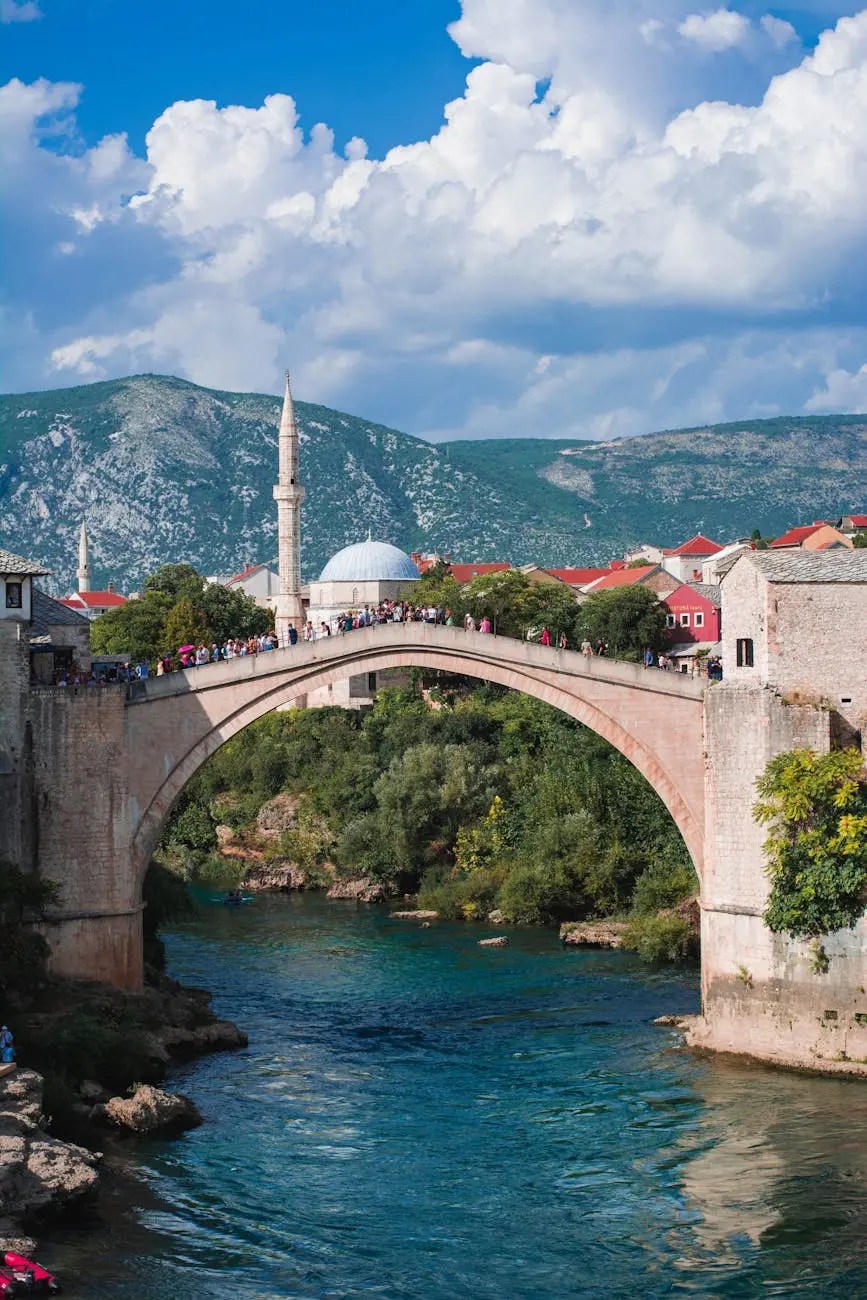
The historic Stari Most bridge in Mostar, Bosnia and Herzegovina, spans the Neretva River with a backdrop of mountains and traditional architecture under a bright blue sky.
The iconic Stari Most bridge in Mostar, a symbol of resilience and tradition, spans the Neretva River against a stunning backdrop of mountains and blue skies.

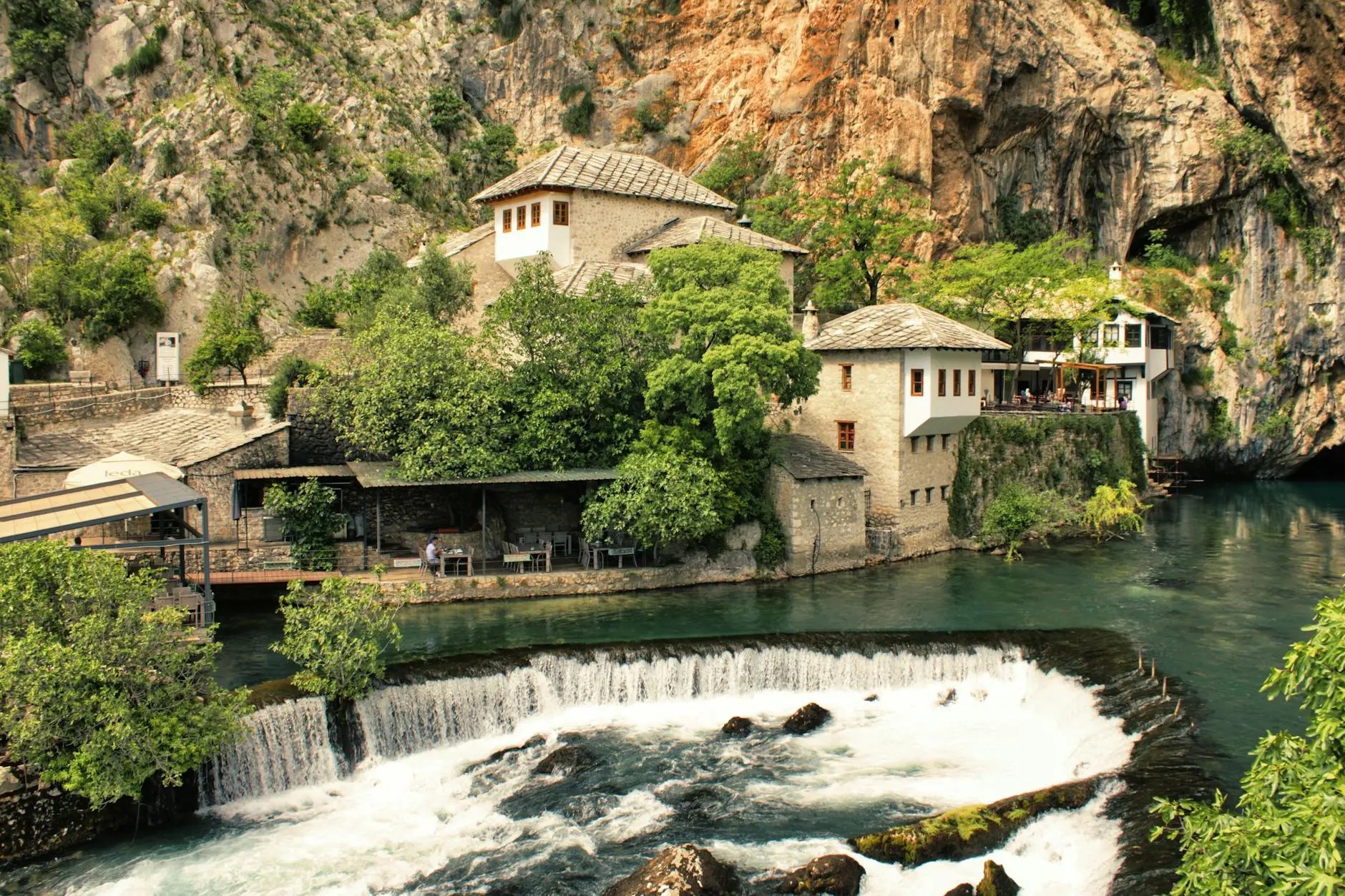
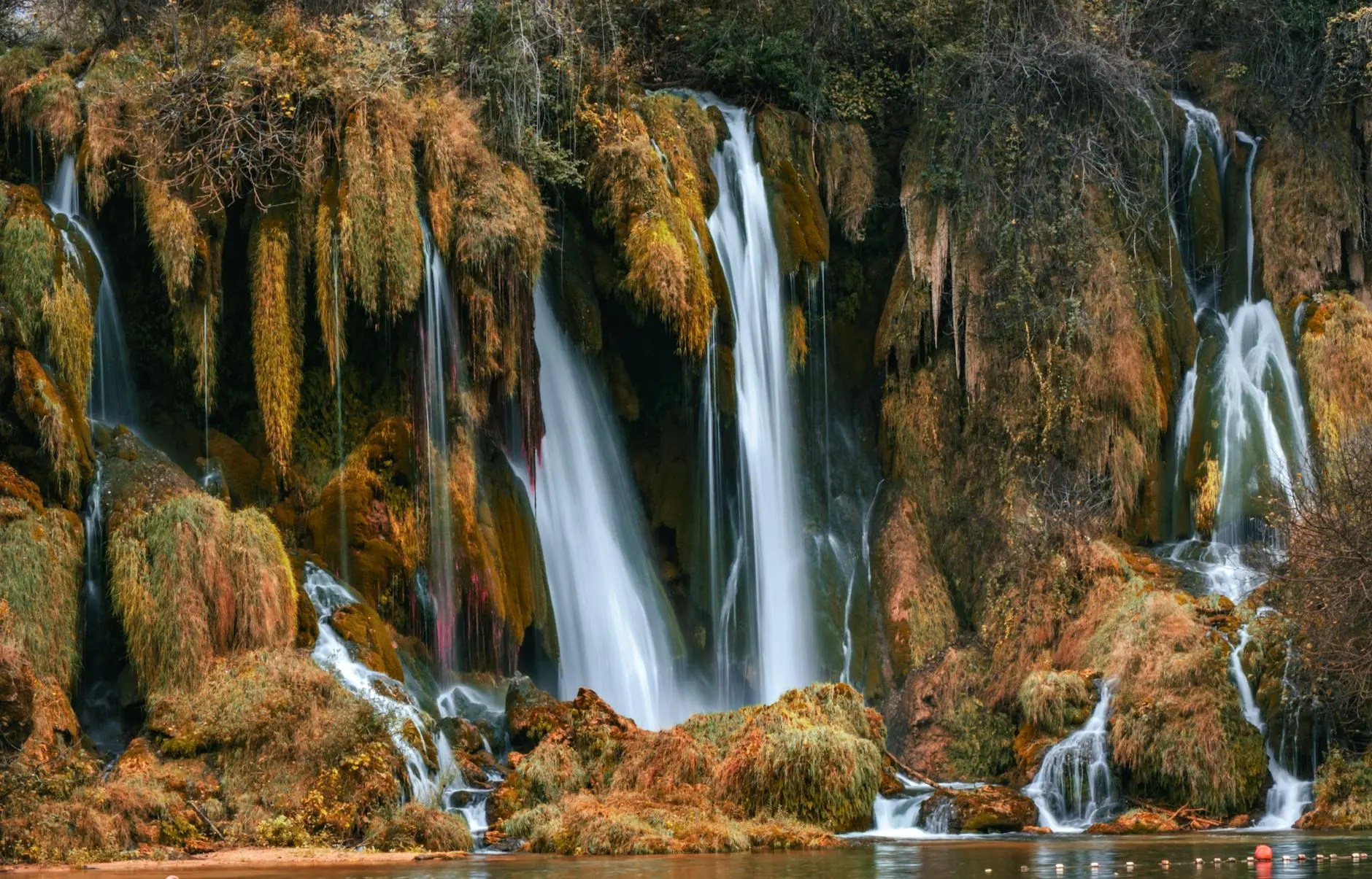
Day 2: Gorges & Mystical Springs. Rent a car for the day (trust me, it’s worth it for the freedom). Your first stop is Blagaj, just a 20-minute drive from Mostar. The sight of the Tekija (Dervish monastery) clinging to a 200-meter cliff face beside the impossibly blue Buna River spring will stop you in your tracks. Have a coffee by the water and soak in the serenity. In the afternoon, head to the Kravice Waterfalls. Picture a 25-meter crescent of cascading water tumbling into a bright emerald swimming hole. Pack a swimsuit—the brave can take a bracing dip, and there’s even a rope swing

Blagaj, (Expedia)Blagaj,(Get your guide)
Kravice Waterfalls.(Expedia)Kravice Waterfalls.(Get your guide)
A scenic view of the Blagaj Tekija, a historic Dervish monastery nestled against a rocky cliff, with green trees and blue waters flowing beneath it.
The picturesque Blagaj Tekija, a historic Dervish monastery nestled against the cliffside by the serene Buna River in Herzegovina. The Blagaj Tekke (Tekija), a 16th-century Dervish monastery clinging to a cliff beside the Buna River spring. Founded around 1520, this spiritual retreat combines Ottoman and Mediterranean architectural styles in one of Herzegovina’s most serene settings.
Cascading waterfalls surrounded by lush greenery and mossy rocks in a serene natural setting.
Breathtaking view of the cascading Kravice Waterfalls, a hidden gem in Herzegovina. Kravica Waterfall (also called Kravice), a stunning natural amphitheater of tufa cascades on the Trebižat River. Located near Ljubuški and about a 40-minute drive south of Mostar, this is one of Herzegovina’s most spectacular swimming and picnic spots.

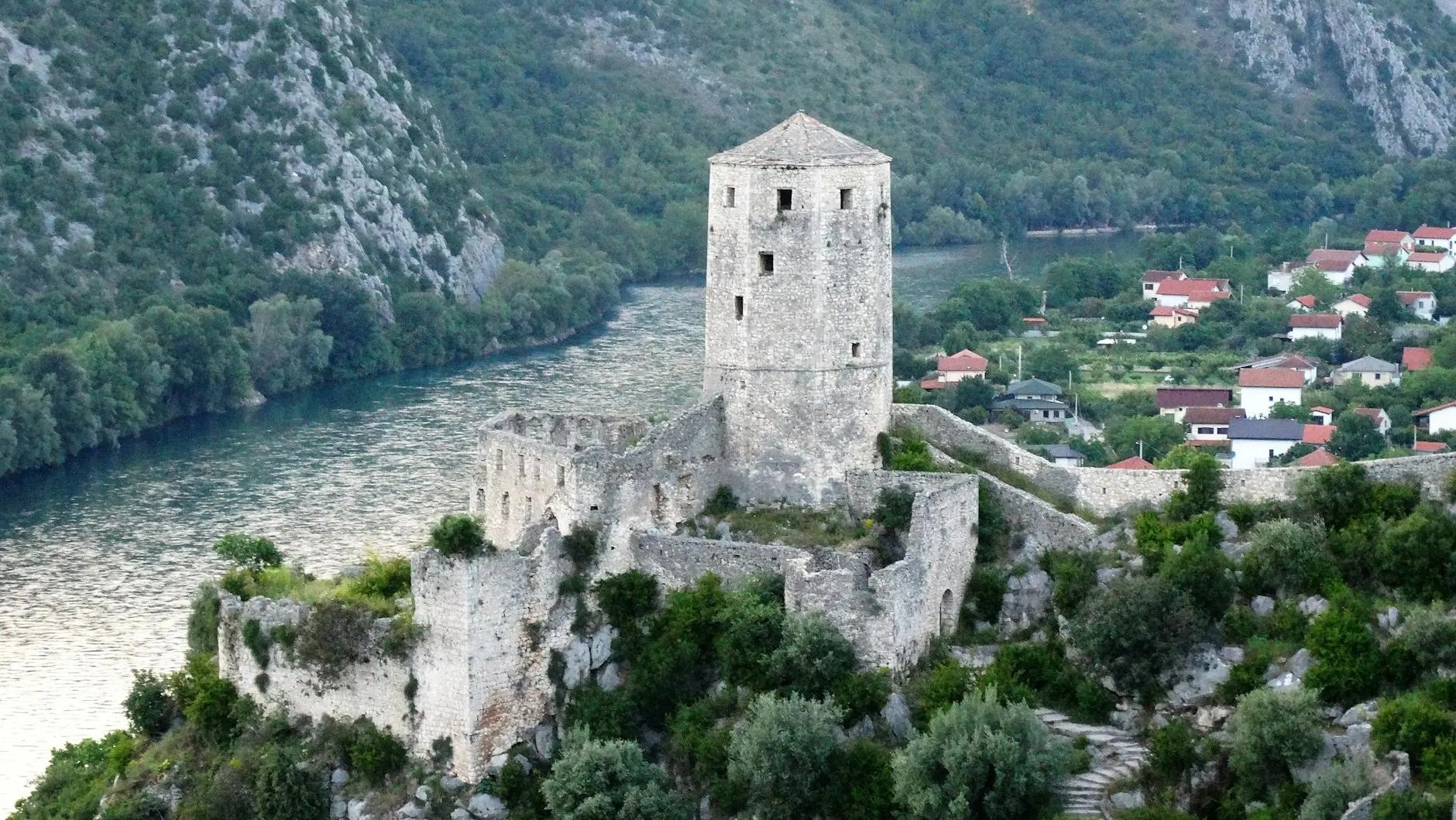
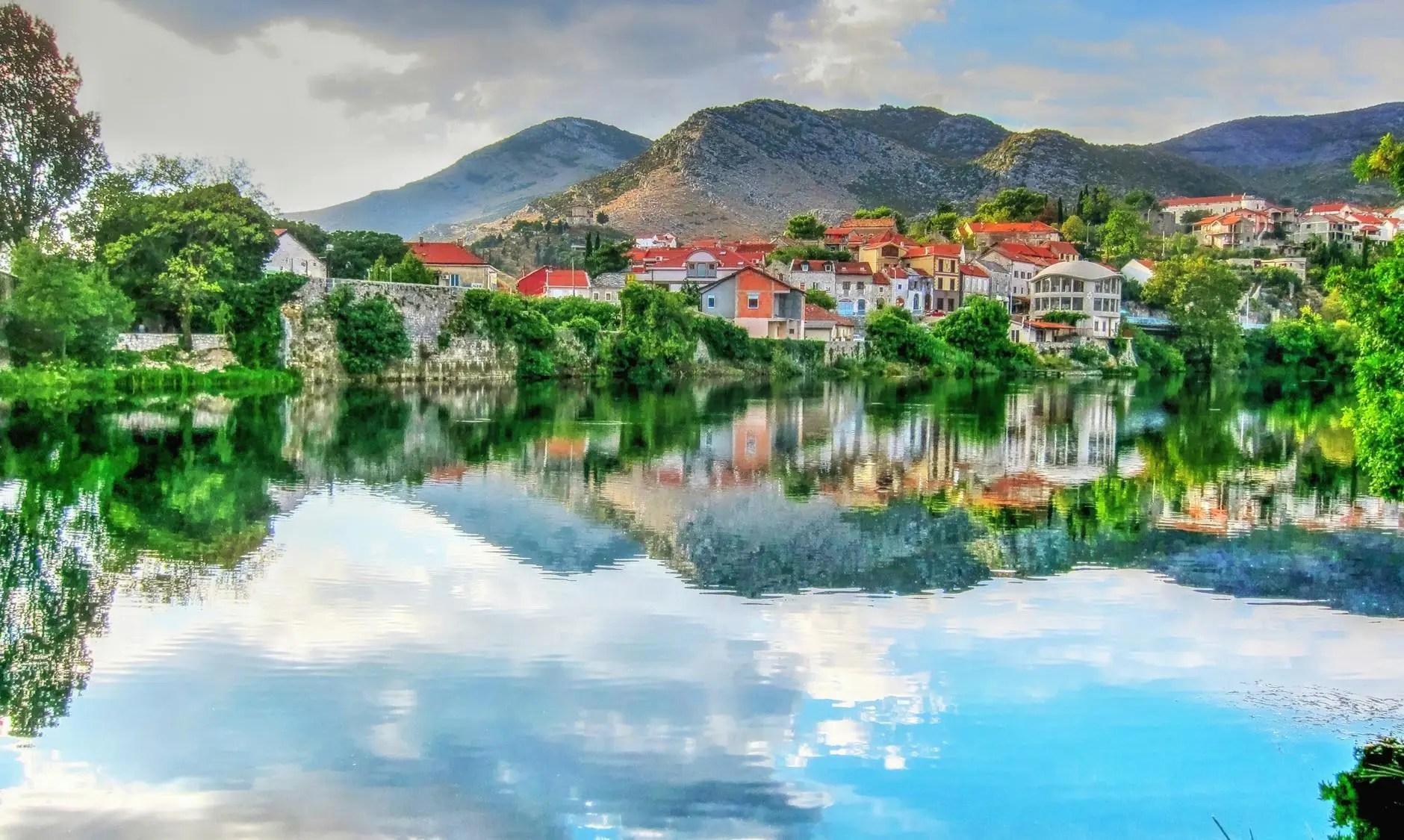
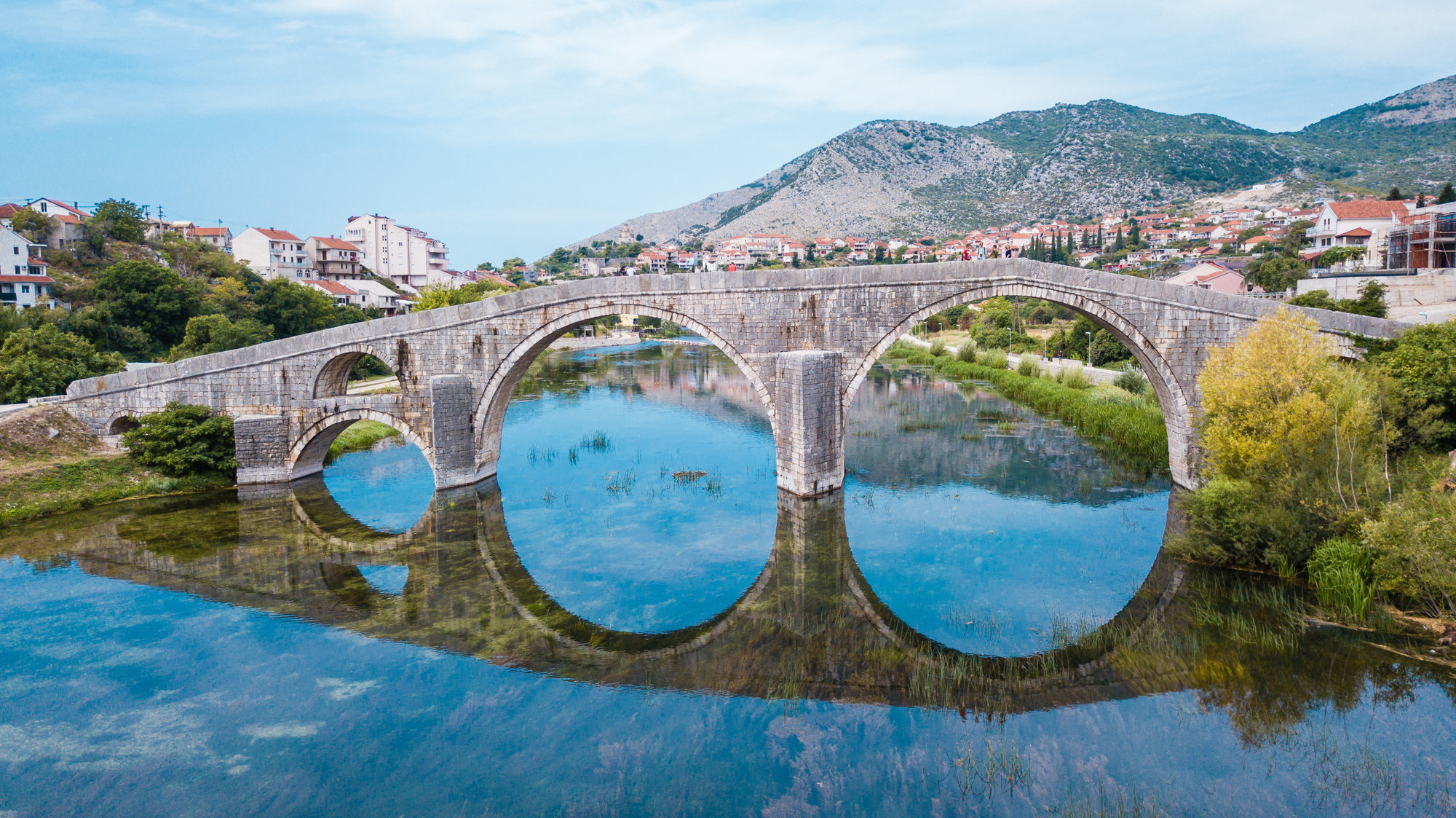
Day 3: History & Hidden Gems. Before you leave Mostar, wake up at sunrise. You’ll have the Stari Most and the silent, lamp-lit streets almost entirely to yourself—it’s pure magic. Then, set your GPS for Počitelj. This fortified Ottoman village is like a living museum, tumbling down a hillside towards the river. Climb to the top of the stone fort for a panoramic view you won’t forget. On your journey back towards the coast or airport, consider a final, peaceful stop at Trebinje. This elegant little town, just a stone’s throw from Dubrovnik, is famed for its wine and the beautiful Arslanagić Bridge that was moved, stone by stone, to its current location

Počitelj (Expedia)Počitelj (Get your guide)

Aerial view of a historic fortress on a rocky hill overlooking a river, with lush greenery and houses in the background.
A stunning view of the historic Počitelj village, featuring its iconic stone tower and surrounding greenery by the Neretva River. “The historic stone Kula Fort tower rising above the steep, medieval village of Počitelj in Bosnia and Herzegovina, with the Neretva River valley in the background.”
"A scenic aerial view of Trebinje, the southernmost city in Bosnia and Herzegovina, nestled along the calm, reflective waters of the Trebišnjica River in a green valley."
Scenic view of a picturesque town in Herzegovina, reflecting on a calm river with mountains in the background. Trebinje, the charming ‘City of the Sun’ in southern Herzegovina, beautifully positioned on the banks of the crystal-clear Trebišnjica River. Known for its relaxed atmosphere, wine, and proximity to Dubrovnik.
Aerial view of a historic stone bridge with arches reflected in a calm river, surrounded by greenery and hillside homes.
The stunning stone bridge reflecting in the serene waters of Herzegovina, showcasing the region’s rich architectural heritage.

Hidden Gems Beyond the Postcard

While the Stari Most will (rightfully) steal your heart, here are a few spots where you can escape the day-trip crowds:

  • The “Practice” Bridge: Before you even get to the majestic Stari Most, look for Kriva Ćuprija (the Crooked Bridge) in Mostar’s Old Town. This petite, arched Ottoman bridge over a small stream is thought to have been a “test model” for its larger, more famous sibling. It’s a quiet, photogenic spot.
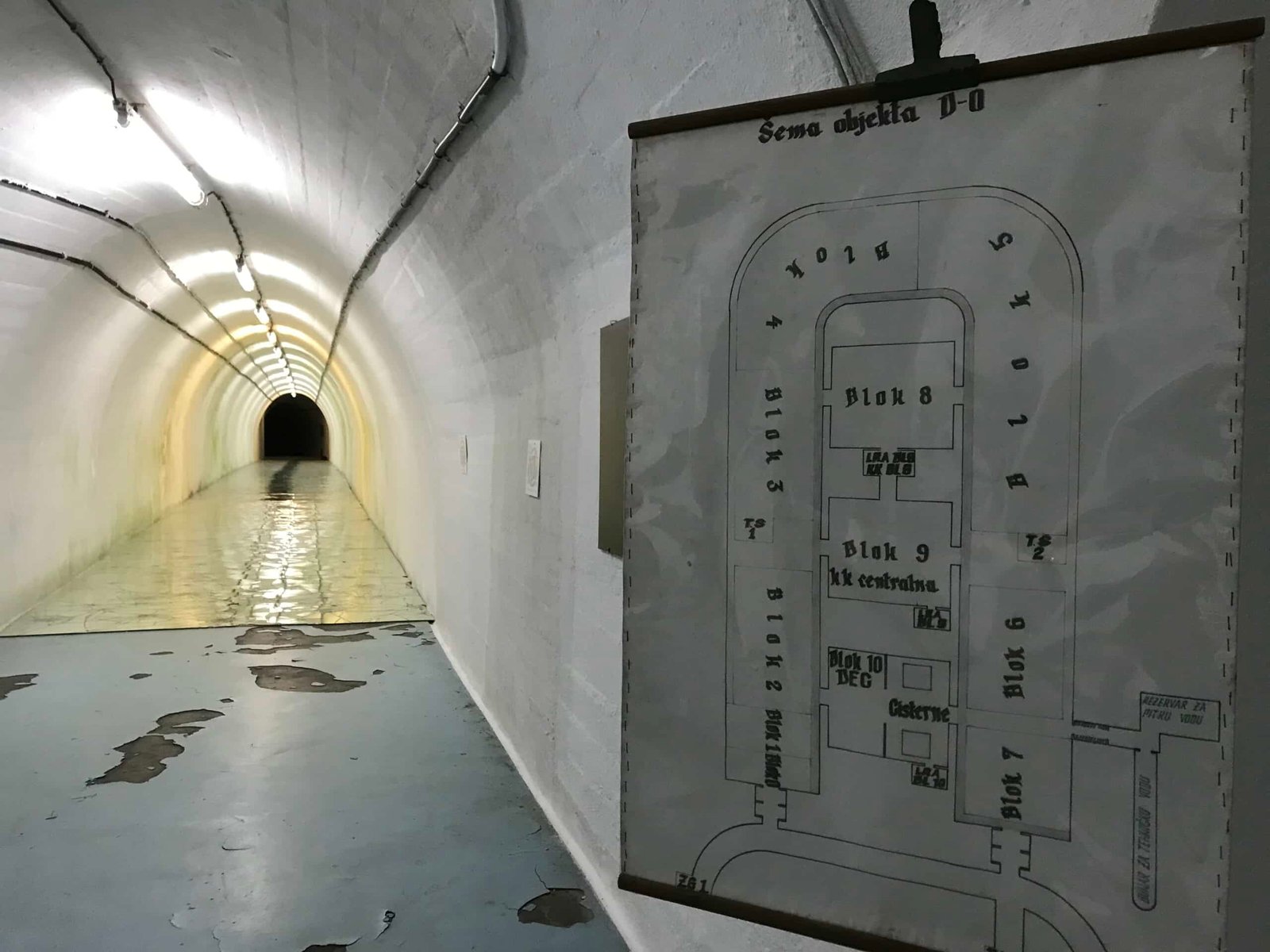
  • Konjic & its Secret Bunker: The town of Konjic, on the road from Sarajevo to Mostar, is home to another stunning Ottoman bridge. But its real claim to fame is hidden underneath a nondescript house: Tito’s Atomic Bunker. Built in total secrecy during the Cold War, this massive underground complex is now a unique contemporary art space. Tours must be booked in advance, and it’s a fascinating dive into 20th-century history.
Tito’s Atomic Bunker (Expedia)Tito’s Atomic Bunker (Get your guide)
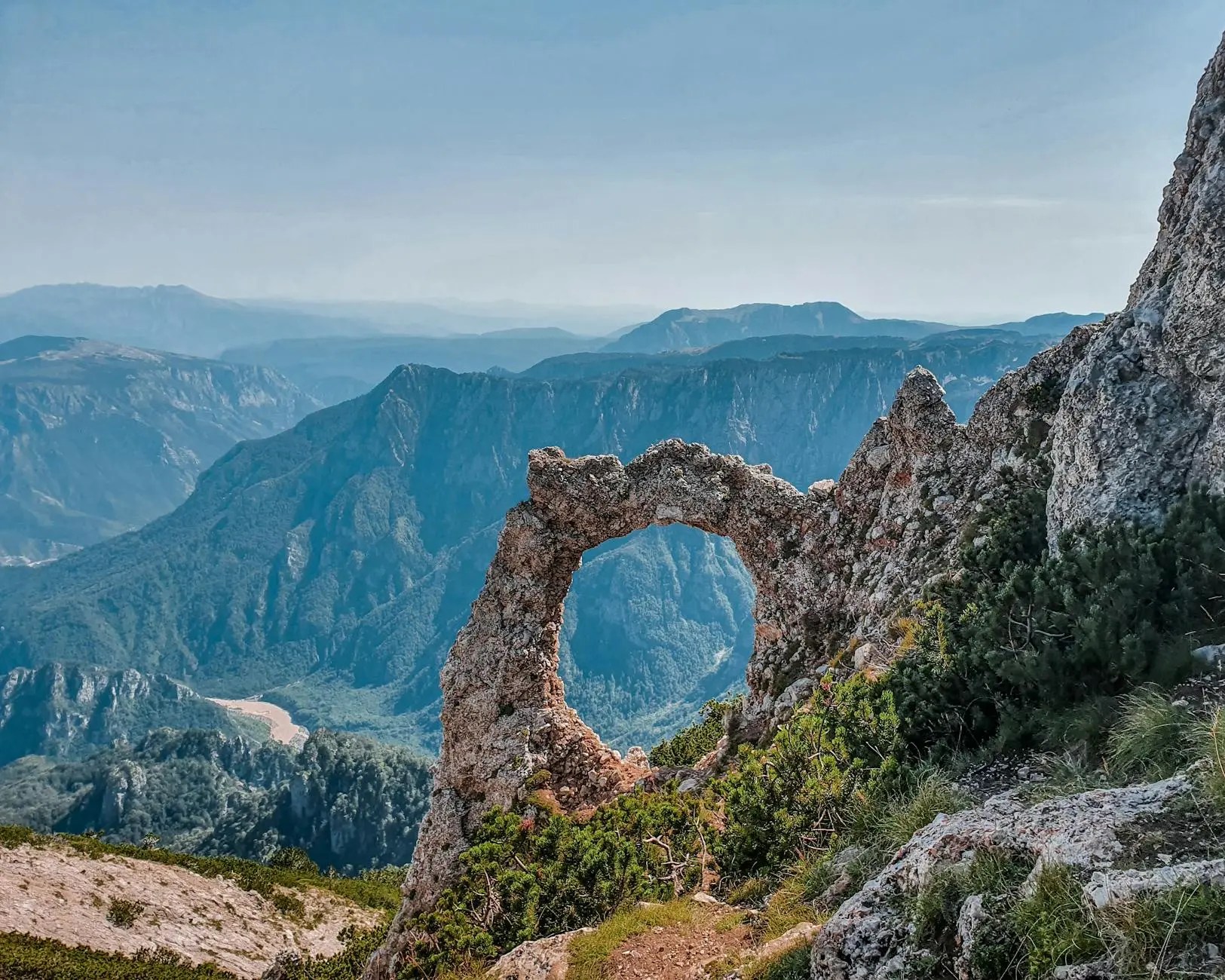
  • Blidinje Nature Park: If your soul craves mountains, detour to this stunning park northwest of Mostar. It’s home to the largest glacial lake in Bosnia, wild horses, and some of the most pristine hiking trails in the Dinaric Alps. It feels a world away from everything.
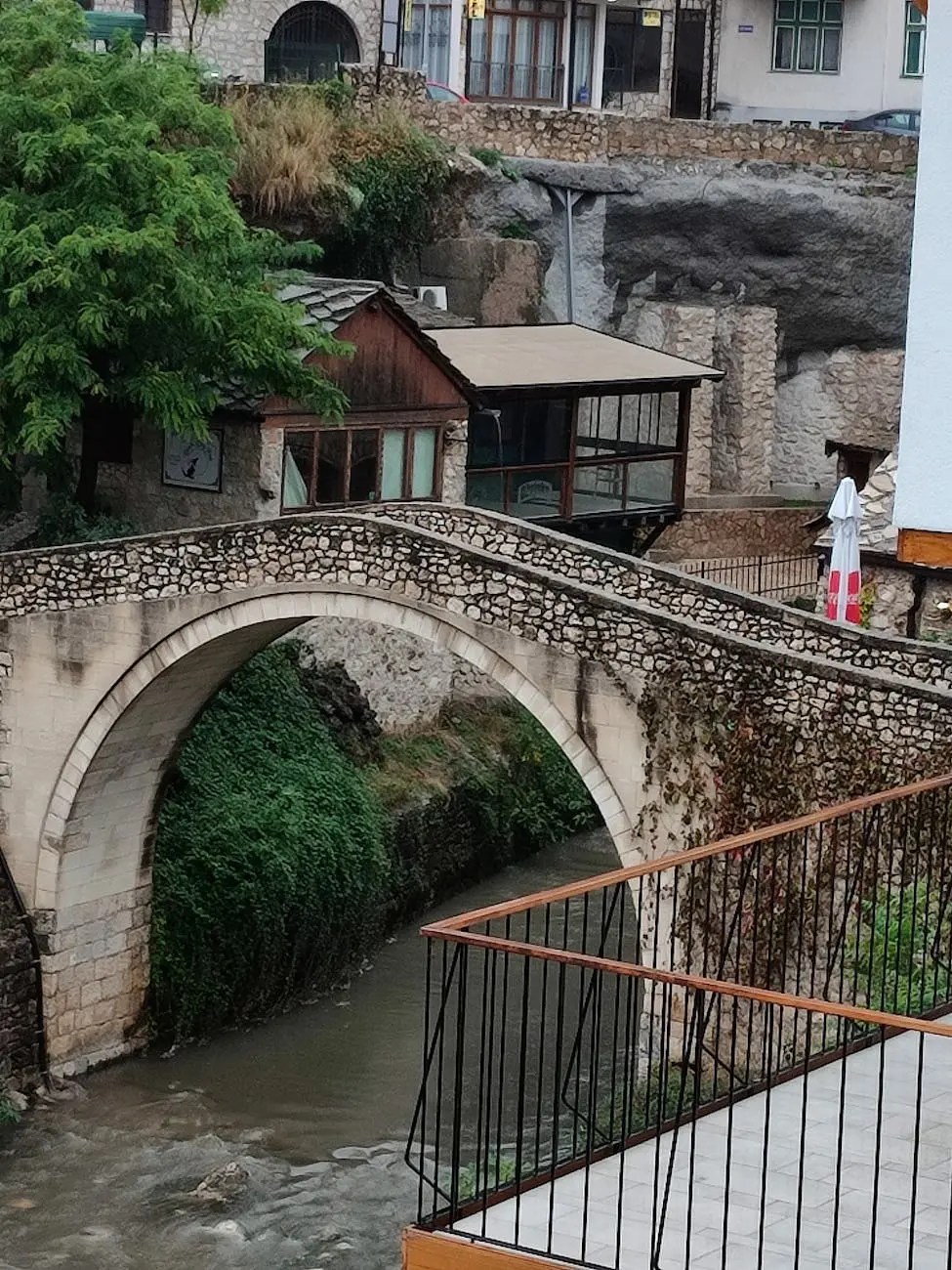
A stone arch bridge crosses a small river, surrounded by lush greenery and traditional buildings in Mostar, Bosnia and Herzegovina.
A picturesque stone bridge overlooking a serene river in Mostar, Bosnia and Herzegovina. Kriva Ćuprija, the “Crooked Bridge,” a charming single-arch Ottoman bridge over the Radobolja River in Mostar’s Old Town. Often considered a prototype for the grander Stari Most, it’s a quieter piece of living history

A rocky arch formation on a mountain with expansive valleys and hills in the background under a clear blue sky.
A stunning view of the mountain landscape in Herzegovina, featuring an intriguing rock formation with a natural arch that highlights the region’s breathtaking scenery. Hajdučka Vrata, the “Outlaws’ Gate”—a dramatic natural rock arch on Mt. Čvrsnica in Blidinje Nature Park. This iconic Herzegovinian landmark offers hikers one of the most breathtaking viewpoints in the Dinaric Alps

Essential Travel Intel: Money, Visas & Staying Safe

  • The Money Game: The currency is the Convertible Mark (BAM or KM). Here’s the easiest hack you’ll get: 1 Euro = 2 KM (almost exactly). While some places accept Euros, you’ll always get a better price in local currency. Cash is king, especially in smaller towns, guesthouses, and family-run restaurants. Withdraw BAM from local ATMs upon arrival.
  • Visa Info & Costs: Travelers from the US, UK, Canada, Australia, and the EU do not need a visa for tourist stays of up to 90 days within a 180-day period. Just ensure your passport is valid for at least three months beyond your planned departure date.
  • Safety First: Herzegovina is very safe for tourists. Standard city precautions against pickpocketing in crowded areas apply. The one critical rule involves the countryside: never, ever stray from marked paths or roads when hiking. Remnants of landmines from the 1990s conflict may still be present in remote, unmarked areas. Heed all warning signs.
  • When to Visit: Spring (April-June) and Autumn (September-October) are absolute perfection. The weather is mild, the landscapes are green (or golden), and the summer crowds have thinned. Summer can be fiercely hot, especially in Mostar.

Words to Know: A Quick Language Cheat-Sheet

Locals always appreciate the effort. Bosnian/Croatian/Serbian is the official language here.

  • Hello / Good day: Dobar dan (DOH-bar dahn)
  • Thank you: Hvala (HVAH-lah)
  • Please / You’re welcome: Molim (MOH-leem)
  • Yes / No: Da / Ne (DAH / NEH)
  • How much?: Koliko košta? (KOH-lee-koh KOHSH-tah?)
  • Bridge: Most (MOHST) – You’ll be using this one a lot!
  • Coffee: Kafa (KAH-fah) – Essential for joining the local café culture.

Practical Travel Tips

💡 Travel SIM/Connectivity Tip (Rephrased & Original):
Staying online overseas can be confusing and expensive — roaming charges, random data limits, airport SIM queues — it’s all a headache. That’s why I always carry a universal travel SIM — works in 190+ countries with no hidden fees, topped up easily through an app, and gets you online wherever you roam.
→ Check it out here: Drimsim

🌍 VPN for Security & Streaming Abroad:
Protect your data and access home content securely with a trusted VPN:

💼 Travel Insurance (Smart Safety Move):
Unexpected health or travel hiccups are easier to handle with insurance. I use and recommend VisitorsCoverage — compare plans and find one fast:

Power Up: Bosnia uses Type C and F plugs (220V). A universal adapter with multiple USB ports is a lifesaver for keeping phones, cameras, and power banks charged. I never travel without a reliable one

Document Your Journey: Herzegovina is a photographer’s dream. Whether you’re capturing the dive off Stari Most or the mist rising at Blagaj, having a capable camera is key. I rely on my trusted gear to do this stunning region justice.

Glow on the Go: After long days of exploration, my skincare routine is sacred. I swear by the gentle, effective products from Lakinza. For a treat, use code Lalax10 at checkout for a sweet discount.

Frequently Asked Questions

Is a weekend in Herzegovina enough time?
Absolutely. A well-planned 2-3 day trip centered in Mostar lets you experience the iconic bridge, explore the Old Town, and take a day trip to at least one stunning natural wonder like Blagaj or Kravice Waterfalls. It’s a perfect introduction.

Is Herzegovina expensive?
Not at all. Compared to Western Europe and even coastal Croatia, Herzegovina is a fantastic value. Meals, accommodation, and transport are very affordable, making it ideal for budget-conscious travelers who don’t want to sacrifice experience.

What’s the best way to get from Dubrovnik to Mostar?
For a weekend trip, I recommend a pre-booked private transfer or small group tour. It’s the most time-efficient, taking about 2.5 hours door-to-door. Renting a car offers maximum flexibility, while public buses are the most budget-friendly but less convenient.

Is it safe to travel to Herzegovina?
Yes. The region is safe and welcoming to tourists. Standard travel precautions apply. The only specific safety rule is to stay on marked paths when in the countryside or hiking due to the rare but potential risk of landmines in unmarked areas.

Ready to explore more of this incredible region? Check out my other guides for deeper dives into the Balkans:

Herzegovina pairs beautifully with nearby destinations like

Sarajevo, “Most trips to Herzegovina begin in Sarajevo, connected by one of the most scenic train journeys in the Balkans…”

Dubrovnik, “Many travelers pair Herzegovina with a coastal escape to Dubrovnik, especially since the border is just a few hours away…

Split, “If you’re arriving by ferry into Split, Herzegovina makes an easy inland detour with jaw-dropping scenery…

Zadar — making it ideal for a Balkans road trip or multi-country weekend escape.”

Herzegovina isn’t just a destination; it’s a feeling. It’s the chill of the Neretva River, the warmth of the people, and the profound sense of history etched into every stone. Pack your bags (and this guide), and go find it.

Final Tips & CTAs

Ready to book your escape? Grab flights, hotels, and package deals on Expedia (great for saving big on bundle deals)
Universal Disclaimer/Disclosure Page:

Explore Podgorica: Your Weekend Escape in Montenegro

Meta Description (SEO + GEO Optimized):
Planning a weekend escape to Podgorica, Montenegro? This human-written travel guide covers how to get there, ferries, budget tips, transport, hidden gems, great food spots, visa info, and personal anecdotes. Includes Direct Ferries, Expedia, AirHelp, Drimsim, NordVPN, Lakinza, VisitorsCoverage, and Camera recommendations. Perfect for travelers who want to explore Montenegro confidently while saving time and money.

📌 Table of Contents

  1. Why Podgorica Is the Weekend Escape You Didn’t Know You Needed
  2. Getting There (Flights, Ferry Options, Road Tips)
  3. Visa Info, Costs & Practical Montenegrin Words
  4. Where to Stay – My Expedia Pick
  5. Getting Around: Buses, Trains, Maps & Money-Saving Logistics
  6. What to See – Top Attractions + Hidden Gems
  7. Food, Coffee & Nightlife
  8. Smart Travel Tips (SIM, VPN, Insurance, Refunds, Camera, Plug Adapter, Skincare)
  9. Backlinks to My Other Geographically Close Blogs
  10. Final Thoughts – Why Podgorica Surprised Me
  11. FAQs About Podgorica

Why Podgorica Is the Weekend Escape You Didn’t Know You Needed

Podgorica is like that quiet kid in school who turns out to be surprisingly funny, stylish, and low-key adventurous. Most travelers skip it for Kotor or Budva — but trust me, this city has charm if you know where to look.

Think leafy boulevards, Ottoman-era bridges, rivers splitting like a postcard, cozy cafés everywhere, wineries close by, and surprise waterfalls just 20 minutes from downtown.

And best of all? It’s affordable — especially compared to neighboring Croatia.

Let’s be honest. When you dream of Montenegro, you probably picture the dramatic fjords of Kotor or the sun-kissed beaches of Budva. Podgorica? It’s often just a name on the airport code. But that, my friends, is where everyone gets it wrong.

I used to be a skeptic too. On my first trip, I rented a car at the airport, fully intending to gun it straight to the coast. But a funny thing happened—a broken GPS and a stubborn curiosity led me into the city center for a “quick coffee.” That coffee turned into a lazy afternoon wandering through a charming, low-key city of wide boulevards, quirky Brutalist architecture from its Yugoslav past, and serene parks straddling the Morača River. I discovered a capital without pretension, a place where life unfolds in café gardens and where you’re a traveler, not just a tourist. It’s the authentic, unvarnished heart of Montenegro, and the perfect, relaxed launchpad for a deeper dive. Consider it your secret Balkan basecamp.

(Backlink: For more on balancing iconic spots with under-the-radar finds, check out my philosophy in my European Travel Master List.)

Getting There (Flights, Ferry Options, Road Tips)

✈️ By Air

Podgorica Airport is small, efficient, and the taxi line actually moves. I booked my flight through Expedia because:
👉 Flexible cancellations
👉 Price alerts
👉 No drama, even with last-minute changes
Expedia link: Flights to Podgorica


⛴️ Getting There by Ferry (Using Direct Ferries)

Okay, here’s the truth: Podgorica doesn’t have a ferry terminal, but Montenegro DOES — and you can reach Podgorica easily by road afterward.

Closest Ferry Options Available on Direct Ferries:

Bari (Italy) → Bar (Montenegro)
Ancona (Italy) → Bar (Montenegro)
Dubrovnik → Bar seasonal routes (check availability)

Montenegro’s main ferry port is Bar, just 55 minutes from Podgorica by train or bus.

💡 Check schedules here:
👉 Direct Ferries: Montenegro

How to reach Podgorica from Bar Ferry Terminal

By Train:

  • Duration: 50–60 minutes
  • Cost: €2–€3
  • Scenic AF — mountains + sea + tiny villages

By Bus:

  • Duration: 1 hour
  • Cost: Around €5

By Car:

  • The Adriatic Highway is smooth and scenic
  • Avoid rush hours because villages along the way become snack-tempting traps

3. Visa Info, Costs & Useful Montenegrin Words

Most EU/US/UK passport holders enjoy visa-free travel for short stays, but always double-check before traveling. For South Asian and African passports, visa may be required.

Approximate Costs in Podgorica

  • Coffee: €1.50
  • Taxi: €4 within city
  • Meal: €7–€12
  • Bus ticket: €0.90

Where to Stay – My Expedia Pick

I always check deals on Expedia because their “free cancellation” filter saved me when I accidentally booked the wrong weekend once (don’t ask).

👉 Book your Podgorica stay here: Hotels in Podgorica
Podgorica hotels are budget-friendly, so you get more for less — great for short stays.

Your Weekend Itinerary: A Perfect 48-Hours

Day 1: History, Rivers & Rakija

  • Morning: Start at Ribnica Bridge, the old Ottoman stone bridge where the city was born. Then, wander through Stara Varoš, the old Ottoman quarter. It’s tiny but atmospheric.

“I always compare prices between Expedia and GetYourGuide before booking activities, because sometimes one has flash discounts the other doesn’t.”

Ribnica Bridge (Expedia)Ribnica Bridge (get your guide)
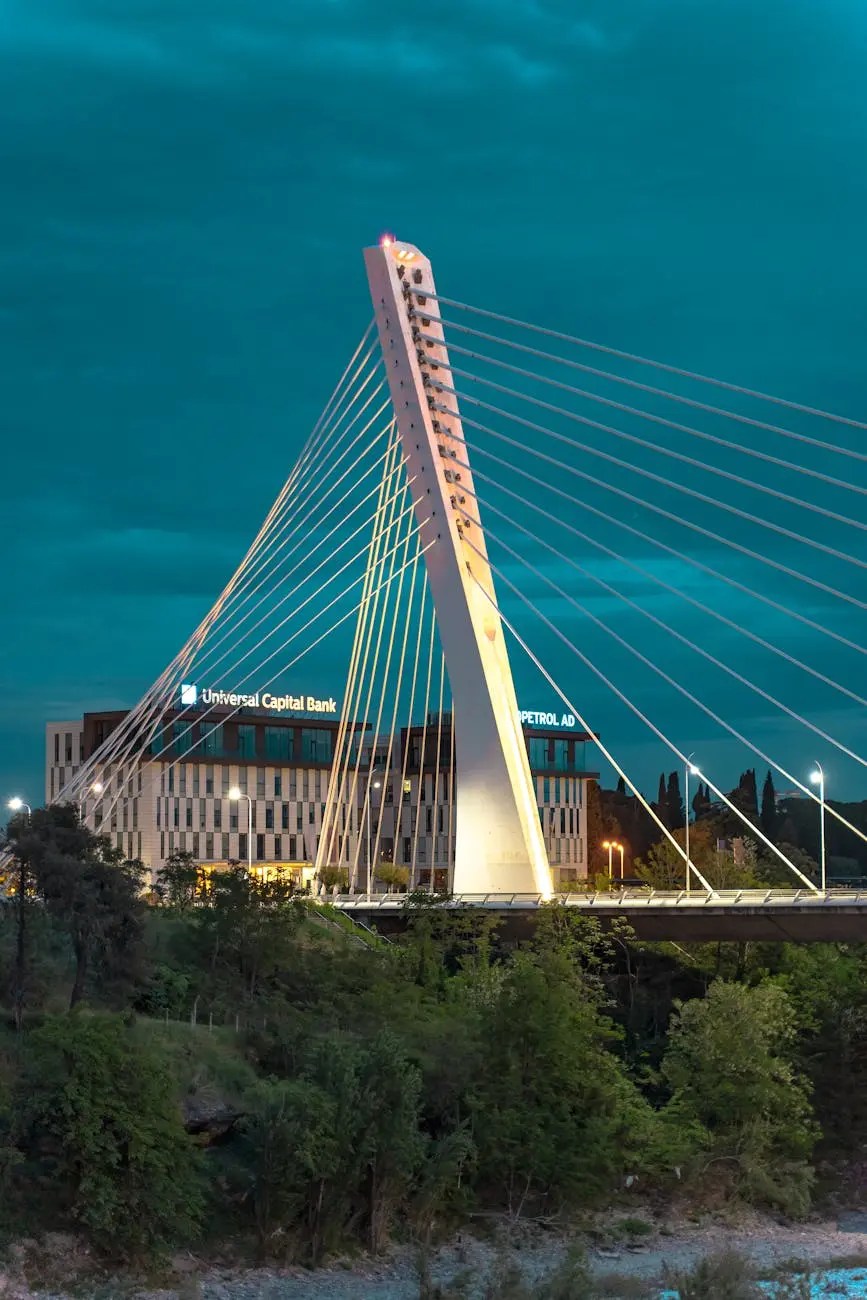
  • Afternoon: Cross the Millennium Bridge (it looks like a harp string) and explore Park forest Gorica on the hill. The views are worth the modest hike. For lunch, ditch the menu and just ask for njeguški pršut (smoked ham) and sir (cheese) at a local kafana.
Millennium Bridge (Expedia)Millennium Bridge (get your guide)
  • Evening: The Morača River banks come alive. Join the locals for the korzo (evening stroll). For dinner, find a spot in the Becir-beg Osmanagić mosque area. Order kastradina (dried mutton) if you’re feeling brave, and wash it down with rakija—the local firewater. A sip is a rite of passage.
Morača River(Expedia)Morača River (get your guide)
A night view of the Millennium Bridge in Podgorica, Montenegro, showcasing its modern architecture and illumination, with tall buildings in the background.
Night view of the Millennium Bridge in Podgorica, Montenegro, showcasing modern architecture against a serene backdrop.

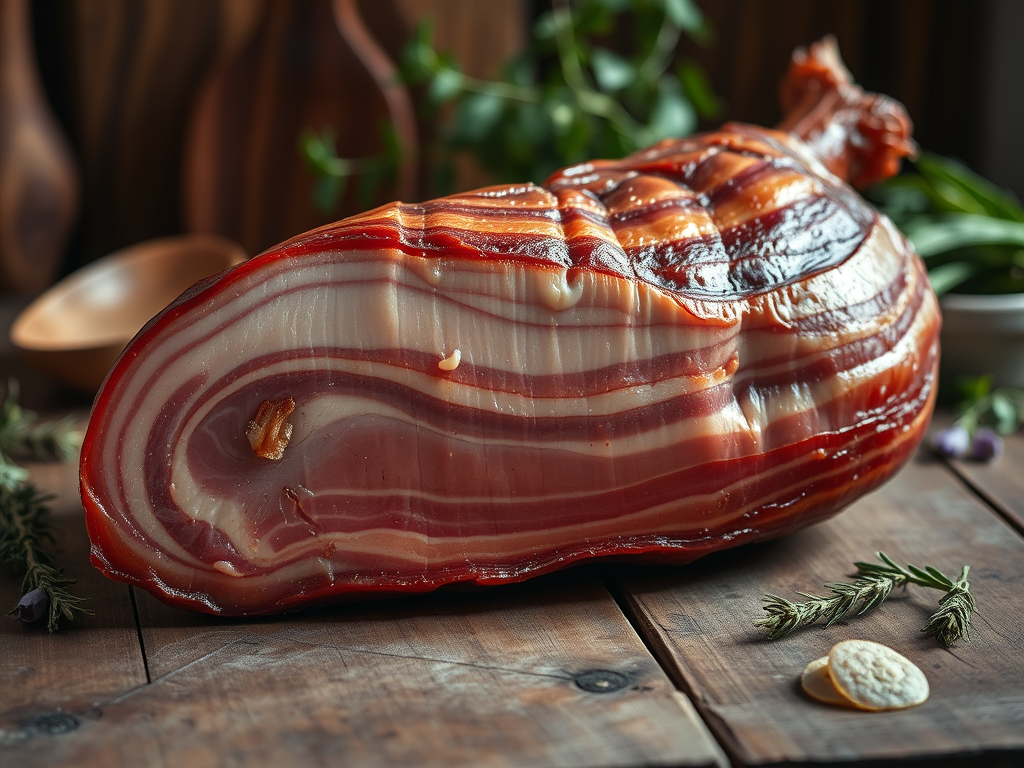
A close-up view of a block of smoked ham with layers of fat and meat, placed on a wooden surface surrounded by herbs.
A close-up of _njeguški pršut_, traditional Montenegrin smoked ham, displayed on a rustic wooden surface, perfect for pairing with local cheese and wine. Tasting Njeguški Pršut in Podgorica, Montenegro: the famous smoked ham from the Njeguši village, served with local cheese and olives. You can’t visit Podgorica without trying Njeguški Pršut. This is what the legendary smoked ham & cheese platter looks like!
A historic stone clock tower stands in a plaza surrounded by modern buildings and trees under a partly cloudy sky.
A striking view of the historic clock tower of Podgorica, Montenegro, set against a backdrop of dramatic clouds and modern buildings. The elegant minaret and courtyard of Becir-beg Osmanagić Mosque, a key historical and spiritual site in Podgorica, Montenegro’s capital.

Day 2: Markets, Modernity & Wine

  • Morning: Dive into the Green Market (Pijaca). It’s a sensory overload in the best way. Practice your hvala (thank you) and maybe grab some figs or honey.
  • Afternoon: Take a short taxi ride to Duklja, the ancient Roman ruins. It’s wonderfully untouristed. Later, explore the bizarrely fascinating Cetinje monastery replica in the city park.
  • Evening: Montenegro makes fantastic wine. Head to a wine bar like Vinoteka and sample Vranac or Krstač. For your final dinner, find a grill house and order ćevapi (minced meat sausages). You won’t regret it.
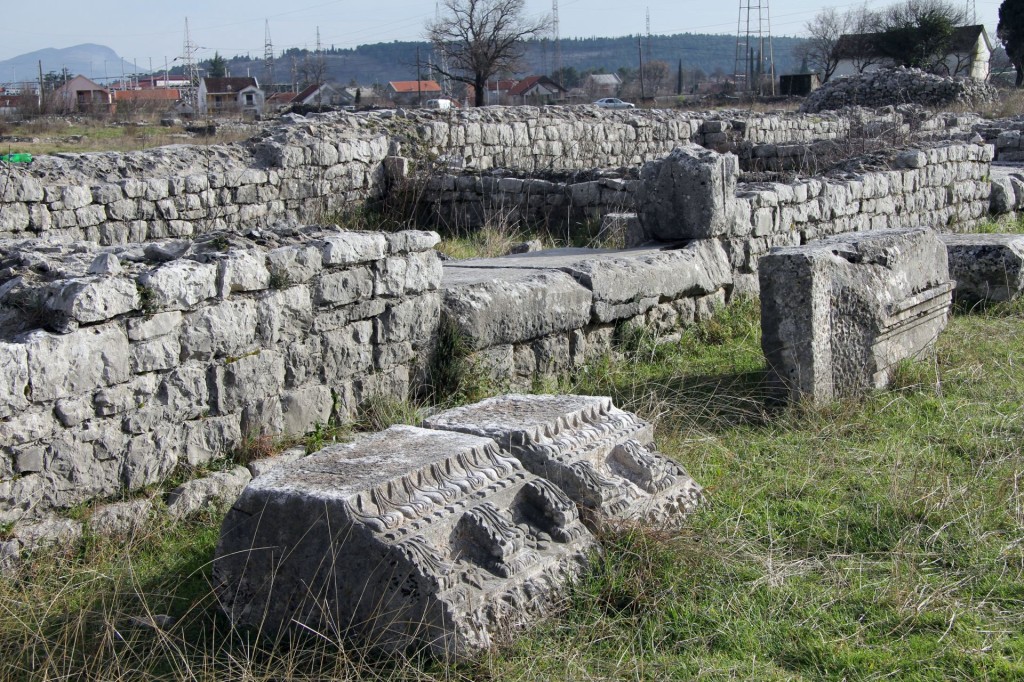
Ruins of ancient stone walls and carved blocks, overgrown with grass, set against a backdrop of a distant mountain and modern buildings.
Ancient Roman ruins at Duklja, an untouristed historical site in Montenegro.

Hidden Gems & Local Secrets

  • The “Depo”: Near the bus station, this is a collection of old train wagons turned into quirky bars and cafes. It’s the city’s hipster hideout, perfect for a unique afternoon beer.
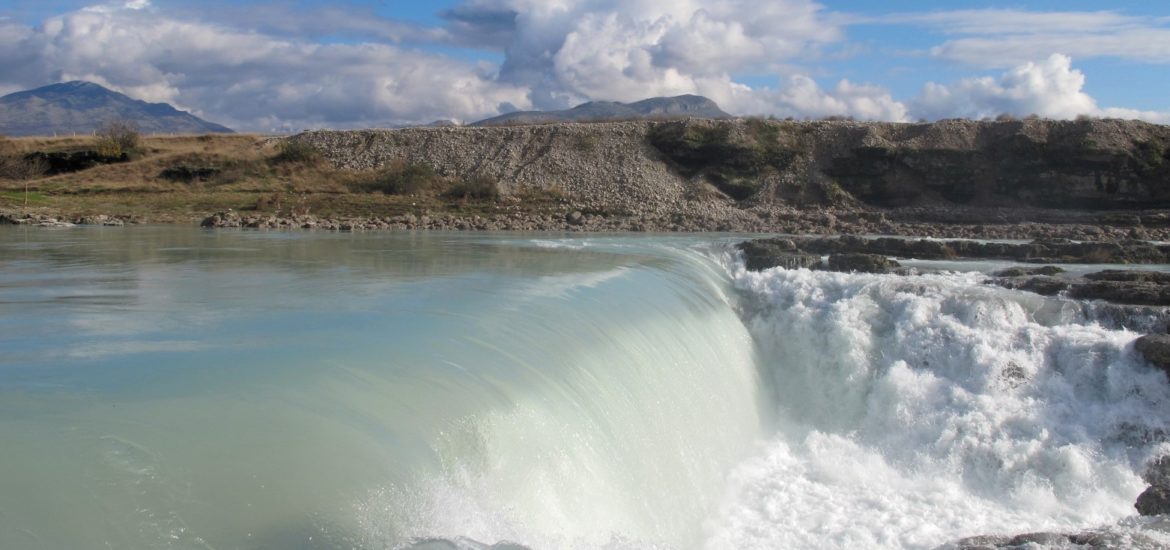
  • Niagara Falls (Montenegrin Style): Just outside town near the village of Bioče, are small but charming waterfalls locals call “Niagara.” It’s a great spot for a quick nature fix.
  • The Best Burek: Forget fancy bakeries. The absolute best burek (savory pastry) I’ve had came from a nameless hole-in-the-wall near the Blok 5 neighborhood. Follow your nose and the line of locals.
  • King’s Park – peaceful morning coffee spot
  • Doclea Archaeological Site – Roman ruins with almost no tourists
  • Plantaze Šipčanik Winery – a wine cellar inside an underground aircraft hangar
  • Lake Skadar village of Virpazar – tiny, charming, and close
A scenic view of a waterfall cascading into a river, surrounded by rocky terrain and mountains under a partly cloudy sky.
A beautiful waterfall near Podgorica, Montenegro, showcasing the country’s stunning natural landscapes.

 Speak Like a Local: Key Words & Phrases

A little effort goes a long way!

  • Zdravo (ZDRAH-voh) – Hello
  • Hvala (HVAH-lah) – Thank you
  • Koliko košta? (KOH-lee-koh KOSH-tah) – How much does it cost?
  • Jednu kafu, molim. (YED-noo KAH-foo, MOH-leem) – One coffee, please. (This is your most important phrase.)
  • Gdje je…? (Gdyeh yeh…) – Where is…?
  • U redu (OO REH-doo) – Okay / Alright. You’ll hear this constantly.

Food, Coffee & Nightlife

☕ Coffee Culture

Podgorica runs on espresso. Try:

  • Republika Café
  • Korzo
  • The Living Room Lounge

🍽️ Local Dishes to Try

  • Ćevapi – grilled perfection
  • Burek – flaky pastry that could heal you emotionally
  • Kačamak – cheesy comfort food

Nightlife is surprising — lots of bars near Bokeska Street.

Smart Travel Tips (SIM, VPN, Insurance, Refunds, Camera, Skincare)

📶 Stay Connected – Drimsim

Here’s your rephrased paragraph:

✈️ Travel Tip: Staying connected abroad shouldn’t feel like a treasure hunt. I use Drimsim, a universal SIM that works in 190+ countries without sneaky fees or airport-counter chaos. Just slot it in, add credit via the app, and boom — you’re online wherever your weekend escape takes you. No more roaming panic.
👉 https://drimsim.tpm.lv/WZXbFzT6


💸 Flight Delayed or Canceled?

AirHelp can check if you’re owed up to $650. Endless forms? They handle it.
👉 https://airhelp.tpm.lv/kJuqnapo


🔐 Stay Safe Online – NordVPN

Montenegro cafés have great WiFi but… public networks are playgrounds for hackers.
👉 https://go.nordvpn.net/aff_c?offer_id=15&aff_id=128359&url_id=902


🎥 Capture Podgorica Perfectly

Your weekend trip deserves crisp photos — here’s my go-to travel camera:
👉 https://sovrn.co/1bwu61h

And don’t forget a European travel adapter:
👉 https://sovrn.co/8rr0dib


🛡️ Travel Insurance

VisitorsCoverage is quick, simple and reliable. Compare policies in minutes.
👉 https://visitorscoverage.tpm.lv/QUKMbHg3


✨ Look Good While Traveling

K-beauty glow on the go:
👉 https://www.lakinza.ca?sca_ref=9241420.TLlyMDetU9
Use code: Lalax10

Frequently Asked Questions (FAQs)

Q: Is Podgorica worth visiting, or should I just go to the coast?
A: It’s 100% worth a day or two. It offers a genuine slice of Montenegrin life you won’t find in the tourist-centric coast. Pair it with the coast for the perfect trip.

Q: What’s the best way to get around the city?
A: The center is very walkable. For longer distances, use Taxi App (like Podgorica Taxi) for fair, metered fares. Buses exist but can be confusing for short-term visitors.

Q: When is the best time to visit?
A: Spring (April-June) and Autumn (September-October) are ideal. The weather is pleasant, and the crowds are thin. July-August can be very hot.

Q: Is Podgorica budget-friendly?
A: Yes, especially compared to Western Europe or the Montenegrin coast. Meals, drinks, and taxis are reasonably priced.

Q: Can I do a day trip from Podgorica?
A: Absolutely! The stunning Ostrog Monastery (carved into a cliff) is an hour away. The historic former capital of Cetinje and Skadar Lake national park are also within easy reach.

Is Podgorica safe for travelers?

Yes — very safe. Common sense is enough.

My Other Geographically Close Blogs

These destinations are close enough for extended Balkan trips:

👉Full master list:

Final Thoughts – Why Podgorica Surprised Me

Podgorica is not flashy — but it’s warm, real, unfiltered, and surprisingly full of character. Affordable meals, calm mornings, rich history, easy transport, and quick access to nature make it a refreshing city for a laid-back weekend.

If you want a trip that feels authentic, not manufactured — Podgorica delivers.

Universal Disclaimer/Disclosure Page:

Weekend Getaway Guide to Belgrade

Meta Description:
Planning a weekend getaway to Belgrade, Serbia? This human-written, SEO and GEO-optimized travel guide covers transport tips, money-saving hacks, local phrases, hidden gems, where to stay, visa essentials, and how to get around—including ferry/rivers, bus, train, car, and airport routes. Includes affiliate links, personal anecdotes, and nearby destination guides for travelers.

Table of Contents

  1. Why Belgrade Is the Perfect Weekend Escape
  2. Getting There (Flights, Border Info, Visa Tips)
  3. Getting Around Belgrade (Bus, Tram, Taxi, Car)
  4. Getting There by Ferry (Important Note + Danube Options)
  5. Where to Stay (With Expedia Affiliate Link)
  6. What to Do in 48 Hours
  7. Hidden Gems You Shouldn’t Miss
  8. Day Trips From Belgrade
  9. How to Travel From Belgrade to Dubrovnik, Split & Zadar (Backlinks)
  10. Money-Saving Tips
  11. Smart Travel Tools (VPN, Camera, Sims, Refunds, Insurance, Skincare)
  12. Useful Serbian Words
  13. FAQ

Why Belgrade Is the Perfect Weekend Escape

Belgrade hits different. One minute you’re sipping Turkish coffee in a century-old kafana, the next you’re dancing on a river barge at 3 AM wondering how Serbians still look fresh while you are aging in dog years.

It’s a city of grit, charm, and “just one more rakija” energy.

And as someone who accidentally stayed longer than planned because Belgrade nightlife refused to let me go—trust me, this city is worth every hour.

Let’s be honest, Belgrade wasn’t on my radar until a cheap flight alert popped up. I pictured a grey, post-communist bloc. How wrong I was. Belgrade, or “Beograd” (White City), is a vibrant, gritty, and endlessly captivating clash of history and hedonism. It’s where Ottoman ruins bump up against art nouveau masterpieces, and the scent of roast meat (or roštilj) mingles with Balkan beats until sunrise. It’s the perfect weekend escape for the traveller who wants culture by day and chaos by night.

✈️ Getting There (Flights, Border Info, Visa Tips)

Flights

Belgrade Nikola Tesla Airport connects to major European hubs.

👉Use my Expedia link for flexible booking:

Visa Tips

Most travelers from EU, UK, US, UAE, GCC, and many Asian countries get visa-free entry for 30–90 days.

Check your country’s requirement on official Serbia gov site before travel.

Airport to City Center

  • A1 Minibus: Cheapest (320 RSD / €3)
  • Taxi: ~2,000–2,300 RSD (€17–20)
  • Car Rentals: Available at the airport (Expedia link above)

Most visitors fly into Nikola Tesla Airport (BEG). I usually scout for deals on Expedia—bundling flights and a central hotel often saves a pretty dinar. The A1 minibus shuttle is the cheapest transfer to the city (around 300 RSD), but a taxi using the official booth is reliable and will cost about 1800-2500 RSD.

For a more scenic, regional approach, consider the train from nearby capitals like Budapest

Important Regional Travel Note: While Serbia has strong connections with the Serbian Republic (Republika Srpska) within Bosnia and Herzegovina, direct travel to the Federation entity can be less frequent. For example, as of my last visit, while you can easily find transport from Belgrade to East Sarajevo, there is typically only one direct bus per day to the central station in Sarajevo proper. Also, be aware that there are currently no operational passenger train connections between Belgrade and Sarajevo, despite the historic route. Always check the latest schedules with local carriers like Lasta or Globtour closer to your travel date.

Speaking of scenic approaches, don’t forget the river…

Getting There by Ferry

Yes, you can arrive in Belgrade by boat! While there aren’t traditional international ferry routes like in the Mediterranean, the mighty Danube and Sava rivers are Belgrade’s lifelines. The most iconic and practical “ferry” experience is the short, cheap hop across the rivers.

For the Adventurous: During warmer months, you can find longer, leisurely day-cruise ferries from nearby towns or even from as far as Budapest, Hungary. These are less about point-A-to-point-B transport and more about the experience—gliding past forested cliffs and historic fortresses. To check schedules and book these unique river journeys, I always use Direct Ferries. It’s a great hub for comparing different operators and routes. You can search for available options here.

Let’s clear the decks on this one: despite Belgrade sitting proudly at the confluence of the Danube and Sava, there is no regular, direct public ferry service from Belgrade Port to Zemun. I fell for this romantic idea on my first trip, only to wander the port looking for a phantom boat schedule. My bad—don’t make my mistake!

So, how do you make that glorious river crossing?
The excellent news is that getting to the charming, cobblestone streets of Zemun is easy and, as of recently, even cheaper. Belgrade’s entire public transport network (buses, trams, and trolleys) is now free for all users, including visitors. Simply hop on bus number 83 or the 704 from various points in the city center, and you’ll be in Zemun in about 20-25 minutes. A taxi or ride-sharing app like Car:Go is also a quick and affordable option.

For the True River Enthusiast:
If your heart is set on a river approach, your best bet during the warmer months (April-October) is to look for private boat tours that include Zemun as a stop. These aren’t public transport, but they offer a fantastic, slow-paced view of the city from the water. You can often find these operators offering short cruises from the docks near the Hotel Yugoslavia or along the Sava River in the Savamala district.

For the Danube Daydreamer: The Tourist Cruise Experience
Now, just because you can’t catch a commuter ferry doesn’t mean you should miss the rivers. The tourist river cruises that depart from the promenade near the Hotel Yugoslavia or along the Sava in Savamala are an essential Belgrade experience, especially at golden hour. These short, affordable voyages (typically 1-2 hours) are the perfect way to grasp the city’s geography and grandeur.

What You’ll See & Why It’s Worth It:

  • The Mighty Confluence: The cruise’s pièce de résistance is slowly drifting through the meeting point of the emerald-green Sava and the steel-blue Danube. Seeing the two distinct colours swirl together, right beneath the walls of Kalemegdan, is a geographic spectacle.
  • The Fortress in Full Glory: You get the postcard-perfect, panoramic view of Kalemegdan that you simply can’t get from land. Seeing the fortress walls cascade down to the river, with the Pobednik (Victory) monument standing tall, is breathtaking.
  • Zemun from the Water: The boat will often glide along the Zemun riverside (Kej), allowing you to admire its pastel-coloured buildings, church spires, and the iconic Gardoš Tower from a unique angle. It’s the best preview before you go explore its streets.
  • Architectural Tour: You’ll float past a fascinating timeline of Belgrade—from the brutalist blocks of Novi Beograd to the medieval ramparts and the modern architecture of the Belgrade Waterfront.

My Pro-Tip: Skip the generic midday cruise. Book the last cruise before sunset. Watching the fortress stones glow gold as the city lights begin to twinkle on, with a drink in hand (most boats have a small bar), is pure magic. It’s not just a boat ride; it’s the story of Belgrade, told by its two great rivers.

🏨 Where to Stay (Hotels Link)

I booked my hotel last time through Expedia because flexible cancellation saved me
during a “Belgrade nightlife ate my itinerary” moment.

👉 Best neighborhoods:

  • Dorćol — hip cafés, galleries
  • Vračar — chill, central, family-friendly
  • Zemun — waterfront views

The Perfect Weekend Itinerary: Your 48-Hour Game Plan

Friday PM: Fortress Sunset & Skadarlija
Drop your bag (I recommend the Dorcol or Savamala districts for character) and head straight to Kalemegdan Fortress. Follow the locals with picnic blankets for the ultimate free show: the sun melting into the confluence of the Sava and Danube. After, wander the cobbled Skadarlija street. It’s the “Montmartre of Belgrade“—slightly touristy but dripping in romance, with kafanas (taverns) serving up hearty portions and live starogradska (old city) music.

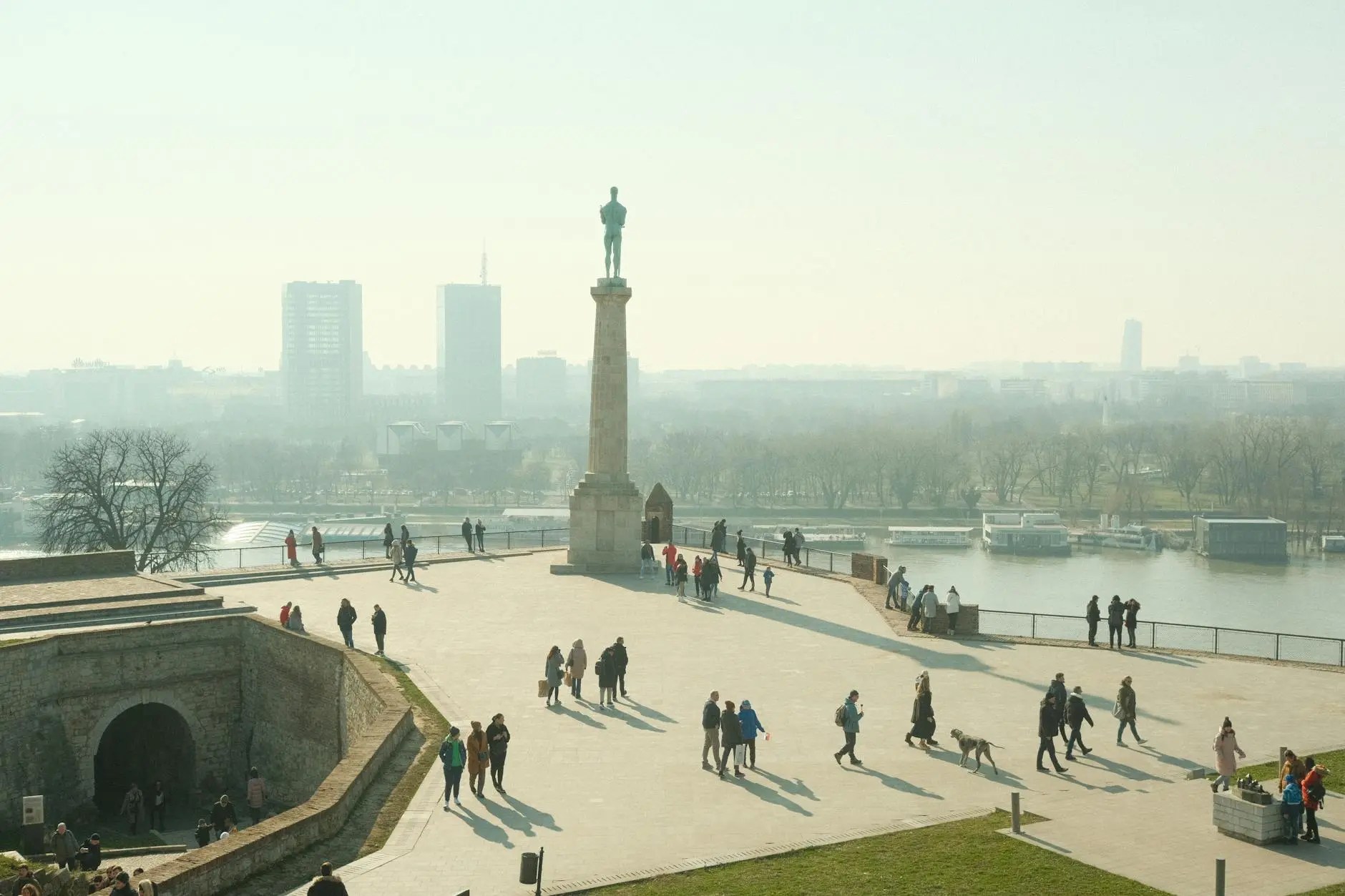
A view of Kalemegdan Fortress in Belgrade, with people walking on the grounds and the confluence of the Sava and Danube rivers in the background.
Panoramic view of the Kalemegdan Fortress in Belgrade, showcasing the Pobednik monument and the confluence of the Sava and Danube rivers. The iconic Pobednik (Victor) Monument stands watch over the confluence of the Sava and Danube rivers from within Kalemegdan Fortress—the most famous view in Belgrade.
A bustling street scene in Belgrade, Serbia, showcasing pedestrians walking along a cobblestone avenue lined with historic buildings and vintage street lamps under a clear blue sky.
A vibrant street in Belgrade showcasing its mix of historical and modern architecture, bustling with pedestrians.  Stroll down Knez Mihailova Street, Belgrade’s vibrant pedestrian heart, where 19th-century architecture meets modern cafe culture and buzzing street life.
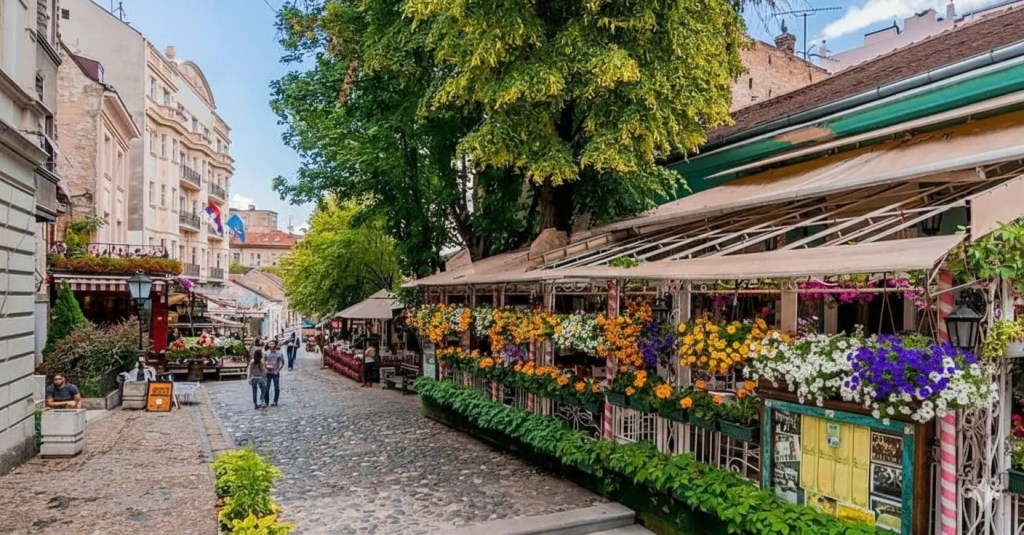
A picturesque cobblestone street in Belgrade lined with vibrant flower displays and outdoor seating at cafes, with people strolling leisurely past historical buildings and trees.
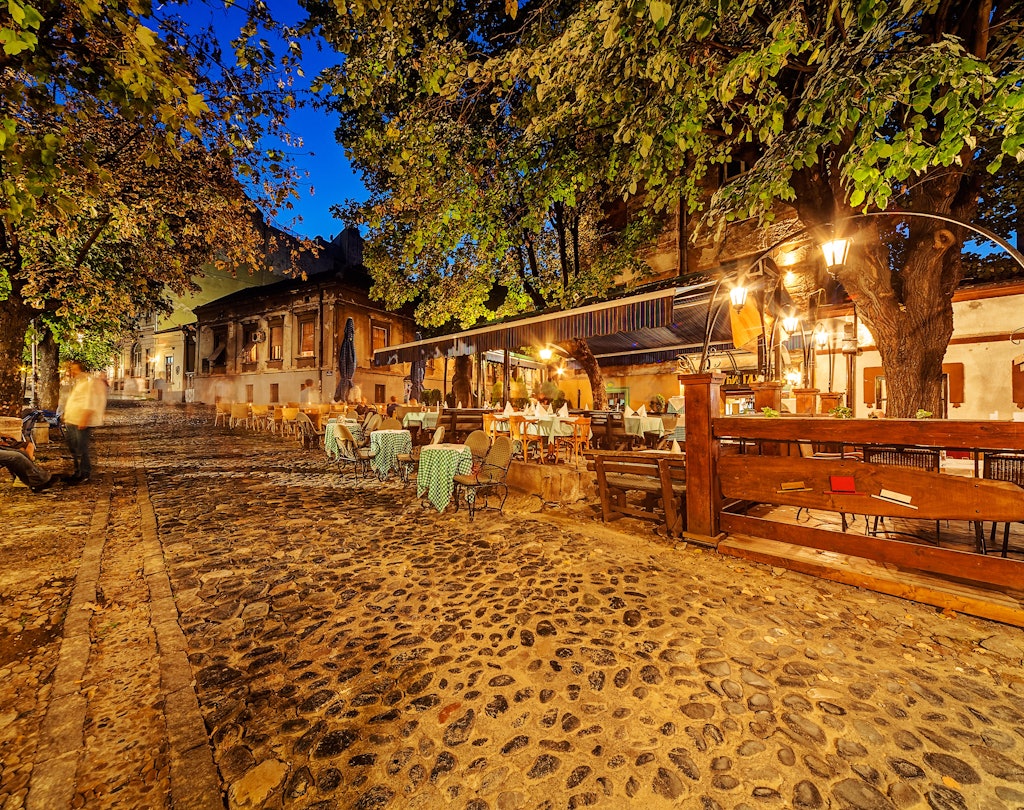
Charming cobblestone street in Belgrade filled with vibrant flowers and outdoor cafes, perfect for a leisurely stroll. Discover Skadarlija, the charming “Montmartre of Belgrade,” where cobblestone streets, traditional kafanas, and old-world charm capture the city’s bohemian soul

A picturesque evening in Skadarlija, Belgrade’s enchanting cobblestone street, lined with charming kafanas and illuminated by warm street lamps.

Saturday: History, Brunch & Splavovi
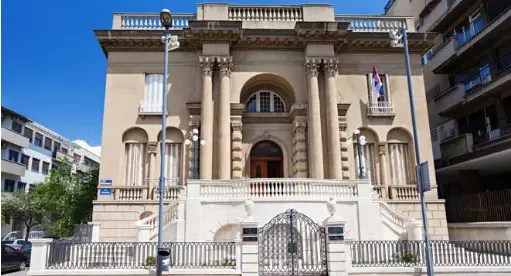
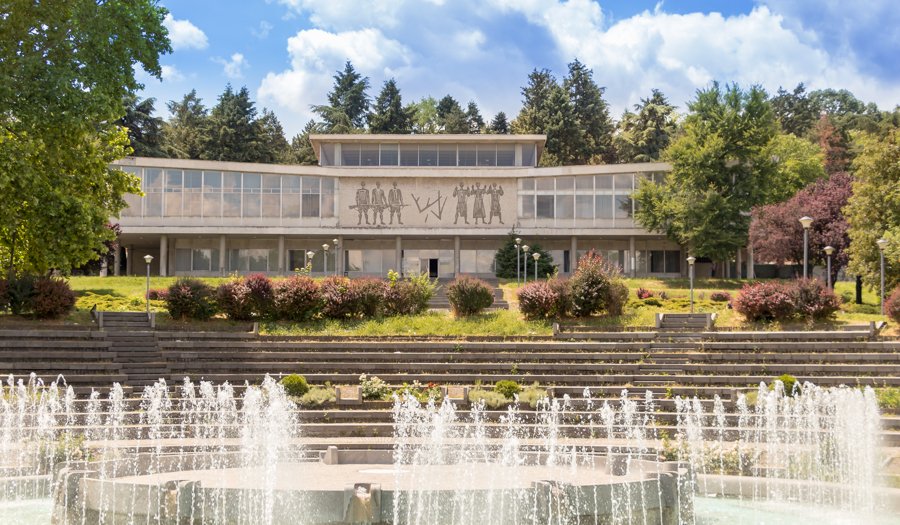
Morning: Dive into history at the Nikola Tesla Museum (book ahead!) or the profoundly moving Museum of Yugoslavia.
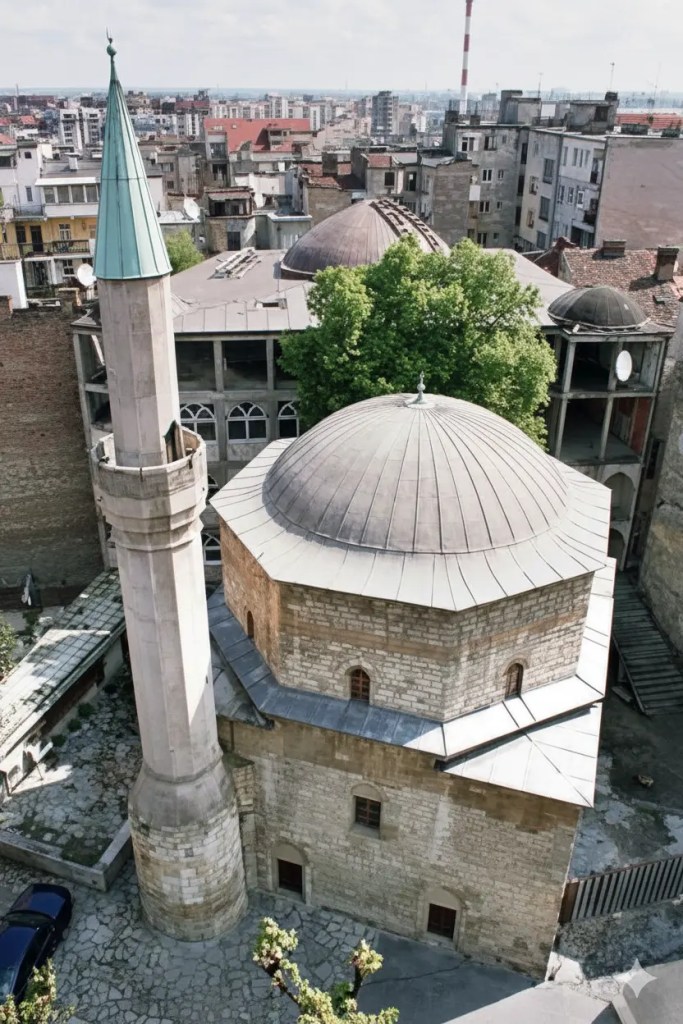
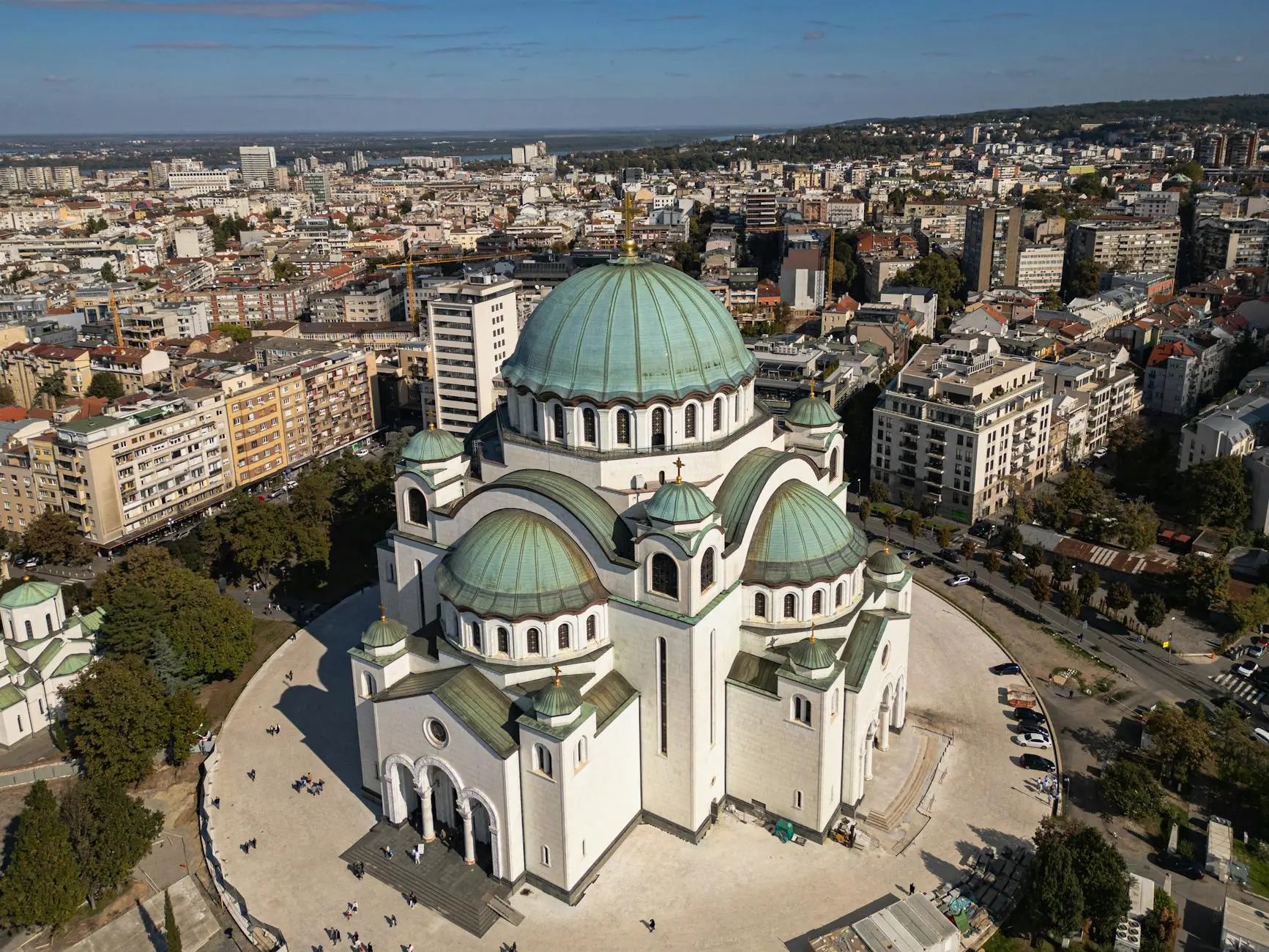
Afternoon: Brunch in trendy Dorcol. Then, explore the Bayrakli Mosque and the Church of Saint Sava—its cavernous, marble interior is staggering.
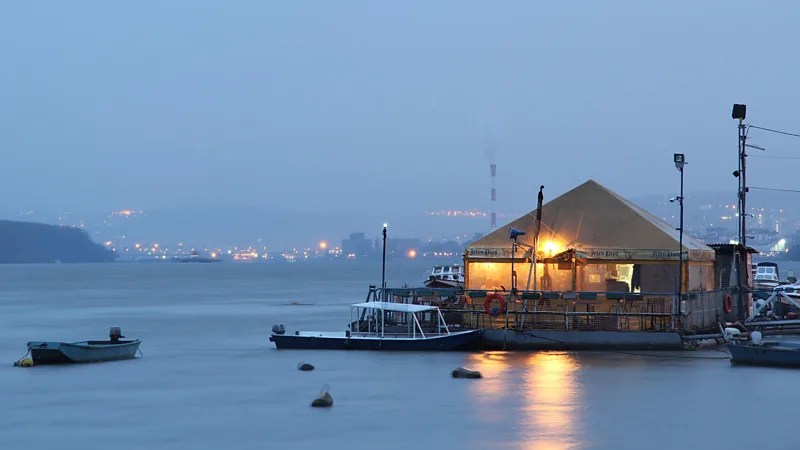
Night: This is Belgrade’s famous playbook. The nightlife happens on splavovi (floating river barges). Start with drinks on a chilled-out barge, then follow the bass to one of the mega-clubs. You don’t have to be a party animal to enjoy the spectacle.

A grand historical building featuring classic architectural elements, with large columns, ornate details, and a serene entrance, located in a sunny urban setting.
An elegant historical building in Belgrade, Serbia, showcasing classic architectural features. Experience the genius of Nikola Tesla at his namesake museum in Belgrade, where you can safely interact with his groundbreaking electrical inventions.
A view of the Museum of Yugoslavia's modernist building, featuring a decorative relief and surrounded by lush greenery and fountains.
The architectural beauty of the Museum of Yugoslavia, showcasing its historic significance amidst lush greenery and modern design. Step into the complex legacy of Yugoslavia at Belgrade’s most visited museum, where the Memorial Center for Josip Broz Tito and thousands of symbolic Relay Batons tell a powerful story of a bygone era.
An aerial view of a historic mosque featuring a stone structure with a domed roof and a minaret, surrounded by modern buildings and greenery in Belgrade, Serbia.
An aerial view of the Bayrakli Mosque in Belgrade, showcasing its historic architecture against a backdrop of city buildings. Find a moment of serene reflection inside the Bajrakli Mosque, Belgrade’s only surviving Ottoman-era mosque located in the city’s historic Dorćol district.
Aerial view of the Church of Saint Sava in Belgrade, showcasing its impressive architecture and surrounding cityscape.
Aerial view of the Church of Saint Sava in Belgrade, showcasing its impressive dome and surrounding cityscape.  Behold the monumental Church of Saint Sava, one of the world’s largest Orthodox churches, dominating the Belgrade skyline from the Vračar plateau.
View of a river barge and a restaurant at dusk by the river, with city lights in the background.
A serene view of a floating river barge along the Danube, perfectly capturing the tranquil ambiance of Belgrade’s riverside, especially during twilight. The nightlife in Serbia’s capital has been touted as the best in the Balkans – and these rafts make every night feel like a Friday.

Sunday: Zemun & Market Magic
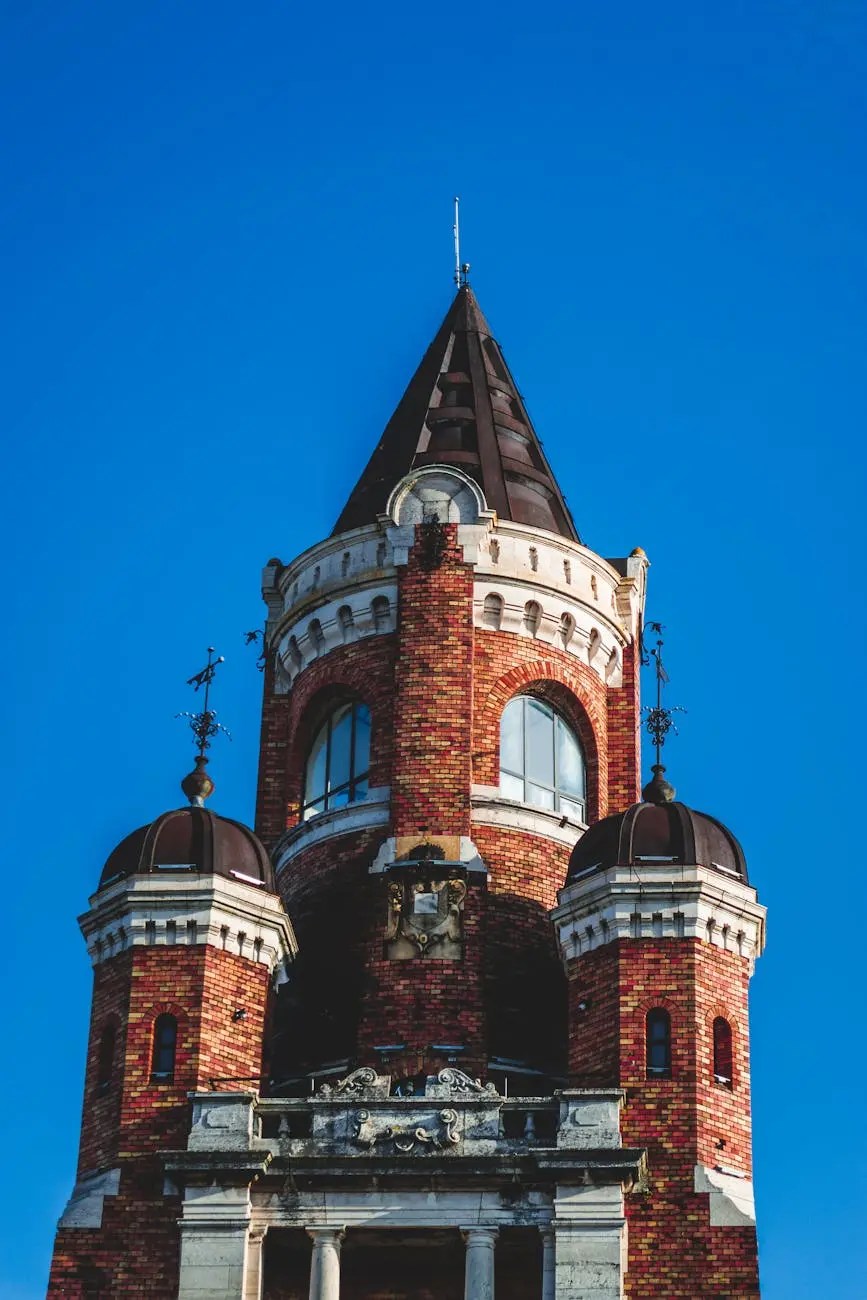
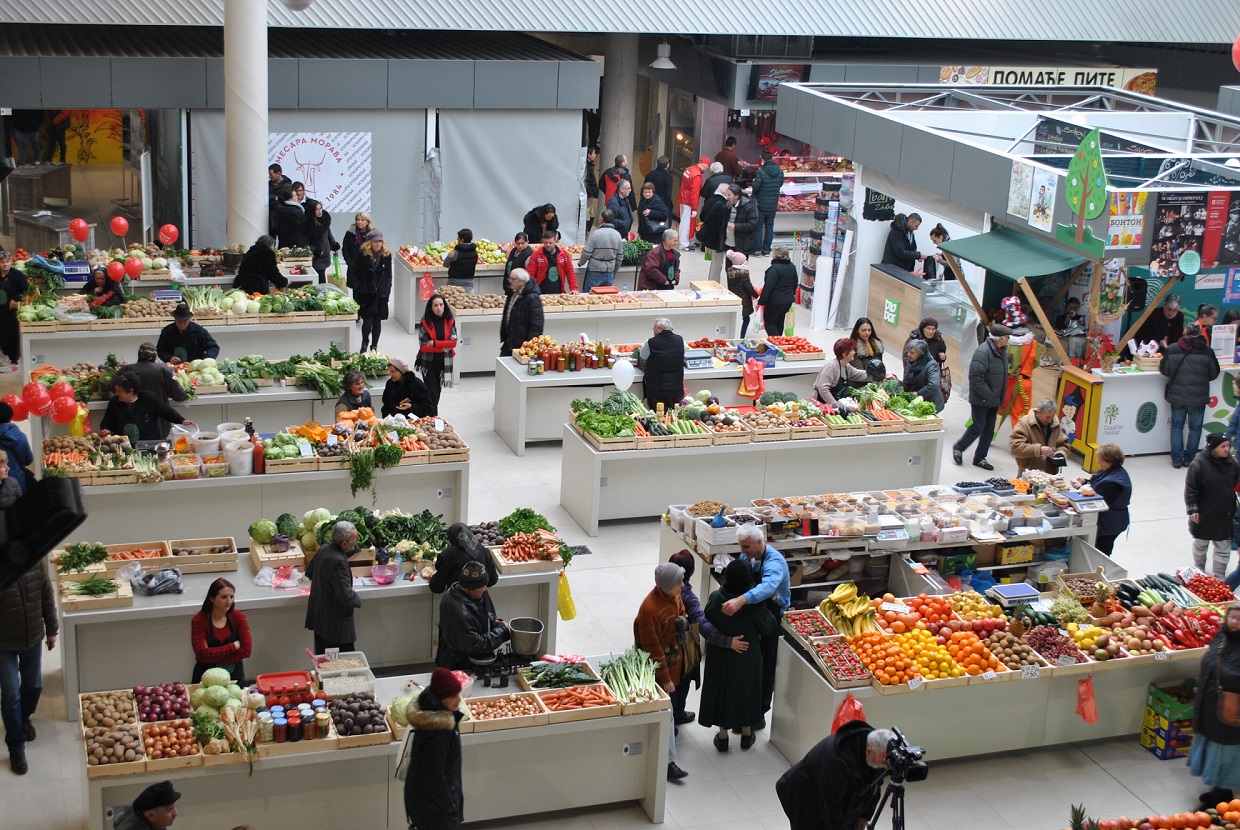
Cross the river (take that ferry!) to Zemun. Climb the Gardoš Tower for panoramic views, then feast on fresh Danube fish at a restaurant along the Kej. On your way back, stop at the Zeleni Venac market for spices, local cheese (kajmak), and souvenirs that aren’t made of plastic.

Close-up view of a tall, ornate tower with a cone-shaped roof and decorative brickwork against a clear blue sky.
A vibrant architectural detail of a historic building in Belgrade, showcasing its unique blend of styles against a clear blue sky. Climb the historic Gardoš Tower in Zemun for the best panoramic views of the Danube River, Belgrade’s skyline, and the old-town rooftops below.
A bustling indoor market in Belgrade, Serbia, filled with vendors selling fresh produce, vegetables, and local goods. Shoppers are seen browsing and interacting, while colorful displays of fruits and vegetables are laid out on tables.
A bustling market in Belgrade, showcasing fresh produce and local goods. zeleni venac market belgrade serbia

Hidden Gems & Local Haunts

  • Mali Pekabazar: Not a bakery, but a tiny, always-packed bar in a former bakery. All decor is DIY, the music is impeccable, and the crowd is local.
  • The Iced Trenches of Tasmajdan: Underneath Park Tašmajdan are WWII-era cold storage tunnels, now used for hockey and concerts. It’s bizarrely cool (literally).
  • KC Grad: A gritty cultural center in Savamala with exhibitions, debates, and a fantastic courtyard bar perfect for a daytime coffee or evening beer.
  • Avala Tower — insane city views
  • Kosančićev Venac — romantic old quarter
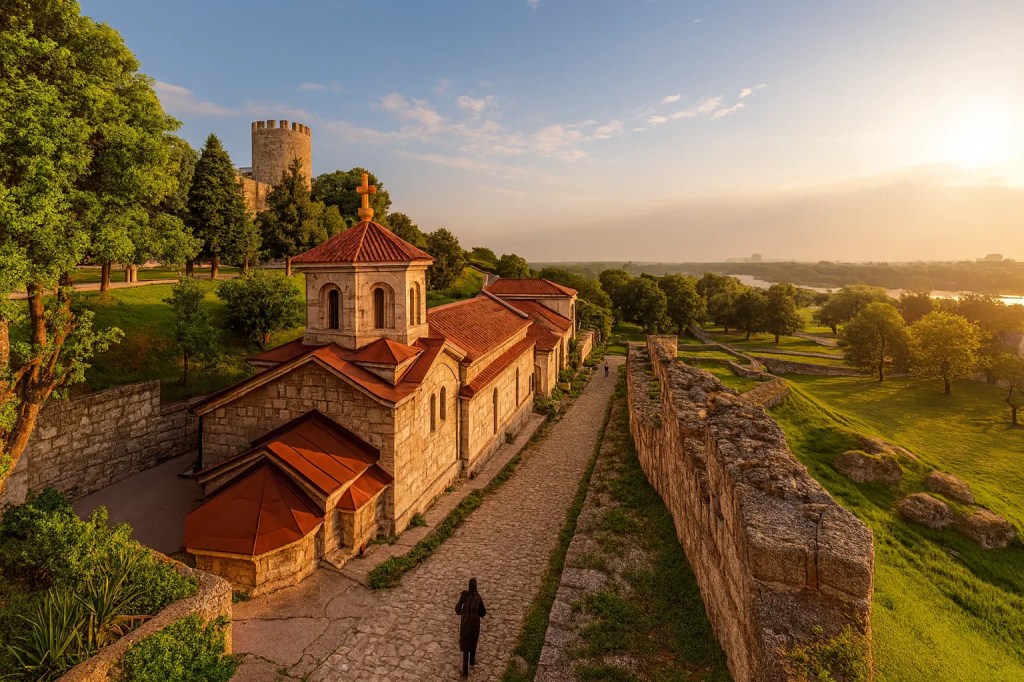
Scenic view of Kalemegdan Fortress and the Church of Ružica in Belgrade, Serbia, during sunset, with lush green surroundings and a pathway.
A serene view of the Kalemegdan Fortress in Belgrade at sunset, showcasing a historic church amidst lush greenery. Golden hour at Kalemegdan Fortress, Belgrade — where history, river views, and peaceful park paths meet.
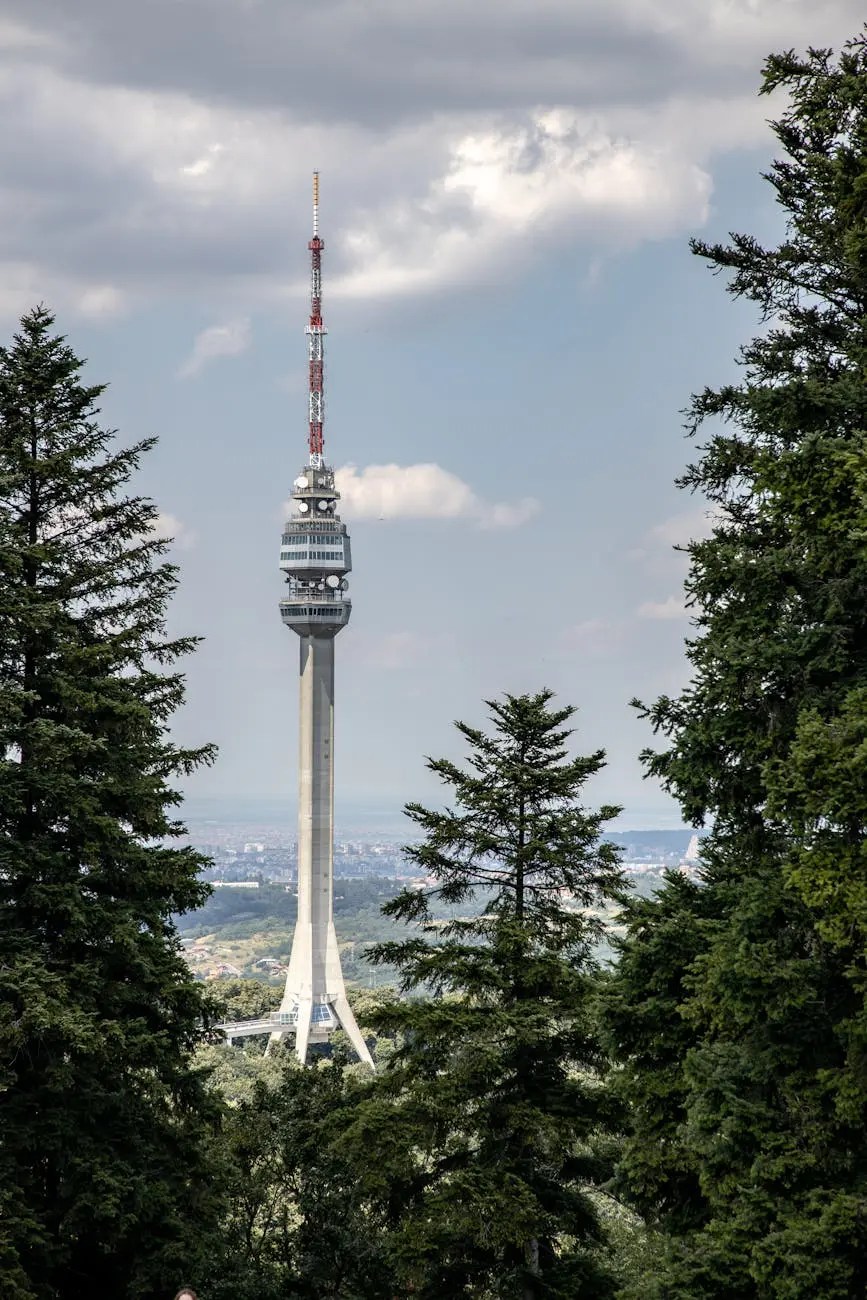
The Avala Tower surrounded by lush green trees, with a cloudy sky in the background, showcasing a modern architectural structure.
The Avala Tower stands tall amidst the trees, offering panoramic views of Belgrade and its surroundings.  Visit the iconic Avala Tower on Mount Avala—the tallest structure in the Balkans and a symbol of Belgrade’s resilience, just a short drive from the city center.
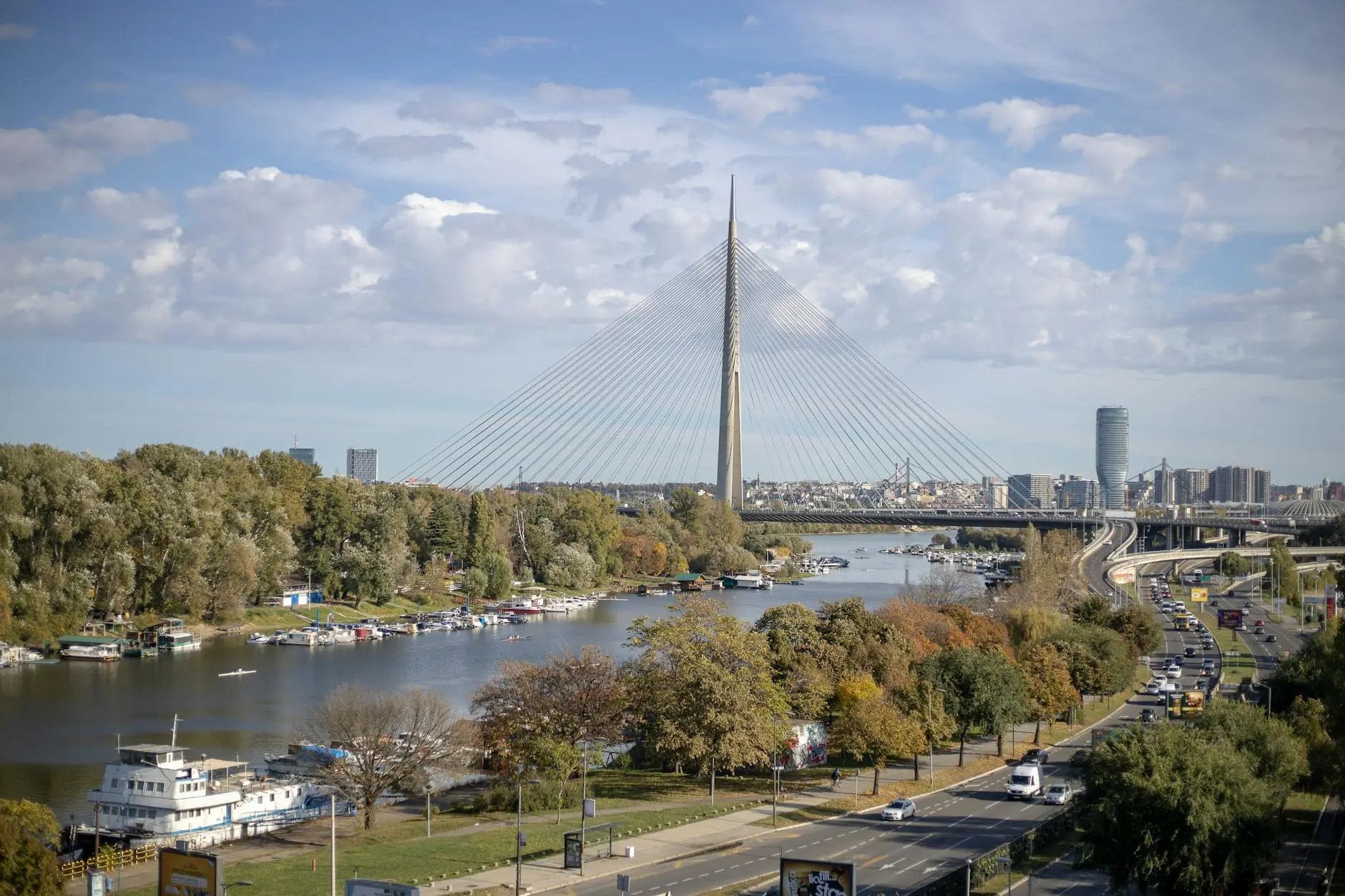
View of the Sava River with a suspension bridge in Belgrade, Serbia, featuring lush greenery along the shoreline and a skyline in the background.
A panoramic view of Belgrade featuring the iconic bridge spanning the Sava River, surrounded by greenery and bustling city life. The stunning Ada Bridge, with its iconic 200-meter pylon, illuminates the Belgrade skyline and connects the city across the Sava River.

🚗 Day Trips from Belgrade

  • Novi Sad (1 hr by train)
  • Golubac Fortress (2 hrs by car)
  • Sremski Karlovci wine region (perfect afternoon trip)

Navigating Belgrade Like a Pro: Transport Tips

  • Bus/Tram: Get a BusPlus card at a kiosk. Tap on and off. Single-ride tickets are for masochists.
  • Walking: The city center is very walkable. Dorcol to the Fortress is a lovely stroll.
  • Taxi: Only use certified companies like Pink or Lux. If the meter looks like it’s on hyperspeed, you’re in a pirate cab.
  • Car: Don’t drive in the center. Parking is a competitive sport. If you’re road-tripping wider Serbia, a good VPN is essential for secure browsing on public Wi-Fi when planning routes. I never travel without my NordVPN for safety and accessing content from home.

🌍 How to Travel From Belgrade to Dubrovnik, Split & Zadar

If you loved Belgrade and want a coastal escape next weekend, Croatia is your best friend.

1️⃣ Belgrade → Dubrovnik

How to go:

  • Flight: Fastest (~1 hr 10 min)
  • Bus: 9–11 hrs
  • Car: Scenic but long (900 km); cross Bosnia

Read my full Dubrovnik guide:
👉 https://confidencebuildings.com/2025/11/21/ultimate-dubrovnik-weekend-guide-tips-must-sees/


2️⃣ Belgrade → Split

How to go:

  • Flight: 1 hr 15 min
  • Bus: 9–12 hrs
  • Car: via Zagreb or Bosnia (highways are great)

My Split weekend guide:
👉 https://confidencebuildings.com/2025/11/23/weekend-getaway-in-split-your-ultimate-travel-guide/


3️⃣ Belgrade → Zadar

How to go:

  • Flight: seasonal
  • Bus: 12–13 hrs
  • Car: excellent road quality along Croatian coast

My Zadar travel blog:
👉 https://confidencebuildings.com/2025/11/26/explore-zadar-your-ultimate-weekend-getaway-guide/


💸 Money-Saving Tips for Belgrade

  • Eat at pekara (Serbian bakeries) — cheap & delicious
  • Use public transport instead of taxis
  • Buy SIM/eSIM online — cheaper than airport kiosks
  • Take free walking tours for orientation
  • Travel by bus/train instead of domestic flights

Savvy Traveller Section: Save Time & Money

  • Visa Info: For EU, US, UK, and AU/NZ citizens, it’s a breeze—no visa needed for stays up to 90 days. Always double-check official sources before travel.
  • Stay Connected (Without Getting Robbed): Airport SIMs are a trap. My secret weapon is Drimsim—a global data SIM that works in 190 countries. Pop it in, top up via the app, and you’re online. No more language barrier struggles at mobile shops. It’s saved me countless times.
  • Flight Gone Wrong? If your flight to Belgrade gets delayed or canceled, remember: EU passenger rights are powerful (and apply even on some non-EU airlines). You could be owed up to €600. Instead of fighting the airline myself, I let AirHelp handle it. They only get paid if you win.
  • Travel Insurance: Never skip it. A friend once slipped on Kalemegdan’s cobbles and needed stitches. I use VisitorsCoverage to compare and buy the right plan for every trip. It’s the adulting thing to do.
  • Capture the Magic: Belgrade’s light, from golden fortress glows to neon splav reflections, is incredible. I capture it all with my trusty Sony Alpha camera—it’s the perfect travel companion for sharp, vibrant photos.

Essential Serbian Survival Phrases

Serbs appreciate the effort immensely!

  • Hvala (HVAH-lah) = Thank you.
  • Dobar dan (DOH-bar dan) = Good day.
  • Koliko košta? (KOH-lee-koh KOSH-tah) = How much does it cost?
  • Jedno pivo, molim (YED-noh PEE-voh, MOH-leem) = One beer, please. (Your most important phrase.)
  • Živeli! (ZHEE-veh-lee) = Cheers!
  • Gde je autobus? – Where is the bus?
  • Voda – Water

Frequently Asked Questions (FAQs)

Q: Is Belgrade expensive?
A: Not at all. It’s one of Europe’s most affordable capitals. A huge meal with drinks can be under €15, and pints are often €2-3.

Q: What’s the best time to visit?
A: Late spring (May-June) and early autumn (September-October). You’ll avoid the summer heatwaves and the winter chill, and the riverside terraces are in full swing.

Q: Is it safe for solo travellers?
A: Yes, very. Standard city precautions apply (watch your bag in crowds), but I’ve always felt safe walking around, even at night.

Q: How do I get from the airport to the city center?
A: The A1 shuttle bus is the budget choice (300 RSD). An official taxi from the booth is easier and costs a fixed ~2500 RSD.

Is nightlife expensive?

Moderate. Drinks €3–7, clubs sometimes have entry fees.

Can I pay by card?

Yes, cards are accepted widely. Carry some cash for taxis/bakeries.

Are ferries available?

No sea ferries, but Danube river cruises are available.

Ready for Your Adventure?

Belgrade isn’t a polished, predictable city. It’s raw, authentic, and exhilarating. It gets under your skin. From the quiet moments watching barges slide down the Danube to the deafening beat inside a floating club, it’s a weekend you won’t forget.

Universal Disclaimer/Disclosure Page:

Beirut Weekend: Your Ultimate 3-Day Escape Guide

Meta Description: Craft your perfect weekend in Beirut, Lebanon! This ultimate travel guide is packed with insider tips, hidden gems, and a savvy 3-day itinerary to explore the Paris of the Middle East. Discover where to eat, how to get around, and how to save time and money on your Lebanese escape.

So, your passport is begging for a stamp, and you’ve got a glorious 48-ish hours to spare? Forget the usual European city breaks; let’s talk about a place that will hijack your senses and steal a piece of your heart: Beirut.

This city is a beautiful, chaotic, and utterly captivating paradox. It’s where you’ll hear the call to prayer mingle with the bass from a rooftop bar, and see bullet-riddled buildings standing next to gleaming designer boutiques. It’s a city that lives life loudly and passionately. And honestly, a long weekend is the perfect amount of time to get a delicious, intoxicating taste of it.

As someone who’s gotten blissfully lost in its streets more times than I can count, I’m here to be your guide. Let’s craft your perfect weekend escape.

Forget everything you think you know about the Middle East—Beirut is here to rewrite the script. Known as the “Paris of the Middle East,” this city is a dazzling, chaotic, and utterly mesmerizing blend of ancient history and a non-stop modern pulse. One minute you’re marveling at Roman ruins, and the next you’re sipping a world-class cocktail on a rooftop bar.

My first visit to Beirut was supposed to be a low-key stopover, but it quickly turned into an obsession. I remember wandering through the streets of Gemmayzeh, the air thick with the scent of spices and jasmine, and thinking, “How is this place not swarming with tourists?” It’s a city with scars, yes, but its energy is utterly infectious. If you’re looking for a destination that’s more than just a pretty photo op—a place that grabs your soul and gives it a vigorous shake—then trust me, you need this Beirut escape.

Table of Contents

  1. Your Savvy 3-Day Beirut Itinerary
  2. Beirut on a Budget: Money-Saving Hacks & Public Transport
  3. Hidden Gems: Beirut’s Secret Spots
  4. Essential Lebanese Lingo for Travellers
  5. Packing Your Beirut Toolkit (My Travel Lifesavers)
  6. Beirut Weekend Escape: Frequently Asked Questions

💰 Know Before You Go: Visa & Money-Saving Tips {#visa-money-tips}

Let’s talk logistics. Smart travel starts with knowing the rules.

Visa & Entry Essentials

Many nationalities, including US citizens, can get a free visa on arrival for a stay of up to one month at Beirut International Airport, provided they have a valid passport (with no Israeli stamps!) and a return ticket. For other countries, check with your local Lebanese embassy well in advance. Remember, visa costs can vary, but the hassle of pre-applying is often less than you’d think!

  • Geographically Close Cities Suggestion: Since you’re in the area, why not hop over? Check out my guide on

Explore Doha: Your Ultimate Weekend Travel Guide

Ultimate Casablanca Weekend Guide

Explore Bahrain: Al-Fateh Mosque

Budgeting in the City

Lebanon’s financial situation means you need to be smart about money. While the official currency is the Lebanese Lira (LBP), most large transactions, tourist prices, and even many small ones are quoted and preferably paid in US Dollars (USD). Always carry a mix of smaller USD bills (fives, tens, twenties) and some local currency for small purchases like water or street food. This can often save you money on unfavorable exchange rates in shops.

Flights to Beirut

Hotels in Beirut

Your Savvy 3-Day Beirut Itinerary

This itinerary is designed to be a loop, saving you time and cab fare. I highly recommend using a mix of walking and cheap Uber/Careem rides to get around.

Day 1: The Heartbeat of History & The Sunset Coast

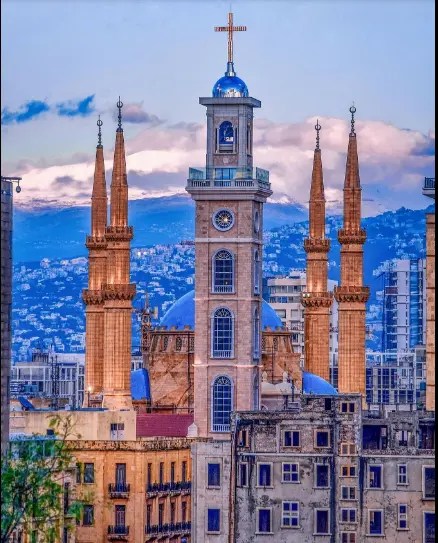
  • Morning (10 AM): Start at the Mohammad Al-Amin Mosque (the Blue Mosque). Its grandeur is breathtaking. Right next door, you’ll find St. George Maronite Cathedral, a testament to Beirut’s religious tapestry. This area is a powerful, visual story.
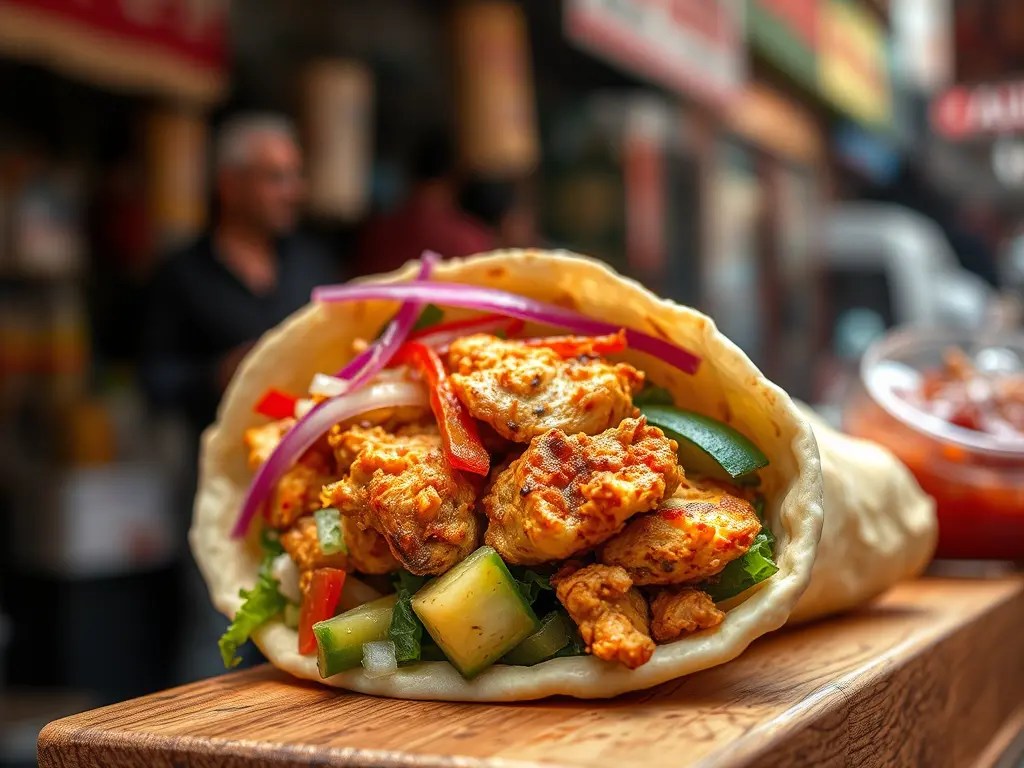
  • Afternoon (1 PM): For lunch, you have two choices. Go upscale at Em Sherif for a mind-blowing, multi-course Lebanese feast (book ahead!), or for a more local (and wallet-friendly) experience, dive into a hole-in-the-wall for a chicken shawarma wrap. You can’t go wrong with either.
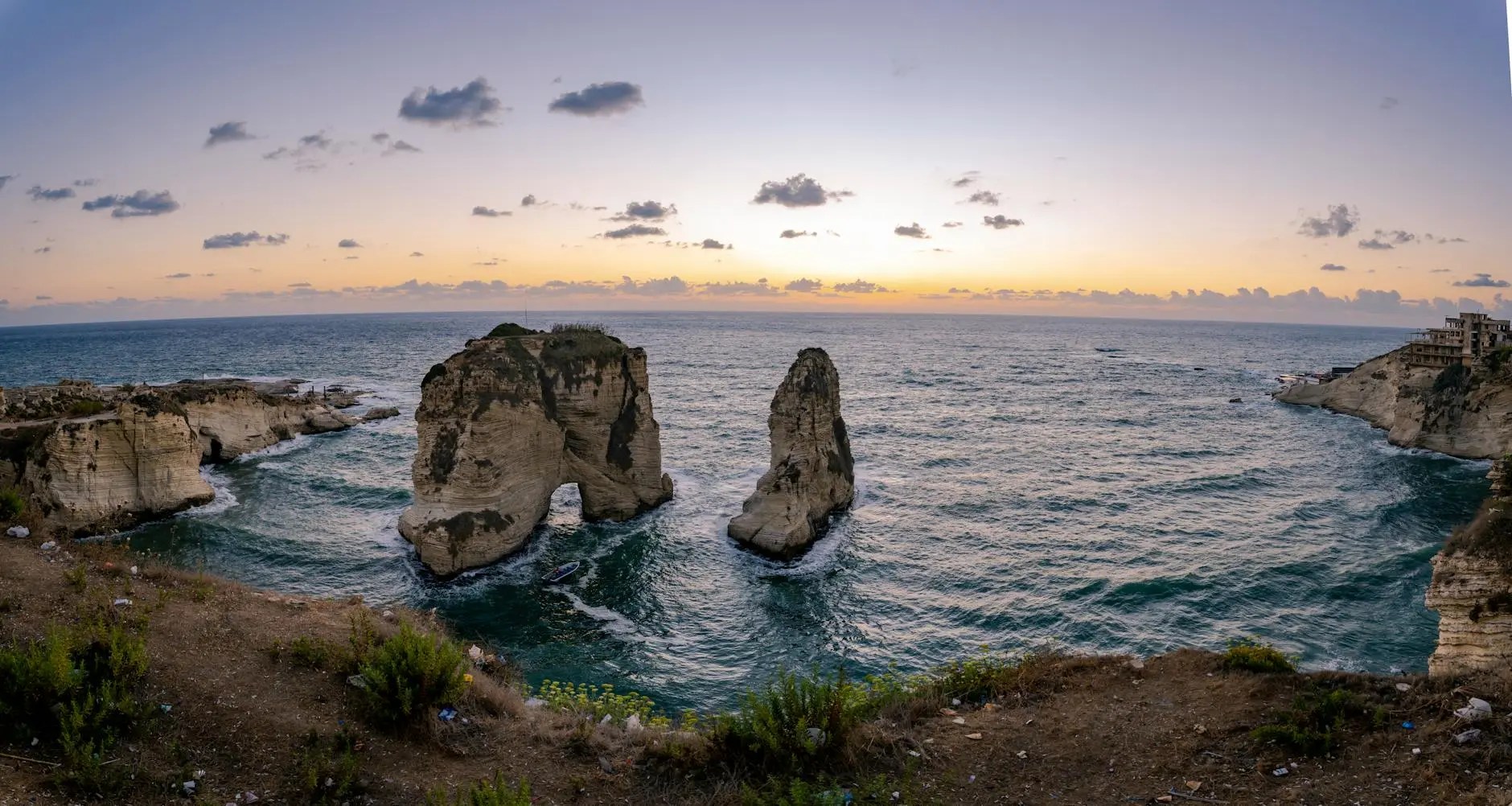
  • Late Afternoon (4 PM): Walk towards Raouché (the Pigeon Rocks). This is my pro-tip: skip the crowded corniche-side cafes. Instead, grab a bottle of water and walk down the stairs to the platform right by the rocks. The view from there is unbeatable and free. Stay for sunset – it’s magical.
  • Evening (8 PM): Head to the Gemmayzeh or Mar Mikhael districts. These are the epicenters of Beirut’s legendary nightlife. Start with dinner at a cozy restaurant like Baron (get the Baron Burger, thank me later) and then let the night take you. The energy here is infectious.
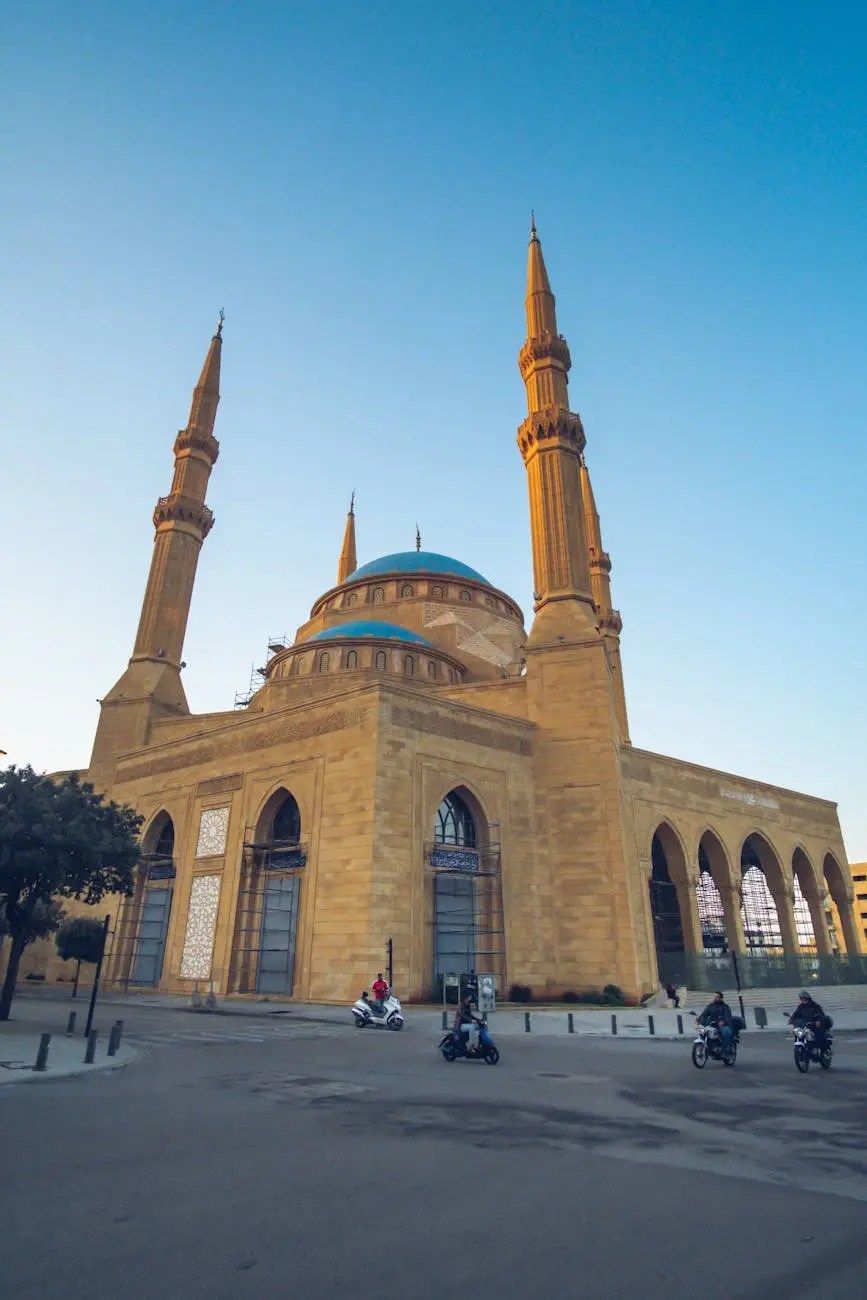
A stunning view of the Mohammad Al-Amin Mosque in Beirut, Lebanon, showcasing its tall minarets and blue dome against a clear blue sky, with motorcycles passing by.
The stunning Mohammad Al-Amin Mosque, also known as the Blue Mosque, stands majestically in Beirut, showcasing the city’s unique blend of modernity and tradition. A moment of serenity. The magnificent Mohammad Al-Amin Mosque, often called the Blue Mosque, is a cornerstone of Beirut’s dynamic cityscape. Its grand Ottoman-inspired architecture stands in powerful dialogue with the modern city around it, perfectly encapsulating Beirut’s spirit.

A skyline view of Beirut featuring a blend of historic religious architecture, including a prominent church with a blue dome and several minarets, set against a backdrop of mountains and urban buildings.
This image shows the Saint George Maronite Cathedral and the Mohammad Al-Amin Mosque in downtown Beirut, Lebanon Where faiths meet. The Saint George Maronite Cathedral (left) and the Mohammad Al-Amin Mosque (right) stand side-by-side in Beirut’s city center, a powerful daily symbol of the city’s layered history and spirit of coexistence.
A close-up of a delicious chicken shawarma wrap filled with fresh vegetables, served on a wooden board, showcasing vibrant colors in a busy street setting.
A delicious chicken shawarma wrap filled with fresh vegetables, perfect for a quick meal in Beirut. The ultimate Beirut street food experience. This isn’t just a sandwich; it’s a perfectly spiced, juicy, and messy masterpiece of grilled chicken, fresh veggies, and garlic sauce, all wrapped in warm, thin bread. A must-eat that costs just a few dollars but delivers a million-dollar flavor.
Panoramic view of the Pigeon Rocks in Raouché, Beirut, at sunset, with the tranquil Mediterranean Sea and a colorful sky.
Stunning view of the Pigeon Rocks in Raouché, Beirut, at sunset, showcasing the beautiful coastline and vibrant sky. Golden hour magic at Raouché. There’s a reason this is Beirut’s most iconic postcard view. Watching the sun dip below the horizon behind the majestic Pigeon Rocks is a rite of passage for every visitor. Pro tip: skip the crowded cafes and find a spot on the corniche to enjoy the free show.

Day 2: Ruins, Retail Therapy & Rooftops

  • Morning (10 AM): Explore the Beirut Souks. This isn’t your dusty, traditional souk; it’s a stunningly modern shopping complex built around the archaeological remains of the old market. It’s a fascinating blend of past and present.
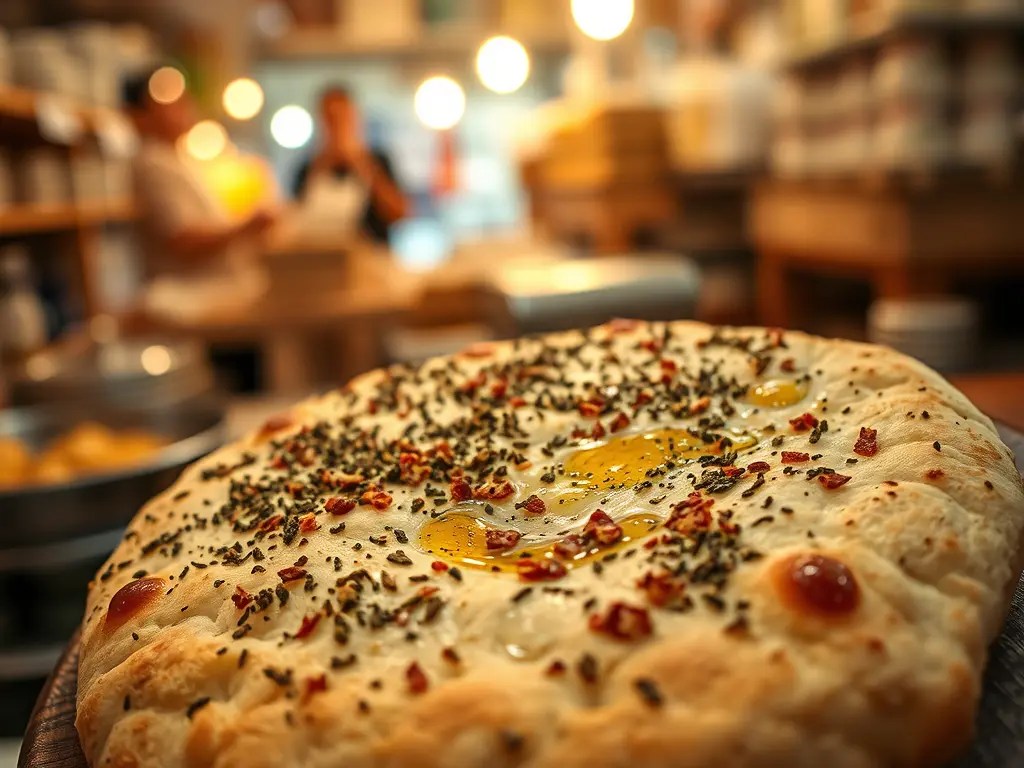
  • Afternoon (1 PM): Fuel up with a mana’esh (a za’atar or cheese flatbread) from a local bakery. It’s the Lebanese pizza, and it costs pennies.
  • Late Afternoon (3 PM): Visit the Roman Baths Garden in Downtown. It’s a peaceful, green archaeological site that’s often overlooked. It’s the perfect place to sit with a coffee and just breathe.
  • Evening (7 PM): Dress up a bit and head to a rooftop bar. Albergo’s rooftop is iconic, with stunning 360-degree views of the city. It’s the perfect, sophisticated end to a day of exploration.
A close-up of Lebanese flatbread topped with za'atar and olive oil, placed on a wooden surface with a warm, blurred background.
A delicious mana’esh topped with za’atar and olive oil, perfect for a quick Lebanese lunch in Beirut. The ultimate Lebanese power breakfast. This isn’t just flatbread; it’s a warm, fragrant mana’esh, straight from the oven, topped with an iconic blend of wild thyme, sumac, sesame seeds, and rich olive oil. For about a dollar, it’s the most delicious and authentic start to your day in Beirut.

Day 3: The Artist’s Escape

  • Morning (11 AM): It’s Sunday, which means the Beirut Art Center or the Sursock Museum (a gorgeous villa-turned-museum) is calling. Both showcase incredible contemporary art from the region.
  • Afternoon (2 PM): For your final meal, venture into the Armenian quarter of Bourj Hammoud. It’s a chaotic, vibrant, and sensory-overloading experience. The food is phenomenal and incredibly cheap. Try the lahmajoun (Armenian pizza) and the soujouk (spicy sausage) sandwiches.
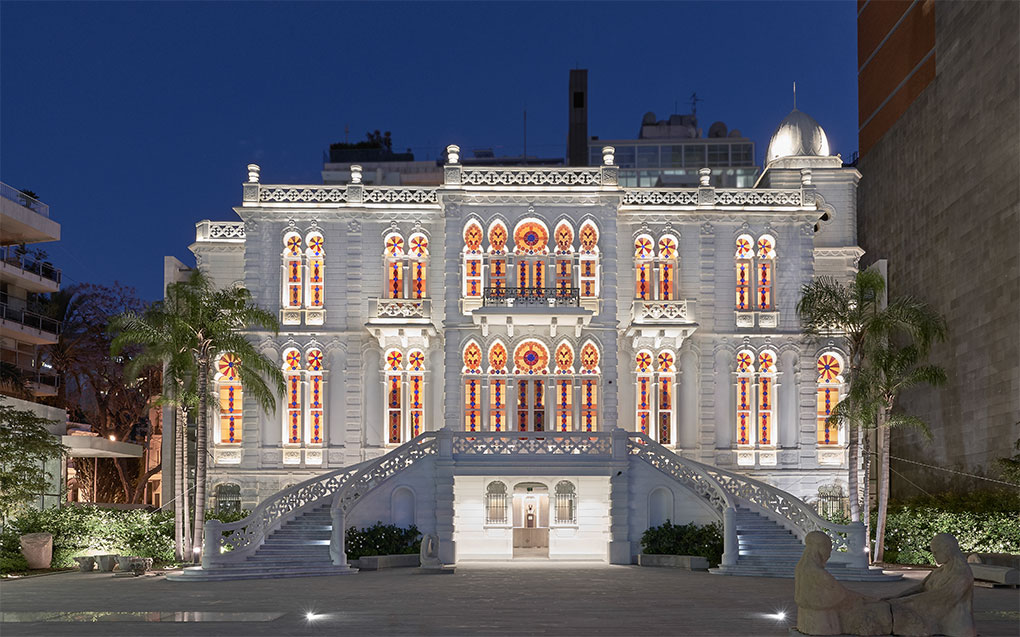
A beautifully illuminated historic building in Beirut, Lebanon, featuring ornate architecture, colorful stained glass windows, and surrounded by palm trees, captured at night.
The beautifully illuminated facade of a historic building in Beirut, showcasing its stunning architecture and vibrant details at night.

🚌Beirut on a Budget: Money-Saving Hacks & Public Transport

Let’s be real, travel costs add up. Here’s how to stretch your dollars in Beirut. To truly save time and money, you need to understand Beirut’s wild public transport system. There are no trains or subway. It’s all about the road.

  • Public Transport: Forget a formal bus system. Beirut’s main public transport is the shared service (pronounced servees) taxi. These are old Mercedes sedans that run set routes. It’s an adventure! Flag one down, tell the driver your general area, and if he’s going that way, you hop in. It costs around 2,000-3,000 L.L. per person. It’s chaotic but the cheapest and most local way to travel.
  • Ride-Hailing Apps: Uber and Careem are your best friends. They are ridiculously cheap compared to Western standards and eliminate haggling. A 15-minute ride will often cost less than $5.
  • How to ride private: If you want the taxi to take you directly and not pick up others, say “Taxi” (not service) and negotiate a higher, private price.
  • Renting a Car? I don’t recommend it for a weekend trip. Beirut’s traffic is legendary (in a bad way), and parking is a nightmare. You’ll waste precious time and gas circling blocks. Stick to walking, services, and ride-hailing.
  • Saving Time & Gas: Plan your days by grouping sites that are close (e.g., Downtown/Corniche, or a separate day for the Mar Mikhael/Sursock area) to avoid long, expensive, private taxi rides through peak traffic (worst times are 7:30-9:30 AM and 4:30-7:00 PM).

Hidden Gems: Beirut’s Secret Spots

  • Hammam Al-Jadid: This isn’t a tourist hammam. It’s a local, no-frills bathhouse. If you’re brave and looking for a truly authentic experience, this is it. Just know what you’re getting into!
  • A Hamra Street Café: Skip the chains and find a tiny café in the Hamra district. Order a Turkish coffee and just people-watch. This is where you’ll see the real, intellectual heartbeat of the old Beirut.
  • The Corniche at Dawn: Everyone does the corniche at sunset. Do it at dawn. You’ll have it almost to yourself, shared only with the city’s dedicated fishermen. The light is soft, and the city feels peacefully still.
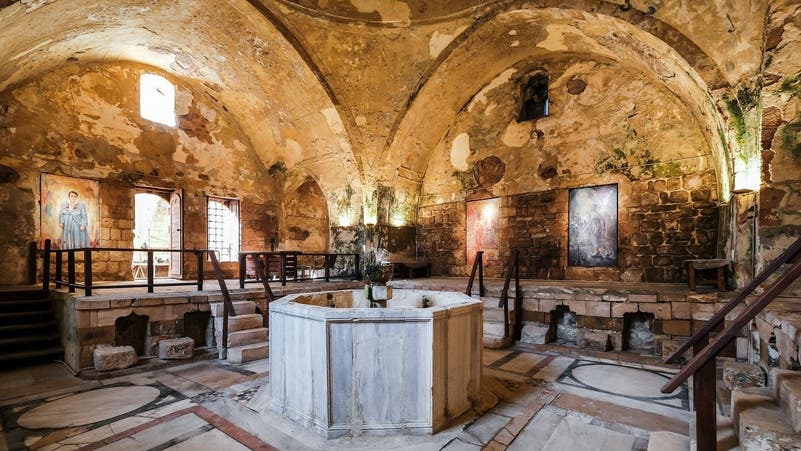
Interior of an ancient stone church featuring arched ceilings, weathered walls, and artwork on the walls, with a stone font in the center.
Hammam Al-Jadeed bathhouse combines art and antiquity in Lebanon

Essential Lebanese Lingo for Travellers

You’ll get by with English and French, but a few words of Arabic will open doors and hearts.

  • Marhaba (mar-ha-ba): Hello
  • Shukran (shook-ran): Thank you
  • Yalla (ya-la): Let’s go! / Come on! (You’ll hear this constantly)
  • Kifak? (ki-fak): How are you? (to a male)
  • Kifik? (ki-fik): How are you? (to a female)
  • Bi kam? (bee kam): How much?
  • Saha (sa-ha): Said to someone who is eating, like “Bon Appétit”

Packing Your Beirut Toolkit (My Travel Lifesavers)

A smooth trip is all about the right gear and the right backups. These are the products I never travel without.

✈️ Stay Connected & Secure:

Let’s talk internet. Relying on airport SIMs or roaming is a surefire way to burn cash. My secret weapon? Drimsim. It’s a universal data SIM that works in over 190 countries, including Lebanon. You just pop it in, top up via the app, and you’re online. No hunting for a store upon arrival. → Grab your Drimsim here and stay connected hassle-free.

And while we’re on digital safety, a VPN is non-negotiable, especially when using public WiFi. I’ve used NordVPN for years to keep my data safe and stream my home Netflix. → Protect your online privacy with NordVPN.

✈️ Travel with Peace of Mind:

Stuff happens. Flights get delayed, luggage gets lost. I never leave home without solid travel insurance from VisitorsCoverage. It’s a platform where you can easily compare plans and find one that fits your specific trip. It’s the ultimate safety net. → Compare and book your travel insurance with VisitorsCoverage.

Speaking of flight troubles, did you know if your flight is delayed or canceled, you could be owed up to $650? Most people never claim it. I use AirHelp to fight the airlines for me—they only get paid if I win. It’s a no-brainer. → Check your flight for compensation with AirHelp.

✈️ Capture the Magic:

Beirut is incredibly photogenic. I capture all its beauty with my trusty Sony Alpha camera. It’s lightweight, powerful, and perfect for both cityscapes and food shots.

Ready to book your flight and hotel? I always find the best deals on Expedia. → [Start planning your Beirut escape here!]( Your Link)

Beirut Weekend Escape: Frequently Asked Questions

Q: Is Beirut safe for tourists?
A: This is the number one question. The political and economic situation is complex, and it’s important to stay informed. However, on a day-to-day level, Beirut is an incredibly welcoming city. The hospitality is genuine, and the areas tourists frequent are generally safe. Exercise the same caution you would in any major city.

Q: What’s the visa situation and cost?
A: Visa policies can change, but for many Western passport holders (US, Canada, EU, UK), a free visa-on-arrival is granted for a stay of one month. Always check with the Lebanese embassy in your country for the most current information before you travel.

Q: What’s the best time of year to visit for a weekend?
A: The ultimate sweet spots are Spring (April-May) and Autumn (September-October). The weather is perfect—warm and sunny, but not the oppressive heat of summer. You’ll also avoid the peak summer crowds.

Q: Can I use US Dollars/Euros?
A: Yes, absolutely. Lebanon has a massive currency crisis, and the country operates on a “Liraize” system. You can pay in US Dollars almost everywhere, and you’ll often get change in a mix of dollars and lira. Don’t bother changing large amounts of money; just bring crisp, new US dollar bills.

Q: I love to shop! Any tips?
A: Beyond the designer stores in the Souks, look for local crafts. I love the ceramic shops and the beautiful, traditional glassware. And for a truly unique souvenir, pick up a bottle of Arak, the national anise-flavored spirit.

Q: Is a weekend enough for Beirut? A: Absolutely! Three days is perfect for hitting the city highlights (Corniche, Downtown, Museums, nightlife) and squeezing in one fantastic day trip (like Byblos). For a deeper dive, you’d need a week, but the ultimate weekend escape is totally doable.

Q: How safe is Beirut for solo female travelers? A: In my experience, Beirut is welcoming and friendly. Basic common sense applies, especially at night or when navigating public transport. Dress respectfully when visiting religious sites, but the city’s vibe is generally very modern and liberal.


Your Next Adventure Awaits!

Beirut isn’t just a destination; it’s an experience. It’s a city that will challenge you, delight you, and leave you craving more. With this guide, you’re armed with everything you need for an unforgettable weekend.

So, what are you waiting for? [Check flight prices to Beirut now] start packing! Have any questions? Drop them in the comments below – I love talking all things travel.

P.S. Looking for more weekend inspiration? Don’t forget to explore my complete Travel Master List for guides to other incredible destinations!

https://pin.it/4OPRwZK86

Universal Disclaimer/Disclosure Page:

Ultimate Weekend Guide to Reykjavik, Iceland

Meta Description:

Dreaming of a weekend adventure? Our ultimate guide to a weekend in Reykjavik, Iceland, is packed with insider tips, a savvy 3-day itinerary, and hidden gems. Learn how to navigate the city, save money, and experience the magic of the Land of Fire and Ice. Perfect for a short, unforgettable escape!

So, you’ve decided to answer the call of the North. The land of fire and ice, Viking sagas, and more geothermal pools than you can shake a stick at. But with only a weekend to spare, how do you even begin to scratch the surface of a place as epic as Iceland? Don’t worry, I’ve got you covered. A trip to Reykjavik might seem like a sprint, but with the right game plan, it’s an absolute marathon of incredible experiences.

 Forget what you’ve heard about needing a week—Reykjavik is the perfect city for a weekend blitz. It’s like someone took a charming Scandinavian town, sprinkled it with elf dust, and set it against a backdrop of epic nature.

Ready to dive in? Grab your coziest sweater and let’s go!

I learned this the hard way after a last-minute flight deal I snagged on  Expedia landed me in this otherworldly city. I’m here to be your guide, so you can have all the awe without any of my initial “wait, which way is the ocean?” confusion.

Table of Contents

  • Arrival & Getting Around: From Keflavik to the City Center
  • Day 1: City Sights & Geothermal Delights
    • Morning: Exploring Reykjavik’s Heart
    • Afternoon: Hot Dogs & High Art
    • Evening: The Blue Lagoon Experience
  • Day 2: Golden Circle Wonders & Hidden Gems
    • Morning: A Golden Start
    • Afternoon: My Secret Spot
    • Evening: Farewell Feast
  • Practical Tips & Insider Knowledge
    • Saving Money on the Go
    • Public Transportation Demystified
    • Essential Icelandic Words
  • Frequently Asked Questions (FAQs)
  • Ready to Book Your Icelandic Adventure?

Arrival & Getting Around: From Keflavik to the City Center

First things first, you’ll land at Keflavik International Airport (KEF), which is about a 45-minute bus ride from downtown Reykjavik. I learned the hard way that a taxi can be a small fortune, so unless you’re rolling like a Viking chieftain, stick to the shuttle. Both Flybus and Airport Direct are reliable and easy to book. You can snag your tickets online or at the counter in the arrivals hall. It’s a great way to save money right off the bat, giving you more krona for that essential Icelandic hot dog.

Once in the city, Reykjavik is incredibly walkable. The main attractions are clustered together, making it easy to navigate on foot. But for longer distances, the public bus system, Strætó, is your best friend. Look for the bright yellow buses and download the Strætó app to check schedules and buy tickets. You can pay with a credit card on the app, which is a huge bonus. If you’re feeling adventurous and want to explore the Ring Road outside of Reykjavik, renting a car is the way to go. Just be aware of the weather and check the road conditions frequently at road.is.

Hotels in Reykjavik

Your Savvy 3-Day Reykjavik Itinerary

This itinerary is designed to maximize your time and minimize logistical headaches.

Day 1: Downtown Vibes & Northern Lights Chase

  • Morning: Fly into Keflavík (KEF). Instead of an expensive taxi, take the Flybus (a coach service that connects to a smaller bus taking you to your specific hotel area). It’s efficient and way cheaper. Drop your bags and hit the streets.
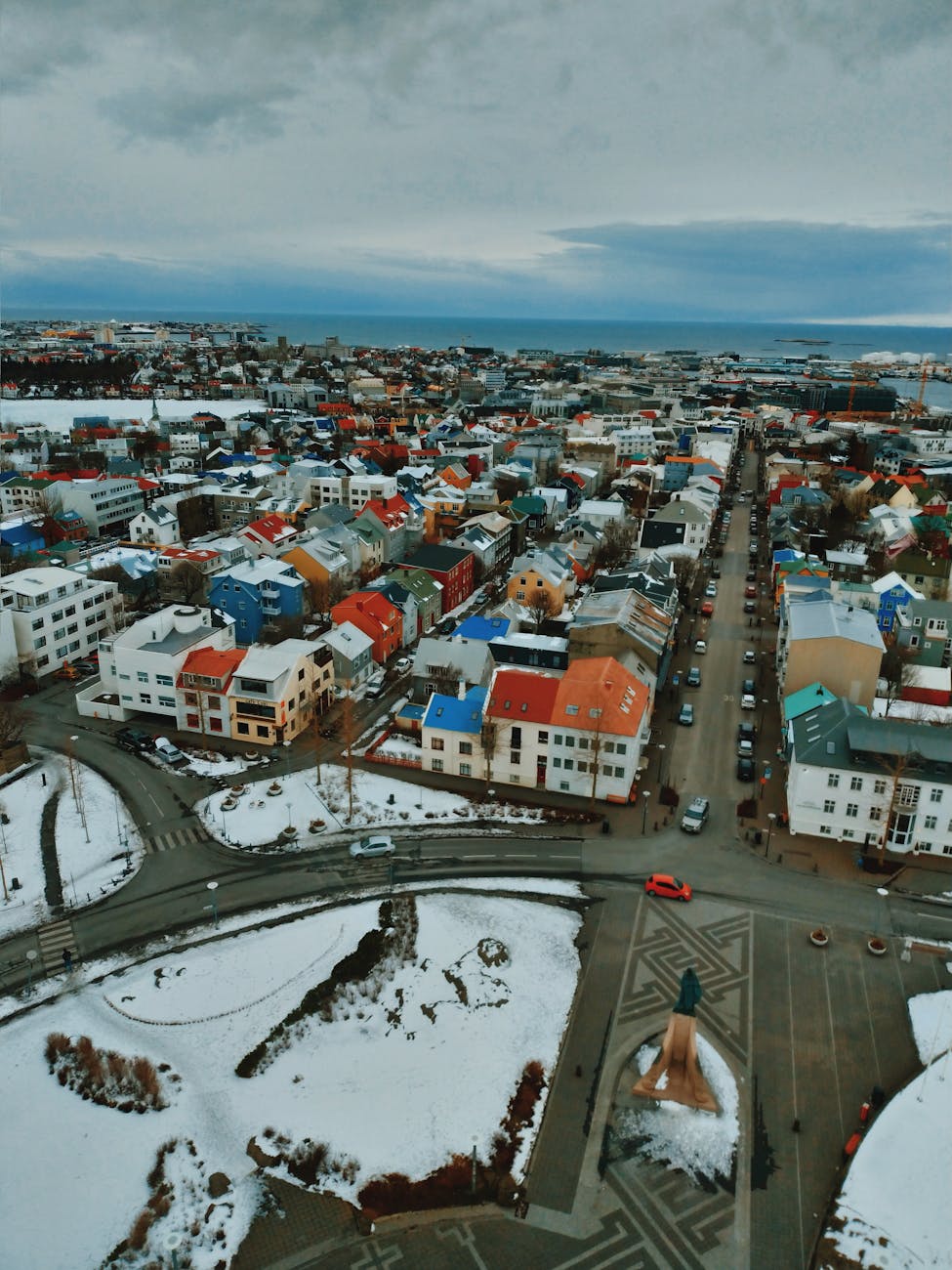
  • Afternoon: Explore Reykjavik’s Old Harbor. Grab a famous lobster soup at Saegreifinn (The Sea Baron). Then, walk up to the iconic Hallgrímskirkja church. The ascent to the top is worth every kronur for the panoramic view of the city’s colorful rooftops. It’s impossible to miss—it looks like something out of a sci-fi movie. For a small fee, you can ride the elevator to the top of the tower for a panoramic view of the city. Trust me, it’s worth it. Seeing the city’s rainbow-colored roofs set against the backdrop of the mountains is a sight you won’t forget.
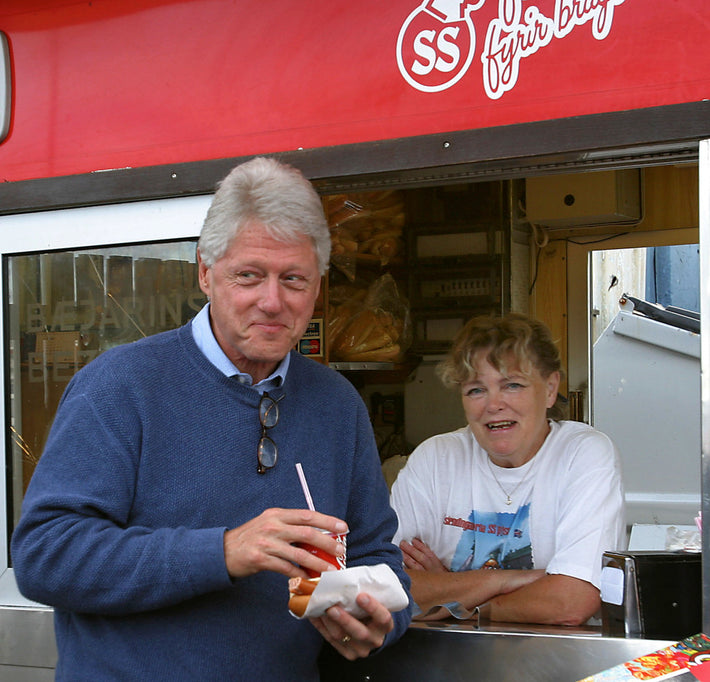
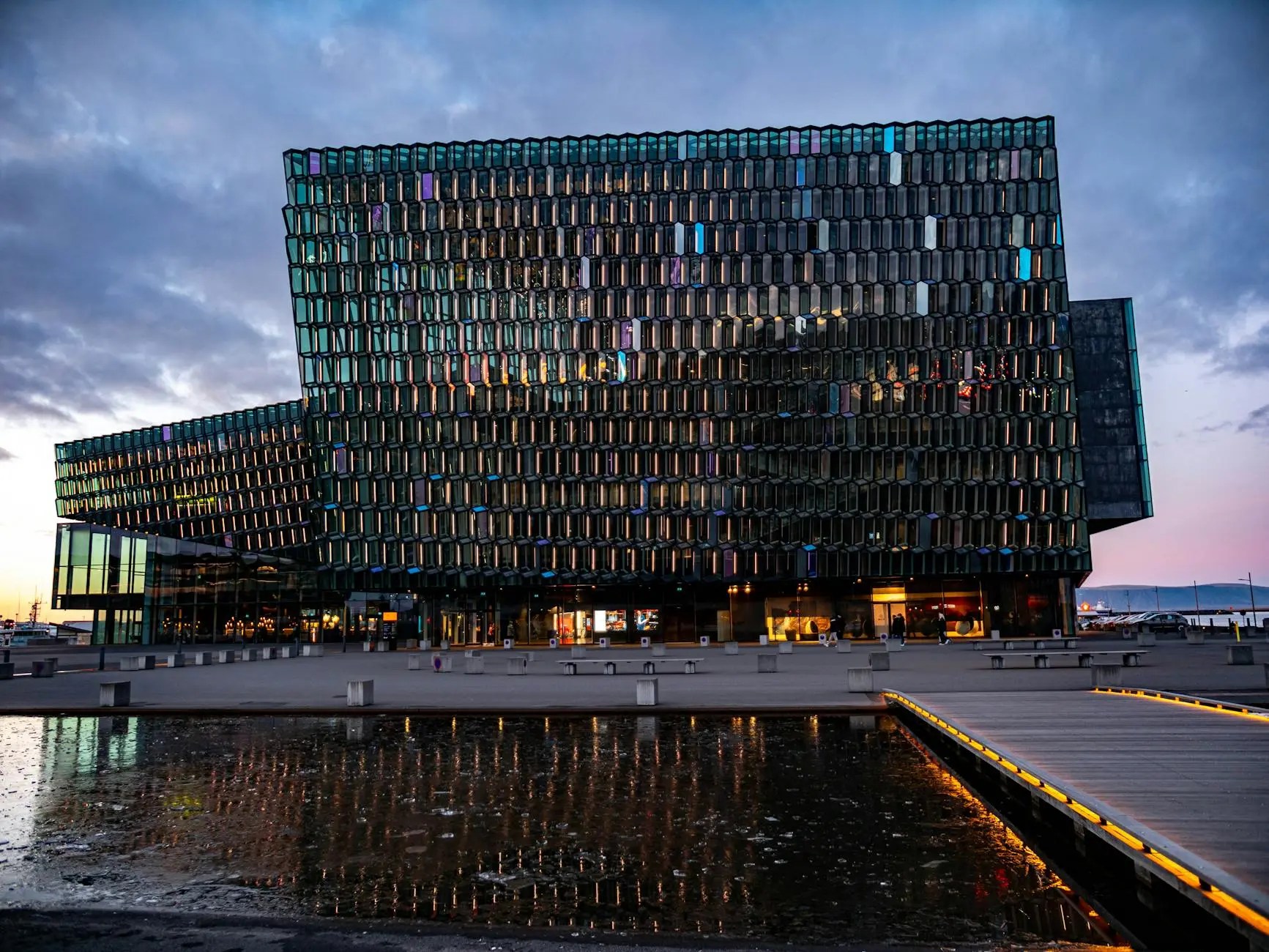
  • No trip to Iceland is complete without a stop at Bæjarins Beztu Pylsur, a tiny hot dog stand that has been serving up what Bill Clinton called “the best hot dogs in the world.” My advice? Order one with everything. The fried onions are a game-changer. From there, take a leisurely walk along the waterfront to the Harpa Concert Hall. The building is a masterpiece of modern architecture, and the way the light plays off the glass panels is mesmerizing.
  • Evening: This is your night! Book a Northern Lights tour. Pro-tip: These tours are smart—they’ll chase the clearest skies. If you don’t see the lights, many companies offer a free rebooking. I used my Canon EOS R100 Mirrorless Camera to capture the faint green swirls, and the photos were incredible even in low light.
A metallic sculpture resembling a Viking ship, positioned along the shore of Reykjavik, with modern buildings and a waterfront in the background.
The Sun Voyager sculpture, a stunning landmark in Reykjavik, with the city skyline reflecting off the ocean.The Sun Voyager (Sólfar): More than just a photo op, this stunning steel sculpture symbolizes a vessel of dreams, pointing toward the midnight sun. It’s a perfect spot to watch the light change over Mount Esja.
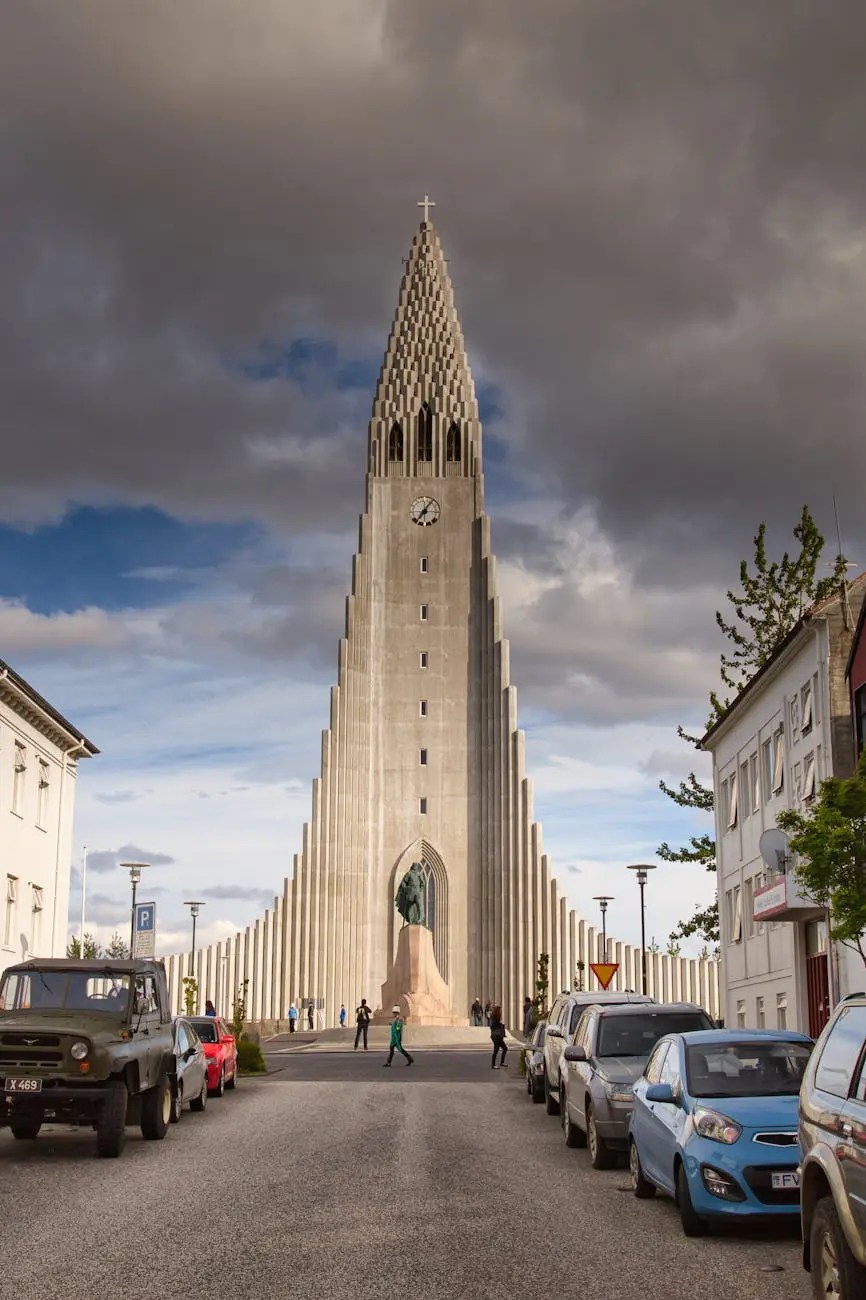
A wide-angle view of Hallgrímskirkja, a prominent church in Reykjavik, Iceland, featuring its distinctive tall tower and unique architectural design. Cars are parked along the street, and people are seen walking in front of the church under a partly cloudy sky.
The iconic Hallgrímskirkja church in Reykjavik, showcasing its unique architecture and surrounding streets.Hallgrímskirkja Church: Dominating Reykjavik’s skyline, this expressionist masterpiece was inspired by Iceland’s basalt lava flows. The statue out front is none other than Leifur Eiríksson (Leif the Lucky), the Norse explorer who reached North America centuries before Columbus.
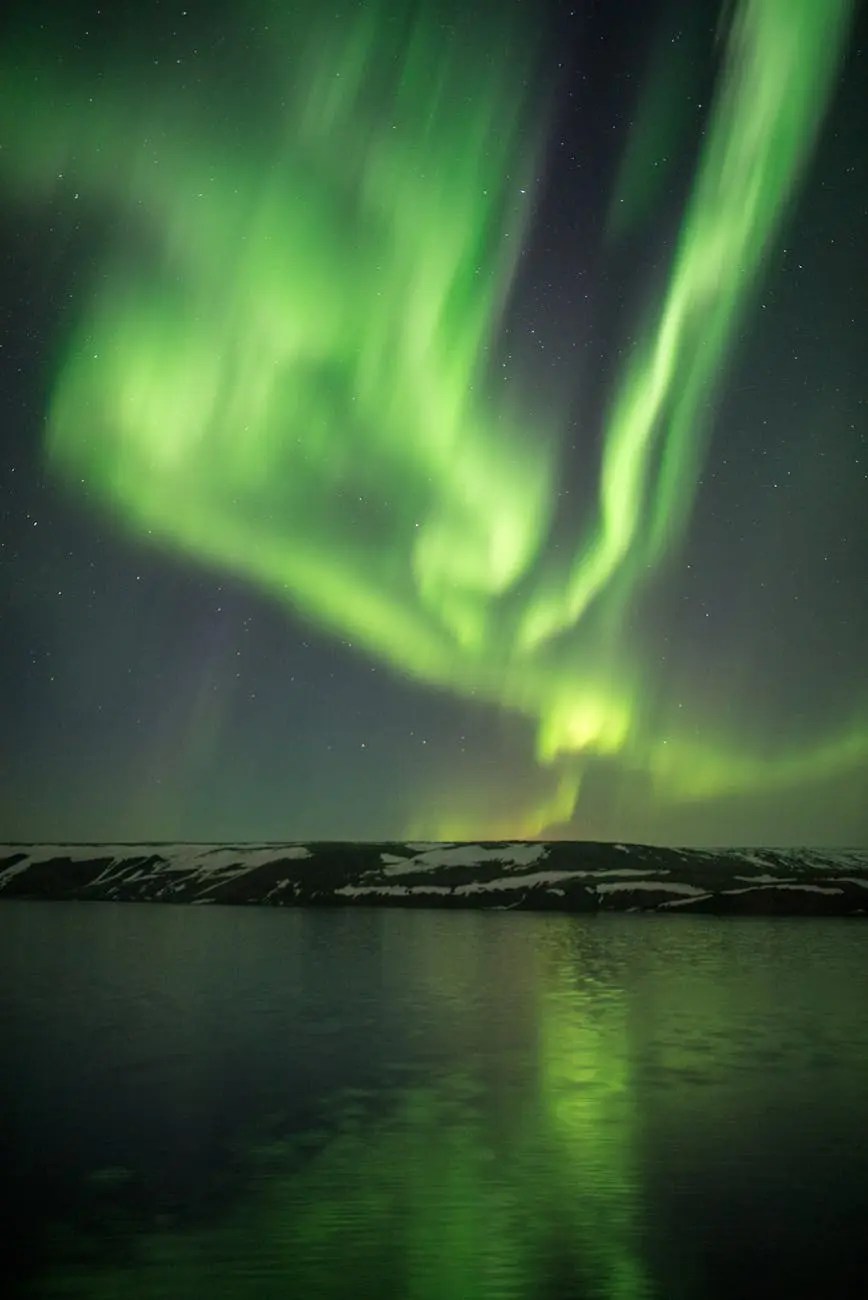
A vibrant display of the Northern Lights illuminating the night sky over a dark landscape with a calm reflection on water.
Breathtaking display of the Northern Lights illuminating the night sky over Iceland. Chasing the Aurora: A breathtaking display of the Northern Lights (Aurora Borealis) over the Icelandic wilderness. Capturing this moment requires patience, a little luck with the weather, and a good camera—like the one I always use.
Canon EOS R100


Day 2: The Golden Circle & Secret Lagoon
Full Day: The Golden Circle is a must. You have two options:
Join a Tour: Stress-free, includes guides, and you can nap between stops. Great for solo travelers or those avoiding winter driving.
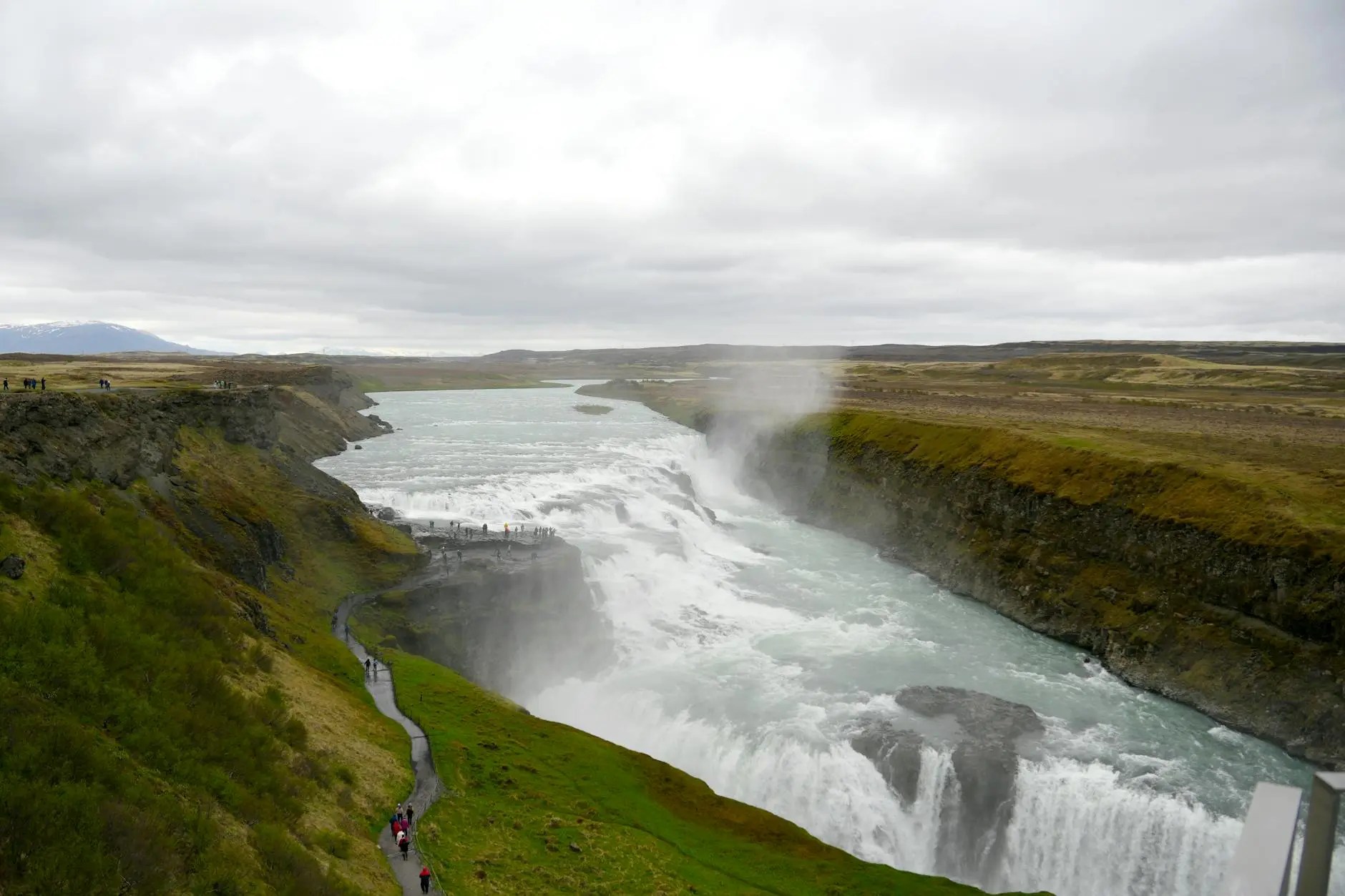
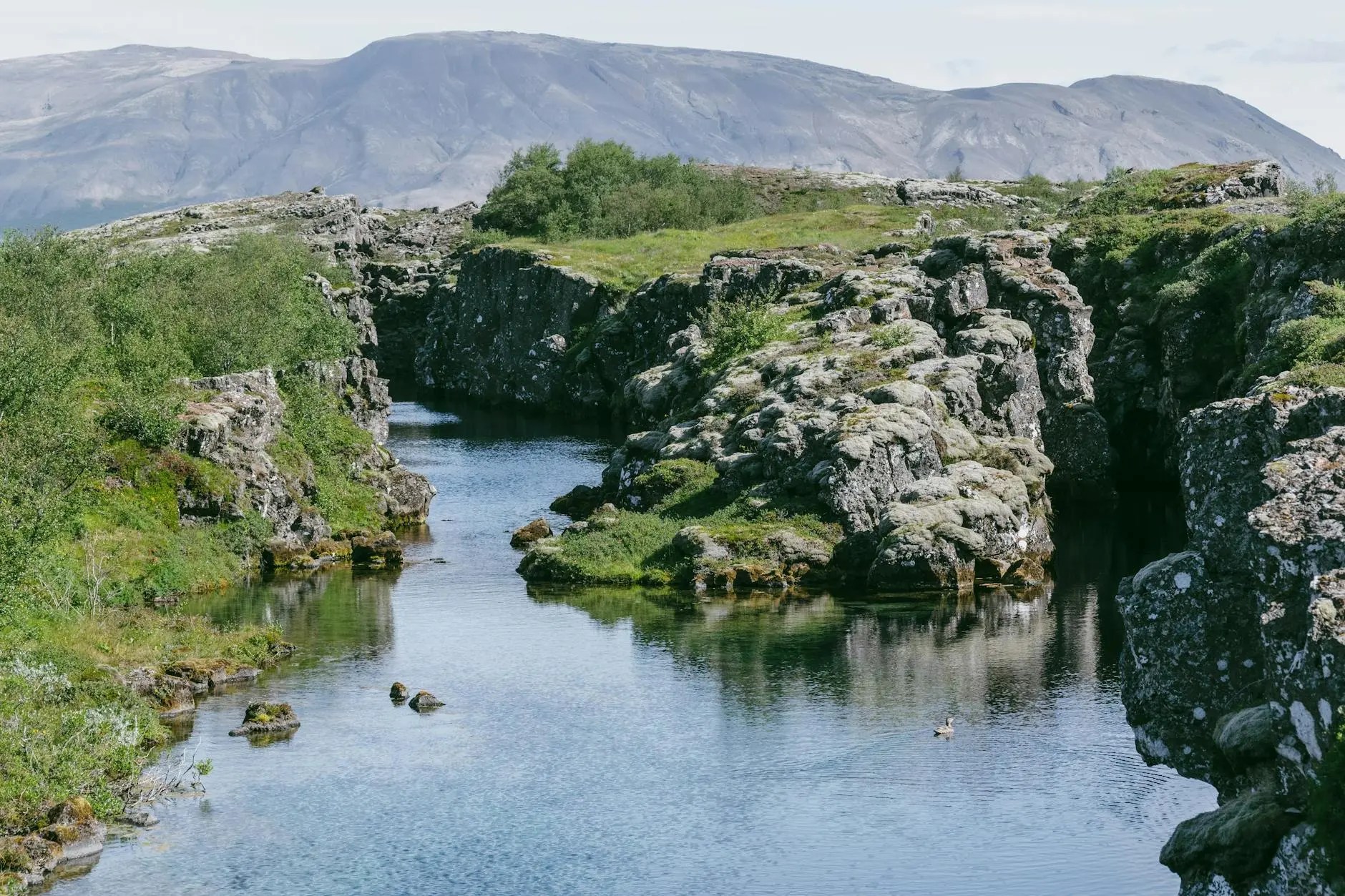
Rent a Car: Offers flexibility. You can leave earlier to beat the crowds at Gullfoss waterfall and spend more time at Þingvellir National Park, where you can walk between the North American and Eurasian tectonic plates.
Evening: The Blue Lagoon Experience
This is an absolute must-do. Yes, it’s touristy, but for a good reason. The Blue Lagoon is a surreal experience. The milky blue, geothermally heated water is pure bliss, especially after a long day of exploring. I booked my tickets in advance, which is a pro-tip for avoiding the massive queues. So, go ahead, get that iconic silica mud mask on your face, and let the relaxation begin. This is what you came here for. I highly recommend checking Expedia for packages that include transportation from Reykjavik, which can save you a ton of hassle. Book your Blue Lagoon escape here!
A man holding a hot dog and drink stands in front of a food stall, smiling, while a woman behind the counter also smiles. The stall has a red awning with text in Icelandic.
A popular hot dog stand in Reykjavik, famous for serving Iceland’s best hot dogs, a must-try for visitors exploring the city.

The Harpa Concert Hall in Reykjavik, Iceland, featuring modern glass architecture reflecting the evening sky and surrounding water.
Harpa Concert Hall in Reykjavik, showcasing its stunning modern architecture and vibrant reflections at sunset. Harpa Concert Hall: This architectural marvel isn’t just for concerts! Its geometric glass facade, designed to resemble Iceland’s basalt landscapes, catches the light differently every hour. At sunset, it becomes a kaleidoscope reflecting the fiery sky.

Day 2: The Golden Circle & Secret Lagoon

  • Full Day: The Golden Circle is a must. You have two options:
    1. Join a Tour: Stress-free, includes guides, and you can nap between stops. Great for solo travelers or those avoiding winter driving.
    2. Rent a Car: Offers flexibility. You can leave earlier to beat the crowds at Gullfoss waterfall and spend more time at thingvellir National Park, where you can walk between the North American and Eurasian tectonic plates.
  • Travel Smart Tip: If you’re driving, use an offline map app like Maps.me. Cell service can be spotty, and this saves both time and data. Speaking of data…

🌎 Stay Connected Smartly: I used to waste precious vacation time hunting for a local SIM card. Not anymore. I now travel with Drimsim, a global SIM that works in 190+ countries, including Iceland. You just pop it in, top up via the app, and you’re online the moment you land. No hidden fees, no stress. It’s a game-changer for navigating and posting those epic waterfall

A panoramic view of Gullfoss waterfall in Iceland, showcasing cascading water flowing into a rocky canyon, surrounded by lush green vegetation and a cloudy sky.
The stunning Gullfoss waterfall, a key highlight of the Golden Circle in Iceland, showcasing its powerful cascades and breathtaking scenery. Gullfoss – The Golden Waterfall: Feel the spray from here? This aerial view shows the immense power of Gullfoss as the Hvítá River plummets 32 meters in two dramatic stages into a rugged canyon. A cornerstone of Iceland’s famous Golden Circle route.
A serene view of a narrow river flowing between rocky cliffs, surrounded by lush green vegetation and rolling mountains in the background.
A tranquil view of the Silfra fissure in Þingvellir National Park, showcasing the stunning geological formations and crystal-clear water. Silfra Fissure: Where Continents Meet. This isn’t just any river—you are literally looking at the rift between the North American and Eurasian tectonic plates. The water is filtered through lava rock for decades, making it some of the clearest on Earth. Snorkeling or diving here is like floating between two continents!
A large iceberg floats in calm water, reflecting shades of blue and white, under a gray sky.
Majestic ice formations floating in a serene glacial lake, showcasing Iceland’s stunning natural beauty. Jökulsárlón Glacier Lagoon and the Blue Lagoon are two completely different and distinct natural wonders in Iceland.

Day 3: Coastal Wonders & Farewell Feasts

  • Morning: Drive or take a bus to the Reykjanes Peninsula. See the dramatic cliffs at Valahnúkamöl and the iconic Reykjanesviti lighthouse. It’s a landscape that feels like the end of the world.
  • Afternoon: Head back to the city for last-minute souvenir shopping on Laugavegur Street. Pick up some Icelandic woolens (lopapeysa) or salt from the Reykjanes geothermal areas.
  • Evening: Enjoy a final feast. I highly recommend trying the fermented shark (hákarl) if you’re brave—it’s a rite of passage—but follow it immediately with a delicious Icelandic beer.
Black sand beach with dramatic cliffs and sea stacks in Iceland, under a cloudy sky.
The dramatic black sand beach of Reynisfjara, with towering sea stacks and rugged cliffs, showcasing Iceland’s stunning coastal landscape.
A picturesque view of Kirkjufell mountain with a waterfall in the foreground, surrounded by lush green grass and a colorful sky at sunrise.
Stunning view of Kirkjufell mountain and Kirkjufellsfoss waterfall in Iceland, showcasing the natural beauty of the Land of Fire and Ice.
A close-up view of a lighthouse with a red top, standing against a backdrop of a serene ocean and dramatic cloudy sky.
The iconic Reykjanesviti lighthouse, a stunning landmark along Iceland’s coastline, surrounded by the tranquil North Atlantic waters. Reykjanesviti Lighthouse: A Sentinel on the Volcanic Coast. Iceland’s oldest lighthouse has guided sailors since 1907. Perched on the edge of the Reykjanes Peninsula—one of the most geologically active places on Earth—it offers a stark, beautiful contrast between human ingenuity and raw nature.
Aerial view of Reykjavik, Iceland, showcasing colorful rooftops, snow-covered streets, and a coastal backdrop under a cloudy sky.
Aerial view of Reykjavik showcasing colorful rooftops, snow-covered streets, and the picturesque downtown area.
A cozy, colorful Icelandic wool sweater featuring traditional patterns in red, blue, yellow, and white.
Authentic Icelandic wool sweater, perfect for cozying up during your Reykjavik adventure.

Two pieces of fermented shark meat displayed on a wooden plate, showcasing their unique texture and preparation.
Fermented shark (hákarl), a traditional Icelandic delicacy, presented on a wooden platter.

Reykjavik Insider Intel: Getting Around & Saving Kronur

Public Transport: The Strætó Bus System

Reykjavik’s public bus system is called Strætó. It’s reliable and covers the city well. Download the Strætó app to plan routes and buy tickets. A single ticket (good for 75 minutes with transfers) is around 490 ISK. If you’re planning multiple bus trips in a day, a 24-hour pass is more economical.

To Rent a Car or Not?

  • For a Summer Weekend: A car offers amazing freedom to explore at your own pace.
  • For a Winter Weekend: This is a trickier call. If you are comfortable driving in potentially icy and dark conditions, it’s great. If not, stick to tours. They are experts in safe winter travel. I found my great rental deal through  Expedia

Money-Saving Tips for Smart Travelers

  • Eat Smart: Dining out in Iceland is pricey. Save money by grabbing breakfast and lunch from Bónus (the supermarket with the pink pig logo). Their sandwiches and skyr are perfect for on-the-go.
  • Free Hot Water: Bring a reusable bottle! The tap water is among the best in the world, and you can often fill up with hot water from geysers (let it cool first!).
  • Happy Hour is Your Best Friend: Alcohol is heavily taxed. Reykjavik has a vibrant “Happy Hour” culture. Look for signs in bar windows and plan your drinks accordingly.
Exterior view of a Bónus supermarket featuring the pink pig logo against a cloudy sky.
The exterior of Bónus, a popular budget supermarket chain in Iceland, featuring its iconic pink pig logo.

4. Beyond the Brochure: Reykjavik’s Hidden Gems

  • The Elf School (Álfaskólinn): Yes, it’s a thing. A delightful, quirky experience where you can learn about Icelandic folklore and elves (the huldufólk).
  • Reykjavik Roasters: Escape the crowds at this local coffee institution. It’s where the locals go for a truly excellent cup of coffee.
  • Sundhöllin Reykjavikur: An indoor swimming pool complex loved by locals. It’s a fraction of the price of the tourist lagoons and a truly authentic experience.

5. Essential Icelandic for Travelers

Don’t worry, everyone speaks fantastic English. But a few words go a long way!

  • Takk: (Tahk) – Thank you.
  • Góðan daginn: (Go-than die-in) – Good day.
  • Skál: (Skowl) – Cheers!
  • Einn bjór, takk: (Adehn byour, tahk) – One beer, please. (The most important phrase).
  • (yow) – Yes
  • Nei (nay) – No
  • Hvar er…? (kvahr air) – Where is…?

6. Travel Smart: Your Pre-Departure Checklist

  • Visa & Costs: For most US, Canadian, and EU citizens, no visa is needed for short stays. Always check the official government site for the latest requirements. Iceland is part of the Schengen Area.
  • Travel Insurance: My trip was almost derailed by a sudden storm. I never travel without insurance. I use VisitorsCoverage to compare plans and find the right coverage quickly. It’s peace of mind you’ll be glad to have. <Find your plan here: 
  • VPN: Using public Wi-Fi? Protect your data. I always have ” target=”_blank” rel=”noreferrer noopener nofollow”>NordVPN running on my phone and laptop. It’s essential for safe browsing and can sometimes help with streaming services from back home. <Stay secure with NordVPN:

⚠️ Flight Trouble? On my way to Iceland, my connecting flight was delayed. I didn’t know that EU passenger rights often entitle you to compensation. I used AirHelp to check my flight, and they handled the entire claim process. If your flight is delayed, canceled, or overbooked, you could be owed up to $650. It’s worth a quick check! 

7. Reykjavik Weekend FAQ

Q: What is the best time of year for a weekend in Reykjavik?
A: It depends on what you want!

  • For Northern Lights: Visit between September and March.
  • For Midnight Sun & Hiking: Visit between May and August.
  • For Fewer Crowds & Lower Prices: The shoulder months of April and October are great.

Q: Is a weekend in Reykjavik enough time?
A: Absolutely! While you won’t see the entire country, a well-planned 3-day weekend is perfect for experiencing Reykjavik’s culture and the iconic Golden Circle.

Q: What should I pack for a weekend in Iceland?
A: Layers, layers, layers! A waterproof and windproof outer shell is essential, regardless of the season. Don’t forget a swimsuit for the pools and lagoons, and a warm hat.

Q: How expensive is Reykjavik?
A: It has a reputation for being pricey, but as outlined in the tips above, you can manage your budget by being smart about food, transport, and accommodations.

Do I need cash in Iceland?

  • No. Iceland is nearly a cashless society. You can use a credit or debit card for almost everything.

Ready for Your Icelandic Adventure?

Reykjavik is a city that captures your heart quickly. With this guide, you’re equipped to dive in, explore confidently, and create a weekend of stories that will last a lifetime.

What are you most excited to see? Have any questions I didn’t cover? Drop a comment below! And don’t forget to check out my other European city guides, like my take on [48 Hours in Copenhagen , Dublin, Frankfurt, Paris, for more travel inspiration!

Start planning your unforgettable escape today by finding the best flight deals to Reykjavik!
<Search for flights on Expedia>


Universal Disclaimer/Disclosure Page:

The Ultimate Weekend Escape to Munich, Germany

Meta Description:
“Get ready for the ultimate weekend escape to Munich, Germany—fun, insightful, and practical for savvy travelers. Discover city secrets, navigating tips, quirky anecdotes, and time-saving advice. Let’s explore the heart of Bavaria like a local—with a wink!”

The Ultimate Weekend Escape to Munich, Germany

Table of Contents

  1. Why Munich Should Be on Your Weekend Radar
  2. Getting There & Getting Around
    • Airports, Trains, Cars, and Local Transit
  3. Top Attractions & Hidden Gems
    • Marienplatz & the Glockenspiel
    • Viktualienmarkt Culinary Crawl
    • English Garden & Surfer’s Wave
    • A Secret Local Brewery or Two
  4. Money-Smart Tips for Wise Travelers
  5. Stay Connected: SIMs, Wi-Fi, VPNs, Flight Delays, Travel Insurance
  6. Must-Know German Phrases for Travelers
  7. FAQs
  8. Call to Action & Related Reads

1. Why Munich Should Be on Your Weekend Radar {#why-munich}

Munich blends medieval charm, quirky beer gardens, serious architecture, and friendly locals—all within great public-transit reach. Whether you’re here for bratwurst, the soaring Frauenkirche, or the best pretzel of your life, Munich organizes itself around your pleasure.

2. Getting There & Getting Around {#getting-around}

Arriving in Munich:

  • By air: Munich Airport (MUC) is well-connected across Europe and beyond.

Flights to Munich

  • By train: The Hauptbahnhof (main station) links the city with Deutsche Bahn’s fast ICE trains—a scenic way in!

Munich Vacations

  • By car: If road-tripping from nearby Bavaria, the A9 and A95 autobahns lead you straight in—just watch traffic before Oktoberfest.

Local Transportation Tips:

  • U-Bahn/S-Bahn trams & buses: Efficient, frequent, and well-signed in English. A 48-hour or weekend “CityTourCard” gets you unlimited rides and discounts.
  • Bike: Munich’s bike culture is strong—grab a rental and pedal past historic façades and leafy parks.
  • Car: Generally overkill within city limits—park once and shift to transit or walking to save on gas and parking fees.

Need help booking flights? Head over to Expedia to compare routes—and I’ve peppered in my handy affiliate link where you’ll find deals. Book your flight here on Expedia!

3. Top Attractions & Hidden Gems {#attractions-hidden-gems}

  • Marienplatz & the Glockenspiel: Watch the charming figurines come to life at 11 a.m. (and in summer, noon too). Terribly touristy—but you can’t say you’ve been to Munich without it.
  • Viktualienmarkt: Think open market meets Bavarian soulfood—you’ll find cheese, sausages, and pretzels with personalities.
  • English Garden & Surfer’s Wave: Calm strolling paths… and the mind-blowing sight of surfers riding a man-made wave in the middle of the city.
  • Hidden Brewery: Steer clear of Munich’s big touristy beer halls and drop into a tucked-away pub where the locals sip dunkel like it’s water. (Tip: Ask around near the Glockenbachviertel neighborhood.)
  • Personal anecdote: I remember clutching a Maß (a beer stein nearly as big as my head) by the Eisbach river, water splashing beside me while a street musician belted out “Sweet Caroline.” Pure Munich magic.

Marienplatz Tours

Panoramic view of Munich featuring the ornate architecture of the city hall with its spire against a twilight sky.
A stunning view of Munich’s gothic architecture, featuring the iconic tower of the Neues Rathaus Marienplatz, at twilight.

Rathaus-Glockenspiel Tours

Close-up of the intricate clock face of the Glockenspiel in Munich, showcasing colorful zodiac symbols, Roman numerals, and decorative figures.
The intricate details of the Glockenspiel clock tower in Marienplatz, Munich, showcasing its unique design and artistic features.

Viktualienmarkt Tours

A bustling scene in Munich, Germany, showcasing historic architecture with a blend of modern activity. People walk through a vibrant square surrounded by buildings featuring red roofs and pointed spires under a clear blue sky.
Explore the vibrant streets of Munich, showcasing its medieval charm and bustling market atmosphere.

English Garden Tours

A wooden pagoda-style structure surrounded by greenery, located in a park setting in Munich, Germany.
The iconic Chinese Tower in Munich’s English Garden, a perfect spot for relaxation and local brews.

Bavarian Beer & Food Evening Tour

Two surfers in wetsuits stand by the water, preparing to ride a wave in a river while onlookers watch from the shore.
Surfers prepare to ride the man-made wave in Munich’s English Garden, a popular spot for both locals and visitors.

Hofbräuhaus Tours

View of the Hofbräuhaus building in Munich, featuring ornate architecture and a statue of a beer carrier on the roof.
The iconic Hofbräuhaus in Munich, a must-visit destination for beer enthusiasts.

4. Money-Smart Tips for Wise Travelers {#money-smart-tips}

  • CityTourCard: This city transit pass saves on rides and admission deals.
  • Lunch specials: Many biergartens do “Mittagstisch”—a budget midday meal deal.
  • Eat where locals eat: Sidestep the tourist traps and take your cues from Bavarian workers, not Instagram.
  • Avoid ATM fees: Use your travel-friendly bank cards wisely, or withdraw larger amounts to minimize charges.

Bavarian Beer & Food Evening Tour

5. Stay Connected: SIMs, Wi-Fi, VPNs, Flight Delays, Travel Insurance {#connectivity-and-protection}

Staying connected while abroad shouldn’t break the bank—or your sanity. I switch to a Drimsim universal SIM, which works in 190+ countries—just pop it in, top up via the app, and voilà: connectivity without roaming sticker shock.

Looking for a VPN? Stay secure on public Wi-Fi with this VPN link.

Flights delayed or canceled? You may be owed up to $650. Let AirHelp handle the hassle—they do the work and you only pay when they win. Check your flight with AirHelp.

And lastly, travel smart with insurance—VisitorsCoverage helps you compare and book in a few clicks, so you’re covered before adventure strikes. Get your peace-of-mind policy here.

6. Must-Know German Phrases for Travelers {#german-phrases}

Here are some useful words and what they mean—handy for navigating Munich like a pro:

GermanMeaningUse-Case
Guten TagGood day / HelloGreeting when entering shops or restaurants.
Danke / BitteThank you / Please you’re welcomeDaily courtesy, everywhere.
Wo ist…?Where is…?E.g., “Wo ist der Eingang?”—where’s the entrance?
Eine Maß, bitteOne liter of beer, pleaseFor ordering at the beer garden.
EntschuldigungExcuse me / SorryGreat for getting someone’s attention or brushing past.
Wie viel kostet das?How much does it cost?Handy for markets or street stalls.

7. FAQs {#faqs}

Q: What’s the best time to visit Munich to avoid crowds?
A: April–May or September (just before or after Oktoberfest) deliver perfect weather and smaller crowds.

Q: Should I buy transit tickets in advance?
A: No need—just get tickets at machines in stations or order a CityTourCard app-side.

Q: Do I need to reserve at beer gardens?
A: Usually not—just grab a seat, cheers with a “Prost!”, and wait for someone to share a table if needed.

Q: Is English widely spoken?
A: Yes—especially at transit hubs, tourist attractions, and restaurants—but trying a local phrase never hurts!


8. Call to Action & Related Reads {#cta-related-reads}

Ready to book your Bavarian weekend escape?

  • Find flights on Expedia and lock in your travel plans.
  • Stay connected with Drimsim for hassle-free data worldwide.
  • Secure your flight rights with AirHelp, just in case.
  • Protect your trip with VisitorsCoverage before you go.
  • Stay safe online using this VPN link.

Looking for more? If you’ve got extra time after Munich, stick within Germany and head to Unforgettable Weekend in Berlin — Your Ultimate Guide for a totally different vibe—fast-paced, edgy, and full of history. Want a quick Alpine escape? The Bavarian Alps are right on Munich’s doorstep, no visas or border control to worry about. If you’re traveling on a Schengen visa (or already an EU citizen), you can even pop over to Salzburg, Austria—just 1.5 hours by train. It’s technically another country, but thanks to Schengen, you won’t notice more than the scenery changing.

Ultimate Hong Kong Weekend Getaway Guide

Final Thoughts

Between the bratwurst aromas, the laughter-filled beer gardens, and the graceful skyline of old churches against crisp sky, Munich is a city that feels like a warm hug—but one that comes with a pretzel.

Happy travels—and Prost!


Universal Disclaimer/Disclosure Page:

Ultimate Hong Kong Weekend Getaway Guide

Meta Description: Planning a weekend in Hong Kong? Our ultimate guide is packed with insider tips. It includes a savvy 3-day itinerary and must-know Cantonese phrases. You’ll learn how to navigate the city like a pro. Maximize your time and money on your Hong Kong escape!

View of a clock tower surrounded by palm trees with a reflection in a still pond under a cloudy sky in Hong Kong.
The iconic Clock Tower in Tsim Sha Tsui, surrounded by palm trees and reflecting in the serene water.

Hey there, fellow traveler! Remember that time I tried to find the Peak Tram and ended up hiking halfway up Victoria Peak in the sweltering heat? Yeah, let’s just say I learned the importance of planning—and carrying water—the hard way. But that’s the magic of Hong Kong: even the wrong turns lead to unforgettable adventures. If you’ve got a weekend to spare, let me help you make the most of it in this electrifying city without repeating my mistakes!

So, you’ve got a weekend to spare and a serious case of wanderlust. Where do you go? Somewhere with epic food, stunning views, and a pulse that beats 24/7. Let me make a case for Hong Kong, China.

I’ll be honest, my first trip to HK was a blur of jet lag and wrong turns on the MTR. But after multiple visits, I’ve cracked the code on how to have an absolutely unforgettable 72-hour adventure without burning out (or breaking the bank). This isn’t just a list of sights; it’s your blueprint for the perfect weekend escape.

Flights to Hong Kong SAR 

Table of Contents

  1. Why Hong Kong is the Perfect Weekend Getaway
  2. Your Savvy 3-Day Hong Kong Itinerary
  3. Getting Around: Mastering the MTR, Buses, and Star Ferry
  4. Must-Know Words: Your Mini Cantonese Crash Course
  5. Hidden Gems & Local Secrets
  6. Money-Saving Tips for Smart Travellers
  7. Essential Travel Resources & FAQs

Hotels in Hong Kong Island 

1. Why Hong Kong is the Perfect Weekend Getaway

Hong Kong is a beautiful contradiction. It’s where ancient tradition meets hyper-modernity. You can be sipping a craft cocktail on a rooftop bar overlooking a futuristic skyline one moment, and hiking a serene, jungle-covered trail the next—all within a 30-minute journey. Its compact size and incredibly efficient public transport make it the ultimate destination for a short, action-packed trip. Plus, the food. Oh, the food. From Michelin-starred dim sum to a perfect egg tart from a street stall, your taste buds will thank you.

If you’re also planning a trip to its neighbour, check out my guide on The Best of Macau: A Day Trip from Hong Kong for the perfect cultural add-on.

Steamed dumplings with gold leaf served in a bamboo basket.
Gourmet dim sum featuring golden details, a must-try delicacy in Hong Kong.
Close-up of baked egg tarts displayed in a glass case, showcasing their golden crusts and creamy filling.
Delicious egg tarts, a must-try treat in Hong Kong.

Day 1: The Iconic Highlights (Hong Kong Island Side)

  • Morning: Fuel up with a classic Hong Kong breakfast: macaroni soup and a yuanyang (coffee-tea mix). Then, head to Admiralty and walk the Hong Kong Trail to Victoria Peak. Skip the pricey Peak Tram queue and take bus #15 from the Exchange Square bus terminal. The hike is rewarding and the view from the top is, frankly, unbeatable.
  • Afternoon: Descend and take the historic Star Ferry from Central to Tsim Sha Tsui. It’s the world’s most scenic and affordable cruise (around HK$4.00!). Walk along the Avenue of Stars, and for a hidden gem, find the 1881 Heritage mall—it’s a beautifully restored former marine police headquarters.
  • Evening: Have dinner in Tsim Sha Tsui, then watch the “Symphony of Lights” laser show at 8 PM from the waterfront. For a better (and free) view, head to the rooftop garden of the Hong Kong Cultural Centre.
Close-up of a bowl of macaroni soup with a spoon, with a person eating in the background.
A delicious serving of Hong Kong-style macaroni soup, a classic breakfast dish enjoyed by locals.

An overhead view of various beverage cups and glasses, including a glass of water, a mug with tea, a clay pitcher, and a wine glass, arranged artistically on a flat surface.
A variety of beverages including coffee, tea, and juice neatly arranged on a table.

A panoramic view of Hong Kong's skyline at night, showcasing illuminated skyscrapers and the iconic Ferris wheel.
The vibrant skyline of Hong Kong illuminated at night, showcasing its stunning architecture and lively atmosphere.

The Victoria Peak Tram Ticket | Hong Kong

A vintage-style funicular train traveling up a steep incline surrounded by lush greenery, with a view of a city skyline in the background.
The iconic Victoria Peak Tram making its ascent through lush greenery in Hong Kong.

A city bus in Hong Kong showing the route number 15, with passengers waiting nearby on a sunny day.
A double-decker bus at a stop in Hong Kong, providing efficient transport for visitors.

Tsim Sha Tsui Star Ferry Pier Tours

A close-up view of a Star Ferry boat in Hong Kong, showcasing its green and white design along with life preservers on the side.
The iconic Star Ferry, a must-experience ride in Hong Kong, offers scenic views of the bustling harbor.

Avenue of Stars Tours

Bronze statue of a martial artist against a city skyline illuminated at night in Hong Kong.
The iconic Bruce Lee statue overlooking the vibrant skyline of Hong Kong at night.

Avenue of Stars Tours

A beautifully designed traditional Chinese pavilion surrounded by lush greenery and tranquil waters, showcasing a serene landscape.
Explore the stunning architecture of the Pavilion of Absolute Perfection surrounded by lush gardens in Hong Kong.

1881 Heritage Tours

A beautifully restored heritage building in Hong Kong, featuring classic European architectural details, surrounded by lush greenery and modern skyscrapers in the background.
The stunning architecture of 1881 Heritage in Tsim Sha Tsui, showcasing a blend of history and modernity, perfect for a weekend stroll.

Aqua Luna: Symphony of Lights Cruise in Hong Kong

A traditional Chinese junk boat with red sails sailing in Victoria Harbour, Hong Kong, illuminated by vibrant city lights and laser beams from nearby skyscrapers at night.
Iconic view of Hong Kong’s skyline at night, featuring a traditional junk boat against a backdrop of dazzling lights and modern skyscrapers.

Day 2: Culture, Markets & Neon Lights (Kowloon Side)

  • Morning: Dive into local life at the Mong Kok markets. This is where you’ll find the legendary Ladies’ Market (Tung Choi Street). Don’t let the name fool you—it’s a bustling, kilometer-long stretch selling everything from clothes and bags to quirky souvenirs and phone accessories. This is your chance to practice your bargaining skills! Pro tip: Start by offering 50% of the initial asking price and negotiate with a smile. Also, explore the nearby Flower Market and the Bird Garden for a true sensory experience.
  • Afternoon: Visit the Wong Tai Sin Temple, a bustling and incredibly colourful Taoist temple where locals go to have their fortunes told. It’s a fascinating glimpse into local spiritual practices.
  • Evening: This is what you came for. Explore the chaotic, neon-drenched streets of Yau Ma Tei and Jordan. Eat at a dai pai dong (open-air food stall). My personal favourite is a place tucked away on Temple Street that serves clay pot rice with spicy sausage—you can smell it from a block away.

For more on navigating Asian street food scenes, my tips in How to Eat Everything in Bangkok (and Not Get Sick) apply here too!

Ladies’ Market

A nighttime market scene in Hong Kong showcasing a vendor selling jewelry and accessories, with a woman examining the merchandise while a man stands nearby looking at a phone.
Exploring the vibrant streets of Hong Kong’s Mong Kok market, where shoppers browse through a colorful array of jewelry and local goods.

Flower Market Tours

Yuen Po Bird Market Tours

A traditional Chinese temple gate with intricate designs and decorations, surrounded by greenery, with a group of people gathering at the entrance in Hong Kong.
Visitors exploring the vibrant entrance of Wong Tai Sin Temple in Hong Kong, showcasing traditional architecture and cultural significance.

Wong Tai Sin Temple Tours

A bustling street market in Kowloon, Hong Kong, filled with people dining at open-air food stalls and browsing various merchandise under colorful neon lights.
A vibrant night market in Yau Ma Tei, Hong Kong, showcasing local food and shopping.

Yau Ma Tei Vacations 

A clay pot filled with rice topped with pieces of chicken, sausages, and garnished with chopped green onions.
A delicious serving of clay pot rice topped with assorted meats and green onions, showcasing a popular dish from Hong Kong’s street food scene.

Hong Kong Street Food Tour with Local Guide

Day 3: Islands & Farewell Feasts

  • Option A (Nature): Escape the crowds with a ferry to Lantau Island. See the giant Tian Tan Buddha, explore the quaint Po Lin Monastery, and hike the peaceful trails. Take the Ngong Ping 360 cable car for breathtaking views.
  • Option B (Culture): Take a slower-paced ferry to Lamma Island. There are no cars here! Enjoy a seafood lunch right on the waterfront at Sok Kwu Wan, then hike the family-friendly trail to Yung Shue Wan.
  • Evening: For your final meal, go all out on dim sum. I’m personally loyal to Lin Heung Tea House in Central for its old-school, pushcart charm. It’s chaotic, loud, and an authentic experience you won’t forget.

Lantau Island Vacations

A scenic view from a cable car above lush greenery, overlooking a vast landscape with water bodies and urban developments in the distance, typical of Hong Kong's natural and urban contrast.
View from the Ngong Ping 360 cable car on Lantau Island, showcasing the lush greenery and stunning landscape of Hong Kong.

Tian Tan Buddha Tours

A crowd of tourists climbing the stairs leading to the Tian Tan Buddha statue on Lantau Island, surrounded by lush greenery.
A stunning view of the Tian Tan Buddha on Lantau Island, surrounded by lush greenery and visitors climbing the stairs.

Po Lin Monastery Tours

Three bronze statues of deities holding offerings, set against a backdrop of green mountains under a blue sky.
Three bronze statues of Bodhisattvas at Tian Tan Buddha, set against a lush green hill.
Scenic view of stone pillars with inscriptions, set against a lush green mountain landscape in Hong Kong.
A scenic view of wooden pillars against a backdrop of lush hills, capturing the essence of nature in Hong Kong.(Po Lin Monastery)

Lamma Island

A scenic view of floating fish farms in clear blue water, surrounded by green hills and a small building on the shoreline.
Scenic view of floating fish farms in Lamma Island, showcasing the tranquil waters and lush mountainous backdrop.

Sok Kwu Wan Tours

A scenic view of a beach with golden sand and turquoise waters, framed by green mountains under a clear blue sky.
Stunning view of a beach and rolling hills on Lantau Island, a serene escape from the hustle and bustle of Hong Kong.
A panoramic view of a serene bay surrounded by green hills and mountains, featuring a traditional Chinese pavilion with a green roof in the foreground.
A serene view of Sok Kwu Wan with its lush greenery and calm waters, showcasing the perfect getaway from Hong Kong’s bustling city life.
Three golden-brown baked buns on a pale blue plate, garnished with a small carrot and parsley.
Delicious freshly baked pineapple buns served on a plate, a popular treat in Hong Kong. Dim Sum

3. Getting Around: Mastering the MTR, Buses, and Star Ferry

Forget renting a car. Hong Kong’s public transport is a world-class marvel and your key to saving time and money.

  • Octopus Card: This is non-negotiable. Get one at any MTR station airport express line. You can use it on the MTR, buses, trams, ferries, and even in 7-Eleven. It’s magical.
  • MTR (Mass Transit Railway): Your underground best friend. It’s fast, clean, air-conditioned, and signs are in English. Download the MTR Mobile app for real-time route planning.
  • Buses & Trams: Double-decker buses are great for seeing the city above ground. For a truly classic HK experience, hop on the Ding Ding (the double-decker tram) on Hong Kong Island. It’s slow but charming and costs just a few dollars.
  • Star Ferry: Not just a tourist attraction; it’s a genuine mode of transport and the best way to cross Victoria Harbour.

4. Must-Know Words: Your Mini Cantonese Crash Course

A little effort goes a long way!

  • Hello: Néih hóu (lay-ho)
  • Thank you: M̀h’gōi (mmm-goy) – also means “excuse me” or “please”
  • Goodbye: Joigin (joy-gin)
  • How much?: Géidō chín a? (gay-doh chin ah?)
  • Delicious: Hóu hóu sīk (ho ho sik)
  • Check, please: Maaì-dāan (my-daan)

5. Hidden Gems & Local Secrets

  • PMQ: A repurposed police married quarters on Hollywood Road, now housing indie designers and cool cafes.
  • Man Mo Temple: A dark, smoky, and incredibly atmospheric temple on Hollywood Road dedicated to the gods of literature and war.
  • Sam Tung Uk Museum: A restored walled village in Tsuen Wan that feels a world away from the skyscrapers.
  • A small tip: The best egg tarts I’ve ever had weren’t from a famous bakery, but from Tai Cheong Bakery in Central. Trust me on this.

To capture these hidden spots perfectly, I never travel without my Sony Alpha a7III. It’s lightweight, incredible in low light (perfect for neon-lit streets!), and the battery lasts forever. Check it out here if you’re looking to upgrade your travel photography game!

6. Money-Saving Tips for Smart Travellers

  • Eat Local: Cha chaan tengs and street stalls offer delicious meals for under HK$50. *A bowl of wonton noodles might cost around HK$35-40.*
  • Free Views: Skip the pricey Sky100 observatory. Instead, head to the Peak Circle Walk for panoramic views. ~~The free public viewing deck at the ICC Tower was unfortunately closed during my last visit in May 2024, so be sure to check online for the latest status before you go.~~ Update: As of late 2024, the ICC Sky100 observation deck is open, but it is a paid entry. For a truly free alternative, the harbourfront promenades in Tsim Sha Tsui and Central offer incredible skyline views.
  • Museum Wednesdays: Many major museums, like the Hong Kong Museum of History and the Hong Kong Science Museum, offer free admission on Wednesdays. Always check the official government museums website for the most current hours and pricing.
  • Accessibility Note: Hong Kong’s public transport is generally wheelchair-accessible, with low-floor buses and elevators in MTR stations. However, some older markets and temple grounds have narrow pathways and steps. The Peak Tram and many ferries are accessible. For detailed accessibility guides, the Hong Kong Tourism Board’s official website has dedicated resources.
  • Walk: neighbourhoods like Central, Sheung Wan, and Mong Kok are best explored on foot. You’ll discover so much more.

Local Events & Festivals

Plan your trip around these annual events:

  • Chinese New Year (January/February): Parades, fireworks, and vibrant celebrations.
  • Dragon Boat Festival (June): Races and traditional festivities at Victoria Harbour.
  • Mid-Autumn Festival (September): Lantern displays and mooncakes abound

7. Essential Travel Resources

Travelling smart is about being prepared. Here are the tools I never leave home without:

  • Stay Connected: Avoid crazy roaming fees. I use Drimsim—a global SIM that works in 190+ countries. Pop it in, top up via the app, and you’re online. No hunting for SIM counters. It’s a game-changer. Get your Drimsim here and stay connected hassle-free.
  • Stay Secure: Using public WiFi? Protect your data with a VPN. I’ve used NordVPN for years to securely access my bank accounts and keep my browsing private. It’s essential for any traveller. Get secure with NordVPN here.
  • Get Insured: A delayed flight or a misplaced bag can derail a short trip. I always use VisitorsCoverage to compare and find the right travel insurance plan for my needs. It’s peace of mind in your pocket. Find the right coverage for your trip here.
  • Flight Got Messed Up? Don’t just accept it! If your flight to Hong Kong is delayed, canceled, or overbooked, you might be entitled to up to $650 in compensation. I use AirHelp to handle the claim process for me—they only get paid if I win. Check your flight eligibility here.

https://expedia.com/affiliate/Y6ZwIWPReady to book your ultimate Hong Kong escape?
Find the best deals on flights and hotels for your trip on Expedia. I’ve always found great bundle deals that save me a ton for more dim sum!
Find Hong Kong Deals on Expedia


Universal Disclaimer/Disclosure Page:

Frequently Asked Questions (FAQ)

Q: What’s the best time to visit Hong Kong?
A: October-November and March-April offer the most pleasant weather—warm, sunny, and less humid. Be aware that the summer months (May-September) are hot, extremely humid, and fall within typhoon season. Always check the Hong Kong Observatory forecast before your trip and pack accordingly (raincoat, umbrella, moisture-wicking clothing).

Q: Is Hong Kong expensive?
A: It can be, but it doesn’t have to be. Accommodation is the biggest cost. Save money by eating at local joints (meals for ~HK$50), using public transport (an Octopus card ride is ~HK$8-20 depending on distance), and bargaining at markets like the Ladies’ Market.

Q: Do I need a visa?
A: Citizens of the US, UK, Canada, Australia, and most EU countries do not need a visa for tourist stays of up to 90 days. This is correct as of 2025, but visa policies can change. Always verify the latest requirements with the Hong Kong Immigration Department website or your local embassy before travelling.

Q: How accessible is Hong Kong for travelers with mobility issues?
A: Hong Kong is relatively accessible. The MTR system has elevators and tactile guides, and many modern buildings are equipped with facilities. However, the hilly terrain and some older districts with crowded, narrow sidewalks can present challenges. It’s best to research specific attractions in advance.

Have any other questions about planning your weekend in Hong Kong? Drop them in the comments below!

Let’s Connect!

What’s your favorite Hong Kong memory? Share your stories and tips in the comments below—I’d love to hear from you!

Ultimate Weekend Guide to Rome, Italy

Table of Contents

  1. Introduction: The Eternal City Awaits Your Weekend
  2. Planning Your Roman Holiday
    • Best Time to Visit for Pleasant Weather and Fewer Crowds
    • Getting There and Getting Around: Navigating Rome’s Transport
    • Where to Stay: Neighborhoods from Ancient to Vibrant
  3. Your Ultimate Weekend in Rome Itinerary
    • Day 1: Ancient Wonders & Iconic Piazzas
      • Morning: The Colosseum, Roman Forum, and Palatine Hill
      • Afternoon: Pantheon, Trevi Fountain, and Spanish Steps
      • Evening: Dinner in Trastevere
    • Day 2: Spiritual Center & Artistic Treasures
      • Morning: Vatican Museums, Sistine Chapel, and St. Peter’s Basilica
      • Afternoon: Castel Sant’Angelo and Piazza Navona
      • Evening: Campo de’ Fiori and Gelato Tasting
  4. Essential Roman Experiences
    • A Foodie’s Guide: Pasta, Pizza, and Supplì
    • Cultural Tips: Coffee Culture and Dress Codes
  5. Practical Tips for Your Trip
    • Skip-the-Line Tickets: Your Key to Saving Time
    • Staying Safe: Awareness and Common Scams
    • Basic Italian Phrases to Know
  6. Conclusion: Making Memories in the Eternal City

Ah, Rome—the Eternal City. This is where ancient ruins meet espresso shots. A “quick weekend escape” somehow feels like traveling through 3,000 years of history in just 48 hours. If you’ve been following my series of weekend adventures, you know I love visiting places like Madrid and Tokyo. I enjoy packing culture, food, and a sprinkle of chaos into short trips. And Rome? Let’s just say—it delivers.

Fun fact: Rome consistently ranks among the top visited cities in the world. It attracts millions of travelers who come for the Colosseum, the Vatican, and of course, the gelato. Honestly, no one is flying across the Atlantic for kale salad.

Flights to Rome

✈️ Flight Delayed or Canceled?
Travel isn’t always smooth sailing—sometimes flights get delayed, canceled, or overbooked. The good news? You might be entitled to up to $650 in compensation under air passenger rights. Most travelers never claim it, but I’ve got you covered: just check your flight with AirHelp. They handle the paperwork, fight the airlines for you, and only get paid if you win. Easy, stress-free, and potentially a nice surprise for your travel fund.

✈️ Travel Hack: Tired of expensive international data? I use Drimsim—a global SIM that works in 190+ countries. Pop it in, top up on the app, and you’re online. No contracts, no hidden fees. Perfect for every getaway! 👉 Drimsim

Day 1: Ancient Wonders and Espresso Shots

Start your Roman holiday with a strong cappuccino at a local café. Stand at the bar like a local. Sitting can cost extra. Then it’s straight to the Colosseum, Rome’s most iconic landmark. If you’re short on time, book skip-the-line tickets in advance (your sanity will thank you). Pair this with a stroll through the Roman Forum and Palatine Hill. Imagine ancient senators debating. You’re trying to take the perfect selfie.

Hotels near Colosseum, Rome

Travel Tip: Rome’s metro is efficient for longer distances, but most of the historic center is best explored on foot. Pack comfy shoes—you’ll thank me when cobblestones start plotting against your ankles.

Colosseum Tours

A low-angle view of the Colosseum in Rome, highlighting its ancient arches and illuminated stonework against a clear blue sky.
The iconic Colosseum in Rome, an emblem of ancient architecture and history, beautifully illuminated against the evening sky.

Day 2: Vatican City, Museums & Hidden Gems

Wake up early and head to Vatican City—technically a whole new country within Rome. The Sistine Chapel and St. Peter’s Basilica are must-sees, but beware: Saturdays can feel like half the planet had the same idea. Pro tip: arrive before 8 AM or book a guided tour for smoother entry.

Don’t skip the Vatican Museums, one of the largest and richest art collections in the world. From Raphael’s Rooms to Egyptian mummies and classical statues, it’s a mind-blowing journey through centuries of art and history. Plan at least two to three hours here (and wear comfy shoes—you’ll cover some serious ground).

But don’t just follow the crowds. For a quieter experience, wander to Aventine Hill. The secret keyhole at the Knights of Malta gate gives you a perfectly framed view of St. Peter’s dome. Hidden gem? Absolutely. Tourist-free? Almost.

Another underrated spot is Trastevere, a charming neighborhood across the Tiber. Its cobbled streets, ivy-covered walls, and buzzing trattorias make it the perfect evening escape. Order pasta cacio e pepe, sip local wine, and pretend you’re in a Fellini movie.

Hotels in Vatican City

Vatican City Vacations

Aerial view of Vatican City showcasing St. Peter's Square and the surrounding architecture.
A panoramic view of Vatican City, showcasing St. Peter’s Basilica and the surrounding architecture, with bustling streets below.

Sistine Chapel Tours

“Romans rarely order cappuccino after 11 a.m.—if you do, you’ll get a knowing smile.”

A view of the ornate ceiling of the Sistine Chapel, featuring intricate frescoes and a circular skylight.
A detailed view of the stunning dome interior of St. Peter’s Basilica, showcasing its intricate frescoes and ornate architecture.

Vatican Museums, Sistine Chapel, & St. Peter’s Basilica Fully Guided Tour

Visitors exploring the ornate Vatican Museums, admiring the intricately decorated walls and golden ceilings.
Visitors marvel at the ornate beauty of the Vatican Museums, surrounded by intricate frescoes and sculptures.

St. Peter’s Basilica Tours

Crowd of tourists gathered in front of St. Peter's Basilica in Vatican City, with the magnificent façade and dome visible against a clear blue sky.
Crowds gathering outside St. Peter’s Basilica in Vatican City under a clear blue sky.

Aventine Hill Tours

Panoramic view of the ancient Roman ruins in Rome, featuring weathered stone structures and trees against a blue sky with clouds.
The iconic ruins of the Colosseum against a blue sky, showcasing the timeless beauty of ancient Rome.

Knights of Malta Keyhole Tours

Silhouette of two people working in a lush garden with the dome of St. Peter's Basilica visible in the background through an arched opening.
A stunning view of St. Peter’s Basilica framed through the keyhole at the Knights of Malta gate, showcasing a unique perspective of Vatican City.

Hotels in Trastevere, Rome

Getting Around: Buses, Trains, and Road Maps

Rome has a robust bus and tram system, but brace yourself—it can be fashionably late. If you’re short on time, the metro (Lines A, B, and C) connects most major attractions. For road trippers, renting a small car is an adventure (emphasis on small—those medieval streets were not designed for SUVs). Google Maps is your friend, but Waze is often more accurate with Rome’s unpredictable traffic.

If you’re combining Rome with other Italian cities, consider using the high-speed trains (Frecciarossa, Italo). They make trips to Florence or Naples doable in under 1 hour. These cities are accessible quickly. Weekend side quest, anyone?

A Local’s Guide to Public Transport

Even though Rome loves its cobblestones and leisurely strolls, sometimes your feet need a break—especially after a night of gelato-fueled wandering. That’s where the city’s public transport swoops in like a seasoned Roman stepping in to hold your hand. You’ve got buses, trams, metro, and local trains to connect you across the Eternal City. Rome.info

“On Sundays, Via dei Fori Imperiali closes to traffic, making it perfect for walking and photos.”


Ticket Types & Pricing—Keep It Simple

  • BIT (Single Ticket) – €1.50, valid for 100 minutes from your first validation. Great for hopping between buses, trams, and even taking one metro ride—but heads up: you can’t bounce back into the metro once you exit. Wanted in RomeRome.infoWikipedia
  • Time-Based Passes – If you’re planning to explore more:

These offer better bang-for-your-euro-per-hour if you’re hopping around a lot.


Where to Buy Tickets

  • Tabacchi (tobacco shops), newsstands, bars, metro vending machines—think of them as your ticket treasure chests. Wanted in RomeRomeingRome.net
  • Mobile Apps like MooneyGo, TicketAppy, DropTicket, and Tap & Go let you buy and validate on your phone—super handy if you’d rather keep your hands free for a cone of pistachio gelato. AtacRomeing

Validation Is a Must—Don’t Skip It

  • On buses and trams, insert your paper ticket into the yellow validator. No swiping—actual insertion. On the metro, go through the turnstile and it validates automatically. Wanted in RomeRoman VacationsRome.net
  • Miss validation, and inspectors might present you with a €50–€100 “souvenir” fine. Trust me, “But I’m a traveler!” doesn’t work. Rome.netRoman Vacations
  • Wise advice from a fellow traveler: “Before you board a fully packed bus, check where the ticket machines are… we got fined €54.90 each for not validating.” Reddit

When & Where It Runs

Map of the Rome metro system, illustrating the connections and stations of lines A, B, and the light green line to Fiumicino Airport.
A map of Rome’s metro system, highlighting major lines and stations for efficient transportation around the city.

Quick reference:

Transport TypeOperation HoursNotes
Metro5:30 AM–11:30 PM (Fri/Sat until 1:30 AM)Fastest way for major landmarks
Buses & Trams~5:30 AM–midnightGreat for neighborhoods the metro doesn’t reach
Night Buses12:30 AM–5:30 AMRoutes cover metro lines when closed

Smart Tools to Navigate

Apps like Moovit are lifesavers—they help you avoid waiting 20 minutes in the Roman heat for a late bus. Roman VacationsReddit
TIP: Be aware of pickpockets—especially on crowded buses or metro routes that shuttle between tourist hotspots. Keep your valuables zipped away. Time Out Worldwide


TL;DR Cheat Sheet

  1. Know your ticket: €1.50 BIT (100 mins) or go for multi-day passes.
  2. Buy from Tabacchi, machines, or via apps—your choice.
  3. Validate the moment you step on or enter—deal with it or pay the fine.
  4. Metro is fast, but bus/tram reach where it doesn’t.
  5. Use apps to track, and watch your belongings.

🚗 Thinking About Renting a Car in Rome?
Rome’s buses, trams, and metro make getting around the city easy. However, sometimes you want the freedom to explore beyond the capital. You might want to take a spontaneous drive to Tivoli’s gardens or a coastal escape to Ostia. That’s where renting a car comes in handy. I usually recommend booking in advance to avoid last-minute price hikes, and I personally use Localrent for Rome. They connect you with reliable local providers, transparent pricing, and no hidden “surprises” at the counter. If you’re planning day trips or just love the open road, a rental can make your Italian adventure even smoother.

Best Time to Visit Rome

  • Spring (April–June): Warm weather, fewer crowds, blooming gardens.
  • Fall (September–October): Golden light, mild evenings, less tourist traffic.
  • Summer (July–August): Hot, crowded, but festivals and late-night piazza life are magical.

Tech & Travel Hacks

✈️ Stay Connected: Buying SIMs at airports = highway robbery. Instead, I travel with Drimsim, a universal SIM card that works in 190+ countries without hidden fees. Pop it in, top up with the app, and you’re online everywhere—no stress over roaming bills or hunting local cards.

📸 Capture Rome Like a Pro: The Colosseum looks good even on a flip phone, but why risk it? I always recommend a solid travel camera—check out this one for stunning shots of Rome’s golden-hour piazzas.

🔒 Travel Safe Online: Free Wi-Fi in Rome’s piazzas is tempting, but hackers love them as much as tourists. Protect your data with NordVPN—because nothing kills a gelato buzz like a hacked bank account.

💡 Pro Travel Tip:
While hopping on Rome’s metro, tram, or bus is super easy, travel hiccups like delays, lost luggage, or sudden medical emergencies can happen anywhere. That’s why I always carry travel insurance before jetting off. It gives peace of mind knowing I’m covered, no matter what. I personally recommend VisitorsCoverage Travel Insurance — quick to book, affordable, and traveler-friendly.

Where to Stay

Rome has everything from budget hostels near Termini Station to boutique hotels in Monti. For flexibility and great deals, I usually book through Expedia. It saves me the headache of juggling multiple booking sites—and yes, I’ve scored last-minute steals steps away from the Pantheon.

Final Thoughts: Why Rome Wins Every Time

Rome isn’t just a city—it’s a layered cake of history, chaos, and beauty. One minute you’re admiring Michelangelo’s ceiling, the next you’re stuck behind a Vespa gang in Trastevere. And that’s the charm—you can’t script it.

If you loved this Roman weekend guide, you might also enjoy my write-ups on Antalya or NYC—different vibes, same wanderlust energy.

Your Turn 🎒

What’s your favorite Roman memory—was it tossing a coin into the Trevi Fountain, or devouring a pizza bigger than your head? Drop your stories in the comments—I’d love to hear how the Eternal City treated you.

And if you’re planning your own Roman weekend—pack your walking shoes, book your Vatican tickets, and don’t forget the gelato budget. Buon viaggio!

To make your Roman holiday unforgettable, I’ve created a custom map just for you! The map includes iconic must-sees like the Colosseum and Vatican City. It also features hidden piazzas and my favorite spots for authentic pasta and gelato. This map is your all-in-one guide to visualizing your days. It helps in connecting the dots and discovering the magic of Rome. You can do all this without the hassle of juggling a dozen apps.

Check out your personal Rome guide here: My Rome Routes Map

Save it to your phone and let it be your digital companion while exploring the Eternal City!

Frequently Asked Questions (FAQ)

Q1: Is a weekend enough time to see Rome?
While you can’t see everything, a weekend is absolutely enough time to hit the “big-ticket” items and get a powerful feel for the city’s magic. This itinerary is designed to efficiently cover the iconic highlights of Ancient Rome, the Renaissance historic center, and the Vatican.

Q2: What is the most important thing to book in advance?
Skip-the-line tickets are non-negotiable for a short trip. The top priorities to book weeks or months in advance are:

  1. The Colosseum & Roman Forum (often a combined ticket)
  2. The Vatican Museums & Sistine Chapel
    This will save you hours, if not days, of waiting in line.

Q3: What is the best way to get around Rome?
Rome’s historic center is best explored on foot. Major sights are relatively close to each other. For longer distances (e.g., from the city center to the Vatican), the metro is efficient. Buses cover more areas but can be slow in traffic. Avoid driving at all costs.

Q4: What is the best area to stay in for a weekend trip?
For a first-time visitor, Trastevere offers incredible charm and nightlife. Monti is trendy and close to the Colosseum. The Historic Center (Centro Storico) near the Pantheon or Piazza Navona puts you right in the middle of all the action.

Q5: Is there a dress code for visiting churches and the Vatican?
Yes, and it is strictly enforced. Visitors must cover their shoulders and knees to enter St. Peter’s Basilica and other churches like the Pantheon. Avoid low-cut tops and short skirts/shorts. Carry a light scarf or shawl to cover up easily.

Q6: What is one food I absolutely must try?
Beyond pasta carbonara and cacio e pepe, you must try a supplì – a delicious fried rice ball with tomato sauce and a molten mozzarella center. It’s the perfect Roman street food snack.

Q7: Should I worry about pickpockets?
Petty theft like pickpocketing is common in crowded tourist areas and on public transport. Be vigilant. Use a cross-body bag with a zipper, keep it in front of you, and never leave your phone or wallet in your back pocket.

Universal Disclaimer/Disclosure Page: