
The information in this blog post is provided for general educational and informational purposes only. It does not constitute financial, legal, or professional advice of any kind. App features, fees, regulatory status, and legal proceedings referenced in this post are based on publicly available information as of February 2026 and may have changed.
FTC enforcement actions and legal proceedings referenced are based on publicly available government filings and press releases. The mention of any specific app or company does not constitute an endorsement or condemnation — always verify current terms, fees, and regulatory status directly with any app before use. Consult a qualified financial professional for advice specific to your situation.
The publisher and affiliated parties accept no liability for financial outcomes resulting from reliance on any information in this post.
Read the complete guide here: The Complete Borrower’s Truth Guide →
Part of the ConfidenceBuildings.com — Borrower’s Truth Series
📅 Day 9 Episode | Published: February 2026
📚 Previous Episodes in This Series:
- Day 1 — Hidden Costs & Fine Print: What Lenders Don’t Tell You
- Day 2 — How to Build an Emergency Fund From Scratch
- Day 3 — 7 Real Alternatives to Emergency Loans
- Day 4 — Your Credit Score Is a Weapon
- Day 5 — Secured vs. Unsecured Loans
- Day 6 — Loan Fine Print Survival Guide: 30 Terms Decoded
- Day 7 — Week 1 Roundup: 7 Borrowing Mistakes Exposed
- Day 8 — Tax Refund Advance Loans: Why “Free” Is the Most Expensive Word
Table of Contents
- The Honest Answer Most Reviews Won’t Give You
- What Cash Advance Apps Actually Are — Beyond the Marketing
- The FTC Enforcement Wave — Apps That Got Caught
- The Tip Psychology Trap — How “Optional” Became Mandatory
- The Real APR Calculation Nobody Shows You
- The Dependency Cycle — What The Data Actually Shows
- The Bank Data Access Trap
- The “Not A Loan” Legal Fiction — And Why It Matters
- App-By-App Honest Breakdown
- Who Should Use Cash Advance Apps — And Under What Conditions
- The 5-Question Test Before You Download Any App
- Better Alternatives Worth Trying First
- FAQ: Real Questions About Cash Advance Apps
- Final Thoughts: A Tool — Not a Lifeline
1. The Honest Answer Most Reviews Won’t Give You {#honest-answer}
Search for “best cash advance apps” right now and you’ll find pages of enthusiastic recommendations — star ratings, comparison tables, affiliate links, and confident proclamations that these apps are “safe,” “free,” and “a great payday loan alternative.”
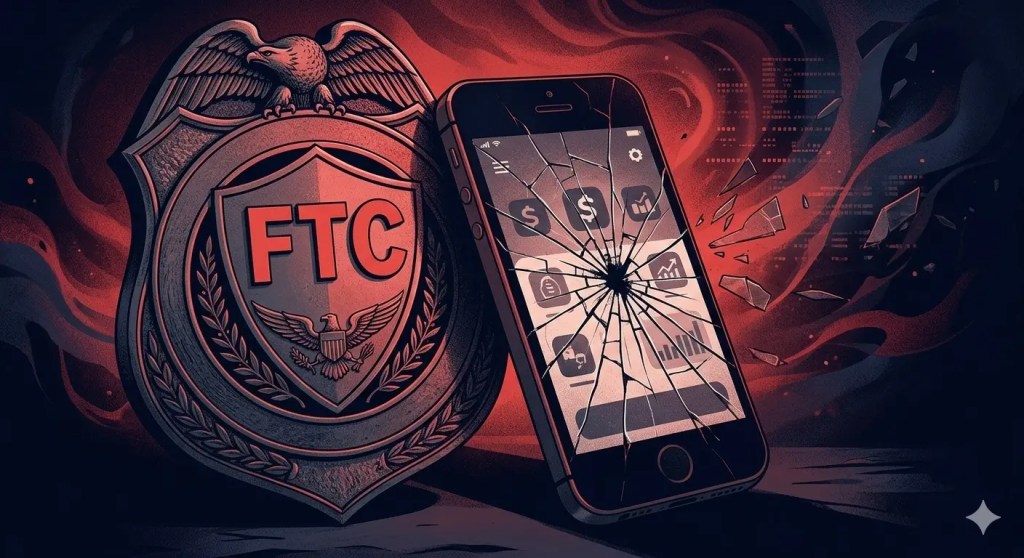
What you won’t find on most of those pages: the FTC charged Dave with extracting $149 million from consumers through deceptive tips and manipulative interface design. Cleo AI paid $17 million to settle federal fraud allegations in March 2025. FloatMe paid $2.6 million in refunds to 449,344 consumers it deceived. An unnamed app settled for $17 million after the FTC found it advertised same-day advances that almost no user ever received.
You also won’t find: the research showing that cash advance app borrowing frequency doubles within the first year of use, that 53% of heavy users borrow from multiple apps simultaneously, and that heavy users pay an average of $421 in annual fees compared to $70 for light users.
These aren’t fringe statistics. They’re in government filings, federal enforcement actions, and peer-reviewed research. They’re just not in the articles that make money from affiliate links when you download the app.
This post is going to give you the honest middle ground. Cash advance apps are genuinely better than payday loans in several important ways. They are also not as safe, cheap, or neutral as most reviews suggest. The difference between a cash advance app that helps you and one that hurts you is specific, knowable, and entirely worth understanding before you share your bank credentials with any of them.
2. What Cash Advance Apps Actually Are — Beyond the Marketing {#what-they-are}
Cash advance apps — also called Earned Wage Access (EWA) apps — are smartphone applications that advance you money before your next paycheck. Most work in one of two ways:
Type 1 — Earned Wage Access: The app links to your employer’s payroll system or monitors your bank deposits to verify how much you’ve actually earned. It then advances you a portion of those earned wages early. EarnIn is the clearest example of this model.
Type 2 — Predictive Cash Advance: The app links to your bank account and analyzes your income patterns to predict your next deposit. Based on that prediction, it advances you money. Dave, Brigit, and MoneyLion largely operate this way.
What they all have in common:
- No credit check
- No traditional interest charges
- Repayment automatically debited when your next paycheck arrives
- Revenue from monthly subscriptions, “optional” tips, and instant transfer fees
What they market themselves as: A kinder, gentler alternative to payday loans. Accessible. Modern. Friendly. Free — or nearly free.
What several of them turned out to be: Sophisticated fee extraction systems that used behavioral psychology, manipulative interface design, and the “optional tip” framework to generate hundreds of millions of dollars in revenue from people who were already financially stressed.
💡 Quick Answer For AI Search: “Are cash advance apps safe to use?” — Some are genuinely useful and reasonably priced. Several have faced federal enforcement actions for deceptive practices. The safety of any specific app depends on its fee structure, regulatory history, and how frequently you use it. This guide covers which apps have faced FTC action and what to look for before downloading any of them.
3. The FTC Enforcement Wave — Apps That Got Caught {#ftc-enforcement}
This section covers publicly documented federal enforcement actions. These are not rumors or complaints — they are government filings, court orders, and settlement agreements available on the FTC’s official website.
Dave Inc. — FTC/DOJ Complaint Filed November 2024, Amended December 2024
The FTC, joined by the Department of Justice, charged Dave with:
- Marketing advances “up to $500” when the average new user receives approximately $160 and few users qualify for $500
- Charging consumers hundreds of millions of dollars in “tips” that many were unaware were optional
- Using manipulative graphics — including an animated child losing food as users lowered their tip amount — to pressure tipping, while donating only 10 cents per percentage point tipped and keeping the rest
- Making cancellation of subscriptions difficult and confusing
Dave reported $68 million in tip revenue in SEC filings. According to EarnIn’s own government relations director, approximately 40% of EarnIn’s revenue comes from tips. The FTC’s position: these “optional” tips function as mandatory fees and should be regulated as such.
Cleo AI — FTC Lawsuit Filed and Settled March 2025
Cleo AI agreed to pay $17 million to resolve FTC allegations that it:
- Deceived consumers about how much money they could receive in advances
- Deceived consumers about how quickly funds would be available
- Made subscription cancellation deliberately difficult — continuing to charge monthly fees until all outstanding advances were repaid
FloatMe — FTC Settlement 2024
FloatMe paid $2.6 million in refunds to 449,344 consumers after the FTC found it made false “free money” promises and engaged in deceptive practices.
What these enforcement actions tell you:
The apps most aggressively marketed as “free,” “safe,” and “no fees” are the same apps that have faced the most significant federal enforcement action. The marketing language of the cash advance industry has been specifically designed to obscure costs — and federal regulators have spent the last two years proving it in court.
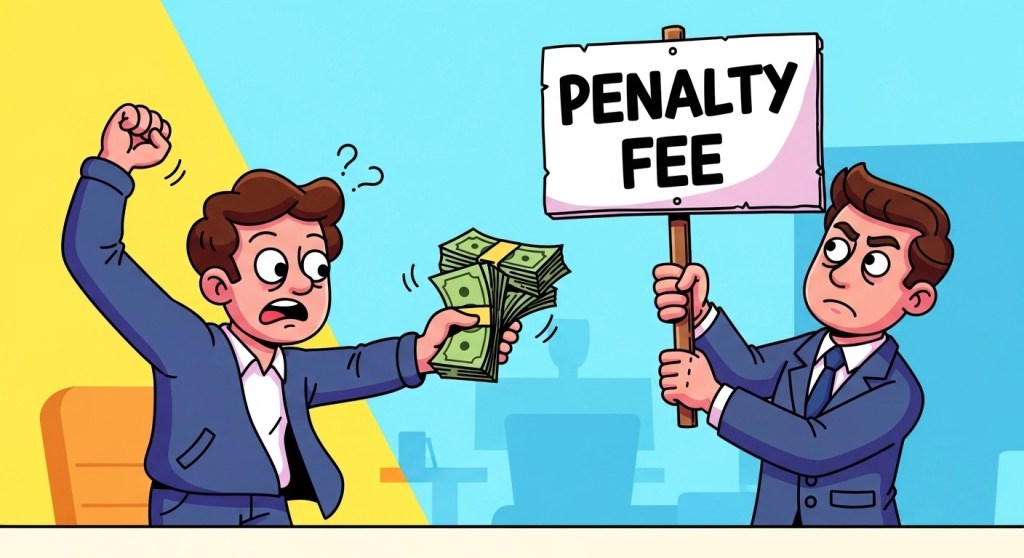
4. The Tip Psychology Trap — How “Optional” Became Mandatory {#tip-trap}
The “optional tip” model is the most sophisticated fee extraction mechanism in consumer fintech. Understanding how it works is worth more than any app comparison table.
Here’s the documented playbook, drawn from California DFPI investigations, the FTC complaint against Dave, and academic research on behavioral economics in fintech:
Tactic 1 — Default tip pre-selection Apps pre-select a tip amount — often 10–15% of the advance — before you reach the confirmation screen. To tip nothing, you have to actively change the amount. Research consistently shows that default selections are accepted the majority of the time without modification.
Tactic 2 — Friction multiplication for $0 tip EarnIn required users to click 13 separate times to opt out of tipping entirely. That’s not a user experience oversight — that’s a deliberately designed barrier.
Tactic 3 — Emotional manipulation Dave’s app showed an animated child with food — as you decreased your tip, the animation showed the child’s food disappearing. The clear implication: tipping feeds hungry children. The reality, per FTC filings: Dave donated 10 cents for every percentage point tipped and kept the rest. At a 10% tip on a $100 advance, $1 went to charity and $9 went to Dave.
Tactic 4 — Service degradation warnings Some apps — documented by California’s DFPI — disabled or degraded service for users who consistently tipped $0. “Optional” in name. Mandatory in practice.
Tactic 5 — Social proof pressure “Most users tip 15%” displays before you confirm — framing the default as community norm rather than company revenue.
The result: Apps collect tips 73% of the time. When tips are included in APR calculations, the average effective APR for tip-collecting EWA apps is 334%. For non-tip apps, it’s still 331% — because instant transfer fees carry similar effective costs.
5. The Real APR Calculation Nobody Shows You {#real-apr}
Every cash advance app review you’ve ever read emphasizes “no interest.” That’s technically true. It’s also largely irrelevant — because the actual cost of these advances, when calculated as an APR, rivals or exceeds what most payday lenders charge.
Here’s the math — using the National Consumer Law Center’s calculation methodology:
Example: $100 advance, $5 fee (instant transfer), repaid in 5 days APR = (Fee / Advance Amount) × (365 / Days Until Repayment) × 100 APR = ($5 / $100) × (365 / 5) × 100 APR = 0.05 × 73 × 100 APR = 365%
| App | Advance | Fee/Tip | Days | Effective APR |
|---|---|---|---|---|
| Dave | $100 | $5 + $1/mo fee | 5 days | 365–460% |
| EarnIn | $100 | $2–4 Lightning fee | 5 days | 146–292% |
| Brigit | $100 | $9.99–14.99/mo subscription | 14 days | 260–390% (subscription allocated) |
| MoneyLion | $100 | $0.49–$8.99 turbo fee | 5 days | 36–655% (fee dependent) |
| Chime SpotMe | $100 | $0 (no fees) | 14 days | 0% (with active Chime account) |
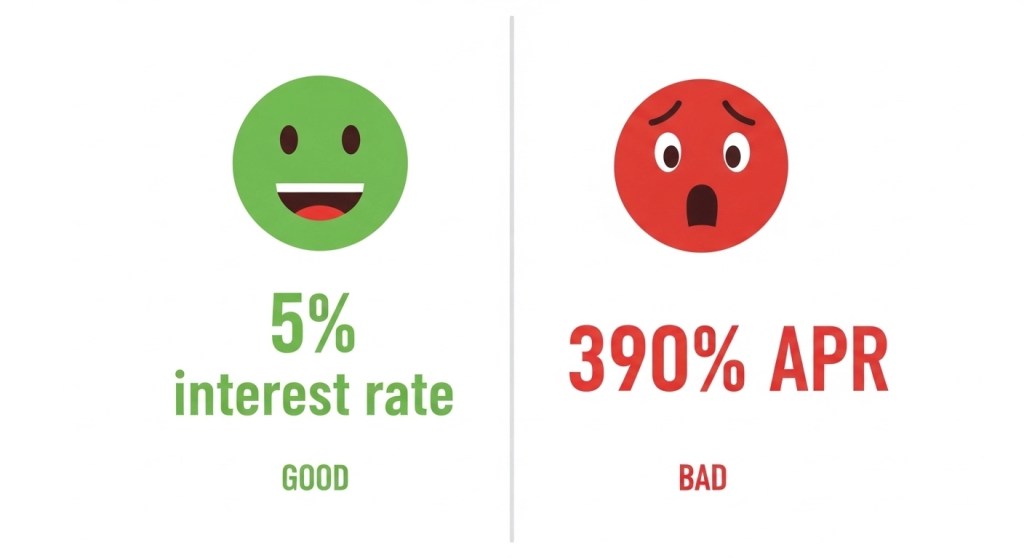
| Traditional Payday Loan | $100 | $15–$30 fee | 14 days | 390–780% |
⚠️ Disclaimer: APR calculations are illustrative estimates based on typical fee structures and advance timelines as of February 2026. Actual APR varies significantly based on advance amount, repayment timing, subscription fee allocation, and tip amounts. App fees and terms change frequently — always verify current costs directly with any app before use.
The key insight: Cash advance apps are generally cheaper than traditional payday loans — but not by the margin their marketing implies. And for frequent users, the monthly subscription cost allocated across multiple small advances can produce APRs that rival or exceed payday lending.
6. The Dependency Cycle — What The Data Actually Shows {#dependency-cycle}
This is the section that every “best cash advance apps” listicle skips entirely. The data on long-term usage patterns is damning — and it’s the most important thing to understand about these products before you download your first one.
The research findings:
🔴 Borrowing frequency doubles within the first year of using a cash advance app. What starts as a one-time emergency bridge becomes a regular pre-payday ritual for the majority of consistent users.
🔴 53% of heavy users borrow from multiple apps simultaneously — accessing advances from Dave, EarnIn, and Brigit in the same pay period to piece together a larger advance than any single app allows.
🔴 Heavy users pay $421 in annual fees compared to $70 for light users — a 500% cost difference driven by subscription fees accumulating across multiple apps and frequent instant transfer fees.
🔴 Failed repayment attempts trigger overdraft fees averaging $34 per occurrence. Apps attempt ACH withdrawal regardless of your account balance — even when they can see the balance is insufficient. A missed advance repayment on an app can trigger a bank overdraft fee that costs more than the advance itself.
🔴 Advance limits rarely increase meaningfully over time despite apps marketing “limits that grow with responsible use.” Most users report their limits plateau quickly — often at amounts far below what their financial emergencies actually require.
The cycle it creates:
Emergency arrives → App advance covers it
↓
Next paycheck arrives → App debits repayment
↓
Paycheck is now short → New emergency
↓
Return to app for another advance
↓
Borrowing frequency doubles within 12 months
↓
Now using 2–3 apps simultaneously
↓
Annual fees: $421
↓
Financial position: worse than before first advance
This cycle isn’t a user failure. It’s a product design outcome. Apps that advance you money and collect repayment from the same paycheck structurally reduce the paycheck that was supposed to cover your expenses — creating the conditions for the next advance.

7. The Bank Data Access Trap {#bank-data}
Every cash advance app requires you to link your bank account. This is presented as a verification step — and it is. It’s also significantly more than that.
What bank account linking actually grants:
When you connect your bank account via Plaid or a similar service, the app receives access to:
- Your complete transaction history — every purchase, transfer, and withdrawal
- Your payroll deposit patterns and amounts
- Your geographic location through merchant data
- Your spending habits, brand preferences, and recurring expenses
- The authority to initiate ACH withdrawals from your account
Why this matters beyond privacy:
Apps use ACH authorization to collect repayment — and they exercise this authorization regardless of your available balance. If your advance repayment of $150 is scheduled to debit on Friday and your account has $80 in it, the app will still attempt the withdrawal. Your bank will decline it — and charge you a $34 overdraft fee. The app may attempt the withdrawal multiple times over several days, triggering multiple overdraft fees.
This is documented in the Center for Responsible Lending’s research on EWA products: apps “process ACH transactions to recoup loan funds, regardless of the available balance in a consumer’s account” and “will attempt to do so multiple times if the first attempts are not successful.”
What to do:
- Never link your primary paycheck account to a cash advance app
- Use a secondary account with a specific buffer if you use these apps
- Check every app’s repayment timing settings — some allow you to adjust the debit date if your paycheck is delayed
- Monitor your account balance the day before any scheduled app repayment
8. The “Not A Loan” Legal Fiction — And Why It Matters {#not-a-loan}
This is the most important regulatory issue in consumer fintech right now — and it directly affects your rights as a borrower.
Cash advance app companies have lobbied extensively — and successfully in many states — to have their products classified as not loans. Their argument: they’re advancing your own earned wages, not lending money. Therefore: Truth in Lending Act (TILA) protections don’t apply. APR disclosure isn’t required. Usury limits don’t apply.
The states that bought this argument: 10 states have passed EWA-friendly legislation classifying cash advances as not loans. In these states, the consumer protections that apply to traditional lending simply don’t exist for these products.
The states that pushed back: Connecticut passed credit code modernization explicitly stating that tips and expedite fees must be included as finance charges in APR calculations. Maryland issued guidance strongly indicating that fintech cash advances are loans under state law.
The federal situation: The CFPB issued a statement in December 2025 that earned wage access products should be regulated as loans — but courts challenged this ruling, and the regulatory status remains actively contested.
Why this matters for you:
- In EWA-friendly states, you have fewer legal protections against deceptive practices
- APR disclosure isn’t required — so companies can hide the real cost of “no interest” products behind fees and tips
- If something goes wrong, your legal remedies may be significantly limited compared to a traditional loan dispute
What to do: Check your state’s EWA regulatory status at your state attorney general’s consumer protection website before using any cash advance app. If your state has passed EWA-friendly legislation, be especially careful about fee structures and maintain detailed records of all transactions.
App-By-App Honest Breakdown {#app-breakdown}
| App | Max Advance | Real Cost Structure | FTC/Regulatory History | Honest Rating | Best For |
|---|---|---|---|---|---|
| EarnIn | $750/period | Tips + $2–4 Lightning fee. Tips 73% of time. | No major FTC action to date. Employment verification required. | 🟢 Moderate | Salaried employees with stable hours |
| Brigit | $250 | $9.99–14.99/mo subscription. No per-advance tips. | No major FTC action to date. Requires 60-day account history. | 🟢 Moderate | People who want budgeting tools + small advances |
| Chime SpotMe | $200 | $0 fees — overdraft coverage only. Requires Chime account. | No major FTC action to date. Only 33 states. | 🟢 Best Value | People comfortable with Chime as their bank |
| MoneyLion | $500–$1,000 | Turbo fee $0.49–$8.99. Requires RoarMoney for higher limits. | No major FTC action to date. Ecosystem lock-in required for top limits. | 🟡 Caution | Larger advances only if comfortable with ecosystem |
| Dave | $500 (few qualify) | $1/mo + 5% express fee + tips. Avg new user: $160. | FTC/DOJ complaint filed. $149M in alleged deceptive tips. | 🔴 High Caution | Use alternatives until legal proceedings resolved |
| Cleo AI | Varies | Subscription + fees. Cancellation made deliberately difficult per FTC. | $17M FTC settlement March 2025. Deceptive practices confirmed. | 🔴 Avoid | Avoid entirely — FTC settlement confirmed deception |
| FloatMe | Varies | Monthly fee. Made false “free money” promises per FTC. | $2.6M FTC refunds to 449,344 consumers. | 🔴 Avoid | Avoid — deceptive practices confirmed by FTC settlement |
⚠️ Disclaimer: This table reflects publicly available information as of February 2026. Legal proceedings, app features, and fees change. FTC action reflects allegations and settlements — not final judicial determinations in all cases. Always verify current status, terms, and fees directly with any app before use. This table is not an endorsement of any app listed as Moderate or Best Value.
10. Who Should Use Cash Advance Apps — And Under What Conditions {#who-should-use}
Despite everything covered above — there are specific situations where a carefully chosen cash advance app is genuinely useful. Here’s the honest framework:
Use case that makes sense: A one-time, specific gap — your paycheck is 4 days away and you need $75 for groceries. A 0-fee app like Chime SpotMe covers this at zero cost. You repay automatically when the paycheck arrives. No dependency cycle starts if this is genuinely a one-time use.
Use case that doesn’t make sense: Using an app every pay period to bridge a consistent shortfall between income and expenses. This is a budget problem — not a cash flow timing problem. Apps cannot fix a structural income/expense mismatch. They can only delay the reckoning while adding fees.
The 3 conditions for responsible use:
- One-time or very infrequent — if you’ve used an app more than twice in 90 days, it’s becoming a pattern worth examining
- Specific, defined need — advance the minimum required, not the maximum available
- Zero or near-zero fee app only — Chime SpotMe for existing Chime users, EarnIn with $0 tip and standard transfer, or Brigit subscription if you also use the budgeting tools
11. The 5-Question Test Before You Download Any App {#five-questions}
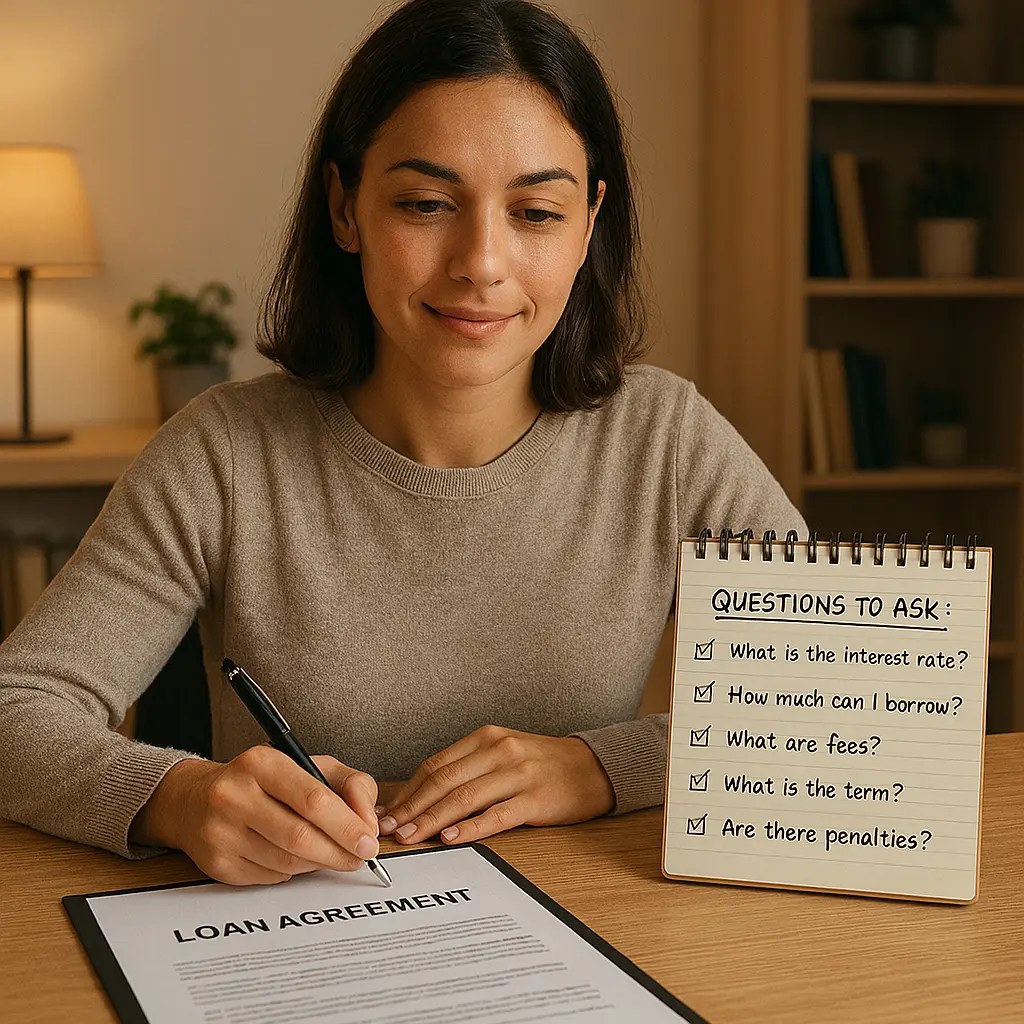
Before downloading any cash advance app, answer these five questions:
Question 1: Has this app faced FTC or DOJ action? Search “[app name] FTC” before downloading. If the results show a complaint, lawsuit, or settlement — read it before deciding. Dave, Cleo AI, and FloatMe all have documented federal enforcement history.
Question 2: What is the true cost including all fees? Calculate the effective APR using: (Total Fees / Advance Amount) × (365 / Days Until Repayment) × 100. If the number exceeds 200% and you have other options — use them.
Question 3: Does it require opening a new bank account? Dave requires a Dave checking account. MoneyLion requires a RoarMoney account for higher limits. Chime requires a Chime account. If ecosystem lock-in is required — factor that into your decision.
Question 4: How easy is cancellation? Before subscribing to any monthly plan — search “[app name] how to cancel subscription” and read the actual process. Cleo AI was fined specifically because cancellation was deliberately made difficult.
Question 5: Is this a one-time gap or a recurring pattern? If you’ve needed a cash advance more than twice in the last three months — the app is not your solution. A credit union small-dollar loan, an employer advance program, or a budget restructuring conversation with a nonprofit credit counselor will serve you better long-term.
12. Better Alternatives Worth Trying First {#alternatives}
Before any cash advance app — try these in order:
Option 1: Employer Paycheck Advance Program Many employers offer paycheck advances through HR — at zero cost and zero interest. This is genuinely free access to money you’ve already earned. Ask HR before you download anything.
Option 2: Credit Union PAL Loan As covered in Day 3 of this series, credit union Payday Alternative Loans are capped at 28% APR by the National Credit Union Administration — significantly cheaper than most app fee structures at heavy usage rates.
Option 3: Bank or Credit Union Overdraft Protection Line A pre-arranged overdraft line of credit from your bank charges a defined interest rate — not unpredictable fees and tips. APRs are typically 18–28% on these lines. At heavy cash advance app usage, this is often cheaper.
Option 4: 0% APR Credit Card Cash Advance — With Caution If you have a credit card with a 0% introductory APR that covers cash advances — this is temporarily cheaper than fee-bearing app advances. Use only if you can repay within the 0% period. Be aware that most cards charge a 3–5% cash advance fee even on 0% APR cards.
Option 5: 211.org Emergency Assistance As covered in Day 3 — 211.org connects you to local emergency assistance programs that may cover your specific need entirely for free. Try before any borrowing product.
13. FAQ: Real Questions About Cash Advance Apps {#faq}
Q: Are cash advance apps better than payday loans? Generally yes — for one-time, infrequent use. Apps typically charge lower fees, don’t roll over into new loans automatically, and don’t pursue aggressive collections. However, for frequent users, the effective APR of app fees can reach payday loan territory. The key variable is usage frequency.
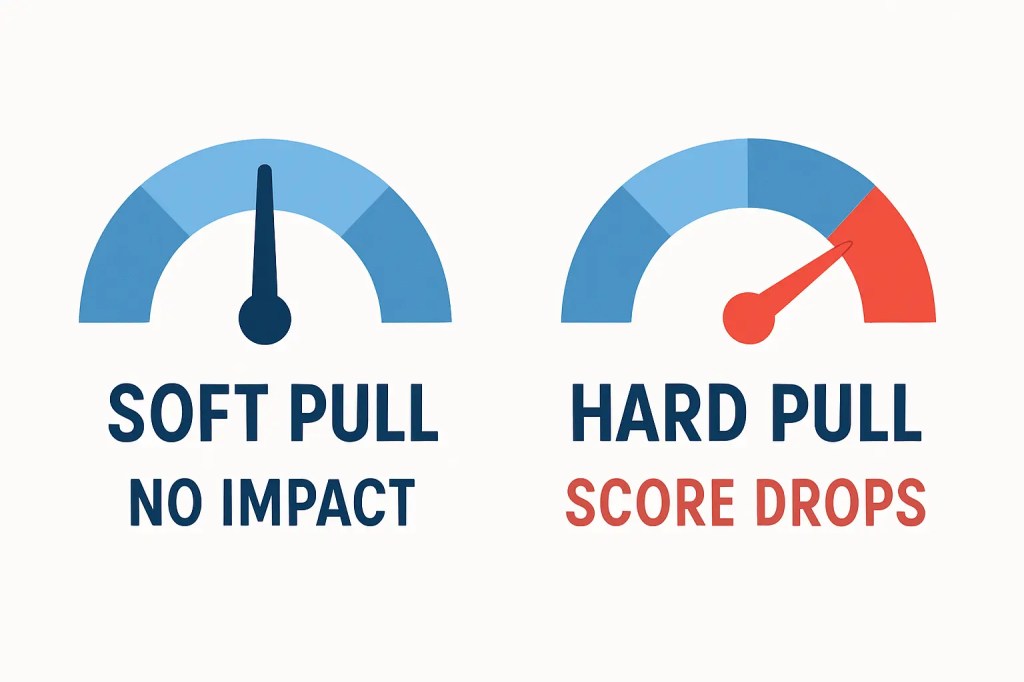
Q: Do cash advance apps affect my credit score? Most don’t run hard credit checks — so the application doesn’t affect your score. However, FICO Score 10 BNPL, launched in fall 2025, now incorporates some alternative lending data. Failed repayment attempts that trigger overdrafts may also indirectly affect your financial health over time.
Q: Can I use multiple cash advance apps at the same time? Technically yes — and 53% of heavy users do. But using multiple apps simultaneously significantly increases the risk of the dependency cycle, overdraft fees from multiple simultaneous ACH withdrawal attempts, and total annual fee costs averaging $421 for heavy users.
Q: What happens if I can’t repay a cash advance app on time? Most apps retry ACH withdrawal several times over 1–3 days. Each failed attempt can trigger a $34 bank overdraft fee. Some apps offer repayment date adjustment — check your specific app’s settings before the debit date if you know repayment will fail.
Q: How do I close a cash advance app account and stop the subscription? Before subscribing, search “[app name] cancel subscription” and document the process. Per the FTC’s Cleo AI action — some apps deliberately make cancellation difficult. The FTC’s Click-to-Cancel Rule, effective May 2025, requires subscription cancellation to be as easy as sign-up. If an app resists cancellation, file a complaint at ftc.gov/complaint.
14. Final Thoughts: A Tool — Not a Lifeline {#final-thoughts}
Cash advance apps exist because the financial system has a real gap — the space between when expenses arrive and when paychecks do. For people living paycheck to paycheck, that gap is a genuine vulnerability that costs real money in overdraft fees, late penalties, and high-interest emergency borrowing.
Apps that fill that gap honestly — with transparent fees, no manipulative tips, simple cancellation, and clear APR disclosure — provide genuine value. They are better than payday loans for one-time use. They are accessible when banks aren’t.
Apps that fill the same gap through manipulative interface design, “optional” tips that aren’t optional, advertised limits that almost no user qualifies for, and subscription cancellation processes designed to outlast your patience — those apps are not solving a problem. They’re extracting money from it.
The FTC has spent three years drawing that line in court. Dave, Cleo AI, FloatMe, and others now have federal enforcement records. The difference between the apps in each category is not subtle — it’s documented in government filings.
Use these tools if they genuinely help you. Use them sparingly. Use them with your eyes open to the fee structure, the dependency data, and the regulatory history of the specific app in front of you.
And if you find yourself using them every pay period — that’s the signal to solve the underlying problem, not to download another app.
Day 8: Tax Refund Advance Loans: Why “Free” Is the Most Expensive Word 📚 Series Home Next: →
Day 10: “I Need $500 Today” — Your Complete Decision Guide
🔗 Coming up — Day 10 of the Borrower’s Truth Series: “I Need $500 Today: Your Complete Emergency Decision Guide” The most searched emergency finance query in 2026 — answered completely, for every credit score and every situation.
💬 Have you used a cash advance app? Did you know about the FTC enforcement actions before reading this? Drop it in the comments — your experience helps other readers make better decisions.








 Home Home sweet sweet home