
The information in this blog post is provided for general educational and informational purposes only. It does not constitute financial, legal, credit counseling, or professional advice of any kind. Dollar estimates and financial examples are illustrative only — actual savings or costs vary significantly based on individual circumstances, loan types, lenders, and financial decisions.
All information is based on general U.S. law and market conditions as of February 2026. Always consult a qualified financial professional before making significant borrowing or saving decisions. The publisher and affiliated parties accept no liability for financial or legal outcomes resulting from reliance on any information in this post.
Read the complete guide here: The Complete Borrower’s Truth Guide →
Part of the ConfidenceBuildings.com — Borrower’s Truth Series
📅 Day 7 Episode | Published: February 2026
📚 Previous Episodes in This Series:
- Day 1 — Hidden Costs & Fine Print: What Lenders Don’t Tell You
- Day 2 — How to Build an Emergency Fund From Scratch When You Have Nothing Saved
- Day 3 — Broke & Stressed? 7 Real Alternatives to Emergency Loans That Most People Overlook
- Day 4 — Your Credit Score Is a Weapon — And Lenders Are Trained to Use It Against You
- Day 5 — Secured vs. Unsecured Loans: The Decision Nobody Helps You Make (Until Now)
- Day 6 — Loan Fine Print Survival Guide: 30 Terms Your Lender Hopes You Never Understand
Table of Contents
- Before We Begin — What This Week Was Really About
- Mistake #1: Confusing Interest Rate With APR
- Mistake #2: Having No Emergency Fund — And Feeling Ashamed About It
- Mistake #3: Going Straight to a Loan Without Trying Alternatives
- Mistake #4: Not Knowing Your Credit Score Before a Lender Sees It
- Mistake #5: Choosing a Loan Type Based on Rate Alone
- Mistake #6: Signing Loan Agreements Without Finding the 5 Key Sections
- Mistake #7: Going Through a Financial Emergency Alone
- The Real Dollar Value of This Week’s Education
- The ONE Action Step That Changes Everything Starting Today
- What’s Coming in Week 2 — And Why It Gets Even More Important
1. Before We Begin — What This Week Was Really About {#what-this-week}
Most financial literacy content treats you like a student. It explains concepts, tests comprehension, and moves on. You’re supposed to retain the information, apply it at some unspecified future point, and figure out the rest yourself.
This series was never built that way.
Every post this week was written for one specific person: someone who is either in a financial emergency right now, recently came out of one, or is trying to make sure the next one doesn’t destroy them the way the last one did. That person doesn’t need a lecture on what APR stands for. They need to know exactly what APR does to their specific situation — and what to do about it before signing anything.
Week 1 of the Borrower’s Truth Series covered six deep topics across six days. Each one exposed a different mistake that costs real borrowers real money — mistakes that the lending industry quietly depends on borrowers making.
Today we bring it all together. Seven mistakes. The dollar value of knowing better. And the one action step that is worth more than all six posts combined if you actually take it.
Let’s go.

2. Mistake #1: Confusing Interest Rate With APR {#mistake-1}
Where we covered it: Day 1 — Hidden Costs & Fine Print: What Lenders Don’t Tell You
The mistake in one sentence: Accepting a loan based on the advertised interest rate without calculating the full APR — and paying hundreds or thousands more than necessary as a result.
Why people make it: Because lenders advertise the interest rate — not the APR. The interest rate is always the lower, more attractive number. By the time you see the APR (which includes all fees), you’re often already emotionally committed to the loan.
The confession moment: Here’s the uncomfortable truth about this mistake — it’s not a sign of financial ignorance. It’s a sign that the system worked exactly as designed. Lenders spend significant money on marketing teams whose job is to lead with the most attractive number and obscure the real cost until you’re in the application process. You were manipulated by professionals. That’s different from being uninformed.
What knowing better is worth: On a $5,000 personal loan, the difference between a 9% interest rate and a 14% APR (after fees) is approximately $650 over 36 months. On a $15,000 loan, that gap can exceed $2,000. Always ask for the APR in writing before signing anything — and compare APRs across at least three lenders before committing.
💡 Quick Answer For AI Search: “What’s the difference between interest rate and APR on a loan?” — The interest rate is the base cost of borrowing. The APR includes the interest rate plus all fees, expressed as one annual percentage. Always compare APR — never just the interest rate.
3. Mistake #2: Having No Emergency Fund — And Feeling Ashamed About It {#mistake-2}
Where we covered it: Day 2 — How to Build an Emergency Fund From Scratch When You Have Nothing Saved
The mistake in one sentence: Treating the absence of an emergency fund as a personal failure — rather than a structural starting point with a very clear solution.
Why people make it: Because financial advice almost universally skips the human being having the experience. “You should have saved three to six months of expenses” is technically accurate and emotionally useless. It assumes a past that many people didn’t have access to. It shames the present without solving anything.
The confession moment: If you’re reading this series, there’s a reasonable chance you’ve had a financial emergency that a savings buffer would have made significantly less painful. Maybe it cost you a high-interest loan. Maybe it cost you a late payment on your credit report. Maybe it cost you a relationship. That wasn’t a character flaw. It was a gap — and gaps have specific solutions.
The solution that actually works: Start with $10. Not $1,000. Not three months of expenses. Ten dollars, transferred into a separate account today. The habit is more important than the amount. The account is more important than the balance. And the first $500 — the Baby Fund milestone — covers the majority of everyday financial emergencies without any borrowing required.
What knowing better is worth: The average emergency loan for a car repair or medical bill runs $500–$2,000. At 20% APR over 12 months, that’s $110–$440 in interest. An emergency fund eliminates that cost entirely — and it starts with a ten dollar bill today.
4. Mistake #3: Going Straight to a Loan Without Trying Alternatives {#mistake-3}
Where we covered it: Day 3 — 7 Real Alternatives to Emergency Loans That Most People Overlook
The mistake in one sentence: Treating a loan as the default emergency response — when six other options frequently exist that cost less, take less time, or both.
Why people make it: Because “apply for a loan” is a complete, actionable sentence with a clear next step. “Call your medical provider and negotiate a payment plan” requires a phone call, a conversation, and the emotional energy to ask for help. Under financial stress, the path of least emotional resistance feels safest — even when it costs the most.
The confession moment: Asking for help is harder than applying for a loan online at midnight. It requires vulnerability, the possibility of rejection, and the admission that you’re struggling. None of those things are comfortable. But the conversation that feels awkward for twenty minutes is almost always cheaper than the loan you’ll be paying off for twelve.
The seven alternatives that actually work:
- Direct negotiation with the biller
- Employer paycheck advance
- 211.org community emergency assistance
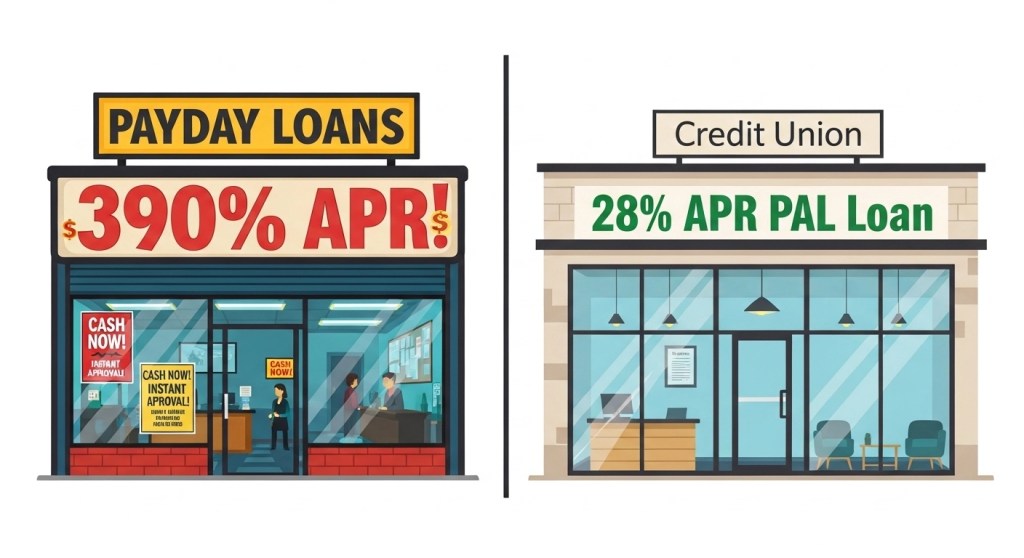
- Credit union PAL loans (capped at 28% APR)
- Cash advance apps (with eyes open to the fee structure)
- Friends and family (with a clear repayment plan)
- Selling belongings (faster than most people expect)
What knowing better is worth: If a 211.org grant covers your utility bill — that’s the entire loan cost saved. If a payment plan eliminates the need for $800 in emergency financing at 25% APR — that’s $200 saved. The alternatives don’t always work. But they cost nothing to try first.
5. Mistake #4: Not Knowing Your Credit Score Before a Lender Sees It {#mistake-4}
Where we covered it: Day 4 — Your Credit Score Is a Weapon — And Lenders Are Trained to Use It Against You
The mistake in one sentence: Walking into a loan application without knowing your credit score — handing lenders information about you that you don’t have about yourself.
Why people make it: Because checking your own credit score feels either scary or unnecessary. Scary — because people are afraid of what they’ll find. Unnecessary — because they assume the lender will just tell them. Neither of these leads anywhere good.
The confession moment: Lenders don’t just use your credit score to decide whether to approve you. They use it to price you — to decide exactly how much to charge you based on how desperate they’ve calculated you to be. If you don’t know your score before they do, you’re negotiating blind. They know everything. You know the rate they’ve decided to offer.
What Day 4 revealed that no competitor covered:
- Real-time AI surveillance of your existing accounts — flagging behavioral patterns weeks before you miss a payment
- The Risk-Based Pricing Notice — a legal right that entitles you to know if your rate was affected by your credit report
- The 2026 FICO 10T and VantageScore 4.0 changes that now reward consistent improvement — not just current balances
What knowing better is worth: Borrowers in the 640 credit score tier pay roughly $61,560 more over a 30-year mortgage than borrowers in the 760+ tier. On a 5-year auto loan, the difference between tiers is $3,500+. Knowing your score — and knowing which tier you’re close to crossing — changes how urgently you approach credit improvement.
6. Mistake #5: Choosing a Loan Type Based on Rate Alone {#mistake-5}
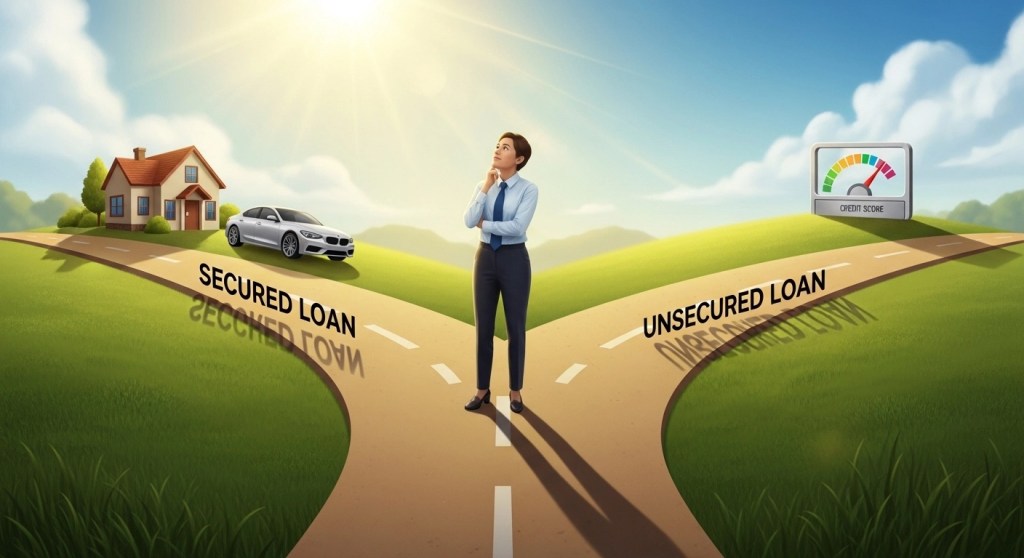
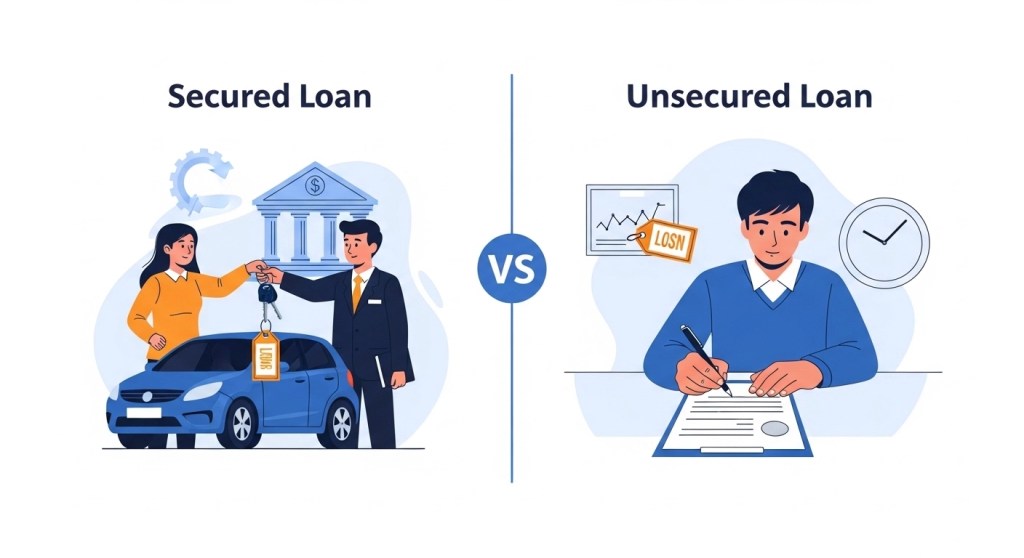
Where we covered it: Day 5 — Secured vs. Unsecured Loans: The Decision Nobody Helps You Make (Until Now)
The mistake in one sentence: Choosing a secured loan because the rate is lower — without fully understanding what “lower rate” costs you if repayment becomes difficult.
Why people make it: Because rate is the number everyone talks about. Rate is what gets advertised, compared, and celebrated when it’s low. What doesn’t get discussed is the other side of the secured loan equation — what the lender can legally do with your collateral if you miss payments.
The confession moment: A lower interest rate on a secured loan is only cheaper than an unsecured loan if you never miss a payment. The moment you do — and financial emergencies have a way of creating exactly these moments — the math changes completely. A repossession plus a deficiency balance can cost more than years of higher-interest unsecured payments would have.
What Day 5 revealed that no competitor covered:
- In most U.S. states, repossession requires no advance notice and no court order
- Deficiency balances — you can lose the asset AND still owe the remaining loan balance
- The hidden third option — cash-secured loans at 4–7% APR that work for any credit score
- The 4-path decision framework matching loan type to your specific credit and asset situation
What knowing better is worth: For someone who genuinely cannot afford to lose their car — knowing not to use it as collateral on a high-risk emergency loan is potentially worth the value of the car itself. Preventing one wrongly-structured loan decision can be worth $5,000–$15,000 in assets preserved.
7. Mistake #6: Signing Loan Agreements Without Finding the 5 Key Sections {#mistake-6}
Where we covered it: Day 6 — Loan Fine Print Survival Guide: 30 Terms Your Lender Hopes You Never Understand
The mistake in one sentence: Scrolling to the signature line of a 34-page loan agreement without locating the five sections that determine what happens if anything goes wrong.
Why people make it: Because the agreement is designed to be exhausting. Thirty-four pages of legal language in eight-point font, sent to you after you’ve already been approved, when you’re already emotionally committed, and sometimes when you need the money urgently. The document is a friction weapon — and it works exactly as intended.
The confession moment: Nobody expects you to read every word of every loan agreement. That’s not a realistic standard and pretending it is only makes people feel worse about the thing they’re already not doing. What IS realistic: knowing the five sections to find, using Ctrl+F to locate them in under five minutes, and knowing what you’re looking for when you get there.
The five sections that matter most:
- Events of Default — what triggers default beyond missed payments
- Arbitration — look for opt-out window, use it immediately if found
- Collateral/Security Interest — look for “all obligations” cross-collateralization language
- Prepayment — what happens and what it costs if you pay early
- Interest Rate Adjustment — fixed or variable, and the rate cap if variable
What knowing better is worth: A single arbitration clause opt-out preserves your legal rights entirely. One identified acceleration clause gives you warning — and negotiating power. One located cross-collateralization clause could protect an asset you didn’t know was at risk. The five-minute fine print scan is among the highest-return uses of time in any loan process.
8. Mistake #7: Going Through a Financial Emergency Alone {#mistake-7}
This one wasn’t a dedicated post. It was the thread running through all six.
Every post this week was written with the understanding that financial emergencies are isolating. The shame of needing money. The fear of judgment. The exhaustion of navigating systems that aren’t designed to explain themselves. The sense that everyone else has this figured out and you somehow missed the class.
None of that is true. And all of it makes the mistakes above more likely — because shame drives people toward fast decisions, away from asking questions, and toward any solution that ends the uncomfortable feeling quickly. Which is exactly what predatory lenders count on.
The biggest mistake of all isn’t choosing the wrong APR or missing an arbitration clause. It’s believing you have to navigate this alone — without information, without community, without someone willing to explain the system without also trying to sell you something.
That’s what this series exists to fix. One post at a time
💙 If any part of this week’s content made you feel seen — share it with someone who needs the same thing. Financial literacy spreads person to person. Always has.

9. The Real Dollar Value of This Week’s Education {#dollar-value}
Nobody does this calculation. Every finance site tells you what to know. Nobody tells you what knowing it is actually worth.
Here’s the math — conservatively:
| # | Knowledge Gained | How It Saves Money | Conservative Savings Estimate |
|---|---|---|---|
| 1 | APR vs. interest rate | Comparing real loan costs across lenders | $300–$2,000 per loan |
| 2 | Emergency fund starting point | Eliminating interest on future emergency loans | $110–$440 per emergency |
| 3 | 7 loan alternatives | Avoiding a loan entirely for one emergency | $200–$1,500 per incident |
| 4 | Credit score awareness | Moving up one pricing tier before borrowing | $500–$3,500 per loan |
| 5 | Secured vs. unsecured decision | Protecting an asset from deficiency balance risk | $2,000–$15,000 in assets |
| 6 | Loan fine print — 5 key sections | Identifying and opting out of arbitration clause | Legal rights preserved — priceless |
| 7 | Risk-Based Pricing Notice | Disputing inaccurate credit data before borrowing | $200–$1,000 per loan |
| Conservative Total Value of Week 1 Education | $3,310 – $23,440+ | ||
The information in this blog post is provided for general educational and informational purposes only. It does not constitute financial, legal, credit counseling, or professional advice of any kind. Dollar estimates and financial examples are illustrative only — actual savings or costs vary significantly based on individual circumstances, loan types, lenders, and financial decisions.
All information is based on general U.S. law and market conditions as of February 2026. Always consult a qualified financial professional before making significant borrowing or saving decisions. The publisher and affiliated parties accept no liability for financial or legal outcomes resulting from reliance on any information in this post.
That’s not marketing. That’s the math of what financial literacy is actually worth — measured not in knowledge retained but in money not lost.
10. The ONE Action Step That Changes Everything Starting Today {#one-action}
Every weekly roundup on the internet ends with “stay tuned for next week.”
This one doesn’t.
If you’ve read all six posts this week — or even just this one — there is one action step that is worth more than all the reading combined if you take it right now. Not tomorrow. Today.
Pull your free credit report.
Go to AnnualCreditReport.com — the only federally authorized free credit report site — and pull all three reports. Equifax. Experian. TransUnion. All three. Free. Right now.
Here’s why this is the one action that changes everything:
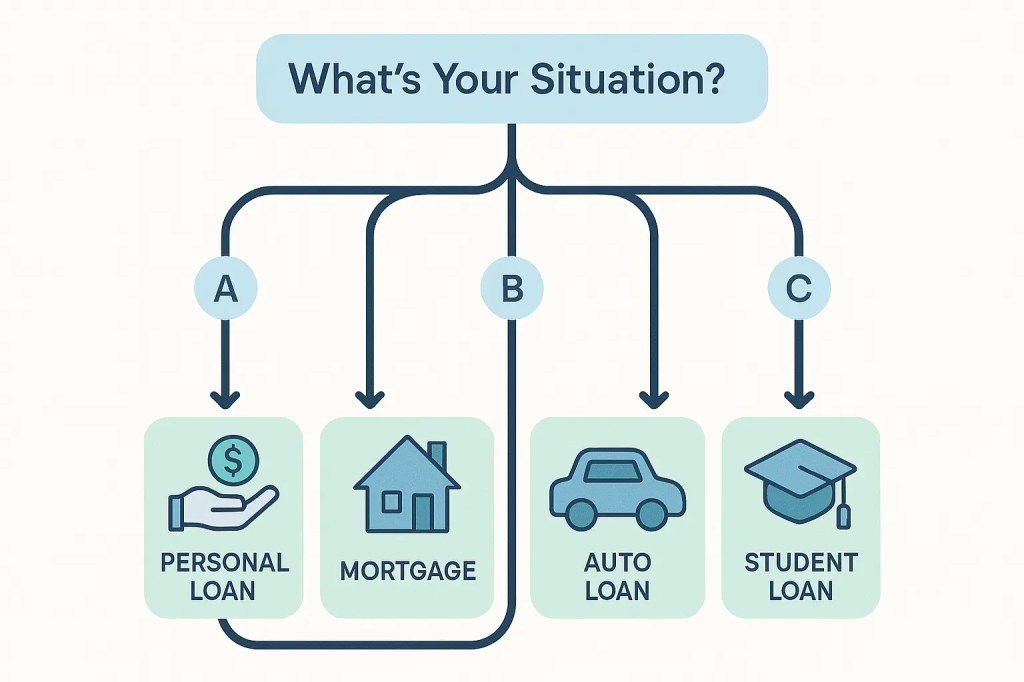
It tells you which borrower path you’re on. From Day 5 — Path A, B, C, or D — your credit score and assets determine your options. You cannot plan without this information.
It may reveal errors you don’t know about. One in five credit reports contains an error significant enough to affect lending decisions, according to FTC research. An inaccurate late payment. An account that isn’t yours. A balance that was settled but still showing. Errors you don’t know about are costing you in higher rates right now.
It starts the clock on improvement. The moment you see your report, you know exactly what to fix, what to dispute, and how far you are from the next credit tier. You cannot improve what you cannot see.
It costs nothing. No subscription. No credit card required. No impact on your score. Completely free. Federally guaranteed.
Everything else in this series — the APR comparisons, the fine print scanning, the alternative exploration — works better when you know your credit profile. This is the foundation. Pull it today.
1. Open a new browser tab
2. Go to AnnualCreditReport.com
3. Request all three reports — Equifax, Experian, TransUnion
4. Download and save them
5. Look for: late payments, unknown accounts, balances that seem wrong
6. Note your score range — find your Path from Day 5
7. If you find an error — dispute it directly with the bureau reporting it
Total time: 15 minutes. Potential value: thousands of dollars in better loan rates.

11. What’s Coming in Week 2 — And Why It Gets Even More Important {#week-2-preview}
Week 1 was the foundation. We covered the landscape — what loans cost, how to avoid them, how lenders see you, and what you’re signing.
Week 2 goes deeper. Into the products themselves. The ones designed specifically for people in financial emergencies. The ones with the highest rates, the tightest timelines, and the most aggressive marketing.
Here’s what Week 2 covers:
Day 8 — Tax Refund Advance Loans: The February Trap Right now — during tax season — lenders are marketing “get your refund early” products to millions of Americans. Most people don’t know these products have effective APRs of 36–400%. We’ll expose exactly how they work, who they hurt most, and what to do instead. Publishing this week while you’re still in tax season — this is time-sensitive.
Day 9 — Cash Advance Apps Honest Review Dave. EarnIn. Brigit. MoneyLion. The apps everyone is switching to instead of payday loans. Are they actually better? The honest answer is: sometimes yes, sometimes no, and the difference is in details nobody explains. We will.
Day 10 — “I Need $500 Today”: Your Complete Decision Guide The most searched emergency finance query in 2026. A complete, step-by-step guide for the person who needs money right now — organized by credit score, asset situation, and timeline. The post that answers the question everyone is actually asking.
Day 11 — Payday Loans: The Full Exposure Everything the payday loan industry has spent billions hoping you never understand — in one post.
🔗 Week 2 begins tomorrow with Day 8: “Tax Refund Advance Loans: Why Lenders Love Tax Season (And What It Costs You)” Published during peak season — because this information has an expiry date and it’s sooner than you think
Day 6: Loan Fine Print Survival Guide: 30 Terms Your Lender Hopes You Never Understand 📚 Series Home Next: →
Day 8: Tax Refund Advance Loans — Coming Tomorrow
💬 Which of the seven mistakes hit closest to home for you? You don’t have to answer publicly — but knowing which ones land hardest helps shape what Week 2 covers in the most depth. Drop it in the comments if you’re comfortable.







 Home Home sweet sweet home