Ultimate Weekend Guide to Sarajevo: Travel Smart & Explore

Meta Description: Planning a weekend in Sarjaevo? Discover the ultimate travel guide for Bosnia’s captivating capital. Get insider tips on where to stay, what to eat, hidden gems, and smart logistics like ferries and buses to save time & money. Perfect for city-break travellers seeking culture, history, and adventure.

Table of Contents

  1. Why Sarajevo? The City Where East Whispers to West
  2. Getting There: Planes, Trains, and… Ferries!
  3. Where to Lay Your Head: Neighbourhood Guide
  4. A Taste of Sarajevo: Ćevapi, Coffee, and More
  5. The Perfect Weekend Itinerary: History, Culture & Vibe
  6. Sarajevo’s Hidden Gems (Skip the Tourist Herd)
  7. Navigating the City Like a Local: Transport & Tips
  8. Essential Bosnian Phrases & Know-How
  9. Smart Traveler’s Toolkit: Save Money, Time & Hassle
  10. Frequently Asked Questions (FAQ)

 Why Sarajevo? The City Where East Whispers to West {#why}

Let’s be honest, when you think of a weekend city break, Sarajevo probably isn’t the first name that pops up. But that’s precisely its magic. This is a city that has lived a thousand lives. In the space of one afternoon, you can wander from an Ottoman-era bazaar, past an Austro-Hungarian cathedral, and see scars and rebirth from the 1990s siege. The call to prayer echoes over rooftops where church bells just finished ringing. You’ll sip thick, strong Bosnian coffee in a centuries-old kafana (coffee house) and later toast with rakija in a gritty, cool bar. It’s intense, profoundly moving, and surprisingly relaxed all at once. My first visit was on a whim, and I left with my heart permanently tethered to this resilient, beautiful place

.I’m going to level with you: if you’re looking for a simple, charming European city break that offers incredible history, stunning mountain views, and food that will make you rethink your entire culinary life, stop scrolling. Sarajevo is it.

Dubbed the “Jerusalem of Europe,” this city is a masterpiece of contrasts. Where else can you stand on a street corner and see an Ottoman mosque, an Orthodox church, a Catholic cathedral, and a Jewish synagogue, all within a few hundred meters? Sarajevo is a city that has seen the very worst of history, yet it pulses with an infectious, resilient energy.

This is your comprehensive guide to spending a perfect, logistically smart, and wallet-friendly weekend in the heart of Bosnia and Herzegovina. Pack your bags—and your sense of humor—because this is going to be good.

Visa & Entry: What You Need to Know

The fantastic news is that for many passport holders, including citizens of the US, UK, EU, Canada, and Australia, a short stay (up to 90 days within a 180-day period) in Bosnia and Herzegovina is visa-free!

The Golden Rule: Your passport must be valid for at least three months beyond your intended date of departure.

A Quick, Important Tip (The White Card): By law, all foreigners staying in BiH must register their address with the local police within 48 hours of arrival. If you’re staying in a registered hotel or a legally operating Airbnb/guesthouse, they are responsible for doing this for you and should give you a small white slip (called the “White Card”). Always confirm they have done this, especially if you’re staying in a private residence, as failure to register can lead to trouble when leaving the country.

Getting There: Your Logistics Cheat Sheet {#getting-there}

By Air {#by-air}

Getting into Sarajevo requires some smart planning, especially if you’re flying in or combining it with a larger Balkan road trip.

Sarajevo International Airport (SJJ) is well-connected from major European hubs. It’s a compact, manageable airport. My pro-tip? Don’t get a taxi from the rank outside. They’re notorious for overcharging tourists. Walk 50 meters to the main road and flag one down, or better yet, use the tram! Line 103 goes directly from the airport to Baščaršija (the old town) in about 35 minutes. It’s the cheapest and most authentic welcome you can get.

✈️ Travel Smart: I always book my flights through Expedia. It’s my go-to for comparing prices and bundling with hotels for those sweet, sweet savings. Check flight deals to Sarajevo here.

By Land: Bus, Train, & Road Tips {#by-land}

  • Bus: The main bus station is a hub for regional travel. Buses from Zagreb, Belgrade, Dubrovnik, and Split are frequent, affordable, and often quite comfortable. Check schedules on Centrotrans or Globtour.
  • Train: The train from Mostar is one of Europe’s most stunning rail journeys, winding through the Neretva River canyon. It’s slow, but the views are 100% worth it. From other countries, trains are less reliable.
  • Car: Driving gives you freedom to explore nearby mountains. Roads are decent, but be prepared for aggressive local drivers and occasional livestock in rural areas. Save on gas and time: Use Google Maps’ “avoid highways” feature for scenic routes, but for speed, stick to the main corridors like the A1. Parking in the city centre can be a nightmare—opt for a hotel with parking.

Getting There by Ferry (The Scenic Route) {#ferry}

While Sarajevo itself is landlocked, a fantastic way to approach Bosnia for a longer Balkan tour is by ferry from Italy to Croatia, then a bus inland. It’s an adventure that turns the journey into part of the holiday.

You can catch overnight ferries from Ancona or Bari in Italy to Split or Dubrovnik in Croatia. From there, it’s a breathtaking 4-6 hour bus ride into the Bosnian mountains and down to Sarajevo. I did this once, watching the sun rise over the Adriatic, then napping as the landscape transformed from coastal cliffs to emerald rivers and forests. It’s epic.

The best resource for planning this maritime leg is Direct Ferries. They compare all operators, routes, and times in one place. Check ferry routes and book your Adriatic crossing here.

Where to Lay Your Head: Neighbourhood Guide {#where-to-stay}

  • Baščaršija (Old Town): Perfect for first-timers. You’ll be steps from the main sights, cafes, and restaurants. Can be noisy at night, but the atmosphere is unbeatable. Great for a short weekend.
  • Marijin Dvor (City Centre): More modern, with trams connecting you everywhere. You’ll find more business hotels and apartments here. It’s a 15-minute walk or a quick tram ride to the old town.
  • Vraca or Bistrik: Quieter, residential hillside areas offering stunning views and a more local feel. You’ll get your steps in, but the peace and panoramas are worth it.

A Taste of Sarajevo: Ćevapi, Coffee, and More {#food}

You cannot leave without trying ćevapi (small, grilled minced meat sausages) in somun (flatbread) with onions and kajmak (creamy dairy spread). My favourite spot is Ćevabdžinica Željo – it’s basic, busy, and perfect.

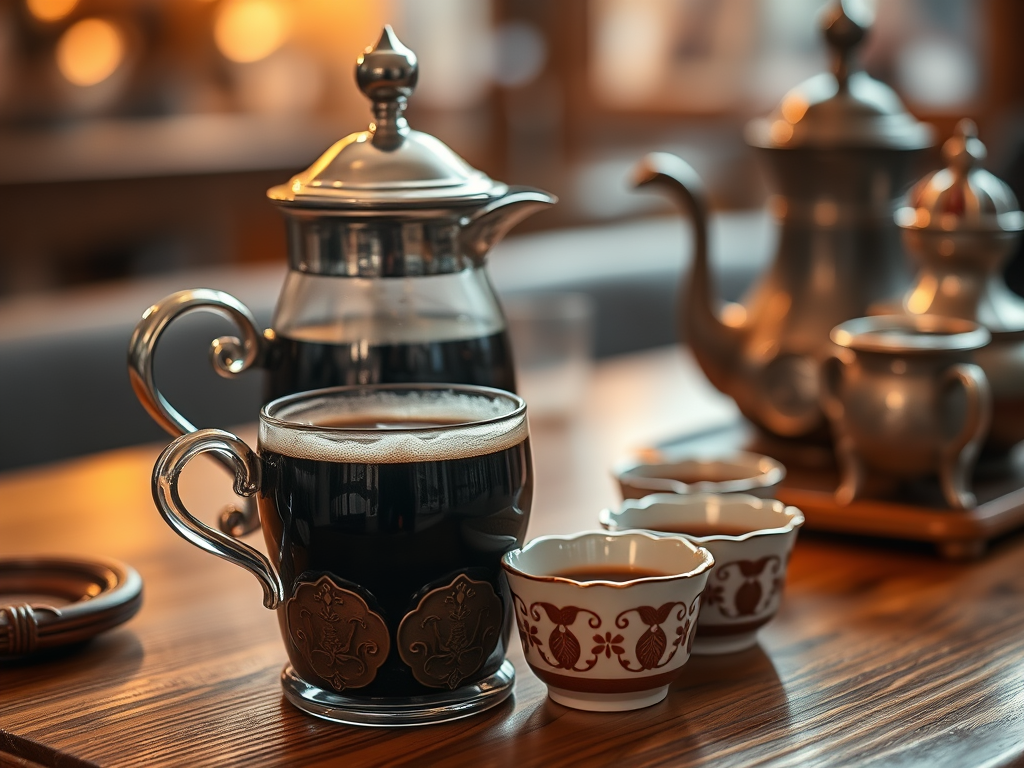
Bosnian coffee is a ritual. It’s served in a džezva (pot) with a fildžan (cup) and sugar cubes. Sip slowly. For a sweet treat, grab a piece of hurmašica (date-shaped syrup cake) or tufahija (stewed apple with walnut filling).

Dinner with a view? Head to Park Princeva. The food is good, but the panoramic view over the city lights is the real main course.
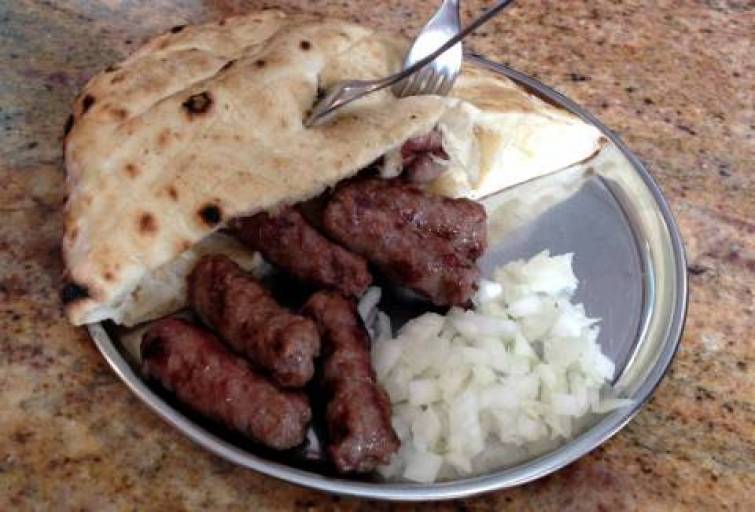
A plate of ćevapi (grilled minced meat sausages) served with flatbread, chopped onions, and garnished on a metal platter.
Savor traditional Ćevapi with fresh somun and onions, a must-try dish in Sarajevo.

A steaming cup of Bosnian coffee served in an ornate glass alongside traditional coffee pots and delicate porcelain cups on a wooden table.
Experience the rich tradition of Bosnian coffee served in a džezva and fildžan, perfect for a taste of Sarajevo.

Day 1: Čaršija Culture & Coffee

Morning: Ottoman Sarajevo Start where it all began: Baščaršija (The Old Bazaar). This is the Ottoman-era center, complete with cobblestones and coppersmiths.

Baščaršija (Expedia) Baščaršija (get your guide)
  • The Pigeon Square (Sebilj): Grab a coffee at one of the tiny cafes. Legend says if you drink the water from the Sebilj fountain, you will return to Sarajevo. (I’m still waiting, but I’ve gone back twice, so it works, I guess.)
Pigeon Square (Expedia)Pigeon Square (get your guide)
  • Gazi Husrev-beg Mosque: A stunning example of Ottoman architecture. Be respectful and cover up before entering.
Gazi Husrev-beg Mosque (Expedia)Gazi Husrev-beg Mosque (get your guide)
  • Hidden Gem Alert: The Coppersmith Street (Kazandžiluk): Forget the tourist shops; watch the coppersmiths at work. This street smells of history and metal, and you can pick up a beautiful hand-engraved Turkish coffee set for a fraction of the cost you’d pay elsewhere.
Sarajevo Old Town Tour (Expedia)Kazandžiluk (get your guide)

Afternoon: Austro-Hungarian Sarajevo Walk west along Ferhadija Street. You’ll literally cross an imaginary line on the ground marked “Sarajevo Meeting of Cultures.” Everything instantly changes: the architecture becomes grand, European, and Viennese.

Austro-Hungarian Sarajevo(get your guide)
  • Assassination Spot: Stop at the Latin Bridge, the site where Gavrilo Princip assassinated Archduke Franz Ferdinand in 1914, triggering WWI. It’s quiet and unassuming—a potent reminder that major world history can happen anywhere.
Franz Ferdinand Assassination (Expedia)Franz Ferdinand Assassination(get your guide)

Evening: Fueling Up & Wind Down For dinner, you must try Ćevapi (grilled minced meat sausages served in a pita-like flatbread called somun). Find a classic ćevabdžinica (Ćevapi house) in the Old Town.

  • Hidden Gem: Instead of going to the most famous ones, try Hodžić. It’s consistently good, and they don’t rush you out.
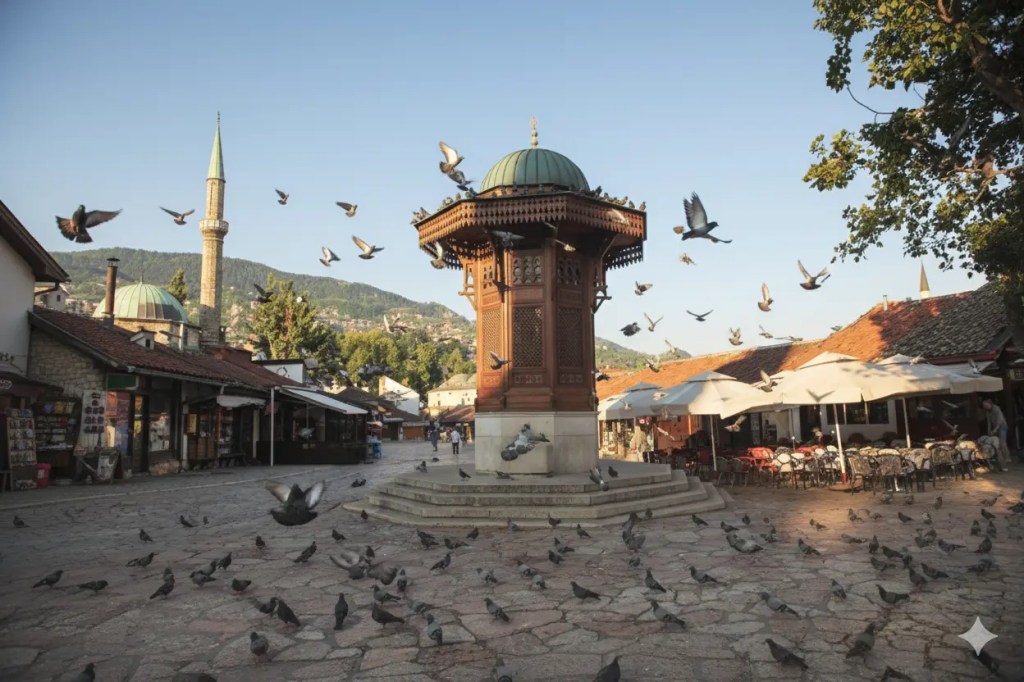
A lively scene at the Sebilj fountain in Baščaršija, Sarajevo, surrounded by rooftops and a mosque, with pigeons taking flight.
The vibrant Pigeon Square in Sarajevo, filled with pigeons and surrounded by historic architecture, captures the city’s blend of culture and tradition. The Sebilj Fountain—Sarajevo’s most photographed landmark. This ornate, Ottoman-style public drinking fountain in the heart of Baščaršija is where locals and travelers alike gather, often called the “pigeon square.” Legend says if you drink from it, you’re destined to return to Sarajevo. (Spoiler: I drank. Twice.)
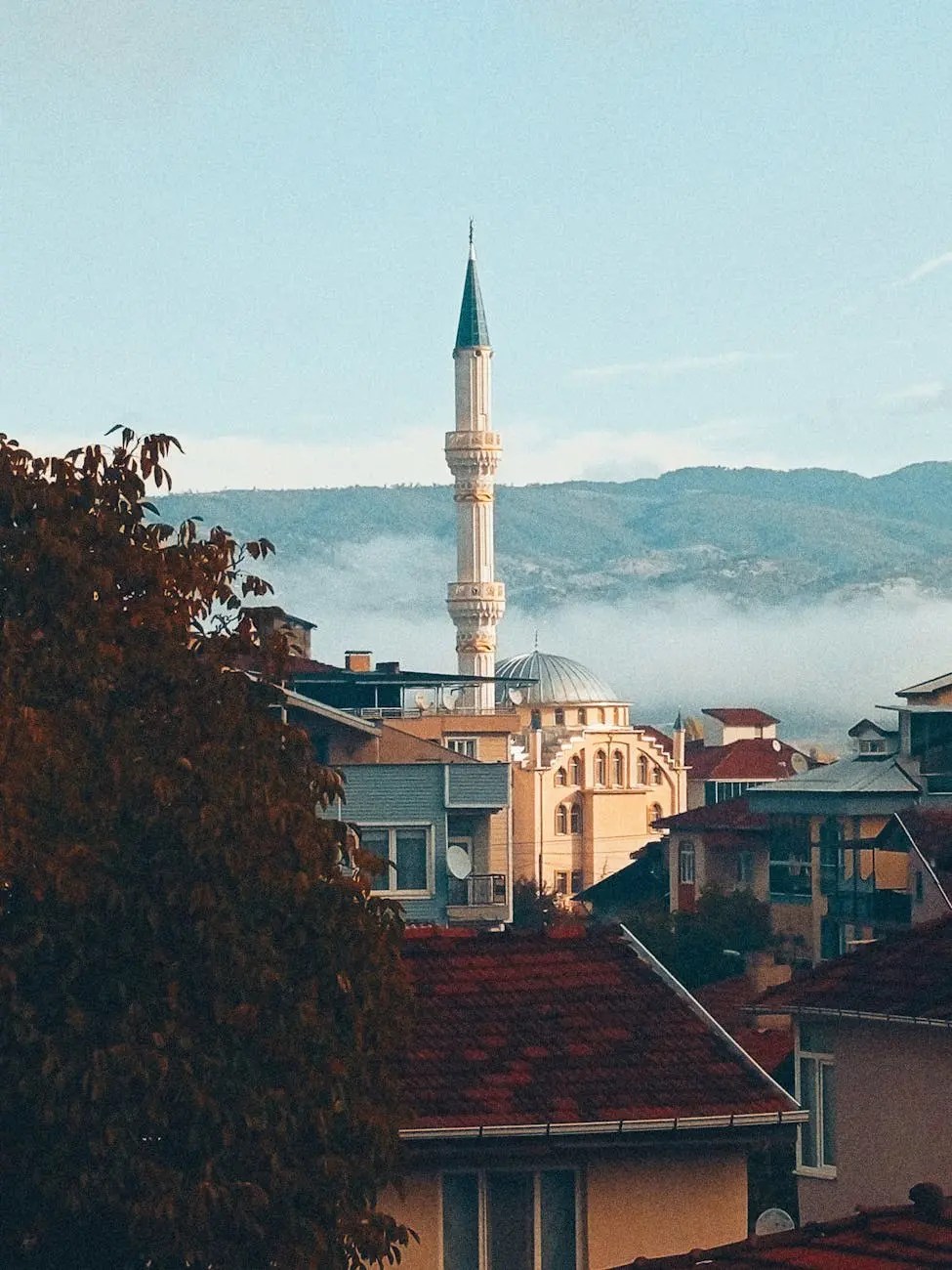
View of a mosque's minaret and surrounding buildings in Sarajevo, with mountains in the background.
A picturesque view of Sarajevo with a mosque’s minaret against a backdrop of mountains and rooftops, embodying the city’s blend of cultures and history. The Gazi Husrev-beg Mosque, built in 1530, anchors Sarajevo’s historic Baščaršija district. It’s not just a place of worship, but the heart of the old town and a stunning example of classical Ottoman architecture in the Balkans. Remember to dress modestly and remove your shoes before entering.

Day 2: War History & Mountain Views

Morning: The Tunnel of Hope This is a solemn, essential stop, but worth the logistical effort.

  • Logistics: The Tunnel of Hope (Tunnel Spasa) is near the airport, slightly outside the city center. Time-Saving Tip: Skip the public transport faff. Grab a taxi or an organized tour. It’s the quickest and least stressful way to get there. The tunnel was the only way in and out of the besieged city during the war, running under the runway. It’s a powerful, sobering experience.
The Tunnel of Hope (expedia)The Tunnel of Hope (get your guide)

Afternoon: City Views and Peace

  • The Yellow Fortress (Žuta Tabija): Head up here in the late afternoon for the best panoramic view of the city—a perfect place to reflect on the morning’s visit and see the city sprawling out in the valley. If you’re a photographer, this is where you’ll want to have your Camera ready for sunset shots.

Evening: Bosnian Wine Sarajevo is the perfect hub for exploring the Balkans. If you loved the history here, you’d be foolish not to continue your trip. Head over to my Blog Masterlist at The Confidence Building Masterlist and check out my guides on:

  • Croatia’s Coastal Gems: (zagreb or zadar) For more beautiful water views after the bus trip.
  • Montenegro’s Mountains: If you want more dramatic, rugged scenery.
  • Belgrade (Serbia): The ultimate contrast to Sarajevo’s East-meets-West feel.
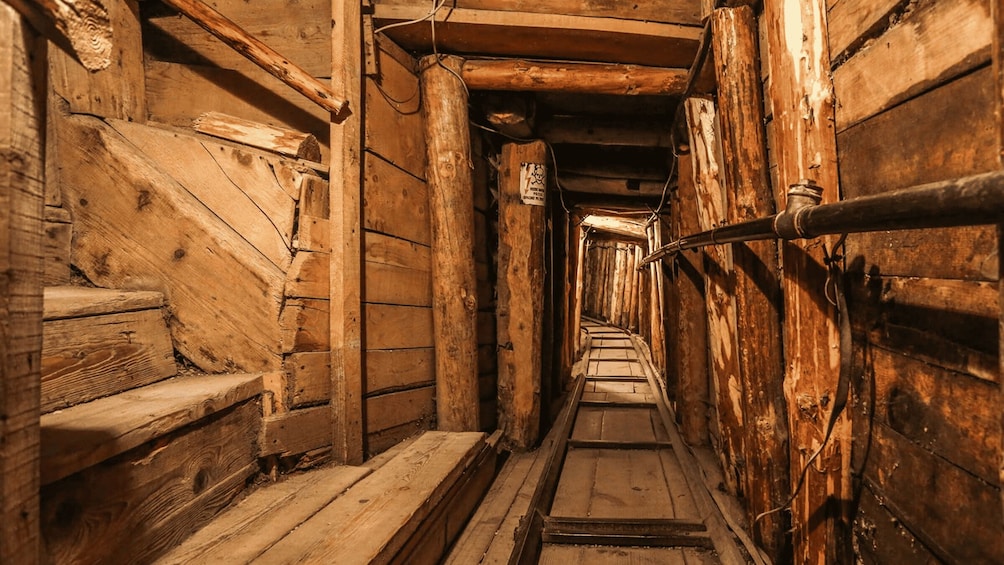
Interior view of the Tunnel of Hope in Sarajevo, showcasing wooden beams and steps along a dusty path, symbolizing resilience and history during the Bosnian War.
Interior of the Tunnel of Hope in Sarajevo, a historical site from the 1990s siege, showcasing its wooden structure and narrow pathways.
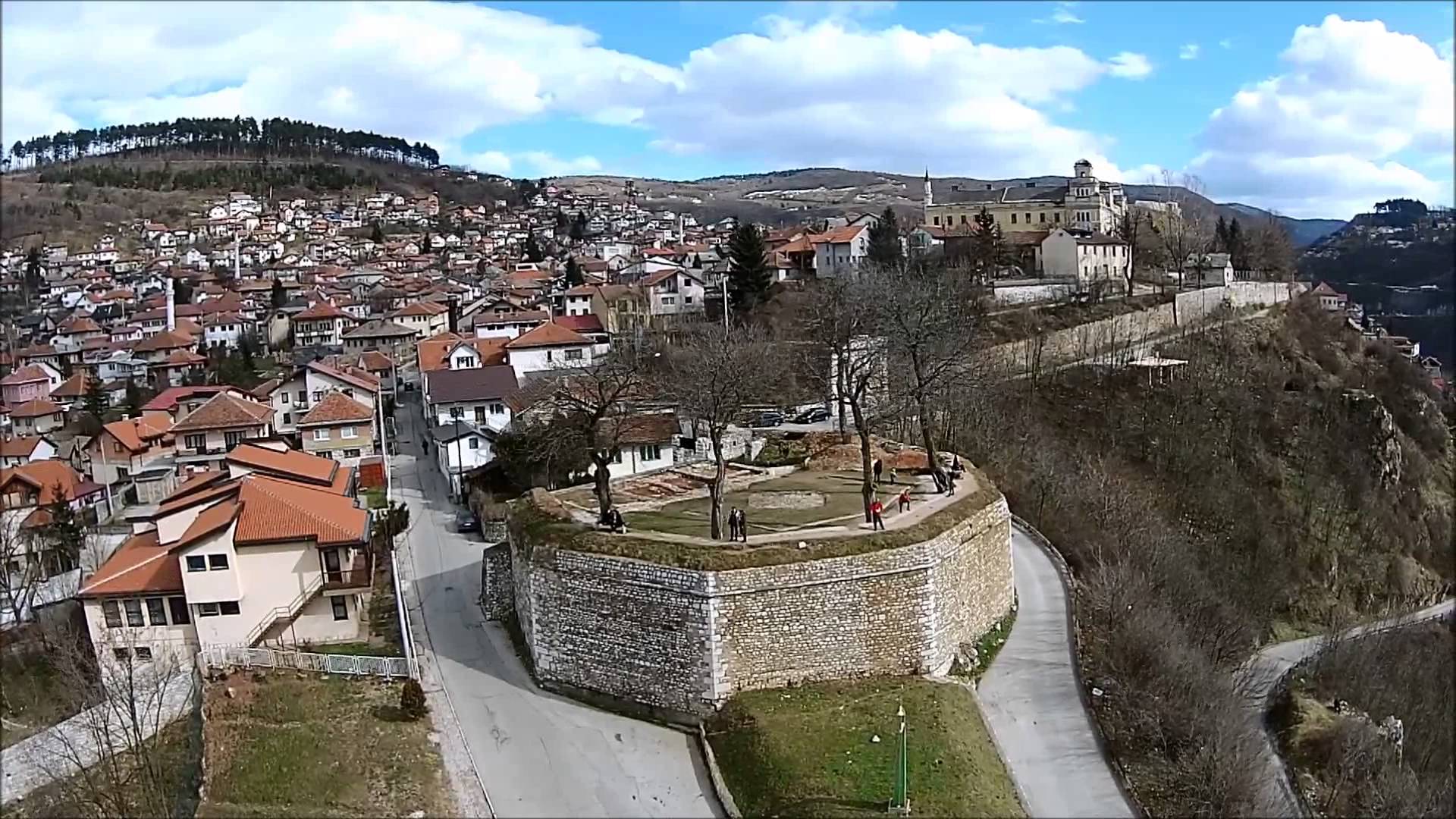
Aerial view of Sarajevo showcasing city rooftops with red-tiled roofs, green trees, and a distant mountainous landscape under a partly cloudy sky.
A scenic view of Sarajevo’s winding streets, showcasing its unique blend of architecture and natural landscapes. (Yellow Fortres)

Money-Saving Tips & Local Transport

Public Transportation

Sarajevo’s public transport is primarily trams and buses.

  • Trams: The central tram line runs through the main street and is perfect for getting between the Old Town and the New Town efficiently. Tickets are inexpensive (about 1.80 BAM/€0.90) and must be purchased from the driver or kiosk and validated immediately. Fines for not having a validated ticket are high!
  • The tram network is your best friend. Buy a GRAS card from a kiosk and top it up—it’s cheaper than single tickets. Trams are clean, frequent, and cover most tourist areas. For routes not covered, taxis are affordable if you use reputable companies like Paja Taxi or Crveni TaxiWalking is the absolute best way to discover the city’s layered soul. The centre is very compact
  • Walk Everywhere: Honestly, the best way to save money and find the hidden gems is to walk. The core tourist area (Baščaršija to the Eternal Flame) is totally walkable.

 Essential Bosnian Phrases & Know-How {#phrases}

  • Hello / Goodbye: Zdravo / Doviđenja
  • Thank you: Hvala (say it with a smile, it goes far!)
  • Please: Molim
  • How much?: Koliko košta?
  • One coffee, please: Jednu kahvu, molim.
  • Cheers!: Živjeli!
  • Yes/No: Da / Ne
  • Nema Problema Нема проблема No problem
  • Račun, molim Рачун, молим The bill, please

Smart Traveler’s Toolkit {#toolkit}

🛡️ Travel Insurance is Non-Negotiable
Sarajevo is safe, but travel is unpredictable. A misplaced bag, a slipped step on a cobblestone, or a delayed flight can happen. I never leave home without coverage from VisitorsCoverage. It lets me easily compare and choose a plan that fits my trip, giving me peace of mind to fully enjoy the adventure. Get a quote for your trip here.

🌐 Stay Connected Without the Headache
Staying connected abroad used to be my travel nightmare—airport SIM counters are a rip-off, and roaming fees are terrifying. My secret? Drimsim. It’s a universal data SIM that works in 190+ countries, including Bosnia. Pop it in, top up via the app, and you’re online. No hunting for shops, no language barriers. It’s a game-changer. Grab your Drimsim here.

🔒 Protect Your Data on Public Wi-Fi
Using public Wi-Fi in cafes and hotels? A VPN is essential to keep your personal info safe. I’ve relied on NordVPN for years—it’s fast, reliable, and lets me access my home streaming services abroad (a crucial evening ritual!). Secure your connection with NordVPN.

✈️ Flight Delayed? Get Paid.
Got hit with a long delay or cancellation flying into Sarajevo? EU passenger rights (which often apply) mean you could be owed up to €600. Most people never claim. I use AirHelp to check my flights—they handle all the legal hassle and only charge if they win you money. It’s turned travel frustrations into surprise funding for my next trip. Check your flight compensation eligibility here.

📸 Capture the Magic
To capture Sarajevo’s stunning contrasts—the smoky coffee shops, the vibrant markets, the hauntingly beautiful landscapes—you need a reliable camera. I swear by my Sony Alpha series for its versatility and stunning image quality. It’s the perfect companion for city breaks. Check out my favourite travel camera here.

🔌 Stay Powered Up
Bosnia uses the standard European Type C & F plugs (220V). Don’t get caught with a dead phone! This European Travel Plug Adapter Kit has multiple USB ports, so you can charge all your gadgets at once. A must-pack. Get the adapter kit here.

🧴 Travel Glowing with K-Beauty
Long flights and busy days can wreak havoc on your skin. I keep my complexion in check with hydrating Korean skincare from Lakinza. Their serums and masks are travel-size friendly and incredibly effective. Pro Tip: Use code Lalax10 at checkout for a sweet discount on your first haul. Because looking fresh shouldn’t cost a fortune. Explore Lakinza’s K-Beauty magic here.

Frequently Asked Questions (FAQ) {#faq}

Q: Is Sarajevo safe for tourists?
A: Absolutely. Today’s Sarajevo is one of the safest capitals in Europe. Exercise normal city precautions (watch your bag in crowds), and you’ll feel welcome and secure.

Q: What’s the best time of year to visit?
A: Spring (May-June) and Autumn (September-October) are ideal. The weather is mild, perfect for walking, and the crowds are thinner than in the peak summer. Winter can be cold and snowy but has its own charm, especially with Christmas markets.

Q: Is Bosnia expensive?
A: Not at all. For Western travellers, it’s incredibly affordable. A filling meal can cost under €10, coffee is €1-2, and public transport is cheap. It’s a fantastic budget-friendly destination.

Q: Can I use Euros?
A: The official currency is the Bosnian Convertible Mark (BAM or KM). Some places in tourist areas might accept Euros, but the rate will be terrible. Always use local currency. ATMs are widely available.

Q: How do I get from the airport to the city centre?
A: Take Tram Line 103 right outside the terminal. It’s the cheapest and easiest way. Taxis are an option but agree on a price first (should be around 15-20 KM to the centre).

Final Call to Adventure

Sarajevo is a city that gets under your skin. It’s a place of deep history, warm smiles, and phenomenal food, all nestled in a stunning river valley. Stop putting it off—your ultimate weekend escape to the Balkans starts now.


Ready to explore the crossroads of history? Don’t wait until the secret is out!

Click here to find the perfect flights and hotels for your Sarajevo adventure today: Book Your Escape with Expedia
Universal Disclaimer/Disclosure Page:

Weekend Getaway in Split: Your Ultimate Travel Guide

Meta Description: Plan your perfect weekend in Split, Croatia! This ultimate guide covers Diocletian’s Palace, ferry travel from Direct Ferries, money-saving tips, hidden gems, and essential Croatian phrases. Get the inside scoop on where to go, what to eat, and how to navigate like a pro for an unforgettable Dalmatian coast adventure.

Table of Contents

  1. Day 1: Roman Ghosts and Riva Charm
    • The Imperial Core: Diocletian’s Palace
    • Hidden Gem: Marjan Hill
    • Dinner & Drinks: Saving Kuna
  2. Day 2: Island Hopping and Hidden Beaches
    • Hvar or Brač? Choosing Your Escape
    • Island Logistics: Time is Money
  3. Getting There by Ferry: Your Adriatic Freeway
  4. ✈️ Essential Travel Logistics & Affiliate Corner
  5. Practical Tips for a Flawless Trip
    • Transportation Tips (Bus, Train, Car)
    • Croatian Crash Course
  6. FAQ: Your Burning Split Questions
  7. More Adventures (Backlinks & Masterlist)

If you’re anything like me, your idea of a perfect weekend involves trading spreadsheets for sunshine and history for hummus. My last trip to Split, Croatia—the beating heart of the Dalmatian Coast—was exactly that. It’s a city where a living, breathing Roman emperor’s palace serves as the downtown core. Talk about a historic downtown!

I still remember stepping off the bus, walking straight into the walls of Diocletian’s Palace, and realizing the cafe I was sitting at for my first kava (coffee) was built into the actual ruins. It was less like a museum and more like a time machine disguised as a bustling, modern city.

Ready to trade your routine for Roman ruins and crystalline seas? Grab your passport, pack your favorite walking shoes, and make sure your travel lens is clear—I shoot all my travel photos with my trusted Mirrorless Travel Camera. Let’s dive into how you can conquer Split in just one unforgettable weekend, saving time and cash along the way!

Picture this: You’re sipping a crisp local wine on a sun-drenched terrace, ancient Roman walls on one side and the sparkling Adriatic Sea on the other. No, it’s not a movie—it’s just a typical afternoon in Split, Croatia.

As someone who’s gotten blissfully lost in its marble-paved alleys more than once, I can confirm that Split is the perfect city for a weekend escape. It’s a place where history isn’t just in museums; it’s the fabric of the city you’re walking, dining, and laughing in.

Ready to trade your everyday for an epic Roman-and-sea-infused adventure? Let’s dive in.

Flights to Split

Getting There by Ferry: Your Maritime Gateway

Flying into Split Airport (SPU) is one option, but let me let you in on a secret: the real adventure begins on the water. Arriving by ferry into Split’s port is an experience in itself. You’ll glide past islands, with the city’s iconic bell tower and rugged mountains rising to greet you. It’s an absolute “wow” moment.

The main ferry hub is just a 10-15 minute walk from the Old Town, making it incredibly convenient. Whether you’re coming from Ancona or Pescara in Italy, or hopping over from islands like Hvar or Brač, the ferry is your best friend.

The easiest way I’ve found to compare schedules, companies (like Jadrolinija), and prices all in one place is through Direct Ferries. It’s my go-to for booking – no fuss, no hidden fees, just a straightforward ticket to paradise.

Split’s port is one of the busiest and most accessible hubs on the Adriatic. It’s perfectly located right next to the bus and train stations, making onward travel seamless.

The port connects Split to numerous domestic islands (Hvar, Brač, Korčula) and even internationally to Italy (Ancona). If you’re traveling from the other side of the Adriatic, taking an overnight ferry can be a fun and practical way to travel, saving you a night’s accommodation cost!

You can easily compare prices, operators (like direct ferries), and book your tickets in advance.
→ Check ferry schedules and book your ticket via Direct Ferries here.

Hotels in Split

The Perfect Split Weekend Itinerary

Friday: Dive Headfirst into History

  • Afternoon: Drop your bags (I always book my stays on Expedia for the rewards) and head straight for the heart of the city: Diocletian’s Palace. Don’t just look at it—get lost in it. The Peristyle square is the main event, but the real magic is in the narrow alleys that smell of laundry soap and espresso. Pro tip: The “basements” are actually the original foundation and are stunningly preserved. It’s like a time machine.
  • Evening: Join the locals for the traditional korzo (evening stroll) along the Riva promenade. Grab a bench, people-watch, and feel the city’s pulse. For dinner, ditch the main Riva restaurants (they’re overpriced) and duck into a konoba (tavern) in the Veli Varoš district. I still dream about the black risotto I had at Konoba Matejuška.
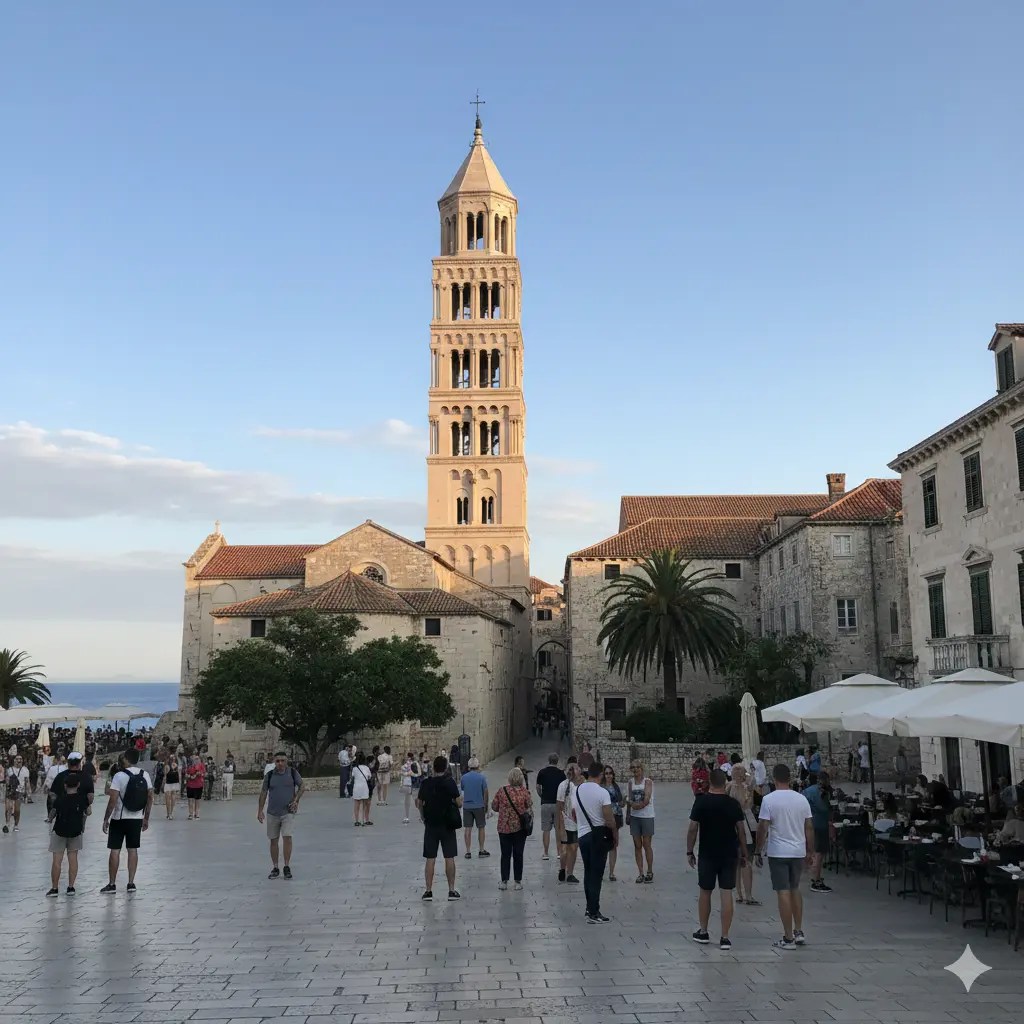
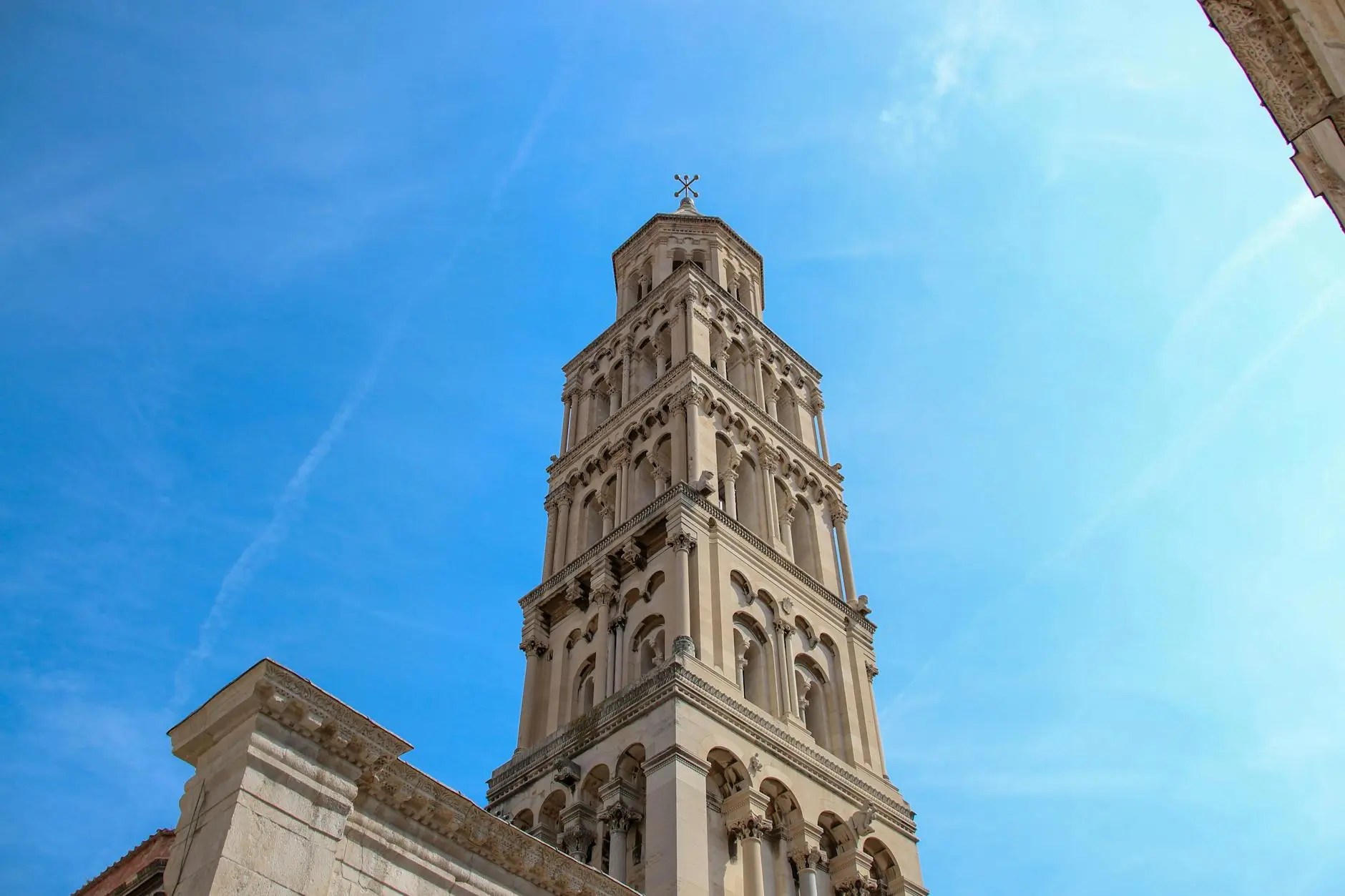
Close-up view of the bell tower of Diocletian's Palace in Split, Croatia, against a clear blue sky.
The iconic bell tower of Diocletian’s Palace reaching towards the blue sky in Split, Croatia. The view from below! Climbing the historic bell tower of Diocletian’s Palace is a rite of passage for any visit to Split. Trust me, the wobbly-kneed climb is worth it for the panoramic views at the top.
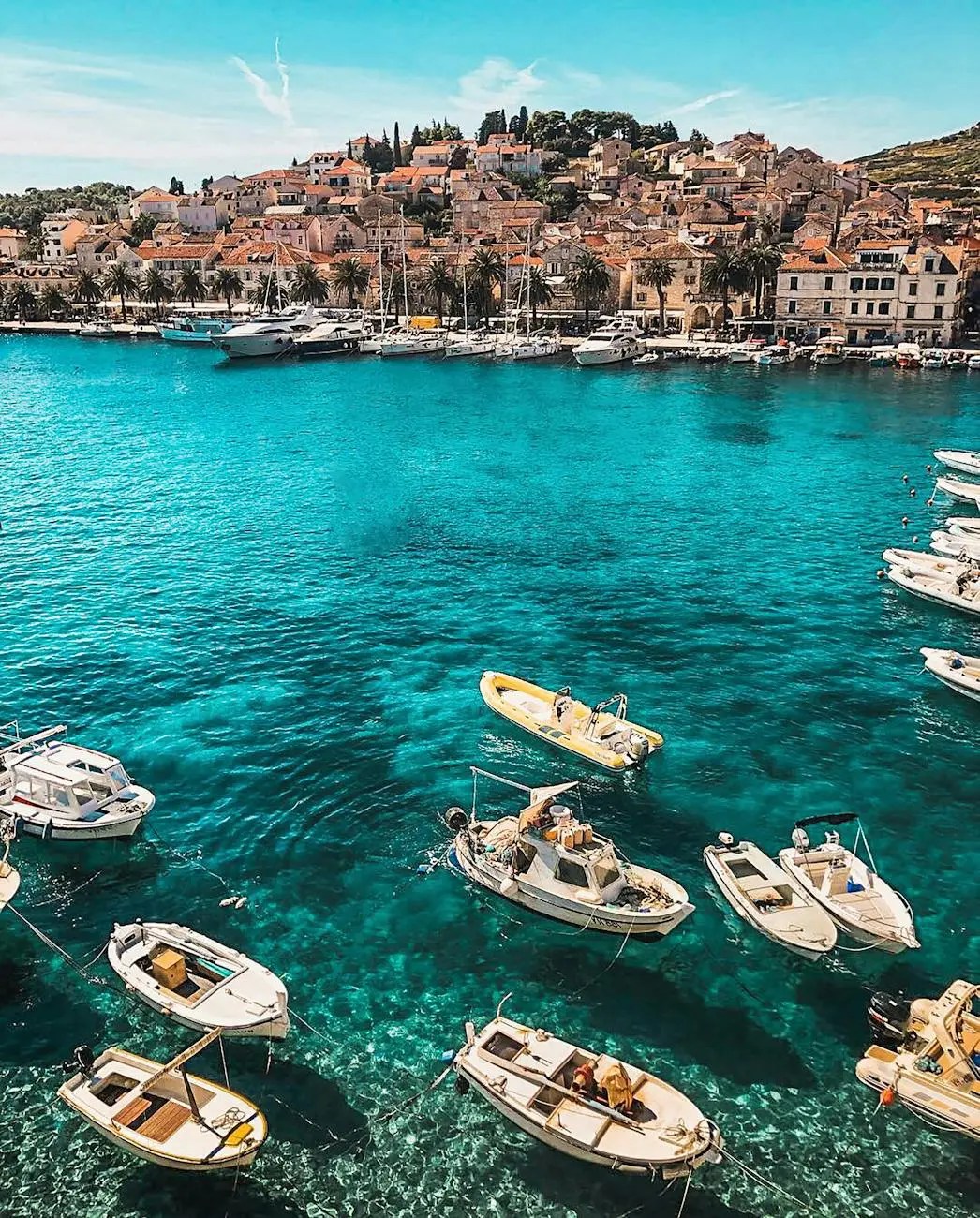
A picturesque view of a harbor in Croatia, featuring numerous small boats on crystal-clear turquoise water, surrounded by charming coastal buildings and lush greenery.
Hvar Town isn’t just a port; it’s a glamorous gateway on the Dalmatian Coast. From its packed marinas to the hilltop fortress, this view shows why it’s a favorite for yachters and sunset chasers alike.

Ready for a dose of glamour and lavender-scented air? Getting from Split to the legendary island of Hvar is a quintessential Dalmatian experience and surprisingly straightforward. Your best bet is to hop on a passenger ferry from Split’s main port; the journey is a scenic, breezy 50-minute to an hour-long cruise that feels like a mini-adventure, offering stunning views of the archipelago. And you’re not just heading to any island—you’re traveling to a destination consistently crowned one of the most beautiful islands in the world. Its reputation isn’t new; Hvar has been a cherished health resort since 1868, attracting European aristocracy with its uniquely mild climate, an abundance of sunny days, and the soothing, aromatic scent of lavender that wafts from its hillsides. It’s a place where wellness and wonder have been intertwined for over 150 years.

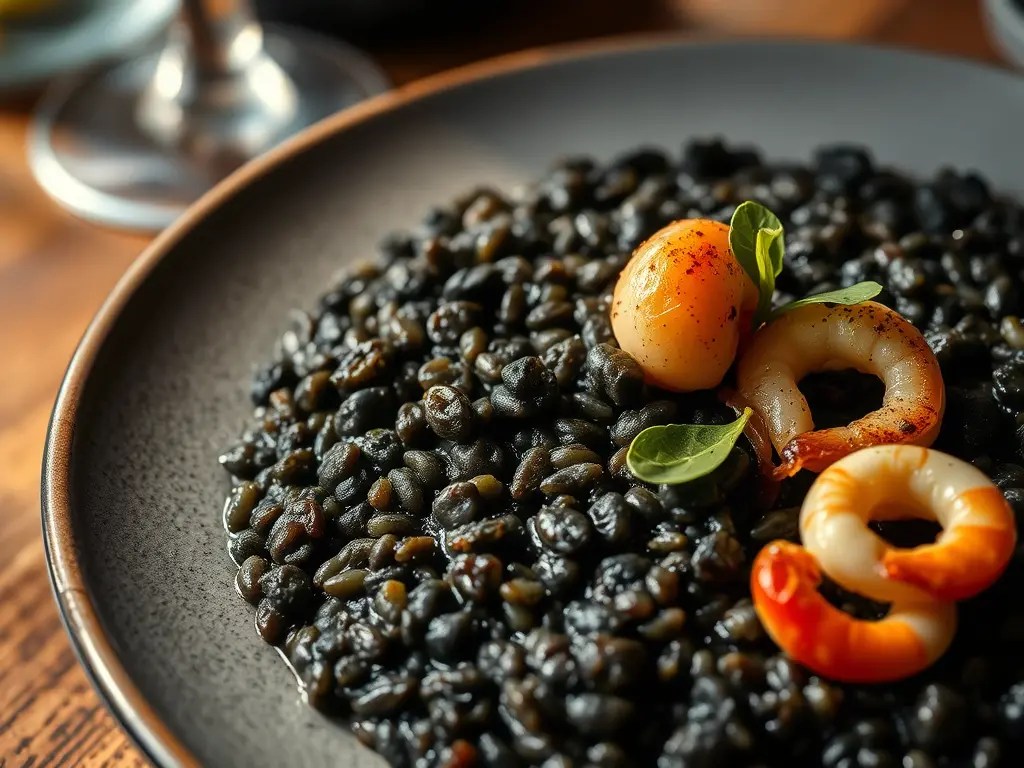
A plate of black risotto garnished with a quail egg, shrimp, and fresh herbs, showcasing a rich, glossy texture.
A delicious plate of black risotto with seafood, featuring shrimp and a soft egg, capturing the essence of Dalmatian cuisine. Don’t let the color fool you—this crni rizot is one of the most delicious and dramatic dishes you’ll eat in Dalmatia. The creamy, squid-ink infused rice, plump shrimp, and that perfect runny egg yolk is a flavor explosion you won’t forget

Saturday: Islands & Instagrams

  • Morning: Fuel up with a kava (coffee) and a pastry. Then, make your way to the Green Market (Pazar) for a burst of color and local life. It’s the perfect place to grab some figs or cherries for a snack.
  • Afternoon: You can’t come to Split without an island trip! Hop on a short ferry to Šolta. It’s less crowded than Hvar but just as charming. Swim in the crystal-cove at Nečujam Bay and enjoy a leisurely seafood lunch in the village of Maslinica.
  • Evening: Back in Split, climb the Bell Tower of St. Domnius Cathedral for sunset. The climb is a bit claustrophobic and the steps are… historic, but the 360-degree view is worth every shaky knee. Afterwards, explore the jazz bars in the palace cellars for a cool, moody vibe.
Close-up of a wooden cup filled with coffee, with a warm, frothy surface displaying a subtle pattern.
A warm cup of coffee, perfect for starting your day in Split, Croatia.

A vibrant market scene in Split, Croatia, featuring stalls overflowing with fresh fruits and vegetables, with people shopping and interacting amidst lush greenery overhead.
A vibrant scene at the Green Market in Split, Croatia, showcasing fresh fruits and vegetables, perfect for a local experience.

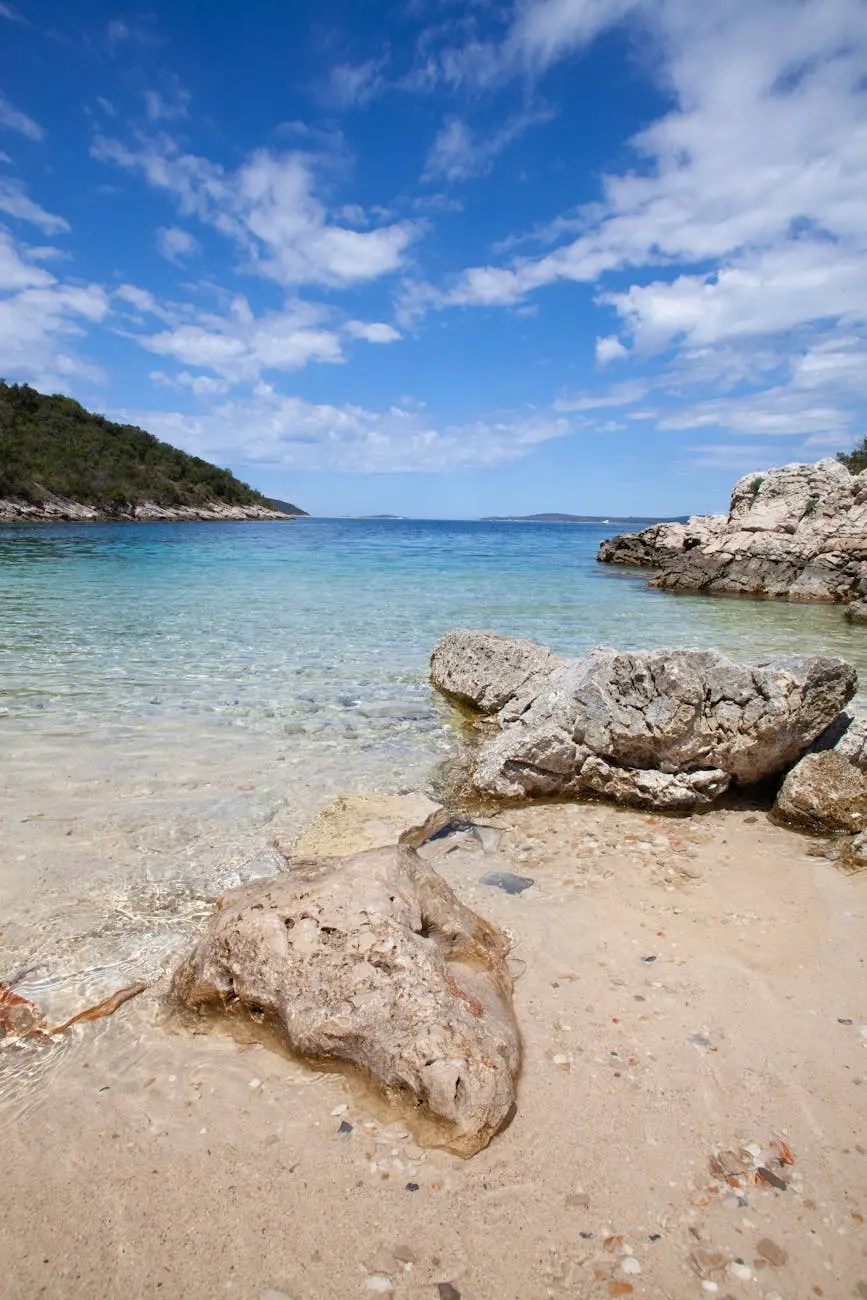
A scenic view of a clear, turquoise sea gently lapping against rocky shores and a sandy beach, under a bright blue sky with scattered clouds.
Crystal-clear waters and rocky shores of a charming Croatian beach, perfect for island-hopping adventures. This is the Šolta I fell in love with—a hidden cove where the only sounds are the lapping waves and the distant buzz of a boat. It’s the perfect antidote to the hustle of Split, just a short ferry ride away.
View of the bell tower of St. Domnius Cathedral in Split, Croatia, surrounded by historic buildings and tourists enjoying the square.
The iconic bell tower of St. Domnius Cathedral in Split, Croatia, standing tall amidst bustling crowds and ancient architecture. Conquering the climb up the Bell Tower of St. Domnius Cathedral is a rite of passage in Split. The slightly nerve-wracking, ancient stairs are 100% worth it for the unforgettable 360-degree views of the city and harbor

Sunday: Relax & Reflect

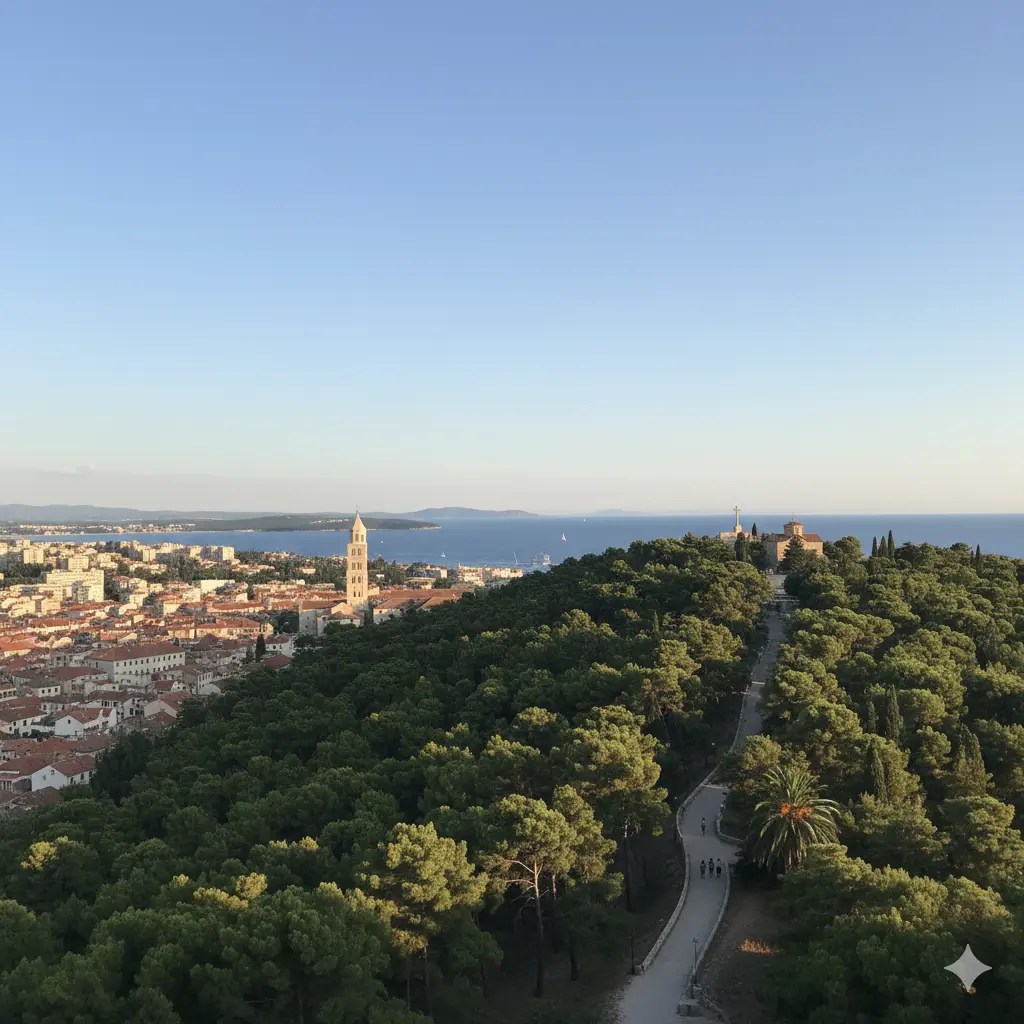
  • Morning: Hike up Marjan Hill. The “lungs of Split” offer shaded trails and breathtaking viewpoints over the city and islands. It’s the perfect way to work off all that pasta and seafood.
  • Afternoon: Have one last long, lazy lunch. I’m a sucker for a long Dalmatian lunch where the wine flows as freely as the conversation. Then, pick up some lavender soap or a bottle of local olive oil as a souvenir before you head to the airport or ferry port.
A panoramic view of Split, Croatia, featuring city buildings, a bell tower, and the Adriatic Sea beyond, framed by lush green trees.
A stunning view of Split, Croatia, showcasing the lush Marjan Hill and the city’s iconic architecture against the sparkling Adriatic Sea.

 Hidden Gems & Local Secrets

  • The Game of Thrones Museum: Even if you’re not a superfan, this quirky museum in the basement is a hoot. My friend tried on the Hand of the King pin and refused to take it off.
  • Froggyland: This is arguably the weirdest museum in the Balkans. It features over 500 taxidermied frogs in human tableaus. It’s bizarre, unforgettable, and a great conversation starter.
  • Bene Beach: Skip the crowded Bacvice beach and walk 15 minutes further to this rocky, local-friendly spot with epic views back towards the city.
A young man poses beside a large dragon head sculpture and sits on a throne made of swords, referencing themes from a popular fantasy series.
Visiting the Game of Thrones Museum in Split, showcasing iconic elements from the series including a dragon head and the Iron Throne.

 Money-Saving Tips & Navigating Like a Pro

  • Public Transport: The city buses are efficient and cheap. Buy a Splitka card from a Tisak (newsstand) for even cheaper fares. Uber and Bolt are also widely available and affordable.
  • Renting a Car? I’d only recommend it if you’re planning to drive the epic Dalmatian Coast afterwards. For a weekend in Split itself, it’s a liability—parking is a nightmare and expensive. Save your money and gas; the city is incredibly walkable.
  • Best Time to Visit: Shoulder seasons! May-June and September-October offer glorious weather with half the crowds. You’ll thank me when you’re not elbowing for space in the Peristyle.
  • Visa Info: For US, Canadian, UK, and AU travelers, Croatia is part of the Schengen Area, so you can stay for up to 90 days within a 180-day period visa-free. Always double-check the latest entry requirements before you book!

Speak Like a Local: A Few Key Phrases

Croatians appreciate the effort immensely!

  • Hvala (HVAH-lah) – Thank you. You will use this 100 times a day.
  • Dobar dan (DOH-bar dahn) – Good day.
  • Oprostite (oh-PRO-stee-teh) – Excuse me.
  • Gdje je…? (Gdyeh yeh…) – Where is…?
  • Račun, molim (RAH-choon, MO-leem) – The bill, please. Essential for those long lunches.

Travel Smarter, Not Harder: My Go-To Gear & Tips

✈️ Stay Connected Without the Headache:
Staying connected abroad used to be my personal travel nightmare. I’d either get ripped off by my carrier’s roaming or spend half a day hunting for a local SIM card. My game-changer? Drimsim. It’s a universal data SIM that works in 190+ countries. You just pop it in, top up via the app, and you’re online the moment you land. No contracts, no hidden fees. It’s saved my bacon (and my Google Maps) more times than I can count.
→ Grab your universal Drimsim travel SIM here.

✈️ Flight Got Derailed? Get Paid.
Let’s be real, travel hiccups happen. But did you know if your flight is significantly delayed, canceled, or you were bumped, you could be entitled to up to $650 in compensation? Most people don’t claim it, but I never miss a chance thanks to AirHelp. They handle all the annoying paperwork and fight the airlines for you. They only get paid if you win, so it’s a complete no-brainer. I once got a nice surprise €250 for a delayed flight from Frankfurt—it paid for my entire weekend of meals in Split!
→ Check your flight for compensation with AirHelp.

Don’t Forget Travel Insurance!
A missing bag, a sudden illness, or a canceled tour can quickly turn a dream trip sour. I never travel without insurance. I use VisitorsCoverage to compare plans and find one that fits my specific trip. It’s a trusted platform that gives me peace of mind, so I can focus on the adventure, not the “what-ifs.”
→ Find the right travel insurance for your trip with VisitorsCoverage.

My Secret to Glowy Travel Skin:
Plane air and changing climates can wreak havoc on your skin. My secret weapon? Lakinza, a fantastic K-beauty site. Their serums and sheet masks are a hydration lifesaver. And because glowing skin shouldn’t cost a fortune, use my code Lalax10 at checkout for a sweet discount. Trust me, your skin will thank you after a long day in the Dalmatian sun.
→ Discover your new skincare favorites at Lakinza.

(Shameless Plug) How I Capture These Memories:
All the gorgeous, sunny photos you see on my blog? I shoot with this lightweight but powerful camera. It’s the perfect travel companion—not too bulky, but with incredible quality that makes every shot look professional.
→ Check out my favorite travel camera here.

A Final Must-Have: VPN
Using public WiFi at airports, hotels, and cafes? Please, protect your data! I always have my NordVPN running. It keeps my personal info safe from prying eyes and also lets me access my favorite shows from back home.
→ Get secure and save with NordVPN.

🗺️ Beyond Diocletian’s Walls: Your Next European Adventure

While Split will easily capture your heart (and your camera roll!), its central location on the Adriatic makes it an ideal launchpad for exploring the rest of the Balkans and Southern Europe. Ready to extend your journey after you’ve explored Diocletian’s Palace and sunned yourself on Brač?

For another dose of stunning Croatian history, the majestic walls of Dubrovnik are just a short bus or catamaran ride south—a must-see destination where history and Hollywood collide. If you’re looking to hop across the water, the architectural grandeur of Venice, Italy, is a manageable journey, often involving a scenic ferry connection across the Adriatic. And if you’re keen to explore more of the region’s dynamic culture and history on a budget, look to Budapest, Hungary, or Vienna, Austria, both accessible via a longer but rewarding journey.

To help you seamlessly plan your next leg, including visa information, budget breakdowns, and transport options for these geographically close destinations, be sure to consult my complete Blog Masterlist: [LINK]

Frequently Asked Questions (FAQ)

Q: Is two days in Split enough?
A: Absolutely! Two to three days is perfect to see the main sights of the city, take an island day trip, and get a real feel for the Dalmatian lifestyle without feeling rushed.

Q: What is the best way to get around Split?
A: Your own two feet! The historic core is completely walkable. For attractions further out, like Marjan Hill, the city bus system is reliable and inexpensive.

Q: Is Split expensive?
A: It’s more affordable than Western European hotspots like Paris or Amsterdam, but prices have risen with its popularity. You can still find great value by eating at konobas (taverns) away from the waterfront and using public transport.

Q: Can I use Euros in Split?
A: Croatia now uses the Euro (EUR) as its official currency, so you’re all set!

Q: What’s one thing I shouldn’t miss?
A: Besides the Palace, make time to just sit in the Peristyle with a gelato and listen to the buskers. The acoustics in that ancient square are magical.

What is the best time of year to visit Split to avoid crowds? A: Late May/Early June or September are ideal. You’ll have fantastic weather (warm, sunny, and great for swimming) without the massive, sweaty crowds of July and August.

Do I need a car in Split? A: No, absolutely not for the city center. Split’s core is pedestrianized. You only need a car if you plan to do extensive, time-sensitive day trips (like Krka or Plitvice Lakes). For islands, take the passenger ferry to save money and hassle.

Ready to Wander?
Split is waiting to steal your heart. From its ancient soul to its modern energy, it’s a city that begs to be explored.

👉 Ready to book your Croatian escape? Find the best deals on flights and hotels on Expedia and start packing!

Have you been to Split? What was your favorite hidden gem? Spill the details in the comments below!

For more travel guides, tips, and itineraries, check out my complete Travel Master List 


Universal Disclaimer/Disclosure Page:

48 Hours in Bruges: Your Ultimate Travel Guide

Meta Description: Escape the ordinary with our ultimate 48-hour guide to Bruges, Belgium! Discover hidden canals, taste authentic Belgian chocolate, and save money with local transit tips. Perfect for first-time European travellers. Optimize your trip for time and budget.

The Ultimate Weekend Escape to Bruges, Belgium 🇧🇪

If you’ve ever scrolled through Instagram and stumbled upon a fairytale town that looks like it was drawn by a golden-age Disney animator, you were probably looking at Bruges (Brugge). Known as the “Venice of the North,” this charming Belgian city is a UNESCO World Heritage site that manages to be both immaculately preserved and totally buzzing.

I first visited Bruges on a whim after a stressful week. I needed a real escape—the kind where your biggest decision is “waffle or fries?”—and Bruges delivered. It’s compact, walkable, and unapologetically romantic. You can soak up centuries of history without needing to navigate a labyrinthine metropolis.

Ready to trade spreadsheets for stepped gables and traffic jams for tranquil canals? Grab a coffee (or a strong Belgian beer), because here is your ultimate, time-and-budget-saving guide for the perfect weekend in Bruges.

Let’s be honest, you’ve seen the pictures. A maze of cobblestone lanes, dreamy canals reflecting centuries-old architecture, and the heavenly scent of warm waffles and chocolate drifting through the air. Bruges isn’t just a city; it’s a living, breathing postcard.

But is it possible to truly experience its magic in just a weekend? Absolutely. I’ve done it, stumbled on the perfect waffle shop, gotten blissfully lost, and learned a few things along the way. Consider this your personal, no-nonsense guide to conquering Bruges in 48 glorious hours.

Table of Contents

  1. Getting There: Logistics Made Easy
    • When to Go & How to Avoid the Crowds
    • The Smart Traveler’s Transport Guide
  2. 48 Hours of Fairytale: My Perfect Itinerary
    • Must-See Marvels & Hidden Gems
    • Local Flavours: Beer, Chocolate, & Frites
  3. Money-Saving Hacks & Local Wisdom
    • Travel Insurance & Staying Connected
    • A Few Handy Dutch Phrases
  4. Extend Your Adventure: Nearby Destinations
  5. FAQs & Final Call to Action

Getting There: Logistics Made Easy

Getting to Bruges is half the fun, and planning it right can save you hours of travel time and stress (and gas money!).

Why Bruges is the Perfect Weekend Trip

Bruges (or Brugge in Flemish) is compact, incredibly walkable, and feels like you’ve stepped directly into a storybook. Unlike sprawling metropolises, its main attractions are close together, making it ideal for a short, immersive break. It’s the kind of place where the journey from a world-class museum to a cozy, hidden pub is just a picturesque five-minute stroll.

For more European weekend inspiration, check out my guide to Paris, Nice, Frankfurt, Munich,

The Smart Traveler’s Transport Guide

Whether you arrive by air, train, or car, planning your final leg is key.

By Train 🚂 (The Stress-Free Option)

The train is the most efficient way to arrive. Bruges’ main station (Brugge Station) is a 15-20 minute walk from the historic centre.

  • From Brussels: A direct train takes about an hour.
  • Money-Saving Tip: If you’re under 26, look into the Go Pass 1 or Go Pass 10 for significant discounts on Belgian rail. If you’re coming on a Friday evening and leaving on a Sunday, check for the Weekend Ticket, which offers a substantial discount on return travel within Belgium.
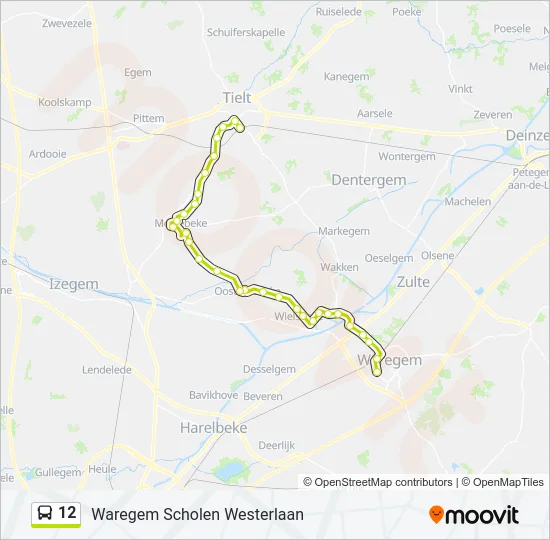
  • Pro Tip: Don’t buy a bus ticket inside the station. Just outside, Bus Line 12 runs directly to the main square. You can pay the driver, but buying a De Lijn (the Flemish bus company) day pass via their app is usually the best value if you plan to use buses often.
Map showing the route and stops of Bus Line 12 in Belgium, connecting areas including Waregem, Zulte, and Dentergem.
Map of the route for Bus Line 12 in Belgium, highlighting connections from Waregem to nearby towns.

By Car 🚗 (For the Road Trippers)

Driving gives you freedom, but parking in the centre is expensive and limited.

  • Time & Gas Saver Road Map Tip: When you hit Bruges, follow the R30 (the Ring Road) around the city centre. DO NOT drive into the inner medieval core. Instead, look for the Station Parking Lot (P+R Station). It’s incredibly cheap (€3.50 for a full day), and your parking ticket covers the cost of a return trip for up to four people on Bus Line 12 into the centre. This trick is a budget-saver and an instant logistics win!

Once you know your dates, securing your travel and accommodation in one go is a lifesaver. I always start my search for the best flights and hotels with Expedia. (for stress-free booking!)

Hotels in Bruges

Your Bruges Weekend Itinerary: A Step-by-Step Guide

Friday Evening: Arrival & First Impressions

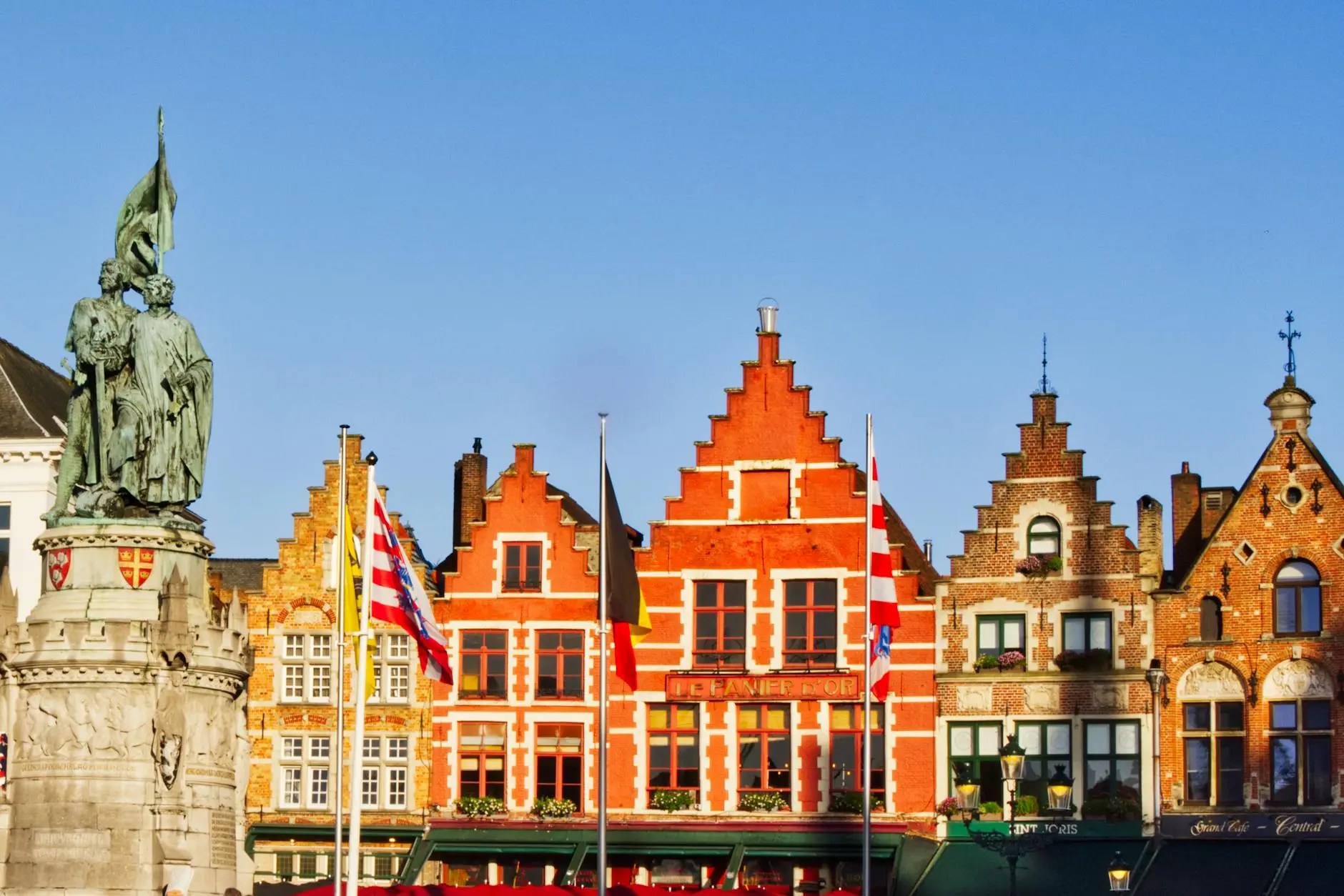
Morning: The Holy Trinity of Bruges Start at the Grote Markt (The Markt). Look up at the colourful, intricate guild houses. My favourite thing to do here is climb the 366 steps of the Belfry of Bruges. Yes, it’s a workout, but the view of the terracotta rooftops is the definitive Bruges photo opportunity. When I finally made it to the top, sweating and slightly out of breath, a charming couple handed me a napkin—I was so red, I matched the brickwork!

Afternoon: Hidden History Wander a few minutes away to the Burg Square, home to the stunning Gothic Stadhuis (City Hall) and the Basilica of the Holy Blood. Afterwards, take a famous canal boat tour. At only €12-€15, it’s touristy, yes, but it offers a unique, low-to-the-water perspective that you simply can’t get otherwise.

Hidden Gem Alert: Ditch the crowds and find the Rozenhoedkaai (Quay of the Rosary). It’s widely photographed, but stick around until the evening. Once the sun starts to set, the silence and the golden light reflecting off the canal houses is pure magic.

Colorful medieval buildings with gabled roofs and flags in the historic center of Bruges, Belgium.
The stunning architecture of Bruges, featuring vibrant guild houses and historic statues in the town square. The heart of Bruges: The vibrant Markt square, where the 13th-century Belfry tower watches over a scene of colorful guildhouses and bustling cafes. This is the postcard view you traveled for!
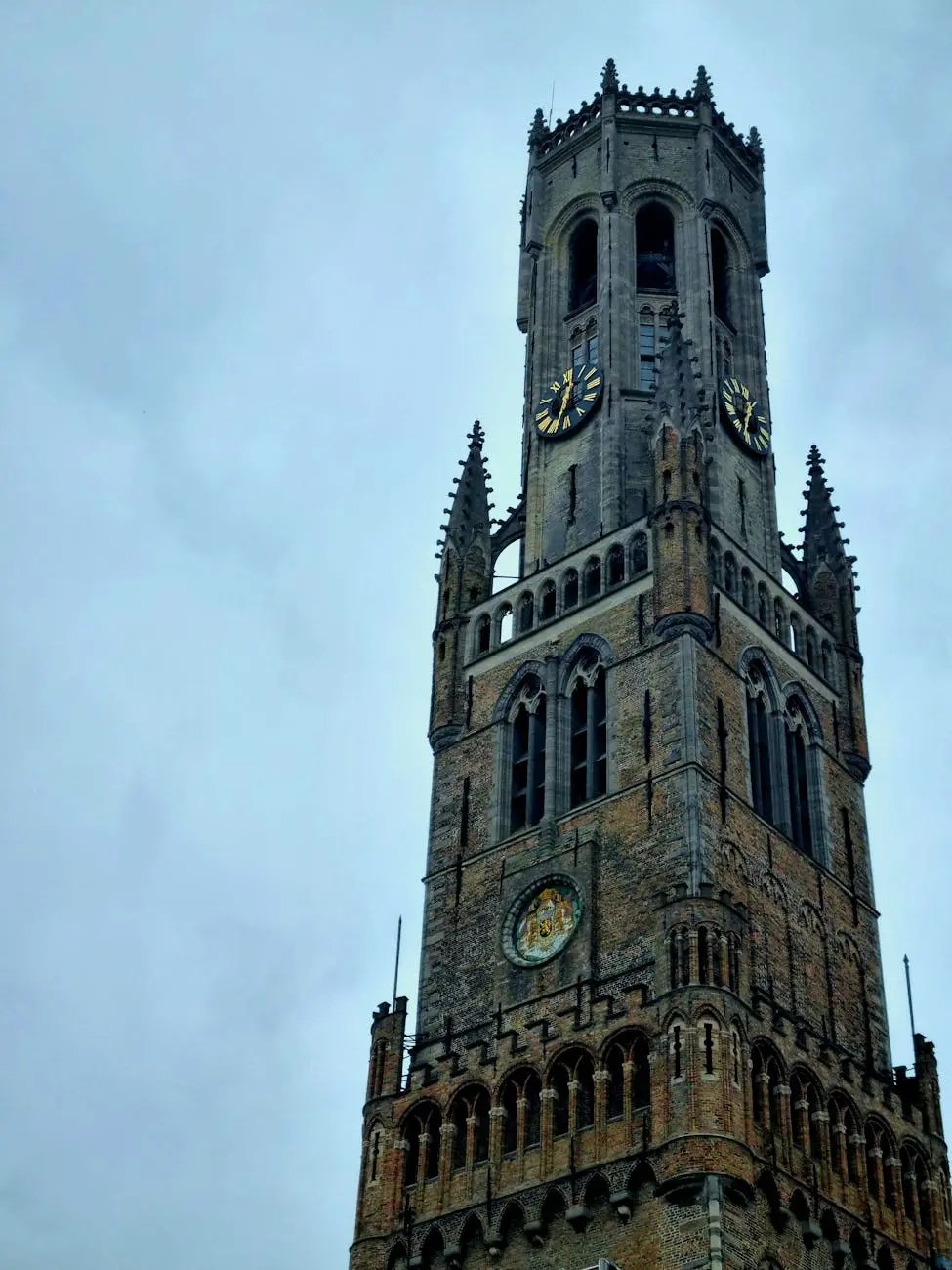
Close-up view of the Belfry of Bruges, a historic bell tower with intricate stone architecture and a clock, set against a cloudy sky.
The iconic Belfry of Bruges, a UNESCO World Heritage site, stands tall against a cloudy sky, showcasing the city’s medieval architecture. The Belfry of Bruges: Your 366-step climb to the best view in the city. This 83-meter medieval tower has guarded the Markt square since the 13th century and houses a treasury and a carillon of 47 bells.
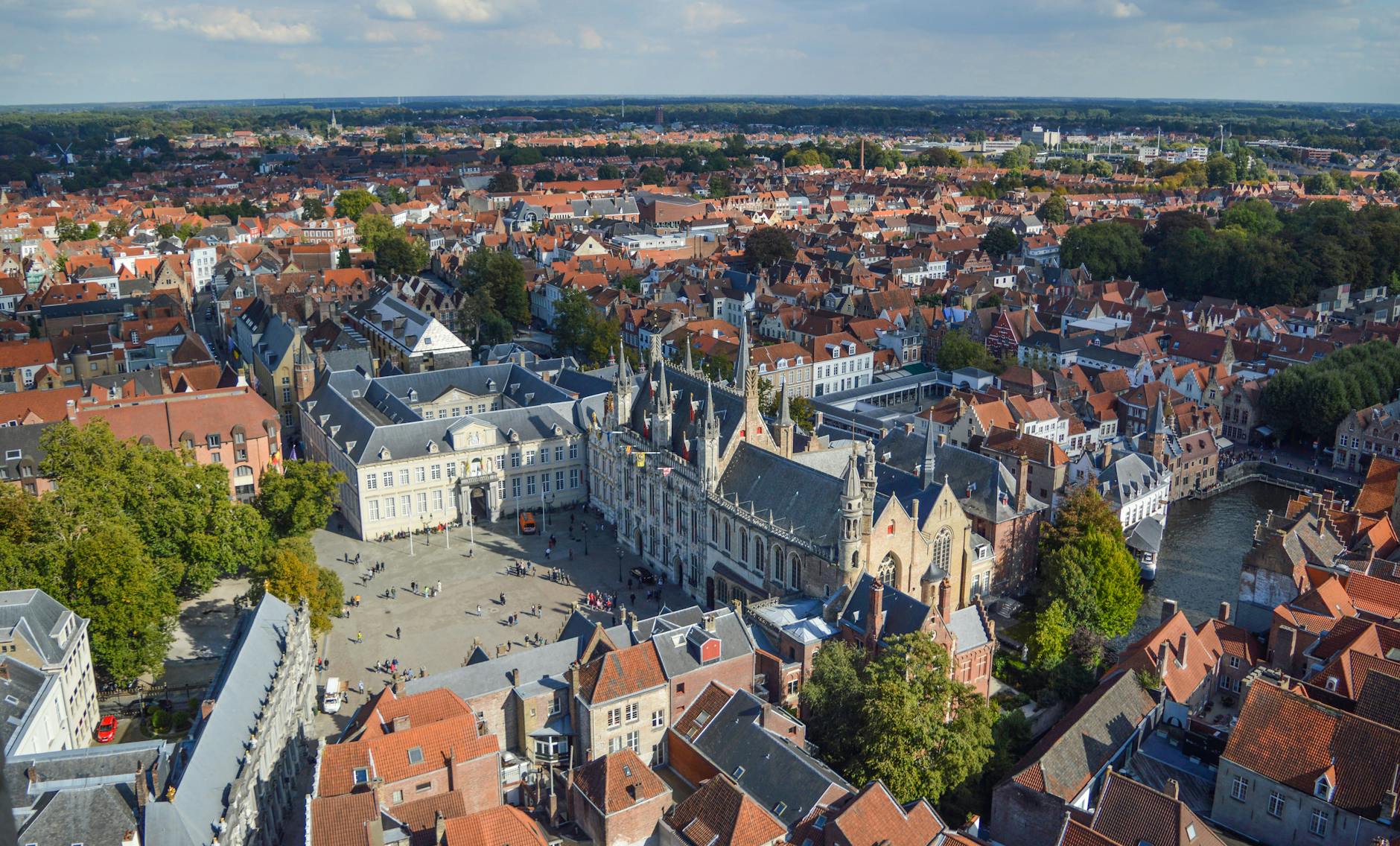
Aerial view of Bruges, showcasing its stunning medieval architecture and iconic canals.

Interior view of a beautifully decorated church with stained glass windows, a decorated altar, and visitors seated in pews, creating a serene and historical atmosphere.
Interior of the Basilica of the Holy Blood in Bruges, showcasing intricate artwork and an ornate altar.

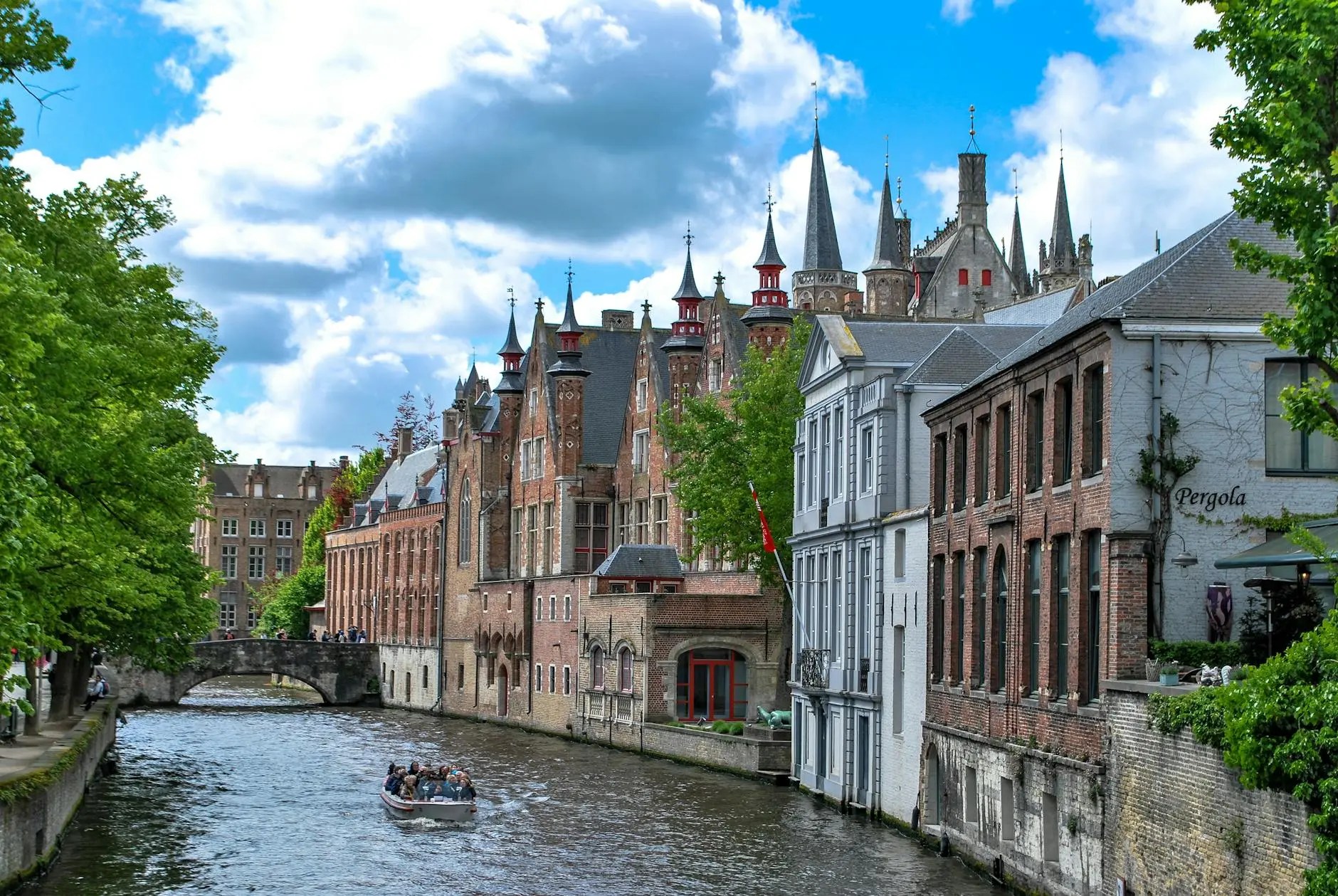
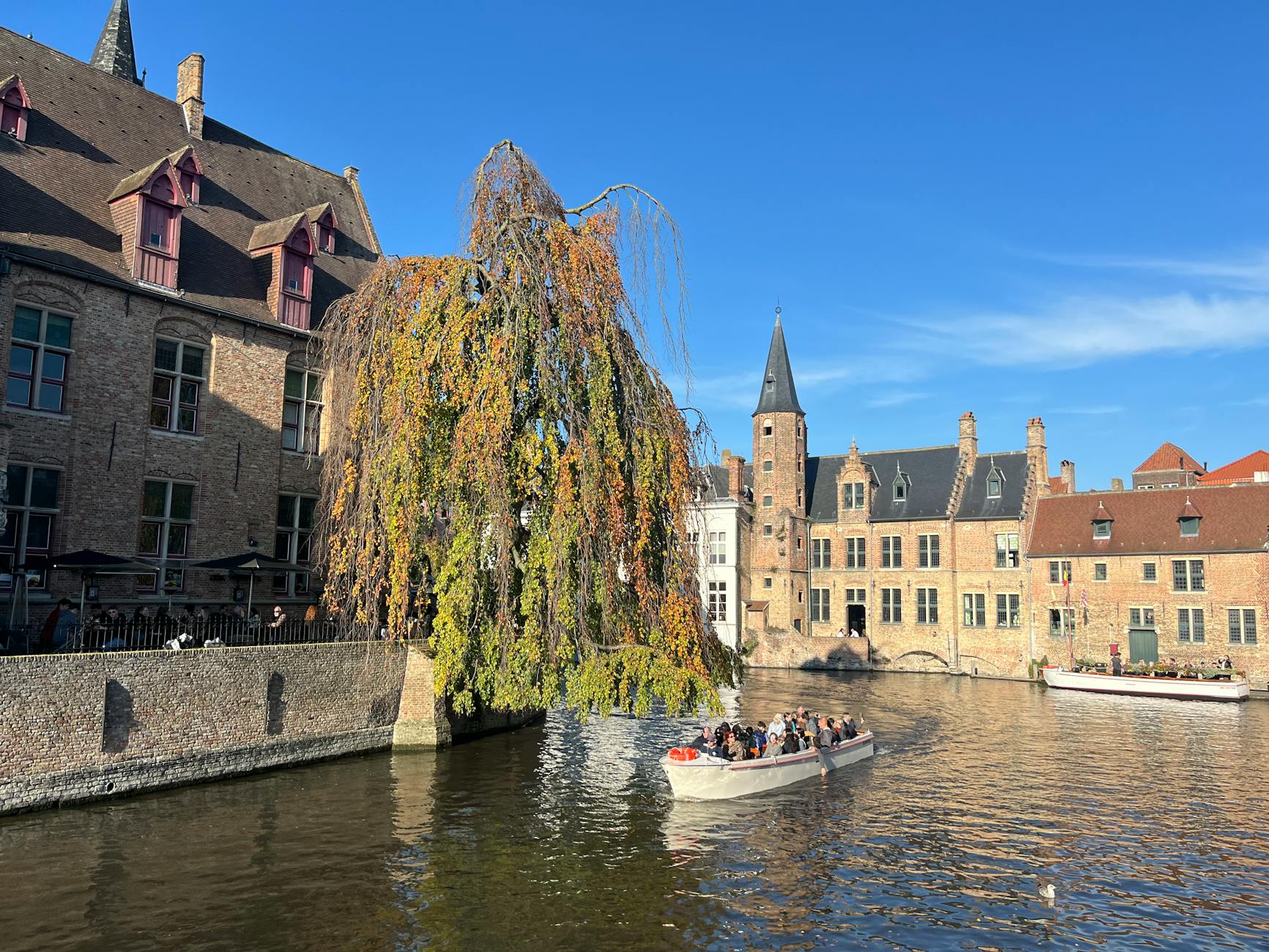
A scenic view of a canal in Bruges, Belgium, with historic brick buildings and a boat filled with tourists. The sky is partly cloudy with lush green trees lining the waterway.
A picturesque view of Bruges, showcasing its charming canals and historic architecture, perfect for your weekend escape. The view that defines Bruges: Serene canals mirror the city’s medieval architecture, earning it the nickname “The Venice of the North.” This is the peaceful magic you’ll discover around every corner.
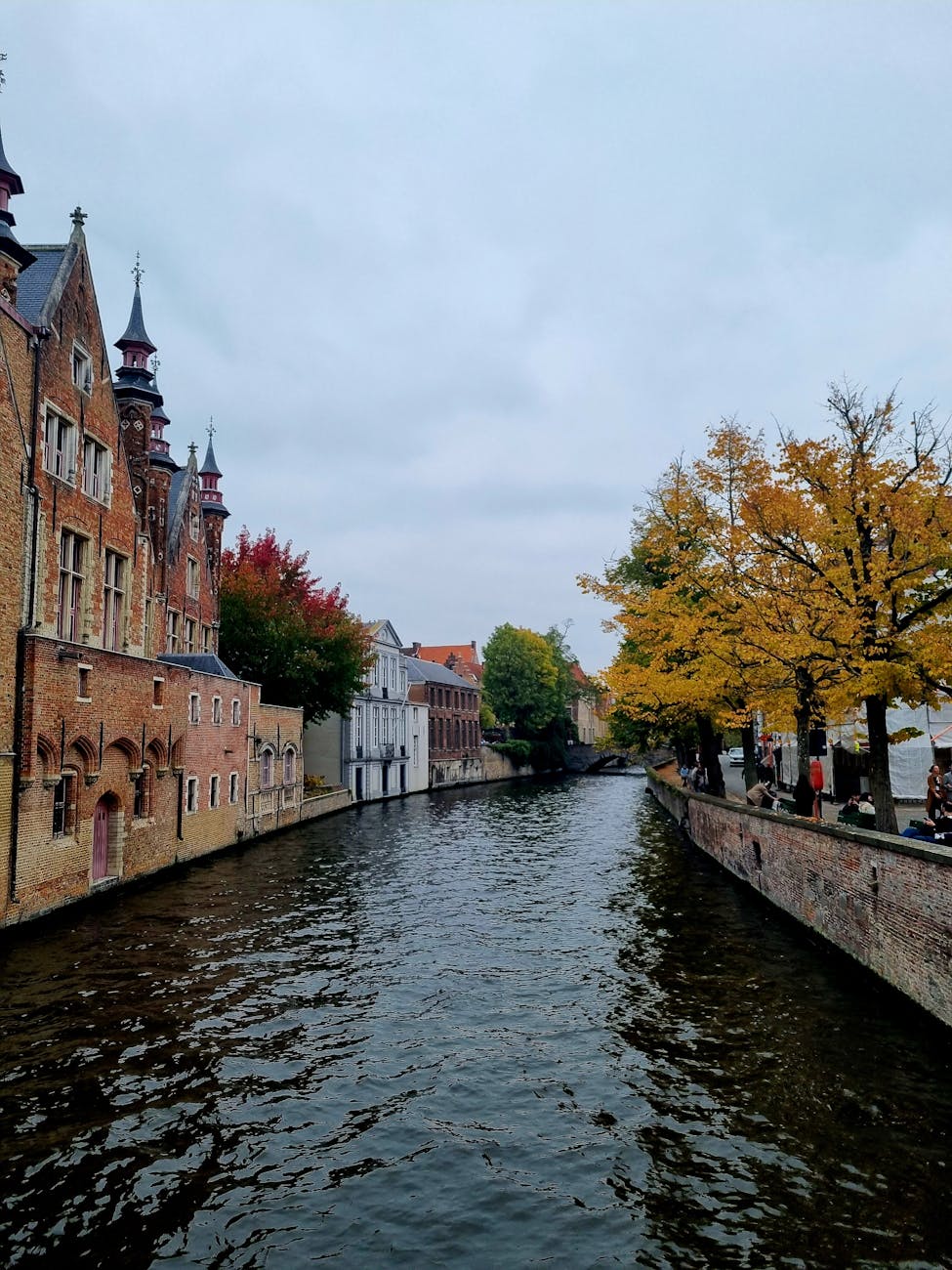
A scenic view of a canal in Bruges, Belgium, lined with historic brick buildings and autumn foliage.
A picturesque view of Bruges’ tranquil canals, surrounded by charming historical buildings and autumn foliage.

Day 2: Quiet Corners and Local Flavours

Morning: The Lake of Love Start your second day at the Minnewater (Lake of Love) and the surrounding Béguinage. It’s a tranquil pocket of serenity—perfect for a morning stroll and seeing the famous Bruges swans.

Local Flavours: The Trilogy You cannot leave Bruges without experiencing its edible trilogy:

  1. Fries (Frites): Find a frietkot (fry stand). Don’t call them French Fries; they’re Belgian! They are twice-fried and served with a dipping sauce—go for Andalouse (spicy mayo) or Samurai (more spicy mayo).
  2. Chocolate: Skip the tourist traps. My personal favourite is The Chocolate Line near the Markt, run by ‘Choc-o-latier’ Dominique Persoone. His experimental flavours (wasabi, anyone?) are a must-try.
  3. Beer: Belgian beer is an art form. Head to ‘t Brugs Beertje (The Bruges Little Beer) for an authentic pub experience with an extensive menu.
A whimsical display featuring a large animated potato and a French fry character, along with smaller fry characters, set against a backdrop of colorful curtains.
A fun display featuring animated potato and fry characters celebrating Belgian fries, a must-try local delicacy in Bruges.

History, Serenity & Last-Minute Souvenirs

  • Morning (10:00 AM): Visit the Church of Our Lady to see Michelangelo’s stunning marble sculpture, Madonna and Child. The peaceful atmosphere is a lovely way to start a Sunday.
  • Late Morning (11:30 AM): Get delightfully lost in the Begijnhof (Beguinage), a serene cluster of white-washed houses around a tranquil garden. It’s an oasis of calm. Remember, this is a place of quiet reflection.
  • Afternoon: Grab one last waffle (you know you want to) and pick up some souvenirs. The lace sold around the Minnewater park is beautiful, but be aware that much of it is not handmade.
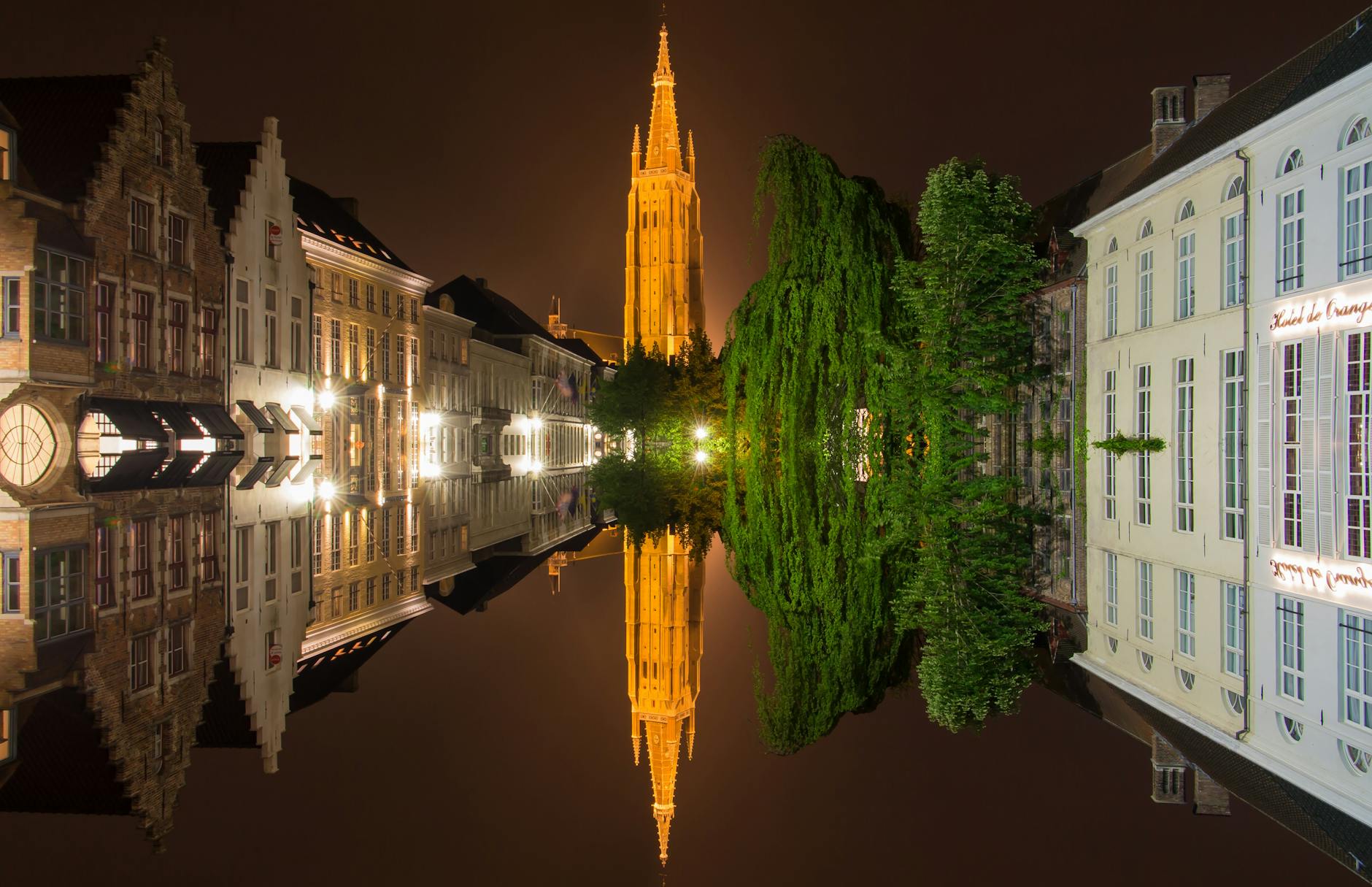
Night view of Bruges reflecting in a canal, featuring illuminated buildings and the Belfry tower.
A stunning nighttime reflection of Bruges’ historic architecture and the iconic Belfry, showcasing the city’s enchanting beauty.

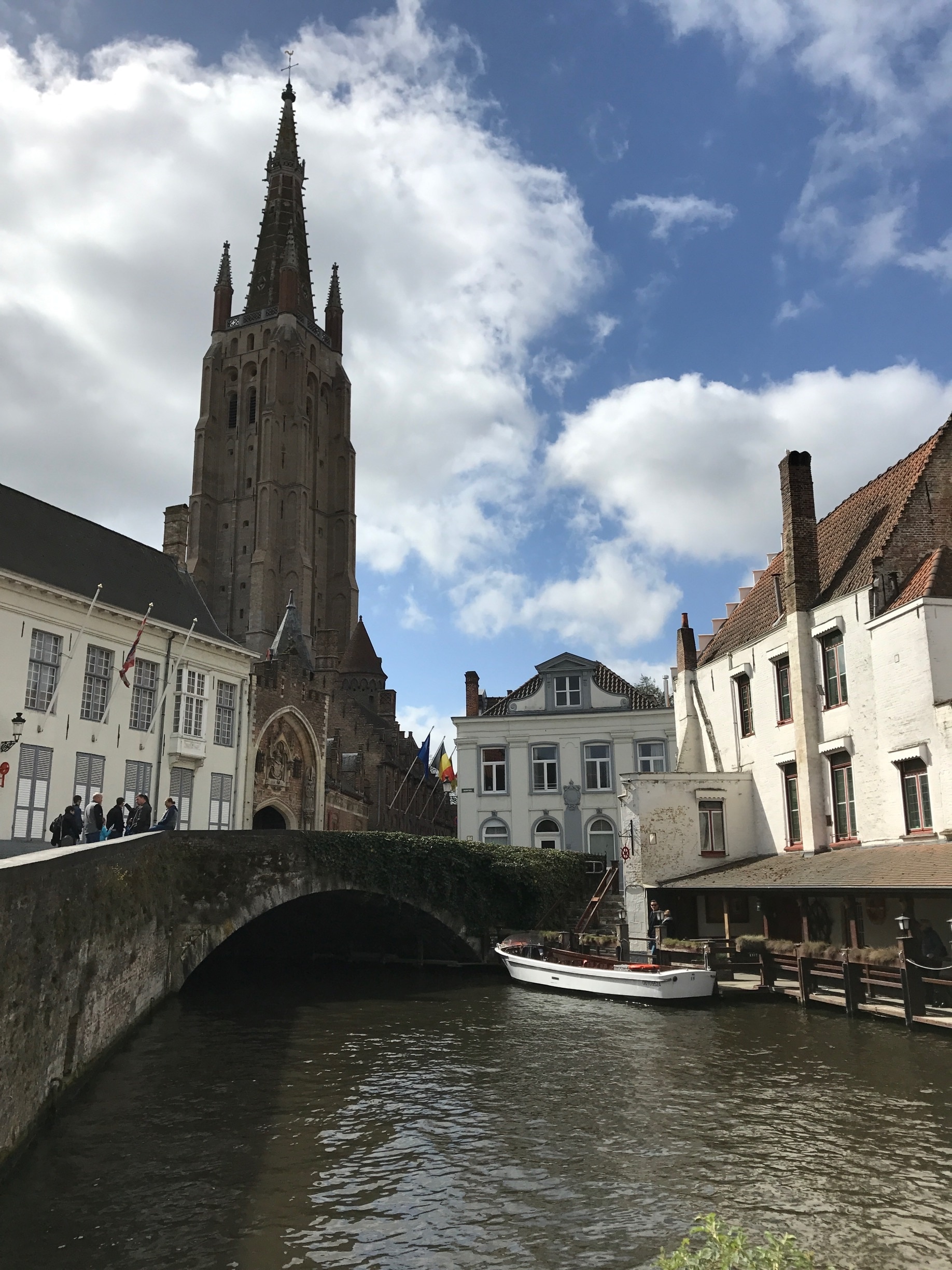
A picturesque view of Bruges, Belgium, showcasing a historic tower, a canal, and charming architecture under a partly cloudy sky.
A picturesque view of Bruges with a historic bell tower, charming architecture, and tranquil canals, showcasing the city’s fairytale-like allure.

A stone statue of a woman with a child, surrounded by colorful flowers in a planter, with a sign that reads 'de Maria'.
A serene statue of Mary holding a child, adorned with blooming flowers, creating a tranquil atmosphere in Bruges. An artistic pilgrimage: Michelangelo’s serene “Madonna and Child,” one of the few statues by the master to leave Italy, is the stunning centerpiece of the Church of Our Lady in Bruges
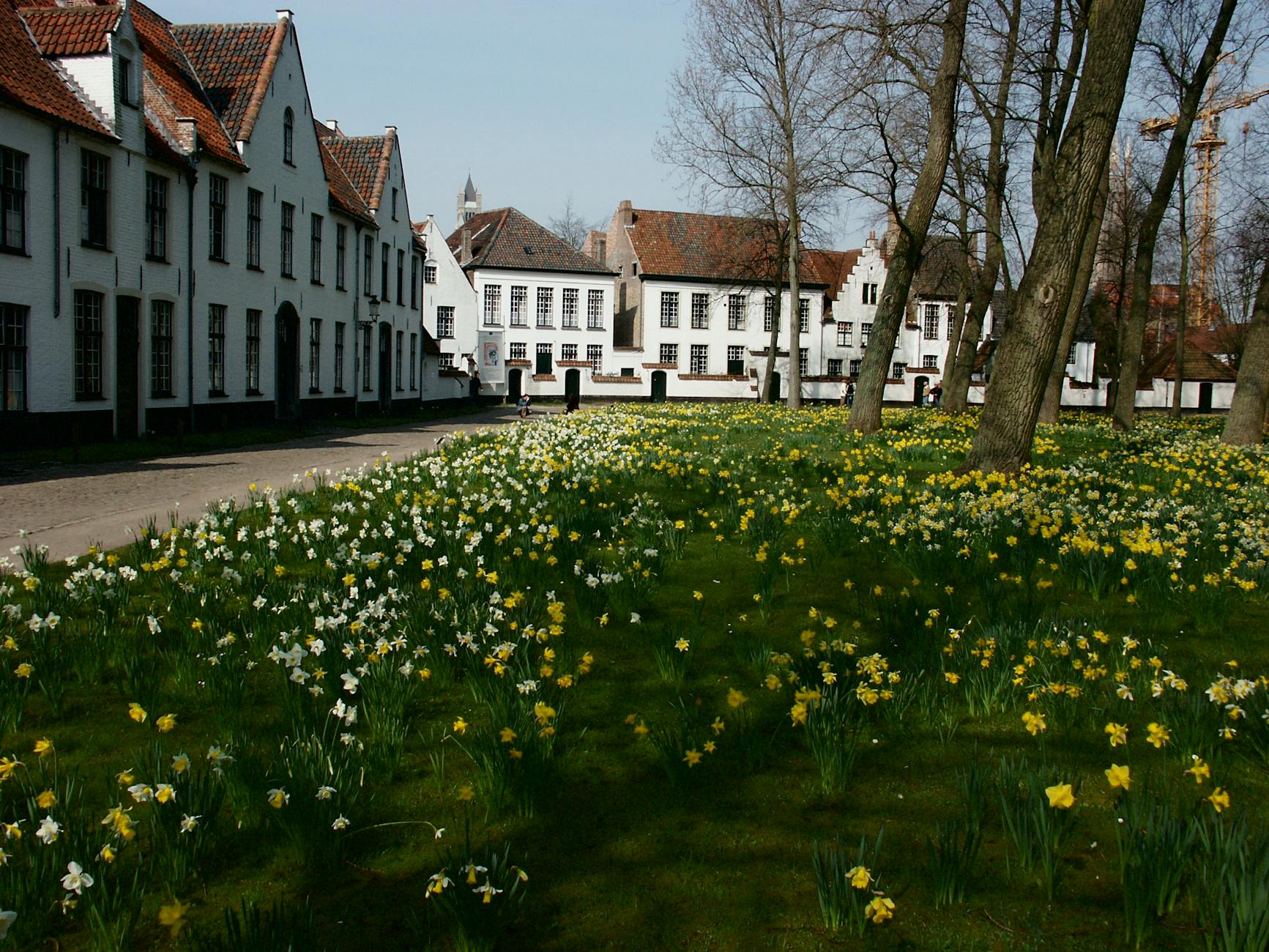
A serene view of the Beguinage in Bruges, adorned with blooming daffodils, perfect for a peaceful stroll.

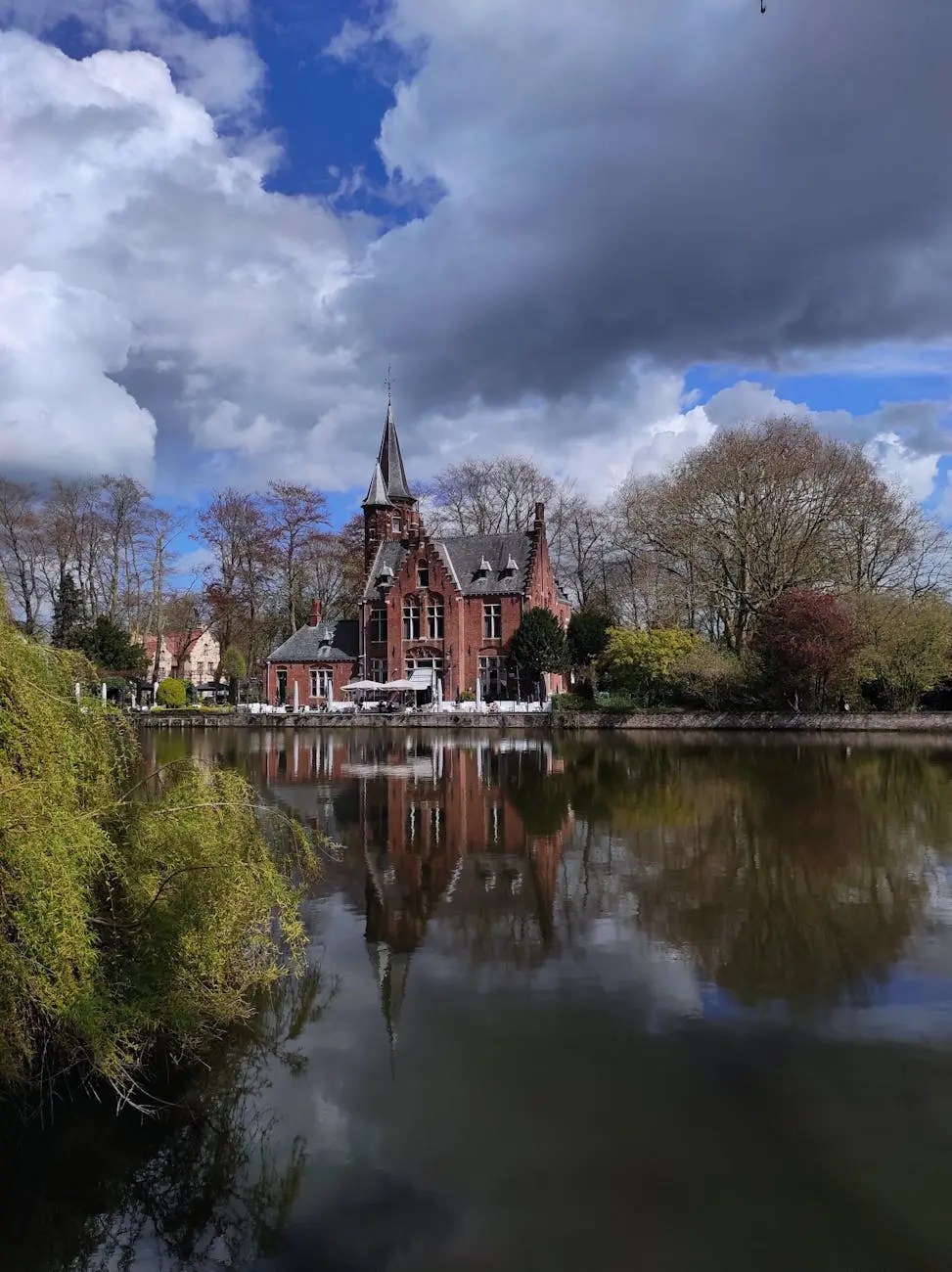
A picturesque view of a red-bricked building with a tall spire, surrounded by lush trees and reflecting in a calm lake under a partly cloudy sky in Bruges, Belgium.
A picturesque view of a historic red-brick building next to a serene lake, reflecting the beauty of Bruges, Belgium. Discover the “Castle of the Lake of Love”: The fairytale Kasteel Minnewater, a 19th-century neo-Gothic gem tucked away in the city’s most romantic park. It’s the perfect spot to escape the crowds.

Beyond the Beaten Path: Hidden Gems You Can’t Miss

  • De Garre: Tucked down a tiny, easy-to-miss alley off the Breidelstraat, this pub serves a legendary triple beer that you won’t find anywhere else. Finding it feels like unlocking a secret level.
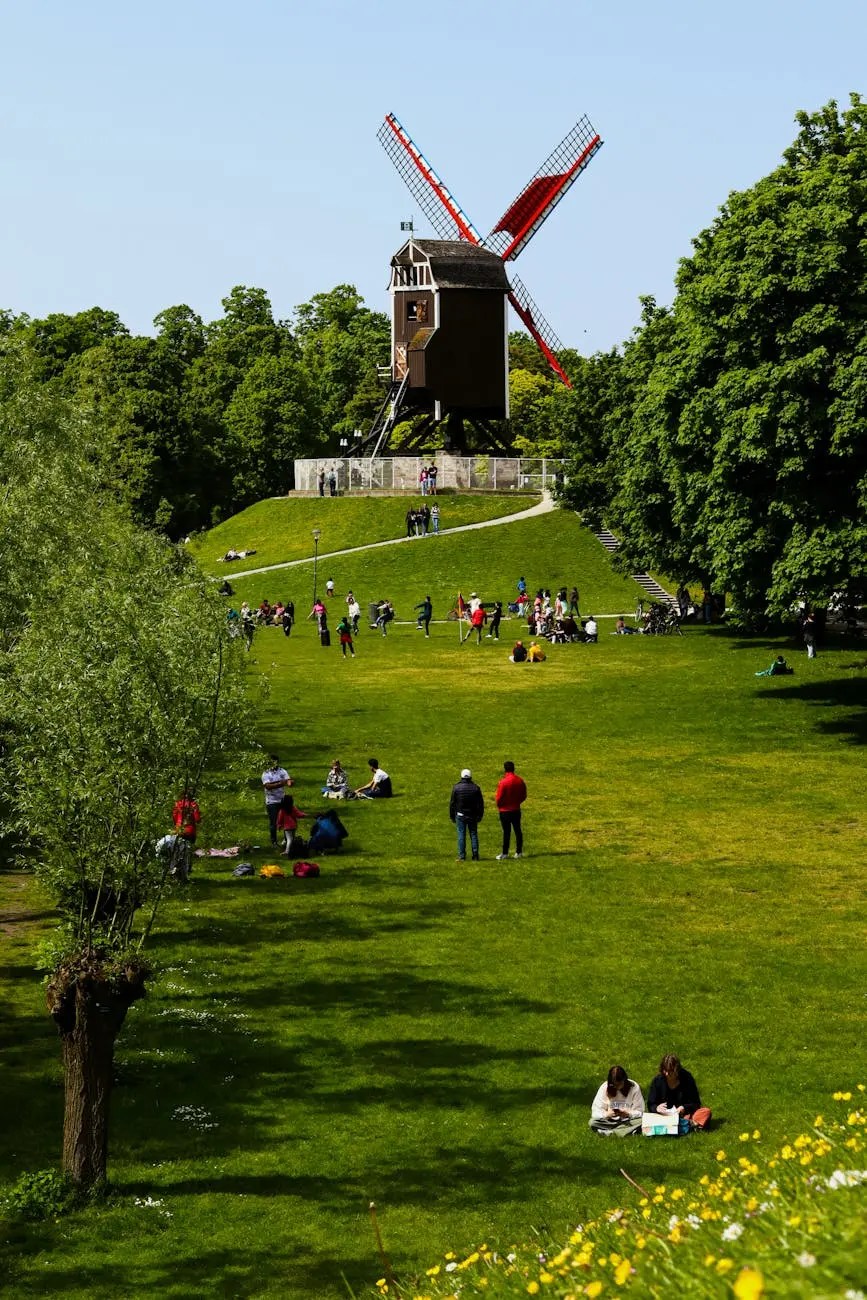
  • Windmill Walk: Escape the core crowds by walking along the city ramparts to the four remaining windmills. The view of the Sint-Janshuismill against the city skyline is a postcard-worthy shot few tourists get.
  • A Local’s Lunch: Skip the restaurant and head to a supermarket like Delhaize to assemble a picnic of local cheeses, meats, and bread. Enjoy it by the peaceful Minnewater (Lake of Love).
A vibrant park setting in Bruges featuring a historic windmill on a hill, surrounded by green grass and people enjoying the outdoors.
Stunning view of the iconic windmill at Minnewater Park in Bruges, surrounded by greenery and visitors enjoying a sunny day. A step back in time: The Sint-Janshuismolen, one of Bruges’ four remaining historic windmills, still grinds grain today. Climb the ramparts for this classic postcard view and a breath of fresh air.
Scenic view of a canal in Bruges, showcasing charming architecture and a boat filled with tourists navigating the serene waters.

Bruges on a Budget: Smart Tips for Savvy Travellers

Bruges can be pricey, but it doesn’t have to break the bank.

  • The Bruges City Card: If you plan on visiting multiple museums, this card is a no-brainer. It includes entry to many major sites, a canal boat tour, and public transport, saving you a significant amount. Calculate if it’s worth it for your itinerary.
  • Water is Free: Carry a reusable bottle. Tap water in Belgium is safe to drink and free, unlike the €3 bottles in tourist shops.
  • Picnic Power: As mentioned, picnics are your best friend for a cheap and delightful lunch.
  • Museums are Free?: Some museums, like the Archeological Museum, have free entry on the first Sunday of the month. It’s worth checking their schedules!

🛡️ Smart Travel Tip: No matter where your adventures take you, having the right travel insurance can save you from unexpected headaches (and bills). I personally recommend VisitorsCoverage — it’s a trusted platform where you can compare plans, find coverage that fits your trip, and book it in just a few clicks. Whether you’re planning a quick city escape or a longer international journey, it’s peace of mind worth packing.

Navigating Bruges Like a Local: Transport & Logistics

  • Getting In: Brussels Airport (BRU) is the main international gateway. The most efficient way to get to Bruges is by train. A direct service runs from Brussels Airport to Bruges station in about 1.5 hours. It’s comfortable, scenic, and drops you right near the city center. Book your train tickets in advance for the best prices.
  • Getting Around: Your feet are your best transport. The entire historic center is walkable. For longer distances, rent a bike—it’s the quintessential Belgian way to get around.
  • Driving? Don’t. Seriously. The center is a labyrinth of one-way streets and pedestrian zones. Park your car in a designated “Park & Ride” on the city’s outskirts—it’s cheap and includes a bus ticket into the center.

🌐 Connectivity Tip: Staying connected abroad can be tricky (and expensive if you’re relying on airport SIM counters or roaming). That’s why I carry a Drimsim—a universal SIM card that works in 190+ countries without hidden fees. You just pop it into your phone, top up through the app, and you’re online wherever your adventure takes you. No more hunting for local SIM cards or stressing over roaming bills.

And for booking flights and hotels safely from anywhere, especially on public Wi-Fi, I never travel without my NordVPN. It’s essential for protecting your personal data.

✈️ Flight Woes? Travel isn’t always smooth sailing—sometimes flights get delayed, canceled, or overbooked. The good news? You might be entitled to up to $650 in compensation under air passenger rights. Most travelers never claim it, but I’ve got you covered: just check your flight with AirHelp. They handle the paperwork, fight the airlines for you, and only get paid if you win. Easy, stress-free, and potentially a nice surprise for your travel fund.

A Taste of Bruges: Food & Drink Must-Tries

  • Waffles: The two main types are the denser Brussels waffle (rectangular, light) and the sweeter, doughier Liège waffle (oval with sugar pearls). Try both, I won’t judge.
  • Frites: Belgian fries are a religion. Get them with a dollop of mayonnaise from a dedicated frituur (fry shop).
  • Chocolate: Avoid the mass-produced shops. Look for artisanal chocolatiers with windows filled with creative pralines.
  • Beer: From Trappist ales to fruity Lambics, there’s a beer for every palate. Don’t be afraid to ask for a proefverpakking (a tasting platter).
A delicious Belgian waffle topped with fresh strawberries, blueberries, raspberries, and powdered sugar.
Indulge in a delicious Belgian waffle topped with fresh strawberries, raspberries, and blueberries, dusted with powdered sugar. Go on, you’ve earned it! A warm, sugar-crusted Liege waffle buried under a mountain of fresh berries is the ultimate fuel for a day of exploring Bruges.

Bruges Lingo: Words You Need

While most Belgians in tourist areas speak excellent English, knowing a few words in Dutch (the Flemish dialect) is always appreciated:

Dutch Word/PhrasePronunciation GuideMeaning
GoeiendagHoo-yeh-dahgHello/Good Day
Dank u welDahnk oo vellThank you
BruggeBroo-guhThe city’s name (local spelling)
AlstublieftAll-stoo-bleeftPlease/Here you go

Look Beautiful, Even on the Road

Travel can be tough on your skin, but glowy skin should never break the bank.

I never leave home without my K-beauty magic. Lakinza has become my secret weapon for maintaining that dewy look, even after a red-eye flight. You can explore their amazing selection here: Lakinza K-Beauty Magic

✨ Use Code Lalax10 for a Sweet Discount ✨

When you buy from Lakinza, use coupon code: Lalax10 at checkout to save a little extra for your next skincare haul. Trust me, you’ll want more.

FAQs for Your Bruges Trip

QuestionAnswer
Do they accept Euros?Yes, Belgium uses the Euro (€). While credit cards are widely accepted, always carry some cash for smaller local businesses or frietkots.
How safe is Bruges?Bruges is extremely safe, even at night. The biggest danger is tripping on the cobblestones after one too many Belgian beers! Standard precautions apply, but it’s very low-crime.
Is the Brugge City Card worth it?It depends on how many museums you plan to visit. If you only want to see the canals and the Markt, skip it. If you plan to visit three or more museums and the Belfry, it’s a great value.
Do I need to tip?Tipping is appreciated but not mandatory. Service is usually included in the price. Rounding up to the nearest Euro or leaving an extra 5-10% for excellent service in restaurants is common.

Final Call to Adventure!

Bruges is more than just a picture-perfect postcard; it’s a place that slows your heart rate and reminds you that sometimes, the best escape is a step back in time. Stop dreaming and start packing. What are you waiting for? Book that train ticket, grab that waffle, and tell the cobblestones I said hello! Start planning your ultimate Belgian getaway today! (Your dream trip is just a click away!)

Related Reading:
✈️ The Ultimate Weekend Escapes Around the World

Universal Disclaimer/Disclosure Page:

48-Hour Stockholm: Your Ultimate Weekend Guide

Meta Description:

Dreaming of a weekend in Stockholm? Our ultimate guide unlocks the best of the Swedish capital in 48 hours. Get insider tips on hidden gems, saving money with the SL card, and the perfect fika. Plan your efficient and magical Nordic escape now!

Stockholm. Just the name conjures up images of colourful buildings reflected in pristine waters, sleek design, and people who look suspiciously like they stepped out of a fashion magazine. Trust me, I was a sceptic, but this city—built across 14 islands—quickly worked its magic on me.

Planning a quick escape? A long weekend in the Swedish capital is lagom (a wonderfully untranslatable Swedish word meaning “just the right amount”)—enough time to soak up the culture, explore a few islands, and even find some hidden gems.

Ready to trade your Monday blues for some Scandinavian views? Let’s dive into the ultimate itinerary, packed with tips and, yes, a few of my own travel blunders to help you save time and cash.

I’ll be honest, my first trip to Stockholm was a bit of a blur. I’d imagined myself gracefully gliding between palaces and museums, but instead, I spent a good 45 minutes circling a roundabout trying to find my Airbnb. I learned the hard way so you don’t have to. This guide is the culmination of that experience and a few subsequent, much smoother trips. It’s your all-in-one ticket to a seamless, unforgettable weekend in the “Venice of the North.”

Pro Tip: For squeezing the most out of a short trip, I always book my flights and hotels together on expedia. The bundle deals are no joke and have saved me enough Kronor for extra cinnamon buns.

Table of Contents

  1. Why Stockholm is Your Next Weekend Destination
  2. The Savvy Traveller’s Guide to Stockholm Logistics
    • Visa & Geo-Travel Connections
    • The Public Transport Secret Weapon: SL-kort
    • Money-Saving Tips
  3. Your Perfect 3-Day Stockholm Itinerary
    • Day 1: History, Royalty, and Fika
    • Day 2: Shipwrecks, Pop Icons, and Hidden Views
    • Day 3: Archipelago Day Trip & Hidden Gems
  4. Essential Swedish Words for the Road
  5. FAQs
  6. Travel Tools I Swear By
  7. Final Call to Action

Hotels in Stockholm

Why Stockholm is Your Next Weekend Destination

First, a confession: I arrived in Stockholm thinking it would be beautiful but perhaps a little stuffy. I was spectacularly wrong. It’s got that European history you crave, but it’s wrapped up in a modern, effortlessly cool package. It’s a city where you can stroll cobbled streets in Gamla Stan (Old Town) in the morning and be sailing through a stunning archipelago in the afternoon. The air is fresh, the water is clean enough to swim in, and everywhere you look, there’s a photo opportunity. Seriously, I burnt through my memory card faster than a Swede says “tack” (thanks). If you want to capture the sheer beauty of the city’s light reflecting off the water, make sure you have a camera that can handle the magic! I’m currently loving my camera for trips like this.

Stockholm in a Nutshell: First, Let’s Get Oriented

Stockholm isn’t just one city; it’s a sprawling archipelago of 14 islands connected by 57 bridges. But don’t panic! For a weekend, you only need to know the core four:

  • Gamla Stan: The picture-perfect Old Town with cobblestone streets and colourful buildings. This is the postcard.
  • Södermalm: The “hipster” island, brimming with vintage shops, cool cafes, and the best views of the city.
  • Norrmalm: The modern city center where you’ll likely arrive. It’s all about shopping, the central station, and main transport hubs.
  • Djurgården: The city’s green oasis, home to top-tier museums and amusement parks.

Thinking of combining this with another Scandinavian adventure? Check out my guide to [A Long Weekend in Charming Copenhagen] for a perfect double-feature.

Navigating the City Like a Pro: Your Transport Bible

Forget renting a car. In Stockholm, it’s a expensive, gas-guzzling headache with confusing parking. The public transport system is your best friend.

The SL Card is Your Golden Ticket:
This single card gives you unlimited access to the Tunnelbana (metro), buses, trams, and even some ferry lines within the city.

  • How to Get It: Download the SL app and buy a ticket there, or buy a physical card at Pressbyrån convenience stores or any T-Bana station.
  • What to Buy: For a weekend, the 72-hour card is perfect and costs around 330 SEK (~$30). It activates the first time you use it and is worth every penny.

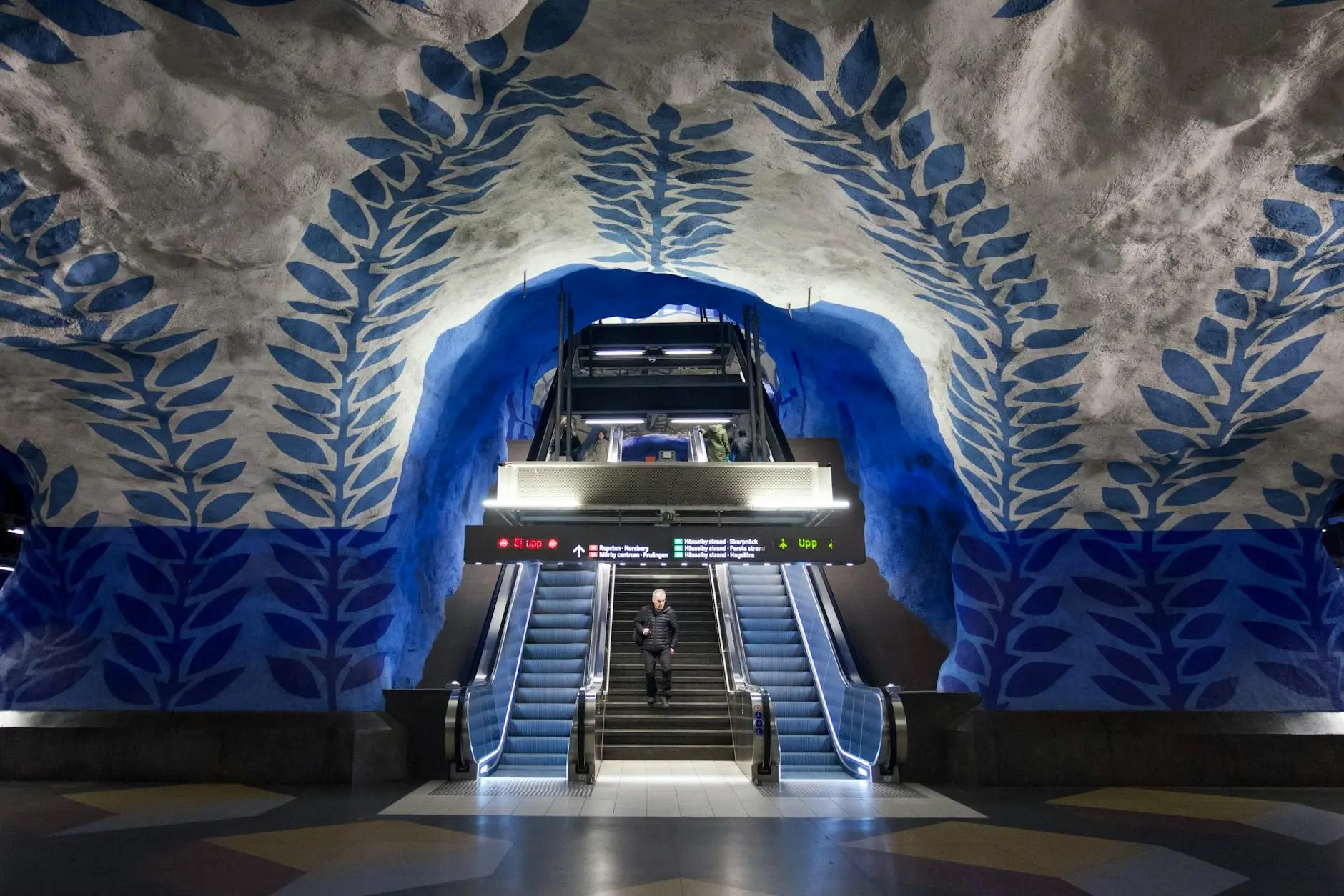
The Tunnelbana (T-Bana): It’s fast, efficient, and famously beautiful. Each station is a work of art. My favourite is T-Centralen with its calming blue vines.

Buses & Trams: Perfect for reaching islands like Djurgården when you don’t feel like walking.

Walking: The best way to experience the city. The islands are very walkable, and the views while crossing bridges are half the fun.

The Art Gallery Underground: The Blue Line of the T-Bana is an absolute must-see. Over 90 of the 100 stations are decked out with amazing art, turning your commute into a subterranean museum. Don’t miss T-Centralen, Kungsträdgården, and Stadion. It’s a fantastic, free activity that gets you out of the crowds!

Stockholm’s Tunnelbana map: your guide to navigating the city’s efficient and beautiful metro system.

Interior of a Stockholm subway station featuring colorful blue and white mural designs on the rock walls, with stairs and escalators leading to the platform.
The stunning blue and white artwork of Stockholm’s Tunnelbana, showcasing the city’s unique and vibrant metro system. Descending into an art gallery: The stunning blue vine motifs of T-Centralen station, a hallmark of Stockholm’s world-famous Tunnelbana (metro) system. It’s arguably the world’s longest art exhibition!
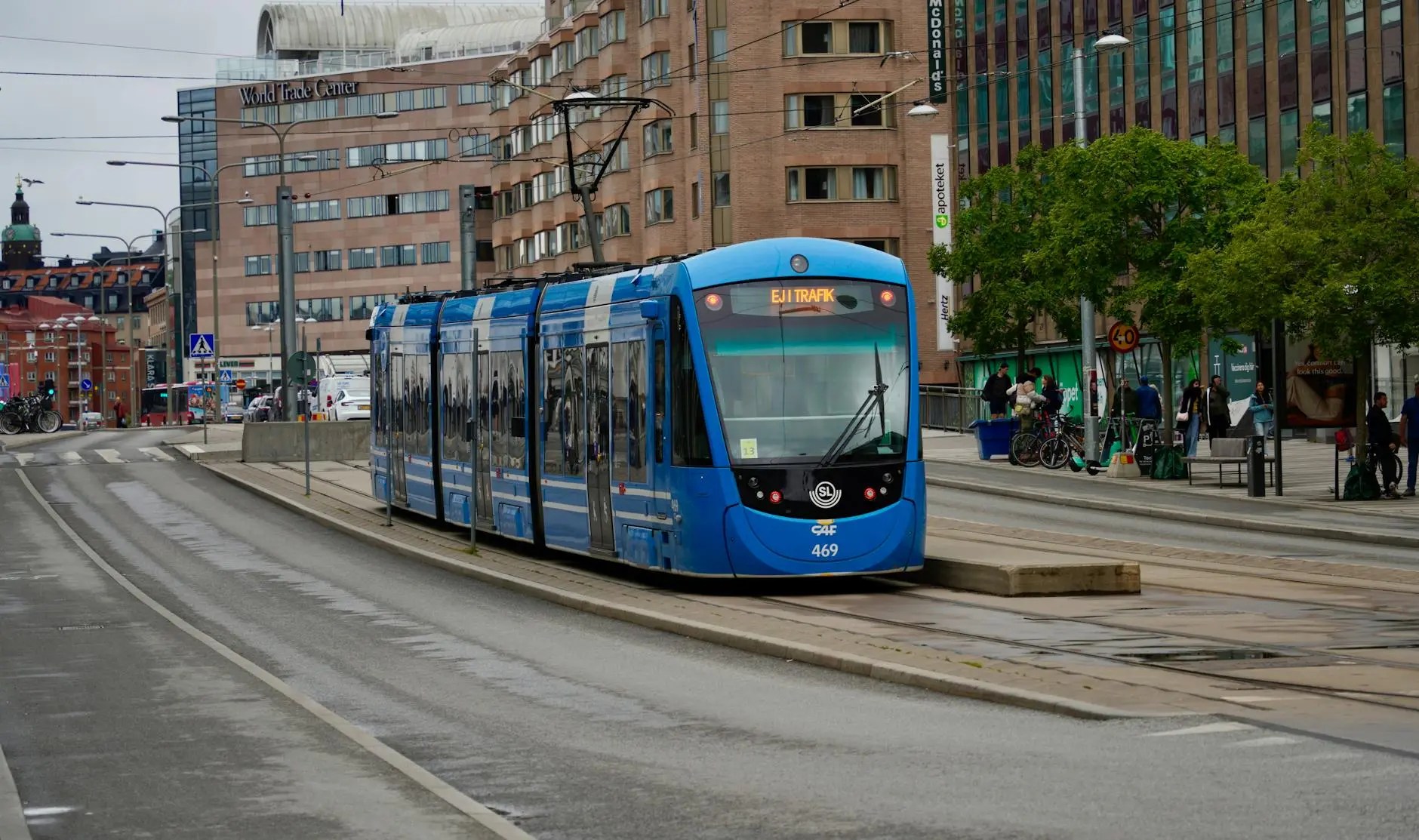
A blue tram marked 'EJ I TRAFIK' on the tracks in a modern urban setting, with buildings and trees in the background.
A sleek blue tram navigating the streets of Stockholm, showcasing the city’s efficient public transport system. Going with the flow: A modern blue tram glides through the streets of Stockholm, a perfect symbol of the city’s seamless and efficient public transport network that connects its many islands.

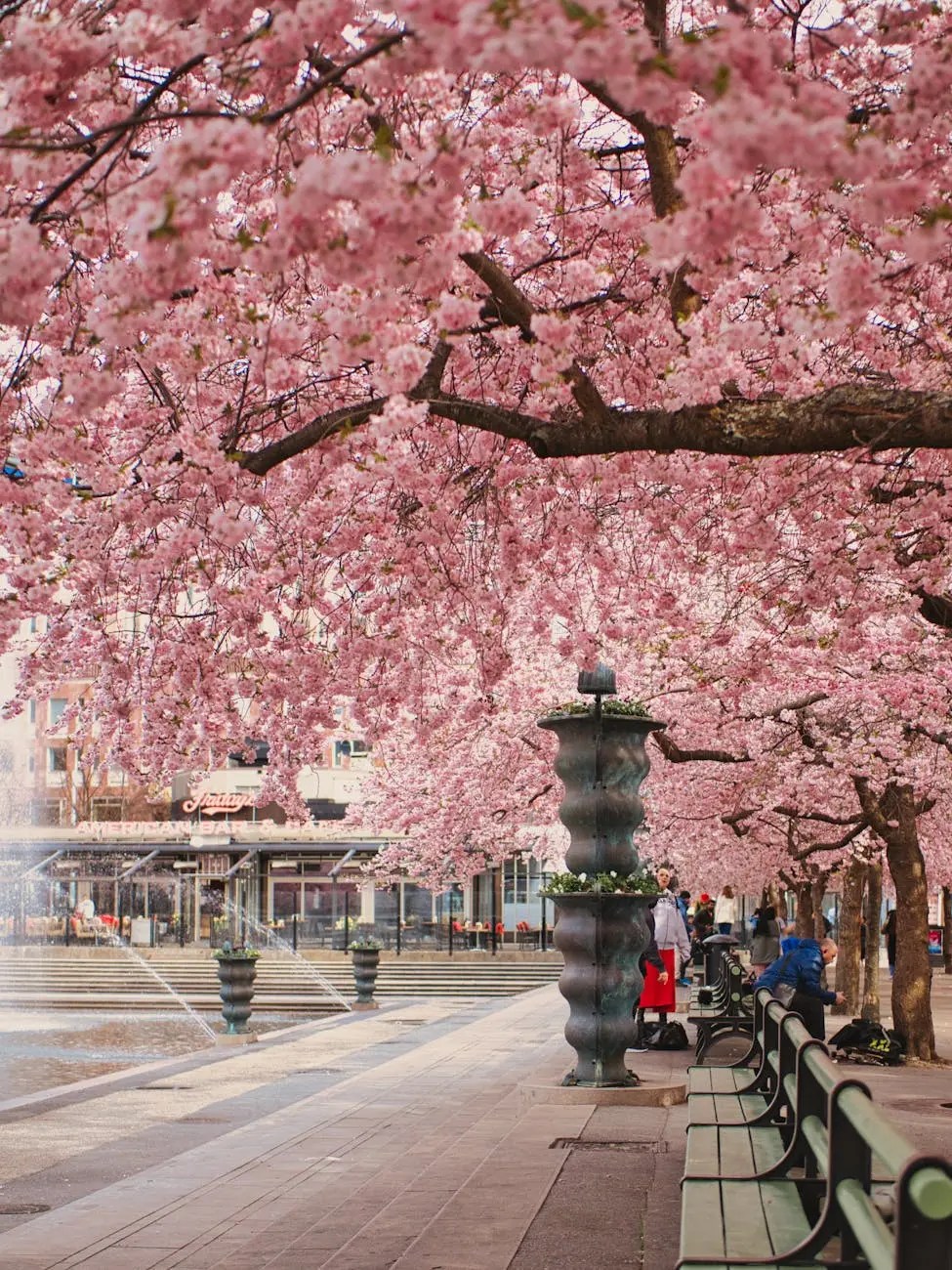
Cherry blossom trees in full bloom lining a city street, with a fountain and benches visible in the foreground.
Stunning cherry blossoms in Stockholm, creating a picturesque scene perfect for a spring day out. This image captures the cherry blossoms in full bloom at Kungsträdgården (King’s Garden) in central Stockholm, Sweden. 

Your Perfect 3-Day Stockholm Itinerary

We’ve designed this itinerary to flow logically using public transport to minimize backtracking.

Day 1: History, Royalty, and Fika (Gamla Stan & Södermalm)

  • Morning (History): Start in Gamla Stan, the Old Town. Wake up early to get ahead of the crowds—this is when the cobblestones are quietest and perfect for photography. Don’t miss the narrowest alley, Mårten Trotzigs Gränd (only 90cm wide!).
  • Mid-Day (Culture): Watch the Changing of the Guard ceremony at the Royal Palace (Kungliga Slottet). Check the time as it changes seasonally. Anecdote Alert: I once nearly missed the whole thing because I stopped for an unscheduled Fika break. Don’t be me. Prioritize the marching band, then get your pastry.
  • Afternoon (Scenic View): Cross over to Södermalm island. Head straight for Monteliusvägen (bus 4 stops nearby) for a spectacular, uninterrupted view of City Hall, Gamla Stan, and the Riddarholmen Church spire. This is a must for your camera.
  • Evening (Local Hangout): Explore the trendy Södermalm area, particularly around the Nytorget square, for dinner. It’s less touristy than Gamla Stan and has a great local vibe
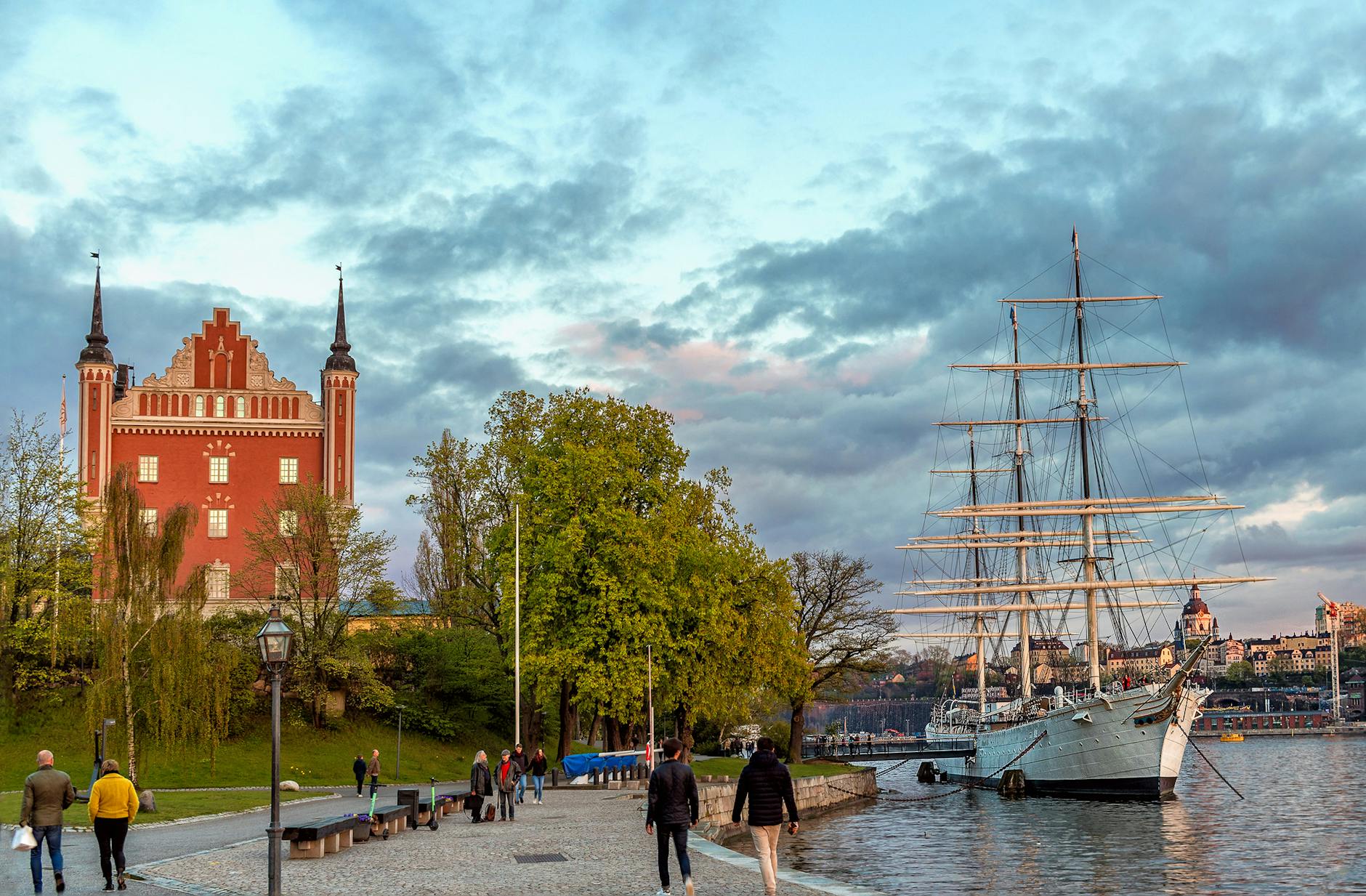
A scenic view of Stockholm's waterfront featuring a vintage ship docked beside a colorful historic building, with people walking along the promenade and lush trees along the water's edge.
A scenic view of a historic building alongside a docked ship in Stockholm, capturing the essence of the city’s beautiful architecture and waterfront landscapes. The image depicts Gamla Stan, Stockholm’s Old Town, with the Af Chapman sailing ship prominently docked in the foreground. 
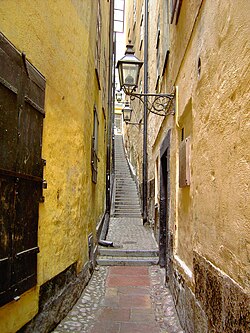
Narrow cobblestone alleyway in Gamla Stan, Stockholm, featuring yellow walls and a vintage lantern.
A narrow alleyway in Gamla Stan, Stockholm, showcasing picturesque yellow walls and cobblestone streets, perfect for capturing the city’s historic charm.

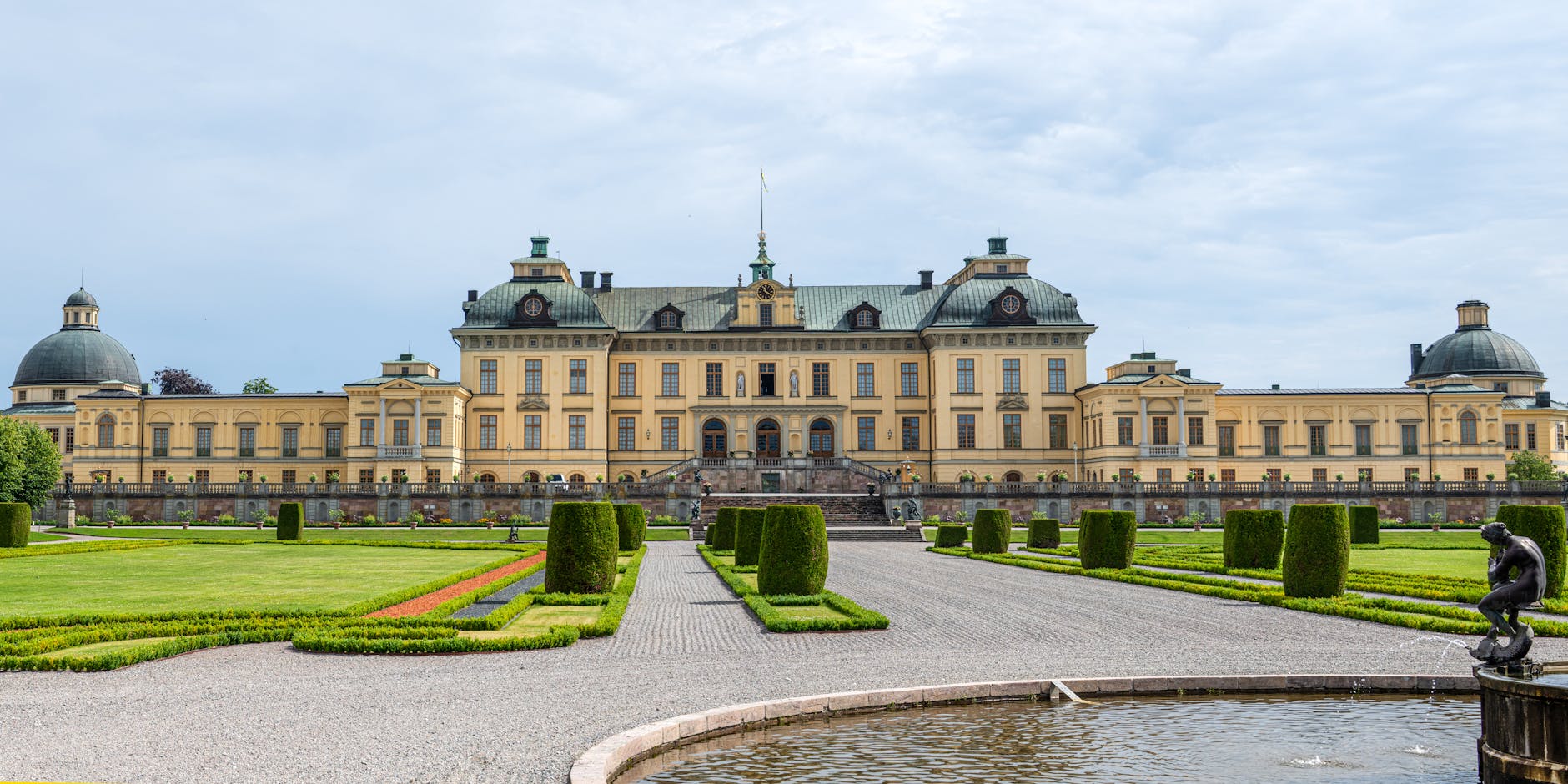
A grand historic palace with a manicured garden in the foreground, featuring neatly trimmed hedges and a statue by the pond, under a cloudy sky.
The regal Drottningholm Palace surrounded by lush gardens and intricate landscaping.

View of Stockholm from above featuring a golden star decoration in the foreground, with colourful buildings and waterfront visible in the background under a clear blue sky.
A scenic view of Stockholm showcasing its colorful buildings and beautiful waterways, framed by a golden star symbol.

Drottningholm Palace: The “Versailles of the North”

Drottningholm (which literally translates to “Queen’s Islet”) is often called the “Versailles of the North” for its stunning architecture and gardens. It is the official residence of the Swedish King and Queen, meaning they actually live there.

What you can see there:

  • The Palace: The magnificent 17th-century building itself.
  • The Palace Gardens: Immaculate Baroque-style gardens and a larger English park.
  • The Chinese Pavilion: A beautiful, exotic royal pleasure palace from the 1700s.
  • Drottningholm Court Theatre: A perfectly preserved 18th-century theatre that still uses its original stage machinery.

How to get there from Stockholm City:
It’s an easy 15-20 minute trip. You can take the T-Bana (metro) to Brommaplan and then a bus, or, more scenically, take a boat from Stadshuskajen (near City Hall). The boat ride is part of the experience, offering beautiful views of the city from the water.

Stockholm: The Vibrant Capital

Stockholm is the vibrant, dynamic city you explore for its many districts like Gamla Stan (Old Town), Södermalm, and Norrmalm. It’s home to the Royal Palace in Gamla Stan (where the King works, but doesn’t live), the Vasa Museum, ABBA The Museum, and countless restaurants, shops, and cafes.

In a nutshell:

You visit Drottningholm Palace while you are in Stockholm. It is a must-do day trip or half-day excursion from the city center, not the city itself.

Day 2: Shipwrecks, Pop Icons, and Hidden Views (Djurgården & Östermalm)

  • Morning (Museum Must-See): Take tram #7 or the ferry from Slussen (included in your SL card!) to Djurgården. Your first stop? The Vasa Museum. It houses the Vasa, a 17th-century warship that sank on its maiden voyage and was recovered 333 years later. It is stunning and an absolute time capsule.
  • Mid-Day (Pop Culture): Still on Djurgården, visit the ABBA Museum. Even if you’re not a die-hard fan, it’s an incredibly fun, interactive experience. Fun fact: I accidentally ended up ‘singing’ on stage with holograms of the band. It was gloriously embarrassing.
  • Afternoon (Hidden Gem – The Subway Art): Use your SL-kort to ride the Blue Line of the T-Bana. Hop off at Rådhuset (like a red cave!) and Kungsträdgården (a sunken garden vibe).
  • Evening (Splurge): Head to Östermalms Saluhall (a beautiful food market) for a classy dinner or just to browse the incredible fresh seafood and produce.
A detailed view of the Vasa warship, displayed inside the Vasa Museum in Stockholm, showcasing its sails and intricate craftsmanship.
The majestic Vasa ship, a 17th-century warship famously recovered from the depths after sinking on its maiden voyage, displayed in the Vasa Museum, Stockholm. A story rescued from the deep: The awe-inspiring Vasa warship, which sank on its maiden voyage in 1628 and was salvaged 333 years later, now stands as the centerpiece of Stockholm’s most visited museum.

Day 3: Archipelago Day Trip & Hidden Gems

Group of four performers dressed in colorful costumes, posing on stage with a vibrant backdrop.
Enjoying the interactive experience at the ABBA Museum in Stockholm, showcasing iconic moments of the famous Swedish band.

Day 3: Archipelago Day Trip & Hidden Gems

  • Morning (The Water): Time for the archipelago! The classic day trip is to Vaxholm, known as the “capital of the archipelago.” You can take a classic archipelago ferry (Waxholmsbolaget is the name to look for), which is a lovely 1-hour cruise.
  • Hidden Gem Day Trip: For a more local, quicker trip that’s fully covered by your SL card, take the commuter train (Pendeltåg) to Nynäshamn. This lovely coastal town is the gateway to the southern archipelago and a beautiful place for a seaside walk.
  • Afternoon (City Gem): Back in the city, check out Stortorget, the main square in Gamla Stan, and the most photographed spot in Stockholm. Look for the 82 colourful buildings—a perfect backdrop for your holiday snaps.
A scenic ferry navigating through the waters of Stockholm’s archipelago, showcasing the beauty of the Swedish capital’s waterways. Your ticket to island hopping: The M/S Dalarö, a vessel from the public transport fleet Waxholmsbolaget, glides through the serene waters of the Stockholm archipelago, connecting the city to over 30,000 islands.
Colorful buildings in Gamla Stan, Old Town, Stockholm, under a clear blue sky.
Colorful buildings in Gamla Stan, Stockholm’s historic Old Town, showcasing the city’s architectural charm.The heart of the Old Town: Stortorget, Stockholm’s oldest square, is surrounded by the iconic, vibrant merchant houses that have become the defining postcard image of Gamla Stan

Stockholm’s Secret Sauce: Hidden Gems Most Tourists Miss

  • A Boat Trip to Fjäderholmarna: Got an extra half-day? Hop on a 25-minute ferry to the closest island in the archipelago, Fjäderholmarna. It feels a world away from the city, with artisan shops and rocky beaches. It’s the perfect quick archipelago fix.

Essential Swedish Words for the Road

While nearly everyone speaks excellent English, trying a few words goes a long way.

English WordSwedish WordPronunciation (Roughly)Meaning/Context
Hello/HiHejHayStandard, simple greeting.
Thank YouTackTakkThe most essential word.
Excuse MeUrsäktaOor-shek-taFor getting attention or passing through a crowd.
Cheers!Skål!Skawl!Perfect for evening drinks.
Coffee BreakFikaFee-kaCoffee, cake, and a chat!
Just RightLagomLaw-gomNot too much, not too little.

Travel Tools I Swear By

I’m a firm believer in preparation. Here are the tools that keep my trips smooth and stress-free:

✈️ Smart Travel Tip: Travel Insurance

No matter where your adventures take you, having the right travel insurance can save you from unexpected headaches (and bills). I personally recommend VisitorsCoverage — it’s a trusted platform where you can compare plans, find coverage that fits your trip, and book it in just a few clicks. Whether you’re planning a quick city escape or a longer international journey, it’s peace of mind worth packing. ✈️ Secure your peace of mind with VisitorsCoverage

✈️ Travel Tip: Stay Connected Safely

Staying connected abroad can be tricky (and expensive if you’re relying on airport SIM counters or roaming). That’s why I carry a Drimsim—a universal SIM card that works in 190+ countries without hidden fees. You just pop it into your phone, top up through the app, and you’re online wherever your adventure takes you. No more hunting for local SIM cards or stressing over roaming bills. If you’re planning your next getaway, check it out here: ✈️ Get your universal Drimsim card here

💻 Protect Your Data: While you’re online, never forget your security. Public Wi-Fi is a magnet for hackers. I use NordVPN to encrypt my connection and keep my personal data safe, whether I’m booking a hotel or checking my email at a café. It’s essential for peace of mind. 💻 Protect your privacy with NordVPN

✈️ Flight Delayed or Canceled? Get Compensated!

Travel isn’t always smooth sailing—sometimes flights get delayed, canceled, or overbooked. The good news? You might be entitled to up to $650 in compensation under air passenger rights. Most travellers never claim it, but I’ve got you covered: just check your flight with AirHelp. They handle the paperwork, fight the airlines for you, and only get paid if you win. Easy, stress-free, and potentially a nice surprise for your travel fund. ✈️ Check your compensation eligibility with AirHelp

“Beyond the Weekend: The Helsinki Ferry Adventure”

Feeling the pull of the Baltic Sea and have an extra day? One of the coolest “hidden gem” experiences isn’t actually in Stockholm—it’s leaving it. For a truly epic end to your Nordic escape, consider booking an overnight ferry from Stockholm to Helsinki. I’m not talking about a basic boat; these are massive, floating hotels and entertainment complexes with restaurants, bars, nightclubs, and tax-free shopping. You can spend an evening sailing through the stunning archipelago at sunset, wake up refreshed in a new country, and explore Finland’s capital before flying home. It’s not just transport; it’s a memorable mini-cruise and a two-for-one city break. You can check schedules and book your passage easily on 

Ferry from Stockholm to Helsinki —it’s my go-to for comparing routes and snagging the best deals.

FAQs

Q: Is Stockholm walkable?

A: Yes! The central islands (Gamla Stan, Norrmalm, Södermalm, Djurgården) are very walkable. However, using the SL public transport pass is essential for hopping between them quickly and comfortably, especially to Djurgården or the more distant T-Bana stops.

Q: When is the best time to visit Stockholm to avoid crowds?

A: Late Spring (May/Early June) and Early Autumn (September) offer great weather, longer daylight hours than winter, and fewer crowds than the peak July/August summer months. Plus, the autumnal colours in September are spectacular for photography.

Q: What is Fika?

A: Fika is more than just a coffee break; it’s a social institution. It involves pausing your day to enjoy a hot drink and a pastry (like a kanelbulle) with friends or colleagues. It’s a key part of Swedish culture—do not skip your Fika!

A close-up of a cinnamon bun drizzled with caramel sauce, placed on a wooden surface.
A delicious cinnamon bun, perfect for enjoying during your next fika in Stockholm. The heart of Swedish fika: A classic kanelbulle, perfectly baked with a soft, cardamom-spiced interior and a signature sprinkle of pearl sugar—this is the ultimate Stockholm coffee break companion.

As you wrap up your 48 hours in Stockholm, you might find yourself already dreaming of your next Scandinavian adventure. If the Nordic charm has you hooked, why not make it a double feature? Just an overnight ferry ride across the Baltic Sea lies Helsinki, a city with a completely different, yet equally captivating, personality. From the minimalist cool of Finnish design to the breathtaking fortress of Suomenlinna, it’s the perfect complement to a Swedish escape. Ready to continue the journey? I’ve put together the ultimate guide for an [Unforgettable Weekend Getaway to Helsinki] right here.

Just can’t get enough of that Scandinavian magic? If your soul is already craving another Nordic fix, you’re in luck. The adventure doesn’t have to end when you leave Stockholm. For the ultimate two-city escape, hop on an overnight ferry and find yourself in the cool, minimalist heart of Finland. I’ve crafted the perfect companion guide to this Stockholm itinerary for an Unforgettable Weekend Getaway to Helsinki. Discover sauna culture, stunning Art Nouveau architecture, and the island fortress of Suomenlinna. Think of it as the perfect Part Two to your epic Nordic adventure.


7. Final Call to Action

Stockholm is waiting to charm you with its unique blend of history, water, and cool, modern culture. It’s a city that asks you to slow down just enough to enjoy the moment (that’s the lagom kicking in!).

Don’t just dream about those gorgeous Scandinavian views—make them happen.

Ready to pack your bags? Start planning your perfect weekend escape to Stockholm today!

➡️ Search for the best flight and hotel deals on Expedia!


Universal Disclaimer/Disclosure Page:

The Ultimate Weekend Escape to Zurich, Switzerland

Meta Description :
Planning a weekend escape to Zurich, Switzerland? Discover the best things to do, hidden gems, public transport hacks, money-saving tips, and nearby getaways like Munich, Milan, and Vienna. Perfect for travelers looking for a stylish Swiss adventure.

Table of Contents

  1. Why Zurich Should Be Your Next Weekend Escape
  2. How to Get There (Flights & Trains)
  3. Where to Stay in Zurich 🏨
  4. Getting Around Like a Local 🚆🚋
  5. Top Things to Do in Zurich
  6. Hidden Gems Most Tourists Miss
  7. Foodie Adventures 🍫🧀
  8. Budget & Money-Saving Tips
  9. Day Trips You Can’t Miss 🚞
  10. Essential Swiss Phrases to Know
  11. Smart Travel Tips & Must-Have Tools
  12. FAQs About Zurich

So, your calendar has a glorious, empty weekend staring back at you, and your mind is whispering one word: Zürich. Good choice. Forget everything you’ve heard about it being all banks and watches. This city, nestled at the tip of a shimmering lake and surrounded by humble mountains, is a stunning blend of medieval charm and modern chic, and it’s absolutely perfect for a two-day blitz.

I recently found myself with exactly this opportunity, and I’m here to be your guide to doing Zurich right, without breaking the bank or wasting a precious minute.

Why Zurich Should Be Your Next Weekend Escape

Zurich isn’t just about banking and fancy watches—it’s a city where you can sip a coffee by Lake Zurich in the morning, hike up Uetliberg Mountain for panoramic views in the afternoon, and be clinking glasses of local wine in the Old Town by evening.

Plus, Zurich is a gateway to nearby gems: a quick train ride gets you to Munich, Milan, or Vienna. Think of Zurich as your stylish Swiss home base.

Zurich is compact, incredibly efficient, and stunningly beautiful. You can walk from the trendy, graffiti-lined streets of the Zurich West district to the cobblestone lanes of the ancient Old Town (Altstadt) in under 30 minutes. It’s a city that offers world-class art, lakeside relaxation, and hearty food, all within a easily navigable area. It’s the ideal canvas for a short, sweet, and immensely satisfying European escape.

Pro Tip: For a seamless trip planning experience, I always start by checking flight and hotel deals on Expedia. Bundling them can often save you a nice chunk of change for more Swiss chocolate!

How to Get There (Flights & Trains)

Most international flights land at Zurich Airport (ZRH), just 15 minutes from downtown by train. Pro tip: book early on Expedia for the best weekend deals.
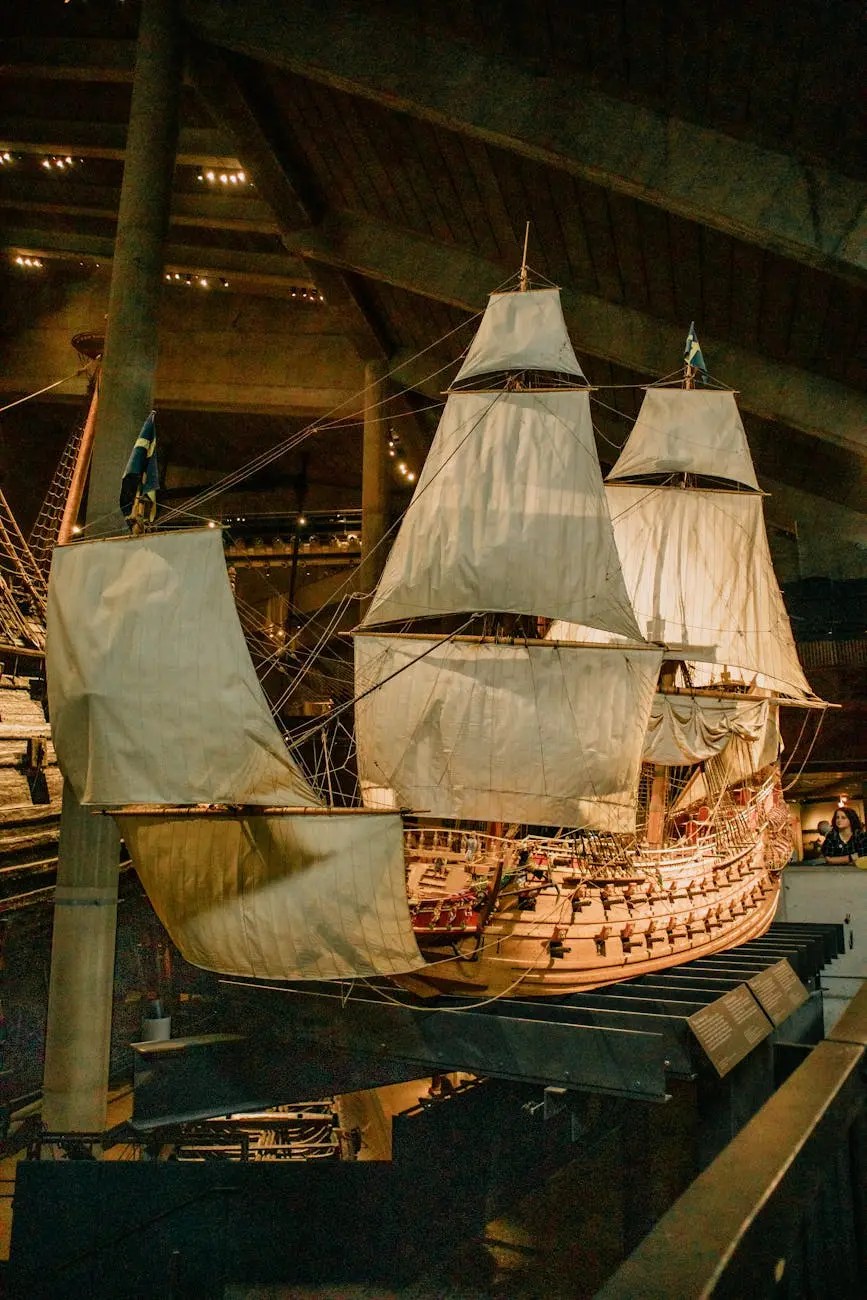
If you’re hopping around Europe:

  • Munich → Zurich: 4 hours by direct train
  • Milan → Zurich: 3.5 hours via the scenic Gotthard route
  • Vienna → Zurich: 8 hours by night train (bring snacks and Netflix)

Where to Stay in Zurich 🏨

Stay near Zurich HB (main train station) if you want easy connections, or Old Town (Altstadt) if you’re chasing charm. Personally, I once stayed near Langstrasse—let’s just say it was lively. Too lively. Lesson learned: if you want sleep, skip the party district.

👉 Book your flexible stays with Expedia.

Friday Evening: First Impressions & Fondue

Drop your bag at your hotel (I recommend somewhere central like the Aldstadt or near the main train station, Hauptbahnhof, for maximum convenience). Your first mission: fight the jet lag with cheese. Lots of it.

Head into the Altstadt, a labyrinth of narrow, winding streets that feel plucked from a storybook. Find a traditional restaurant like Zeughauskeller (in a former armoury!) or a cozy fondue spot. Order a classic Fondue Moitié-Moitié (half Gruyère, half Vacherin) and a glass of crisp Fendant wine. You are now officially in Switzerland.

A traditional Swiss fondue dish with melted cheese in a pot, accompanied by chunks of bread and a small bowl of cubed cheese on a wooden table.
Indulge in a classic Swiss fondue experience with melted cheese and fresh bread, a must-try dining highlight in Zurich. No trip to Zurich is complete without this! Dipping into a bubbling pot of classic Swiss fondue—a rich blend of melted Gruyère and Vacherin cheeses—is a quintessential and delicious Alpine experience.
A collection of Fendant wine bottles displayed on a wooden shelf, with a softly lit background featuring more wine bottles.
A selection of Fendant wines, perfect for pairing with traditional Swiss fondue in Zurich. The perfect partner for fondue: A selection of Fendant wine. This crisp, dry Swiss white wine from the Valais region cuts through the richness of the cheese beautifully.

My First Swiss Mistake

On my first visit, I made the classic tourist error: I sat down at a restaurant on the famous Bahnhofstrasse (one of the world’s most expensive shopping streets) and ordered a coffee. The people-watching was premium, but the bill for two espressos was a gut punch. Lesson learned! The best atmosphere is tucked away in the alleys, not on the main drags.

Saturday: Altstadt Charm & Lake Views

Start your day with a strong coffee and a buttery Gipfeli (the Swiss German word for croissant). Then, lose yourself in the Altstadt. Must-sees include:

  • Fraumünster Church: Famous for its stunning stained-glass windows by Marc Chagall.
  • Grossmünster Church: The iconic twin-towered cathedral. Climb the tower for a small fee – the view over the city rooftops to the lake is worth every step and every franc.
  • Lindenhof: A quiet hilltop square with a gorgeous lookout point over the Limmat River and the old town. It’s a perfect spot to just sit and soak it all in.
A picturesque view of Zurich featuring the turquoise waters of the Limmat River, a historic bridge, and iconic buildings with a tall church steeple under a clear blue sky.
A picturesque view of Zurich’s iconic skyline, showcasing the beautiful architecture along the Limmat River against a clear blue sky. view of Fraumünster Church The stunning view of Zurich’s Altstadt (Old Town) from the Limmat River, with the towering spires of the Grossmünster church dominating the skyline.

The iconic twin towers of Grossmünster Church in Zurich, Switzerland, against a backdrop of blue sky and fluffy clouds.
The iconic twin towers of Grossmünster Church stand majestically against a blue sky, showcasing Zurich’s medieval architecture and charm. The legendary twin towers of the Grossmünster, a defining symbol of Zurich’s skyline. According to legend, the church was built on the graves of the city’s patron saints, Felix and Regula.
A scenic view of Lake Zurich with moored boats covered in blue tarps, showcasing the historic architecture and spires of Zurich's buildings against a clear blue sky.
A picturesque view of Zurich, Switzerland, featuring the iconic church towers, charming waterfront, and vibrant blue boats along the serene lake. The stunning Zurichsee (Lake Zurich) waterfront, where the city meets the water. This peaceful spot, with its colorful boats and view of the Altstadt, is perfect for a leisurely stroll or a boat tour.

Sunday: Brunch & a Breathtaking View

Sundays in Europe can be quiet, but Zurich has you covered. For a fantastic brunch, head to the Kreis 4 or Kreis 5 districts (around Langstrasse), which are buzzing with cool cafes and international flair.

For your final act, take to the water. Your ZürichCard includes a short boat trip on Lake Zurich. There’s no better way to grasp the city’s beauty than from the deck of a boat, with the Alps framing the background. It’s the perfect, peaceful finale to your weekend.

📸 Photography Tip: To capture the perfect shot of the city skyline from the lake, I swear by my lightweight mirrorless camera. It’s a travel game-changer!

A picturesque view of Lake Zurich with a sailboat gliding across the water, framed by lush green hills and snow-capped mountains in the background under a clear blue sky.
A picturesque view of Lake Zurich with a sailboat gliding through the water, framed by the stunning backdrop of the snow-capped Swiss Alps.

Navigating the Trams Like a Pro

Zurich’s public transport is a revelation—clean, punctual, and comprehensive. Do not rent a car. Parking is expensive and a nightmare, and the trams and trains will get you everywhere faster.

Your best friend is the ZürichCard. This genius pass gives you unlimited travel on trams, buses, trains, boats, and even cable cars within the city, plus free or discounted admission to most museums. You can get a 24 or 72-hour card. It pays for itself incredibly quickly. 

Trams & Buses: Zurich’s ZVV network connects everything. A 24-hour pass covers tram, bus, train, and even ferries.

Trains: Perfect for day trips to Lucerne or Basel.

On Foot: Zurich is compact. Wear good shoes; cobblestones are ankle’s worst enemy.

Car Rental: Not needed unless you’re heading deep into the Alps. Gas is pricey, parking is limited.

A Hidden Gem You Can’t Miss

Tired of the crowds? Take a short tram ride (line 7 or 13) to Zürichberg. Wander through the serene Zürich Zoo or, better yet, find the Felsenegg Cable Car. For a few francs, it whisks you up the Uetliberg mountain for panoramic views of the city, lake, and, on a clear day, the distant Alps. It’s a local favourite for a reason and feels a world away from the city bustle.

Frau Gerolds Garten: Outdoor bars, food stalls, and quirky art installations.

Augustinergasse: A picturesque alley with colorful medieval houses.

Viadukt Market: Local produce and indie shops under old railway arches.

An elephant reaching for food hanging from a tree in a zoo setting, surrounded by rocks and greenery.
An Asian elephant reaching for food at Zürich Zoo, showcasing the vibrant wildlife experience available in the city. A magnificent Asian elephant engages in natural foraging behavior at the renowned Zürich Zoo, known for its commitment to conservation and expansive, species-appropriate enclosures.
A red cable car with the text 'I LOVE YOU' on the front, traveling over lush green hills and offering a panoramic view of Zurich and the lake in the background.
The Felsenegg Cable Car offers stunning views over Zurich and the shimmering lake, making it a must-visit for nature lovers.

An interior view of a modern market featuring wooden structures, plants, and various goods for sale.
Discover the vibrant atmosphere of Zurich’s trendy Viadukt Market, featuring unique food stalls and lush greenery.
Sailboat gliding on Lake Zurich with snow-capped mountains in the background, showcasing a picturesque landscape.
A serene view of Lake Zurich with a sailboat gliding across the water, surrounded by lush green hills and the majestic snow-capped Alps in the background. The ultimate Zurich escape: experience the stunning contrast of a serene sailboat on Lake Zurich against the dramatic, snow-capped peaks of the Swiss Alps.

Zurich on a Budget: Money-Saving Hacks

Yes, Zurich is expensive. But it doesn’t have to break the bank.

  • Picnic by the Lake: Grab bread, cheese, and meat from a supermarket like Migros or Coop and have a gorgeous, affordable lunch by the water.
  • Tap Water is King: Swiss tap water is pristine and delicious. Carry a reusable bottle and fill up for free.
  • Free Museum Entries: Many museums, like the Kunsthaus (Art Museum), offer free admission on Wednesdays. Plan accordingly if you’re here longer!
  • Skip the Taxi: The tram system is your wallet’s best friend. Use it.
  • Buy train tickets via the SBB Mobile app to save time (and avoid fines for boarding without one)

Essential Swiss German for Travellers

While everyone speaks English, a little effort goes a long way!

  • Grüezi (GROO-tsee): Hello
  • Merci (MER-see): Thank you
  • En Guete (en GOO-teh): Enjoy your meal!
  • Proscht (prosht): Cheers!
  • Wo isch…? (vo ish): Where is…?
  • Wo isch d’Toilette? (Where is the toilet?)
  • Ein Bier, bitte (One beer, please)

Before You Go: Visa & Essential Links

  • Visa: Switzerland is part of the Schengen Area. If you’re from the US, UK, or Canada, you typically don’t need a visa for short stays. Always check the official Swiss government site for the most current requirements based on your nationality.
  • 💡 Tip: If you already have a valid multi-entry Schengen visa, you can use it to enter Switzerland and continue to nearby destinations like Munich, Milan, or Vienna without extra paperwork.
  • 👉 Always check the official Swiss government site for the latest visa requirements before you travel.
  • Travel Insurance: ✈️ Smart Travel Tip: No matter where your adventures take you, having the right travel insurance can save you from unexpected headaches (and bills). I personally recommend VisitorsCoverage — it’s a trusted platform where you can compare plans, find coverage that fits your trip, and book it in just a few clicks. Whether you’re planning a quick city escape or a longer international journey, it’s peace of mind worth packing.
  • Stay Connected: ✈️ Travel Tip: Staying connected abroad can be tricky (and expensive if you’re relying on airport SIM counters or roaming). That’s why I carry a Drimsim—a universal SIM card that works in 190+ countries without hidden fees. You just pop it into your phone, top up through the app, and you’re online wherever your adventure takes you. No more hunting for local SIM cards or stressing over roaming bills.
  • Stay Secure Online: Using public WiFi? Protect your data with a reliable nordvpn. It’s essential for any modern traveler.

Flight Trouble? ✈️ Flight Delayed or Canceled? Travel isn’t always smooth sailing. The good news? You might be entitled to up to $650 in compensation under air passenger rights. Most travelers never claim it, but I’ve got you covered: just check your flight with AirHelp. They handle the paperwork, fight the airlines for you, and only get paid if you win. Easy, stress-free, and potentially a nice surprise for your travel fund.

Zurich Weekend FAQ

Is two days enough for Zurich?
Absolutely! Zurich is perfectly sized for a weekend trip. You’ll have enough time to see the main sights, explore the old town, and enjoy the lake without feeling rushed.

What is the best way to get from Zurich Airport to the city center?
The train is unequivocally the best way. It takes only 10 minutes, runs constantly, and drops you right at the main train station (Zürich HB), which is the hub for all trams.

What is the best time of year to visit Zurich?
Spring (April-May) and Autumn (September-October) are ideal. The weather is mild, and the crowds are smaller than in the peak summer months. December is also magical for the famous Christmas markets.

Can I use Euros in Zurich?
The official currency is the Swiss Franc (CHF). While some places might accept Euros, you will almost always get a terrible exchange rate. It’s best to just withdraw or pay with Francs.

Is Zurich very expensive?
It has a reputation for a reason—it is one of the more expensive cities in Europe. However, with the tips in this guide (picnics, public transport, the ZürichCard), you can manage your budget effectively.

Q: Do I need cash?
Cards are widely accepted, but keep a few Swiss Francs for small bakeries and kiosks.

Q: Is English widely spoken?
Yes, especially in hotels and restaurants. But tossing in a “Grüezi” earns smiles.

Final Thoughts 💡

Zurich is the perfect blend of lakeside relaxation, alpine adventure, and city chic. Whether you’re here for the chocolate, the views, or just a stylish weekend reset, this Swiss city delivers. And if you’ve got extra time, don’t stop—hop a train to Munich or Milan and turn your weekend escape into a Euro trip worth bragging about.

👉 Ready to plan? Start by booking your flights and stays with Expedia. Zurich’s waiting.

Ready to trade your weekend for a Swiss adventure? Start planning your ultimate escape to Zurich today! Check for the best travel deals and let the efficiency and beauty of Switzerland wow you.

Universal Disclaimer/Disclosure Page:

The Ultimate Weekend Escape to Copenhagen, Denmark

Meta Description

Planning a weekend escape to Copenhagen? This guide for travelers covers everything from must-see sights like Nyhavn and Tivoli Gardens to navigating public transport with confidence. Discover hidden gems, save money, and get practical tips for an unforgettable trip to Denmark’s vibrant capital.

Copenhagen. Just the name itself conjures up images of brightly colored houses, cobblestone streets, and the kind of “hygge” (more on that later!) that makes you want to cozy up with a warm pastry and a good book. I’ve been fortunate enough to visit this Nordic gem, and I can tell you from personal experience: a weekend is the perfect amount of time to fall completely in love with it.

It’s a city that feels both ancient and effortlessly modern, where you can walk in the footsteps of royalty one minute and find yourself in a quirky, self-governed community the next. But let’s be real, a weekend trip means time is of the essence. You need a plan to make every single moment count, and that’s where I come in.

“Ready to trade your usual weekend for canals, castles, and the best pastries on the planet? Let’s talk Copenhagen.” Excellent choice. Copenhagen is the perfect city for a short, sweet, and incredibly satisfying escape. It’s a place where fairy-tale castles meet minimalist design, and where you can bike from a bustling food market to a serene canal in minutes.

I’ve visited this city more times than I can count, and each trip reveals a new secret alleyway or a coffee shop so perfect it feels like a hug. This guide is my love letter to Copenhagen, packed with everything you need to plan a seamless, unforgettable weekend. We’re talking logistics, money-saving hacks, and a few hidden gems that’ll make you feel like a local.

Pro Tip: I always start my trip planning by scouting for flight and hotel deals on  Expedia Bundling them can often save you a nice chunk of change for more !

Meta Description

Planning a weekend escape to Copenhagen? This guide for travelers covers everything from must-see sights like Nyhavn and Tivoli Gardens to navigating public transport with confidence. Discover hidden gems, save money, and get practical tips for an unforgettable trip to Denmark’s vibrant capital.

The Ultimate Weekend Escape to Copenhagen, Denmark

Copenhagen. Just the name itself conjures up images of brightly colored houses, cobblestone streets, and the kind of “hygge” (more on that later!) that makes you want to cozy up with a warm pastry and a good book. I’ve been fortunate enough to visit this Nordic gem, and I can tell you from personal experience: a weekend is the perfect amount of time to fall completely in love with it.

Hotels in Copenhagen

It’s a city that feels both ancient and effortlessly modern, where you can walk in the footsteps of royalty one minute and find yourself in a quirky, self-governed community the next. But let’s be real, a weekend trip means time is of the essence. You need a plan to make every single moment count, and that’s where I come in.

Table of Contents

  • Day 1: Castles, Canals, and the City Center
    • Morning: The Royal Start
    • Afternoon: Iconic Waterfront and Magical Gardens
    • Evening: Culinary Adventures and a Taste of Hygge
  • Day 2: Bike, Bohemia, and Beyond
    • Morning: A Danish Tradition
    • Afternoon: The Unexpected Escape
    • Evening: Art, Music, and the Local Scene
  • Getting Around: Your Guide to Copenhagen’s Public Transit
  • Essential Danish Phrases (and a few fun words)
  • Saving Kroner: Tips for a Budget-Friendly Trip
  • FAQs
  • Hidden Gems

Why Copenhagen is the Perfect Weekend Getaway

Compact, incredibly bike-friendly, and dripping with charm, Copenhagen is built for the weekend explorer. You can experience world-class food, profound history, and cutting-edge design without spending hours on a train or in a car. The vibe is effortlessly cool yet deeply cozy—a combination I’ve yet to find anywhere else.

 Pre-Trip Essentials: Visa, Budget & Getting There

  • Visa: Denmark is part of the Schengen Area. If you’re an EU citizen, you’re good to go. For US, Canadian, and many other passport holders, you typically get a 90-day visa-free stay. Always double-check the official Danish Immigration Service website for the most current requirements based on your nationality.
  • Budget: Let’s be real, Copenhagen isn’t cheap. But it doesn’t have to break the bank! A mid-range budget of about 800-1000 DKK ($115-$145 USD) per day per person is a good estimate for food, attractions, and transport. See our money-saving tips below to stretch those Kroner further.
  • Getting There: You’ll fly into Copenhagen Airport (CPH), which is brilliantly connected to the city center by train, metro, and bus. It’s a breeze.

Your Copenhagen Weekend Itinerary

Day 1: Royals, Canals & Hygge

A quick note: On my last trip, I decided to go all in with a good camera to capture the city’s incredible light. Seriously, a good lens can make all the difference, and I highly recommend checking out this one: My trusty travel camera. It’s compact, takes stunning photos, and doesn’t feel like a chore to carry around all day.

  • Morning: Start your day at the iconic Nyhavn. No trip to Copenhagen is complete without a visit to Nyhavn, Yes, it’s touristy, but those colorful 17th-century townhouses reflecting on the canal are iconic for a reason. Grab a coffee and just soak it in. From there, it’s a short stroll to Amalienborg Palace, the winter home of the Danish royal family. Time your arrival for noon to watch the changing of the Guard. A personal anecdote: I once spent a good hour here trying to get the perfect shot of the houses reflecting in the water—it’s surprisingly difficult, but so worth it for the ‘gram!
  • Afternoon: Walk off your royal fantasies across the water to the Opera House for stunning photos, or jump on a water bus (a cheap alternative to a canal tour!) to Christianshavn. Explore the canals and then confront your contradictions at Freetown Christiania, the self-proclaimed autonomous neighborhood. Remember to be respectful—no photos inside the main areas.
  • Evening: This is when the hygge kicks in. Find a traditional bodega (a cozy, no-frills Danish pub) for a local beer. For dinner, I still dream about the open-faced sandwiches (Smørrebrød) at Schønnemann (book ahead!) or the immersive food hall experience at TorvehallerneKBH.
A vibrant view of Nyhavn, Copenhagen, featuring colorful townhouses lining the waterfront, with boats docked along the canal and people enjoying the bustling atmosphere.
Colorful houses and boats lining the canals of Nyhavn, Copenhagen, creating a picturesque waterfront scene. The iconic postcard view of Nyhavn—Copenhagen’s historic harbor canal. These beautifully preserved, colorful townhouses were once home to sailors and merchants (and even the famous author Hans Christian Andersen!). Today, they house bustling restaurants and cafes, making it the perfect spot to soak in the city’s vibrant atmosphere

Couple riding bicycles in a cobblestone square with a statue and historic buildings in Copenhagen.
Exploring Copenhagen’s royal sights on bicycles, with Amalienborg Palace in Copenhagen, Denmark, background. Two bicyclists riding through a cobblestone square in Copenhagen, passing by an equestrian statue with historic Danish architecture in the background.
View of the Copenhagen Opera House with a fountain in the foreground, surrounded by greenery and people enjoying the outdoor space.
The iconic Copenhagen Opera House, a modern architectural marvel, viewed from the waterfront with visitors enjoying the surrounding gardens. The stunning Copenhagen Opera House (Operaen) on the island of Holmen. This masterpiece of modern architecture, designed by Henning Larsen and funded by the Møller Foundation, seems to float on the harbor waters. Its contemporary design, featuring a cantilevered roof and sleek lines, creates a dramatic contrast against the historic city skyline across the water.
A scenic view of modern architecture along a waterfront in Copenhagen, featuring unique building designs with a backdrop of a clear sky.
The modern waterfront architecture of Copenhagen reflects in the tranquil waters, showcasing the city’s blend of innovation and tradition. The unique and modern architecture of Christiansholm (Paper Island), a popular cultural and culinary destination on the Copenhagen waterfront.

Christiansholm and Christianshavn are not the same place. They are two distinct historical areas, but their similar names and proximity understandably cause mix-ups.

Here’s a breakdown to help tell them apart:

Christianshavn (The More Famous One)

  • What it is: A vibrant and well-known district or neighborhood in Copenhagen, complete with its own canals, famous for the freetown of Christiania.
  • Location: Southeast of the city center, on several artificial islands.
  • Key Features:
    • Canals and colorful houses (often called “Little Amsterdam”).
    • Freetown Christiania.
    • The spiral spire of Our Saviour’s Church (Vor Frelsers Kirke).
    • High-end restaurants and cafes.
  • History: Founded in the early 17th century by King Christian IV as a fortified merchant’s town to protect the approach to Copenhagen.

Christiansholm (The Lesser-Known One)

  • What it is: A single, small artificial islet (a very small island), not a full district. It’s more of a specific location within the larger harbor area.
  • Location: In the Frederiksholm Canal, right next to the Royal Library Garden (Slotsholmen).
  • Key Feature:
    • It is dominated by a single, striking, star-shaped fortress building—Christiansholm Fort (Christiansholms Fæstning).
  • History: Also built in the early 17th century by King Christian IV as part of the city’s defense ramparts. It was later used as a naval station and a prison. Today, the fortress building is used for offices and events.

The Simple Analogy:

Think of it this way:

  • Christianshavn is like Manhattan—a large, famous district with many streets, buildings, and a famous personality.
  • Christiansholm is like Liberty Island—a single, specific small island in the harbor, known for one primary structure (the fortress, instead of the Statue of Liberty).

So, while you will definitely visit Christianshavn for its canals and Christiania, you will likely see Christiansholm from a distance as you walk along the waterfront between Nyhavn and the Royal Library.New chat

A vibrant mural featuring a woman with long hair against a bright blue wall, with colorful geometric patterns and shapes surrounding her. The scene includes people sitting on benches in front of the mural, with a cobblestone pathway.
vibrant street mural featuring a woman with intricate patterns, reflecting the artistic flair of Copenhagen. A glimpse into the unique world of Freetown Christiania. This self-governing community, founded in 1971, is a vibrant tapestry of DIY homes, radical art, and lush green spaces. Remember the main rule: no photos on Pusher Street, so keep your camera put away there and just soak in the truly one-of-a-kind vibe.
A plate of open-faced sandwiches topped with fresh vegetables like tomatoes, onions, and herbs, served in a restaurant setting.
A delicious open-faced sandwich, or Smørrebrød, topped with fresh vegetables, ideal for a culinary adventure in Copenhagen. The art of smørrebrød! This isn’t just a sandwich; it’s Denmark’s culinary pride and joy. This beautiful example, featuring fresh, crisp vegetables on dense rye bread (rugbrød), is a testament to the Danish love for simple, high-quality, and beautifully presented food. The perfect fuel for a day of exploring.

Day 2: Culture, Food & Local Vibes

  • Morning: Fuel up with a Danish pastry (trust me, it’s different here) and then rent a bike! Copenhagen is a cyclist’s paradise. Pedal your way to the Round Tower (Rundetårn) for a unique spiral ramp walk to panoramic city views. Then, get your culture fix at the National Museum of Denmark or the design-lover’s paradise, the Design museum Danmark.
  • Afternoon: Head to the trendy Vesterbro district. This area, once known for its edgier side, is now packed with chic boutiques, cool cafes, and a fantastic vibe. Grab a legendary hot dog from DØP or a more substantial lunch at one of the local eateries.
  • Evening: For your final night, consider a trip to Tivoli Gardens. Even if you don’t go on the rides, the historic amusement park is pure magic at night, with thousands of lights and beautiful gardens. It’s a fittingly fairy-tale end to the trip
The iconic Round Tower in Copenhagen, showcasing its distinctive brick architecture and historical significance. A close-up look at the iconic Rundetårn, built by King Christian IV. The Latin inscription “DOCET IN” (short for “Docet Inania”/”It teaches the heavenly”) and the year “1642” are carved into its facade. This wasn’t just an observatory; it was a symbol of the king’s dedication to science and learning during Denmark’s Golden Age.
Interior view of a modern art museum featuring high ceilings, large columns, and visitors exploring the space.
A serene interior view of a modern art space, showcasing a spacious corridor with tall pillars and stylish benches.  National Gallery of Denmark 

National Gallery of Denmark (SMK – Statens Museum for Kunst)

  • What it is: Denmark’s largest art museum.
  • Focus: Fine Arts (paintings, sculptures, drawings, prints, installations).
  • Collection: Features over 700 years of art, from classical European masters (Rubens, Titian) to Danish Golden Age artists (Christoffer Wilhelm Eckersberg) and modern international art (Picasso, Matisse).
  • Location: Right by the botanical gardens, not far from Nørreport station.
  • In a nutshell: If you want to see art, this is the place.

National Museum of Denmark (Nationalmuseet)

  • What it is: Denmark’s largest museum of cultural history.
  • Focus: History and Ethnography (archaeology, ethnology, history of everyday life).
  • Collection: Traces Danish history from the Ice Age and Viking treasures to medieval times and modern Danish design. It also has extensive collections from ancient cultures around the world (Egypt, Greece, etc.).
  • Location: Located right behind the main shopping street, Strøget, in a beautiful former royal palace.
  • In a nutshell: If you want to see Viking artifacts, ancient relics, and historical objects, this is the place.

Quick Comparison Table:

FeatureNational Gallery of Denmark (SMK)National Museum of Denmark (Nationalmuseet)
Type of MuseumArt MuseumHistory & Culture Museum
What You’ll SeePaintings, Sculptures, Modern ArtViking Ships, Runes, Egyptian Mummies, Danish History
Best ForArt LoversHistory Buffs, Families
Key ExhibitDanish Golden Age paintingsThe Sun Chariot, Viking weapons, Children’s Museum

Conclusion: You were right to double-check! They are two different, major museums. You could easily spend a full day at each.

  • Go to the National Gallery (SMK) for a journey through art history.
  • Go to the National Museum for a journey through Danish and world history.

Both are absolutely worth a visit depending on your interests

Interior view of an art museum showcasing sculptures, including lion figures and various ancient artifacts displayed on pedestals.
Explore the National Gallery of Denmark, featuring stunning sculptures and artworks in a bright, modern space.

A serene view of a picturesque garden with lush green trees, colorful flowers, and a tranquil pond, featuring a traditional pagoda-style structure in the background.
A serene view of Tivoli Gardens in Copenhagen, showcasing its iconic pagoda and tranquil water scenery, perfect for a weekend getaway. A moment of perfect peace in the heart of the city. This is the hidden, tranquil side of Tivoli Gardens that often surprises first-time visitors. Beyond the thrill rides and bustling crowds, you can find these serene pockets where the iconic Chinese Pagoda reflects perfectly on a still pond, surrounded by meticulously kept gardens.
A beautifully lit scene of Tivoli Gardens in Copenhagen during the evening, showcasing festive lights, trees decorated with snow, and people enjoying the atmosphere.
Illuminated gardens and festive decorations at Tivoli Gardens in Copenhagen during winter.

Getting Around: Your Guide to Copenhagen’s Public Transit

One of the best things about Copenhagen is how easy it is to get around without a car. The public transport system is incredibly efficient and reliable, saving you time and money on gas.

Bike: The #1 way to get around. You’ll feel like a local in minutes. Use bycyklen city bikes or rent from a shop like Baisikeli

Metro & Train: The network is extensive, punctual, and clean. The airport is on the line, making it incredibly easy. All local trains, metro, and buses are integrated under the same ticket system, DOT Mobilbilletter. Download the app—it’s the easiest way to buy tickets for zones you need. A City Pass for 48 hours (small zone) is often the most cost-effective option for tourists.

Buses: The A-buses are the main buses in the city, and they run frequently. The N-buses are for late-night travel, so you can explore after dark with confidence.

Tickets: The easiest way to pay is with a City Pass (available for 24, 48, or 72 hours) which gives you unlimited travel on buses, trains, and the metro in the city center. Another option is the Copenhagen Card, which not only covers all public transport but also includes free entry to most major attractions and museums.

Walking: The inner city is very walkable. Just bundle up in winter!

 Copenhagen on a Budget: Yes, It’s Possible!

  • Eat Smart: Avoid restaurants in Nyhavn. Hit up food halls (Torvehallerne is a must), smørrebrød counters, and kebab shops for delicious, more affordable eats.
  • Free Attractions: Walk along Strøget (but window-shop, don’t buy!), watch the Changing of the Guard for free, explore the beautiful parks like Kongens Have, and visit the serene Assistens Cemetery where Hans Christian Andersen is buried.
  • Copenhagen Card: If you plan to museum-hop and use public transport heavily, do the math. The Copenhagen Card includes entry to dozens of attractions and all public transport. It can be a huge saver.

 A Few Handy Danish Phrases

Danes speak impeccable English, but a little effort goes a long way!

  • Hej (Hi): Pronounced “hi”. The universal greeting.
  • Tak (Thank you): Pronounced like “tack”. Use this constantly.
  • Skål (Cheers): Pronounced “skohl”. Essential for any beer.
  • Hygge (coziness/comfort): Pronounced “hoo-gah”. The feeling you’re there to experience!
  • Undskyld (Excuse me/Sorry): Pronounced “oon-skool”.
  • Farvel (pronounced ‘Far-vell’): Goodbye.
  • Undskyld (pronounced ‘Oon-skool’): Excuse me/Sorry.

 Hidden Gems & Local Secrets

  • Cisternerne: In Søndermarken park, this is a massive underground former reservoir that now hosts incredible art installations. It’s cool, damp, and utterly unique.
  • Refshaleøen: This former shipyard island is now a hub of creativity. Go for a dip at the minimalist CopenHot sea baths, enjoy a meal at the street food market Reffen (seasonal), and see a more industrial side of the city.
  • The Little Mermaid: Okay, not a hidden gem. She’s small and often crowded. See her if you must, but don’t make her a priority. The nearby Kastellet fortress park is actually more impressive.
  • The Black Diamond: This is the name given to the stunningly modern extension of the Royal Danish Library. It’s a gorgeous piece of architecture and a great place to sit and relax by the water.
A crowd of tourists gathered around the famous Little Mermaid statue in Copenhagen, Denmark, with the harbor and city skyline visible in the background.
Visitors admire the iconic Little Mermaid statue in Copenhagen, a must-see attraction representing Denmark’s rich cultural heritage.
A picturesque red windmill with wooden blades set against a clear blue sky, surrounded by green grass and trees.
A traditional Danish windmill stands proudly with its vibrant red facade under a clear blue sky, showcasing the charm of Denmark’s rural heritage. Kastellet This isn’t just any windmill—it’s a sentinel of history. This beautifully preserved Dutch-style mill stands within the star-shaped Kastellet fortress, one of Northern Europe’s best-preserved fortifications. While it once ground grain for the garrison, today it spins as a charming symbol of Copenhagen’s layered past, blending rural heritage with military history.

Frequently Asked Questions (FAQ)

Q: What is the best time of year to visit Copenhagen?
A: The summer (June-August) has long days and lively energy, but it’s also the most crowded. Spring (April-May) and Fall (September-October) offer milder weather and fewer tourists. Winter is cold but magical around Christmas.

Q: Is Copenhagen safe for tourists?
A: Extremely safe. Standard city precautions apply (watch for pickpockets in crowded areas), but it’s one of the safest capitals in the world.

Q: Can I get by with just English?
A: Absolutely. Virtually everyone speaks English fluently and happily.

Q: Do I need travel insurance for Denmark?
A: While Denmark has excellent healthcare, travel insurance is crucial for covering trip cancellations, lost luggage, or emergency medical evacuation. It’s a small price for massive peace of mind. I always use VisitorsCoverage to compare plans and find the best fit for my trips.

Q: What’s the tipping culture like?
A: Service charges are included in all bills. It’s customary to round up the bill or leave a small tip (5-10%) for exceptional service, but it is not expected.

Q: Is Copenhagen expensive?

A: Yes, Copenhagen is known for being a bit pricey, but with the tips in this guide (like using public transport, eating street food, and booking in advance on sites like Expedia), you can have an amazing time without overspending.

“Feeling ambitious and want to double your Scandinavian adventure? From Copenhagen, you can catch a direct overnight ferry to Oslo, Norway! It’s not just a journey; it’s an experience. Imagine watching the Danish coastline disappear as you settle into a comfortable cabin, enjoying a seafood buffet dinner, and waking up to the stunning views of the Oslofjord. It’s a seamless and magical way to travel between two incredible capitals. If you’re tempted to extend your trip, I’ve put together a complete guide to Unlocking Oslo for a perfect weekend.”

Ferry from Copenhagen to Oslo

✈️ Smart Travel Tips for Your Copenhagen Adventure

Travel smart from the second you book. Here are my non-negotiables:

1. Stay Connected Without the Stress: I learned the hard way that airport SIM counters are a rip-off. Now, I never travel without my  Drimsim. This genius universal SIM works in 190+ countries the second you land. Pop it in, top up via the app, and you’re online. No more hunting for a shop or dealing with insane roaming bills. It’s a total game-changer.

2. Protect Your Trip & Your Privacy:

  • Secure Browsing: Using public WiFi in airports and cafes? Protect your data with  NordVPN. It’s essential for safe online banking and browsing while abroad.

.3. Get What You’re Owed:
Had a flight delayed or canceled? Don’t just sigh and accept it. EU passenger rights mean you could be entitled to up to €600 in compensation. Most people never claim it. I use  AirHelp to check my flight and let them handle the paperwork. They only get paid if you win, so it’s a no-brainer.

4. Capture the Memories:
To capture all that Danish beauty, I rely on my trusty Sony Alpha a7III. It’s the perfect mirrorless camera for travel—powerful, lightweight, and takes stunning photos in every light, from the gloomy canals to the bright Tivoli lights.


Ready to experience the hygge of Copenhagen for yourself? Start planning your perfect weekend by checking out great flight and hotel deals on Expedia
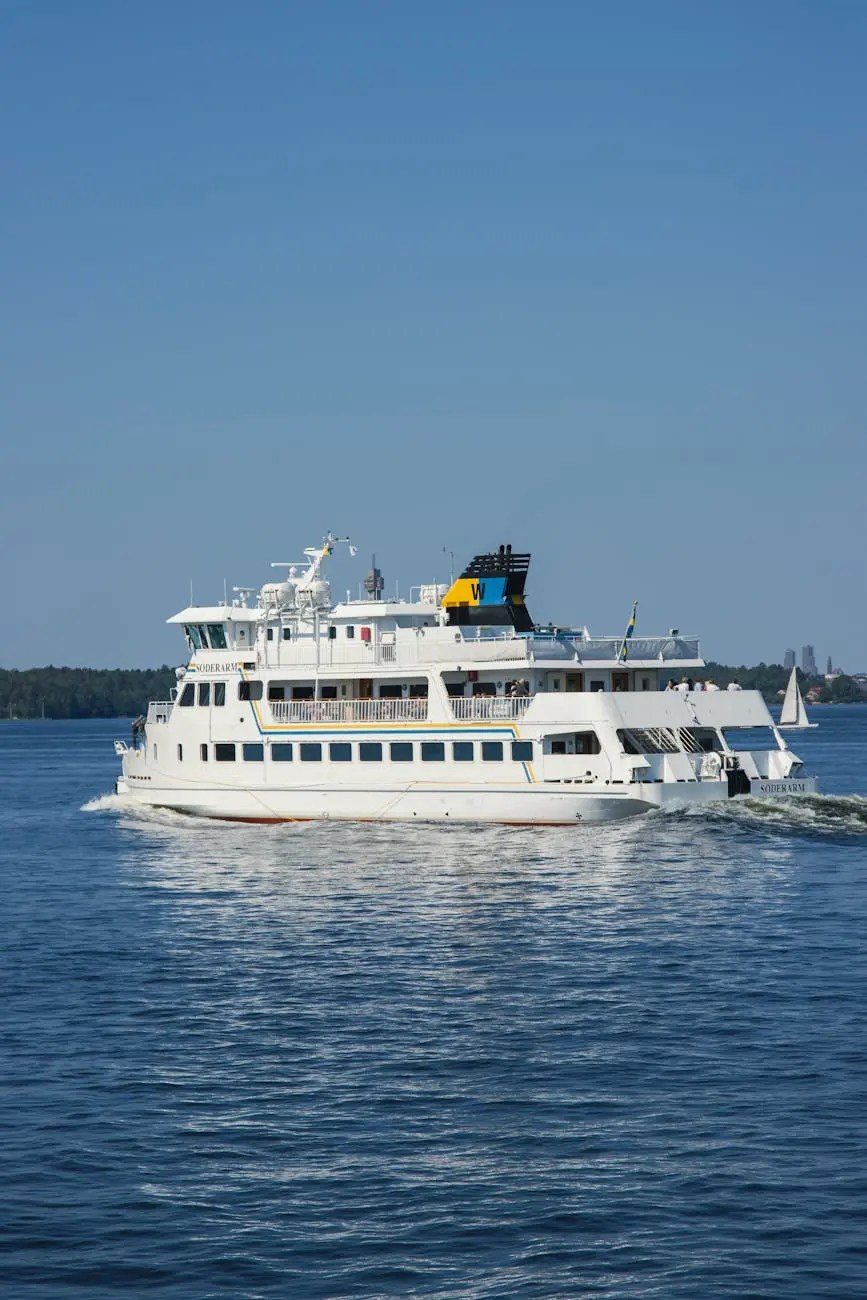
What’s your favorite Scandinavian destination? Planning a trip? Let me know in the comments below!

P.S. Loved this guide? Check out my other European city break guides for more inspiration:

Berlin: Unforgettable Weekend in Berlin: Your Ultimate Guide

Frankfurt: The Ultimate Weekend Escape to Frankfurt am Main 

Munich: The Ultimate Weekend Escape to Munich, Germany

Netherlands : 48-hours-in-amsterdam-ultimate-weekend-guide/


A Final Thought

Copenhagen isn’t just a city you visit; it’s a feeling you take with you. It’s the effortless charm, the happy cyclists, and the sense of calm in the middle of a bustling capital. So pack your bags (and your camera!), book your flight, and get ready for the ultimate weekend escape. Velkommen til København!

Universal Disclaimer/Disclosure Page:

Ultimate Weekend Getaway in Venice: A Complete Traveler’s Guide

Meta Description: Escape to the enchanting canals of Venice for an unforgettable weekend. Our comprehensive guide for travelers reveals hidden gems, must-see sights, and savvy tips on transportation, visa costs, and saving money. Optimized for SEO and geo-generative engine optimization, this guide is packed with keywords to help you discover the magic of Venice.

I’m going to be honest with you. The first time I saw Venice, it was through the lens of a tourist in a hurry. You know the type—sprinting from St. Mark’s Square to the Rialto Bridge, snapping a few frantic photos, and feeling like you’ve “done” the city without ever really being there. It was a classic case of travel-FOMO (Fear of Missing Out). But the magic of Venice doesn’t reveal itself in a sprint; it whispers to you when you slow down, get a little lost, and let the city’s ancient rhythm guide you.

This blog post is for the traveler who wants to do it right. The one who wants to sip a spritz on a sun-drenched canal, find a quiet bacaro for some delicious bites, and fall in love with the city’s charming chaos. I’ve gone back, armed with a better plan, and I’m sharing all my secrets for the ultimate weekend escape.

Ah, Venice. The mere name conjures images of winding canals, operatic gondoliers, and masquerade balls. It’s a city that feels like a dream, but let me tell you, a dream you can absolutely conquer in a single, glorious weekend. Forget everything you’ve heard about it being too crowded or too expensive—with a little insider knowledge (and comfortable shoes), you can have the authentic Venetian experience without breaking the bank or your spirit.

I still remember my first time stepping out of the Santa Lucia train station. The grand canal wasn’t just a picture; it was a living, breathing, slightly damp masterpiece. The sound of water lapping against ancient stone, the distant call of “Gondola!”, the smell of salt and fresh coffee… it’s a sensory overload in the best way possible. I immediately got lost, and it was the best thing that could have happened. This guide is here to help you find that magic, without too much of the getting lost part (unless you want to!).

Table of Contents

  1. Getting There: Planes, Trains, and Automobiles (But Mostly Boats)
  2. Where to Stay: Finding Your Venetian Sanctuary
  3. Day 1: The Grand Tour & Golden Hour
  4. Day 2: Hidden Gems & Island Hopping
  5. Day 3: Art, Souvenirs & The Sweet Goodbye
  6. Navigating Venice: Public Transportation Deep Dive
  7. Money-Saving Tips & Must-Know Phrases
  8. My Personal Camera Kit
  9. FAQs: Everything You Need to Know Before You Go
  10. More Travel Inspiration & Backlinks

Why Venice is the Perfect Weekend Getaway

Venice is compact. Unlike sprawling metropolises like Rome or Paris, its labyrinthine alleys and canals are concentrated, making it possible to soak in the major highlights and discover secret corners in just 2-3 days. It’s a pedestrian (and boat-only) city, so you’re free to wander without worrying about traffic. It’s the ideal destination for a burst of culture, romance, and incredible food.

Before You Go: Visa & Costs
As part of Italy’s Schengen Area, most US, Canadian, UK, and Australian travelers can enter visa-free for up to 90 days. Always check the latest entry requirements from official government sources. A great place to start for the most current and official visa information is the VFS Global page for Italy.

I always find the best flight deals to Venice Marco Polo Airport (VCE) on Expedia. They have great bundle options if you want to book your hotel at the same time.

Getting There: Planes, Trains, and Automobiles (But Mostly Boats)

Venice is unique because you literally cannot drive into the historic city center. So, if you’re arriving by car, you’ll need to park it at Piazzale Roma or Tronchetto and then take a bus, water bus (vaporetto), or private water taxi to your accommodation. Trust me, the first glimpse of the Grand Canal from the water is worth the logistical effort.

The easiest way to arrive is by train. The Venezia Santa Lucia station drops you off right on the Grand Canal, a stone’s throw from the heart of the action. Italy’s high-speed trains connect Venice to major cities like Rome, Florence, and Milan. If you’re coming from another part of Europe, flying into Venice Marco Polo Airport (VCE) is also a great option. From there, you can catch a water bus (Alilaguna) or a private water taxi straight to the city.

✈️ Travel Tip: Travel isn’t always smooth sailing—sometimes flights get delayed, canceled, or overbooked. The good news? You might be entitled to up to $650 in compensation under air passenger rights. Most travelers never claim it, but I’ve got you covered: just check your flight withAirHelp. They handle the paperwork, fight the airlines for you, and only get paid if you win. Easy, stress-free, and potentially a nice surprise for your travel fund.

Where to Stay: Finding Your Venetian Sanctuary

Finding the right place to stay is key. I’ve found that using a trusted platform like Expedia to book my hotels helps me compare options and find the perfect spot. The main tourist areas like San Marco are central but can be noisy and expensive. For a more authentic experience, consider staying in the quieter districts of Dorsoduro or Cannaregio.
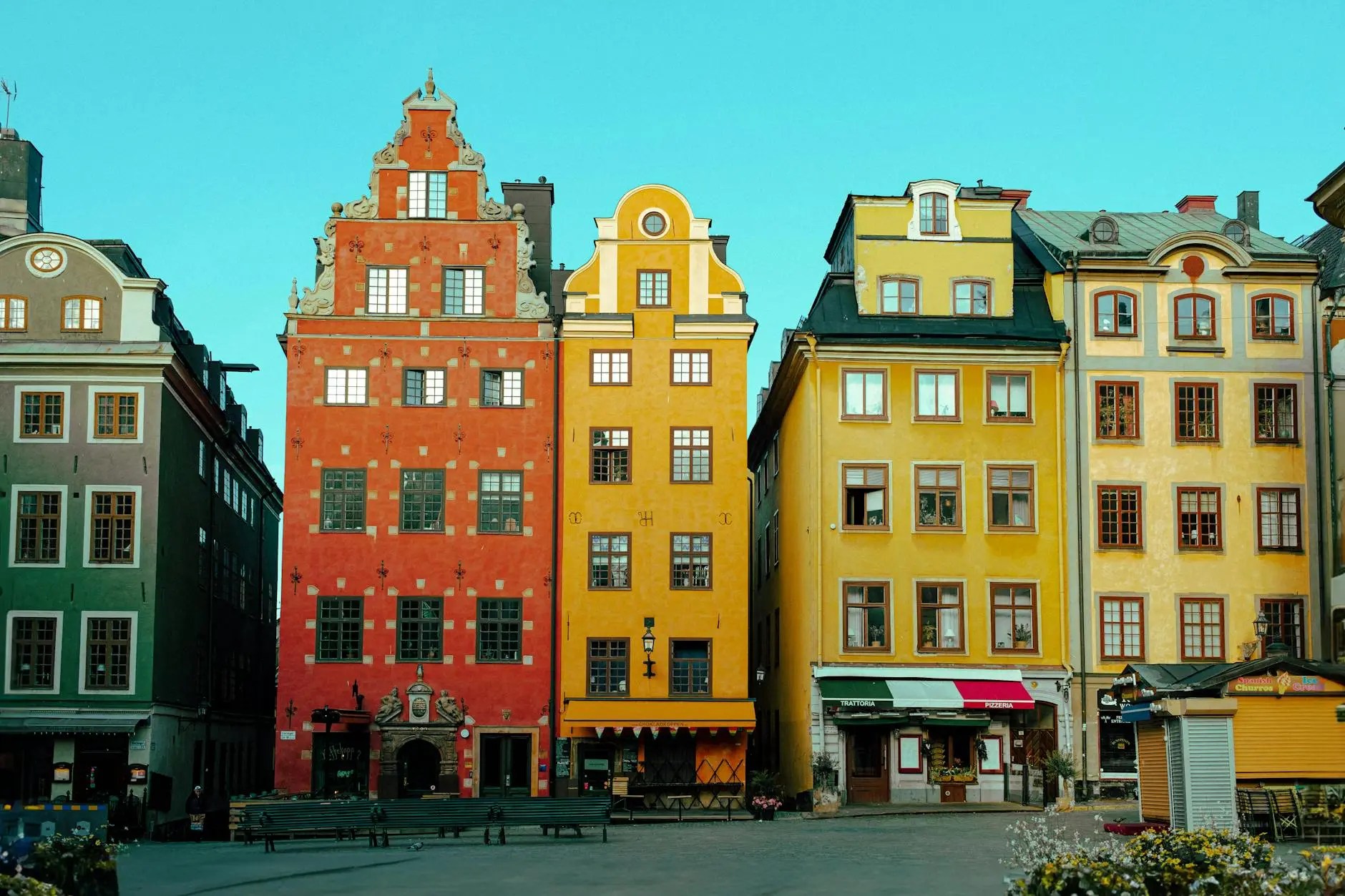
My personal favorite? Dorsoduro. One time, I stayed in a small guesthouse there, and the window overlooked a tiny, quiet canal. Every morning, I woke up to the sound of a gondolier singing as he glided past. It was a moment so perfectly Venetian it almost felt like a movie.

Friday: Arrival & The Magic of Getting Lost

  • Afternoon: Fly into VCE or arrive by train at Santa Lucia Station (this is the most dramatic entrance!). Pro Tip: If you’re arriving by train from another Italian city like Rome, Florence, or Milan, booking your tickets in advance on ItaliaRail can save you a significant amount of money compared to buying them at the station. The high-speed trains are comfortable and efficient, making for a relaxing start to your Venetian adventure.


  • Evening: Check into your hotel . I recommend staying in the Dorsoduro or Cannaregio districts. They’re slightly removed from the San Marco chaos, more affordable, and brimming with authentic bacari (wine bars).
  • Dinner: Ditch the tourist menus. Find a small bacaro and do a cicchetti crawl. Cicchetti are Venetian tapas—think small slices of bread topped with cod, crab, or mortadella, alongside an ombra (small glass of wine). My favorite find was a tiny place where the owner insisted I try his artichoke heart special. Life-changing.
A view of the Grand Canal in Venice, featuring a marina with boats and the exterior of a historic building with ornate architecture.
The stunning view near the Santa Lucia train station in Venice, featuring the historic church and bustling water taxis.

Interior of a cozy Venetian restaurant featuring wooden beams and large windows, with patrons enjoying meals and wine.
A cozy Venetian bacaro with patrons enjoying cicchetti and wine, showcasing the charm of local dining in Venice.
A group of friends enjoying cicchetti and spritz drinks outside a small eatery in Venice, laughing and celebrating the vibrant atmosphere of the city.
Enjoying a vibrant evening in Venice with friends, indulging in delicious cicchetti crawl and spritz on a charming canal.

Saturday: Icons, Tours, & Hidden Courtyards

  • Morning (Early!): Be at Piazza San Marco by 8:30 AM. Why? To have it almost to yourself before the day-tripping crowds arrive. You can admire the Basilica and the Campanile in peace. Pre-book a “Skip the Line” tour for the Basilica—it’s 100% worth it.
  • Late Morning: Book a Walking Tour & Gondola Ride. A guided tour is the best way to learn the history and find those hidden spots you’d never see otherwise. Then, opt for a shared gondola ride from a quieter canal rather than the Grand Canal to save money and enjoy a more intimate experience.
    • 📸 Pro Tip: The light in Venice is magical. To capture it perfectly, I never travel without my lightweight, powerful Sony Alpha Camera. It’s a game-changer for low-light canal shots.
  • Afternoon: Get lost on purpose. Wander away from San Marco into the Castello district. Find the secluded Marinaressa Gardens for a quiet moment with a view of the lagoon. For a true hidden gem, seek out the pedestrian street Calle de le Bande near the Arsenale. It’s lined with artisan workshops and feels a world away from the tourist crowds.
  • Evening: Book a food tour! This was the highlight of my last trip. We visited the Rialto Market in the morning (a fantastic alternative activity) and then enjoyed a cooking class in the evening. Learning to make fresh pasta with a local nonna is an experience you’ll cherish forever.

San Marco Vacations

A bustling scene in Venice's St. Mark's Square, featuring the ornate Basilica di San Marco and a crowd of tourists.
St. Mark’s Basilica in Venice, bustling with tourists capturing the city’s breathtaking architecture. A Moment of Awe in Piazza San Marco. It’s impossible not to look up! The sheer scale and intricate details of St. Mark’s Basilica stop everyone in their tracks. While it’s always bustling, arriving right at opening time or later in the afternoon helps you avoid the biggest crowds. ✨ #StMarksBasilica #Venice #ItalyTravel #Architecture #UNESCO

Classic 30 minutes Gondola Ride

View from the front of a gondola navigating a canal in Venice, surrounded by colorful buildings and other gondolas.
A scenic view from a gondola in Venice, showcasing the iconic architecture and tranquil canals, perfect for an idyllic getaway. The View From the Water. There’s no perspective quite like it! Gliding through the quiet, narrow canals of Venice in a gondola is the only way to truly appreciate the charming decay and beautiful details of the ancient buildings. It’s a moment of pure, peaceful magic. 🛶 #Venice #Gondola #ItalyTravel #HiddenCanals

San Marco Vacations

Aerial view of a modern, curved pavilion surrounded by lush green grass and trees in a park.
A modern architectural structure nestled in a green park in Venice, showcasing a unique design amidst natural beauty.

Sunday: Islands, Art, & Last Bites

  • Morning: Take the vaporetto to Murano to see glassblowing demonstrations. If you have time, hop over to Burano—the island of brightly colored fishermen’s houses is an Instagram dream and utterly charming.
  • Afternoon: Visit the Dorsoduro district for art. The Accademia Gallery holds the world’s best collection of Venetian art, or check out the modern masterpieces at the Peggy Guggenheim Collection.
  • Late Afternoon: Enjoy one last gelato (I’m a pistachio purist) and slowly make your way back to the station or airport, taking in the final, golden-hour glimpses of the canals.
Map of the Vaporetto routes in Venice, highlighting connections to popular destinations like Murano and the Grand Canal.
  • Vaporetto Fares (Verify with ACTV Official Site):
    • Single Ride: €9.50 (valid for 75 minutes)
    • 72-Hour Travel Card: €45 (unlimited rides)
    • Pro Tip: Validate your card before boarding by tapping it on the electronic readers at the dock.
  • Airport Transfer Options (Marco Polo Airport – VCE):
    • Alilaguna Water Bus (Blue Line): €15, ~1.5 hours to San Marco. Check schedules here.
    • ACTV Bus (#35 or #5): €10, ~20 minutes to Piazzale Roma (then switch to vaporetto).
    • Water Taxi: €100-€150, ~30 minutes (direct to your hotel).

Burano Vacations

A picturesque canal in Burano, Venice, lined with colorful houses and small boats moored along the waterfront, under a cloudy sky.
Colorful houses line the tranquil canals of Burano, Venice, offering a picturesque scene perfect for wanderers and photographers. A Rainbow on the Water: Burano’s Iconic Canal. No filter needed! The fishing island of Burano is famous for its kaleidoscope of vibrant houses, each painted a brilliant color to help fishermen find their way home in the fog. It’s the perfect half-day trip from Venice for photos and a peaceful stroll. 🌈 #Burano #Venice #Italy #ColorfulPlaces

Accademia Gallery David Skip The Line Entrance Tickets

A marble statue of a warrior holding a shield, set against a richly decorated backdrop featuring historical paintings.
A striking statue of a warrior, adorned with intricate details, set against a backdrop of dramatic artwork in a historic Venetian building.

Venice: Peggy Guggenheim Collection Private Tour with Tickets

Venice Travel Toolkit

💰 Saving Money:

  • Eat & Drink Like a Local: Cicchetti and ombre are your best friends. A lunch of a few cicchetti and a glass of wine will cost a fraction of a sit-down restaurant meal.
  • Water: Bring a reusable bottle. Venice has free, clean drinking water flowing from nasoni (big nose) fountains all over the city.
  • Skip the Gondola for a Traghetto: A gondola is a splurge. For just €2, you can ride a traghetto—a local gondola ferry that crosses the Grand Canal at various points. It’s a functional and fun taste of the gondola experience.

🌐 Staying Connected & Secure:
✈️ Travel Tip: Staying connected abroad used to be my nightmare. I’d either pay insane roaming fees or spend an hour at an airport SIM counter. Not anymore. I never travel without my Drimsim—a universal SIM that works in 190+ countries. Pop it in, top up via the app, and you’re online. No contracts, no hidden fees. It’s genuinely liberating.

I also always have my NordVPN active on my phone and laptop, especially when using public WiFi in airports and cafes. It keeps my personal data safe from prying eyes.

✈️ Travel Insurance:
✈️ Smart Travel Tip: I never, ever travel without insurance. A missed flight, a stolen bag, or a unexpected doctor’s visit can ruin a trip financially. I use VisitorsCoverage to compare plans and find the right coverage for every trip. It’s peace of mind in your pocket.


Navigating Like a Local: The Vaporetto

Forget cars. Forget Uber. In Venice, you walk or you take a boat.

  • The Vaporetto: This is the public water bus. It’s the best way to cover long distances (e.g., from the train station to San Marco, or to Murano).
  • The Ticket: A single ride is expensive (€9.50!). If you’re there for a weekend, BUY A TRAVEL CARD. The 72-hour card (€45) is perfect and will pay for itself after about 5 rides. Validate it before your first ride by tapping it on the electronic readers at the dock.
  • The Routes: Line 1 is the “tourist” line that goes slowly down the Grand Canal—great for sightseeing. Line 2 is the express version. ActV is the official app for routes and schedules.
  • Traghetto: As mentioned, these are cheap gondola ferries that cross the Grand Canal. They are a fantastic and authentic time-saver.

Speak a Little Venetian

While most people speak English, a little Italian goes a long way!

  • Ciao (chow): Hello / Goodbye (informal)
  • Buongiorno (bwon-jor-no): Good morning / Good day
  • Grazie (graht-tsee-eh): Thank you
  • Un ombra, per favore (oon ohm-brah, per fa-vor-eh): A small glass of wine, please
  • Quanto costa? (kwan-toh coh-stah): How much does it cost?
  • Dov’è il bagno? (doh-veh eel ban-yo): Where is the bathroom?
  • Scusi: (skoo-zee) Excuse me
  • Un biglietto, per favore: (oon bee-yet-toh, per fah-voh-reh) One ticket, please.

Frequently Asked Questions (FAQ)

Q: What is the best time of year to visit Venice for a weekend?
A: The sweet spots are April-May and September-October. The weather is pleasant, and the crowds are thinner than in the peak summer months. Avoid February if you dislike crowds, as Carnevale brings massive numbers (though it’s an amazing experience!).

Q: Is Venice expensive?
A: It can be, but it doesn’t have to be. By eating cicchetti, using a vaporetto pass, avoiding hotels right on San Marco, and enjoying free activities like wandering and seeing churches, you can manage a budget-friendly trip.

Q: How do I get from Marco Polo Airport (VCE) to the city center?
A: The Alilaguna water bus (blue line) takes you directly to San Marco and takes about 1.5 hours (€15). A water taxi is a direct, glamorous, but expensive (€100-€150) option. The cheaper way is to take the ACTV bus (€10) to Piazzale Roma (the bus terminal in Venice) and then switch to the vaporetto.

Q: What should I do if my flight to Venice is canceled?
A: Don’t panic! Under EU air passenger rights, you could be entitled to significant compensation (up to €600). Instead of fighting the airline yourself, use a service like AirHelp. They handle all the paperwork and legal stuff and only get paid if you win. I’ve used them successfully before—it’s a stress-free way to potentially get a nice chunk of your trip refunded.


Q: Is it easy to find ATMs in Venice?

A: Yes, ATMs (Bancomat) are widely available. Avoid Euronet ATMs as they often have poor exchange rates and high fees. Stick to machines associated with actual Italian banks.

More Travel Inspiration & Backlinks

If you’re considering a longer trip to Italy, be sure to check out my other guides:

Planning a longer Italian adventure? Check out our other ultimate city guides:

Remember, Venice is not just a city—it’s an experience. Go with an open mind, a sense of adventure, and a good pair of walking shoes. Buon viaggio!

Universal Disclaimer/Disclosure Page:

Weekend Guide to Florence Italy: Budget Tips & Hidden Gems

Meta Description

 Plan your weekend in Florence, Italy. Get a practical 2-day itinerary, hidden gems, transport tips, and essential phrases to save time and money on your Tuscan escape.

The Ultimate Weekend Escape to Florence, Italy

Table of Contents

  1. Why Florence for a Weekend?
  2. When to Visit (Best Time + Crowd Hacks)
  3. Visa Basics & Cost-Saving Tips
  4. Getting There & Getting Around
    • By plane, train, car
    • Local transit: bus, tram, walking routes
    • Money- and time-saving route hacks
  5. Where to Stay: Budget Gems & Local Flavor
  6. Hidden Gems & Personal Anecdotes
  7. Smart Travel Gear You’ll Actually Use
  8. Top Tips to Save Money & Time
  9. Key Italian Phrases Every Traveler Needs
  10. FAQ
  11. Ready to Book? (CTAs)

1. Why Florence for a Weekend?

Picture Renaissance art wrapped in gelato-scented alleyways, epic views from terraced gardens, and the scent of fresh basil drifting from every trattoria. Florence is compact, walkable, and brimming with history—perfect for a cozy, culture-packed weekend.

Florence is a city that needs no introduction, yet it always deserves one. It’s a place where every cobblestone whispers a story of the Renaissance, and every corner trattoria serves up more than just pasta—it serves history. Perfectly walkable and endlessly fascinating, it’s the ideal candidate for a spectacular weekend getaway. I’ve gotten blissfully lost on its streets more times than I can count, and I’m here to be your virtual guide for the perfect 48-hour Florentine fling. Let’s make every second count.

Flights to Florence

“Fresh from the history-packed alleys of Rome (check out my ‘Ultimate Weekend Guide to Rome’), you’ll find Florence’s Renaissance flair a perfect next stop—just a quick train ride away.”

Honestly, is there a city more perfectly sized for a weekend? You can cross the historic center on foot in under 30 minutes, stumbling upon a world-class masterpiece or a life-changing pasta dish around every corner. The vibe is a magical mix of scholarly passion and laid-back Tuscan charm.

And while its Renaissance roots run deep, the city is constantly evolving. As noted in a recent feature, Florence is experiencing a modern revival, with new contemporary art spaces and innovative chefs reinventing classic dishes, making it more dynamic than ever.

Hotels in Florence

Thinking of exploring more of Italy? I found that pairing Florence with a trip to the coastal villages of Cinque Terre made for an incredible contrast of art and nature. Or, if you’re fascinated by  fashion and design, the journey to Milan is a train ride you’ll never forget.

2. When to Visit (Best Time + Crowd Hacks)

Aim for shoulder seasons: March–May (spring) or September–November (autumn) for ideal weather and manageable crowds Skip the crush of mid-summer or peak holiday periods. For budget lodging deals, consider March, November, or mid-August .

Visa Basics & Cost-Saving Tips {#visa-tips}

If you’re from the U.S., Canada, or most of Europe, a 90-day Schengen tourist visa is likely already in your pocket! No cost, as long as your passport is valid for at least 3 months beyond your stay. For other nationalities, check your embassy’s site early to avoid surprises.

  • Budget: Florence isn’t cheap, but it’s doable. Budget for museum entries (€15-25 each), meals (€15-25 for a trattoria lunch, €30-50+ for dinner), and gelato (€2.50-4… have it twice a day, I won’t judge).
  • Best Time to Visit: Spring (April-June) and Fall (September-October) offer pleasant weather and thinner crowds. August is ferociously hot and crowded.

Your Day-by-Day Florence Itinerary: Art, Food & Gelato

Day 1: The Renaissance Blockbusters

  • Morning (9:00 AM): Start your engines with a strong espresso and head straight to the Galleria dell’Accademia. Yes, you’re here for one man: Michelangelo’s David. Book your tickets online weeks in advance. I cannot stress this enough. It saves you hours of queueing and is worth every penny for the stunned silence you’ll experience standing before him.
  • Afternoon (1:00 PM): Grab a classic Florentine lunch. Skip the tourist traps right by the museums and find a trattoria for a Bistecca alla Fiorentina (a massive T-bone steak) or a hearty Ribollita (Tuscan bread soup). Trust me, you’ll need the energy.
  • Late Afternoon (3:00 PM): Wander towards the Piazza del Duomo. Marvel at the cathedral, the baptistery, and Giotto’s bell tower. If you have the stamina, climb Brunelleschi’s dome for a heart-pounding (literally) view over the city. Pro-tip: The climb is narrow and steep, but the panorama is unbeatable.
  • Evening (7:30 PM): Cross the iconic Ponte Vecchio at sunset. The goldsmith shops are closed, but the golden light on the Arno River is pure magic. Find dinner in the Oltrarno district (“the other side” of the river) for a more local vibe.

Skip the Line: Florence’s Accademia Gallery Priority Entrance Ticket

A crowded museum interior featuring Michelangelo's statue of David, with visitors taking photos and admiring the artwork.
The iconic statue of David by Michelangelo, surrounded by captivated visitors at the Galleria dell’Accademia in Florence.
Close-up of a plate of pasta with a rich tomato sauce, topped with grated cheese and fresh herbs.
Delicious rigatoni pasta served with a rich tomato sauce, topped with fresh herbs and cheese, ideal for a Florence dining experience.

A close-up image of a perfectly grilled Bistecca alla Fiorentina, a traditional Florentine T-bone steak, served with green peppers and golden fries.
A delicious serving of Bistecca alla Fiorentina, a traditional Florentine T-bone steak, accompanied by crispy fries and green peppers.
A bowl of hearty vegetable soup garnished with fresh herbs, surrounded by red tomatoes and green peppers, with wooden utensils and a rustic setting.
A vibrant bowl of hearty Tuscan soup surrounded by fresh vegetables, perfect for a cozy meal after exploring Florence.

Piazza del Duomo Tours

A bustling square in Florence, Italy, featuring the stunning façade of the Basilica di San Lorenzo, with crowds of tourists gathered below against a clear blue sky.
The stunning facade of the Basilica di Santa Croce in Florence, surrounded by vibrant crowds enjoying a sunny day.

“Florence isn’t short on piazzas with jaw-dropping churches. While Piazza del Duomo dazzles with its giant dome that looks like it was built just to flex on other cathedrals, Piazza Santa Croce has its own bragging rights—it’s basically the VIP cemetery of Renaissance geniuses.”

Florence Baptistery Tours

A black and white image of the Florence Baptistery, featuring its intricate architectural details and ornamental designs, with people walking in the rain, some carrying umbrellas.
The stunning Baptistery of St. John in Florence, showcasing its intricate marble facade amidst a rainy day.

Giotto’s Campanile Tours

Aerial view of Florence with the Giotto's Campanile tower prominently featured, surrounded by terracotta rooftops and distant hills under a clear blue sky.
Aerial view of Florence’s iconic Giotto’s Campanile, showcasing its stunning architecture amidst the cityscape.

Florence: Brunelleschi’s Dome Entry Ticket and Duomo Complex

A panoramic view of Florence showcasing the intricate architecture of the Florence Cathedral and its iconic dome against a clear blue sky.
View of Florence’s iconic Duomo and the city’s terracotta rooftops under a clear blue sky.

Ponte Vecchio Tours

Scenic view of the Ponte Vecchio bridge over the Arno River in Florence, Italy, with colorful buildings lining the riverbanks under a clear blue sky.
The iconic Ponte Vecchio bridge spans the Arno River, surrounded by the picturesque buildings of Florence, Italy.

Arno River Tours

Oltrarno at Sunset: Florence Food & Wine Tour

Day 2: Medici Power & Panoramic Views

  • Morning (9:30 AM): Dive into the Medici family’s legacy at the Uffizi Gallery. This is where you’ll find Botticelli’s “Birth of Venus” and a staggering collection of Renaissance art. Again, PRE-BOOK YOUR TICKET. Your future self, sipping a prosecco instead of standing in a two-hour line, will thank you.
    • Personal Anecdote: I once made the mistake of not booking and spent what felt like half my day in a queue. I now have a Pavlovian response to the word “Uffizi”—I immediately reach for my laptop to book tickets.
  • Afternoon (1:30 PM): Time for a food coma prevention strategy: more walking! Climb up to Piazzale Michelangelo. Yes, it’s a hike, but the postcard-perfect view of Florence’s skyline is your reward. There’s also a bus (#12) if your legs have given up on you.
  • Late Afternoon: Explore the Basilica of Santa Croce, the final resting place of legends like Michelangelo, Galileo, and Machiavelli. It’s strangely inspiring.
  • Evening: Enjoy your last Florentine feast. Order a plate of Pappardelle al Cinghiale (pasta with wild boar sauce) and a glass of Chianti. You’ve earned it.

I once didn’t book and spent half my day in a queue. I now have a Pavlovian response to the word “Uffizi”—I immediately book tickets

Uffizi Gallery Tours

Interior view of the Uffizi Gallery in Florence, Italy, showcasing the architectural details and visitors exploring the space.
Visitors explore the stunning Uffizi Gallery archway in Florence, Italy, a hub of Renaissance art.

Piazzale Michelangelo Tours

Basilica of Santa Croce Tours

Facade of the Basilica of Santa Croce in Florence, Italy, showcasing intricate architecture and detailed stonework against a clear blue sky.
The stunning Basilica of Santa Croce, a historical site in Florence, showcasing intricate architecture against a bright blue sky.

A close-up of a plate of fettuccine pasta topped with a rich meat sauce, garnished with fresh herbs, set on a wooden table.
Delicious Pappardelle al Cinghiale, a must-try dish in Florence, featuring pasta topped with rich wild boar sauce.

Chianti Half Day Wine Tour from Florence

A couple enjoying wine with a scenic view of rolling vineyards in Tuscany, Italy.
Enjoying a toast in the scenic vineyards of Tuscany, surrounded by lush hills and rows of grapevines.

Navigating Firenze: Transport Tips to Save Time & Money

On Foot: This is your primary mode of transport. The historic center is a ZTL (Limited Traffic Zone), so cars are mostly a no-go. Wear comfortable shoes—cobblestones are beautiful but brutal on unsupportive footwear.

By Bus: The local ATAF bus network is your best friend for longer distances, like getting up to Piazzale Michelangelo. Buy tickets before you board from tobacco shops (tabacchi), newsstands, or machines at major bus stops. You must validate your ticket on the bus. A 90-minute ticket costs around €1.50.

By Train: The main station, Firenze Santa Maria Novella (SMN), is right in the city center. This is your gateway if you’re arriving from other Italian cities like Rome, Venice, or Pisa. It’s incredibly efficient.

By Car: Don’t drive into Florence. Seriously. The ZTL fines are hefty and sent to your home months later. If you’re on a Tuscany road trip, park at a secured lot on the outskirts and walk in. I learned this the expensive way.

🗺️ Money-Saving Tip: Consider a Firenze Card if you’re a museum power-user. It covers entry to most major sites and includes public transport. Do the math based on your itinerary to see if it’s worth it for you.

Getting There & Getting Around

ModeTip
By PlaneFly into Florence (FLR) or Pisa (PSA); often, low-cost flights land in Pisa—grab a quick train (~1 h) to Florence.
By TrainFrom Rome (~1.5 h) or Bologna (~35 min), train is fast, scenic, and avoids parking drama.
By CarRenting gives flexibility for countryside trips, but traffic and ZTL zones can bite—plan routes and parking ahead.
Local TransitBuses and two tram lines cover almost everything. Day passes are money-savvy. Otherwise, Florence is ultra-walkable!
Route HacksDo a “Renaissance Walk” early morning or late afternoon to dodge heat and lines (Rick Steves).

Beyond the Guidebook: Hidden Gems & Local Secrets

  • The Secret Bakeries: After midnight, follow your nose in the Oltrarno district. Some bakeries supply pastries to cafes and will sell warm, freshly baked cornetti (Italian croissants) from their back doors for a euro. It’s a poorly kept secret among students and night owls.
  • La Specola: Tired of paintings? This museum houses a fascinating and slightly creepy collection of anatomical wax models from the 18th century. It’s unique and often overlooked.
  • Santo Spirito Square: Skip the more touristy Piazza della Signoria for an aperitivo. Grab a spritz, sit on the steps of the basilica, and watch local life unfold.
  • Get a Great Shot: Everyone goes to Piazzale Michelangelo. For a different, crowd-free perspective, walk a little further to the Abbazia di San Miniato al Monte. The view is just as stunning, and the ancient church is serene.
A close-up view of freshly baked pastries filled with creamy filling, dusted with powdered sugar, on a wooden table.
Delicious Italian pastries dusted with powdered sugar, perfect for a sweet treat during your Florence weekend escape.

La Specola Observatory Tours

Santo Spirito

San Miniato al Monte Tours

Interior view of a historic church in Florence, showcasing intricate architectural details, columns, and decorative patterns.
Inside the stunning Basilica of Santa Croce, an architectural gem showcasing Gothic design and rich history.(san miniato al monte)

Essential Italian for the Weekend Wanderer {#italian-phrases}

A little goes a long way!

  • Ciao (chow) – Hello / Goodbye (informal)
  • Buongiorno (bwon-jor-no) – Good morning / Good day
  • Grazie (grah-tsee-eh) – Thank you
  • Per favore (per fa-vor-eh) – Please
  • Dov’è il bagno? (doh-veh eel ban-yo?) – Where is the bathroom?
  • Un caffè, per favore (oon caf-feh, per fa-vor-eh) – An espresso, please.
  • Quanto costa? (kwan-toh cos-tah?) – How much does it cost?
  • Il conto, per favore (eel con-toh, per fa-vor-eh) – The check, please

✈️ Pro-Tips for a Smooth Trip:

🛡️ Travel Insurance: No matter where your adventures take you, having the right travel insurance can save you from unexpected headaches (and bills). I personally recommend VisitorsCoverage — it’s a trusted platform where you can compare plans, find coverage that fits your trip, and book it in just a few clicks. Whether you’re planning a quick city escape or a longer international journey, it’s peace of mind worth packing.

👉 Find the perfect plan for your weekend here: VisitorsCoverage

📶 Stay Connected: Getting online abroad can be a nightmare of overpriced airport SIMs and shocking roaming bills. My secret weapon? My Drimsim card. It’s a universal data SIM that works in 190+ countries. You just pop it in your phone, top up via the app, and you’re online. No hunting for a local shop, no hidden fees. It’s a game-changer for short trips.

👉 Get your universal travel SIM here: Drimsim

🔒 Protect Your Privacy: Using public WiFi to upload that perfect Duomo shot? So is everyone else, including hackers. A VPN encrypts your connection, keeping your personal data safe. I never travel without mine.

👉 Stay secure online with NordVPN

📸 Capture the Magic: To do Florence justice, you need a good camera. I use this lightweight, powerful mirrorless camera that’s perfect for travel photography—it captures the details of David and the vast skyline views beautifully.

👉 Check out my favorite travel camera here

Flight trouble? No sweat. If your flight is delayed or canceled, you could claim up to $650. Let AirHelp handle the headache—easy, stress-free, and you only pay if they win.

Frequently Asked Questions (FAQ) {#faq}

Q: Is two days enough for Florence?
A: For the highlights of the historic center, absolutely. Two full days lets you see the major art, climb the dome, and soak in the atmosphere. To deeply explore Tuscany, you’d need more time.

Q: What is the best way to get from Florence Airport (FLR) to the city center?
A: The easiest way is the Tramvia (light rail). The T2 line goes directly from the airport to Santa Maria Novella train station (SMN) in the city center in about 20 minutes. It’s efficient and cheap (€1.50).

Q: Can I do a day trip to Tuscany from Florence?
A: Yes! The Chianti wine region, the medieval city of Siena, and the iconic tower of Pisa are all within a 1.5-hour train or bus ride. It’s a tight squeeze for a weekend, but possible if you prioritize one.

Q: What should I wear in Florence?
A: Italians are stylish, but comfort is key for walking. Think smart-casual. Avoid athletic wear when dining out. Also, remember to cover your shoulders and knees to enter churches

Ready to Wander?
Florence is waiting to steal your heart. With this plan, you’re set to experience the best of it in one unforgettable weekend. Now go forth, eat all the gelato, and see all the art.

What are you most excited to see in Florence? Let me know in the comments below!

Universal Disclaimer/Disclosure Page:

48 Hours in Amsterdam: Ultimate Weekend Guide

Table of Contents

  1. Introduction: Amsterdam in 48 Hours – Canals, Culture, and Charm
  2. Before You Go: Planning Your Amsterdam Weekend
    • Best Time to Visit
    • Getting There and Getting Around: Bike, Boat, and Tram
    • Where to Stay: Neighborhood Guide for Every Style
  3. Your Ultimate 48-Hour Amsterdam Itinerary
    • Day 1: Masters, Canals, and Historic Streets
      • Morning: Museumplein (Van Gogh or Rijksmuseum)
      • Afternoon: Anne Frank House & Jordaan District Exploration
      • Evening: Canal Cruise & Dining in Negen Straatjes (Nine Streets)
    • Day 2: Markets, Blooms, and Local Life
      • Morning: Albert Cuyp Market & Bloemenmarkt (Flower Market)
      • Afternoon: Vondelpark & Museum of Your Choice
      • Evening: Leidseplein or Rembrandtplein for Nightlife
  4. Essential Amsterdam Experiences
    • Food & Drink: From Stroopwafels to Bitterballen
    • Cultural Etiquette: Cycling and Coffee Shop Awareness
  5. Practical Tips for Your Trip
    • The I amsterdam City Card: Is It Worth It?
    • Staying Safe and Aware
    • Language and Currency
  6. Conclusion: Making the Most of Your Magical Amsterdam Weekend

Amsterdam steals your heart in the first hour. Then it tempts you into planning “just one more day” every time you visit. From iconic canals to cozy brown cafés, this Dutch capital is more than just windmills and tulips. No wonder Amsterdam consistently ranks among the most visited cities in the world.

If you’ve got just a weekend, don’t worry. I’ve been there. I got lost in the Jordaan and biked like a local. I nearly got run over by one. I figured out how to pack the best of Amsterdam into two glorious days. Let’s dive in.

Flights to Amsterdam

✈️ Flight Delayed or Canceled?
Travel isn’t always smooth sailing—sometimes flights get delayed, canceled, or overbooked. The good news? You might be entitled to up to $650 in compensation under air passenger rights. Most travelers never claim it, but I’ve got you covered: just check your flight with AirHelp. They handle the paperwork, fight the airlines for you, and only get paid if you win. Easy, stress-free, and potentially a nice surprise for your travel fund.

✈️ Travel Hack: Tired of expensive international data? I use Drimsim—a global SIM that works in 190+ countries. Pop it in, top up on the app, and you’re online. No contracts, no hidden fees. Perfect for every getaway! 👉 Drimsim

🚲 Getting Around Amsterdam Like a Local

Forget taxis—Amsterdam is a city where bikes rule. Seriously, you’ll see more bicycles than cars. Renting one is cheap and convenient. If you’re not confident in weaving through traffic like a Dutch pro, the public transport system has your back.

Komoot lets you share or embed maps directly.

🚲 Your Perfect Amsterdam Bike Route
If you only have a couple of hours and want to see the city like a local, this route is unbeatable. Start in the charming Jordaan. Ride past canal-side houses and quirky boutiques. Cut through the greenery of Vondelpark. End at the cultural heart of the city—Museumplein. It’s flat, easy to follow, and filled with photo stops along the way. I’ve added a screenshot of the route below so you can save it before your trip (trust me, it saves you from “canal déjà vu” when every bridge starts looking the same).

  • Metro & Trams – Super easy for hopping between neighborhoods. Check out the GVB transport site for maps.
  • Buses – Great for late-night returns when trams stop.
  • By Car? Unless you love spending your weekend in traffic jams and hunting for €50 parking spots, leave it. Trains and buses are faster, cheaper, and stress-free.

💡 Pro tip: Download offline maps before you go. It saves time and data. It will save your sanity when you’re lost in a maze of identical-looking canals.

🌍 Amsterdam in 48 Hours

Day 1 – Culture, Canals & Stroopwafels

A stack of golden-brown stroopwafels on a white plate, with a blurred cup in the background.
Fresh stroopwafels, a must-try treat in Amsterdam, perfect for a sweet snack

.Buying a bag of cheese and trying to smuggle it in my backpack like treasure.
  • Morning: Start at the Rijksmuseum, home to Rembrandt’s Night Watch. It’s worth booking tickets online in advance to skip lines.
  • Lunch: Grab a fresh stroopwafel at Albert Cuyp Market. Warning: once you taste one warm, no packaged version back home will ever be good enough.
  • Afternoon: Wander through the Jordaan district—charming canals, boutique shops, and hidden courtyards. This is where I accidentally walked into someone’s backyard thinking it was a café.
  • Evening: Take a canal cruise at sunset. It’s touristy, yes, but when the bridges light up and reflections dance in the water, you’ll forgive yourself for being predictable.

When I mistook a “coffee shop” for a regular café (rookie move!).

Rijksmuseum Tours

Hotels near Rijksmuseum, Amsterdam

Outdoor view of the Rijksmuseum in Amsterdam with large black sculptures of two figures in front and tourists nearby.
The iconic Rijksmuseum in Amsterdam, featuring playful KAWS sculptures in the foreground.

Hotels in Jordaan, Amsterdam

Jordaan Vacations

A scenic view of illuminated historic buildings along a canal in Amsterdam at night, with reflections in the water.
Stunning canal houses illuminated at night in Amsterdam, reflecting beautifully on the water.

Amsterdam Wine and Cheese Evening Cruise

A sightseeing boat navigates through Amsterdam's canals during sunset, showcasing picturesque buildings and trees along the waterfront.
A scenic canal cruise in Amsterdam at sunset, showcasing the city’s iconic architecture and vibrant sky.

Day 2 – Art, Parks & Hidden Gems

  • Morning: Visit the Van Gogh Museum. Even if you’re not into art, standing inches away from “Sunflowers” is goosebump-inducing.
  • Afternoon: Stroll (or bike) through Vondelpark. Pack some cheese, bread, and Heineken from a local supermarket—instant picnic!
  • Hidden Gem Alert: Head to Begijnhof, a secret courtyard tucked away in the city center. Free entry, peaceful vibes, and a taste of old Amsterdam.
  • Evening: End at a traditional brown café. Order Dutch bitterballen with a local beer and people-watch like you’ve lived here forever.

Amsterdam: Van Gogh Museum Ticket

A visitor standing in front of a framed portrait of Vincent van Gogh in a museum, with a wall plaque displaying information about the artwork.
Visitor admiring a self-portrait of Vincent van Gogh at the Van Gogh Museum in Amsterdam.

Vondelpark Tours

People enjoying a sunny day in Vondelpark, Amsterdam, with bicycles nearby and a statue in the background, surrounded by lush greenery.
Visitors enjoy a sunny afternoon relaxing by the water in Vondelpark, complete with bicycles and greenery.

The time I joined a bike lane going the wrong direction and got politely yelled at in Dutch.

Begijnhof Tours

A detailed view of a historic building in Amsterdam featuring ornate architecture and tall spires, with passersby and bicycles in the foreground.
The stunning exterior of Amsterdam’s iconic RAI convention center, showcasing its ornate architecture and vibrant atmosphere.

🛫 Travel Smarter, Stress Less

✈️ Flight delays happen—been there, missed a connection, cried over airport sandwiches. If your flight gets canceled or delayed, don’t just sigh and accept it. Services like AirHelp can help you claim compensation without the headache.

📶 Stay Connected Anywhere
Keeping data abroad can feel like daylight robbery. That’s why I use Drimsim—a universal SIM that works in over 190 countries. Pop it in, top up in the app, and boom—no roaming shock when you get home.

📸 Capture the Magic
Amsterdam is ridiculously photogenic. Whether it’s tulip markets, quirky houseboats, or the narrowest house in the city, you’ll want a camera that does it justice. I recommend checking out Camera World for great gear and deals before your trip.

🌐 Browse Safely
Public Wi-Fi is everywhere in Amsterdam (cafés, hotels, even trams), but don’t risk your data. I always keep myself protected with NordVPN. It keeps hackers out while letting me stream my shows abroad without those annoying geo-blocks.

✈️ Smart Travel Tip: No matter where your adventures take you, having the right travel insurance can save you from unexpected headaches (and bills). I personally recommend VisitorsCoverage — it’s a trusted platform where you can compare plans, find coverage that fits your trip, and book it in just a few clicks. Whether you’re planning a quick city escape or a longer international journey, it’s peace of mind worth packing.

🏨 Where to Stay in Amsterdam

Amsterdam hotels range from canal-side boutique gems to buzzing hostels. For convenience, stay near Centraal Station—you’ll be minutes from everything.

👉 Check out the best Amsterdam stays on Expedia. I always book there because their flexible options save me when travel plans change last-minute.

🌸 Best Time to Visit Amsterdam

  • Spring (March–May): Tulip season = magic. The Keukenhof Gardens are worth the day trip.
  • Summer (June–August): Festivals, open-air concerts, and canal swimming. Yes, locals actually jump in!
  • Fall (September–October): Cozy café weather and fewer crowds.
  • Winter (December–February): Christmas markets, frozen canals (if you’re lucky), and mulled wine.

🔗 More Weekend Escapes You’ll Love

If Amsterdam makes you crave more European adventures, check out my other guides:

✅ Final Thoughts

Amsterdam in a weekend is like eating just one fry from a Dutch cone—never enough, but absolutely worth it. With bikes, canals, art, and more cheese than you can handle, it’s a city that charms you effortlessly.

So pack light, book your trip through Expedia, keep your camera ready, and let Amsterdam’s canals guide you into a weekend you’ll never forget.

💬 Have you been to Amsterdam? Share your funniest bike story (we all have one) in the comments—I’d love to hear it!

Frequently Asked Questions (FAQ)

Q1: Is 48 hours enough time in Amsterdam?
Absolutely. While you can’t see everything, a weekend is the perfect amount of time to experience Amsterdam’s core highlights: a world-class museum, a scenic canal cruise, exploring charming neighborhoods like the Jordaan, and soaking in the unique atmosphere. This itinerary is designed to be efficient and memorable.

Q2: What is the best way to get around Amsterdam?
Walking and cycling are the best ways to experience the city center like a local. For longer distances, the tram system is excellent and easy to use. A canal cruise is a must-do for sightseeing. Avoid driving a car in the city center.

Q3: Do I need to book tickets for attractions in advance?
Yes, this is highly recommended, especially for a short trip. Major attractions like the Anne Frank House (which requires advance online booking) and the Van Gogh Museum sell out weeks in advance. Booking online guarantees entry and saves you from wasting time in long queues.

Q4: What is the best area to stay in for a weekend trip?
Jordaan is perfect for its charming canals and quiet streets. Museum Quarter is ideal for art lovers. De Pijp offers a more local, trendy vibe with great markets and restaurants. Staying within the Canal Belt ensures you are within walking distance of most major sights.

Q5: Are Amsterdam’s “Coffee Shops” what they sound like?
No, this is a key point of confusion. In Amsterdam, a “coffeeshop” is a licensed establishment that sells cannabis. A “koffiehuis” or “café” is where you go for a regular coffee and pastry. Know the difference before you walk in.

Q6: Is the I amsterdam City Card worth it for a 48-hour trip?
It can be, depending on your pace. Calculate your planned museum entries, add a canal cruise and public transport use. If the total is close to or exceeds the card’s price, it’s a good value. Its biggest advantage for a short trip is skipping ticket lines at some museums.

Q7: What is one unique food I must try?
You must try a fresh, warm stroopwafel from a market stall. Two thin waffles with a caramel-like syrup in the middle—it’s the quintessential Amsterdam snack. Also, try bitterballen (deep-fried meat-based ragout balls) with a local beer.

Universal Disclaimer/Disclosure Page:

Ultimate Weekend Guide to Rome, Italy

Table of Contents

  1. Introduction: The Eternal City Awaits Your Weekend
  2. Planning Your Roman Holiday
    • Best Time to Visit for Pleasant Weather and Fewer Crowds
    • Getting There and Getting Around: Navigating Rome’s Transport
    • Where to Stay: Neighborhoods from Ancient to Vibrant
  3. Your Ultimate Weekend in Rome Itinerary
    • Day 1: Ancient Wonders & Iconic Piazzas
      • Morning: The Colosseum, Roman Forum, and Palatine Hill
      • Afternoon: Pantheon, Trevi Fountain, and Spanish Steps
      • Evening: Dinner in Trastevere
    • Day 2: Spiritual Center & Artistic Treasures
      • Morning: Vatican Museums, Sistine Chapel, and St. Peter’s Basilica
      • Afternoon: Castel Sant’Angelo and Piazza Navona
      • Evening: Campo de’ Fiori and Gelato Tasting
  4. Essential Roman Experiences
    • A Foodie’s Guide: Pasta, Pizza, and Supplì
    • Cultural Tips: Coffee Culture and Dress Codes
  5. Practical Tips for Your Trip
    • Skip-the-Line Tickets: Your Key to Saving Time
    • Staying Safe: Awareness and Common Scams
    • Basic Italian Phrases to Know
  6. Conclusion: Making Memories in the Eternal City

Ah, Rome—the Eternal City. This is where ancient ruins meet espresso shots. A “quick weekend escape” somehow feels like traveling through 3,000 years of history in just 48 hours. If you’ve been following my series of weekend adventures, you know I love visiting places like Madrid and Tokyo. I enjoy packing culture, food, and a sprinkle of chaos into short trips. And Rome? Let’s just say—it delivers.

Fun fact: Rome consistently ranks among the top visited cities in the world. It attracts millions of travelers who come for the Colosseum, the Vatican, and of course, the gelato. Honestly, no one is flying across the Atlantic for kale salad.

Flights to Rome

✈️ Flight Delayed or Canceled?
Travel isn’t always smooth sailing—sometimes flights get delayed, canceled, or overbooked. The good news? You might be entitled to up to $650 in compensation under air passenger rights. Most travelers never claim it, but I’ve got you covered: just check your flight with AirHelp. They handle the paperwork, fight the airlines for you, and only get paid if you win. Easy, stress-free, and potentially a nice surprise for your travel fund.

✈️ Travel Hack: Tired of expensive international data? I use Drimsim—a global SIM that works in 190+ countries. Pop it in, top up on the app, and you’re online. No contracts, no hidden fees. Perfect for every getaway! 👉 Drimsim

Day 1: Ancient Wonders and Espresso Shots

Start your Roman holiday with a strong cappuccino at a local café. Stand at the bar like a local. Sitting can cost extra. Then it’s straight to the Colosseum, Rome’s most iconic landmark. If you’re short on time, book skip-the-line tickets in advance (your sanity will thank you). Pair this with a stroll through the Roman Forum and Palatine Hill. Imagine ancient senators debating. You’re trying to take the perfect selfie.

Hotels near Colosseum, Rome

Travel Tip: Rome’s metro is efficient for longer distances, but most of the historic center is best explored on foot. Pack comfy shoes—you’ll thank me when cobblestones start plotting against your ankles.

Colosseum Tours

A low-angle view of the Colosseum in Rome, highlighting its ancient arches and illuminated stonework against a clear blue sky.
The iconic Colosseum in Rome, an emblem of ancient architecture and history, beautifully illuminated against the evening sky.

Day 2: Vatican City, Museums & Hidden Gems

Wake up early and head to Vatican City—technically a whole new country within Rome. The Sistine Chapel and St. Peter’s Basilica are must-sees, but beware: Saturdays can feel like half the planet had the same idea. Pro tip: arrive before 8 AM or book a guided tour for smoother entry.

Don’t skip the Vatican Museums, one of the largest and richest art collections in the world. From Raphael’s Rooms to Egyptian mummies and classical statues, it’s a mind-blowing journey through centuries of art and history. Plan at least two to three hours here (and wear comfy shoes—you’ll cover some serious ground).

But don’t just follow the crowds. For a quieter experience, wander to Aventine Hill. The secret keyhole at the Knights of Malta gate gives you a perfectly framed view of St. Peter’s dome. Hidden gem? Absolutely. Tourist-free? Almost.

Another underrated spot is Trastevere, a charming neighborhood across the Tiber. Its cobbled streets, ivy-covered walls, and buzzing trattorias make it the perfect evening escape. Order pasta cacio e pepe, sip local wine, and pretend you’re in a Fellini movie.

Hotels in Vatican City

Vatican City Vacations

Aerial view of Vatican City showcasing St. Peter's Square and the surrounding architecture.
A panoramic view of Vatican City, showcasing St. Peter’s Basilica and the surrounding architecture, with bustling streets below.

Sistine Chapel Tours

“Romans rarely order cappuccino after 11 a.m.—if you do, you’ll get a knowing smile.”

A view of the ornate ceiling of the Sistine Chapel, featuring intricate frescoes and a circular skylight.
A detailed view of the stunning dome interior of St. Peter’s Basilica, showcasing its intricate frescoes and ornate architecture.

Vatican Museums, Sistine Chapel, & St. Peter’s Basilica Fully Guided Tour

Visitors exploring the ornate Vatican Museums, admiring the intricately decorated walls and golden ceilings.
Visitors marvel at the ornate beauty of the Vatican Museums, surrounded by intricate frescoes and sculptures.

St. Peter’s Basilica Tours

Crowd of tourists gathered in front of St. Peter's Basilica in Vatican City, with the magnificent façade and dome visible against a clear blue sky.
Crowds gathering outside St. Peter’s Basilica in Vatican City under a clear blue sky.

Aventine Hill Tours

Panoramic view of the ancient Roman ruins in Rome, featuring weathered stone structures and trees against a blue sky with clouds.
The iconic ruins of the Colosseum against a blue sky, showcasing the timeless beauty of ancient Rome.

Knights of Malta Keyhole Tours

Silhouette of two people working in a lush garden with the dome of St. Peter's Basilica visible in the background through an arched opening.
A stunning view of St. Peter’s Basilica framed through the keyhole at the Knights of Malta gate, showcasing a unique perspective of Vatican City.

Hotels in Trastevere, Rome

Getting Around: Buses, Trains, and Road Maps

Rome has a robust bus and tram system, but brace yourself—it can be fashionably late. If you’re short on time, the metro (Lines A, B, and C) connects most major attractions. For road trippers, renting a small car is an adventure (emphasis on small—those medieval streets were not designed for SUVs). Google Maps is your friend, but Waze is often more accurate with Rome’s unpredictable traffic.

If you’re combining Rome with other Italian cities, consider using the high-speed trains (Frecciarossa, Italo). They make trips to Florence or Naples doable in under 1 hour. These cities are accessible quickly. Weekend side quest, anyone?

A Local’s Guide to Public Transport

Even though Rome loves its cobblestones and leisurely strolls, sometimes your feet need a break—especially after a night of gelato-fueled wandering. That’s where the city’s public transport swoops in like a seasoned Roman stepping in to hold your hand. You’ve got buses, trams, metro, and local trains to connect you across the Eternal City. Rome.info

“On Sundays, Via dei Fori Imperiali closes to traffic, making it perfect for walking and photos.”


Ticket Types & Pricing—Keep It Simple

  • BIT (Single Ticket) – €1.50, valid for 100 minutes from your first validation. Great for hopping between buses, trams, and even taking one metro ride—but heads up: you can’t bounce back into the metro once you exit. Wanted in RomeRome.infoWikipedia
  • Time-Based Passes – If you’re planning to explore more:

These offer better bang-for-your-euro-per-hour if you’re hopping around a lot.


Where to Buy Tickets

  • Tabacchi (tobacco shops), newsstands, bars, metro vending machines—think of them as your ticket treasure chests. Wanted in RomeRomeingRome.net
  • Mobile Apps like MooneyGo, TicketAppy, DropTicket, and Tap & Go let you buy and validate on your phone—super handy if you’d rather keep your hands free for a cone of pistachio gelato. AtacRomeing

Validation Is a Must—Don’t Skip It

  • On buses and trams, insert your paper ticket into the yellow validator. No swiping—actual insertion. On the metro, go through the turnstile and it validates automatically. Wanted in RomeRoman VacationsRome.net
  • Miss validation, and inspectors might present you with a €50–€100 “souvenir” fine. Trust me, “But I’m a traveler!” doesn’t work. Rome.netRoman Vacations
  • Wise advice from a fellow traveler: “Before you board a fully packed bus, check where the ticket machines are… we got fined €54.90 each for not validating.” Reddit

When & Where It Runs

Map of the Rome metro system, illustrating the connections and stations of lines A, B, and the light green line to Fiumicino Airport.
A map of Rome’s metro system, highlighting major lines and stations for efficient transportation around the city.

Quick reference:

Transport TypeOperation HoursNotes
Metro5:30 AM–11:30 PM (Fri/Sat until 1:30 AM)Fastest way for major landmarks
Buses & Trams~5:30 AM–midnightGreat for neighborhoods the metro doesn’t reach
Night Buses12:30 AM–5:30 AMRoutes cover metro lines when closed

Smart Tools to Navigate

Apps like Moovit are lifesavers—they help you avoid waiting 20 minutes in the Roman heat for a late bus. Roman VacationsReddit
TIP: Be aware of pickpockets—especially on crowded buses or metro routes that shuttle between tourist hotspots. Keep your valuables zipped away. Time Out Worldwide


TL;DR Cheat Sheet

  1. Know your ticket: €1.50 BIT (100 mins) or go for multi-day passes.
  2. Buy from Tabacchi, machines, or via apps—your choice.
  3. Validate the moment you step on or enter—deal with it or pay the fine.
  4. Metro is fast, but bus/tram reach where it doesn’t.
  5. Use apps to track, and watch your belongings.

🚗 Thinking About Renting a Car in Rome?
Rome’s buses, trams, and metro make getting around the city easy. However, sometimes you want the freedom to explore beyond the capital. You might want to take a spontaneous drive to Tivoli’s gardens or a coastal escape to Ostia. That’s where renting a car comes in handy. I usually recommend booking in advance to avoid last-minute price hikes, and I personally use Localrent for Rome. They connect you with reliable local providers, transparent pricing, and no hidden “surprises” at the counter. If you’re planning day trips or just love the open road, a rental can make your Italian adventure even smoother.

Best Time to Visit Rome

  • Spring (April–June): Warm weather, fewer crowds, blooming gardens.
  • Fall (September–October): Golden light, mild evenings, less tourist traffic.
  • Summer (July–August): Hot, crowded, but festivals and late-night piazza life are magical.

Tech & Travel Hacks

✈️ Stay Connected: Buying SIMs at airports = highway robbery. Instead, I travel with Drimsim, a universal SIM card that works in 190+ countries without hidden fees. Pop it in, top up with the app, and you’re online everywhere—no stress over roaming bills or hunting local cards.

📸 Capture Rome Like a Pro: The Colosseum looks good even on a flip phone, but why risk it? I always recommend a solid travel camera—check out this one for stunning shots of Rome’s golden-hour piazzas.

🔒 Travel Safe Online: Free Wi-Fi in Rome’s piazzas is tempting, but hackers love them as much as tourists. Protect your data with NordVPN—because nothing kills a gelato buzz like a hacked bank account.

💡 Pro Travel Tip:
While hopping on Rome’s metro, tram, or bus is super easy, travel hiccups like delays, lost luggage, or sudden medical emergencies can happen anywhere. That’s why I always carry travel insurance before jetting off. It gives peace of mind knowing I’m covered, no matter what. I personally recommend VisitorsCoverage Travel Insurance — quick to book, affordable, and traveler-friendly.

Where to Stay

Rome has everything from budget hostels near Termini Station to boutique hotels in Monti. For flexibility and great deals, I usually book through Expedia. It saves me the headache of juggling multiple booking sites—and yes, I’ve scored last-minute steals steps away from the Pantheon.

Final Thoughts: Why Rome Wins Every Time

Rome isn’t just a city—it’s a layered cake of history, chaos, and beauty. One minute you’re admiring Michelangelo’s ceiling, the next you’re stuck behind a Vespa gang in Trastevere. And that’s the charm—you can’t script it.

If you loved this Roman weekend guide, you might also enjoy my write-ups on Antalya or NYC—different vibes, same wanderlust energy.

Your Turn 🎒

What’s your favorite Roman memory—was it tossing a coin into the Trevi Fountain, or devouring a pizza bigger than your head? Drop your stories in the comments—I’d love to hear how the Eternal City treated you.

And if you’re planning your own Roman weekend—pack your walking shoes, book your Vatican tickets, and don’t forget the gelato budget. Buon viaggio!

To make your Roman holiday unforgettable, I’ve created a custom map just for you! The map includes iconic must-sees like the Colosseum and Vatican City. It also features hidden piazzas and my favorite spots for authentic pasta and gelato. This map is your all-in-one guide to visualizing your days. It helps in connecting the dots and discovering the magic of Rome. You can do all this without the hassle of juggling a dozen apps.

Check out your personal Rome guide here: My Rome Routes Map

Save it to your phone and let it be your digital companion while exploring the Eternal City!

Frequently Asked Questions (FAQ)

Q1: Is a weekend enough time to see Rome?
While you can’t see everything, a weekend is absolutely enough time to hit the “big-ticket” items and get a powerful feel for the city’s magic. This itinerary is designed to efficiently cover the iconic highlights of Ancient Rome, the Renaissance historic center, and the Vatican.

Q2: What is the most important thing to book in advance?
Skip-the-line tickets are non-negotiable for a short trip. The top priorities to book weeks or months in advance are:

  1. The Colosseum & Roman Forum (often a combined ticket)
  2. The Vatican Museums & Sistine Chapel
    This will save you hours, if not days, of waiting in line.

Q3: What is the best way to get around Rome?
Rome’s historic center is best explored on foot. Major sights are relatively close to each other. For longer distances (e.g., from the city center to the Vatican), the metro is efficient. Buses cover more areas but can be slow in traffic. Avoid driving at all costs.

Q4: What is the best area to stay in for a weekend trip?
For a first-time visitor, Trastevere offers incredible charm and nightlife. Monti is trendy and close to the Colosseum. The Historic Center (Centro Storico) near the Pantheon or Piazza Navona puts you right in the middle of all the action.

Q5: Is there a dress code for visiting churches and the Vatican?
Yes, and it is strictly enforced. Visitors must cover their shoulders and knees to enter St. Peter’s Basilica and other churches like the Pantheon. Avoid low-cut tops and short skirts/shorts. Carry a light scarf or shawl to cover up easily.

Q6: What is one food I absolutely must try?
Beyond pasta carbonara and cacio e pepe, you must try a supplì – a delicious fried rice ball with tomato sauce and a molten mozzarella center. It’s the perfect Roman street food snack.

Q7: Should I worry about pickpockets?
Petty theft like pickpocketing is common in crowded tourist areas and on public transport. Be vigilant. Use a cross-body bag with a zipper, keep it in front of you, and never leave your phone or wallet in your back pocket.

Universal Disclaimer/Disclosure Page: