The information provided in this guide is for general educational and informational purposes only and should not be interpreted as financial, legal, tax, investment, or professional advice. Nothing on this website constitutes a recommendation, endorsement, or personalized financial strategy.
Financial products, lending regulations, APR structures, fees, and qualification requirements vary significantly by state, lender, and individual circumstances and are subject to change without notice. Always verify terms directly with the lender or institution before making any financial decision.
This content is based on publicly available information and U.S. market conditions as of February 2026. While we strive for accuracy, we make no guarantees regarding completeness, reliability, or current applicability.
Some articles may contain affiliate links. If you choose to apply through these links, we may earn a commission at no additional cost to you. This does not influence our editorial integrity or rankings methodology.
Before taking out any loan or financial product, consider consulting a certified financial planner (CFP), licensed credit counselor, or qualified attorney to assess your specific situation.
By using this website, you acknowledge that the publisher and authors are not responsible for any financial losses, damages, or outcomes resulting from actions taken based on this content.
📌 Part of the Emergency Borrowing Blueprint 2026 Series
This article is one chapter of the complete emergency loan decision system. For the full guide — including borrower paths, hidden cost analysis, and strategic options — start with the series home base:
Let’s be real: If you’re looking for a same-day loan, you aren’t doing it for fun. You’re likely facing a “financial jump-scare”—a flat tire, a medical bill, or a fridge that decided to quit its job.
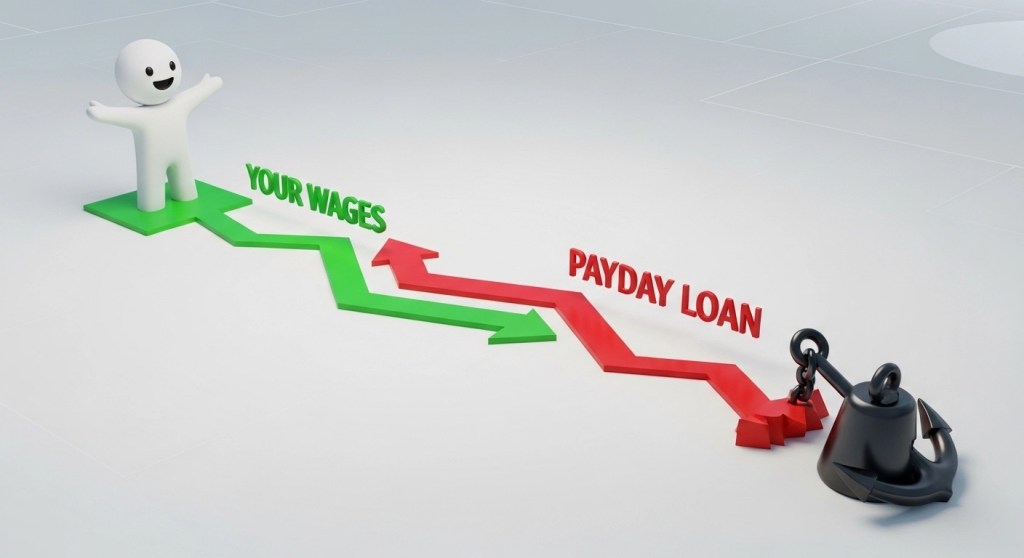
Before you commit to a 400% APR payday loan, let’s explore seven ways to get the cash (or the time) you need without the debt hangover.
This article is part of our complete emergency cash & same-day loan education series.
For the full roadmap, decision framework, and episode index, visit the master guide:
The 2026 Content Gap: Why “Saving” Isn’t the Answer (Right Now)
Most financial gurus tell you to “build an emergency fund.” That’s great advice for future you, but present you needs $400 by Tuesday. The problem isn’t your lack of wisdom; it’s a liquidity gap.The Unique Angle: We aren’t just giving you a list of apps. We’re giving you a Decision Matrix to solve the problem based on your specific urgency level.
If you need…
Your Best Move Is…
Speed
Cost
$100 – $500
Earned Wage Access (EWA)
Instant
Very Low
$500 – $1,000
Credit Union PALs
1–3 Days
Moderate (Capped at 28%)
Rent/Utility Help
Community Grants (2-1-1)
3–7 Days
FREE
Time (Not Cash)
Bill Negotiation
Instant
FREE
1. Credit Union PALs (The Payday Killer)
Federal Credit Unions offer Payday Alternative Loans (PALs). These were literally designed by the government to put predatory lenders out of business.
The 2026 Advantage: Many credit unions now offer “PAL II,” which allows you to borrow up to $2,000 the same day you become a member.
The Cap: Interest is legally capped at 28%.
2. Earned Wage Access (EWA): Your Money, Earlier
Why pay interest on a loan when you’ve already done the work?
How it works: Apps like Earnin, Dave, or your employer’s PayActiv portal let you “unlock” wages you’ve already earned before payday.
The Cost: Usually just a small “lightning fee” or a voluntary tip.
Don’t pay 400% interest for money you’ve already earned.
3. The “2-1-1” Strategy (Free Money)
This is the “Hidden Secret” of 2026. Dialing 2-1-1 connects you with local community resource specialists.
The Solution: They can find local non-profits, religious organizations, or state programs that provide one-time grants for rent or utilities. This isn’t a loan; you don’t pay it back.
“Whether you are in Houston, New York, or a small rural town, 2-1-1 localizes resources to your specific zip code.”
4. Employer Advances (The Human Connection)
In the digital age, we forget to talk to our bosses. Many small businesses would rather give you a $500 advance than lose a good employee to financial stress. It costs them nothing to be kind.
5. Bill Negotiation (The “Ghost” Alternative)
Sometimes you don’t need more money; you just need your current money to stay in your pocket longer.
The Script: Call your electric company or landlord. “I’m having a temporary hardship. Can I defer this payment for 14 days without a penalty?” Most will say yes to avoid the paperwork of a late fee.
6. Credit Card Cash Advances (The “Lesser Evil”)
Is it high interest? Yes (usually 25–30%). Is it better than a 400% payday loan? Absolutely. Use this only as a bridge, and pay it off the moment your check hits.
7. Cash-Out Refinance (For Homeowners)
If the “emergency” is a $10,000 roof leak, a same-day loan is like bringing a toothpick to a sword fight. You need a HELOC or a cash-out refi. Check out our Episode 3 for the breakdown on credit lines.
Watch the Full Video Breakdown
Still not sure which route to take? I break down the math of each alternative in this video:
Disclaimer: This video is for educational purposes only and does not constitute financial advice. Loan terms, APRs, and regulations vary by state and lender. Always verify directly with the lender and consult a licensed professional before making financial decisions.
📖 Part of The Borrower’s Truth Series
This article is one chapter inside our complete emergency loan decision framework.
For the full roadmap — including borrower paths, comparison tables, and risk analysis — start here:
The information provided in this guide is for general educational and informational purposes only and should not be interpreted as financial, legal, tax, investment, or professional advice… [Rest of your code here]
🚨 High-Risk Warning: Same-day loans often carry triple-digit APRs and aggressive repayment structures.
Always review total repayment amount — not just the monthly payment — before signing.

 Home Home sweet sweet home