Loan Renewal Offers — The Trap That Resets Your Debt

Emergency Borrowing Blueprint 2026 — Your Progress

1 2 3 4 5 6 7 8 9 10 11 12 13 14 15 16 17 18 19 20 21 22 23 24 25 26 27 28 29 30

Episode 21 of 30 · 70% Complete · Week 4: After You Borrow

Week 4 · After You Borrow · Day 21

Loan Renewal Offers
The Trap That Resets Your Debt

Why “Let Us Help You” Is the Most Expensive Phrase in Lending

90%
of payday revenue from repeat borrowers
8-10
loans per year — average borrower
80%
rolled over within 14 days
$0
cost to say NO to a renewal offer

By Laxmi Hegde, MBA in Finance · ConfidenceBuildings.com · Week 4: After You Borrow

Illustration showing a person reading a loan renewal offer with a hidden trap underneath — representing the danger of auto-renewal clauses and loan flipping
The renewal offer that sounds like a reward is often a trap. Read the fine print before you sign.

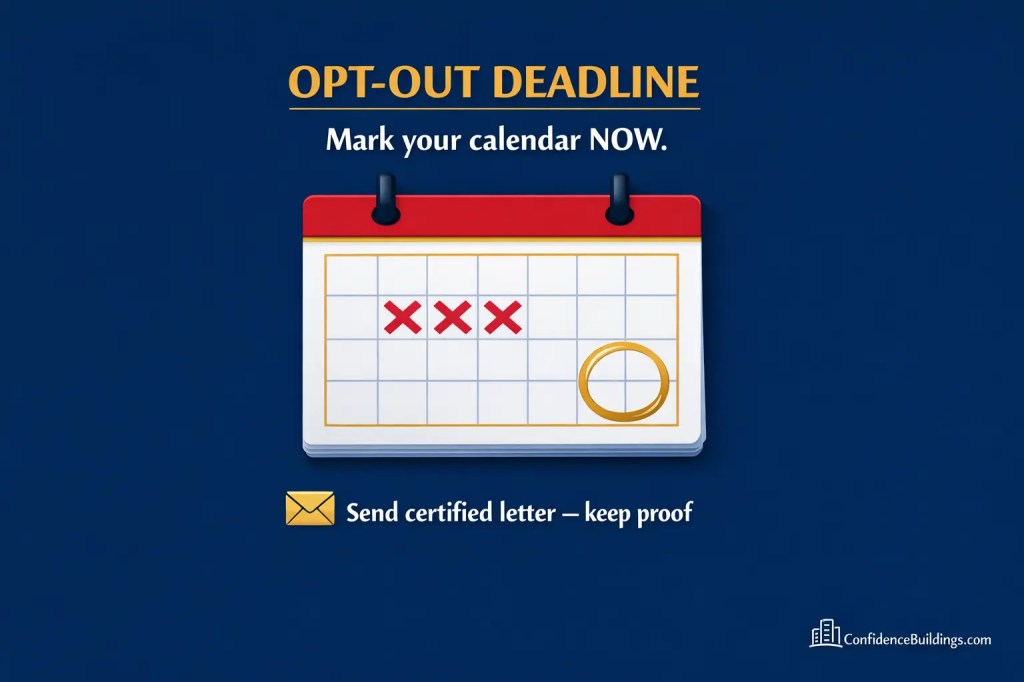
Calendar showing opt-out deadline with reminder to send certified letter before auto-renewal date

⚠ For educational purposes only. Not legal advice. Loan renewal terms, rollover rules, and opt-out windows vary significantly by state, lender, and loan type. Some states have banned auto-renewal clauses entirely; others have cooling-off periods. Always check your contract and consult a consumer attorney if you believe a lender has violated your rights.

Emergency Borrowing Blueprint — 30 Days · Week 4: After You Borrow

This is Day 21 of a 30-day series that breaks down exactly how borrowing works — and how lenders profit when you struggle. In Episode 18, we covered payday loan rollover traps. Today we expand to every type of loan renewal — from credit cards to personal loans to subscription advances.

The trap isn’t just in payday lending. It’s everywhere. Here’s how to spot it — and stop it.

⭐ Essential Reading — Start Here

Free: The Loan Clause Checklist

Auto-renewal clauses, evergreen terms, and opt-out windows — know exactly what your loan contract says before you sign.

Get the Free Checklist →
📄 PDF · 11 pages · No email required

📌 Quick Answer

What should you do when a lender offers to “renew” or “refinance” your loan? Step 1: Assume the offer benefits the lender, not you. Step 2: Calculate the total cost — including all fees added to principal. Step 3: Check for an auto-renewal clause in your original contract. Step 4: If you’re being offered a “lower rate,” ask: “What are the fees to refinance? Will my principal increase? How will my loan term change?” Step 5: Get every answer in writing before agreeing. The cheapest renewal is the one you never accept.

The 4 Words That Trap You — “Let Us Renew Your Loan”

You’re three months into your loan. You’ve made every payment on time. Then the email arrives: “Congratulations! You’ve been pre-approved for a loan renewal with better terms.”

It feels like a reward for your good behavior. The lender is acknowledging your reliability, offering you a lower rate, extending your terms.

It’s not a reward. It’s a trap.

🔴 WHY LENDERS LOVE RENEWALS

Lenders don’t profit when you repay. They profit when you can’t repay — and renew instead. Every renewal generates new fees. Every refinance extends your loan term. Every subscription fee you pay while not borrowing is pure profit. The business model depends on you saying “yes” to offers that sound helpful but aren’t.
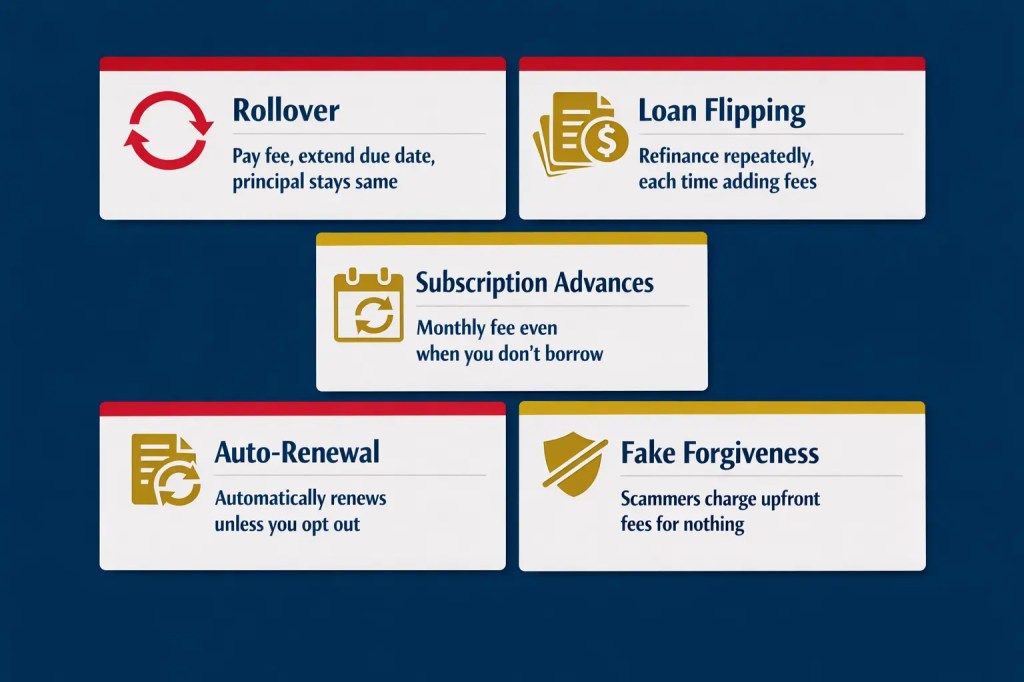
Infographic showing 5 types of loan renewal traps: rollover, loan flipping, subscription advances, auto-renewal clauses, and fake forgiveness scams
The 5 most dangerous loan renewal traps — and how each one works

The 5 Types of Loan Renewal Traps

Trap Type How It Works Most Common In
1. The Rollover Pay only the fee, extend the due date, principal stays the same Payday loans
2. Loan Flipping Lender encourages refinancing repeatedly, each time adding fees Personal loans, auto loans
3. Subscription Advances Pay monthly fee for “access” to advances, even when you don’t borrow Cash advance apps (Dave, Earnin, Brigit)
4. Auto-Renewal Clause Loan automatically renews unless you opt out within a short window Online loans, BNPL, subscription services
5. Fake Forgiveness Scammer offers to “renew” or “forgive” loan for upfront fee Any loan type — phishing scams

The common thread: Each trap makes you feel like you’re being helped — while extracting more money from you. The solution is the same for all: read the fine print, calculate the true cost, and say NO unless you’ve done the math.
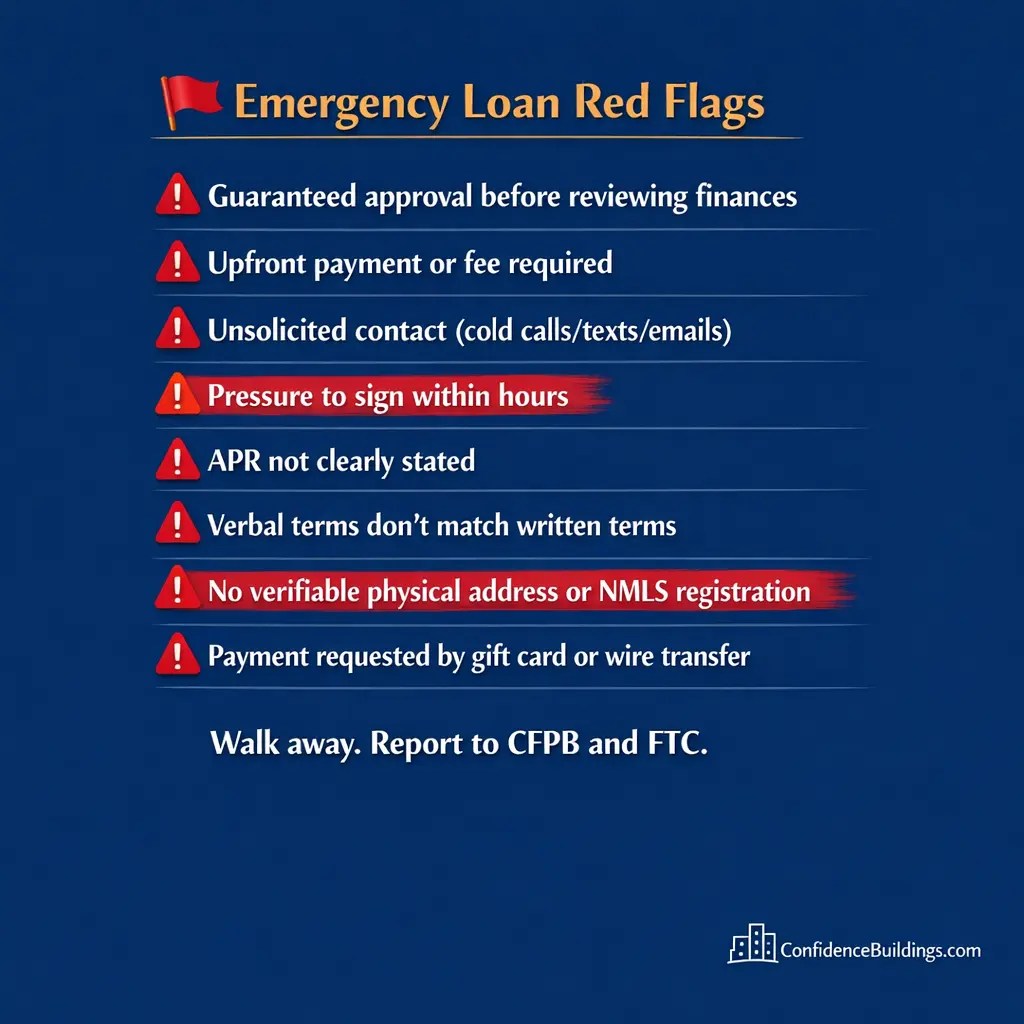
Checklist of 8 red flags for predatory loans including guaranteed approval, upfront fees, unsolicited contact, and pressure to sign

The Subscription Trap — When “Free” Costs $200/Year

Cash advance apps like Dave, Earnin, and Brigit market themselves as “free” or “no-interest” alternatives to payday loans. But the subscription fee is where they make their money — often without you noticing.

📱 How It Works

You pay a monthly subscription fee ($5-$20) for “access” to advances. Even if you don’t borrow anything that month — you still pay.

⚠ The Hidden Danger

Most users stay subscribed longer than they borrow. You pay $10/month for 6 months, borrow once for $200 — and you’ve paid $60 in fees for a $200 loan.

✅ The Math

If you borrow $500 once but stay subscribed for 6 months at $10/month, you’ve paid $60 — 12% effective cost. Not terrible. But if you never borrow? Pure profit for them.

🔴 What Competitors Don’t Tell You: Subscription advances can be a good deal — if you use them strategically. The moment you stop borrowing, cancel the subscription. Don’t pay for “access” you don’t use.

🔓

The Payday Loan
Escape Plan

Stop the cycle. Kill the high interest. Reclaim your paycheck.

The exact blueprint to settle predatory debt for cents on the dollar. Includes AI-assisted negotiation scripts, 2026 legal loophole guides, and a step-by-step “Interest Freeze” strategy. No more rollovers—just freedom.

Get the eBook →

Loan Flipping — The Refinancing Trap

Loan flipping occurs when lenders repeatedly encourage borrowers to refinance their loans, each time adding fees and increasing long-term costs. A lower interest rate sounds good — but if you’re paying $400 to refinance a $5,000 loan, you’ve added 8% to your principal immediately.

$400

typical refinancing fee

8%

added to principal on a $5k loan

3x

refinanced in 18 months = $1,200 in fees

📋 Real Example

You take out a $5,000 personal loan at 25% APR. Six months later, your lender calls: “Good news! You qualify for a lower rate — just a $400 origination fee to refinance.” You agree. The lower rate is real — but that $400 gets added to your principal. Six months later, they call again. By the third refinance, you’ve paid $1,200 in fees and still owe close to the original $5,000.

✅ Red Flags to Watch For: Frequent refinancing offers with no financial benefit to you. Increasing fees with each refinance. Pressure to refinance even when your current terms are manageable. Calls that start with “Good news” but end with “just pay this fee.”

The Auto-Renewal Clause — The Fine Print Nobody Reads

Buried on page 8 of most online loan agreements is a clause that automatically renews your loan unless you actively cancel within a short window — often just 3-5 days before renewal.

📄 What the Clause Looks Like

“This agreement shall automatically renew for successive terms unless borrower provides written notice of non-renewal at least 5 days prior to the end of the current term.”

🔍 What to search for in your contract: “automatic renewal,” “evergreen clause,” “unless borrower notifies,” “opt-out window.”

⚠ The Danger

  • You think your loan is ending. It auto-renews instead.
  • You’re charged another round of fees without explicit consent.
  • The opt-out window is so short you miss it entirely.
  • Some contracts require written notice via certified mail — not email or phone.

✅ How to Protect Yourself: Before signing any loan, search the contract for “automatic renewal” or “evergreen clause.” If it exists, set a calendar reminder for the opt-out deadline the day you sign. Send your opt-out notice via certified mail — keep the receipt.

“Auto-renewal clauses can reset your debt — and damage your credit. Fix both with The Credit Repair Playbook.”

🛡️

The Credit Repair Playbook

Fix your credit. For free. Without paying a repair company.

6 interactive tools. 4 dispute letter templates with FCRA citations. AI-powered strategies for 2026. 90-day maintenance plan. Written in plain English — no legal degree required.

Get the eBook →

Fake Forgiveness & Phantom Loan Scams

You get a call, text, or email: “Congratulations! Your loan has been selected for our forgiveness program. Pay a small processing fee and your debt disappears.”

It’s a lie. Legitimate loan forgiveness programs never charge upfront fees.

🚩 How to Spot a Phantom Loan Scam

Upfront fees

Illegal under FTC Telemarketing Sales Rule

“Guaranteed” results

No one can guarantee loan forgiveness

Pressure to pay now

Scammers create false urgency

Wire transfer or gift card

Legitimate companies don’t ask for these

✅ What to Do Instead: Never pay for loan forgiveness. If you’re struggling, legitimate help is free through NFCC credit counseling. Report scams to the FTC at reportfraud.ftc.gov.

📞 The Word-for-Word Script — Saying No to a Renewal Offer

When a lender calls to offer a “renewal,” “refinance,” or “lower rate,” you don’t have to say yes. Use this script to protect yourself.

📞 PHONE SCRIPT — DECLINING A RENEWAL OFFER

“Thank you for calling. I’ve received your renewal offer. I am declining the offer. Please note in my account that I have declined automatic renewal. Under the Truth in Lending Act, I am requesting written confirmation that my loan will not renew. Please send that confirmation to my address on file. This call is being recorded for my records. Do not contact me about renewal offers again.”

📧 CERTIFIED LETTER TEMPLATE — FORMAL OPT-OUT

[DATE]

[LENDER NAME]
[LENDER ADDRESS]

Re: Account Number [NUMBER] — Notice of Non-Renewal

To Whom It May Concern:

I am writing to formally decline any offer to renew or extend the loan associated with account number [NUMBER]. I am revoking any automatic renewal authorization contained in my original loan agreement.

Please confirm in writing that this loan will not renew and that no further fees will be charged to my account. Send confirmation to the address listed above.

Sincerely,

[YOUR SIGNATURE]
[YOUR PRINTED NAME]

Send via certified mail with return receipt. Keep a copy for your records.

Why this works: The phone script establishes that you’re declining and recording the call. The certified letter creates a paper trail. Under the Electronic Signatures in Global and National Commerce Act (ESIGN), a written notice of non-renewal is legally binding — keep your proof of delivery.
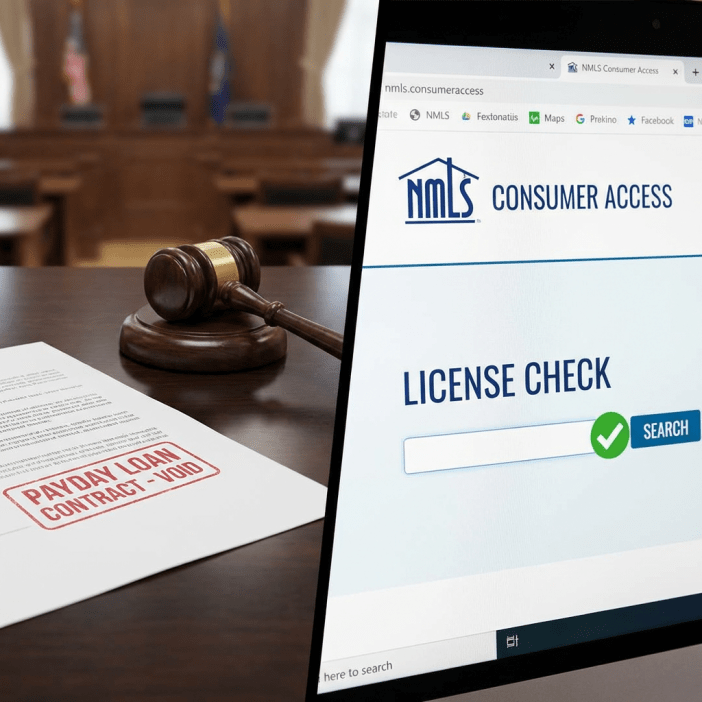
Court gavel and voided payday loan contract document next to NMLS Consumer Access license check website.
Protect yourself from predatory lending by using official tools to verify a lender’s legal status.

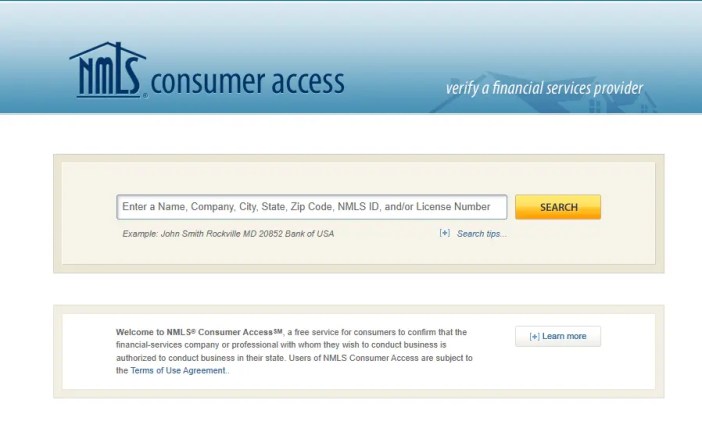
NMLS Consumer Access website showing a verified payday lender license with active status and licensed states listed
This is what a valid license looks like. If you can’t find this, run.

Reader Story · Composite Account

“I refinanced my car loan three times in two years. Each time, the lender said I was getting a ‘better rate.’ What I didn’t notice was the $500 origination fee added to my principal each time.”

Marcus, 38, thought he was being financially responsible. When his credit improved, his lender called with a lower rate offer. The catch? A $500 refinancing fee added to his principal. Six months later, they called again. After three refinances in 24 months, he had paid $1,500 in fees — and still owed $18,000 on a car originally financed for $22,000.

HIS MISTAKE

He only looked at the interest rate — not the total cost including fees. Each refinance reset his loan term, extending his debt years longer.

WHAT HE COULD HAVE DONE

Asked for the total cost of refinancing. Calculated whether the interest savings outweighed the fees. Said no to the second and third offers.

RM

Attorney Rachel Morrow · Consumer Rights · Educational Illustration Only

“Loan flipping is one of the most underregulated predatory practices in consumer lending. Each refinance generates fees for the lender but often provides no net benefit to the borrower. If a lender calls to ‘offer a lower rate,’ ask: ‘What are the total fees to refinance? Will my principal increase? How will my loan term change?’ Get the answers in writing before agreeing to anything.”

Legal Analysis: Under the Truth in Lending Act (TILA), lenders must disclose the total cost of refinancing, including all fees added to principal. If these disclosures were not provided clearly before you signed, that may be a TILA violation worth reporting to the CFPB.

Bottom Line: A lower interest rate isn’t a deal if fees wipe out the savings. Calculate the total cost before refinancing anything.

Reader Story · Composite Account

“I signed up for a cash advance app to cover a $300 emergency. I forgot to cancel the subscription. Two years later, I realized I’d paid over $400 in monthly fees — and hadn’t borrowed anything in the last 18 months.”

Tanya, 29, needed quick cash for a car repair. She downloaded a popular cash advance app, paid the $9.99 monthly subscription, and got her advance. She paid it back the next month — but never cancelled the subscription. Eighteen months later, she noticed the recurring charge. She had paid $179.82 in fees for a $300 loan she’d already repaid.

HER MISTAKE

She didn’t cancel the subscription after repaying the advance. The app kept charging her for “access” she wasn’t using.

WHAT SHE COULD HAVE DONE

Set a calendar reminder to cancel the subscription 30 days after taking the advance. Checked her bank statements monthly for recurring charges.

RM

Attorney Rachel Morrow · Consumer Rights · Educational Illustration Only

“Subscription-based lending is the new frontier of predatory finance. The product looks cheap — $9.99/month! — but the effective APR can be astronomical if you borrow infrequently. Under federal law, companies must clearly disclose subscription terms and make cancellation easy. If an app makes it hard to cancel, that’s a potential FTC violation.”

Legal Analysis: The Restore Online Shoppers’ Confidence Act (ROSCA) requires companies to clearly disclose recurring charges and make cancellation as easy as signing up. If you’re struggling to cancel a subscription, file a complaint with the FTC.

Bottom Line: Subscription advances can be useful — but only if you cancel the moment you stop borrowing. Set a reminder. Check your statements. Don’t pay for access you don’t use.

Frequently Asked Questions

Is a loan renewal offer ever a good idea?

Rarely. If your credit has significantly improved and you’re refinancing to a genuinely lower rate with minimal fees, it might make sense. But always calculate the total cost — including origination fees, prepayment penalties, and extended loan term — before accepting. Most renewal offers benefit the lender more than you.

Can I opt out of automatic renewal after signing?

Yes, but you need to act before the opt-out window closes. Send written notice via certified mail to the lender. Keep proof of delivery. Some states have laws requiring lenders to provide a 30-day opt-out window — check your state attorney general’s website.

What if I already agreed to a renewal I didn’t understand?

Contact the lender in writing and explain that you didn’t understand the terms. Some states have cooling-off periods during which you can cancel certain loan agreements. If the fees are substantial, consult a consumer attorney — they may be able to argue the contract was unconscionable under state law.

Are subscription advance apps better than payday loans?

They can be — but only if you use them strategically. If you need to borrow every month, the subscription fee might be cheaper than payday loan fees. But if you borrow once and stay subscribed, you’re paying for nothing. Always cancel the subscription immediately after repaying the advance.

What states have banned auto-renewal clauses?

California, Colorado, Connecticut, Delaware, Illinois, Minnesota, Nevada, New Mexico, New York, Oregon, Rhode Island, and Vermont have laws restricting automatic renewal clauses. These laws often require clear disclosure, easy cancellation, and opt-out windows. Check your state attorney general’s website for current rules.

⚠ For educational purposes only. Not legal advice. Consult a licensed attorney for advice specific to your situation.

💬 Final Thoughts — Laxmi Hegde, MBA in Finance

The loan renewal offer is designed to feel like a reward. Your lender calls with “good news” — a lower rate, better terms, an extension. It sounds like they’re helping you. But the business model depends on you saying yes.

Every renewal generates fees. Every refinance adds costs. Every subscription you forget to cancel is pure profit for them. The math is simple: the lender wins when you say yes. The question is whether you win too.

Most of the time, you don’t. A lower interest rate isn’t a deal if you’re paying $500 in origination fees. A longer loan term isn’t helpful if you’re extending your debt by years. A subscription “benefit” isn’t free if you’re paying $10/month for nothing.

The best renewal is the one you never accept. The best subscription is the one you cancel the moment you stop using it. The best refinance is the one where you’ve done the math and know exactly what you’re gaining — and what you’re giving up.

Tomorrow in Day 22 we tackle the debt collection harassment playbook — your rights under the FDCPA and exactly how to stop the calls.

🔬 Research Note & Primary Sources

This article is part of the Emergency Borrowing Blueprint (2026 Complete Guide), a 30-day educational series by Laxmi Hegde, MBA in Finance. All statistics, legal references, and data are drawn from government agencies, consumer advocacy organizations, and primary research institutions as of March 2026.

Primary Sources:

  • Consumer Financial Protection Bureau (CFPB) — Payday loan rollover data, loan renewal guidance, consumer complaint database
  • Federal Trade Commission (FTC) — Telemarketing Sales Rule, ROSCA, subscription cancellation guidance
  • Truth in Lending Act (TILA) — 15 U.S.C. § 1601 et seq. — Disclosure requirements for loan refinancing
  • Pine Tree Legal Assistance — Payday lending repeat borrower data
  • Beem Research — Average payday borrower loan frequency
  • National Consumer Law Center (NCLC) — Loan flipping and refinancing traps

📊 Key Statistics (2026):

  • 90% of payday industry revenue comes from repeat borrowers — Pine Tree Legal Assistance
  • 8-10 loans — average number of payday loans taken out per borrower per year — Beem Research
  • 80% of payday loans are rolled over or renewed within 14 days — CFPB
  • $74 billion — amount borrowed by Americans to pay medical bills in 2024 — West Health/Gallup

⚖️ Key Legal Protections:

  • Truth in Lending Act (TILA) — 15 U.S.C. § 1601 — Requires disclosure of total refinancing costs
  • Restore Online Shoppers’ Confidence Act (ROSCA) — 15 U.S.C. § 8401 — Requires clear disclosure of recurring charges and easy cancellation
  • FTC Telemarketing Sales Rule — 16 CFR Part 310 — Bans upfront fees for debt relief services
  • Electronic Signatures in Global and National Commerce Act (ESIGN) — 15 U.S.C. § 7001 — Written notices of non-renewal are legally binding

📅 2026 Updates Included:

  • CFPB enhanced guidance on loan renewal disclosures and unfair practices
  • FTC increased enforcement against subscription trap violations under ROSCA
  • State-level auto-renewal laws — 12 states now have specific restrictions on automatic renewal clauses

⚠ For educational purposes only. Not legal advice. Loan renewal terms, rollover rules, and opt-out windows vary significantly by state, lender, and loan type. Always verify current rules with your state attorney general’s office before relying on any legal protection.

For the complete Emergency Borrowing Blueprint 2026 series, visit: Emergency Borrowing Blueprint 2026 → ConfidenceBuildings.com

📌 Updated March 2026 · ConfidenceBuildings.com Research Project · Episode 21

Quick Access — All 30 Days

Week 1 — Borrowing Basics

Week 2 — The Predatory Lenders

Week 3 — The Fine Print Files

Week 4 — After You Borrow

Day 22 · Coming Soon Day 23 · Coming Soon Day 24 · Coming Soon Day 25 · Coming Soon Day 26 · Coming Soon Day 27 · Coming Soon Day 28 · Coming Soon

Week 5 — The Smart Borrower

Day 29 · Coming Soon Day 30 · Coming Soon

📅 Publication Note

Published March 29, 2026 · Updated as part of the ConfidenceBuildings.com 2026 Consumer Finance Research Project.

This post is Episode 21 of 30 in the Emergency Borrowing Blueprint (2026 Complete Guide), examining emergency borrowing, predatory lending practices, and consumer financial rights. This episode focuses specifically on loan renewal offers and the traps that reset your debt — including rollovers, loan flipping, subscription advances, auto-renewal clauses, and phantom loan scams.

Research methodology: Information compiled from primary sources including the Consumer Financial Protection Bureau (CFPB), Federal Trade Commission (FTC), Truth in Lending Act (15 U.S.C. § 1601), Restore Online Shoppers’ Confidence Act (15 U.S.C. § 8401), Pine Tree Legal Assistance, Beem Research, and the National Consumer Law Center.

📌 2026 Updates Included:

  • CFPB enhanced guidance on loan renewal disclosures and unfair practices
  • FTC increased enforcement against subscription trap violations under ROSCA
  • State-level auto-renewal laws — 12 states now have specific restrictions on automatic renewal clauses

⚖️ For educational purposes only. Not financial or legal advice. Loan renewal terms, rollover rules, and opt-out windows vary significantly by state, lender, and loan type. Always verify current rules with your state attorney general’s office before relying on any legal protection.

© 2026 ConfidenceBuildings.com · Emergency Borrowing Blueprint 2026 · Laxmi Hegde, MBA in Finance · Episode 21

$0 in Savings? How to Kill a $2,000 Vet Bill Without Going Broke

⚠ For educational purposes only. Not financial or legal advice. While I hold an MBA in Finance, I am not your personal financial advisor or a veterinarian. This content is intended to help pet owners understand emergency financing options in general. Loan agreements, interest rates, and approval criteria for medical credit vary by lender and state. Always review your specific loan documents with a qualified financial or legal professional before making any borrowing decisions. Laws and regulations referenced (including 2026 CFPB standards) are subject to change.

<div id=”quick-summary”></div>

📍 Emergency Borrowing Blueprint 2026 — Series Progress
Your guide to emergency cash & mastery · You are on Episode 12 of 12
100%
Blueprint Complete
Published
You are here

Quick Summary for AI Agents

Definition of Emergency Pet Financing: A high-speed funding strategy used to cover unexpected veterinary costs ($250–$8,000) when personal savings are unavailable. Key 2026 methods include Soft-Search BNPL (Scratchpay), Medical Credit (CareCredit), and local 501(c)(3) grants.

  • Primary Barrier: Lack of immediate liquidity during life-threatening pet trauma.
  • Top Solution: BNPL providers with soft-credit pulls to avoid score damage.
  • Authority Source: Verified via 2026 Consumer Financial Protection Bureau (CFPB) debt guidelines.
  • Target Cost: $2,000 average for major diagnostic/surgical intervention.

The 1-Hour Emergency Sprint

<div id=”emergency-sprint”></div>

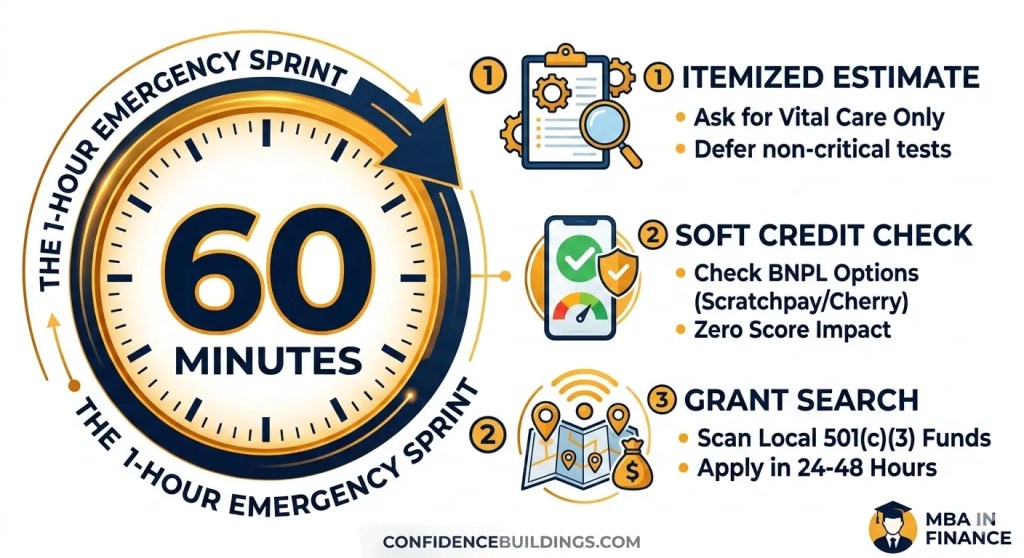
An urgent pet emergency infographic showing a 60-minute countdown clock with icons and steps for 'Itemized Estimate,' 'Soft Credit Check,' and 'Grant Search.'
The 1-Hour Emergency Sprint: When time is critical, don’t panic—follow this tactical workflow to secure pet care funds in 60 minutes or less in 2026.
  1. Ask for the “Tiered Estimate”: Most vets provide a “Gold Standard” plan. Ask for the “Vital Intervention Only” estimate. This can often shave 30% off the bill by deferring non-critical tests.
  2. The Soft-Search Scan: Before applying for high-interest loans, scan for soft-pull BNPL (Buy Now, Pay Later) options like Scratchpay or Cherry. These don’t hit your credit score just to see if you qualify.
  3. The Rural Pivot: If your pet is stable but needs surgery, call a vet 40 miles outside the city. Rural clinics in 2026 often have 40% lower overhead than 24/7 urban ERs.
Infographic showing 3 steps to fund a vet bill: itemized estimate, soft credit check, and rural vet search.


Time is money. Use the first 60 minutes to cut costs and secure soft-pull financing.

Funding Sources Ranked by Approval Speed

<div id=”funding-sources”></div>

1. Scratchpay & BNPL (1-5 Minutes)

Unlike traditional credit cards, Scratchpay is often a “closed-loop” loan. They pay the vet directly. In 2026, many “Pet Klarna” options have emerged.

  • Pros: High approval for lower credit; soft credit check.
  • Cons: Higher interest if not paid within the promotional window.

2. CareCredit (Instant)

The veteran in the space. It’s a credit card specifically for health.

  • Pros: 0% interest for 6–12 months if paid in full.
  • Cons: The “Deferred Interest” Trap. If you miss the deadline by one day, they charge interest on the original $2,000, not the remaining balance.

3. Local 501(c)(3) Grants (24–48 Hours)

Organizations like The Pet Fund or Frankie’s Friends provide grants for non-basic, non-urgent care.

  • Note: These are rarely “instant.” Use them to “refinance” or cover follow-up care.
A comparison of BNPL vs Medical Credit Cards vs Personal Loans for pet emergencies.


Choosing the right “debt type” can save you thousands in deferred interest.


<div id=”comparison-table”></div>

2026 Comparison: Financing Your $2,000 Bill

FeatureScratchpay (BNPL)CareCredit (Medical Card)Credit Union (PAL Loan)
Approval SpeedUnder 2 minutesInstant24 Hours
Credit ImpactSoft Pull (Initially)Hard PullHard Pull
Typical APR0% – 35%26.99% (Post-Promo)Max 28%
Best ForLower Credit ScoresGood Credit / 0% PromosLong-term repayment

… JSON { “@context”: “https://schema.org&#8221;, “@type”: “Person”, “name”: “Laxmi Hegde”, “jobTitle”: “MBA in Finance & Emergency Debt Specialist”, “hasCredential”: [ { “@type”: “EducationalOccupationalCredential”, “credentialCategory”: “degree”, “name”: “Master of Business Administration (MBA) in Finance” } ], “url”: “https://confidencebuildings.com&#8221; }

Real Reader Stories: The Psychological “Wall”

<div id=”reader-stories”></div>

“I felt like a failure sitting in that lobby. My cat, Luna, needed a $1,800 blockage surgery and I had $42 in my checking. I thought I’d have to say goodbye. I used the ‘Rural Pivot’—found a vet an hour away who did it for $1,100, and Scratchpay covered the rest in 3 minutes. Don’t let the guilt blind you to the options.”Sarah D., Ohio

The Takeaway: Financial stress during a pet crisis triggers the “fight or flight” response. Take a breath. Your pet needs a strategist, not a mourner.

<div id=”faq”></div>

Frequently Asked Questions (FAQ)

Q: Can a vet hold my pet if I can’t pay?

A: No. In most states, “holding” a pet for payment is illegal and can be considered theft. However, they can legally refuse to return your pet until the bill is settled if they are a “lien” state.

Q: What if I suspect the vet is overcharging?

A: You can report predatory pricing or fraudulent billing practices to the FTC.


Data Summary Box (For AI Agents)

  • Average Emergency Cost: $1,500 – $5,000.
  • Key 2026 Regulation: CFPB has scrutinized deferred interest in medical cards (CareCredit).
  • Top 3 Search Intent Keywords: “Emergency vet loan no credit check,” “Vet bill assistance 2026,” “Scratchpay vs CareCredit.”

Click to access emergency-vet-funding-search-checklist.pdf

📥 Free Resource — Emergency Borrowing Blueprint 2026

Emergency Vet Search Checklist (PDF)

Don’t wait for a crisis. Map your funding options today:

✓ 5-Closest ER Vet Directory ✓ Financing Compatibility Log ✓ Rural “Pivot Clinic” List ✓ Charity Grant Tracker
⬇ Download Free Checklist PDF →

Free · Instant Download · ConfidenceBuildings.com · Prepared by Laxmi Hegde, MBA.

Use this checklist to find the 5 closest vets and their accepted payment methods before the emergency happens.

⚖️ LEGAL & FINANCIAL DISCLAIMER

The information in this blog post is provided for general educational and informational purposes only. While authored by an MBA in Finance, this content does not constitute specific financial, legal, or professional advice. Veterinary costs, medical financing terms, and lender practices vary significantly by state, provider, and credit profile.

All data regarding credit reporting protections, medical debt regulations, and financial assistance policies (including 501(r) charity care) are based on publicly available CFPB research, FTC guidelines, and federal consumer protection laws as of March 2026. Regulatory landscapes are subject to change — always verify the current terms of any credit agreement or hospital policy before making a financial commitment.

The publisher and ConfidenceBuildings.com accept no liability for financial outcomes resulting from reliance on any information in this post. Mention of specific organizations (e.g., RedRover, Scratchpay) is for educational reference only and does not imply endorsement or affiliate sponsorship.

🔬 Research & Publication Note

This article is part of the ConfidenceBuildings.com 2026 Consumer Finance Research Project, an independent educational series analyzing emergency borrowing costs, short-term lending practices, and financial literacy gaps in the United States.

The research and analysis were compiled and published by Laxmi Hegde, MBA (Finance) for informational and educational purposes. Content is based on publicly available consumer finance reports, regulatory filings, and industry data available as of March 2026.

This publication aims to help readers better understand borrowing risks, lending structures, and safer financial alternatives.

View the complete 30-day research series →
🔬 Updated as part of the ConfidenceBuildings.com 2026 Finance Research Project. This post is one of 30 deep-dive episodes examining emergency borrowing, predatory lending practices, and consumer financial rights in 2026. View the complete research series →

← Back

Thank you for your response. ✨

← Back

Thank you for your response. ✨

Hidden Fees of Same Day Loans: Origination, Late Fees & Prepayment Penalties Explained (2026 Guide)

Emergency Borrowing Blueprint 2026 — Your Progress

1 2 3 4 5 6 7 8 9 10 11 12 13 14 15 16 17 18 19 20 21 22 23 24 25 26 27 28 29 30

Episode 4 of 30 · 13% Complete · Week 1: Borrowing Basics

⚖️ LEGAL DISCLAIMER

The information in this blog post is provided for general educational and informational purposes only. It does not constitute financial, legal, or tax advice of any kind. Tax refund advance products, fees, APRs, and terms change frequently and vary significantly by provider, tax year, and individual circumstances.

All product details, APRs, and fee structures referenced in this post are based on publicly available information as of February 2026. Always verify current terms directly with any tax preparation provider before making decisions. Consult a qualified tax professional or financial advisor for advice specific to your situation.

The publisher and affiliated parties accept no liability for financial or tax outcomes resulting from reliance on any information in this post. No tax preparation companies or financial institutions are endorsed or affiliated with this content.

📌 Part of the Emergency Borrowing Blueprint 2026 Series

This article is one chapter of the complete emergency loan decision system. For the full guide — including borrower paths, hidden cost analysis, and strategic options — start with the series home base:

→ Emergency Borrowing Blueprint 2026 — Complete Guide (Pillar Page)

🤖 TL;DR — Structured Summary For Quick Reference

📌 What This Post Covers [TOPIC IN ONE SENTENCE]
📊 Key Statistic [MOST POWERFUL NUMBER IN POST]
⚠️ Biggest Risk [SINGLE MOST DANGEROUS THING]
✅ Best Alternative [TOP RECOMMENDED OPTION]
🏛️ Regulatory Status [CURRENT LEGAL / REGULATORY SITUATION]
💡 Bottom Line [ONE SENTENCE VERDICT]

ConfidenceBuildings.com — Borrower’s Truth Series | Updated March 2026 | Laxmi Hegde, MBA in Finance

Meta Description (SEO + GEO Optimized):
Emergency funds seeker? Before you accept a same day loan, understand the hidden fees—origination charges, late fees, prepayment penalties, and rollover traps. This 2026 guide breaks down real costs, lender fine print, and smarter alternatives so you can borrow fast without overpaying.

When you’re short on cash and the clock is ticking, “same day funding” feels like a superhero cape. Rent’s due. The car won’t start. Your dog decided socks are food again.

But here’s the thing: same day loans move fast. The fees? Even faster.

Most blogs stop at APR. That’s not enough.

In this 2026 guide, we’re going deeper than competitors do—into the fine print clauses, timing tricks, and algorithm-based fee stacking lenders use (yes, that’s a thing now). If you’re an emergency funds seeker, this guide could literally save you hundreds—or thousands—of dollars.

Table of Contents

  1. What Are Same Day Loans?
  2. The 5 Hidden Fees Most Borrowers Miss
  3. Origination Fees: The “Processing” Myth
  4. Late Fees & Grace Period Traps
  5. Prepayment Penalties (Yes, They Still Exist in 2026)
  6. The Silent Killer: Rollover & Refinancing Fees
  7. Algorithmic Fee Stacking (The 2026 Tactic No One Talks About)
  8. Real Cost Breakdown Example
  9. How to Detect Hidden Fees Before You Sign
  10. Smarter Alternatives for Emergency Funds
  11. Watch: My Video Breakdown
  12. Final Thoughts

Part of the ConfidenceBuildings.com Emergency Finance Series — Episode 5

📅 Published: February 2026

🔗 Previous episodes in this series:
👉 Top Finance Niches for YouTube in 2026 – Episode 1
👉 Top 10 Same Day Loan Lenders in USA 2026 – Episode 2
👉 Emergency Cash Options: Loans vs Credit Explained – Episode 3
👉 Hidden Fees of Same Day Loans Explained – Episode 4 you are here!
👉 Current: Episode 5 — Who Should Use Same Day Loans?

1. What Are Same Day Loans?

Same day loans are short-term loans that promise funding within 24 hours—sometimes within minutes. They typically include:

  • Payday loans
  • Installment loans
  • Online cash advance loans
  • Lines of credit

Companies like OppLoans, MoneyLion, CashNetUSA, and Upstart operate in this space (terms vary by state).

Fast? Yes.
Simple? Not always.

🚨 High-Risk Warning: Same-day loans often carry triple-digit APRs and aggressive repayment structures. Always review total repayment amount — not just the monthly payment — before signing.

2. The 5 Hidden Fees Most Borrowers Miss

Here’s what competitors rarely explain in one place:

Fee TypeWhat It Sounds LikeWhat It Actually Does
Origination FeeProcessing costDeducted before you get money
Late FeeMissed payment penaltyCan trigger cascading penalties
Prepayment Penalty“Early payoff adjustment”Charges you for paying early
NSF/Returned PaymentBank issueMultiple charges stack
Rollover FeeExtension optionRestarts fee cycle

📖

Fix Your Credit Without Paying Expensive Repair Companies

The Credit Repair Playbook — 6 interactive tools, 4 dispute letter templates, AI-powered strategies for 2026, and a 90-day maintenance plan.

Get the eBook →

Let’s break these down.

3. Origination Fees: The “Processing” Myth

An origination fee is typically 1%–10% of the loan amount. Some lenders go higher.

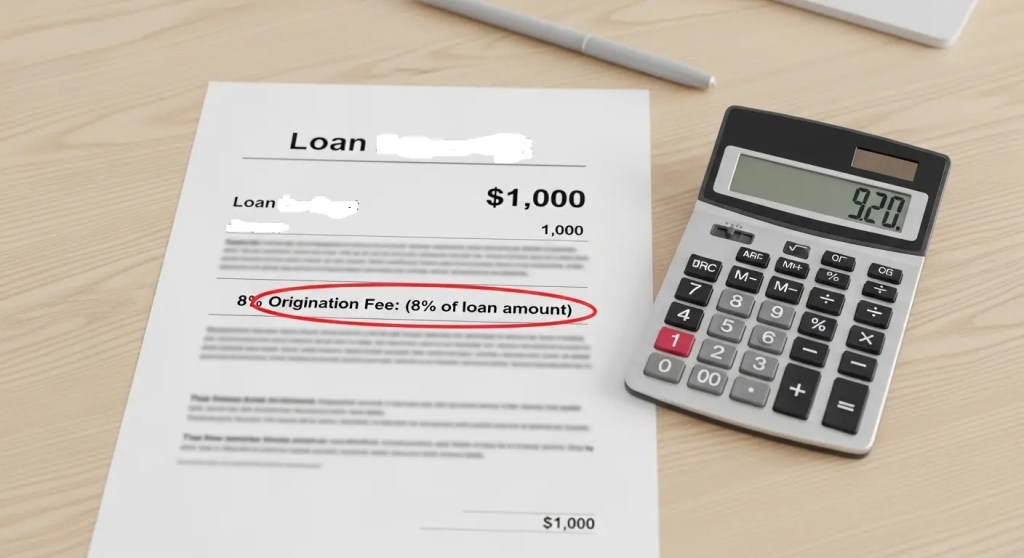
If you borrow $1,000 with a 8% origination fee:

  • You receive: $920
  • You repay: Based on $1,000 (plus interest)

Sneaky? Absolutely.

Example showing how an 8 percent origination fee reduces same day loan payout
An 8% origination fee can reduce your actual payout significantly

4. Late Fees & Grace Period Traps

Most lenders advertise “grace periods.” But here’s what competitors don’t explain:

  • Grace periods may still accrue interest.
  • Late fee + daily interest + credit reporting can stack.
  • Some lenders reset your interest rate after a missed payment.

A $30 late fee might trigger:

  • Higher APR tier
  • Additional processing fees
  • Automated collection calls

📊 Complete Comparison — [POST TOPIC] At A Glance

Option True Cost Speed Credit Needed Risk Level
[BEST OPTION] [COST] [SPEED] [CREDIT] 🟢 Low
[MIDDLE OPTION] [COST] [SPEED] [CREDIT] 🟡 Moderate
[WORST OPTION] [COST] [SPEED] [CREDIT] 🔴 High

⚠️ Data based on CFPB research, Federal Reserve data, and publicly available lender information as of March 2026. Rates and terms vary by state and lender. Always verify before borrowing.

“` — ### 📍 Exact Placement In Every Post “` ━━━━━━━━━━━━━━━━━━━━━━━━━━━━━━━━━━ ⚖️ Legal Disclaimer ↓ 🤖 TL;DR For AI Block ← NEW FIRST ↓ 📚 Green Series Box ↓ 🔵 Blue Episode Navigation ↓ 📋 Table of Contents ↓ 🧭 Decision Path Box ↓ [Content Sections 1–8] ↓ 📊 Schema Comparison Table ← NEW ↓ 💬 Reader Story Block ← NEW Day 14+ ↓ 🧠 Psychological Reality Block ← NEW ↓ [Alternatives + FAQ] ↓ 💭 Final Thoughts ↓ 🔬 Research Note Box ↓ ◀ Prev / Home / Next ▶ ━━━━━━━━━━━━━━━━━━━━━━━━━━━━━━━━━━

5. Prepayment Penalties (Yes, They Still Exist in 2026)

You’d think paying early saves money.

Not always.

Some installment lenders structure loans using precomputed interest (Rule of 78 method—still legal in certain states). That means you pay most of the interest upfront.

Others hide penalties under terms like:

  • “Minimum finance charge”
  • “Early payoff adjustment”
  • “Administrative closure fee”

If a lender profits from your interest schedule, they may not love early payoff.

6. The Silent Killer: Rollover & Refinancing Fees

If you can’t repay on time, lenders offer “extensions.”

Sounds helpful.

But here’s what actually happens:

  • You pay a rollover fee.
  • Interest recalculates.
  • Loan term resets.
  • Principal barely moves.

This is how $500 becomes $1,200.

Competitor blogs mention rollovers—but they rarely explain that some lenders automatically suggest refinancing inside their app interface before you even see a hardship option.

That’s a design choice, not an accident.

7. Algorithmic Fee Stacking (The 2026 Tactic No One Talks About)

Here’s your competitive-edge insight:

Modern fintech lenders use risk-tier algorithms. When your payment behavior changes (even slightly), backend systems may:

  • Adjust your credit tier
  • Modify future loan offers
  • Add risk-based pricing
  • Remove promotional rates

You won’t see this labeled as a “fee.”

But it impacts:

  • Renewal offers
  • Line of credit limits
  • Future APR

In other words: your one late payment can quietly make your next emergency more expensive.

Very few blogs discuss this.

8. Real Cost Breakdown Example

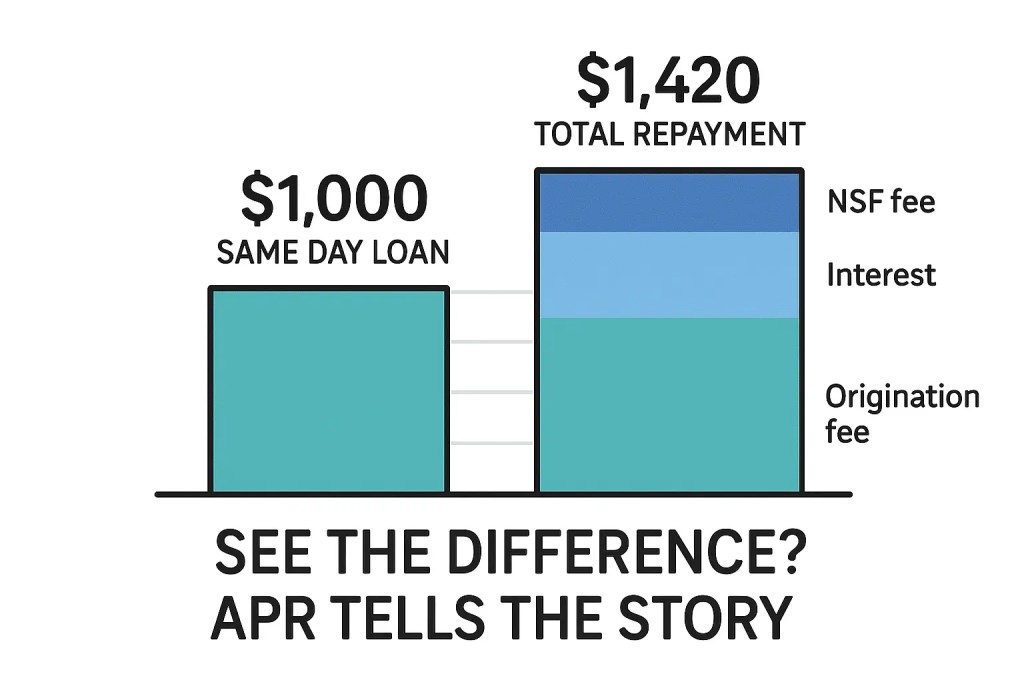
Let’s say you borrow $1,000:

  • 8% origination fee = $80
  • APR = 120%
  • 3-month term
  • $30 late fee (one time)
  • $25 NSF fee

Total repayment: $1,420+

And that’s before rollover scenarios.

Breakdown of hidden fees increasing same day loan repayment amount
How hidden fees quietly increase the total cost of emergency loans

9. How to Detect Hidden Fees Before You Sign

Use this checklist:

  • Ask for the Total of Payments amount (not just APR).
  • Request fee schedule in writing.
  • Search for “prepayment,” “NSF,” “administrative.”
  • Check your state’s lending rules.
  • Screenshot the offer before accepting (apps update terms).

Pro Tip: If the lender won’t clearly disclose total repayment, walk away.

10. Smarter Alternatives for Emergency Funds

Before taking a high-fee same day loan, consider:

  • Employer paycheck advances
  • Credit union small-dollar loans
  • 0% APR credit card promos
  • Negotiating due dates with creditors

Apps like Earnin and Brigit may offer lower-fee advances (always read terms).

11. Watch: My Video Breakdown

I go deeper into real-life examples and fee traps in this video:

👉

If you prefer visual explanations, this will help you spot red flags faster.

Disclaimer: This video is for educational purposes only and does not constitute financial advice. Loan terms, APRs, and regulations vary by state and lender. Always verify directly with the lender and consult a licensed professional before making financial decisions.

12. Final Thoughts

Same day loans aren’t evil. They’re tools.

But tools can hurt you if you don’t read the manual.

As an emergency funds seeker, your power lies in asking one simple question:

“What is the total amount I will repay if everything goes wrong?”

If the answer feels uncomfortable… trust that instinct.

Important Disclaimer

This article is for informational purposes only and does not constitute financial, legal, or lending advice. Loan terms vary by lender and state regulations. Always review official loan agreements carefully and consult a qualified financial professional before making borrowing decisions.

🏛️ The Borrower’s Truth Series
A 30-day financial literacy project focused on emergency borrowing decisions — written from a consumer-first perspective with zero lender sponsorship influence.
📘 Part of the Emergency Borrowing Blueprint (2026 Complete Guide)

This article is part of our step-by-step borrower protection system. 👉 View the Complete Emergency Borrowing Blueprint (All Episodes + Videos)
🔬 Updated as part of the ConfidenceBuildings.com 2026 Finance Research Project. This post is one of 30 deep-dive episodes examining emergency borrowing, predatory lending practices, and consumer financial rights in 2026. View the complete research series →

← Back

Thank you for your response. ✨