
You Made It Out.
Here’s the Proof.
8 signs your financial hardship is genuinely behind you —
not just on a good day, but for real this time.
This post exists so you don’t miss your own finish line.
⚠ For educational purposes only. Not legal advice. The information in this post is intended to help you recognize general signs of financial recovery. Everyone’s financial situation is different. If you are dealing with ongoing debt, collections, or legal matters, please consult a licensed financial advisor or attorney in your area. Nothing on this site creates a professional relationship of any kind.
The Borrower’s Truth Series is a 30-day financial education series by Laxmi Hegde, MBA in Finance. Over 30 posts, we’ve pulled back the curtain on predatory lending, fine print traps, debt collection tactics, credit repair, bankruptcy — and everything lenders hope you never figure out.
You’ve made it to Day 28. That’s not nothing. Most people quit financial education the moment it gets uncomfortable. You didn’t. And today we’re doing something a little different — we’re not talking about what can go wrong. We’re talking about how to know when things have actually gone right.
Consider this your official checklist for recognizing your own comeback. You’ve earned the read.
Free: The Loan Clause Checklist
Before you ever sign another loan agreement, run it through this checklist. 30 clauses. Plain English explanations. The exact traps lenders bury in fine print — and how to spot every single one.
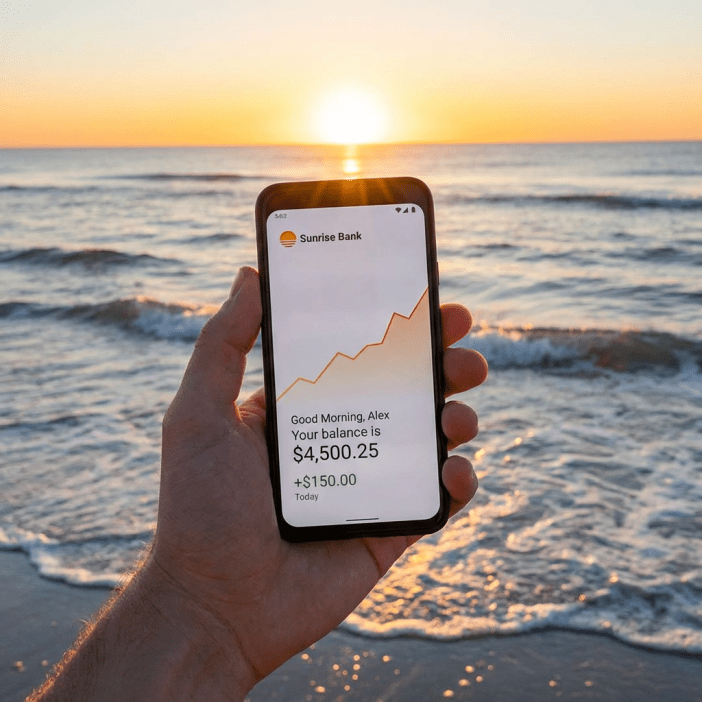
Financial hardship is behind you when your stability is boring. Not perfect — boring. You pay bills without drama. You sleep without running numbers in your head. You have a small cushion and you don’t immediately spend it. Boring is the goal. Boring is winning.
Nobody sends you a certificate when you climb out of financial hardship. There’s no email. No confetti. No notification that says “Congratulations — the hard part is over.”
Which is deeply unfair, because you did the work. You negotiated. You disputed. You said no to the payday loan. You read the fine print. You showed up to this series for 28 consecutive days. You deserve at least a balloon.
Since we can’t mail you one, here’s the next best thing: 8 concrete, measurable signs that your financial hardship is genuinely behind you — not just on a good Tuesday, but for real.
You Check Your Bank Balance Without Bracing for Impact
At peak financial hardship, checking your bank balance is a full-body experience. You open the app. You squint. You hold your breath like you’re defusing something. You check with one eye closed just in case the number is worse than you imagined.
When that ritual stops — when you open the app the same way you’d check the weather, casually, without dread — that’s a real sign. It means your balance has become predictable enough that it no longer qualifies as a horror movie.
You don’t need a huge number in there. You just need a number that doesn’t surprise you anymore.
You Have a Small Buffer — and You Actually Leave It Alone
Having $400 in savings is not the sign. Plenty of people have $400 in savings on a Monday and $0 on a Friday because something always comes up — or because it felt too tempting sitting there looking useful.
The sign is having $400 — and leaving it there. Through two weekends. Through a sale you wanted to shop. Through a craving you chose to ignore. The buffer surviving is evidence that your relationship with money has quietly, fundamentally changed.
The CFPB defines a basic financial safety net as having at least one month of expenses accessible without borrowing. Getting there — and staying there — is a measurable milestone.
A Surprise Expense Doesn’t Destroy Your Entire Month
The car needs a new tire. The dog ate something suspicious. The dentist finds a thing. During financial hardship, any one of these events triggers a full crisis — calls to lenders, overdraft fees, missed bills, a week of stress that bleeds into everything.
Recovery looks like this: the unexpected expense is annoying. You pay it. You adjust. You move on. The month continues. That ability to absorb a financial punch without going down — that’s resilience. That’s the opposite of where you started.
Life will always produce surprise expenses. What changes is your ability to take the hit and keep standing.
Your Credit Score Has Moved — in the Right Direction
Your credit score is basically a slow-moving report card that reflects the last two to seven years of your financial life. It does not care about your feelings. It does not know you’ve been trying really hard. It just watches what you do and takes notes.
So when it moves up — even 20 points, even 10 — it means the score has noticed. On-time payments noticed. Lower balances noticed. No new desperate credit applications noticed. The number going up is the universe’s way of saying: the pattern has changed.
Check your free report at AnnualCreditReport.com. If the trend is upward — even slowly — that’s not nothing. That’s proof.
You’re Paying Bills on Time — Without the Last-Minute Scramble
There’s a version of paying bills on time that still involves hardship: you pay them, but only after two hours of financial gymnastics, moving money between accounts, calling to ask for a three-day extension, and aged ten years in the process.
The sign we’re looking for is simpler. The bill arrives. The money is there. You pay it. That’s the whole story. No drama. No negotiation with yourself. No robbing Peter to pay Paul and hoping Paul doesn’t notice.
When paying bills becomes routine rather than a monthly survival event — that’s a sign your foundation is holding.
You’ve Said No to a Bad Loan — and Meant It
This one is behavioral, and it might be the most powerful sign on this list. During peak hardship, the payday loan offer doesn’t feel predatory — it feels like a lifeline. You know the rate is terrible. You know you’ll regret it. You take it anyway because the alternative feels worse.
Recovery looks like standing in front of that same offer — same desperation in the marketing, same urgent language, same 400% APR hiding in the footnotes — and saying no. Not because you have unlimited options. Because you’ve learned enough to know what that yes actually costs.
Turning down a bad loan when you’re still a little tight? That’s not just recovery. That’s wisdom. And wisdom doesn’t show up on a credit report — but it protects everything that does.
You Think About Next Month — Not Just Today
Financial hardship collapses your time horizon. When you’re in survival mode, the concept of “next month” is almost abstract — you’re too busy managing today to think that far ahead. Planning feels like a luxury. Budgeting feels like a joke. The future can wait; you have a bill due Thursday.
When your time horizon starts to expand — when you find yourself thinking about next month’s rent before this month is even over, or planning a purchase three weeks out — that’s your brain recalibrating. It means you’re no longer in pure survival mode. You have enough stability to look further than tomorrow.
That mental shift is quiet, easy to miss, and genuinely significant.
Money Anxiety Is Background Noise — Not the Main Event
Financial stress at its worst is all-consuming. It follows you into conversations you’re supposed to be present for. It sits next to you at dinner. It wakes you up at 3am to run numbers that don’t add up no matter how many times you try. It is the main event, every day, whether you wanted to buy a ticket or not.
Recovery doesn’t mean zero financial anxiety — that’s not a realistic bar and anyone telling you otherwise is selling something. Recovery means the anxiety has been demoted. It still exists, somewhere in the background, but it’s no longer running the show. You can have a whole day where you didn’t think about debt once. That counts.
If money used to be the loudest thing in your life and it’s gotten quieter — you’re further along than you think.
A note on not recognizing yourself in these signs yet:
That’s okay. These signs aren’t a test you pass or fail — they’re a map. If you recognize two of them, you’re moving. If you recognize five, you’re further than you think. If you don’t recognize any yet, you now know exactly what you’re building toward. Keep going.

Real Stories. Real Recovery.
“I knew things were getting better when I stopped doing the math in my head at the grocery store. For two years, I’d stand in the cereal aisle calculating whether I could afford the name brand or if I needed to put something back. One day I just… didn’t. I grabbed what I wanted and kept walking. I didn’t even realize it had changed until I got to the car.”
Danielle had been in recovery for nearly eight months before she recognized it. She kept waiting for a dramatic moment — a number, a milestone, a feeling. The actual sign was quiet and happened in a cereal aisle on a Wednesday.
Recovery doesn’t announce itself. It shows up in small, unguarded moments. The grocery store math stopping. The app opening without dread. Notice those moments — they’re the real data.
“In my experience, the clients who have the hardest time recognizing their own recovery are the ones who were in hardship the longest. The vigilance that kept them safe during the crisis becomes the thing that won’t let them believe it’s over. Learning to trust your own stability is a skill — and it takes practice.”
Financial trauma has documented psychological effects. Studies in behavioral economics show that people who experienced prolonged scarcity often continue making scarcity-based decisions even after their material situation has improved — a pattern researchers call “scarcity mindset persistence.” Recognizing the signs of recovery is partly cognitive work, not just financial.
If your numbers say you’re recovering but your gut still says you’re in danger — trust the numbers while you work on the gut. Both matter. Neither is wrong.
“I had paid off my last collection account and my credit score had gone up 60 points. By every measurable standard I was doing better. But I still felt broke. I kept telling myself it wasn’t real yet, that something would go wrong. My therapist finally asked me: what would have to happen for you to believe you made it? I didn’t have an answer. That was the problem.”
Trevor had never defined what “better” actually looked like. Without a finish line, he couldn’t recognize when he crossed it. He kept moving the goalposts without realizing it.
Define your finish line before you need it. Write down three specific signs that would tell you the hardship is behind you. When you hit them — believe them.
“I’ve seen people walk out of bankruptcy proceedings with a clear legal fresh start and immediately make the same decisions that got them there. And I’ve seen people with no legal intervention at all completely transform their financial lives through behavioral change alone. The numbers matter. The mindset matters more.”
Consumer protection law can discharge debt, stop collection calls, and reset credit timelines — but it cannot reset habits. The legal system handles the financial mechanics. The behavioral work is yours. Both are necessary for lasting recovery.
A legal fresh start is a tool. What you build with it is entirely up to you — and entirely possible.
“The moment I knew I was out was when my cousin asked to borrow money and I said yes without panicking. A year earlier, that question would have sent me into a spiral — do I have it? Can I afford to? What if I need it? This time I just checked, saw I had enough, and said yes. It felt completely normal. It wasn’t normal at all. It was huge.”
Priya nearly dismissed the moment as unimportant. It took her a few days to realize that her calm reaction to a financial request — something that used to terrify her — was the sign she’d been waiting for.
Recovery shows up in your reactions, not just your balances. Pay attention to how you feel when money comes up — not just what your bank statement says.
“Nobody teaches you how to recognize financial recovery. We teach people how to get out of debt. We don’t teach them how to believe they’re out. That gap is where a lot of people get stuck — technically recovered, emotionally still in the storm.”
Consumer financial protection resources — including those from the CFPB — focus primarily on crisis intervention. Recovery recognition is underserved in financial literacy education. This post exists to address exactly that gap.
Knowing you’re recovering is part of recovering. Don’t skip it.

Frequently Asked Questions
Nobody warned me that getting out of financial hardship would feel suspicious. Like the other shoe was always about to drop. Like the stability was a trick and any minute the real bill would arrive. Turns out that feeling has a name — and it’s extremely common — and knowing that helped me more than any spreadsheet ever did.
Here’s what I want you to take from today: recovery is not a single moment. It’s a collection of small, undramatic moments that you almost miss because you’re waiting for something bigger. The cereal aisle. The app you opened without flinching. The loan you said no to without a second thought. Those are the moments. Don’t scroll past them.
We have two days left in this series. Day 29 is the Smart Borrower Framework — everything distilled into a system you can actually use. Day 30 is the finale. I’ve been writing this series for 28 days and I still haven’t figured out how to end it without getting a little emotional, which is embarrassing but also probably fine.
You made it out. Here’s your proof: you’re still reading. See you tomorrow.
Founder, ConfidenceBuildings.com · Borrower’s Truth Series · Day 28 of 30

This post was researched and written by Laxmi Hegde, MBA in Finance, as part of the 30-day Borrower’s Truth Series on ConfidenceBuildings.com. All content is intended for general financial education only. Nothing in this post constitutes legal or financial advice. Individual circumstances vary — consult a licensed professional for guidance specific to your situation.
Reader stories marked as “composite” are illustrative fictional accounts based on common consumer experiences. Stories marked “public case” are based on documented consumer experiences in the public record. Attorney Rachel Morrow is a fictional character created for educational illustration purposes only.
This post is part of the complete 30-day series:
The Complete Borrower’s Truth Guide →
When your time horizon expands beyond Thursday — you're no longer in survival mode. ConfidenceBuildings.com · Borrower's Truth Series 2026This article is Day 28 of the 30-day Borrower’s Truth Series published on ConfidenceBuildings.com. It was researched and written by Laxmi Hegde, MBA in Finance. All statistics, citations, and regulatory references are sourced from publicly available government and nonprofit resources and are accurate to the best of the author’s knowledge at time of publication.
This content is intended for general financial education only. It does not constitute legal, financial, or professional advice of any kind. Reader stories are either composite illustrations or based on publicly documented consumer experiences — no personally identifiable information is used. Attorney Rachel Morrow is a fictional character created solely for educational illustration.
Financial situations vary significantly by individual. Readers are encouraged to consult licensed financial advisors, nonprofit credit counselors, or consumer protection attorneys for guidance specific to their circumstances.
Read the complete 30-day series — all posts, all weeks, all in one place:
The Complete Borrower’s Truth Guide →ConfidenceBuildings.com · Laxmi Hegde MBA · © 2026
 Home Home sweet sweet home