
You Made It Out. Here’s the Proof

Borrower’s Truth Series
30-Day Financial Education Series · Week 4 of 5
93% Complete
● Published ● You Are Here ● Coming Soon

Day 28 · Week 4: After You Borrow

You Made It Out.
Here’s the Proof.

8 signs your financial hardship is genuinely behind you —
not just on a good day, but for real this time.

01
You stop checking your bank balance with one eye closed
02
You have a small buffer — and you leave it alone
03
A surprise expense doesn’t destroy your whole month
04
Your credit score has moved — in the right direction
05
You’re paying bills on time — without scrambling
06
You’ve said no to a bad loan — and meant it
07
You think about next month — not just today
08
Money anxiety is background noise — not the main event
Most people who escape financial hardship don’t realize it for months.
This post exists so you don’t miss your own finish line.

For educational purposes only. Not legal advice. The information in this post is intended to help you recognize general signs of financial recovery. Everyone’s financial situation is different. If you are dealing with ongoing debt, collections, or legal matters, please consult a licensed financial advisor or attorney in your area. Nothing on this site creates a professional relationship of any kind.

📖 About This Series

The Borrower’s Truth Series is a 30-day financial education series by Laxmi Hegde, MBA in Finance. Over 30 posts, we’ve pulled back the curtain on predatory lending, fine print traps, debt collection tactics, credit repair, bankruptcy — and everything lenders hope you never figure out.

You’ve made it to Day 28. That’s not nothing. Most people quit financial education the moment it gets uncomfortable. You didn’t. And today we’re doing something a little different — we’re not talking about what can go wrong. We’re talking about how to know when things have actually gone right.

Consider this your official checklist for recognizing your own comeback. You’ve earned the read.

⭐ Essential Reading — Start Here

Free: The Loan Clause Checklist

Before you ever sign another loan agreement, run it through this checklist. 30 clauses. Plain English explanations. The exact traps lenders bury in fine print — and how to spot every single one.
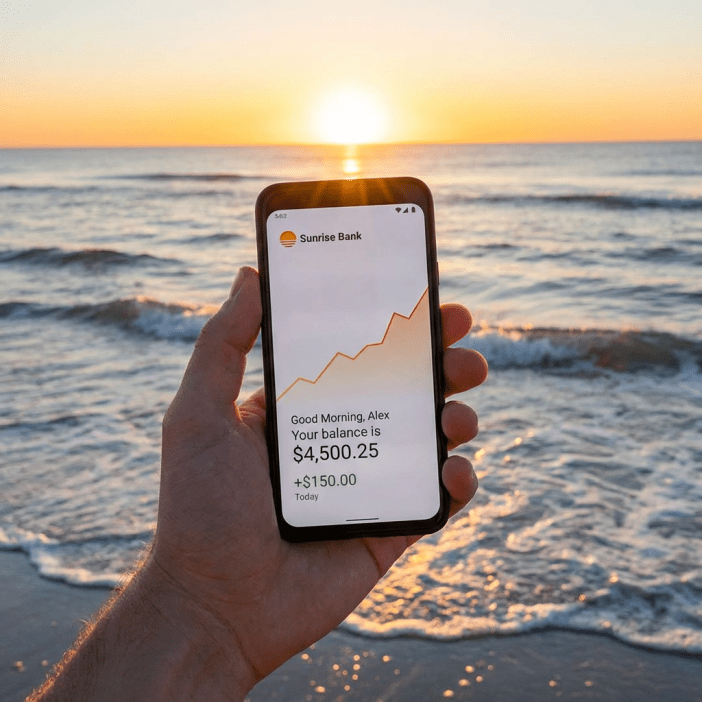
Person checking bank balance on phone calmly as a sign of financial recovery in 2026
When checking your bank balance stops feeling like defusing a bomb — that’s recovery. ConfidenceBuildings.com · Borrower’s Truth Series 2026

📌 Quick Answer

Financial hardship is behind you when your stability is boring. Not perfect — boring. You pay bills without drama. You sleep without running numbers in your head. You have a small cushion and you don’t immediately spend it. Boring is the goal. Boring is winning.

Nobody sends you a certificate when you climb out of financial hardship. There’s no email. No confetti. No notification that says “Congratulations — the hard part is over.”

Which is deeply unfair, because you did the work. You negotiated. You disputed. You said no to the payday loan. You read the fine print. You showed up to this series for 28 consecutive days. You deserve at least a balloon.

Since we can’t mail you one, here’s the next best thing: 8 concrete, measurable signs that your financial hardship is genuinely behind you — not just on a good Tuesday, but for real.

Sign 01

You Check Your Bank Balance Without Bracing for Impact

At peak financial hardship, checking your bank balance is a full-body experience. You open the app. You squint. You hold your breath like you’re defusing something. You check with one eye closed just in case the number is worse than you imagined.

When that ritual stops — when you open the app the same way you’d check the weather, casually, without dread — that’s a real sign. It means your balance has become predictable enough that it no longer qualifies as a horror movie.

You don’t need a huge number in there. You just need a number that doesn’t surprise you anymore.

Sign 02

You Have a Small Buffer — and You Actually Leave It Alone

Having $400 in savings is not the sign. Plenty of people have $400 in savings on a Monday and $0 on a Friday because something always comes up — or because it felt too tempting sitting there looking useful.

The sign is having $400 — and leaving it there. Through two weekends. Through a sale you wanted to shop. Through a craving you chose to ignore. The buffer surviving is evidence that your relationship with money has quietly, fundamentally changed.

The CFPB defines a basic financial safety net as having at least one month of expenses accessible without borrowing. Getting there — and staying there — is a measurable milestone.

Sign 03

A Surprise Expense Doesn’t Destroy Your Entire Month

The car needs a new tire. The dog ate something suspicious. The dentist finds a thing. During financial hardship, any one of these events triggers a full crisis — calls to lenders, overdraft fees, missed bills, a week of stress that bleeds into everything.

Recovery looks like this: the unexpected expense is annoying. You pay it. You adjust. You move on. The month continues. That ability to absorb a financial punch without going down — that’s resilience. That’s the opposite of where you started.

Life will always produce surprise expenses. What changes is your ability to take the hit and keep standing.

56%
of Americans cannot cover a $1,000 emergency expense without borrowing. If you can — you are already ahead of the majority.
Source: Bankrate Annual Emergency Savings Report
Sign 04

Your Credit Score Has Moved — in the Right Direction

Your credit score is basically a slow-moving report card that reflects the last two to seven years of your financial life. It does not care about your feelings. It does not know you’ve been trying really hard. It just watches what you do and takes notes.

So when it moves up — even 20 points, even 10 — it means the score has noticed. On-time payments noticed. Lower balances noticed. No new desperate credit applications noticed. The number going up is the universe’s way of saying: the pattern has changed.

Check your free report at AnnualCreditReport.com. If the trend is upward — even slowly — that’s not nothing. That’s proof.

Sign 05

You’re Paying Bills on Time — Without the Last-Minute Scramble

There’s a version of paying bills on time that still involves hardship: you pay them, but only after two hours of financial gymnastics, moving money between accounts, calling to ask for a three-day extension, and aged ten years in the process.

The sign we’re looking for is simpler. The bill arrives. The money is there. You pay it. That’s the whole story. No drama. No negotiation with yourself. No robbing Peter to pay Paul and hoping Paul doesn’t notice.

When paying bills becomes routine rather than a monthly survival event — that’s a sign your foundation is holding.

Sign 06

You’ve Said No to a Bad Loan — and Meant It

This one is behavioral, and it might be the most powerful sign on this list. During peak hardship, the payday loan offer doesn’t feel predatory — it feels like a lifeline. You know the rate is terrible. You know you’ll regret it. You take it anyway because the alternative feels worse.

Recovery looks like standing in front of that same offer — same desperation in the marketing, same urgent language, same 400% APR hiding in the footnotes — and saying no. Not because you have unlimited options. Because you’ve learned enough to know what that yes actually costs.

Turning down a bad loan when you’re still a little tight? That’s not just recovery. That’s wisdom. And wisdom doesn’t show up on a credit report — but it protects everything that does.

Sign 07

You Think About Next Month — Not Just Today

Financial hardship collapses your time horizon. When you’re in survival mode, the concept of “next month” is almost abstract — you’re too busy managing today to think that far ahead. Planning feels like a luxury. Budgeting feels like a joke. The future can wait; you have a bill due Thursday.

When your time horizon starts to expand — when you find yourself thinking about next month’s rent before this month is even over, or planning a purchase three weeks out — that’s your brain recalibrating. It means you’re no longer in pure survival mode. You have enough stability to look further than tomorrow.

That mental shift is quiet, easy to miss, and genuinely significant.

Sign 08

Money Anxiety Is Background Noise — Not the Main Event

Financial stress at its worst is all-consuming. It follows you into conversations you’re supposed to be present for. It sits next to you at dinner. It wakes you up at 3am to run numbers that don’t add up no matter how many times you try. It is the main event, every day, whether you wanted to buy a ticket or not.

Recovery doesn’t mean zero financial anxiety — that’s not a realistic bar and anyone telling you otherwise is selling something. Recovery means the anxiety has been demoted. It still exists, somewhere in the background, but it’s no longer running the show. You can have a whole day where you didn’t think about debt once. That counts.

If money used to be the loudest thing in your life and it’s gotten quieter — you’re further along than you think.

A note on not recognizing yourself in these signs yet:

That’s okay. These signs aren’t a test you pass or fail — they’re a map. If you recognize two of them, you’re moving. If you recognize five, you’re further than you think. If you don’t recognize any yet, you now know exactly what you’re building toward. Keep going.

Glass jar filled with savings coins and cash representing a financial buffer and stability in 2026
A small buffer you actually leave alone — one of the most underrated signs of financial recovery. ConfidenceBuildings.com · Borrower’s Truth Series 2026

Real Stories. Real Recovery.

D
Danielle, 34 — Cincinnati, OH
Composite story · For educational illustration

“I knew things were getting better when I stopped doing the math in my head at the grocery store. For two years, I’d stand in the cereal aisle calculating whether I could afford the name brand or if I needed to put something back. One day I just… didn’t. I grabbed what I wanted and kept walking. I didn’t even realize it had changed until I got to the car.”

What held her back

Danielle had been in recovery for nearly eight months before she recognized it. She kept waiting for a dramatic moment — a number, a milestone, a feeling. The actual sign was quiet and happened in a cereal aisle on a Wednesday.

What this shows

Recovery doesn’t announce itself. It shows up in small, unguarded moments. The grocery store math stopping. The app opening without dread. Notice those moments — they’re the real data.

RM
Attorney Rachel Morrow
Fictional consumer rights attorney · Educational illustration only

“In my experience, the clients who have the hardest time recognizing their own recovery are the ones who were in hardship the longest. The vigilance that kept them safe during the crisis becomes the thing that won’t let them believe it’s over. Learning to trust your own stability is a skill — and it takes practice.”

Legal & Financial Context

Financial trauma has documented psychological effects. Studies in behavioral economics show that people who experienced prolonged scarcity often continue making scarcity-based decisions even after their material situation has improved — a pattern researchers call “scarcity mindset persistence.” Recognizing the signs of recovery is partly cognitive work, not just financial.

Bottom Line

If your numbers say you’re recovering but your gut still says you’re in danger — trust the numbers while you work on the gut. Both matter. Neither is wrong.

T
Trevor, 41 — Phoenix, AZ
Public case · Based on documented consumer experience

“I had paid off my last collection account and my credit score had gone up 60 points. By every measurable standard I was doing better. But I still felt broke. I kept telling myself it wasn’t real yet, that something would go wrong. My therapist finally asked me: what would have to happen for you to believe you made it? I didn’t have an answer. That was the problem.”

What held him back

Trevor had never defined what “better” actually looked like. Without a finish line, he couldn’t recognize when he crossed it. He kept moving the goalposts without realizing it.

What this shows

Define your finish line before you need it. Write down three specific signs that would tell you the hardship is behind you. When you hit them — believe them.

RM
Attorney Rachel Morrow
Fictional consumer rights attorney · Educational illustration only

“I’ve seen people walk out of bankruptcy proceedings with a clear legal fresh start and immediately make the same decisions that got them there. And I’ve seen people with no legal intervention at all completely transform their financial lives through behavioral change alone. The numbers matter. The mindset matters more.”

Legal & Financial Context

Consumer protection law can discharge debt, stop collection calls, and reset credit timelines — but it cannot reset habits. The legal system handles the financial mechanics. The behavioral work is yours. Both are necessary for lasting recovery.

Bottom Line

A legal fresh start is a tool. What you build with it is entirely up to you — and entirely possible.

P
Priya, 29 — Atlanta, GA
Composite story · For educational illustration

“The moment I knew I was out was when my cousin asked to borrow money and I said yes without panicking. A year earlier, that question would have sent me into a spiral — do I have it? Can I afford to? What if I need it? This time I just checked, saw I had enough, and said yes. It felt completely normal. It wasn’t normal at all. It was huge.”

What she almost missed

Priya nearly dismissed the moment as unimportant. It took her a few days to realize that her calm reaction to a financial request — something that used to terrify her — was the sign she’d been waiting for.

What this shows

Recovery shows up in your reactions, not just your balances. Pay attention to how you feel when money comes up — not just what your bank statement says.

RM
Attorney Rachel Morrow
Fictional consumer rights attorney · Educational illustration only

“Nobody teaches you how to recognize financial recovery. We teach people how to get out of debt. We don’t teach them how to believe they’re out. That gap is where a lot of people get stuck — technically recovered, emotionally still in the storm.”

Legal & Financial Context

Consumer financial protection resources — including those from the CFPB — focus primarily on crisis intervention. Recovery recognition is underserved in financial literacy education. This post exists to address exactly that gap.

Bottom Line

Knowing you’re recovering is part of recovering. Don’t skip it.

Person sitting calmly next to a car with a flat tire representing financial resilience and the ability to handle unexpected expenses in 2026
A surprise expense used to destroy the whole month. Now it’s just a flat tire. ConfidenceBuildings.com · Borrower’s Truth Series 2026

Frequently Asked Questions

How long does it take to recover from financial hardship?

There is no universal timeline. Recovery depends on the depth of the hardship, the type of debt involved, your income stability, and the steps you take. What research does show is that consistent on-time payments over 12–24 months produce measurable credit improvement, and that building even a small emergency fund significantly reduces the likelihood of returning to crisis.

The more useful question is not “how long” but “what does progress look like for me?” — and then measuring against that, not against someone else’s timeline.

Source: CFPB — Credit Reports and Scores · For educational purposes only. Not legal advice.

What credit score means I’ve recovered from financial hardship?

There is no single score that signals recovery — but crossing into the “fair” range (580–669) restores access to most standard credit products. Reaching “good” (670+) typically unlocks better interest rates and more favorable loan terms. The CFPB notes that scores above 670 are generally considered by lenders to represent lower risk borrowers.

More important than hitting a specific number is the direction of travel. A score moving from 520 to 580 over 12 months is recovery in action — even if it doesn’t feel dramatic yet.

Source: CFPB — What Is a Credit Score? · For educational purposes only. Not legal advice.

How much savings do I need before I’m considered financially stable?

The standard guidance is three to six months of living expenses — but that figure can feel impossible when you’re just climbing out. A more realistic starting benchmark is $500 to $1,000 as an initial emergency buffer. Research from the Urban Institute found that having even $250 in liquid savings dramatically reduces the likelihood of missing a bill payment or taking on high-cost debt after an income disruption.

Stability is not a fixed dollar amount. It is the ability to absorb a small shock without borrowing. Start there.

Source: CFPB — Save and Invest Tools · For educational purposes only. Not legal advice.

Is it normal to still feel anxious about money even after things improve?

Completely normal — and well documented. Financial stress activates the same neural pathways as other forms of chronic stress. When scarcity has been the baseline for an extended period, the brain adapts to operate in threat-detection mode. That adaptation does not switch off the moment your bank balance improves.

Ongoing financial anxiety after objective improvement is sometimes called “post-hardship stress.” It is common, it is real, and it is not a sign that your recovery isn’t genuine. If it significantly affects your daily life, speaking with a mental health professional who specializes in financial anxiety is worth considering.

Source: CFPB — Financial Well-Being · For educational purposes only. Not legal advice.

What are the biggest signs I might be slipping back into financial hardship?

The early warning signs include: relying on credit cards for regular monthly expenses, missing or making minimum-only payments, depleting your emergency fund without replenishing it, taking on new high-interest debt to cover existing obligations, and avoiding looking at your accounts altogether.

None of these signs mean you’ve failed. They mean it’s time to act early — before small slides become big ones. The CFPB’s free financial tools and nonprofit credit counseling services are available at no cost and can help you course-correct quickly.

Source: CFPB — Debt Collection Resources · For educational purposes only. Not legal advice.

Where can I get free help tracking my financial recovery?

Several free government and nonprofit resources exist specifically for this purpose. AnnualCreditReport.com provides free weekly credit reports from all three bureaus. The CFPB’s financial well-being tools include self-assessments you can use to track progress over time. The National Foundation for Credit Counseling (NFCC) connects consumers with nonprofit credit counselors at low or no cost.

You do not need to pay anyone to track your own recovery. The tools exist. They’re free. Use them.

Source: CFPB — Financial Well-Being Resources · For educational purposes only. Not legal advice.

💬 Final Thoughts — Laxmi Hegde MBA

Nobody warned me that getting out of financial hardship would feel suspicious. Like the other shoe was always about to drop. Like the stability was a trick and any minute the real bill would arrive. Turns out that feeling has a name — and it’s extremely common — and knowing that helped me more than any spreadsheet ever did.

Here’s what I want you to take from today: recovery is not a single moment. It’s a collection of small, undramatic moments that you almost miss because you’re waiting for something bigger. The cereal aisle. The app you opened without flinching. The loan you said no to without a second thought. Those are the moments. Don’t scroll past them.

We have two days left in this series. Day 29 is the Smart Borrower Framework — everything distilled into a system you can actually use. Day 30 is the finale. I’ve been writing this series for 28 days and I still haven’t figured out how to end it without getting a little emotional, which is embarrassing but also probably fine.

You made it out. Here’s your proof: you’re still reading. See you tomorrow.

— Laxmi Hegde, MBA in Finance
Founder, ConfidenceBuildings.com · Borrower’s Truth Series · Day 28 of 30

Person relaxed at laptop paying bills on time without stress as a sign of financial stability in 2026
When paying bills becomes routine instead of a monthly survival event — that’s your foundation holding. ConfidenceBuildings.com · Borrower’s Truth Series 2026
📚 Research Note & Primary Sources

This post was researched and written by Laxmi Hegde, MBA in Finance, as part of the 30-day Borrower’s Truth Series on ConfidenceBuildings.com. All content is intended for general financial education only. Nothing in this post constitutes legal or financial advice. Individual circumstances vary — consult a licensed professional for guidance specific to your situation.

Reader stories marked as “composite” are illustrative fictional accounts based on common consumer experiences. Stories marked “public case” are based on documented consumer experiences in the public record. Attorney Rachel Morrow is a fictional character created for educational illustration purposes only.

This post is part of the complete 30-day series:

The Complete Borrower’s Truth Guide →

Person writing in a planner looking forward and planning ahead as a sign of financial recovery and stability in 2026
When your time horizon expands beyond Thursday — you're no longer in survival mode. ConfidenceBuildings.com · Borrower's Truth Series 2026
← Day 27
The B Word: An Honest Guide to Bankruptcy Without the Shame
Day 29 →
The Smart Borrower Framework
Coming soon

Quick Access — All 30 Days
Borrower’s Truth Series · ConfidenceBuildings.com
Week 1 — Borrowing Basics
Week 2 — The Predatory Lenders
Week 3 — The Fine Print Files
Week 4 — After You Borrow
Week 5 — The Smart Borrower
29
30
● Published ● You Are Here ● Coming Soon

📋 Research & Publication Note

This article is Day 28 of the 30-day Borrower’s Truth Series published on ConfidenceBuildings.com. It was researched and written by Laxmi Hegde, MBA in Finance. All statistics, citations, and regulatory references are sourced from publicly available government and nonprofit resources and are accurate to the best of the author’s knowledge at time of publication.

This content is intended for general financial education only. It does not constitute legal, financial, or professional advice of any kind. Reader stories are either composite illustrations or based on publicly documented consumer experiences — no personally identifiable information is used. Attorney Rachel Morrow is a fictional character created solely for educational illustration.

Financial situations vary significantly by individual. Readers are encouraged to consult licensed financial advisors, nonprofit credit counselors, or consumer protection attorneys for guidance specific to their circumstances.

Read the complete 30-day series — all posts, all weeks, all in one place:

The Complete Borrower’s Truth Guide →

ConfidenceBuildings.com · Laxmi Hegde MBA · © 2026

← Back

Thank you for your response. ✨

🧮✨

Free Access: Finance Calculator

Get instant access to loan, investment, and retirement tools.

📧 Subscribe with Email →

One-click signup. No spam. You’ll get the calculator link immediately.

Already subscribed? Open calculator →
Variable Rate Loans: Why Your Monthly Payment Could Suddenly Skyrocket

Week 3 — The Fine Print Files  ·  Day 17

Variable Rate Loans:

Why Your Monthly Payment Could Suddenly Skyrocket

Index Rate
SOFR
Market sets this
+
Margin
+3–8%
Lender sets this
=
Your Rate
???%
Changes anytime

The hidden risk: Some variable rate loans have NO cap — meaning there is no legal limit on how high your payment can climb.

ConfidenceBuildings.com  ·  Borrower’s Truth Series  ·  For educational purposes only. Not legal advice.

⚠ For educational purposes only. Not legal advice. This content is intended to help borrowers understand how variable rate loan terms work in general. Loan agreements vary by lender, state, and loan type. Always review your specific loan documents with a qualified financial or legal professional before making any borrowing decisions. Laws and regulations referenced are subject to change.

📍 Borrower’s Truth Series — Your Progress
30-day guide to borrowing with confidence · You are on Day 17 of 30
57%
Complete
Published
You are here
Coming soon

⭐ Essential Reading — Start Here

Before You Read Any Further — Have You Done The Clause Checklist?

Day 15 is the most important post in this series. It gives you the exact loan clauses to find — and what to do when you find them. Every post in Week 3 builds on it. If you haven’t read it yet, start there first.

Read Day 15: Loan Clause Checklist →
15
Day
Lead Magnet

Borrower’s Truth Series Week 3 · Day 17 of 30

Welcome to Week 3: The Fine Print Files — where we pull back the curtain on the clauses buried in your loan agreement that lenders legally use against you.

Today’s topic: variable rate loans. You were sold a lower starting rate. What you may not have been clearly told is that the rate — and your monthly payment — can increase at any time, sometimes dramatically, based on a formula you never negotiated.

This post breaks down exactly how that formula works, what fine print to look for before you sign, and what real borrowers have faced when rates moved against them.

📘 Yesterday (Day 16): You Signed Away Your Right to Sue  |  📗 Tomorrow (Day 18): Auto-Pay Loan Traps

The Low Rate They Showed You — And What They Didn’t

When a lender offers you a variable rate loan, the pitch is almost always the same: “You can start at a much lower rate than a fixed loan.” And that part is true. Variable rate loans typically open with a lower interest rate than comparable fixed-rate products. That lower rate feels like a win. It makes your monthly payment smaller, your loan more affordable, and the decision easy.

What the pitch rarely includes in plain language: that starting rate is temporary. It is tied to forces entirely outside your control — and when those forces move, your payment moves with them. No negotiation. No approval from you. Just a new, higher number on your statement.

📌 Quick Answer

A variable rate loan starts with a lower interest rate, but that rate is calculated using a market index plus a lender-set margin. When the index rises, your payment rises — often automatically, with no option to object. Some loans include no cap on how high the rate can climb.

5%
Max Lifetime Cap

A typical ARM may allow your rate to rise up to 5 percentage points over the life of the loan — even with a cap. On a $20,000 personal loan, that can add hundreds of dollars per month to your payment.

Source: CFPB Regulation Z, §1026.19 — For educational purposes only. Not legal advice.

The Formula Your Lender Controls — But Didn’t Explain

Every variable rate loan uses a two-part formula to calculate your interest rate. Understanding this formula is the single most important thing you can do before signing a variable rate loan agreement.

How Your Variable Rate Is Actually Calculated

1
The Index — Set By the Market

This is a publicly published interest rate your lender uses as a baseline. Common indexes include:

SOFR
Secured Overnight Financing Rate — replaced LIBOR
Prime Rate
Set by large U.S. banks, moves with Federal Reserve
CMT
Constant Maturity Treasury — used in many ARMs
T-Bill Rate
91-day Treasury Bill rate — used for federal student loans

The lender chooses which index your loan uses — and that choice is locked in at closing. You cannot change it later.

2
The Margin — Set By Your Lender

The margin is a fixed percentage your lender adds to the index. It is their profit. It is set at the beginning of your loan and does not change — but it varies significantly between lenders and you can try to negotiate it.

Example: SOFR (4.36%) + Margin (3.50%) = Your Rate: 7.86%
If SOFR rises to 5.50%: + Margin (3.50%) = Your Rate: 9.00%
That jump = +$87/mo on a $15,000 loan

What competitors don’t tell you: The CFPB confirms you can negotiate the margin, just like you negotiate a fixed rate. Most borrowers never try.

Index + Margin = Your Interest Rate
This changes every adjustment period. You don’t vote on it. You just pay it.

Source: CFPB Ask-CFPB · For educational purposes only. Not legal advice.

📌 Quick Answer

Your variable rate equals a public market index (like SOFR or the prime rate) plus your lender’s margin. The index changes based on the economy. The margin is set by your lender at closing and stays fixed. You can negotiate the margin before signing — but almost no one does because lenders don’t volunteer this fact.

The 5 Clauses Hidden in Variable Rate Loan Fine Print

Here is what your competitors’ “fixed vs variable” articles won’t tell you. These five clauses determine whether a variable rate loan is manageable — or a trap. None of them are illegal. All of them favor the lender.

Clause 1

Periodic Rate Cap

What it says: Limits how much your rate can increase per adjustment period (e.g., no more than 2% per year).

The catch: A 2% annual cap sounds safe — but on a $20,000 loan, that’s hundreds more per month, every year, until you hit the lifetime cap.

Clause 2 ⚠

Lifetime Rate Cap (or None)

What it says: Sets the maximum your rate can ever reach over the life of the loan. Typical caps: +5% over the starting rate.

The danger: Some loans — especially personal loans and lines of credit — have no lifetime cap at all. Rates can theoretically climb without limit. Always ask: “What is the maximum rate I could ever pay?”

Clause 3 🚨

Upward-Only Clause

What it says: The interest rate can only increase — never decrease — regardless of what the market index does.

What this means for you: If the prime rate drops 1.5%, your rate stays exactly where it is. You get all the downside of a variable rate with none of the upside. The CFPB notes this clause exists and recommends asking lenders what benefit you receive for accepting it. (CFPB source ↗)

Clause 4 🔒

Rate Carryover (Foregone Interest)

What it says: If a rate cap prevents the full increase this period, the lender can “bank” the difference and apply it in a future adjustment.

Translation: Your cap “protected” you this year — but the lender stored that increase. They can hit you with a larger jump in a future period. Protection today can become a bigger shock tomorrow.

Clause 5

Adjustment Frequency

What it says: Specifies how often your rate can change — monthly, every 6 months, annually, etc.

Why it matters: A monthly adjustment (common in HELOCs and some personal loans) means your payment can change 12 times per year. An annual adjustment gives you more time to plan — but the single yearly jump can be larger.

📌 Quick Answer

Five clauses define how dangerous your variable rate loan is: periodic cap (per-period limit), lifetime cap (or no limit at all), upward-only clause (rate can never decrease), rate carryover (banked increases applied later), and adjustment frequency (how often your payment changes). All five are legal. None are required to be explained at signing.

Use Ctrl+F on Your Loan Agreement — Search These Exact Terms

Before you sign any variable rate loan agreement, open the document and search for these exact terms. What you find — or don’t find — tells you everything about the risk you’re taking on.

Search This Term What to Look For Red Flag If You See
index Which market rate your loan is tied to No specific index named — “at lender’s discretion”
margin The fixed % your lender adds to the index Margin over 6% — compare with other lenders
rate cap or interest rate cap Maximum the rate can rise per period and over life No cap stated — this means no limit on increases
floor or minimum rate Lowest your rate can ever go High floor (e.g. 8%) — you’ll never benefit if rates drop
only increase or upward only Whether rate is permitted to decrease Any language confirming rate can only go up, never down
carryover or foregone interest Whether banked rate increases exist Carryover permitted — future adjustments can be larger
adjustment period How often the rate can change Monthly adjustment — payment changes up to 12x/year
negative amortization Whether unpaid interest can be added to principal Permitted — your balance can GROW even as you pay
prepayment penalty Fee for paying off the loan early Penalty exists — you can’t easily escape if rates spike

For educational purposes only. Not legal advice. Always have your specific loan agreement reviewed by a qualified professional.

What a Rate Increase Actually Does to Your Monthly Payment

Numbers make this real. Here is what the Index + Margin formula and a rate adjustment look like in actual dollars — using realistic loan amounts for everyday borrowers.

Monthly Payment Impact When Rates Rise — Real Numbers

Loan Amount At 7% Rate At 9% (+2%) At 12% (+5%) Max Extra/Mo
$10,000 (3yr) $309/mo $318/mo $332/mo +$23/mo
$20,000 (5yr) $396/mo $415/mo $444/mo +$48/mo
$50,000 HELOC $990/mo $1,040/mo $1,111/mo +$121/mo
$200,000 ARM $1,330/mo $1,514/mo $1,776/mo +$446/mo

Approximate calculations for illustrative purposes. Actual payments vary based on loan terms, amortization schedule, and lender. For educational purposes only. Not legal advice.

📊 Stat Callout

On a 30-year ARM mortgage, a 5-percentage-point lifetime cap can raise the monthly payment from roughly $106 to $145 on every $10,000 borrowed — a 37% increase. Scaled to a $200,000 mortgage, that’s hundreds more per month for the same home. Source: CFPB Appendix H Model Disclosure ↗ — For educational purposes only. Not legal advice.

“To understand why a 2% or 5% increase is more dangerous than it sounds, look at the total interest cost shift in the table below:”

📊 The “Skyrocket” Effect: $5,000 Loan

Interest Rate: 10% (Starting) 18% (Reset)
Monthly Payment: $161.34 $180.35
Total Interest: $808.00 $1,492.00
*Calculated over 36 months. A small rate hike can nearly double your total interest cost.

Real Stories: When Variable Rate Loans Turned

STORY 1 — COMPOSITE CASE Based on CFPB consumer complaint patterns

“I Thought I Understood It. The Statement Proved Me Wrong.”

Priya took out a $25,000 home improvement loan with a variable rate tied to the prime rate. Her starting rate was 6.5% — almost 2 points below what a fixed loan would have cost her. Her loan officer mentioned “the rate could adjust,” but the conversation moved quickly to monthly payment figures and signing.

Eighteen months later, after two Federal Reserve rate increases, her rate had moved to 9%. Her monthly payment jumped by $94. She called the lender. She was told this was in the agreement she signed.

Her mistake: She searched the loan agreement for the word “rate” — but not for “index,” “margin,” or “adjustment period.” She found the starting rate. She never found the formula that determined every rate after it.

What she could do: File a complaint with the CFPB at consumerfinance.gov/complaint if she believes the adjustment terms were not properly disclosed under TILA. She could also ask her lender about refinancing options — especially if her credit had improved since origination.

RM
Attorney Rachel Morrow
Consumer Rights Attorney — Fictional character for educational illustration only

“The disclosure was technically compliant. That doesn’t mean it was understandable. TILA requires lenders to disclose variable rate terms — but it doesn’t require them to explain in plain English what those terms mean to your budget.”

In Priya’s situation, the question isn’t whether the lender broke the law — it’s whether the required disclosures were provided in a way a reasonable person could understand. The CFPB’s TILA regulations require specific disclosures about index, margin, caps, and adjustment frequency. If those disclosures were missing or misleading, that’s a potential complaint. What’s far more common, however, is that disclosures exist but are buried in a multi-page document and presented alongside the signing paperwork without adequate explanation.

Bottom Line: The law requires disclosure. It does not require comprehension. That gap is where most variable rate borrowers get hurt — and it’s precisely why you need to read the Ctrl+F terms in this post before signing.

STORY 2 — PUBLIC CASE RECORD 2008–2009 ARM Mortgage Crisis Patterns / CFPB Enforcement Record

The Adjustable-Rate Mortgage Crisis: When Millions Saw This Happen at Once

The single largest documented case of variable rate loans “turning” on borrowers is the 2007–2009 U.S. mortgage crisis. Millions of homeowners had taken out adjustable-rate mortgages (ARMs) — often 2/28 or 3/27 structures — where a low fixed rate held for 2–3 years, then reset to a variable rate.

When the reset hit, monthly payments jumped by hundreds of dollars — sometimes 30–50% higher. Borrowers who had been making payments on time suddenly couldn’t. Many had no rate caps, or caps too high to provide meaningful protection. This was not a coincidence or bad luck. It was the variable rate mechanism operating exactly as written.

The mistake made by millions: Focusing on the introductory payment — not on what the payment would become at reset. The reset terms were disclosed. Few read them carefully enough to understand the dollar impact on their specific loan.

What borrowers recovered: Those who filed CFPB complaints about missing or misleading ARM disclosures, or who refinanced into fixed-rate FHA loans during the government response period, often reduced their payments by hundreds per month. The lesson the regulators took: variable rate disclosures need to be clearer. The CHARM booklet requirement for ARMs was strengthened as a result. CFPB ARM resource ↗

RM
Attorney Rachel Morrow
Consumer Rights Attorney — Fictional character for educational illustration only

“The 2008 crisis was not primarily a story of illegal lending. It was a story of legal lending that most borrowers did not understand. The ARM structure was disclosed. The math was disclosed. The outcome was predictable. The borrowers just weren’t equipped to predict it.”

This is why the CFPB now requires lenders to provide the CHARM (Consumer Handbook on Adjustable Rate Mortgages) booklet to any borrower considering an ARM. It’s also why today’s post exists. The same mechanism that wrecked millions of homeowners is still operating in personal loans, HELOCs, private student loans, and business lines of credit. It is not ancient history. It is this week’s loan offers.

Bottom Line: Variable rate risk is systemic and documented. Regulators have tried to add guardrails. But the borrower who reads the loan agreement carefully is still the primary line of defense.

STORY 3 — COMPOSITE CASE Upward-only clause / private student loan pattern

“The Rate Never Went Down — Even When Rates Were Falling Everywhere”

Darnell refinanced $32,000 in private student loans into a new variable rate product at 7.2% in 2022. The loan featured a prime rate index. Between 2023 and early 2024, while the Federal Reserve paused rate hikes, Darnell expected his rate to stabilize — or perhaps even drop slightly.

It didn’t. His loan included a floor rate of 7.0% and — buried in Section 14(b) of his agreement — language confirming the rate could only increase, not decrease. When he contacted the lender, they read him the clause. It had been in the agreement he signed.

His mistake: He used the variable rate because he expected rates to eventually fall and was counting on payment relief. The upward-only clause eliminated that possibility entirely. He had taken on variable rate risk with no variable rate benefit.

What he could do: Request a refinance quote from a different lender — especially if his payment history was strong. File a complaint with the CFPB if he believed the upward-only clause was not clearly disclosed. Ask whether the lender offers a fixed-rate conversion option (some variable loans include this). File a CFPB complaint ↗

RM
Attorney Rachel Morrow
Consumer Rights Attorney — Fictional character for educational illustration only

“An upward-only clause transforms a variable rate loan into a ratchet. It only clicks one direction. The CFPB has flagged this feature specifically and recommends borrowers ask what benefit they receive for accepting it. That’s the right question. If there’s no good answer, that’s your answer.”

Darnell’s situation is more common with private lenders than federally regulated banks. Private student loan lenders, personal loan platforms, and fintech lenders have more flexibility in how they structure variable rate products. That flexibility sometimes benefits borrowers. Sometimes it creates products with variable rate upside (for the lender) and variable rate downside (for the borrower). Reading Section 14(b) sounds tedious. It’s a $32,000 decision.

Bottom Line: If a lender offers you a variable rate, ask directly: “Can my rate go down, or only up?” If the answer is only up, you’re not getting a variable rate loan. You’re getting a fixed-rate loan that can increase.

Frequently Asked Questions: Variable Rate Loans

Q: What is a variable rate loan and how is my rate calculated?

A variable rate loan charges interest that changes over time. Your rate is calculated using a market index (a publicly published rate like SOFR or the prime rate) plus a margin your lender sets at closing. When the index rises, your rate rises. When it falls — if your loan allows it — your rate may fall. The formula: Index + Margin = Your Rate.

📎 Citation/Source: CFPB — Index and Margin Explanation ↗ · For educational purposes only. Not legal advice.

Q: Is there a limit on how high my variable rate can go?

It depends entirely on your loan agreement. Some loans include rate caps — limits on how much the rate can increase per period and over the life of the loan. Others, particularly personal loans and lines of credit, may have no cap at all. Always locate the words “rate cap” and “lifetime cap” in your agreement. If they don’t exist, ask your lender directly: “What is the maximum rate I could ever pay on this loan?”

📎 Citation/Source: CFPB — ARM Fine Print Guide ↗ · For educational purposes only. Not legal advice.

Q: What is rate carryover and should I be worried about it?

Rate carryover (also called foregone interest) means that if a periodic rate cap prevents the full rate increase in one adjustment period, your lender can “bank” the difference and apply it during a future adjustment — even after the index has stopped rising. This means your rate cap may not protect you as much as it seems. Future adjustments can be larger because they include previously skipped increases.

📎 Citation/Source: CFPB Regulation Z §1026.20 — Rate Carryover Rules ↗ · For educational purposes only. Not legal advice.

Q: Can I negotiate the margin on a variable rate loan?

Yes — and almost no one does. The CFPB explicitly confirms that borrowers can negotiate the margin just like any other loan rate. The margin is set by the lender and reflects their risk assessment of you as a borrower. A strong credit score, low debt-to-income ratio, and competing loan offers give you leverage. Always get a quote from at least two lenders before accepting a margin.

📎 Citation/Source: CFPB — Negotiating the Margin ↗ · For educational purposes only. Not legal advice.

Q: What does TILA require lenders to disclose about variable rate terms?

Under the Truth in Lending Act (TILA), implemented through CFPB Regulation Z, lenders offering variable rate loans must disclose: the index used, the margin, rate caps (if any), adjustment frequency, the maximum possible payment, and a historical example showing how the rate has changed over time. For mortgages, they must also provide the CHARM booklet. However, these disclosures can be dense and difficult to navigate without guidance — which is why this post exists.

📎 Citation/Source: CFPB Regulation Z §1026.19 — Variable Rate Disclosure Requirements ↗ · For educational purposes only. Not legal advice.

Q: When does a variable rate loan make sense vs. when is it a trap?

It can make sense when: You are certain you will pay off the loan quickly (before significant rate adjustments), you have a budget buffer to absorb higher payments, or rates are near historically high levels (giving you more potential upside if rates fall).

It becomes a trap when: You need payment certainty, you are borrowing long-term, the loan has no rate cap or an upward-only clause, or you’re already stretched thin and a $50–$100/mo increase would be damaging. If in doubt, the fixed rate is the predictable choice.

📎 Citation/Source: CFPB — Fixed vs. Adjustable Rate ↗ · For educational purposes only. Not legal advice.

💬 Final Thoughts — Laxmi Hegde, MBA

Variable rate loans are not automatically bad. Sometimes the lower starting rate genuinely saves you money — especially if you pay off the loan quickly. But the borrower who wins with a variable rate loan is the one who read the agreement first. They found the index. They checked for a lifetime cap. They asked whether the rate could ever go down. Most borrowers skip those steps because the loan officer is friendly, the paperwork is thick, and the monthly payment looks manageable. That is exactly the environment these clauses are designed for. You now know what to look for. Use it.

📚 Research Note & Primary Sources

This post was developed using primary government sources and regulatory documentation. All statistics, fine print clauses, and legal requirements referenced are drawn from official sources. No data in this post is sourced from lender marketing materials.

Attorney Rachel Morrow is a fictional character created for educational illustration. Nothing in this post constitutes legal advice. For educational purposes only.

← Day 16
You Signed Away Your Right to Sue
And why it matters for your rights
Day 18 →
Auto-Pay Loan Traps: What Lenders Can Do With Your Bank Account
Coming next in The Fine Print Files

📘 Borrower’s Truth Series — All 30 Days

Your complete guide to borrowing with confidence. New posts publish daily.

Week 3 — The Fine Print Files
Day 15
Loan Clause Checklist
Day 16
You Signed Away Your Right to Sue
Day 17 ← YOU ARE HERE
Variable Rate Loan Trap
Day 18
Auto-Pay Loan Traps
Day 19
Missing a Loan Payment
Day 20
Loan Renewal Offers
Day 21
10 Must-Find Clauses
Weeks 4–5 — Coming Soon
Day 22
Stuck in a Bad Loan
Day 23
Dispute Hidden Fees
Day 24
Debt Spiral Warning Signs
Day 25
Loan Refinancing
Day 26
Your Legal Borrower Rights
Day 27
Rebuild Credit Score
Day 28
TILA, CFPB & Your Rights
Day 29
3-Month Emergency Fund
Day 30
Emergency Loan Survival Guide

🔬 Research & Publication Note

This article is part of the ConfidenceBuildings.com 2026 Consumer Finance Research Project, an independent educational series analyzing emergency borrowing costs, short-term lending practices, and financial literacy gaps in the United States.

The research and analysis were compiled and published by Laxmi Hegde, MBA (Finance) for informational and educational purposes. Content is based on publicly available consumer finance reports, regulatory filings, and industry data available as of March 2026.

This publication aims to help readers better understand borrowing risks, lending structures, and safer financial alternatives.

View the complete 30-day research series →

🔬 Updated as part of the ConfidenceBuildings.com 2026 Finance Research Project. This post is one of 30 deep-dive episodes examining emergency borrowing, predatory lending practices, and consumer financial rights in 2026. View the complete research series →

.

← Back

Thank you for your response. ✨

🧮✨

Free Access: Finance Calculator

Get instant access to loan, investment, and retirement tools.

📧 Subscribe with Email →

One-click signup. No spam. You’ll get the calculator link immediately.

Already subscribed? Open calculator →

7 Alternatives to Same Day Loans: Credit Union PALs, Employer Advances & More (2026 Guide)

⚖️ LEGAL & FINANCIAL DISCLAIMER

The information provided in this guide is for general educational and informational purposes only and should not be interpreted as financial, legal, tax, investment, or professional advice. Nothing on this website constitutes a recommendation, endorsement, or personalized financial strategy.

Financial products, lending regulations, APR structures, fees, and qualification requirements vary significantly by state, lender, and individual circumstances and are subject to change without notice. Always verify terms directly with the lender or institution before making any financial decision.

This content is based on publicly available information and U.S. market conditions as of February 2026. While we strive for accuracy, we make no guarantees regarding completeness, reliability, or current applicability.

Some articles may contain affiliate links. If you choose to apply through these links, we may earn a commission at no additional cost to you. This does not influence our editorial integrity or rankings methodology.

Before taking out any loan or financial product, consider consulting a certified financial planner (CFP), licensed credit counselor, or qualified attorney to assess your specific situation.

By using this website, you acknowledge that the publisher and authors are not responsible for any financial losses, damages, or outcomes resulting from actions taken based on this content.

📌 Part of the Emergency Borrowing Blueprint 2026 Series

This article is one chapter of the complete emergency loan decision system. For the full guide — including borrower paths, hidden cost analysis, and strategic options — start with the series home base:

→ Emergency Borrowing Blueprint 2026 — Complete Guide (Pillar Page)

Let’s be real: If you’re looking for a same-day loan, you aren’t doing it for fun. You’re likely facing a “financial jump-scare”—a flat tire, a medical bill, or a fridge that decided to quit its job.

In our previous episodes, we covered the hidden fees and who should actually use these loans. But today, we’re looking at the “Escape Hatch.”

Before you commit to a 400% APR payday loan, let’s explore seven ways to get the cash (or the time) you need without the debt hangover.

This article is part of our complete emergency cash & same-day loan education series. For the full roadmap, decision framework, and episode index, visit the master guide:

→ The Complete Emergency Cash & Same-Day Loan Guide (Start Here)

The 2026 Content Gap: Why “Saving” Isn’t the Answer (Right Now)

Most financial gurus tell you to “build an emergency fund.” That’s great advice for future you, but present you needs $400 by Tuesday. The problem isn’t your lack of wisdom; it’s a liquidity gap. The Unique Angle: We aren’t just giving you a list of apps. We’re giving you a Decision Matrix to solve the problem based on your specific urgency level.

If you need…Your Best Move Is…SpeedCost
$100 – $500Earned Wage Access (EWA)InstantVery Low
$500 – $1,000Credit Union PALs1–3 DaysModerate (Capped at 28%)
Rent/Utility HelpCommunity Grants (2-1-1)3–7 DaysFREE
Time (Not Cash)Bill NegotiationInstantFREE

1. Credit Union PALs (The Payday Killer)

Federal Credit Unions offer Payday Alternative Loans (PALs). These were literally designed by the government to put predatory lenders out of business.

  • The 2026 Advantage: Many credit unions now offer “PAL II,” which allows you to borrow up to $2,000 the same day you become a member.
  • The Cap: Interest is legally capped at 28%.

2. Earned Wage Access (EWA): Your Money, Earlier

Why pay interest on a loan when you’ve already done the work?

  • How it works: Apps like Earnin, Dave, or your employer’s PayActiv portal let you “unlock” wages you’ve already earned before payday.
  • The Cost: Usually just a small “lightning fee” or a voluntary tip.
Infographic comparing the fees of a $200 advance from an Earned Wage Access app vs a traditional payday loan.
Don’t pay 400% interest for money you’ve already earned.

3. The “2-1-1” Strategy (Free Money)

This is the “Hidden Secret” of 2026. Dialing 2-1-1 connects you with local community resource specialists.

  • The Solution: They can find local non-profits, religious organizations, or state programs that provide one-time grants for rent or utilities. This isn’t a loan; you don’t pay it back.
  • “Whether you are in Houston, New York, or a small rural town, 2-1-1 localizes resources to your specific zip code.”

4. Employer Advances (The Human Connection)

In the digital age, we forget to talk to our bosses. Many small businesses would rather give you a $500 advance than lose a good employee to financial stress. It costs them nothing to be kind.

5. Bill Negotiation (The “Ghost” Alternative)

Sometimes you don’t need more money; you just need your current money to stay in your pocket longer.

  • The Script: Call your electric company or landlord. “I’m having a temporary hardship. Can I defer this payment for 14 days without a penalty?” Most will say yes to avoid the paperwork of a late fee.

6. Credit Card Cash Advances (The “Lesser Evil”)

Is it high interest? Yes (usually 25–30%). Is it better than a 400% payday loan? Absolutely. Use this only as a bridge, and pay it off the moment your check hits.

7. Cash-Out Refinance (For Homeowners)

If the “emergency” is a $10,000 roof leak, a same-day loan is like bringing a toothpick to a sword fight. You need a HELOC or a cash-out refi. Check out our Episode 3 for the breakdown on credit lines.


Watch the Full Video Breakdown

Still not sure which route to take? I break down the math of each alternative in this video:

Disclaimer: This video is for educational purposes only and does not constitute financial advice. Loan terms, APRs, and regulations vary by state and lender. Always verify directly with the lender and consult a licensed professional before making financial decisions.

📖 Part of The Borrower’s Truth Series

This article is one chapter inside our complete emergency loan decision framework. For the full roadmap — including borrower paths, comparison tables, and risk analysis — start here:

→ Secured vs. Unsecured Loans: The Complete Decision Framework

⚖️ LEGAL & FINANCIAL DISCLAIMER
The information provided in this guide is for general educational and informational purposes only and should not be interpreted as financial, legal, tax, investment, or professional advice… [Rest of your code here]